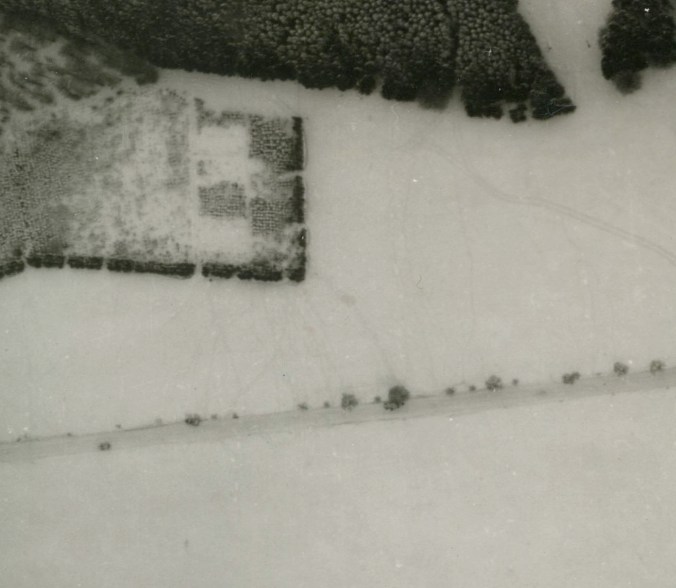
In a follow up to the popularity of my last post (see here), I’ve decided to begin scanning my collection of large format 12×12 inch aerial photos taken during the Battle of the Bulge. In this first post, we see a German motorized transport convoy in ruins following a strafing attack by P-47’s of the XAX Tactical Air Command (TAC) on January 23rd, 1945. I acquired a large set of these original 12×12 inch prints (complete with pencil notes on the back) on eBay a few years ago directly from the estate of a 9th Air Force photo tech who apparently saved hundreds of original flyovers like this. He saved duplicates as well! This is one of those duplicates.
I’ve taken the time to crop the shot for close up views below. With some luck, followers of this page may be able to track down the exact location of this image! Good luck guys!
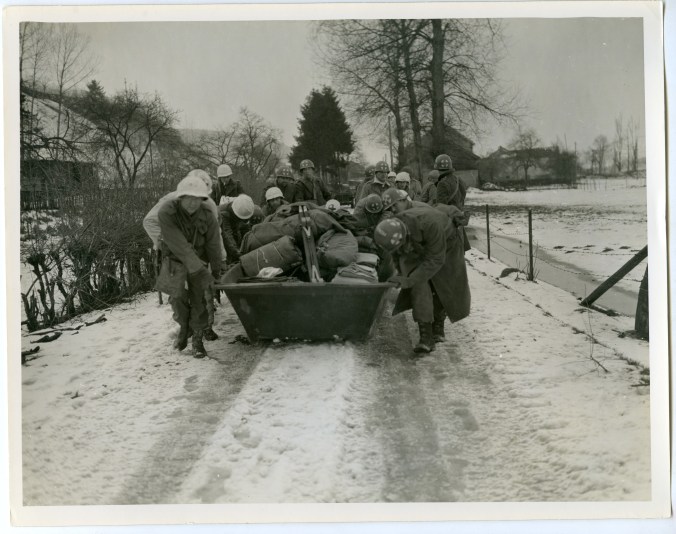
Captured on medium format film by US Army Photographer Cpl. Edward Belfer, this image comes from my extensive collection of US WWII photography and depicts a group of US medics pushing a metal pontoon boat along the snowy streets of Bettendorf, Luxembourg on January 19th, 1945. The boat, loaded with medical supplies, is headed towards the Sure River. An oddball detail in this shot include a theater-made snow camouflage helmet covers with the fronts cut out to reveal the medical cross beneath.
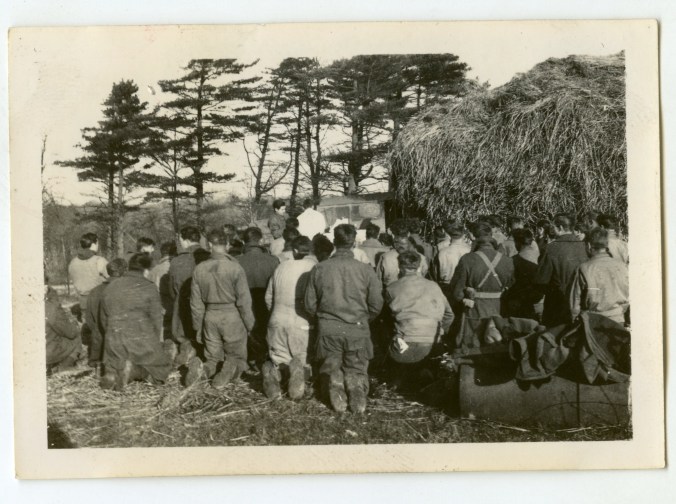
Attempting to track down new material for a fresh blog post is not an easy task…… Especially when my material has generally been languishing unseen in a shoe box since 1945. But occasionally I will come across a photo that I’ve neglected to bring to the light of the internet since it crossed my scanner’s bed. In today’s post, I will dissect a photo taken on Christmas of 1944 in the small town of Neuville en Condroz, Belgium. This is a small village near Liege, Wallone, Belgium and was occupied at the time by an anti-aircraft unit on the front lines of the Bulge. Interestingly, the hood of the Chaplain’s Jeep served as an alter.
Christmas Mass in Neuville-en-Condroz Belgium, 1944
Many incredible WWII US Signal Corps photos were taken during the war, printed, examined and never widely published or circulated. In tonight’s post, I’m bringing one of these “lost” Signal Corps shots to the world wide web. Staff Sergeant (SSgt) Jack H. Pulliam was a paratrooper assigned as a light machine gunner to Company G of the 513th Parachute Infantry Regiment of the 17th Airborne Division. Pulliam was captured on his 20th birthday during the Battle of the Bulge on January 7th, 1945 in a small village twelve miles outside Bastogne; known as Dead Man’s Ridge, the battle was the first for the “green” 17th Division. Suffering catastrophic casualties, the 17th was eventually successful in countering the German troops it encountered. Spending nearly a month in captivity (being wounded during this time) Jack escaped and was eventually picked up by elements of the 4th Division. The photo below perfectly captures how Jack must’ve felt during the hell of the Bulge and his time imprisoned with the Germans. Note the dirt and grime on his face and clothes, the stubble and long hair associated with being constantly on the move without access to a razor or washcloth. He’s also sporting a captured German officers cap with the eagle removed. I’m hoping SSgt Pulliam took that hat home as a memento of his time in captivity!
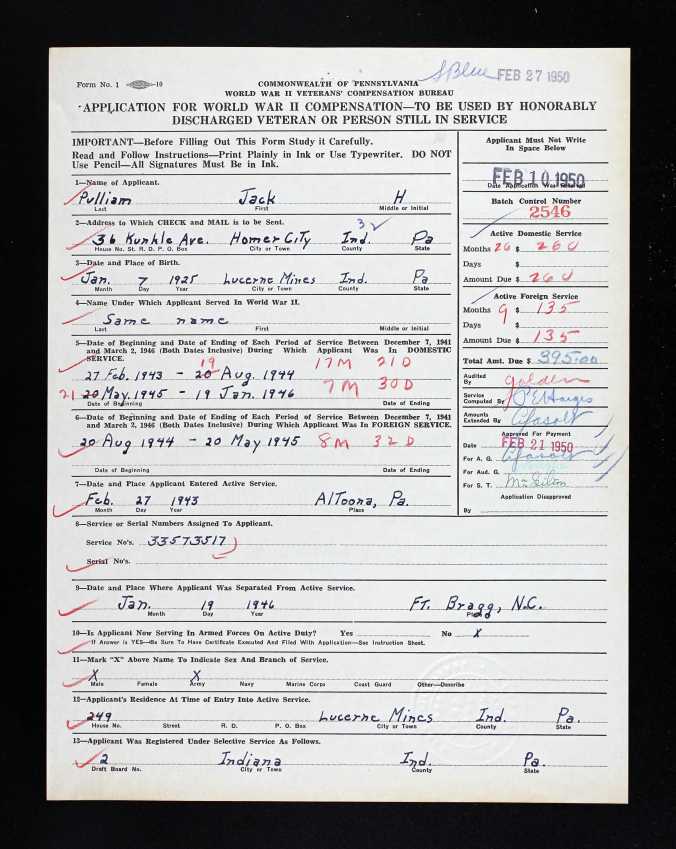
Jack’s National Archives and Records Administration file:
Jack was born in January 7, 1925 and spent his youth in Lucerne, PA. He was volunteer for the Army in January 7, 1943 and was inducted on February 20, 1943 at Altoona, PA. He received ASN 33573517 and was sent to the 44th Infantry Division at Fort Lewis, WA. He was volunteer for the Airborne troops and was transferred to Parachute School at Fort Benning in March 1944 where he was finally assigned to Company G / 513th PIR as light machine gunner after having successfully completed his paratrooper course.
On January 7, 1945, on his 20th birthday, he was captured at Flamierge during the terrible battle of “Dead Man’s Ridge”. He was sent to Clervaux, then to Prüm. He was wounded at Garolstein, Germany and escaped the Germans on February 7 with Ed SUMMERS. They reached Prüm on February 9 and went into hiding until the town was taken by the men of the 4th Infantry Division on February 13.
He spent two weeks in hospital to recovering from malnutrition and was unable to return in his unit because of Prisoner of War status. He was finally shipped back to States in March 1945 and completed military as automatic weapons instructor at Fort Benning. He was discharged in November 1945 as S/Sgt.
 In a follow up to the popularity of my last post (see here), I’ve decided to begin scanning my collection of large format 12×12 inch aerial photos taken during the Battle of the Bulge. In this first post, we see a German motorized transport convoy in ruins following a strafing attack by P-47’s of the XAX Tactical Air Command (TAC) on January 23rd, 1945. I acquired a large set of these original 12×12 inch prints (complete with pencil notes on the back) on eBay a few years ago directly from the estate of a 9th Air Force photo tech who apparently saved hundreds of original flyovers like this. He saved duplicates as well! This is one of those duplicates.





 Portraits of War