Snapshots from Kaufering IV: A Dachau Subcamp


Follow Up Post: The Liberation of Kaufering IV

Eight years ago I posted a series of snapshots taken by a US soldier showing the liberation of an unknown concentration camp during WWII. When I acquired the photos, they had no provenance and no information on the reverse side to start the process of identification. Luckily, a blog follower was able to help with the identification of the camp through the same processes I typically use. By observing the surrounding architecture and general contextual clues, he was able to identify the camp as Kaufering IV, a large subcamp of Dachau. Here is what he provided:

Some thoughts:

i)This is certainly somewhere Upper Bavaria – the house architecture is fairly typical of the region.

ii)The presence of the 2 Luftwaffe officers suggests some sort of air force activity is close by. Lager Lechfeld was used as a fighter base and a shake-down airbase for the nearby Messerschmitt complex in Augsburg. Prisoners were engaged in constructing bomb-proof bunker-factories in appalling conditions.

iii)One of the photographs has a very distinctive semi-sunken barrack type, known as “Erdhütten” (Lit: “Earth huts”) – very primitive constructions, the timbers of which were made from off-cuts and waste from furniture production and which survivors testify, leaked terribly. These barracks were a distinctive feature of the Dachau sub-camps in the Kaufering/Buchlöe area.

iv)The brief Wiki article tallies fairly well with the photos and my comments: https://en.wikipedia.org/wiki/Kaufering_concentration_camp

Hope this helps,

Taff Simon

The Snapshots

Thanks to the careful research of Taff Simon, we now know that the camp shown in these snapshots is Kaufering IV. A closer look at the details within the images supports his findings. One particular photograph offers the clearest confirmation: it shows an older man in civilian clothing with a closely shaven head, a haunting detail that anchors these scenes to the history of this Dachau subcamp.
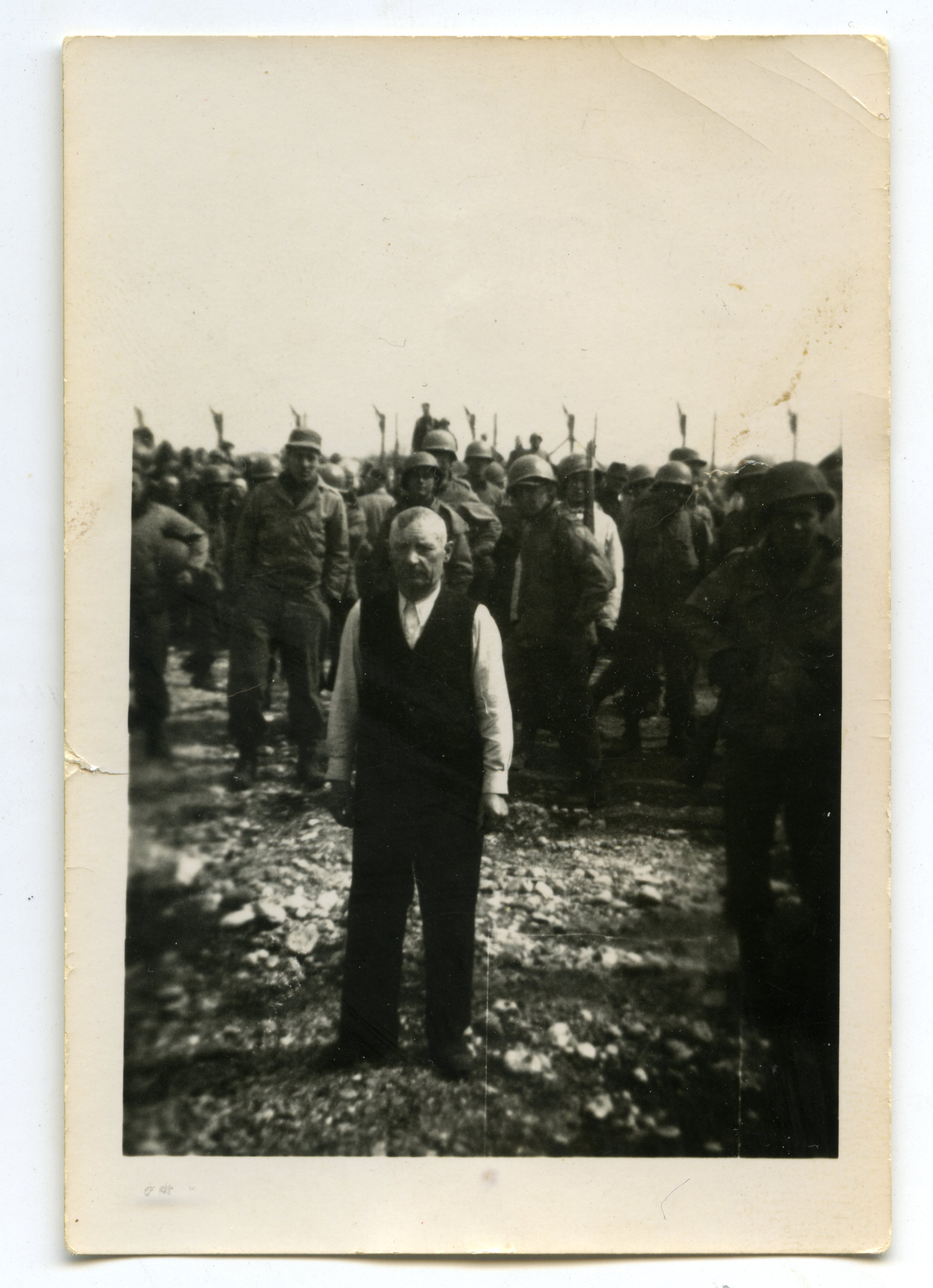
Snapshot of SS Commandant Johann Baptist Eichelsdörfer

When I first wrote about the snapshot collection in 2017, I was unable to identify the man since he was in civilian garb. Artificial intelligence image searches at the time were unable to attribute the image to any individual, so I was under the assumption that he was a local civilian who was brought in to help with the burial of the camp victims. But now, with the attribution of the snapshots to Kaufering IV, I was able to find more images of Eichelsdörfer. His shaven head with the lopsided squirrel-tail appearance confirms his identity when compared to the images below.
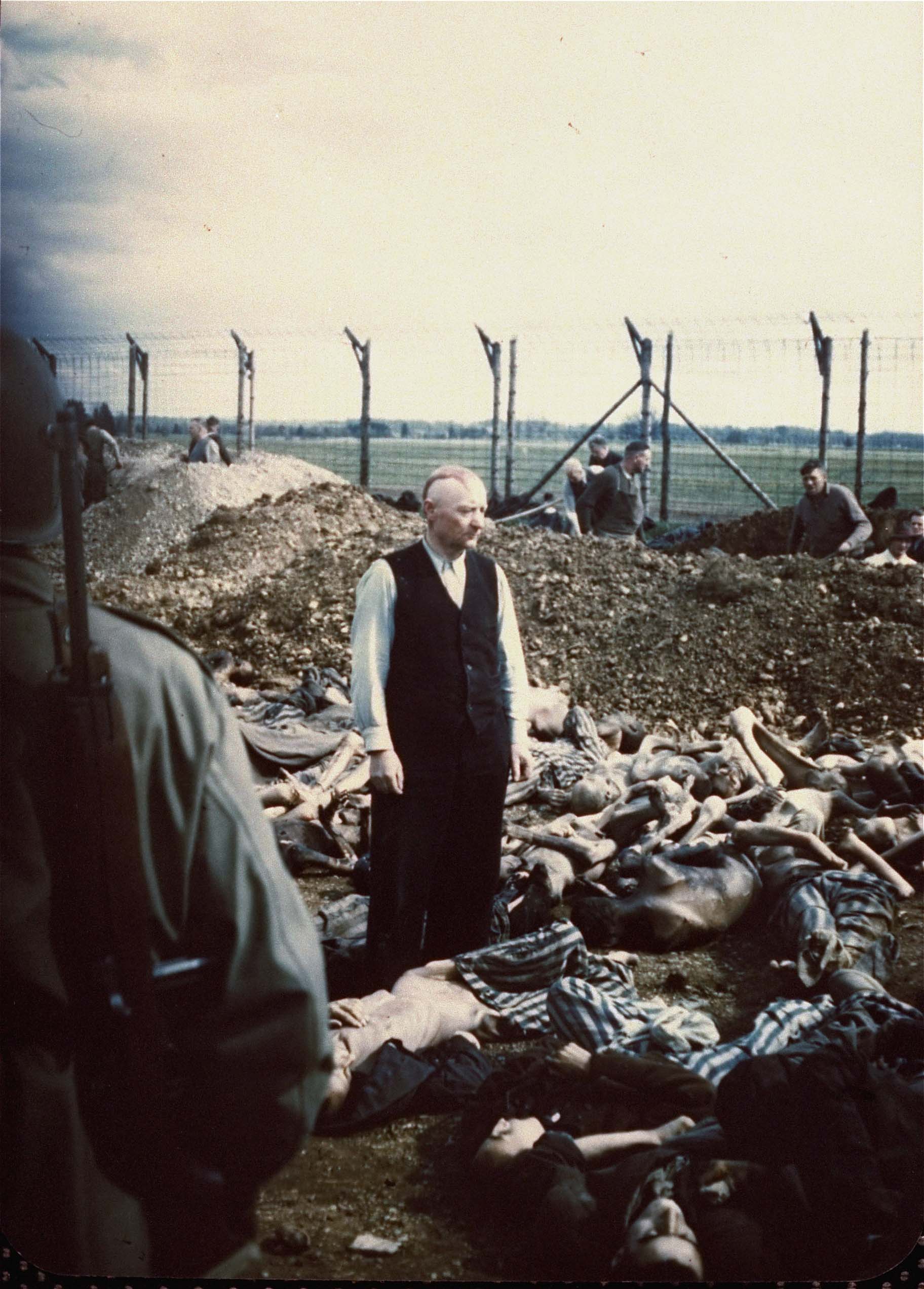
Color Photo of Johann Baptist Eichelsdörfer (US Holocaust Museum image)
(SS officer Johann Baptist Eichelsdoerfer, the commandant of the Kaufering IV concentration camp, stands among the corpses of prisoners killed in his camp. US Holocaust Museum image)
(Wikipedia Commons)

Who was he?

Johann Baptist Eichelsdörfer was a German military officer and concentration camp commandant during World War II. Born on January 20, 1890, in Dachau, Germany, he served as a non-commissioned officer in the Bavarian Army during World War I and remained in the military after the war, retiring in 1924 with the rank of lieutenant. He rejoined the military in 1940 and served in various locations, including France, Poland, and the Soviet Union. In 1944, he was assigned to the Dachau concentration camp system, where he served as the commandant of several subcamps. In January 1945, he took command of Kaufering IV, a subcamp of Dachau located near Hurlach, which was designated as a “hospital camp” but was, in reality, a site where sick and dying prisoners were abandoned without adequate medical care. Under his command, thousands of prisoners died due to starvation, disease, and mistreatment.

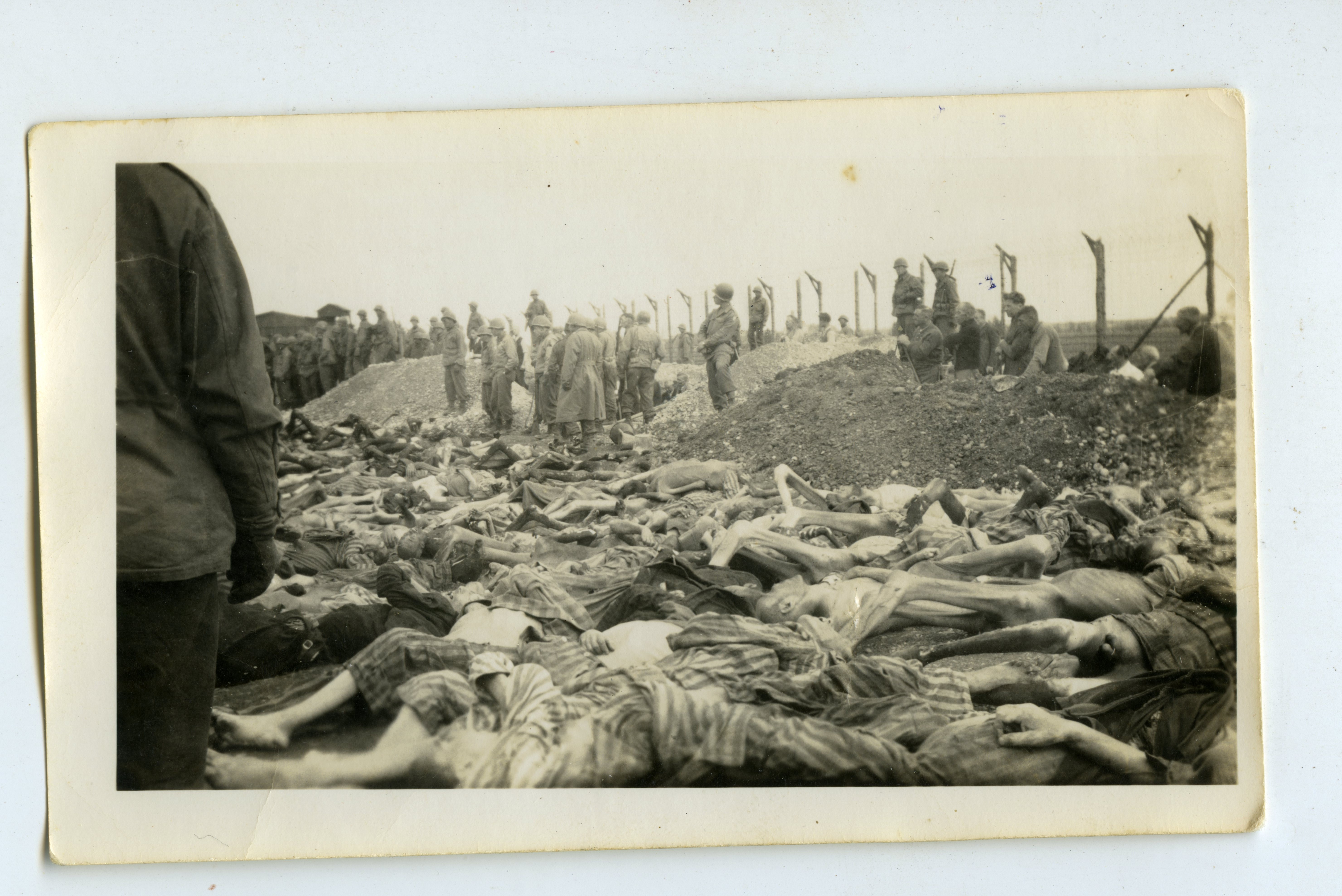
Eichelsdörfer’s actions came to light when American forces liberated Kaufering IV on April 27, 1945. U.S. soldiers discovered hundreds of bodies and surviving prisoners who had been subjected to brutal conditions. Eichelsdörfer was captured and photographed standing among the bodies of dead inmates, a stark image used as evidence during his trial. He was tried at the Dachau Trials, a series of military tribunals held by the U.S. Army to prosecute Nazi war criminals. On December 13, 1945, he was convicted of war crimes and crimes against humanity and sentenced to death. Eichelsdörfer was executed by hanging on May 29, 1946, in Landsberg am Lech prison. His trial and execution highlighted the atrocities committed in the Nazi concentration camps and served as a reminder of the need for accountability in the aftermath of war.

The Other Snapshots

Now that we know the snapshots from the 2017 blog post were taken at Kaufering IV, the other images captured by an unknown US GI make more sense. I will post them here with some updated commentary. Feel free to weigh in if you have any comments or suggestions for descriptions.

Kaufering IV Survivor

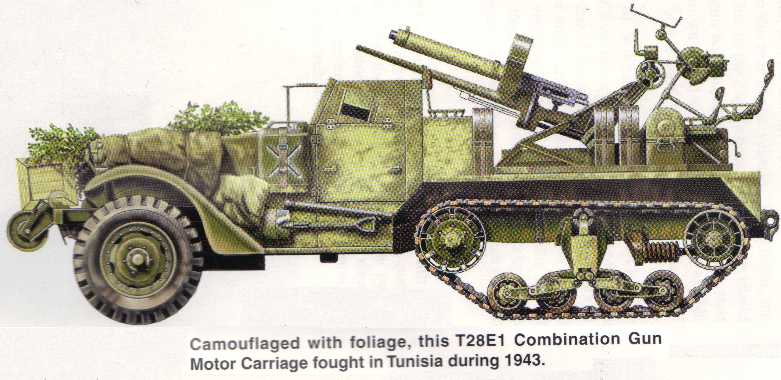
In the above image, we see a recently liberated survivor of his time at Kaufering IV. He’s using his bandaged hands to tie on a pair of shoes, likely a pair provided to him by US soldiers. He also appears to have some soup in a small can as well as a striped blanket wrapped around his head and body. In the back of the image appears a US T28E1 which was likely one of the 12th Armor Division’s anti-aircraft mobile vehicles. The painted sillouettes of 14 German aircraft on the side hint that the operators of the T28E1 shot down lots of German aircraft as the war came to an end.
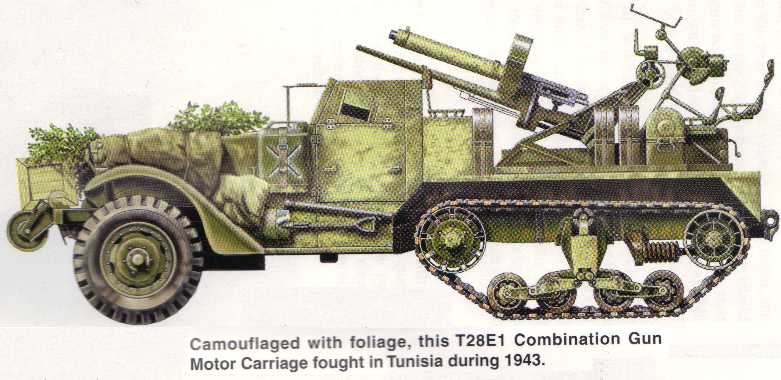
Generalized View of the T28E1
German Luftwaffe Officers
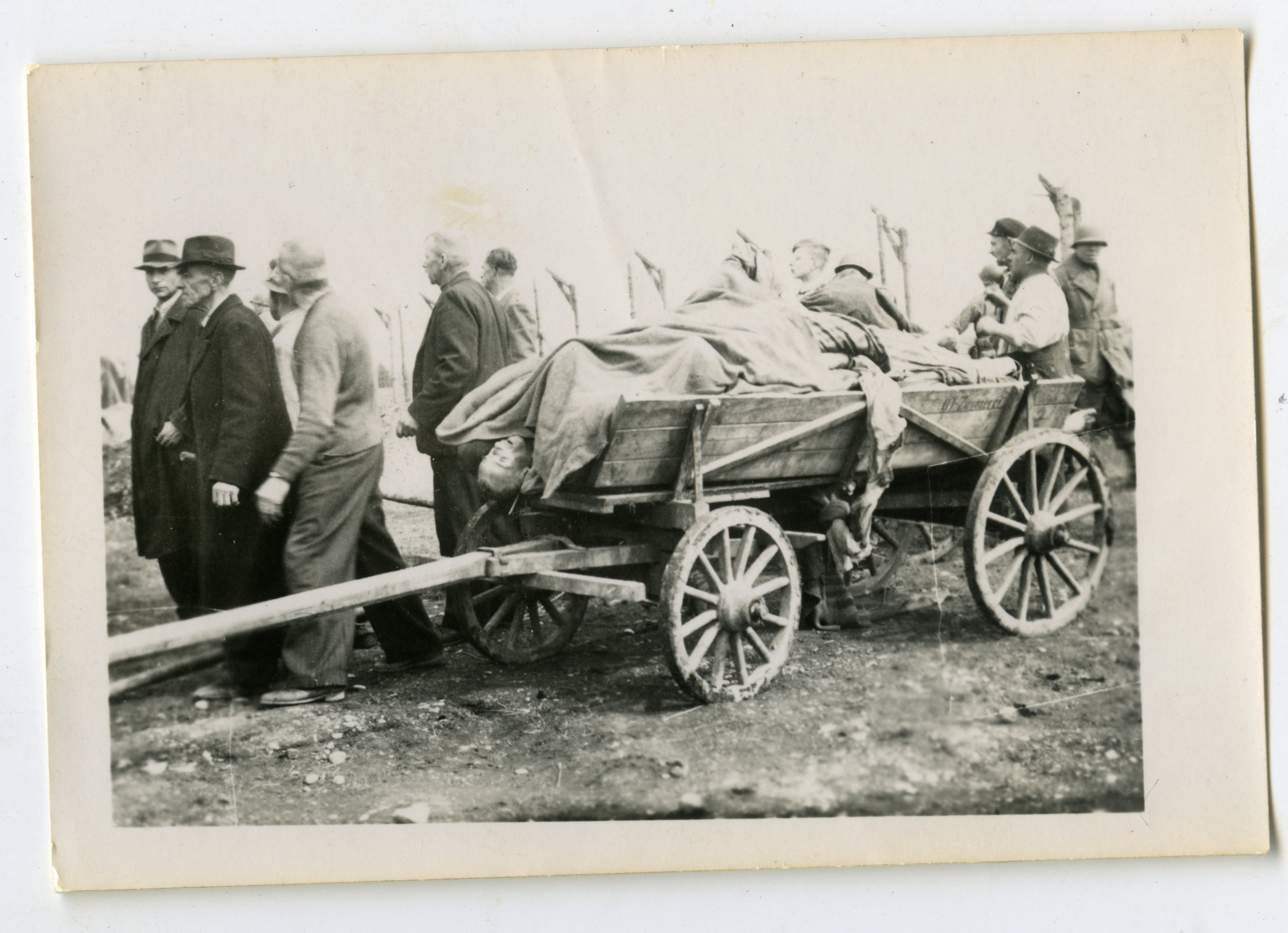
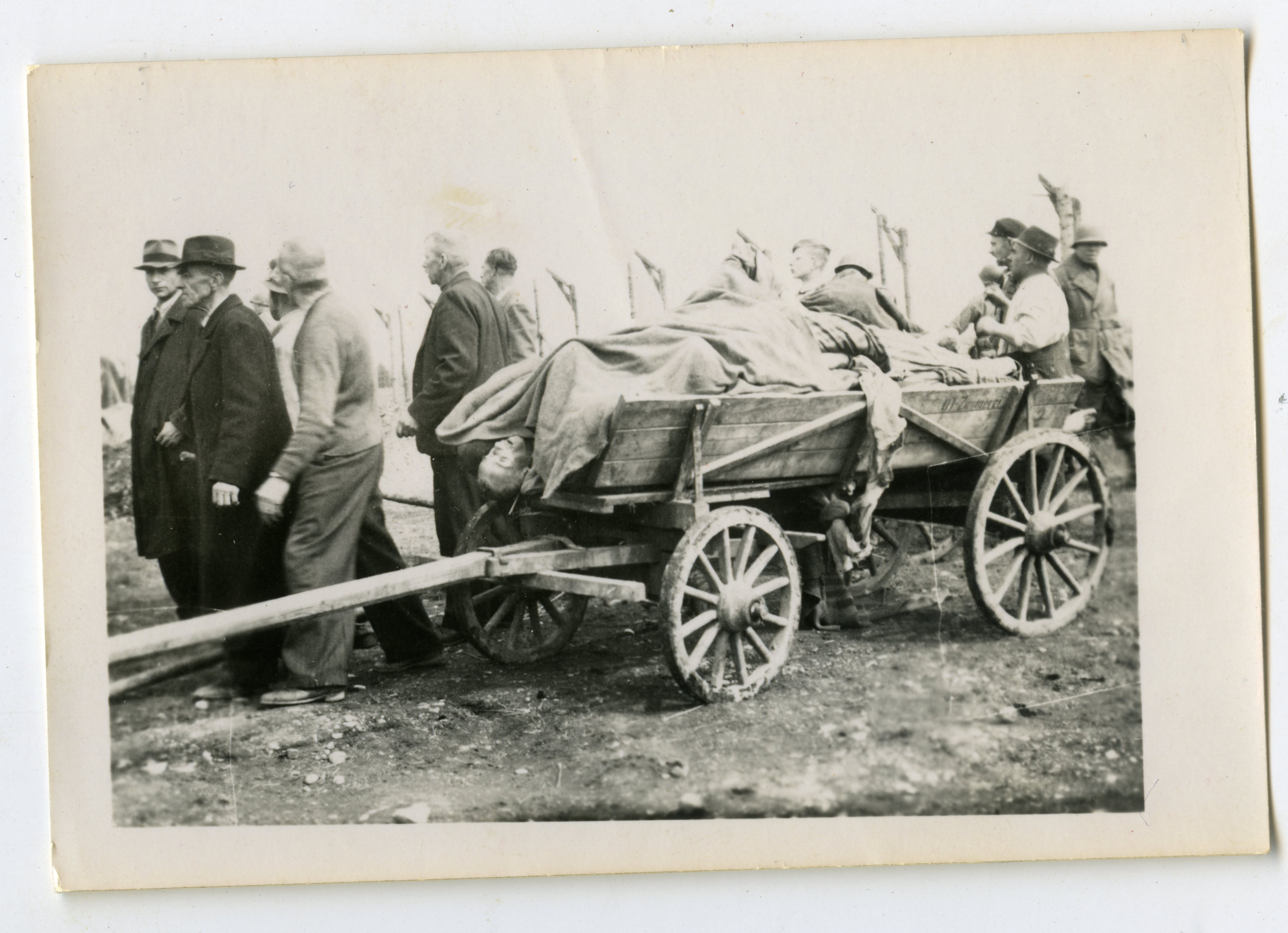
German Civilians Help with Burial
Camp Building and Ditch
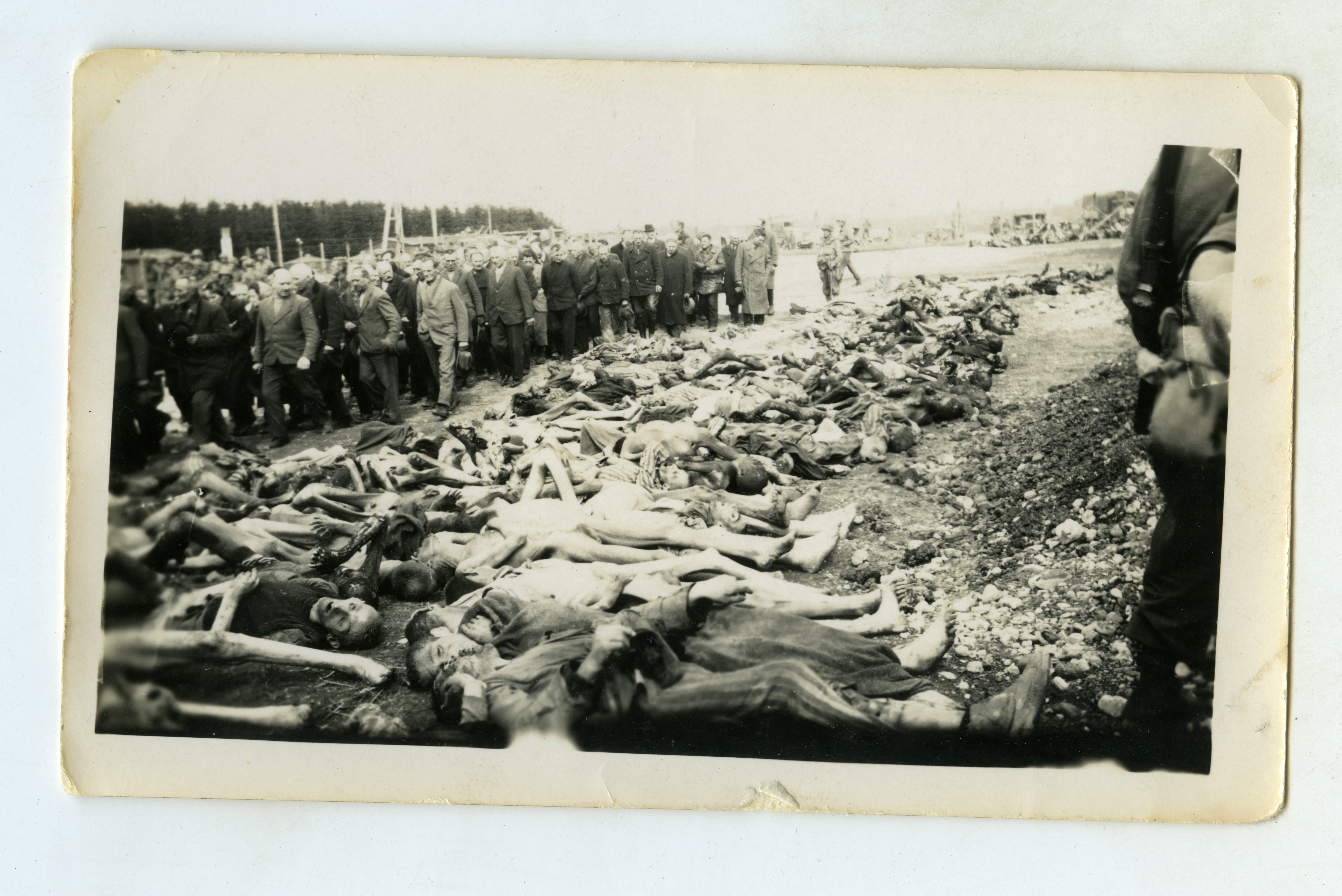
Local Civilians Observe the Dead
Kaufering IV Victims
US Officers Speak to a Crowd
US GI’s View the Dead
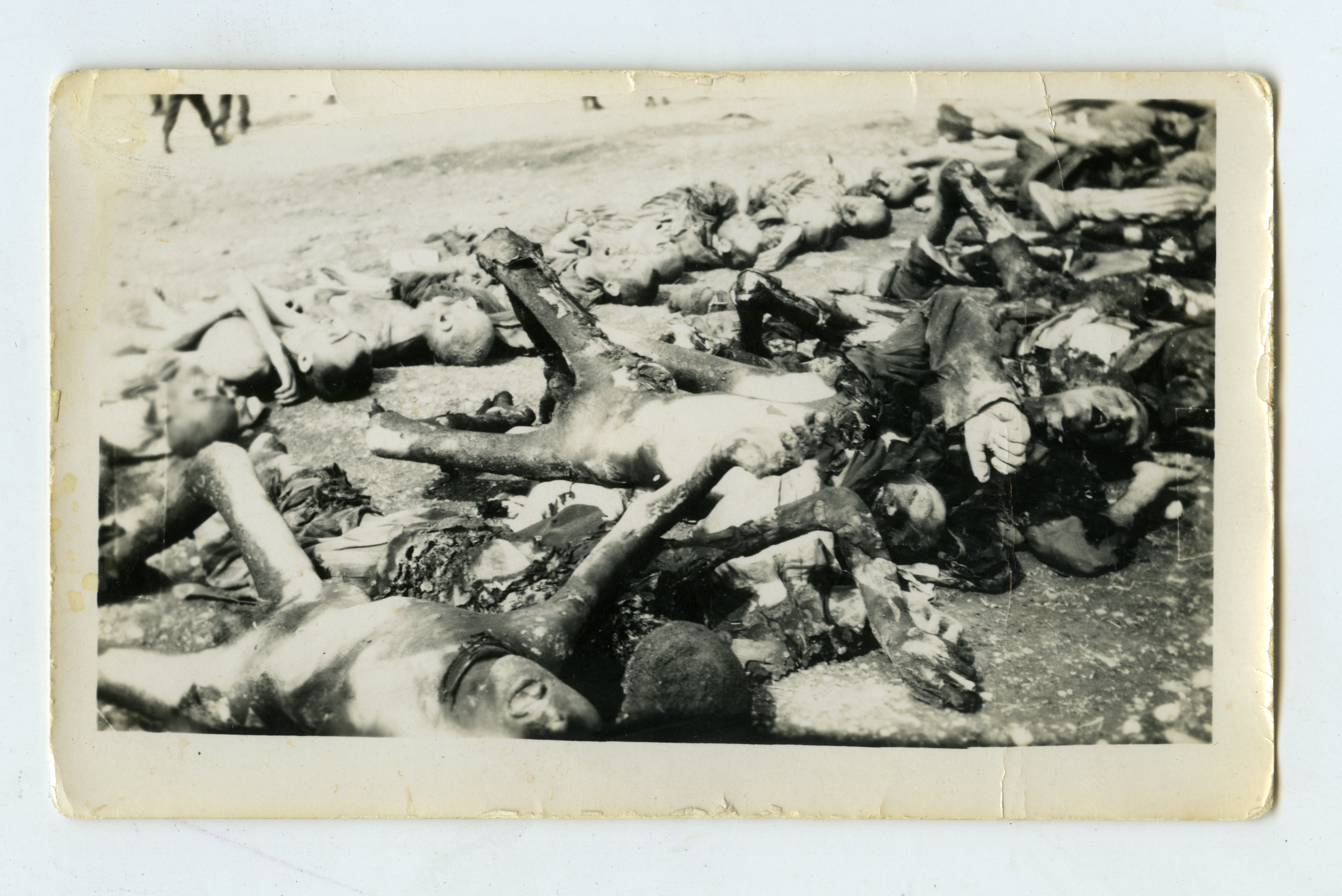
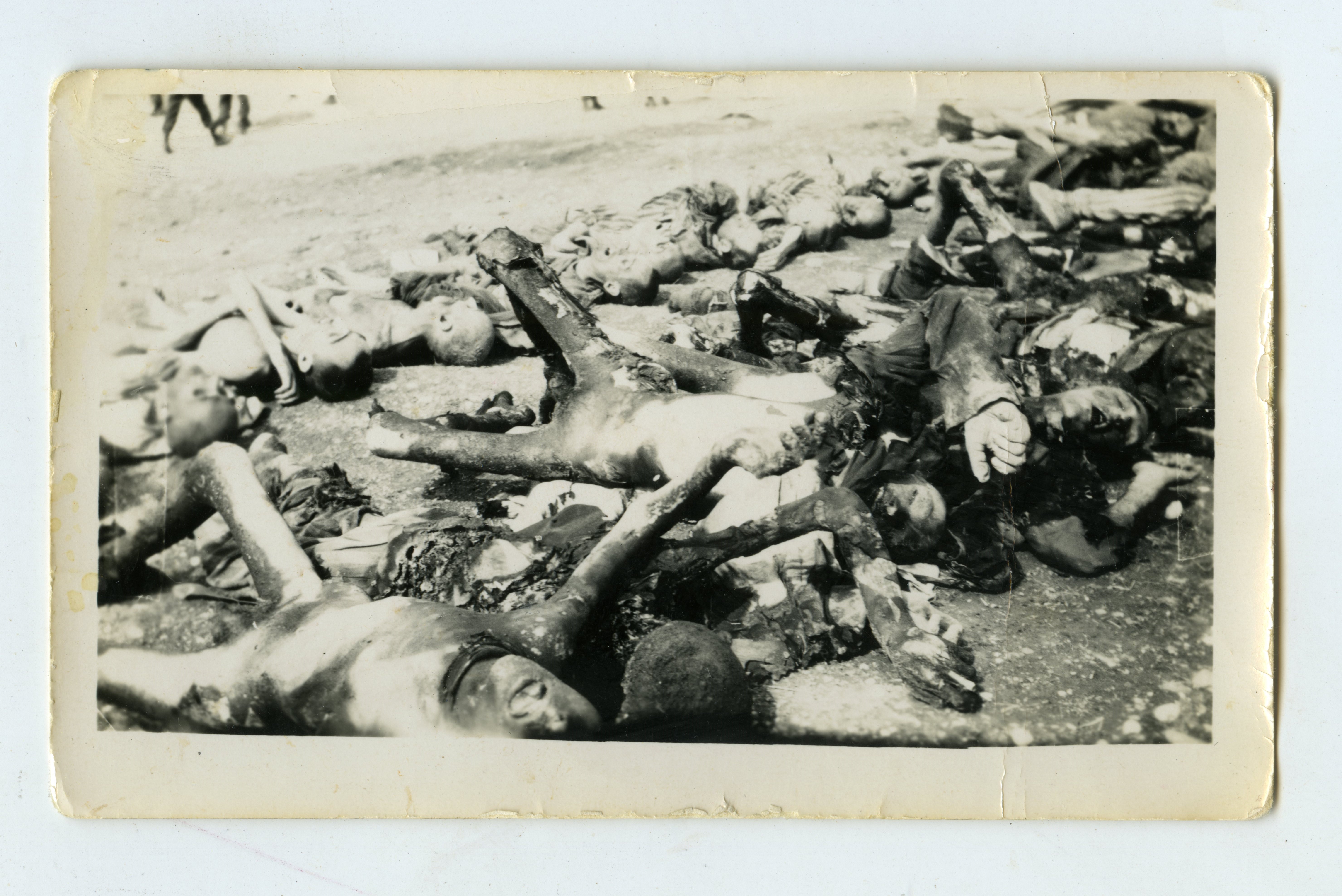
Camp Victims
Camp Victims and Army Officers
Camp Victims
Local German Civilians Listen to US Officers

I really don’t know how to close this sobering post update from 2017. I did pass the snapshots along to a WWII veterans museum based here in the United States, but I’m unsure of what they ended up doing with them. I hope that his post will help educate those researching Kaufering IV and bring some closure to the mystery of when and where these snapshots were taken.

If you want to see some footage from the camp liberation, please check out the video here.

Easy Co. 506th PIR, 101st Airborne, Band of Brothers at Kaufering IV

HBO’s Band of Brothers covered Kaufering IV briefly in one episode. The unit was involved in the liberation of the camp, along with the 12th Armored Division. See below for a dramatized version of the events. The small earthen huts described by Taff can be clearly depicted. The HBO historical accuracy consultants did a great job!

Mystery WWII Concentration Camp Liberation – Research Help Needed!


Hey PortraitofWar followers! I recently acquired an incredible grouping of photographs taken by a US soldier during the liberation of a concentration camp/labor camp during the tail end of WWII. There’s not much to go by in terms of identifiable visuals, but there are images of German military officers marching in line to view the bodies, as well as a liberated person in front of a T28E1 US tracked anti-aircraft gun. Additional photographs show an American officer speaking to a line of US soldiers passing before a group of bodies.


Any thoughts or ideas? I hope to pass these on to an organization that can present and appreciate them, but I want to identify the material before doing so.

wat018

A liberated prisoner tries on shoes for the first time in years

Image409

The American T28E1

wat019

A German collaborator? Commandant?

wat020

German officers pass through the line

wat031

US officers speak

wat030wat029wat028wat027

wat026

US officers speak

wat025wat024wat023wat022


Rare Aerial Photo of Gliders Taken After Operation Varsity, March 1945


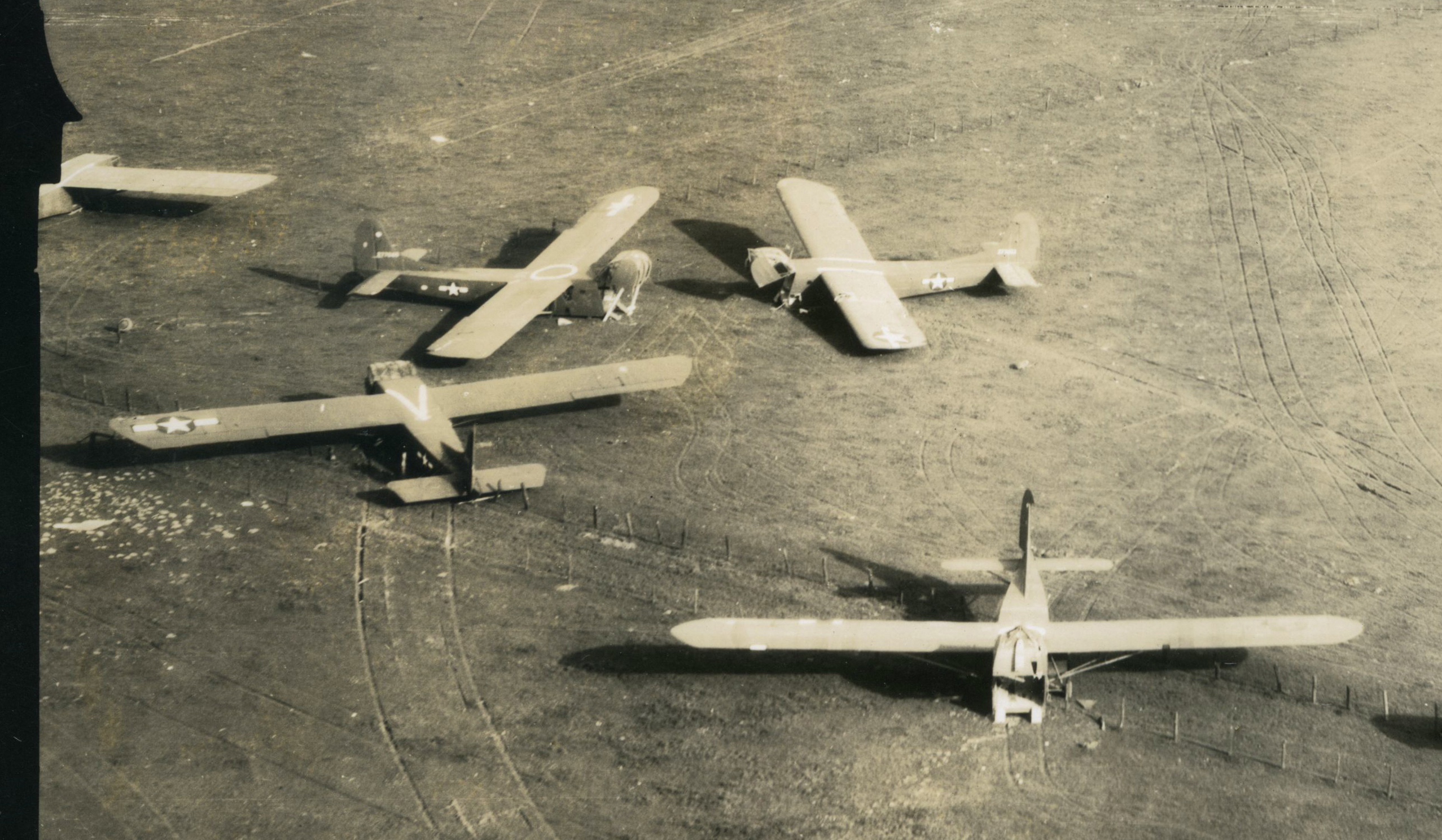
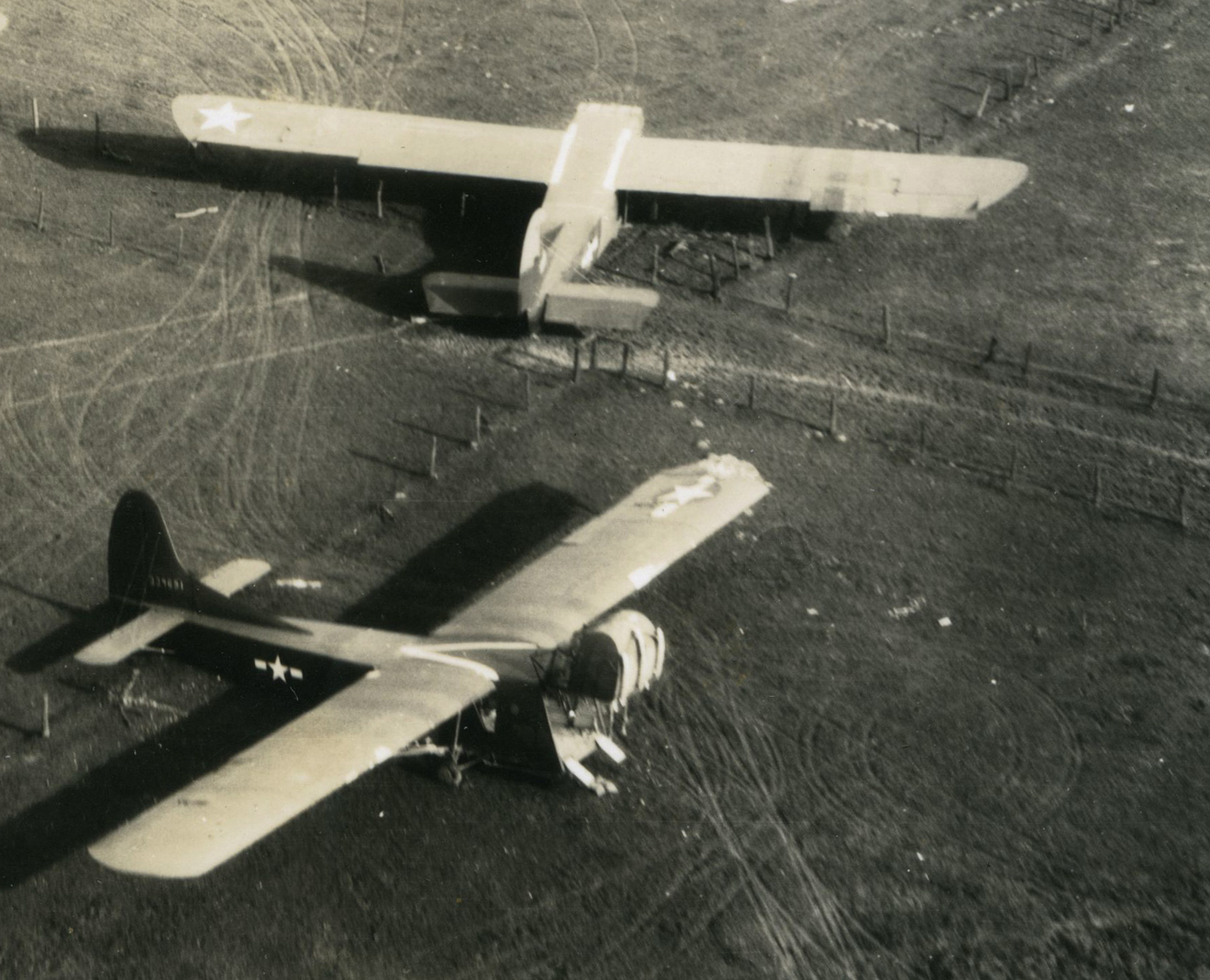
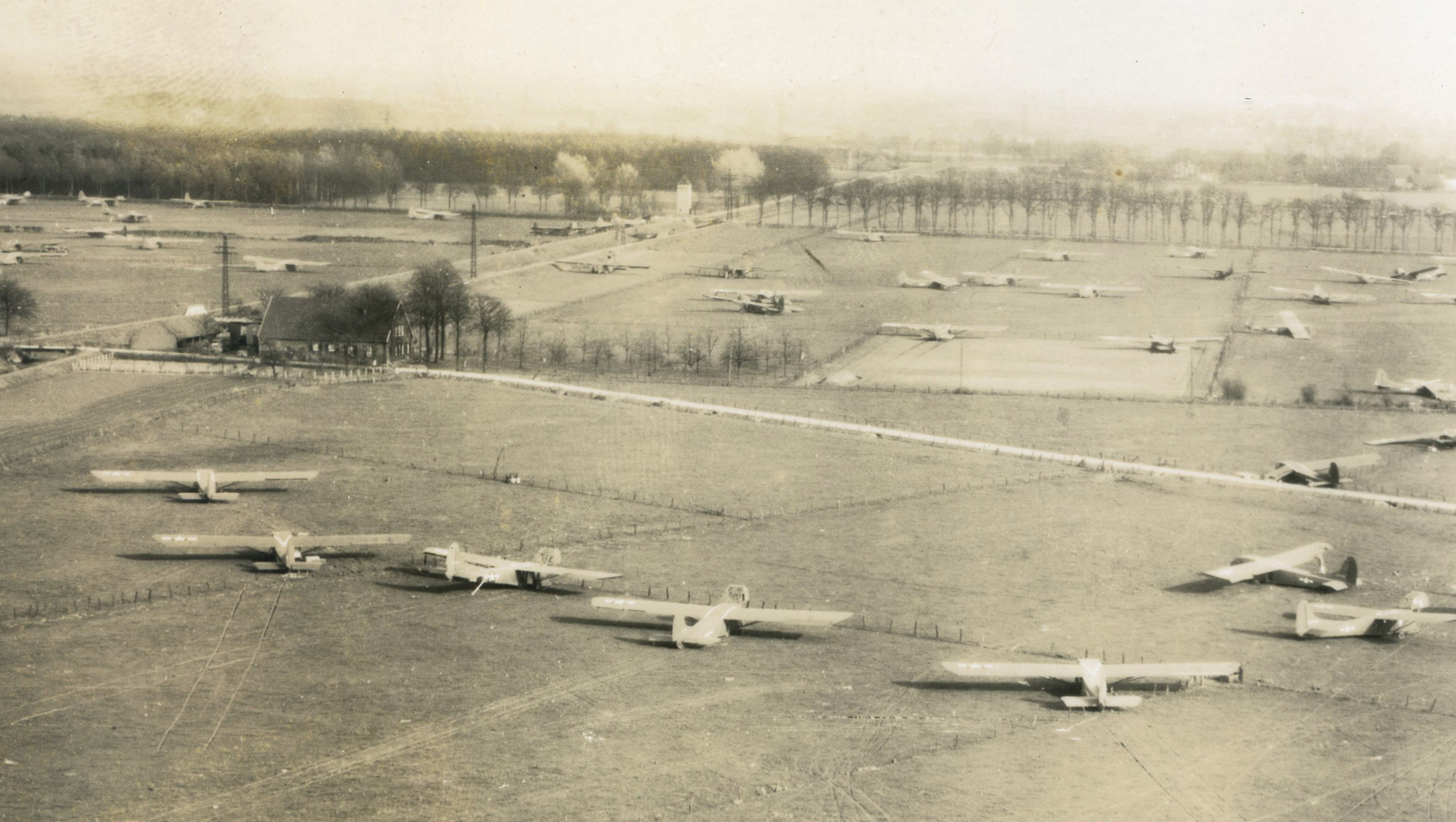
Taken on March 25th, 1945, this image was snapped by a low-flying P-38 or P-51 of the 363rd Photographic Reconnaissance Squadron.  I acquired a large set of these original 12×12 inch prints (complete with pencil notes on the back) on eBay a few years ago directly from the estate of a 9th Air Force photo tech who apparently saved hundreds of original flyovers like this.  He saved duplicates as well!  This is one of those duplicates.

This large format photo, taken a day after the strategic landing of two airborne divisions on the eastern bank of the Rhine River near the village of Hamminkeln and the Town of Wesel, Germany.  Know as Operation Varsity, the landing is regarded by many historians as the most successful airborne landing carried out during WWII.  Although I tend to argue such facts, the point is that the landing led to the quickening of the end of the war.

This series of photos provides an incredibly detailed view of the aftermath of the glider landings and a general layout of trenches, hedgerows and landscape features that may be obfuscated today.  These images can be found in many books and through government archives but may be of lesser quality due to multiple reproductions.  Enjoy!


panorama1small

Large Format Aerial Photo Showing Airborne Gliders, March 25th, 1945

panorama1apanorama1abpanorama1abc


WWII Color Photo Post: An Unopened Box of Developed WWII Kodak Color Slides!


Many of my followers know that I actively collect WWII color slides, predominantly those developed by the Eastman Kodak Company.  These Kodachrome slides are typically regarded in the field of vintage color photo collecting as the crème de la crème of vintage color.  Taken at a time of incredible social and political upheaval, these images capture an era that will never be seen in the same light or colors again. With the small percentage of the world populace that used color photography, an even smaller percentage of the slides have been passed down or purchased by people with the ability to scan and post them to the internet.

photounopenedbox

In this rare case, I was able to purchase a large set of Kodachrome slides taken by a US serviceman before he shipped off to war.  One box of the Kodak-developed slides were unopened.  I took a photo of the seal, opened the box and immediately scanned them!  Please enjoy the following 12 slides that are only seeing the light of day 70+ years later….

Taken in Fort Benning, GA, these slides were shipped home in January of 1945 to only be opened in 2016! Enjoy.

binzel01

Binzel02.jpg

Binzel03.jpg

Binzel04.jpg

Binzel05.jpg

Binzel06.jpg

Binzel07.jpg

Binzel08.jpg

Binzel09.jpg

Binzel10.jpg


WWII Portraits – Headshots of the 739th Field Artillery Battalion


I’m trying something new with this post…… I recently purchased a large lot of headshots of unnamed members of the 739th Field Artillery Battalion.  All the photos were taken in a single sitting in a German studio by a photographer named Lothar Schilling.  I’m currently in the process of identifying each of the men using a unit history with group shots of each particular battery….. more to come on that…….

The image below was created by taking a cropped view of each photo and adding them together in quick succession.  Each face is rendered as an individual frame to create a soundless film of the entirety of the group.  I thought it was interesting to see the vast differences in each facial expression of the 90+ man group.  Complete photo lots like this are hard to come by, especially with such high image quality.

output_At3OXF

Wounded Connecticut WWII Hero Still Competes in Track and Field Events at Age 90


I absolutely love posting stories of WWII veterans who make the headlines in local newspapers.  In this case, a high school friend posted a heartwarming story from a local CT news channel on facebook.  Roy Rodrigues, 90 years old, received the purple heart for wounded received against an enemy while a member of the 8th Armored Division, attached to the 71st Infantry Division during WWII.  The newsclip doesn’t really delve into the exact details, but the piece is moving and I thought it would make a nice addition to the site.  Click the photo of Roy below to watch the video.

Purple Heart

Purple Heart

hc-southington-athlete-of-the-year-20150412-001