Roy H. Oplinger and the 158th Aero Squadron Survive the Sinking of the SS Tuscania


Survivors of the Sinking of the SS Tuscania

The 158th Aero Squadron and the Sinking of the SS Tuscania

On the night of February 5, 1918, the troopship SS Tuscania was steaming off the coast of Islay, Scotland, when it was struck by a torpedo fired from the German submarine UB-77. The liner was carrying over 2,000 American soldiers bound for the Western Front as part of the earliest waves of U.S. troops to join the fight in Europe.

Among those aboard were men of the 158th Aero Squadron, a newly formed Air Service unit. Organized in late 1917, the squadron was composed largely of young Americans who had trained in Texas before embarking overseas. Their mission would be to support the burgeoning U.S. Air Service in France, a much needed element of warfare in the late stages of WWI.

When the torpedo struck, chaos erupted. Lifeboats were launched into rough seas, and the darkness made rescue operations difficult. British destroyers and local fishermen rushed to aid survivors. Despite these efforts, more than 200 soldiers and crewmen were lost, making the Tuscania the first U.S. troopship sunk in World War I.

Footage of the Survivors of the Tuscania Sinking

The men of the 158th Aero Squadron were among the survivors. Shaken but determined, they eventually reached England and continued their training before heading off to France. Looking at this group portrait, it’s striking to think that every face here carries the memory of that night in the frigid waters of the North Channel. For the men of the 158th, their war began not in the skies over France, but in the dark Atlantic, clinging to lifeboats and praying for rescue.

Roy Oplinger and the 158th Aero Squadron

While the group photo provides us with an overall snapshot of the 158th Aero Squadron in the days after their harrowing ordeal, the photograph also highlights the wartime experience of an individual soldier who decided to send this image home to his family.

The reverse side of this English postcard has a few unique elements that help point towards the ID of the soldier who sent the postcard home in 1918. The first and obvious clue is that the photograph is likely related to someone who served with the 158th Aero Squadron. The following clues can be found on the reverse side of the postcard.

Reverse Side of Postcard

The additional clues are pretty obvious given the stamp at the top right-hand corner paired with the writing on the bottom. We know his name is Roy, and that his Army Service Number was 250033. Using the powers of ancestry.com and fold3.com I was able to identify the sender as Corporal Roy Holden Oplinger who served as a mechanic with the 158th Aero Squadron. Born on May 8th, 1896 in Danielsville, PA to Adam and Edna Oplinger, Roy went on to enlist for the draft on June 5th, 1917 with a listed address in Walnutport, PA. What doesn’t jive is that he was a private at the time of the sinking of the SS Tuscania, so it appears that he didn’t actually send this postcard to his family (if ever) until later that year when he was promoted to corporal in October.

Roy’s WWI Draft Registration Card

According to Roy’s WWI Pennsylvania Veteran’s Compensation Application, after enlistment he went on to serve with the 49th Aero Squadron (an obscure pursuit squadron) in August of the same year and then on January 8th of 1918 with the 158th Aero Squadron shortly before his departure aboard the SS Tuscania.
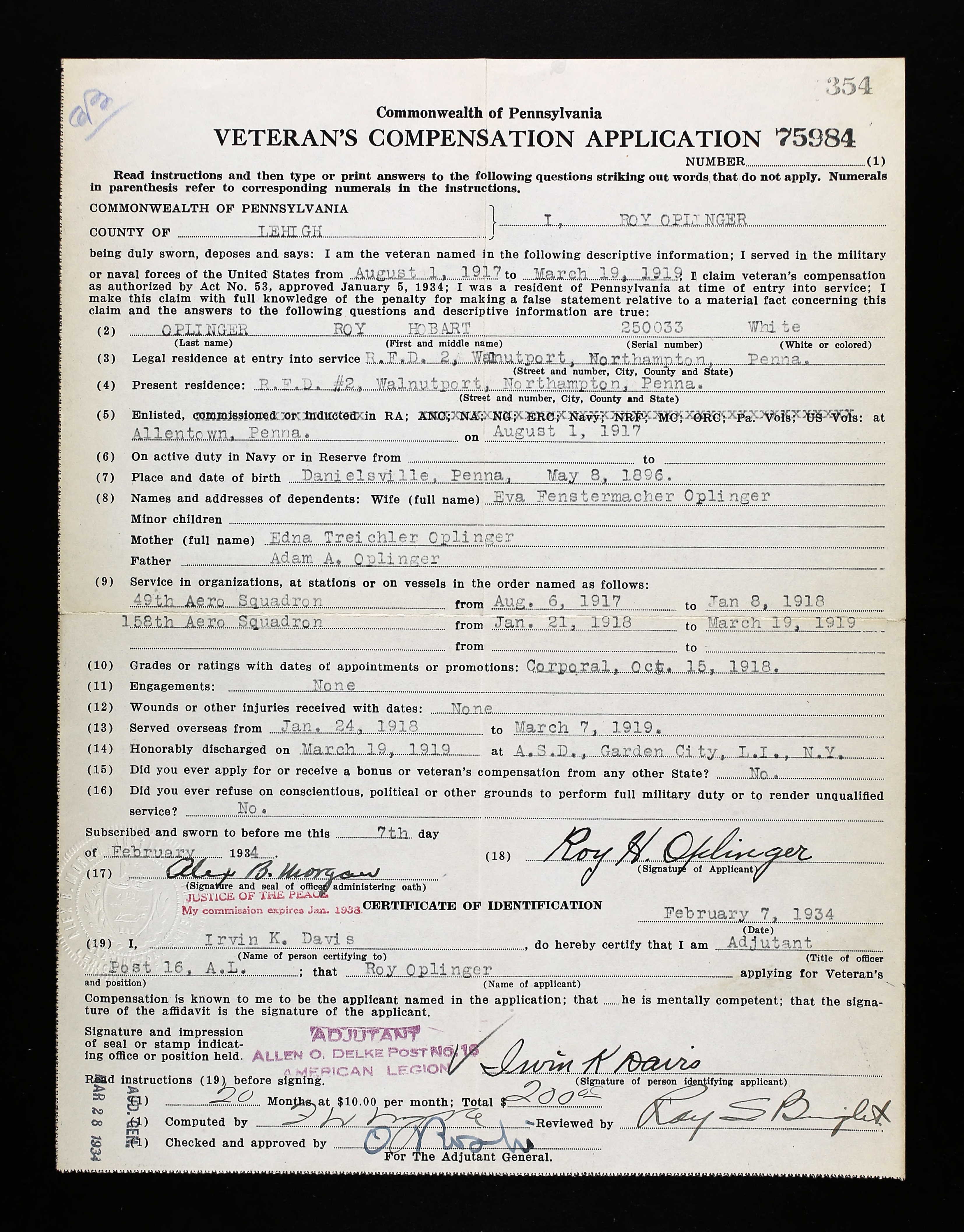
WWI Pennsylvania Veteran’s Compensation Application Form

A Letter Home to a Friend

In a rare stroke of luck, I struck photo researcher gold after searching for newspaper articles related to Roy’s WWI service. In this case, it looks like he sent a letter home to a close hometown friend, Samuel W. Danner on February 13th, 1918 only a few days before the group photo was taken. Anecdotes like this offer a rare glimpse into individual moments during the war, and I was lucky to stumble across it. Here’s a link to the The Morning Call, an Allentown, PA newspaper. Please disregard any typos in the OCR transcription of the article.

Roy H. Oplinger Private in 158th Aero Squadron now in France received the following letter: American Rest Camp, Winchester, England.

February 13, 1918. Dear Sir: best of health and hope you are well I will let you know that I am in the same in America. I will let you know that I have experienced the Torpedoing of the S. S. Tuscania.

The very first ship sunk with U. S. Soldiers on board. I had a narrow escape, I was on deck when we were submarined, but was soon floating on the Atlantic waters on a raft, shortly after we were struck about one hour and a half later we were picked up by a British patrol boat.

If the ship would have sunk as quick as the Lusitania, why I think we would have perished. The S. S. Tuscania went down some hours later, she was torpedoed about supper time somewhere on the Irish coast. How many lives were lost I am unable to tell.

Only a few of our squadron The clothing and my personal belongings I had with me are all the articles I have, all the rest of my stuff is at the bottom of the sea with the Tuscania. But my gold watch which mother presented to me as a present some years ago is out of commission as the salt water did not agree with her very well. I do not like the taste of it myself, it does not feel very comfortable to be in the water this time of the year. But I was kept warm as I was the only one on the raft that knew how to handle an oar. So you see what I had to do to get away from that sinking ship.

There is danger in being too near a sinking vessel as the suction will at times suck persons down that are near. I paddled along and when rescued we eight boys on the raft were a few miles from the ship. We were somewhat soaked. But I am dry by the time you received this letter. Ha Ha.

I will never forget that shock of that torpedo which hit us on that night February 5, 1918. The boys were brave and sang national hymns when we let her go down. Every soldier was coal as jar as I know not one was panic stricken, all left that ship in an excellent manner and can tell you from my experience what I have had in seeing a ship sunk. That you can thank God if you never have to witness that kind of a sight on a rough sea. I am sure glad that I am safe.

It was God’s will that only a few lives were lost in the ship wreck. I will sure do my best to do a little harm towards “Kaiser Bill” as he has to account for the lives that were lost on that cold night (you know). I am yours as before.

Address, Priv. Roy H. Oplinger, 158th Aero Squadron. A. E. (via) N. Y.

And Some Insight From a Friend

Fast forward to 2025, here’s some information about the photo from a WWI researcher friend of mine, Charles “Chuck” Thomas. Thanks Chuck!

Chuck’s Take

Here is a special image of the surviving members of the 158th Aero Squadron shortly after arriving at the American rest camp in Winchester, England. This squadron was aboard the Tuscania when it was sunk by a German submarine off the northern coast of Ireland 5 February 1918. When the 158th AS was reassembled at Winchester, it was determined that seventeen men had been lost during the sinking. After the picture was taken, the flying officers were sent to France for training and the enlisted members were broken up into four flights: one flight was sent to Beverly, Yorkshire and the other three went to Lincolnshire, England.

The squadron would later be reunited and sent to Issoudun on 27 September to finish out their service at that aerodrome.

The squadron officers were:

1st Lt. Phil E. Davant

1st Lt. Herbert B. Bartholf

1st Lt. J. W. Blackman (Gorrells has it spelled ‘Blakcman’ – typo?)

1st Lt. Merle H. Howe

1st Lt. Miner C. Markham

2nd Lt. Kenneth S. Hall

2nd Lt. Freeman A. Ballard

2nd Lt. LaRue Smith

2nd Lt. James McFaddan

Of note is the mixture of civilian attire with military uniforms being worn by some of the enlisted men.

I should also point out that the flag seen here was the only one saved during the sinking of the Tuscania by Corp. Guy W. Burnett.

WWI “Just Got Back” card deciphered – Railway Engineer from Minnesota


One of my favorite pieces of WWI ephemera to research is the pre-printed postcard that was handed out to soldiers intended to be sent to loved ones from the decks/bunks of the multitude of transport ships that brought doughboys back from Europe in the years following the war. In tonight’s case, I purchased this card on eBay without any prior research. The date of 9/11 caught me as particularly interesting given the 2001 connotation, so I made a quick bid and won the postcard. My research process can be followed below:

Step 1: Purchase the card

JewishCard040abcd

Only $9.89+0.99 shipping!

Step 2: Receive the card in the mail

JewishCard039

Front side of the postcard

JewishCard040

Back side of the postcard

Step 3: What the heck is going on?

The first actual step in the interpretation and research of a WWI postcard is to figure out when it was made, when it was sent and who sent it. This one should be pretty easy.
JewishCard040a

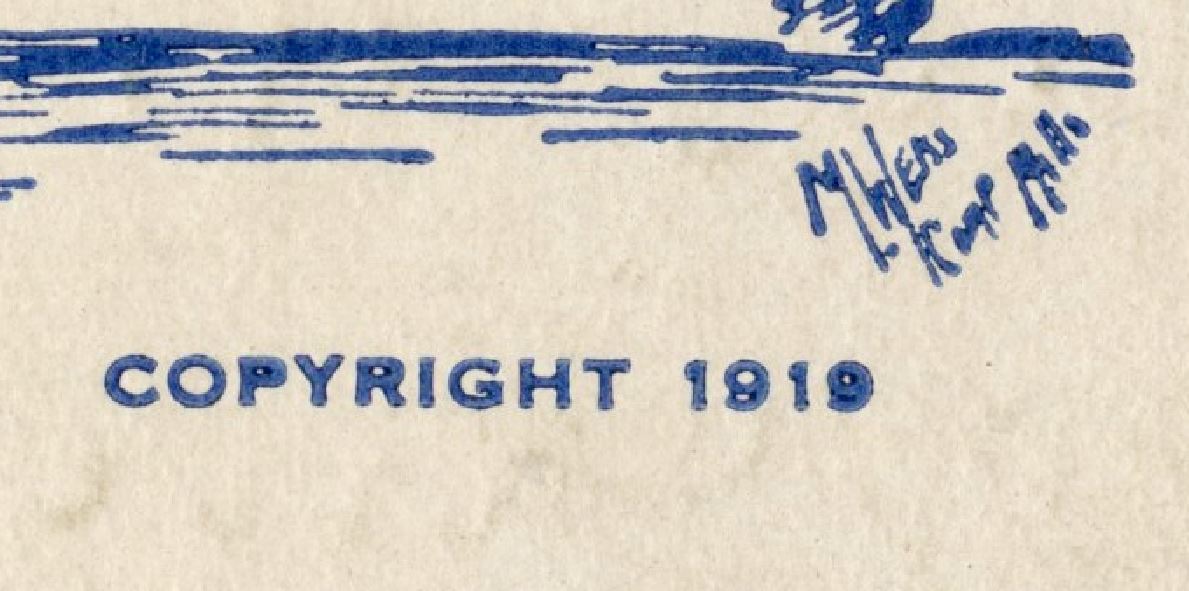
Copyright date of 1919

Most WWI postcards don’t usually come with a Copyright date and/or an artist’s signature. This one comes with both. I don’t have time to delve into the identity of the artist, but I can say that the card was copyrighted in 1919.

So, the written portion is from September 11th, 1919 at the very earliest.

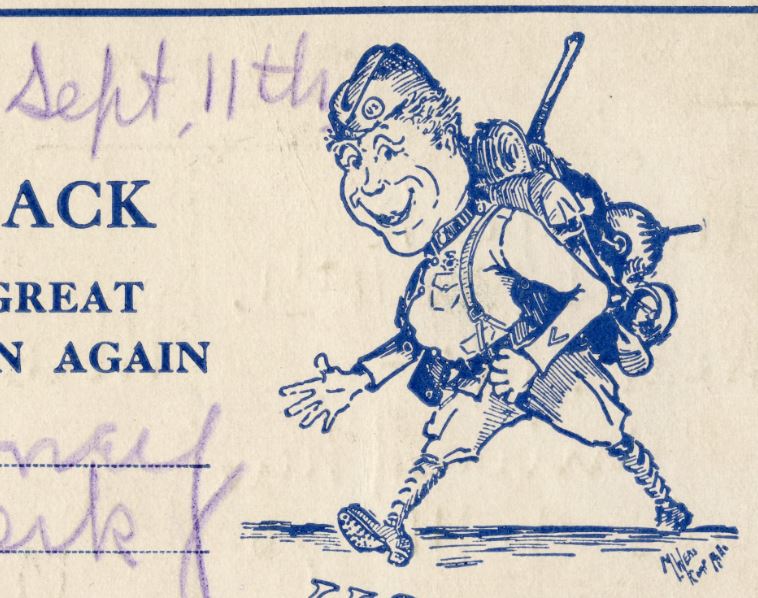
JewishCard040ab

September 11th

Step 4: Who the heck sent this thing?

Whenever I attempt to identify a soldier-sent postcard, I always try to research the recipient first. Normally, we have the name of well established member of a community as well as a normal mailing address and town name intended as the recipient. Assuming most postcards are sent to a mother or father, it doesn’t take much effort to track down the 1910 census record for that family using Ancestry.com. This is exactly what I did in this case. The first Maroney to appear in the Eyota, MN 1910 census was a Patrick C. Maroney… Bingo.

JewishCard040abcde

1910 Census record

From here I researched the children of Patrick and Emma Maroney (the card says “Dear Ma”) and found that they had a son named Charles E. Maroney who was born on September 22nd, 1895 and passed away on September 5th, 1934.

charlesmaroney1

Charles’ September 11th, 1919 return to the USA

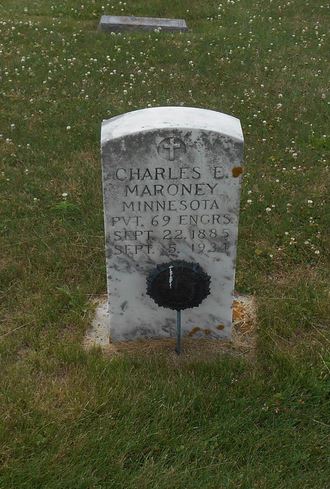
Charles signed in aboard the U.S.S. Montpelier after his time in France on August 28th, 1919 and landed back in the US on September 11th. It was at this time that he was most likely given the above card to fill out and ship to his parents back in Minnesota. His wartime record puts him with an engineering unit that was focused on railway work during the war and this tombstone identifies him as a Private with the 69th Engineers . This doesn’t exactly jive with his US Headstone Application or the US Army Transport records seen above. According to records, his grave should’ve listed him as being with the 144th Transportation Corps. Please note that his mother was also the recipient of his body after he passed away in 1934. 😦

144th

US Headstone Application

charlesmaroney.JPG

Charles E. Maroney’s resting place

WWI Portrait Photo – Lt. Carl Wehner, 141st Infantry Regiment, KIA at St. Etienne, France


A recent eBay purchase has lead me down a warren of research avenues that are helping shed light on the American involvement at the bloody fray at St. Etienne during the Battle of Blanc Mont Ridge in October of 1918. The photo depicts Lt. Carl Wehner with the following inscription on the verso:

“141st Inf., 36th Div. Lt. Carl Wehner killed Oct. 8, 1918 by a German sniper.”

It was this writing that pushed me to purchase the photo at a reasonable $25.00 in hopes of researching and fleshing out the life of the young Lieutenant and Wisconsin native who was killed in action only days after his 26th birthday.

wwi024

Lt. Carl Wehner in France, 1918

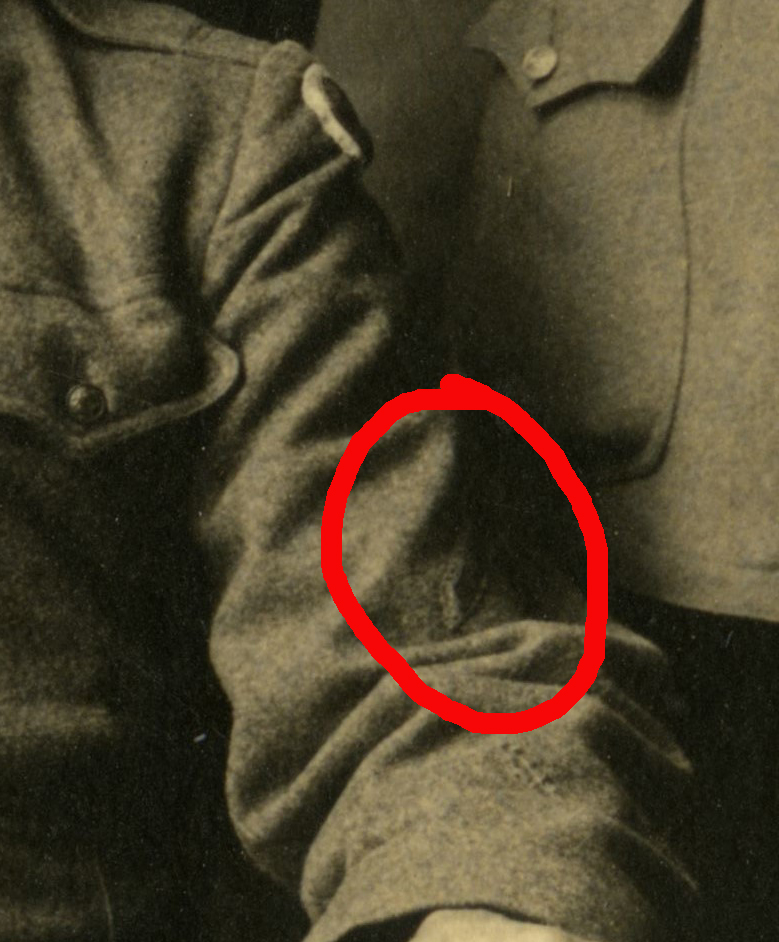
This photo was most likely taken a month or so before his death in October, as he is sporting a 6 month overseas service chevron on his left cuff. August or September would roughly be six months after his arrival from stateside officers training. He was selected to be a Lieutenant with Company K of the 141st Infantry Regiment of the 36th Division – a unit comprised mostly of southern boys from Texas and surrounding states. Having been born in Lincoln, Kansas and spending most of his life in Madison, Wisconsin, he originally enlisted with the 32nd “Red Arrow” Division but elected to train to become an officer. At the time of his enlistment, he lived at 925 West Dayton Street in Madison.

005251478_02371

Carl’s WWI Draft Registration Card

And I was able to find a fascinating account of his death while commanding Company K following the death of his Captain (Source – Entry by RavenHawk)

…It was near St. Etienne, as his captain layed dead, Wehner led his unit forward, until he himself was struck in the head, by enemy gunfire, and killed. One account of the battle (perhaps a little exagerated), said: “Lieutenat Wehner died with three machine gun bullets in his forehead and a smile on his lips as he led Company K of the 141st Infantry over the top after his captain was killed by the fire of the enemy.”….In a letter signed by the Marshall Of France, Commander in Chief of the French Armies of the East, Petain, it was written: “Lt. Wehner displayed audacity and disregard of danger during the operations near St. Etienne. At the head of his men, encouraging them with his skill, he largely contributed to the success of the operations which made it possible to capture all objectives. He was killed at his post of combat.” For his bravery, Wehner was awarded the Croix de Guerre with palm for bravery….As for Wehner’s family, they didn’t find out until after Christmas, that Wehner had been killed, in battle…Wehner’s body was returned to Madison in 1921, and reburied at Forest Hill on 10/21/1921.

WWI Ohio Soldier Research – Defiance, Ohio Soldiers Identified as Ward Family Veterans


A recent eBay purchase has been incredibly fun to research and has yielded some solid and fulfilling results.  I purchased a group photo of four US soldiers posing in an American studio immediately following the war.  How do we know they are in an American studio?  The veteran at center is wearing a WWI Discharge Chevron, also known as a Discharge Stripe or Honorable Discharge Stripe, which indicates that the soldier has been discharged from his service and can wear his uniform in public with the proviso that he affixes the chevron.  Apparently, it was possible to be arrested for wearing a service uniform without the stripe after three months following discharge.

Ward Brothers

Ward Brothers

A fellow WWI researcher (Brian – AKA WWINERD) posted the following information on a popular militaria web forum:

“Thus far, I’ve been unable to locate any specific General Orders either from the War Department or from the U.S. Army concerning the red discharge chevron, which I believe was adopted early in 1919. However, I do know that:

  • Each discharged soldier was issued with three discharge chevrons. Officers had to purchase their own.
  • Upon being discharged from service, the uniform could be worn for a maximum of three months without the red discharge chevron.
  • If the uniform was worn after the three month period had expired, the person wearing it could be charged with the offense of impersonating a soldier.
  • If the uniform was never worn again the discharge chevron did not have to be sewn on.
  • As soon as a soldier received his discharge papers he became a civilian, and he was no longer obligated to salute a superior officer.

These and other facts pertaining to the uniform and discharge chevron were explained in a post war pamphlet handed out to Doughboys before they mustered out of the Army. It partially read as follows:

John Ward's Discharge Stripe

John Ward’s Discharge Stripe

The Uniform

If it is your desire to go home in uniform, it is your privilege to do so, under full grant of an act of Congress. You may wear your issue uniform as long as it hangs together if you wish. It is yours. But do not let a minute pass, after being discharged, until you have sewn on, or had sewn on a red chevron, point up, midway between the elbow and the shoulder on the left sleeve.

The wearing of any gold, silver, or metal device indicating service is forbidden. Only regulation service chevrons and collar insignia are authorized by law and regulations. Wound and service chevrons for service in any of the Allied Armies are included in that authorization. Can all camouflage.

Remember in wearing the uniform, that all of its privileges are yours, with none of the restraints. You are a civilian. There is no law or regulation or tradition requiring you to salute an officer. But so long as the O. D. or the Navy blue or the Marine green covers your body, it should be your pride as one with a military training, and as a soldier who participated in the Great War, to be courteous.”

Where Do We Go from Here: This is the Real Dope, 1919, William Brown Meloney, page 21, 22

Ok – so we know the photo was taken stateside at some point after the war, but recent enough to warrant a group shot of all four men in uniform.  The photo trifold mount had “Ward Boys” scribbed on it with no additional identifying information.  The seller was from Ohio, so I started with a basic search for Ohio veterans with the last name of Ward.  Big mistake……. There were nearly a hundred men with the last name of Ward who served in Ohio during the war.  Take a deep breath…..

I needed to narrow down the search and the image itself provides a very good way in which to identify one of the soldiers based on his patches.

Clayton Ward

Clayton Ward

See those patches on his left sleeve? They’re from a very famous unit that served in Italy during the war.  In fact, this is an incredibly rare shot that depicts a soldier wearing regimental, divisional and army level patches along with the discharge chevron previously mentioned.  Ok – so we know one of the Ward Boys was in the 332nd Infantry Regiment.  Since the typical US regiment during the war varied between 1000-2000 (roughly), it’s highly unlikely that two men with the last name of Ward were likely to both be from Ohio.  Luckily, my research gamble paid off……

Clayton Ward, H Co. 332nd Infantry Regiment

Clayton Ward, H Co. 332nd Infantry Regiment

Bingo!  After interpreting the abbreviated information in the Ohio WWI book, I was able to determine that Clayton was born in Defiance, Ohio, was 24 years of age, and served with Company H of the 332nd Infantry Regiment.  With the place of birth info, I was able to identify all the additional men in the photo using clues present on each of their uniforms.

A quick search for the 1910 US census record for the Clayton Ward provided me with the names of his brothers:

1910 US Census

1910 US Census

With the census in hand, I was able to make out a few names of brothers who were of-age to serve during WWI.  Clint (short for Clinton) and Perry were easy enough to research.  The same Ohio reference book provided the following:

Clinton Perry

Clinton Ward

Perry Ward

Perry Ward

Based on the information provided in the reference book, Clinton Ward, age 26 1/12 at the time, enlisted with Company G of the 6th Infantry of the Ohio National Guard.  This unit was federalized and became Company G of the 147th Infantry Regiment.  He rose to the rank of Private First Class on May 15th, 1918.  Since I’ve memorized the rank insignia of the AEF, I was able to quick pick him out.

Clinton Ward

Clinton Ward

See the round patch on his right arm?  That’s the rank insignia worn by a Private 1st Class during WWI.  I’m including a generic view of the patch below:

Since he’s the only one wearing a Pvt. 1st Class patch in the photo, plus the addition of infantry regiment collar discs, he’s almost certainly Clinton.

Perry Ward

Perry Ward

Although it’s tough to make out in the scan, the soldier is clearly wearing a collar disc that depicts a set of crossed cannon.  This would indicate service in an artillery unit during the war.   Perry’s reference in the aforementioned Ohio WWI book shows that he served with the 52nd Coastal Artillery Company during WWI, which would be supplied with these exact collar discs.

WWI Artillery Collar Disc

WWI Artillery Collar Disc

At this point, I’ve been able to identify three of the four soldiers in the photo based on archival research, visual interpretation and identification of key pieces of military insignia, and a gut feeling.  The last soldier, shown sitting turned out to be a tough nut to crack.

John Ward

John Ward

Ok – so what do we see in the photo?

  • A seated male, appearing to be the oldest based on facial details
  • A 37th Division patch on the left sleeve
  • A discharge chevron and overseas service chevron
  • Corporal rank insignia on the right sleeve
  • Infantry collar disc

In essence, we have an older-looking corporal from the 37th division who served for at least six months (the service chevron) overseas in an infantry regiment.  A detailed search of the Ward’s who served from Ohio in WWI yielded the only possible candidate:

John Ward War Record

John Ward War Record

John Alvin Ward was a brother who separated from the family early in life (no idea why) and eventually rose to the rank of corporal in WWI as part of the 147th Infantry Regiment.  It was tough to parse out the details regarding his upbringing, but the following Social Security information confirms that he was indeed from the Ward family of Defiance, Ohio.

Social Security Records

Social Security Records

At first I was confused about the portion mentioning his father being identified as a William H. Ward, but upon further genealogical research it became clear that his father commonly switched his first and middle names; this is a common practice that becomes terribly difficult for researchers.

So, we have the older brother who left the family and posed with his brothers after returning home from war in 1919.  Sadly, the photograph was discarded at some point and made it’s way into the eBay chain; eventually ending up on the desk of an intrepid WWI researcher (Me!) who was able to bring some context to the photo using easily-accessible internet resources.  I hope I’ve inspired some readers to delve into their own collections of photos in hopes of giving a name to the faces sitting in photo binders and dusty drawers.

Interested in researching Ohio World War One veterans?  Check out the following book:

The Official Roster of Ohio Soldiers, Sailors, and Marines in the World War, 1917-18. Columbus, OH, USA: The F.J. Heer Printing Co., 1926.

A Mormon Missionary in WWI: Battling Influenza in American Samoa


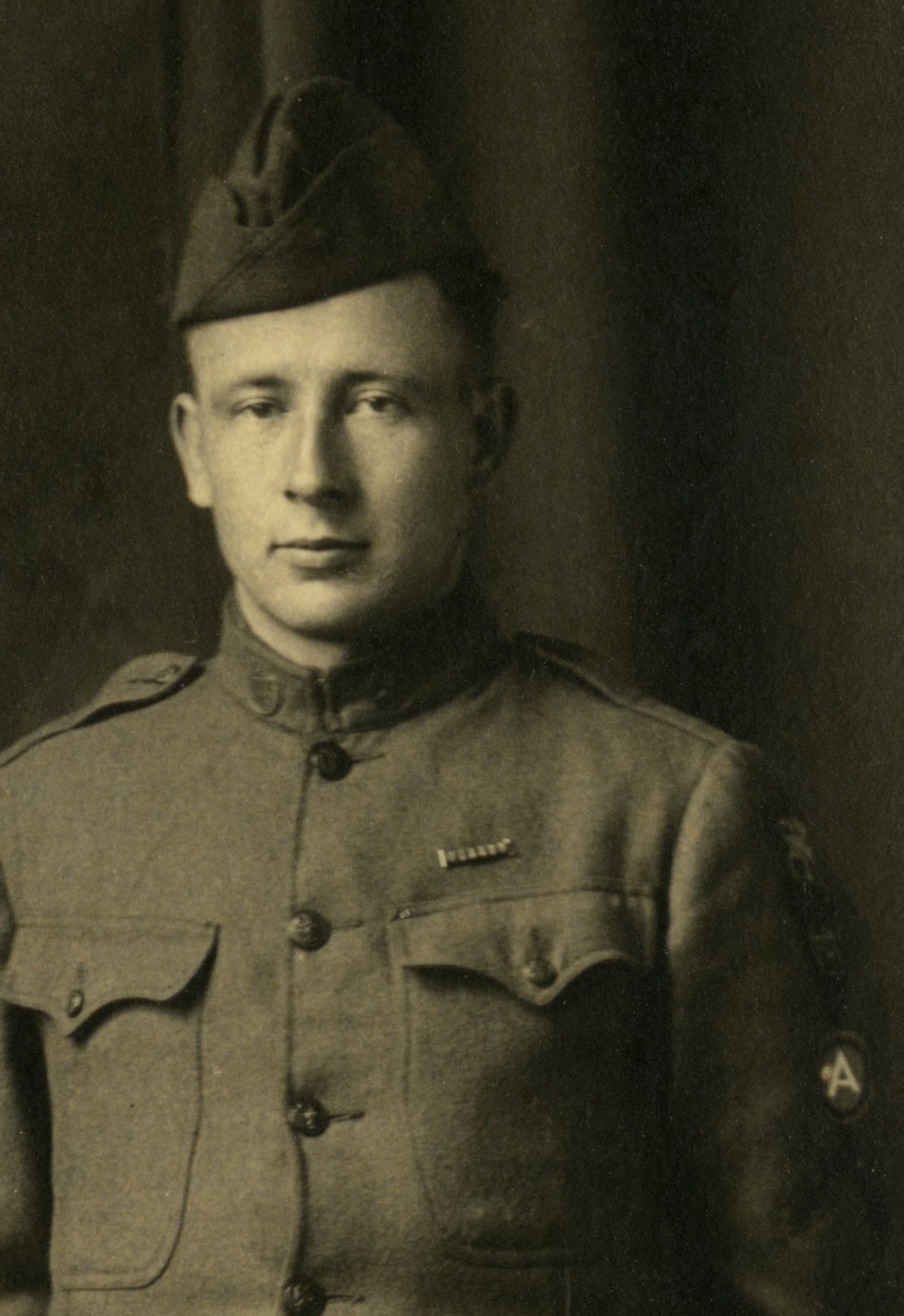
Byron Miller in World War One

Byron Miller in World War One

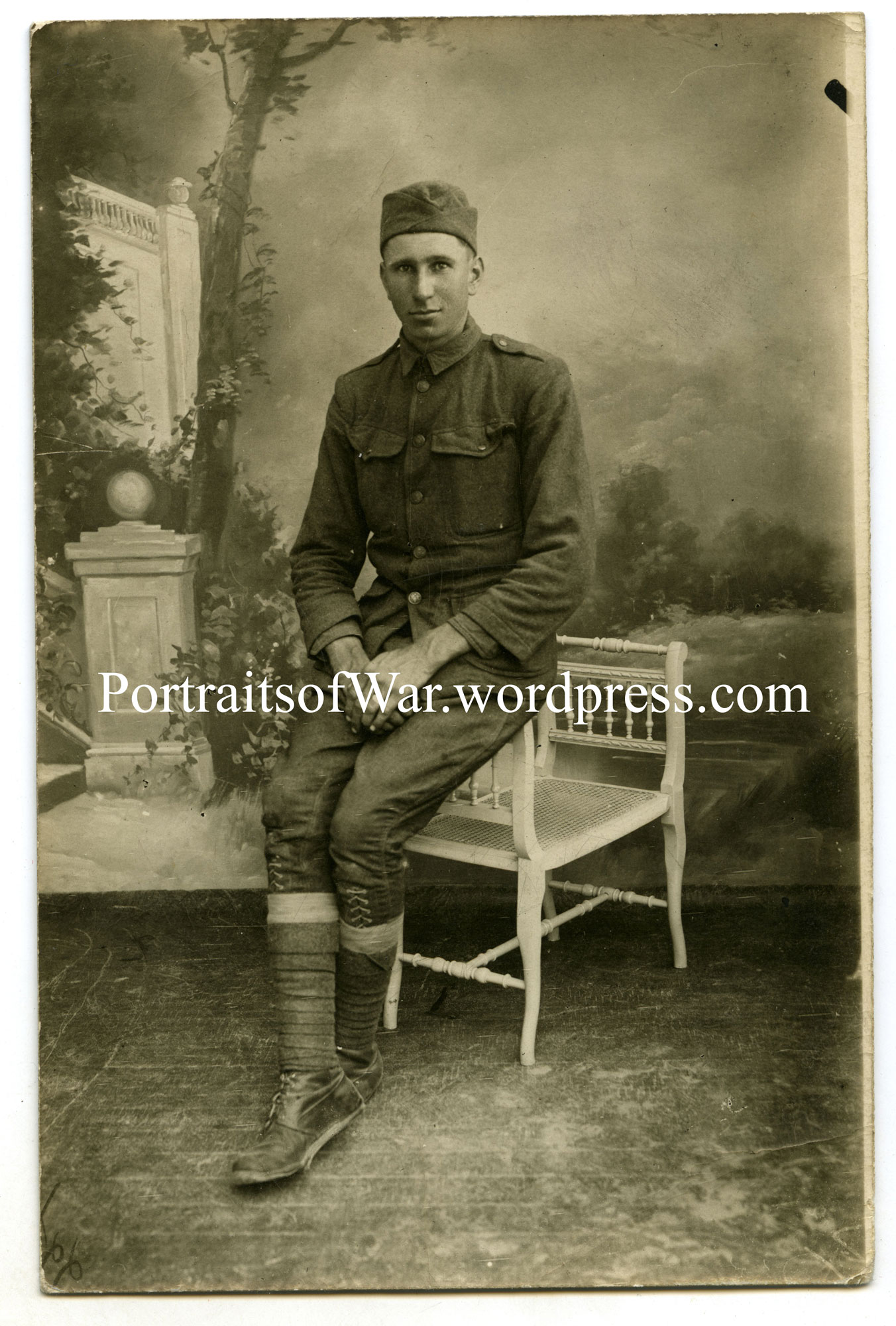
When searching for new portraiture to add to PortraitsofWar I generally tend to look for material with identifiable soldiers, uniforms, medals and other researchable information to help shed light on life during wartime.   In this post, I will be researching a photograph of a US Navy sailor who caught my eye during a recent eBay search.

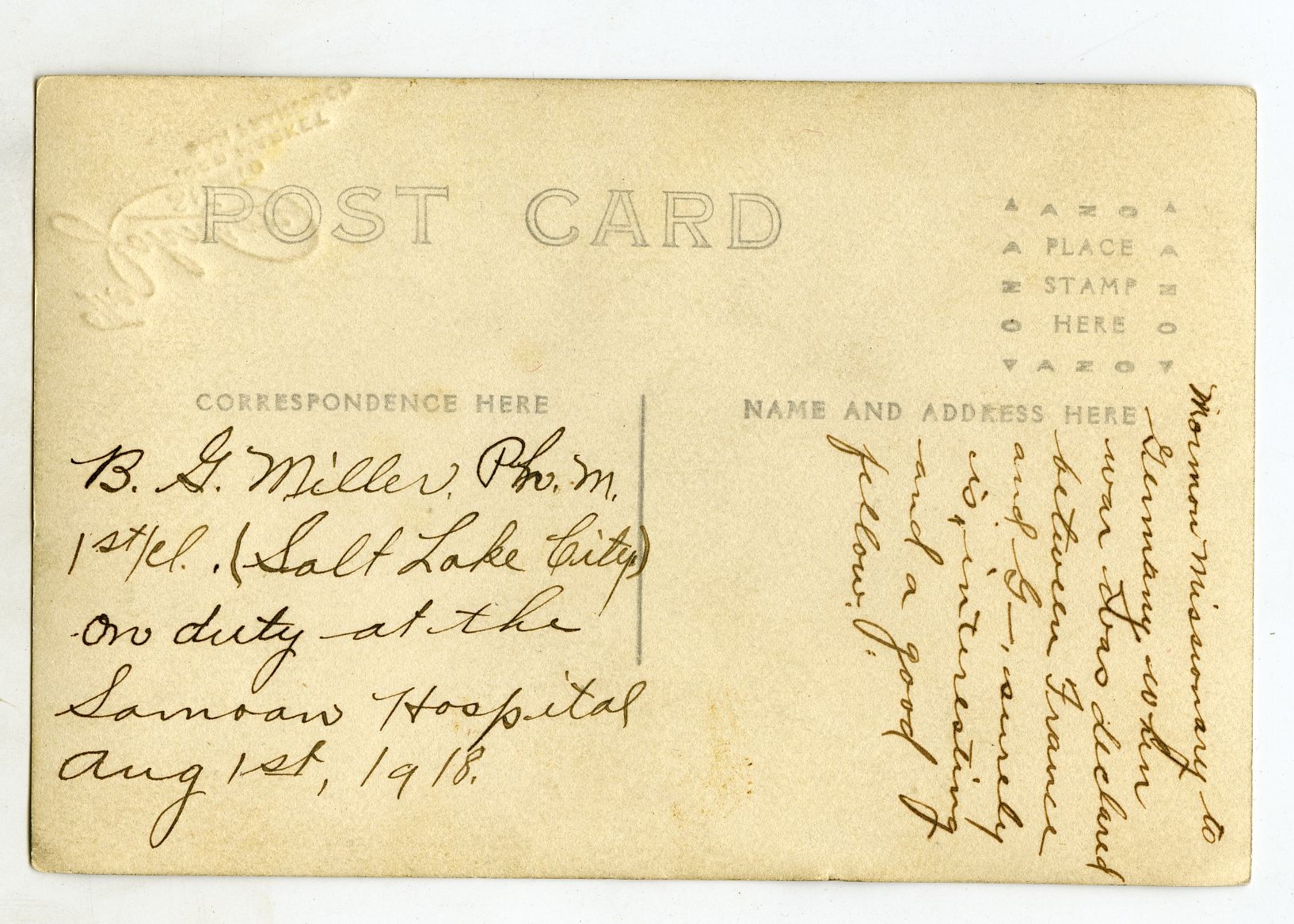
Reverse Side of Postcard

Reverse Side of Postcard

The information written on the back of the postcard shows an identification of the sitter as a B.G. Miller.  He is identified as being a Pharmacist’s Mate 1st Class from Salt Lake City, Utah who was on duty at one point at a hospital in Samoa on August 1st, 1918.  Additional info added to the photo includes an anecdote about his position as a Mormon missionary in Germany during the breakout of the war between Germany and France.

With a little luck and a lot of research I was able to track down our mysterious B.G. Miller.  Byron Gardener Miller was found listed in the Utah World War 1 Military Service Questionnaire on ancestry.com.  Please see his card below:

Byron G. Miller in WWI

Byron G. Miller in WWI

It looks like Byron attended the University of Utah for a year before being shipped off for his overseas missionary work. This is likely the reason for his service as a Pharmacist’s Mate with the US NAVY as can be seen in the details of his uniform.

Navy Pharmacist's Rate Patch

Navy Pharmacist’s Mate Rate Patch

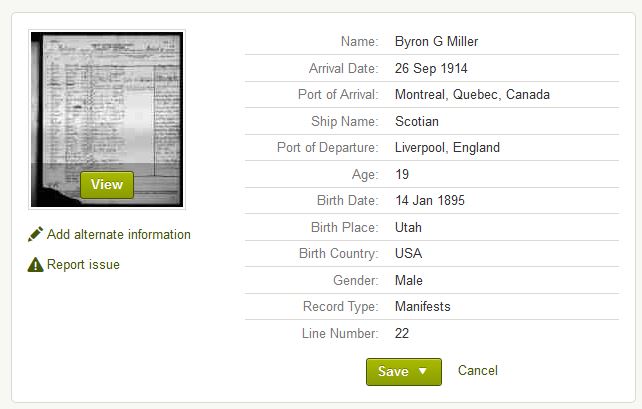
The reference to his missionary service in Germany during the outbreak of war in July of 1914 is partially confirmed through my discovery of his listing aboard a ship ledger arriving in Montreal, PQ in September of 1914.

1914

His service in Samoa has also been confirmed through the same series of records.

sssonomoa

Sadly, his arrival back in the US in 1919 wasn’t likely a time of joy for the Miller family; a Utah death certificate shows that he died of influenza only a few months later on February 7th, 1920.  Interestingly enough, my research into the US Hospital in Samoa shows that a MASSIVE flu outbreak in the Samoan Islands lead to the deaths of nearly 25% of the population.  The US Navy set up an epidemic commission to deal with the issue.  The results of the intervention in American Samoa were incredible.  Apparently the method of using maritime quarantine lowered mortality rates to nearly 1%.  It’s strange that Byron would die of influenza only a few months later while in the United States……

For the 1919 report please CLICK HERE

1920 Death Certificate

1920 Death Certificate

One of the main goals of this website is to help share photos and pertinent military service information with the families of the men and women depicted in the images I collect. In this case, I’m hoping a Miller family representative will discover a rare image of their ancestor who witnessed a formative time in history.

WWI Photo – Silver Lake, MN Pvt. Edward Prochaska Killed in Action, 118th Infantry, 30th Division


Each of the 116, 516 US soldiers, Marines and sailors killed during WWI   deserve a narrative on the world wide web.  In this case, a photo of Edward Prochaska of Silver Lake, MN recently arrived in the mail from an eBay seller in the Midwest.  I purchased the photo after doing some brief research on the photo, finding that Prochaska was killed in action while serving with the 118th Infantry, 30th Division.

Ed Prochaska ca. 1918  France

Ed Prochaska ca. 1918
France

Incredibly, Prochaska is referenced heavily in a postwar book following the exploits of Private Oscar Dahlgren during WWI.  The full text version of the book can be found here: http://bit.ly/1bSx4h9

Some excerpts from the book are incredibly detailed and give us a unique view into the experiences of a doughboy on the frontlines.

Page 59

“In the evening of this day (August 4th, 1918), we started for the front line trenches carrying with us rations.  Myself and Prochaska toted a bag of coffee together changing off with other when tired.  Getting on the road just east of Valencies, we got caught in a shelling that Jerry put over on the roads every day at Valencies toward evening. The big shells dropped so close that we expected to be blown to pieces for every shell.  We threw ourselves flat, favoring the fall.  Luckily, my platoon got through the shelling without any casualties, except for a bag scare.  I could tell how bad when I noted how extremely pale they all got. It struck me so funny that I wanted to laugh.  Ed Prochaska noticed it too, and felt kind of ashamed saying he could laugh at death grinning us in the face.”

Page 105

“Again between August 26th and 27th Prochaska was with me when another heavy shelling took place.  The trench here was shot up bad so there was little protection.  A heavy shell tore into the bank behind our backs.  We both flopped down with pan.  I said it felt like my fingers had been shot off, but I found all my fingers there.”

Page 117

“It was dark and rainy as we walked up the line we had to step over German dead who were lying thick around there (sic) holes they had made in the ground.  When we halted we took into those holes which weren’t very deep.  The hole I got wasn’t more than a foot deep.  Schellenburger got to be my partner.  4 or 5 dead Germans lay dead by my hole.  Prochaska was close by digging in together with R.L. Ross, we not set to work and dug our hole 4 feet deep and wide enough to stretch out.”

Page 65

“Someone caught sight of one coming towards us from Company Headquarters.  He was already half ways and now there was some hollering for him to get down, especially by the sergeant.  It turned out to be Prochaska.  Poor boy – they had him pretty nervous before he came up.  He did not know we weren’t allowed to cross now……… They asked him what he meant by coming over…… He told them he had been at the canteen having bought some cakes, cookies and a can of salmon saying I wanted to bring Dahlgren some! ……. It touched my heart that he had so much friendship and love for me – he thought so much of me.”

And the sad details leading up to Edwards death:

Page 135/6

“I stopped to talk to Prochaska who had dug in deep by himself and was carrying straw to bed down with.  I and he had always dug in together before, but now as I was a runner, we were parted.  Well, he did not get used to his foxhole as he was put on guard at Company Headquarters where I was.  There in the hedges he slept when off guard, that being the last time I talked with him.  That night, though I had a warm bed, I was not able to sleep as the cooties and German fleas started going over the top and giving me no peace……

After getting through the hedge and the wire fence which separated us from the field, we noticed an observation balloon.  We had a funny feeling something terrible was in store for us. My heart made a few quick beats and I felt pale.  All of us runners said to the Captain that it would be suicide to cross the field……. I noticed dozens of Americans lying on the railroad bank killed and the rails lay twisted up…….. We now got to talk to some men of the 128th Regiment who said the same thing happened to them at Brancourt…… The first I got across, one of the boys called me and said, “Prochaska, Dahlgren is killed.”  He had out names mixed up.  The boys were lying close to Prochaska told me his head and shoulder were knocked off by a shell.  He had been my best friend for a long time……”

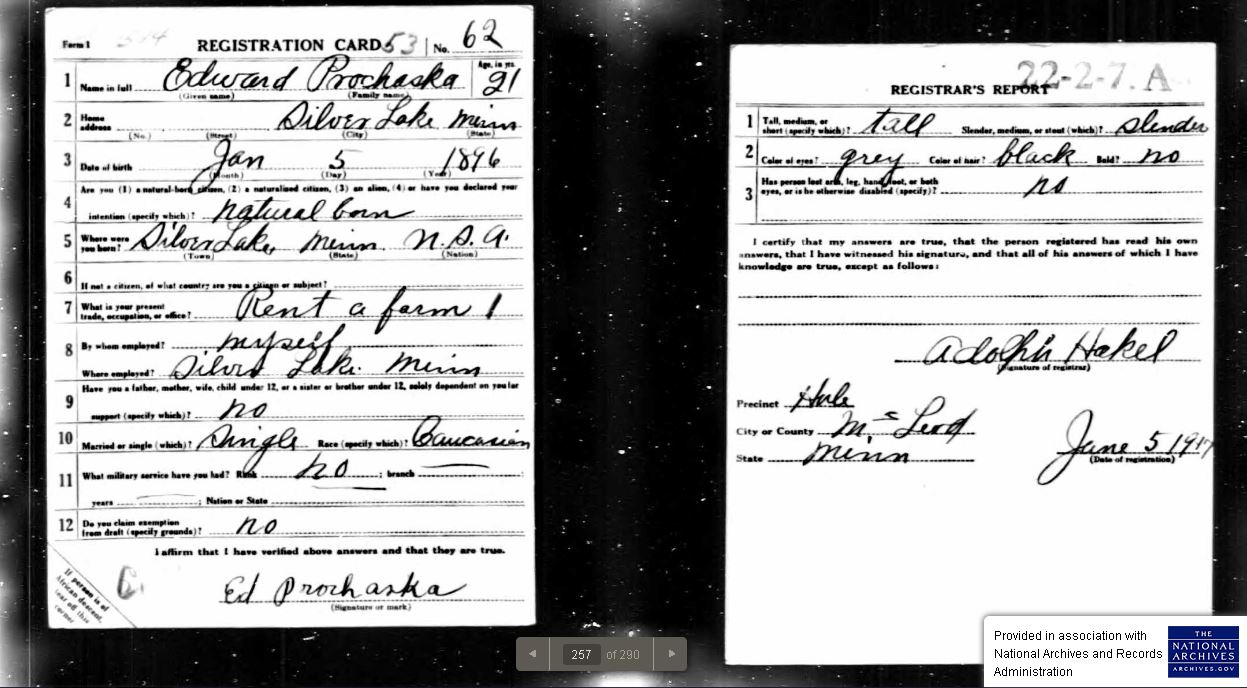
Prochaska

Prochaska

WWI Draft Card

WWI Draft Card

WWI Photo – Intense Research Yields an Identified US Pilot in Italy – One of “Fiorello’s Fogianni”


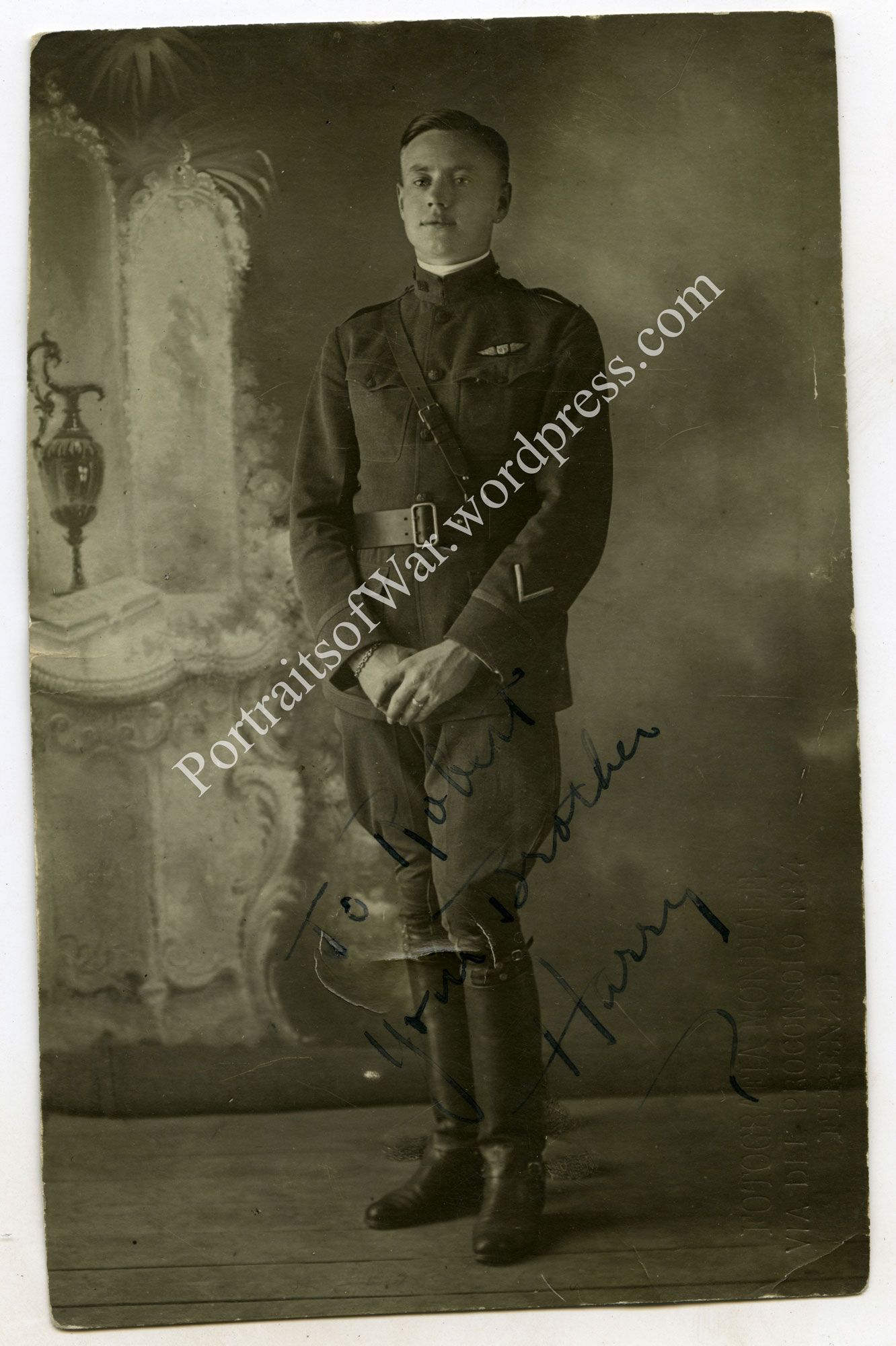
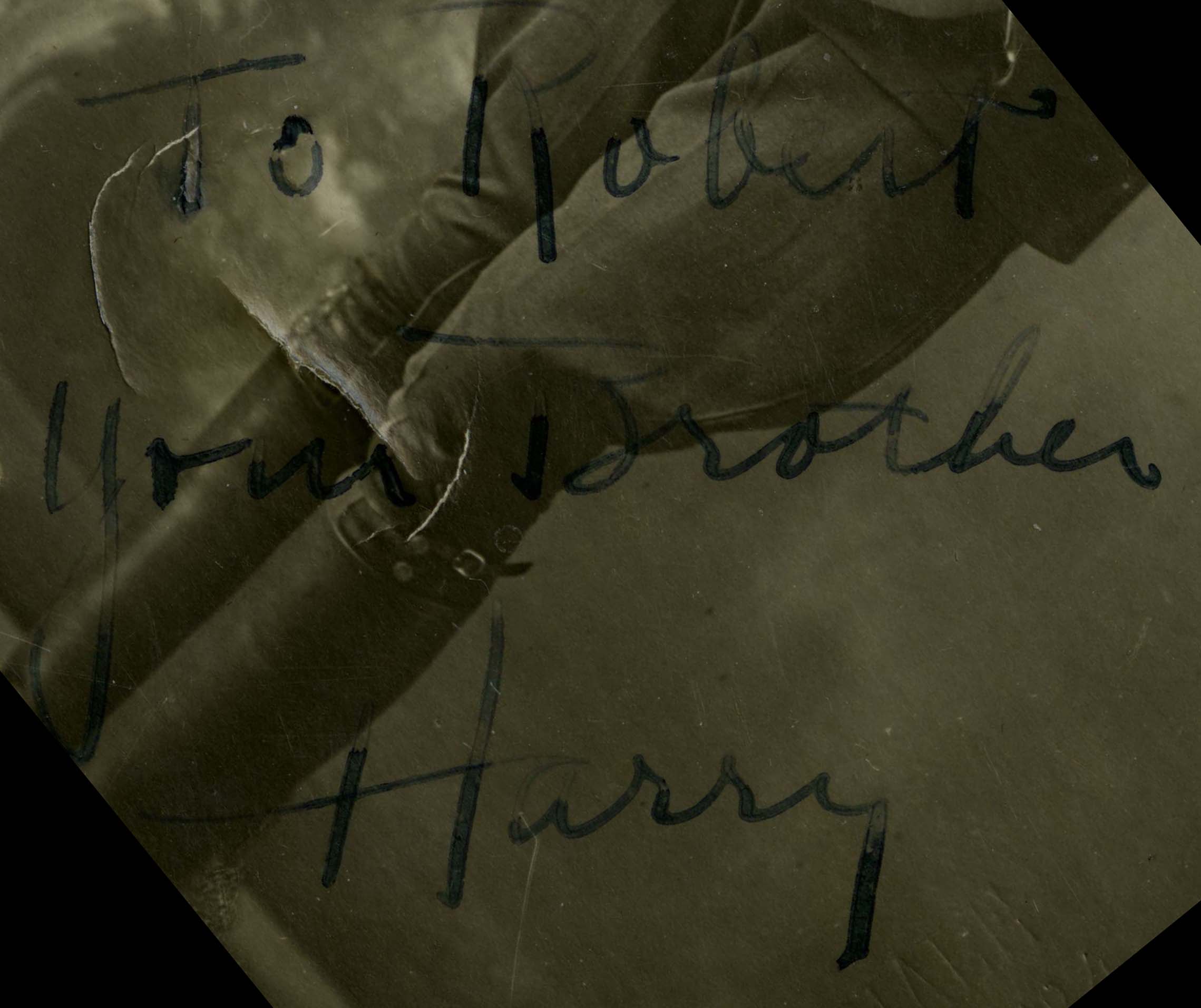
Generally my WWI photo identifications come with a name, unit, and typically a home state or region.  In this case, the only direct ID information to come with the photo was a first name – Harry- and the name of his brother.  The rest of the information was hidden in the nuanced details of the photo postcard.  See below for the main photo included in the eBay listing.

"Harry" in Italy

“Harry” in Italy

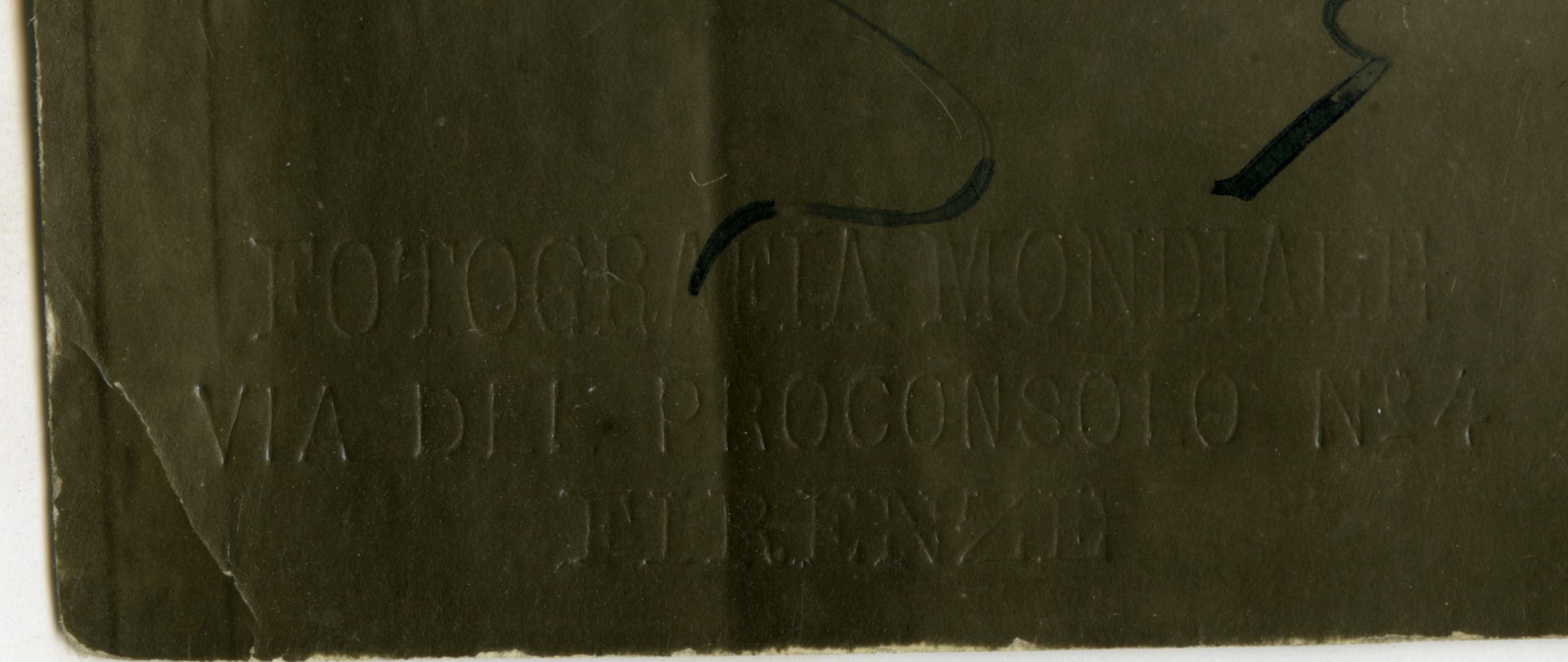
The eBay listing also made reference to the fact that the studio stamp was an Italian photographer. With this in mind, I bid to win.

After successfully winning the photo I began the laborious process of identifying the photo.  Here’s the info I was basing my research on:

1.  The photo depicted a US pilot who had served at least 6 months overseas at the time the photo was taken.

2.  The pilot was named Harry and had a brother named Robert.

3.  The pilot had a distinctive signature and handwriting style with large crossed H’s and a penchant for flourishes.

4.  The pilot was in Italy at some point during the war.

I first started my research with a general reference search to find out how many US pilots were in Italy during the war.  Lots of websites popped up and generally pointed towards the Fiorello’s Fogiannia, a group of US pilots who trained in Italy on Italian bombers.  We’ve all been stuck in LaGuardia airport at some point in our lives, so I instantly recognized the reference to Fiorello LaGuardia.  I had no idea he was in WWI!  Further research made it clear that only 500 or so US pilots were in Italy during the war.

Italian Photo Studio Stamp

Italian Photo Studio Stamp

I started by tracking down a copy of the roster of the pilots who trained with the “Fogianni” during the war.  A good friend, Chuck, was extremely gracious enough to take photos of all the pages and send them to me.  I finally had the whole roster to reference.  With this in hand, I identified all the Harold’s and Harry’s in the roster.  This helped narrow it down to less than 30 candidates!  From there I looked at the 1900 and 1910 roster for each of the men in hopes of finding a brother named Robert.  A small handful of candidates trickled through.

Perfect Match!

Perfect Match!

Harry's Signature

Harry’s Signature


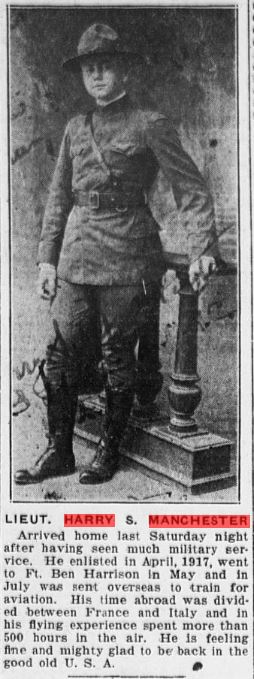
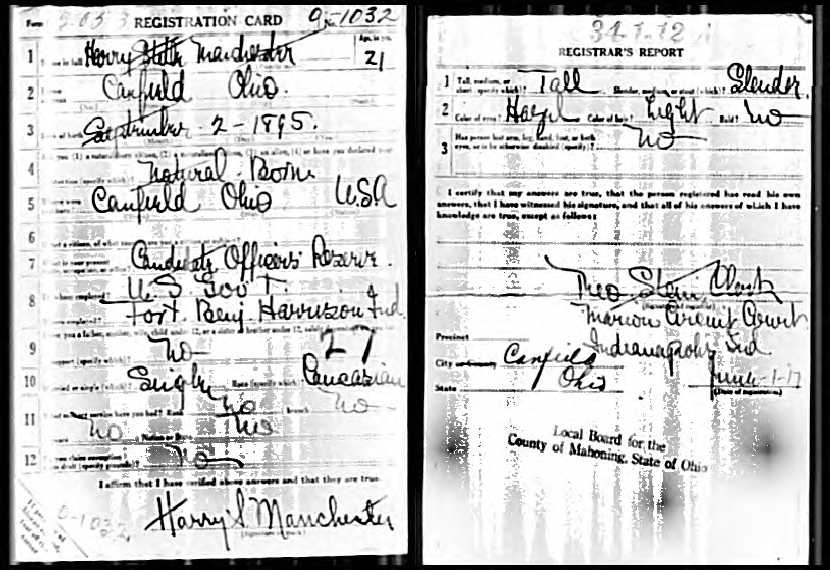
My first cross reference for the Harry’s with brothers named Robert brought me to Harry S. Manchester from Canfield, Ohio.  The signature on his WWI draft card almost knocked me over!  A perfect match.  Note the intense cross on the H and the overly dramatic crosses on his T’s.  With further research I was able to find a TON of information on Harry.  He was indeed a pilot in Italy during the war and also served in France as  a test pilot, testing new US planes as they were unloaded in France.  His brother was Robert Manchester Jr.  I was able to find Robert’s son (Robert Manchester III)  and grandson (Robert Manchester IV) online, both prominent lawyers in the midwest.

Harry's War Record

Harry’s War Record

Ohio Newspaper Reference

Ohio Newspaper Reference

Harry Wearing Italian Wings

Harry Wearing Italian Wings

Harry Home from College 1916

Harry Home from Wooster College 1916

Harry in Italy

Harry in Italy

Harry as Test Pilot

Harry as Test Pilot

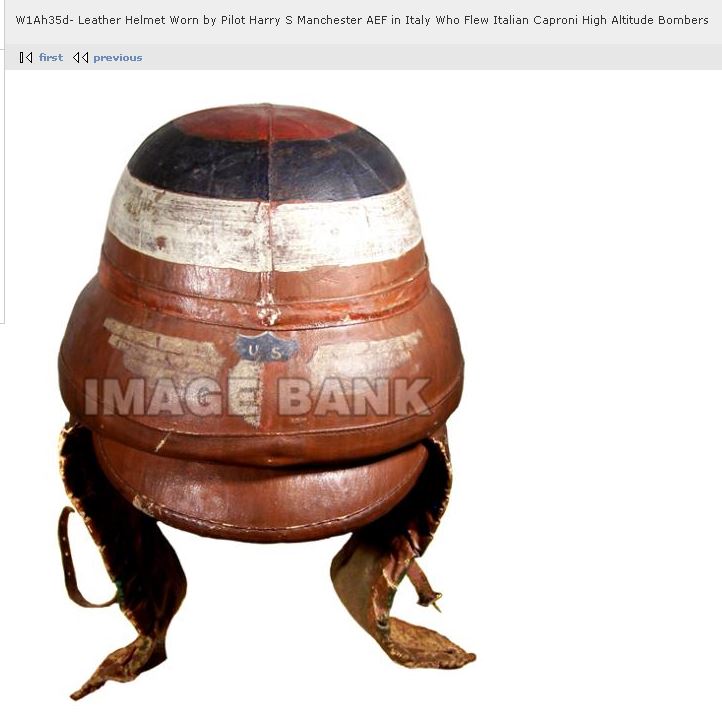
Harry's WWI Flight Helmet

Harry’s WWI Flight Helmet

Also, the National WWI Museum apparently received a donation of a series of photos from the Manchester Estate.  Check out these additional portrait shots of Harry from the collection! (Used without permission but with watermark)


WWI Photo Identification: Mortimer G. Thompson of Knoxville, TN 117th Infantry, 30th Division


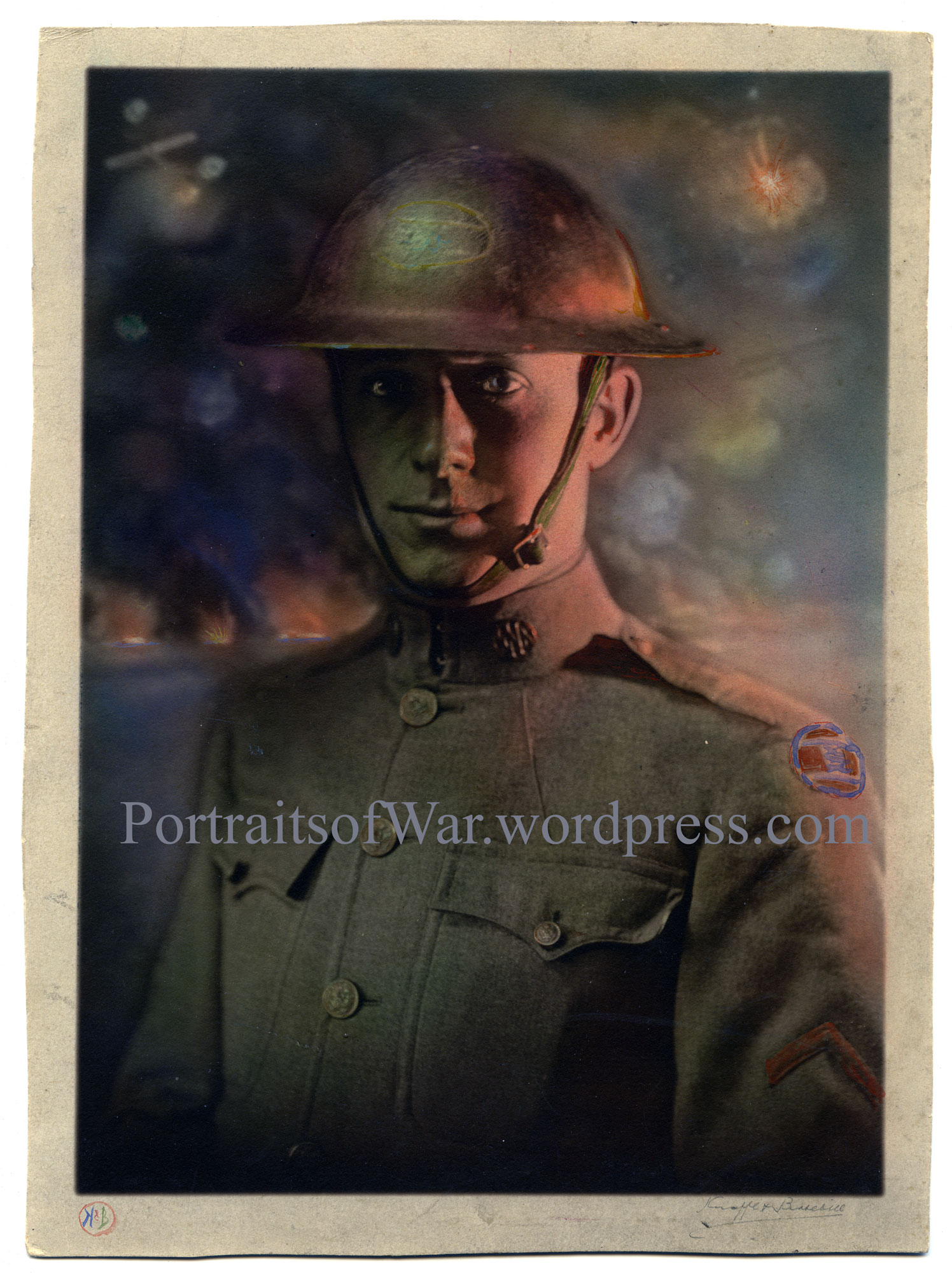
Another incredible set of portrait photos arrived on my doorstep today by way of a close friend and fellow collector.  Two portrait photos with incredible detail showing a clear 30th Division patch as well as a very uncommon 30th Division helmet.  Shots of WWI soldiers wearing their service helmets in a portrait studio are especially prized amongst collectors.  A big thanks to Chuck for parting with this set!  As always, I will delve into the genealogy of this soldier and hopefully find some interesting material using web-based resources.

Mortimer G. Thompson

Mortimer G. Thompson

Mortimer Grinnell Thompson was born on December 29th, 1897 (other sources say 1887) to C. Mortimer and Hattie C. Thompson in Knoxville, Tennessee.  He entered Federal service on May 21st, 1917 and eventually ended up as Sgt. with the 117th Infantry Regiment of the 30th Division. At this time, I can’t find much about his military service other than the basic facts.  With some more in-depth searching I may be able to elucidate some aspects of his service that have been all but forgotten over the past (nearly) 100 years.  He married after the war to a Celeste P. Condon and had at least two children named Mortimer G. Thompson Jr. and Harriet A. Thompson in the late 1920s.  Mort is listed as a painting contractor.

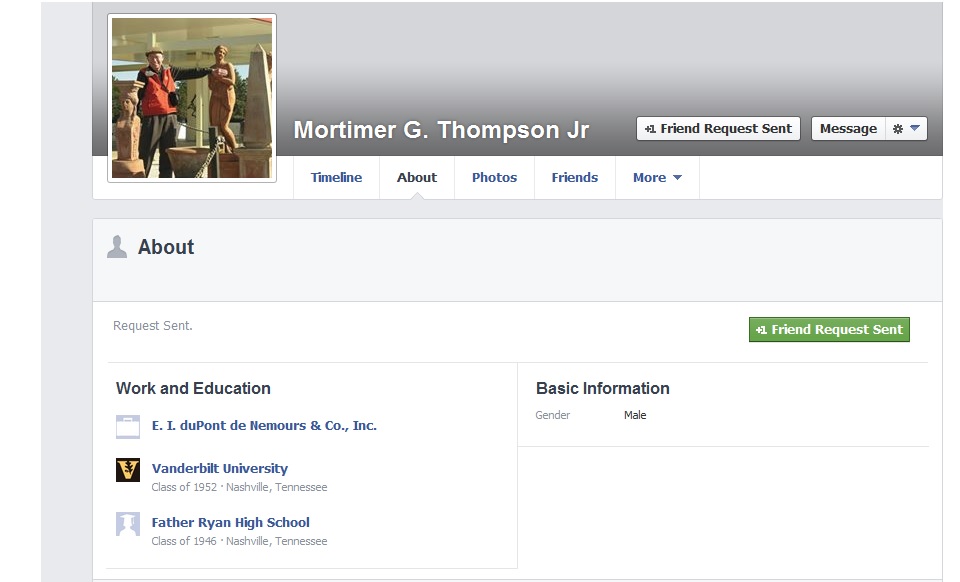
Incredibly I was able to find Mort Jr. on facebook!  A friend request is pending.  He appears to be quite active on facebook and I hope he responds.

MortJr.

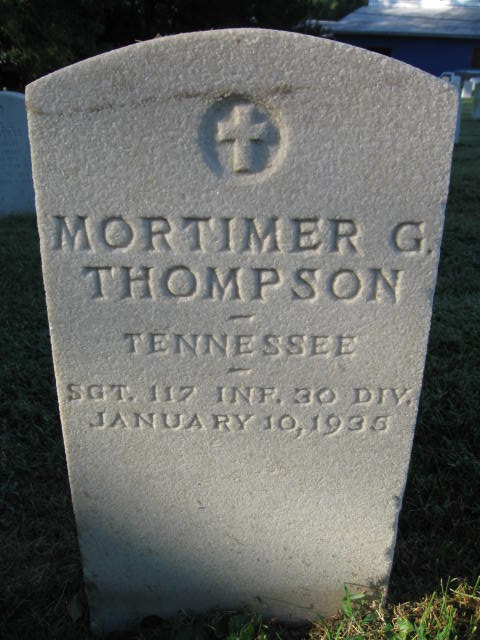
“Mort” passed away at a young age in 1935 and is buried in Knoxville National Cemetery in Knoxville, TN.  His plot number is B,0,3993.


Mortimer Thompson's Headstone Source: http://www.findagrave.com/cgi-bin/fg.cgi?page=gr&GRid=1252279

Mortimer Thompson’s Headstone
Source

Mortimer was the son of Charles Mortimer Thompson, better known as C. Mortimer Thompson, progenitor of  Thompson Photo Products of Knoxville, TN.  The Thompson family have been THE go-to family for photography needs in Knoxville for over 100 years. It’s no wonder the portrait shots of Mort are so detailed and well colored.  Charles was an architect, draftsman and photographer who had an eye for detail and a solid business plan.  His son Jim eventually became one of the best known Tennessee photographers of the early 1900s, capturing the rich visual heritage of the state in the first half of the century.  His works are held in collections across the country and are regarded as some of the best examples of Tennessee industrial photography.  A website of his work can be found here: http://cmdc.knoxlib.org/cdm/landingpage/collection/p265301coll7


Mortimer318

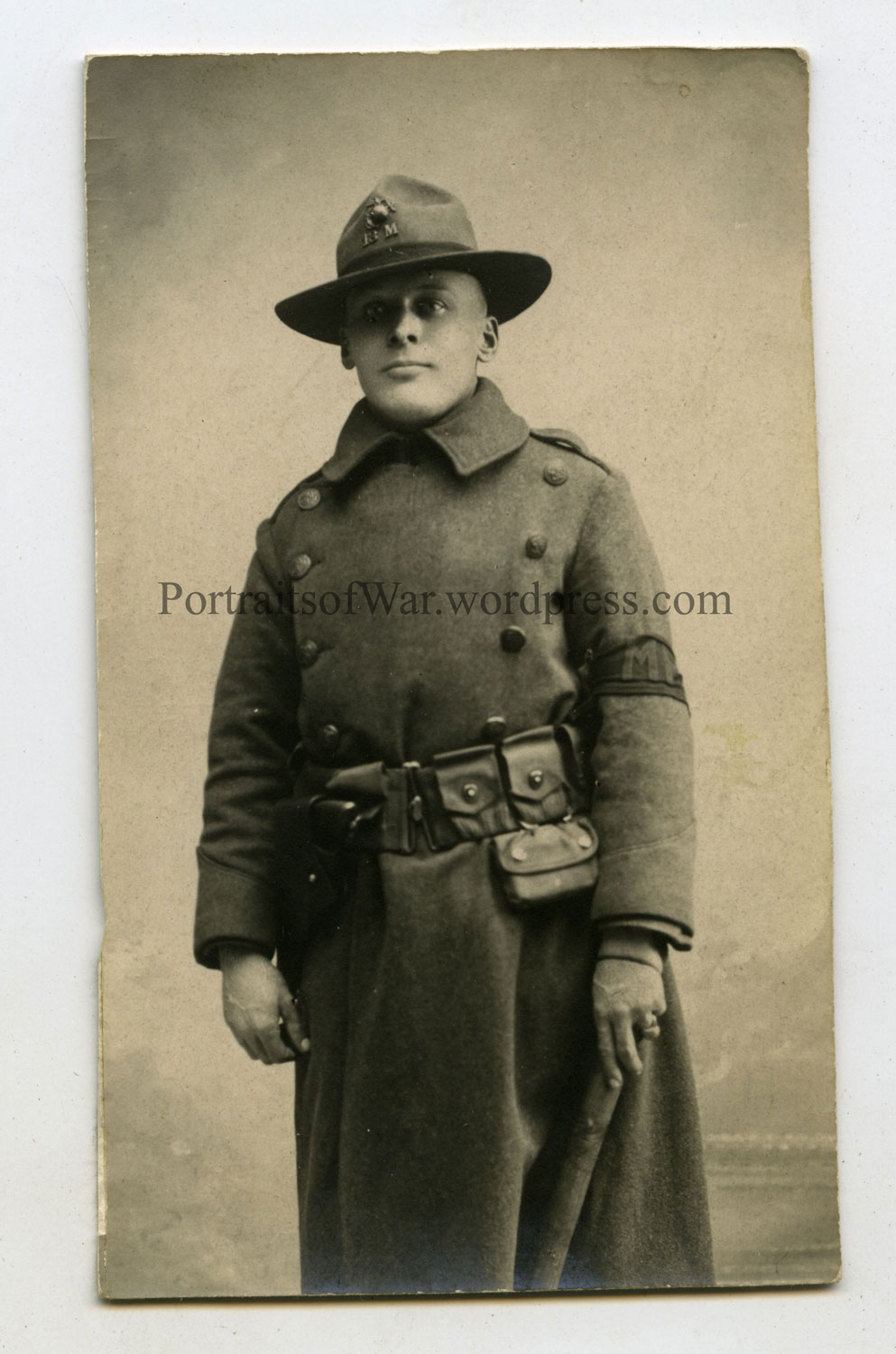
WWI Photo – 13th Marine Regiment MP Studio Photo Identified – Evald A. Johnson


Evald A. Johnson in France 1918

Evald A. Johnson in France 1918

Followers of this blog know that I love to identify WWI photographs using obscure bits of information to track down census and military records.  In this case, I purchased a series of three postcards on eBay with no solid identification in hand.  When the postcards arrived, I realized that I had a slight chance to identifying the Marine.  His hat is sporting a Marine Corps EGA insignia as well as some unit designation.  13 M identifies him as being in Company M of the 13th Marine Regiment of the 2nd Division.  Included with the photo was a postcard note sent to a loved one when he returned from overseas service.

MarineMP232watermark

The unknown Marine scribbled his first name and middle and last initials.  Evald A J.  He also sent the postcard to a Mrs. C F Poulson of Idaho Falls, Idaho.  A quick census search for a C Poulson of Idaho Falls brought up a record for a Mr. Christian Poulson and a Esther A. Poulson.  My gut instinct told me that he was likely sending the card to his sister to announce his arrival back home in the states, so I did a series of census searches to find some clues………


Sister-in-Law

Sister-in-Law

The 1910 US Census record for Esther and Christian Poulson show a mystery resident.  Ms. Ebba Johnson is listed as being a sister-in-law who happened to be living with the couple in 1910.  Bingo!  Now I have a last name to research for Esther.  I quickly found the 1900 census record for Esther and Ebba………..

evaldebbaesther

Bingo!  Evald Johnson is listed as a brother to both Esther and Ebba.  The mystery is solved!  Now to confirm his service with the 13th Marine Regiment.

I easily tracked down his WWI draft card and matched up the signature with the postcard.  A perfect match.


WWI Draft Card  Evald A. Johnson

WWI Draft Card
Evald A. Johnson

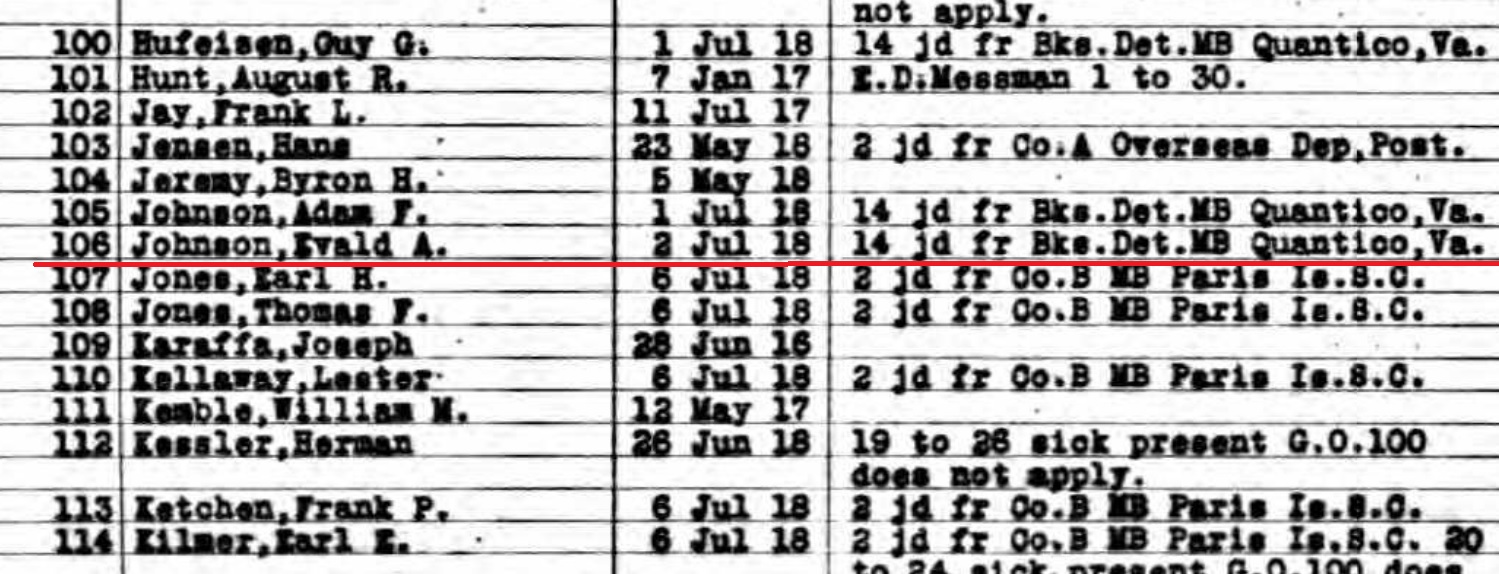
From here I had a hunch to track down the Marine Corps muster role for Company M of the 13th Marine Regiment.  Another solid hit.

Marine Register

Marine Register

And to top it all off, I did a newspaper search for the Idaho area in 1919.  With some luck I found a brief article mentioning his return and his service with the Marines.


“They have come back bigger and better men than when they went away and have taken up their work with the Register and filling their places with credit. The three men are Evald A. John­son, who has been with the Register for some fifteen years, and who re­signed the position of foreman to en­ter the service, enlisting in the ma­rines, going to France, where he put in abmout one years of service.”

Vol 40, No 29 Idaho Register 1919

Vol 40, No 29 Idaho Register 1919


WWI Photo: Research Uncovers 33rd Division Veteran’s Identification! 130th Infantry Regiment Wounded!


Sometimes it takes a good bit of time to lock down the identity of the sitter in a photograph. I wouldn’t be able to do it without the help of dozens of research friends and an equal number of archive websites.  With that said, I was able to purchase, research and identify and post a positive identification of a recent eBay purchase!  It’s not an easy endeavor, but it’s something that will be worthwhile at some point in the future.

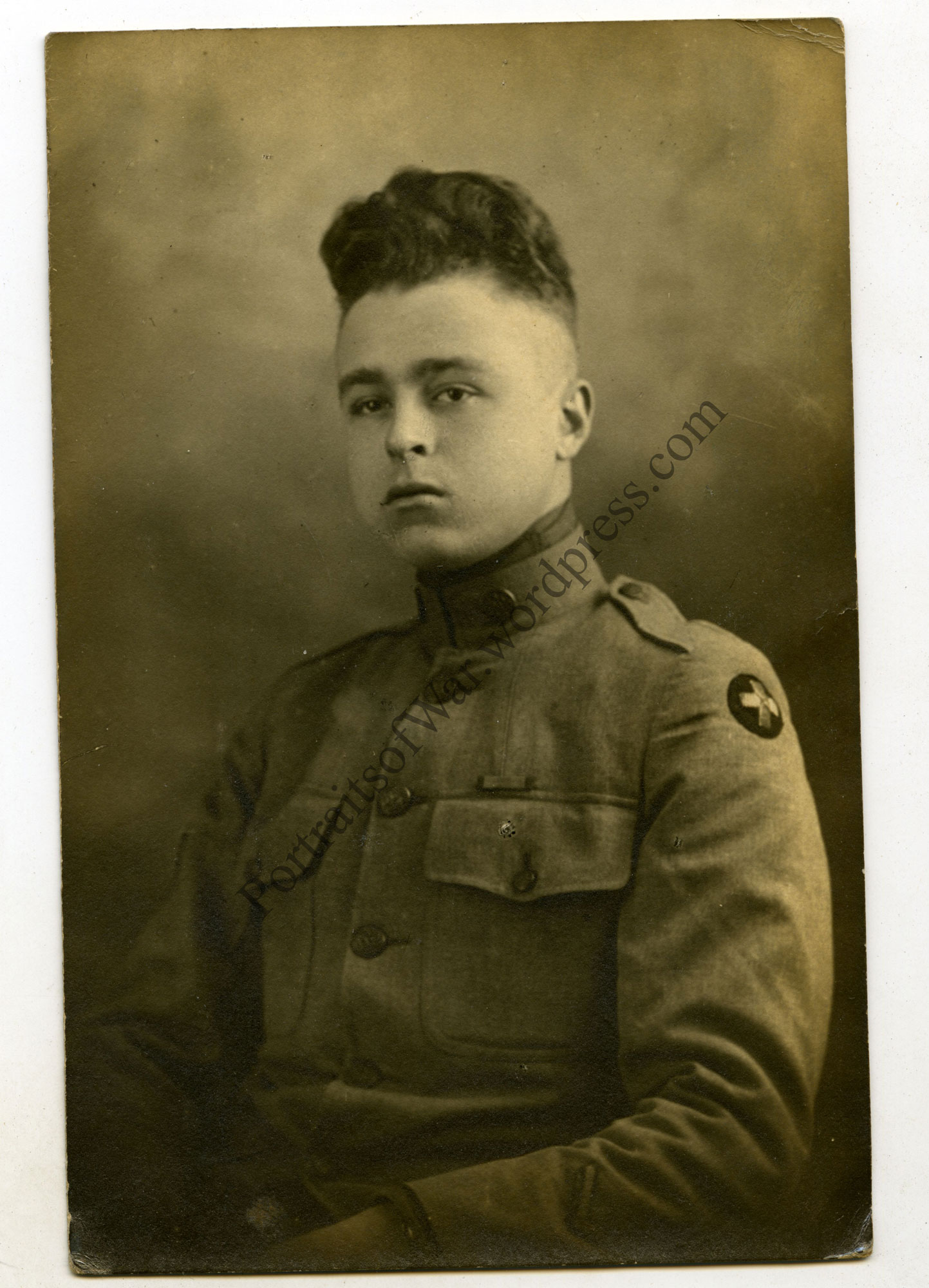
Russell Studio Portrait

Russell Studio Portrait


Backside of the RPPC

Backside of the RPPC

What are we working with for an identification?  The soldier has a definite first name of Russell and is cousins with a male named Forrest Martin of Watson, Illionois in 1919.  Given the intro and body wording, he’s likely to be close to the recipient.


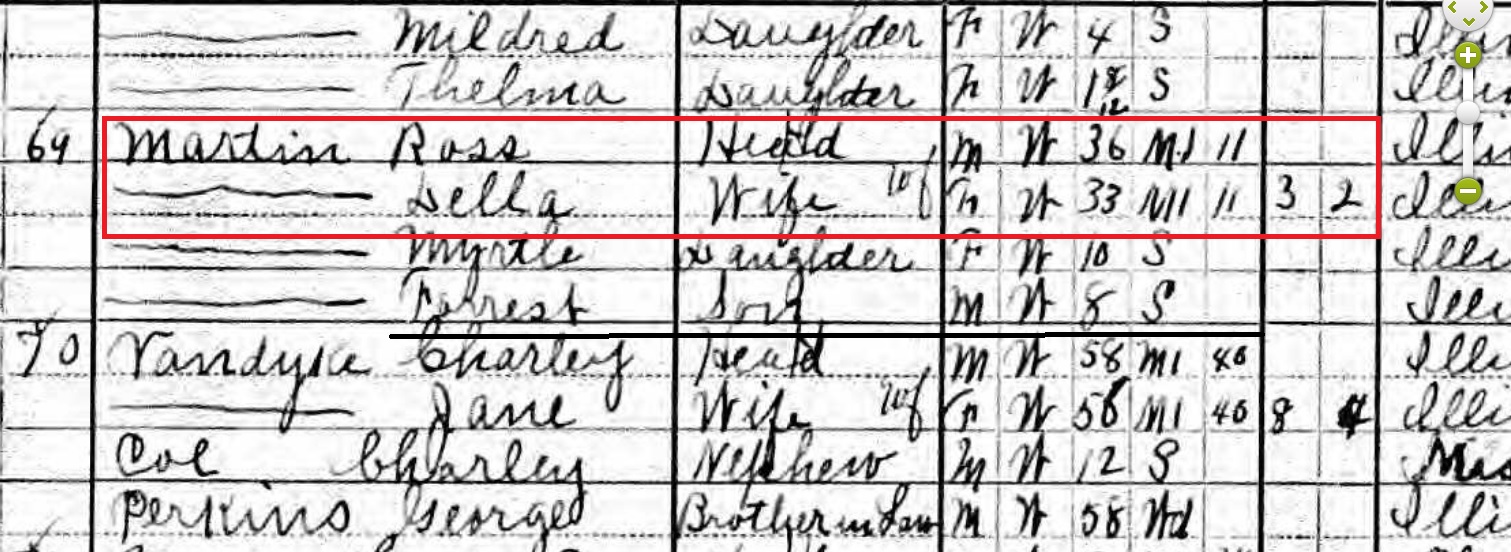
I started by researching the recipient, Forrest Martin, and found his 1900 census entry:

1910 Census Forrest Martin

1910 Census Forrest Martin

From here I decided to research his mother and father in search of a series of siblings to track down as aunts and uncles to Russell.  An aunt or uncle would produce a cousin which should provide me with the proper identification for the 33rd Division soldier!

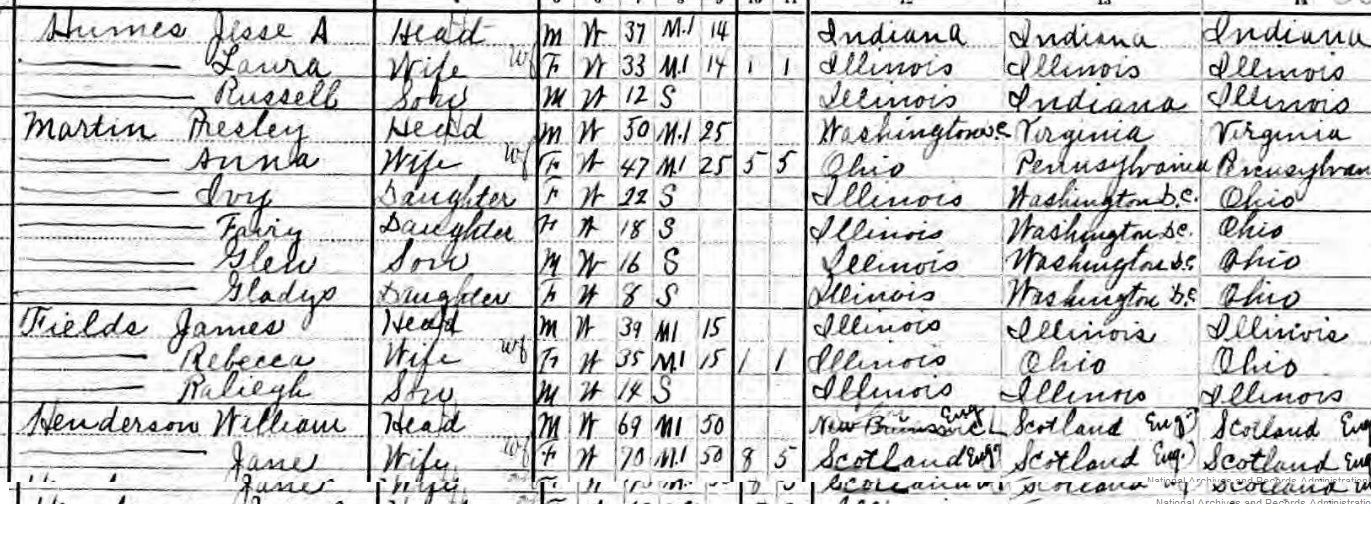
After over an hour of searching (tiring for sure) I was able to identify his mother’s sister as a Laura A. Humes. Laura had a son named Russell in 1897!  When I clicked on his military burial record it all came together. Please keep in mind that this took hours of research!

Forrest's Aunt Laura

Forrest’s Aunt Laura


Russell Humes' Burial Card

Russell Humes’ Burial Card

Russell Humes, first cousin of Forrest Humes (recipient of the postcard), was in Company G of the 130th Infantry Regiment of the 33rd Division in WWI.  He achieved the rank of Corporal and was wounded in action at some point during his service.  His portrait photo was taken in 1919 long after his wounding. He passed away on 11-5-1957 at the age of 61.