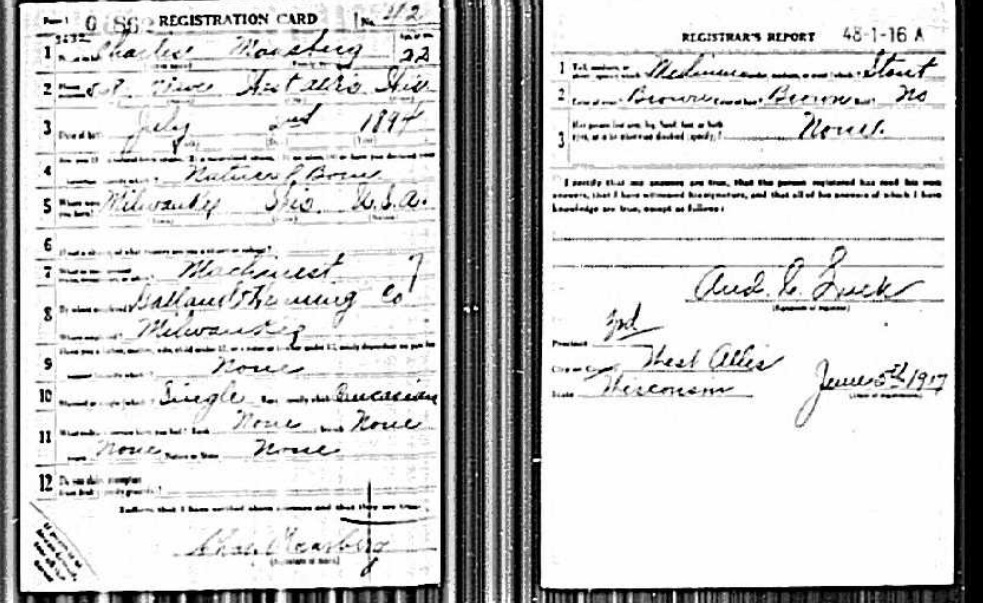
Charles H. Maasberg was born on July 2nd, 1894 in Wisconsin and enlisted for the draft on June 5th, 1917. Although I can’t be sure when he was sent overseas, I can deduce that he was assigned to an ordnance handling unit. He rose to the rank of Sergeant by 1919, and returned home to the US soon thereafter. This wonderful outdoor posed shot was taken in France in 1918, and shows Charles posing in a hand-knit sweater complete with tie. I can only imagine that it was taken in the backyard of a rural French home given the broken flower pots and creeping vines on the wall. The lack of foliage may help us date the photo to the fall or winter months. This would date the photo to the September-November of 1918 period.
WWI
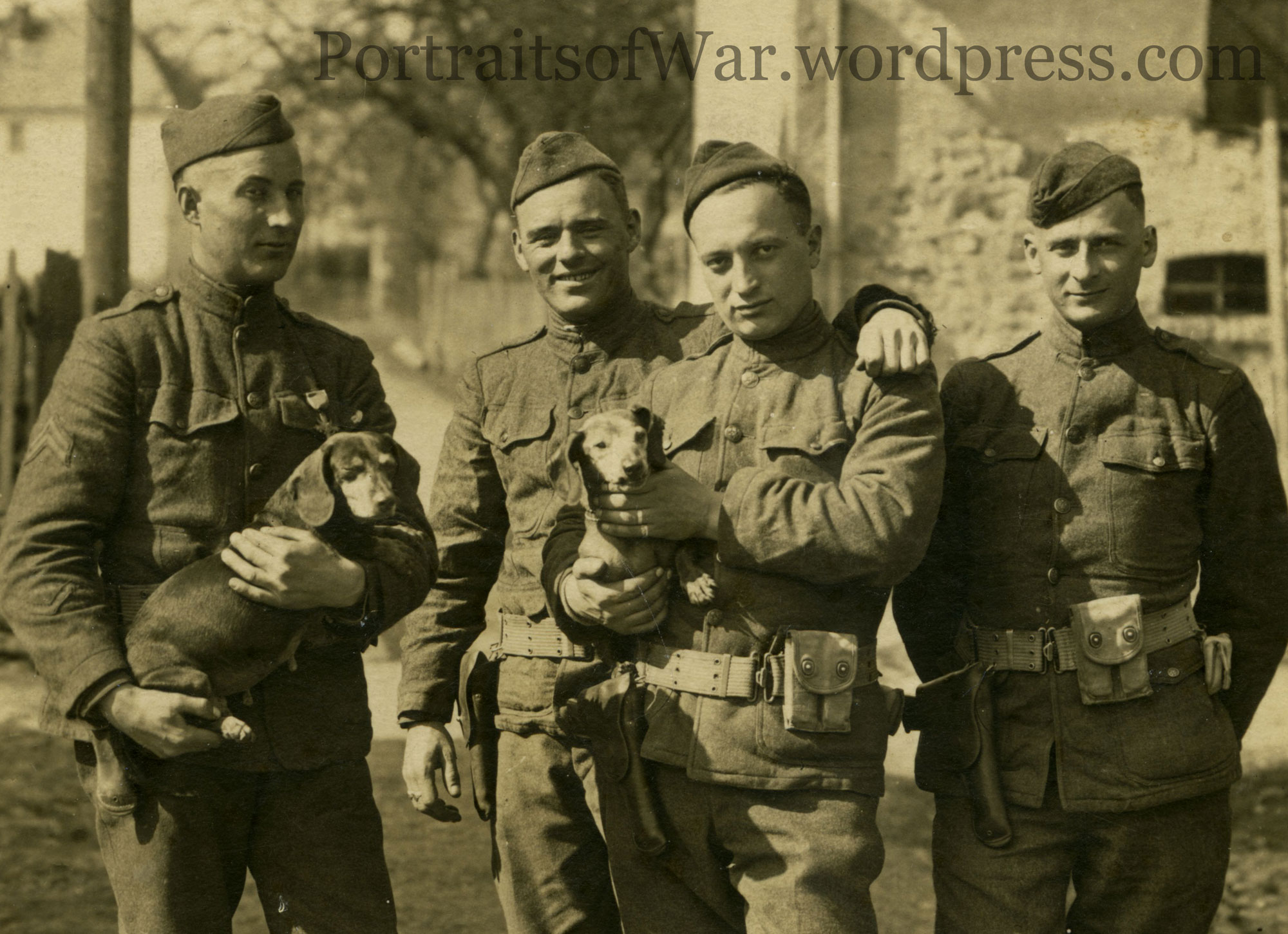
Decorated WWI Doughboys Hold Mascot Dachsunds in Germany
Nothing brings out the personalities of war like a mascot dog! I have at least a dozen decent WWI photos of mascot dogs posing with their adopted owners; these photos never cease to warm my chilly heart! The doughboy on the far left is sporting the Distinguished Service Cross, a medal given out for distinguished service on the battlefield. This award is only second to the Congressional Medal of Honor!
WWI Photo – Pittsburgh, PA WWI Veteran Laurence Baker Poses in a French Studio
WWI 107th Infantry Regiment, 27th Division NY KIA Portrait Photo – Harold E. Manners – Meuse-Argonne Offensive
I picked up this little gem in a Palmer Massachusetts antique store a few months back and never took the time to look at the photo closely until this past week. The frame was intricately created; something not often seen in run of the mill WWI photos. The gold stars on the corners and bottom of the image should have been a dead giveaway. Once I decided to look at the photo a little closer, I took the frame apart from the back and began to uncover the identity of the soldier depicted in the image. I knew he was a member of the 7th Infantry Regiment; this was evidenced in the collar disc. The 7th New York eventually became the 107th Infantry Regiment of the 27th Division. Harold was in Company H.
The reverse of the photo was beautifully inscribed with everything I needed to know to track this fellow down.
Harold Edward Manners
Killed in France in the
Great War, Sept. 29th 1918
aged 23 years
After extensive research I’ve learned that Harold was killed during the operations before the Hindeburg Line east of Ronssoy, September 29th, 2918. His citation for the day reads:
“This soldier, with great gallantry and determination, advanced against unusually difficult enemy positions composed of strongly fortified machine gun nests until killed.”
I found an auction result online that showed his medals which were sold in 2008 at an auction in NY. A beautifully inscribed NY veterans medal for a KIA was included. I wish I had that grouping!
For more info on H Company of the 107th please check out the following posts: http://txinid.wordpress.com/2011/08/01/eugene-masterson/ , http://txinid.wordpress.com/2013/03/25/pfc-eugene-masterson-kia-part-2/
Provided by Steve M. of http://txinid.wordpress.com/
WWI Portrait Photo – 88th Division Iowa Doughboy – Died of Spanish Influenza in France, 1918
Laurel L. Hanan of the 339th Machine Gun Battalion of the 88th Division succumbed to the Spanish Flu during the Meuse Argonne Offensive during the tail end of WWI. Over 120,000 US servicemen were afflicted with Spanish Flu during the war, actually making the Flu more deadly than German machine gun bullets! I was able to stumble across this photo on eBay and was happy to add it to my collection. I’ve added Laurel’s photo to his findagrave.com page, and have requested an update to his page. Laurel was reburied in his hometown after the war.
Born: 13 NOV 1895
Died: 7 OCT 1918 – Spanish Influenza, France
Cemetery: ROSE HILL
Location: FREDERICKSBURG
County: CHICKASAW CO. – IOWA
Record Notes: WORLD WAR
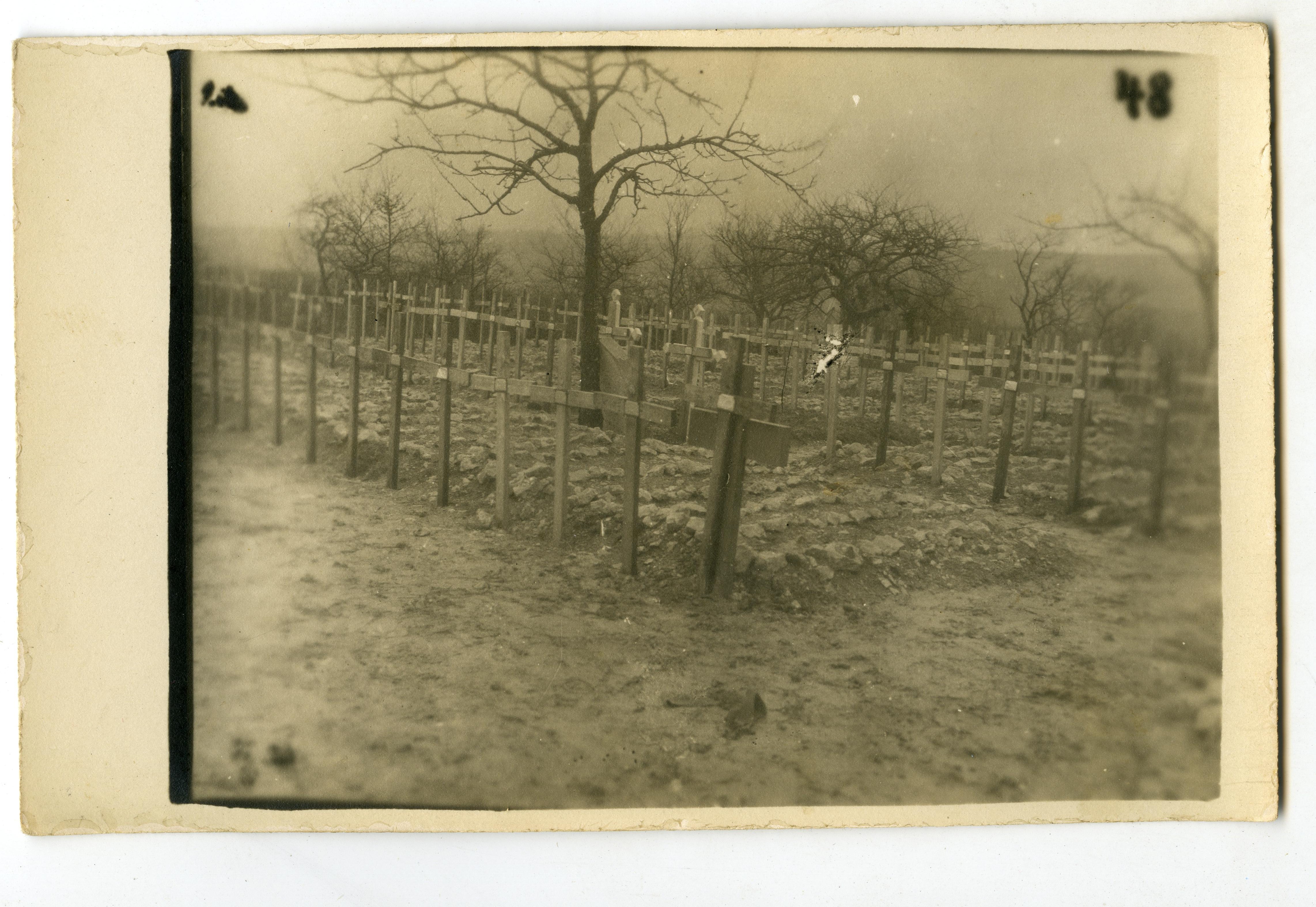
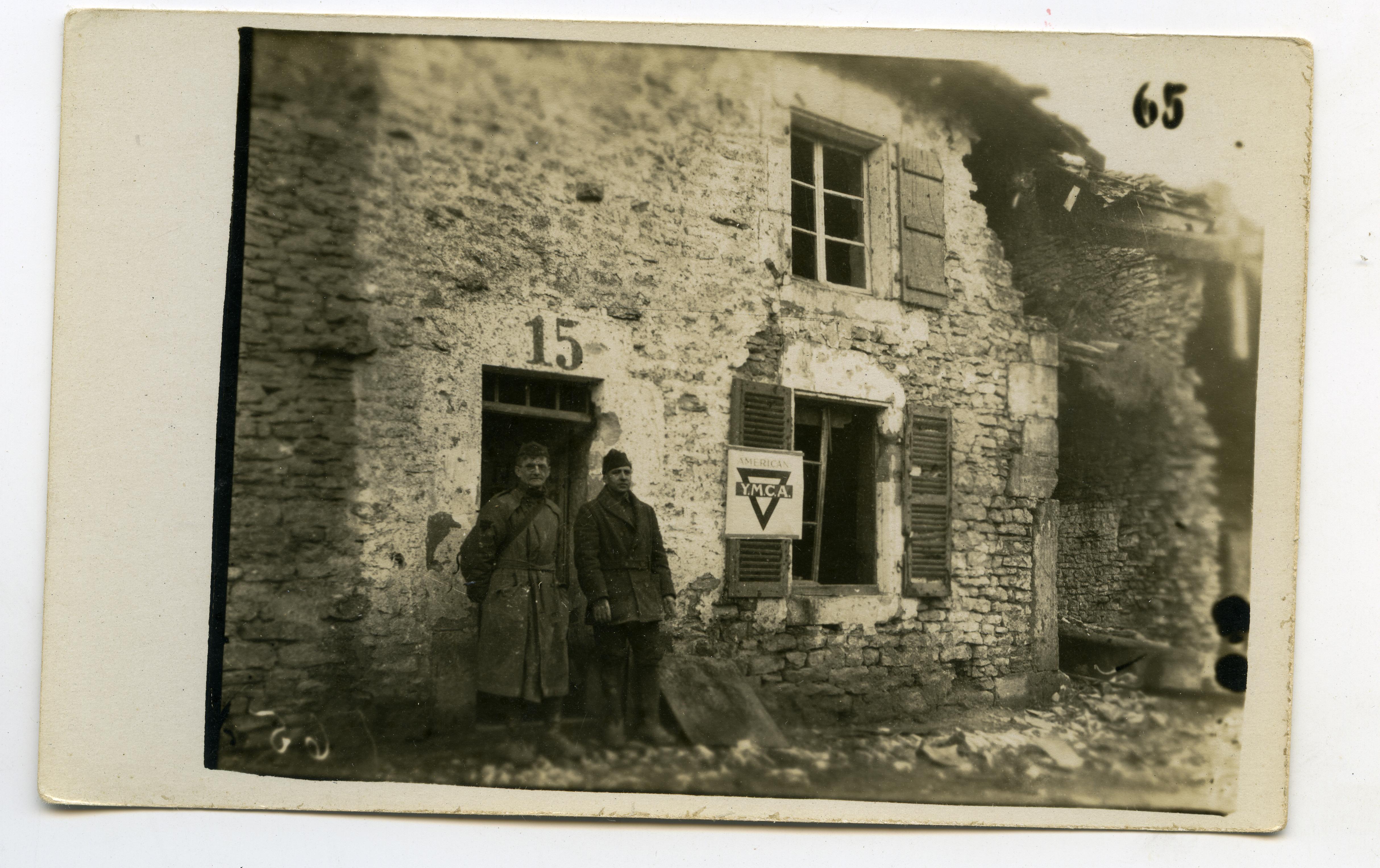
Incredible WWI Photo Grouping – 90th Division in Verdun, France – Field Graves, Trenches and Destruction
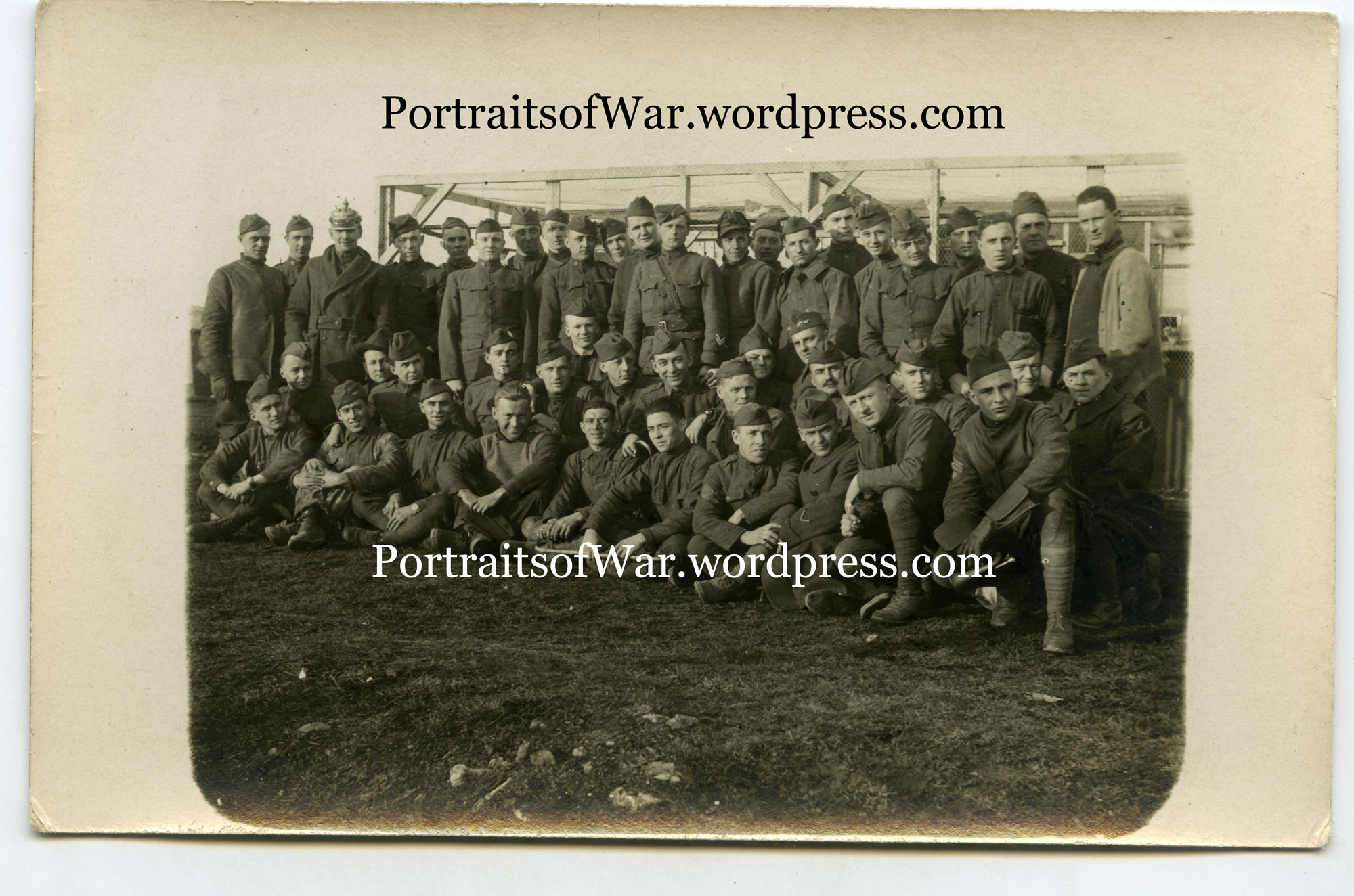
WWI Messenger Homing Pigeon Unit Poses in Germany – Captured German Helmet + Uniform Detail
One of the most interesting forms of communication used during WWI has to be the homing pigeon. Front line troops couldn’t rely on wire messages getting through to rear echelon support units. Often times homing pigeons were used to relay messages back to HQ. Here’s a nice shot of a pigeon unit posing for the camera sometime after the armistice.
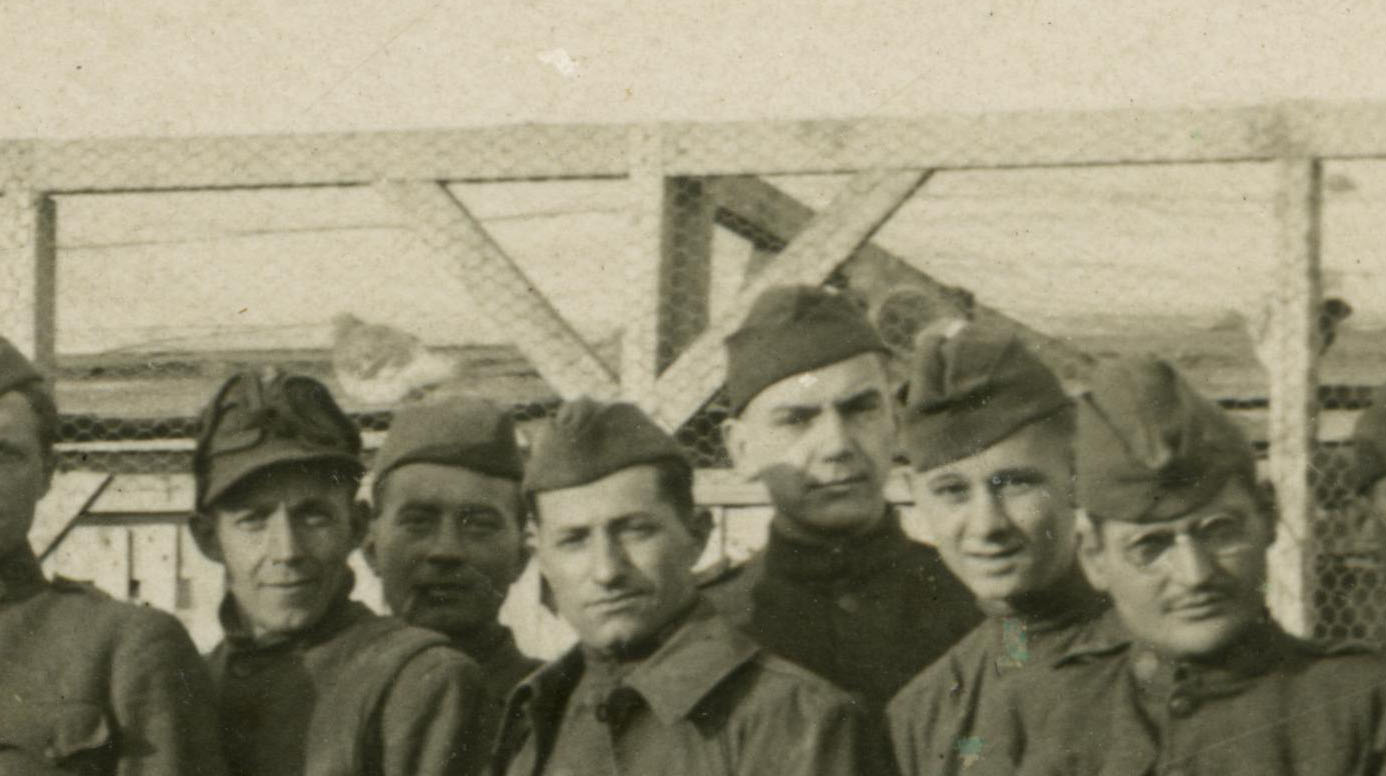
And some nice details! Including a captured German helmet for good measure.
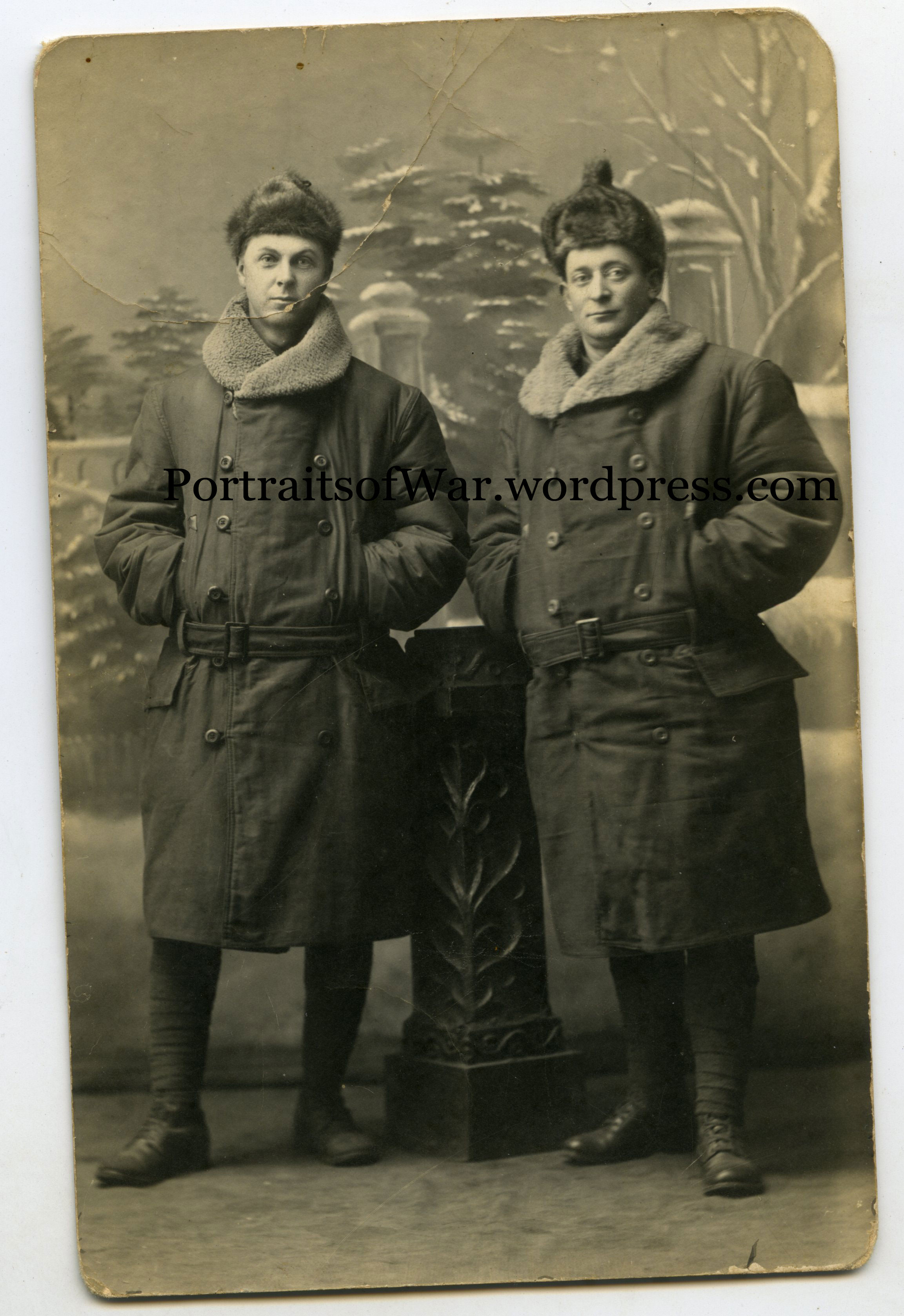
WWI Portrait Postcard Photo – 339th Infantry Soldiers Decked Out in Cold Weather Gear
World War One First Division Portrait Photo – First US Soldier to Fire During WWI! Alex Arch
The world of WWI photo collecting is becoming increasingly expensive; good identified photos are beginning to bring big bucks in the eBay world. I was lucky enough to “steal” this gem of a portrait from the realm of auction obscurity. Identified to a Sgt. Alex Arch of C Co. 6th Field Artillery, 1st Division. I was blown away when I learned that Mr. Arch was the first US soldier to fire against the Germans on October 23rd, 1917. He technically pulled the firing cord of a French 75mm while in Xanrey in the Luneville Section. A great addition to the collection!
WWI 26th Yankee Division, 103rd Machine Gun Battalion Vermont Dog Tag Grouping
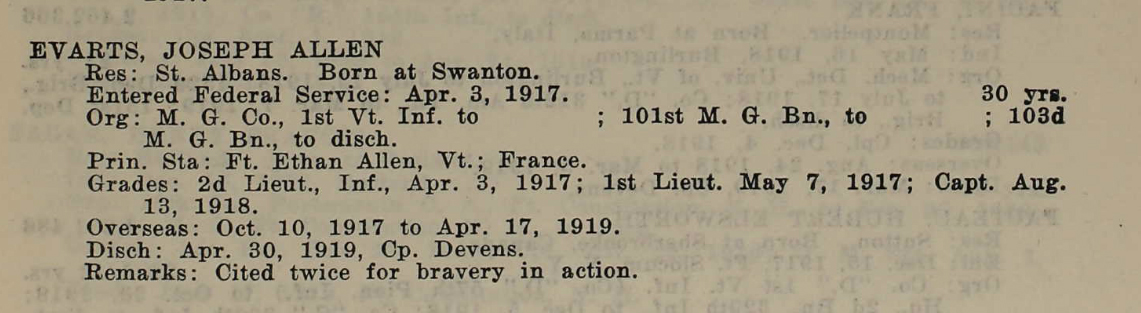
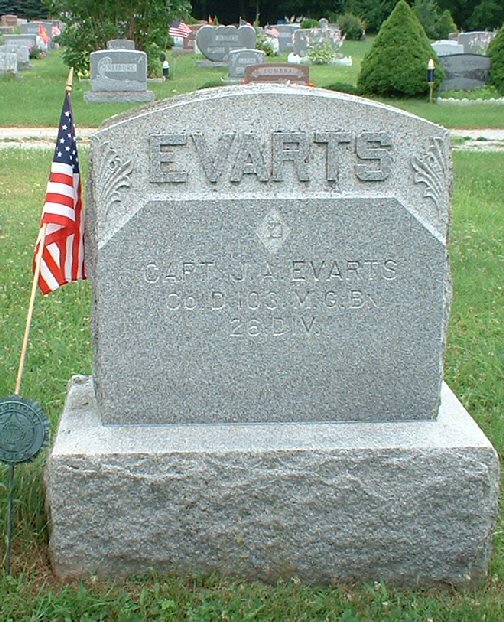
Followers of PoW will know that I love WWI Vermont material. I actively seek interesting groupings of World War 1 items to add to my collection; today I was able to add a wonderful little piece of 26th Division and Vermont history. This set of dog tags once belonged to a Joseph Allen Evarts from St. Albans, VT. Originally born in Swanton, Evarts attended Norwich in 1904 and eventually joined up with the 1st VT National Guard. He was a direct descendent of the famous Allen family and can claim Ethan Allen as a great-great-uncle. He went overseas in October of 1917 with the 101st Machine Gun Battalion as a 1st LT and was promoted to Captain in August of 1918. He was assigned as Company Commander of Company D of the 103rd Machine Gun Battalion of the 26th Division. Evarts was well loved by the citizens of St. Albans and was sorely missed after he passed away in 1920 from gas-related lung complications.
He was cited at least two times for bravery while overseas and likely saw a lot of combat. I was able to track down an interesting article with some original material from Evarts:
PICTURE PROVES HIM A PRISONER
Lieut. Evarts Writes of Seeing Tenney’s Photo in Group of Men Missing
Arthur G. Tenney, of Fairfield st., received a letter Saturday from Lieut. Joseph A. Evarts, of this city, who is with the American Expeditionary Forces in France, saying that he had seen a German propagandist paper in which was a picture of those missing in action at a certain place on the American line and among them was Lieut. Walter M. Tenney, of this city. Lieutenant Tenney was reported missing in action April 20. He went from this city over a year ago as second lieutenant in the machine gun company of which Evarts was first lieutenant. The company was later divided and Lieutenant Tenny went with a division composed of Connecticut and Massachusetts men while Lieutenant Evarts remained with St. Albans men. In his letter Lieutenant Evarts says that he and his command were stationed just to the left of where Lieutenant Tenney was.
The portion of the letter received here by Mr. Tenney, which tells of the picture is as follows:
“In Trenches, “June 12, 1918.
“Mr. Arthur Tenney, St. Albans, Vt.
“Dear sir:–
“I have just received a St. Albans Messenger that tells about Walter being missing in action.
“I have something that may be of interest to you.
“Today a few German planes came over spreading propaganda in newspaper form printed in French. The boys brought me some of them, and to my surprise I found it was an illustrated paper, and had a group picture of those missing in action at the place where Walter was. I recognized quite a few, and Walter was very plainly among them, and all of we boys recognized him. I have all the details and the picture with me.
“I felt that you would want to know this right away, and I must say it was a strange coincidence.
“If Walter ever writes you, will you write me and let me know about him?
“Our boys were in a big fight just to the left of where Walter was.***
“Sincerely, “J. A. Evarts.”
St. Albans Daily Messenger, St. Albans, VT 4 Jul 1918
Another article of interest:
ALBANS GIVES
ROYAL WELCOME
Greeting for City’s Home-Corn-ing
Boys Is Wildly
Enthusiastic
St. Albans, April 30. Capt. Joseph B.
Evarts, First Llouts. Walter Tenney,
James McConncll, Francis Shannon, Ar
nold Spauldlng, and 13 members of the
original Machine Gun company from
St. Albans returnod this evening nt
0:40. Thoy were mot at tho station by
Co. E, V. V. M St. Albans Brigade band
and tho Boy Scouts and thousands of
their friends. Tho boys wero escorted
to tho armory by the band, Company K.
and tho Boy Scouts. Tho armory wns
lined with a Bolld mans of people, can
non boomed, bolls rang, whistles blow
and tho people shouted a welcome home
to their boys.
At tho armory tho boys were served
with hot coffoo doughnuts, lco-cronm
and cake.
At 4:30 a. m. Tuesday the military
call was sounded which was a signal
to notify St. Albanians that tho boys
were coming on train No. 1 at C:30
oclock. During Monday evening Wel
come Homo signs had been hung up
on Lake street and flags hung from tho
business places. Tho exterior of tho
armory was gayly decorated with flags
and bunting. With tho sounding of mil
itary call whistles and bells did all that
was possible to awake tho inhabitants
of St. Albans. The members of Com
pany 11, V. V. M., assembled at the
armory and marched down to tho train.
Only a few St. Albans boys appeared,
but they wore given a royal welcome,
by tho largo crowd that had assembled
at tho railroad station. Company E.
had prepared hot coffee, sandwiches
and doughnuts, but only two return
ing soldiers appeared at the armory.
so tho members of tho company enjoyed
an unexpected repast. Among tho boys
who returned Tuesday morning were,
Harris W. Alexander, Dewey Daniels,
John Daley, Herbert Laduo and Earl
Swlggott.