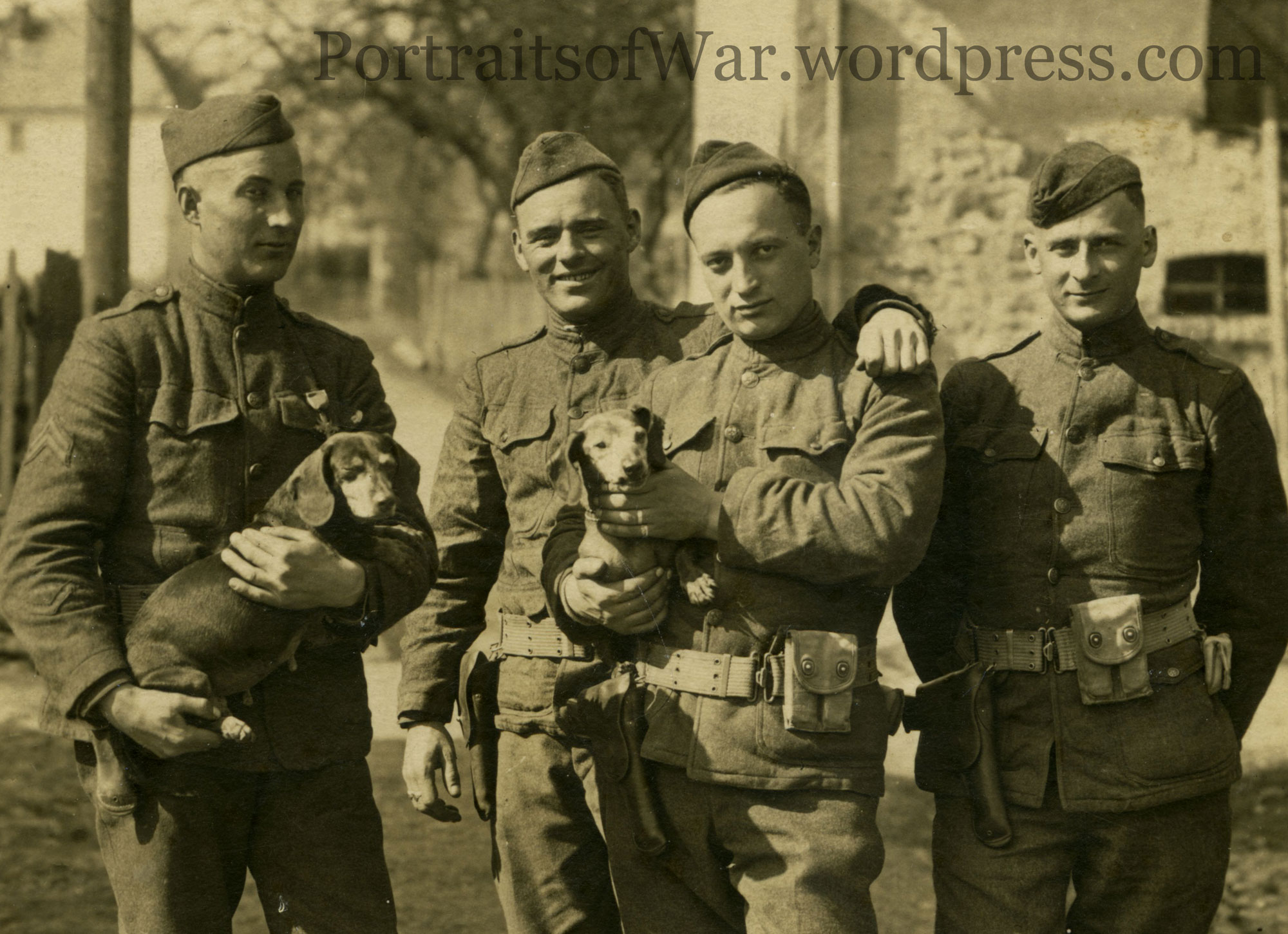
WWI 107th Infantry Regiment, 27th Division NY KIA Portrait Photo – Harold E. Manners – Meuse-Argonne Offensive


I picked up this little gem in a Palmer Massachusetts antique store a few months back and never took the time to look at the photo closely until this past week.  The frame was intricately created; something not often seen in run of the mill WWI photos.  The gold stars on the corners and bottom of the image should have been a dead giveaway.  Once I  decided to look at the photo a little closer, I took the frame apart from the back and began to uncover the identity of the soldier depicted in the image.  I knew he was a member of the 7th Infantry Regiment; this was evidenced in the collar disc.  The 7th New York eventually became the 107th Infantry Regiment of the 27th Division.  Harold was in Company H.

The reverse of the photo was beautifully inscribed with everything I needed to know to track this fellow down.

Harold Edward Manners

Killed in France in the

Great War, Sept. 29th 1918

aged 23 years

After extensive research I’ve learned that Harold was killed during the operations before the Hindeburg Line east of Ronssoy, September 29th, 2918.  His citation for the day reads:

“This soldier, with great gallantry and determination, advanced against unusually difficult enemy positions composed of strongly fortified machine gun nests until killed.”

I found an auction result online that showed his medals which were sold in 2008 at an auction in NY. A beautifully inscribed NY veterans medal for a KIA was included.  I wish I had that grouping!

For more info on H Company of the 107th please check out the following posts: http://txinid.wordpress.com/2011/08/01/eugene-masterson/ , http://txinid.wordpress.com/2013/03/25/pfc-eugene-masterson-kia-part-2/

Provided by Steve M. of http://txinid.wordpress.com/

Scanning WWII 35mm Color Slides: A Beginners Guide


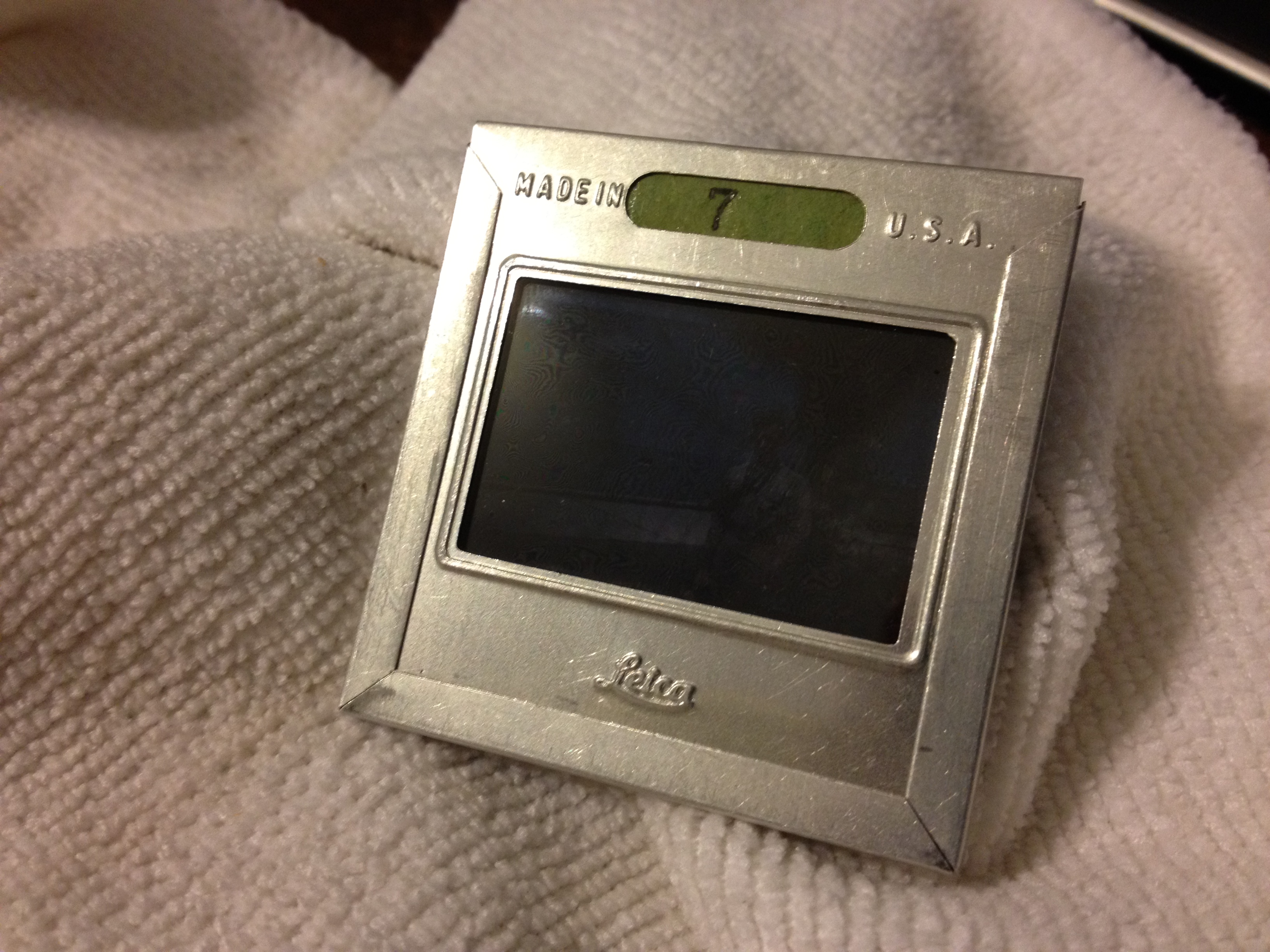
I constantly have readers asking me about scanning WWII negatives and slides.  Many people unknowingly think that the process is tedious and time consuming.  In actuality, the process of scanning and processing a single image only takes a few minutes with some great results.  Here’s a quick step-by-step guide to scanning a WWII 35mm color slide.  In this instance, the 35mm Kodachrome film is housed in a Leica metal mount.
To preface this tutorial, I need to point out that not every scanner will scan negatives or slides.  I am currently running an Epson V700 “Perfection”.  Many other collectors and dealers use this scanner, and some even use the V750.  The V700 will run roughly 500 bucks, and the V750 a hundred or so more.  There are a handful of other quality scanners out there, so search around!

Epson V700

Step 1:  Find a Slide

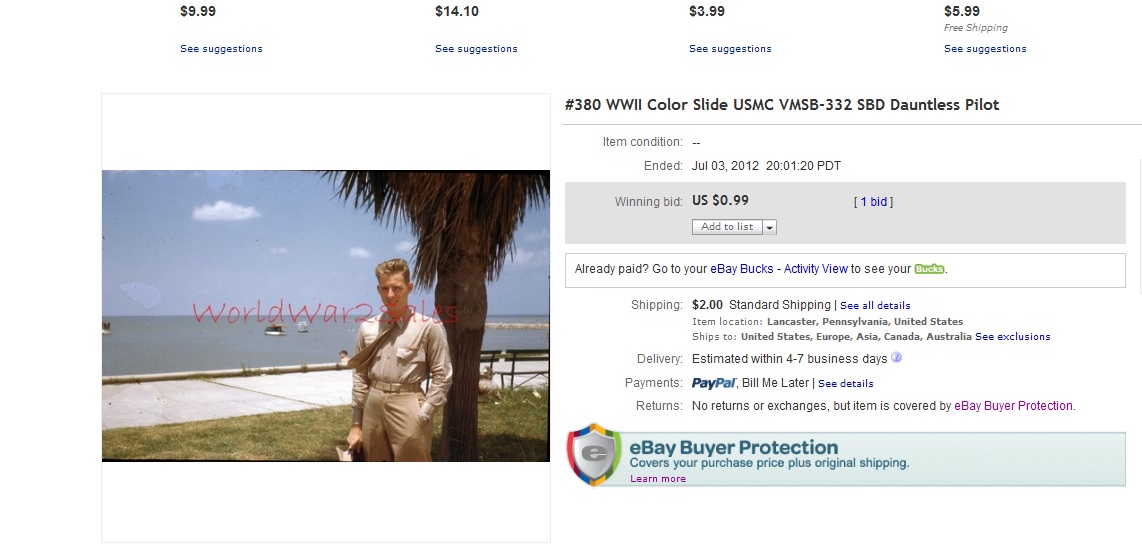
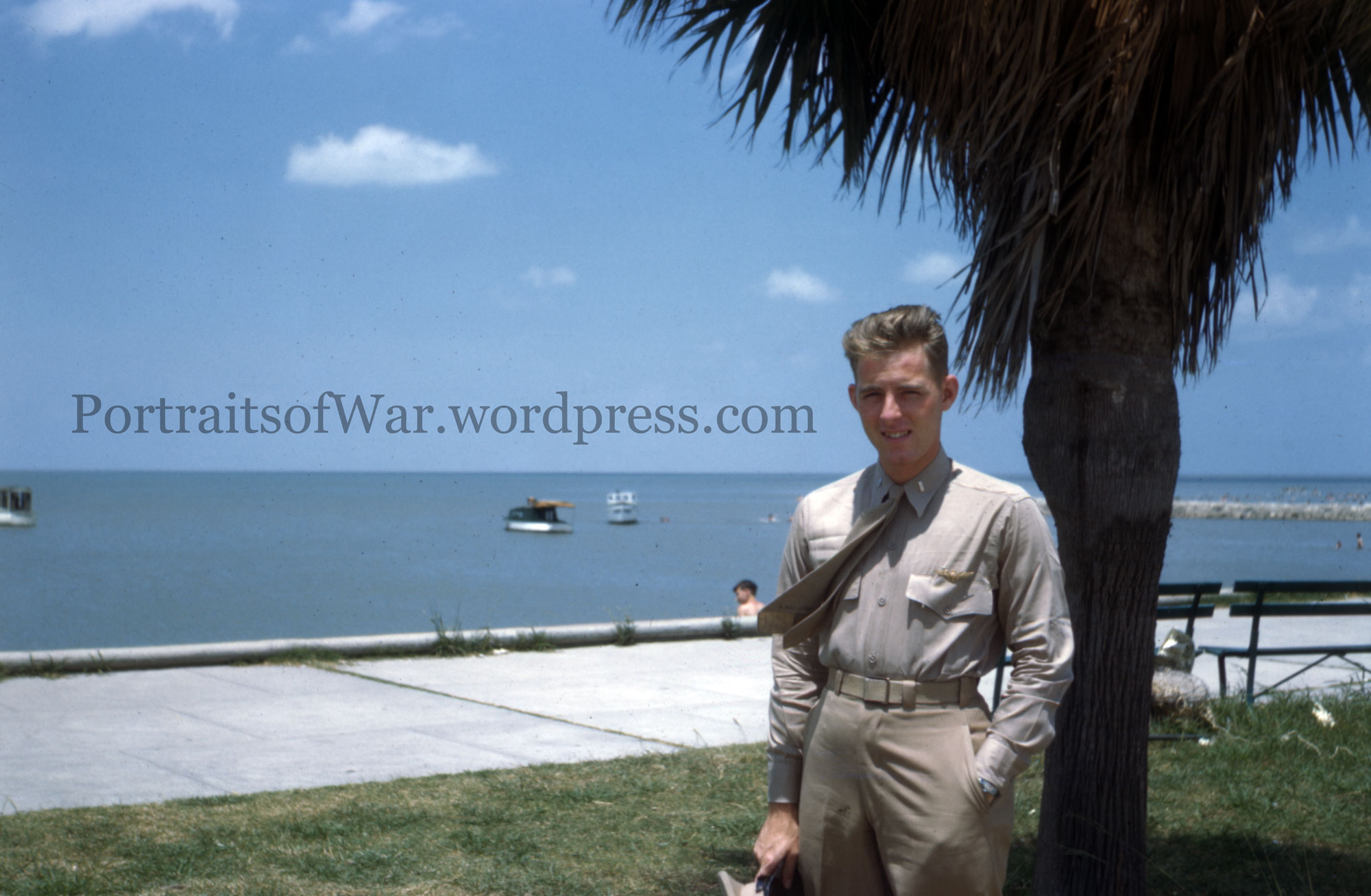
This may actually be the hardest part of the process.  Find a single image, or group of images, on an online auction or location flea market that you want to scan.  This works well with any type/age of slides, but I prefer WWII and Korean War slides.  In this case, I found a nice shot of a Marine pilot posing near the beach.  Good subject matter, color, and condition.

Step 1: Find a Slide

Step 2: Prepare the Slide

Although most late-war slides tend to be mounted in paper housings, I’m showing the process with a glass and metal mounted slide from 1944.  The process works the same with the paper mounts, but tends to lose some quality around the outside borders.  In this case, the film is sandwiched between two small pieces of glass and inserted into the metal housing as seen below.

WWII Slide

Take care when extracting both sections of the slide housing.  Using slight pressure and TLC will ensure the slide goes back together after scanning.  If the housing breaks for any reason, plastic 35mm slide mounts can be found on eBay.

Carefully Deconstructed WWII Slide

Step 3: Scanning

Place the color film on the scanner glass.  I don’t worry about mounting the film in the Epson provided slide tray.  I don’t usually have a problem with gaussian blur, and I always wipe my glass down with a microfiber cloth to get rid of dust and random particles that tend to float around in the air.

The most important part of the physical scanning process is the adjustment of settings.  I tend to scan in TIFF 48-bit color in 4800 or 6400 DPI.  I don’t set ICE or dust removal.

Place on Scanner Bed


Step 4:  Post-Scanning

When the scanned image is ready for manipulation it typically needs a little bit of Photoshop cropping and editing to correct the color balance, remove dust and scratches, and reduce blurring.  A few minutes fiddling with Photoshop or another editing program should produce a nice digital image ready for posting to your favorite blog.  I typically use watermarks to help bring visitors to the website and to stop unscrupulous visitors from stealing images.

Unedited Slide Scan


After Ten Minutes of “Cleaning”


WWI Messenger Homing Pigeon Unit Poses in Germany – Captured German Helmet + Uniform Detail


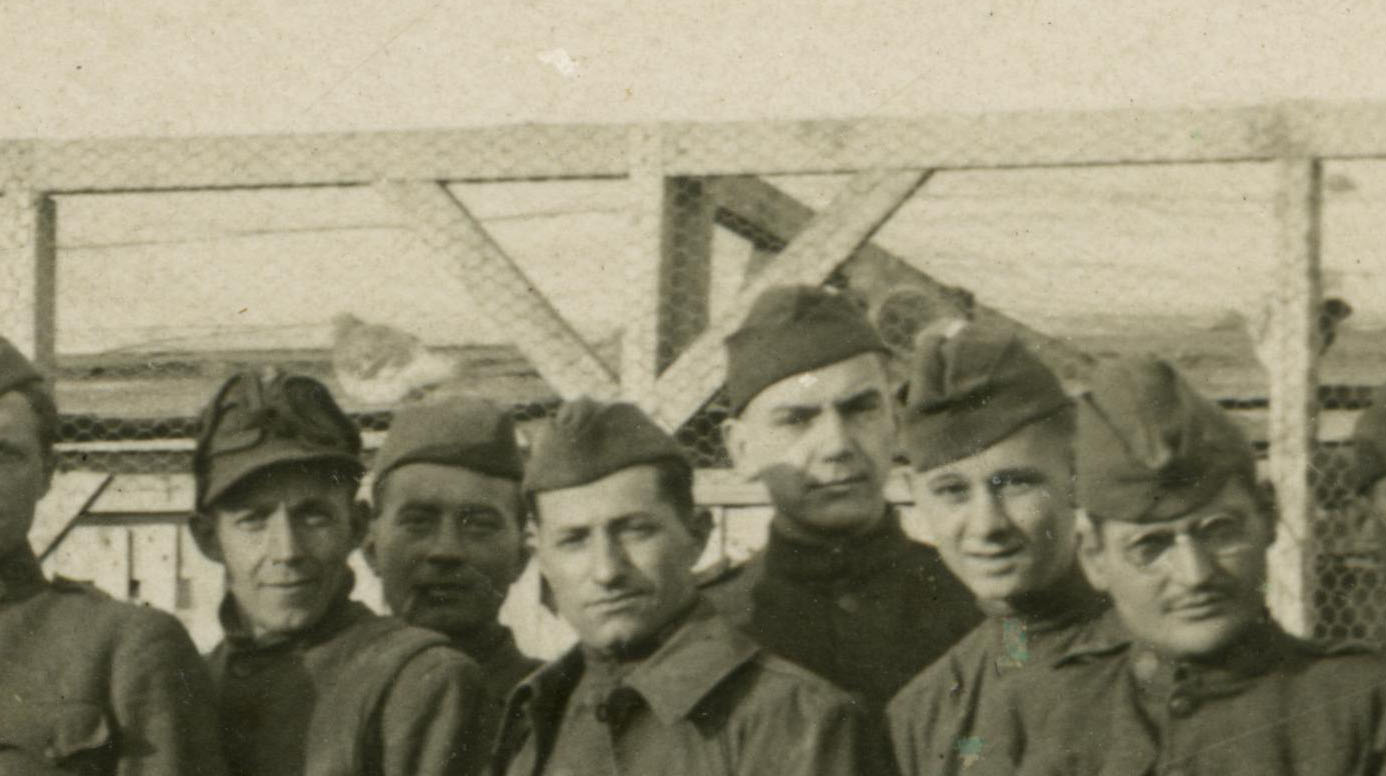
One of the most interesting forms of communication used during WWI has to be the homing pigeon.  Front line troops couldn’t rely on wire messages getting through to rear echelon support units.  Often times homing pigeons were used to relay messages back to HQ.  Here’s a nice shot of a pigeon unit posing for the camera sometime after the armistice.

And some nice details!  Including a captured German helmet for good measure.


World War One First Division Portrait Photo – First US Soldier to Fire During WWI! Alex Arch


The world of WWI photo collecting is becoming increasingly expensive; good identified photos are beginning to bring big bucks in the eBay world.  I was lucky enough to “steal” this gem of a portrait from the realm of auction obscurity.  Identified to a Sgt. Alex Arch of C Co.  6th Field Artillery, 1st Division.  I was blown away when I learned that Mr. Arch was the first US soldier to fire against the Germans on October 23rd, 1917.  He technically pulled the firing cord of a French 75mm while in Xanrey in the Luneville Section.  A great addition to the collection!


Memorial Day 2012 Post – John McCrae: WWI University of Vermont Professor and Author of “In Flanders Fields”


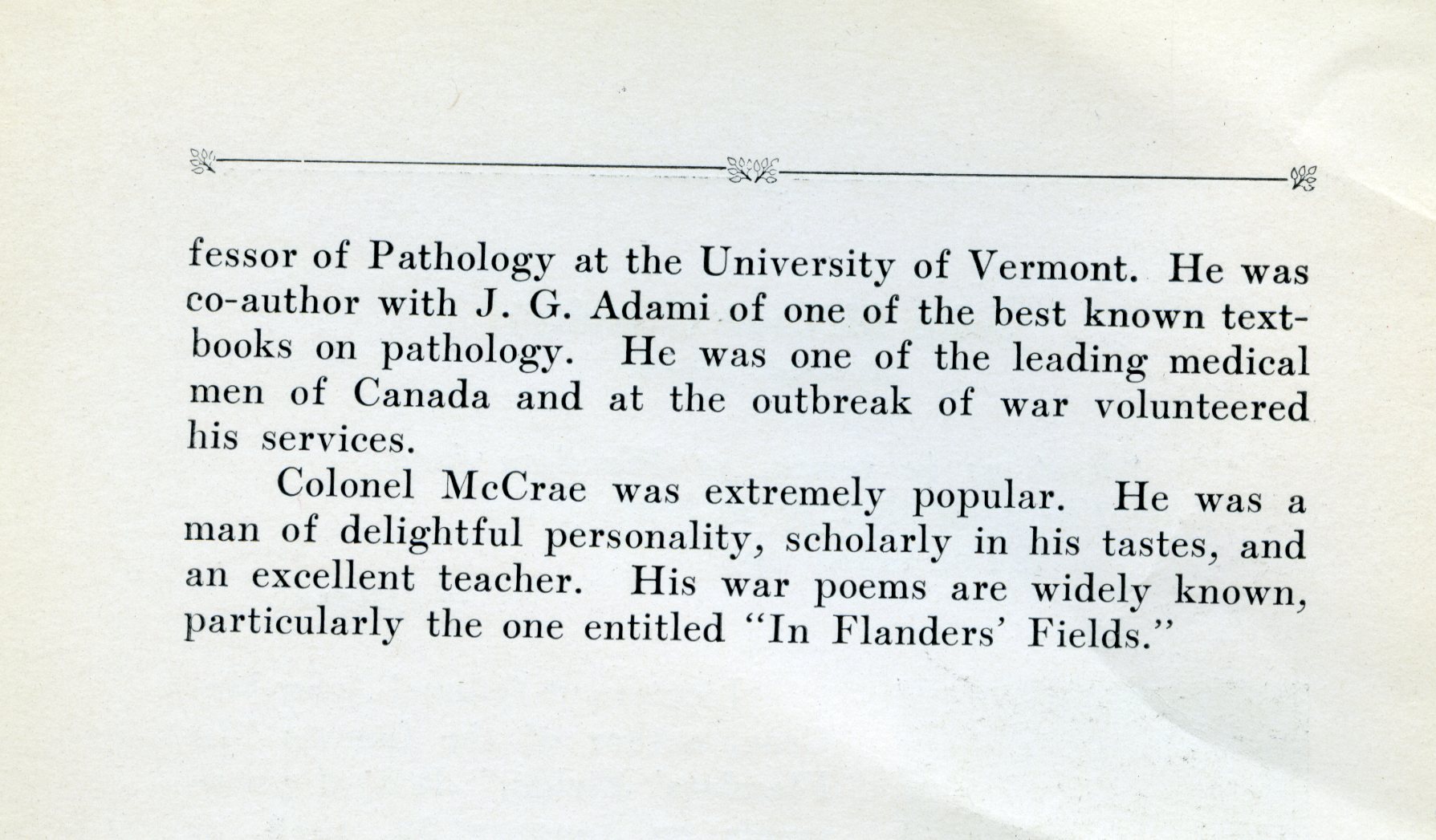
What better way to remember Memorial Day than to post the most famous war poem of all time?  This poem was written by Lt. John McCrae, a surgeon with a Canadian field artillery unit during the Second Battle of Ypres on May 3rd, 1915.  The poem became an almost instant hit with the troops and with the homefront community “across the pond”.

What makes McCrae so special to me?  He taught at my alma mater, the University of Vermont, between 1903 and 1911 where he taught Pathology in Williams Hall.  I spent four years studying anthropology and archaeology in the hallowed halls of Williams, making my connection to McCrae even stronger.

This post is dedicated to all those who never returned home from the killing fields of France, Belgium, and Germany during WWI.

 In Flanders Fields

In Flanders fields the poppies blow
Between the crosses, row on row,
That mark our place; and in the sky
The larks, still bravely singing, fly
Scarce heard amid the guns below.

We are the Dead. Short days ago
We lived,  felt dawn, saw sunset glow,
Loved and were loved, and now we lie,
In Flanders fields.

Take up our quarrel with the foe:
To you from failing hands we throw

The torch; be yours to hold it high.
If ye break faith with us who die
We shall not sleep, though poppies grow
In Flanders fields.

McCrae entry from The University of Vermont in the Great War

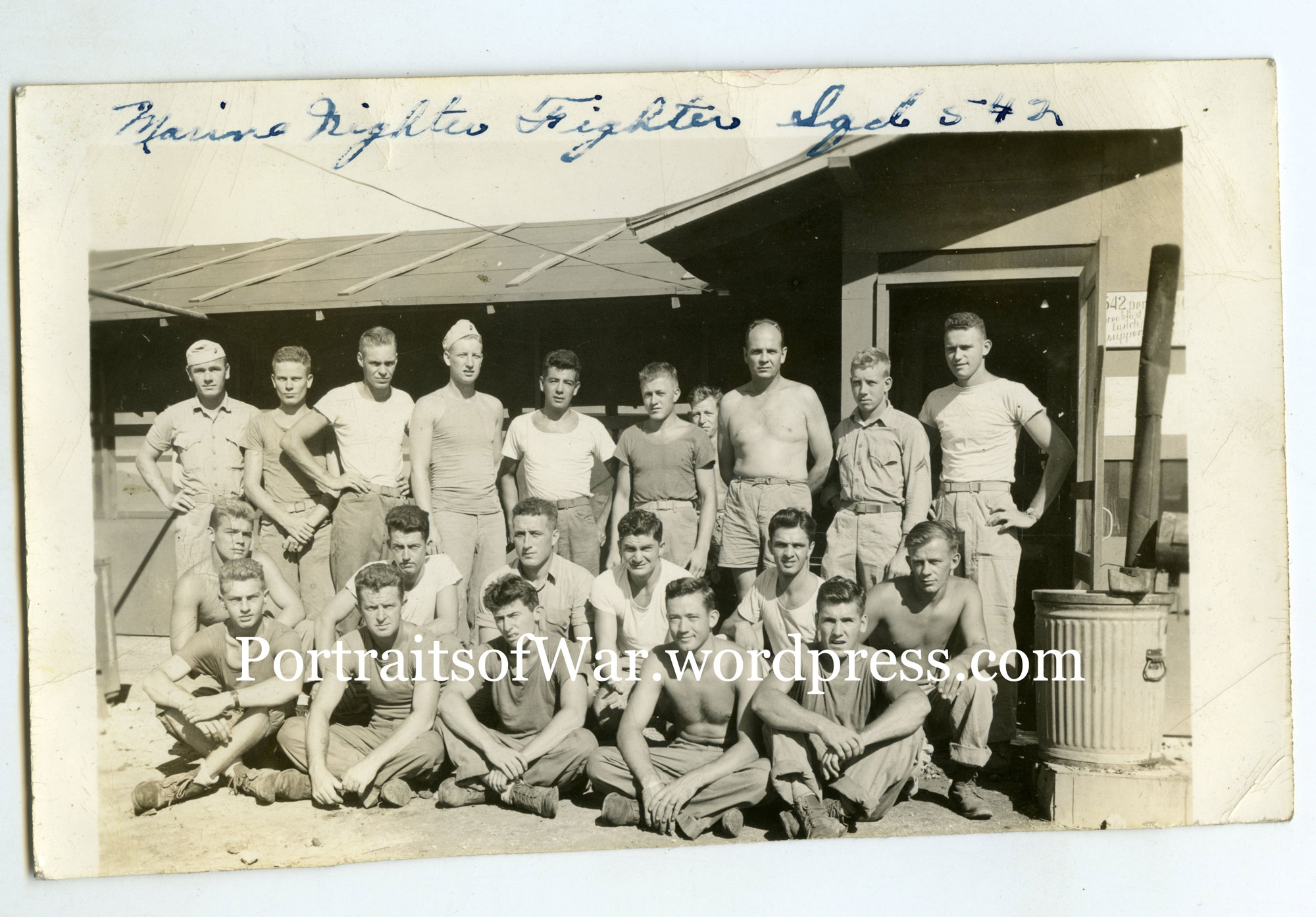
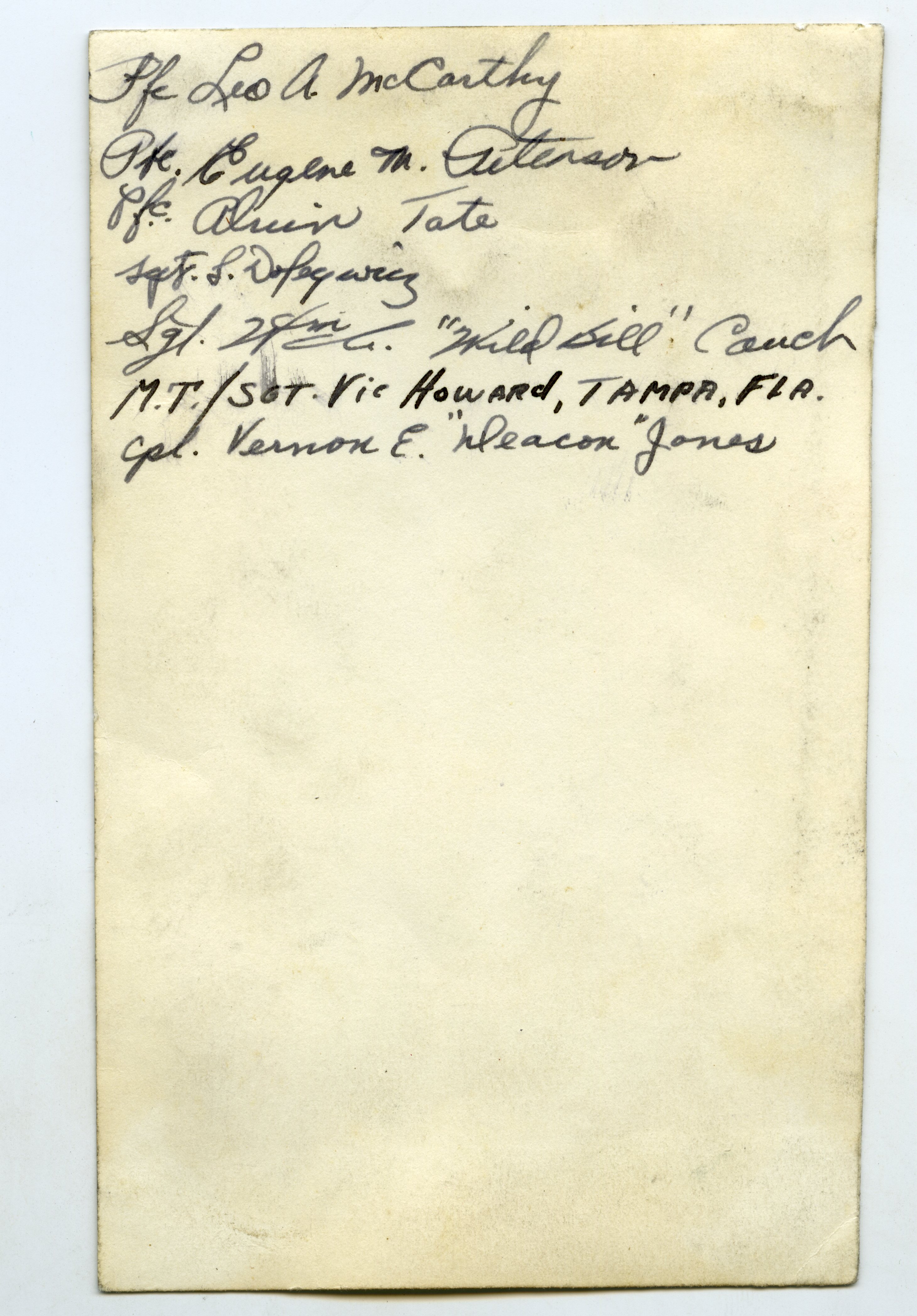
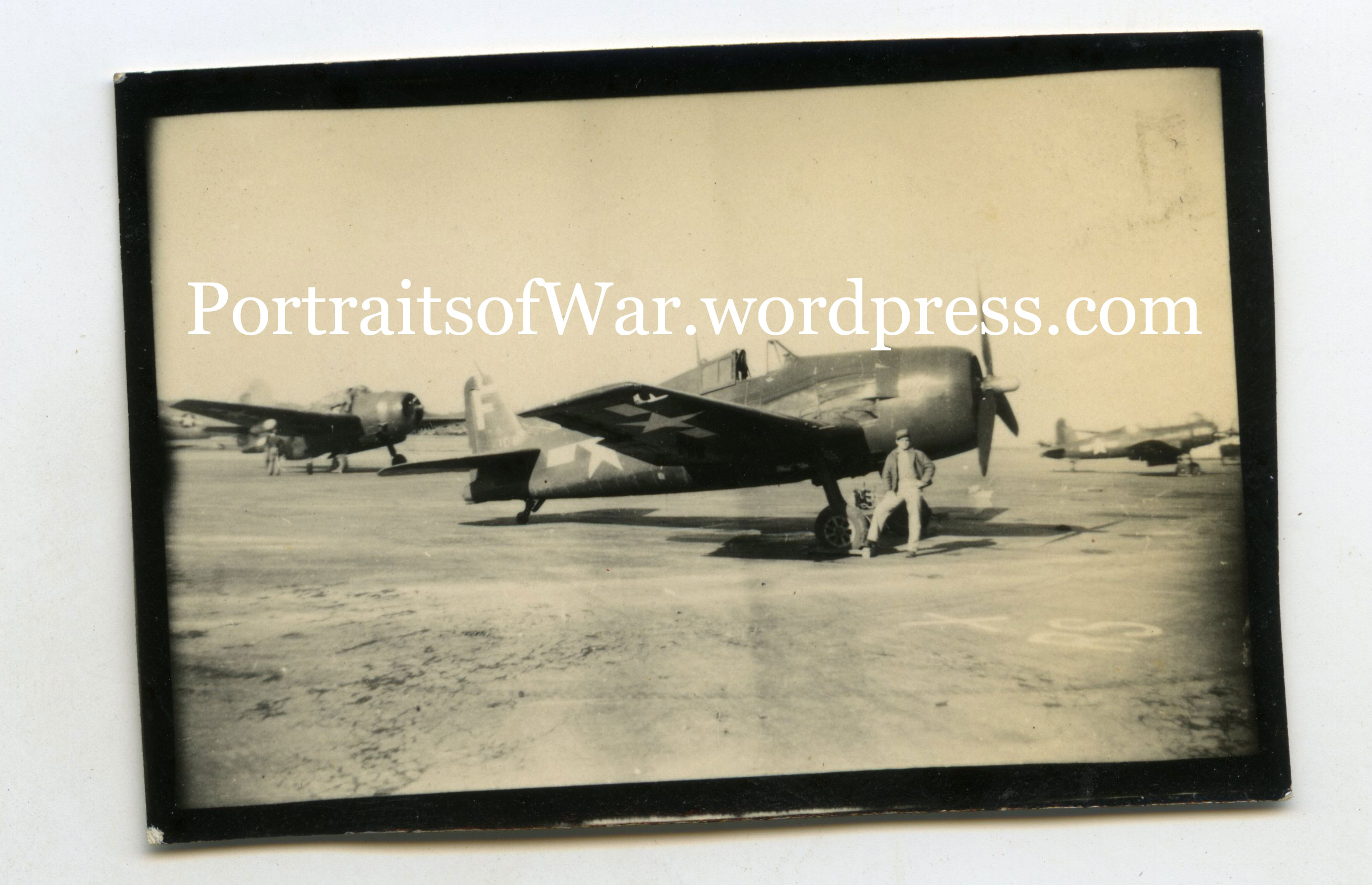
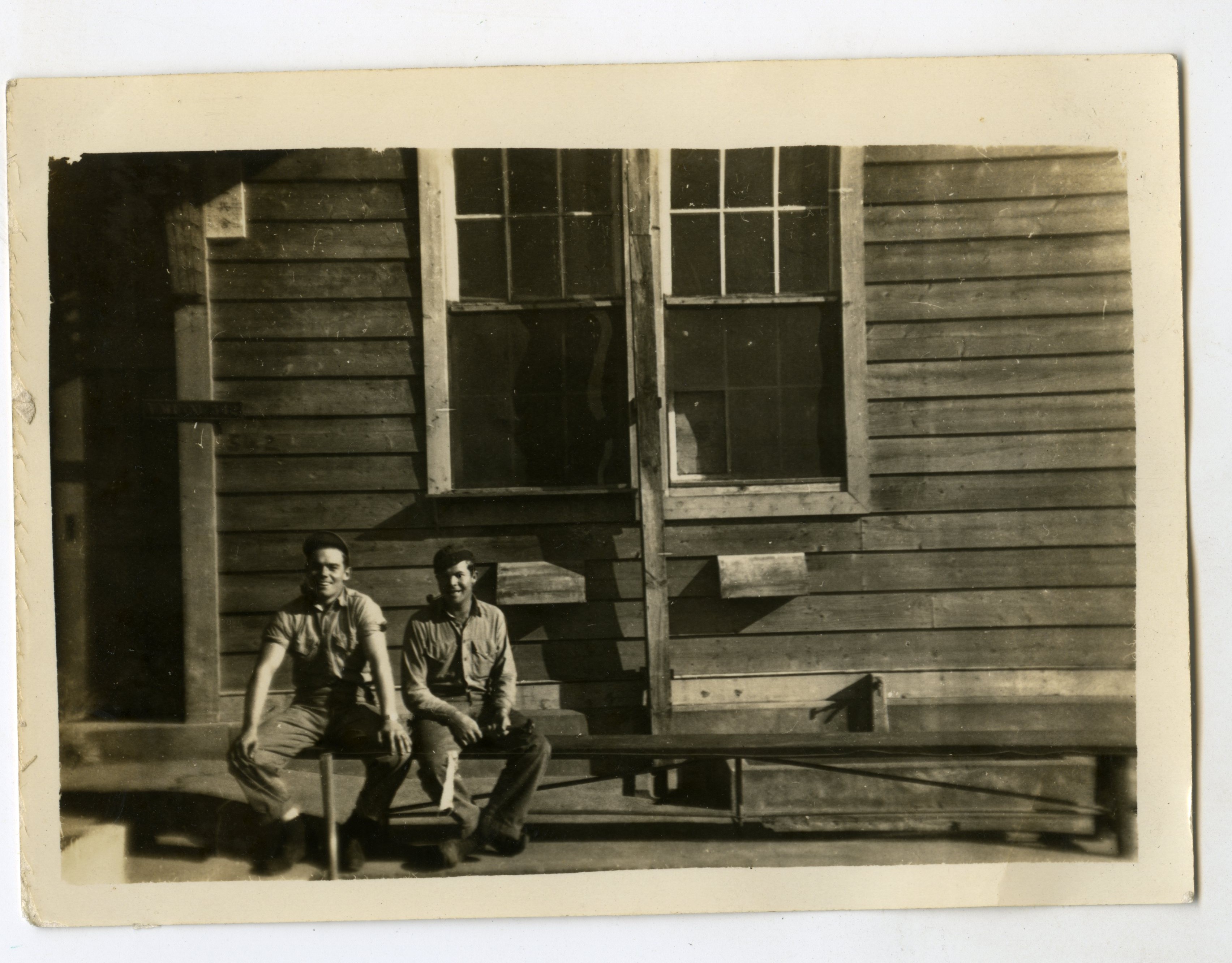
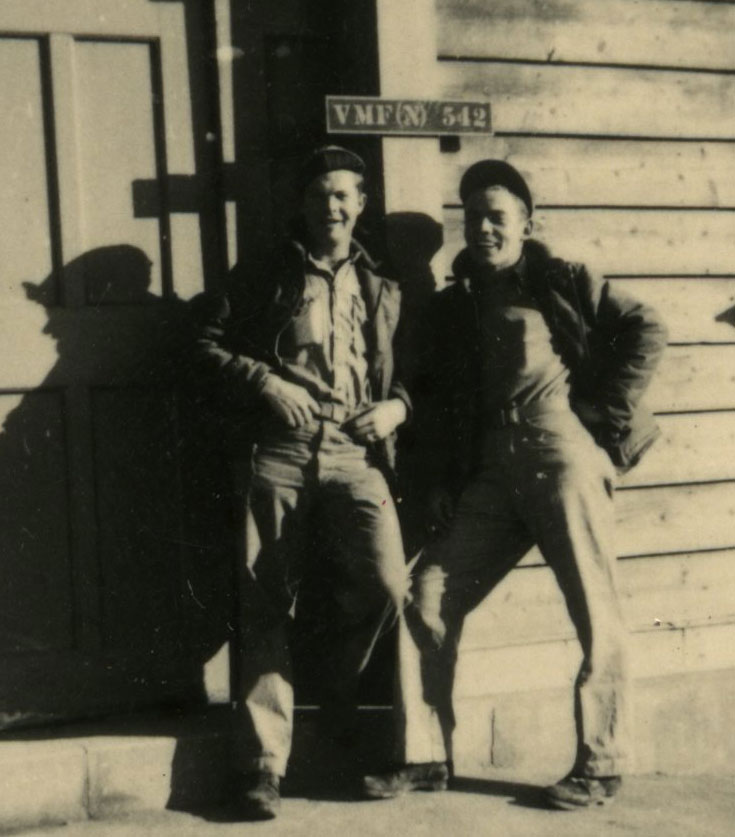
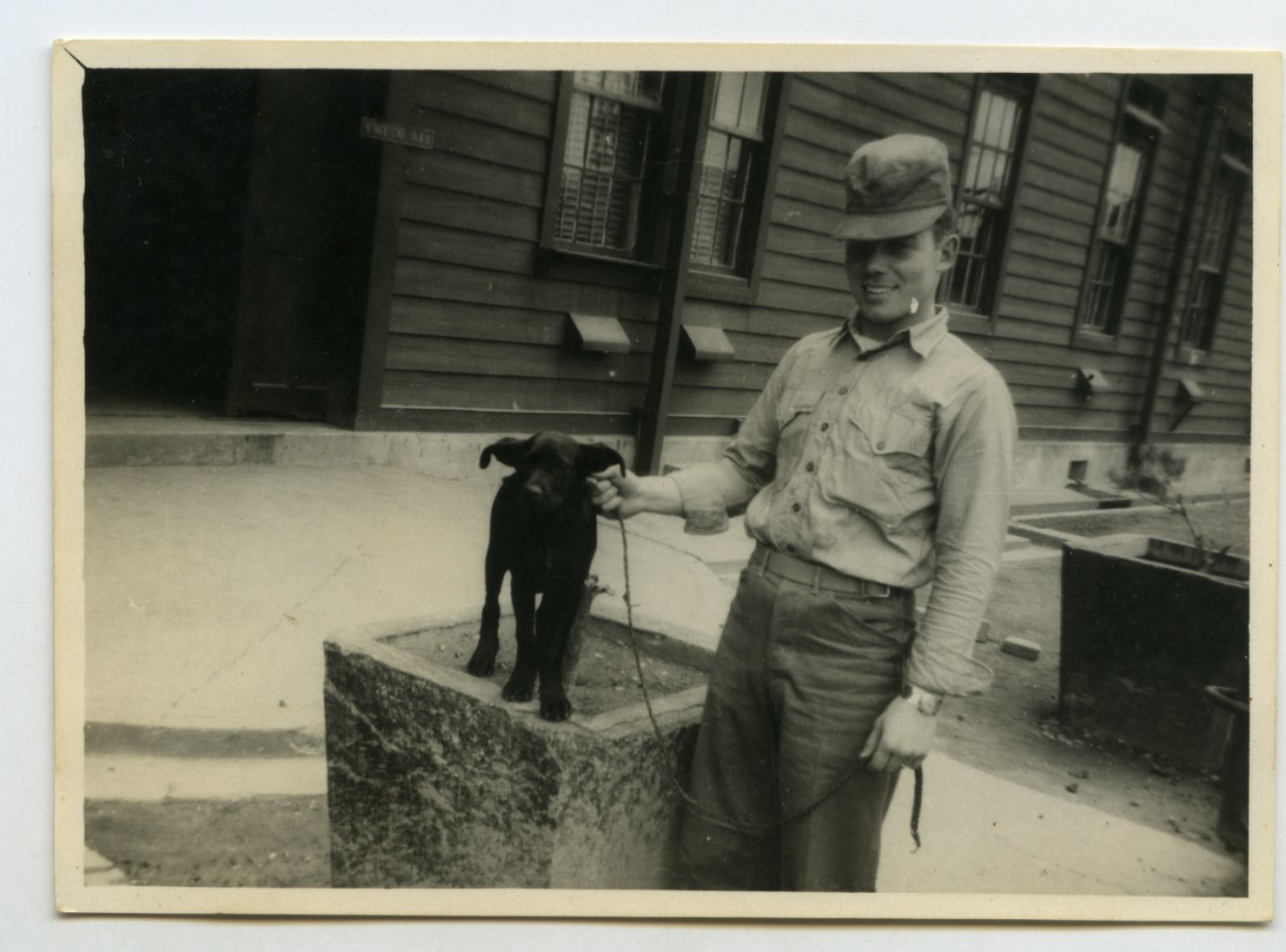
WWII USMC Marine Night Fighter Air Squadron VMF-542 Photo Album


My most recent album purchase comes in the form of a grouping of photos from a member of the ground crew of the VMF-542 Night Fighter Squadron.  Comprised of USMC (Marine) pilots flying the F6F Hellcat, the 542nd flew missions in the PTO during WWII.  The album is a great little glimpse into the mysterious world of the night fighter squadron during WWII.


Marine Attack Squadron 542 was initially commissioned as Marine Night Fighter Squadron 542 (VMF(N)-542) on March 6, 1944, at Marine Corps Air Station Cherry Point, North Carolina. Upon commissioning, the squadron was assigned the F6F Hellcat. They were relocated to San Diego, California in mid-summer, 1944 in preparation for a move to the combat zone. Late in October, the squadron arrived at Ulithi, in the Caroline Islands and immediately began flying combat air patrols.

Later in 1944, VMF(N)-542 deployed to the Pacific theater. By early April 1945, most of the squadron had deployed to take part in the Battle of Okinawa. Night operations against the enemy began on April 15 with missions being flown from Yontan Airfield, Okinawa. Second Lieutenant Arcenaux was the first squadron pilot to down an enemy warplane with a night fighter on April 16, 1945. While stationed at Yontan, the Tigers were credited with destroying eighteen Japanese airplanes and carrying out rocket attacks on the Ryukyu Islands chain of Amami, Amami Ōshima, Tokunoshima, Kikai Shima, Miyako Jima, and Amami Gunto. For these actions the Tigers were awarded the Presidential Unit Citation. Between April and August 1945, Major Robert B. Porter and Captain Wallace E. Sigler became the first night fighter aces on Okinawa.

Following a short tour of occupation duty at Yokosuka, Japan, VMF(N)-542 was transferred to Marine Corps Air Station El Toro, California. Training during this period was oriented towards night and all-weather fighter tactics and resulted in the squadron being re-designated Marine Night All-Weather Fighter Squadron 542 (VMF(AW)-542) in 1948.


Unit Mascot


WWI RPPC Photo – 32nd Division, 127th Infantry Wounded Litter Bearers – Identified DSC Recipients!


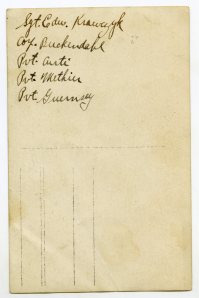
It’s been months since I’ve picked up a really juicy WWI RPPC photo for my collection.  Last week I was able to win a small group of shots that looked promising.  I knew there was one shot of doughboys wearing helmets bending down on the ground.  When the photo arrived I was surprised to find that the card identified five litter bearers of  Co. F of the 127th Infantry Regiment, 32nd Division.  I quickly found that two of the identified doughboys received the Distinguished Service Cross in October of 1918 for saving wounded soldiers from the trenches during the Meuse-Argonne Offensive.  Another (second from right) is William Methier – he received the Silver Star.  I also identified two other men in the photo as being Edward Krawezyk and Albert Guernsey who both received Division Citations for their heroics.

A truly special photo with a lot of history!

Buckendahl, Emil
Private, U.S. Army
Company F, 127th Infantry Reg., 32d Div., A.E.F.
Date of Action:   October 5, 1918
Citation:
The Distinguished Service Cross is presented to Emil Buckendahl, Private, U.S. Army, for extraordinary heroism in action near Gesnes, France, October 5, 1918. Private Buckendahl, a litter bearer, on his own initiative, went out from a position of shelter to an exposed flank, under intense machine-gun fire, and carried back to safety a wounded soldier, who had been left in the field.
General Orders 66, W.D., 1919
Born:   at Pierce, Nebraska
Home Town:   Pierce, Nebraska

Curti, Mike
Private, U.S. Army
Company F, 127th Infantry Reg., 32d Div., A.E.F.
Date of Action:   October 4, 1918
Citation:
The Distinguished Service Cross is presented to Mike Curti, Private, U.S. Army, for extraordinary heroism in action near Gesnes, France, October 4, 1918. Private Curti, a litter bearer, went out alone in front of the lines several times under the severest of fire, and carried back wounded men from an exposed area, from which his company had been forced to withdraw.
General Orders 66, W.D., 1919
Born:   at Italy
Home Town:   Reno, Nebraska

William H. Methier

Silver Star Citation

Awarded for actions during the World War I

By direction of the President, under the provisions of the act of Congress approved July 9, 1918 (Bul. No. 43, W.D., 1918), Private William H. Methier (ASN: 3102759), United States Army, is cited by the Commanding General, American Expeditionary Forces, for gallantry in action and a silver star may be placed upon the ribbon of the Victory Medals awarded him. Private Methier distinguished himself by gallantry in action while serving with Company F, 127th Infantry Regiment, 32d Division, American Expeditionary Forces, in action near Tronsot Farm, France, 16 October 1918, while on duty as a litter bearer.

General Orders: GHQ, American Expeditionary Forces, Citation Orders No. 3 (June 3, 1919)

Action Date: October 16, 1918

Service: Army

Rank: Private

Company: Company F

Regiment: 127th Infantry Regiment

Division: 32d Division Expeditionary Forces

From FindaGrave.com:

Mike Curti

Emil Buckendahl's Grave
Rare WWI Broadside Poster – 42nd Division Athletic Meet – Sgt. Duffy!


Photographs and letters from WWII are not considered “rare” by many collectors in today’s market.  I have roughly 1,000 WWI real photo postcards in my current collection, with and additional four albums of 200 or so photos each.  Small-run broadsides and posters are much more ephemeral and should be considered scarce.  Broadsides were meant to be posted for a few days, taken down and discarded.  In this instance, a doughboy in 42nd Rainbow Division took the time to save one of the broadside posters from a wall somewhere in France.  The event apparently was some sort of sports exhibition; not an uncommon event in the post-armistice Europe.

Of special attention to WWI buffs out there – check out the presiding chaplain!  None other than Father Duffy of the Fighting 69th!  A famous WWI movie centers around Duffy and his heroics during WWI.  Check it out here.

James Cagney in The Fighting 69th

42nd Division Broadside