Sometimes it takes a good bit of time to lock down the identity of the sitter in a photograph. I wouldn’t be able to do it without the help of dozens of research friends and an equal number of archive websites. With that said, I was able to purchase, research and identify and post a positive identification of a recent eBay purchase! It’s not an easy endeavor, but it’s something that will be worthwhile at some point in the future.
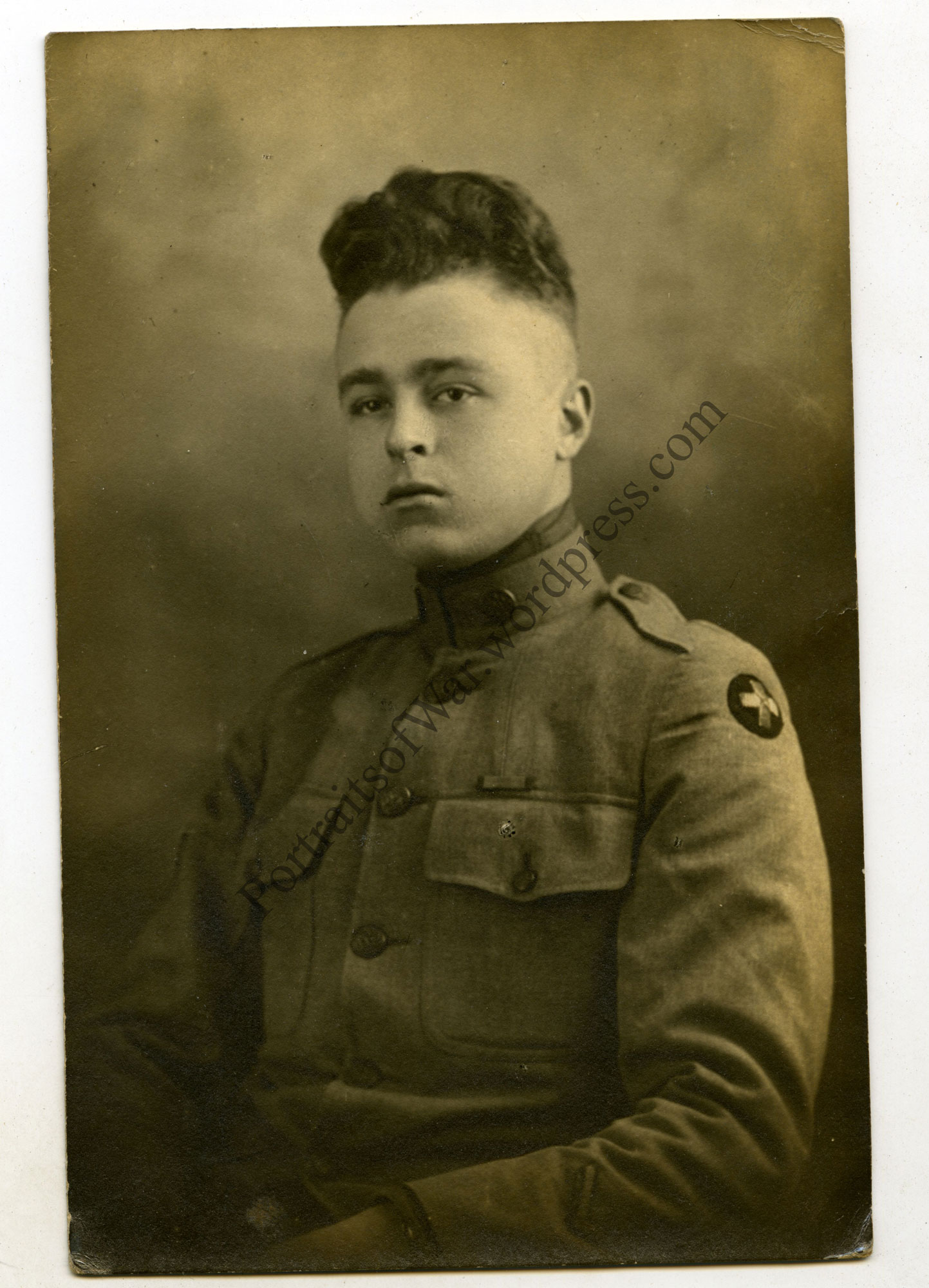
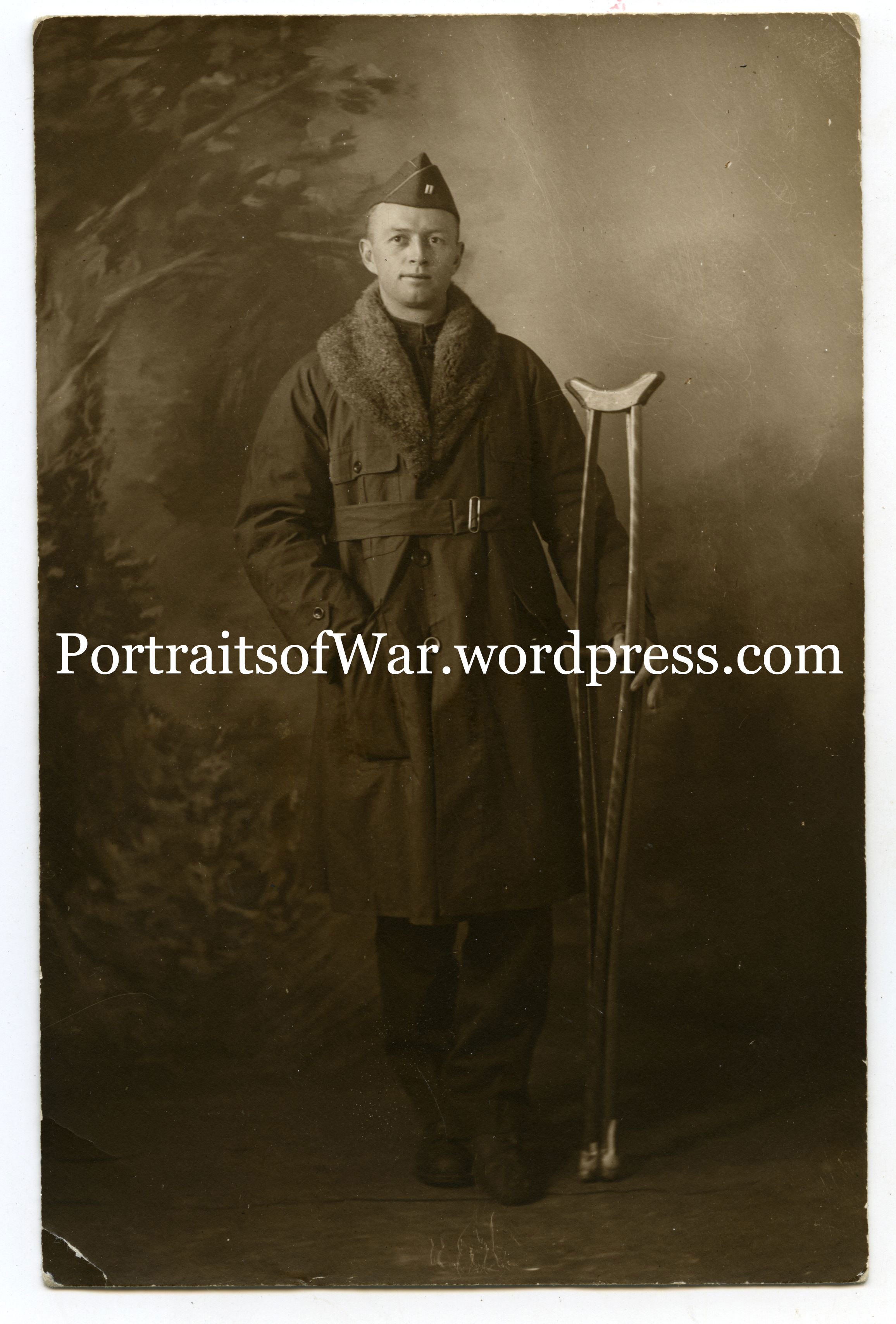
Russell Studio Portrait
Backside of the RPPC
What are we working with for an identification? The soldier has a definite first name of Russell and is cousins with a male named Forrest Martin of Watson, Illionois in 1919. Given the intro and body wording, he’s likely to be close to the recipient.
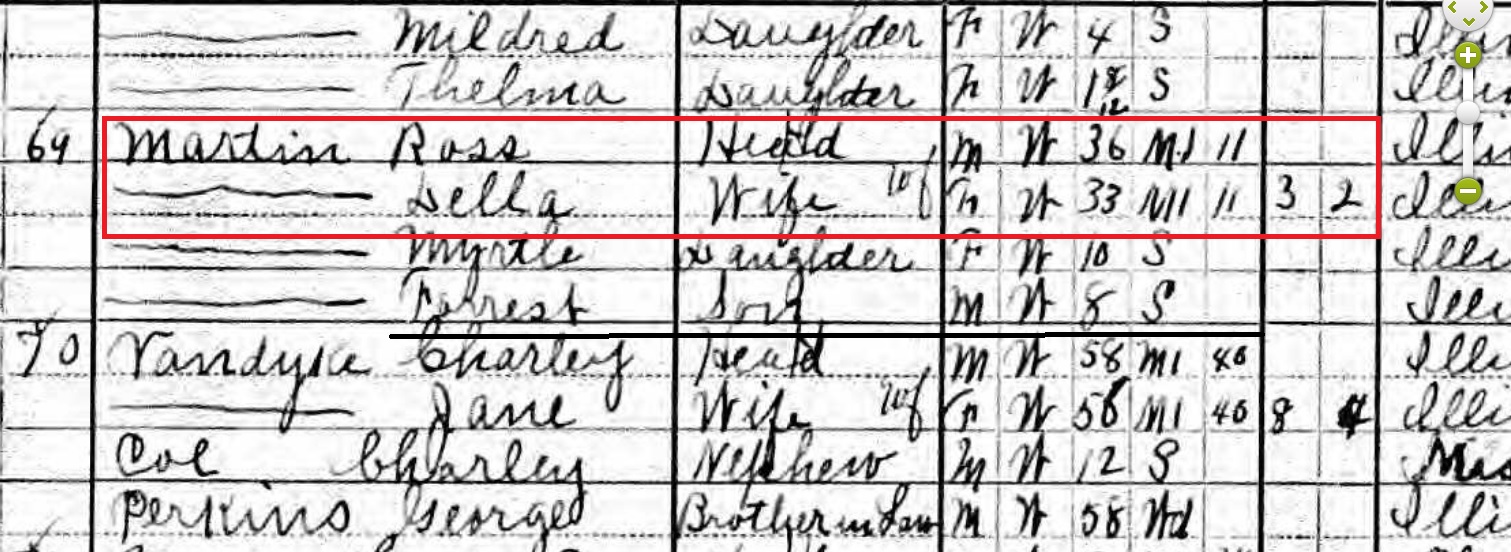
I started by researching the recipient, Forrest Martin, and found his 1900 census entry:
1910 Census Forrest Martin
From here I decided to research his mother and father in search of a series of siblings to track down as aunts and uncles to Russell. An aunt or uncle would produce a cousin which should provide me with the proper identification for the 33rd Division soldier!
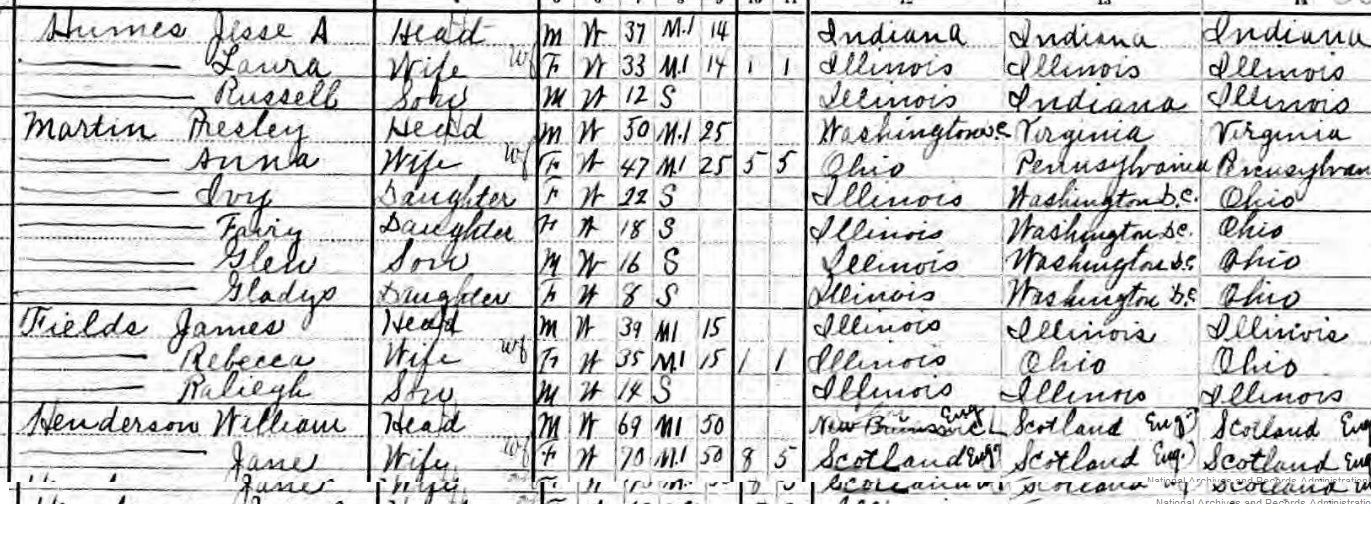
After over an hour of searching (tiring for sure) I was able to identify his mother’s sister as a Laura A. Humes. Laura had a son named Russell in 1897! When I clicked on his military burial record it all came together. Please keep in mind that this took hours of research!
Forrest’s Aunt Laura
Russell Humes’ Burial Card
Russell Humes, first cousin of Forrest Humes (recipient of the postcard), was in Company G of the 130th Infantry Regiment of the 33rd Division in WWI. He achieved the rank of Corporal and was wounded in action at some point during his service. His portrait photo was taken in 1919 long after his wounding. He passed away on 11-5-1957 at the age of 61.
My continued obsession with WWI Vermont material has landed me a new WWI photo taken in France in June of 1918. I literally stumbled across this listing; the seller didn’t mention the fact that the soldier was a Vermonter. Luckily I checked out the back of the photo before moving on to the next auction listing.
The photo was addressed to a Mrs. George Bolduc of Fitzdale, Vermont dated June 25th, 1918. The writer added the following info:
“June 25th, 1918
Dear Sister,
Am well and happy and hope you and children are well. Will write you a letter later, am pretty busy just now so am sending this in place of a letter. This is not very good but will have to pass some love to you all. From bro-
John Corcoran
101st MG BN, AEF”
John J. Corcoran(R)
John poses in the above photo with an unnamed friend of his from the 101st MG Bn. sporting a beautiful example of a woolen M1911 sweater. I’ve attached below a period advertisement showing two versions of the service sweater. These were either hand-knit from patterns or could be privately purchased through various supply and retail companies.
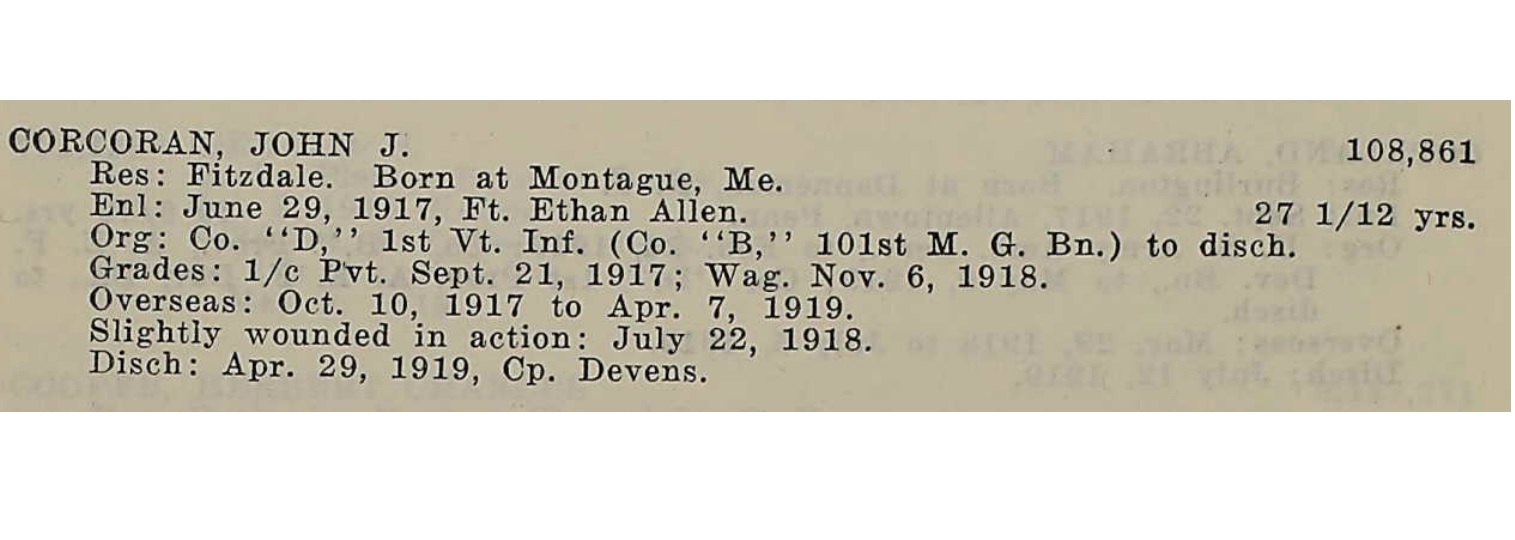
I am fortunate enough to own a copy of the hard-to-find 101st Machine Gun Battalion unit history. Wagoner John J. Corcoran is listed with a frontal snapshot beside his biography. He was born on May 29th, 1890 in Maine and eventually made his way over to Vermont where he lived in Lunenburg, VT working as a paper maker with the Gilman Paper Company. He enlisted at Fort Ethan Allen on June 29th, 1917 with the 1st Vermont Infantry, where he was later transferred into the 103rd MG of the 26th Division. His WWI and WWII draft cards were both listed on ancestry.com and I’ve included them below along with a copy of his death record. He passed away in 1947 and is buried in Lunenburg. I hope to travel there soon to take a photo of his grave!
101st MG Bn. Unit History Roster Entry
WWI Draft Card
WWII Draft Card
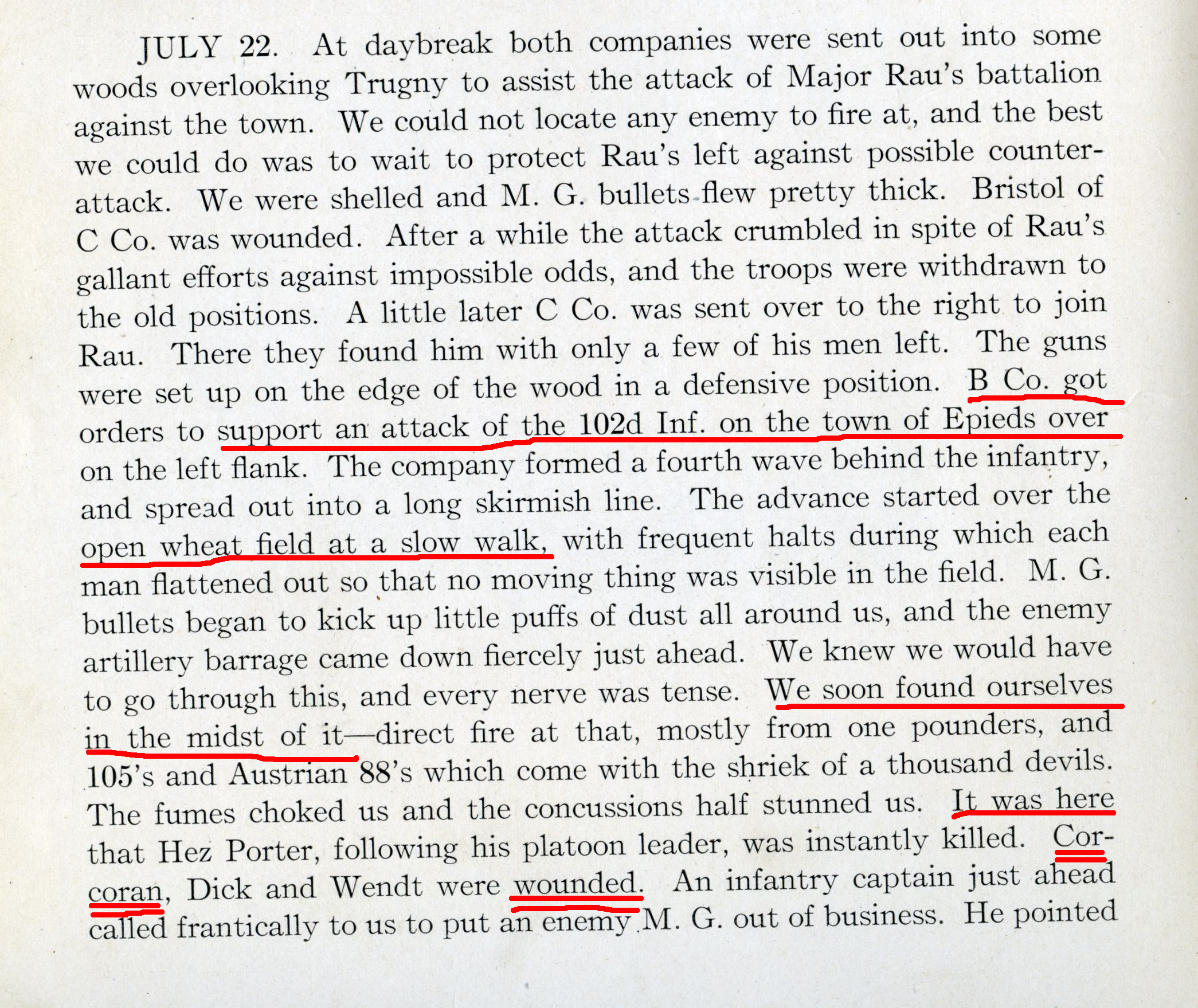
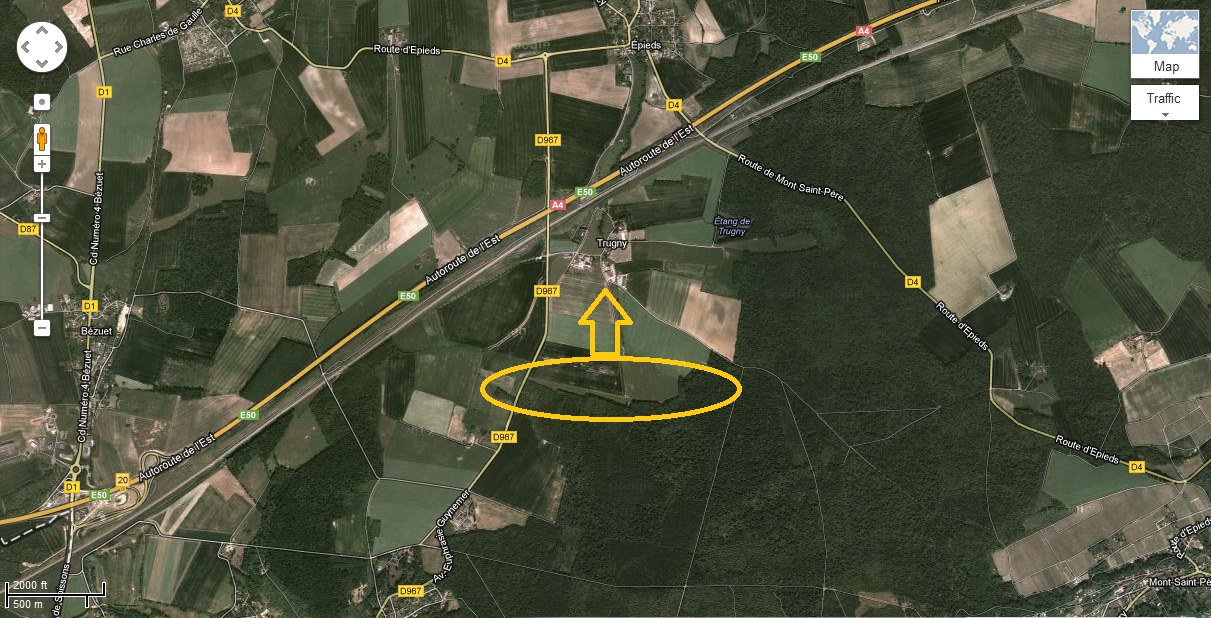
John was badly wounded on July 22nd, 1918 during an attack on the French town of Epieds. I’ve included a period map of the battle as well as an image of the location today. Not much has changed! This attack was coordinated only a few days after the Battle of Chateau Thierry. Luckily, John’s encounter with the Germans was noted in the 101st MG unit history diary section. I’ve transcribed the section:
“At daybreak both companies were sent into some woods overlooking Trugny to assist the attack of Major Rau’s battalion against the town. We could not locate any enemy to fire at, and the best we could do was wait to protect Rau’s left against possible counterattack. We were shelled and M.G. bullets flew pretty thick. Bristol of C Co. was wounded. After awhile(sic) the attack crumbled in spite of Rau’s gallant efforts against impossible odds, and the troops were withdrawn to the old positions. A little later C Co. was sent over to the right to join Rau. There they found him with only a few of his men left. The guns were set up on the edge of the woods in a defensive position. B Co. got orders to support an attack of the 102nd Infantry Regiment on the town of Epieds over on the left flank. The company formed a fourth wave behind the infantry, and spread out into a long skirmish line. The advance started over the open wheat field at a slow walk, with frequent halts during which each man flattened out so that no moving thing was visible in the field. M.G. bullets began to kick up little puffs of dust all around us, and the enemy artillery barrage came down fiercely just ahead. We knew we would have to go through this, and every nerve was tense. We soon found ourselves in the midst of it – direct fire at that, mostly from one pounders, and 105’s and Austrian 88’s which come with the shriek of a thousand devils. The fumes choked us and the concussion half stunned us. it was here that Hez Porter, following his platoon leader, was instantly killed. Corcoran, Dick and Wendt were wounded…………………………….”
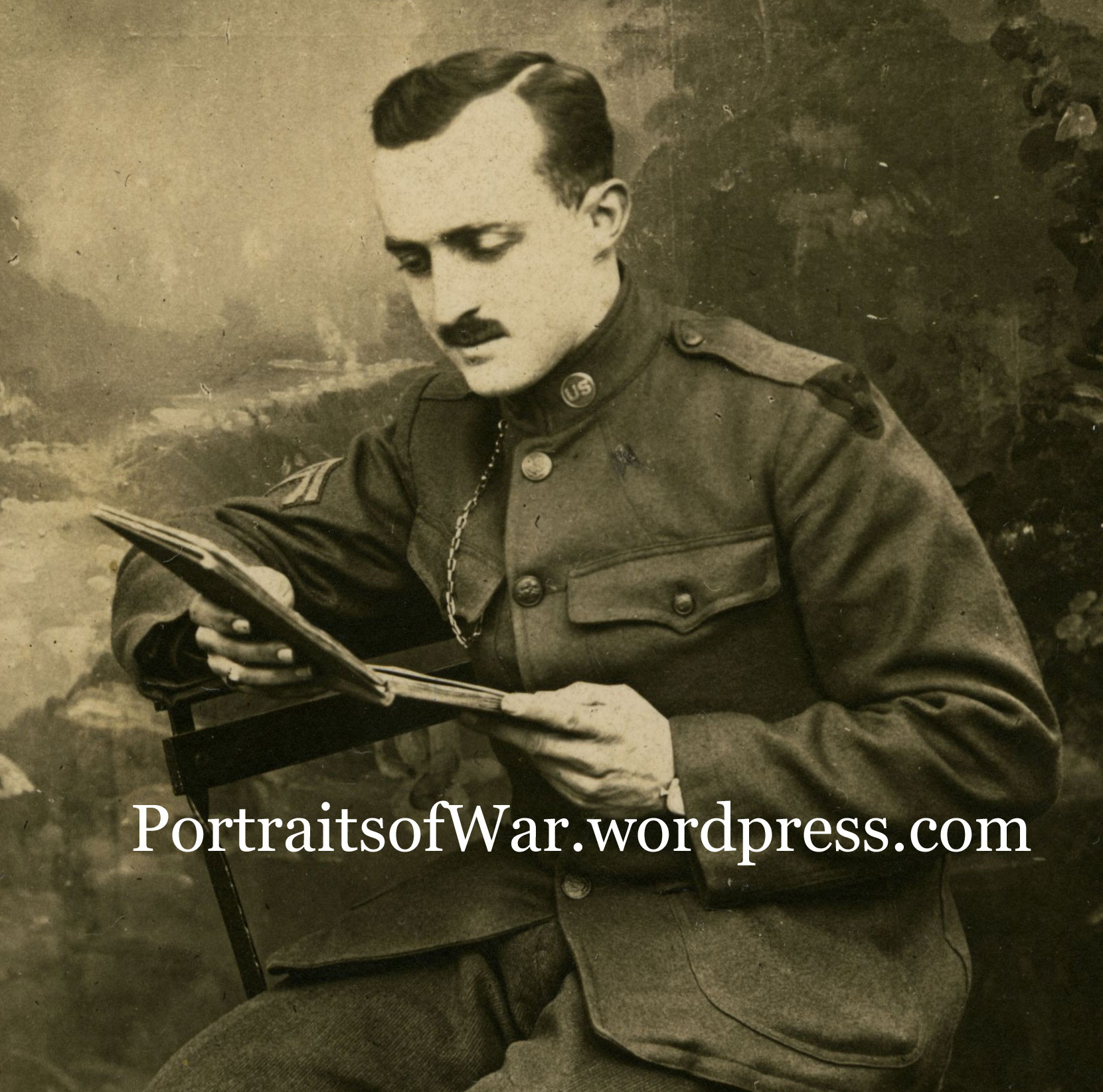
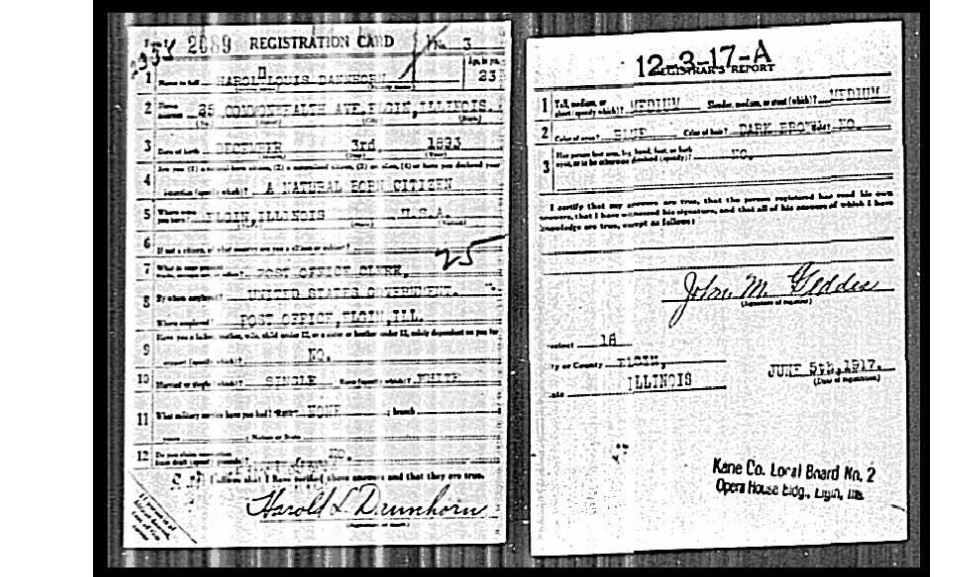
Corporal Dannhorn served in the HQ Company of the 343rd Infantry Regiment of the 86th Division while stationed in France before being switched over to the 256th Prisoner of War Escort Company #256 during the Occupation of Germany. Here he poses in a studio in Menton, France on February 20th, 1919.
Dog tags and identified material are easily collected by militaria enthusiasts due to the personal connections with names, families and units/divisions. Collecting dog tags is an easy way to feel a connection with the past; many dog tags were actually worn during combat and followed a soldier across the European continent. In this case I was able to pick up a cheap (less than $5) dog tag on eBay. A quick search for Charles L. Fox Brought up a smattering of possible leads that crisscrossed the country. Census records and marriages were of no help. I spent over an hour searching through military records for a man named Charles Fox born between 1885 and 1899 (a generally good search range for WWI veterans) and landed a solid hit. It’s not often that I identify a veteran through his/her serial number, but I was able to ID Charles L. Fox as having been born on December 14th, 1889 in Whitehouse, Ohio. He served with an ordnance supply unit in France during the war and was honorably discharged on July 26th, 1919. I was lucky to find both the veteran headstone marker card as well as the state veteran roll. A fun find, and another reason to invest in an ancestry.com account!
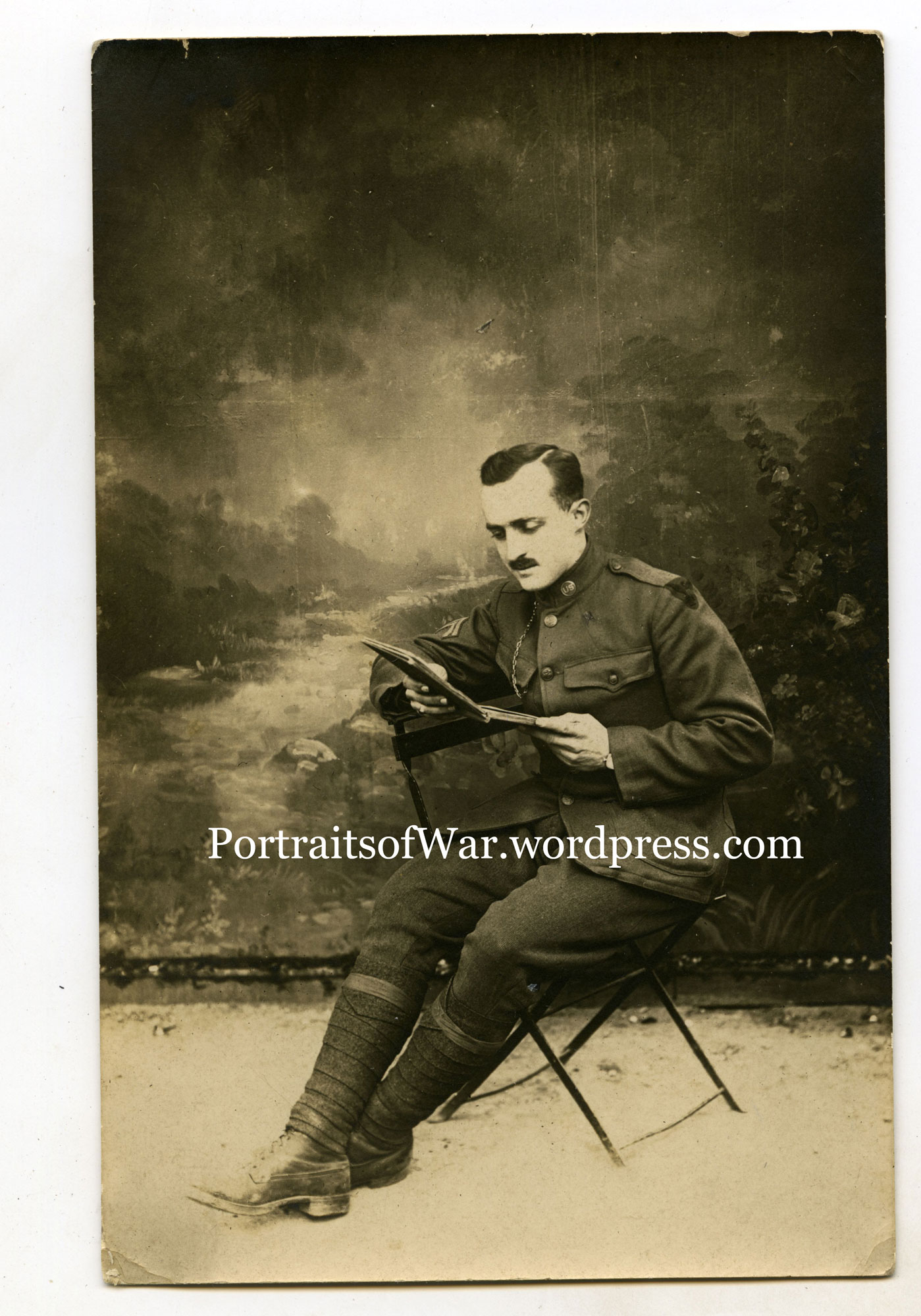
My interest in the forestry units of WWI started with an inexpensive eBay purchase back in 2012. I was lucky enough to pick up a copy of the 20th Engineer Regiment’s unit history from WWI. This particular copy had been in a fire at one point in it’s long life and was luckily only singed on the corners. The burned edges and soiled pages give the book a feeling of age and rugged dignity. The inside cover in inscribed by an Ed. Peterman of Florence, OR who was assigned to the 6th Battalion of the 20th Engineers.
Ed’s Burnt Book
Inscription
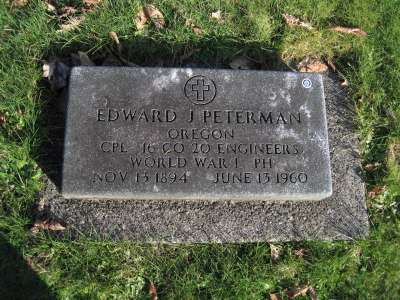
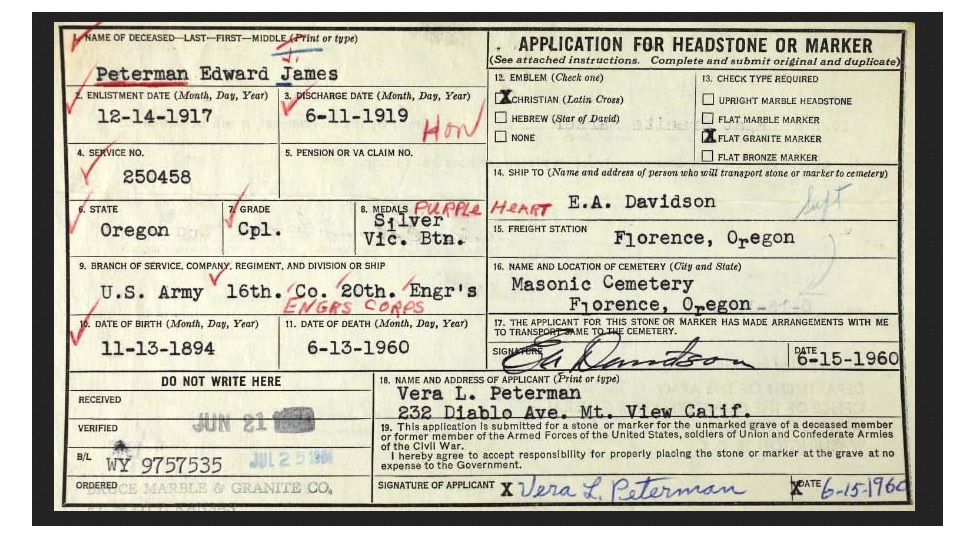
In an incredible stroke of luck I was able to find a 1920s photo of Mr.Peterman on ancestry.com. Ed was born in Winona, MN on November 13th, 1894 and later moved to Oregon, where he signed up with the forestry engineers. According to his gravestone, he served with both the 6th Battalion, 20th engineers until 10/1918 and then transferred to the 18th Company in October of 1918. He is listed as being a corporal and was wounded by enemy action, which is very rare for a forestry engineer. Ed was also a distinguished member of a very exclusive club. He was on board the S.S. Tuscania when it was torpedoed by a German U-Boat off the coast of Britain on February 5th, 1918. The boat sunk, taking 33 of Ed’s fellow Company F, 6th Battalion, 20th Engineer comrades with her. The 6th Battalion lost 95 men that day. Luckily, Ed was one of survivors.
This post is dedicated to the 20th Engineers and my continued interest in the unit. For more info on the 20th Engineers and the idea of forestry units in wartime, please check out The Forest History Society’s website here: http://www.foresthistory.org/research/WWI_ForestryEngineers.htm
Ed Peterman (right)
Mr. Peterman’s Grave
Gravestone Card
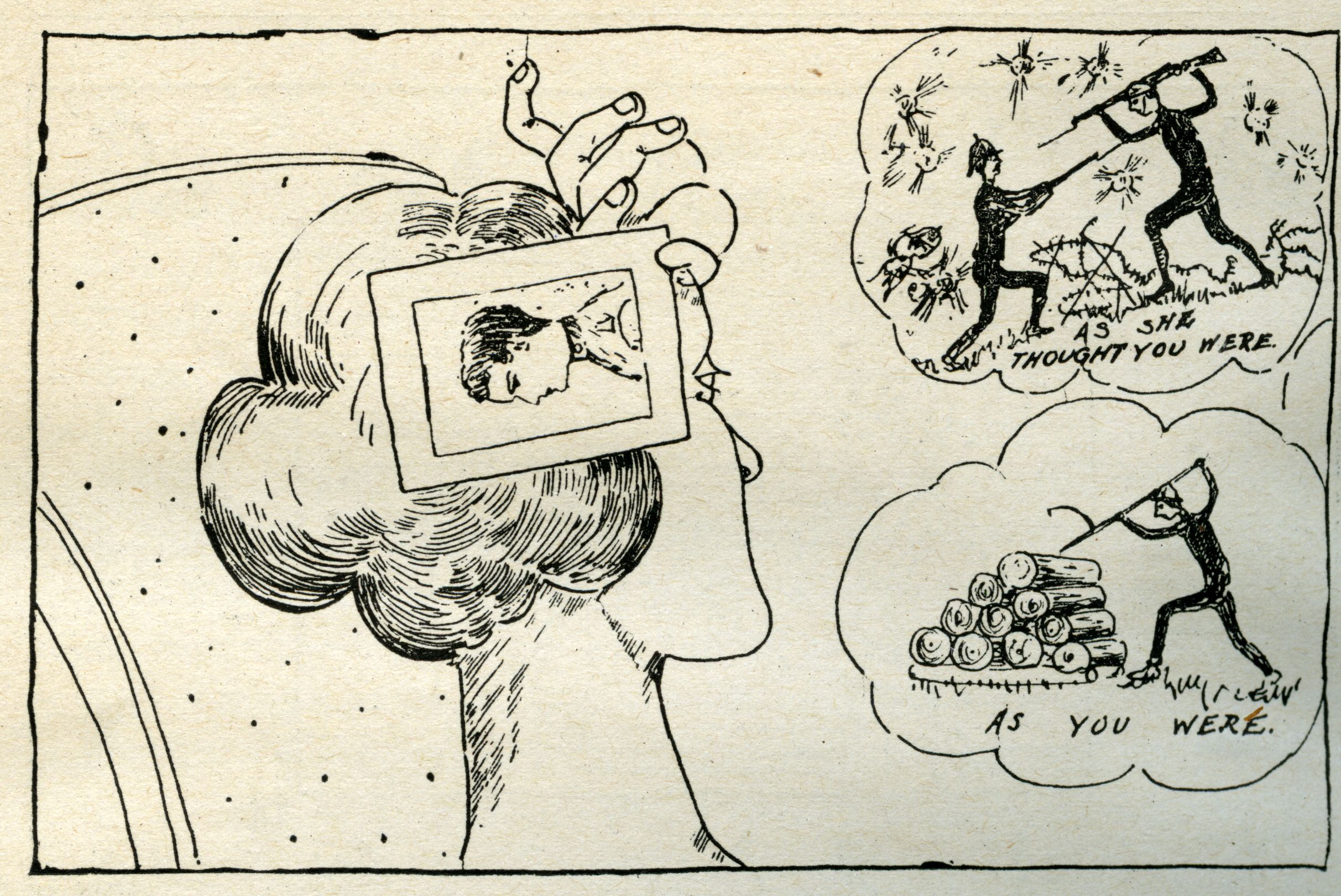
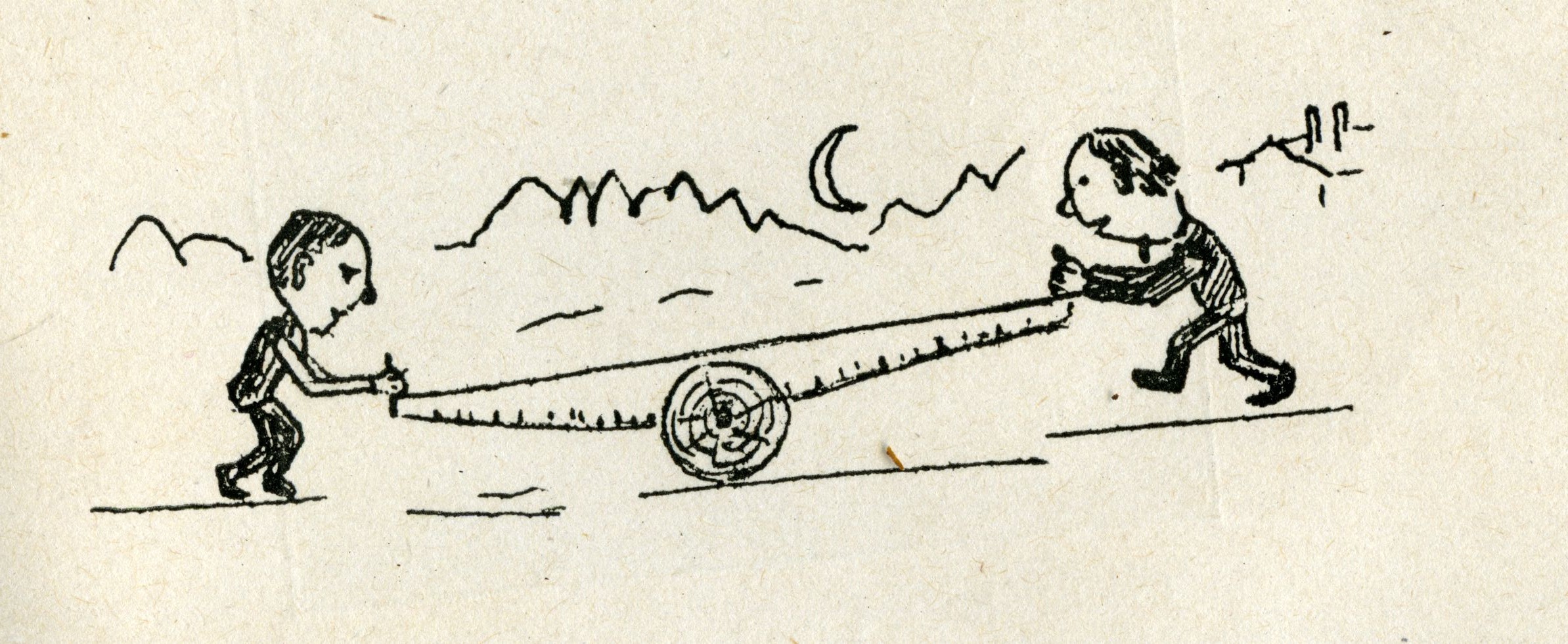
Ed’s book is filled with plenty of wonderful tidbits about the 20th Engineers during WWI as well as a series of funny cartoons and sketches done to help illustrate the book. Here are a few of my favorites:
Wounded soldier photos are some of the hardest photos to find in the collecting field. Often times a collector will come across a photo of a veteran wearing a wound chevron, or occasionally a shot of a soldier with a cane. In this case, I was able to pick up a grouping of photos taken at a Paris photo studio showing an assortment of wounded vets who recently were treated at a local Paris hospital. They hobbled over to a studio on Christmas day of 1918 to have their photos taken. These shots were some of the most expensive I’ve ever purchased, but they were well worth the investment. This is the more subdued of the four photos, but took me a long time to research and I wanted to post it for the internet community.
Albert E. Haan poses on Christmas Day 1918
I was tipped off by a Dutch friend of mine (thanks Rogier!) that his photo may be of a Dutch-American given his last name of Haan. Starting with the basic ancestry.com search of a name and hometown I was able to find a few bits of info. His name was Albert Haan and was born in 1893. I had to search a bit to find the census records for him, as they were listed under a misinterpreted/transcribed name of Hoan. Anyway it appears that Albert became an Army informant for the Veterans Association after the war. He is listed in a 1922 court case where he (and another veteran from my photo grouping) is listed as an informant. Anway, he is listed as being employed by the US Army in the 1920 Census and is shown as having a wife named Frances L and a daughter named Frances L. His daughter was only 2 months old at the time of the census. His wife appear to have been born around the turn of the century. He is listed as having been born in Holland in his earlier census entry, but mysteriously switched his place of birth to Michigan in the 1910 and 1920 census. He must’ve been able to hide his accent! (7/9/2023 Edit – after further research it appears that he was born in Grand Rapids, MI)
His Veterans Affairs death file lists the following:
Name:
Albert Haan
Gender:
Male
Birth Date:
12 Mar 1893
Death Date:
30 Nov 1986
SSN:
234014340
Enlistment Date 1:
13 May 1910
Release Date 1:
12 Mar 1914
Enlistment Date 2:
15 Jul 1917
Release Date 2:
24 May 1920
Sounds like he served early in 1910 and was released in 1914. He likely served with the Michigan National Guard at this point. He re-enlisted in 1917 and served until may of 1920 with the Army.
He had one daughter named Frances who was born in Washington D.C. in 1920. Albert was shipped back to the States in 1919 and was busy rehabilitating at Walter Reed Hospital between 1919 and 1920. Sounds like he had at least one “special visit”. He also had a son named Carl in 1922 while living in Washington D.C.
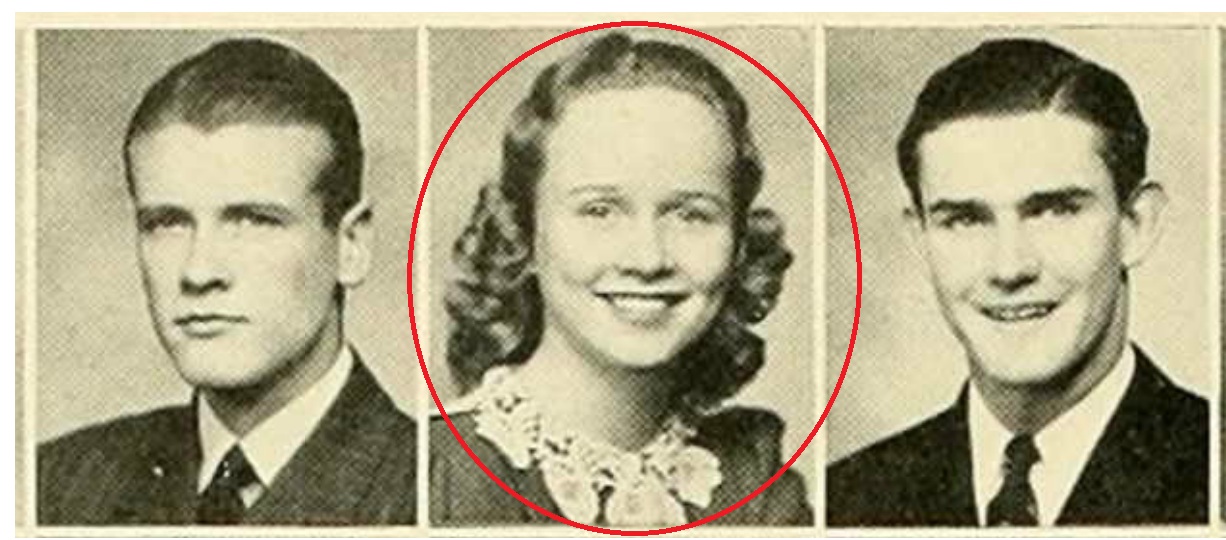
At some point the family moved from Washington D.C. to West Virgina where they apparently spent the rest of their lives. The daughter, Frances Louise Haan appears in the 1939 and 1940 University of West Virginia yearbooks and can be seen below. Quite the stunner for 1940!
1940 UWV Morgantown
Frances Haan 1939
Frances Haan 1940
I wonder if Frances is still alive? I can’t find any info on her past 1941. Ancestry.com has no information regarding her marriage or future life. She may still be alive and may be able to shed some light onto her father’s war service. I hope a family member finds this post!
Carl J Haan is harder to track down. I do know he enlisted for the US Army in July of 1942. He was surprisingly listed as an actor as a profession! This is the first time I’ve seen this!
Name:
Carl J Haan
Birth Year:
1922
Race:
White, citizen (White)
Nativity State or Country:
Dist of Columbia
State of Residence:
West Virginia
County or City:
Kanawha
Enlistment Date:
1 Jul 1942
Enlistment State:
Kentucky
Enlistment City:
Fort Thomas Newport
Branch:
Branch Immaterial – Warrant Officers, USA
Branch Code:
Branch Immaterial – Warrant Officers, USA
Grade:
Private
Grade Code:
Private
Term of Enlistment:
Enlistment for the duration of the War or other emergency, plus six months, subject to the discretion of the President or otherwise according to law
Component:
Army of the United States – includes the following: Voluntary enlistments effective December 8, 1941 and thereafter; One year enlistments of National Guardsman whose State enlistment expires while in the Federal Service; Officers appointed in the Army of
Source:
Civil Life
Education:
2 years of college
Civil Occupation:
Actors and actresses
Marital Status:
Single, without dependents
Height:
70
Weight:
168
Amazingly he served in the US Army Air Force in WWII, Korea, and Vietnam! Quite the lineage! This family continues to surprise me. Sadly he passed away on March 22nd, 2000 and is buried in Cameron Memory Gardens in Cameron, MO. His wife Eleanor passed away in 2002.
Name:
Carl J. Haan
SSN:
232-24-6283
Last Residence:
64469 Maysville, Dekalb, Missouri, United States of America
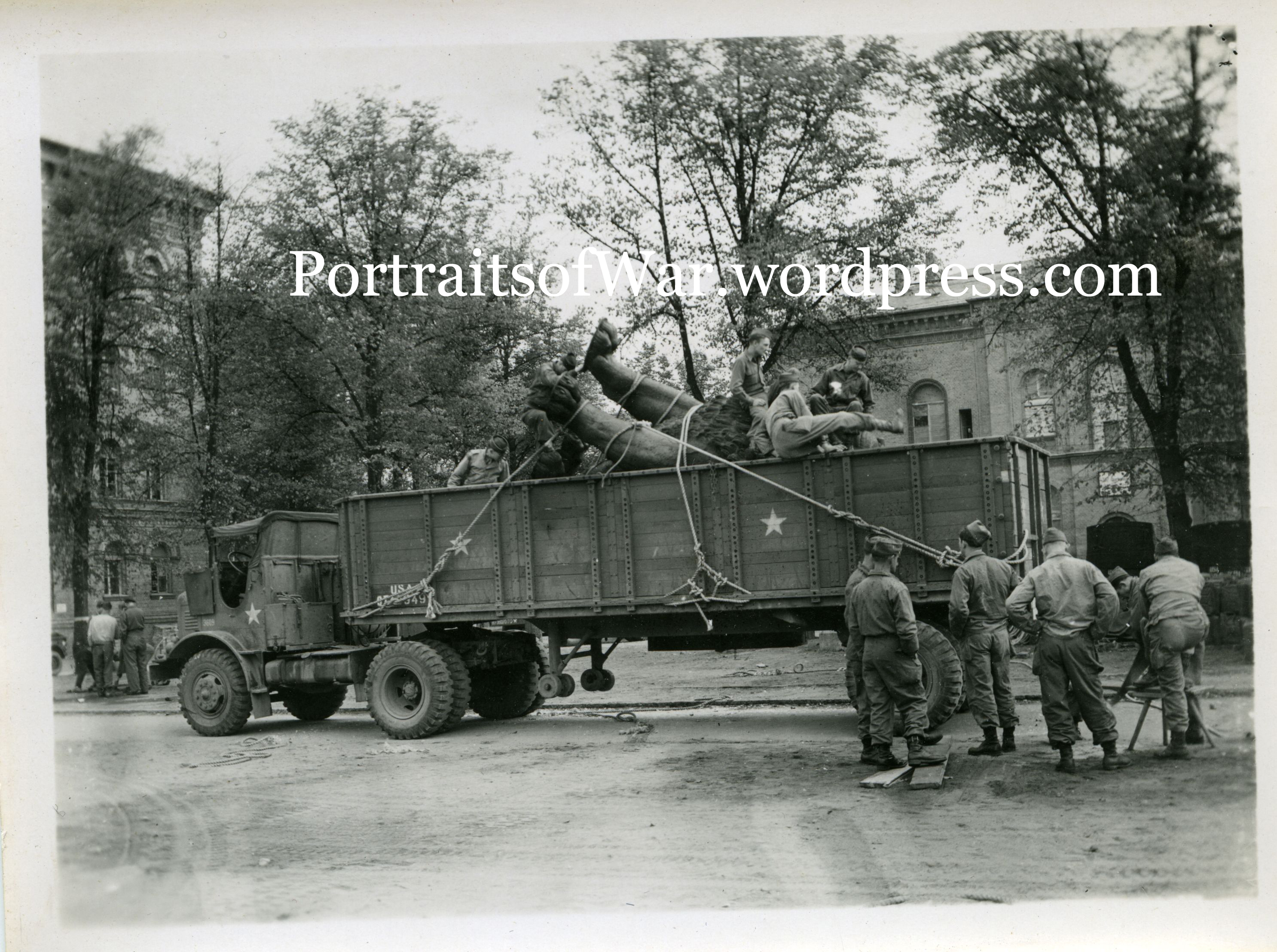
Snapped over 65 years ago at the Lichterfelde-Berlin SS Barracks in October of 1945, this shot gives us a rare glimpse of the US Army unit that transported the famous Isted Lion from it’s home in Berlin back to it’s ancestral lands of Denmark. Danish sculptor Herman Wilhelm Bissen created the monument for installation as a Tomb of the Unknown Soldier for the common Danish soldier. The statue we see today was completed and unveiled in 1862 with the following inscription:
Isted den 25. Juli 1850. Det danske Folk reiste dette Minde
(Isted, 25 July 1850. The Danish people set this memorial)
The statue was then taken in 1864 by the Germans after a bitter Danish defeat at the Battle of Dybbol. From there it was put on display, attacked by German nationalists, dismantled, copied, reconfigured and moved to the arsenal in Berlin, moved again to the barracks at Lichterfelde where it rested until October of 1945. This is where my recent photograph acquisition comes into play.
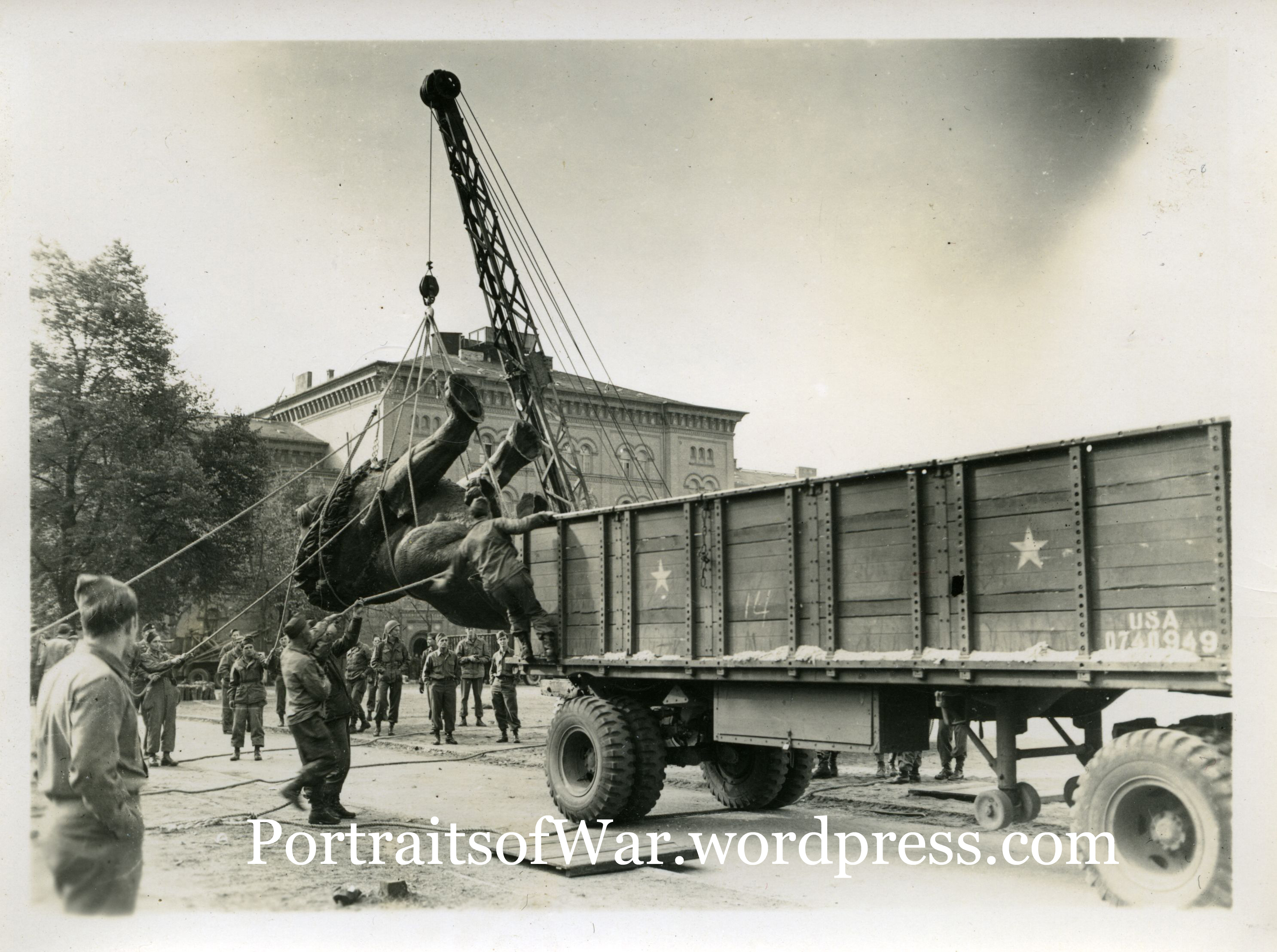
Isted Lion is Lifted
Lion on the Move
This pair of incredible photographs was privately taken by a member of a US Army engineering unit who were stationed in Berlin right after the end of the war. This shot shows the engineers loading the wandering lion into the bed of a heavy-duty truck. I can’t find any other shots of this scene. Also, there aren’t many soldiers in the shot…… this could be the only photograph of this scene on the web. From there, the lion was transported back to Denmark where it rested until 2010. Please watch the video below to finish the story!
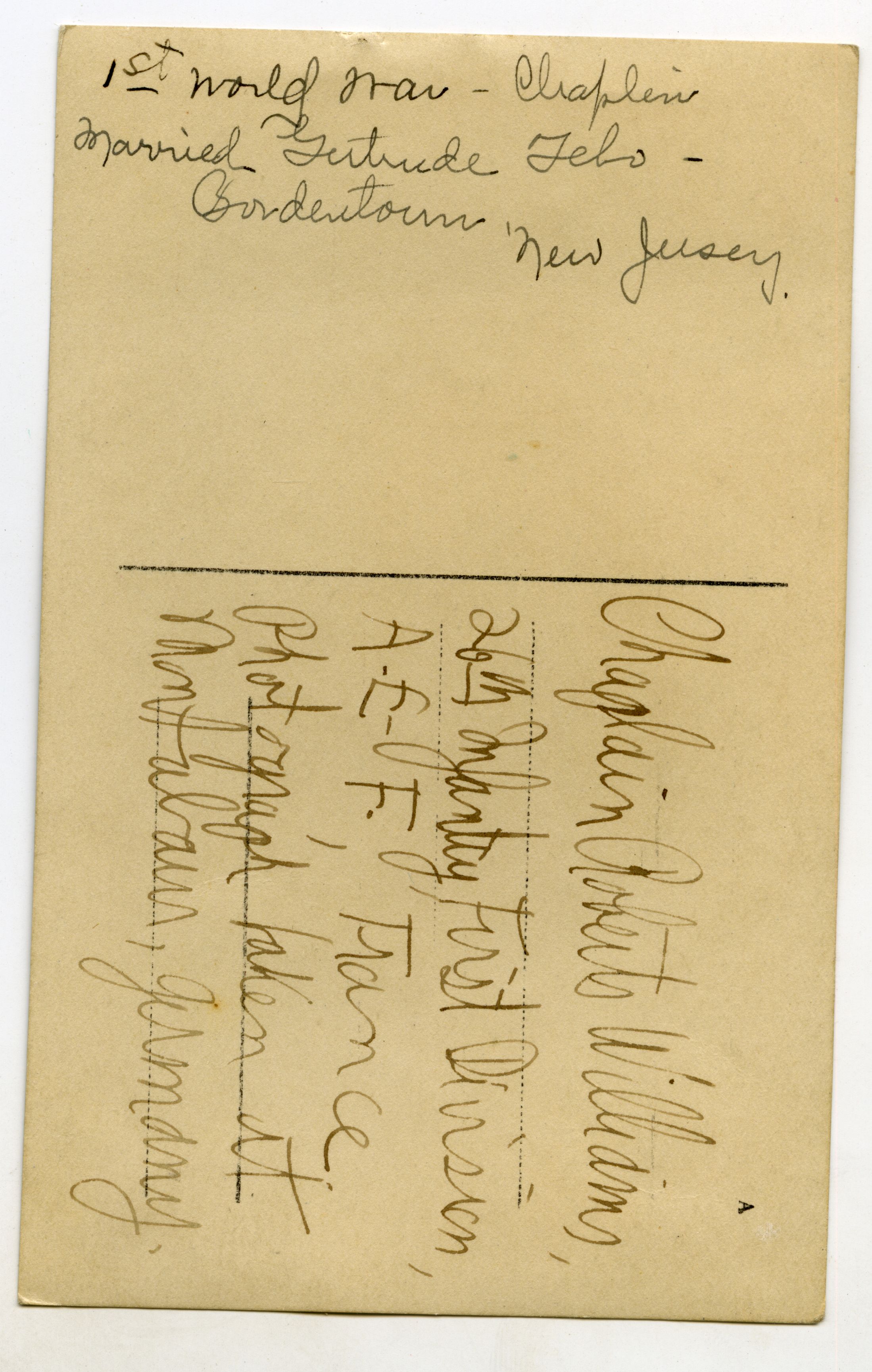
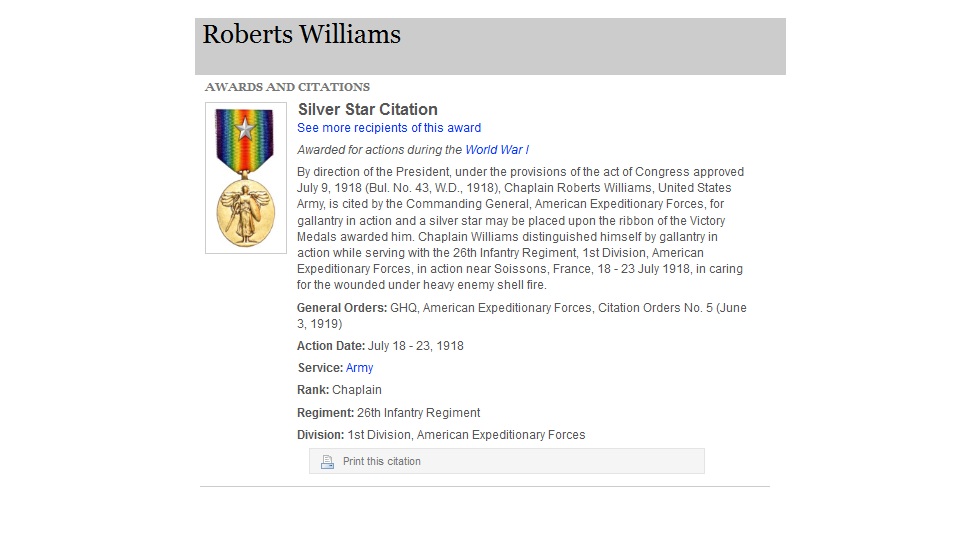
Another incredible WWI portrait photo has come across my desk via my dedicated searching regime on eBay. I bought this shot with the knowledge that the sitter was a chaplain. Chaplain shots are far and few between, and to have an ink identified example is very uncommon. In this case I was able to ply the internet and dig up some wonderful information on our sitter. Chaplain(Protestant) Roberts Williams originally enlisted as a private in the 17th Engineers but was eventually hooked up with the 26th Infantry Regiment of the 1st Division. He was awarded the Silver Star and was recommended for the Distinguished Service Crossed by his commander, Lt. Col. Theodore Roosevelt, Jr. He was gassed and the wound chevron can be seen on his right sleeve in the above image.
Here’s a quick transcription of his war service courtesy of a post-war Princeton Alumni newsletter. Interestingly, he graduated the same year as his commander, Teddy Roosevelt Jr.
“Chaplain Robert Williams, chaplain of the 26th Infantry of the First Division, has returned home, 55 Park Ave., Wilkes-Barre, Pa., to enjoy a brief leave of absence after twenty-one months’ service in France. Mr. Williams enlisted as a private in the 17th Engineers and served ten months at St. Nazaire. This regiment was among those composed of railroad men, to be reviewed by King George in London. During May, 1918, Private Williams was commissioned a chaplain. Immediately thereafter he was sent to the trenches where with the First Division he spent fifty-four days in the fighting of the Picardy front, culminating in the capture of Cantigny, the first planned American offensive. Withdrawn for a rest, his unit was unexpectedly sent into the fray again at the pivot of Marchal Foch’s counter attack northeast towards Soissons to cut the Soissons Chateau-Thierry railroad, which supplied the Germans in the Marne Salient. During this battle Chaplain Williams was gassed and here it was that his commander cited him for bravery and recommended that the DSC be conferred upon him. Chaplain Williams also spent three months in Germany, his unit being engaged in outpost duty twenty miles from the Rhine within Hunland. He says the Germans are very hard up for raw materials and that soap is worth more than money.”
I was also able to find a transcription of a letter Chaplain Williams penned to the family of a soldier killed in action:
“His battalion had gone over the top that morning, across a great
National Highway, the Paris-Soissons Road. The German machine-gun fire
was extremely severe, and we suffered heavily.
“A detail of four soldiers was given me by Major Legge to bury Captain
Richards and Lieutenant Boone. We buried your husband where he fell
and marked the grave with a cross upon which his identification tag was
placed. His personal effects, as I found them, were removed, and later
placed in his bedding-roll. We endeavored to remove his ring, but found it
impossible to do so, so we buried it with him. Records of the location of
the grave were sent to the Adjunct General, American Expeditionary Forces,
and to the Graves Registration Service; so his grave can be readily found after the war is over.
“It was remarkable what a peaceful and spiritual expression was upon
the face of Captain Richards. It did not seem as if he had suffered greatly,
and we could fancy that he seemed well pleased to pay the supreme sacrifice
upon the field of battle.
“I have heard among the enlisted men and officers who knew your
husband many, many remarks as to Captain Richard’s ouiet thoughtfulness.
his constant care for those under his command, his unfailing cheer, and his
courage, and efficiency as a soldier and leader of men. His memory lives
with us, and inspires us to emulate his devoted service to his Country.
“We ask that you will accept our sincere sympathy for the burden of
grief you bear; but we trust that your pride and joy in your husband’s
noble life and glorious death will enable you to bear his loss with courage.
“May God strengthen and help you, and may the promise of our
Savior comfort you with the thought of meeting your husband in a better
world.
Sincerely yours,
Robert Williams,
Chaplain (Protestant), 26th Infantry.”
Sometimes a little research and hard work pay off. In this case, I received a WWI 26th Division portrait in the mail from a friend in Pennsylvania. I knew it was a good image given the subject matter and the fact that the soldier was likely from the Lewiston area given the photographers embossed stamp. Not an easy task. I counted a dozen or so guys in a thirty mile radius of Lewiston that were possible contenders. Lots of Maine men were members of the 26th during the war, and it’s not always easy to associate a location given a photographers stamp.
Mellen F. Tuttle
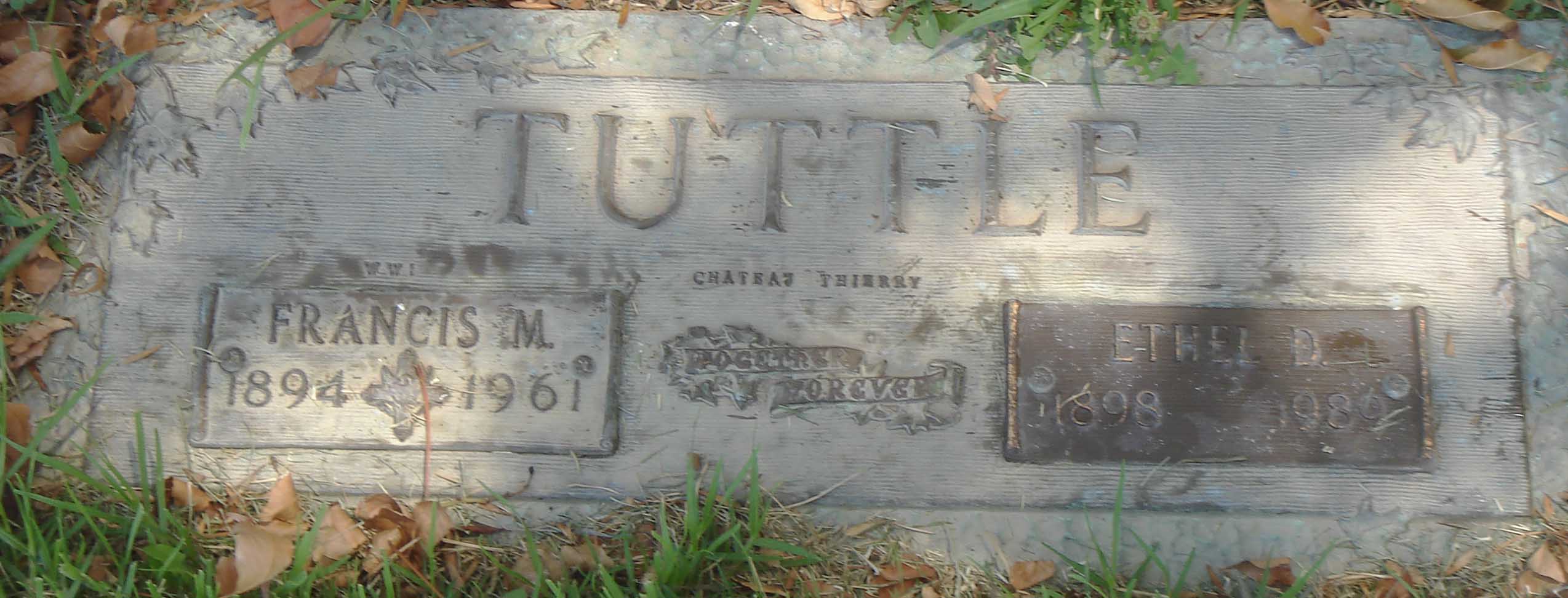
With a little forensic work I was able to figure out the identity of our mysterious hero. Since I’ve handled thousands of vintage photos and negatives, I know that photographers often penciled info on the back of the print, or etched names/numbers on the bottom of the original negative. The numbers would cross reference to a name and address to ship the photo. In this case I was lucky to find a name etched on the original negative. Obviously it was in reverse on the positive image, so I flipped it 180 degrees with photoshop and tweaked the contrast and brightness. Bingo, a name appeared. Tuttle. A quick search found a Mellen F. Tuttle from New Gloucester, ME who served as a private in Company B of the 103rd Infantry Regiment.
Further research shows that his actual name was Francis Mellen Tuttle, but he went by Mellen F. Tuttle during the war. After an hour of searching in vain for the death records of Mellen F. Tuttle, I decided to search for birth records for the Tuttle family in Maine. I came across a Francis M. Tuttle Jr. and clicked on the birth record. His father was Francis Mellen Tuttle! Everything fell into place after that. Please see the end of the article for a photo of his grave showing his name as Francis M. Tuttle. Somehow he made it all the way to Los Angeles and passed away in 1961!
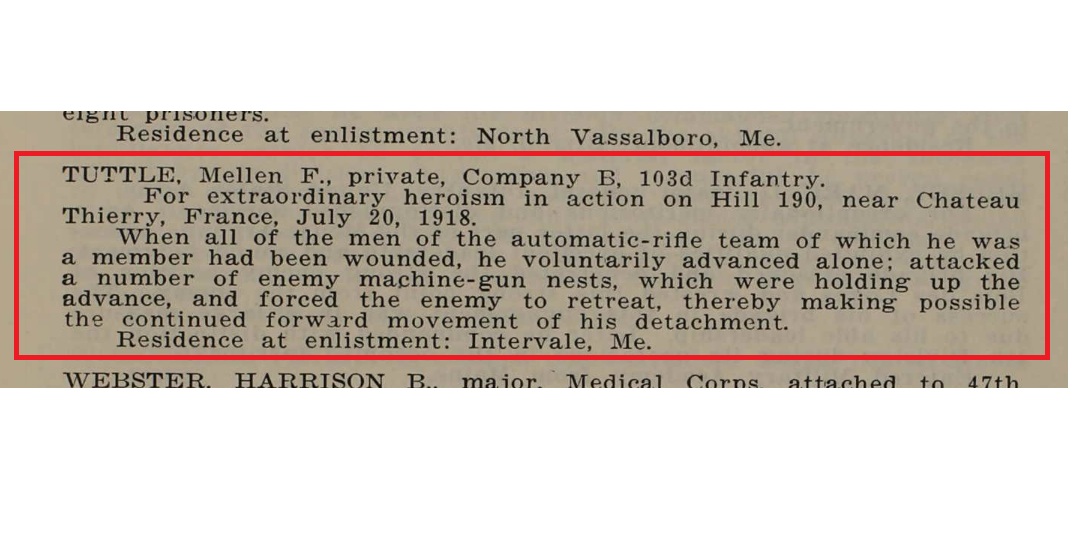
His feat of bravery occured on July 20th, 1918 on Hill 190 near Rochet Woods, Chateau Thierry. Mellen was with an automatic rifle team of Co. B of the 103rd when all of his fellow soldiers wounded. He single-handedly advanced on an enemy MG nest and forced them to retreat. His detachment was able to advance due to his bravery.
Reversed photographer etching
Hammond Brothers Lewiston, ME Photographers Stamp
Maine soldier registry entry
Name: Mellen F. Tuttle Serial Number: 67163 Birth Place: Freeport, Maine Age: 22 6/12 yrs. Residence: New Gloucester Comment: Enl: NG Augusta, May 30/17. Pvt 1st cl Jan. 2/18; Cpl July 18/19. Org: Co B 2 Inf Me NG (Co B 103 Inf) to Mar. 6/19; 291 Co MPC to disch. Eng: St Mihiel; Defensive Sector. Awarded French Croix de Guerre; awarded DSC. Overseas: Sept. 26/17 to Aug. 3/19. Hon disch on demob: Aug. 8, 1919.
Note the Chateau Thierry reference on the grave marker!
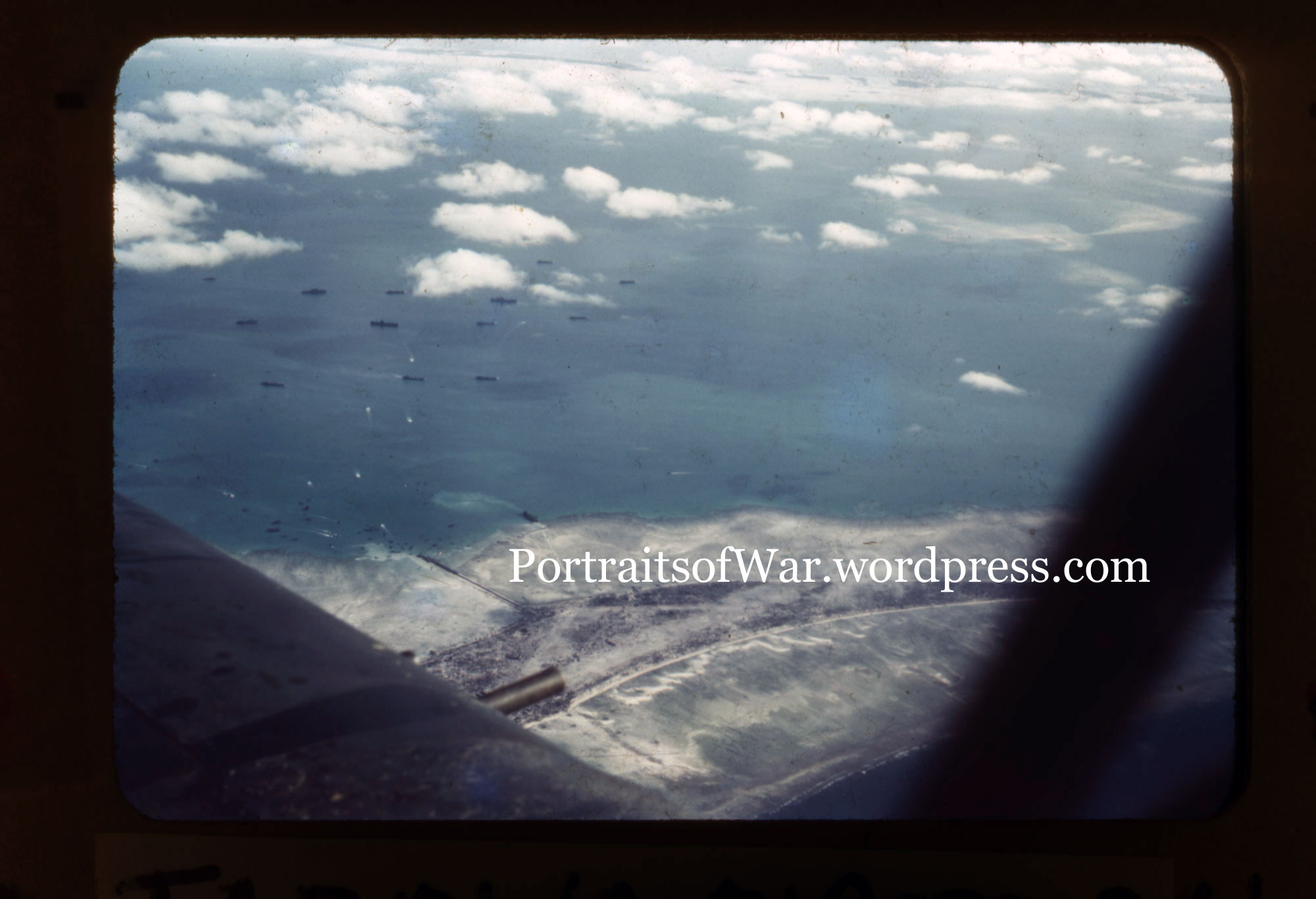
Talk about rare! A recent color slide collection has provided a rare glimpse into the opening hours of the infamous Battle of Tarawa. A Navy carrier-based fighter pilot snapped this 35mm color slide while flying cover over Betio on that fateful day on November 20th, 1943. I’ve never personally seen a color shot taken from the air during this battle. The series I recently acquired may be some of the only known color aerial shots taken during the opening hours of the battle. And the kicker is that I digitized the veteran’s audio cassette tape describing the image.
Collectors Note: The best thing about collecting 35mm color and B/W negatives/slides is that they were physically present during the event. Photographs were printed afterwards, but nitrate and celluloid negatives were physically processed through the camera during the event.
Please forward to 3:45 for a verbal description of the slide by the veteran who snapped the image
Aerial Shot of the Invasion of Tarawa
Veteran Description on 35mm Slide Mount
And some info on the opening day of the Battle of Tarawa (from Wikipedia):
The Battle of Tarawa (US code name Operation Galvanic) was a battle in the Pacific Theater of World War II, largely fought from November 20 to November 23, 1943. It was the first American offensive in the critical central Pacific region.
It was also the first time in the war that the United States faced serious Japanese opposition to an amphibious landing. Previous landings met little or no initial resistance. The 4,500 Japanese defenders were well-supplied and well-prepared, and they fought almost to the last man, exacting a heavy toll on the United States Marine Corps. The US had suffered similar casualties in other campaigns, for example over the six months in the campaign for Guadalcanal, but in this case the losses were suffered within the space of 76 hours. Nearly 6,000 Japanese and Americans died on the tiny island in the fighting.[2]
Background
In order to set up forward air bases capable of supporting operations across the mid-Pacific, to the Philippines, and into Japan, the U.S. needed to take the Marianas Islands. The Marianas were heavily defended. Naval doctrine of the time held that in order for attacks to succeed, land-based aircraft would be required to weaken defenses and provide some measure of protection for the invasion forces. The nearest islands capable of supporting such an effort were the Marshall Islands, northeast of Guadalcanal. Taking the Marshalls would provide the base needed to launch an offensive on the Marianas but the Marshalls were cut off from direct communications with Hawaii by a garrison and air base on the small island of Betio, on the western side of Tarawa Atoll in the Gilbert Islands. Thus, to eventually launch an invasion of the Marianas, the battles had to start far to the east, at Tarawa.
Following the completion of their campaign on Guadalcanal, the 2nd Marine Division had been withdrawn to New Zealand for rest and recuperation. Losses were replaced and the men given a chance to recover from the malaria and other illnesses that weakened them through the fighting in the Solomons. On July 20, 1943 the Joint Chiefs directed Admiral Chester Nimitz to prepare plans for an offensive operation in the Gilbert Islands. In August Admiral Raymond Spruance was flown down to New Zealand to meet with the new commander of the 2nd Marine Division, General Julian Smith, and initiate the planning of the invasion with the division’s commanders.
Located about 2,400 miles southwest of Pearl Harbor, Betio is the largest island in the Tarawa Atoll. The small, flat island lies at the southern most reach of the lagoon, and was home to the bulk of the Japanese defenders. Shaped roughly like a long, thin triangle, the tiny island is approximately two miles long. It is narrow, being only 800 yards wide at the widest point. A long pier was constructed from the north shore from which cargo ships could unload out past the shallows while at anchor in the protection of the lagoon. The northern coast of the island faces into the lagoon, while the southern and western sides face the deep waters of the open ocean.
Following Carlson’s diversionary Makin Island raid of August 1942, the Japanese command was made aware of the vulnerability and strategic significance of the Gilbert Islands. The 6th Yokosuka Special Naval Landing Force arrived to reinforce the island in February 1943. In command was Rear Admiral Tomanari Sichero, an experienced engineer who directed the construction of the sophisticated defensive structures on Betio. Upon their arrival the 6th Yokosuka became a garrison force, and the unit’s identification was changed to the 3rd Special Base Defense Force. Sichero’s primary goal in the Japanese defensive scheme was to stop the attackers in the water or pin them on the beaches. A tremendous number of pill boxes and firing pits were constructed with excellent fields of fire over the water and sandy shore. In the interior of the island was the command post and a number of large shelters designed to protect defenders from air attack and bombardment. The island’s defenses were not set up for a battle in depth across the island’s interior. The interior structures were large and vented, but did not have firing ports. Defenders in them were limited to firing from the doorways.[3]
The Japanese worked intensely for nearly a year to fortify the island.[4] To aid the garrison in the construction of the defenses, the 1,247 men of the 111th Pioneers, similar to the Seabees of the U.S. Navy, along with the 970 men of the Fourth Fleet’s construction battalion were brought in. Approximately 1,200 of the men in these two groups were Korean forced laborers. The garrison itself was made up of forces of the Imperial Japanese Navy. The Special Naval Landing Force was the marine component of the IJN, and were known by US intelligence to be more highly trained, better disciplined, more tenacious and to have better small unit leadership than comparable units of the Imperial Japanese Army. The 3rd Special Base Defense Force assigned to Tarawa had a strength of 1,112 men. They were reinforced by the 7th Sasebo Special Naval Landing Force, with a strength of 1,497 men. It was commanded by Commander Takeo Sugai. This unit was bolstered by 14 Type 95 light tanks under the command of Ensign Ohtani.
A series of fourteen coastal defense guns, including four large Vickers 8-inch guns purchased during the Russo-Japanese War from the British,[2] were secured in concrete bunkers and located around the island to guard the open water and the approaches into the lagoon. It was thought these big guns would make it very difficult for a landing force to enter the lagoon and attack the island from the north side. The island had a total of 500 pillboxes or “stockades” built from logs and sand, many of which were reinforced with cement. Forty artillery pieces were scattered around the island in various reinforced firing pits. An airfield was cut into the bush straight down the center of the island. Trenches connected all points of the island, allowing troops to move where needed under cover. As the command believed their coastal guns would protect the approaches into the lagoon, an attack on the island was anticipated to come from the open waters of the western or southern beaches. Kaigun ShōshōKeiji Shibazaki, an experienced combat officer from the campaigns in China relieved Sichero in July 20, 1943 in anticipation of the coming combat. Shibazaki continued the defensive preparations right up to the day of the invasion. He encouraged his troops, saying “it would take one million men one hundred years” to conquer Tarawa.
November 20
Marines alongside an LVT-1 “Alligator”.
Marines seek cover amongst the dead and wounded behind the sea wall on Red Beach 3, Tarawa.
As the invasion flotilla hove to in the predawn hours, the islands four 8 inch guns opened fire on the task force. A gunnery duel soon developed as the main batteries on the battleships Colorado and Maryland commenced a counter-battery fire. The counter-battery proved accurate, with several of the 16 inch shells finding their mark. One shell penetrated the ammunition storage for one of the guns, igniting a huge explosion as the ordnance went up in a massive fireball. Three of the four guns were knocked out in short order. Though all four guns fell silent, one continued intermittent, though inaccurate, fire through the second day. The damage to the big guns left the approach to the lagoon open. It was one of the few successes of the naval bombardment.
Following the gunnery duel and an air attack of the island at 0610, the naval bombardment of the island began in earnest and was sustained for the next three hours. Two mine sweepers with two destroyers to provide covering fire entered the lagoon in the pre-dawn hours and cleared the shallows of mines.[5] A guide light from one of the sweepers then guided the landing craft into the lagoon where they awaited the end of the bombardment. The plan was to land Marines on the north beaches, divided into three sections: Red Beach 1 to the far west of the island, Red Beach 2 in the center just west of the pier, and Red Beach 3 to the east of the pier. Green Beach was a contingency landing beach on the western shoreline and was used for the D+1 landings. Black Beaches 1 and 2 made up the southern shore of the island and were not used. The airstrip, running roughly east-west, divided the island into north and south.
U.S. Coast Guardsmen ferrying supplies pass an LCM-3 which has taken a direct hit at Tarawa.
The Marines started their attack from the lagoon at 09:00, thirty minutes later than expected, but found the tide had still not risen enough to allow their shallow draft Higgins boats to clear the reef. Marine battle planners had not allowed for Betio’s neaptide and expected the normal rising tide to provide a water depth of 5 feet (1.5 m) over the reef, allowing larger landing craft, with drafts of at least four feet (1.2 m), to pass with room to spare. But that day and the next, in the words of some observers, “the ocean just sat there,” leaving a mean depth of three feet (0.9 m) over the reef. (The neap tide phenomenon occurs twice a month when the moon is near its first or last quarter, because the countering tug of the sun causes water levels to deviate less. But for two days the moon was at its farthest point from earth and exerted even less pull, leaving the waters relatively undisturbed.)
At 0900 the supporting naval bombardment was lifted to allow the Marines to land. The reef proved a daunting obstacle. Only the tracked LVT “Alligators” were able to get across. The Higgins boats, at four feet draft, were unable to clear the reef.[6] With the pause in the naval bombardment those Japanese that survived the shelling dusted themselves off and manned their firing pits. Japanese troops from the southern beaches were shifted up to the northern beaches. As the LVTs made their way over the reef and in to the shallows the number of Japanese troops in the firing pits slowly began to increase, and the amount of combined arms fire the LVTs faced gradually intensified. The LVTs had a myriad of holes punched through their non-armored hulls, and many were knocked out of the battle. Those ‘Alligators’ that did make it in proved unable to clear the sea wall, leaving the men in the first assault waves pinned down against the log wall along the beach. A number of ‘Alligators’ went back out to the reef in an attempt to carry in the men who were stuck there, but most of these LVTs were too badly holed to remain sea worthy, leaving the marines stuck on the reef some 500 yards (460 m) off shore. Half of the LVTs were knocked out of action by the end of the first day.
Colonel David Shoup was the senior officer of the landed forces, and he assumed command of all landed Marine Corps troops upon his arrival on shore. Although wounded by an exploding shell soon after landing at the pier, Colonel Shoup took charge of the situation, cleared the pier of Japanese snipers and rallied the first wave of Marines who had become pinned down behind the limited protection of the sea wall. During the next two days, working without rest and under constant withering enemy fire, he directed attacks against strongly defended Japanese positions, pushing forward despite daunting defensive obstructions and heavy fire. Throughout Colonel Shoup was repeatedly exposed to Japanese small arms and artillery fire, inspiring the forces under his command. For his actions on Betio he was awarded the Medal of Honor.
Several early attempts to land tanks for close support and to get past the sea wall failed when the landing craft carrying them were hit on their run into the beach and either sank outright or had to withdraw while taking on water. Two Stuart tanks eventually landed on the east end of the beach but were knocked out of action fairly quickly. Three medium Sherman tanks were landed on the western end of the island and proved considerably more effective. They helped push the line in to about 300 yards (270 m) from shore. One became stuck in a tank trap and another was knocked out by a magnetic mine. The remaining tank took a shell hit to its barrel and had its 75 mm gun disabled. It was used as a portable machine gun pillbox for the rest of the day. A third platoon was able to land all four of its tanks on Red 3 around noon and operated them successfully for much of the day, but by day’s end only one tank was still in action.
By noon the Marines had successfully taken the beach as far as the first line of Japanese defenses. By 15:30 the line had moved inland in places but was still generally along the first line of defenses. The arrival of the tanks started the line moving on Red 3 and the end of Red 2 (the right flank, as viewed from the north), and by nightfall the line was about half-way across the island, only a short distance from the main runway.
Colonel David Shoup’s command post on Red Beach 2.
The communication lines which the Japanese installed on the island had been laid shallow and were destroyed in the naval bombardment, effectively preventing commander Keiji Shibazaki’s direct control of his troops. In mid-afternoon he and his staff abandoned the command post at the west end of the airfield, to allow it to be used to shelter and care for the wounded, and prepared to move to the south side of the island. He had ordered two of his Type 95 light tanks to act as a protective cover for the move, but a 5″ naval high explosive round exploded in the midst of his headquarters personnel as they were assembled outside the central concrete command post, resulting in the death of the commander and most of his staff. This loss further complicated Japanese command problems.[7][8]
As night fell on the first day the Japanese defenders kept up a sporadic harassing fire, but did not launch an attack on the Marines clinging to their beachhead and the territory won in the day’s hard fighting. With Rear Admiral Shibazaki killed and their communication lines torn up, each Japanese unit was essentially acting in isolation, and indeed had been since the commencement of the naval bombardment. The Marines brought a battery of 75 mm Pack Howitzers ashore, unpacked them and set them up for action for the next day’s fight, but the bulk of the second wave was unable to land. They spent the night floating out in the lagoon without food or water, trying to sleep in their Higgins boats. A number of Japanese marines slipped away in the night, swimming out to a number of the wrecked LVTs in the lagoon, and also to the Niminoa, a wrecked steamship lying west of the main pier. There they laid in wait for dawn, when they would fire upon the US forces from behind. The long night dragged on, but lacking central direction, the Japanese were unable to coordinate for a counterattack against the toe hold the Marines held on the island. The feared counterattack never came and the Marines held their ground. By the end of the first day, of the 5,000 Marines put ashore, 1,500 were casualties, either dead or wounded.





















 Portraits of War