WWI Photo – Intense Research Yields an Identified US Pilot in Italy – One of “Fiorello’s Fogianni”


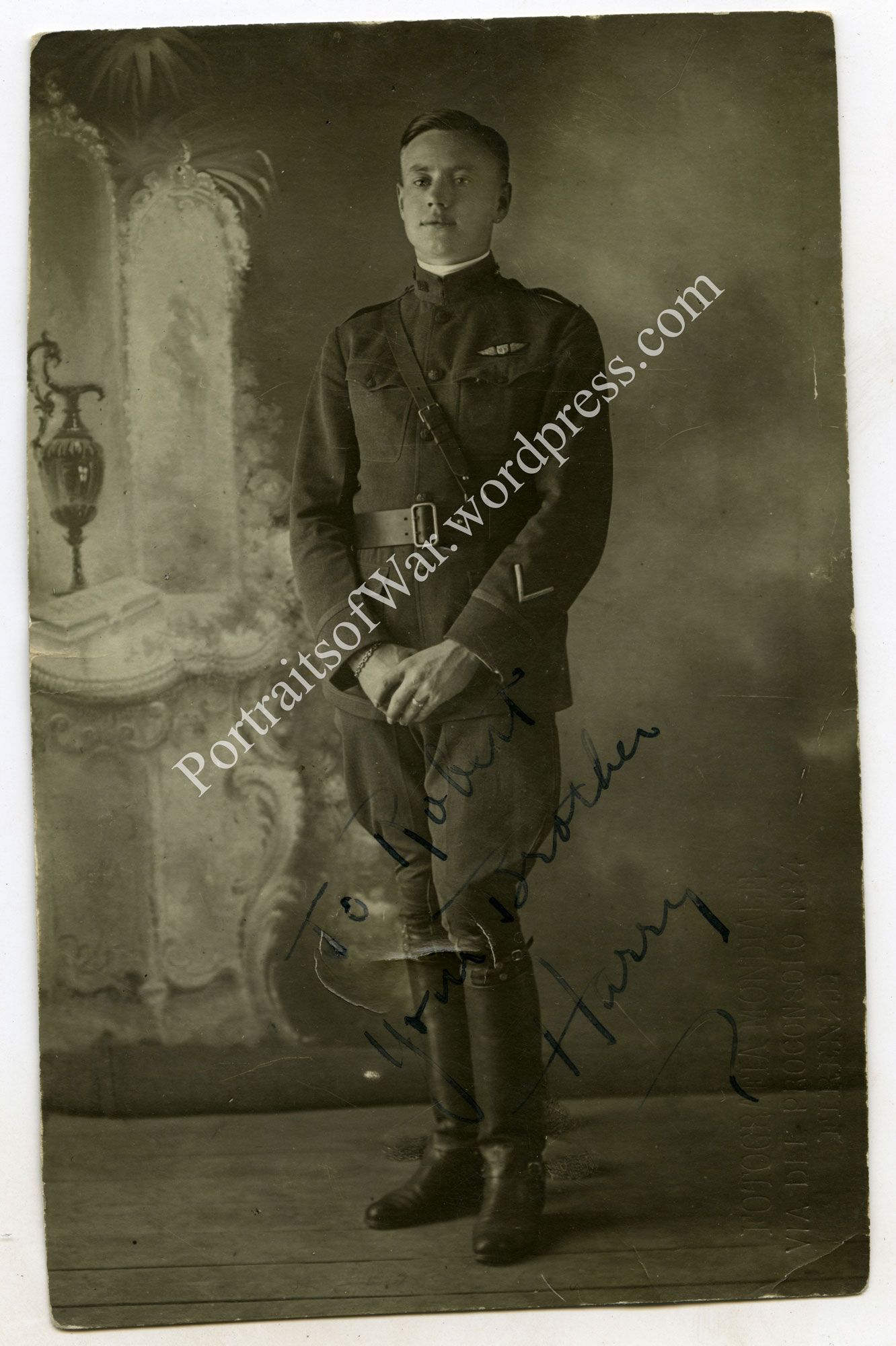
Generally my WWI photo identifications come with a name, unit, and typically a home state or region.  In this case, the only direct ID information to come with the photo was a first name – Harry- and the name of his brother.  The rest of the information was hidden in the nuanced details of the photo postcard.  See below for the main photo included in the eBay listing.

"Harry" in Italy

“Harry” in Italy

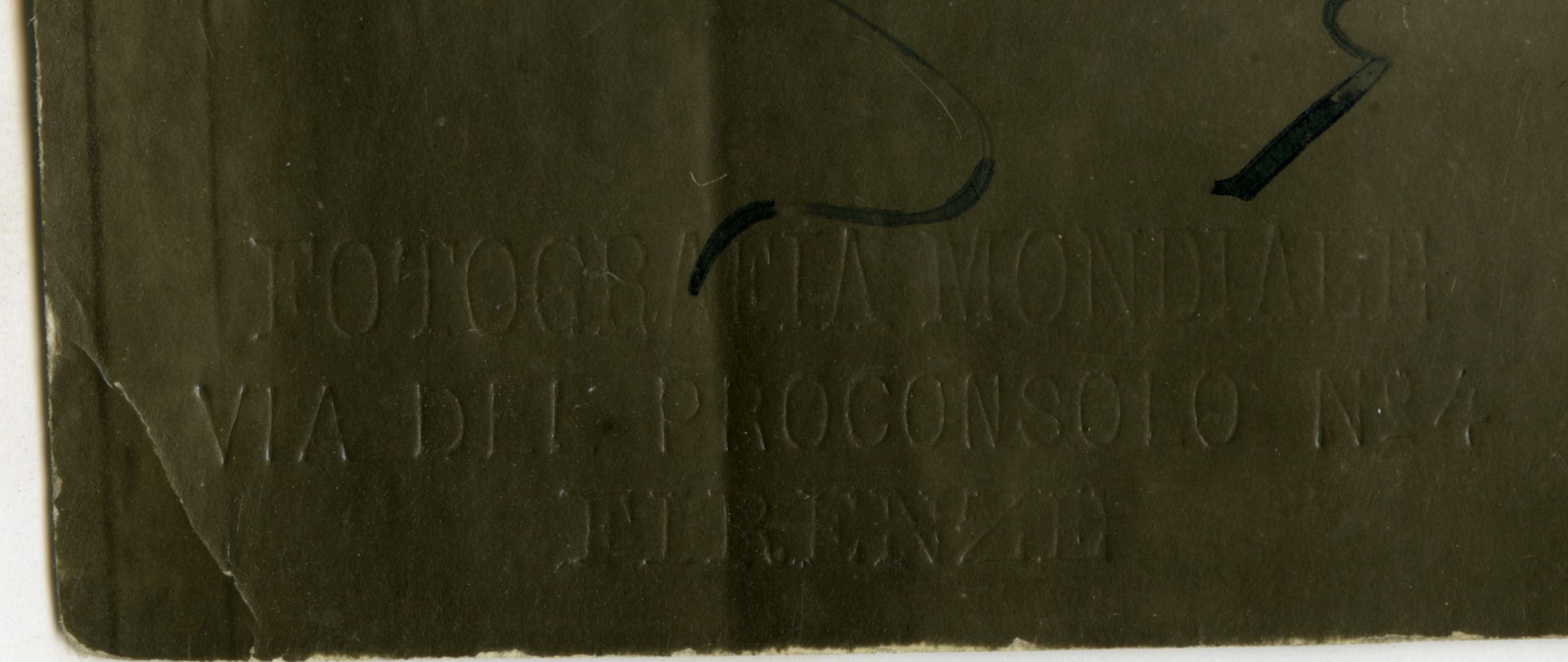
The eBay listing also made reference to the fact that the studio stamp was an Italian photographer. With this in mind, I bid to win.

After successfully winning the photo I began the laborious process of identifying the photo.  Here’s the info I was basing my research on:

1.  The photo depicted a US pilot who had served at least 6 months overseas at the time the photo was taken.

2.  The pilot was named Harry and had a brother named Robert.

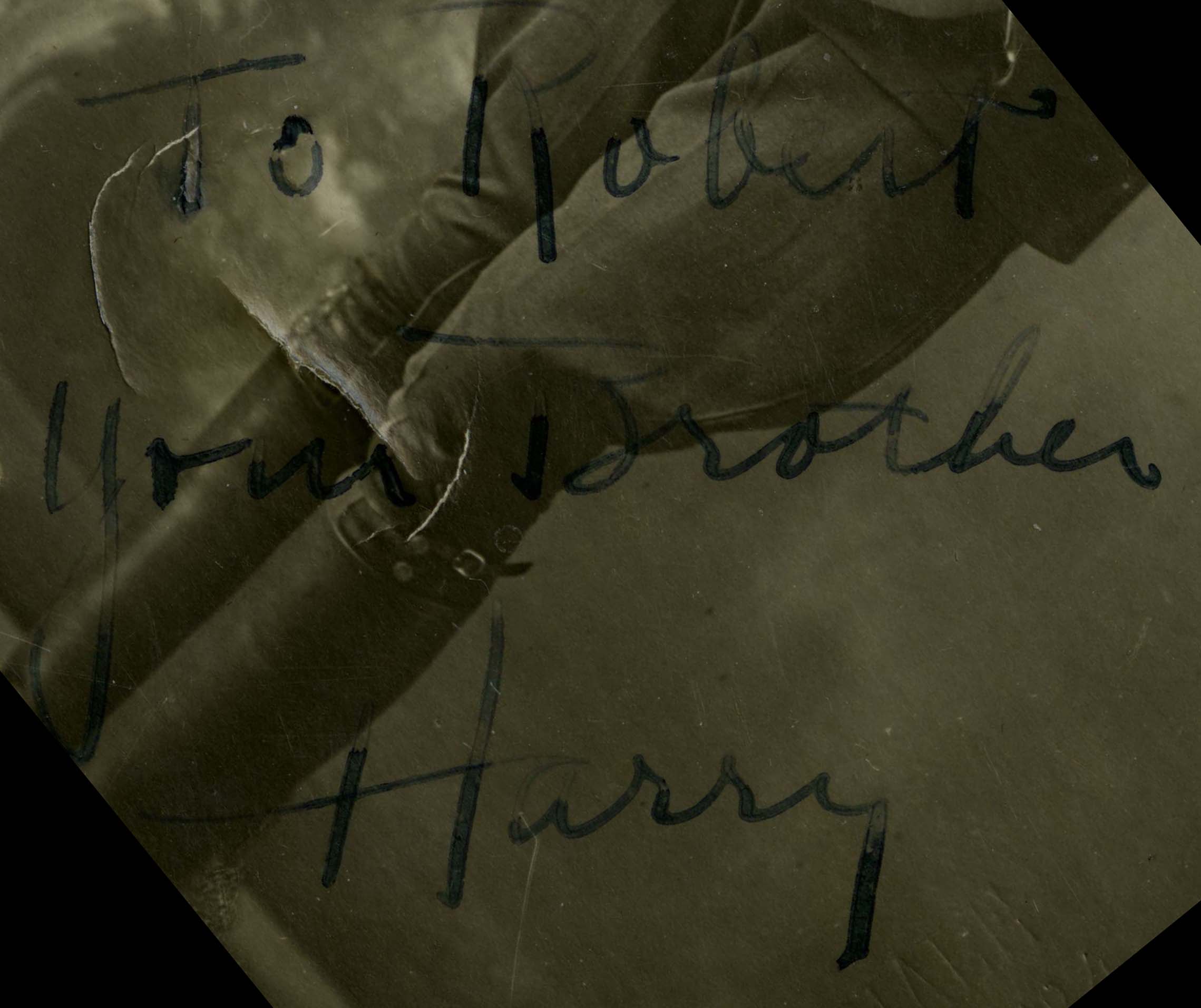
3.  The pilot had a distinctive signature and handwriting style with large crossed H’s and a penchant for flourishes.

4.  The pilot was in Italy at some point during the war.

I first started my research with a general reference search to find out how many US pilots were in Italy during the war.  Lots of websites popped up and generally pointed towards the Fiorello’s Fogiannia, a group of US pilots who trained in Italy on Italian bombers.  We’ve all been stuck in LaGuardia airport at some point in our lives, so I instantly recognized the reference to Fiorello LaGuardia.  I had no idea he was in WWI!  Further research made it clear that only 500 or so US pilots were in Italy during the war.

Italian Photo Studio Stamp

Italian Photo Studio Stamp

I started by tracking down a copy of the roster of the pilots who trained with the “Fogianni” during the war.  A good friend, Chuck, was extremely gracious enough to take photos of all the pages and send them to me.  I finally had the whole roster to reference.  With this in hand, I identified all the Harold’s and Harry’s in the roster.  This helped narrow it down to less than 30 candidates!  From there I looked at the 1900 and 1910 roster for each of the men in hopes of finding a brother named Robert.  A small handful of candidates trickled through.

Perfect Match!

Perfect Match!

Harry's Signature

Harry’s Signature


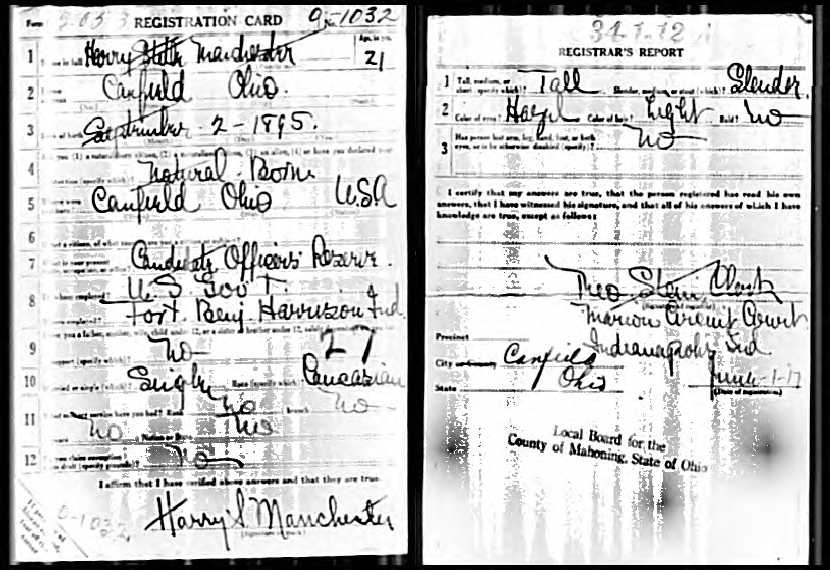
My first cross reference for the Harry’s with brothers named Robert brought me to Harry S. Manchester from Canfield, Ohio.  The signature on his WWI draft card almost knocked me over!  A perfect match.  Note the intense cross on the H and the overly dramatic crosses on his T’s.  With further research I was able to find a TON of information on Harry.  He was indeed a pilot in Italy during the war and also served in France as  a test pilot, testing new US planes as they were unloaded in France.  His brother was Robert Manchester Jr.  I was able to find Robert’s son (Robert Manchester III)  and grandson (Robert Manchester IV) online, both prominent lawyers in the midwest.

Harry's War Record

Harry’s War Record

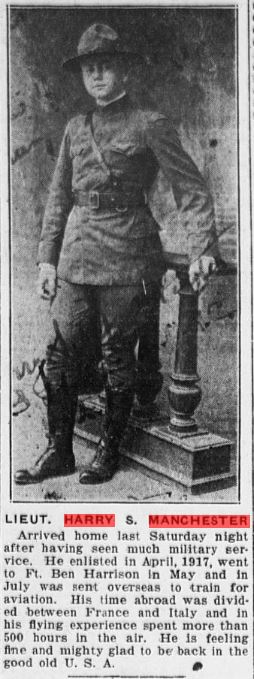
Ohio Newspaper Reference

Ohio Newspaper Reference

Harry Wearing Italian Wings

Harry Wearing Italian Wings

Harry Home from College 1916

Harry Home from Wooster College 1916

Harry in Italy

Harry in Italy

Harry as Test Pilot

Harry as Test Pilot

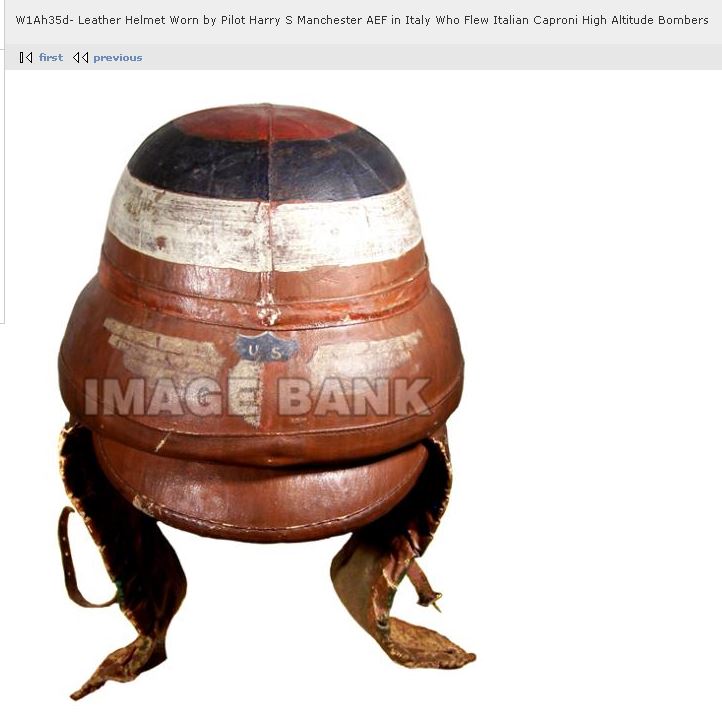
Harry's WWI Flight Helmet

Harry’s WWI Flight Helmet

Also, the National WWI Museum apparently received a donation of a series of photos from the Manchester Estate.  Check out these additional portrait shots of Harry from the collection! (Used without permission but with watermark)


WWI Red Cross Nurse Photo Identification – Miss Ella Kettels/Voged Describes Wartime Hospitals


World War One studio photography is dominated by shots of male soldiers posing in European studios in hopes of documenting their wartime experiences for hometown family and friends to enjoy.  Little did they know that historians in 2014 would be researching their names, hometowns, photos and military rosters to help paint a picture of the American experience during WWI.  One of my favorite research topics is the wartime culture of US nurses while stationed overseas in 1918 and 1919. In this case, I’ve done an extensive series of searches in hopes of tracking down the WWI nurse posed in the photo. I hope you enjoy the research!

Ella (Kettels) Vodel in 1918

Ella (Kettels) Voged in 1918

Ella Kettels of Clinton, Iowa

Ella Kettels of Clinton, Iowa

Miss Ella Kettels (mispelled on the photo) eventually went on to marry at the age of 35 to a man named Theodore Voged.  He is listed as a janitor in the 1929 city directory for Clinton, Iowa.  The couple lived at 576 1st Ave. in Clinton, IA.  I’ve identified the house they lived in and have posted it below:

576 1st Ave. in Clinton, IA.

576 1st Ave. in Clinton, IA.

Her wartime experience is included in her1965 obituary:

“Mrs, Ella Voged, 80, of Clinton, saw the grim side of World War I. She went to France as a Red Cross nurse but soon found herself enrolled as an Army nurse. She had been graduated from nursing school at a Clinton hospital in 1910. Mrs. Voged served as a nurse in a hospital near Paris to which American wounded came in a steady stream from the big front-line battles of that war. . “Sometimes we thought this boy would be all right and they would be gone in the morning,” she recalled. “This was long before the day of antibiotics. They would develop infections in their wounds.”

Although we may never know the full extent of Ella’s wartime hardships, we do know that she will be immortalized on the world wide web as a subject of potential research in the future.

WWI Photo Identification – Base Hospital #10 Doctor and 103rd Field Artillery Officer Fritz Draper Hurd


Fritz Draper Hurd in 1918

Fritz Draper Hurd in 1918

After owning this photo for over a year, I decided to reexamine the image in hopes of properly identifying the sitter.  The front is inscribed ” Oh for Some Ice Cream!” with a partial ID of F Draper Hu….. with the surname clipped away.  The reverse proved juicy for wartime information, giving some additional information placing the Lt. as being present during the Yankee Division’s experiences at Chateau Thierry,  St. Mihiel and Verdun.  His name was partially obscured by remnant scrapbook paper.  After steaming the affected section with heated and distilled water, the glue separated the paper from the photo and revealed his full name.

F Draper Hurd

FritzHurd287a

FritzHurd288resize

Fritz Draper Hurd was born in Williamsport, Maryland in 1894 and attended Pennsylvania College as a member of the class of 1916 but sadly was expelled the night before graduation after a graduation party involving drinking and furniture breaking.  A dejected Hurd left home and went to Philadelphia seeking work, eventually landing a job with the Eddystone Remington Arms Company turning out components for the lend-lease British Enfield rifle. After hearing of the US declaration of war on Germany, Hurd signed up with a Philly based Red Cross ambulance unit and went overseas in May of 1917 eventually landing in England.  After a quick training he was sent to France to serve as a nurse with Base Hospital #10 – a British hospital for badly wounded soldiers.  The initial wave of Pennsylvania men and women was comprised of 23 doctors and 64 nurses – the first Philadelphia body of organized soldiers to leave Philly.

FritzHurd287abresizedHe next attended Field Artillery School and commissioned a Lt. with the 103rd Field Artillery Regiment, a unit of the 26th “Yankee Division”.  The photo shown above depicts Hurd wearing a uniform with insignia related to this period of his wartime career.  During his time as an artillery liason between the 103rd and the front line infantry units, Hurd was responsible for lugging a wire spool and calling in artillery fire.  He also spent some time in an observation balloon and is credited for calling in a barrage that took out three German machine gun nests.  He also is documented as being a participant of the last artillery shot of the war- firing only minutes before the official end of the war.

He was able to attend Oxford after the war and later became a distinguished medical profession back in the US.  He lived well into his 80s and recorded a memoir which can be found in the Special Collections department of Gettysburg College along with his wartime diary, knuckle duster trench knife, musette bag, scrapbook and assorted ephemera.

FWHurd FWHurd2

Based on the article posted above, we know he had a brother named Mason who also served during the war in a similar set of campaigns as Fritz.  Mason Hurd’s record can be found here:

Name: Mason Montreville Hurd
Race: white
Address: Williamsport, Washington Co.
Birth Place: Clearspring, Md.
Birth Date: 07 Jul 1896
Comment: ORC 11/27/17 2 lt FA, (Ft Oglethorpe Ga.); Btry D 77 FA; Btry E 13 FA 5/10/18; Btry A 13 FA 7/-/18; Hq 1 Army Corps 8/13/18; Casual Officers Dep Blois 8/14/18; Hq SOS 8/-/18; 302 Stev Regt 8/29/18; Btry E 13 FA 11/8/18, Hon disch 10/27/19, Overseas 5/22/18 to 7/31/19, Aisne-Marne; Vesle Sector; Meuse-Argonne

Special thanks go out to Sarah M. Johnson for her extraordinary research on the wartime experiences of Fritz D. Hurd.  She generously provided me with much of the information included in this blog post.  Her official article citation can be found in the footer of this post.   Her poster abstract can be found here: http://bit.ly/K4tWaE

Wartime Summary

Wartime Summary

Johnson, Sarah M. Growing up in the Trenches: Fritz Draper and the Great War. Diss. Gettysburg College, 2013. N.p.: n.p., n.d. Print.

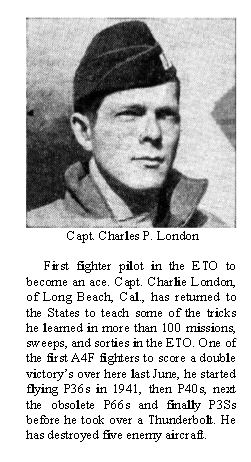
The First US Fighter Ace of the European Theater of Operation: Charles P. London of Long Beach, California


Military historians constantly refer to “Aces” as being military aviators credited with shooting down five or more enemy planes during aerial combat.  Most of these historians don’t actually know the name of the first ETO fighter ace.  I was only made aware of his story while researching a recent photograph acquisition through an internet source who acquired the wartime collection of the Baltimore Sun newspaper.   All priced at US $15.00, the shots made available for resale were mostly unnamed or impossible to research.  When I saw that this shot was well identified, dated, cross referenced and well taken, I was “quick to click” and make the purchase.


Captain Charles P. London

Captain Charles P. London

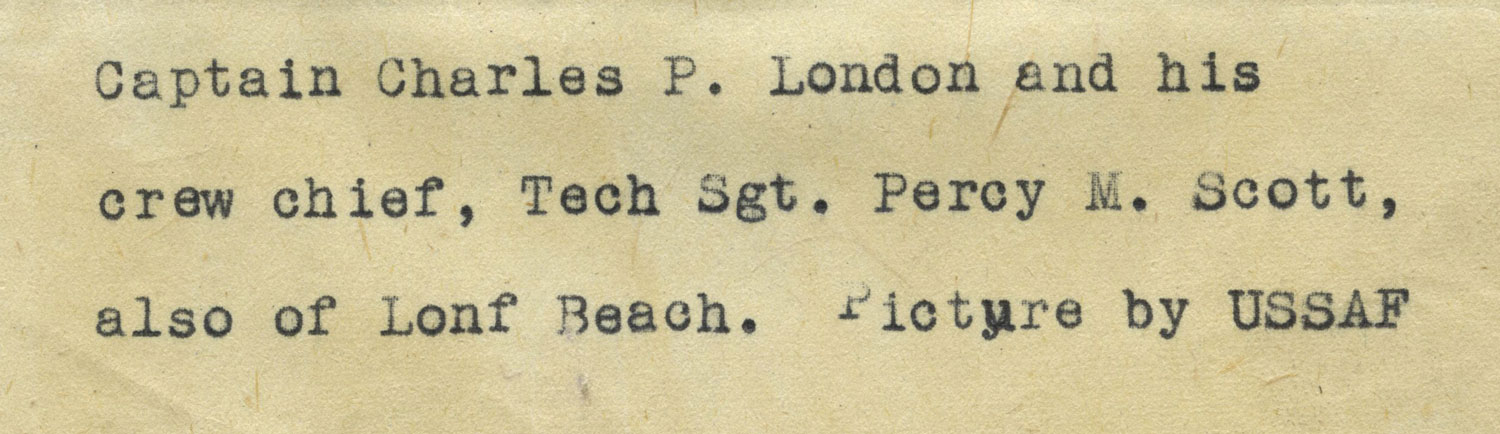
Captain London is identified standing in front of his plane with his Crew Chief Sgt. Percy M. Scott cut off from the photo, yet identified in the caption.  The photo was acquired by the Baltimore Sun from the USAAF(sic in caption).  The photo is a typical standard size shot typical of the USAAF during the war. The shot is crisp, clear and was printed directly from the original negative in 1943.   This isn’t a shot produced in later years for a book, publication, or film.

Photo Caption

Photo Caption


The reverse side of the photo contains an interesting chain of custody record for the image.  The first thing likely applied to the photo is the light penciling correctly identifying the pilot as LONDON in cursive in the left top center of the reverse.  This shot was then stamped by the Baltimore Sun apparently while a correspondent in the London office compiled shots for publication.  Here it was identified, described and prepared for shipment back home.   The next application is the ETO Censor stamp from December of 1943.  All photos sent home during the war (with some exception) were censor examined before being sent back to the US.   The bar code stamp on the top right was placed on the shot by the photography dealer I purchased the shot from.  It’s incredible how much information can be extrapolated from a few stamps on the back of a piece of paper……

Reverse of Image

Reverse of Image

Compared to other high-profile US fighter aces of WWII, relatively little can be found about Captain Charles London.  He was a Captain with the 78th Fighter Group, 83rd Fighter Squadron in 1943.   We also know he is considered the first US fighter ace in the ETO.  A description of him in the Stars and Stripes (March 9th, 1944) describes him as follows:

First fighter pilot in the ETO to become an ace.  Capt. Charlie London, of Long Beach, Cal., has returned to the States to teach some of the tricks he learned in more than 100 mission, sweeps, and sorties in the ETO.  One of the first A4F fighters to score a double victory’s over here last June, he started flying P-36’s in 1941, then P-40’s, next the obsolete P-66 and finally P3Ss before he took over a Thunderbolt.  He has destroyed five enemy aircraft. 

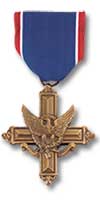
He awarded the Distinguished Service Cross for his work in June and July of 1943,

medals_dist_svc_cross_army_100x200

(Citation Needed) – SYNOPSIS: Captain (Air Corps) Charles P. London (ASN: 0-421260), United States Army Air Forces, was awarded the Distinguished Service Cross for extraordinary heroism in connection with military operations against an armed enemy while serving as Pilot of a P-47 Fighter Airplane in the 83d Fighter Squadron, 78th Fighter Group, EIGHTH Air Force, in aerial combat against enemy forces from 22 June 1943 through 30 July 1943. On 22 June while engaged in aerial combat, Captain London shot down an enemy airplane. On 29 June Captain London shot down two enemy aircraft in a single engagement. When, on 30 July 1943, Captain London again shot down two enemy aircraft in a single engagement, bringing his total to five victories for the period, he became the first American ACE in the European Theater of Operations. Captain London’s unquestionable valor in aerial combat is in keeping with the highest traditions of the military service and reflects great credit upon himself, the 8th Air Force, and the United States Army Air Forces.

General Orders: Headquarters, European Theater of Operations, U.S. Army, General Orders No. 82 (1943)

Action Date: June 22 & 29 & July 14 & 30, 1943

Service: Army Air Forces

Rank: Captain

Company: 83d Fighter Squadron

Regiment: 78th Fighter Group

Division: 8th Air Force

Plus, an article with his photo: http://www.cybermodeler.com/history/354fg/images/63aces.pdf

London


WWI Soldier Postcard – Nice, France Bar/Club Advertising Card – 94 Years Later


Mapping and GIS (Geographic Information Systems)  nerds will geek out over this post!  Typically I post photographic material related to the service history of US soldiers during WWI and WWII with occasional dalliances into the Civil War and Korean War.  In this instance I’m posting an advertising card brought back by a WWI US soldier after the end of hostilities and occupation duties in WWI.

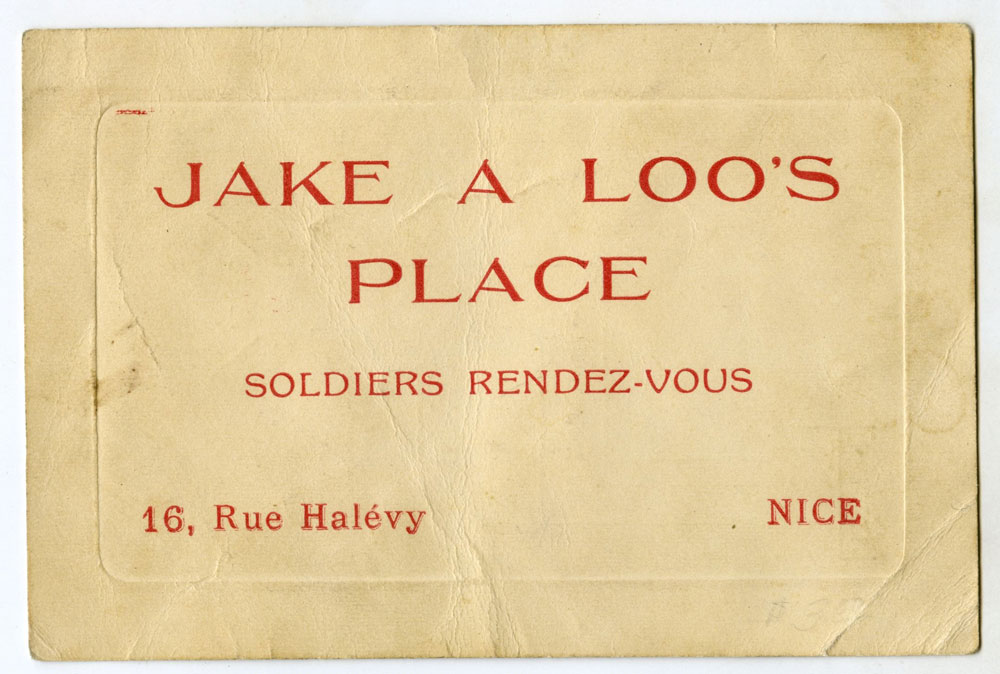
Europeans entrepreneurs quickly adapted to the new influx of comparatively cash-heavy US troops during the War and after hostilities ended in November of 1918.  Photo studios, souvenir shops, tour groups, brothels, theaters and bars/restaurants all flourished in the subsequent years.  In this case, I’m presenting a card describing the exact location of a seemingly popular soldier bar in the coastal city of Nice.  Many Allied (as well as Central Powers) soldiers took their vacations here, and this card is an example of the type of handheld ephemera that was given out in hopes of luring US soldiers into obscure bars.  We encounter the same material today when visiting major US cities.

Jack a Loo's Place WWI Handbill

Jack a Loo’s Place
WWI Handbill

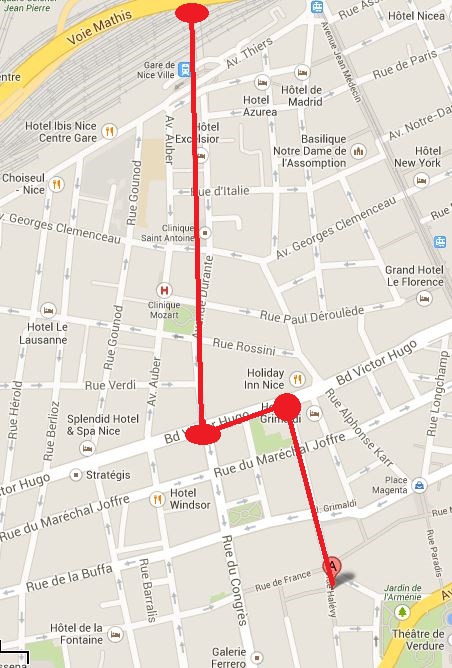
The interesting aspect, for me, of the card is the fact that the obverse side shows a quick (albeit deceiving) map directing prospective clients to the club.  I’m a huge fan of historic maps, especially obscure and ephemeral maps from a specific historic context.  I compared the Jake a Loo’s map to a current set of maps and tracked down the current location of the bar!  16 Rue Halevy is still a bar and restaraunt, likely serving up similar victuals to the ones our unknown doughboy consumed nearly 100 years ago.   The location is snugly situated on a major intersection in Nice and currently specializes in pizza.  Please see below for a current street shot of the location:

16 Rue Halevy

16 Rue Halevy Today (2013)

Obverse of Card

Obverse of Card

Current Jake a Loo's Location

Current Jake a Loo’s Location

WWII Photography in the PTO: The 8th Photo Reconnaissance Squadron


I’ve always noticed the vast difference in quality between the typical ETO snapshot and it’s Pacific counterpart.  The European snapshots typically are printed on better paper and of much higher quality.  In this case, I was able able to purchase a pair of Pacific theater photos taken by an artist with the 8th Photographic Reconnaissance Squadron.  The first photograph shows a US Jeep painted up with a cartoonesque rendition of the squadron name complete with shadow effects and 8 ball logo.   The same artist also designed the unit insignia seen below.

Mauer, Mauer (1969), Combat Squadrons of the Air Force, World War II, Air Force Historical Studies Office, Maxwell AFB, Alabama. ISBN 0892010975

Mauer, Mauer (1969), Combat Squadrons of the Air Force, World War II, Air Force Historical Studies Office, Maxwell AFB, Alabama. ISBN 0892010975

8th Photo Recon Squadron Jeep

8th Photo Recon Squadron Jeep

And I was also fortunate to win an Easter card designed by the same artist.  The card is folded in four sections and was made from a single cut sheet of photo paper printed with a special design created specifically for the 1945 Easter season.  A unique piece!  I wasn’t able to win anything else from the auction – many of the sales were in the triple digits and well out of my comfort zone for an obscure topic.

1945 Easter Card

1945 Easter Card

I hope to pick up a copy of a fantastic tome put out a few years back to help my future research in the unit.  http://www.adastron.com/lockheed/lightning/8prs.htm

Also

For those interested in some great footage of the 8th Photo Recon Squadron, please check out the links below:

http://www.criticalpast.com/video/65675059603_A-2-intelligence-officer_Rabaul-prints_looking-through-lens_5th-Bomber-Command

http://www.criticalpast.com/video/65675059599_8th-Photographic-Reconnaissance-Squadron_drying-prints_washing-prints_Rabaul-negative

http://www.criticalpast.com/video/65675077240_8th-Photographic-Reconnaissance-Squadron_Rabaul-prints_prints-are-dried_sorting-prints

http://www.criticalpast.com/video/65675077238_8th-Photographic-Reconnaissance-Squadron_Operations-Officer_Engineering-Officer_status-board

2013 Veteran Reunion Post – Men of the 222nd Infantry Regiment, 42nd Rainbow Division


222nd Infantry Regiment Veterans

222nd Infantry Regiment Veterans


Followers of this blog will know that I have a special place in my heart for the 42nd Division.  My favorite collection of WWII photos, negatives and stories comes from the 222nd Anti-Tank Company of the 42nd Division.  Seen above are a few of the living members of the 222nd Infantry Regiment posed together at a recent 2013 reunion.  Thanks for your service!

WWI Nurse Photo Identified – Massachusetts Female Veteran in France, 1918 Base Hospital #6


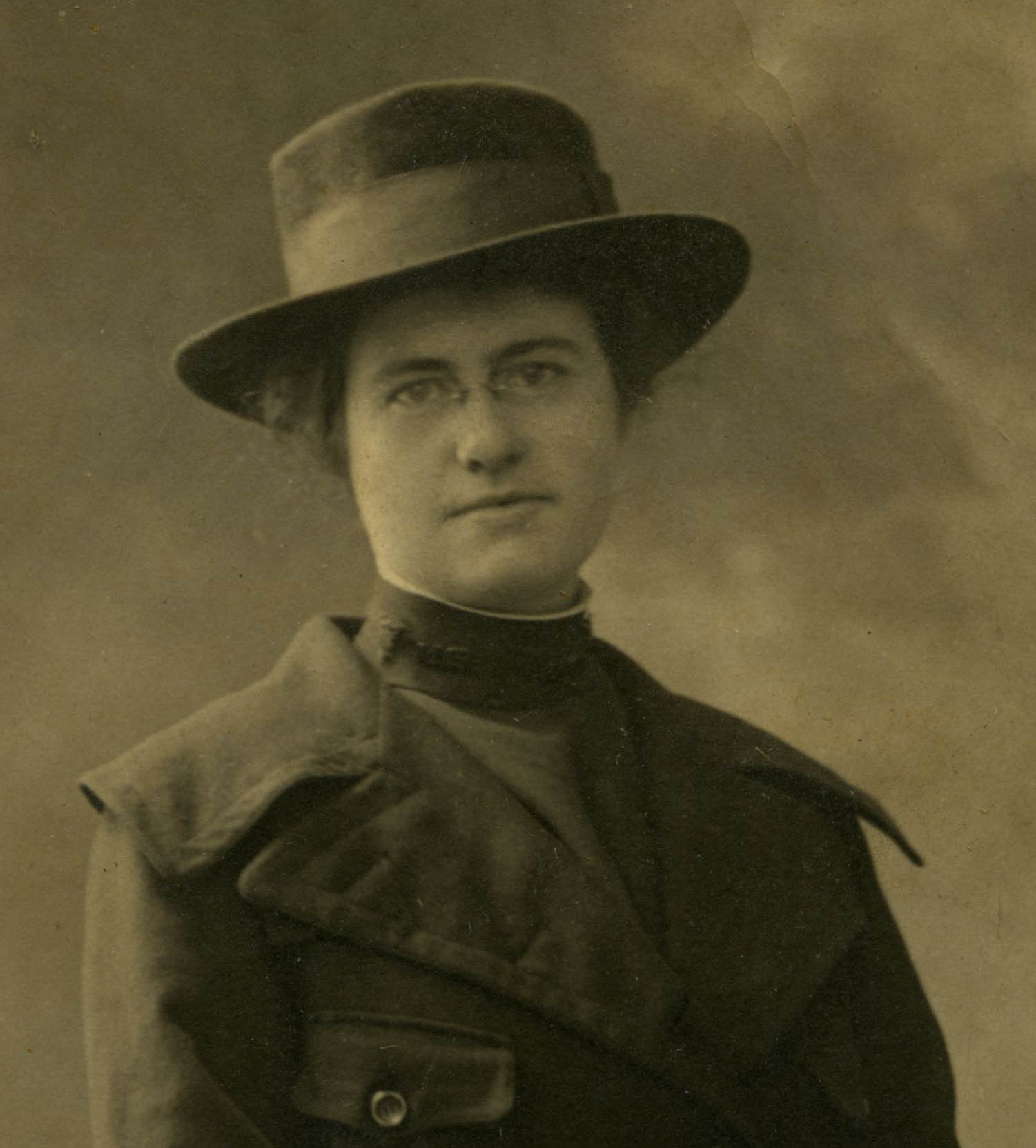
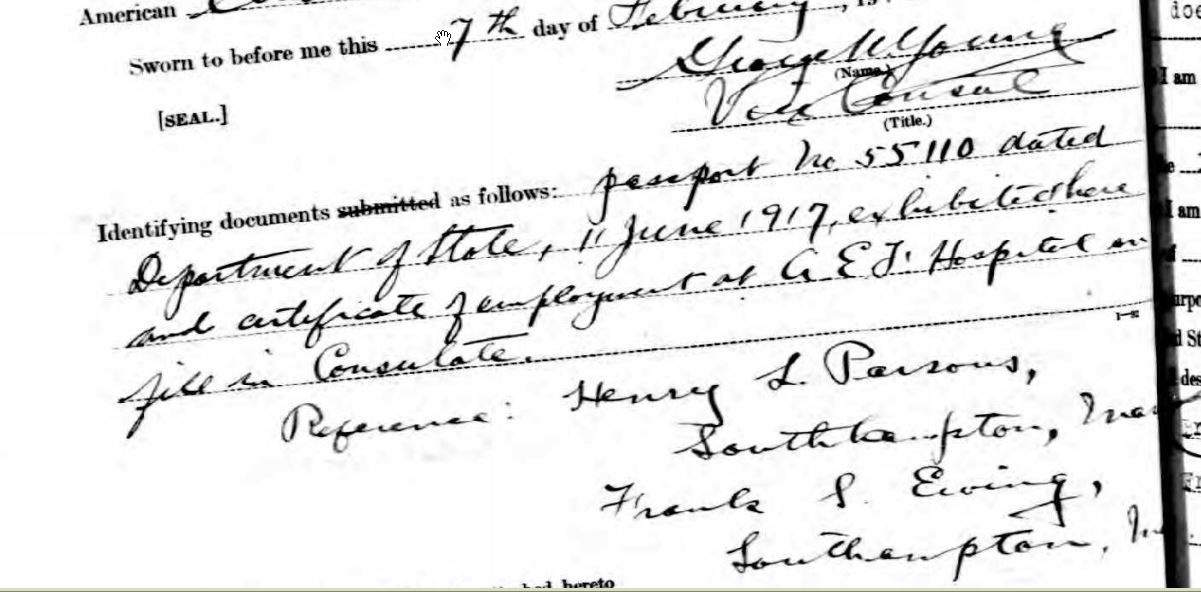
I’ve been lucky in the past few weeks to pick up some fun WWI shots of US female nurses and auxiliary service members.  US women in France were outnumbered by the men, and to be able to positively identify a nurse is a fun way to learn about female service roles during the war.  In this case, I was able to purchase a small group of photos and a Thanksgiving menu from a woman in Base Hospital #6 stationed in Bordeaux, France during the war.  The standing studio portrait was identified on the reverse as HK Judd of Base Hospital 6.  On a whim I searched for Helen K. Judd (thinking that Helen was a likely candidate for H) and came up with a positive hit on a woman named Helen K. Judd from Southhampton, Mass.  I cross referenced with the digitized passport records from 1917 and 1918 and had a positive match.  Luckily the passport applications come with little snapshots of the applicants.   The amount of material available to identify WWI photos is incredible.


basehospital037a

J. Sereni Studio Portrait of Helen

J. Sereni Studio Portrait of Helen


1917 Passport Photo of Helen

1917 Passport Photo of Helen

1918 Passport Photo of Helen

1918 Passport Photo of Helen


Physical Description

Physical Description

Passport Application Info

Passport Application Info

nurse066 nurse067

Base Hospital #6 Thanksgiving Menu

Base Hospital #6 Thanksgiving Menu

WWI Photo Discovery – Norton-Harjes Ambulance Drivers w/ Richard Norton!


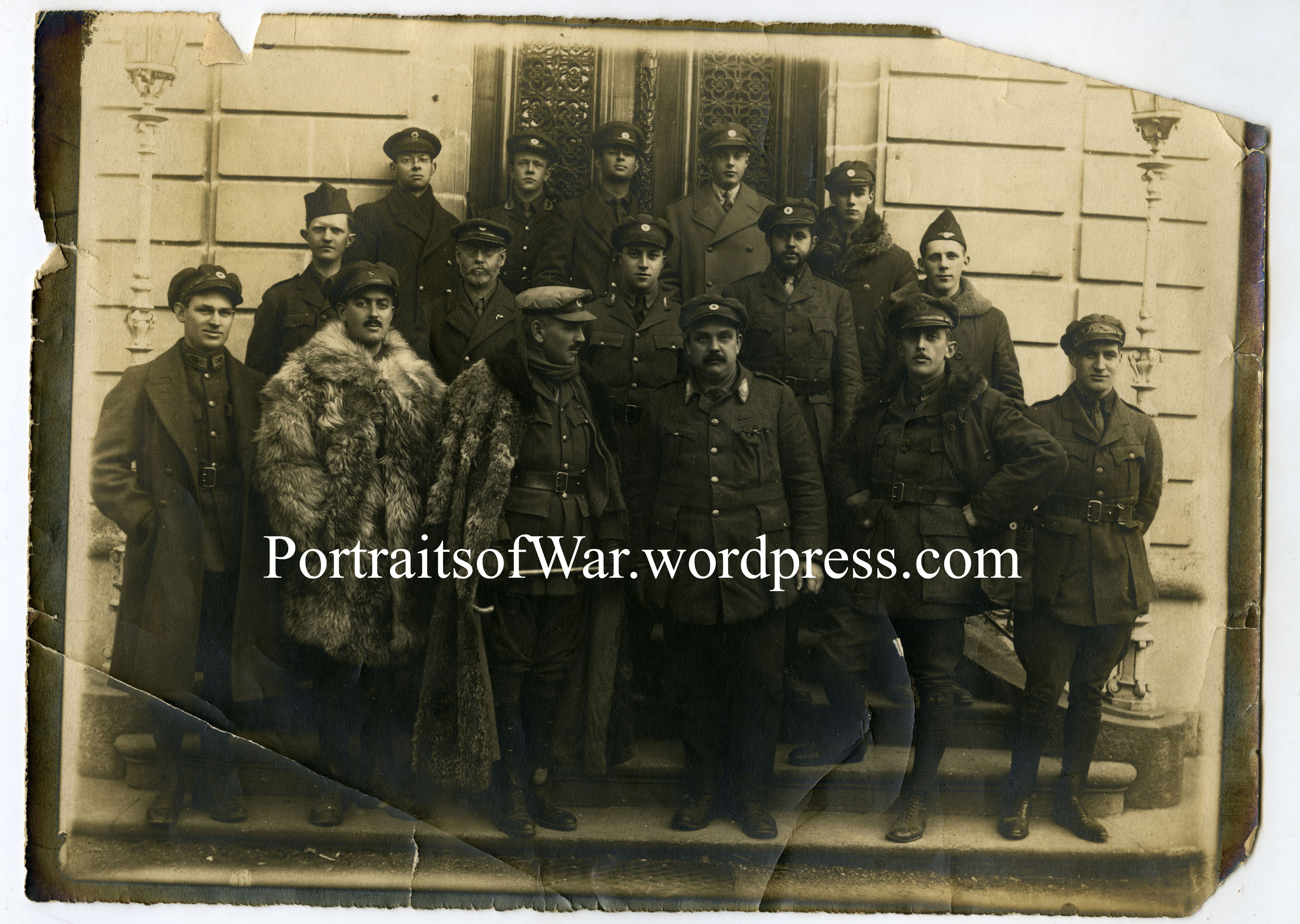
I often check eBay listings for groups of assorted black and white photos in the hopes of discovering some exciting WWI material hidden in the mix.  In this case, I was lucky enough to recognize the uniforms and insignia of the Norton-Harjes Ambulance Corps amidst the piles of junk photos.  An astoundingly cheap $20.00 Buy-it-Now option was on the photos, so I purchased them without haste.  What a rare treat! Scroll down for cropped versions of the photo.

US Ambulance Drivers in France

US Ambulance Drivers in France

This is possibly one of the clearest shots of Richard Norton I’ve seen in a digital form on the internet.  Norton was the son of an influential Harvard archaeologist named Charles Norton who bankrolled a group of well-to-do American men to travel to France to assist in the movement of wounded soldiers from the battlefields.  In this photo we see Norton posed with his fur overcoat, swagger stick and uniform.  I’m guessing this photo was taken to depict a certain group of men overseas at the time.  My best educated guess is that it was a photo taken of all the Harvard men in the Ambulance Corps at the time.  Who knows?

NH005a

Richard Norton

NH005ab

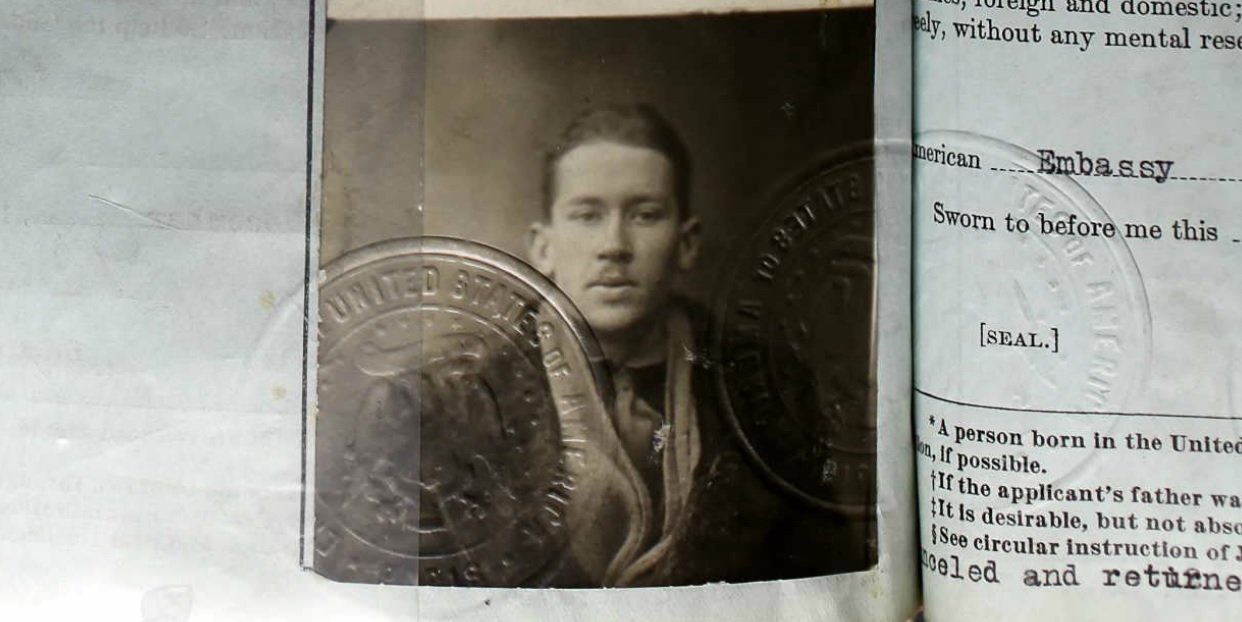
E.E. Cummings?

Edward Estlin Cummings  1917 Passport Application for travel to join the Norton-Harjes Ambulance Corps

Edward Estlin Cummings
1917 Passport Application for travel to join the Norton-Harjes Ambulance Corps

WWI Portrait Photo – Italian Born US Soldier 1st Mobile Veterinary Hospital Farrier


John Belli in WWI

John Belli in WWI

John Belli was born in Italy in 1895 and traveled to the United States during a big wave of Italian immigration in the early 1900s.  I was lucky enough to purchase a superlative WWI German-shot studio portrait of a helmeted US soldier wearing his gas mask with patches attached to his jacket.  To sweeten the deal, the photo came identified to a John Belli.  A few John Belli’s appeared on ancestry.com, but only one was associated with a veterinarian unit as evidenced by the veterinarian corps collar disc visible in the photo.  A great shot with an interesting back story!

John Belli Service Card

John Belli Service Card

John Belli Draft Card
John Belli Draft Card