Snapshots from Kaufering IV: A Dachau Subcamp


Follow Up Post: The Liberation of Kaufering IV

Eight years ago I posted a series of snapshots taken by a US soldier showing the liberation of an unknown concentration camp during WWII. When I acquired the photos, they had no provenance and no information on the reverse side to start the process of identification. Luckily, a blog follower was able to help with the identification of the camp through the same processes I typically use. By observing the surrounding architecture and general contextual clues, he was able to identify the camp as Kaufering IV, a large subcamp of Dachau. Here is what he provided:

Some thoughts:

i)This is certainly somewhere Upper Bavaria – the house architecture is fairly typical of the region.

ii)The presence of the 2 Luftwaffe officers suggests some sort of air force activity is close by. Lager Lechfeld was used as a fighter base and a shake-down airbase for the nearby Messerschmitt complex in Augsburg. Prisoners were engaged in constructing bomb-proof bunker-factories in appalling conditions.

iii)One of the photographs has a very distinctive semi-sunken barrack type, known as “Erdhütten” (Lit: “Earth huts”) – very primitive constructions, the timbers of which were made from off-cuts and waste from furniture production and which survivors testify, leaked terribly. These barracks were a distinctive feature of the Dachau sub-camps in the Kaufering/Buchlöe area.

iv)The brief Wiki article tallies fairly well with the photos and my comments: https://en.wikipedia.org/wiki/Kaufering_concentration_camp

Hope this helps,

Taff Simon

The Snapshots

Thanks to the careful research of Taff Simon, we now know that the camp shown in these snapshots is Kaufering IV. A closer look at the details within the images supports his findings. One particular photograph offers the clearest confirmation: it shows an older man in civilian clothing with a closely shaven head, a haunting detail that anchors these scenes to the history of this Dachau subcamp.
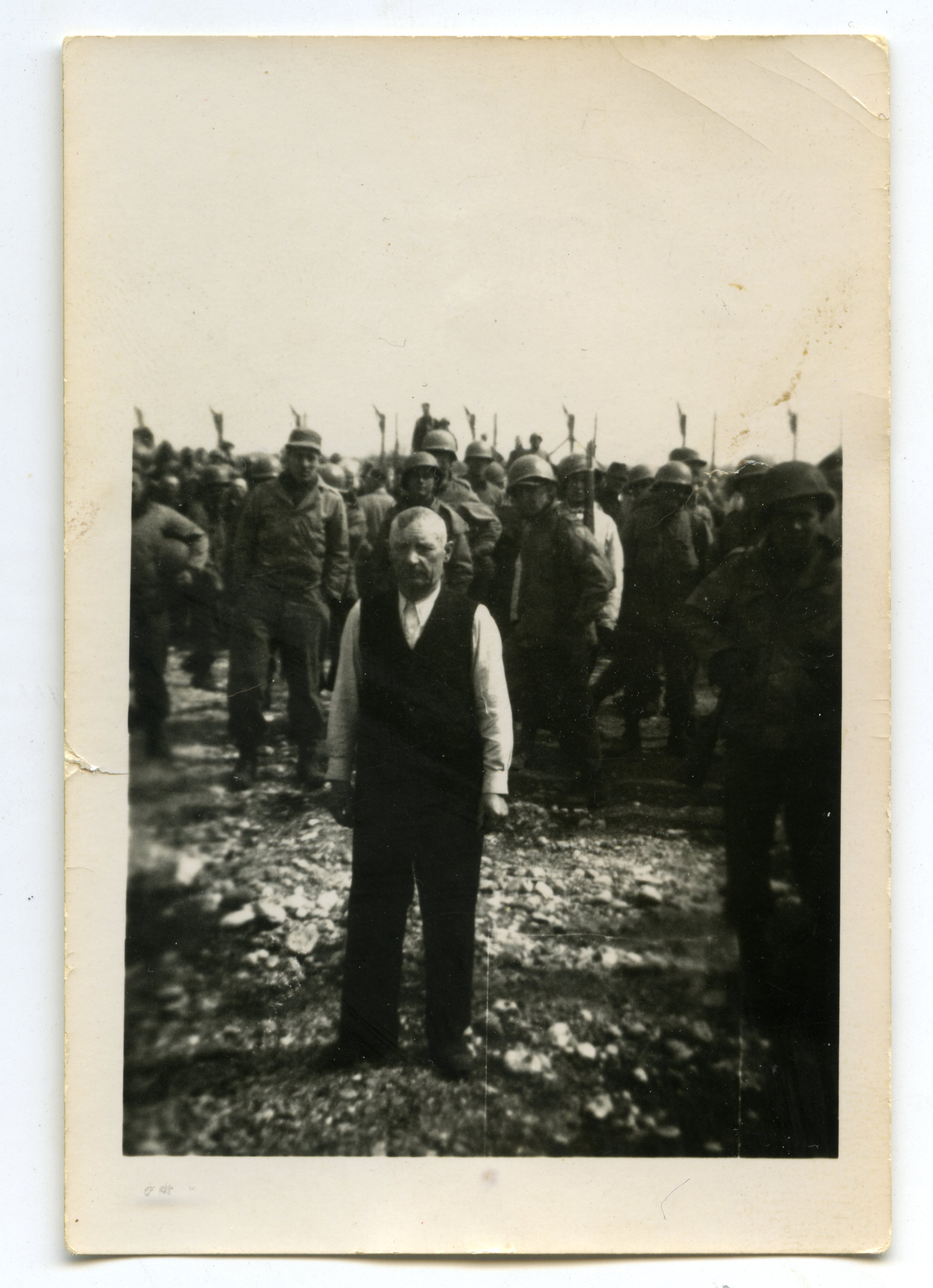
Snapshot of SS Commandant Johann Baptist Eichelsdörfer

When I first wrote about the snapshot collection in 2017, I was unable to identify the man since he was in civilian garb. Artificial intelligence image searches at the time were unable to attribute the image to any individual, so I was under the assumption that he was a local civilian who was brought in to help with the burial of the camp victims. But now, with the attribution of the snapshots to Kaufering IV, I was able to find more images of Eichelsdörfer. His shaven head with the lopsided squirrel-tail appearance confirms his identity when compared to the images below.
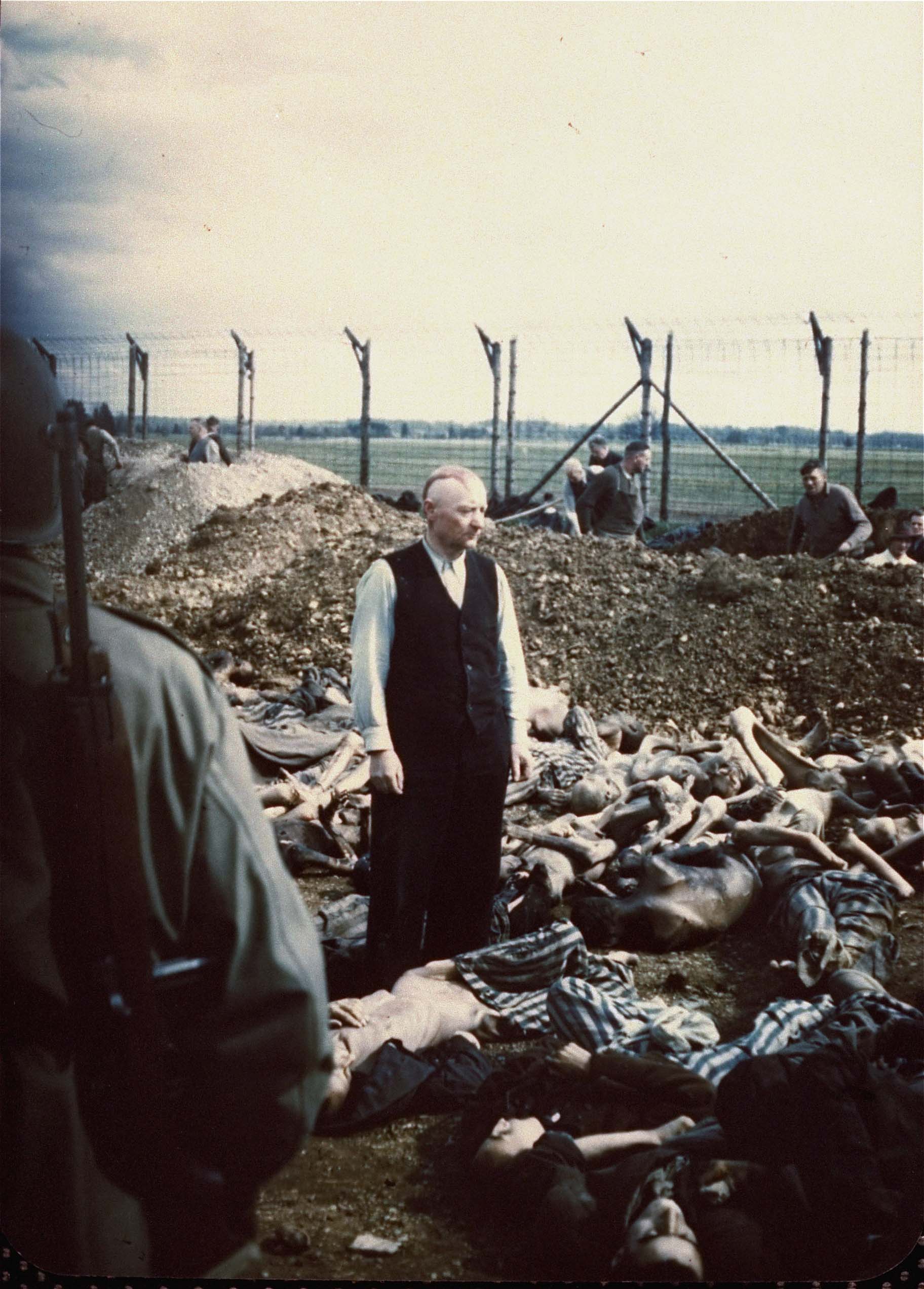
Color Photo of Johann Baptist Eichelsdörfer (US Holocaust Museum image)
(SS officer Johann Baptist Eichelsdoerfer, the commandant of the Kaufering IV concentration camp, stands among the corpses of prisoners killed in his camp. US Holocaust Museum image)
(Wikipedia Commons)

Who was he?

Johann Baptist Eichelsdörfer was a German military officer and concentration camp commandant during World War II. Born on January 20, 1890, in Dachau, Germany, he served as a non-commissioned officer in the Bavarian Army during World War I and remained in the military after the war, retiring in 1924 with the rank of lieutenant. He rejoined the military in 1940 and served in various locations, including France, Poland, and the Soviet Union. In 1944, he was assigned to the Dachau concentration camp system, where he served as the commandant of several subcamps. In January 1945, he took command of Kaufering IV, a subcamp of Dachau located near Hurlach, which was designated as a “hospital camp” but was, in reality, a site where sick and dying prisoners were abandoned without adequate medical care. Under his command, thousands of prisoners died due to starvation, disease, and mistreatment.

Eichelsdörfer’s actions came to light when American forces liberated Kaufering IV on April 27, 1945. U.S. soldiers discovered hundreds of bodies and surviving prisoners who had been subjected to brutal conditions. Eichelsdörfer was captured and photographed standing among the bodies of dead inmates, a stark image used as evidence during his trial. He was tried at the Dachau Trials, a series of military tribunals held by the U.S. Army to prosecute Nazi war criminals. On December 13, 1945, he was convicted of war crimes and crimes against humanity and sentenced to death. Eichelsdörfer was executed by hanging on May 29, 1946, in Landsberg am Lech prison. His trial and execution highlighted the atrocities committed in the Nazi concentration camps and served as a reminder of the need for accountability in the aftermath of war.

The Other Snapshots

Now that we know the snapshots from the 2017 blog post were taken at Kaufering IV, the other images captured by an unknown US GI make more sense. I will post them here with some updated commentary. Feel free to weigh in if you have any comments or suggestions for descriptions.

Kaufering IV Survivor

In the above image, we see a recently liberated survivor of his time at Kaufering IV. He’s using his bandaged hands to tie on a pair of shoes, likely a pair provided to him by US soldiers. He also appears to have some soup in a small can as well as a striped blanket wrapped around his head and body. In the back of the image appears a US T28E1 which was likely one of the 12th Armor Division’s anti-aircraft mobile vehicles. The painted sillouettes of 14 German aircraft on the side hint that the operators of the T28E1 shot down lots of German aircraft as the war came to an end.
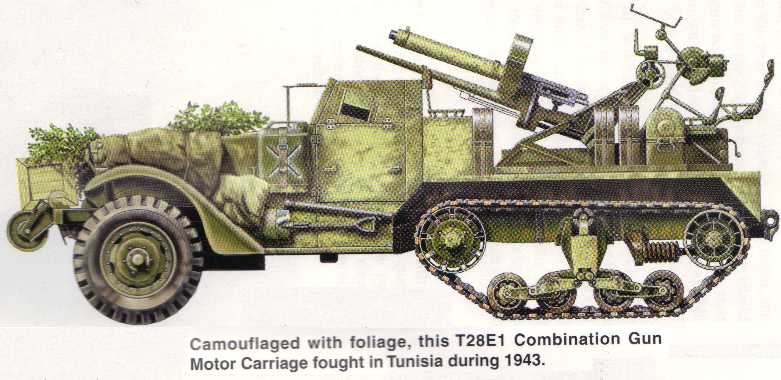
Generalized View of the T28E1
German Luftwaffe Officers
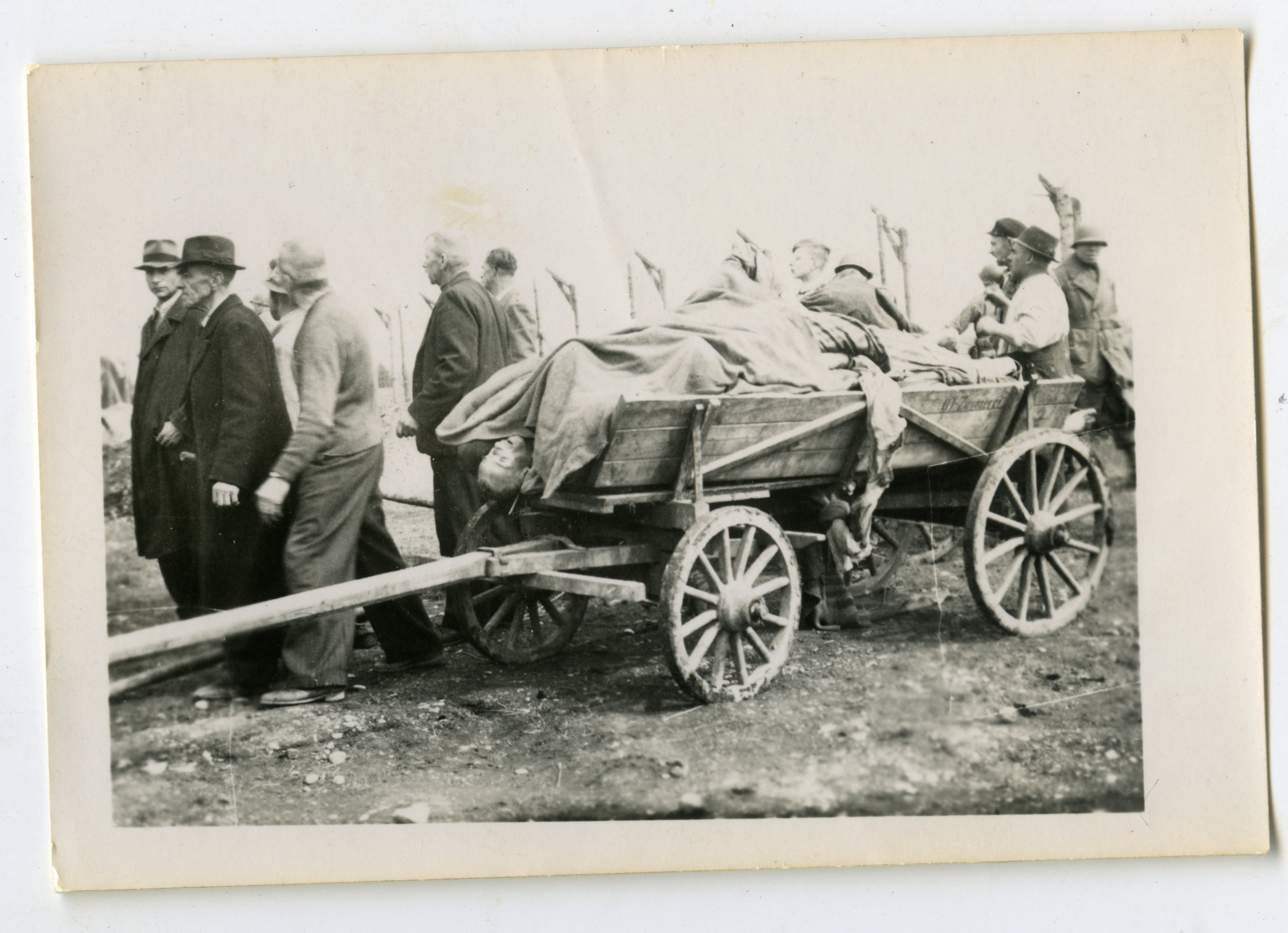
German Civilians Help with Burial
Camp Building and Ditch
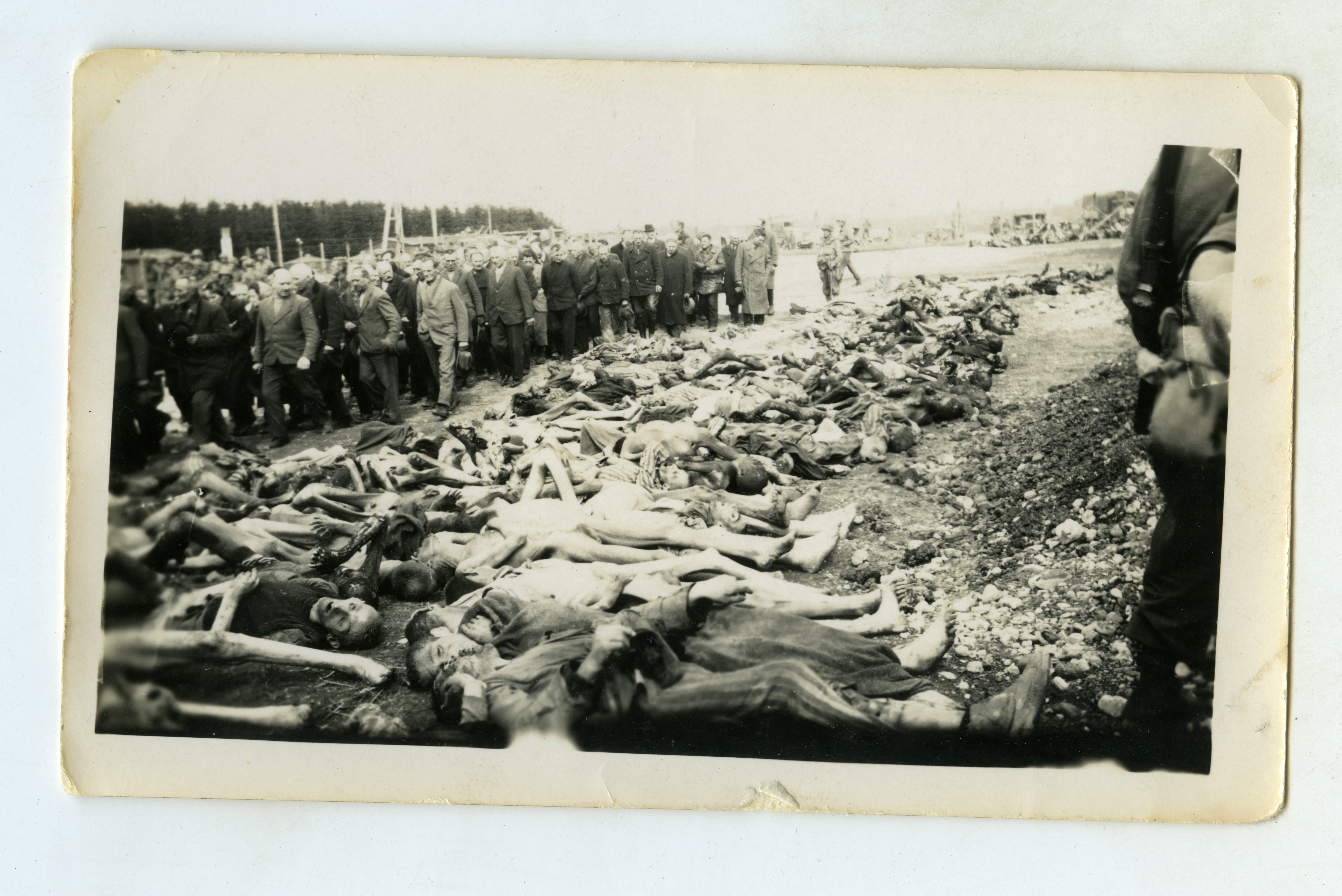
Local Civilians Observe the Dead
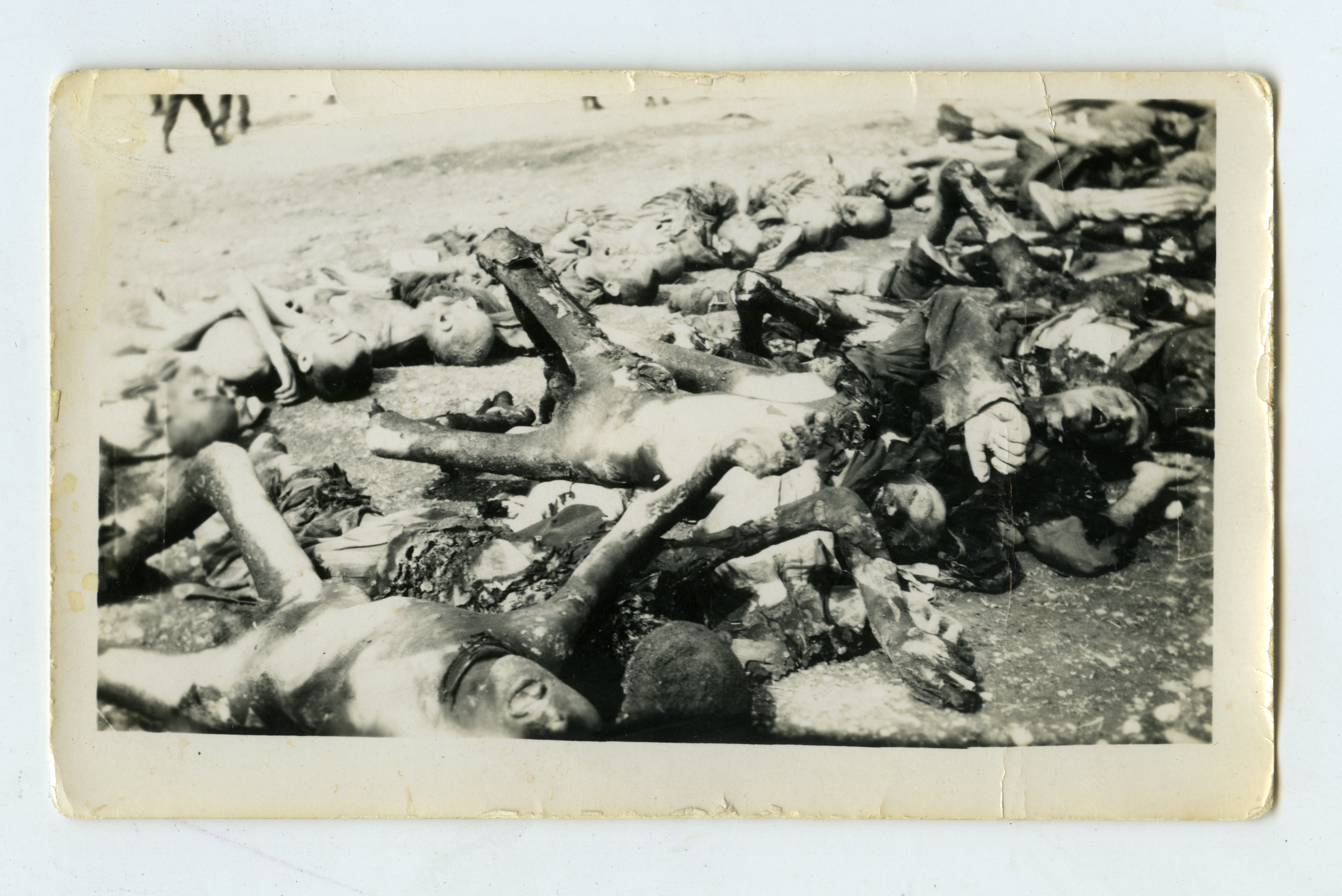
Kaufering IV Victims
US Officers Speak to a Crowd
US GI’s View the Dead
Camp Victims
Camp Victims and Army Officers
Camp Victims
Local German Civilians Listen to US Officers

I really don’t know how to close this sobering post update from 2017. I did pass the snapshots along to a WWII veterans museum based here in the United States, but I’m unsure of what they ended up doing with them. I hope that his post will help educate those researching Kaufering IV and bring some closure to the mystery of when and where these snapshots were taken.

If you want to see some footage from the camp liberation, please check out the video here.

Easy Co. 506th PIR, 101st Airborne, Band of Brothers at Kaufering IV

HBO’s Band of Brothers covered Kaufering IV briefly in one episode. The unit was involved in the liberation of the camp, along with the 12th Armored Division. See below for a dramatized version of the events. The small earthen huts described by Taff can be clearly depicted. The HBO historical accuracy consultants did a great job!

PortraitsofWar Book Review #1: Panzerwrecks’ Duel in the Mist 2: Leibstandarte During the Ardennes Offensive


One of my favorite current WWII publishers has to be the tag team duo of Lee Archer and Bill Auerbach of Panzerwrecks.  This international dreamnteam has been meticulously researching and compiling books on knocked-out German armor since 2005; focusing on amateur photographs of (often) never-before-seen scenes of German armor moments after destruction by US forces during WWII.

In a world filled with overused and reprinted images, it’s a refreshing relief to open a new copy of Panzerwrecks and see new images of late war German armor with wonderful descriptions.  A balance of tongue-in-cheek humor mixed with meticulous research offers the reader with a book worthy of a well-stocked research library or office coffee table.


I recently finished my review copy of Duel in the Mist 2 published by Panzerwrecks and written by Timm Haasler, Roddy MacDougall, Simon Vosters and Hans Weber.  With nearly 700 footnotes (really!), this book is well reseached, cited, and backed up with primary source documentation that includes first hand accounts, after-action reports, photographs and veteran interviews.  A well balanced piece; Duel in the Mist 2 views the initial battles of the Ardennes Offensive through a non-biased lens.  Interviews with US veterans easily mesh with similar accounts from SS veterans.

The superlative collection of wartime images compiled for the book is, by far, the most amazing part of the book.  Images from the deep collections of David Thompson and Stefan De Meyer of AMC, Bill Auerbach, Jeff Tomkinson, Freddy Lemaire, Gerard Gregoire, Eddy Monfort, Tom Fischer and many others supplement the written component.

Artistic representations of German armor were intricically detailed by Simon Vosters, with a special attention to detail regarding camo patterns.  This, combined with actual portraits of the men involved in the battles, provides the reader with an intimate view of WWII not often seen in other publications.

A series of intensive maps follows the progression of the battles using modern day color and figures.  An easy-to-follow chart accompanies each map, allowing the reader to follow the battle with relative ease.  Flipping back and forth between maps is made easier by the 8.5 in by 10.25 in format of the book.  The pages want to be turned!
A special thanks to the guys at Panzerwrecks for providing me with a review copy of Duel in the Mist 2, and a special thanks to Timm Haasler, Roddy MacDougall, Simon Vosters and Hans Weber for their fantastic work.  Keep up the good work, and I hope to review Duel in the Mist 3 by 2014!


Interested in picking up a copy of Duel in the Mist 2?  Check out Panzerwrecks website for a compendium of top notch WWII material!


WWII Photo Collection – 226th Signal Corps Invade Southern France 1944


All in all, a pretty well rounded collection. The unnamed photographer made sure to captured shots of German equipment, a few Panther tanks, U.S. aircraft, lots of vehicles and trucks, destroyed buildings, local people and some great painted signs. Essentially this collection contains everything that makes a good wartime ETO photographic grouping.

226th Signal Corps – From what I can tell they were in charge of transmitting info from the front back to London. They operated specially fitted trailers with radio and signal equipment. I found the address of the 226th historian and will write him a letter.

D-Day Southern France

German Panther Tank

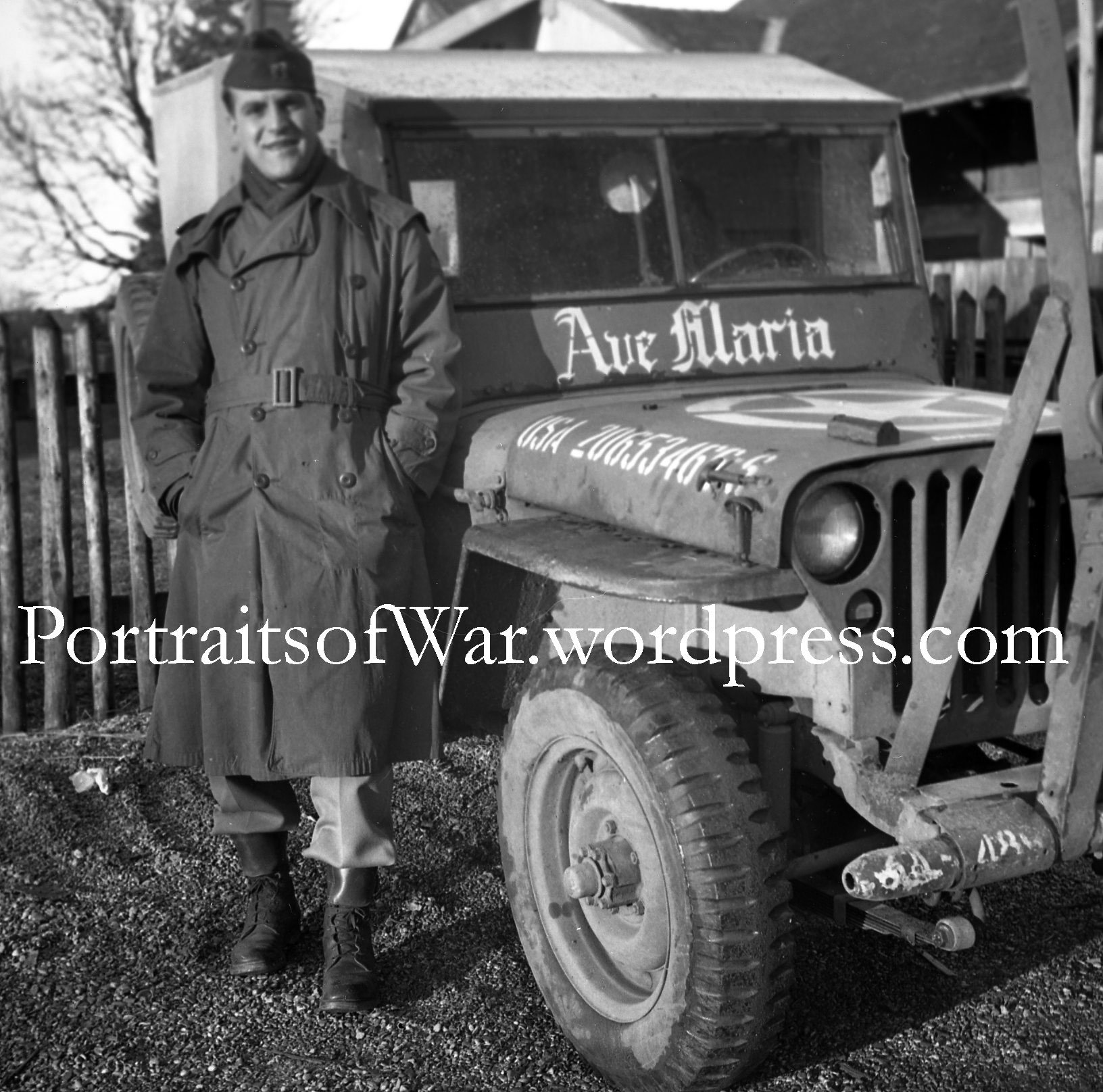
Awesome WWII Catholic Chaplain Jeep – Negative/Photo – Willys Jeep in Germany 1945


Guys like this make me proud to be Irish Catholic!  I have hundreds of negatives from this 9th Armored Division collection, many of them related to Chaplain services during WWII.  The collection includes 20-30 shots of this same jeep – gotta’ love the name!  Ave Maria.

See the bar projecting above the front of the hood?  It was created to cut wires that may have been strung across French and German roads in order to decapitate US soldiers.  Ouch!


UPDATED POST – WWII Refrigeration Truck Unit Photos – “The Penguin Fleet” Blood and Plasma Transfer Trucks


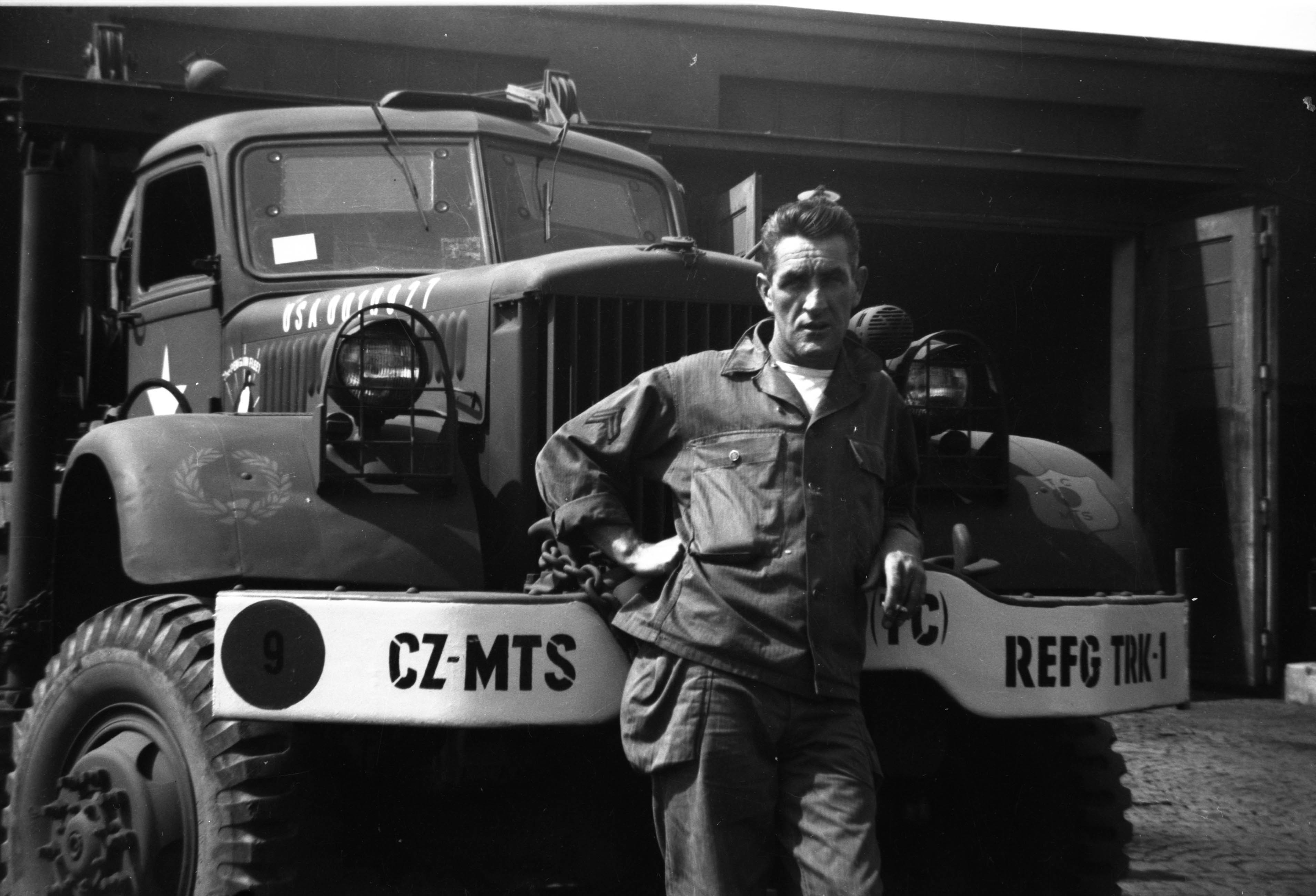
One aspect of war that is not normally discussed is the transportation of temperature sensitive material.  Blood, meat, and some chemicals needed to be kept cool for use in the field and needed special trucks to deliver the goods.  Here is a set of photos showing the trucks of the unit!  Try finding these anywhere else!  Scanned from original negatives.


UPDATE:

After cleaning out a forgotten box in my closet, I was able to find some additional negatives from this grouping.  Enjoy!


Korean War “Kilroy Was Here” Graffiti – 987th Armored Field Artillery Photo


How many times have you heard the term “Kilroy Was Here”?  I’ve personally never seen a WWII or Korean War photo depicting the infamous graffiti, but now have a copy in my own collection.  The recent acquisition of a 987th Armored Field Artillery negative grouping uncovered this little gem.  I also like the grammatically incorrect North Korean proclamation slathered across the wall.  Enjoy!

42nd Rainbow Division Rolls Through Bavaria – 222nd Infantry Regiment Photo Post


222nd Anti-Tank Company


A member of the 222nd Anti-Tank Company of the 42nd Division snaps a photo while a convoy of trucks rolls through a small Bavarian town.  One of a series of nearly 800 negatives from the 222nd that I acquired last year; this photo encompasses the fast moving blitz through Germany and Bavaria that the 42nd took on during the last parts of the war.