WWII Portrait Photo Identification: PFC John M. Holland, 11th Airborne, 675th GFA


A recent eBay photo grouping purchase has landed me with a fantastic identified and easily researchable photo of an 11th Airborne paratrooper.  An often looked-over paratrooper group, the 11th served in the PTO and has been sadly back-burnerned due to the popularity of the 101st and 82nd Divisions who fought in the ETO and who have inspired such works as Band of Brothers and other films, books and video games.

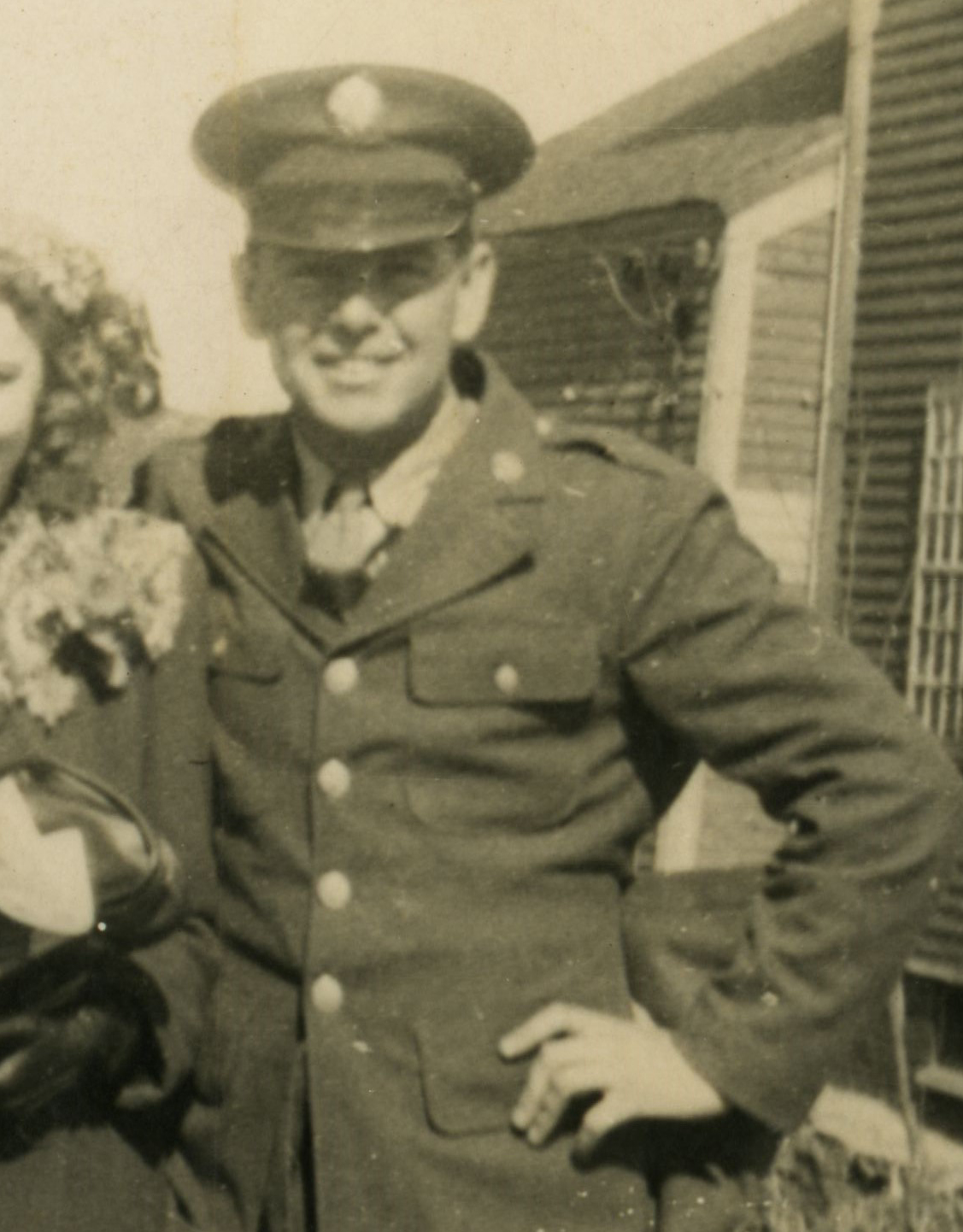
PFC. John M. Holland in Japan

PFC. John M. Holland in Japan

This portrait photo was taken by M. Kimura in Yonezawa, Japan in late 1945.  The sitter is John M. Holland, a Dallas, Texas WWII veteran who served with the 675th Glider Field Artillery in the Pacific Theater of Operation(PTO) during WWII.  He was born on June 2nd, 1924 at 821 East Dallas Street in Dallas, TX.   After the war he went on to play professional baseball for two years in the Texas Leagues until he injured his throwing arm in 1947.  He next went to work in the Cotton Exchange Building in the cotton and textile industry.

formal_military_cmp

And I was able to find an incredible account of his wartime experiences here: http://www.johnmorganholland.com/Military_John_M_Holland.html


I’m copying it here:

John writes of his Army record:

“Feb. 18, 1943 – Assigned and shipped by train to Camp MacCall, Hoffman, North Carolina. Arrived February 22nd. The US Army started their first Airborne Division to be trained as Airborne Troops. This was the 11th Airborne Division, which included glider and paratroops together. This Division of about 8 to 10 thousand, included artillery, infantry, engineering, anti-aircraft and tank, and support units.

“I was assigned to the 675th Field Artillery, Battery A Unit. This was a unit of 105 Howitzers, short barrel with split trails, to fit in the gliders for transport to battle areas. I was assigned to the Communication Section, which had to set up telephones and switch boards to all positions: Headquarters, guns and forward positions by wire (laying lines), and also radio.”

John served throughout the Philippines during World War II where he supported the infantry in capturing Los Banos prison camp and liberating its prisoners, and later was ordered into Japan with the occupation forces. Among the medals he received were the Asiatic-Pacific medal, the Presidential Unit Citation, Philippine Liberation Ribbon as well as Parachute/Glider Wings.

Of the invasion of Leyte, Philippines John writes “Further action did not occur until just before dark when three Japanese planes came in from the East over the high area inland and dropped two bombs; one was a dud and the other exploded just east of our area. The planes circled and started back to us, then turned away as seven of our planes intercepted and shot down one Zeke. “

“Then about dark, we heard incoming shells and we all hit the fox holes. All shells hit either on the beach or short of our position. At about 2000 hours, a group of Japanese soldiers started hollering and running to our position. We killed all but one and he fell into a large hole before he got to us.”

“The next day there was a lot of movement off shore, just to the North of our position, and several LST’s landed with cameramen and reporters….standing in front of the last LST was “the man with the pipe,” General Douglas Mac Arthur, with cameras firing off as fast as possible. He was about 100 yards from our position and that is where he made his famous “I have Returned!” statement.”

John’s unit stayed on that beach for two more days and nights under fire from enemy planes and troops on the ground. On the fourth day, they began to move inland. It took them two weeks to push through the center of Leyte Island to the east coast. When they finally got there they helped the people of the villages put their houses back together.

“Many of our soldiers were stricken by yellow jaundice and malaria. We received replacements and started moving to several other small islands, securing them and cleaning Japanese pockets of soldiers from them.”

“At about 06:45 A.M., we hit the shore of Luzon, (Manila) at Nasugbu.” John received the Presidential Unit Citation for his part in the Battle of Manila. “This operation covered almost one month…Then we rested for one week by scouting villages in and around our area. After the Manila operation, this area was always free of any Japanese aircraft.”

Not long after that, John’s unit was told they were going to be dropped into Japan to take and secure Atsugi Air Field just outside of Tokyo. On the flight over the senior officer on the plane told them “do your jobs again like we did in Manila and Nichols Field and we again would be the victors as We are the Airborne!” The men all yelled with him, then settled down, got some rest, and prayed.

“About four hours later, we were awakened and told that the atomic bombs had been dropped and that Japan was willing to surrender….. We all hollered and, after many handshakes and hugs, the officer told us we were headed back to Okinawa…..we all got on our knees and gave thanks. Many of us shed tears of joy!”

Now that the war was ending, there was a race to get to Tokyo. MacArthur wanted his favorites, the 1st Cavalry, to be there first.

John was chosen as part of the honor guard to go to meet MacArthur. When “Mac” and the 1st Cavalry arrived at Atsugi Air Field, John and the 11th Airborne were there to welcome them!

After the Surrender of Japan on the USS Missouri, John got his orders to go home. He arrived in Seattle December 24th, 1945 and about four days later got to Ft. Sam Houston, Texas. He was discharged February 1946.

To see footage of the Los Banos POW camp on the day of it’s liberation please click the photo below:


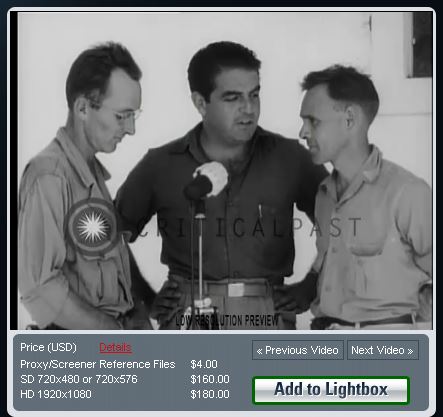
And to hear an incredible interview with  released POW’s from the camp click the photo below (they reference the paratroopers dropping in):


All of the information in this post has been acquired through the biographical website of John M. Holland:http://www.johnmorganholland.com/Military_John_M_Holland.html


Crosspost: Valor is Timeless – Caleb Cushing and the Congressional Medal of Honor


Crosspost from http://www.militarytrader.com/jagfile/valor-is-timeless


“Our line of battle stretched along the ridge overlooking the valley between it and the southern armies…The thunder of artillery was like a continuous roar…Among the first to receive a serious wound that fateful afternoon was Cushing himself. Both thighs were torn open by a fragment of shell—under which ill fortune, said General Webb in his report, “He fought for an hour and half, cool, brave, competent.”

First Lieutenant Alonzo Cushing, Battery A, 4th US Artillery, challenged the admiration of all who saw him in action at the Battle of Gettysburg in July 1863. In fact, his brigade commander, Colonel Hall, reported about Cushing on the final day of the battle, “Three of his limbers were blown up and changed with caisson limbers, under fire. Several wheels were shot off his guns and replaced, till at last, severely wounded himself, his officers all killed or wounded, and with but cannoneers enough to man a section, he pushed his gun to the fence in front an was killed while serving his last canister into the ranks of the advancing enemy.”

Others reported how he simply laughed when a bullet that hit him in the shoulder, calling to his division commander, “I’ll give them one more shot—Good-Bye!” As he served up that last round, another bullet struck him in the mouth, passing through the base of his brain. He fell forward, lifeless, into the arms of his orderly sergeant, Frederick Fuger.


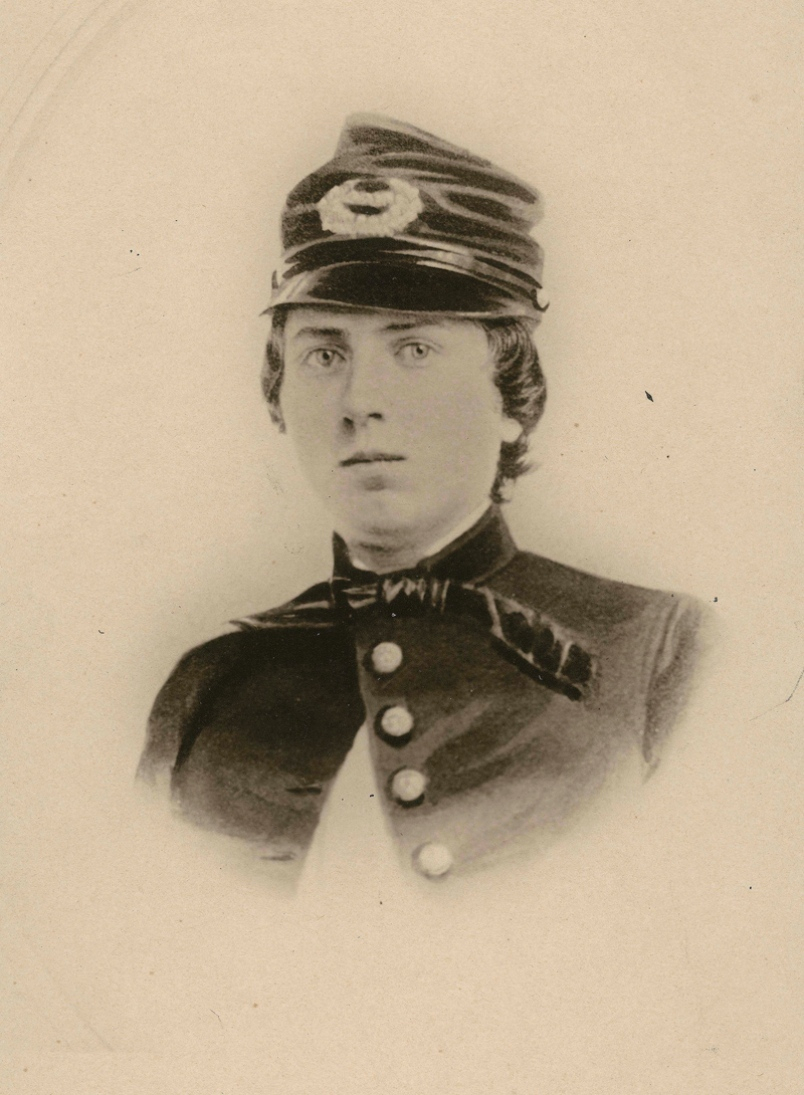
Caleb Cushing Studio Portrait

Caleb Cushing Studio Portrait

A WISCONSIN NATIVE

Alonzo was the second youngest of five Cushing brothers. Born in 1841 in what is now the city of Delafield, Wisconsin, Cushing grew up in Fredonia, New York. In all, three of the brothers grew up and served the Union during the American Civil War. His younger brother, William, became a Union Navy officer. One of his older brothers, Howard, served in the 1st Illinois Artillery before taking a commission in his brother’s unit, the 4th Artillery in November 1863. After the war, Howard served in the 3rd U.S. Cavalry until he was killed in action fighting the Chiricahua of Arizona, in 1871.

Cushing entered the United States Military Academy in 1857 and graduated with the the class of June 1861, when he received commissions as second and first lieutenant on the same day. He was brevetted major following the Battle of Chancellorsville. The 22-year-old Cushing commanded Battery A, 4th U.S. Artillery at Gettysburg.

Battery A was at the key point called “the angle” in a stone wall facing the brunt of the charge by Confederate troops under Maj. Gen. George Pickett on July 3, 1863. Historians have called this spot the “high-water mark of the Confederacy.” Commanding a section of guns only a hundred yards in front of the Confederates  converged at the wall, Cushing fell from a third, fatal wound. Contemporaries described his actions before he was killed as nothing less than heroic.

His body was returned to his family and then interred in the West Point Cemetery in Section 26, Row A, Grave 7. His headstone bears, at the behest of his mother, the inscription “Faithful unto Death.” Cushing was posthumously cited for gallantry with a brevet promotion to lieutenant colonel.

History did not forget Alonzo, however. In fact, more than four decades later, Morris Schaff would remind the American public of the young man’s gallantry when he wrote in the Atlantic Monthly, “On the field of Gettysburg more than once I stood where the brave Cushing gave up his life, right at the peak of Pickett’s daring charge. Oh that day and that hour! History will not let that smiling, splendid boy die in vain; her dew will glisten forever over his record as the early morning dew glistens in the fields. Fame loves the gentleman and the true-hearted, but her sweetheart is gallant youth.”


Civil War Medal of Honor

Civil War Medal of Honor

Medal of Honor

Federal law requires the Medal of Honor to be awarded within three years of the event unless Congress waives the requirement. Though the Civil War has generated more medals than any other American war, Cushing’s case was complicated by the fact that so few of them — 29 out of 1,522 — were awarded posthumously.

In the 150 years since, debates have raged inside the War Department (now the Department of Defense) about the propriety of posthumous medals. Cushing was nominated for a belated award of the Medal of Honor, beginning with a letter campaign in the late 1980s by constituents of Senator William Proxmire of Wisconsin. The measure has been also been advocated by Congressman Ron Kind of Wisconsin’s 3rd congressional district. In 2002, Senator Russ Feingold of Wisconsin nominated Cushing for the Medal of Honor, and, following a lengthy investigation, the U.S. Army approved the nomination in February 2010.

It was announced on May 20, 2010, that Cushing would receive the Medal of Honor, 147 years after his death.  The provision granting Cushing the Medal of Honor was removed from a defense spending bill by Senator Jim Webb of Virginia in December of 2012, however.

Finally, in December of 2013, the Senate passed a defense bill that included a provision which granted Cushing the Medal of Honor. The nomination was sent for review by the Defense Department, before being approved by President Barack Obama.

Finally, on August 26, 2014, the White House announced Cushing would be posthumously awarded the Medal of Honor. In its announcement, the White House said Cushing “distinguished himself during combat operations against an armed enemy in the vicinity of Cemetery Ridge, Gettysburg, Pennsylvania, on July 3, 1863… “Refusing to evacuate to the rear despite his severe wounds, he directed the operation of his lone field piece continuing to fire in the face of the enemy.” The White House said. “With the rebels within 100 yards of his position, Cushing was shot and killed during this heroic stand. His actions made it possible for the Union Army to successfully repulse the Confederate assault.”

Yet to be resolved is who will receive Cushing’s medal. The Army will accept the award on Cushing’s behalf, since he had no direct descendants. The city of Delafield — a town of about 6,000 people 30 miles west of Milwaukee — would like to display the medal at City Hall, said David Krueger, who serves as the mayor’s representative on the Cushing Medal of Honor Committee.  A date has not been set for the actual award of the medal, though it is likely to occur at a Medal of Honor at a ceremony scheduled for Sept. 15 at the White House. At that ceremony, President Obama with decorate Command Sgt. Maj. Bennie Adkins, an Army Special Forces or his actions in Camp A Shau, Vietnam, over three days in 1966; and Spc. Donald P. Sloat, a machine gunner who distinguished himself during combat near Hawk Hill Fire Base, Vietnam, in 1970. Adkins will attend the ceremony. Sloat’s award, like Cushing’s, will be posthumous.

Valor is, indeed, timeless.

Preserve the memory,

John Adams-Graf
Editor, Military Trader and Military Vehicles Magazine

– See more at: http://www.militarytrader.com/jagfile/valor-is-timeless#sthash.SKLCh7lS.dpuf


WWII Photo – Lancaster, PA WWII Veteran Portrait Photos on Display, 1944


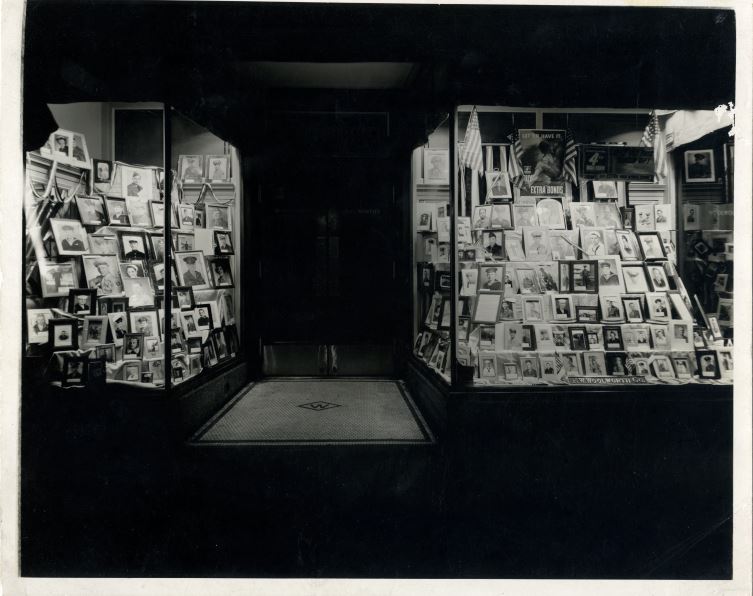
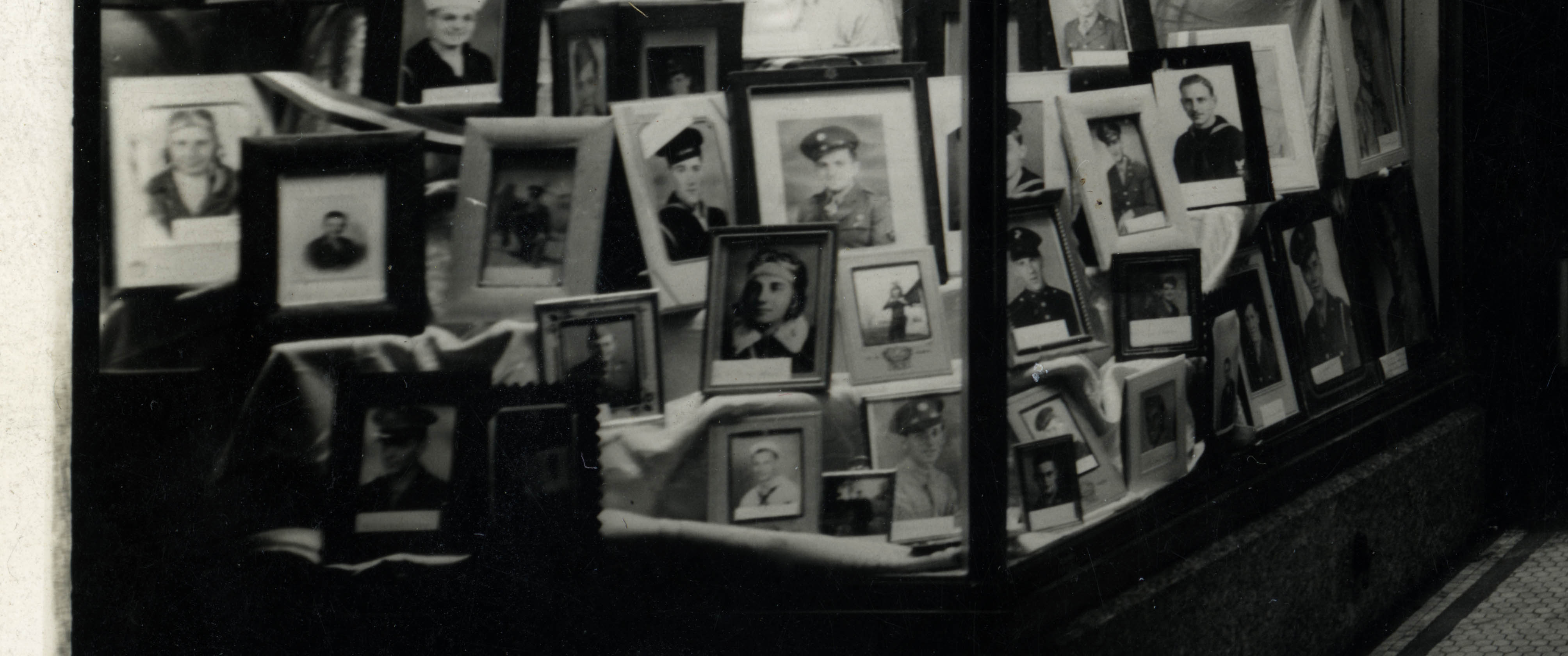
Straight from the dusty PortraitsofWar archives comes an incredibly unique 8×10 photo of a window display in Lancaster, Pennsylvania during World War Two.   I typically shy away from purchasing and posting “press photos” taken during the war, but this shot has so much potential research  that I felt it deserved to be digitized.

Lancaster, PA WWII Portrait Photo Display

Lancaster, PA WWII Portrait Photo Display


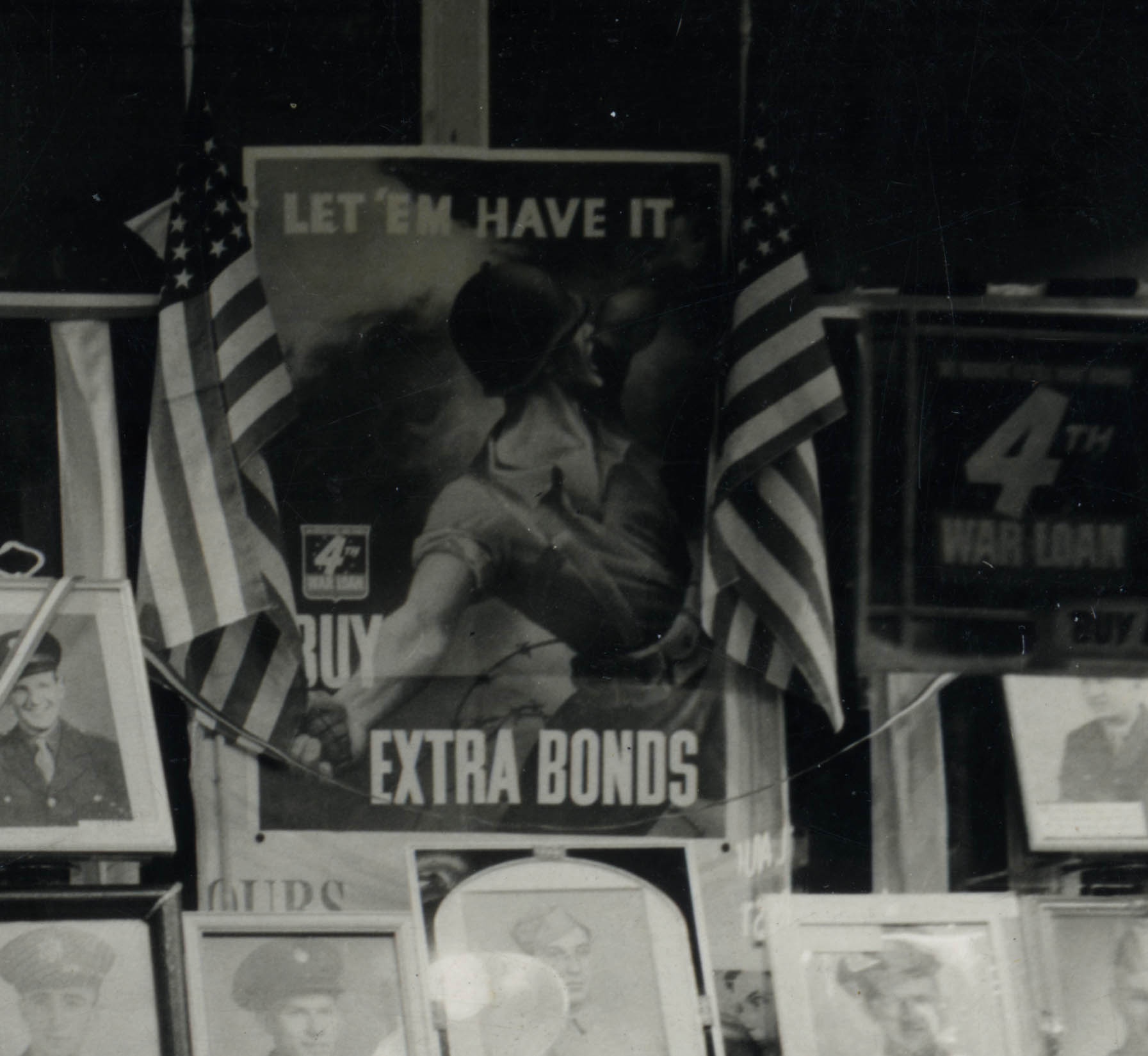
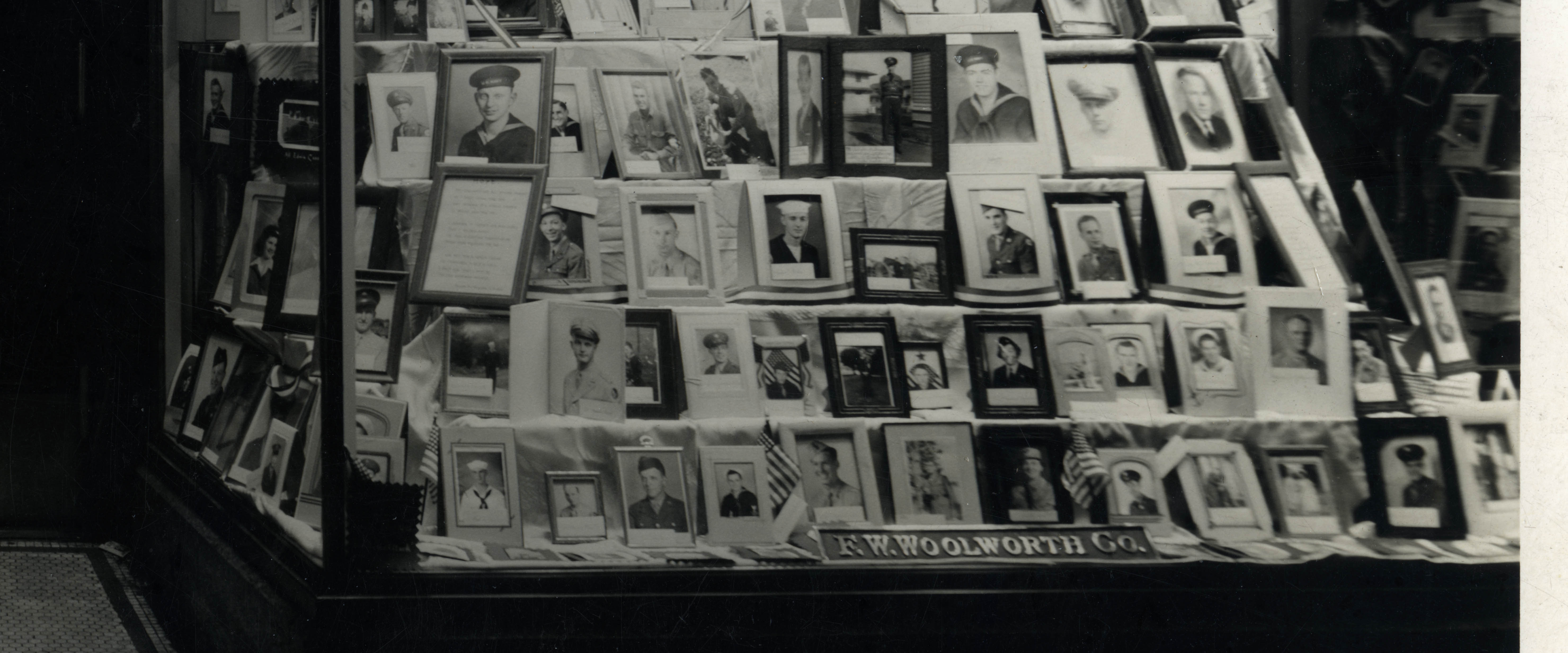
I purchased this photo while visiting a friend in the Philadelphia area.  The reverse side of the photo identifies the photo as the F.W. Woolworth building in Lancaster, PA.  The store identity is confirmed in the image; the tiled entrance and gilded placard identify the establishment as such.  The date of the photo wasn’t noted, but the presence of the 4th Liberty Loan Bond dates the image to 1944.

vehicle047abcdef

4th War Loan Drive Poster, ca. 1944

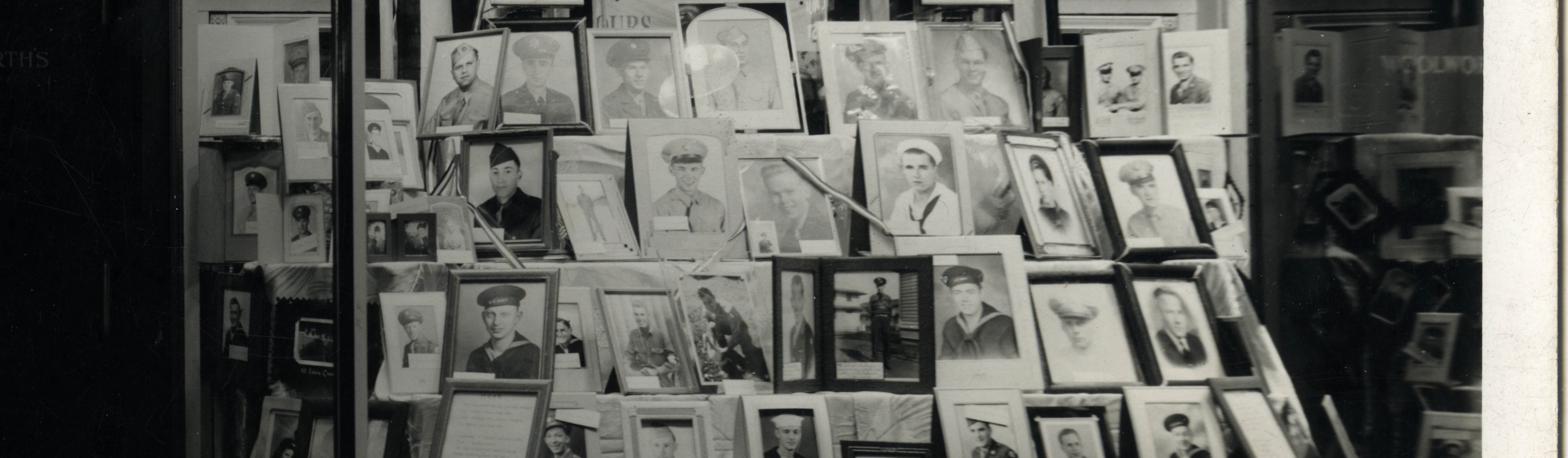
My guess is that the store asked for portrait photos of local veterans to post in the storefront.  A rough estimate puts the number at 100 portraits visible in the window.  The shots runt he gamut of WWII service branches, including the Marine leathernecks, Army Air Force pilots, female WAC and Waves, Navy Sailors as well as regular Army soldiers.


4th Loan Poster

4th Loan Poster

I plan on contacting a number of Lancaster, PA historical societies, veteran groups and newspapers in hopes of identifying a few of the veterans posed in the Woolworth’s window.

vehicle047abcdefghi

vehicle047abcdefgh

vehicle047abc

vehicle047ab

vehicle047a

Moving WWII Candid Snapshot – The FFI Free French and Captured Female German Collaborators


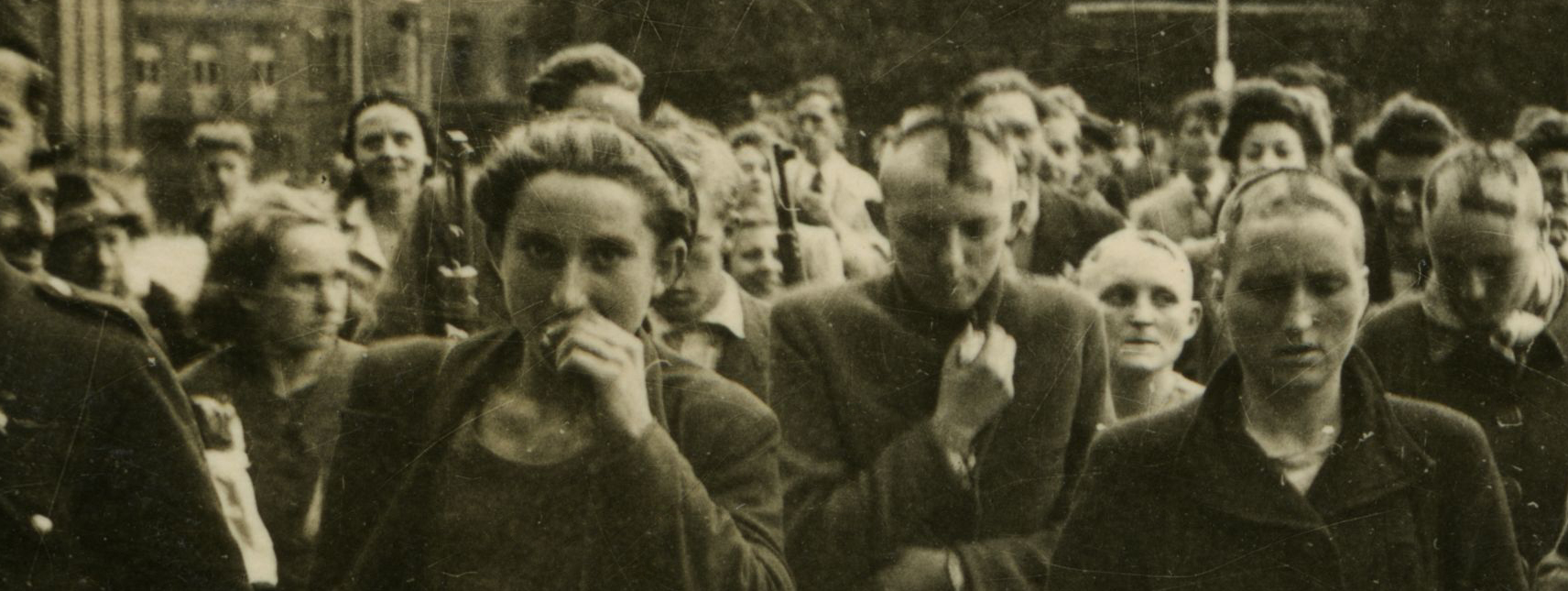
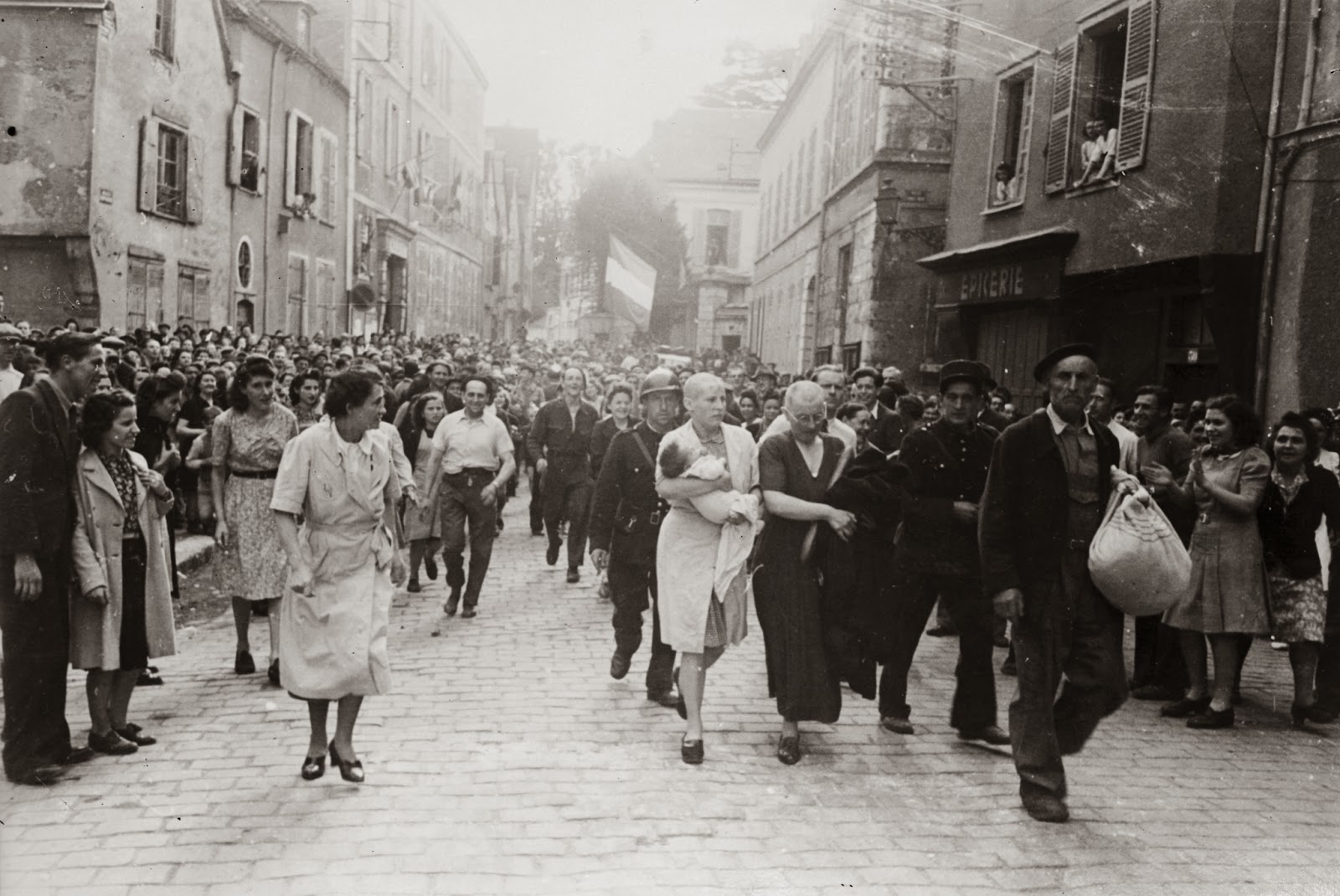
This incredibly moving snapshot from my WWII collection captures a wide range of emotions.  The only identification I have for the photo is that it was taken in a town/village/city named Poules during the tail end of the war. A US GI followed a joyous parade of French citizens and Free French (FFI) underground soldiers as they proudly walk down the streets of their newly liberated city. It’s a photo that speaks volumes.

German Collaborator Parade

German Collaborator Parade

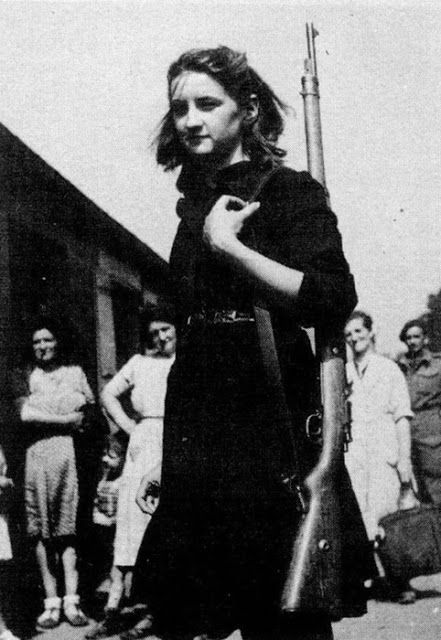
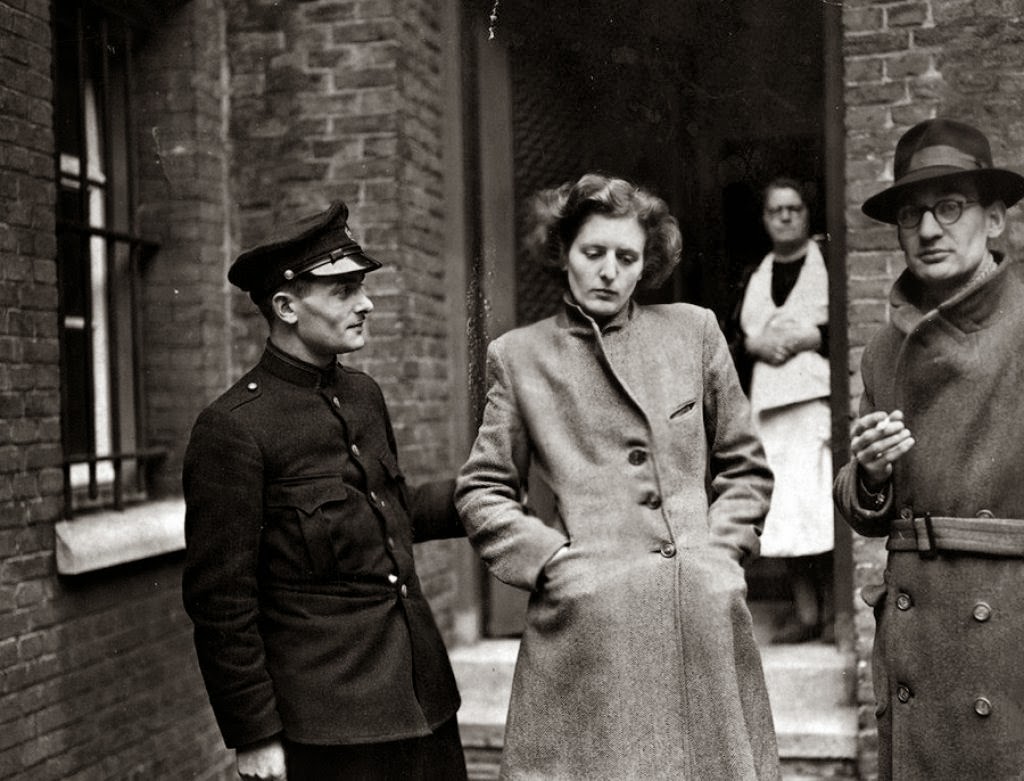
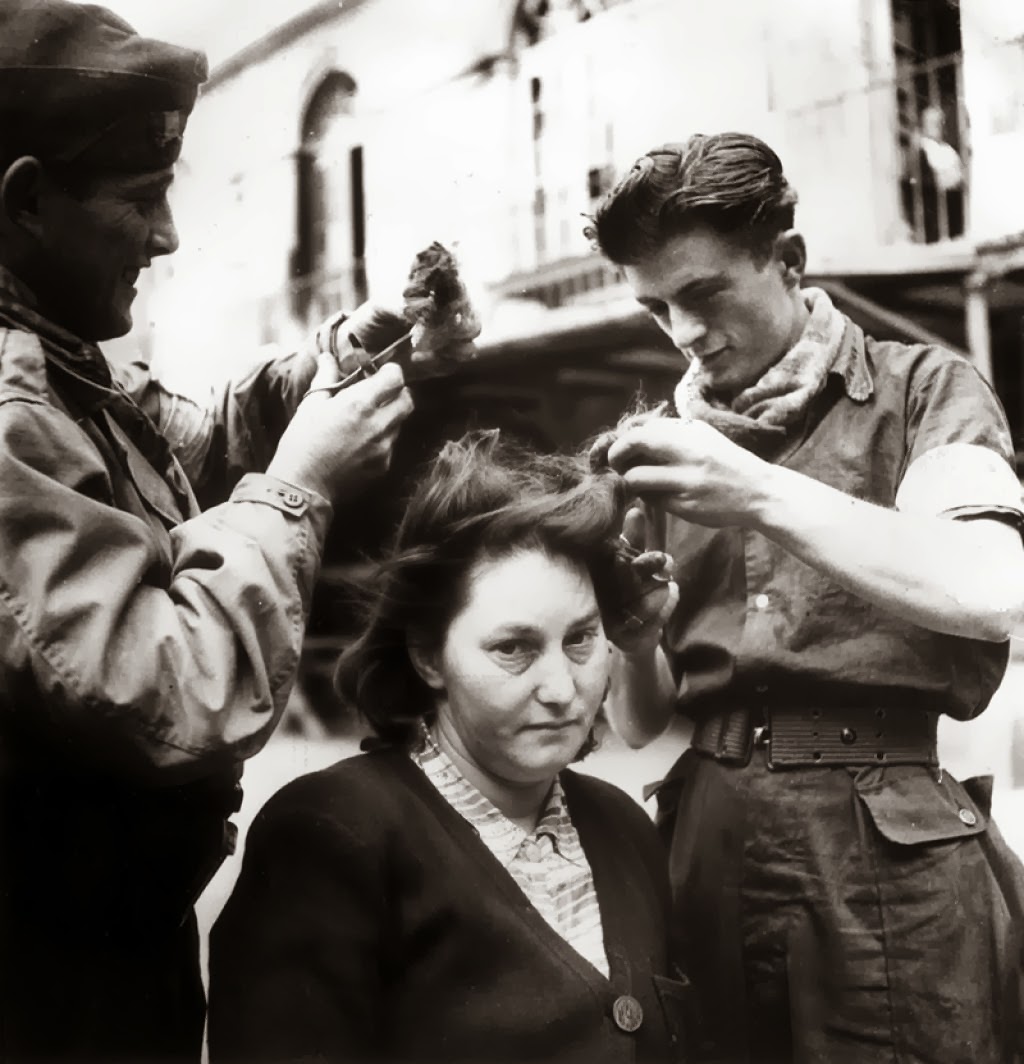
After nearly four years of German occupation, a contingent of the French population were eager to fight back against the oppressive rule of their German visitors. In this post’s main photo we see a young, attractive female underground soldier causally smoking a cigarette, toting German “potato masher” stick grenades while holding a captured German rifle and briefcase.  To her left we see a group of young French women who have been publicly shamed.  Their shaved heads were shaped to show a swastika.  A joyous moment for the FFI, yet a horrible moment for the women who were caught up in the frenzy of the German occupation.  This photo has never been digitized for display on the web. You’re the first to see it!

Collaborator Parade

Collaborator Parade

FFI Female Underground Soldier

FFI Female Underground Fighter

US Signal Corps Footage of Collaborator Hair Cuts

Similar Photos From the Web

Another hero of the French Resistance during World War II and decorated for saving the lives of U.S. soldiers shot down behind enemy lines was Micheline Blum-Picard. Only eighteen-years-old when she first became involved in the Resistance, Blum-Picard started by carrying messages taped to her back and then progressed to photographing inside factories damaged by bombing raids By D-Day, however, she was carrying a rifle, a pistol, and a hand grenade wherever she went.

Another hero of the French Resistance during World War II and decorated for saving the lives of U.S. soldiers shot down behind enemy lines was Micheline Blum-Picard. Only eighteen-years-old when she first became involved in the Resistance, Blum-Picard started by carrying messages taped to her back and then progressed to photographing inside factories damaged by bombing raids By D-Day, however, she was carrying a rifle, a pistol, and a hand grenade wherever she went. inyourfacewomen.blogspot.com

Female French Resistance

Female French Resistance

World War II resistant woman fighter - Paris,1940s photograph the New York Public Library Picture Collection

World War II resistant woman fighter – Paris,1940s photograph the New York Public Library Picture Collection

Member of the French resistance with German tunic and thompson machine gun by Jo Hedwig Teeuwisse, via Flickr

Member of the French resistance with German tunic and thompson machine gun by Jo Hedwig Teeuwisse, via Flickr

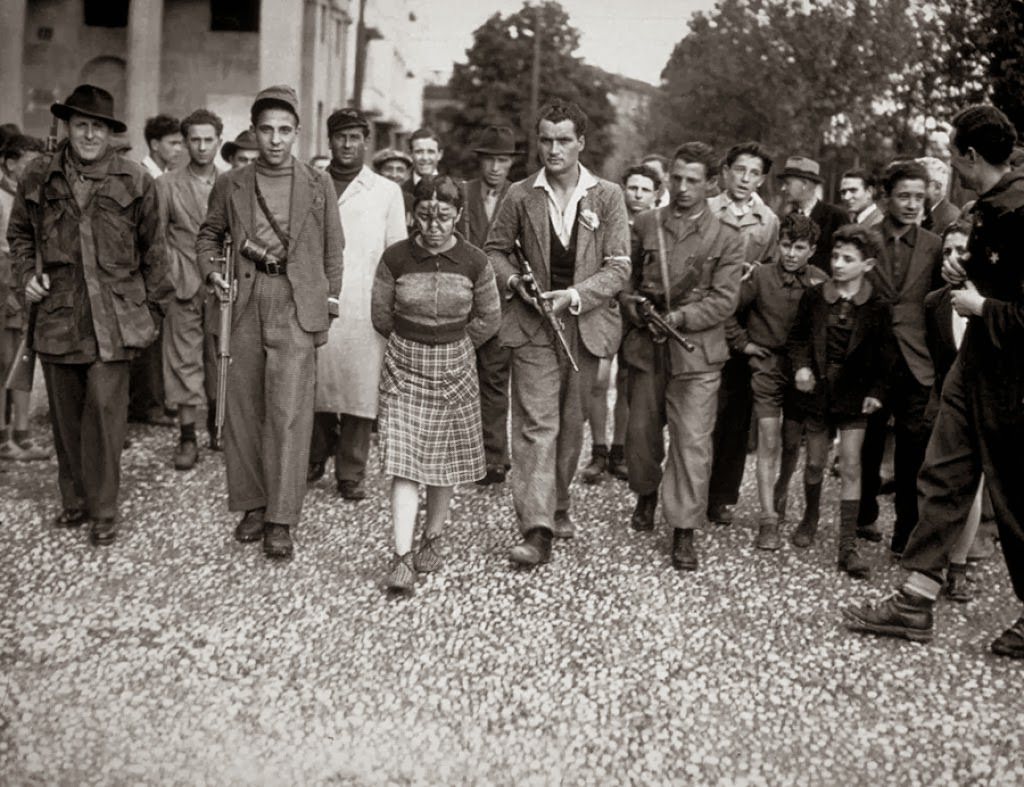
A French woman has her head shaved by civilians as a penalty for having consorted with German troops, 1944 2

A French woman has her head shaved by civilians as a penalty for having consorted with German troops, 1944 4

A French woman has her head shaved by civilians as a penalty for having consorted with German troops, 1944 5

A French woman has her head shaved by civilians as a penalty for having consorted with German troops, 1944 6

A French woman has her head shaved by civilians as a penalty for having consorted with German troops, 1944

My 200,000th Viewer Post! – Remembering My Grandfather, Ambrose R. Canty, 777th Tank Battalion, 69th Division


Today I quietly celebrated my 200,000th blog view from my desk at work.  I knew the number was coming, and with nearly 300 views a day I was able to predict that the 200k plateau would be reached this week.  What should I write about on this momentous day?  I thought back to all my favorite posts…….

Ambrose R. Canty ca. 1944

Ambrose R. Canty ca. 1944


With all those topics in mind I kept coming back to the one man who “brought me into the fold” of researching WWII history.  My grandfather.  Ambrose R. Canty taught me from a young age that you should respect your elders, listen to their stories, as well as how to play poker, pitch, bridge, rummy and pocketknife baseball.   He also told me stories of his experiences during the second world war.  Stories that would be gradually elaborated on as I grew older.  Having spent the majority of my youth with him, I was able to learn a lot about the 69th Infantry Regiment and specifically the 777th Tank Battalion.

Ambrose on Furlough, 1944

Ambrose on Furlough, 1944

My interest in WWII history started with my grandfather, and I feel that on my 200,000th view that I should post a rememberance post to him.  Although he passed away nearly five years ago, I still feel a connection with him.  My early interaction with him live on through this website, and I hope I’m able to help pass on the passion Amby imbued in me at a young age.

Amby (second from right) Holds a Captured German Flag in Leipzig

Amby (second from right) Holds a Captured German Flag in Leipzig

Grampy, thanks for everything.


Ambrose Washing in His Helmet, Germany 1945

Ambrose Washing his Mess Kit, Germany 1945

777th Reproduction WWII Patch

777th Reproduction WWII Patch


And his 2009 Obituary:

telegram.com

Ambrose “Amby” Richard Canty

Published Tuesday September 1, 2009 at 12:01 am

Ambrose �Amby� Richard Canty of 26 Roosevelt Dr. in Southbridge, died Sunday, August 30th, 2009, at home in the company of his family.

He leaves his wife of 55 years, Mary J. (Damian) Canty; 7 children: Ambrose �Amby� R. Canty Jr. and his wife Sandra of Davenport, IA, Anne P. Canty of Port Orange, FL, Jane E. Gauthier and her husband Richard of Southbridge, Joan R. Murphy and her husband Donald of Worcester, MaryLynne Deshaies and her husband Gerald of Sturbridge, John D. Canty and his wife Kimberly of Webster, and Kathryn M. Canty of Redondo Beach, CA; 12 grandchildren: Adam, Matthew, David, and Tom Canty of Davenport IA, Christhanha Canty of Port Orange FL, Brennan and Connor Gauthier of Southbridge, Maria and Anna Murphy of Worcester, Cailyn, Ryan and Kelsey Canty of Webster, MA; and many nieces, nephews and great grandchildren. He was predeceased by his 6 brothers and 7 sisters.

He was born in Webster, one of fourteen children of Patrick and Anne (McCauley) Canty. He lived in Webster and Southbridge all his life. He graduated from Saint Louis High School in Webster, was a graduate of Holy Cross College in Worcester, and received a Masters Degree in Social Work Administration from Boston College. He was an accomplished athlete lettering in 3 varsity sports at St. Louis High School: Basketball, Baseball and Track. He also played semi-pro football for the Webster Colonials, and refereed and coached basketball teams at various levels for many years, including a championship basketball team with 5 of his daughters and several nieces.

He proudly served in World War II as a member of the United States Army�s 69th Infantry Division from 1944 to 1946. The division rescued a sub-camp of the Buchenwald concentration camp in Leipzig, Germany and is recognized as a �Liberating Unit� by the US Holocaust Memorial Museum. He was a member of the Webster-Dudley American Legion Post # 184.

Ambrose served as the Webster Public Welfare Director for 16 years and the Massachusetts Director of Public Welfare in Worcester for 20 years before retiring. He was a member of St. Mary�s Parish in Southbridge and a member of the Webster-Dudley Knights of Columbus. He also served on the Massachusetts Mental Retardation Board, and as a member of the Tri-Area Fresh Air Program.

The funeral, with full military honors, will be held on Friday, September 4th with a Mass at 12:00 PM at St. Mary�s Church, 263 Hamilton St., Southbridge. The burial will be at Oak Ridge Cemetery in Southbridge. The Webster-Dudley Veterans Council will perform military honors. There will be no calling hours. Following the burial, the family will receive friends and relatives at the �12 Crane St.� banquet facility in Southbridge. Funeral arrangements are under the direction of Daniel T. Morrill Funeral Home in Southbridge.

In lieu of flowers, memorial donations may be made to the St. Mary�s Parish Ministry Center Completion Campaign, 263 Hamilton St. Southbridge, MA 01550.

morrillfuneralhome.com

http://www.telegram.com/article/20090901/OBIT/909010312

The Korean War in Color – 18th Maintenance Squadron Robert Duffy MAJOR UPDATE


Remember the badass dude posted below?  My first post on him can be found here. 2nd  Lt. Robert Duffy has an incredible WWII story, nearly seven years before these phtoto were taken……..

On July 27th 1944, an American fighter plane crashed in flames in a field belonging to the Laurent family in the hamlet of the Scellerie… The battle was raging and the inhabitants of Le Mesnilbus had several days past received the order to evacuate. Returning from the exodus, they found the wreckage of the war strewn across the countryside, but they had to pick up their lives, to repair the damage as best they could…they had many worries! A half century has quickly passed…and now Michael Rainfroy, impassioned by the history of lost aircraft, has brought back from oblivion and the earth the American aircraft…a Thunderbolt P-47. Thanks to the records of the American Army, they found that it was a plane from the 404th Fighter Group. Then they discovered the name of the pilot and with the help of the “Poop Sheet” of former American pilots, they found our pilot alive and well and living in Colorado! That was Robert Lee Duffy who had successfully parachuted near the village of Cambernon. This memorial, erected in his honor, will keep alive the memories of the sacrifices of all the fighters and of this page of local history.

Robert Duffy in the Korean War

Robert Duffy in the Korean War


Check out the squint in those eyes……… he’s seen some combat and is more than likely glad to be in a maintenance squadron during the Korean War. The funny thing is that he didn’t resist the urge to fly and test out the recently rehabbed fighters.   In the shot below, never before seen, we can see Lt. Duffy testing out the recently installed rudder of a Korean War P-51.  Shot with 35mm color Kodachrome film by his wing man, this photo is an incredible snapshot for the family and friends of the Duffy’s.


Testing Out  a Rudder

Testing Out a P-51 Rudder


More to come…………………………

WWII Artist Alva Alegre Update: New Alegre Painting Emerges From the Woodwork


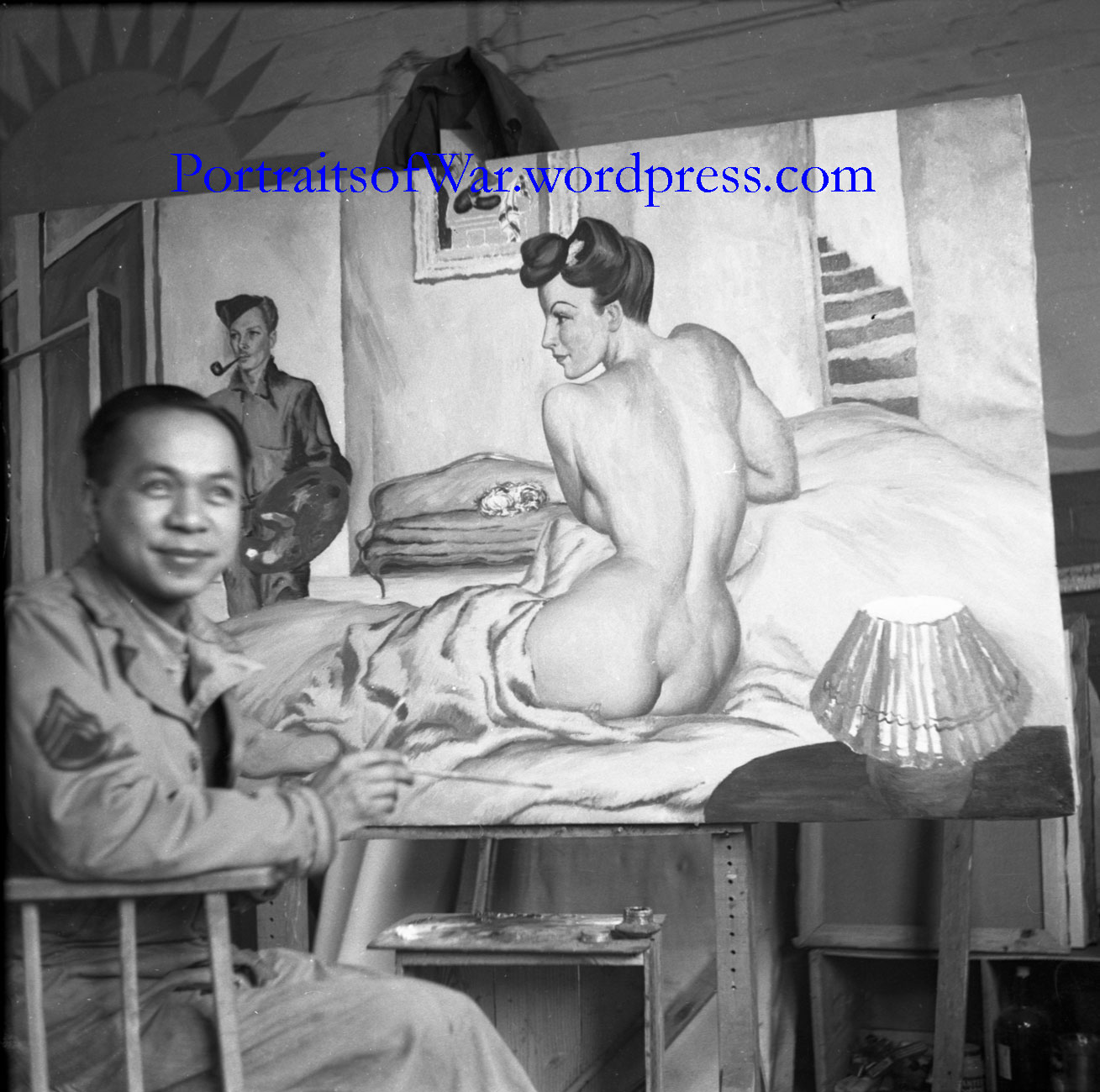
The elusive artist and photographer, Alva V. Alegre, is still making waves here at PortraitsofWar.   Two recent visitors to the site have been able to shed some light on his work. I’m posting the first here for followers of Alva’s work to see before I set into the newly acquired info regarding his background.

The following shot was sent to me by an art collector on the East Coast who luckily had the painting conserved and removed from a foam core backing after finding the work in a Virginia antique shop. The style is quintessential Alegre and incorporates the scantily clad and thin wasted figure so often depicted in his WWII work.


Newly Discovered Alegre Artwork

Newly Discovered Alegre Artwork


Alva Alegre at Work in England, 1944

Alva Alegre at Work in England, 1944


Alegre’s work has fascinated me for nearly six years, and I’ve spend countless hours searching for other examples of his work, as well as for tidbits that may lead to information related to his life.   For those of you who haven’t seen my posts on Alva, please check out the links below:

https://portraitsofwar.wordpress.com/2011/06/14/388th-bomb-group-artist-alva-alegre-caught-in-the-act/

https://portraitsofwar.wordpress.com/2011/06/12/388th-bomb-group-artist-alva-villamor-alegre-self-portraits/

https://portraitsofwar.wordpress.com/2012/02/24/wwii-388th-bomb-group-artist-major-biographical-update/

https://portraitsofwar.wordpress.com/2011/05/29/388th-bomb-group-female-portrait-art-at-knettishall/

https://portraitsofwar.wordpress.com/2011/05/30/glenn-miller-visits-knettishall-388th-bomb-group-big-band/

https://portraitsofwar.wordpress.com/2011/06/04/388th-bomb-group-visions-of-wartime-london-summer-1944/

https://portraitsofwar.wordpress.com/2011/04/14/388th-bomb-group-artist-in-england-1944-alva-v-alegre/

https://portraitsofwar.wordpress.com/2012/01/17/wwii-388th-bomb-group-artist-alva-alegre-random-snapshots-continued/

https://portraitsofwar.wordpress.com/2012/07/19/wwii-388th-bomb-group-portrait-artist-alva-v-alegre-original-portrait-surfaces-on-ebay/


If you have an Alegre painting in your collection, please come forward with a photograph.  His work has been coming out of the woodwork in the past six years, and the story of his life is quickly unraveling.  A special thanks to Scott for his generous photograph of his prized Alegre work of art.


WWII Digitized 8mm Color Footage – Early War Marines Horse Around on Beach 1941


Private WWII color footage is one of the hardest avenues of militaria collecting to break into.  Reels of film are often tossed away after estates sales, never viewed for their content.   It’s a rare occasion to find a small piece of WWII history tucked away in a film collection, undigitized and likely unviewed for decades.

In this case, I was able to acquire a quick 1:28 film shot by a group of buddies on the beaches of a training camp somewhere on the Pacific during WWII.  This educated guess is based on the early field gear pictured in the film which includes the shortly-used M1917A helmet.  The hand cranked radio generator, the pith helmet as well as the offshore battleships point towards an early film. Sadly, the color of the footage wasn’t really picked up during the digitization.  Each frame is scannable with my Epson V700, but the color was lost during the professional digitization.  Enjoy!


The Hawaiian music was added by the digitization company.


Film After Processing

Film After Processing

Opening Clip Cells

Opening Clip Cells

Scanned Cells Showing Color

Scanned Cells Showing Color


Crank Radio Cells

Crank Radio Cells

WWII 3rd Armored Division Snapshot – Tanker John F. Housman of Braceville, IL in France


WWII Snapshots are easy to come across.  They appear in bundles at flea markets and yard sales.  It’s very uncommon to be able to positively identify a US soldier in a snapshot – let alone one that has relatives actively seeking information on ancestry.com.  Please see below for a step-by-step breakdown of my research on this photo.

Step 1: Purchase of Photo

A $12 eBay Purchase

A $12 eBay Purchase


With the purchase made, I had to wait a week for the photo to arrive without any research potential on the photo.  All I knew was that the shot was of a tanker with sand/dust goggles standing in front of a Sherman tank in France.  An interesting shot, albeit sleightly out of focus…..


John Housman Jr.

John Housman Jr.


Step 2: Research Photo


Researching photos can be a daunting task without a proper research database at hand.  Luckily, I subscribe to ancestry.com as well as a number of other databases. In this case, I was able to make the proper ID with the US census record combined with the WWII draft record. What do we know from the photo?  It turns out that the photo arrived with an ID on the reverse:  Johnny Housman-Tanker  of Braceville, Illinois.  It’s a great starting place and provided the key to the unlocking of the positive ID of the photo.

John Housman Jr. WWII from Braceville, IL

John Housman Jr. WWII from Braceville, IL


With the info at hand I was able to make an easy identification using the tools at hand.   A quick search yielded the following info:

John F. Housman Social Security Number 358-05-2949  Born 10/11/1918 Died 9/17/1992

John F. Housman Social Security Number 358-05-2949
Born 10/11/1918
Died 9/17/1992


And his enlistment which appears to be off be off by a year:


WWI Draft Registry

WWI Draft Registry


I’m sure the family of John Housman Jr. will find this site and I hope they will share some info on their father/relative.  I’m more than happy to send the original to an identified member of the family.  I know you’re out there !

WWI Photo Identification: The Mysterious Misidentification of Peter Pizzolongo


Peter Pizzolongo and Friend

Misidentified  Peter Pizzolongo and Friend

From time to time I update certain posts to reflect recent research discoveries or to bring an interesting post back from obscurity.  In this case, the family member of a WWI veteran discussed in my post was able to discover my site and find a “photo” (please see below) of her grandfather.  Back in 2013 I posted a well-researched photo of a pair of doughboys wearing gasmasks and helmets posed overseas in 1918.  After extensive research on the gasmask of the soldier, I was able to track down a bit of info on him.  That’s what I thought!

Gas Mask Identification

Gas Mask Identification

This is an example of one of those rare occasions of an identification made without a 100% cross referenced identification photo.  It turns out that the soldier was merely borrowing the gasmask of Peter Pizzolongo.  I assumed that the wearer was indeed Pizzolongo; but his great niece found the photo, passed it around the family email chain and determined that it didn’t actually depict Peter.  She graciously sent me a wartime shot of Peter with his gasmask bag, helmet and uniform. In fact, the photo was likely taken at the same time as the original image, but was redone in a larger format with a blurred backdrop.  The reversed collar insignia, gasmask strap and shoulder patch point towards a reverse-image process to reproduce a larger format photo.

Peter Pizzolongo in 1918

Peter Pizzolongo in 1918

Peter Pizzolongo

“Fake” Peter Pizzolongo


Luckily my original post was 100% accurate in the historical documentation of Peter and his early life.  Here’s a recap:


Peter was born in 1896 in Larino Campobasso, Italy and came over to the US in the early 1900s.  What’s funny is that I can’t find his immigration records online but did find that he traveled back from Italy in 1955 on board the S.S. Independence along with his wife, Ida.


1955 Italy Trip

1955 Italy Trip

Of interest to me is his WWI service record.  His draft card gives his exact birth date – June 29th, 1895.  His listed profession at the time was Piano Maker; his Italian hometown matches perfectly with his WWI service record, so we know it’s accurate.  As of June, 1917 he worked with a company named Ricca & Son at 89 Southern Boulevard, Bronx, NY.  At the time he lived at 425 East 116th Street in Manhattan and wasn’t legally registered as an American citizen.  He initially signed up with the 165th Infantry Regiment of the 42nd Division.  It makes sense given his NY area residency at the time.  He was they transferred over to the 305th Infantry Regiment of the 77th Division.  He made it overseas on April 16th, 1918 and served overseas for an entire year before leaving on April 24th, 1919.  He was gassed once on August 15th, 1918 during the Battle of the Marne at Fismes.  Please see a quick excerpt from the official 305th Infantry Regiment unit history here: 305th History


August, 1918

August, 1918

We know from his records that he was out of commission for 8 days before returning to his unit on August 23rd.  He became sick (unknown reason, likely gas related) on September 5th, 1918. He rejoined the unit on the 16th after being in the hospital for 11 days.  What a trooper! I’ve attached a few of the web-based documents I’ve found through my search. Hopefully his family will one day find this site and learn a little more about their WWI relative!

WWI Service Record

WWI Service Record

WWI Draft Card

WWI Draft Card