Snapshots from Kaufering IV: A Dachau Subcamp


Follow Up Post: The Liberation of Kaufering IV

Eight years ago I posted a series of snapshots taken by a US soldier showing the liberation of an unknown concentration camp during WWII. When I acquired the photos, they had no provenance and no information on the reverse side to start the process of identification. Luckily, a blog follower was able to help with the identification of the camp through the same processes I typically use. By observing the surrounding architecture and general contextual clues, he was able to identify the camp as Kaufering IV, a large subcamp of Dachau. Here is what he provided:

Some thoughts:

i)This is certainly somewhere Upper Bavaria – the house architecture is fairly typical of the region.

ii)The presence of the 2 Luftwaffe officers suggests some sort of air force activity is close by. Lager Lechfeld was used as a fighter base and a shake-down airbase for the nearby Messerschmitt complex in Augsburg. Prisoners were engaged in constructing bomb-proof bunker-factories in appalling conditions.

iii)One of the photographs has a very distinctive semi-sunken barrack type, known as “Erdhütten” (Lit: “Earth huts”) – very primitive constructions, the timbers of which were made from off-cuts and waste from furniture production and which survivors testify, leaked terribly. These barracks were a distinctive feature of the Dachau sub-camps in the Kaufering/Buchlöe area.

iv)The brief Wiki article tallies fairly well with the photos and my comments: https://en.wikipedia.org/wiki/Kaufering_concentration_camp

Hope this helps,

Taff Simon

The Snapshots

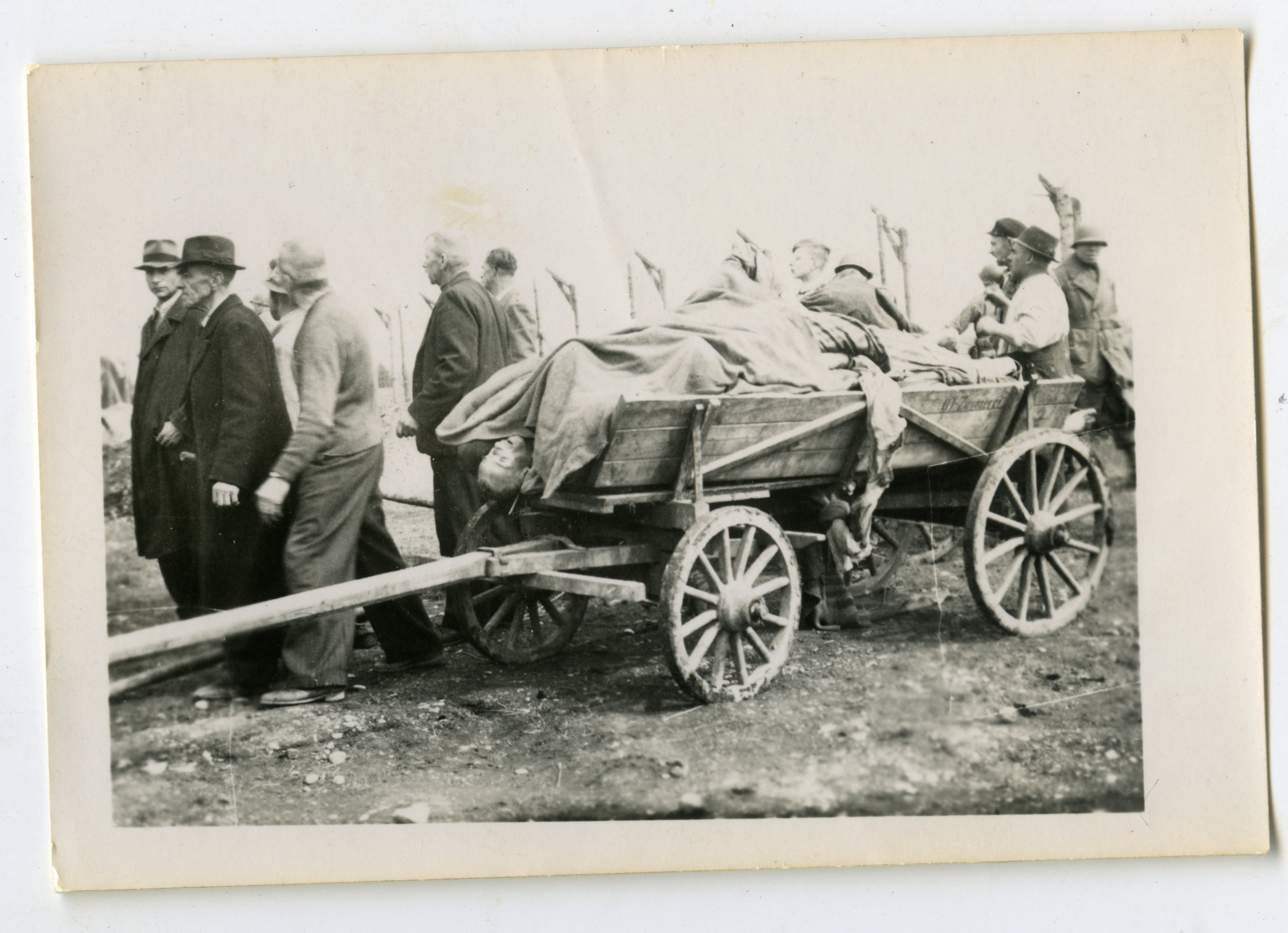
Thanks to the careful research of Taff Simon, we now know that the camp shown in these snapshots is Kaufering IV. A closer look at the details within the images supports his findings. One particular photograph offers the clearest confirmation: it shows an older man in civilian clothing with a closely shaven head, a haunting detail that anchors these scenes to the history of this Dachau subcamp.
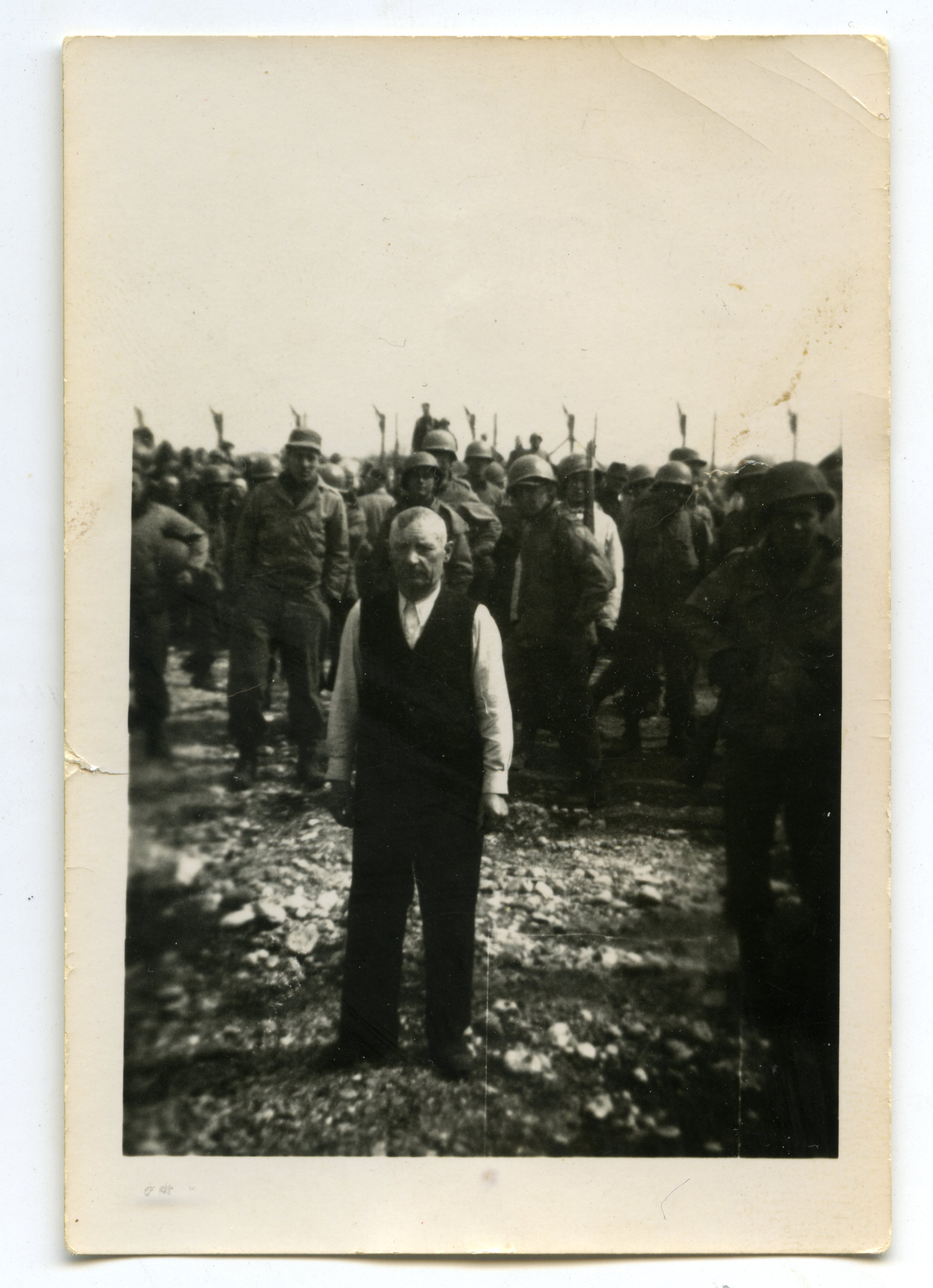
Snapshot of SS Commandant Johann Baptist Eichelsdörfer

When I first wrote about the snapshot collection in 2017, I was unable to identify the man since he was in civilian garb. Artificial intelligence image searches at the time were unable to attribute the image to any individual, so I was under the assumption that he was a local civilian who was brought in to help with the burial of the camp victims. But now, with the attribution of the snapshots to Kaufering IV, I was able to find more images of Eichelsdörfer. His shaven head with the lopsided squirrel-tail appearance confirms his identity when compared to the images below.
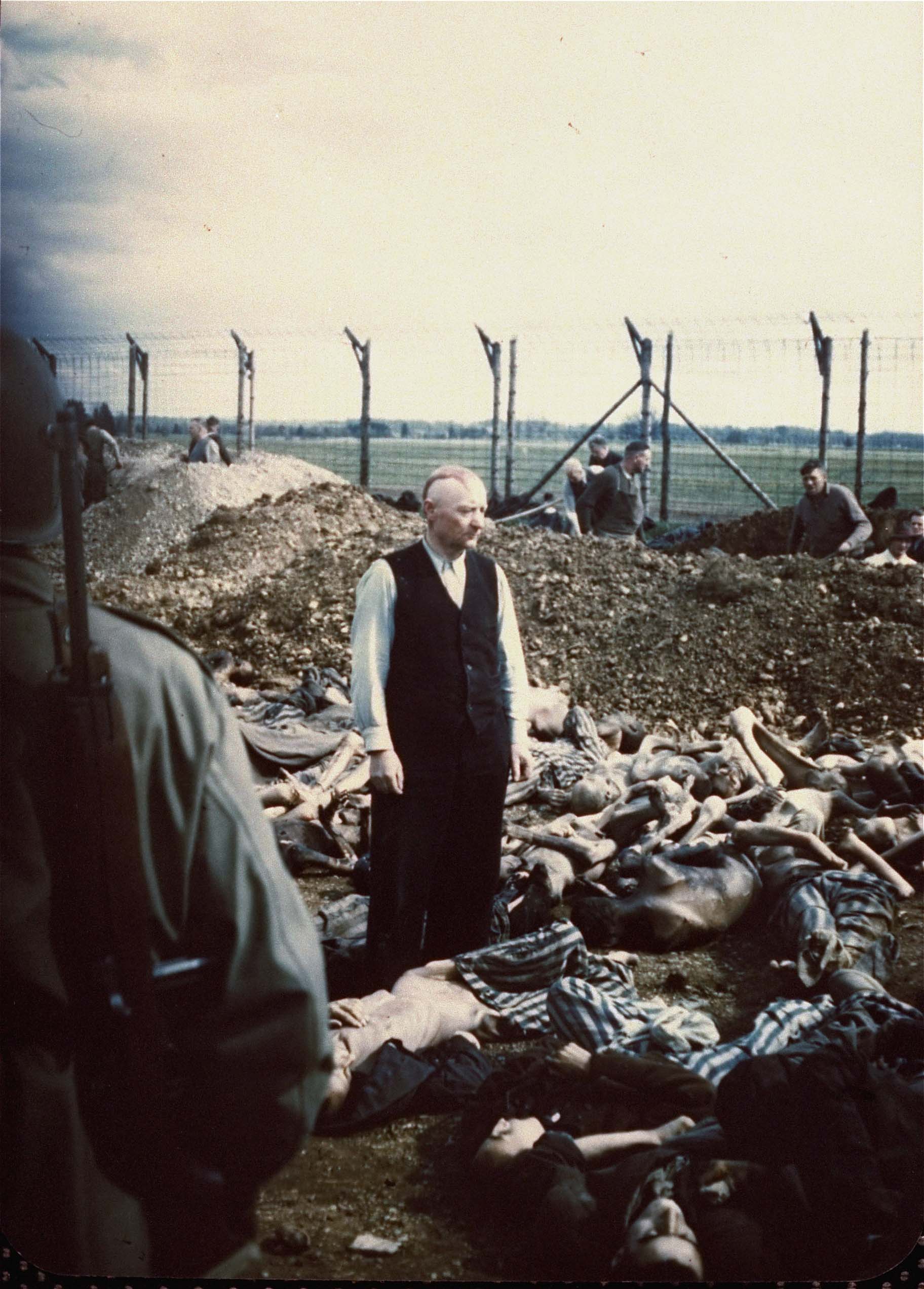
Color Photo of Johann Baptist Eichelsdörfer (US Holocaust Museum image)
(SS officer Johann Baptist Eichelsdoerfer, the commandant of the Kaufering IV concentration camp, stands among the corpses of prisoners killed in his camp. US Holocaust Museum image)
(Wikipedia Commons)

Who was he?

Johann Baptist Eichelsdörfer was a German military officer and concentration camp commandant during World War II. Born on January 20, 1890, in Dachau, Germany, he served as a non-commissioned officer in the Bavarian Army during World War I and remained in the military after the war, retiring in 1924 with the rank of lieutenant. He rejoined the military in 1940 and served in various locations, including France, Poland, and the Soviet Union. In 1944, he was assigned to the Dachau concentration camp system, where he served as the commandant of several subcamps. In January 1945, he took command of Kaufering IV, a subcamp of Dachau located near Hurlach, which was designated as a “hospital camp” but was, in reality, a site where sick and dying prisoners were abandoned without adequate medical care. Under his command, thousands of prisoners died due to starvation, disease, and mistreatment.

Eichelsdörfer’s actions came to light when American forces liberated Kaufering IV on April 27, 1945. U.S. soldiers discovered hundreds of bodies and surviving prisoners who had been subjected to brutal conditions. Eichelsdörfer was captured and photographed standing among the bodies of dead inmates, a stark image used as evidence during his trial. He was tried at the Dachau Trials, a series of military tribunals held by the U.S. Army to prosecute Nazi war criminals. On December 13, 1945, he was convicted of war crimes and crimes against humanity and sentenced to death. Eichelsdörfer was executed by hanging on May 29, 1946, in Landsberg am Lech prison. His trial and execution highlighted the atrocities committed in the Nazi concentration camps and served as a reminder of the need for accountability in the aftermath of war.

The Other Snapshots

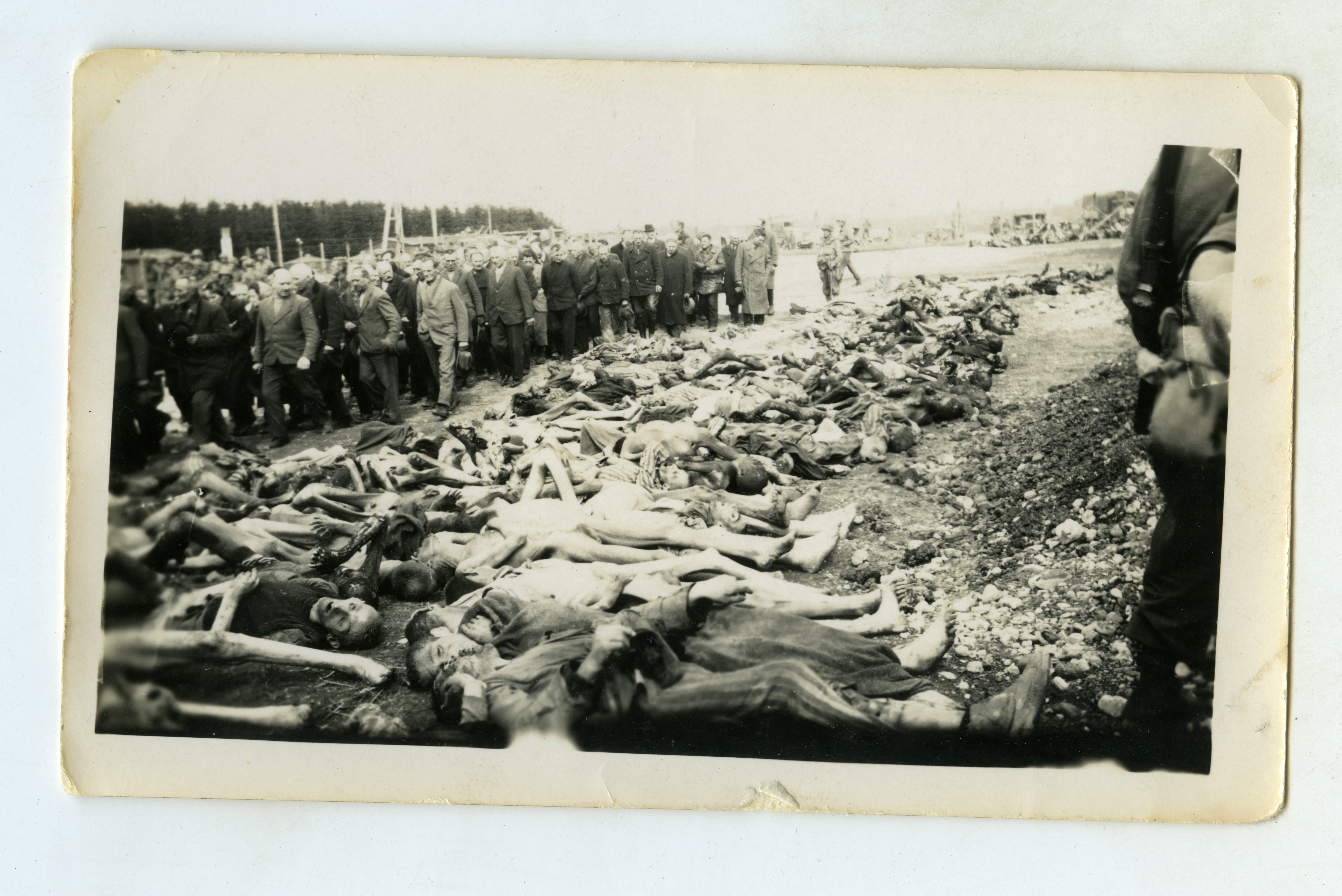
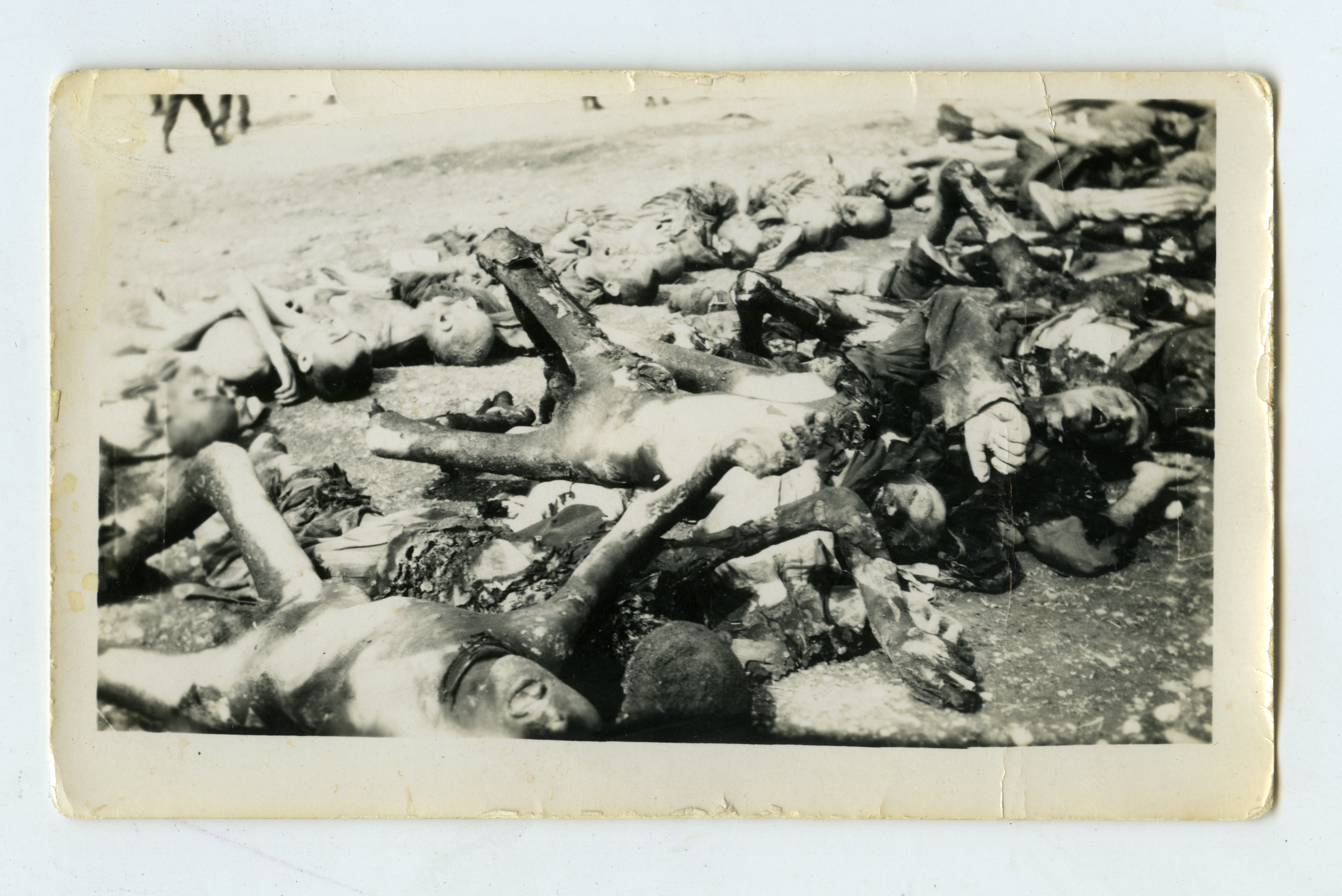
Now that we know the snapshots from the 2017 blog post were taken at Kaufering IV, the other images captured by an unknown US GI make more sense. I will post them here with some updated commentary. Feel free to weigh in if you have any comments or suggestions for descriptions.

Kaufering IV Survivor

In the above image, we see a recently liberated survivor of his time at Kaufering IV. He’s using his bandaged hands to tie on a pair of shoes, likely a pair provided to him by US soldiers. He also appears to have some soup in a small can as well as a striped blanket wrapped around his head and body. In the back of the image appears a US T28E1 which was likely one of the 12th Armor Division’s anti-aircraft mobile vehicles. The painted sillouettes of 14 German aircraft on the side hint that the operators of the T28E1 shot down lots of German aircraft as the war came to an end.
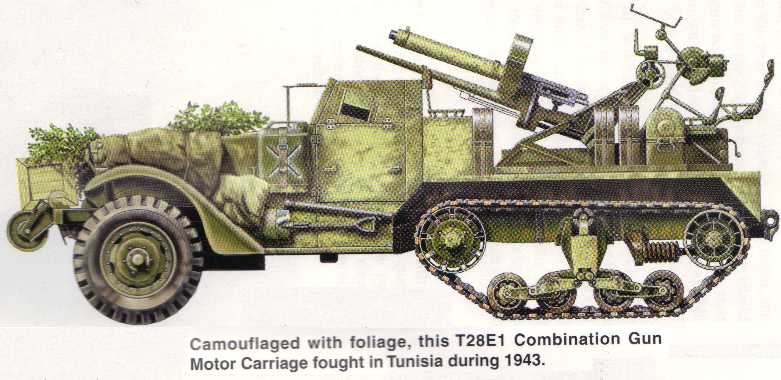
Generalized View of the T28E1
German Luftwaffe Officers
German Civilians Help with Burial
Camp Building and Ditch
Local Civilians Observe the Dead
Kaufering IV Victims
US Officers Speak to a Crowd
US GI’s View the Dead
Camp Victims
Camp Victims and Army Officers
Camp Victims
Local German Civilians Listen to US Officers

I really don’t know how to close this sobering post update from 2017. I did pass the snapshots along to a WWII veterans museum based here in the United States, but I’m unsure of what they ended up doing with them. I hope that his post will help educate those researching Kaufering IV and bring some closure to the mystery of when and where these snapshots were taken.

If you want to see some footage from the camp liberation, please check out the video here.

Easy Co. 506th PIR, 101st Airborne, Band of Brothers at Kaufering IV

HBO’s Band of Brothers covered Kaufering IV briefly in one episode. The unit was involved in the liberation of the camp, along with the 12th Armored Division. See below for a dramatized version of the events. The small earthen huts described by Taff can be clearly depicted. The HBO historical accuracy consultants did a great job!

WWII Press Photo – James “Jack” C. Warren Wounded in Normandy, July 1944


From time to time, I like to browse the pages of eBay in search of portrait photographs of identified U.S. soldiers — small windows into the past that I can casually research to uncover the individual’s story and their role in whichever conflict they served. In today’s post, I was drawn to one particular image: a portrait captured by a British photographer. Unlike the widely circulated press photos that often made their way into American newspapers, this photograph was unlikely to have been distributed stateside and equally unlikely to have fallen into the hands of the soldier’s family.

When soldiers were photographed, it was common for them to provide their names, ranks, and often their hometowns. Yet in most cases, there was little chance for photographers or newspapers to follow up and let those soldiers know that their likeness had appeared in print. That disconnect is part of what makes original press photographs so compelling today. Many remain unpublished, and most have never been thoroughly researched. In fact, I’ve noticed a growing trend in 2025: more and more World War II–era press photos are surfacing on the secondary market, offering new opportunities to rediscover stories that might otherwise have been lost.

PFC James “Jack” C. Warren of Kentucky

The photograph above was discovered in August 2025 during one of my routine eBay searches for intriguing portrait shots of World War II servicemen — images that spark my curiosity to uncover the stories behind the faces. This particular shot is especially striking: crisp, tightly framed, and, based on the other photographs sold by the same seller, likely taken in England at a collection point for wounded or ill soldiers. I cleaned up the scan and cropped the edges to make it more visually appealing for digital presentation.

The next question became the most important one: how do we identify him?

Reverse Side From eBay

What do we know?

The photo was taken on July 13, 1944 at a port in the South of England.

The photographer worked for a British newspaper.

The subject of the photo is a PFC J.C. Warren from Kentucky and was wounded.

The photo was approved for publication by US censors a few days later.

Who was J.C. Warren?

Given the information provided in the brief writeup on the reverse side of the photo, we know that the subject is a young male, likely aged 18-24 from Kentucky named J.C. Warren who was wounded or injured at some point after the D-Day landing a month earlier. His “walking wounded” paper tag (Form 52b-MEDICAL DEPARTMENT, U.S.A. (Revised October 25, 1940), 16-15434) seen poking up at the bottom hints that he wasn’t disabled or infectious. With that information in hand, I began narrowing the search. Since the most common first names beginning with “J” at the time were James and John, I started there, turning to an obscure database that tracks U.S. servicemembers admitted to hospitals during World War II.

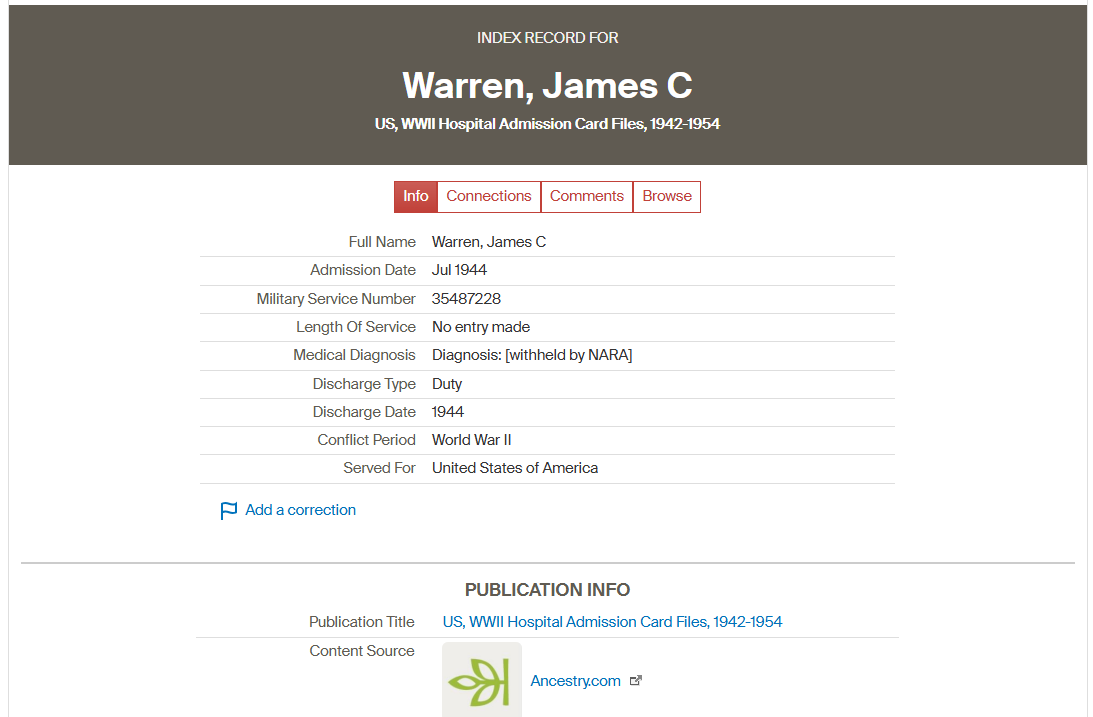
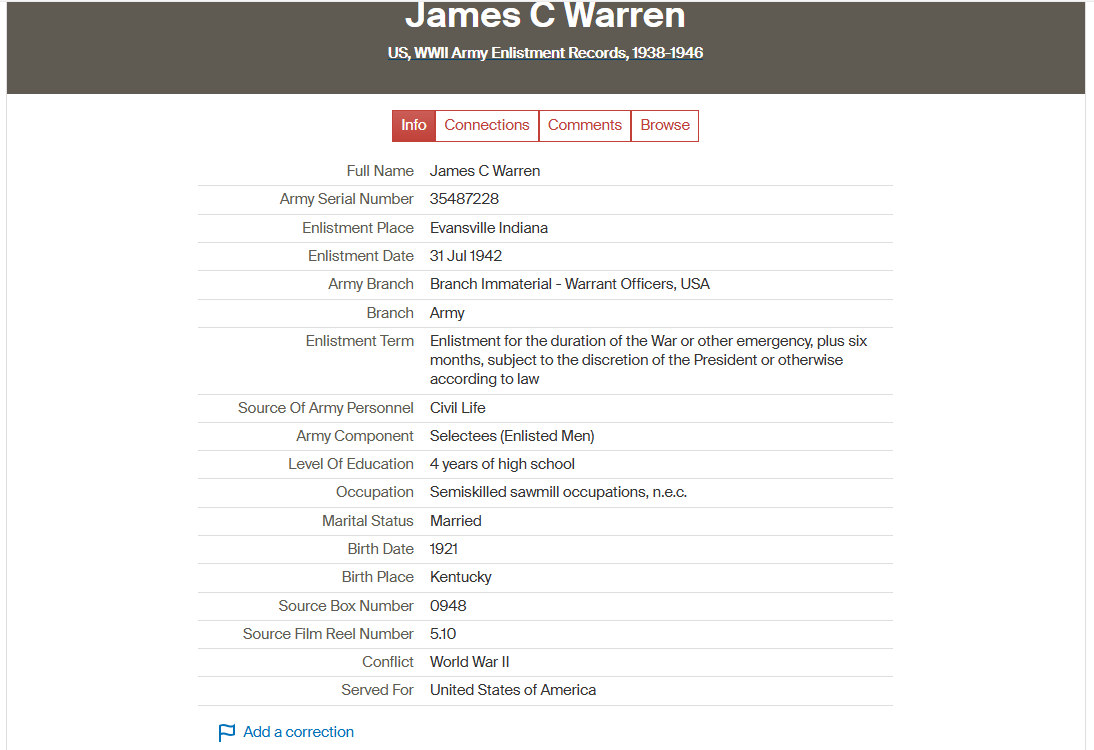
After only a few minutes of typing I found a hit to a James C. Warren with the Army Serial Number(ASN) of 35487228, and the only J C Warren who was from Kentucky that was admitted to a US hospital in July of 1944.

WWII Hospital Admission Card for James Warren

And when looking up his ASN…

WWII Draft Registration Information

With confirmation like this, I decided to dig deeper into PFC Warren’s life story in hopes of pulling out a few more details about his life story. Luckily, Ancestry.com and Fold3.com provide prompts based on confirmed information when researching so I was quickly on my way down the rabbit hole.

Veteran Headstone Application Form

It’s always a bittersweet discovery when I come across one of these documents, which tend to surface most often for veterans who passed away between the 1950s and 1980s. This particular record (which I’ll share below) shows that PFC Warren served with the 816th Ordnance Base Depot Company, a unit stationed in southern England at the time of his hospital admission. Interestingly, there is no mention of a Purple Heart on the form. That leaves me to wonder whether his injury did not meet the criteria for the medal, or whether it simply wasn’t recorded on his discharge papers after the war. Perhaps his family would know the answer.

Veteran Headstone Application

Luckily, the document provides just enough detail to shed light on who James Carmen Warren sadly left behind when he passed away in 1968. Born on April 8, 1921, he died on August 8, 1968, at the age of 47. He was survived by his wife, Mary Emma Green Warren, along with their two sons, Ivan and James C. Warren Jr.

More to come!

WWI RPPC Photo – Amputee Soldier Poses w/ Friends in Paris Hospital


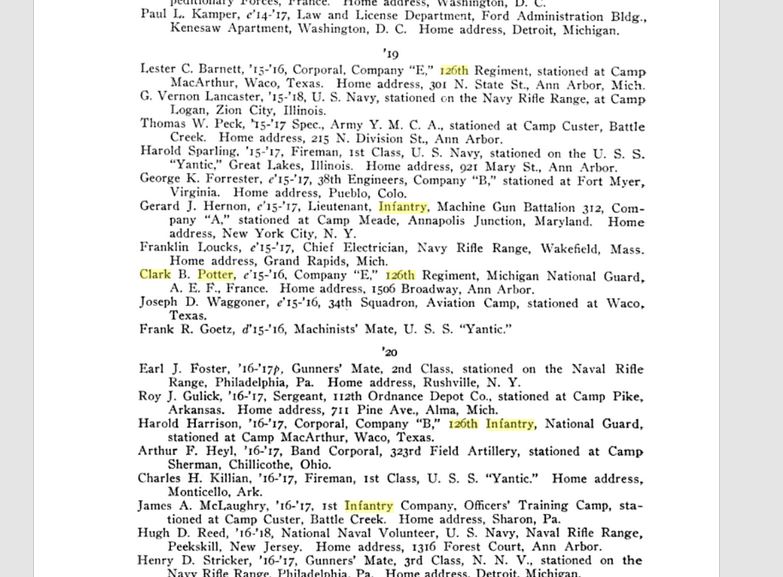
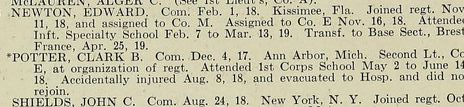
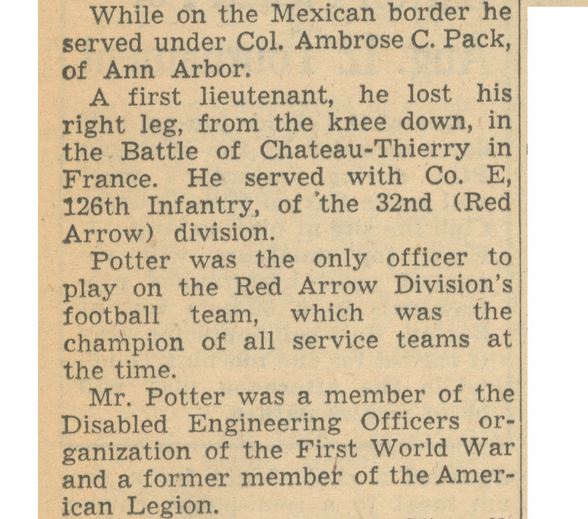
Clark B. Potter (at left) was born on October 3rd, 1891 in Kimball, Brule County, South Dakota; eventually landing in Ann Arbor, Michigan, Clark went on to serve as an officer with Company E, 126th Infantry Regiment of the 32nd Division during WWI. He was wounded by friendly fire in August of 1918 during the Battle of Fismes (Second Battle of the Marne) where he was sent to a hospital for the remainder of the war. This incredible photo of Clark posing in a Paris photo studio on Christmas Day, 1918 includes two other wounded soldiers of different regiments.  Clark lost his leg in the battle and can be seen posing with his amputation in full display.

WoundedMarine201

Clark and Friends in December of 1918

004673199_01796(1)

Clark Potter’s WWII Draft Registration

CollegePage

University of Michigan Class of 1919 Entry

Ecompany

Clark’s WWI Company posed after the war (he was still in the hospital)

potterroster

Clark’s 126th Infantry Regiment Roster Entry

clarkasakid

Clark as a Child (from ancestry.com)


8th Vermont Infantry Regiment Civil War Soldier – Henry N. Derby Dies of Disease in Louisiana


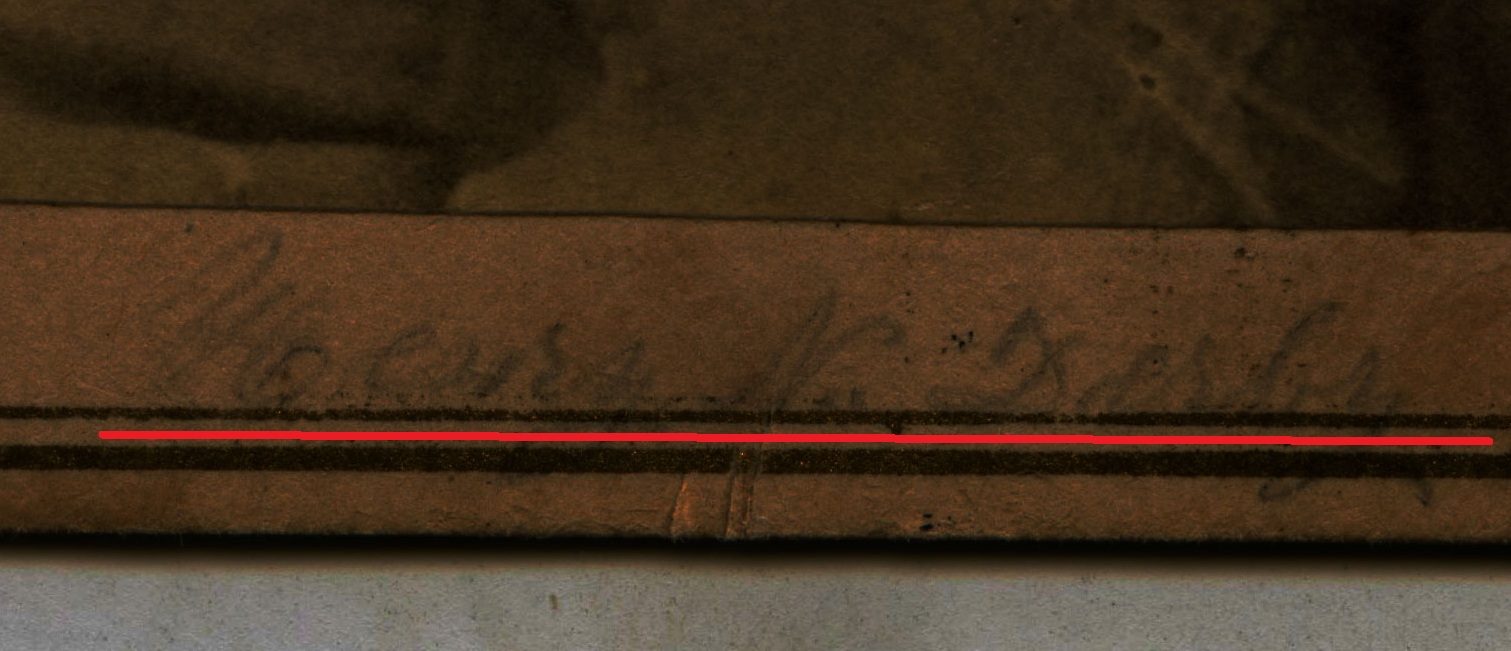
Henry N. Derby was born in Wardsboro, VT on April 15th, 1846, later moved to Townshend where he enlisted for Federal service on December 8th, 1863 and mustered in on December 29th.  He signed up for a three year enlistment with Company C of the 8th Vermont Infantry Regiment and traveled from Vermont to Louisiana, where he quickly became ill.  He died on March 31st, 1864 presumably of disease; one of 241 from the regiment that died of such causes.

This photo just arrived in the mail from an eBay auction where the name of the soldier was not revealed.  Luckily, I was able to tweak the lighting/contrast with photoshop to discover the name of the soldier before I bid.  CSI: Civil War style!

Henry N. Derby
Brennan C. Gauthier Collection

Brattleboro Backmark

Henry N. Derby Grave in Chalmette National Cemetery, LA
Source: http://vermontcivilwar.org/cem/virtual/getnatcem.php?input=13809
Photographer: Dan Taylor

Here’s a great link to a Vermont Historical Society collection from a Vermont soldier who also served with the 8th VT and also died in Louisiana.

http://www.vermonthistory.org/index.php/george-e-parker-letters.html

Incredible WWI Photo Grouping – 90th Division in Verdun, France – Field Graves, Trenches and Destruction


Bantheville Center of Town

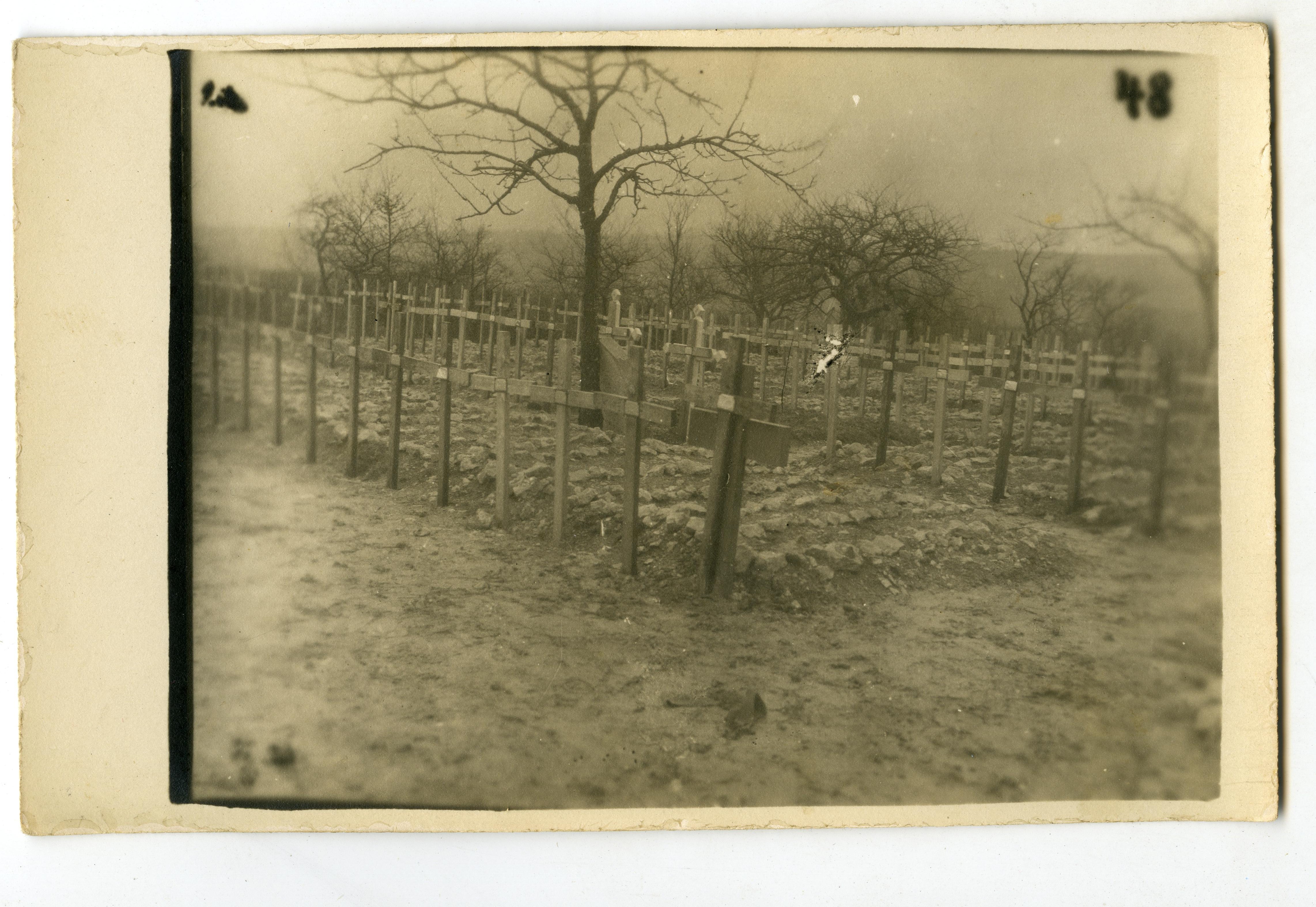
Nantillois Cemetery 32nd Division

Grave of 27 Officers and Men of Co. A – Captain Debario, 1st Lt. Cole, 1st Sgt. Lindsey

Dugout Near Anceville

Baby Carriage Found in German Front Line Trenches

German Front Line Trenches Occupied as 2nd Btn. P.C.

Trench Near 2nd Battalion P.C.

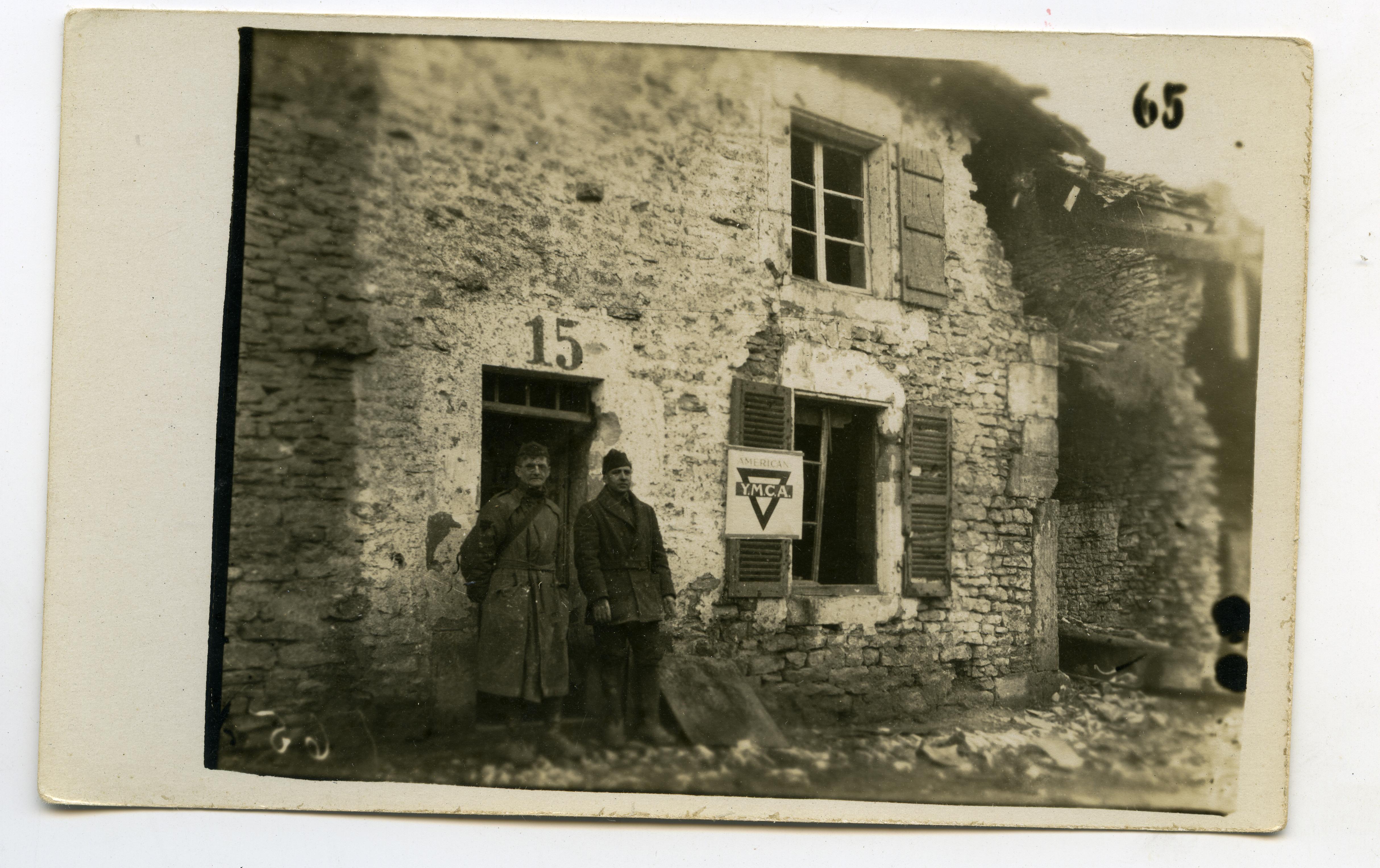
Villers-Devant YMCA

Villers-Devant Division German Munitions

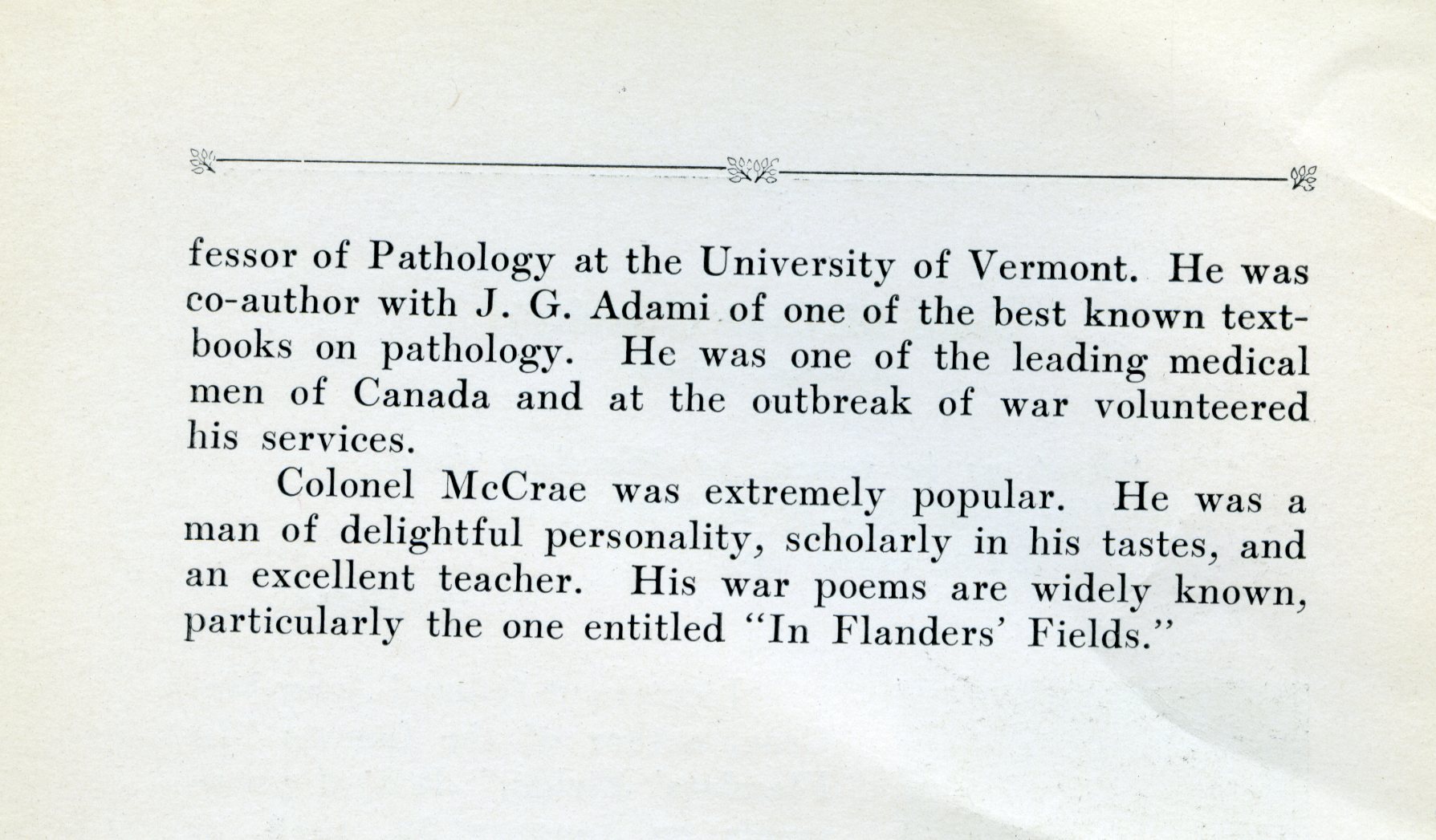
Memorial Day 2012 Post – John McCrae: WWI University of Vermont Professor and Author of “In Flanders Fields”


What better way to remember Memorial Day than to post the most famous war poem of all time?  This poem was written by Lt. John McCrae, a surgeon with a Canadian field artillery unit during the Second Battle of Ypres on May 3rd, 1915.  The poem became an almost instant hit with the troops and with the homefront community “across the pond”.

What makes McCrae so special to me?  He taught at my alma mater, the University of Vermont, between 1903 and 1911 where he taught Pathology in Williams Hall.  I spent four years studying anthropology and archaeology in the hallowed halls of Williams, making my connection to McCrae even stronger.

This post is dedicated to all those who never returned home from the killing fields of France, Belgium, and Germany during WWI.

 In Flanders Fields

In Flanders fields the poppies blow
Between the crosses, row on row,
That mark our place; and in the sky
The larks, still bravely singing, fly
Scarce heard amid the guns below.

We are the Dead. Short days ago
We lived,  felt dawn, saw sunset glow,
Loved and were loved, and now we lie,
In Flanders fields.

Take up our quarrel with the foe:
To you from failing hands we throw

The torch; be yours to hold it high.
If ye break faith with us who die
We shall not sleep, though poppies grow
In Flanders fields.

McCrae entry from The University of Vermont in the Great War

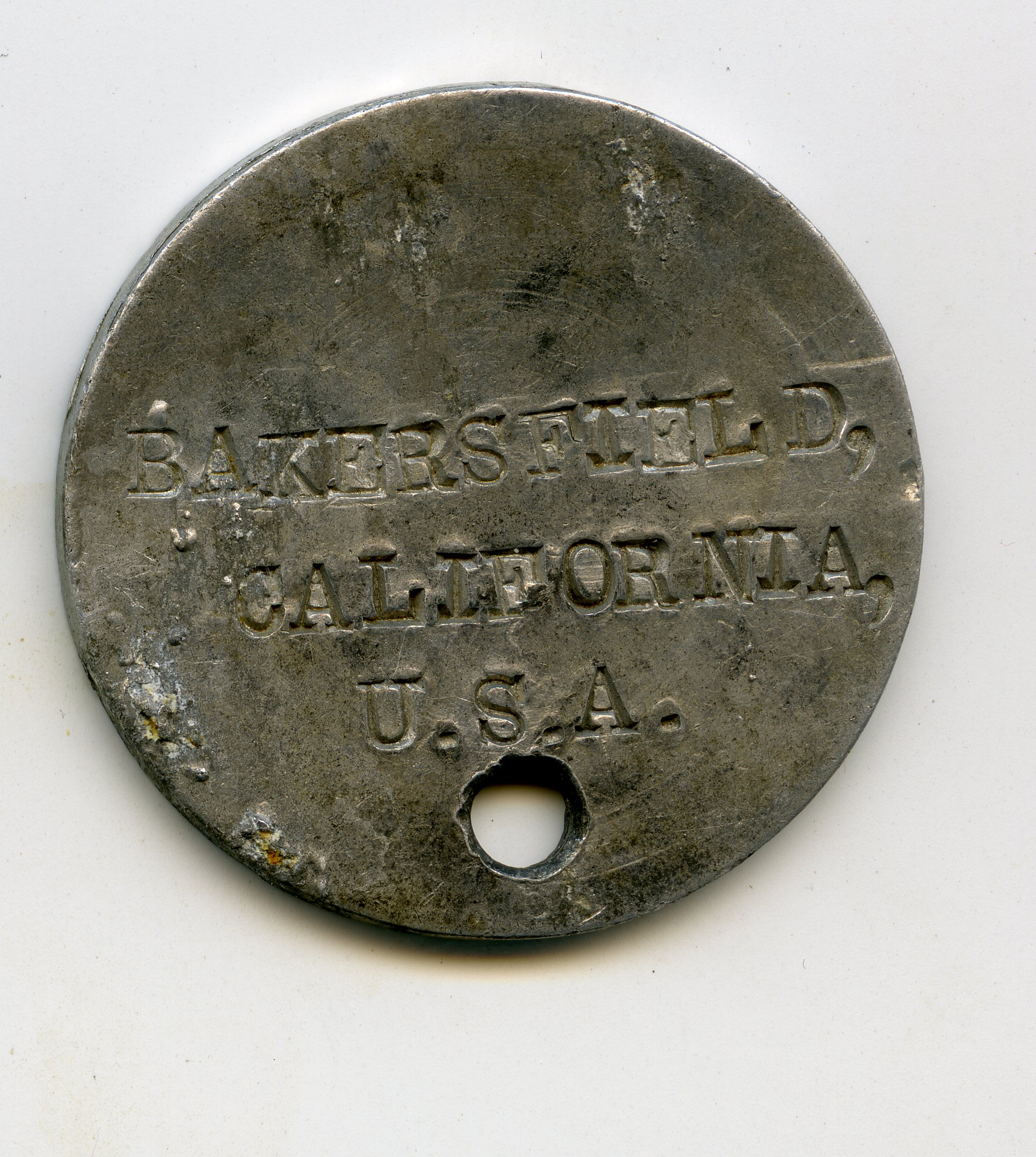
WWI Dogtag Collection – 1st Lt. Liva McLain – Evacuation Hospital No.7 in France


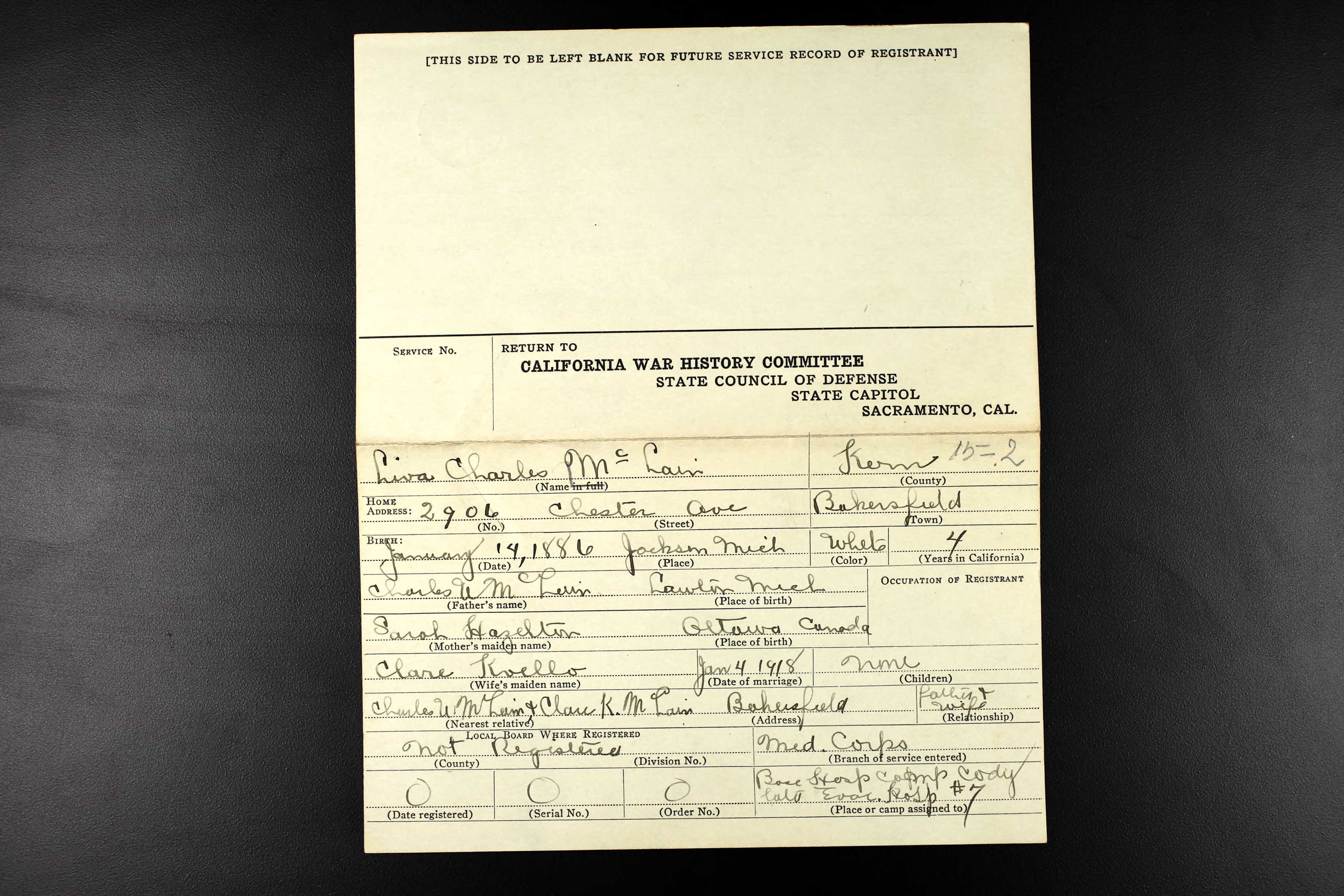
I recently picked a nice WWI dogtag from a medical officer named Liva C. McLain, and found that he likely served as a surgeon with the 7th Evacuation Hospital at Chateau Montanglaust in France, a hospital especially equipped to deal with those wounded with mustard gas.

He is mentioned on page six of the following medical corps pamphlet,

http://jama.ama-assn.org/content/LXIX/25/2121.full.pdf

It looks like Liva served with the hospital during some key battles during the war.  His hospital served the wounded at both Chateau Thierry and Belleau Woods.  Here’s a good JSTOR article about the unit’s participation at Belleau Woods:

http://www.jstor.org/stable/3405593?seq=2&Search=yes&searchText=7&searchText=no.&list=hide&searchUri=%2Faction%2FdoBasicSearch%3Ffilter%3Diid%253A10.2307%252Fi278008%26Query%3Dno.%2B7%26Search.x%3D0%26Search.y%3D0%26wc%3Don&prevSearch=&item=1&ttl=1&returnArticleService=showFullText&resultsServiceName=null

Here is a link to a soldier in the 103rd Infantry Regiment of the 26th Division who spent some time recuperating at the 7th Hospital:

http://worldwar1letters.wordpress.com/2009/08/13/evacuation-hospital-no-7-at-chateau-montanglaust-8131918/

The 7th Evacuation Hospital was organized on 26 November 1917, at Fort Riley, Kansas, as Evacuation Hospital Number 7. The organization participated in WW 1 in the following campaigns: Champagne-Marne, Aisne-Marne, St Mihiel, and Meuse-Argonne. It received a decoration streamer with colors of the French Croix de Guerre with Silver Star, embroidered St Mihiel-Msuse-Argonne. The organization was demobilized on 1 May 1919.


Updates – 12/12/2013

In an effort to reevaluate some of my WWI collection material, I decided to do a new ancestry search on Lt. McLain.  I came up with an interesting document to confirm the above information.  Nothing earth shattering, but it provides a bit of clarity to the presented information.


Lt. McLain's WWI California Veteran Registry Card

Lt. McLain’s WWI California Veteran Registry Card