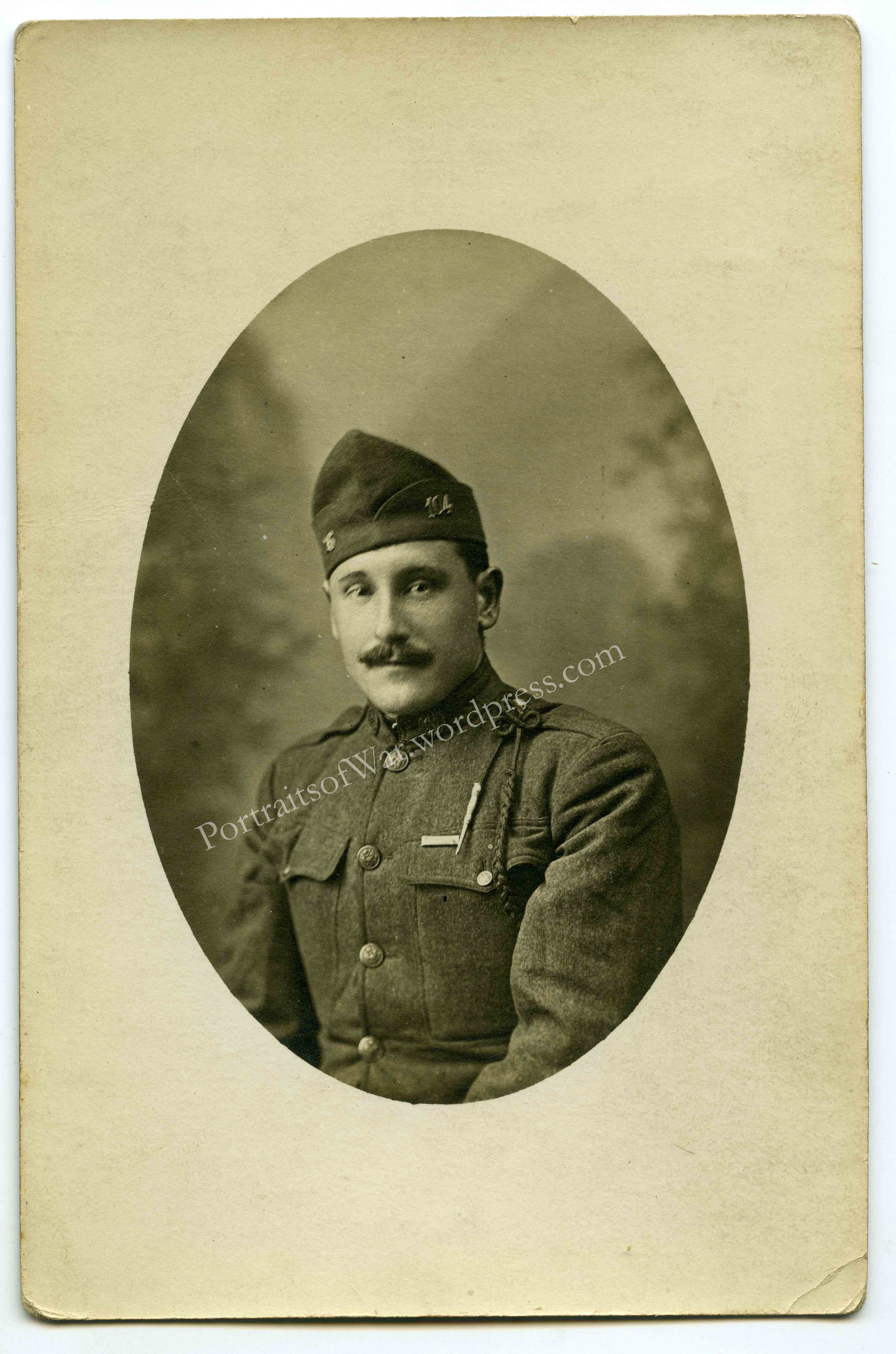
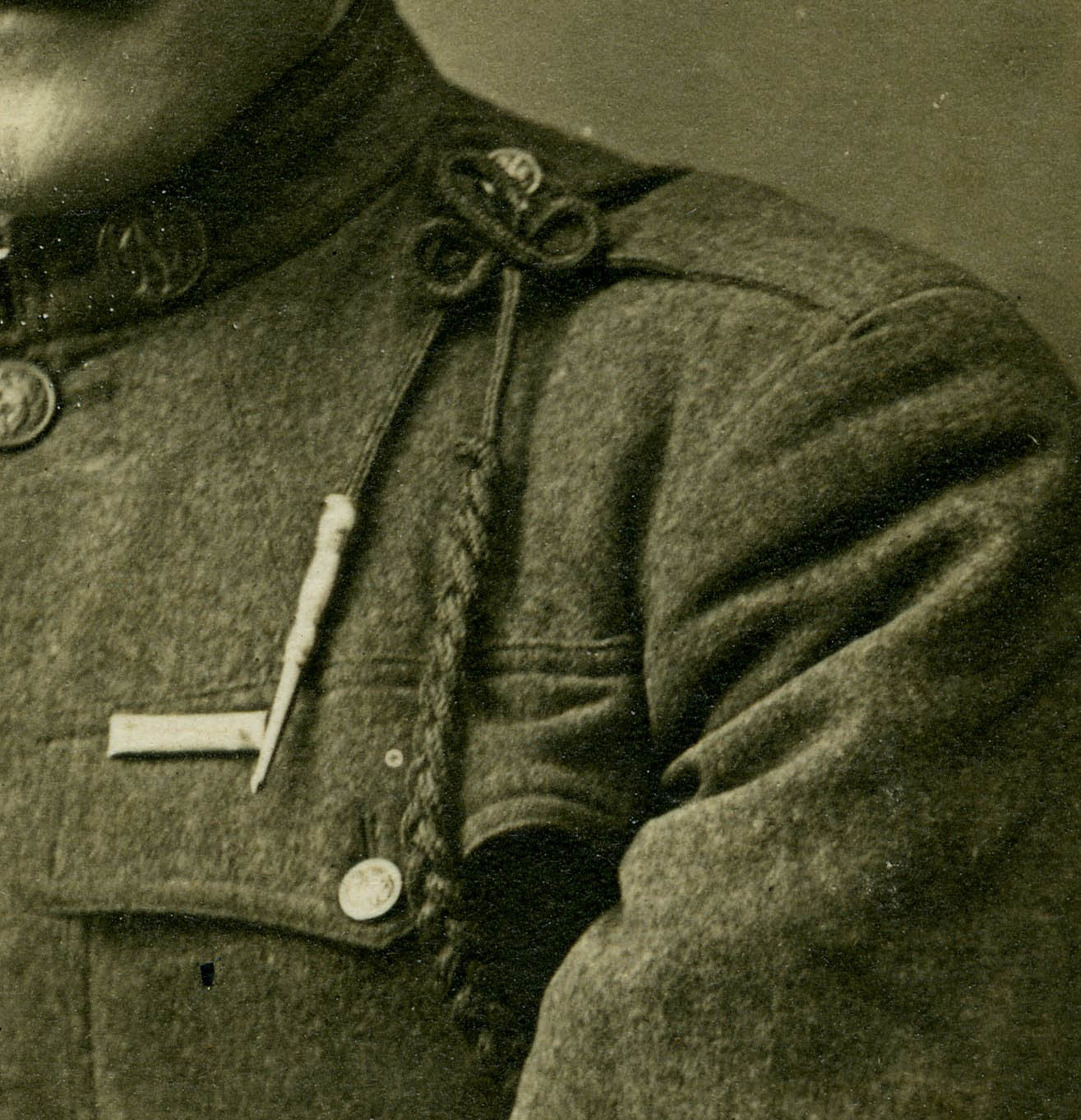
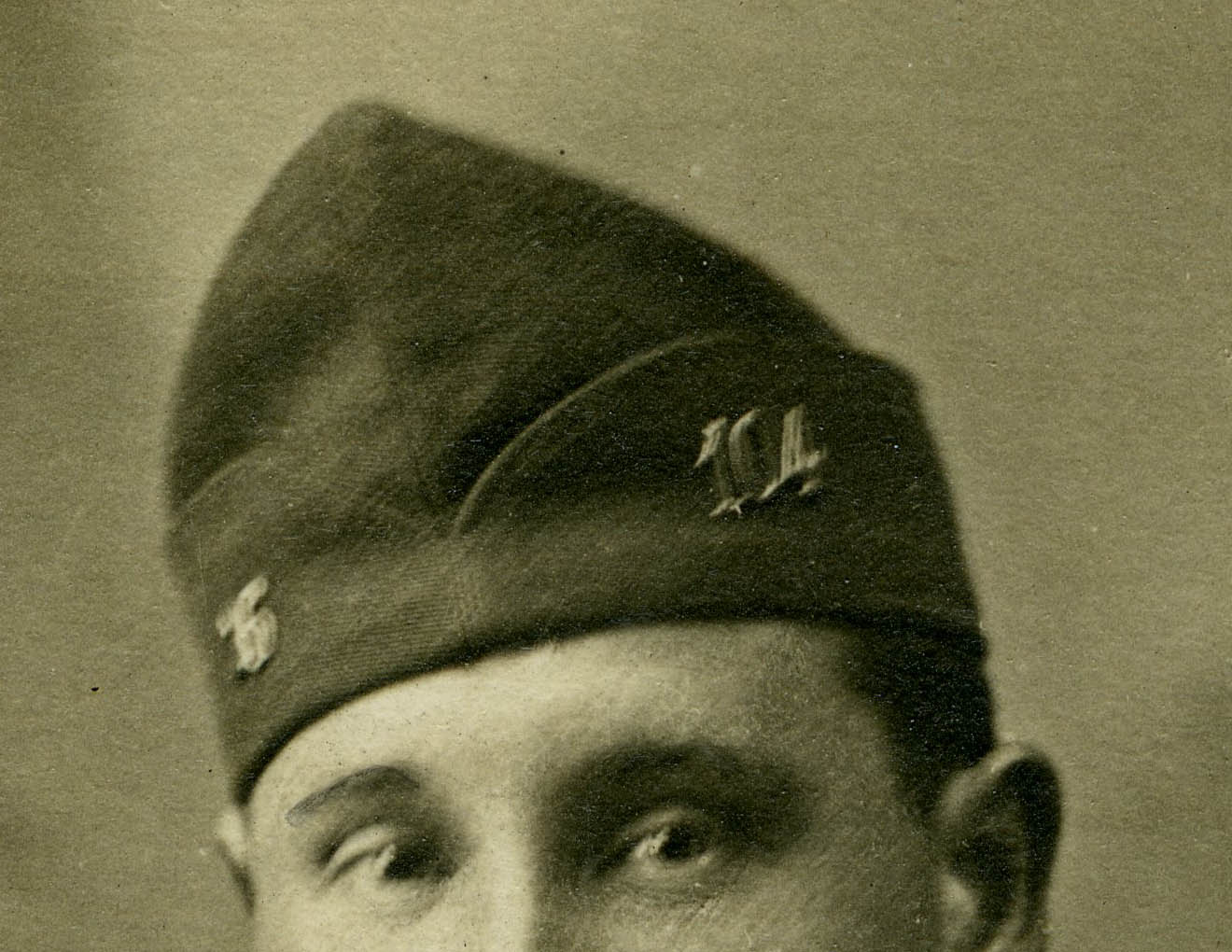
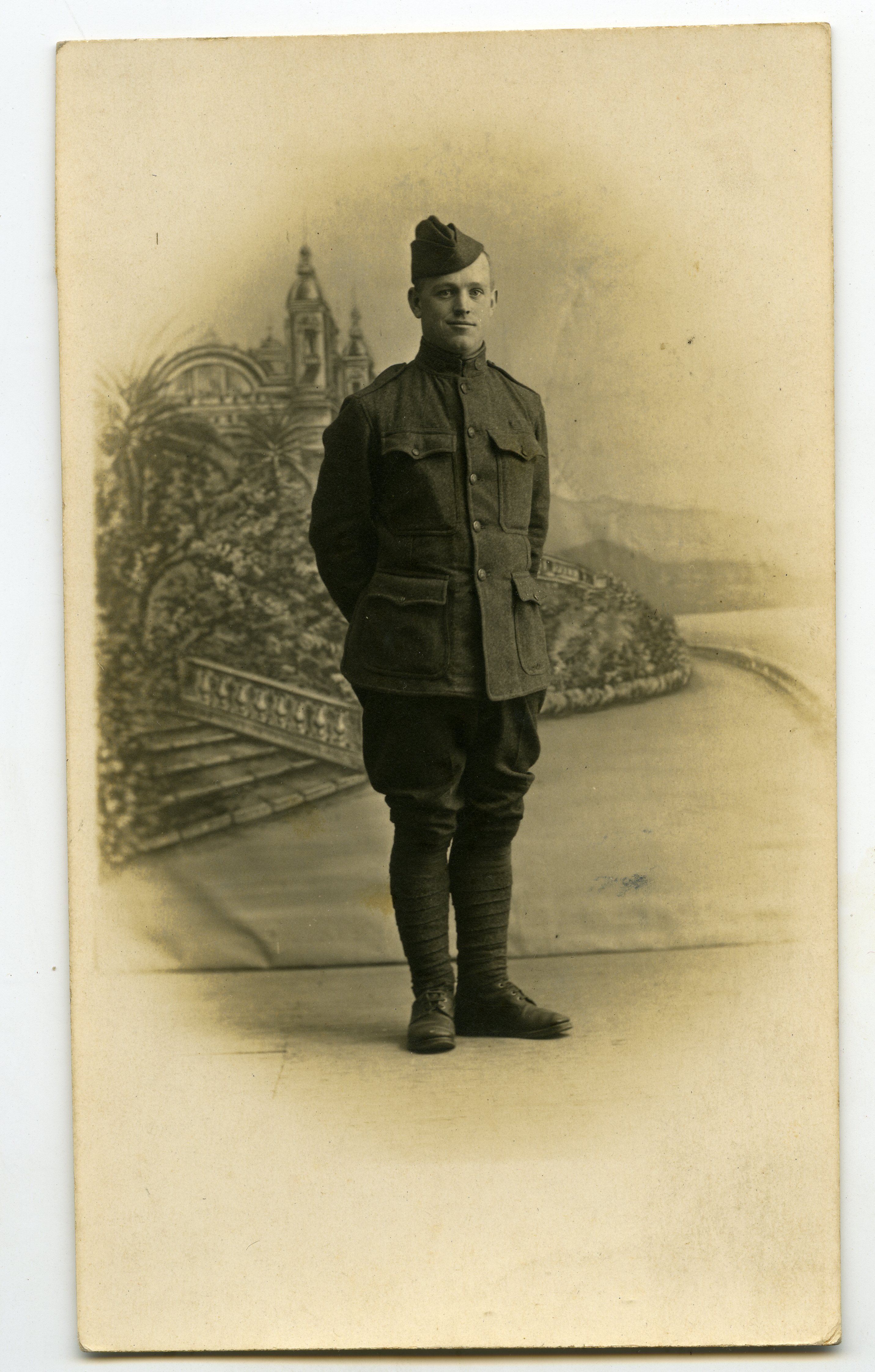
Yet another great Yankee Division photo for my collection; this shot shows a 104th Infantry Regiment soldier wearing his unit designation on his cap. He is also sporting the United States National Guard collar disc. What a great image! He is proudly wearing his French fourragère on his left shoulder. The 104th Infantry Regiment was one of a small handful of WWI US units to be awarded the fourragère for gallantry. Please read the article below for more info!


A Mystery…………..

A 1918 article in the Springfield, MA newspaper The Republican
Enemy Storm Troops Hurled Back By Impetuous Yankees Regiment Reveals Its Valor and Fighting Qualities in the Fierce Combats of Bois Brule.
By AMICO J. BARONE
Apremont!The name spells horror and glory for the 104th. In April 1918, the troops from Springfield, Massachusetts achieved a distinction never before won by American troops in the entire history of our armed forces. So valorously did they conduct themselves in the Bois Brule, a wood close to Apermont, that the French Government decorated the colors of the regiment with the Croix de Guerre. It was the first time such an honor had ever come to an American unit. In addition the regimental commander and 116 other officers and men had the bronze cross with its red and green ribbon pinned on their breasts. The regimental citation read: “For greatest fighting spirit and self-sacrifice during action of April10, 12 and 13, 1918. Suffering from heavy bombardments, and attack by very strong German Forces, the regiment succeeded in preventing their dangerous advance, and with greatest energy reconquered, at the point of bayonet, the few ruined trenches which had to be abandoned at the first onset, at the same tome making prisoners”. In a general order issued a few days after the Bois Brule engagements, the French general Passaga declared: “During this fight the American troops gave proof not only of their splendid courage, which we know, but also of a brotherhood in arms which was absolute and ever present. With such men as these the cause of liberty is sure to triumph.”
Continued below: The First American Croix de Guerre to be awarded to an entire regiment. This Medal was also given to Captain George Roberts, and the bronze frame was specially cast with the infantry tools of the day around the frame. The frame mold was broke and never reproduced to be one of a kind. The picture is Colonel George A. Roberts, Commander of the 104th Infantry Westfield Massachusetts.
Continued: Bois Brule was in La Reine sector on the southeasterly face of the St. Mihiel salient, a rough and ragged terrain where virtually all the tactical advantage lay with the enemy. In 1914 the sector had seen violent fighting, but as the war of attrition developed, it became moderately quiet with a sort of tacit understanding between the opposing forces to permit the situation to remain unchanged. The town of Apremont, whose name will be forever linked up with the 104th Regiment, lay outside the Allied lines. In the distance, grim and desolate Mont Sec loomed up as a splendid vantage point from which the enemy could observe the American positions. Difficult Spot to Defend.
The 26th Division took over the sector the first of April, the left of the line being assigned to the 104th. On the immediate left of the Western Massachusetts outfit was the 10th Colonial French Division. The regiments sub sector in the Bois Brule formed an awkward, narrow salient, hard to defend. The trenches were in poor condition, there was inadequate protection against shelling, and the marshy land made trench drainage difficult. The third battalion of the 104th, under command of Capt. George A. Roberts of Springfield, MA., immediately went into the forward position. The battalion commander, noting the small salient extending out and realizing how simple it would be for the enemy to pinch in on it and make prisoners of the men holding the position, asked and received permission to straighten out the line. K Co., under the command of First Lieutenant George Hosmer of Springfield, MA., performed this operation successfully. For some unaccountable reason, the French had persisted in maintaining the small and unimportant salient and had often lost prisoners to the enemy who would come over and successfully pinch it out. During the first three of four days the outfit held the sector, it was subjected to a harassing enemy fire. On April 5 the shelling grew in intensity and for the following four days the area was severely pounded by the enemy artillery. Evidently, an action was impending and the Germans were bent on shaking the moral of the troops by the concentration of shells.
Early on the morning of the 10th, the enemy blasting became particularly severe. The huge projectiles from the German minenwerfers came thundering down on the positions held by the third Battalion, shattering trenches and subjecting the men to terrific punishment. Capt. Roberts sent back word that help was needed to evacuate the wounded and suggested that the bandsmen be used as stretcher bearers. The suggestion was acted upon and the valiant work these men did under fire won for several of their number decorations from the French and American Governments. .As the dawn crept over Bois Brule on April 10, the enemy troops made their appearance on the front held by the 3rd Battalion – a hillcrest. They came on relentlessly, but that assault wave of storm troops failed to dislodge the men of Western Massachusetts. It was a severe test of arms in which much technique of warfare was forgotten by the green Yanks who nevertheless battled vigorously and effectively to beat back the veteran enemy.
The artillery fire also was of great aid in stemming that first tide. Thus for the moment the 3rd Battalion had checked the attack on the night of the 11th despite heavy enemy shelling, the second Battalion came in to relieve the 3rd which had held the position for 10 days. On the 12th the enemy came over again with renewed energy. This time the French on the American’s left fell back, exposing the left flank of the Yanks. But the Americans rose to this emergency and by a vigorous counter-attack, driving back remnants of enemy groups.
Gives Credit To Men By the 13th the affair of Bois Brule was over and the 104th had conclusively demonstrated that it could withstand the attack of seasoned troops. The men had revealed courage and resourcefulness and the officers had shown real leadership under trying conditions. A day or two later Capt. Roberts was promoted to the rank of major for the splendid manner in which he had handled his battalion. An incident characteristic of his modesty occurred at that time. The divisional commander, Gen. Edwards drove up to battalion headquarters and seeing Capt. Roberts he called him over to congratulate him. Capt. Roberts said: “The credit belongs to the men of the battalion, General, not to me.” The General answered: “You would say that.” On April 28, the regiment was lined up at Bocq, not far from where it had demonstrated its mettle, and there Gen. Passaga decorated the colors of the outfit and scores of men and officers with the Croix de Guerre. His voice trembling with emotion, the French officer pinned the red and green ribbons to the 104th colors, saying: “I am proud to decorate the flag of a regiment which has shown such fortitude and courage.”
Capt. Roberts was among those decorated with the French cross. He was also recommended for the American Distinguished Serviced Cross. Later, in the Bouconville sector, he was slightly wounded and in July he was transferred to provost marshal duty in Lanon.











 Portraits of War

