WWI Ohio Soldier Research – Defiance, Ohio Soldiers Identified as Ward Family Veterans


A recent eBay purchase has been incredibly fun to research and has yielded some solid and fulfilling results.  I purchased a group photo of four US soldiers posing in an American studio immediately following the war.  How do we know they are in an American studio?  The veteran at center is wearing a WWI Discharge Chevron, also known as a Discharge Stripe or Honorable Discharge Stripe, which indicates that the soldier has been discharged from his service and can wear his uniform in public with the proviso that he affixes the chevron.  Apparently, it was possible to be arrested for wearing a service uniform without the stripe after three months following discharge.

Ward Brothers

Ward Brothers

A fellow WWI researcher (Brian – AKA WWINERD) posted the following information on a popular militaria web forum:

“Thus far, I’ve been unable to locate any specific General Orders either from the War Department or from the U.S. Army concerning the red discharge chevron, which I believe was adopted early in 1919. However, I do know that:

  • Each discharged soldier was issued with three discharge chevrons. Officers had to purchase their own.
  • Upon being discharged from service, the uniform could be worn for a maximum of three months without the red discharge chevron.
  • If the uniform was worn after the three month period had expired, the person wearing it could be charged with the offense of impersonating a soldier.
  • If the uniform was never worn again the discharge chevron did not have to be sewn on.
  • As soon as a soldier received his discharge papers he became a civilian, and he was no longer obligated to salute a superior officer.

These and other facts pertaining to the uniform and discharge chevron were explained in a post war pamphlet handed out to Doughboys before they mustered out of the Army. It partially read as follows:
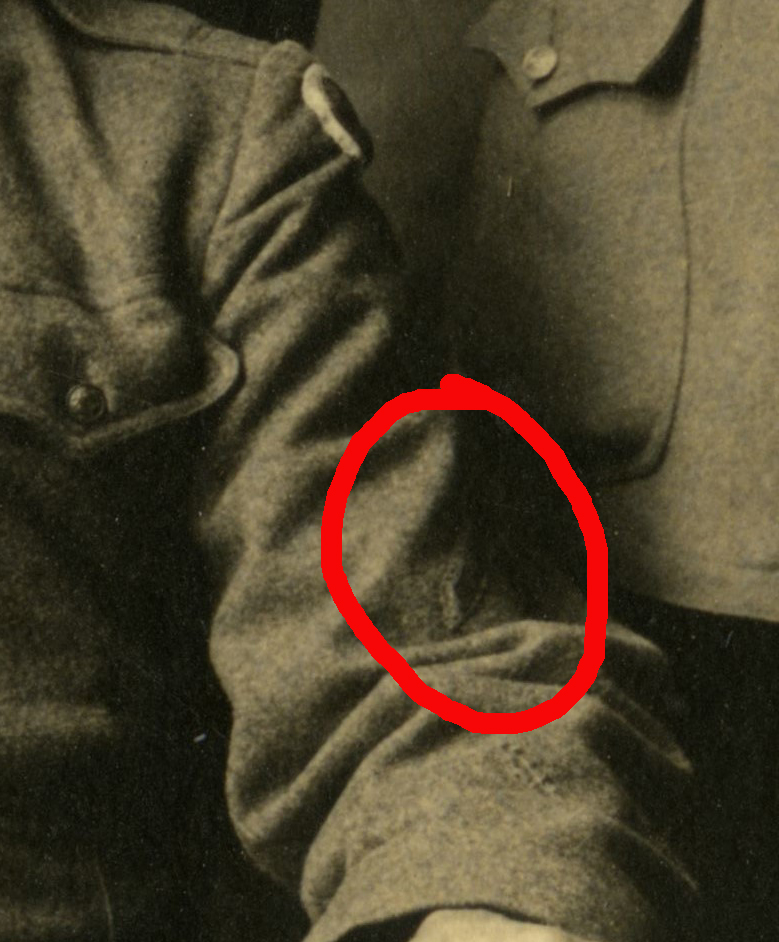
John Ward's Discharge Stripe

John Ward’s Discharge Stripe

The Uniform

If it is your desire to go home in uniform, it is your privilege to do so, under full grant of an act of Congress. You may wear your issue uniform as long as it hangs together if you wish. It is yours. But do not let a minute pass, after being discharged, until you have sewn on, or had sewn on a red chevron, point up, midway between the elbow and the shoulder on the left sleeve.

The wearing of any gold, silver, or metal device indicating service is forbidden. Only regulation service chevrons and collar insignia are authorized by law and regulations. Wound and service chevrons for service in any of the Allied Armies are included in that authorization. Can all camouflage.

Remember in wearing the uniform, that all of its privileges are yours, with none of the restraints. You are a civilian. There is no law or regulation or tradition requiring you to salute an officer. But so long as the O. D. or the Navy blue or the Marine green covers your body, it should be your pride as one with a military training, and as a soldier who participated in the Great War, to be courteous.”

Where Do We Go from Here: This is the Real Dope, 1919, William Brown Meloney, page 21, 22

Ok – so we know the photo was taken stateside at some point after the war, but recent enough to warrant a group shot of all four men in uniform.  The photo trifold mount had “Ward Boys” scribbed on it with no additional identifying information.  The seller was from Ohio, so I started with a basic search for Ohio veterans with the last name of Ward.  Big mistake……. There were nearly a hundred men with the last name of Ward who served in Ohio during the war.  Take a deep breath…..

I needed to narrow down the search and the image itself provides a very good way in which to identify one of the soldiers based on his patches.
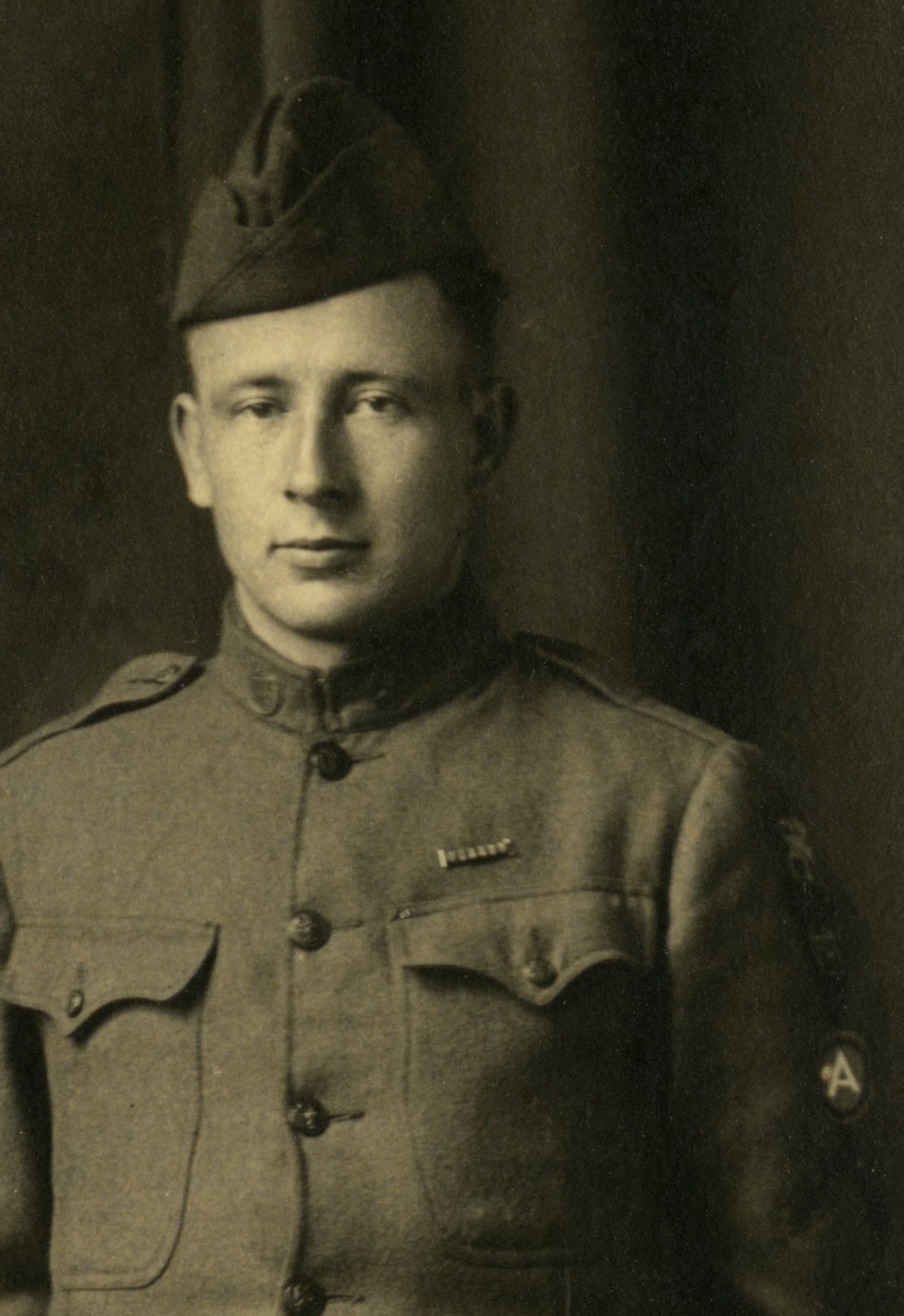
Clayton Ward

Clayton Ward

See those patches on his left sleeve? They’re from a very famous unit that served in Italy during the war.  In fact, this is an incredibly rare shot that depicts a soldier wearing regimental, divisional and army level patches along with the discharge chevron previously mentioned.  Ok – so we know one of the Ward Boys was in the 332nd Infantry Regiment.  Since the typical US regiment during the war varied between 1000-2000 (roughly), it’s highly unlikely that two men with the last name of Ward were likely to both be from Ohio.  Luckily, my research gamble paid off……

Clayton Ward, H Co. 332nd Infantry Regiment

Clayton Ward, H Co. 332nd Infantry Regiment

Bingo!  After interpreting the abbreviated information in the Ohio WWI book, I was able to determine that Clayton was born in Defiance, Ohio, was 24 years of age, and served with Company H of the 332nd Infantry Regiment.  With the place of birth info, I was able to identify all the additional men in the photo using clues present on each of their uniforms.

A quick search for the 1910 US census record for the Clayton Ward provided me with the names of his brothers:

1910 US Census

1910 US Census

With the census in hand, I was able to make out a few names of brothers who were of-age to serve during WWI.  Clint (short for Clinton) and Perry were easy enough to research.  The same Ohio reference book provided the following:

Clinton Perry

Clinton Ward

Perry Ward

Perry Ward

Based on the information provided in the reference book, Clinton Ward, age 26 1/12 at the time, enlisted with Company G of the 6th Infantry of the Ohio National Guard.  This unit was federalized and became Company G of the 147th Infantry Regiment.  He rose to the rank of Private First Class on May 15th, 1918.  Since I’ve memorized the rank insignia of the AEF, I was able to quick pick him out.

Clinton Ward

Clinton Ward

See the round patch on his right arm?  That’s the rank insignia worn by a Private 1st Class during WWI.  I’m including a generic view of the patch below:

Since he’s the only one wearing a Pvt. 1st Class patch in the photo, plus the addition of infantry regiment collar discs, he’s almost certainly Clinton.

Perry Ward

Perry Ward

Although it’s tough to make out in the scan, the soldier is clearly wearing a collar disc that depicts a set of crossed cannon.  This would indicate service in an artillery unit during the war.   Perry’s reference in the aforementioned Ohio WWI book shows that he served with the 52nd Coastal Artillery Company during WWI, which would be supplied with these exact collar discs.

WWI Artillery Collar Disc

WWI Artillery Collar Disc

At this point, I’ve been able to identify three of the four soldiers in the photo based on archival research, visual interpretation and identification of key pieces of military insignia, and a gut feeling.  The last soldier, shown sitting turned out to be a tough nut to crack.

John Ward

John Ward

Ok – so what do we see in the photo?

  • A seated male, appearing to be the oldest based on facial details
  • A 37th Division patch on the left sleeve
  • A discharge chevron and overseas service chevron
  • Corporal rank insignia on the right sleeve
  • Infantry collar disc

In essence, we have an older-looking corporal from the 37th division who served for at least six months (the service chevron) overseas in an infantry regiment.  A detailed search of the Ward’s who served from Ohio in WWI yielded the only possible candidate:

John Ward War Record

John Ward War Record

John Alvin Ward was a brother who separated from the family early in life (no idea why) and eventually rose to the rank of corporal in WWI as part of the 147th Infantry Regiment.  It was tough to parse out the details regarding his upbringing, but the following Social Security information confirms that he was indeed from the Ward family of Defiance, Ohio.

Social Security Records

Social Security Records

At first I was confused about the portion mentioning his father being identified as a William H. Ward, but upon further genealogical research it became clear that his father commonly switched his first and middle names; this is a common practice that becomes terribly difficult for researchers.

So, we have the older brother who left the family and posed with his brothers after returning home from war in 1919.  Sadly, the photograph was discarded at some point and made it’s way into the eBay chain; eventually ending up on the desk of an intrepid WWI researcher (Me!) who was able to bring some context to the photo using easily-accessible internet resources.  I hope I’ve inspired some readers to delve into their own collections of photos in hopes of giving a name to the faces sitting in photo binders and dusty drawers.

Interested in researching Ohio World War One veterans?  Check out the following book:

The Official Roster of Ohio Soldiers, Sailors, and Marines in the World War, 1917-18. Columbus, OH, USA: The F.J. Heer Printing Co., 1926.

Visualizing Shell Shock in World War One: Footage from the British War Archives


WWI has the dubious distinction of being the first modern war to be fought with the mass of industrial mechanization and production in close support.  To a lesser extent, this distinction is also often shared with the American Civil War.  The mental distress of the soldiers involved in this global war are well known to most schoolchildren enrolled in Social Studies or History classes.  The psychiatric distresses imparted upon these men during the massive artillery bombardments of 1914-1918 are best exemplified in the following video made available by the British War Archives.
Select section 3 in the left hand drop down menu.  Or watch the whole series!

Dogs of War: A Saint Bernard Mascot – 67th Coastal Artillery Company Veteran “Barney”


It’s been a long time since I’ve posted here to PortraitsofWar, so I’m taking a quick moment to add a recently acquired real photo postcard of a St. Bernard mascot from the 67th Coastal Artillery Company. He’s even sporting his own uniform!  Check out the 1st Army variant patch with the 67 denoting the unit number and a double overseas chevron for a year of service.  Good work Barney!

Mascot photos are one of my favorite avenues of WWI photo collecting. They are relatively hard to come by and are tough to research.  All the better for a unique challenge when trolling through the pages of eBay.


Barney the St. Bernard in WWI

Barney the St. Bernard in WWI

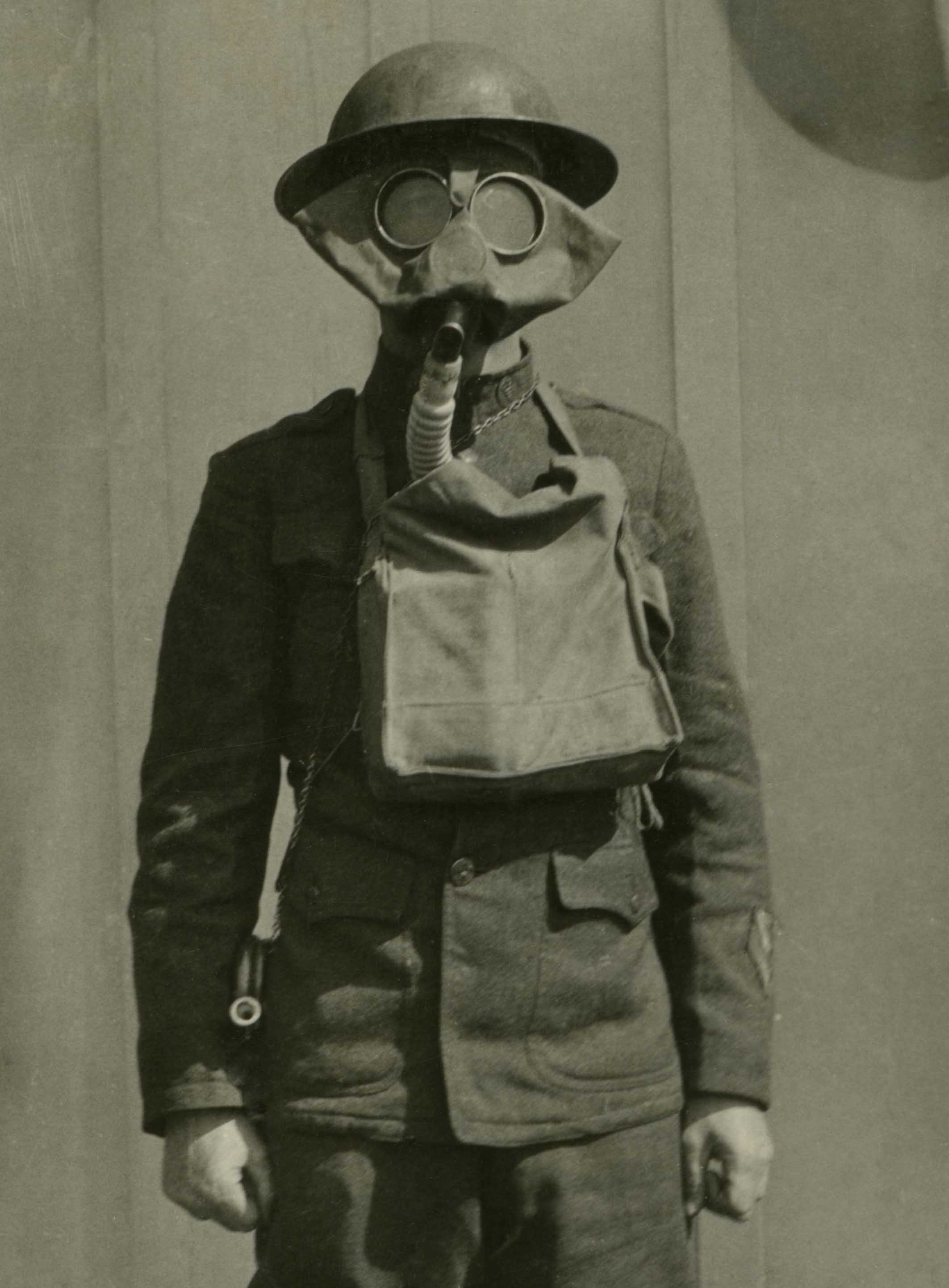
WWI Photo Post – Lincoln Leslie Loper w/ Gas Mask Returns Home From France January 1919


Lincoln Leslie Loper served in France with a military medical unit during the last year of WWI.  Born and raised in Iowa, Loper  eventually worked his way to Washington, living in Seattle as early as 1942.  It’s tough to trace an individual based on scant information, but I’ve been able to deduce that he passed away in 1972 based on his military records.

Lincoln L. Loper in a Gas Mask, 1919

Lincoln L. Loper in a Gas Mask, 1919

LIncoln Loper Postcard Backside

Lincoln Loper Postcard Backside

The Mystery of the German POW of WWI: A Photographic Study


It’s been a long month for us here at PortraitsofWar, and we apologize for a lack of posting since the last photo on April 3rd.  In today’s post we will be looking at a different side of the war than normally highlighted on this blog.  Normally focused on American portraits, photos, and slides, we will be dissecting the story behind a German prisoner of war being held in Marseilles, France in 1918.

Unteroffizier Grießbach as a POW in France

Unteroffizier Grießbach as a POW in France

Before delving into the biographical information hand inscribed on the reverse side of the image, we will inspect and identify the visual imagery captured on the obverse.  The first thing of note is the format of the image.  The photo was printed as a real photo postcard (RPPC) and was likely obtained in a pack of 6 or 12.  It’s not uncommon to see identical copies of WWI RPPC’s pop up on the market from time to time.  The consistent size, quality and subject matter of these images make them a highly collectable form of WWI militaria.

The three major identifying features present on the front of the RPPC will need some research using easily-accessible internet resources.

  • Buttons
  • Collar Insignia
  • Cap/Headgear

Buttons

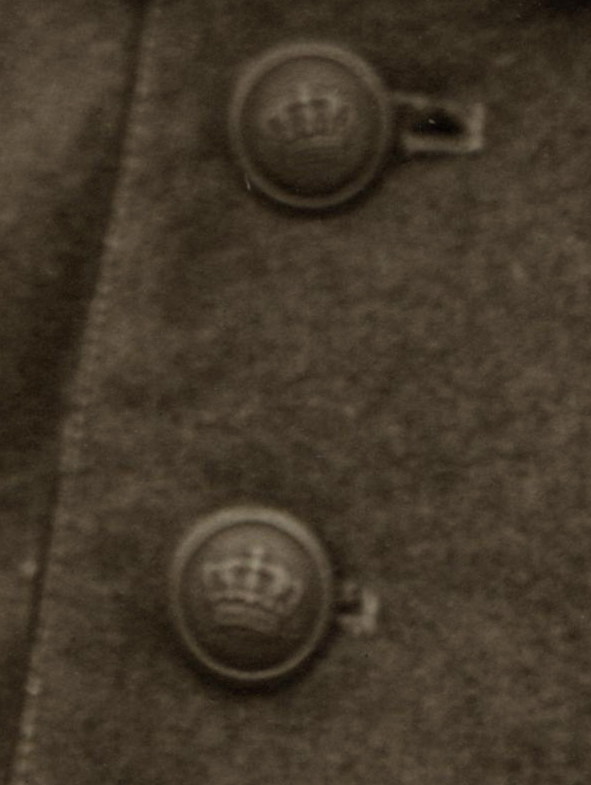
Upon quick glance it’s clear to see that the buttons running down the center are a rimmed (see the raised edge along the outside of the button) with a crown in the center.   This type of button is widely known as the standard button of a WWI German soldier and were made to be removable to allow for the cleaning of the uniform. This was a common standard of many nations during WWI.

Rimmed Crown Button

Rimmed Crown Button

Collar Insignia

The next identifiable feature of the tunic is the visible decoration of the collar. Here at PortraitsofWar, we’re use to identifying WWI doughboy collar insignia, but had to rely upon outside sources to help with this particular post.  The first thing to call attention to the neck region is the disc on the left side of the sitter’s uniform.

Collar Details

Collar Details

The disc on the left hand side of the photo is known as an Non Commissioned Officer collar disc (sometimes as disk) and can infrequently be seen in period studio photographs.  A lengthy internet-based search only turned up a small handful of images, the best of which can be seen below.

NCO Discs

NCO Discs

dscn1209r

NCO Discs

Headgear/Cap

The third and final identifying feature of the obverse side of the photo is the headgear worn by the sitter.  It appear to be an easily bendable version of the Prussian feldmutz field cap.  This style of cap was popular with NCO’s and were easily folded or packed for transport.  WWII versions were popularly known as “crushers.”

Prussian Feldmutze

Prussian Feldmutze

Cap Cockades (Kokarden)

The circular insignia seen on the cap above are known as cockades, or kokarden in German.  Sadly, the photo we’re working with is in black and white, but typically each cockade color helps identify the unit type, region and era of creation.

Visual Observations

So what do we know just by viewing the front of the image?  We certainly know the soldier is an NCO in the German Army during WWI.  He’s sporting all the fittings associated with a non commissioned officer of the period, but doesn’t have all the extra tidbits normally associated with a WWI period phograph. Where are his ribbons, medals and weaponry?

Hand Written Reverse Side

In the world of identifying WWI photos, the really important research material is always included on the backside (reverse) of the image.  In this case, the German soldier oddly wrote in French to an unmarried friend or relative of his who was living in Dresden during the time. It’s very likely that he was writing to a girlfriend or close female friend, as the wording is very proper.  Please see below for a low resolution scan of the backside.

Photo Backside

Photo Backside

What does the backside tell us? 

Firstly, it’s clearly a real photo postcard created to be sent to recipients.  The CARTE POSTALE header is a clear indicator of it’s origin: France.  The sender of the postcard notes Marseille as his current location, and Dresden, Germany is the destination.  How do we interpret a real photo postcard without knowing anything else about the people included?  Isn’t it strange that the postcard doesn’t include a message?  This infers a close connection between the writer and recipient.  Perhaps she already knows about his wartime status.

Writer Section

This section is typically reserved for messages but, in this case, relays the status of the photographed soldier’s military situation.   His handwriting is careful and is strangely written in French without the normal stylistic handwriting nuances of Germanic writing of the period, it becomes easy to make out the passage.

“Uzfdir. Griessbach

pris. de guerre

6283, depit de Marseille,

detacbhment coulou

(Ceceille) france”

The surname of the sitter is uncertain at this point.  Is is Greissbach, Greissback, Greissbarf or possibly Greiss back?  The prefix Uxfdir. is short for Unteroffizier and can be easily related to a rank between corporal and sergeant most worldwide military rankings. It’s odd that an Unteroffizier would wear an NCO collar disc, but that is an issue best left to the armchair historians who browse this blog.

Who was it sent to?

“Frau Gerfrun Griecfsbahn

Dresden-U

Weinbergstraße 1/73 I”

Was this woman living in Dresden at the time?  Does Weinbergstraße 1/73 I correspond with an apartment number in the city?

If so, this is the location of the house the postcard was meant to be delivered to:

Weinbergstraße 73, Dresden

Weinbergstraße 73, Dresden

And is this the house that the card was meant to be sent?  I recognize the Audi in the carport! I used to have the same model.

Weinbergstraße 73

Weinbergstraße 73

I need the help of German speaking friends to help decipher the last names of the sitter and the recipient. Hopefully we can narrow down the search using the power of the internet.  If you have a clue that may help, please don’t hesitate to comment on this post!

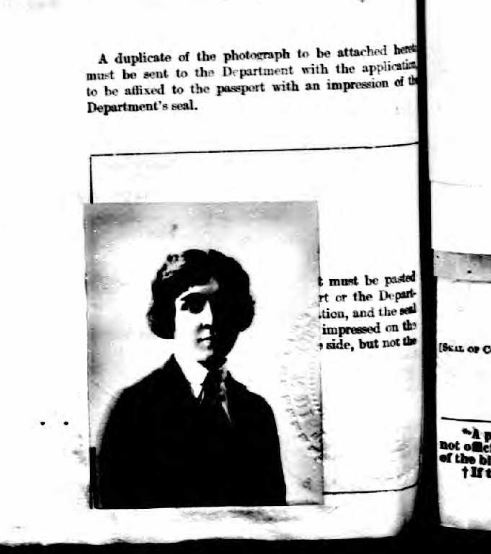
Women of the YMCA in WWI: Kittie Kunz’s Service in YMCA Hut 16


Material related to wartime (and postwar) activities of the YMCA can be easily researched through the help of internet databases, digitized books, collectors forums and various other digital avenues.  What is lacking, however, is information directly related to the individuals who volunteered their time and money to travel to a foreign county to serve donuts to war-weary doughboys waiting to return to their families in the US.

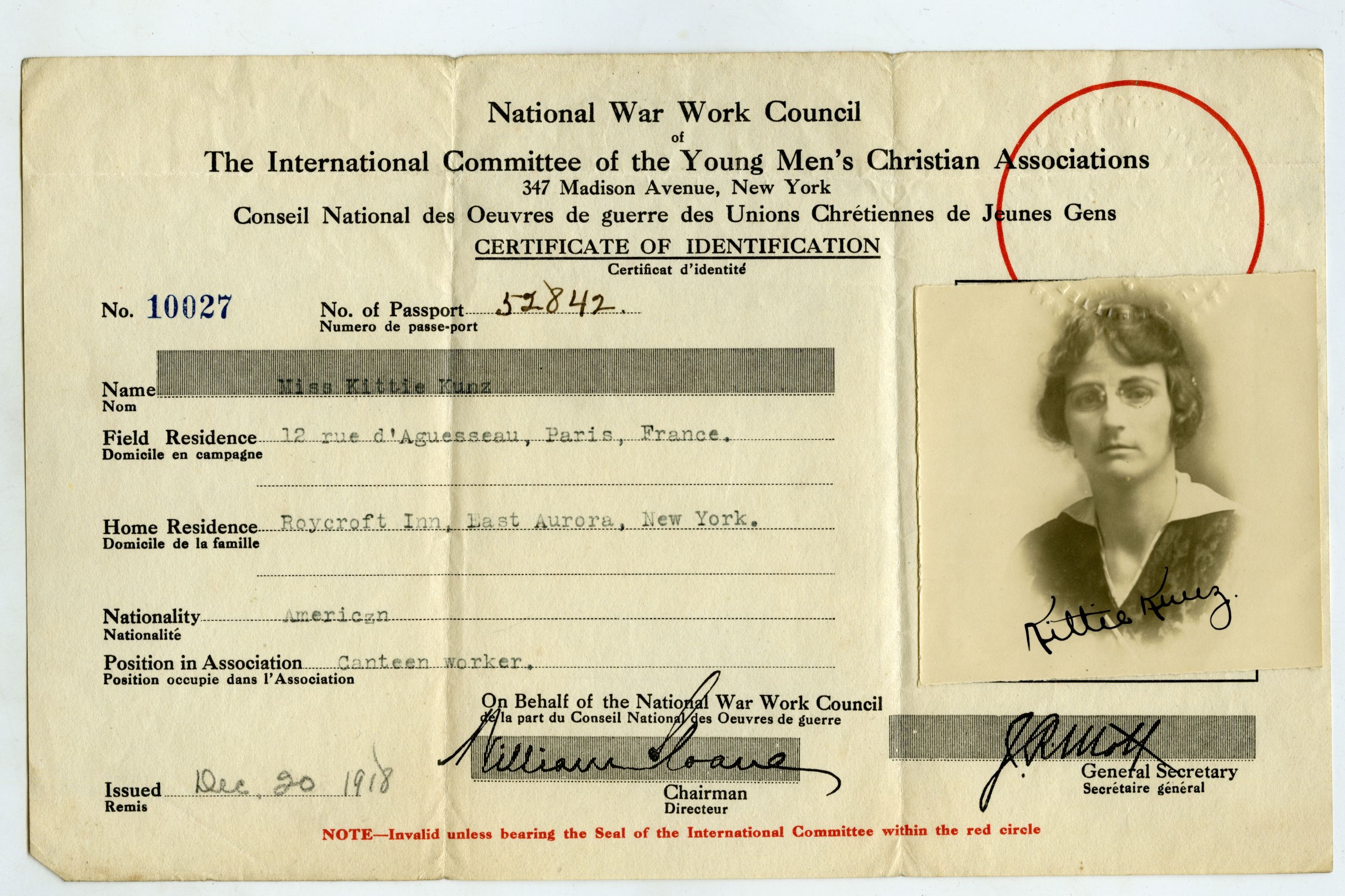
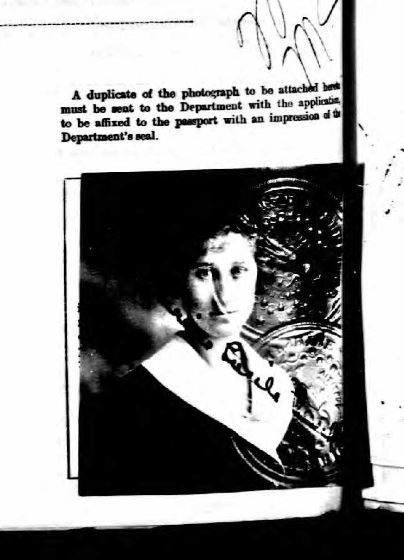
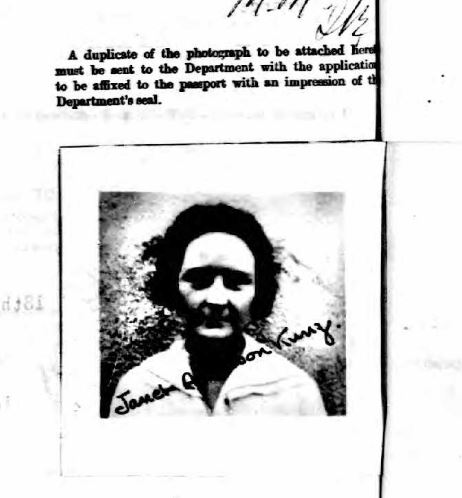
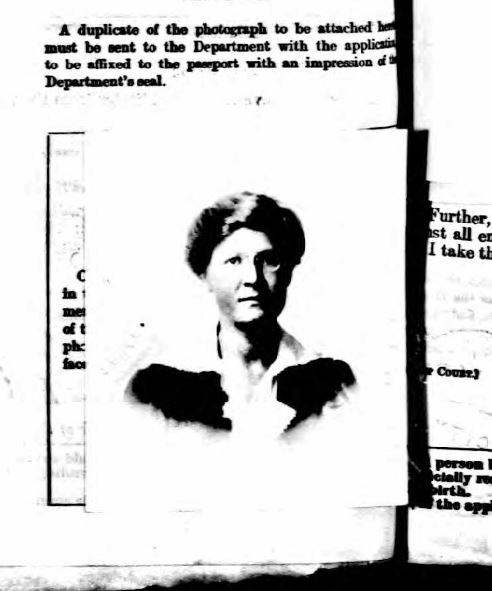
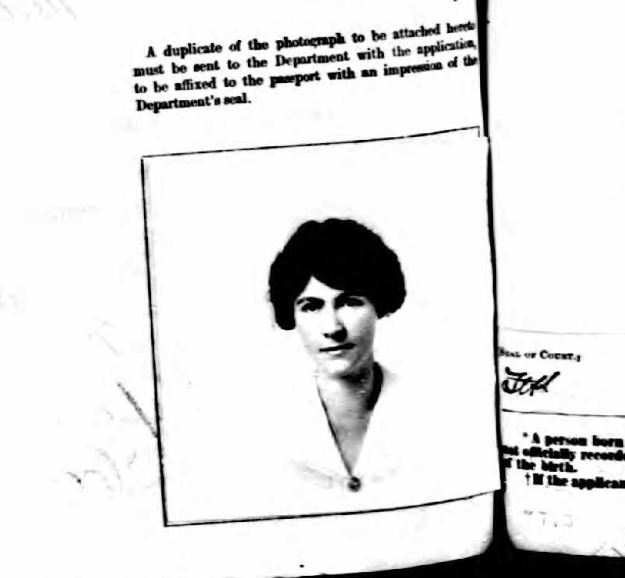
I was lucky enough to track down a large grouping of ephemera collected during the war by a YMCA canteen entertainer, a Miss Kittie Kunz.  Included in the grouping is a selection of rare YMCA “unit history” paperwork which gives names and identities to many of the women and men who served alongside Kittie.  I researched each of the names in hopes of tracking down passport application portraits.  I was overwhelmingly successful and found nearly 75% of the names in the US Passport database that matched perfectly.  Each was listed as being a member of the YMCA or Red Cross, and each matches the date range for the YMCA hut. A neat find!  Please read on to see the faces of the women who served alongside Kittie.  You will also find a smattering of hard-to-find ephemera related to the YMCA.  It’s amazing that Kittie saved some of these items.  Not all the paperwork is contained in this post, but the scanned material gives a quick glimpse into the typical material a YMCA canteen worker would deal with.

Kittie Kunz's YMCA ID

Kittie Kunz’s YMCA ID


Kittie's YMCA Paris Travel Permit

Kittie’s YMCA Paris Travel Permit

WWITruck077

Kittie’s YMCA Paris Travel Permit Reverse

Kittie's Permit to Travel to Reims

Kittie’s Permit to Travel to Reims

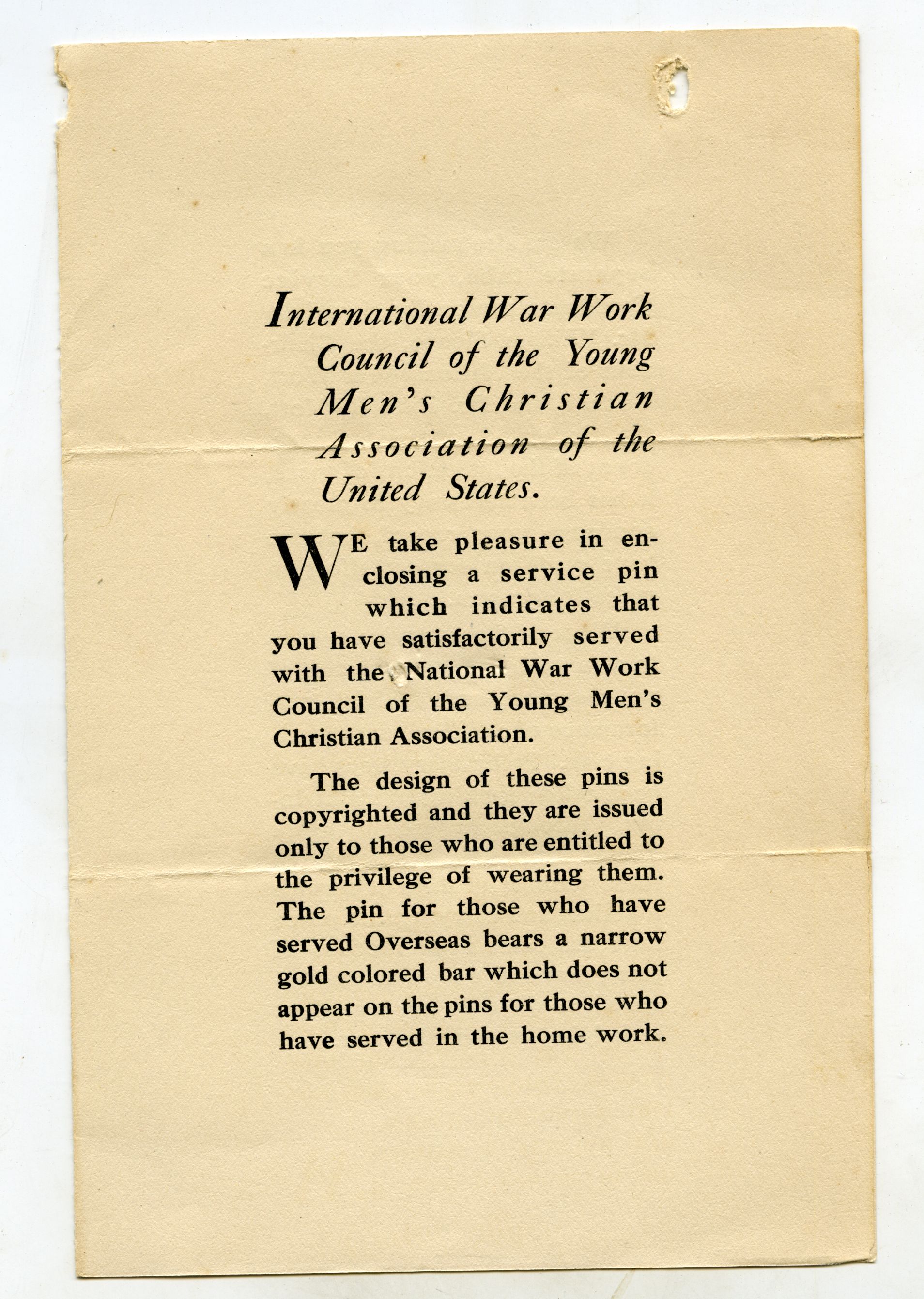
YMCA War Service Pin Card

YMCA War Service Pin Card

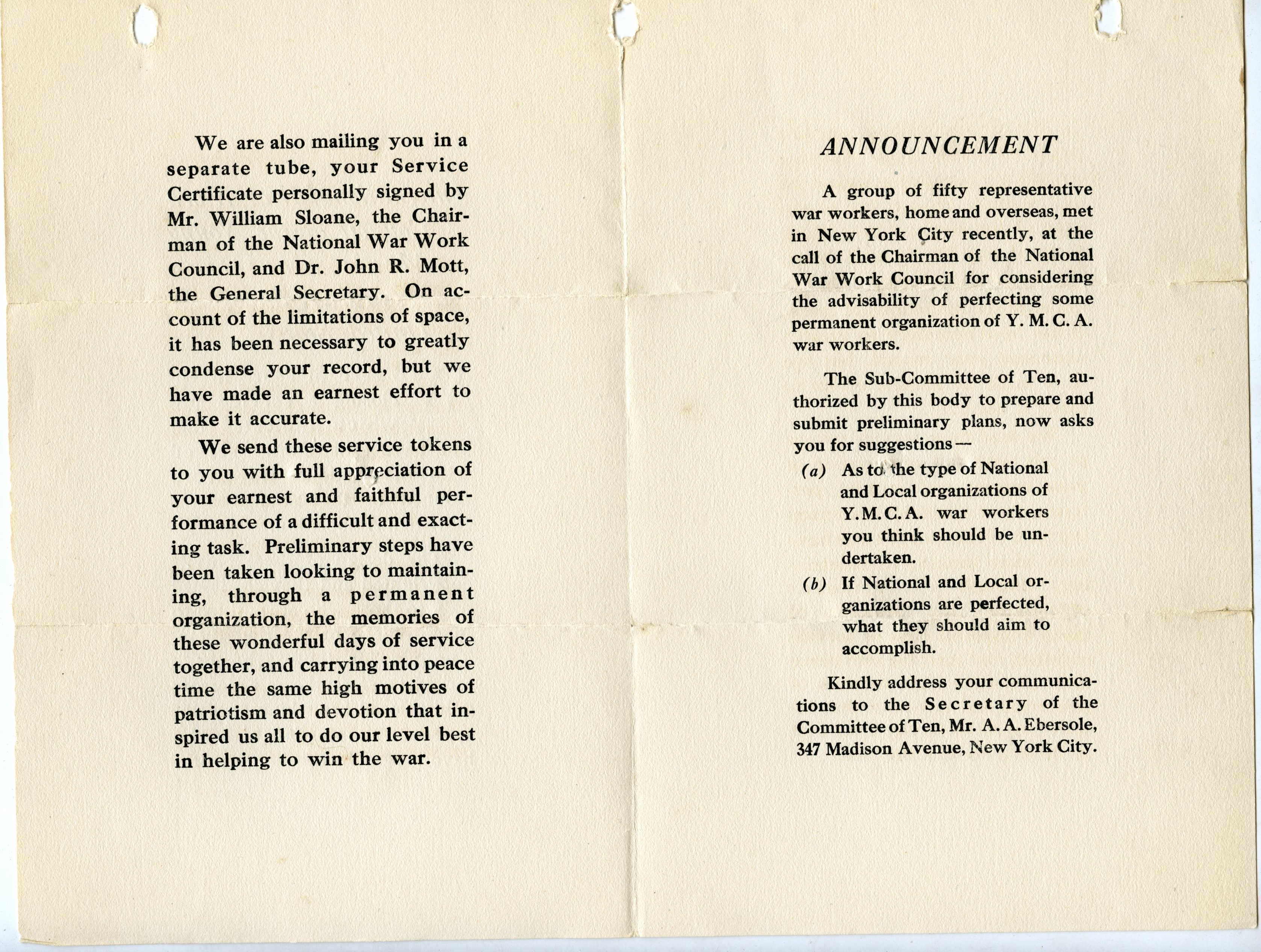
YMCA War Service Pin Card Interior

YMCA War Service Pin Card Interior

Tea Service Notice for the 28th Division

Tea Service Notice for the 28th Division


Here is where my favorite piece of researching WWI material came handy….. I was able to research the names of the women listed in the distribution section and track down their WWI era passport applications.  Here are my results:

YMCA Women

Miss Gertrude Garden - YMCA

Miss Gertrude Garden – YMCA


Miss Dorothy Berry - YMCA

Miss Dorothy Berry – YMCA

Harriet McKenzie - YMCA

Harriet McKenzie – YMCA

Margaret Robinson - YMCA

Margaret Robinson – YMCA

Katherine Parks - YMCA

Katherine Parks – YMCA


Janet Kunz - YMCA (sister to Kittie Kunz)

Janet Kunz – YMCA (sister to Kittie Kunz)

Kittie Kunz - YMCA

Kittie Kunz – YMCA

Pauline Brown - YMCA

Pauline Brown – YMCA


Mary Waden - YMCA

Mary Waden – YMCA

Dora Lewis - YMCA

Dora Lewis – YMCA

Katherine Beakes - YMCA

Katherine Beakes – YMCA

Cora A. Kennedy - YMCA

Cora A. Kennedy – YMCA


RED CROSS WOMEN

Lois Loyhed - Red Cross

Lois Loyhed – Red Cross

Harriet Maxon - Red Cross

Harriet Maxon – Red Cross

Dorothy Peters - Red Cross

Dorothy Peters – Red Cross

Alice McCoy - Red Cross

Alice McCoy – Red Cross

Esther Edmondson - Red Cross

Esther Edmondson – Red Cross

Mary Jones - Red Cross

Mary Jones – Red Cross

Eleanor Little - Red Cross

Eleanor Little – Red Cross

Mary Healy - Red Cross

Mary Healy – Red Cross

A Mormon Missionary in WWI: Battling Influenza in American Samoa


Byron Miller in World War One

Byron Miller in World War One

When searching for new portraiture to add to PortraitsofWar I generally tend to look for material with identifiable soldiers, uniforms, medals and other researchable information to help shed light on life during wartime.   In this post, I will be researching a photograph of a US Navy sailor who caught my eye during a recent eBay search.

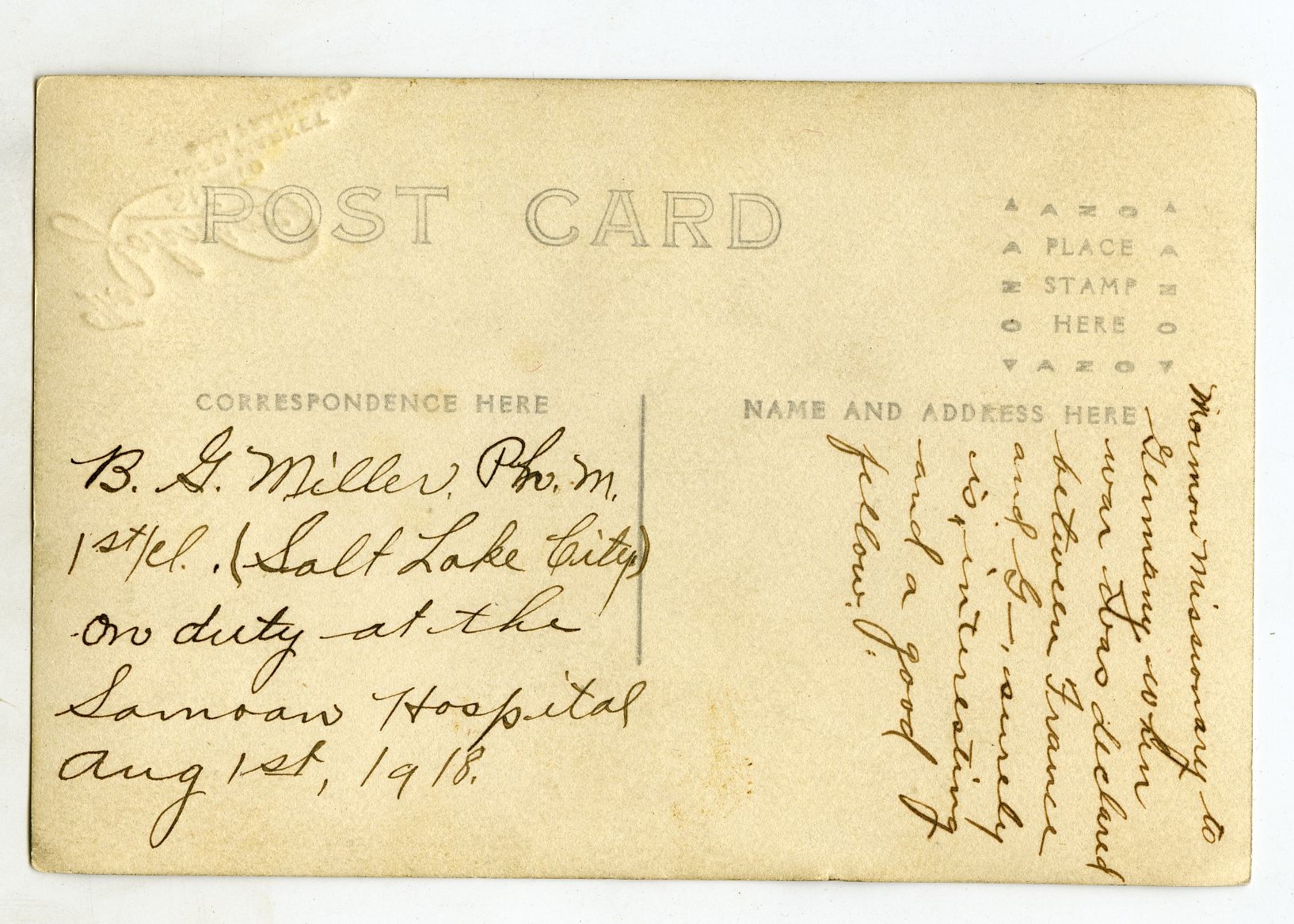
Reverse Side of Postcard

Reverse Side of Postcard

The information written on the back of the postcard shows an identification of the sitter as a B.G. Miller.  He is identified as being a Pharmacist’s Mate 1st Class from Salt Lake City, Utah who was on duty at one point at a hospital in Samoa on August 1st, 1918.  Additional info added to the photo includes an anecdote about his position as a Mormon missionary in Germany during the breakout of the war between Germany and France.

With a little luck and a lot of research I was able to track down our mysterious B.G. Miller.  Byron Gardener Miller was found listed in the Utah World War 1 Military Service Questionnaire on ancestry.com.  Please see his card below:

Byron G. Miller in WWI

Byron G. Miller in WWI

It looks like Byron attended the University of Utah for a year before being shipped off for his overseas missionary work. This is likely the reason for his service as a Pharmacist’s Mate with the US NAVY as can be seen in the details of his uniform.

Navy Pharmacist's Rate Patch

Navy Pharmacist’s Mate Rate Patch

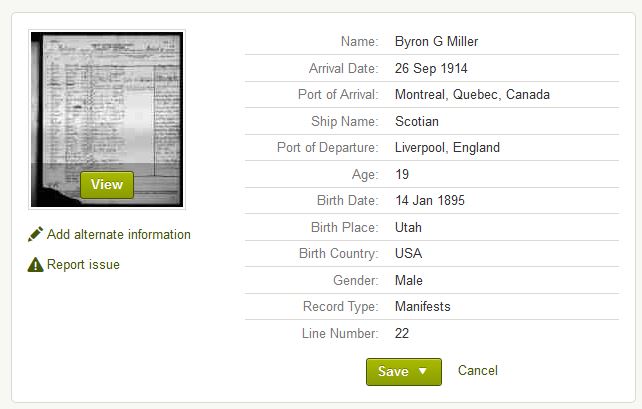
The reference to his missionary service in Germany during the outbreak of war in July of 1914 is partially confirmed through my discovery of his listing aboard a ship ledger arriving in Montreal, PQ in September of 1914.

1914

His service in Samoa has also been confirmed through the same series of records.

sssonomoa

Sadly, his arrival back in the US in 1919 wasn’t likely a time of joy for the Miller family; a Utah death certificate shows that he died of influenza only a few months later on February 7th, 1920.  Interestingly enough, my research into the US Hospital in Samoa shows that a MASSIVE flu outbreak in the Samoan Islands lead to the deaths of nearly 25% of the population.  The US Navy set up an epidemic commission to deal with the issue.  The results of the intervention in American Samoa were incredible.  Apparently the method of using maritime quarantine lowered mortality rates to nearly 1%.  It’s strange that Byron would die of influenza only a few months later while in the United States……

For the 1919 report please CLICK HERE

1920 Death Certificate

1920 Death Certificate

One of the main goals of this website is to help share photos and pertinent military service information with the families of the men and women depicted in the images I collect. In this case, I’m hoping a Miller family representative will discover a rare image of their ancestor who witnessed a formative time in history.

WWI Burlington, VT Portrait Photo – William W. Putnam 310th Cav. Fort Ethan Allen


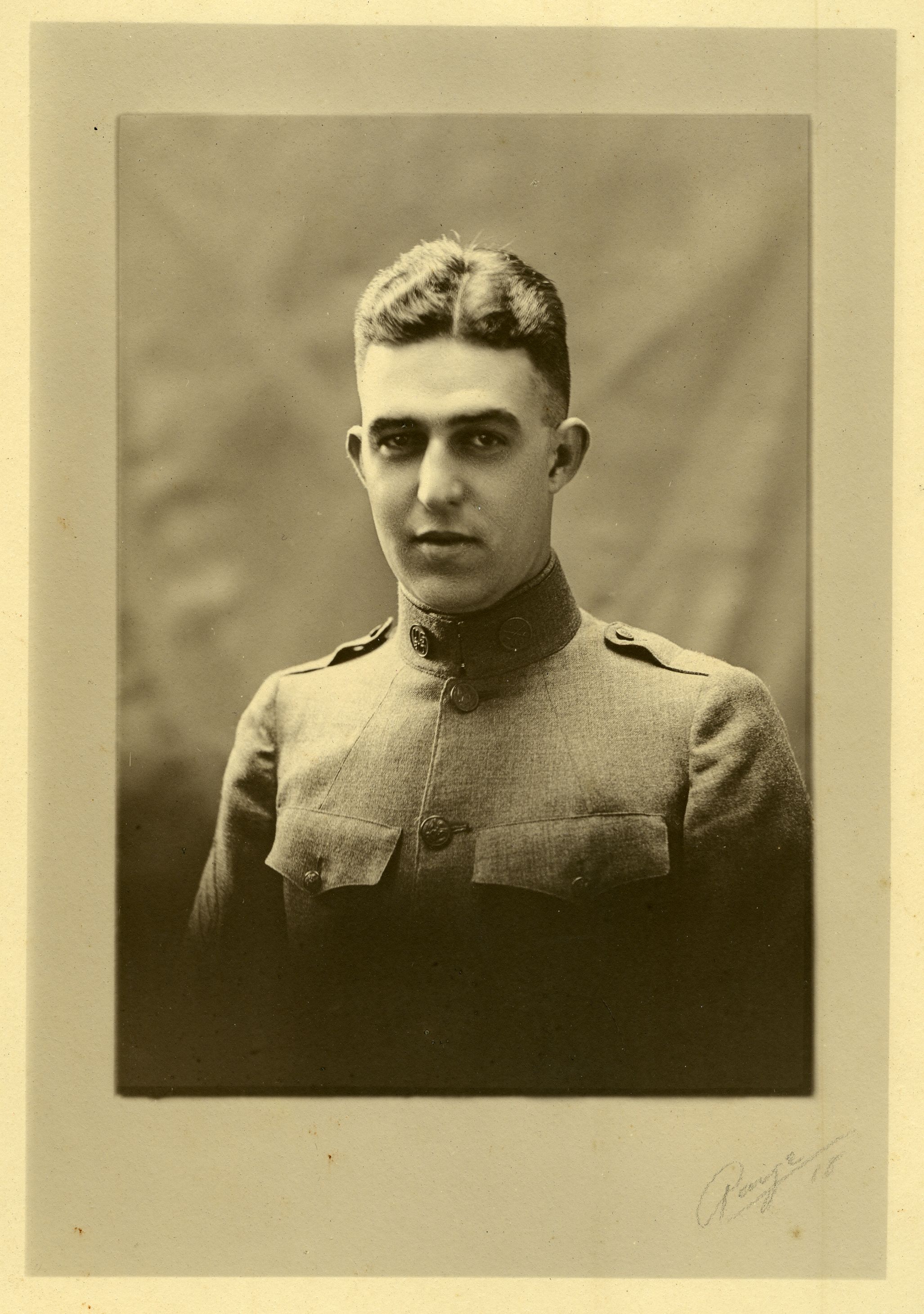
William W. Putnam of Thomaston, Maine came to Vermont as part of the Machine Gun Troop of the 310th Cav in 1918.  He posed for a photo in a Burlington, VT photo studio while training at Fort Ethan Allen.  He had his photo taken in Burlington after his promotion to sgt (1/1918) at the studio of H. Raymond Paige of 22 Church Street.


Maine service record:
Name: William W. Putnam
Serial Number: 371805
Birth Place: Brewer, Maine
Birth Date: 03 Sep 1897
Residence: Thomaston
Comment: Enl: Ft. Slocum, N. Y., May 10/18. Pvt; Sgt Aug. 1/18. Org: MG Tr 310 Cav to disch. Overseas service: None. Hon disch on demob: Dec. 20, 1918.


William Putnam441


William Putnam442

Henry  Raymond Paige Studio Logo, Burlington, VT


January 1918 Article About the Return of Raymond Paige

January 1918 Article About the Return of Raymond Paige


Raymond Paige in 1920

Raymond Paige in 1920


Veterans Days 1921 – Tomb of the Unknown Soldier Original Ceremony Service Attendant


As of September 1920, the US Quartermaster Graves Registration Service had successfully identified over 90% of the bodies of US servicemen who died overseas during WWI.  The nation was still in mourning from the losses of the war, and the government looked to other countries for a suitable ceremony to honor those whose bodies were never identified.  In the fall of 1920, the caskets of four unidentified U.S. soldiers were chosen for reburial in Washington D.C.  One pallbearer, SGT Edward Younger, chose one body to be the Unknown Soldier of WWI.

The remains were transported aboard the USS Olympia, the flagship of Vermont’s Own Admiral Dewey, and arrived home on November 9th, 1921.  The body lay in state in the Capitol Rotunda for two days, where over 90,000 people quietly filtered through.  This Unknown Soldier was buried with full services on November 11th, 1921.

As I pawed through my large collection of WWI and WWII photography looking for a suitable candidate for a Veterans Day post, I came across one photo that stood out as a perfect blogpost.

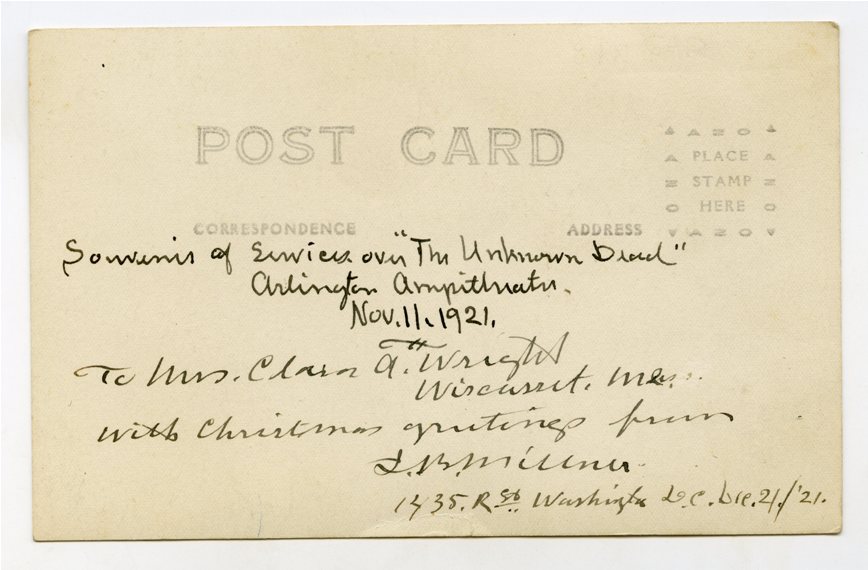
This veteran is wearing a Civil War Navy Campaign medal on his chest, and looks distinguished in his black cap and jacket.  This photo was taken only moments after he was a member of the first Tomb of the Unknown Soldier ceremony on November 11th, 1921.  He inscribed a quick note to a loved one on the reverse.  I can’t find a list of the members of that first delegation anywhere, but I’m sure he is one of the visible veterans standing around the casket in this photo:

Courtesy of Wikipedia Commons

Although his identity is a mystery to me, maybe his name will come to the surface after this post hits the web.  What a fitting photo post for Veterans Day!

Special thanks to David R. Berry for the following message:

May I submit to you that the identity of the distinguished gentleman is Mr. Isaac B. Millner. US Navy, Civil War veteran –a seaman aboard the USS HARTFORD, flagship of Adm Farragut at the Battle of Mobile Bay 5 Aug 1864. Millner had a life-long interest in Adm Farragut, attending several commemorations of Farraguts life and career.

He was affiliated with the Dept. of Anthropology at the National Museum; holder of several patents; a specialist in Native American and Micronisian Indian cultures; a modeler for the Smithsonian working in the medium of paper’ machete and a member of the US Geological Survey. Author of the book: The Last Cruise (1917)

You will find many notations for him in Google under his full name as well as his initials I B Millner. He is mistakenly noted in the 1920 Census as Isaac B Mi-(one L) ner. What his relationship with Mrs. Clara A Wright Of Wincasset, Maine, might be is unclear, but one might note that the description and the address texts on the back of the portrait were written in two distinctly different hands. It could be that Mrs. Wright was a friend of his wife Mrs. Mary Millner.

A 1929 photo of IB Millner appears here:

http://www.loc.gov/pictures/resource/cph.3c31287/

WWI Doughboy Letter – Barre, VT Boy Compares Streets of France to the Granite Streets of Barre


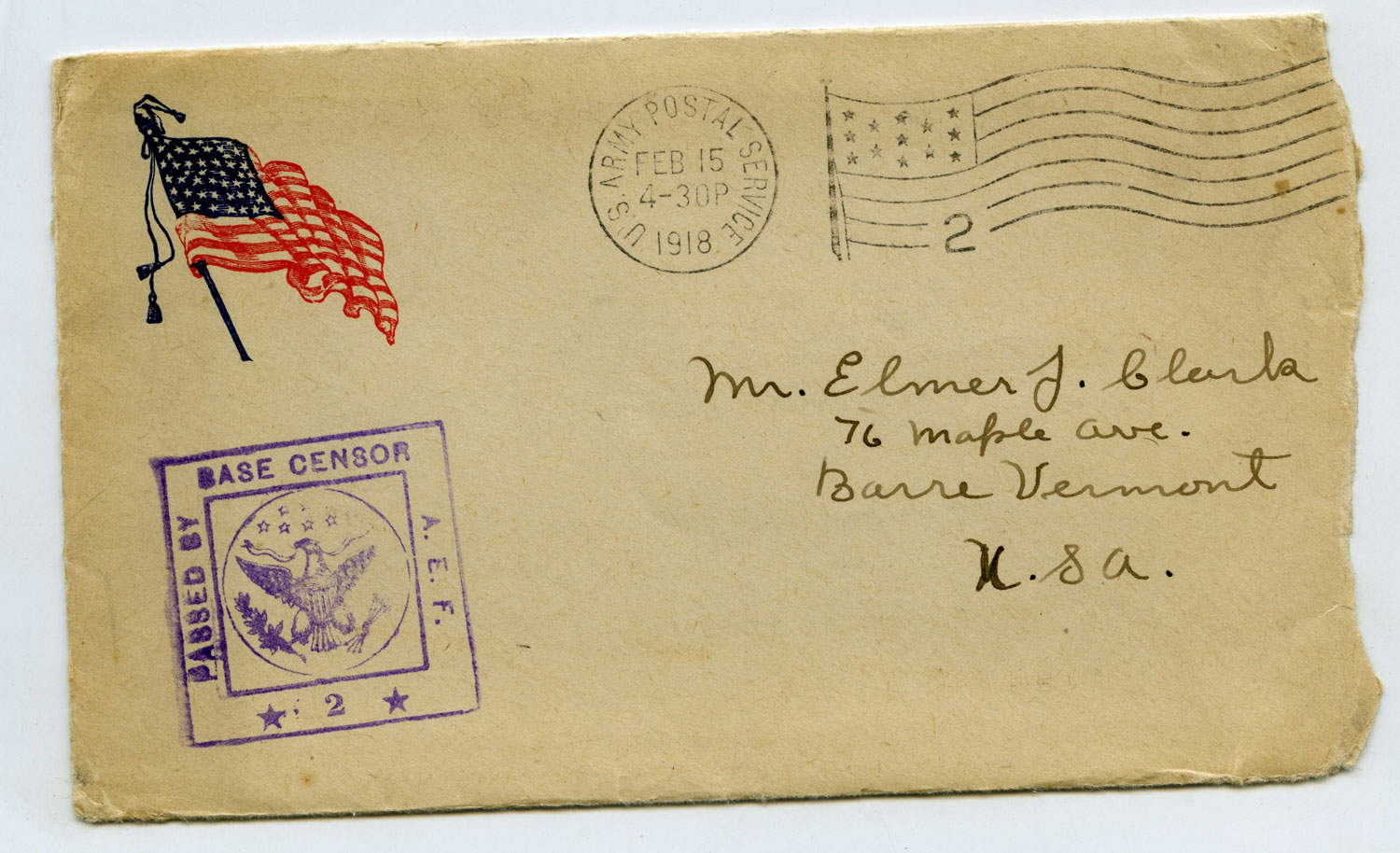
A letter was delivered to Mr. Elmer Clark of 76 Maple Avenue, Barre, VT. in February of 1918.  I’ve included a snapshot of 76 Maple in the photo below:

76maple

76 Maple Avenue, Barre, VT

The letter provides the Vermont World War One historian with a wonderful snapshot of life in France in the early days of American involvement.  Sgt. Edward Clark was a truck driver who delivered supplies to front line troops but had the security of rear echelon  protection to write his letters.  Please enjoy this transcription and try to put yourself in Ed’s shoes:

Edward Clark  Letter Cover

Edward Clark Letter Cover

(Page One)

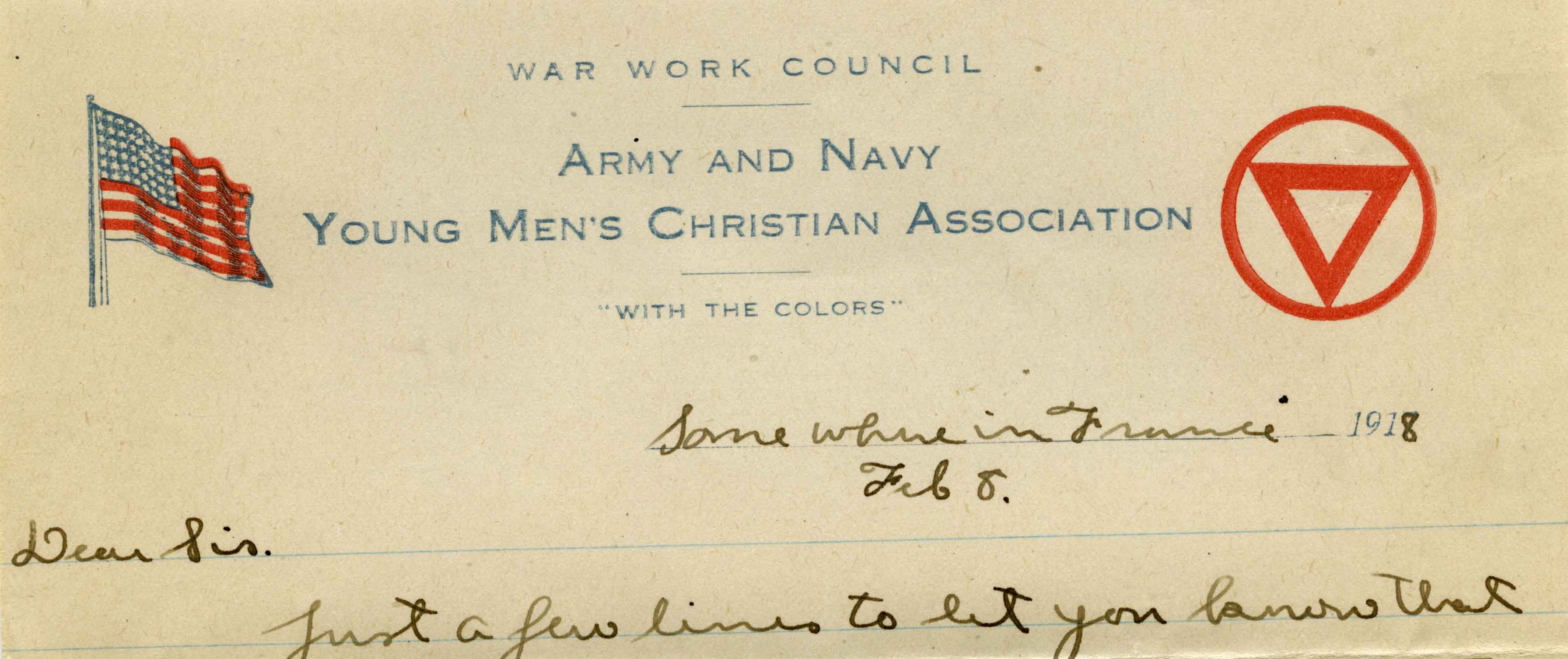
Dear Sis,

Just a few lines to let you know that I am well and feeling fine.  We are stationed about 100 miles from the front and have to go up there every other day with supplies.  To get back to when we first landed in France we received out trucks at a certain place and then drove them over land to General Headquarters.  On reaching that place we were attached to that troop and have been with them ever since. The trip overland was about 400 miles so we had a good chance to see that part of the country.  [Sgt. Clark appears to have refreshed his ink supply] From what I heard about France before I came over I thought that I would see greater things than we have in the States.  But now if you should ask me I would say that France was 600 years behind the U.S.A.  All there is to see is stone (Page Two)buildings two and tree stories high and the streets of Barre would make these streets look like a dump. When they talk about sunny France they will have to talk about it to someone else besides me.

Barre011a

I have received six or seven letters from Gin but none from you.  What is the trouble, have you forgot that I am living?  What is Elmer doing?  From what I hear it must be a hard winter on him. We are in luck for one thing and that is we can go around part of the day in our shirt sleeves but in the morning and night we need our coats on.  Not that it is so cold but it is damp and it goes right through you.

(Page Three) Is Royal staying with you yet? Gee it must seem good to him to get off the farm.  How is Steve and all the rest of the folks?  Well sis from the way things look over here we will be here for some time to come.  Gee if I could only get back in the gold old U.S.A. They would never get me to come over here again.  Well it is time for lights out so I will have to bring this to a close.  Love to all.  Write soon and often.

Brother,

Ed

Sgt. Edward Clark

Motor Truck Co. 304

General Headquarters

A.E.F

Want to read the letter in the original script?

Page 3 of Letter

Page 3 of Letter

Page 2 of Letter

Page 2 of Letter

Page 1 of Letter

Page 1 of Letter