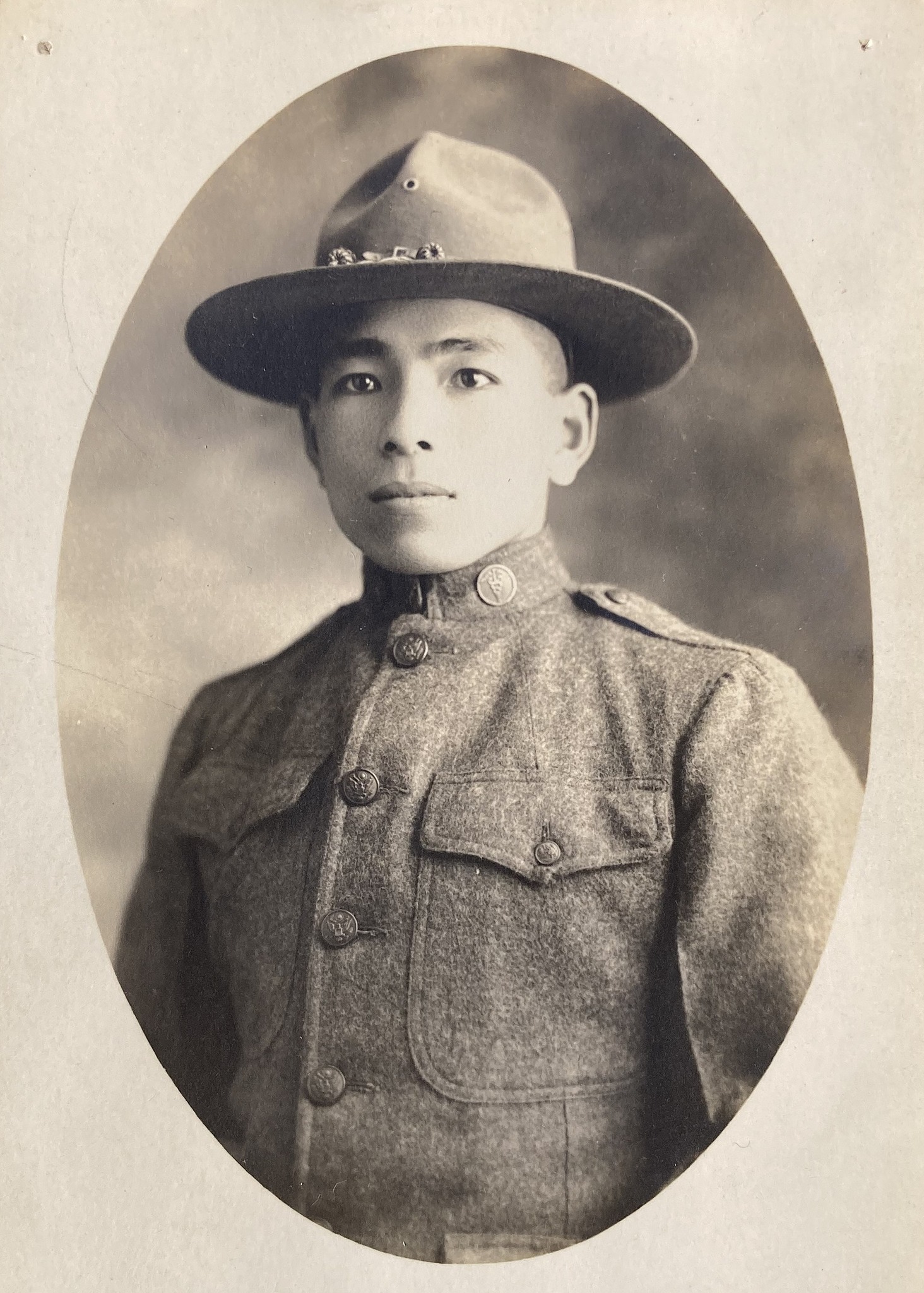
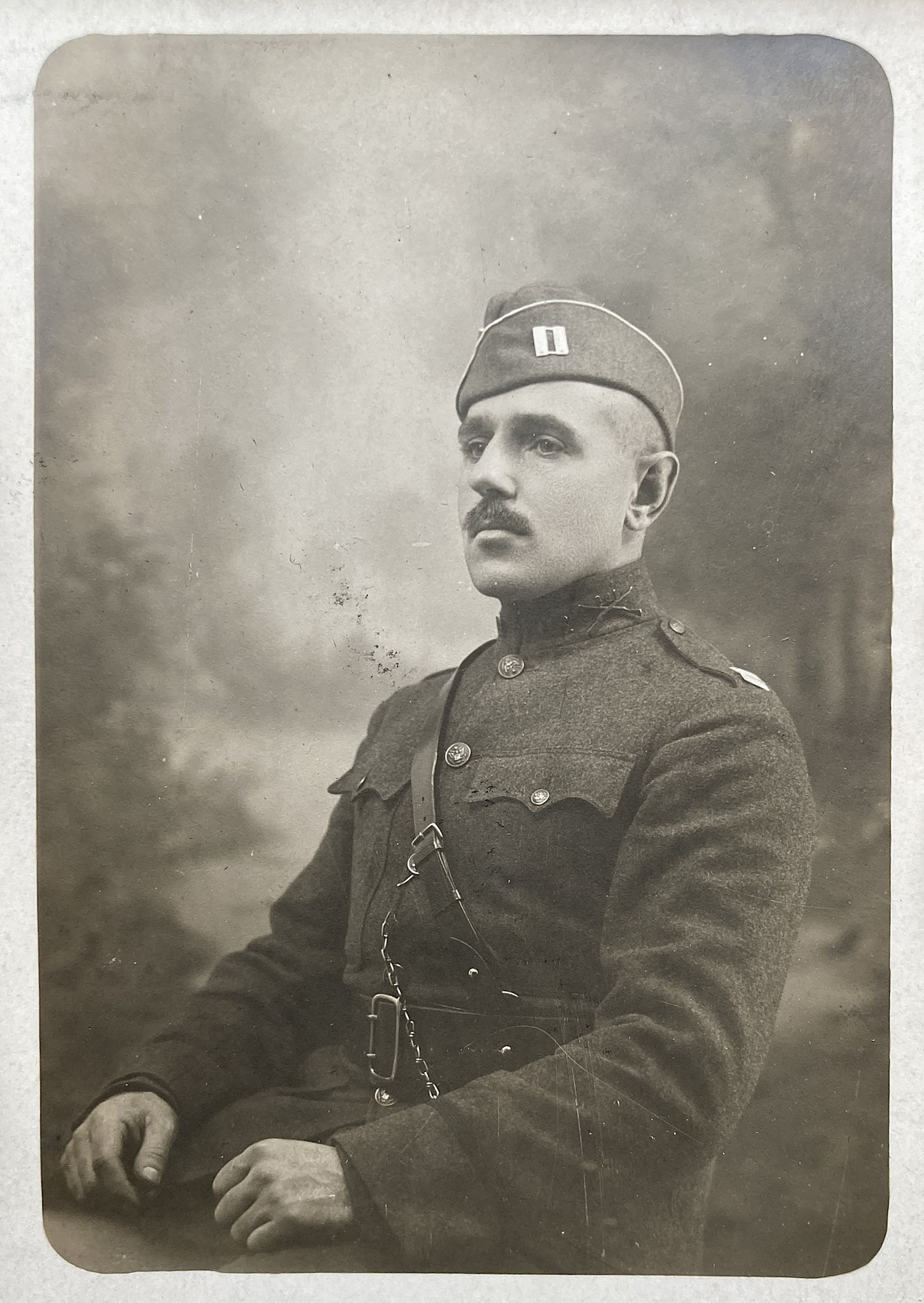
The Congressional Medal of Honor was awarded to 119 members of the U.S. Army, Navy, and Marine Corps during World War I, 33 of them posthumously. Portrait photographs of these heroes are remarkably scarce, but I was fortunate to recently acquire one. The subject of tonight’s post is Captain Samuel Woodfill of Indiana, one of America’s most celebrated soldiers of the Great War.
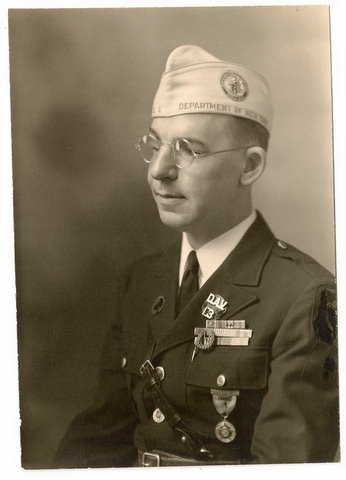
Captain Samuel Woodfill, U.S. Army Often described by General John J. Pershing as “the outstanding soldier of the American Expeditionary Forces,” Captain Samuel Woodfill earned the Medal of Honor for extraordinary heroism during the Meuse-Argonne Offensive on October 12, 1918. Leading his company through heavy fog and enemy fire near Cunel, France, Woodfill singlehandedly attacked multiple German machine gun nests, killing or capturing their crews despite being gassed and exhausted. A career soldier from Indiana, Woodfill had already served in the Philippines and on the Mexican border before World War I, and his calm, precise marksmanship in France became legendary among his peers. After the war, he was personally honored by Pershing and later chosen to represent the U.S. Army’s enlisted men at the dedication of the Tomb of the Unknown Soldier in 1921.
Arlington National Cemetery Video: Major Samuel Woodfill
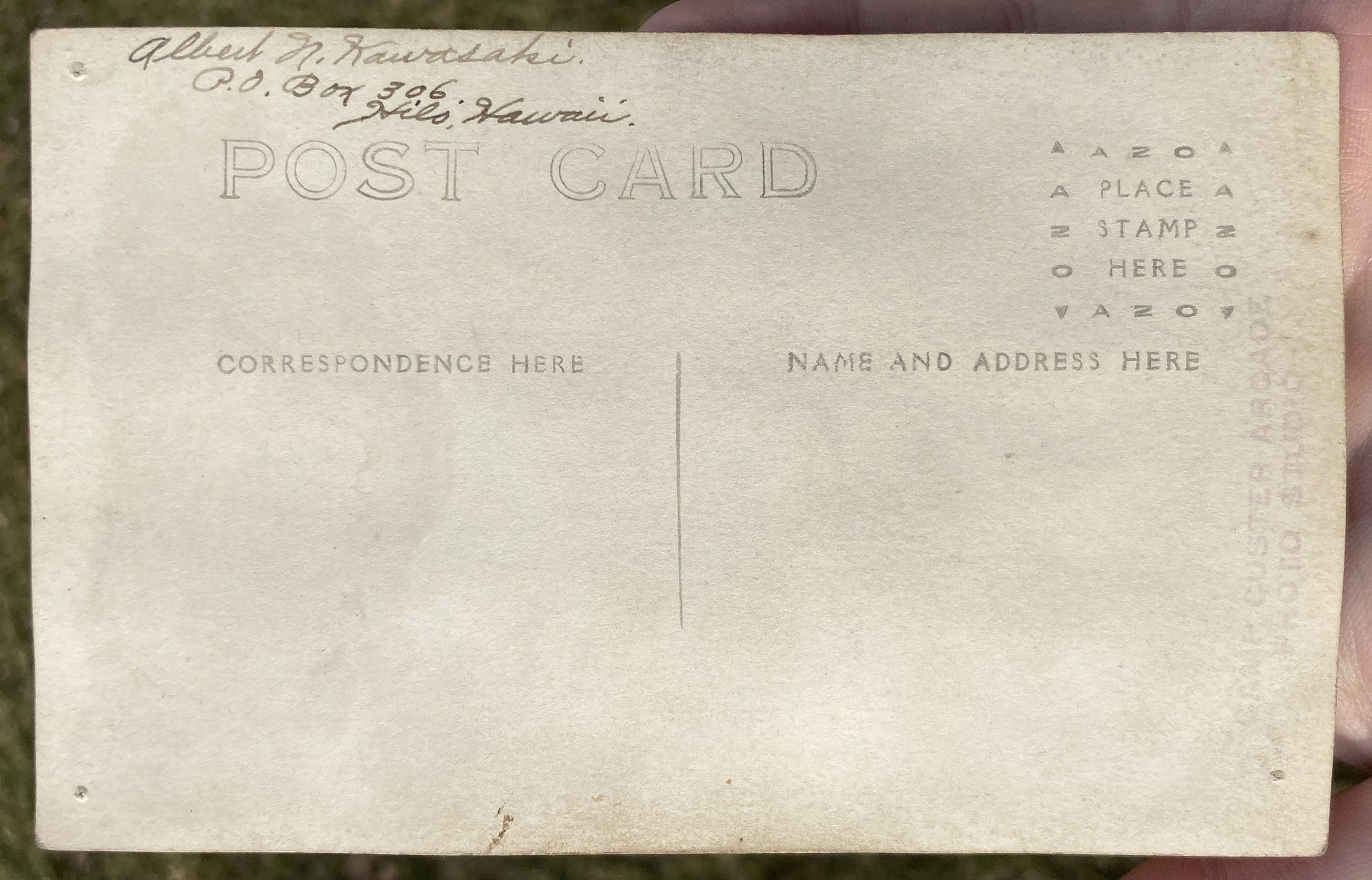
Reverse Side of Woodfill’s Portrait
His Medal of Honor citation reads:
“While he was leading his company against the enemy, First Lieutenant Woodfill’s line came under heavy machine gun fire, which threatened to hold up the advance. Followed by two soldiers at 25 yards, this officer went out ahead of his first line toward a machine gun nest and worked his way around its flank, leaving the two soldiers in front. When he got within ten yards of the gun it ceased firing, and four of the enemy appeared, three of whom were shot by First Lieutenant Woodfill. The fourth, an officer, rushed at First Lieutenant Woodfill, who attempted to club the officer with his rifle. After a hand-to-hand struggle, First Lieutenant Woodfill killed the officer with his pistol. His company there upon continued to advance, until shortly afterwards another machine gun nest was encountered. Calling on his men to follow, First Lieutenant Woodfill rushed ahead of his line in the face of heavy fire from the nest, and when several of the enemy appeared above the nest he shot them, capturing three other members of the crew and silencing the gun. A few minutes later this officer for the third time demonstrated conspicuous daring by charging another machine gun position, killing five men in one machine gun pit with his rifle. He then drew his revolver and started to jump into the pit, when two other gunners only a few yards away turned their gun on him. Failing to kill them with his revolver, he grabbed a pick lying nearby and killed both of them. Inspired by the exceptional courage displayed by this officer, his men pressed on to their objective under severe shell and machine gun fire.”
Finding vintage photography to post to the site that has meaningful background history has been a tough mission the last few years. I was recently inspired to start posting to the blog more often from a group of friends who enjoy seeing great photography mixed in with background research. This site has always been a labor of love and I’ve neglected posting new material (but have updated older posts) since the global pandemic hit. I now introduce you to a new addition to the collection that showcases an underappreciated aspect of the the WWI US service experience.
The process of making these shots web-ready is a bit tedious but it involves the scanning, editing for dust and scratches as well as optimizing size for the web. It’s not a quick task but I like to take time to make these available whenever possible.
Ernie Rayburn and Ollie Stiger Smoking Cigars in France, 1918
This photograph struck me when I first viewed it for a few reasons. The role of African Americans in World War One has been touched upon in books, documentaries and museum exhibits but the photographic history of the common labor war worker has been eclipsed by the “fighting” units that are often depicted. These two men, Erie Rayburn of Coffeeville, MS and Ollie Stiger of Jackson of the same state have likely never been shown online. These postcard style shots were often taken to be sent to friends and family as a way of remembering a time where the normal day-to-day life of the 1910s was upended and normal guys were thrown into abnormal situations.
Ollie and Ernie in France
Both Ollie and Ernie served in the same labor unit – the Depot Service Company No. II based out of Brest, France during the war. I’m unsure of what exact labor duty they would have been assigned to but it likely involved the moving of material onto or off of ships onto trucks or trains. More research will need to be done.
Ollie Stiger (also spelled Steger in later documents) was born on August 6th, 1892 (also listed as 1891?) in Mississippi and died in San Diego, CA in October of 1972. After the war he worked with the Chicago and North Western Railroad as a “coach cleaner”. I’m unaware of any children or family at the point of writing this post.
Sgt. Ollie Stiger in France, 1918.
Corporal Erie Rayburn was also from the same hometown of Ollie of Coffeeville, MS and was born around the same time in 1895 and passed away a few years after Ollie in 1988. I sincerely hope they stayed friends after the war and after they parted ways to seek the true American Dream.
Tonight we have a guest post from a Facebook friend who also enjoys collecting WWI photography. Special thanks to James Taub for providing us with this interesting shot of a French soldier!
A Poliu of the unfortunate 111e régiment d’infanterie. During the Battle of Verdun, on 20 March, 1916 the 111e was in positions in the woods near Malancourt and Avocourt. (Later to be crucial points during the 1918 Meuse-Argonne Offensive.) They suffered under an intense German bombardment before being assaulted by flame throwers. The four German regiments from Bavaria and Wurttemberg infiltrated deep into the 111e’s position. The regimental commander, the colors the JMO (war diary), and 1,200 other officers and men were lost, many taken prisoner. The Germans used the capture of the 111e as propaganda, and the French Army responded by disbanding the regiment and accusing all 13 companies of treason. One French official even stated that “the uninjured prisoners before the end of the war be worked into a court-martial “. It would not be until the late 1920s that it was admitted by General Petain that the regiment was one of the many sacrificed to slow down the German assault. In 1929 the 111e was reformed, and their colors allowed to hang in Les Invalides
Capitaine Jean Nardou of the 111e wrote:
“A 7h00, un bombardement très violent commence (grosses torpilles et engins de tranchées de toutes sortes) sur nos tranchées de première série et petits postes ; obus de gros calibres sur les deuxième séries et boyaux.
Vers 9h00 j’envoie à mon chef de bataillon la communication suivante par un planton : “Les tranchées sont détruites, les abris démolis ou bouchés ; le téléphone, le bureau sont en miettes, la poudrerie a sauté, mes papiers sont détruits, la situation me paraît très critique”. Le bombardement a continué avec une intensité de plus en plus grande et est devenu d’une violence inouïe après 15h00. A partir de ce moment , tout mouvement dans les tranchées et boyaux était impossible, tant le bombardement était grand. Un peu avant 16h00, les Allemands ont lancé des liquides enflammés sur plusieurs petits postes qu’ils ont également fait sauter à la mine et ont profité de la fumée noire et épaisse qui se dégageait pour s’approcher de nos tranchées qu’ils ont attaquées de revers et de face à l’aide de grenades, pendant que leur bombardement continuait.”
“At 7:00 am, a very violent bombardment begins (big mortars bombs and trench machines of all kinds) on our first series trenches and small posts; shells of large caliber on the second series and dugouts.
Around 9:00 am I send the following communication to my battalion commander: “The trenches are destroyed, the shelters demolished or plugged, the telephone, the office are in pieces, the blowing snow has blown up, my papers are destroyed, the situation seems to me very critical “. The bombing continued with increasing intensity and became incredible violence after 15:00. From that moment, any movement in the trenches and dugouts was impossible, so much was the bombing. A little before 4 pm, the Germans fired flamethrowers on several small posts that they also blew up at the mine and took advantage of the thick black smoke that was emerging to approach our trenches they attacked. from behind and from the front with grenades, while their bombardment continued.”
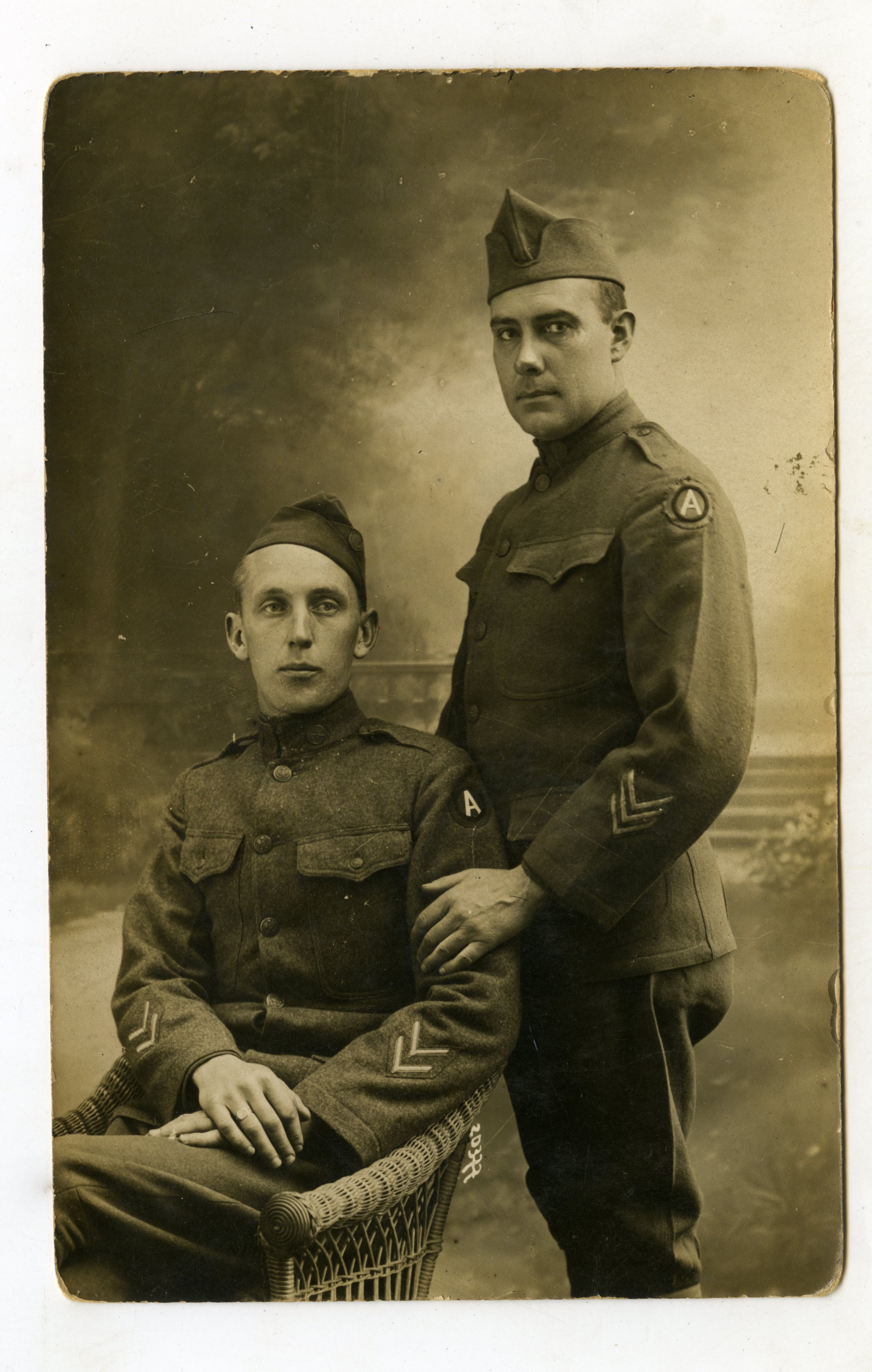
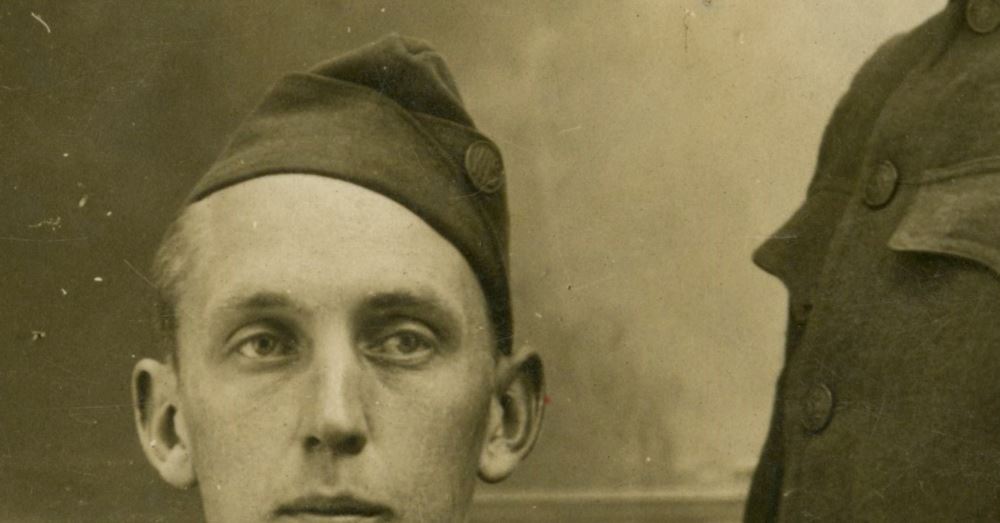
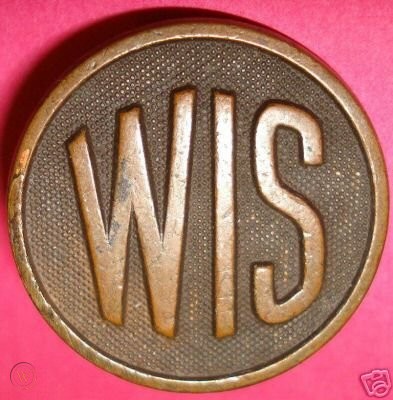
After a long hiatus I’ve decided to come out of obscurity and begin posting to the blog again! A recent Facebook purchase from a WWI collecting colleague has proved to be a classic PortraitsofWar photo for interpretation. The photo depicts two US soldiers posed in a German studio during the postwar occupation of Germany in 1919. The soldier at right is shown with three overseas (OS) stripes on his left cuff denoting 1 1/2 years of overseas service as well as a French-style cap. Both soldiers are wearing 3rd Army patches on their left shoulders, which would have been worn during the postwar occupation period. The seated doughboy is sporting two wound stripes as well as two OS stripes and a Wisconsin collar disc on his cap. The reverse of the photo lists one of the soldiers in the photo as Robert B. Alexander of 914 Adams Street, Portage, WI. Given that the seated soldier is wearing a Wisconsin disc on his cap, it is presumable that the identification on the reverse is leaning towards the sitter at left.
Pvt. Robert B. Alexander (seated), Co. F 16th Infantry Regiment, 1st Infantry Division
Reverse Identification of Pvt. Alexander
Some quick research revealed that that Pvt. Alexander was born on April 20th, 1892 in the town of Portage, Wisconsin to Robert M. and Mary Alexander. He lived much of his teen years at 913 and 914 Adams Street in Portage and was listed as working as a switchman with the Chicago, Milwaukee, St. Paul and Pacific Railroad as of 1917 before he enlisted in August of that year.
Railroad Switchman, Ca. 1940
914 Adams Street
Attempts to find a photograph of Robert Alexander using traditional research methods failed, but I was able to track down a yearbook photo of Robert’s youngest son. Claire Alexander sat for a yearbook photo in 1944; a side-by-side comparison leaves no doubt in my mind that Claire is a progeny of the seated doughboy.
Pvt. Alexander
Claire L. Alexander in 1944
Wartime Service
Research into Alexander’s wartime service has revealed that Robert was involved in heavy combat in September of 1918 only months before the end of the war on November 11th, 1918. His accolades are laid out in an unlikely document:
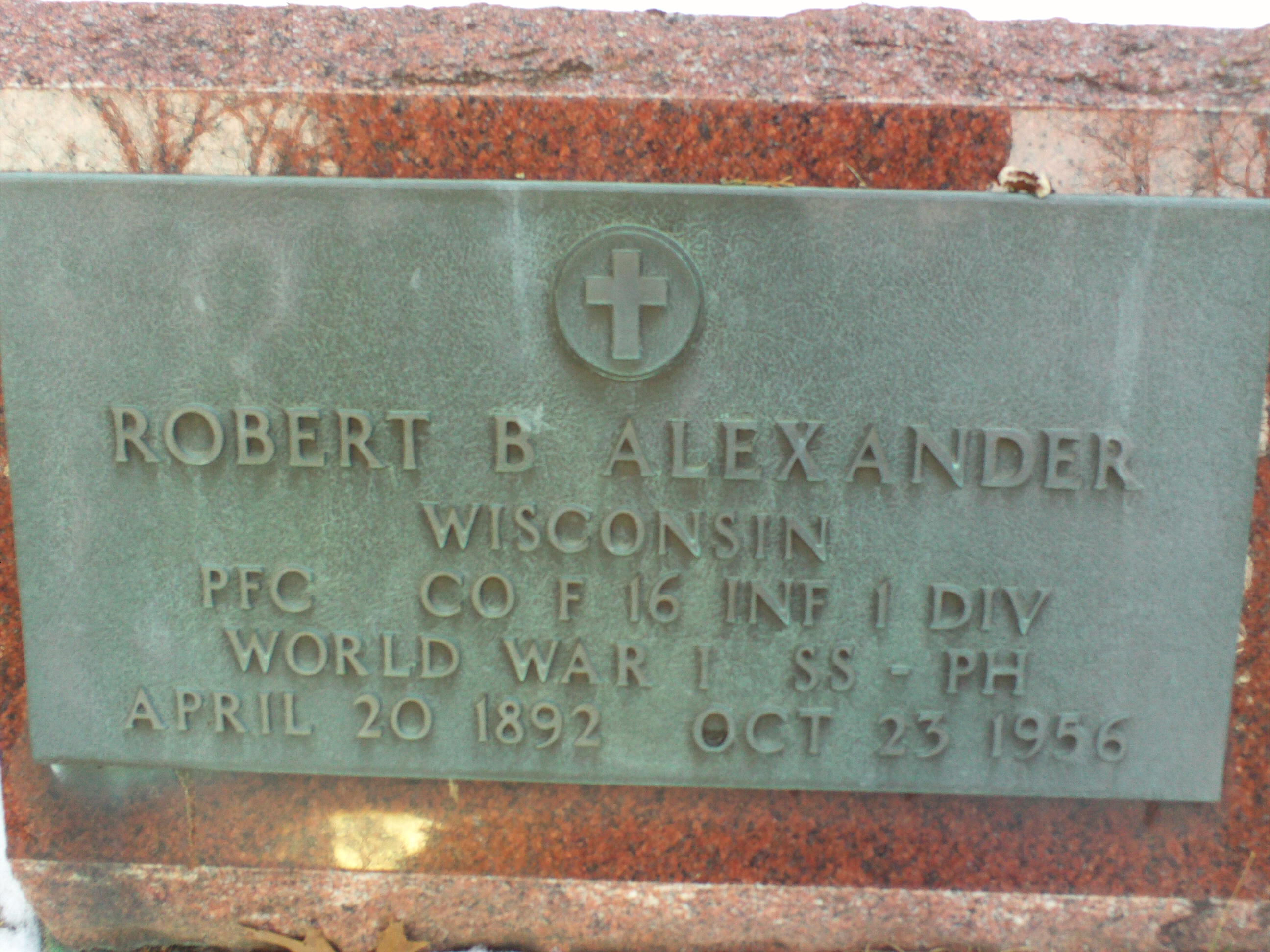
Veteran Headstone Document
Reverse of Above Document
This document confirms that Robert served with Company F of the 16th Infantry Regiment, 1st Division. He was wounded at least once and received the Purple Heart (After 1932) and also the Silver Star. Details about his wounding and SS are still pending… stay tuned.
Private Alexander’s 1956 headstone was made by the Acme Bronze Company of Maple Park, IL and was delivered to the family on November 6th, 1956 following Robert’s death on October 23rd, 1956.
Mr. Alexander’s Headstone (Courtesy of Findagrave.com)
Research into living members of the Alexander family have proven fruitful…stay tuned for details related to the reunion of this photo with a great-granddaughter!
One of my closely held collecting secrets is that I love WWII and WWI photographs of soldiers holding or interacting with their dogs. My recently dearly departed furry companion Violet originally led me to start collecting shots of soldiers with their canine friends nearly eight years ago. Without her I would’ve never thought twice to bid on a dog photograph.
Violet at the Hilton Portland, ME
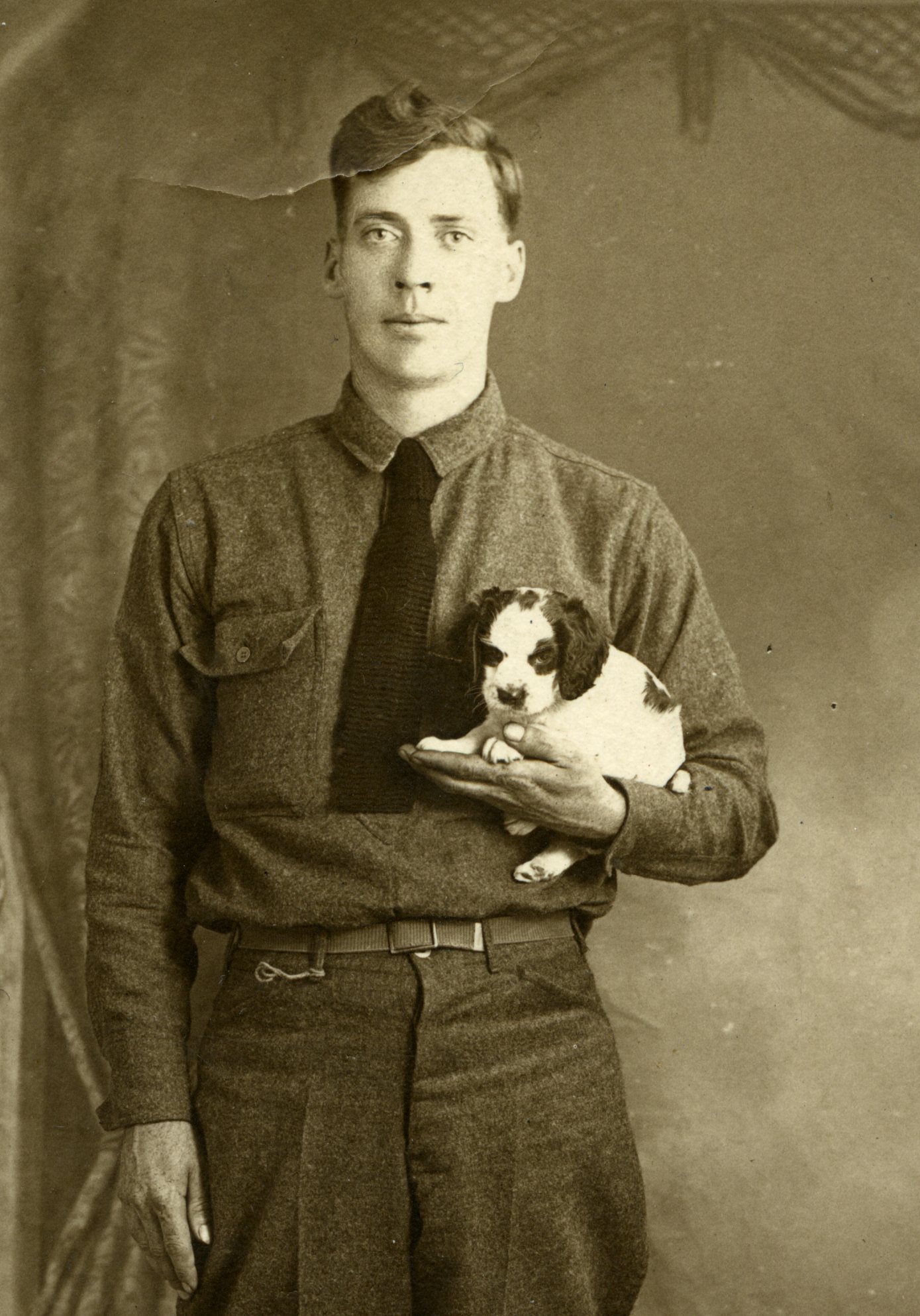
I dedicate this post to her. In this particular case, I bid on and won (eBay) a photograph of a US soldier holding a young puppy during wartime in France. Typically, shots of US soldiers holding dogs or other mascots were taken (at least that I’ve found) in the post-war era following the 11/11/18 Armistice. This studio photograph was taken on September 10th, 1918 and shows Thomas (Tom) Gray Jr. posing in a French studio with a puppy cradled in his left arm while sporting a custom knit necktie.
Thomas Gray Jr. and a cute puppy!
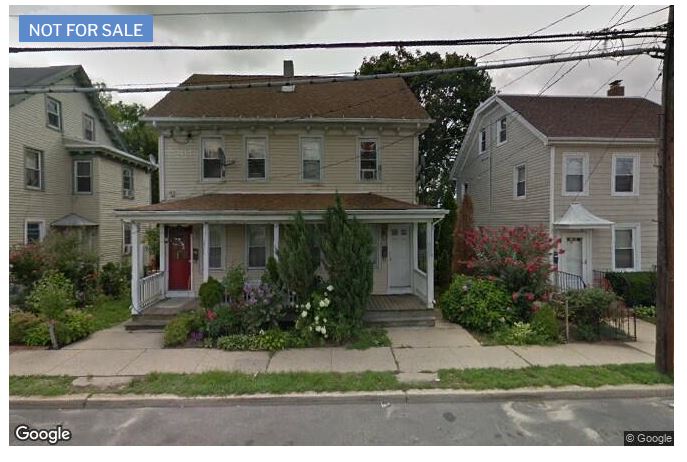
The photo was taken in September of 1918 and the writing on the back (see below) notes that Thomas had been overseas for ten months at this point. Additionally, he addresses the postcard photo to his mother, Mrs. Thomas Gray of 329 North Pearl Street, Bridgeton, NJ. After my normal run of extensive research it appears that his father and brothers worked, at some point, for a local glass factory as glass and bottle blowers. This company was likely the Cumberland Glass Works which was located not far from their duplex home. Additionally, the factory could’ve been the More-Jones factory that appears in a series of Lewis Hine photographs depicting child labor. In fact, Thomas appears in the New Jersey State Census of 1905 and is listed a “Snapper Boy” in the occupation column. So, at age 14 Thomas was working in a glass factory… Could he be one of the young boys captured by Hine?
Lewis Hine Photograph Taken in Bridgeton, NJ Ca. 1909
Reverse side of the postcard
As far as I can tell, Thomas served with Company B, 501st Engineers and shipped out in November of 1917 and served until mid 1919 when he eventually went home to New Jersey with no mention of a companion. I wish I could learn more about the dog in his hand and about his service in this obscure unit, but I can only do so much research before moving on. I hope that a relative finds this post at some point and can help fill in the gaps. Crazier things have happened on this blog.
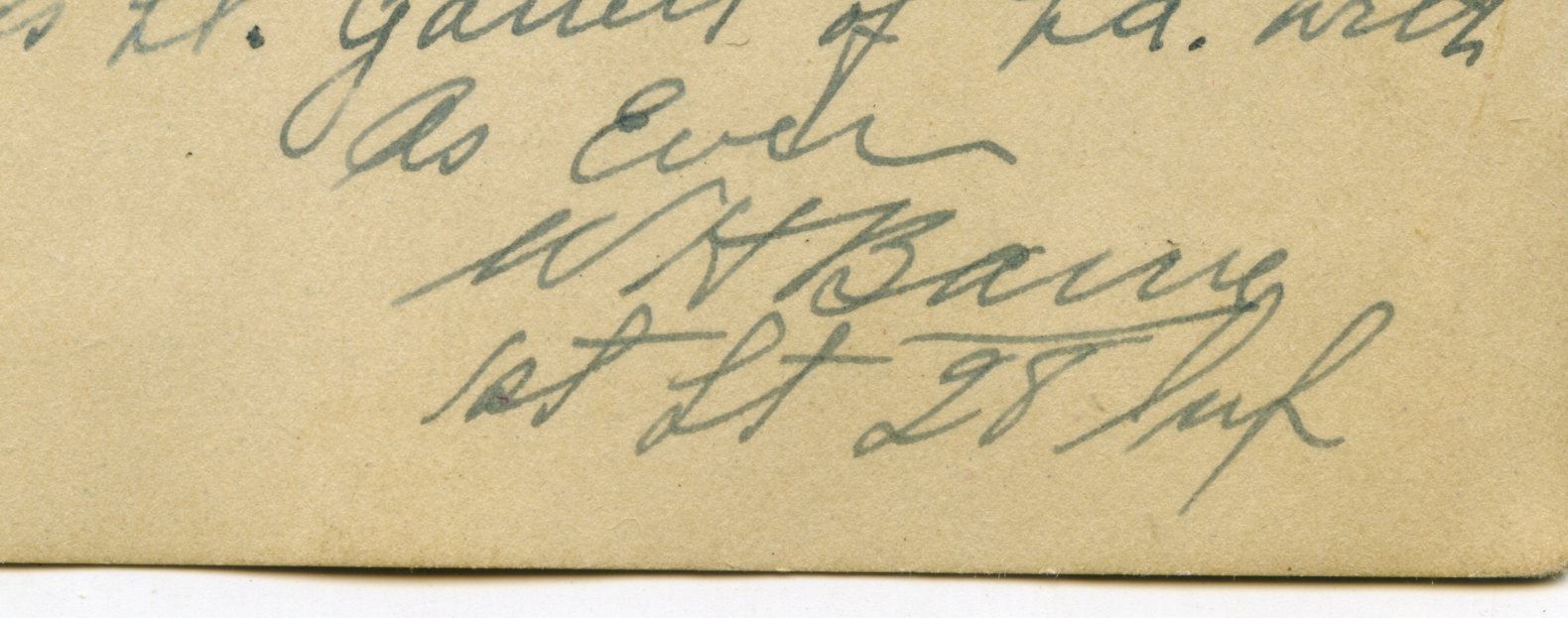
eBay can be a fun way to research WWI soldiers in a way that wouldn’t have been possible ten years ago. With the emerging databases of WWI soldier roster information and the ever-expanding capacity of Ancestry.com for genealogical data, WWI veterans are becoming easier and easier to research. In this case, I purchased a photo of two US officers posing in a French studio in March of 1919. The signature on the front and the inscription on the back give roughly enough information to make a positive identification. The standing officer is 2nd Lt. William H. Barry of Langley, Washington. He served with F. Co of the 28th Infantry Regiment, 1st Division during the American involvement in WWI. He was awarded the Distinguished Service Cross (DSC) for his bravery and extraordinary heroism in the breakthrough of the Hindenburg Line. A large percentage of his company became casualties and he assumed command after the CO was wounded. He reorganized the company and completed their objective under the rain of German machine fun fire.
To think, this photograph was obtained on an internet auction site for less than the price of a tank of gasoline and had been sitting in a pile of postcards for years before it was posted. I’m glad to provide this information – I hope a family member can find this post and learn a little about their ancestor!
Lt. William H. Barry (Standing)
Lt. Barry’s March 1919 Signature
BARRY, WILLIAM H. Second Lieutenant, U.S. Army
28th Infantry Regiment, 1st Division, A.E.F.
Date of Action: October 5, 1918 Citation:
The Distinguished Service Cross is presented to William H. Barry, Second Lieutenant, U.S. Army, for extraordinary heroism in action near Exermont, France, October 5, 1918. Assuming command of his company after his company commander and a major portion of the company became casualties, Second Lieutenant Barry reorganized his company and personally led it forward in the attack, successfully attaining his objective in the face of intense machine-gun and artillery fire. He constantly exposed himself to enemy fire in order to encourage and insure the protection of his men. General Orders No. 103, W.D., 1919
Home Town: Langley, WA
The nature of the prolonged war that was WWI and the stalemate and boredom of life in the trenches left a lot of soldiers with time on their hands. Additionally, some soldiers were raised hunting deer, boar and other game in the forests of Europe and North America in the early 1900s. A rifle in the hands of these men could become a weapon that could do immense damage from one concealed trench to another. Today’s post will highlight a United States Marine who was shot through both eyes by a German sniper in October of 1918. But first, please check out this video on snipers during WWI by The Great War, a youtube channel with daily videos about events during WWI.
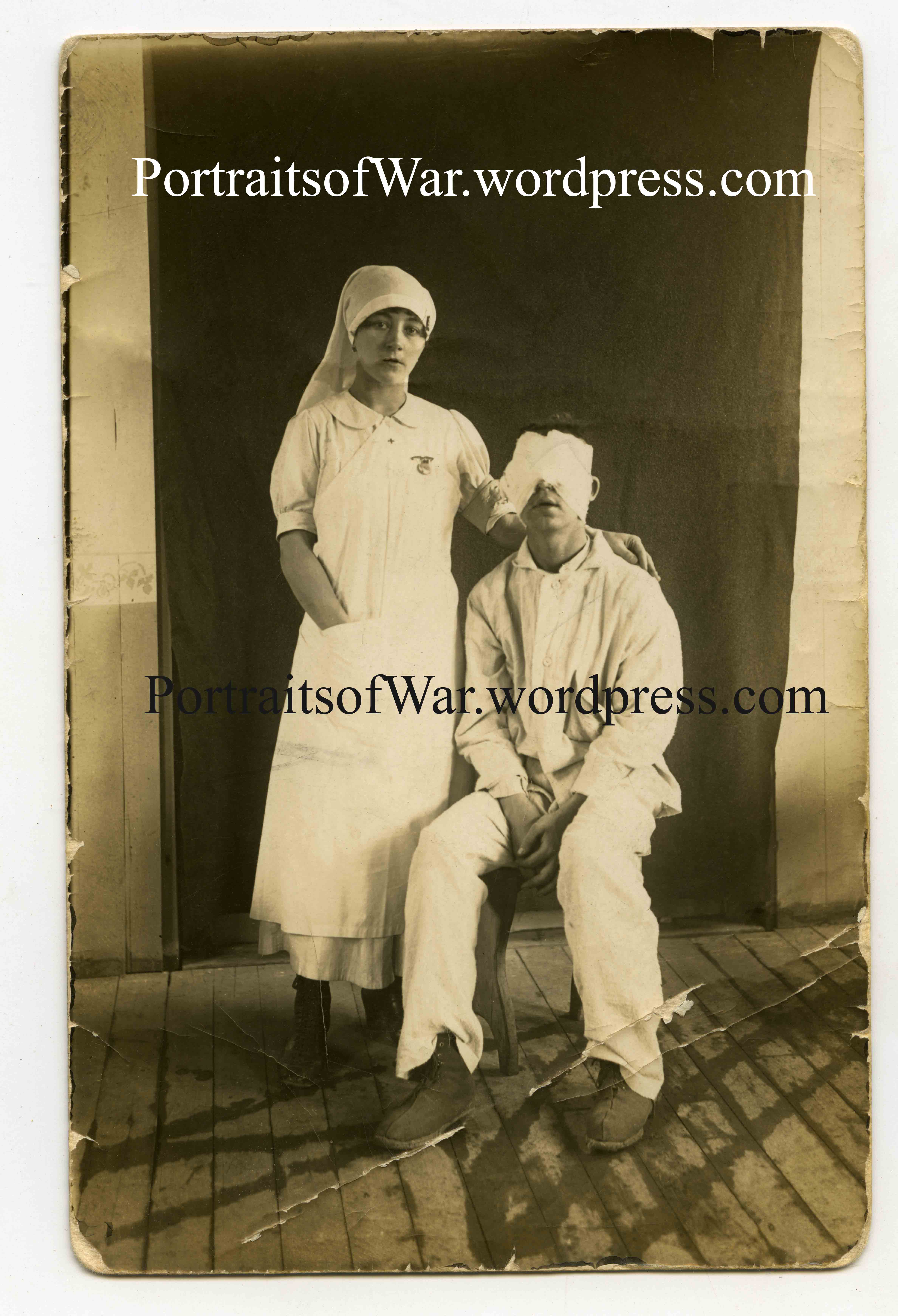
PFC. Andrew H. Knebel, 18th Company/5th Marine Regiment
PFC Andrew H. Knebel, 18th Co./5th Marines – Lost both eyes during WWI
The story behind the above photograph of PFC Andrew H. Knebel of the United States Marine Corps is one that pulled at the heartstrings of the American populace during the war. I was lucky enough to acquire the photo from a fellow collector/friend of mine who I had helped aid in the identification several years previous. A faintly scribbled name on the reverse of the image took several weeks to properly identify, but we were eventually able to track down the story of the blinded Marine in the photo. Taken in a Paris studio in 1918, PFC Knebel is posed with a French nurse who has taken the time to wheel him (note the wet wheelchair marks) into the studio from a nearby hospital.
Details of Knebel’s wartime epic were tracked down in a Detroit Free Press article from 1919:
ANDREW KNEBEL (1897-1968), of the United States Marine Corps, had been fighting the Germans for ten months before a sniper’s bullet, on October 4, 1918, entered bis left eye, passed through the right. The last, thing he saw on earth was light. The last sight he saw on earth was a clump of wet trees glistening in the morning sunshine in the Champagne sector. But it took a better marksman than the German sniper in one or those trees to pond a shaft through Andrew’s heart. Dan Cupid did that job, which has counteracted the calamity to such an extent that the twenty-two-year-old marine is ready to tell anyone that the law of compensation Is the surest thing in the world. Andrew Knebel, on July 11, married his nurse. Miss Anna D. Kelley who took care of him at the Baltimore Institute for the Blind. “If I hadn’t been blinded I wouldn’t have met Anna” he philosophized. “And I wouldn’t give her up for the sight, of my eyes not on your life. She’s the dearest, gentlest girl in the world. I guess one reason why I always liked her was because the treated me as if I wasn’t blind at all. She never pitied me. She’s a wonderful gal.
“Are you there, mother, old dear?”
He called, peering with empty eye sockets towards the kitchen, from which came a delectable aroma of baking apple pie. “May I have a light, mother?” “Destiny is a funny old bird,” the bride remarked, while Andrew’s rosy-cheeked mother was lighting his cigarette. “I didn’t want to go to the Baltimore institute to nurse blind boys. I did everything I could to avoid going. I was nursing at the Army Hospital at Camp Wadsworth when the chief superintendent asked for volunteers to go to Baltimore. I shied away from that chief superintendent for a week. But it was no use. She sent four or us.
“The Institute for the Blind at Baltimore is a beautiful place on a 100-acre estate which was. loaned to the government by Mrs. T. Harrison Garrett. When I’d see those boys feeling their way along the paths in that wonderful Elizabethan garden it took all the grit I had to keep from crying all the time and me an army nurse! Everything there is so beautiful that it hurt me to think they couldn’t see their own place.”
Institute for the Blind in Baltimore
“Then I got acquainted with Andy. I had often heard him singing, but hadn’t paid much attention to him. We nurses were pretty busy and we hadn’t much time for anything but work. He has a splendid voice sang second tenor with the battalion quartet, and he just couldn’t quit singing. They call him ‘the songbird of the Marines.”
“We were supposed to be cheerful to the patients, but Andy turned the tables and jollied the nurses. I’m afraid he jollied me a good deal. I got into tho habit of forgetting his handicap. Somehow I never can think of him as being blind. He finds his own collar buttons and adjusts his own neckties, and it’s almost uncanny the way he knows whether his clothes are pressed and bis shoes shiny. When he puts on his dark glasses and goes walking with me I don’t think a stranger would know he is blind. And you just ought to see him dance!”
“I’m being introduced to all sorts of new interests. For example, I never used to read the sporting page In the newspaper. Now, of course, it’s the first page I open, because Andrew is always in a hurry to learn the baseball and boxing news. I’m getting to be quite a fan myself.”
We were sitting in the dining room of the Knebel homestead at Irvington, N. J., where the young couple spent their honeymoon with tho bridegroom’s parents. Whatever life has in store for this youth who lost his eyes in the country’s service, anyone could see that there was a good deal of compensation in his convalescence, while two were engaged in a sympathetic rivalry which could do the most for him.
“Anna understands him so much better than I do,” his mother admitted. “I am so glad to have my boy back that to be doing things for him all the time. I keep reminding him that he’s blind, but his wife seems never to think of that. It’s wonderful to think that she’s going to care for him his whole life.”
Post-Identification
After identifying the photo and posting it to PortraitsofWar, I decided to do a little more digging and was eventually able to link up, via eMail, a few of the family members. I offered the photo to them, but apparently they had an exact copy (in much better condition).
eBay is a strange way to acquire antique photographs that have captured significant periods of world history. Here at PortaitofWar.com we strive to provide an interesting set of completely politically-disengaged weekly posts to highlight the importance of the first and second world war to a modern audience.
Two weeks ago I took a leap and purchased a photograph of a WWI foreign unit that I’ve been unable to identify until tonight:
It is never easy to identify someone from a photograph taken nearly 100 years ago, but it’s even more difficult solely based on obscure details from his/her clothing. In today’s blog post I will focus on a photograph purchased on eBay from a fantastic seller named Colleen ( eBay name: cacdivi) who recently sold me a superb French real photo postcard of an American chaplain posed in a studio during World World I (WWI). Here’s the shot:
Wounded American Chaplain in WWI
The scene is fairly typical of what was common of the time period: WWI soldiers/sailors/marine/nurses posed in photo studios in far off places in order to document their experiences to send to relatives and friends. In this case, a currently-unidentified US chaplain (see the crucifix on his shoulder and cap?) strikes a chin-up pose for a French photographer. How do we know that the photo was taken in France?
French Postcard Paper
French postcard paper during WWI almost always contains a central vertical dividing mark with CARTE POSTALE emblazoned across the top. I’ve noted a fair number of varieties likely due to differences in production, but the main bulk of French postcard paper of the period look very similar to the above scan.
Dissection of Photographic Context
What are we looking at? I’ve already mentioned that the man posed in the photo is a US chaplain in a French studio during the war. But what details have I been pondering while waiting for the photo to arrive in my mailbox? (Thanks to Colleen – you rock!)
The chaplain has served at least six months in Europe
His Left Sleeve (6th Months Overseas Service) Right Sleeve (Wound Chevron)
He was wounded or gassed at least once during his service
His Right Sleeve: Wound Chevron
The photo was likely taken during wartime (before the armistice)
He is oddly sporting a mustache and goatee
Rarely Seen Facial Hair in WWI
He is wearing an identification bracelet made in France
WWI Bracelet Made in France
Why is a photograph of a wounded chaplain posed in a wartime studio worthy of devoting hours of research to? According to a website devoted to military chaplains, the number of wartime chaplains during WWI was incredibly low:
In 1918, Congress passed an act that called for one chaplain for every 1200 officers and enlisted men. Bishop Hayes, in a letter to Cardinal Farley, informs Farley of the current number of chaplains overseas. As of June 1918 there were 301 chaplains in the Army, 30 in the Navy, 7 with the Red Cross, 2 interpreters, and 95 volunteer or Knights of Columbus chaplains.
This photo most likely represents an Army chaplain included in the above June 1918 census: any US chaplain who served at least six months service would’ve been present in France in June of 1918. And to have been wounded or gassed, our unidentified chaplain was likely present during the earlier battles of the US involvement of the war.
Our Chaplain?
Okay, so we know our chaplain was wounded, was photographed at some point in the spring or summer of 1918 and likely served in an Army division that arrived early (for the Americans). His identity, based on date, is narrowed down to 1 in 301 – a pretty good number when it comes to identifying a photo taken 100 years ago. Also, based on rules, he has to be less than 45 years of age.
But what was required to be a US chaplain in WWI? Before researching this photo I had no idea of the low number of volunteers or the actual requirements for acceptance. My personal photo collection contains a half dozen photos of chaplains, which is a surprisingly high number based on the scarcity of the subject matter. I was lucky to track down a copy of the rules and regs of chaplainhood here: http://archnyarchives.org/2015/11/10/military-chaplains-in-world-war-i/
Official Chaplain Requirements
Requirements for Commissioned Army Chaplaincies
The law provides that no person shall be appointed chaplain in the Army who on the date of appointment is more than forty-five years of age.
Applicants must be a citizen of the United States either by birth or naturalization. Must produce at examination proof of naturalization and must not have been born in enemy alien territory.
Health and eyesight must be in excellent condition; if glasses are worn sight must be at least 12:20 in each eye without glass.
Weight must be proportionate.
Must produce an examination certificate of graduation from an approved College or Seminary which includes collegiate course. If not a graduate candidate must be prepared to stand mental test in general subjects: history, geography, arithmetic. etc.
It is most desirable that each applicant write a letter addressed to the Secretary of War setting forth fully his qualifications such as experience with societies, clubs, dramatic circles, and knowledge of foreign languages. This letter must be be enclosed with application and sent to the Chaplain Bishop.
Formal application must be made on regular blanks made by the War Department. These Blanks should be applied for to the Ordinariate, 142 East 29th Street, New York City.
Must enclose to the Chaplain Bishop a formal letter of permission from his Ordinary.
Must send a small photographic print of himself.
1918 Chaplain Application Form
For now I have a good bit of information to extend my research with. Until then, stay tuned!