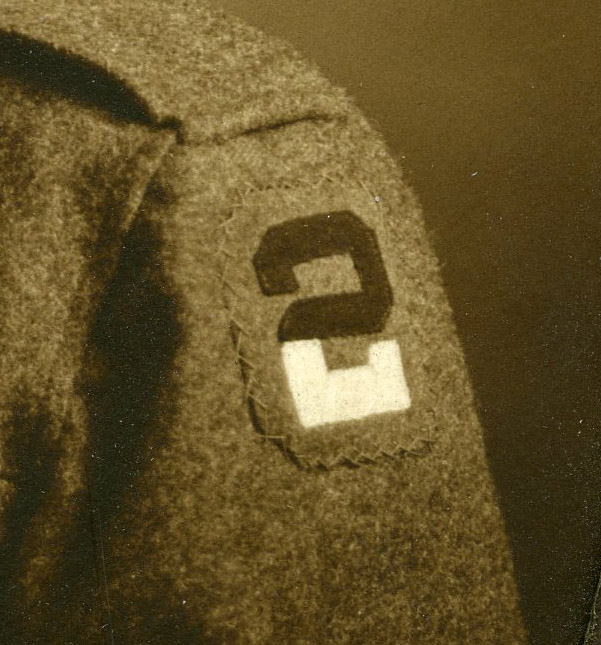
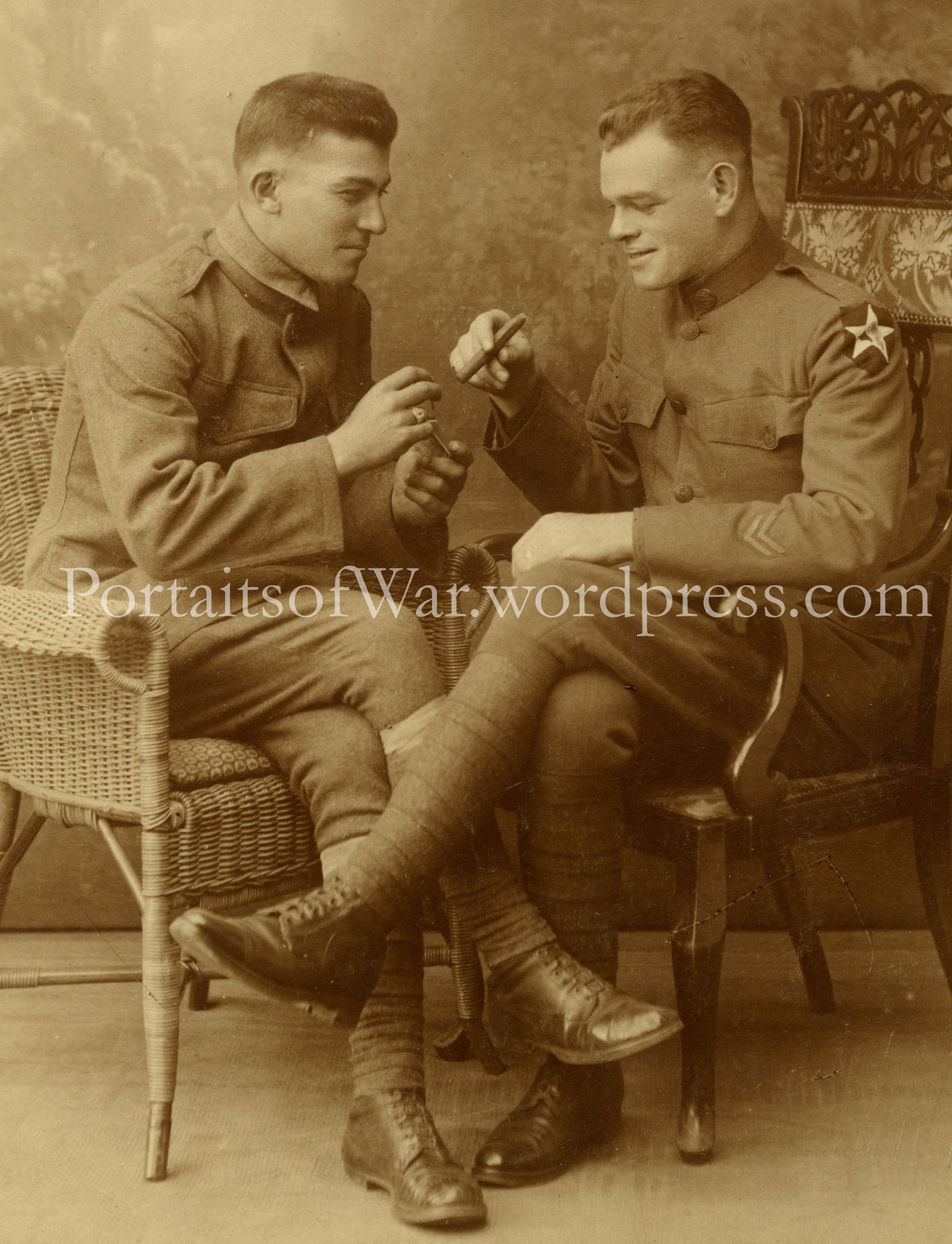
The German use of props and chair settings in portrait photography never ceases to amaze me. In this photo, two 2nd Division doughboys pose for the camera as they light up a cigar. Slightly cropped down from a normal sized postcard, this image exudes the confidence and attitude of post-WWI Ally nations. Light one up for Uncle Sam!
World war one
WWI 107th Infantry Regiment, 27th Division NY KIA Portrait Photo – Harold E. Manners – Meuse-Argonne Offensive
I picked up this little gem in a Palmer Massachusetts antique store a few months back and never took the time to look at the photo closely until this past week. The frame was intricately created; something not often seen in run of the mill WWI photos. The gold stars on the corners and bottom of the image should have been a dead giveaway. Once I decided to look at the photo a little closer, I took the frame apart from the back and began to uncover the identity of the soldier depicted in the image. I knew he was a member of the 7th Infantry Regiment; this was evidenced in the collar disc. The 7th New York eventually became the 107th Infantry Regiment of the 27th Division. Harold was in Company H.
The reverse of the photo was beautifully inscribed with everything I needed to know to track this fellow down.
Harold Edward Manners
Killed in France in the
Great War, Sept. 29th 1918
aged 23 years
After extensive research I’ve learned that Harold was killed during the operations before the Hindeburg Line east of Ronssoy, September 29th, 2918. His citation for the day reads:
“This soldier, with great gallantry and determination, advanced against unusually difficult enemy positions composed of strongly fortified machine gun nests until killed.”
I found an auction result online that showed his medals which were sold in 2008 at an auction in NY. A beautifully inscribed NY veterans medal for a KIA was included. I wish I had that grouping!
WWI 78th Division Portrait Photo – Wounded
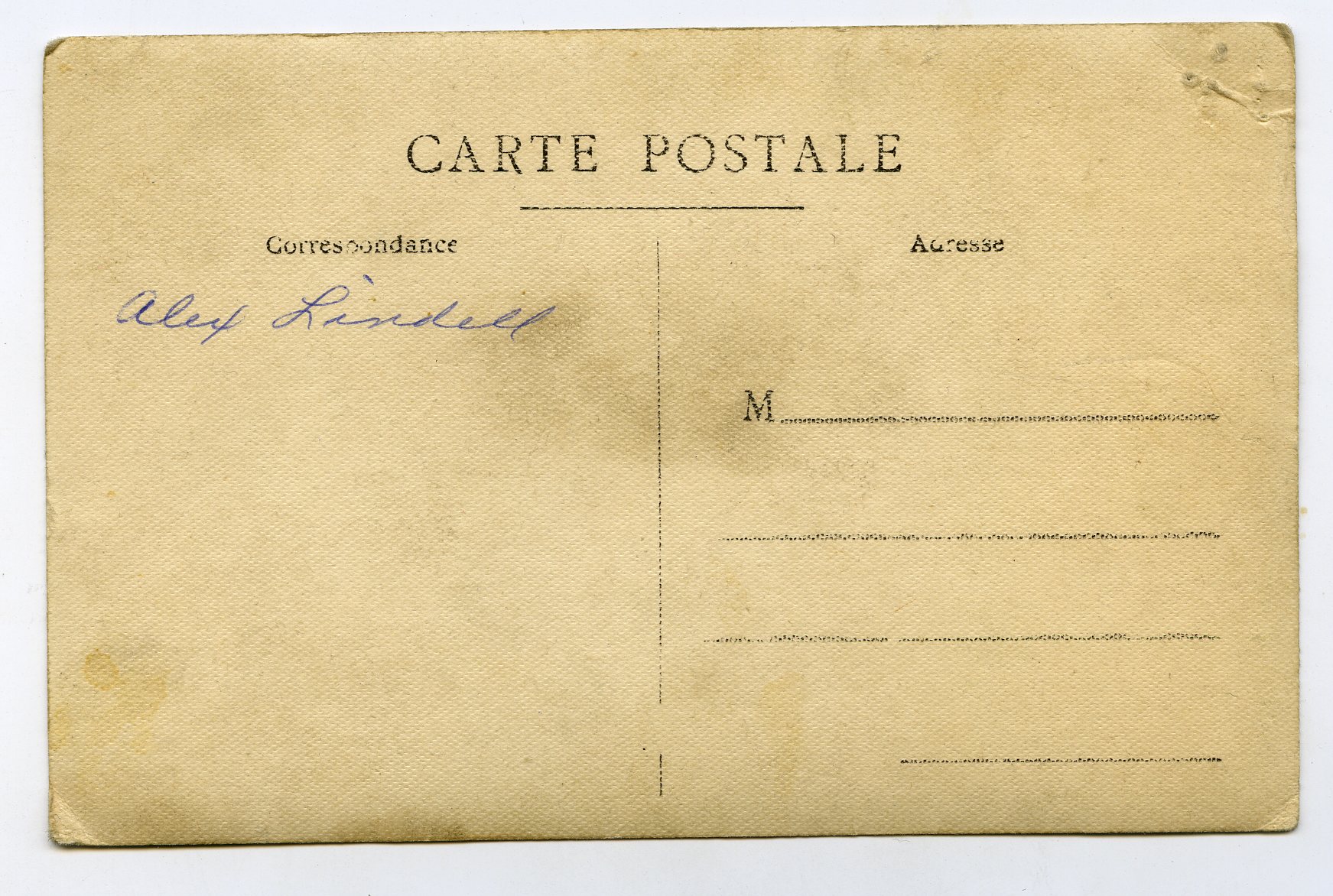
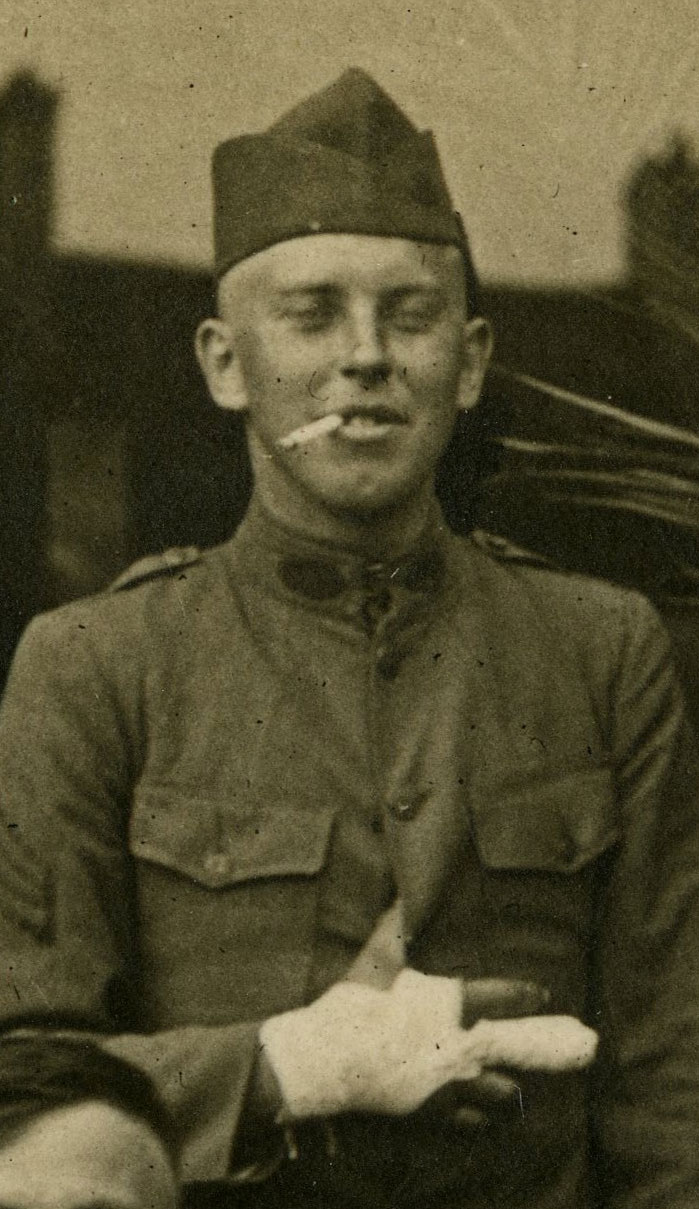
Today’s post comes from my growing collection of 78th Division portrait photos. Although we don’t know his specific unit designation, we do have his name and company. Taken in a French studio, Alex Lindell was posed in a manner which allows the viewer to see his maimed hand. The fact that he was wounded is evidenced by a visible wound chevron on his right hand sleeve. The stitching is barely visible.
WWI 79th Division Veteran w/ Purple Heart and Uniform in the 1940s – IDENTIFICATION UPDATE
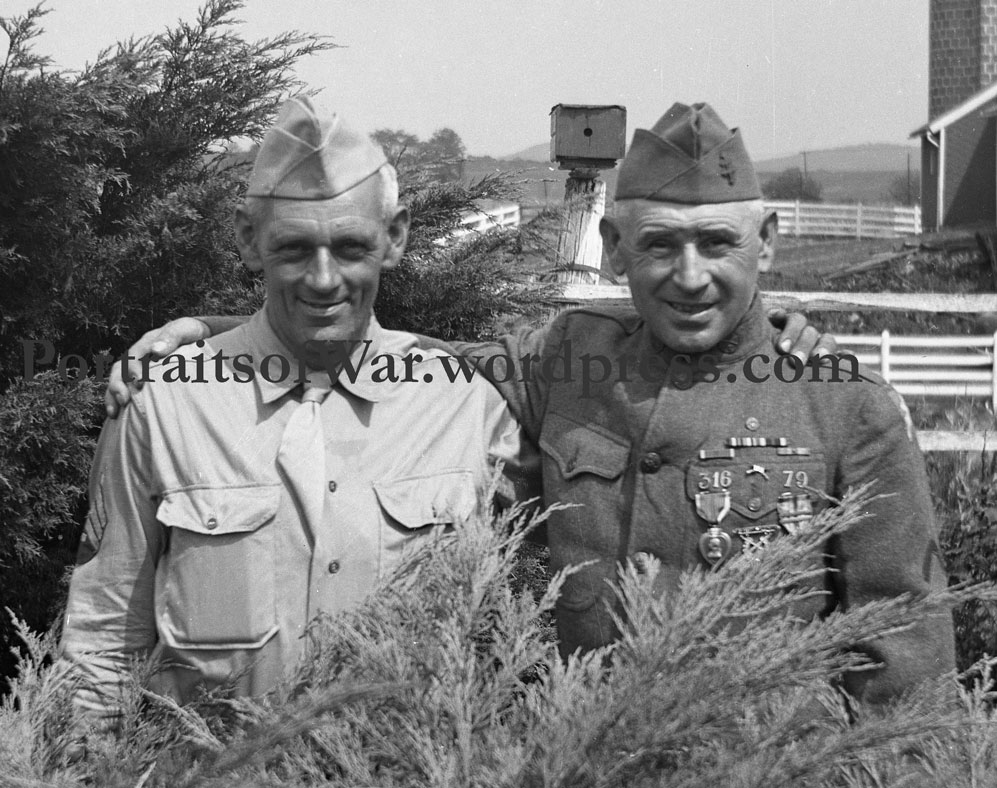
A wonderful set of negatives from a family in Pennsylvania shows the lighthearted side of aging WWI veterans. An elderly member of the 316th Infantry Regiment of the 79th Division pals around with friends and family while showing off his war medals. A Purple Heart medal was awarded to our subject for wounds received in battle, and was likely delivered to him in the early 1930s when the current medal was officially created. Enjoy the images!
June 22nd, 2022 UPDATE
Incredibly, an ancestry geek like myself whose husband is related to the WWI veteran above was able to positively identify the veteran after searching online and finding this site. Special thanks to Amanda who provided me with the name of Elmer Brandt Sweigart to pin to the name of the elderly WWI vet.
WWI Photo – Wounded Doughboys Rest w/ Mascot Dog and Pretty French Girl
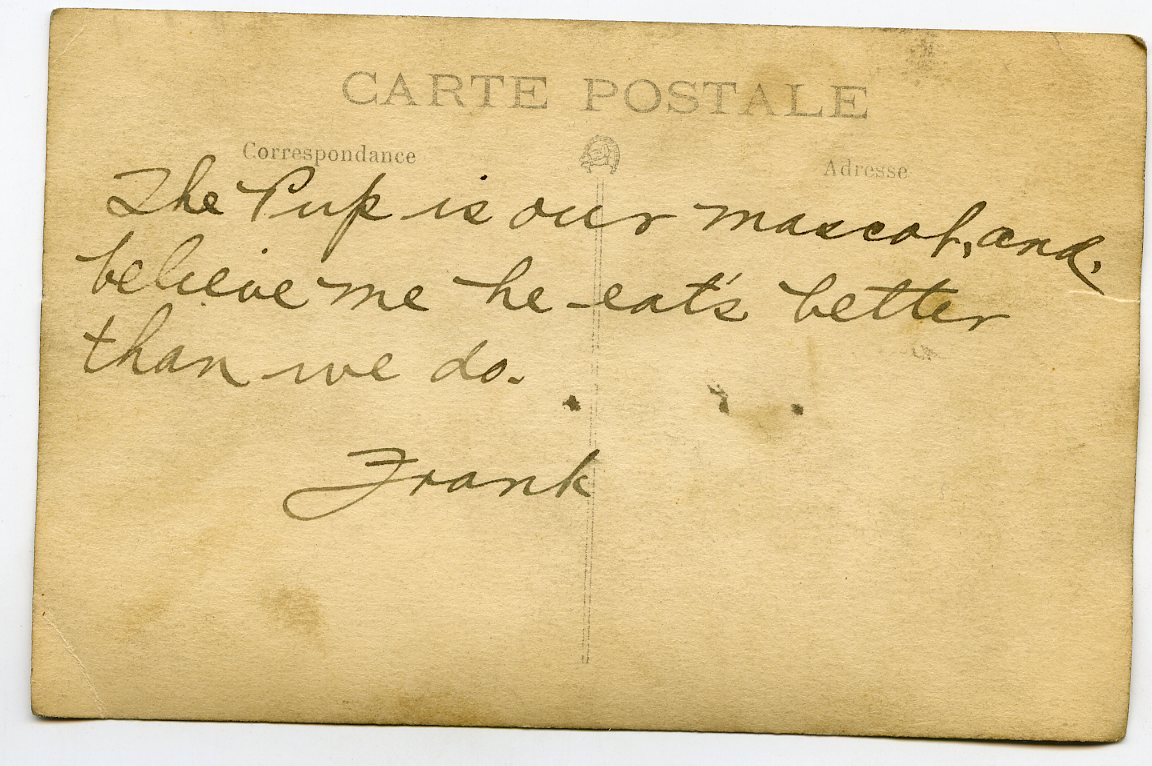
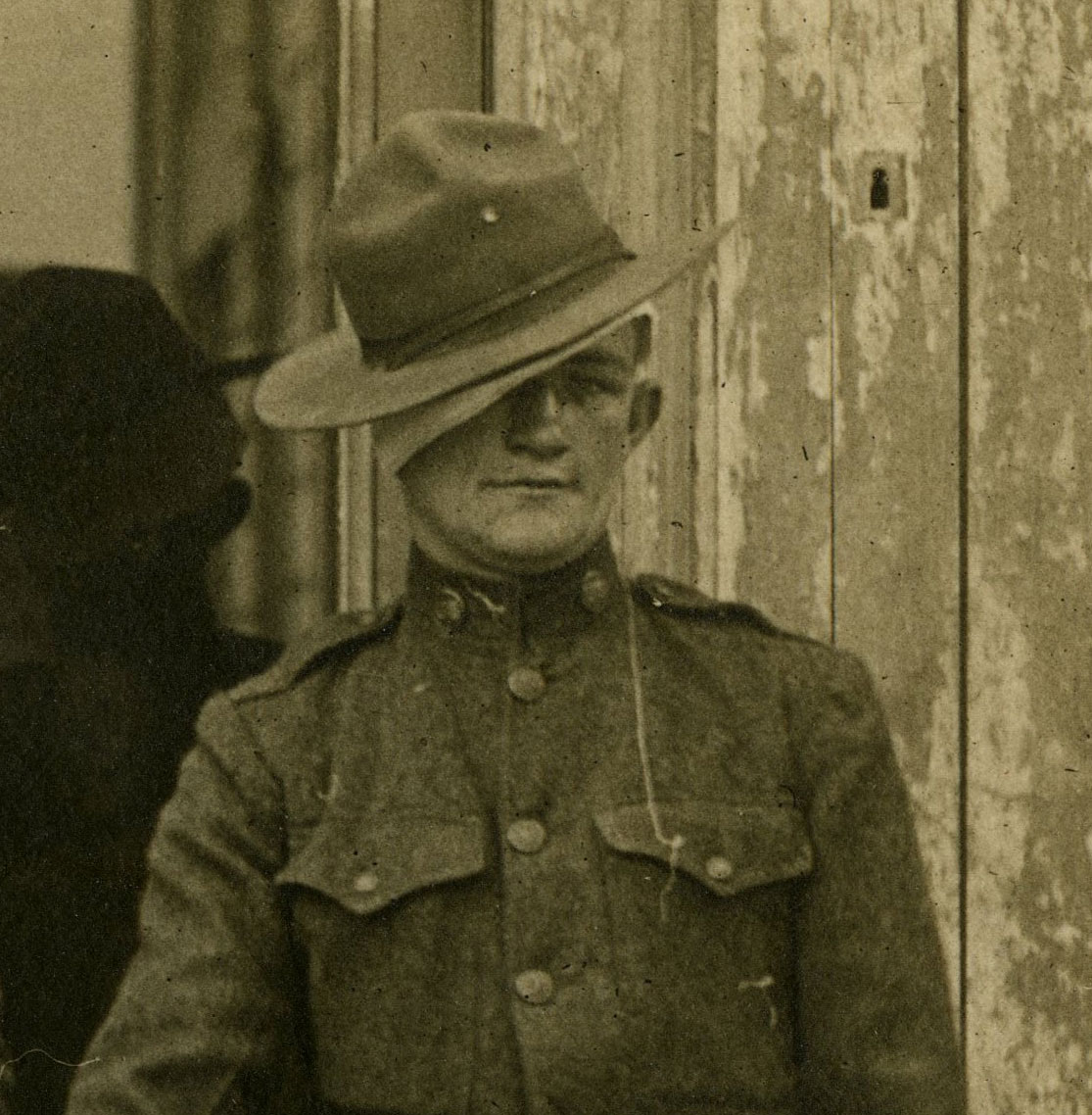
A fabulous shot of a group of doughboys taking some much needed R&R in a French city. A busty French girl stands in the doorway as the men pose for a photo. Just read the back! A superb WWI dog mascot photo with great content. Note the two wounded soldiers – one with a face wound, the other with a broken hand.
The details of the image pop out once the casual observer steps back from noting the obvious and begins to look for subtle details. Notice the reflection in the window? How about the stone gutter along the street? The hastily buttoned blouse of the facially wounded soldier? Enjoy!
WWI 26th Yankee Division Medic Studio Portrait
Straight from the bowels of my studio portrait collection comes this well-composed studio image of a Yankee Division medic. Judging by his discharge stripe on the left sleeve of his tunic, I would say that this photo was taken upon his return to the States in 1919. Other visible insignia include an OS chevron and a Yankee Division pin on his cap. Another great 26th Division shot!
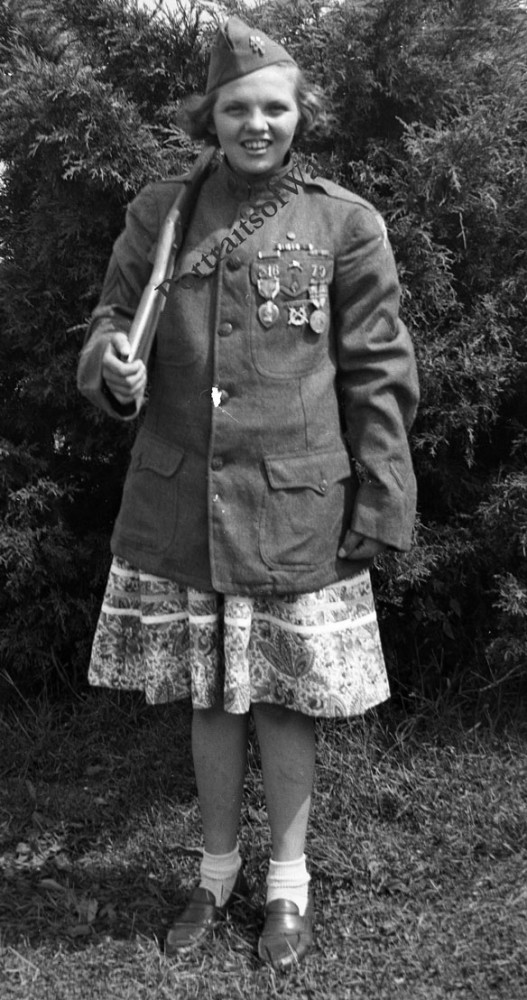
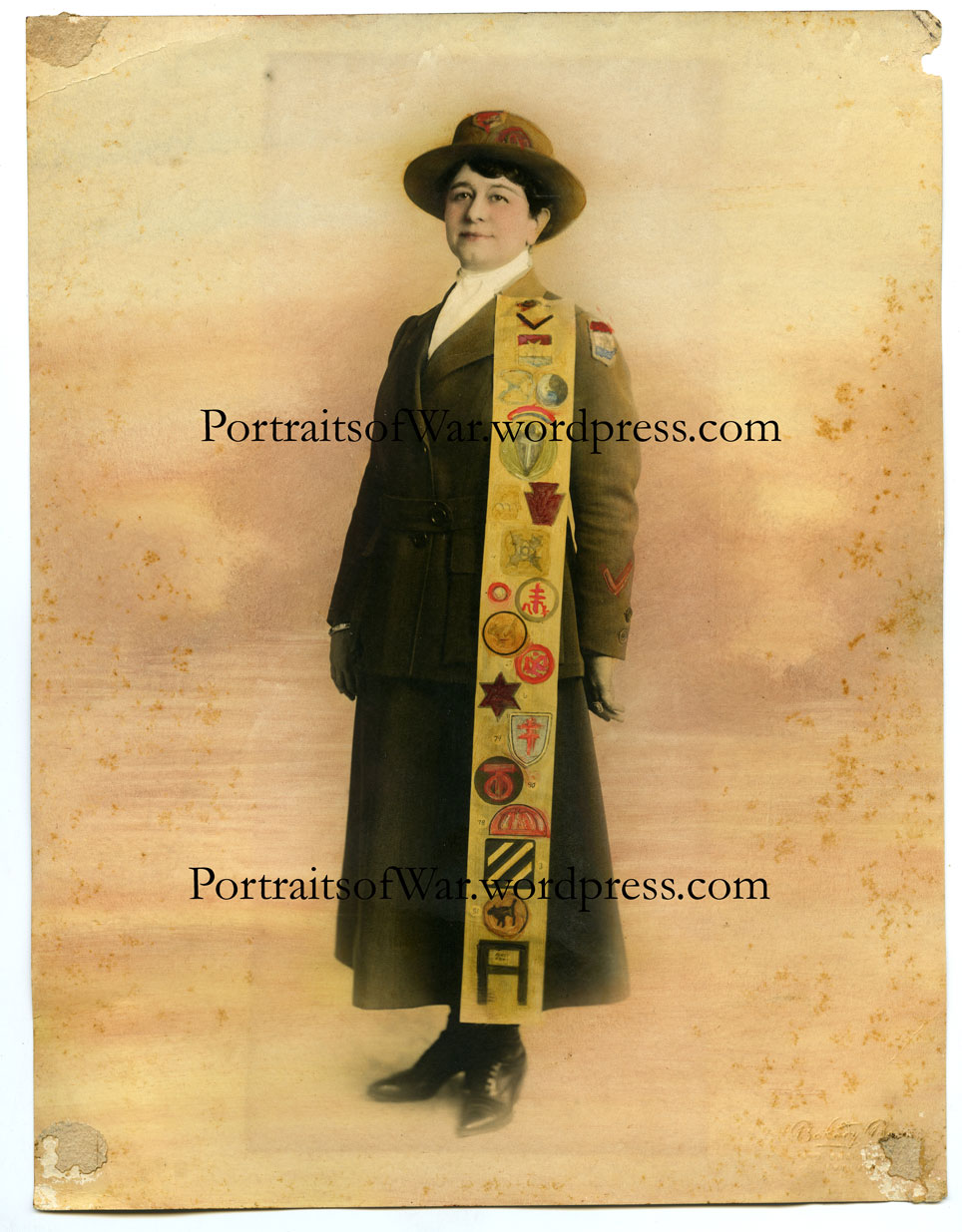
WWI Female Service Studio Photography – Women in WWI
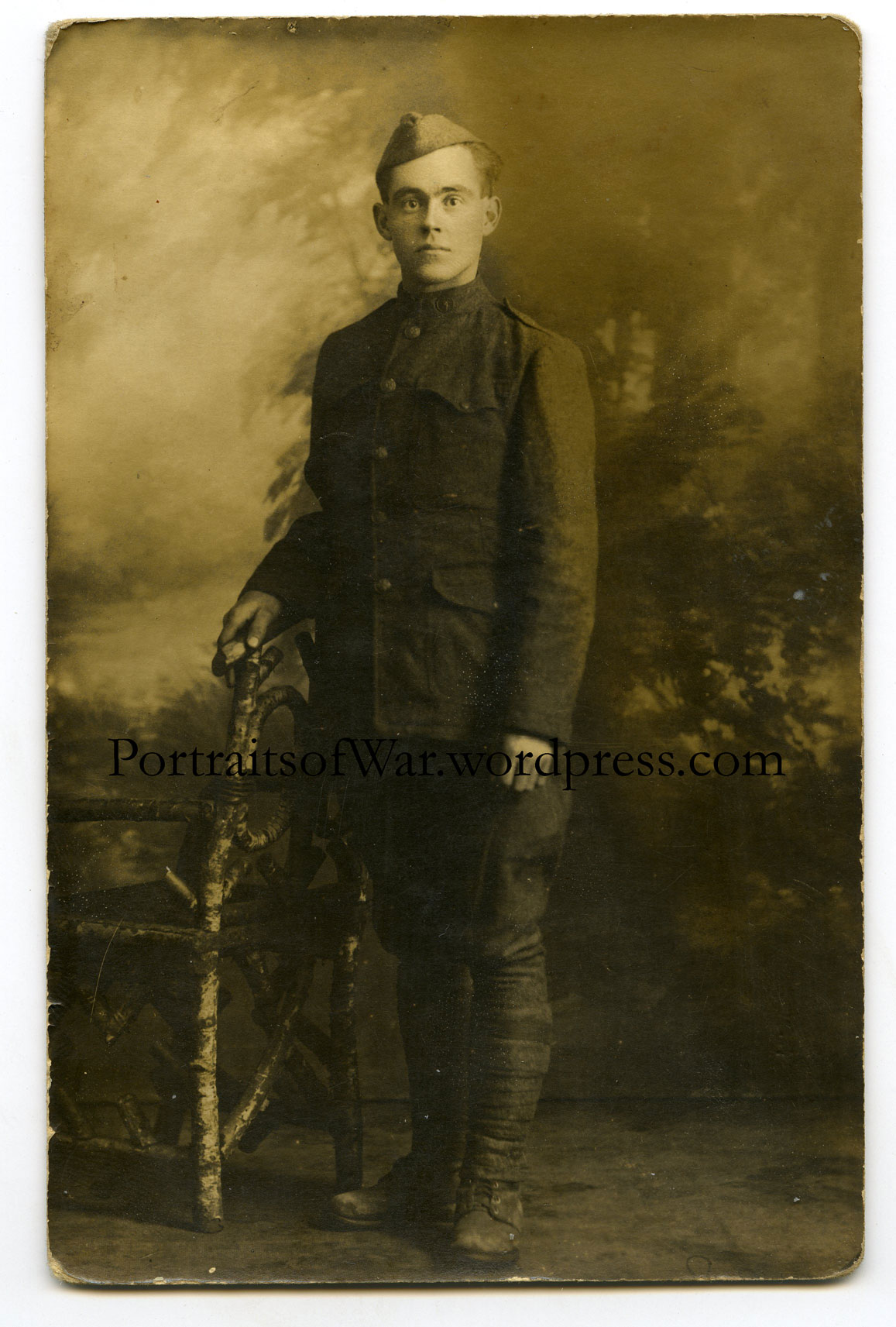
WWI 12th Veterinarian Hospital RPPC Photo Pair in Treves Germany
Straight from the bowels of a poorly listed eBay auction comes this tantalizing pair of WWI photographs. At first glance the images seem to contain little information to help aide in their historical dissection, but upon further sleuthing I found some clues to their identification. After scanning the first image on my super-duper Epson V700 scanner (awesome BTW), I zoomed in on the wagon using Photoshop. The name VET HOSP 12 can be faintly seen between the wagon wheels. A quick google search yielded a website dedicated to the 12th Veterinarian Hospital, which dealt with the care of horses during the Occupation period. I looks like the hospital was started in late December of 1918, and continued to service 3rd Army horses for the bulk of the Occupation.
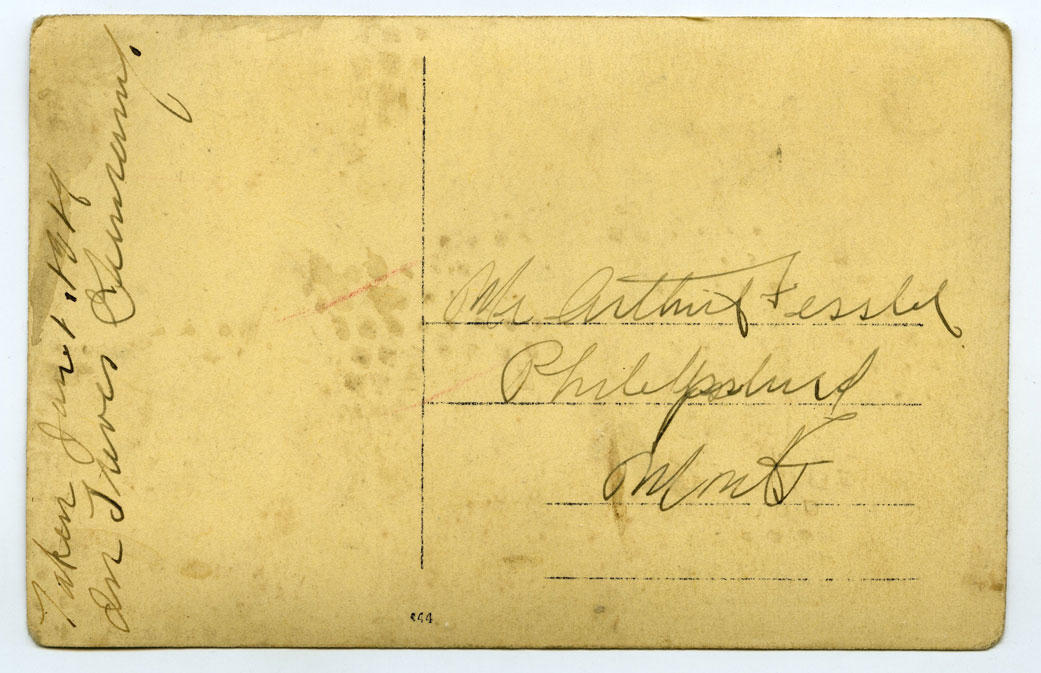
The obverse of the second RPPC shows a date and location of January 1st 1919 in Treves Germany made out to a Mr.Arthur Fessler (hard to make out the last letter) in Philadelphia, PA. The card is a German postcard paper, and the style of chair is one I see almost exclusively used in German portrait studios of the period. The young doughboy is not wearing a shoulder sleeve insignia (aka Patch) but I assume he soon received one, as the first photo shows the patch in wear.
Interested in learning more about the 12th Veterinarian Hospital? Check out this site:
Or check out the U.S. Army Veterinarian Corps Historical Preservation Group Facebook page:
WWI Belgian Mascot – 31st Engineers Doughboy Photo Postcard
As I’ve mentioned before, one of my favorite areas of collecting is the mascot photo. Almost every unit had a mascot; commonly a dog or puppy, or sometimes a woebegone French or Belgian child. In this case, a young boy poses in a well-tailored uniform as the mascot for the 31st Engineer Regiment. What a stellar find!
Amazing 103rd Infantry Regiment Field Written Poem – “Somewhere in France” – 26th Division
Sometimes a true gem will turn up among the pages of boring WWI eBay listings. In this case I was able to purchase a small lot of photos and letters for less than $10, and discovered an amazing field written poem by a battalion runner in the 103rd Infantry Regiment of the 26th “Yankee Division” (my favorite division BTW). Although the photos that came with the grouping are unrelated to the 103rd, I thought I would post the poem and transcription as a memorial to all those who died in the trenches of France. Memorial Day is only a few days away and I think it is a fitting tribute to the men and women who served during the First World War.
Please visit Soldier’s Mail for other photos and interpretations of further 103rd Infantry Regiment related material.
Written at Apremont France by Battalion Runner Blanchard of Company F of the 103rd Infantry Regiment of the 26th Division
Somewhere in France
I
A soldier boy lay dying,
On a road “somewhere in France;”
he had tried to get through a barrage
Tho he knew he stood no chance.
A pal knelt down beside him
While the tears ran down his cheek
For this soldier was his lifelong friend
And he longed to hear him speak.
II
When the dying soldier opened
Up his eyes, and look around
And saw his dear old pal
Kneeling side him on the grounf
He smiled and said “They got me Jim
Yes got me with a shell.”
“My orders were to take this note
Through water, fire and hell.”
III
“Take this message Jim and run it thru
Do not stop for me
It means two hundred lives and more
Its for our company
Fritz made a fake attack this morn
Just it break o’ day
If you can only get it rhu
We’ll make those dam Huns pay”
IV
“And when you get around to it
Just write a line or two,
To my mother and my sweetheart Jim
Old pay so good and true;
Tell them I tried to make it
Thru gas, barrage, and shell
That my resting place is heaven
For I when there thru a hell.”
V
Then the dying soldier closed his eyes
His pal with tender care,
Gently laid him down
And smoothed his bloody ruffled hair,
And with a sob of anguish
He started down the road,
In his hand he held the message
That was written out in code.
VI
Jim got the message there in time
To quell the Germans’ bluff,
He told the story to the boys
How the blood got on his cuff,
The dying words of Bill his pal
A runner dead and gone
And the company paid their last respects
To the brave but silent form.
~Wrote at Apremont by Batt. Runner Blanchard
At the conclusion of a dream – YD Co. F 103. Inf.