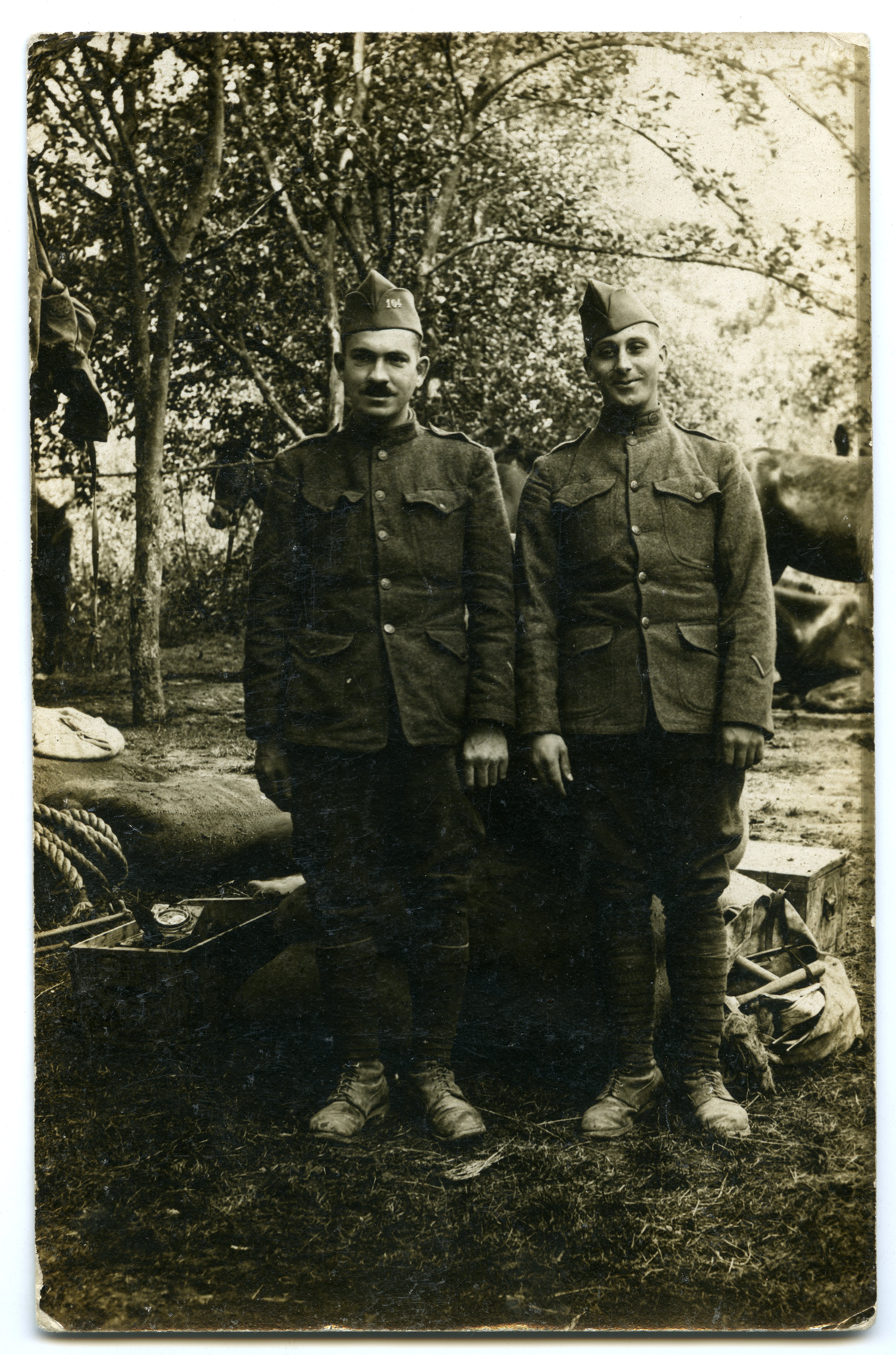
Roy H. Oplinger and the 158th Aero Squadron Survive the Sinking of the SS Tuscania


Survivors of the Sinking of the SS Tuscania

The 158th Aero Squadron and the Sinking of the SS Tuscania

On the night of February 5, 1918, the troopship SS Tuscania was steaming off the coast of Islay, Scotland, when it was struck by a torpedo fired from the German submarine UB-77. The liner was carrying over 2,000 American soldiers bound for the Western Front as part of the earliest waves of U.S. troops to join the fight in Europe.

Among those aboard were men of the 158th Aero Squadron, a newly formed Air Service unit. Organized in late 1917, the squadron was composed largely of young Americans who had trained in Texas before embarking overseas. Their mission would be to support the burgeoning U.S. Air Service in France, a much needed element of warfare in the late stages of WWI.

When the torpedo struck, chaos erupted. Lifeboats were launched into rough seas, and the darkness made rescue operations difficult. British destroyers and local fishermen rushed to aid survivors. Despite these efforts, more than 200 soldiers and crewmen were lost, making the Tuscania the first U.S. troopship sunk in World War I.

Footage of the Survivors of the Tuscania Sinking

The men of the 158th Aero Squadron were among the survivors. Shaken but determined, they eventually reached England and continued their training before heading off to France. Looking at this group portrait, it’s striking to think that every face here carries the memory of that night in the frigid waters of the North Channel. For the men of the 158th, their war began not in the skies over France, but in the dark Atlantic, clinging to lifeboats and praying for rescue.

Roy Oplinger and the 158th Aero Squadron

While the group photo provides us with an overall snapshot of the 158th Aero Squadron in the days after their harrowing ordeal, the photograph also highlights the wartime experience of an individual soldier who decided to send this image home to his family.

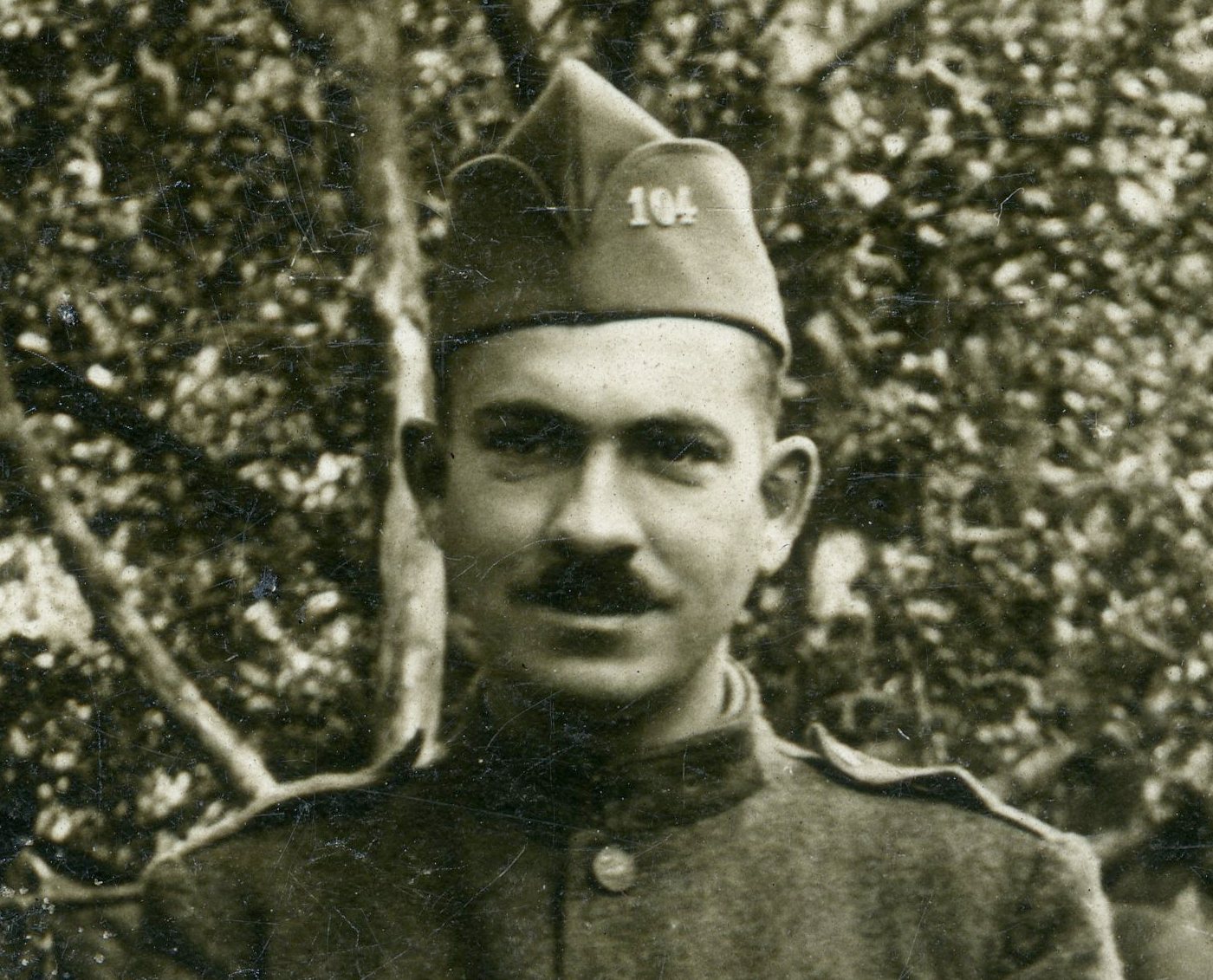
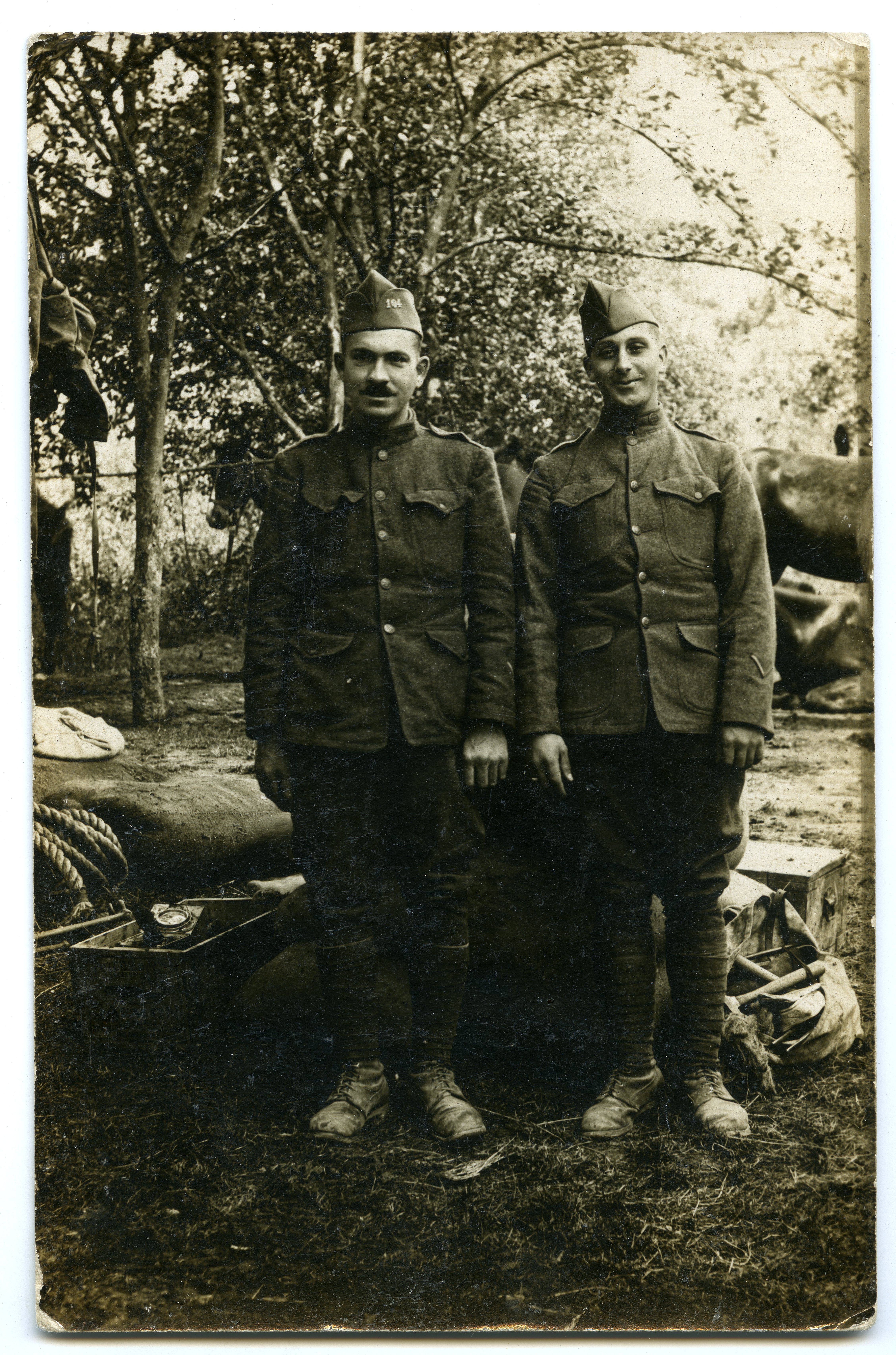
The reverse side of this English postcard has a few unique elements that help point towards the ID of the soldier who sent the postcard home in 1918. The first and obvious clue is that the photograph is likely related to someone who served with the 158th Aero Squadron. The following clues can be found on the reverse side of the postcard.

Reverse Side of Postcard

The additional clues are pretty obvious given the stamp at the top right-hand corner paired with the writing on the bottom. We know his name is Roy, and that his Army Service Number was 250033. Using the powers of ancestry.com and fold3.com I was able to identify the sender as Corporal Roy Holden Oplinger who served as a mechanic with the 158th Aero Squadron. Born on May 8th, 1896 in Danielsville, PA to Adam and Edna Oplinger, Roy went on to enlist for the draft on June 5th, 1917 with a listed address in Walnutport, PA. What doesn’t jive is that he was a private at the time of the sinking of the SS Tuscania, so it appears that he didn’t actually send this postcard to his family (if ever) until later that year when he was promoted to corporal in October.

Roy’s WWI Draft Registration Card

According to Roy’s WWI Pennsylvania Veteran’s Compensation Application, after enlistment he went on to serve with the 49th Aero Squadron (an obscure pursuit squadron) in August of the same year and then on January 8th of 1918 with the 158th Aero Squadron shortly before his departure aboard the SS Tuscania.
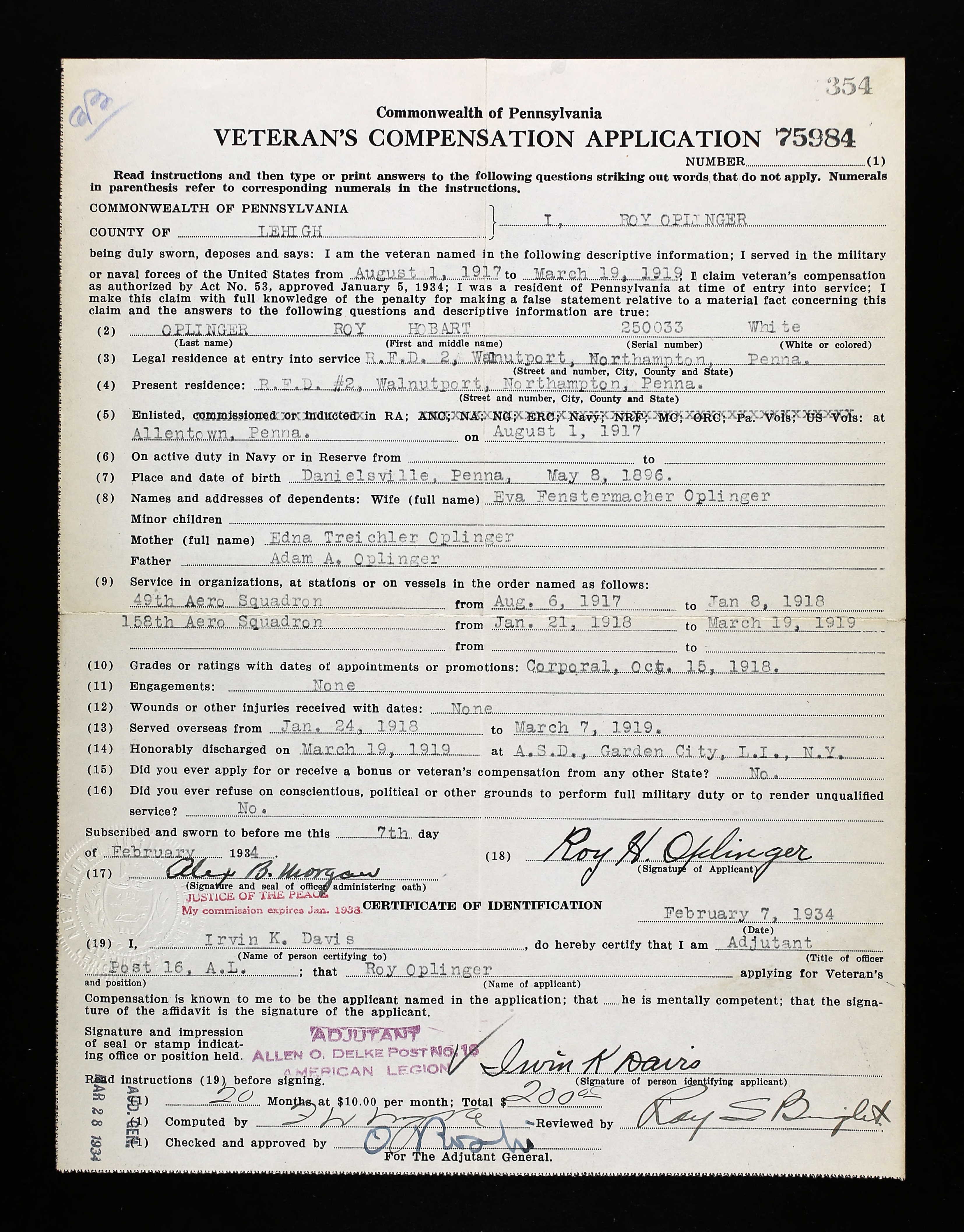
WWI Pennsylvania Veteran’s Compensation Application Form

A Letter Home to a Friend

In a rare stroke of luck, I struck photo researcher gold after searching for newspaper articles related to Roy’s WWI service. In this case, it looks like he sent a letter home to a close hometown friend, Samuel W. Danner on February 13th, 1918 only a few days before the group photo was taken. Anecdotes like this offer a rare glimpse into individual moments during the war, and I was lucky to stumble across it. Here’s a link to the The Morning Call, an Allentown, PA newspaper. Please disregard any typos in the OCR transcription of the article.

Roy H. Oplinger Private in 158th Aero Squadron now in France received the following letter: American Rest Camp, Winchester, England.

February 13, 1918. Dear Sir: best of health and hope you are well I will let you know that I am in the same in America. I will let you know that I have experienced the Torpedoing of the S. S. Tuscania.

The very first ship sunk with U. S. Soldiers on board. I had a narrow escape, I was on deck when we were submarined, but was soon floating on the Atlantic waters on a raft, shortly after we were struck about one hour and a half later we were picked up by a British patrol boat.

If the ship would have sunk as quick as the Lusitania, why I think we would have perished. The S. S. Tuscania went down some hours later, she was torpedoed about supper time somewhere on the Irish coast. How many lives were lost I am unable to tell.

Only a few of our squadron The clothing and my personal belongings I had with me are all the articles I have, all the rest of my stuff is at the bottom of the sea with the Tuscania. But my gold watch which mother presented to me as a present some years ago is out of commission as the salt water did not agree with her very well. I do not like the taste of it myself, it does not feel very comfortable to be in the water this time of the year. But I was kept warm as I was the only one on the raft that knew how to handle an oar. So you see what I had to do to get away from that sinking ship.

There is danger in being too near a sinking vessel as the suction will at times suck persons down that are near. I paddled along and when rescued we eight boys on the raft were a few miles from the ship. We were somewhat soaked. But I am dry by the time you received this letter. Ha Ha.

I will never forget that shock of that torpedo which hit us on that night February 5, 1918. The boys were brave and sang national hymns when we let her go down. Every soldier was coal as jar as I know not one was panic stricken, all left that ship in an excellent manner and can tell you from my experience what I have had in seeing a ship sunk. That you can thank God if you never have to witness that kind of a sight on a rough sea. I am sure glad that I am safe.

It was God’s will that only a few lives were lost in the ship wreck. I will sure do my best to do a little harm towards “Kaiser Bill” as he has to account for the lives that were lost on that cold night (you know). I am yours as before.

Address, Priv. Roy H. Oplinger, 158th Aero Squadron. A. E. (via) N. Y.

And Some Insight From a Friend

Fast forward to 2025, here’s some information about the photo from a WWI researcher friend of mine, Charles “Chuck” Thomas. Thanks Chuck!

Chuck’s Take

Here is a special image of the surviving members of the 158th Aero Squadron shortly after arriving at the American rest camp in Winchester, England. This squadron was aboard the Tuscania when it was sunk by a German submarine off the northern coast of Ireland 5 February 1918. When the 158th AS was reassembled at Winchester, it was determined that seventeen men had been lost during the sinking. After the picture was taken, the flying officers were sent to France for training and the enlisted members were broken up into four flights: one flight was sent to Beverly, Yorkshire and the other three went to Lincolnshire, England.

The squadron would later be reunited and sent to Issoudun on 27 September to finish out their service at that aerodrome.

The squadron officers were:

1st Lt. Phil E. Davant

1st Lt. Herbert B. Bartholf

1st Lt. J. W. Blackman (Gorrells has it spelled ‘Blakcman’ – typo?)

1st Lt. Merle H. Howe

1st Lt. Miner C. Markham

2nd Lt. Kenneth S. Hall

2nd Lt. Freeman A. Ballard

2nd Lt. LaRue Smith

2nd Lt. James McFaddan

Of note is the mixture of civilian attire with military uniforms being worn by some of the enlisted men.

I should also point out that the flag seen here was the only one saved during the sinking of the Tuscania by Corp. Guy W. Burnett.
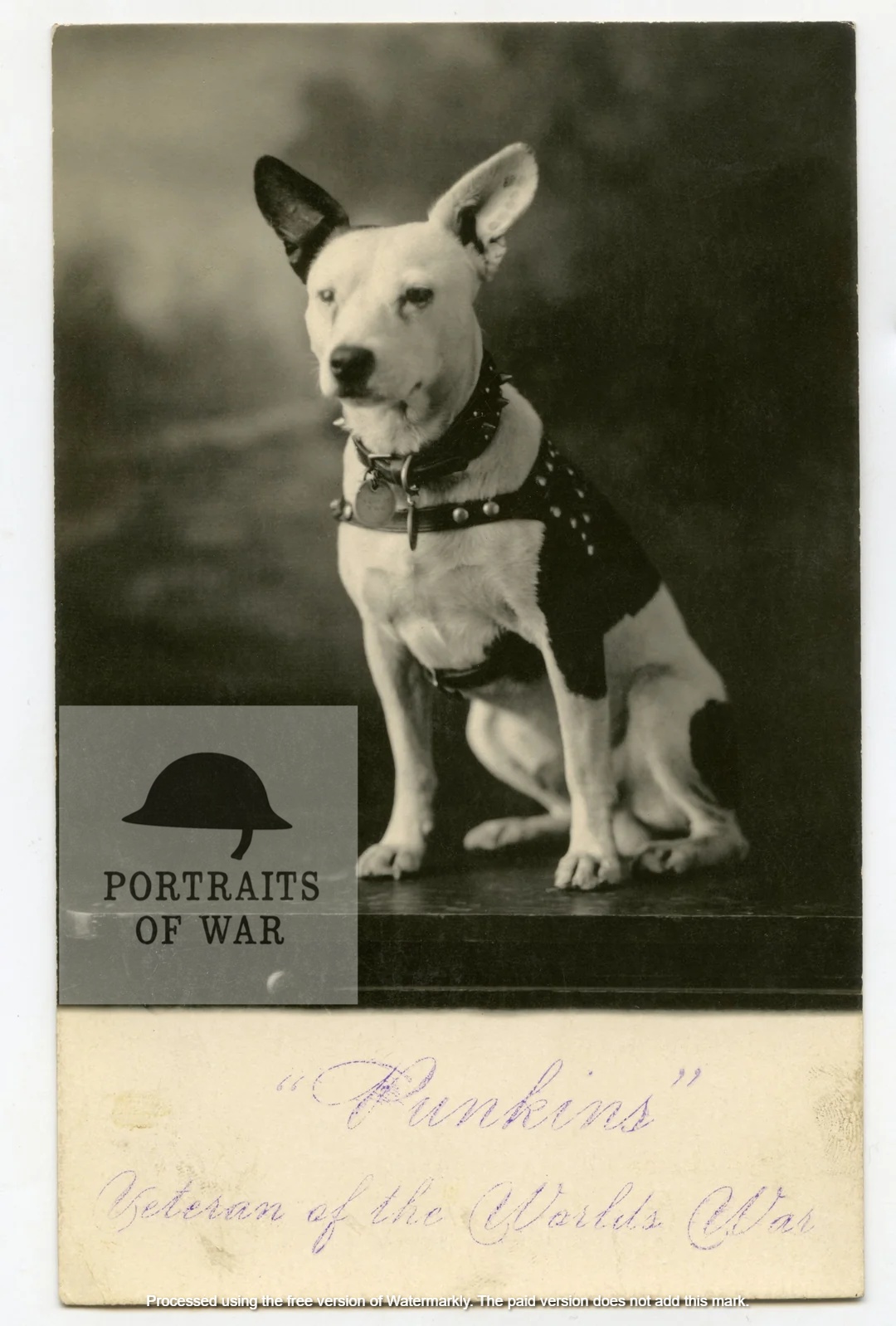
Meet Punkins – The Mixed-Breed Bull Terrier and Official Mascot of the 27th Engineer Regiment in WWI


After taking a break from writing, I’m excited to finally share some of the fascinating WWI photos and research I’ve uncovered over the past few years, little hidden gems I’ve been eager to bring to light on this little corner of the internet. In this quick post you will meet Punkins, the official mascot of Company C of the 27th Engineer Regiment. Photographs of unit mascots during WWI are not exceedingly rare, but studio portraits of an identified mascot/dog are nearly impossible to find. Most, if they exist, were kept in personal albums or letter collections and discarded or forgotten about over the past 100+ years, but this shot of Punkins somehow emerged on eBay several years ago.

Punkins Posed for the Camera!

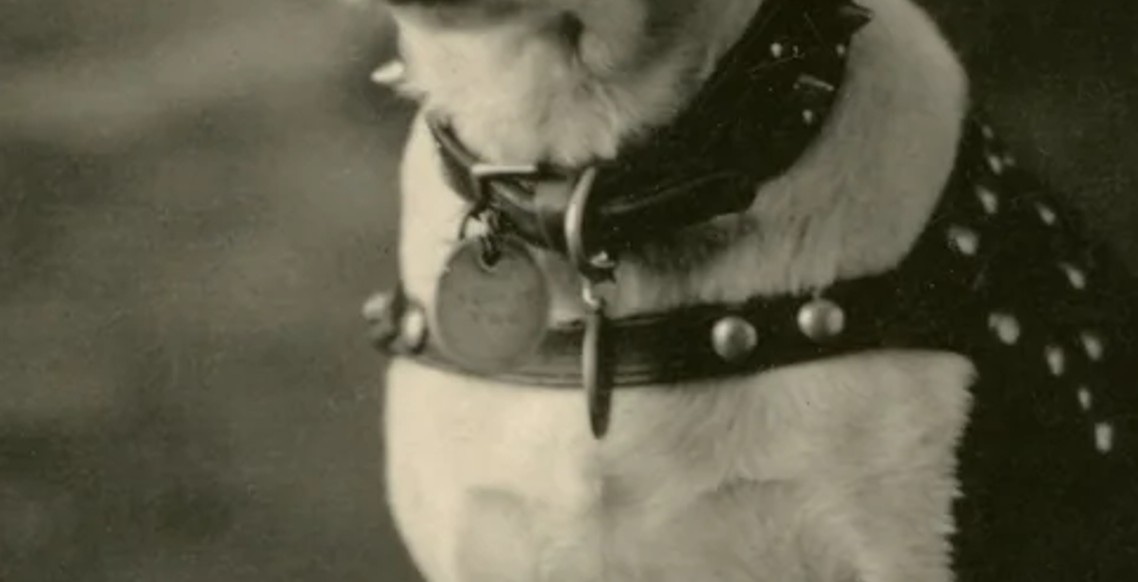
Sporting a studded leather collar and matching riveted harness, Punkins seems like a quite the bruiser, a fitting mascot for an engineering regiment during WWI. With just the image and brief stamped caption below (the stamping hints at a volumed production of photo postcards for veterans after the return home), it seemed a difficult task to identify the sitter based on contextual clues such as insignia or other identifying material. Although the postcard backstamp suggests a stateside printing of the postcard, I’m guessing the original photograph was taken in France or Germany and replicated stateside for dispersal to fellow soldiers who wanted photographs to remember their wartime experiences.

Luckily, I did some deep diving and discovered a digitized version of a unit history of the 27th Engineer Regiment that included a brief caption mentioning a ‘Punkins’ below a photograph of our mystery sitter with one of his wartime friends.

“Punkins” and PFC William H. Hall of Santa Clara, CA.

Punkins has now been identified as the regimental mascot of the 27th Engineer Regiment! Note that he is sporting a custom coat with markings and insignia showing he was a member of Company C. of the 27th Engineer Regiment with the First Army. His downward pointing chevron on the right means he served at least six months with the unit. Based on the background contextual clues in the unit history photo, this shot appears to have been taken aboard a return vessel from France to the USA in March of 1919. Private First Class William H. Hall of Santa Clara, CA was aboard the USS Dakotan, a US military transport ship that served in both WWI for the US and later in WWII for the Russians starting in 1942.

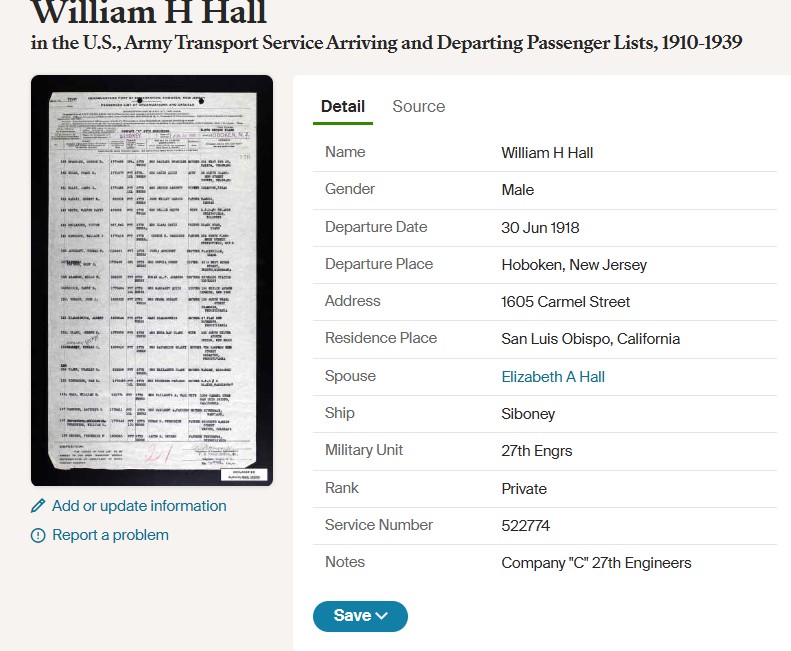
Pvt. William Hall heads to France in June of 1918

It’s unclear and likely impossible to know the circumstances of Punkins’ adoption by the 27th Engineer Regiment in WWI, but based on the visual info provided in the unit history, it’s likely that they were adopted at least three months before departure from France in March of 1919 which points towards an adoption date of August or September of 1918 while the unit was serving in Germany at the time. Punkins appears to be a Bull Terrier mix of some sort based on the pointed ears, coloring and general boxy frame. If anyone knows anything else about Punkins please reach out and share.

One last note – Punkins appears to be wearing an actual WWI US dog tag. Dog tags used by the US Army and Marines were primarily aluminum discs that could be hand punched with pertinent information bearing the owners name, unit, serial number and sometimes other personal touches. It looks like Punkins received a set of his own tags although the details are obscured. Note that the ridges on the left tag hole hints that they’ve been worn long enough to encounter some wear and tear. The circular tag to the right doesn’t seem to be a proverbial dog tag but some sort of other identifier or an actual DOG tag.

November, 2025 Update

It appears that Punkins sat for several photographs during his illustrious career as a mascot. Another eBay listing appeared a month or so ago (I didn’t win) that provided a bit more information about our sitter. Amazingly, we now know the birthdate, birthplace and wartime career of Punkins to a level of detail I never thought I would learn. See below for a transcription of the caption from the eBay postcard.

Nov. 2, 2025 Ended Listing for Another Punkins Postcard!

Punkins was born Dec. 30, 1917, in Baltimore, was mascot of Co. C., 27th Eng., was smuggled across on a transport in a suit case, thru the worst of the submarine zone, landed in France May 18, 1918. He spent nine months in the front line trenches, went over the top three times at the battles of Chateau Thierry, Argonne and St. Mihiel. He was gassed Sept. 28, 1918, in the Argonne. Punkins is the only dog that ever received an honorable discharge from the U.S. Army. He received a Medal of Honor from the French Government at Verdun, also wears the U.S. Victory button. Here’s to the Good Old U.S.A. – Punkins

Punkins’ “Other Portrait”

This secondary portrait of Punkins provides a very similar view but shows a few more details that “my” version does not include. Now, we can see a little more detail to the dog tag/medal attached to his collar.

The tag that I had originally assumed was some sort of identifier appears to have a castle at center which may be a 27th Engineers commemorative medal given out to members of that unit. See below (top left) for a possible match from the US Army Engineering collection website. (Image 16 in the first slideshow)

Possible Match to Punkins’ Medal

WWI 1st Division DSC Recipient RPPC Photo


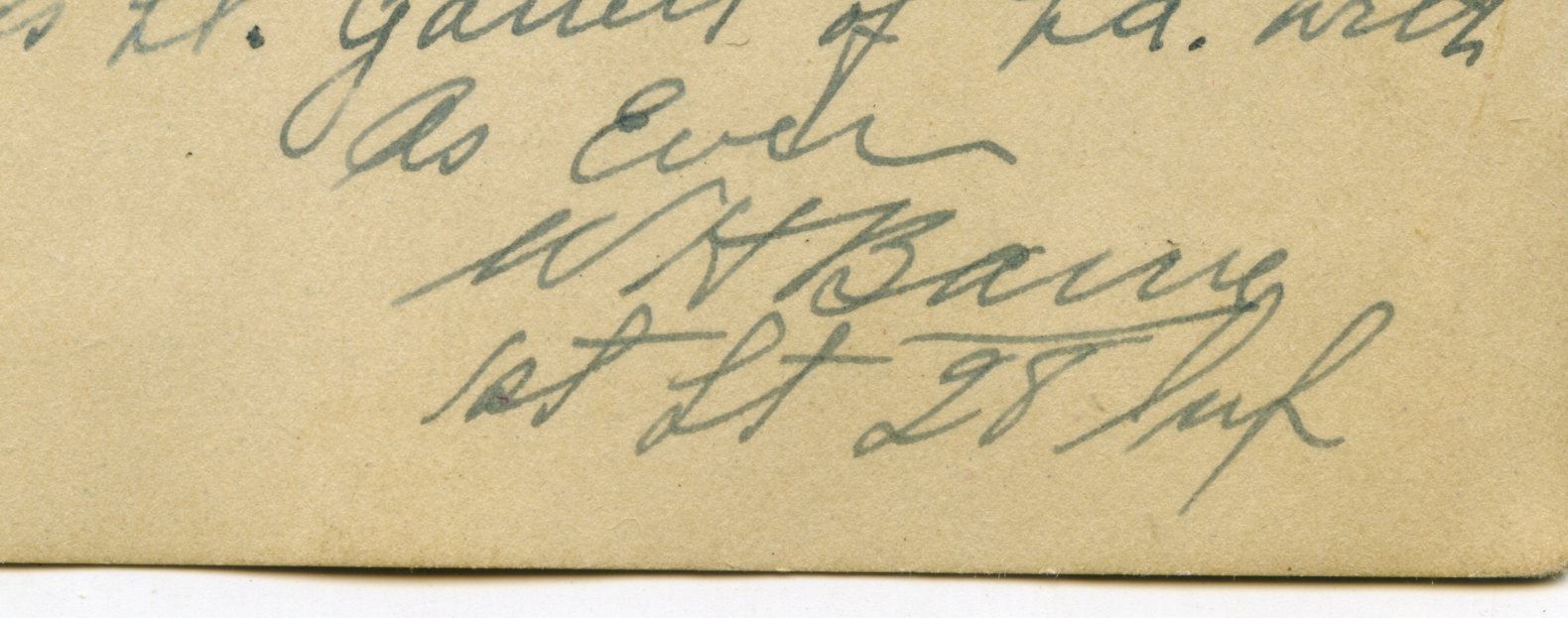
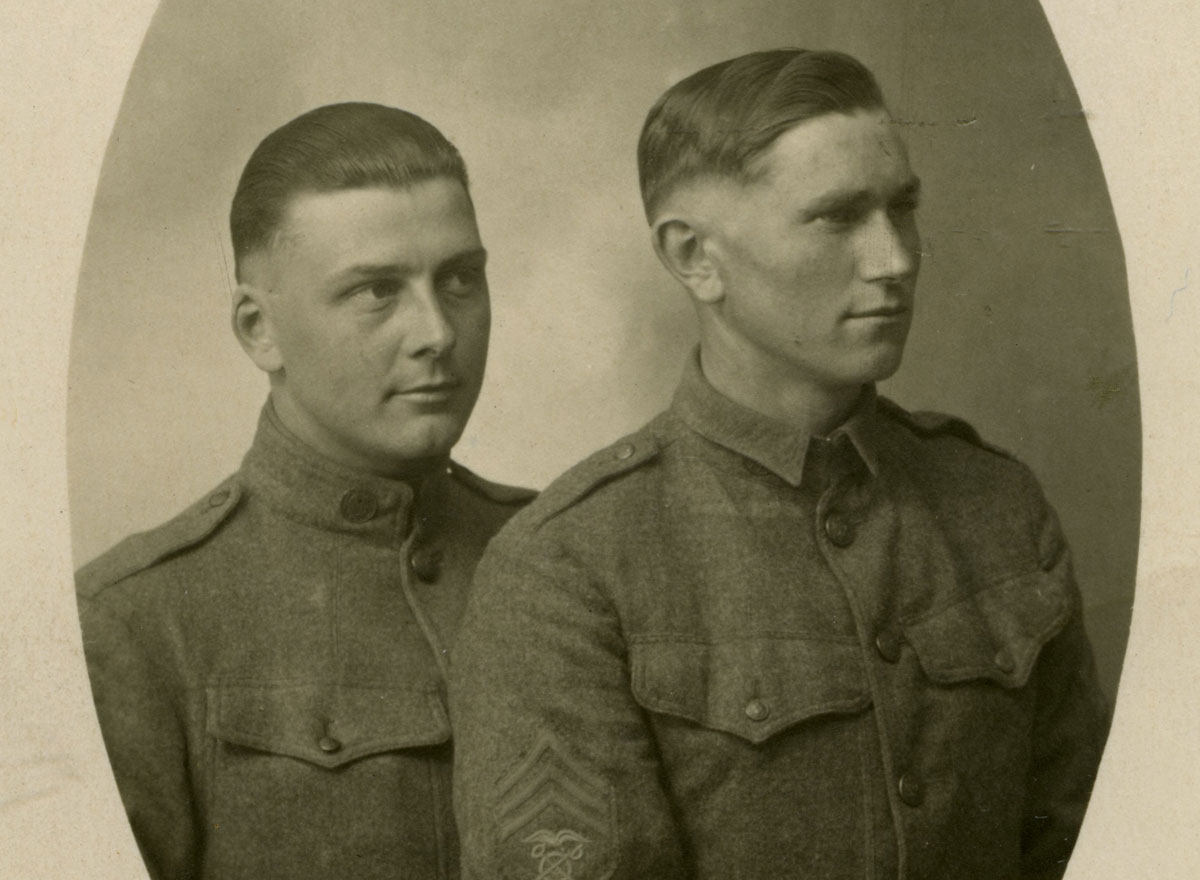
eBay can be a fun way to research WWI soldiers in a way that wouldn’t have been possible ten years ago. With the emerging databases of WWI soldier roster information and the ever-expanding capacity of Ancestry.com for genealogical data, WWI veterans are becoming easier and easier to research. In this case, I purchased a photo of two US officers posing in a French studio in March of 1919. The signature on the front and the inscription on the back give roughly enough information to make a positive identification. The standing officer is 2nd Lt. William H. Barry of Langley, Washington. He served with F. Co of the 28th Infantry Regiment, 1st Division during the American involvement in WWI. He was awarded the Distinguished Service Cross (DSC) for his bravery and extraordinary heroism in the breakthrough of the Hindenburg Line. A large percentage of his company became casualties and he assumed command after the CO was wounded. He reorganized the company and completed their objective under the rain of German machine fun fire.


To think, this photograph was obtained on an internet auction site for less than the price of a tank of gasoline and had been sitting in a pile of postcards for years before it was posted. I’m glad to provide this information – I hope a family member can find this post and learn a little about their ancestor!

WilliamBarryDSC039

Lt. William H. Barry (Standing)


WilliamBarryDSC038

Lt. Barry’s March 1919 Signature


BARRY, WILLIAM H.
Second Lieutenant, U.S. Army
28th Infantry Regiment, 1st Division, A.E.F.
Date of Action: October 5, 1918
Citation:
The Distinguished Service Cross is presented to William H. Barry, Second Lieutenant, U.S. Army, for extraordinary heroism in action near Exermont, France, October 5, 1918. Assuming command of his company after his company commander and a major portion of the company became casualties, Second Lieutenant Barry reorganized his company and personally led it forward in the attack, successfully attaining his objective in the face of intense machine-gun and artillery fire. He constantly exposed himself to enemy fire in order to encourage and insure the protection of his men.
General Orders No. 103, W.D., 1919
Home Town: Langley, WA


WilliamBarryDSC036

WilliamBarryDSC037

WWI RPPC Photo – South Dakota Quartermaster Veteran Identified


Balancing work life, house chores, being social, and collecting WWI photos can be a daunting task; too much investment in one area can lead to neglect in another.  As is the case of my life as of June, 2016.  Luckily, I’m making a solstice dedication (is that a thing?) to posting more of my identified material in hopes of reuniting family members with deceased relatives.

In tonight’s post, I’ve purchased and researched a photo in the course of one calendar week with some positive results.  As you may know, veterans with interesting surnames are typically easier to identify, and this post is an example of one of these researching ventures.

Quartermasterwebsized

Elmer Liebig (at left)

Elmer Reinhardt Liebig was born on November 1st, 1894 in Spink, South Dakota, the son of two German immigrants.  Having served in a Quartermaster unit during WWI, he went on to own and run a pool hall in his hometown for a number of years until operating as a salesman until the 1940s, where he eventually ended up with the South Dakota Department of Fish and Game, acting as a warden for Brookings an Moody Counties.

elmerliebig

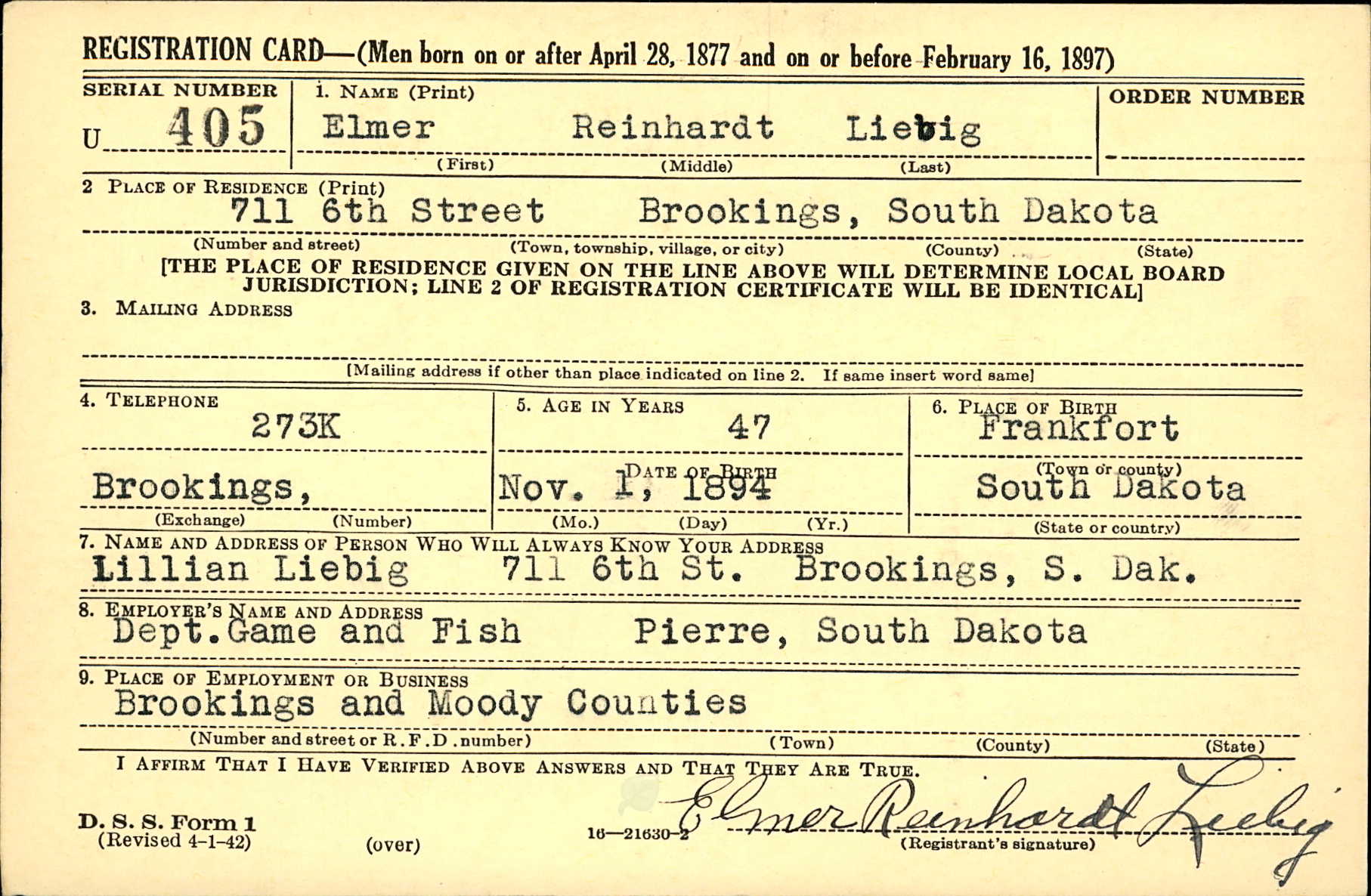
WWII Draft Registration

Quartermaster

Full Photo Scan

WWI 78th Division Portrait Photo – Wounded


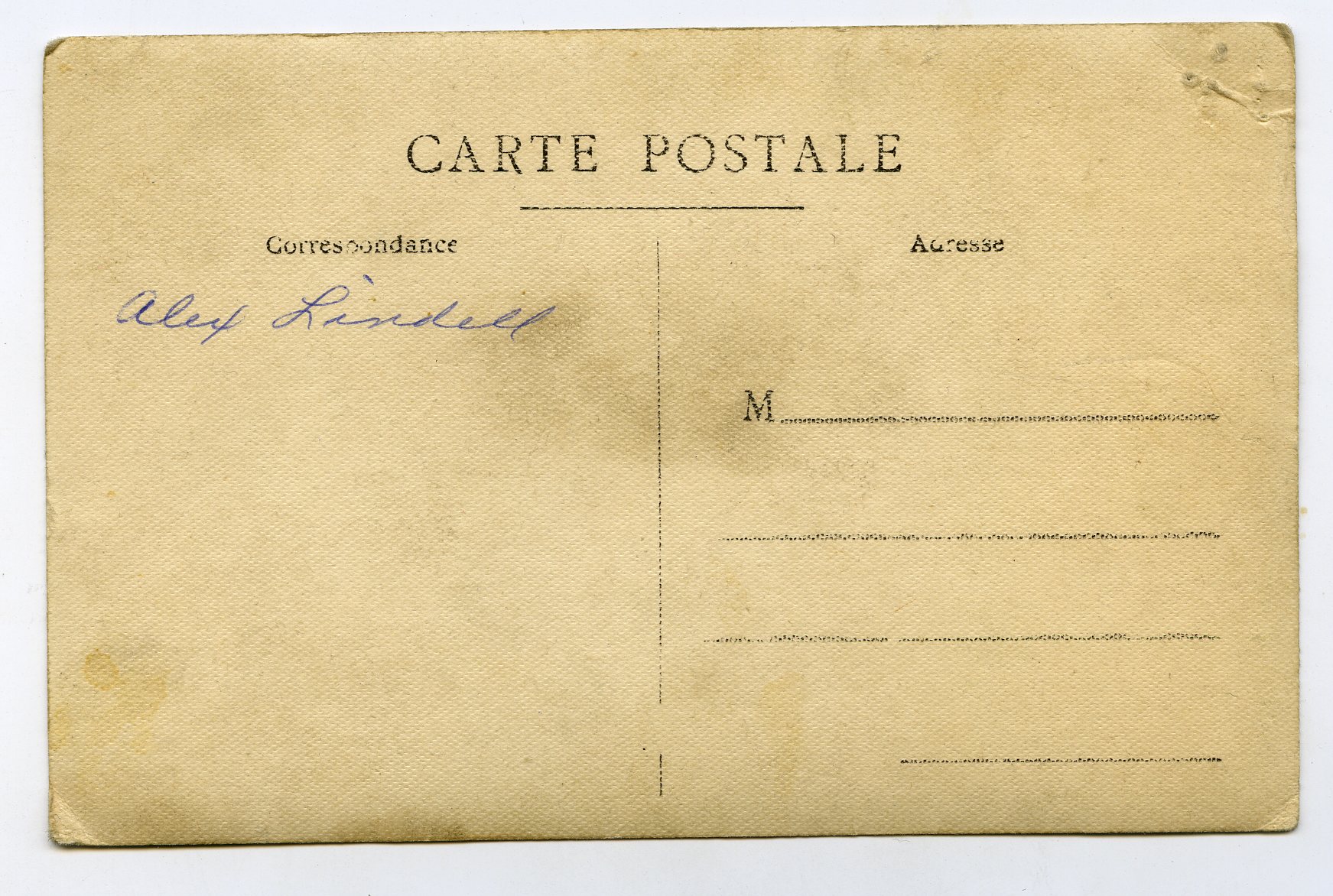
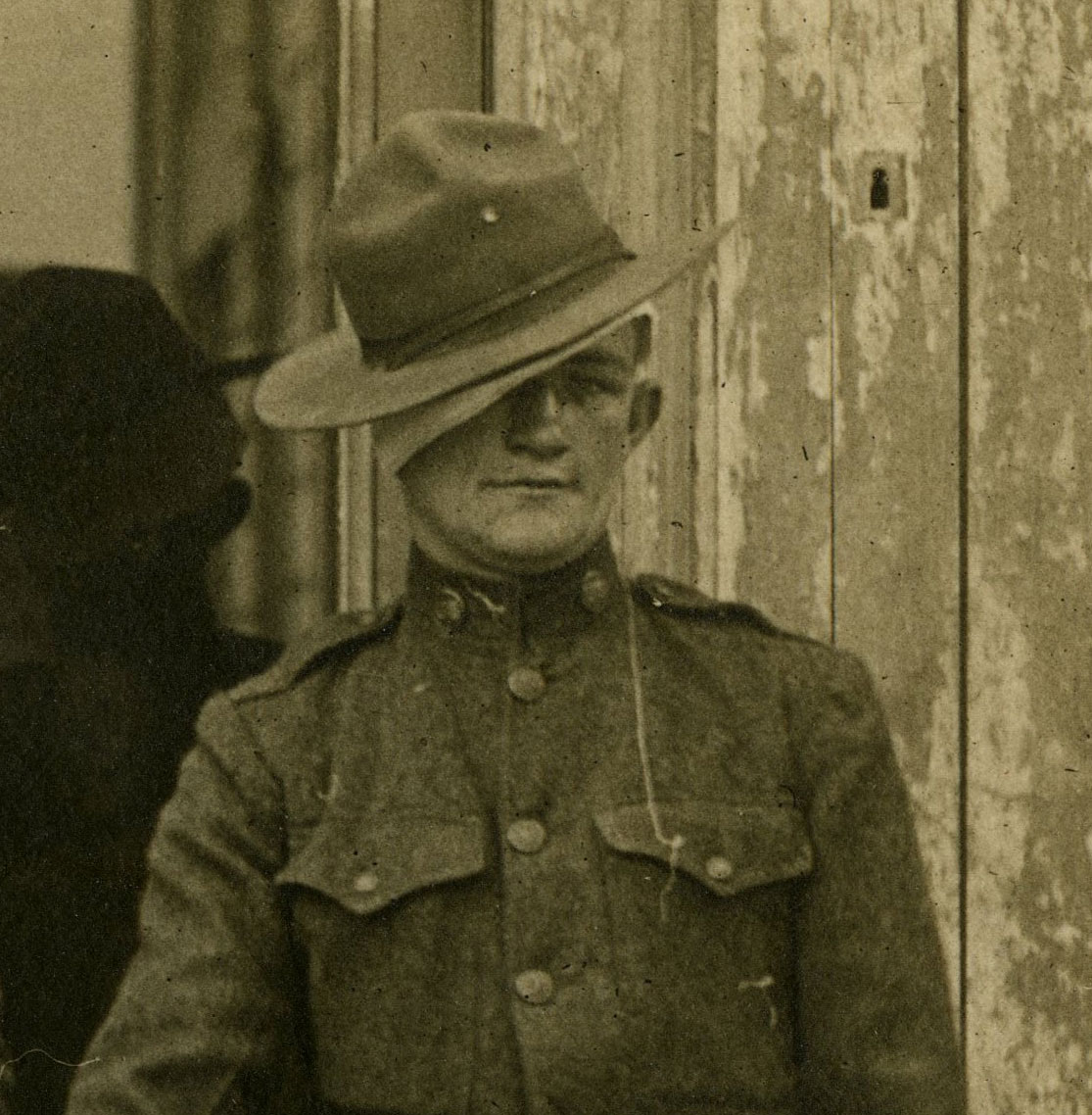
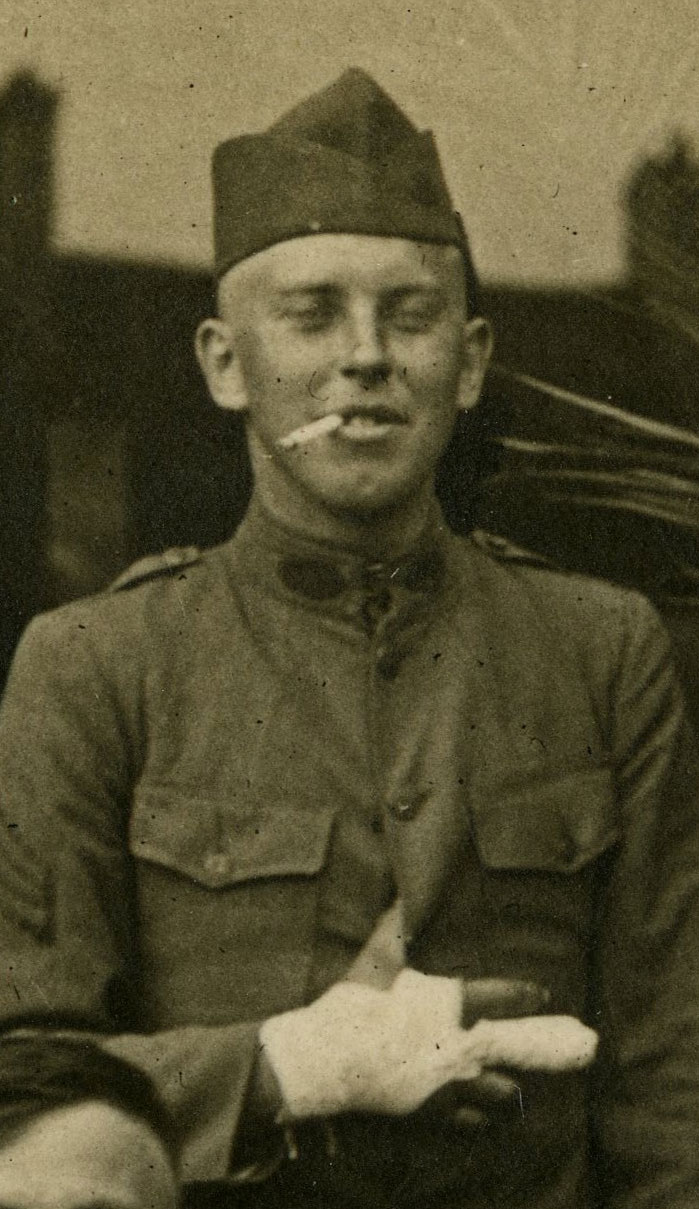
Today’s post comes from my growing collection of 78th Division portrait photos.  Although we don’t know his specific unit designation, we do have his name and company.  Taken in a French studio, Alex Lindell was posed in a manner which allows the viewer to see his maimed hand.  The fact that he was wounded is evidenced by a visible wound chevron on his right hand sleeve.  The stitching is barely visible. 

Alex Lindell of the 78th Division

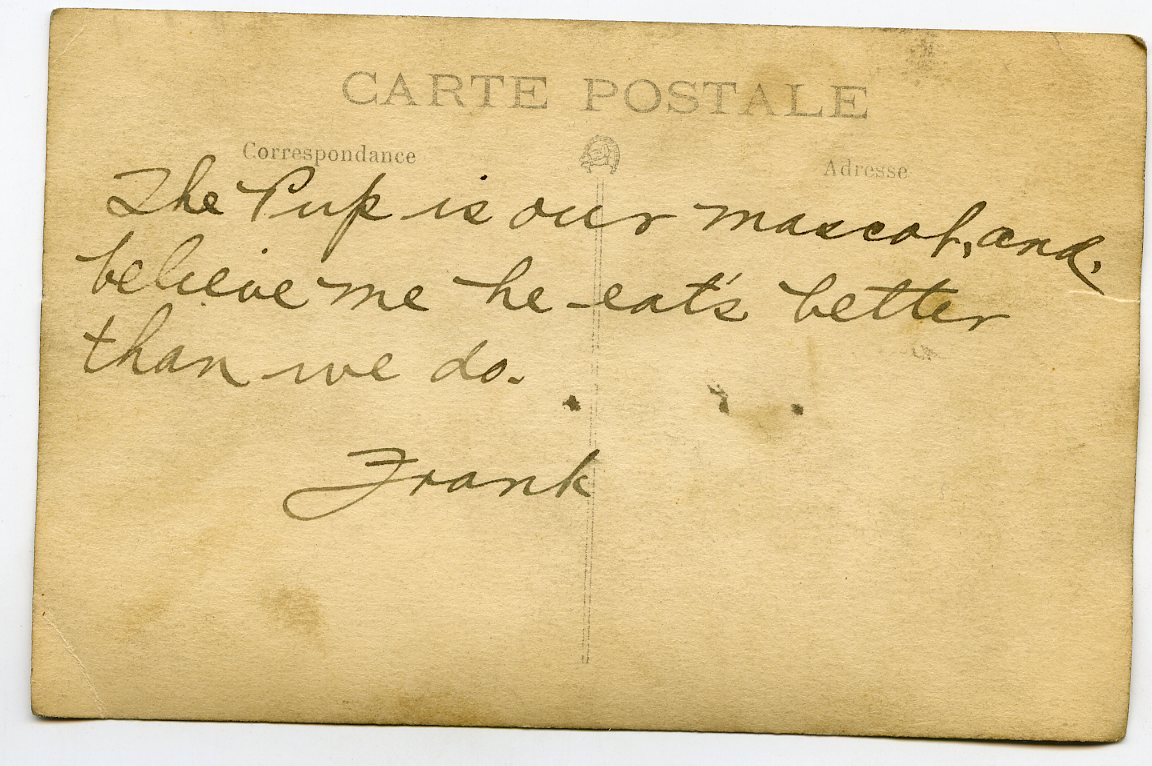
WWI Photo – Wounded Doughboys Rest w/ Mascot Dog and Pretty French Girl


A fabulous shot of a group of doughboys taking some much needed R&R in a French city.  A busty French girl stands in the doorway as the men pose for a photo.  Just read the back!  A superb WWI dog mascot photo with great content.  Note the two wounded soldiers – one with a face wound, the other with a broken hand.

The details of the image pop out once the casual observer steps back from noting the obvious and begins to look for subtle details.  Notice the reflection in the window?  How about the stone gutter along the street?  The hastily buttoned blouse of the facially wounded soldier?  Enjoy!

102nd Field Artillery Band Members in France (26th Division)


The bulk of my collection has been culled from endless pages of ebay listings, but I occasionally have the opportunity to discover hidden gems at flea markets and trade shows.  Today I attended a Antiquarian Book and Ephemera show at the Sheraton in South Burlington, VT.  I attached a link below to help plug this great organization.  Anyway, I eagerly searched through thousands of postcards and photos looking for military related images.  I saw a few overprices Civil War images, and a number of lack luster WWII photos.  My WWI radar was in full swing and I left with a handful of great images.  Please enjoy reading about my favorite find!

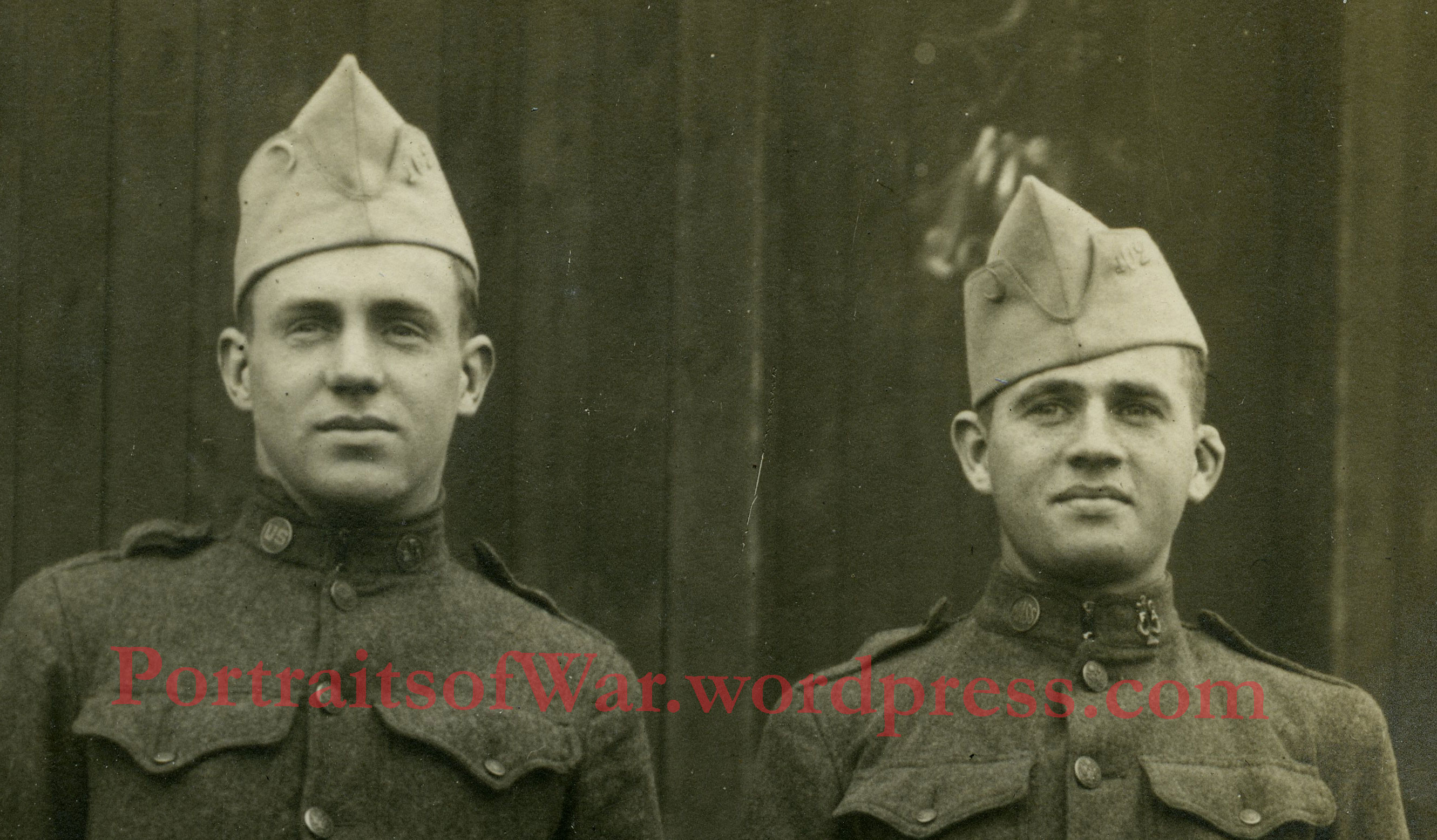
This wonderful image depicts two band members of the 102nd Field Artillery of the 26th Division.   Taken in France in 1918, this RPPC (real photo postcard) has everything going for it.  The two doughboys are wearing French style caps with unit designation affixed.  Their collar discs are a mix of MASS National Guard insignia and 102nd Field Artillery band discs.  The details on the M1911 pistol grips is superb.  Even the embossed leather US is visible on the holster.

Vermont Antiquarian Booksellers Association Website

Check it out!

http://www.vermontisbookcountry.com/