WWII Press Photo – James “Jack” C. Warren Wounded in Normandy, July 1944


From time to time, I like to browse the pages of eBay in search of portrait photographs of identified U.S. soldiers — small windows into the past that I can casually research to uncover the individual’s story and their role in whichever conflict they served. In today’s post, I was drawn to one particular image: a portrait captured by a British photographer. Unlike the widely circulated press photos that often made their way into American newspapers, this photograph was unlikely to have been distributed stateside and equally unlikely to have fallen into the hands of the soldier’s family.

When soldiers were photographed, it was common for them to provide their names, ranks, and often their hometowns. Yet in most cases, there was little chance for photographers or newspapers to follow up and let those soldiers know that their likeness had appeared in print. That disconnect is part of what makes original press photographs so compelling today. Many remain unpublished, and most have never been thoroughly researched. In fact, I’ve noticed a growing trend in 2025: more and more World War II–era press photos are surfacing on the secondary market, offering new opportunities to rediscover stories that might otherwise have been lost.

PFC James “Jack” C. Warren of Kentucky

The photograph above was discovered in August 2025 during one of my routine eBay searches for intriguing portrait shots of World War II servicemen — images that spark my curiosity to uncover the stories behind the faces. This particular shot is especially striking: crisp, tightly framed, and, based on the other photographs sold by the same seller, likely taken in England at a collection point for wounded or ill soldiers. I cleaned up the scan and cropped the edges to make it more visually appealing for digital presentation.

The next question became the most important one: how do we identify him?

Reverse Side From eBay

What do we know?

The photo was taken on July 13, 1944 at a port in the South of England.

The photographer worked for a British newspaper.

The subject of the photo is a PFC J.C. Warren from Kentucky and was wounded.

The photo was approved for publication by US censors a few days later.

Who was J.C. Warren?

Given the information provided in the brief writeup on the reverse side of the photo, we know that the subject is a young male, likely aged 18-24 from Kentucky named J.C. Warren who was wounded or injured at some point after the D-Day landing a month earlier. His “walking wounded” paper tag (Form 52b-MEDICAL DEPARTMENT, U.S.A. (Revised October 25, 1940), 16-15434) seen poking up at the bottom hints that he wasn’t disabled or infectious. With that information in hand, I began narrowing the search. Since the most common first names beginning with “J” at the time were James and John, I started there, turning to an obscure database that tracks U.S. servicemembers admitted to hospitals during World War II.

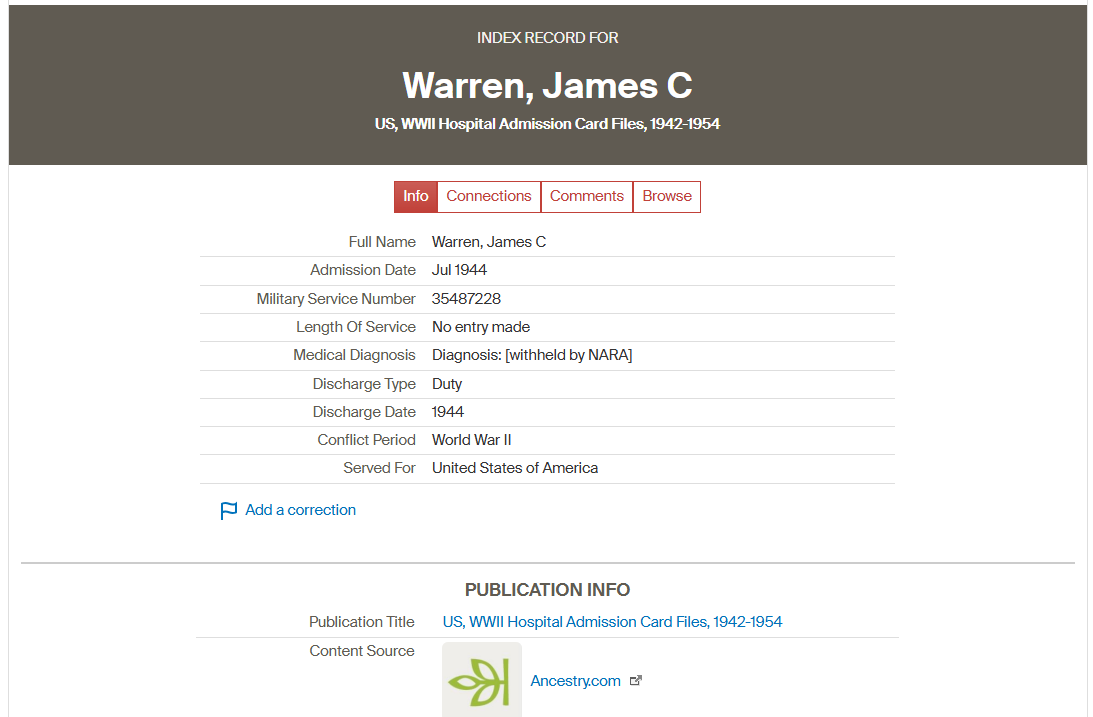
After only a few minutes of typing I found a hit to a James C. Warren with the Army Serial Number(ASN) of 35487228, and the only J C Warren who was from Kentucky that was admitted to a US hospital in July of 1944.

WWII Hospital Admission Card for James Warren

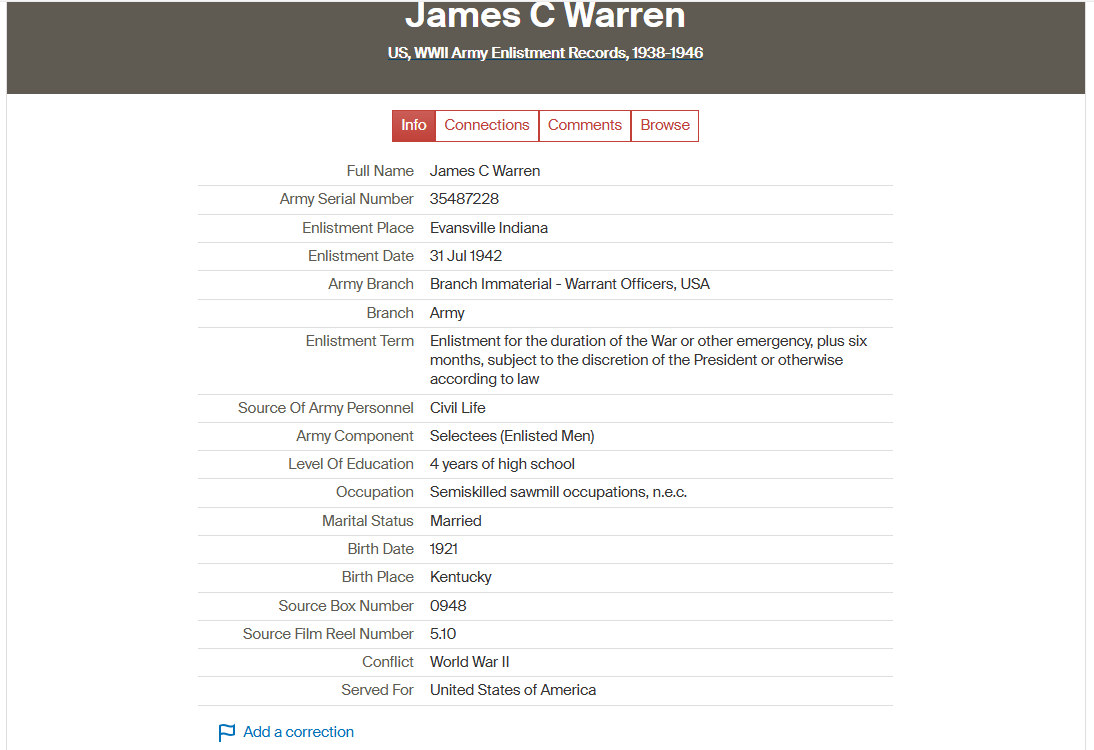
And when looking up his ASN…

WWII Draft Registration Information

With confirmation like this, I decided to dig deeper into PFC Warren’s life story in hopes of pulling out a few more details about his life story. Luckily, Ancestry.com and Fold3.com provide prompts based on confirmed information when researching so I was quickly on my way down the rabbit hole.

Veteran Headstone Application Form

It’s always a bittersweet discovery when I come across one of these documents, which tend to surface most often for veterans who passed away between the 1950s and 1980s. This particular record (which I’ll share below) shows that PFC Warren served with the 816th Ordnance Base Depot Company, a unit stationed in southern England at the time of his hospital admission. Interestingly, there is no mention of a Purple Heart on the form. That leaves me to wonder whether his injury did not meet the criteria for the medal, or whether it simply wasn’t recorded on his discharge papers after the war. Perhaps his family would know the answer.

Veteran Headstone Application

Luckily, the document provides just enough detail to shed light on who James Carmen Warren sadly left behind when he passed away in 1968. Born on April 8, 1921, he died on August 8, 1968, at the age of 47. He was survived by his wife, Mary Emma Green Warren, along with their two sons, Ivan and James C. Warren Jr.

More to come!

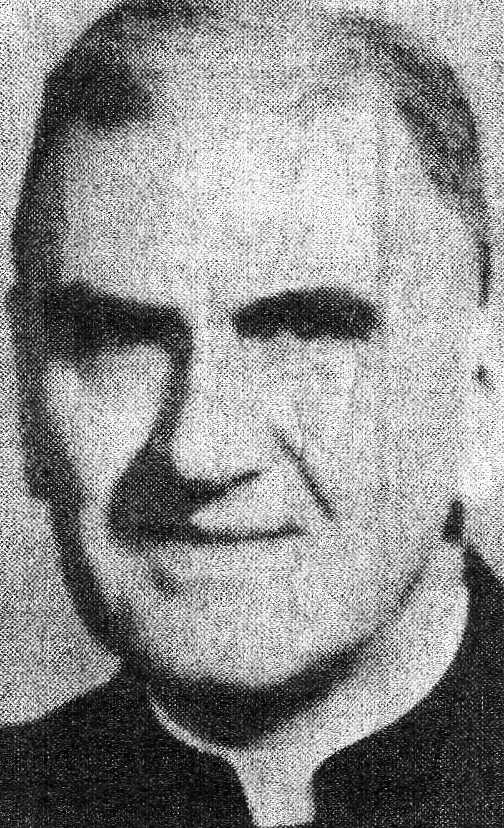
Wounded WWI AEF Chaplain Poses in French Studio – Can We Identify Him?


It is never easy to identify someone from a photograph taken nearly 100 years ago, but it’s even more difficult solely based on obscure details from his/her clothing. In today’s blog post I will focus on a photograph purchased on eBay from a fantastic seller named Colleen ( eBay name: cacdivi) who recently sold me a superb French real photo postcard of an American chaplain posed in a studio during World World I (WWI). Here’s the shot:

wwi026

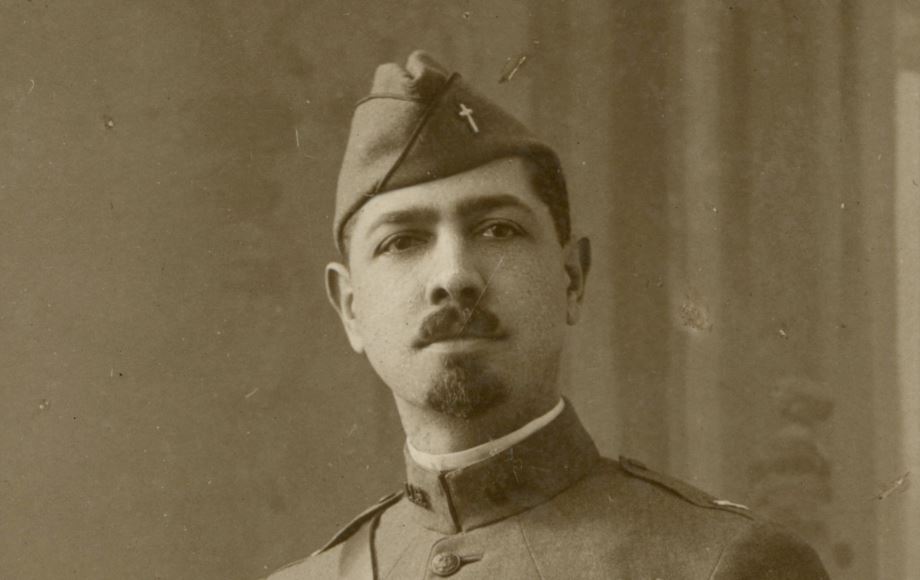
Wounded American Chaplain in WWI

The scene is fairly typical of what was common of the time period: WWI soldiers/sailors/marine/nurses posed in photo studios in far off places in order to document their experiences to send to relatives and friends. In this case, a currently-unidentified US chaplain (see the crucifix on his shoulder and cap?) strikes a chin-up pose for a French photographer. How do we know that the photo was taken in France?

wwi027

French Postcard Paper

French postcard paper during WWI almost always contains a central vertical dividing mark with CARTE POSTALE emblazoned across the top. I’ve noted a fair number of varieties likely due to differences in production, but the main bulk of French postcard paper of the period look very similar to the above scan.


Dissection of Photographic Context

What are we looking at? I’ve already mentioned that the man posed in the photo is a US chaplain in a French studio during the war. But what details have I been pondering while waiting for the photo to arrive in my mailbox? (Thanks to Colleen – you rock!)

  1. The chaplain has served at least six months in Europe

    botharms

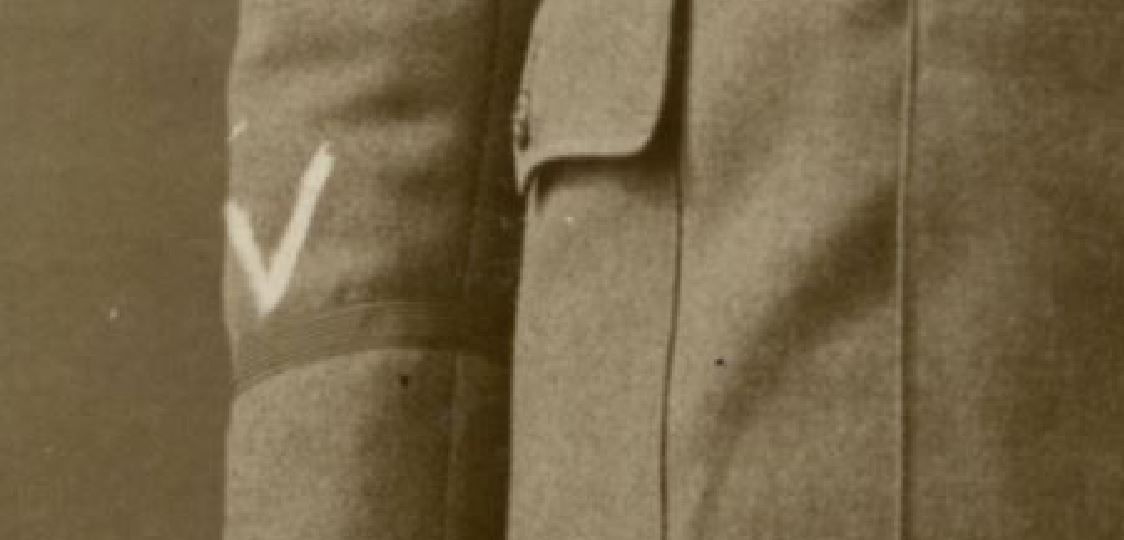
    His Left Sleeve (6th Months Overseas Service) Right Sleeve (Wound Chevron)

  2. He was wounded or gassed at least once during his service

    woundchev

    His Right Sleeve: Wound Chevron

  3. The photo was likely taken during wartime (before the armistice)
  4. He is oddly sporting a mustache and goatee

    headshot

    Rarely Seen Facial Hair in WWI

  5. He is wearing an identification bracelet made in France

    scan3

    WWI Bracelet Made in France

Why is a photograph of a wounded chaplain posed in a wartime studio worthy of devoting hours of research to? According to a website devoted to military chaplains, the number of wartime chaplains during WWI was incredibly low:

In 1918, Congress passed an act that called for one chaplain for every 1200 officers and enlisted men. Bishop Hayes, in a letter to Cardinal Farley, informs Farley of the current number of chaplains overseas. As of June 1918 there were 301 chaplains in the Army, 30 in the Navy, 7 with the Red Cross, 2 interpreters, and 95 volunteer or Knights of Columbus chaplains.

This photo most likely represents an Army chaplain included in the above June 1918 census: any US chaplain who served at least six months service would’ve been present in France in June of 1918. And to have been wounded or gassed, our unidentified chaplain was likely present during the earlier battles of the US involvement of the war.

Our Chaplain?

Okay, so we know our chaplain was wounded, was photographed at some point in the  spring or summer of 1918 and likely served in an Army division that arrived early (for the Americans). His identity, based on date, is narrowed down to 1 in 301 – a pretty good number when it comes to identifying a photo taken 100 years ago. Also, based on rules, he has to be less than 45 years of age.

But what was required to be a US chaplain in WWI? Before researching this photo I had no idea of the low number of volunteers or the actual requirements for acceptance. My personal photo collection contains a half dozen photos of chaplains, which is a surprisingly high number based on the scarcity of the subject matter. I was lucky to track down a copy of the rules and regs of chaplainhood here: http://archnyarchives.org/2015/11/10/military-chaplains-in-world-war-i/

Official Chaplain Requirements

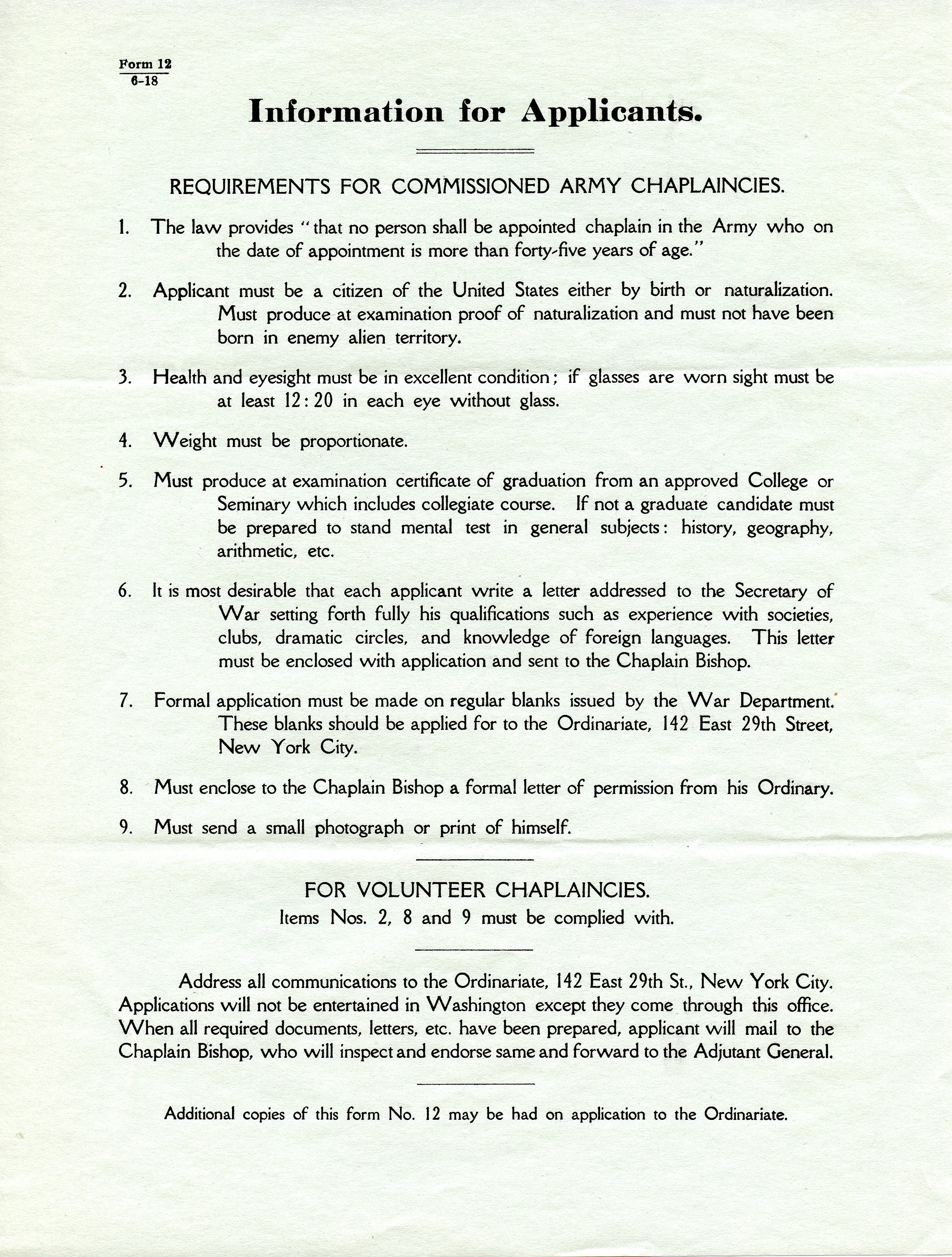
Requirements for Commissioned Army Chaplaincies

  1. The law provides that no person shall be appointed chaplain in the Army who on the date of appointment is more than forty-five years of age.
  2. Applicants must be a citizen of the United States either by birth or naturalization. Must produce at examination proof of naturalization and must not have been born in enemy alien territory.
  3. Health and eyesight must be in excellent condition; if glasses are worn sight must be at least 12:20 in each eye without glass.
  4. Weight must be proportionate.
  5. Must produce an examination certificate of graduation from an approved College or Seminary which includes collegiate course. If not a graduate candidate must be prepared to stand mental test in general subjects: history, geography, arithmetic. etc.
  6. It is most desirable that each applicant write a letter addressed to the Secretary of War setting forth fully his qualifications such as experience with societies, clubs, dramatic circles, and knowledge of foreign languages. This letter must be be enclosed with application and sent to the Chaplain Bishop.
  7. Formal application must be made on regular blanks made by the War Department. These Blanks should be applied for to the Ordinariate, 142 East 29th Street, New York City.
  8. Must enclose to the Chaplain Bishop a formal letter of permission from his Ordinary.
  9. Must send a small photographic print of himself.

Chaplain-Application006

1918 Chaplain Application Form


For now I have a good bit of information to extend my research with. Until then, stay tuned!


WWI 26th Division Chaplain Photo – Bloomfield, VT Native Arthur LeVeer in France, 1918


It’s always fun to sift through assorted boxes from my collection in search of new material to post here to PortraitofWar. In tonight’s case, I stumbled across a portrait shot of a WWI Catholic chaplain from my adopted home of Vermont!  With only 16,000 soldiers, marines and sailors during WWI, Vermont is a hard state to collect.

scans310

102nd Infantry Regiment Chaplain Arthur J. LeVeer in 1918

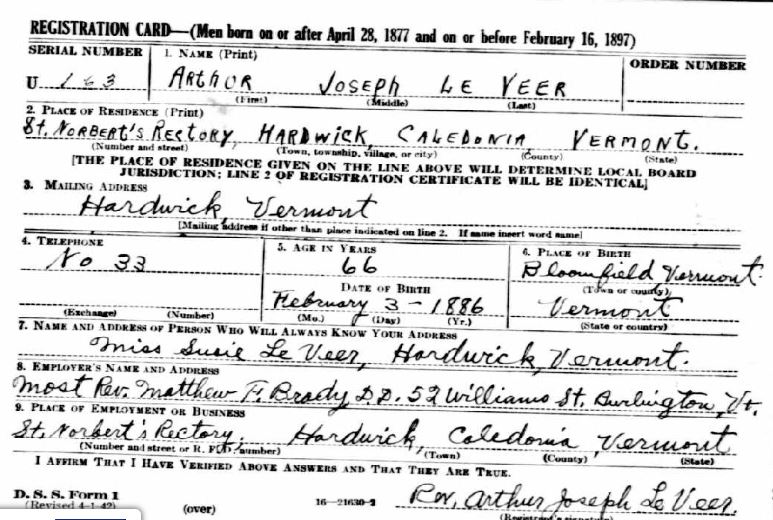
Chaplain Arthur Joseph LaVeer was born along the Connecticut River in the Northeast Kingdom (a regional name) town of Bloomfield, Vermont on February 3rd, 1886. Commissioned as a 1st Lt. on August 22nd, 1918, LeVeer was quickly sent overseas to serve as a chaplain with the 102nd Infantry Regiment of the 26th “Yankee Division.”

Identified chaplain photos are incredibly hard to find on the open market, and to find an example taken overseas showing a unit patch and chaplain insignia makes this an exciting acquisition. Father LeVeer served at St. Norbert’s Church in Hardwick for the remainder of his life; this is a spot that I’ve passed hundreds of times during my life without giving a second thought to the WWI history of the area.

leveer2

Arthur’s WWI Record

leveer

Arthur’s WWII Draft Card

Rev. Arthur LeVeer is buried in the Mount Cavalry Cemetery in Saint Albans, Franklin County, Vermont.

19877722_122589389986.jpg

LeVeer in the 1960s

The WWII Nose Art of Hal Olsen – U.S. Navy Mechanic on Consolidated PB4Y-2 Privateers


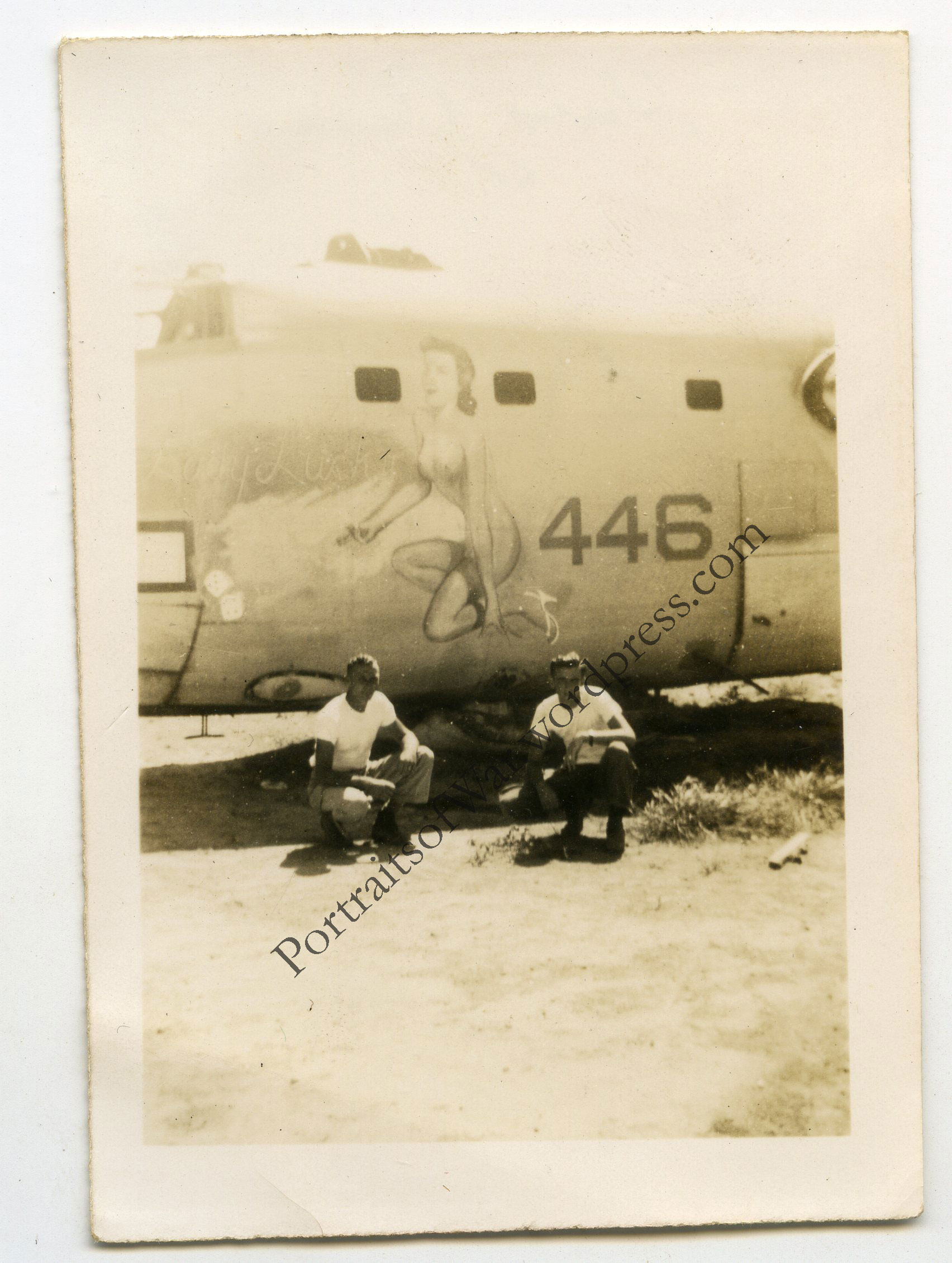
I recently had the esteemed pleasure of acquiring two nose art photos of PB4Y-2 airplanes.  Using the power of the internet, I was able to look up the two planes, the Green Cherries, and the Lady Luck II.  With a bit of luck I tracked down the name of the original artist.  Hal Olsen painted over 100 nose art pin-up ladies on various planes in the PTO.  He charged $50 per painting and eventually used the money to enter formal art school and travel with his wife.  Having tracked him down, I wrote him a nice letter asking for his autograph and promising that I would send along some copies of my photos.  They go out in the mail tomorrow!  For now, check out the shots and the nice card he sent me.

Thanks Hal!


Lady Luck II

Green Cherries


Hal's Autograph

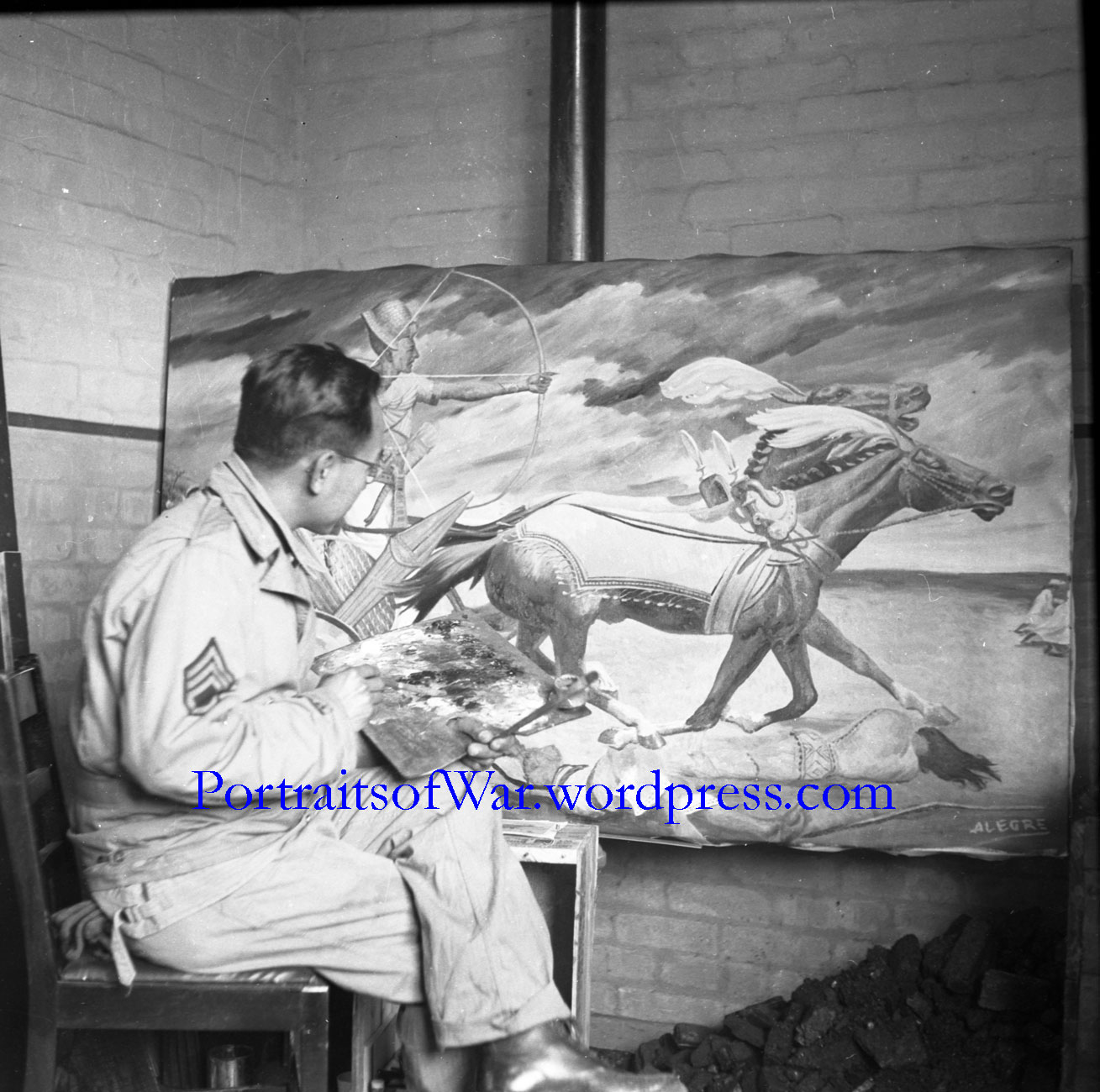
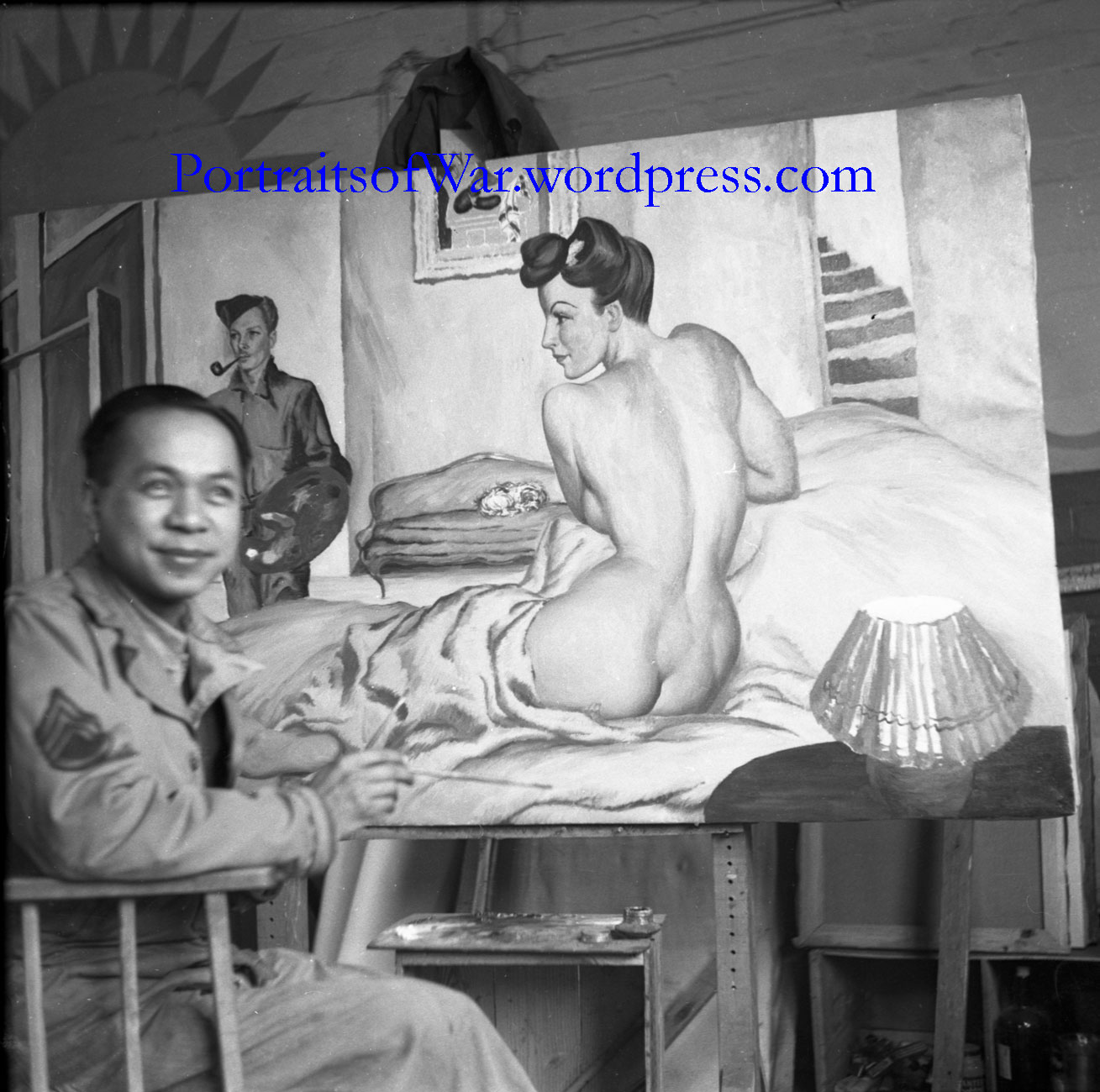
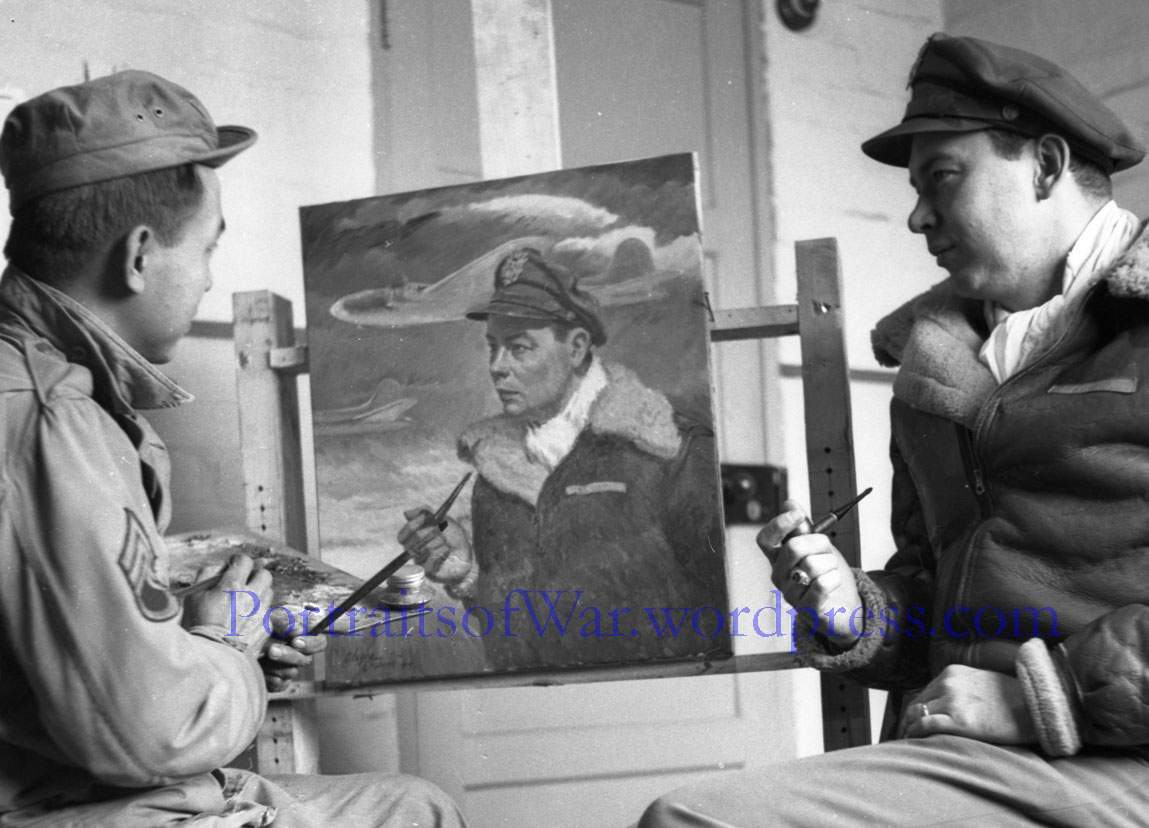
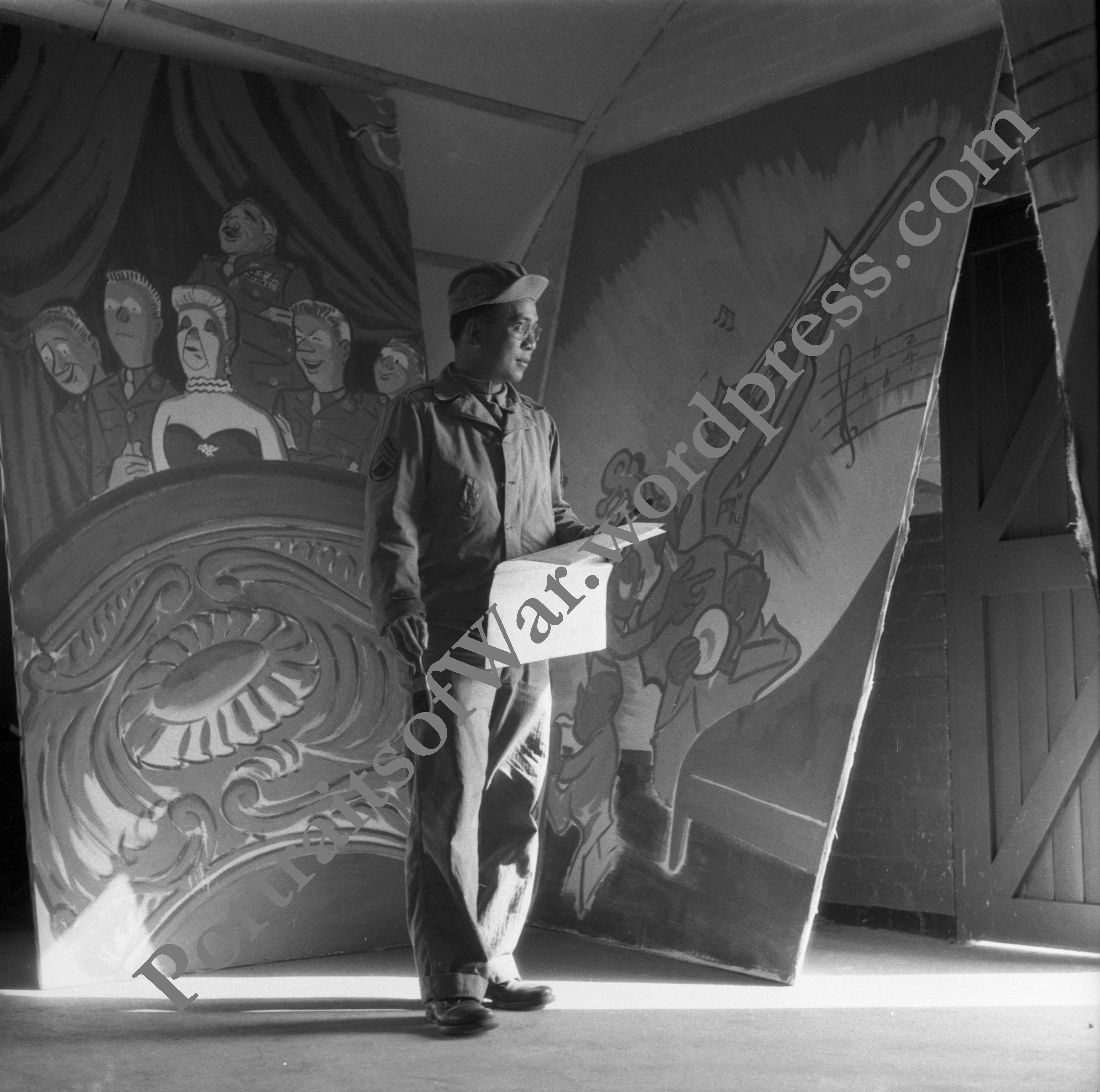
388th Bomb Group Artist in England 1944 – Alva Villamor Alegre


From the depths of my collection comes a series of amazing negatives taken by a member of the 388th Bomb Group stationed at Knettishall England in 1944.  I have over 300 images from this collection and will slowly be posting them over the next few months.  Keep checking back for updates.  The medium-sized negatives are in immaculate condition and came to me rather inexpensively from an eBay auction. Enjoy!

Alegre was a Phillipino born artist who passed away in the early 1950s at the early age of 40.  I one day hope to find a piece of his art!