An incredible story of how a 90th Division vet from Iowa was reunited with his lost identification bracelet. Stories like this are what keep me going!
An incredible story of how a 90th Division vet from Iowa was reunited with his lost identification bracelet. Stories like this are what keep me going!
Blanchard Robert “Woody” Woodill was born in 1916 in Glendale, California to Arthur and Maude Woodill. His father was a successful car dealer in Los Angeles at the time, and likely planted the seeds that would eventually help design one of the most popular post-war American sports cars. During WWII, Woody became a professor of Aeronautical Engineering at the the University of Southern California. In 1948 he bought his father’s Dodge dealership in Downey, California and started down the path that would take him from car salesman to car designer. Using his engineering and artistic skills (more on this later) he was able begin design on the car that would make him famous. He purchased two Glasspar fiberglass body kits from Bill Tritt in Santa Ana, CA and eventually found a chassis designer to sign on board. The Woody Wildfire was born. The original sale price on the factory built Woodill Wildfire was roughly $3,000. They now sell at classic auto auctions for over $100,000. Very cool!
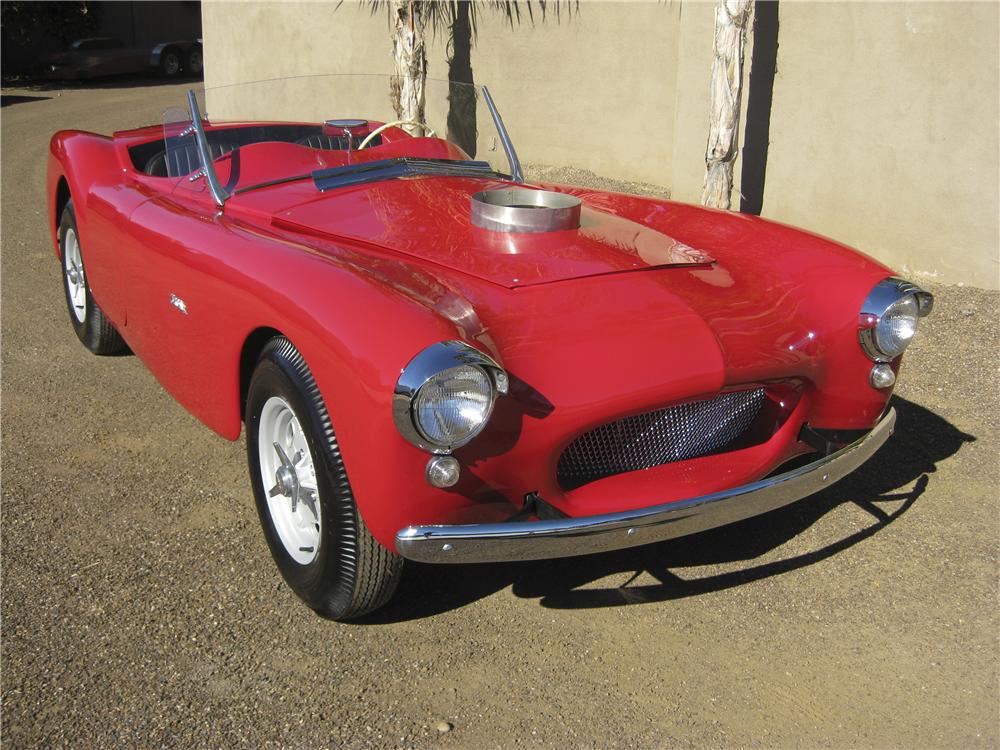
Courtesy of Barrett Jackson: http://www.barrett-jackson.com/application/onlinesubmission/lotdetails.aspx?ln=990&aid=403
Interested in American Fiberglass Cars?
Check out this site: http://www.forgottenfiberglass.com/?p=12232
What does a car designer have to do with PortraitsofWar? I was recently able to pick up an interesting set of 35mm color Kodachrome slides on eBay for a decent price. I knew the photos were taken with an artist’s eye given the subject matter, poses, and setting of the shots. After researching the address listed on the Kodachrome box, I realized that the photographer was actually working for the Southern California WPA as a photographer of Southern California life. This fits in nicely with his profession as a professor of aeronautics at USC and makes sense given the quality of the images he took in the Southern California Desert. His capturing of the emerging role of women on the homefront highlights the social realism that plays an important role in the WPA art of the period.
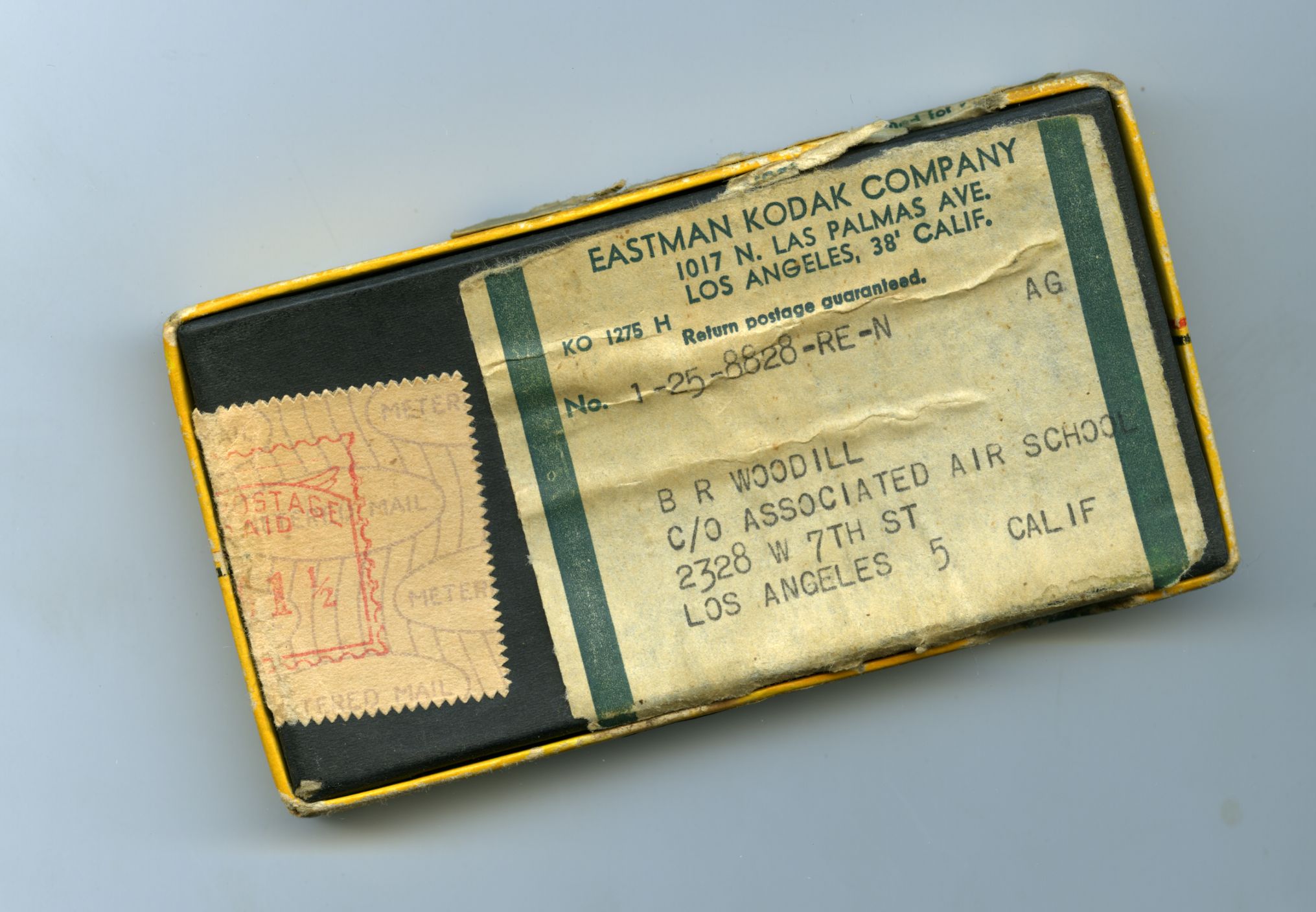
Kodachrome Box and Address
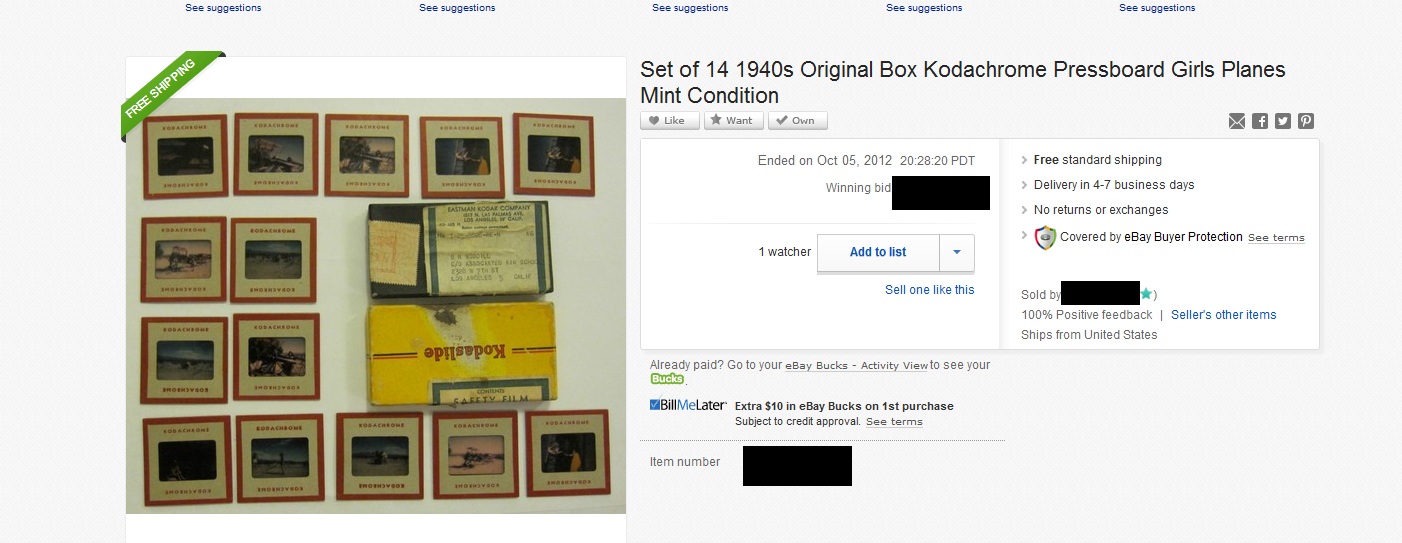
Original eBay Listing
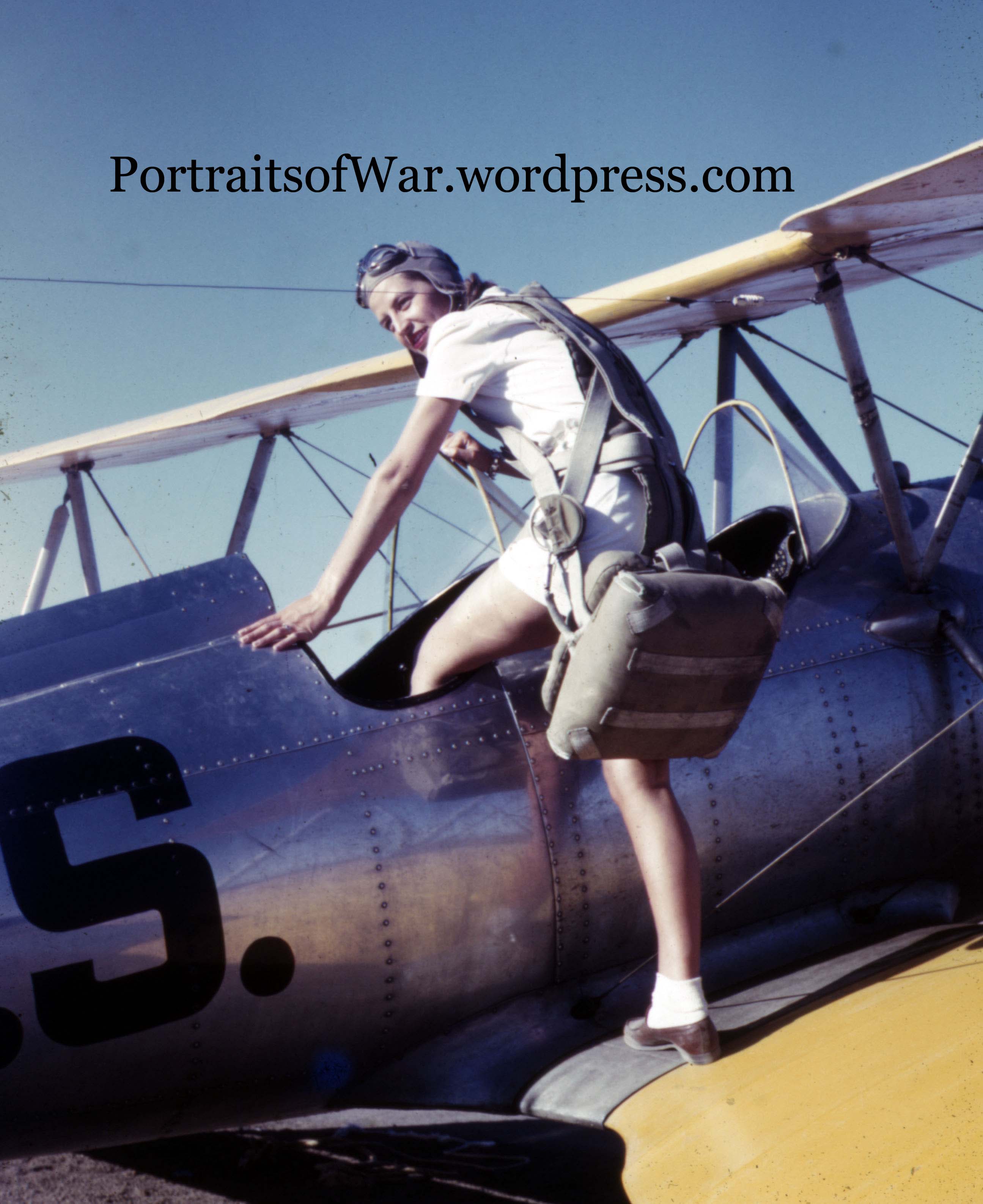
Model Climbs into Biplane

Flight over the Desert
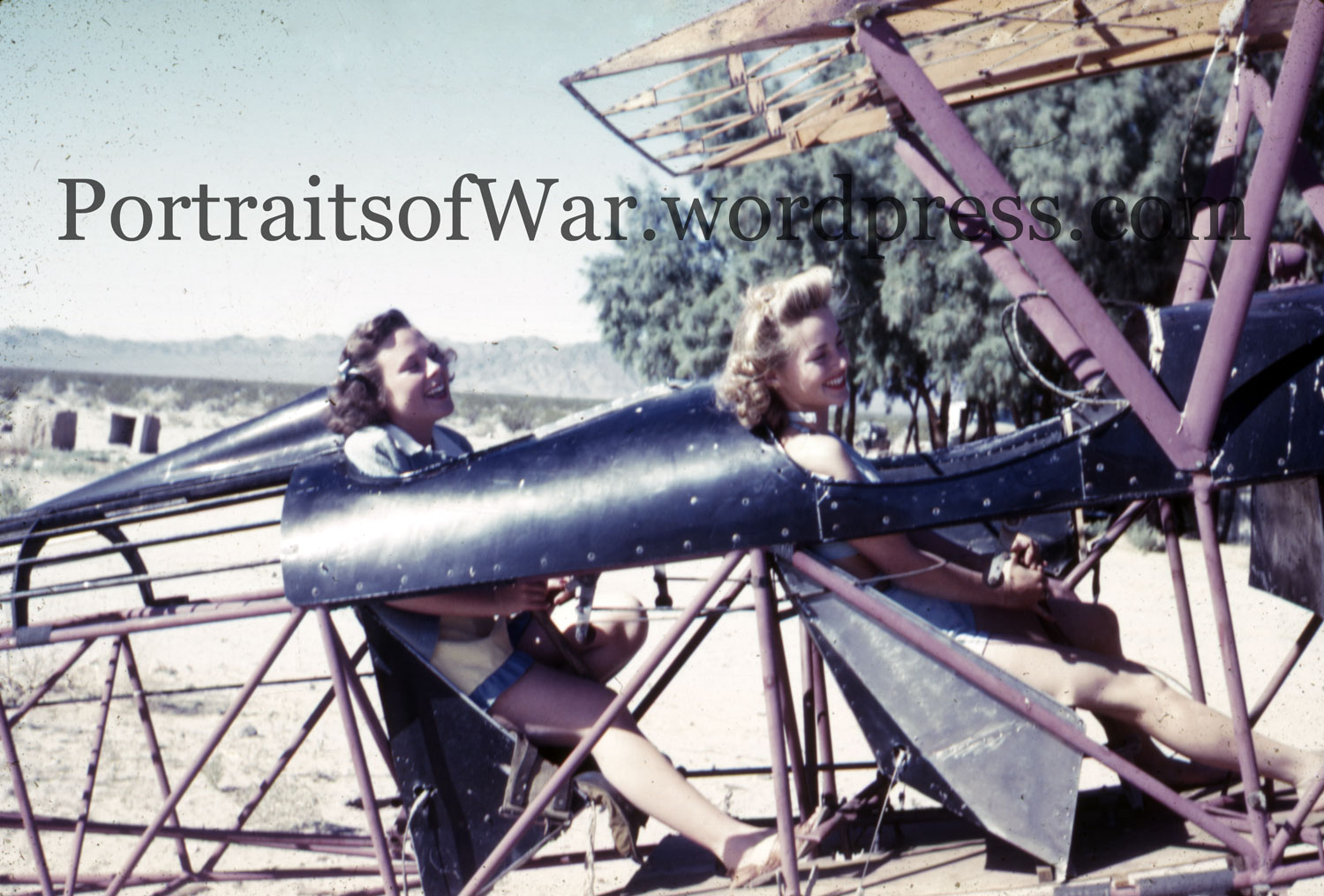
More Airplane Fun


Clearing Rocks
Henry N. Derby was born in Wardsboro, VT on April 15th, 1846, later moved to Townshend where he enlisted for Federal service on December 8th, 1863 and mustered in on December 29th. He signed up for a three year enlistment with Company C of the 8th Vermont Infantry Regiment and traveled from Vermont to Louisiana, where he quickly became ill. He died on March 31st, 1864 presumably of disease; one of 241 from the regiment that died of such causes.
This photo just arrived in the mail from an eBay auction where the name of the soldier was not revealed. Luckily, I was able to tweak the lighting/contrast with photoshop to discover the name of the soldier before I bid. CSI: Civil War style!

Henry N. Derby
Brennan C. Gauthier Collection
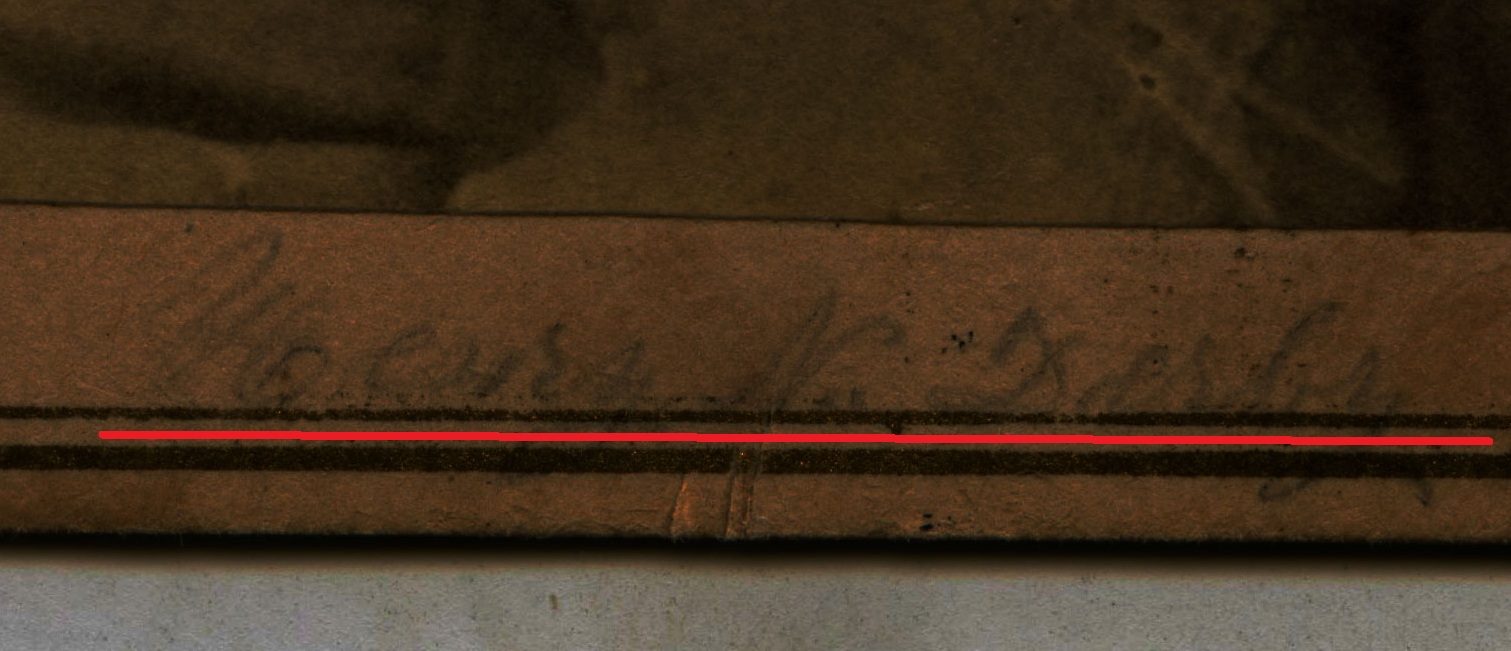

Brattleboro Backmark

Henry N. Derby Grave in Chalmette National Cemetery, LA
Source: http://vermontcivilwar.org/cem/virtual/getnatcem.php?input=13809
Photographer: Dan Taylor
Here’s a great link to a Vermont Historical Society collection from a Vermont soldier who also served with the 8th VT and also died in Louisiana.
http://www.vermonthistory.org/index.php/george-e-parker-letters.html
WWII Booklets are one of my favorite avenues of military ephemera collecting. The small print runs, unique artwork, and theater-made feel make them a fun and easy collectible. I picked up a copy of Stilwell Road: Story of the Ledo Lifeline this past week on eBay and was excited to leaf through the pages looking for possible research/blogpost material. Immediately impressed by the artwork and layout, I decided to do a little sleuthing into the identity of the artist. Luckily, his name was printed in the back of the booklet. Corporal Sidney Kotler obviously had an eye for illustration and technical art. In my typical fashion, I plowed ahead with some research!

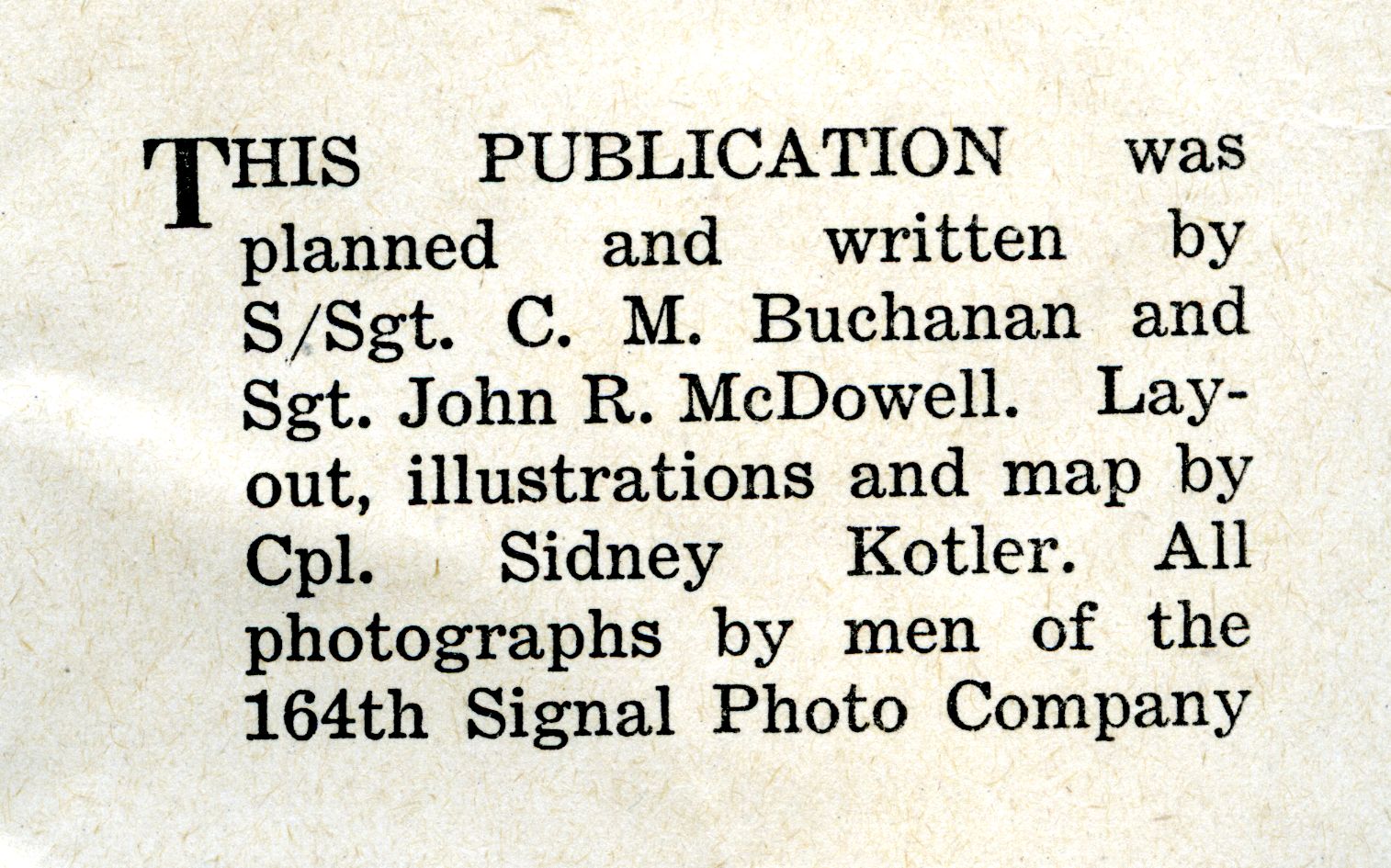


After searching around google and ancestry.com I was able to find that Mr. Kotler passed away in 1999. This is sadly becoming the norm when researching viable identified WWII material. Luckily, I was able to track down the daughter of Mr. Kotler and uncover a wealth of material about his life and war service.

The following is from Mr. Kotlers daughter:


WWII, Sidney Kotler in the middle with a moustache
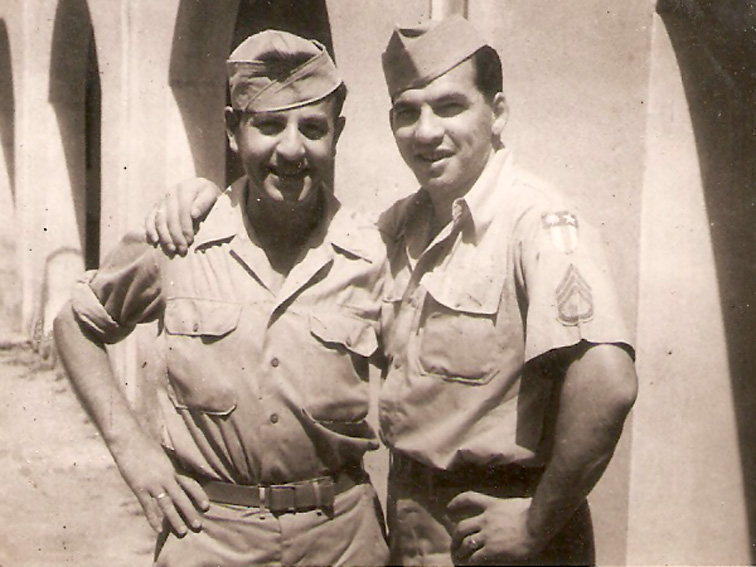
WWII, Sidney Kotler and buddy
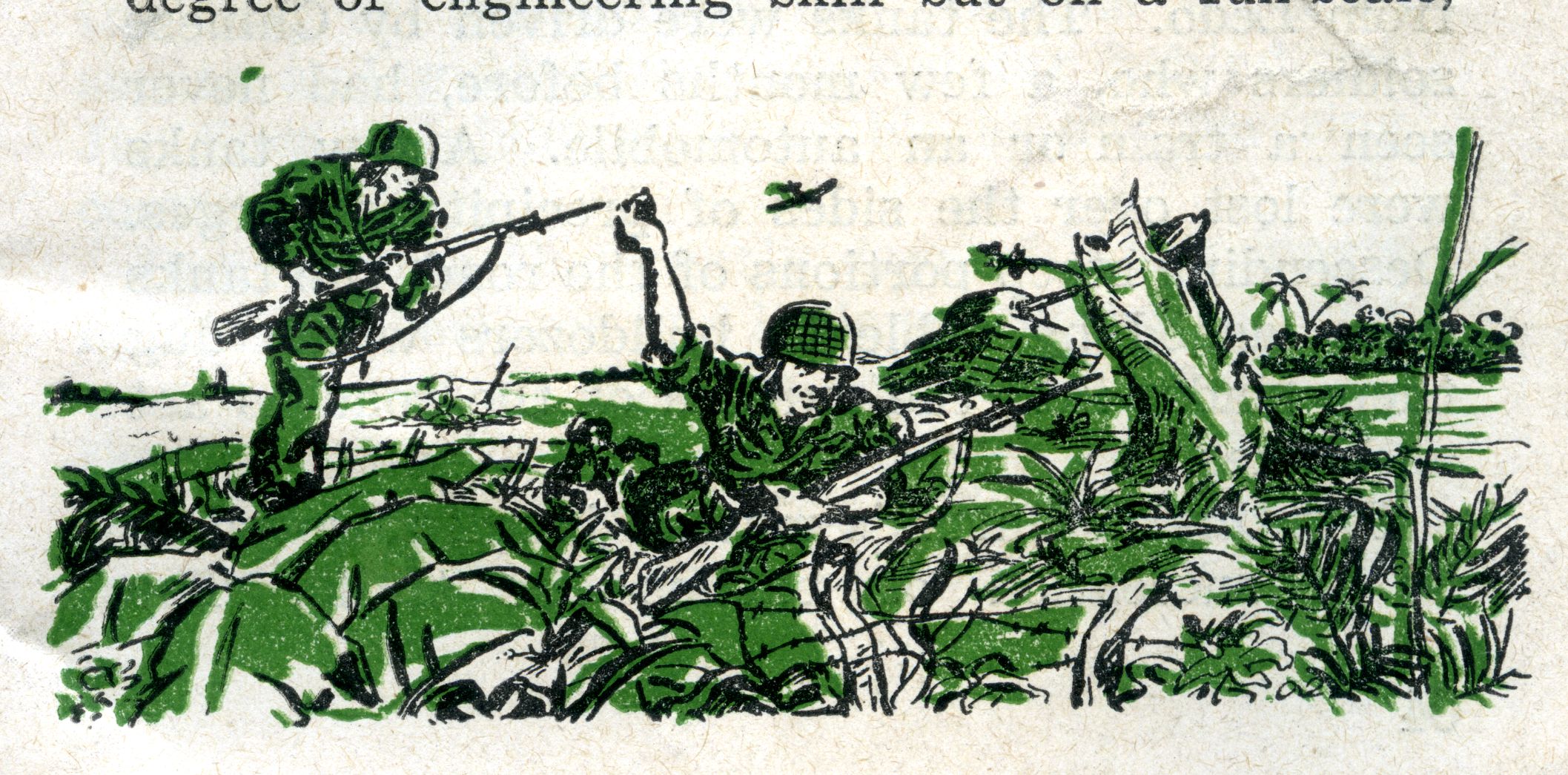
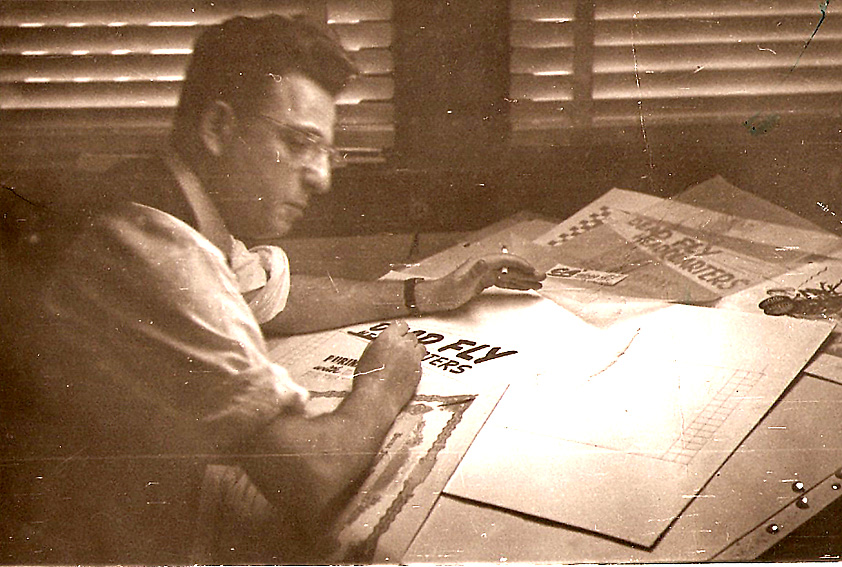
WWII, Sidney Kotler and art work
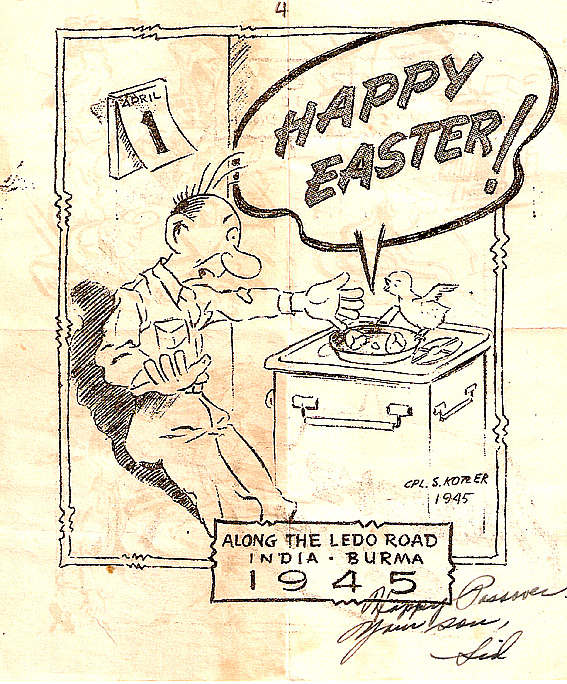
WWII, Sidney Kotler, Easter Card

WWII, Sidney Kotler, Christmas card
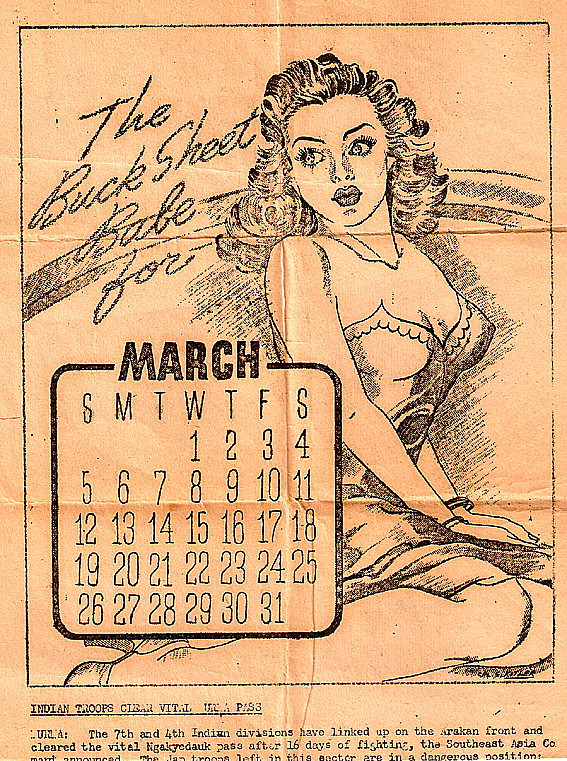
WWII, Sidney Kotler, pin up girl


First Convoy on the Ledo Road
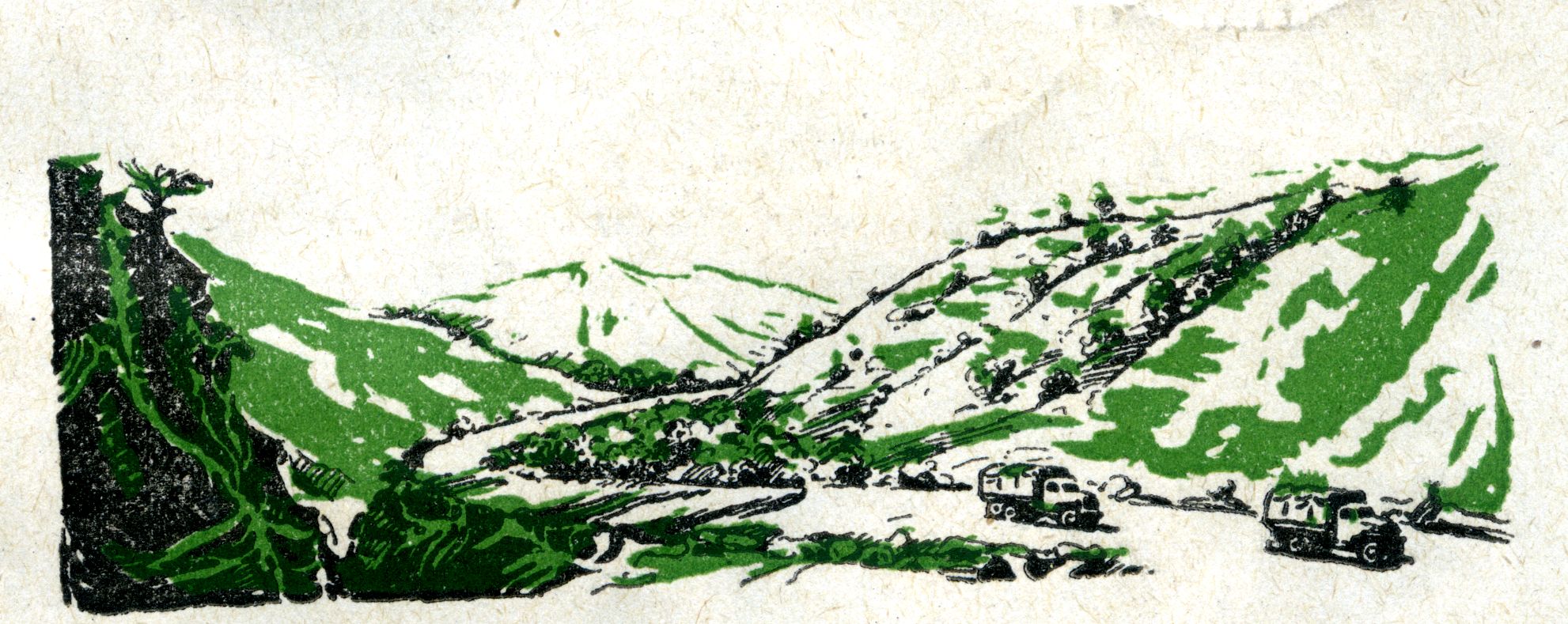
First Convoy Illustration
My obsession with the 388th Bomb Group stems from a chance encounter with a collection of negatives and photographs taken by an artist attached to the 388th in Knettishall, England. Followers of PortraitsofWar already know the story, so I won’t go into great detail, but anyone interested should search for Alva Alegre in the search bar.
Anyway, I recently purchased a small group of photos that providentially yielded a handful of identified photos of members of the 388th BG. In my typical fashion, I’ve fleshed out historical details and hopefully will give Mr. Downs a proper place on the internet.
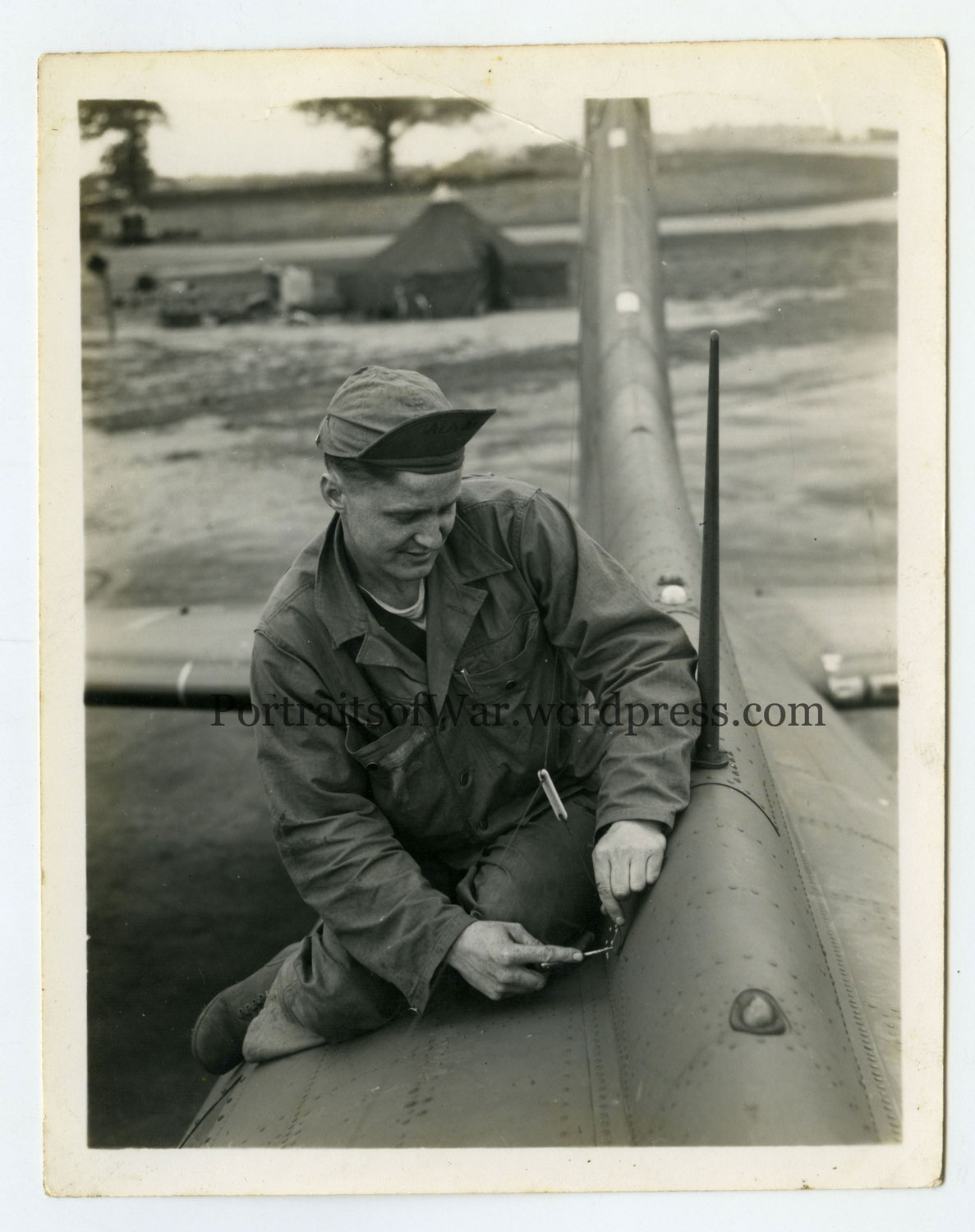
I found the following info penciled on the back of the photo: “Roland Downs, Cpl. Alabama”

ALABAMA Inked on Cap
Judging by the inked info on his upturned mechanics hat, I felt that this was a likely identification of Mr.Downs. With this info in hand I visited the 388th Bomb Group website: http://www.388bg.info/

Darn! They already had his photo, but at least I was able to learn that he was a radio mechanic, something obvious after inspecting what he’s doing in the photo. My next stop brought me to ancestry.com, where I do most of my genealogical research on mystery photos. From a little bit of searching I was able to discover that he was indeed born and raised in Alabama and born on July 8th, 1923 and passed away on April 19th, 1980. He served in the Airforce (USAAF) from 1942 until 1971.
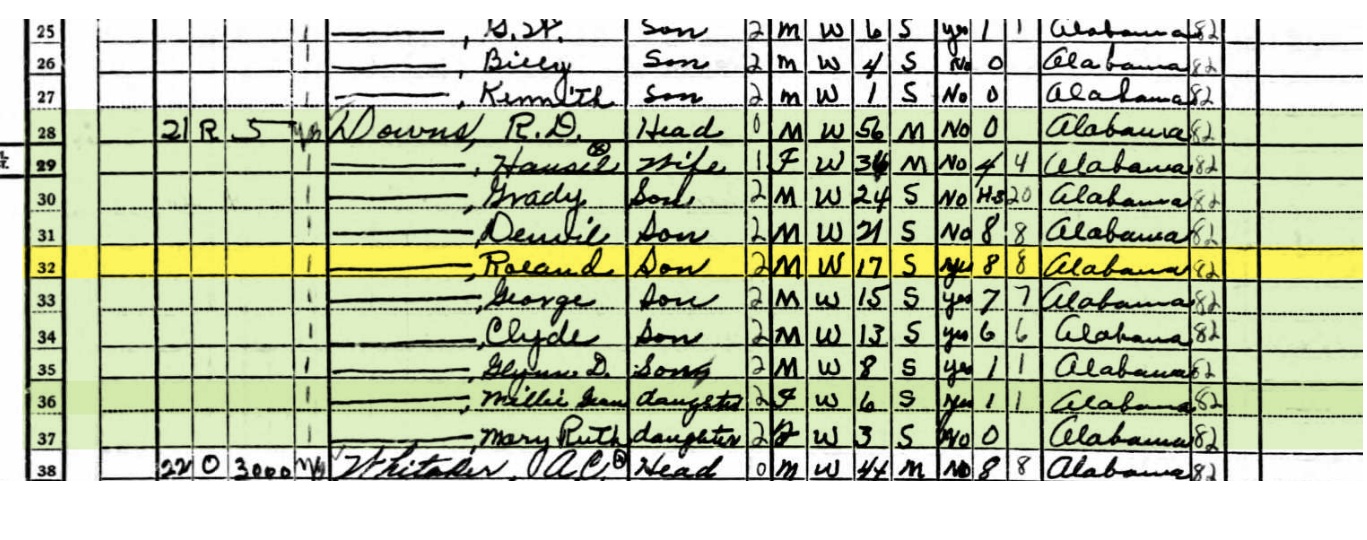
1940 Census Record
The 5th Platoon of K Company was assigned to the 394th Infantry Regiment of the 99th Division, making the African-American men of the platoon the first integrated combat soldiers since the Revolutionary War. Of the nearly 1,000,000 African-Americans to serve in WWII, only a small handful were put in front line combat duty, and even fewer fought shoulder to shoulder with White comrades.
A recent eBay find turned into an interesting research piece for me. I had no idea black soldiers fought in the 99th Division, and the Purple Heart and Combat Infantry Badge present in the photo are indicators of a battle-hardened veteran of combat. All we know about his identity is that the photo was taken in November of 1945 in Knoxville, Tennessee. Maybe someone knows a way to narrow down the list of K Company men and discover his identity?

Want to read more about this topic? Check out the following sites for a slew of interested articles and photos:
http://www.historynet.com/african-american-platoons-in-world-war-ii.htm
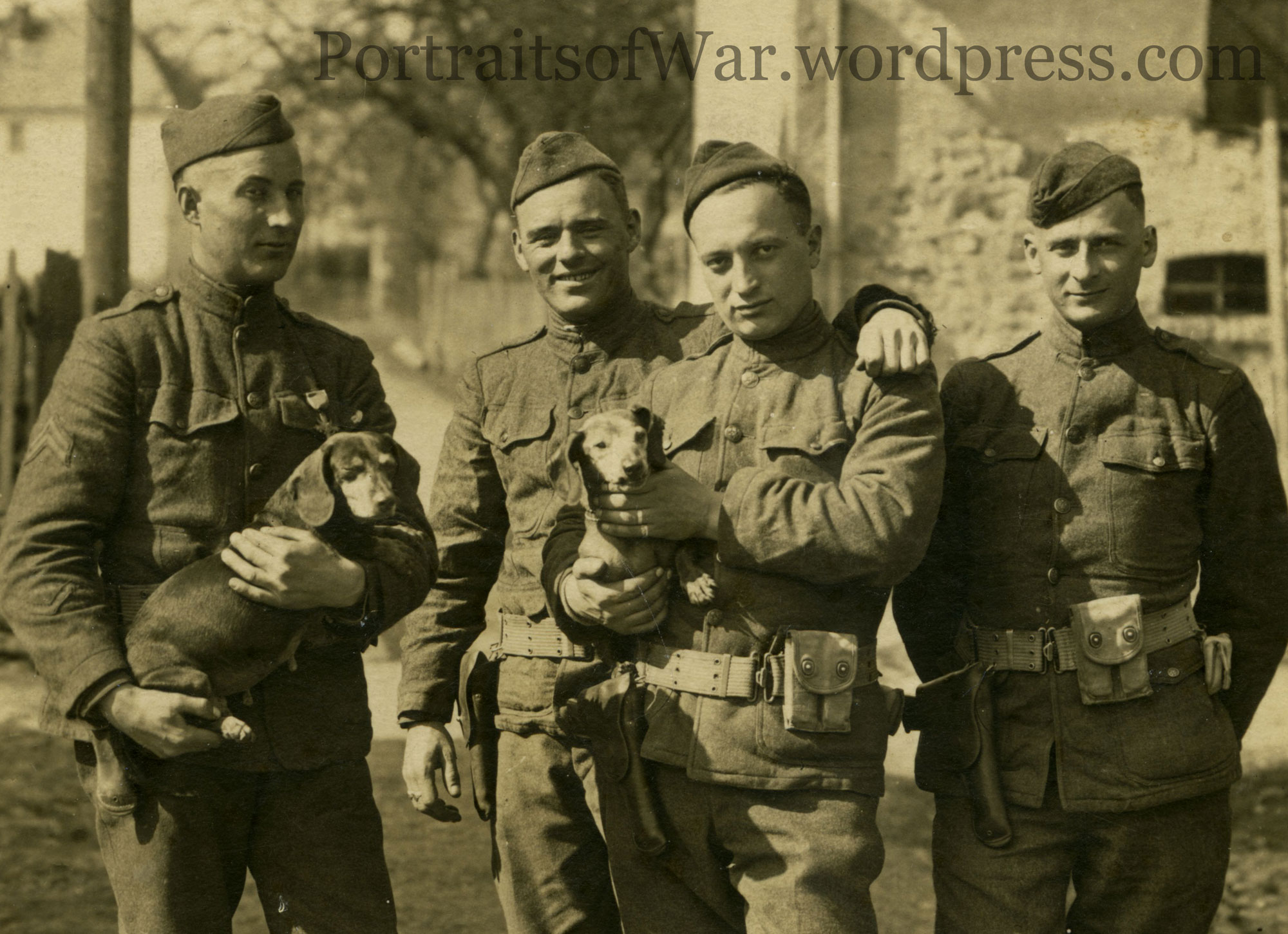
Nothing brings out the personalities of war like a mascot dog! I have at least a dozen decent WWI photos of mascot dogs posing with their adopted owners; these photos never cease to warm my chilly heart! The doughboy on the far left is sporting the Distinguished Service Cross, a medal given out for distinguished service on the battlefield. This award is only second to the Congressional Medal of Honor!

James Zographos, 93, left, who was a bombardier on a B-17 with the 388th Bomb Group during World War II, talks with Alvin Lewis, 88, who was a tailgunner on the B-17 Jamaica Ginger, on Thursday during a visit to the Mighty Eighth Air Force Museum.

Inside the combat gallery at the Mighty Eighth Air Force Museum, Alvin Lewis and James Zographos sat and admired the exhibit’s
centerpiece — a massive, almost fully restored World War II-era bomber.
Memories nearly 7 decades old flew through their minds Thursday afternoon as the 88-year-old Lewis and 93-year-old Zographos shared some of their experiences flying missions over Germany and France in B-17 Flying Fortresses nearly identical to the museum’s plane.
With 28 other World War II veterans who served with the 388th Bombardment Group — part of the 8th Air Force — the men gathered in Savannah this week as part of the unit’s 63rd annual reunion.
“It’s always the best,” said Zographos, who lives in Westborough, Mass. “It’s great to get together and see these guys and their friends and family every year.”
This year, the group chose Savannah for the reunion specifically to see the Mighty 8th’s B-17, dubbed the City of Savannah in honor of the 5,000th plane to be processed through what is now Hunter Army Airfield during World War II, said Henry Curvat, the 388th Bombardment Group Association’s president.
“For us to be able to come here and see this, it’s a great honor,” Curvat said. “For so many of the original members to see this B-17 and for this museum to honor them by placing the high bar H (the 388th’s unit symbol) on the plane is wonderful.”
The original City of Savannah, like Zographos and Lewis, was assigned to the 388th Bomb Group and flew missions out of Station 136 in Knettishall, England, during the war.
Zographos, who is the oldest remaining member of the group, flew more than 50 missions as a bombardier between March 1944 and March 1945.
After flying his first 30 missions, Zographos was sent home. About 30 days later he was back at Station 136.
“I went home then I volunteered and went back and did 20 more (missions),” he said. “I can’t explain that. I can’t explain a lot of things. People ask why I went back, they ask, ‘Were you ever afraid?’ I can’t answer that.”
Like Zographos, Lewis, of Dayton, Ohio, doesn’t articulate what led him to the war.
The day after he turned 18 in 1942, Lewis enlisted into the U.S. Army Air Forces, the next year he began flying in B-17s and by February 1945 he’d been sent to Knettishall with the 388th to serve as a waistgunner during missions in Germany.
By the end of that year Lewis had flown 13 missions and been discharged from the military.
“I was 20 years old when they sent me home,” he said. “I got home on July 4 and I turned 21 on the 21st. They discharged me in October and that was it.”
Although they didn’t fly any missions together 67 years ago, they’ve become easy friends as they’ve aged.
“He and I, like any of us, we can just sit here and talk and talk,” Zographos said.
The 30 remaining members of the 388th share a similar bond only those who fought with them can understand, Zographos said.
It may not always be easy to share their experiences, he added, but it’s important.
“We talk about the things that happened because once our group is gone — not only the 388th but all the World War II survivors — it’s going to be past history. There’s going to be nothing in the history books directly from our generation.”
Preserving and sharing the history of the members of the 388th, Curvat said, is what encouraged him to become so involved with the group.
“Through my adopted father — a close family friend, really — who flew with the 388th in World War II, I became part of this group,” Curvat said. “I’ve found spending time with these men to be infectious.
“It’s just incredible to look at what these people have done and what they went through; it’s important that we record and share that with people as less and less of these (World War II veterans) are around.”
I recently started researching my collection of 100+ images from a Marine SBD Dive Bomber unit and came across an awesome database that helped clear up a lot of questions regarding identification of some of the pilots who posed for the camera. Luckily, the men were wearing leather name tags which allowed for a partial identification. Recently I discovered the Marine Corps Muster Role section of ancestry.com. This allowed for a full identification of all the men that served with Lt. Walter Huff, the original owner of the collection. With this in hand I was able to track down the names of a few pilots who served with Walter.

Lt. Francis Allen Watrous
I always knew that the last name of the man in the slide was Watrous, but had nothing else to work from. Having discovered the muster role of the 332nd, I easily scrolled to the last section of the Lieutenants and found Mr. Francis A. Watrous listed.

Marine Muster Role – National Archives
From there I did a quick google search and found an obituary with a reference to Mr. Watrous. The obituary was for his wife, who passed away in 2010, but referred to her first husband:
“……….. was predeceased by two husbands, Francis Allen Watrous, who was a U.S. Marine dive bomber pilot in World War II and was killed in a plane crash in 1947″
After a search through 1947 newspapers I was able to come up with an article explaining the sad death of Mr. Watrous.
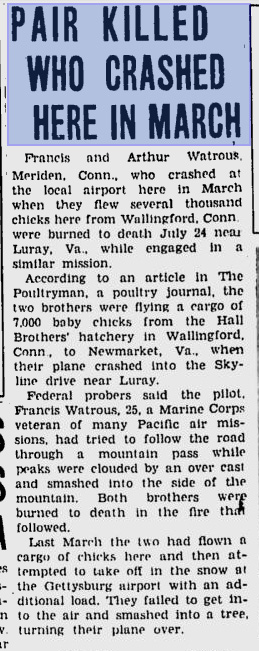
Francis and his brother Arthur worked for Fleetwing Air Cargo Co. as deliverymen of baby chicks. The brothers crashed on an overcast morning in July of 1947 while delivering 7,000 baby chicks from Wallingford, CT to Newmarket, VA.
And a recent addition to the post from the relative of Mr. Watrous (Thanks to Chris S.):
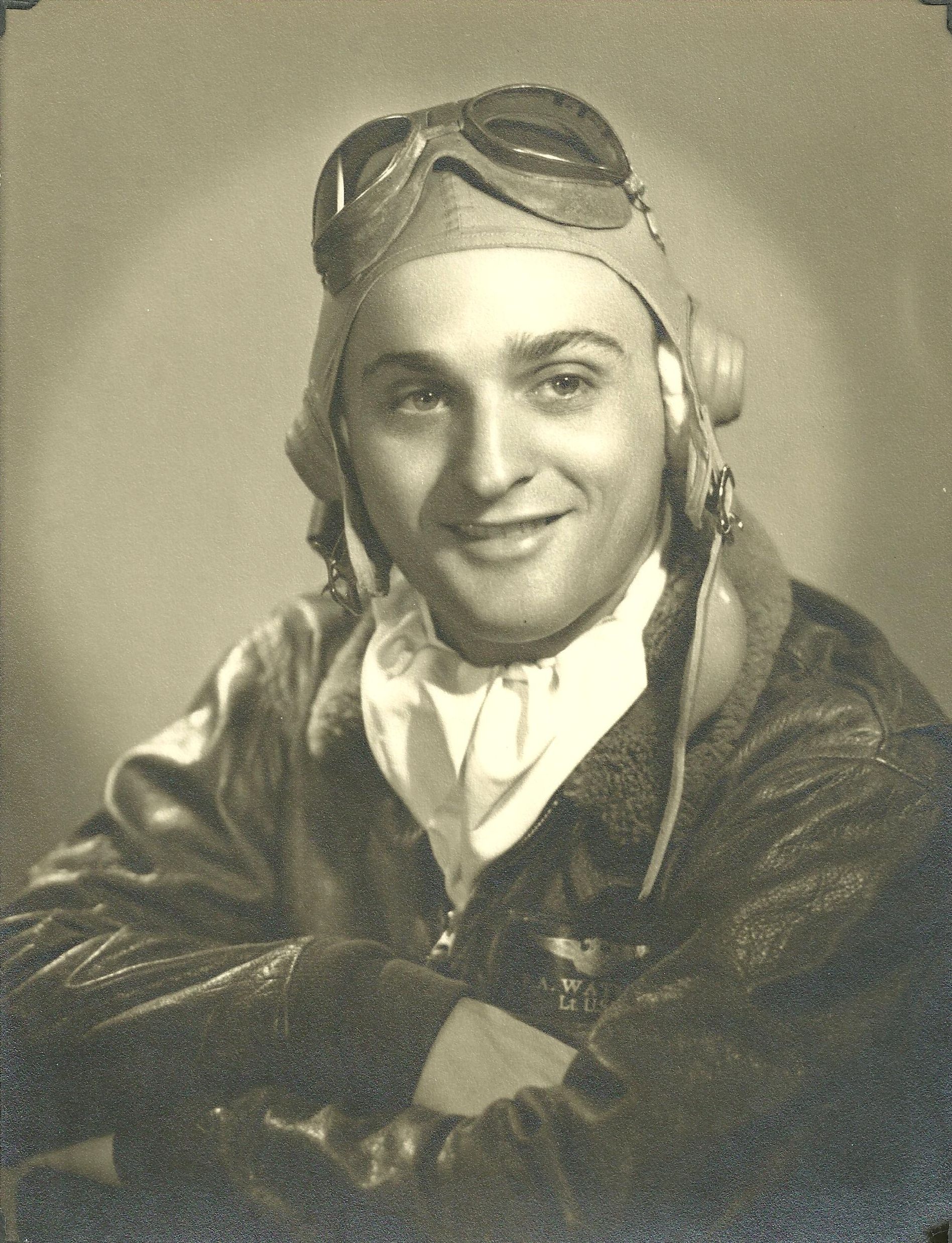
Francis Poses for the Camera
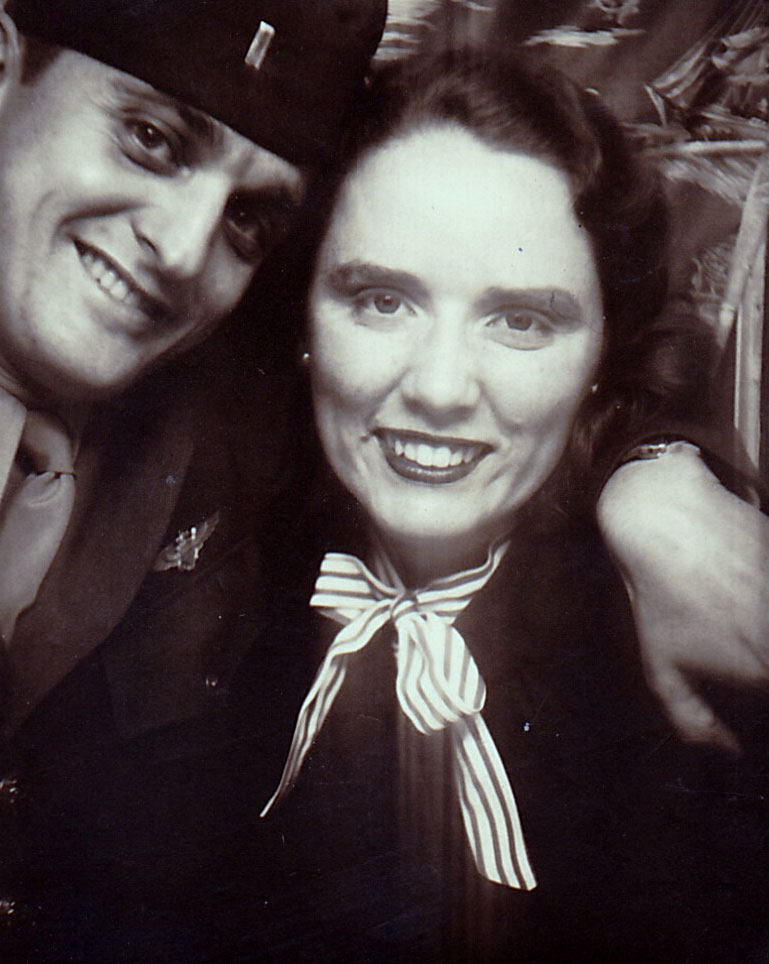
Fran and Lareine Pose in a Photobooth
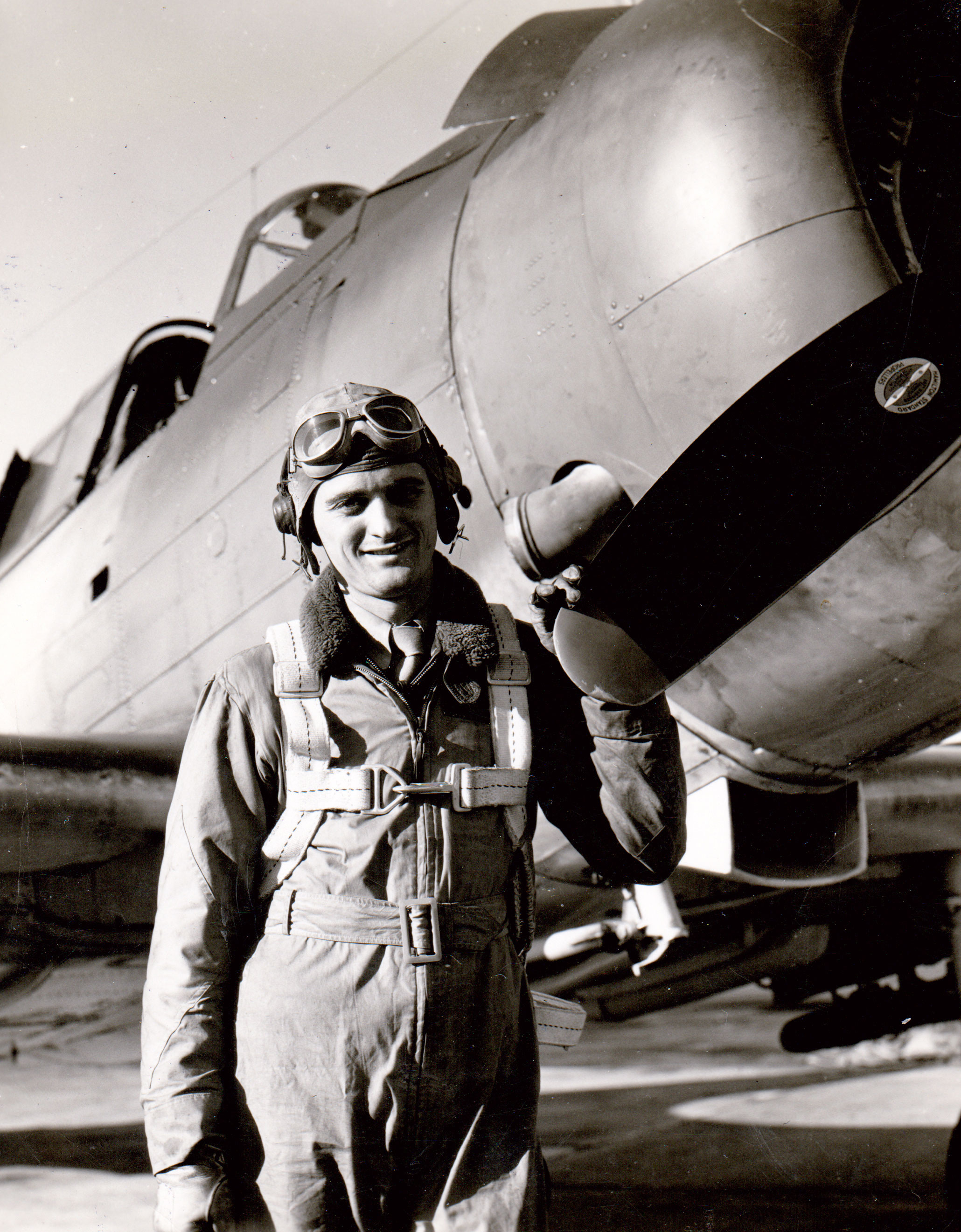
Francis and his Dive Bomber

VMSB 332 on Midway


Laurence P. Baker
24 Woodruff Street
“Mt. Washington”
Pittsburgh, Pennsylvania
 Portraits of War