The Sadness of WWII: Original Snapshot of Nordhausen Concentration Camp – Family Finds Lost Mother


Casual followers of this blog will know that I never post photos of death or destruction.  My main goal is to present historic photography in a way to help educate internet followers about the world of war.  In this case I will post a photo that may be hard for some viewers to see.  I have hundreds of photos of concentration camps in my collection, yet have never been moved to post any of the photos to the web.

This image called to me.  The composition, the subject, the setting.  It’s all there.  A soldier snaps a shot at Dachau of a man holding the feet of his dead wife while his injured son watches on.  A procession of armored division soldiers file by as this tragic event unfolds; the event captured through the lens of an unknown soldier of an unknown family.  This scene was likely replicated tens of thousands of times at the tail end of the war.

KZ154a

KZ154b

KZ154bcKZ154bcd

KZ154

WWII Veteran Story: Bataan Death March Survivor of the 16th Infantry Division Rescued by 6th Army Rangers


A recent visitor to PortraitsofWar was kind enough to send along some info on a local Guilford, CT veteran who passed away a few years back.  He was a Bataan Death March survivor, photographer, and member of the 16th Infantry Division.  Special thanks to Chistina Schaefer for providing the info and scans.

Richard Sperry Chapman, 1915-1976. Guilford native, photographer and POW. After graduating from high school in Guilford in 1934, Dick made the Army his career. In 1941 he was a member of the 16th Infantry Division, the “Golden Water Buffalo” Division. In 1941 he was stationed on the island of Luzon, Philippine Islands.

He survived the Bataan Death March, one of only three of 500 men in his battalion to do so.

He was incarcerated in Bilibid POW camp where he was tortured and starved. He was later transferred to Cabana Tuan were he was tortured and starved.

Just before the end of the war he was rescued in a daring raid led by Col. Henry Mucci and his raiders of the Sixth Army Ranger Battalion.

The Friendly Photographer is Taken Prisoner

The Friendly Photographer is Taken Prisoner

10491_543213132360400_2103300435_n396213_543212982360415_1872123180_n

318870_543213052360408_2108273479_n

314179_543213029027077_146566793_n

WWII Christmas Card Identification Research: Henry Behrens of Grand Island, Nebraska


UPDATE: This Christmas card has been returned to the Son of Mr. Henry Behrens.  He found this post while searching for information about his father online.  I’m pleased to have returned yet-another WWII photo to it’s rightful place.

Followers of PortraitsofWar will know that I love to do in-depth research to ferret out the names and stories of WWI and WWII veterans through the photographs they left behind.  In this case, I purchased an inexpensive World War II postcard on eBay with the hopes of doing some sleuthing to find the identity of the sender.  I already have a huge backlog of material to post, but I figured I would add yet another to the collection.

A Pilot Christmas Card

A Pilot Christmas Card

christmas137

The card was interesting, and had nice composition.  These style cards were often sent home by veterans to family members back home.  With this in mind, I flipped over the card to check the reverse.  Bingo.  A name and address.  Figuring that he likely send the card home to a family member (and not to himself) I began a quick ancestry.com search for the name.  John Behrens of Grand Isalnd, Nebraska.  I pulled the 1930 census record for the Behrens family to see if there were any likely candidates for the sitter in the photo.  My initial guess was the he was likely 20-25 years old.

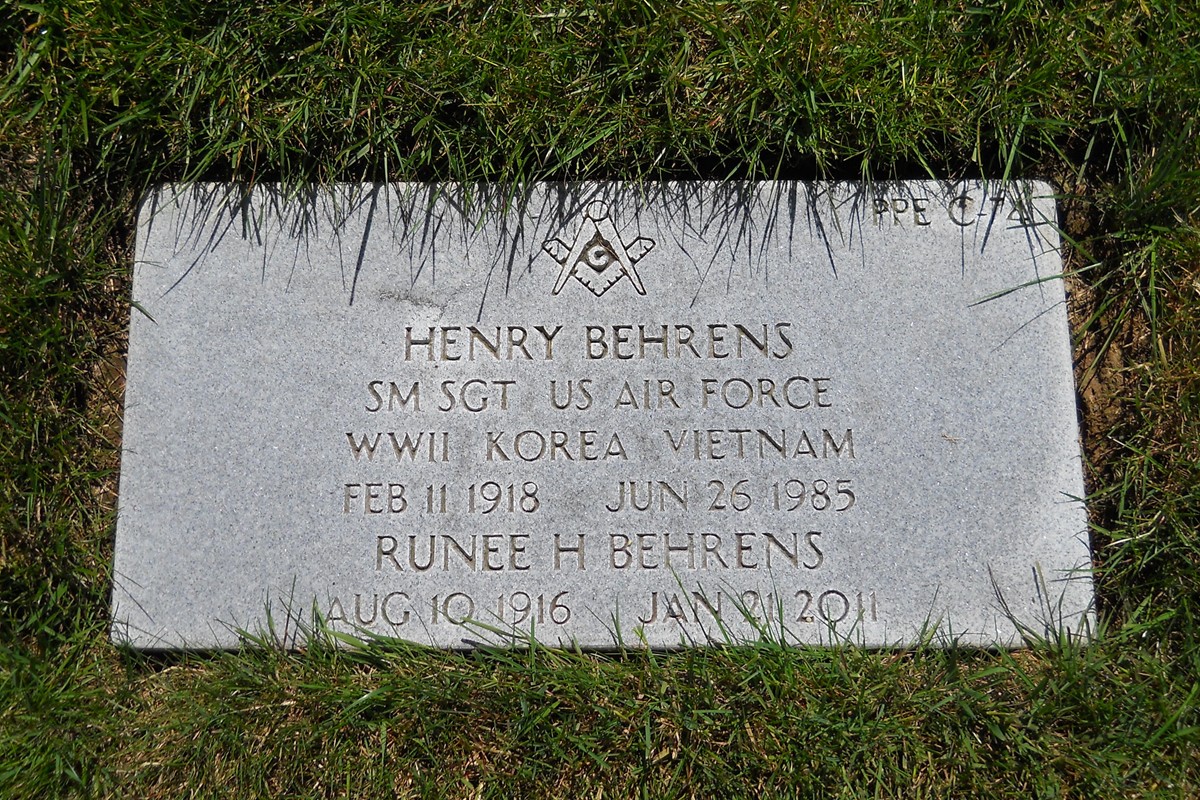
1930 censusThe address matched up on another record, so I’m 100% confident that this is the John Behrens named on the reverse of the postcard.  John had two sons named Willie and Henry.  Both were born in Germany and eventually emmigrated from Germany to the United States in the 1920s.  I thoroughly researched both brothers and eventually found a reference to Henry having been in the air corps during WWII.  His obituary also confirms that he was born in Eckenforde, Germany.  It also sounds like he was a lifetime Air Force veteran.

Here’s his obituary:

Marin Independent Journal
Saturday, June 29, 1985

HENRY BEHRENS

A memorial service for Henry Behrens of Novato will be held at 1 p.m. Tuesday at Redwood Chapel Funeral Home in Novato.

Mr. Behrens died unexpectedly Wednesday at his residence. He was 67.

He was a native of Eckenforde, Germany. He spent 31 years in the U.S. Army and the Air Force. He retired from Hamilton Air Force Base in 1966.

His most recent job was office service manager for Mission Equity Insurance Co. in San Francisco.

He is survived by his wife, Runee Behrens of Novato; two sons, William H. Behrens of San Jose and John W. Behrens of Fairfield; a daughter, Linda P. Garrecht of Irvine; his mother, Alwine Behrens of Grand Island, Neb.; and three grandsons.

Inurnment will take place at 3 p.m. Tuesday during a graveside service at the San Francisco National Cemetery at the Presidio.

The family prefers memorial gifts to the American Heart Fund.

3520535_133765988073

WWII Photo: The Long Journey of the Isted Lion – Returned to Berlin After 65 Years


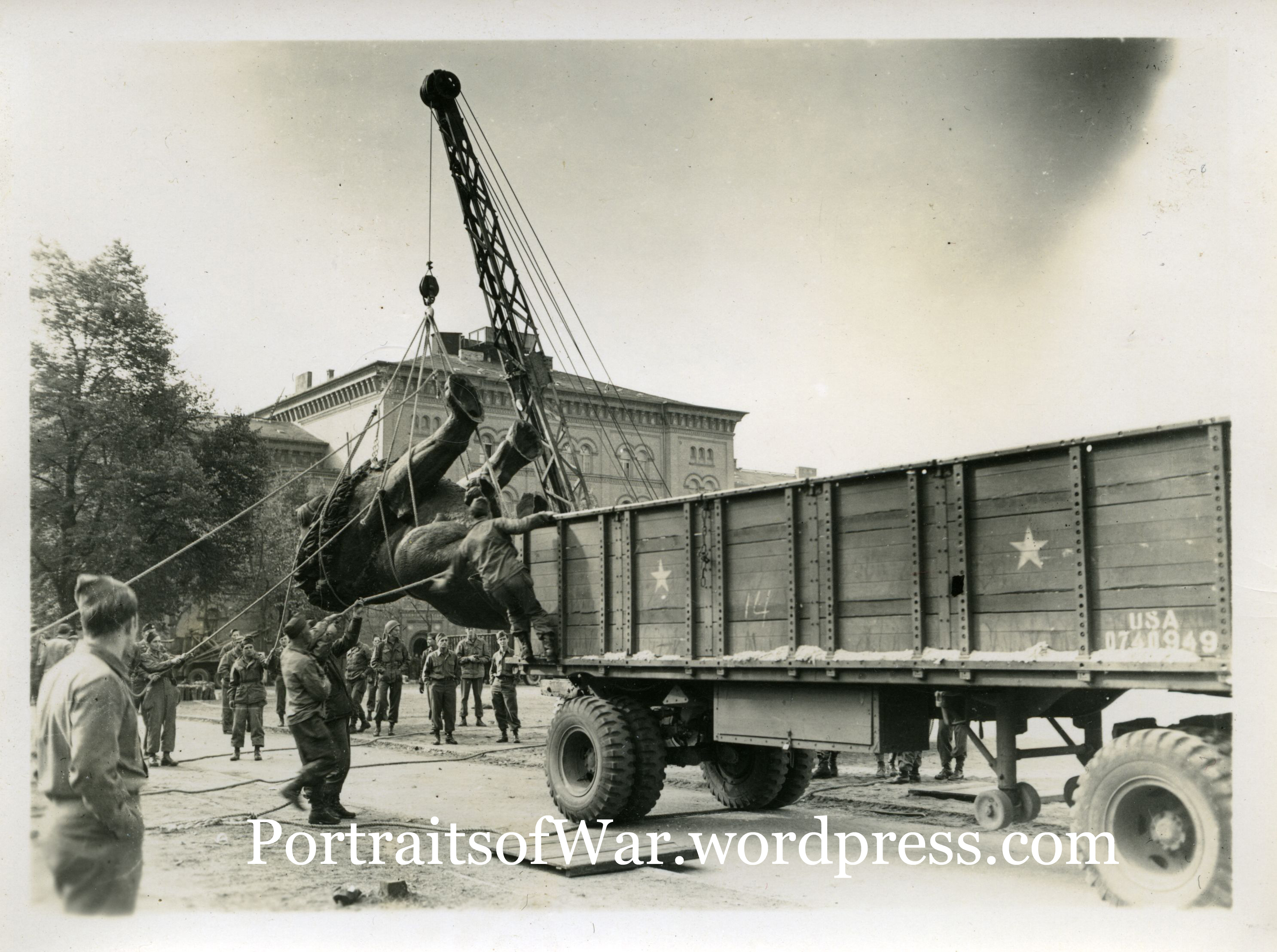
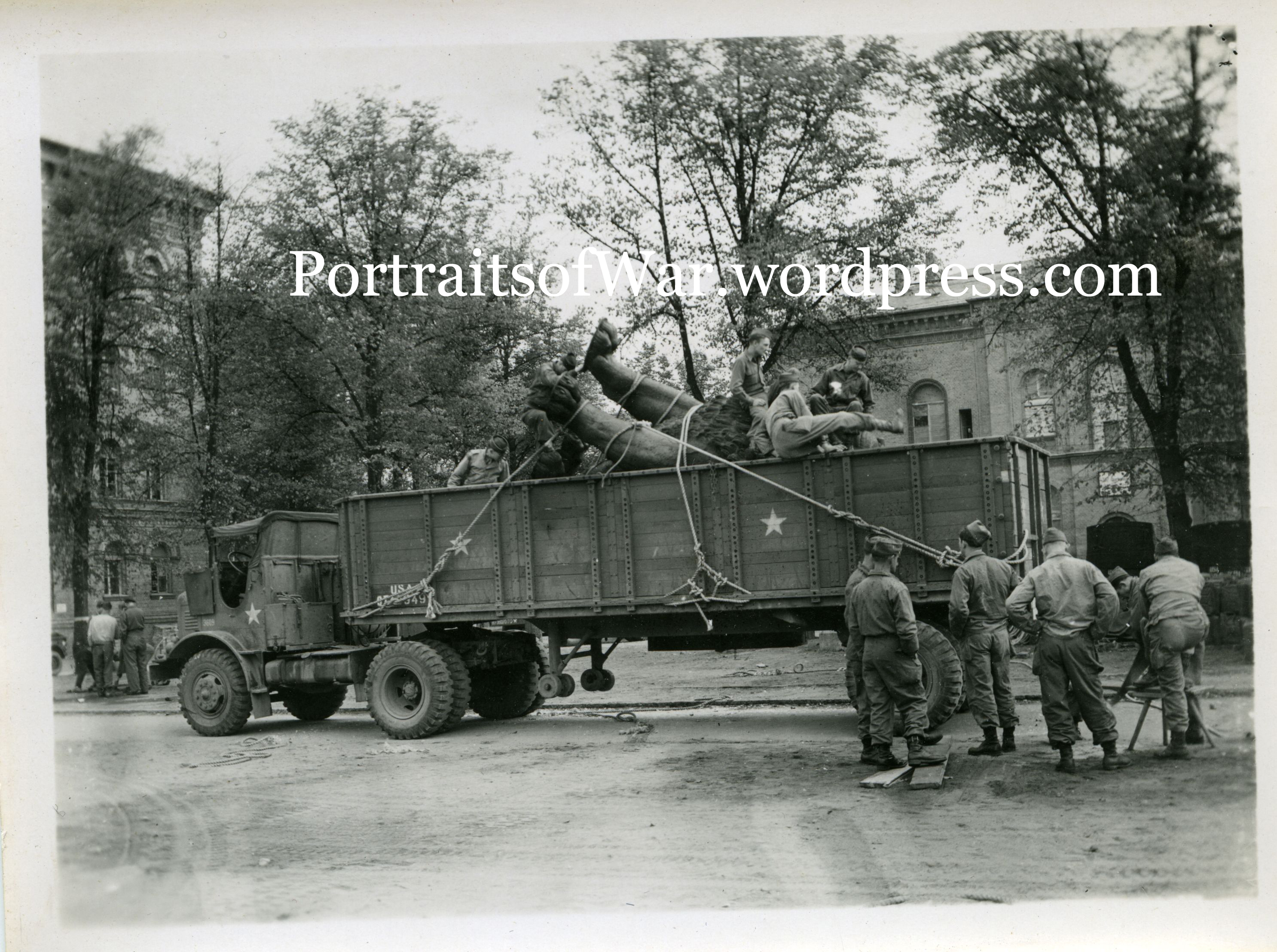
Snapped over 65 years ago at the Lichterfelde-Berlin SS Barracks in October of 1945, this shot gives us a rare glimpse of the US Army unit that transported the famous Isted Lion from it’s home in Berlin back to it’s ancestral lands of Denmark.  Danish sculptor Herman Wilhelm Bissen created the monument for installation as a Tomb of the Unknown Soldier for the common Danish soldier.  The statue we see today was completed and unveiled in 1862 with the following inscription:

Isted den 25. Juli 1850. Det danske Folk reiste dette Minde
(Isted, 25 July 1850. The Danish people set this memorial)

The statue was then taken in 1864 by the Germans after a bitter Danish defeat at the Battle of Dybbol.  From there it was put on display, attacked by German nationalists, dismantled, copied, reconfigured and moved to the arsenal in Berlin, moved again to the barracks at Lichterfelde where it rested until October of 1945.  This is where my recent photograph acquisition comes into play.

Isted Lion is Lifted

Isted Lion is Lifted

Lion on the Move

Lion on the Move

This pair of incredible photographs was privately taken by a member of a US Army engineering unit who were stationed in Berlin right after the end of the war.  This shot shows the engineers loading the wandering lion into the bed of a heavy-duty truck.  I can’t find any other shots of this scene.  Also, there aren’t many soldiers in the shot……  this could be the only photograph of this scene on the web.  From there, the lion was transported back to Denmark where it rested until 2010.  Please watch the video below to finish the story!

WWII Pacific Theater of War in Color: Curtiss SC Seahawk Scout seaplane in Vibrant Color! 1944


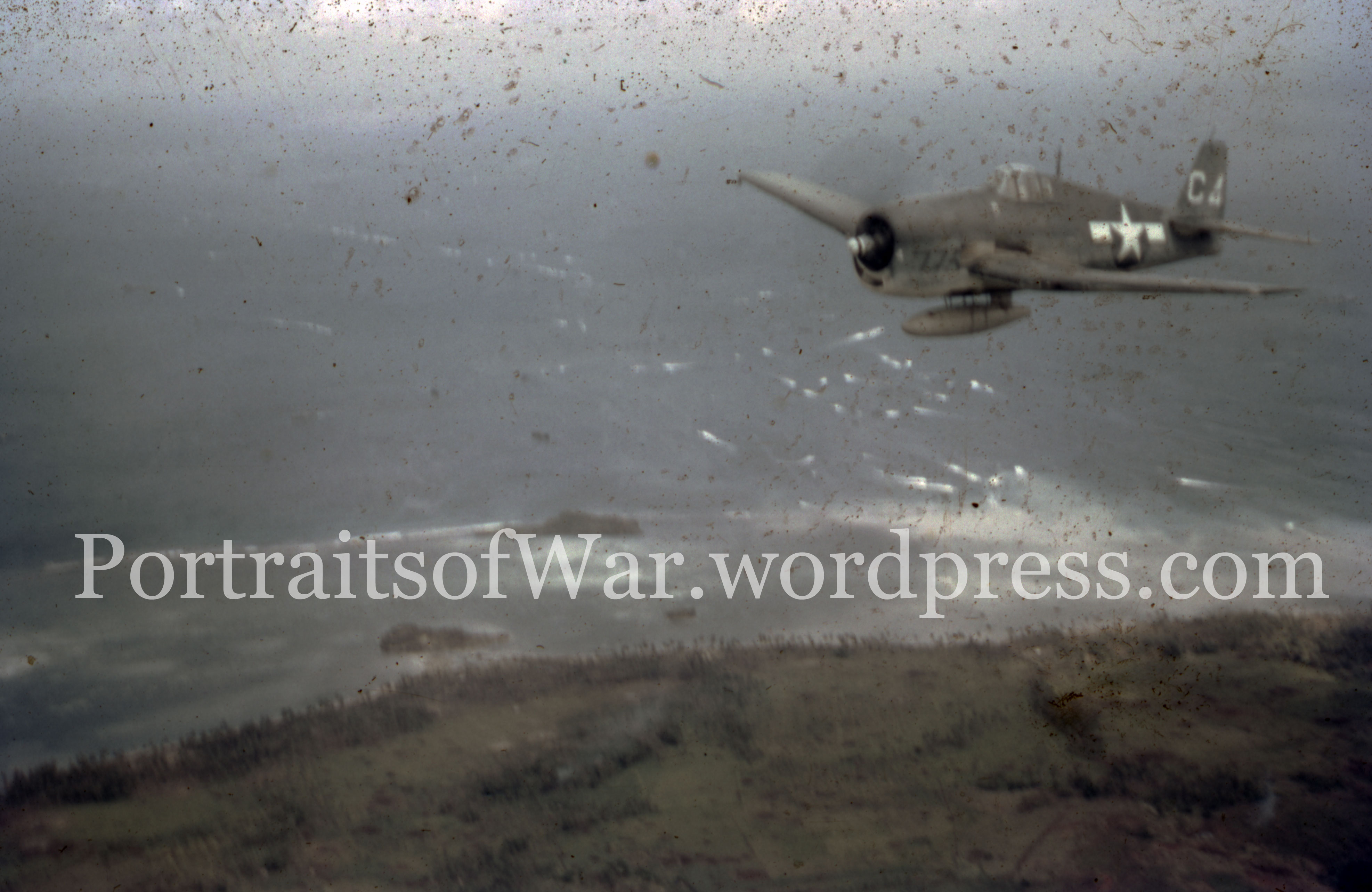
The Curtis SC Seahawk was a scout aircraft designed by the Curtiss Aeroplane Company for use in the Pacific Theater of Operations in 1944.  Only 577 were built and these planes are rarely seen in color, especially while stationed overseas.  Some experts argue that this was the best US float plane used during WWII.

ChenangoSlide031

This photo was snapped by a Navy fighter pilot in 1945 on Guam.  The original color slide is now in my collection. A rare addition!


Here are some internet facts I found about the SC-1:http://www.usslittlerock.org/Armament/SC-1_Aircraft.html

The Aircraft
The Curtiss SC-1 Seahawk was designed to meet the need for a reconnaissance seaplane that could be launched from US Navy battleships and cruisers. Designed as a single-seat aircraft the SC-1 could theoretically hold its’ own against enemy fighters.

The SC-1 was the last of the scout observation types and was the most highly developed with vastly improved performance over earlier types. Power, range and armament had doubled its usefulness. It was highly maneuverable, had two forward firing .50 cal. guns, large flaps and automatic leading edge slats for improved slow speed characteristics, and radar carried on the underside of the starboard wing proved highly successful during search missions. Space needed aboard ship was minimized by folding the wings back manually, making the overall width equal to the span of the horizontal tail surfaces.

Built in Columbus, Ohio, the SC-1 was initially fitted out with a fixed wheel undercarriage, then was ferried to Naval bases, where floats were attached.

The SC-1 was liked by some pilots and disliked by others, but generally well accepted. It could out climb an F6F “Hellcat” to 6,000 ft. and out-turn the F8F “Bearcat”.

Losses with the “Seahawk” were high, caused mostly by the extremely hazardous conditions in which they operated. With too hard a water landing the engine would drop, the propeller cutting through the float. Several mishaps occurred due to a faulty auto-pilot system. Aircraft and pilots were lost due to unknown landing accidents. It wasn’t until one pilot “walked away”, that it was discovered that the auto-pilot was taking over on landings. As a result, all automatic pilot systems were made inoperative on all SC’s. (For more information see U.S.S. Little Rock “Collision at Sea and other Underway Hazardspage.)

During the height of their career, crews aboard ship looked with pleasure at the “Seahawks” aft on the catapults as their “Quarterdeck Messerschmitts”.

The SC-1 first flew in February 1944 and 950 were ordered, later decreased to 566 because of the Victory in the Pacific. It continued in service for a number of years after the war as trainers, eventually being replaced by helicopters.

Curtiss SC-1 Profile Drawing

(Click drawing for a larger view)

WWII in Color: Invasion of Guam, July 1944 Caught on Film in Color from the Skies Over Guam


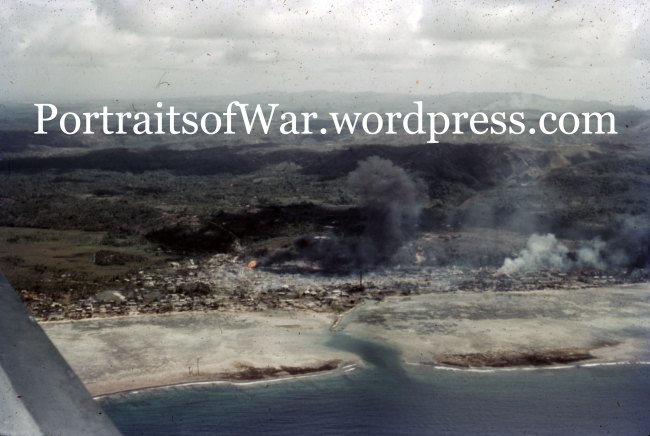
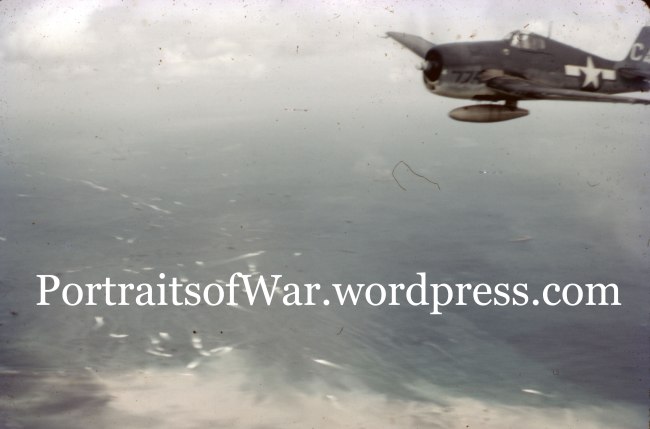
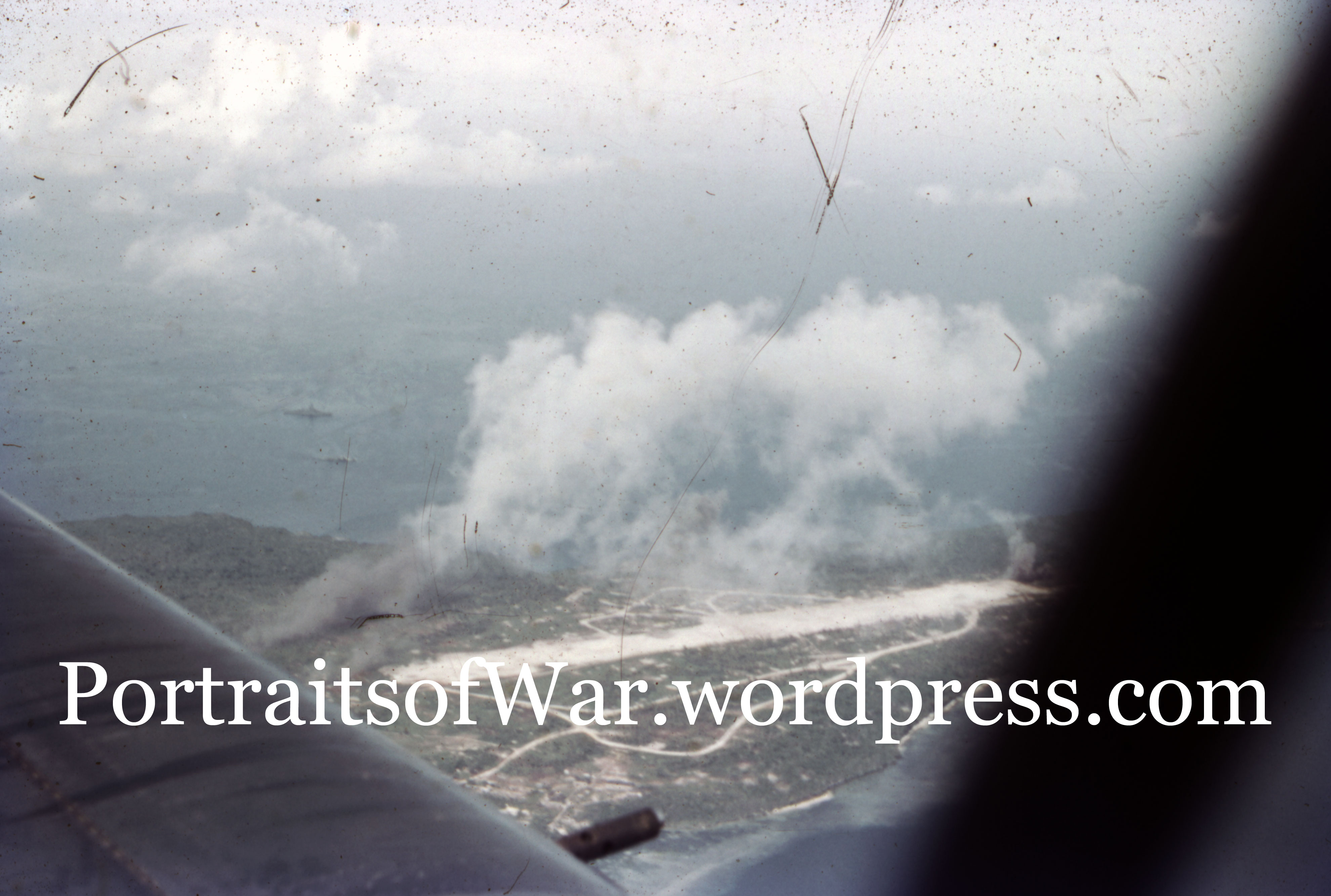
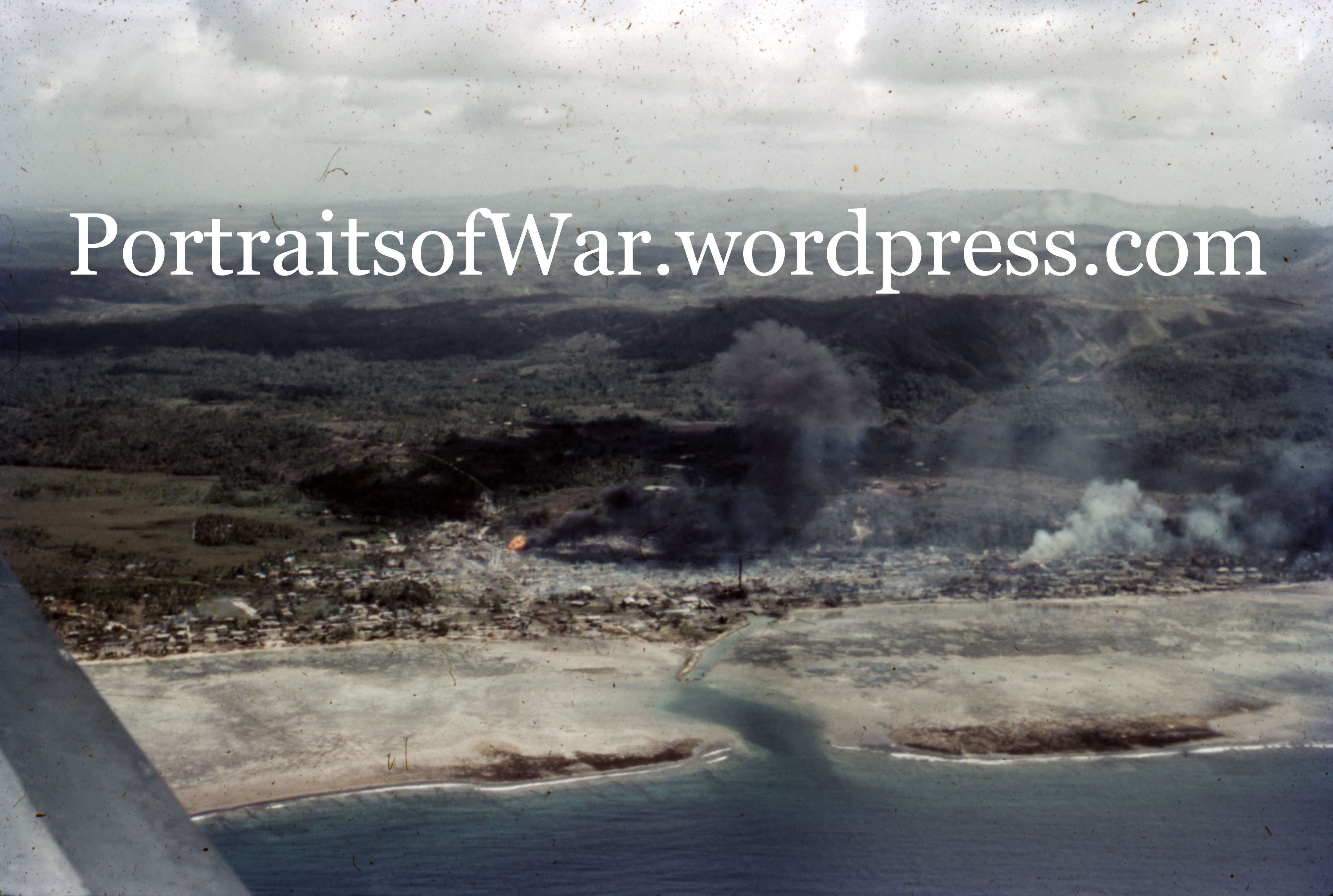
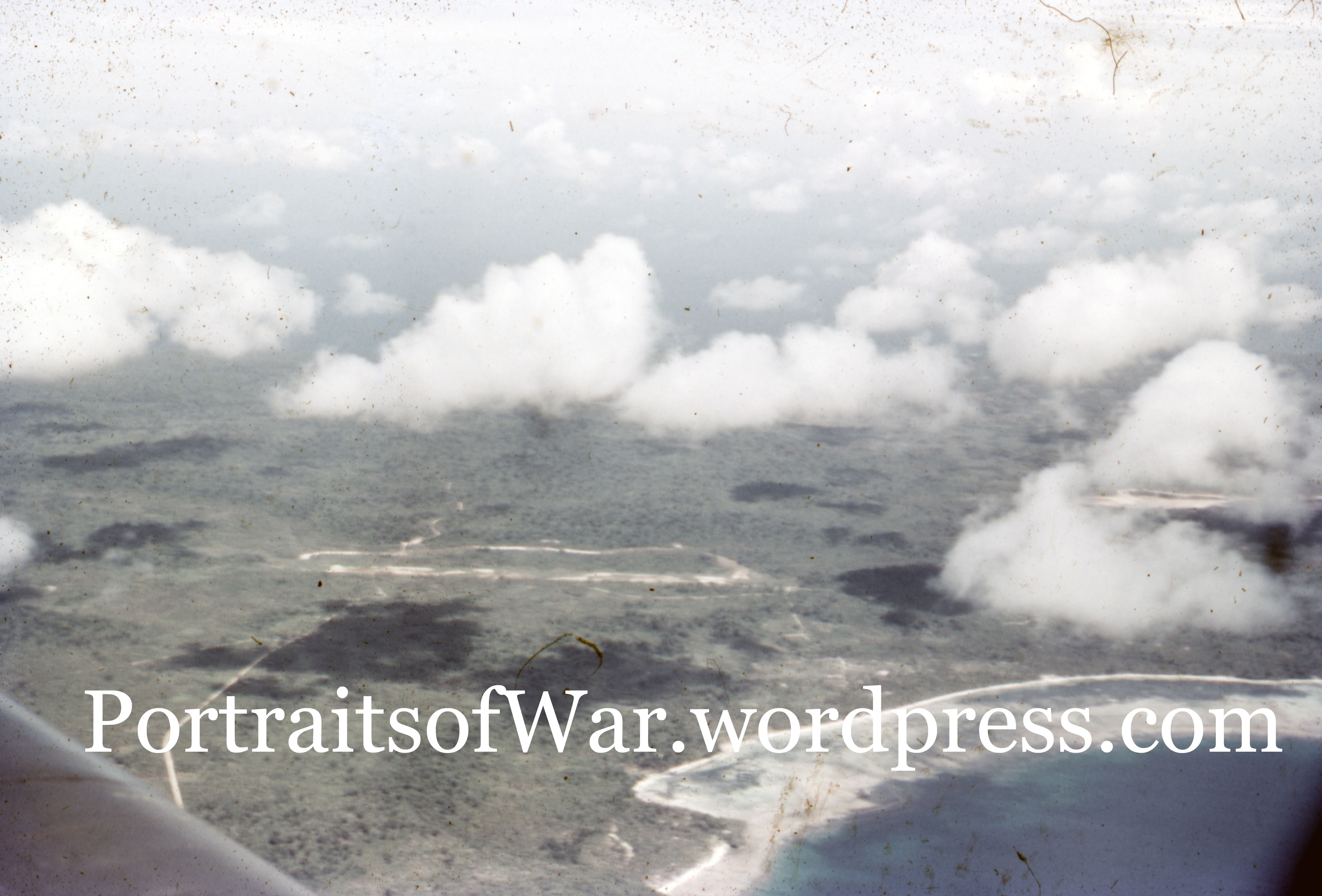
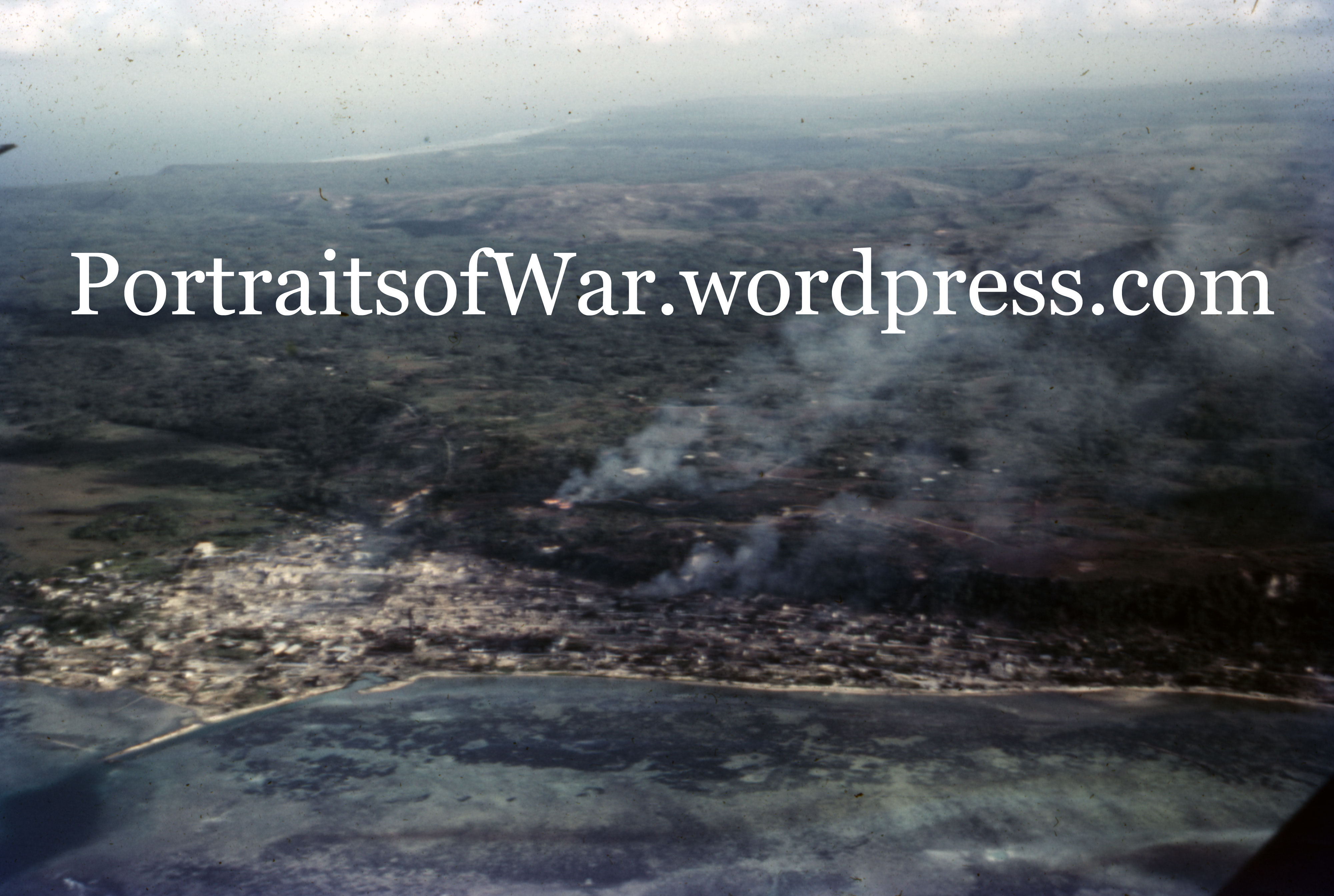
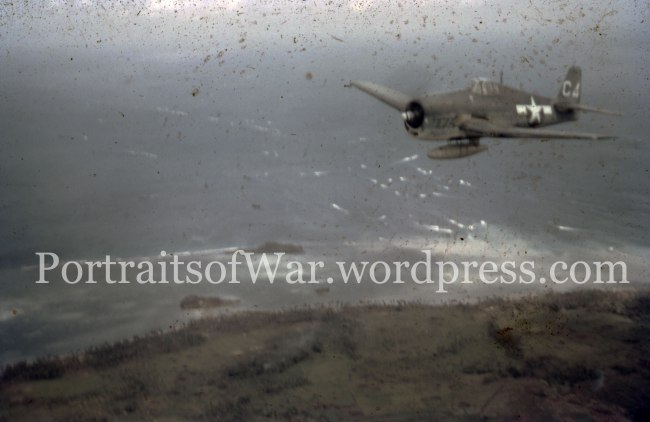
Shot from the cockpit of a F6F-3 Hellcat flown by Edward W. Simpson Jr. of the VF-35, this incredible set of images depicts the opening few hours of the infamous Invasion of Guam.  Simpson carried his Kodak 35mm camera loaded with color film during many of the key battles of the Pacific, and PortraitsofWar has been lucky enough to acquire the entire collection.  In this installment, I’ve scanned a series of shots taken during the Guam invasion.  Many are identified as to location and were verbally described on a cassette tape that accompanied the collection.
"Guam - Covering Landing"

“Guam – Covering Landing”

"Guam - Orote Peninsula"

“Guam – Orote Peninsula”

"Agana"

“Agana”

""Jap Ammo Dump Hit by Naval Shells"

“Jap Ammo Dump Hit by Naval Shells”

"Agana City Lower Right"

“Agana City Lower Right”

"Guam Landing Craft"

“Guam Landing Craft”

"Orote Airstrip Under Attack"

“Orote Airstrip Under Attack”

"Agana City on Fire"

“Agana City on Fire”

Orote Peninsula

Source: http://www.pacificwrecks.com/airfields/marianas/orote/index.html

Location
Located the western shore of Guam on the Orote Peninsula, bordering Apra Harbor to the north and Sumay to the west, and Agat Bay to the south. Orote was known as Guamu Dai Ichi (Guam No. 1) by the Japanese.

Construction
Built prior to the war, by the US Marine Corps detachment of 10 officers and 90 enlisted men when they arrived in Guam on March 17, 1921. The Marine unit constructed an air station near the water at Sumay village, including a hangar for their amphibious aircraft. In 1926, a new administration office was constructed which housed the squadron offices, sick bay, dental office, aerological office and guardhouse. In early 1927, the squadron departed for Olongapo. Only a handful of men remained here until September 23, 1928, when Patrol Squadron 3-M, consisting of 85 enlisted men and 4 to 6 officers, was assigned to Guam. Shortly thereafter, the naval air station was closed on February 24, 1931, as a cost-saving measure.

Japanese Occupation
When the Japanese attacked Guam, they did not bomb the abandoned naval air station. When they occupied the area, they constructed Orote Field, using Korean and Guamian labor, and used the base until the liberation of Guam.

Used by the Japanese navy from April 1944 to June 1944. As of June 1, 1944, Japanese air strength on Guam consisted of 100 Zeros and 10 J1N1 Irvings at Airfield #1 and 60 Ginga at Airfield #2.

American Neutralization
On February 23, 1944, American carrier based airplanes attacked the field, and other American raids soon followed. During the Battle of the Philippine Sea the field was used by the Japanese carrier-based airplanes to refuel and rearm. The Japanese airplanes based at Orote Field were also used to attack the American fleet. American raids on June 19, 1944 destroyed the landing fields, the aircraft on the ground and such aircraft that managed to take off. American pilots reported extremely intense antiaircraft fire around Orote Field. Fifteen Japanese airplanes crashed at Orote Field on June 19, 1944.

On June 20, 1944, numerous actions occurred in the immediate vicinity of Orote Field between American carrier airplanes and Japanese aircraft seeking refuge at Orote Field after flying from their carriers, or Japanese refueling and rearming to attack American carriers. Numerous dogfights took place in the air above Orote Field and numerous strikes by American airplanes destroyed Japanese facilities and airplanes on the ground. This denied the Japanese extensive use of this crucial airfield during the battle.

Land Battle at Orote
The Japanese assigned the defense of Orote Peninsula to the 54th Independent Guard Unit under command of Air Group Commander Asaichi Tamai. After American invasion on July 21, 1944, the 1st Provincial Marine Brigade under command of Lt. General Lemuel C. Shepherd fought its way through the Agat village to the base of Orote Peninsula. Here the Japanese had constructed an elaborate interlocking system of pillboxes, strong points and trenches.

Regiments of the 1st Provisional Marine Brigade, the 4th and 22nd, fought their way through the area. Shortly before midnight on July 26, 1944, the Japanese trapped on the peninsula staged a suicide attack and were completely wiped out. The advancing Marines still met heavy Japanese resistance in the vicinity of the airfield, where the Japanese fought from caves and coconut bunkers. The peninsula was declared secure on July 29, 1944. It is estimated that the Japanese lost more than 3,000 men defending Orote Peninsula.

Several Japanese aircraft wrecks were captured at the airfield, including G4M2 Betty 2095 , G4M2 Betty 12013 and J1N1 Irving.

American Use
Immediately put into use by Marine air power for close support missions during the liberation of Guam. This was accomplished by Marine Air Group (MAG) 21. By mid-November 1944, MAG-21, now commanded by Colonel Edward B. Carney, was an oversized group, having 12 squadrons based at Orote Field, 529 officers, 3,778 enlisted men and 204 aircraft. MAG-21 was shifted to Agana Airfield in 1945, as Orote Field had always been hampered by adverse crosswinds. The field was then used by the US Navy for repairing damaged aircraft.

American Units Base at Orote
VF-76 (F6F) September 1944
MAG 21 (F4U) July, 1944 – to Agana in 1945
USS Santee (F6F) landed at Orote August 1944

Today
Orote Field was finally closed to all but emergency landings in 1946. Today, the cross-runway is used for C-130 touch-and-go flight training, and for helio-ops by Navy Seals. Much of the time the airfield is off-limits. The major runway runs from NW to SE and the secondary runway crosses the first and runs in a NE to SW direction. Limited tours of the airfield are available.

References
Thanks to Jennings Bunn and Jim Long for additional information.

WWII Kodachrome Color Slide – USS Canfield DE-262 Escort Destroyer at Eniwetok 1944 in Vibrant Color


For all you Navy buffs out there…………. this photo has been hidden away in a slide carousel since it was taken in 1944.  Never before digitized.  Enjoy!

Navy200

USS Canfield (DE-262) was an Evarts-class destroyer escort constructed for the United States Navy during World War II. She was sent off into the Pacific Ocean to protect convoys and other ships from Japanese submarines and fighter aircraft. She performed escort and antisubmarine operations in dangerous battle areas and returned home with four battle stars.

She was launched on 6 April 1943 by Boston Navy Yard; sponsored by Mrs. L. W. Canfield; and commissioned on 22 July 1943, Commander J. B. Cleland, Jr., USNR, in command.

World War Two Veteran Pilots Meet for the First Time Since the War – 379th BG and JG 27 Veteran Encounter


The following article is from ValorArtStudios

This never-before-seen film was taken when JG 27 Bf-109 ace Franz Stigler met American 379th Bomb Group B-17 pilot Charlie Brown for the first time since their encounter during World War II!

In the video, Franz describes how his Bf 109 approached Charlie’s heavily damaged B-17F “Ye Olde Pub”, why he didn’t shoot them down, and the incredible emotions behind meeting on this day, some 47 years later.

After watching this video be sure to check out the upcoming book “A Higher Call,” that tells the true story, for the first time ever, of Franz Stigler, Charlie Brown, and their wartime experiences!

Learn more here: http://www.ValorStudios.com/a-higher-call

About Franz Stigler:
Franz Stigler started flying gliders at age 12 and soloed in a bi-plane in 1933. He joined Lufthansa, becoming an Airline Captain, before joining the Luftwaffe in 1940. There, he became an instructor pilot, with one of his students being Gerhard Barkhorn, who would later become the second highest scoring Ace in history with over 300 victories.

Franz transferred to Bf 109 fighter aircraft upon learning of the loss of his brother August, who died piloting a bomber shot down over the English Channel. Franz flew combat in North Africa, Sicily, Italy, and Western Europe. He served as a Squadron Commander of three squadrons (Numbers 6, 8, and 12, of JG 27) and twice a Wing Commander, all flying Bf 109 fighters.

Franz formed EJG-1, possibly the first ever pre-jet training squadron before being hand picked as the Technical Officer of Gen. Adolf Galland’s elite JV 44, “Squadron of Experts,” flying the Me-262 jet.

Franz was credited with 28 confirmed victories and over thirty probables. He flew 487 combat missions, was wounded four times, and was shot down seventeen times, four by enemy fighters, four by ground fire, and nine times by gunners on American bombers. He bailed out six times and rode his damaged aircraft down eleven times.

He emigrated to Canada in 1953 and became a successful businessman. In addition to his many Luftwaffe decorations, Franz was presented with the “Order of the Star of Peace” by the Federation of Combattant Allies En Europe for his act of compassion on December 20, 1943. He is believed to be the only Luftwaffe pilot to be so recognized. Franz was also made an honorary member of the 379th Bomb Group Association. Our friend, Franz, died in 2008 at the age of 93.

About Charlie Brown:
Charlie Brown graduated as a US Army Air Forces 2nd Lt. in April 1943. He arrived in England in early November 1943 as a B-17 pilot/aircraft commander and was wounded twice in completing 29 bomber combat missions out of 31 attempts (24 over Germany proper) with the famed 379th Bomb Group. He then delivered fighters and bombers, and flew transports from North Ireland to the United Kingdom until becoming a B-17 instructor pilot stateside. Itching to return to duty overseas, Charlie became a C-54/C-87 pilot and flew in the CBI theatre until the end of the war.
After retiring from the Air Force as a Lt. Colonel, Charlie accepted an appointment as a Senior Foreign Service Reserve Officer, serving for six years throughout Laos and Vietnam during the Vietnam War. After thirty years of government service he retired in 1972 and formed a combustion research company. In 1992 he was recognized by the Governor of West Virginia (Charlie’s home state) with the “Distinguished West Virginia Award,” both for his government service and research career. He was awarded a symbolic “Governor’s Medal” by Governor Jeb Bush on October, 2001.

Charlie’s most prestigious honor was belatedly bestowed by the USAF in February 2008, when he was awarded the Air Force Cross (second only to the Medal of Honor) for bringing his badly damaged B-17 home to England during his December 20, 1943 mission. Our friend, Charlie, died in November 2008 at the age of 86.

WWII in Color: U.S. Navy Seabee in the Pacific Theater of Operations in 1945


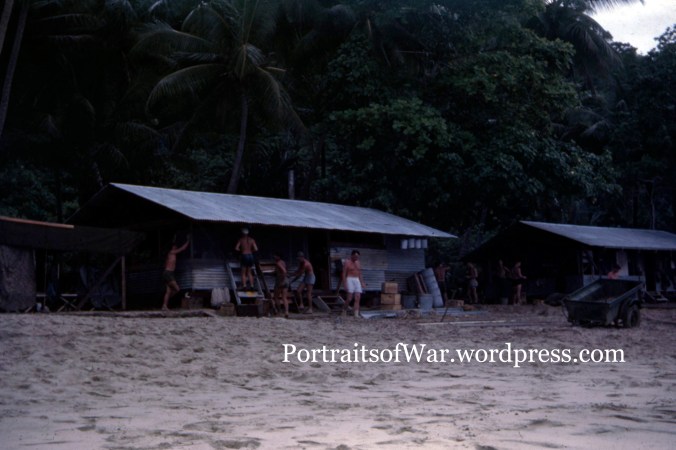
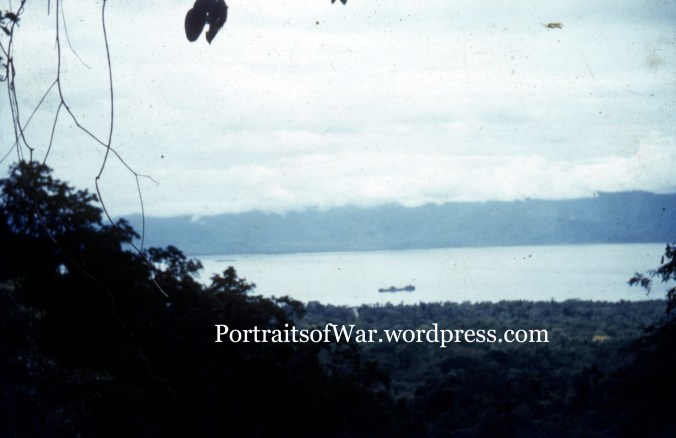
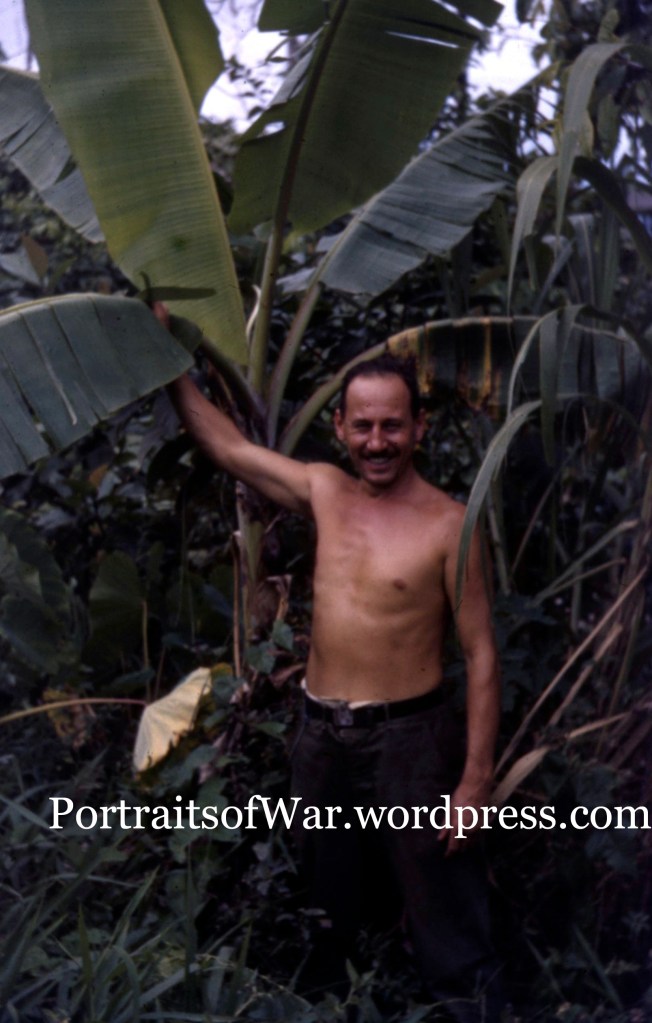
The lush greens and vibrant reds of the jungles of the Philippines are represented in typical WWII photography as dull grays, whites and blacks.  In this case, a WWII U.S. Navy seabee shot 35mm Kodachrome in an attempt to document his surrounding environment for posterity.  Although the non-martial content of the slides may be boring to some, it is an incredibly rare glimpse into the everyday life of the seabee during WWII.

PTO390 copy

PTO391 copy

PTO392 copy

PTO393 copy

PTO394 copy

PTO395 copy

PTO396 copy

PTO397 copy

PTO398 copy

PTO399 copy

PTO400 copy

PTO401 copy

PTO402 copy

PTO403 copy


WWII in Color – 1944 SBD Dauntless Marine Dive Bombers VMSB-332 w/ WWII Marine Pilot Commentary


The color of WWII is something lost on our generation; WWII has been a war fought in black and white for everyone but actual WWII veterans who witnessed it firsthand.  One of my goals here at PortraitsofWar is to collect color slides from WWII and make them accessible to those who don’t know it exists.  Yes, color film was shot in 35mm(and sometimes larger format) and was used on a somewhat regular basis by shutterbug soldiers during WWII. My collection is roughly 500:1, black and white : color.    To find a complete collection of color slides is like hitting the WWII photography jackpot.  In this case, I was able to pick up a small selection of color slides from a Marine dive bomber.  Although I was only able to snag 7 from a grouping of nearly 200, I am still happy to pass along the images to interested parties.

From the collection of Walter Huff.

Recent Update: Captions Added – WWII Marine Corps Veteran Pilot Adds Commentary – Thanks Paul! 

Please enjoy the colors of WWII as they were meant to be seen! 

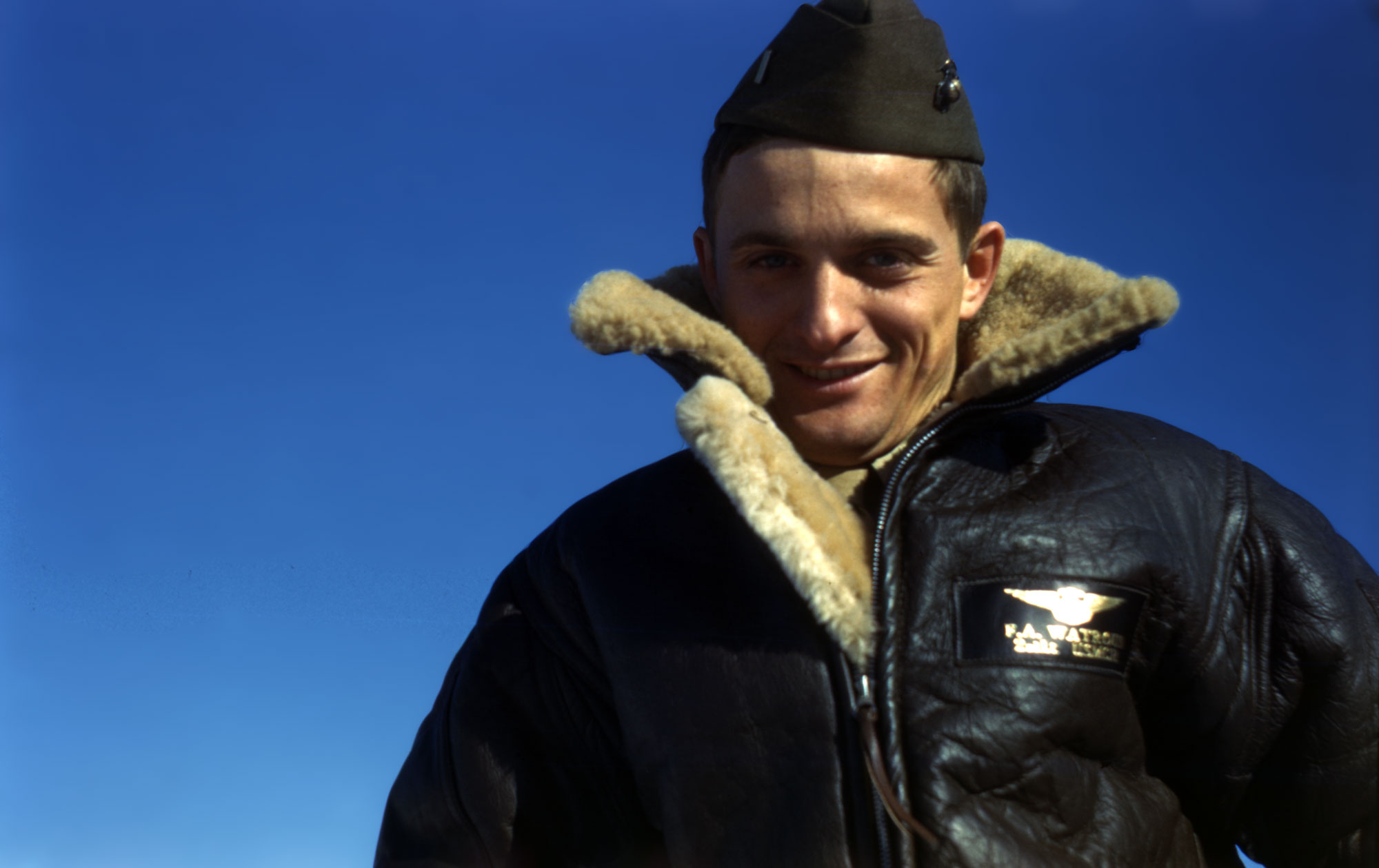
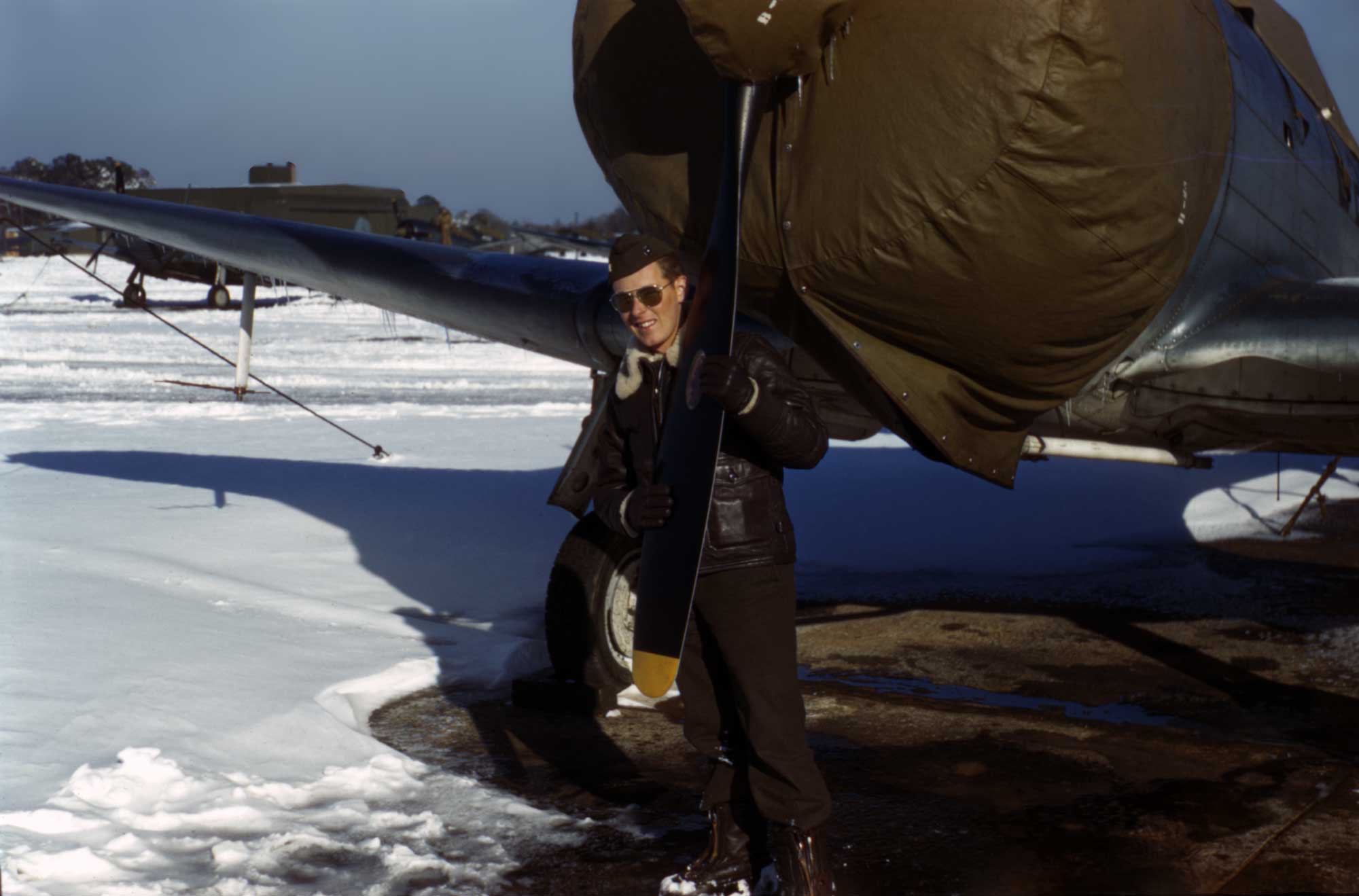
047: Standard permanent issue leather jacket with fur collar. Name plate design same as mine: Wings, name, and service (in this case USMCR).

049: I’ll bet the farm this photo was taken at Bogue Field, N.C. Dec 10 +/-, 1943. Not much snow in Eastern N.C. I was on a trip to Buffalo, NY to ferry a R5C (C-46) from the factory to Cherry Point. Got back to find the engine block in the auto had frozen and cracked.

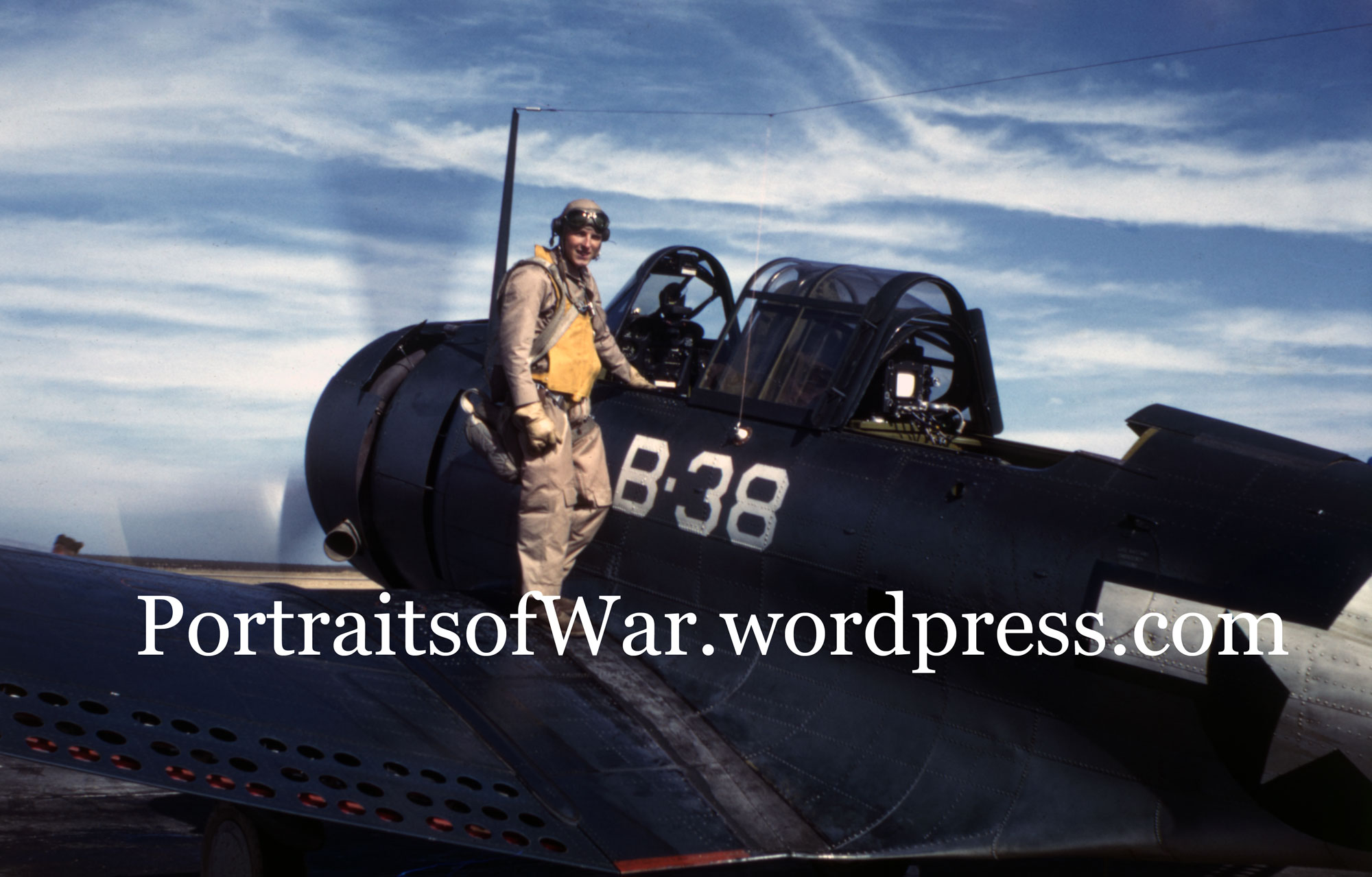
051: Nice shot. I do believe the engine is running. Hmmmm. I wonder why? Should have been a no-no with no one in cockpit!

053: I do not remember pilots wearing side arm stateside. With the pistol (issued to all Marine officers) I’m guessing 1943-44. Later pilots were issued revolvers but priority was to unit in combat area (Pac). I had a .45 pistol until 1948 (China and Eva, Hawaii). Got my first .38 revolver in Korea 1950.

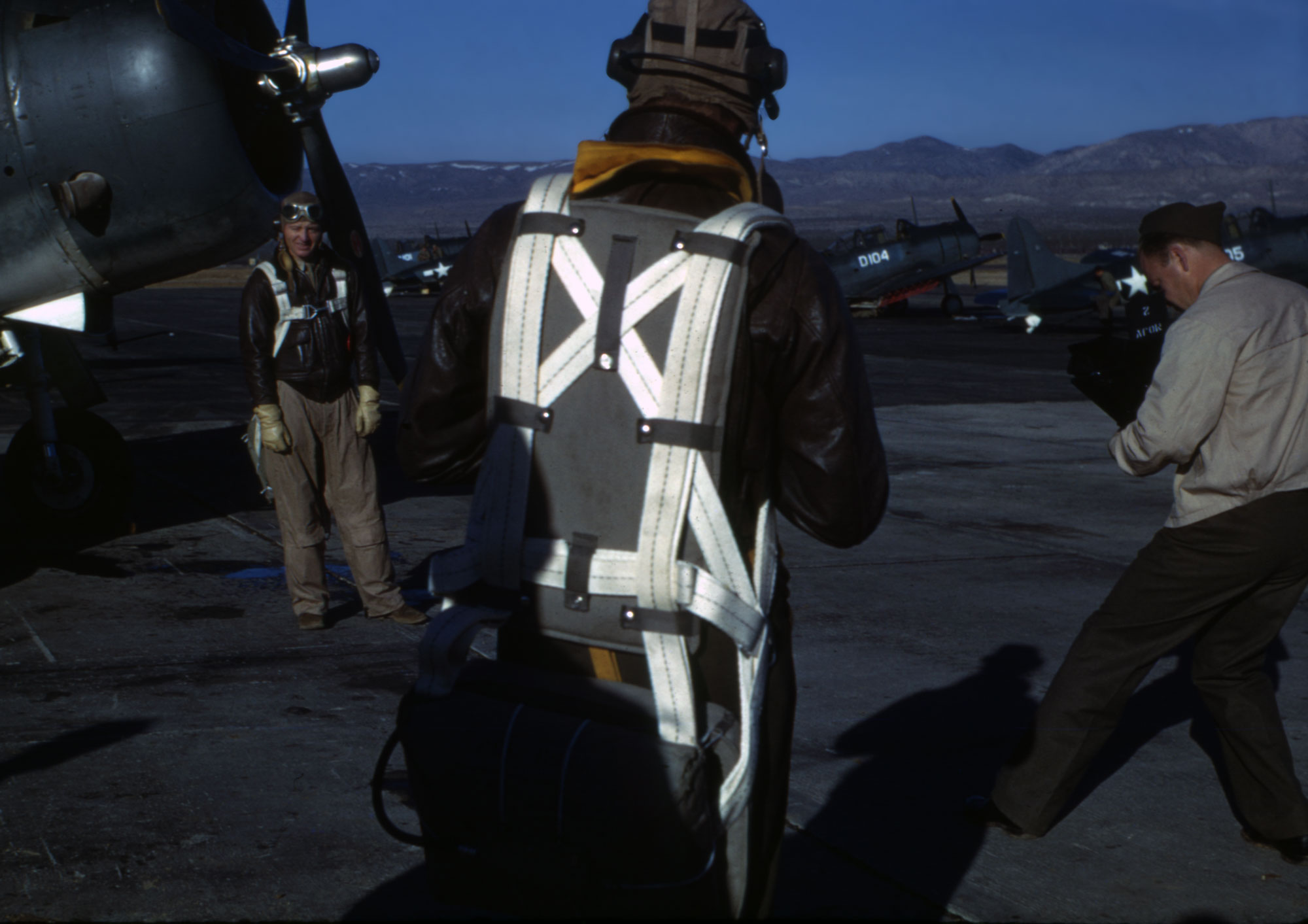
054: This ain’t NC!!! Must be CA hills. Not combat area. Check out those pristine parachutes! The gauntlets (flight gloves) were of softest lamb skin and covered lower half (more or less) of forearm.

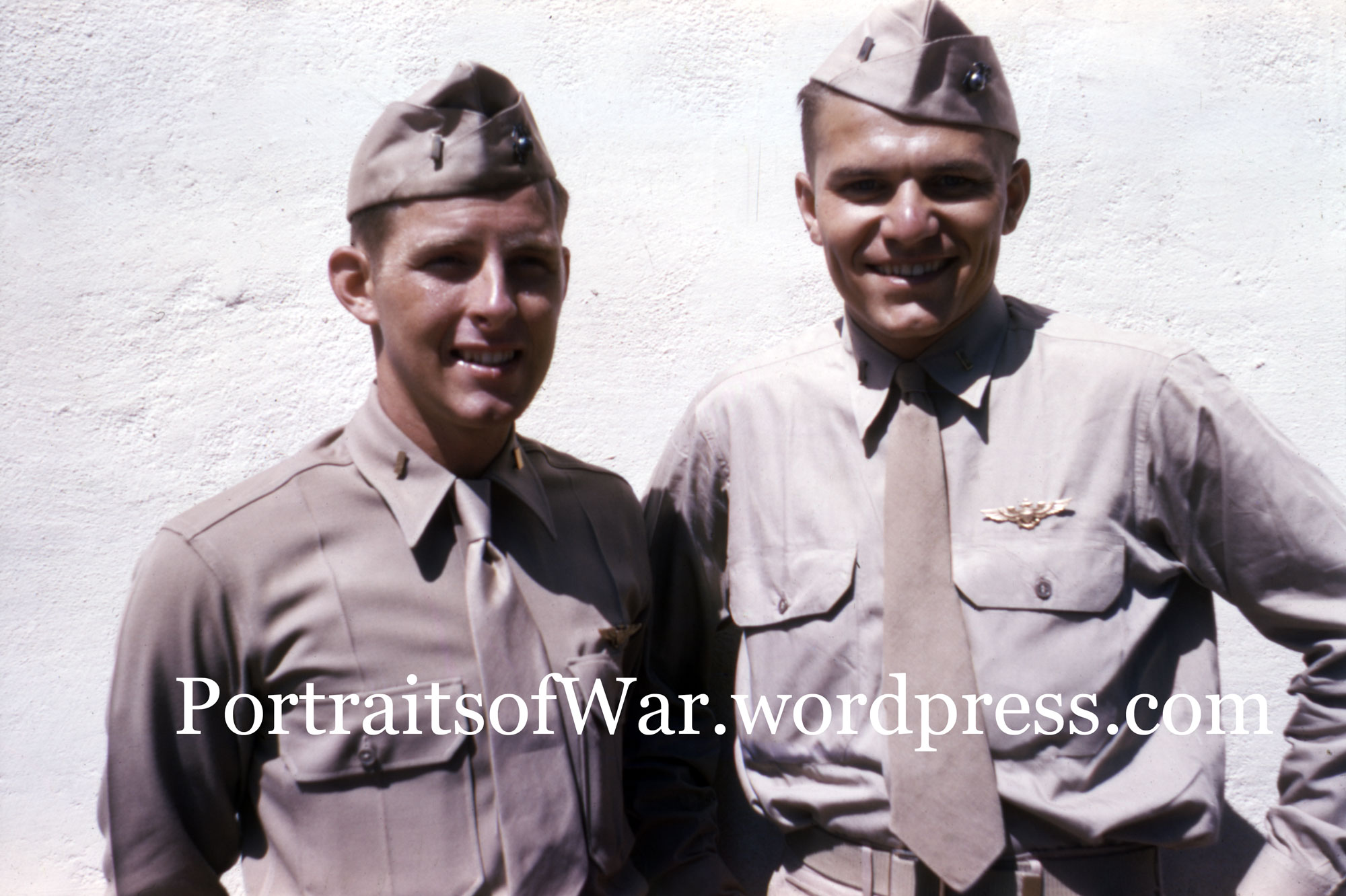
044: Not Marine Corps shirts, but Navy. Marine officer shirts were hard to come by. I know because I wore Navy shirts, too. Pocket flap designs are different. Marines never wear field scarfs (i.e. ties) tucked into shirt. After WWII a clasp was designed.