The University of Vermont at War – WWI UVM Campus Panoramic Photo by Louis L. McAllister


The UVM Campus Prepares for War

A recent eBay auction had me literally drooling on my keyboard.  Could it be?  A WWI image of the University of Vermont?  I attended UVM between 2004 and 2011, graduating with an undergraduate degree in anthropology/archaeology and a masters in historic preservation; two fields that helped forge my passion for historic photography.  I placed a desperate last minute bid in hopes of winning the panoramic photo and victoriously won with a high bid.  Other comparable WWI Vermont “yardlong” images were usually taken at Fort Ethan Allen, but I’ve never seen one taken at UVM.

M1910 Leggings

From outward appearances the photo, taken by famed Burlingtonian (Vermont)  Louis L. McAllister, depicts a group of uniformed soldiers on the central campus.  Converse Hall is visible on the far right hand corner of the photo, followed by the hospital, Colchester Ave homes, and finally Billings and Williams Hall.  Looking at the visible trees

gives a good indication of the season; this photo was likely taken in the fall, after the trees defoliate, but before the dreaded Vermont winter sets in.  The soldiers are wearing WWI era uniforms, complete with campaign hats, single snap button ammo belts, and M1910 leggings.  These leggings were used extensively during WWI training but

switched out overseas for puttees.

After referencing a few books on Vermont during WWI, I believe that the image was taken in October of 1918, during the opening ceremonies for the university.  I’ve added an excerpt below that helps flesh out some of the details.

“The opening of college was postponed until October 23rd, due to the prevailing epidemic of influenza, which was then sweeping the country.  At noon on that date, however, the new members of the S.A.T.C. were drawn up on one side of a hollow square on the front campus, and formally inducted into the service of the country.  On the other two sides of the square at this impressive ceremony were the Signal School and the Mechanical School.  First the flag was raised, and then after swearing the men into service Lieutenant Colonel Leonhaeuser read a message from President Wilson.  The men were then divided into companies, assigned to barracks and for the first time in over a hundred years the University of Vermont was again an armed camp. “

(Source: Cushing, John T., Arthur Fairbanks Stone, and Harold Pearl. Sheldon. “The University of Vermont in the World War.” In Vermont in the World War: 1917-1919. Burlington, VT: Free Press, 1928.)
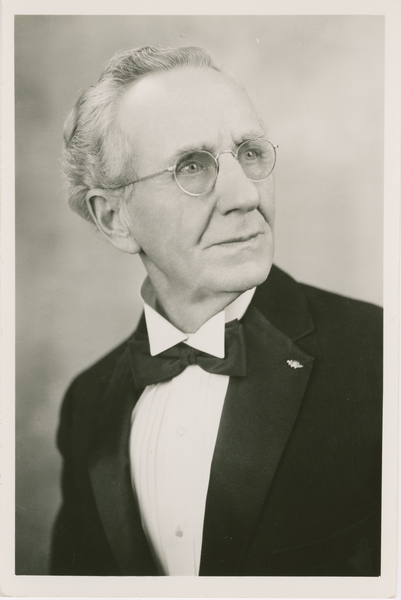
Louis McAllister Portrait Courtesy of The University of Vermont Special Collections

The photo was doubly exciting for me, as the photographer was a well known Burlington resident and Vermont photographer.  Louis L. McAllister was born in Nebraska in 1876 and lived in Burlington for nearly 60 years before passing away in1963.  He was famous for his panoramic photography, which he used extensively to document school groups, political events, and various Burlington scenes.  This example dates to 1918, but I’ve seen dated examples from Fort Ethan Allen reaching as far back as 1917.  McAllister is renown statewide for his photographic work, which is sought out  by Vermonters for his its composition and documentary nature.  The University of Vermont’s Special Collections inherited 45 crates of his photography.  A fabulous website was created by Special Collections in order to display some of his work to the public.  Interested parties can visit the collection or view it online at  http://cdi.uvm.edu/collections/browseCollection.xql?pid=mcallister&title=Louis%20L.%20McAllister%20Photographs

WWI 107th Infantry Regiment, 27th Division NY KIA Portrait Photo – Harold E. Manners – Meuse-Argonne Offensive


I picked up this little gem in a Palmer Massachusetts antique store a few months back and never took the time to look at the photo closely until this past week.  The frame was intricately created; something not often seen in run of the mill WWI photos.  The gold stars on the corners and bottom of the image should have been a dead giveaway.  Once I  decided to look at the photo a little closer, I took the frame apart from the back and began to uncover the identity of the soldier depicted in the image.  I knew he was a member of the 7th Infantry Regiment; this was evidenced in the collar disc.  The 7th New York eventually became the 107th Infantry Regiment of the 27th Division.  Harold was in Company H.

The reverse of the photo was beautifully inscribed with everything I needed to know to track this fellow down.

Harold Edward Manners

Killed in France in the

Great War, Sept. 29th 1918

aged 23 years

After extensive research I’ve learned that Harold was killed during the operations before the Hindeburg Line east of Ronssoy, September 29th, 2918.  His citation for the day reads:

“This soldier, with great gallantry and determination, advanced against unusually difficult enemy positions composed of strongly fortified machine gun nests until killed.”

I found an auction result online that showed his medals which were sold in 2008 at an auction in NY. A beautifully inscribed NY veterans medal for a KIA was included.  I wish I had that grouping!

Harold E. Manners – KIA Meuse-Argonne 1918

WWI 78th Division Portrait Photo – Wounded


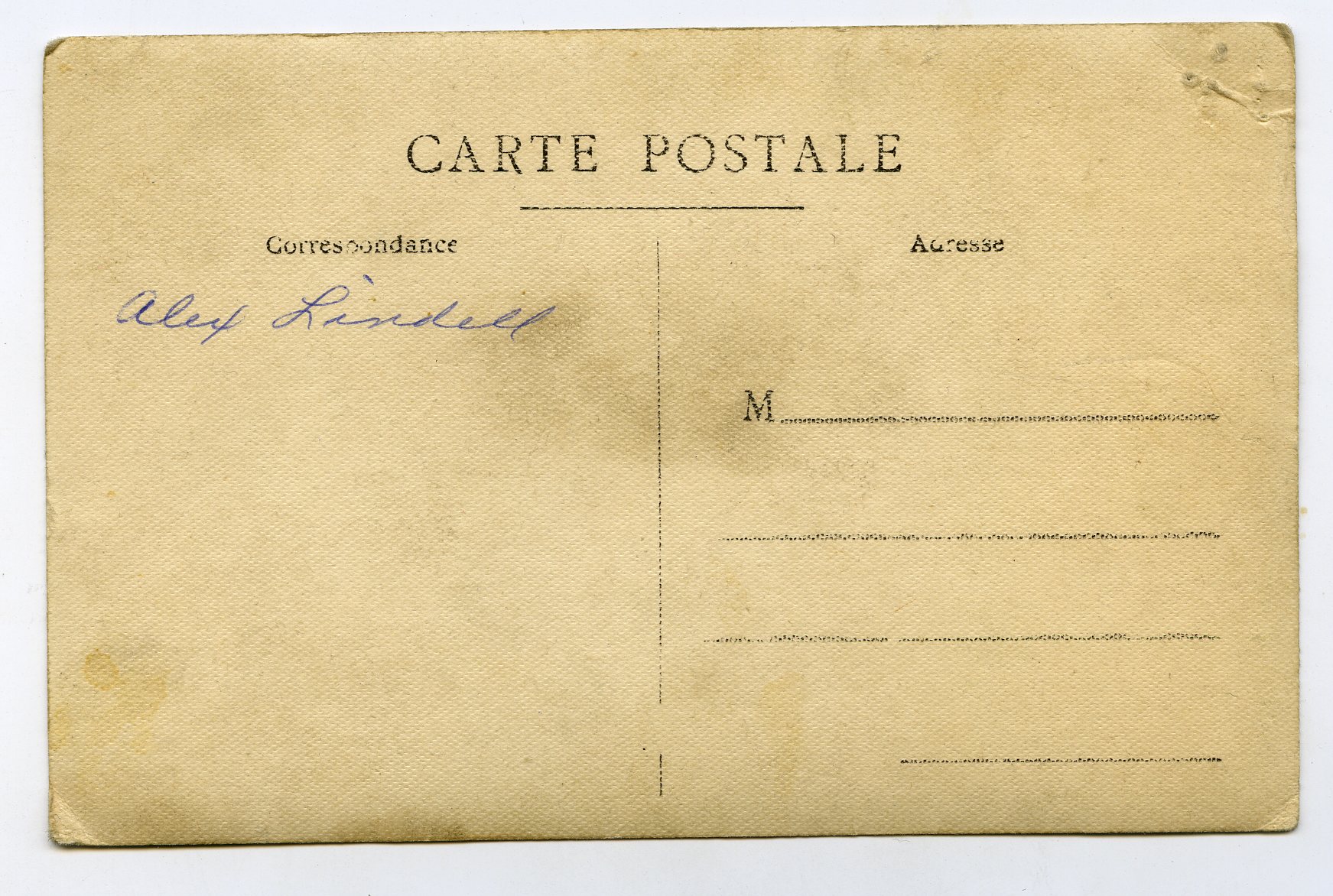
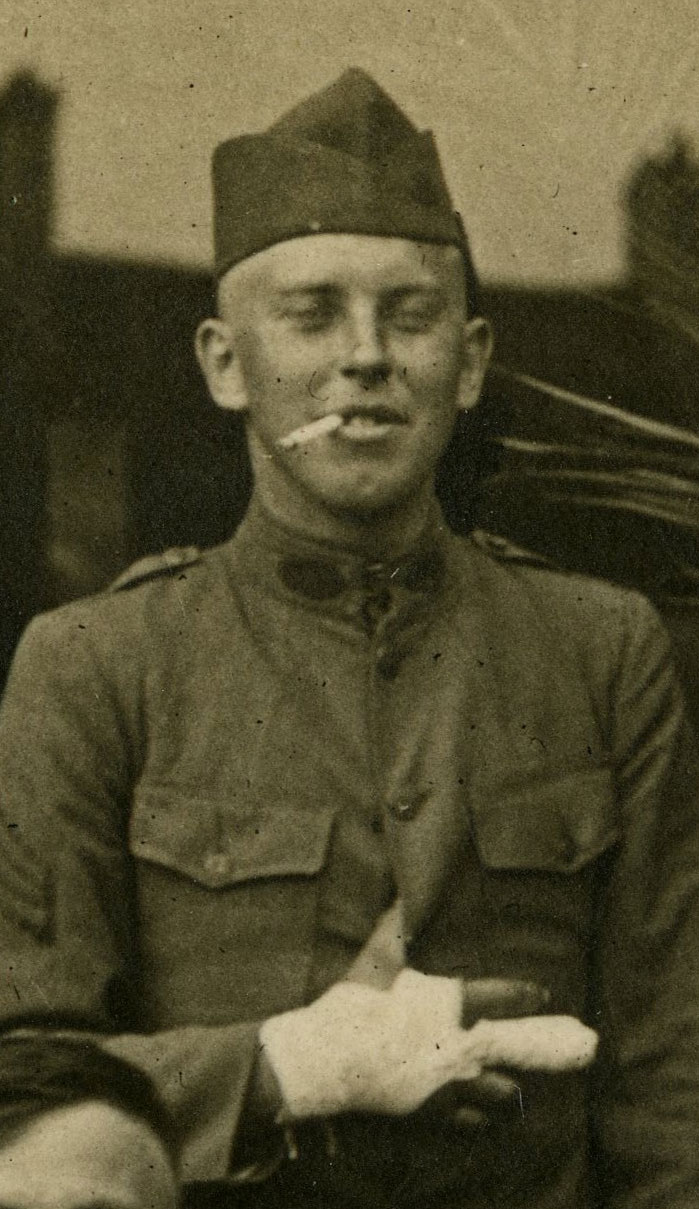
Today’s post comes from my growing collection of 78th Division portrait photos.  Although we don’t know his specific unit designation, we do have his name and company.  Taken in a French studio, Alex Lindell was posed in a manner which allows the viewer to see his maimed hand.  The fact that he was wounded is evidenced by a visible wound chevron on his right hand sleeve.  The stitching is barely visible. 

Alex Lindell of the 78th Division

WWI 79th Division Veteran w/ Purple Heart and Uniform in the 1940s – IDENTIFICATION UPDATE


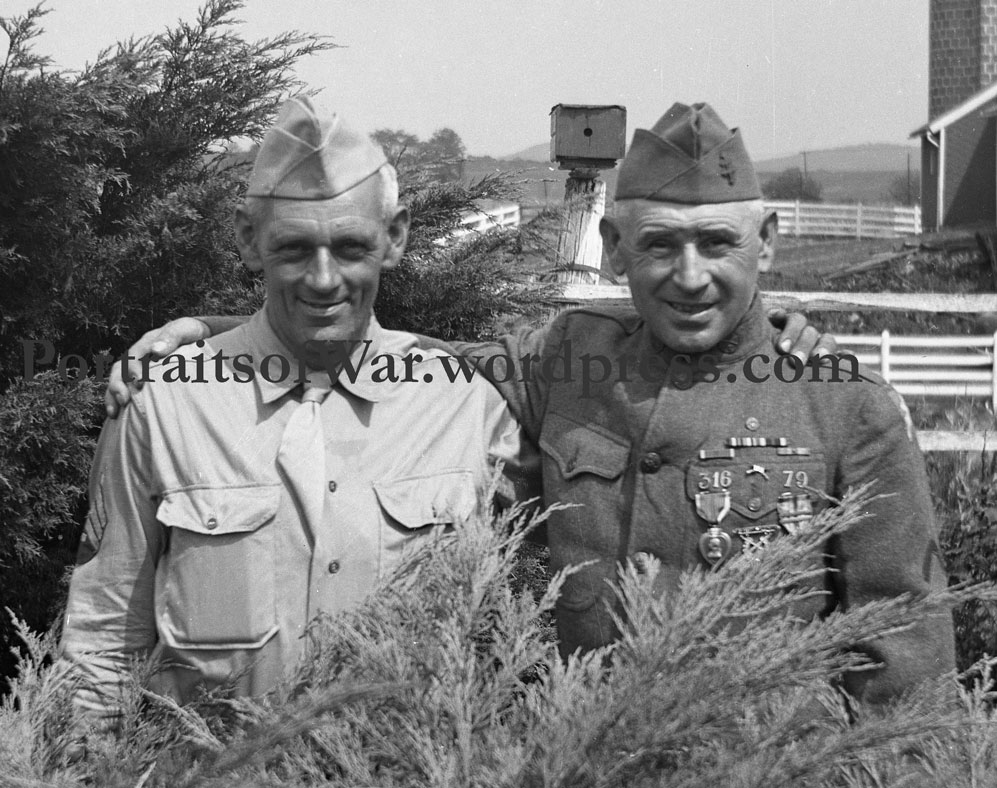
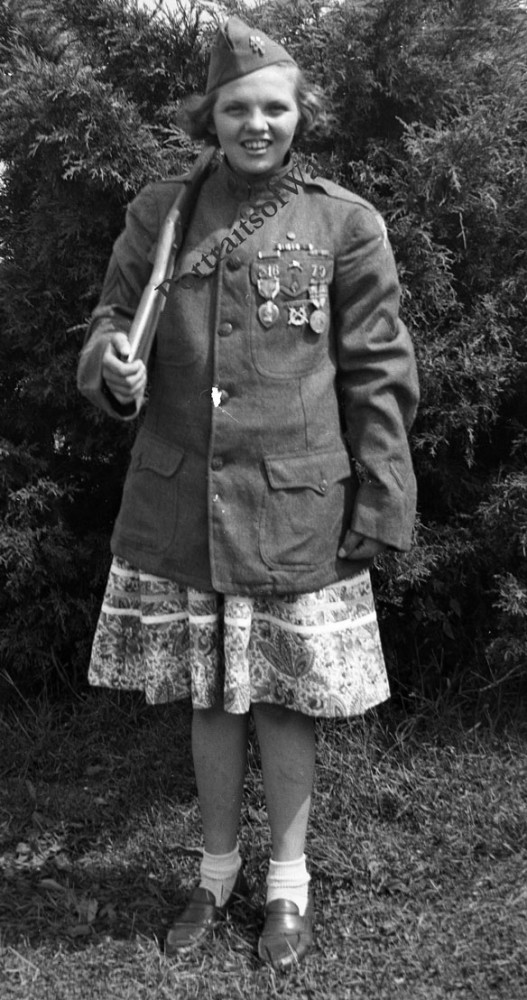
A wonderful set of negatives from a family in Pennsylvania shows the lighthearted side of aging WWI veterans.  An elderly member of the 316th Infantry Regiment of the 79th Division pals around with friends and family while showing off his war medals.  A Purple Heart medal was awarded to our subject for wounds received in battle, and was likely delivered to him in the early 1930s when the current medal was officially created.  Enjoy the images!

Legs Wraps and All!

June 22nd, 2022 UPDATE

Incredibly, an ancestry geek like myself whose husband is related to the WWI veteran above was able to positively identify the veteran after searching online and finding this site. Special thanks to Amanda who provided me with the name of Elmer Brandt Sweigart to pin to the name of the elderly WWI vet.

WWI Photo – Wounded Doughboys Rest w/ Mascot Dog and Pretty French Girl


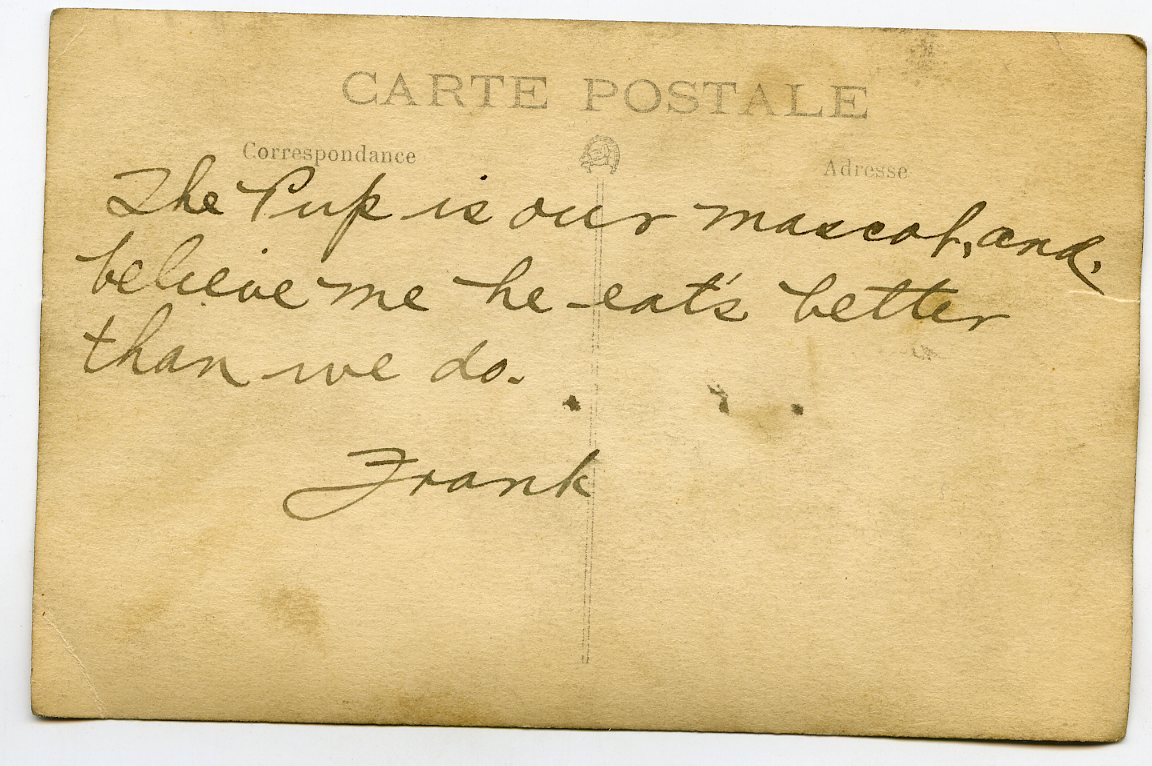
A fabulous shot of a group of doughboys taking some much needed R&R in a French city.  A busty French girl stands in the doorway as the men pose for a photo.  Just read the back!  A superb WWI dog mascot photo with great content.  Note the two wounded soldiers – one with a face wound, the other with a broken hand.

The details of the image pop out once the casual observer steps back from noting the obvious and begins to look for subtle details.  Notice the reflection in the window?  How about the stone gutter along the street?  The hastily buttoned blouse of the facially wounded soldier?  Enjoy!

WWI 26th Division / 32nd Division Mystery Photo -103rd Infantry Regiment Officer


Today’s photo post is a real head-scratcher!  I purchased the image thinking it was a nice studio portrait of a 32nd Division officer, which is evident from the SSI patch of the red arrow with a line through it.  When the photo arrived I noticed instantly that the officer was wearing the collar insignia of the 103rd Infantry Regiment of the 26th Division.  Causal readers of this blog will know that I actively seek out 26th Division photos due to my New Englander roots.

32nd Division or 26th?

Back Reads:

Selters Germany

12 January 1919

From Captain

Guy Swett (Hard to read writing)

Co. H 127th U.S Inf

32nd Div

“Army of Occupation”

Sent to a Miss Flora Murch

South Paris, ME USA

I am assuming the fellow was originally from the South Paris area in Maine, which would point towards a Yankee Division identification.  The 32nd Division was made up of guys from the Michigan area.  Looking at his other insignia also may point to his unit identity.  Is that a DSC ribbon on his chest?  It’s hard to tell, but it possibly may help in identifying the last name and original unit.

Any help from readers would be greatly appreciated!

Special thanks to our friends over at Soldier’s Mail for this wonderful interpretation!  Don’t forget to check out their website for a super collection of WWII related information. 

“After the end of hostilities with the signing of the Armistice, inducements were offered to encourage veteran combat troops to extend their enlistments and remain with the Army of Occupation in Europe rather than returning directly home on the Bridge of Ships. (Sam Avery speaks of these inducements in this letter: http://worldwar1letters.wordpress.com/2010/01/13/sarrey-france-1131919/)

After the Armistice, the 26th Division was in such bad shape from combat losses that it was assigned to the rear rather than the Army of Occupation. However, a number of its members chose to extend their deployments and were reassigned to different units in other Divisions stationed in Germany.

The officer in this photo clearly originated with the 103rd Infantry as indicated by the Regimental device on his collar. However, he is also apparently a newly-minted Captain in the 32nd Division as indicated by his sporting of the double 1st Lt bars on his shoulder along with the 32nd Division shoulder patch. I believe he was originally a 1st Lt in the 103rd Infantry, and then accepted a promotion in rank to extend his service in Army of Occupation with the 32nd Division.

Based on the writing on the reverse of this photo card, the 127th was one of the four infantry regiments in the 32nd. This man’s rank as Captain also indicates he would have been appointed the Company commander.”

Thanks again to Soldier’s Mail!

WWI 12th Veterinarian Hospital RPPC Photo Pair in Treves Germany


Members of the 12th Veterinarian Hospital

Straight from the bowels of a poorly listed eBay auction comes this tantalizing pair of WWI photographs.  At first glance the images seem to contain little information to help aide in their historical dissection, but upon further sleuthing I found some clues to their identification.  After scanning the first image on my super-duper Epson V700 scanner (awesome BTW), I zoomed in on the wagon using Photoshop.  The name VET HOSP 12 can be faintly seen between the wagon wheels.  A quick google search yielded a website dedicated to the 12th Veterinarian Hospital, which dealt with the care of horses during the Occupation period.  I looks like the hospital was started in late December of 1918, and continued to service 3rd Army horses for the bulk of the Occupation.

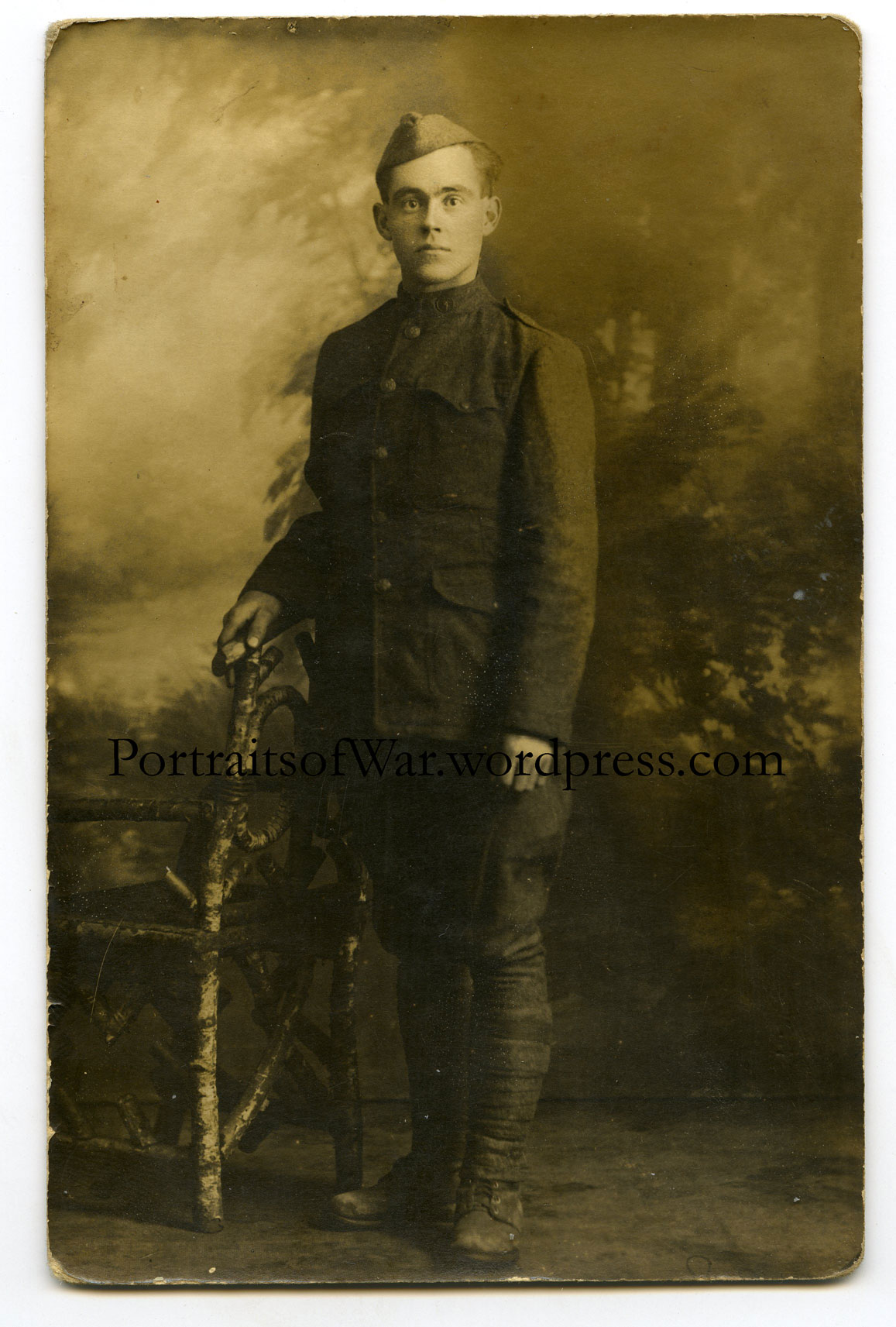
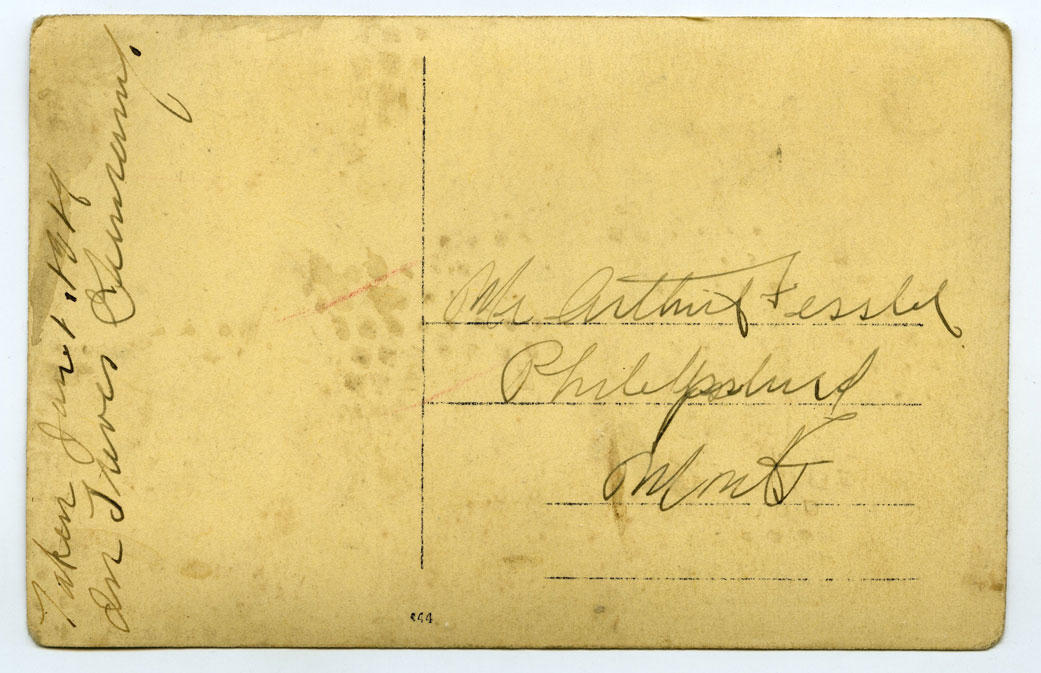
The obverse of the second RPPC shows a date and location of January 1st 1919 in Treves Germany made out to a Mr.Arthur Fessler (hard to make out the last letter) in Philadelphia, PA.  The card is a German postcard paper, and the style of chair is one I see almost exclusively used in German portrait studios of the period.  The young doughboy is not wearing a shoulder sleeve insignia (aka Patch) but I assume he soon received one, as the first photo shows the patch in wear.

Interested in learning more about the 12th Veterinarian Hospital?  Check out this site:

  http://freepages.genealogy.rootsweb.ancestry.com/~gregkrenzelok/veterinary%20corp%20in%20ww1/veterinaryhospitalno12ww1.html

Or check out the U.S. Army Veterinarian Corps  Historical Preservation Group Facebook page:

https://www.facebook.com/pages/US-Army-Veterinary-Corps-Historical-Preservation-Group/127549193983683

Posing in a German Studio