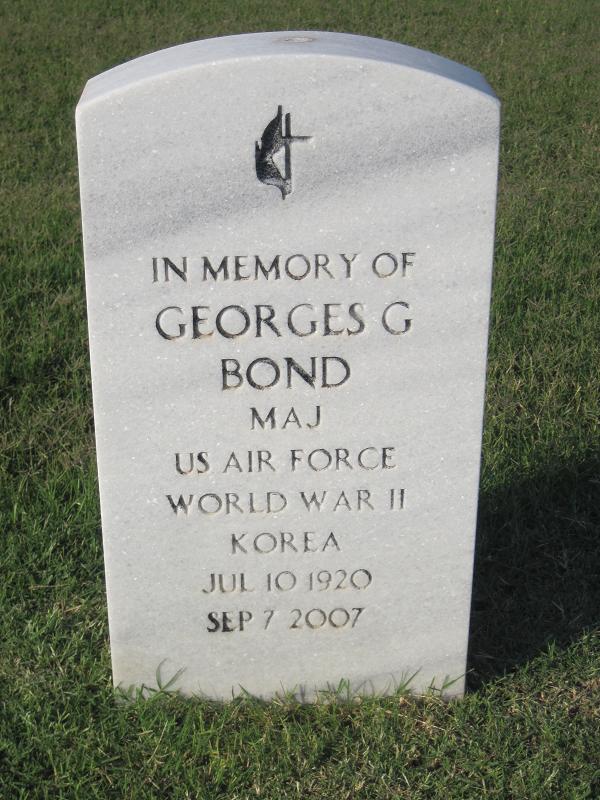
WWII Studio Portrait Photo – 9th AAF Mechanic Georges G. Bond in St. Dizier, France


Another nice studio portrait taken in 1945 in St. Dizier, France in 1945.   A member of the 511th Fighter Squadron during WWII, Georges G. Bond later went on to serve in Korea.  His wartime address was 415 West Pine St. in Enid, Oklahoma.  Georges was born on July 10th, 1920 and passed away on September 7th, 2007. My condolences to his family.


Source: FindaGrave.com

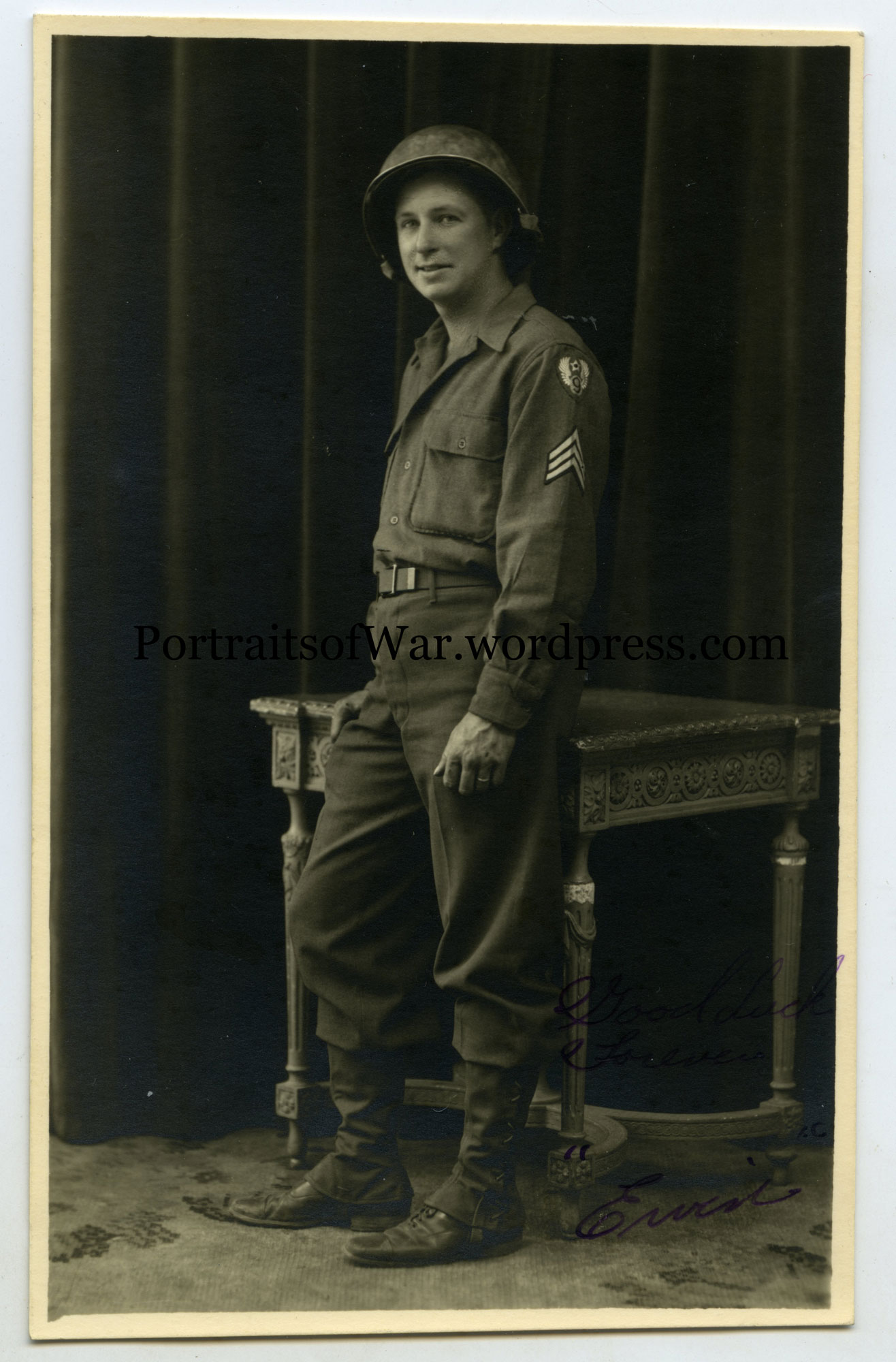
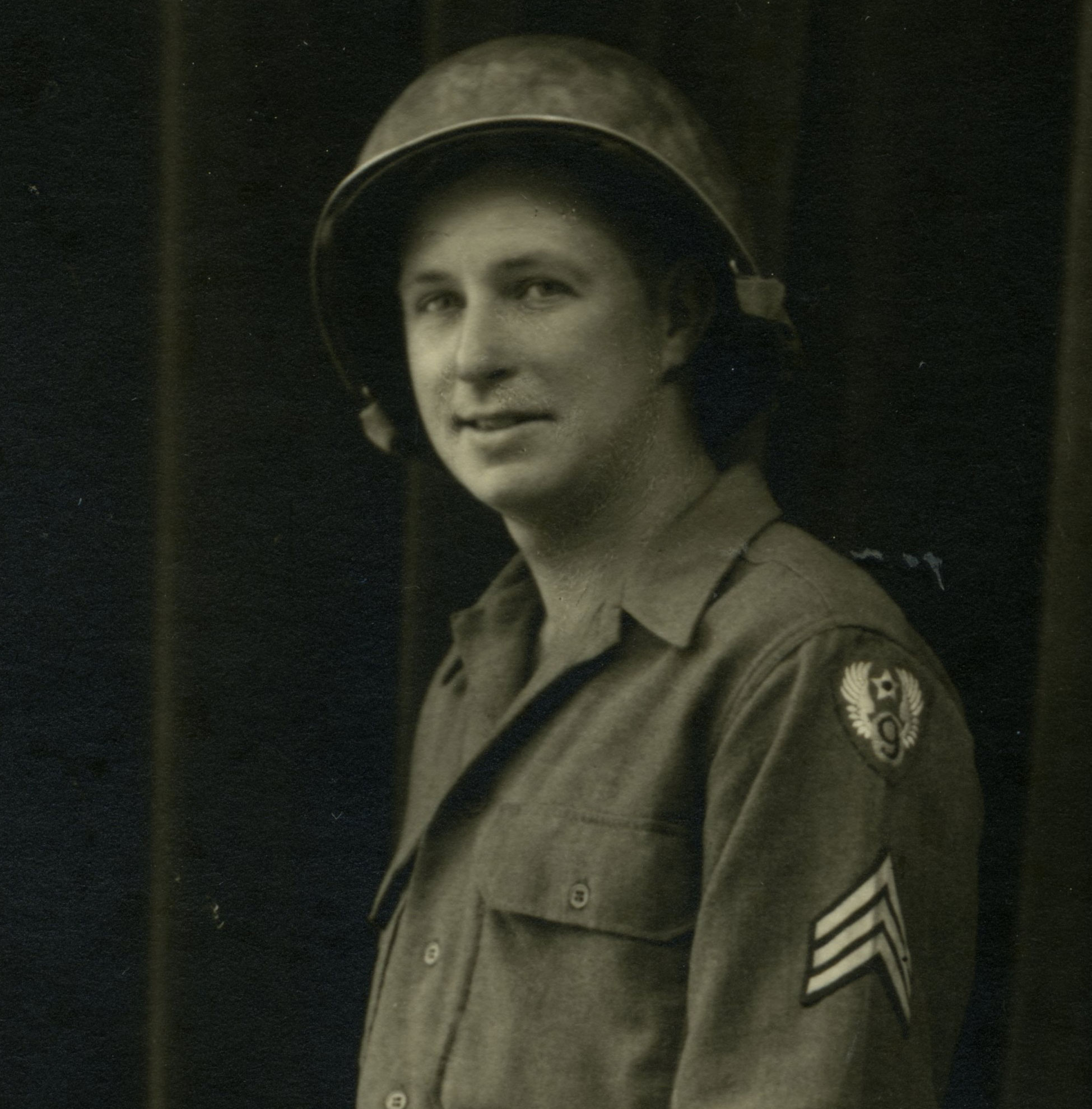
WWII 9th Air Force Portrait Photo – Ervin G. Collins of Pawtucket, Rhode Island


Another great WWII interior studio portrait arrived in the mail yesterday. The subject of the photo is Ervin G. Collins of (wartime)  391 Liverpool Ave, Pawtucket, RI.  The photo was taken in France and shows Ervin posed with a studio prop – a French Louis XVI Style gilt rectangular center table. The photo was taken in St. Dizier by a photographer named Andre Dirler.  St. Dizier is roughly 120 miles east of paris; the 511th was stationed at Clastres (A-71) during the tail end of 1944.  He was 5 feet 3 inches tall and weighed 112 pounds when he enlisted on July 3rd, 1942.  Before the war he was able to graduate high school and worked as a salesperson.


Mr. Collins was born on March 5th, 1921 and passed away on November 2nd, 2001.  He is buried in Notre Dame Cemetery in Pawtucket, RI.

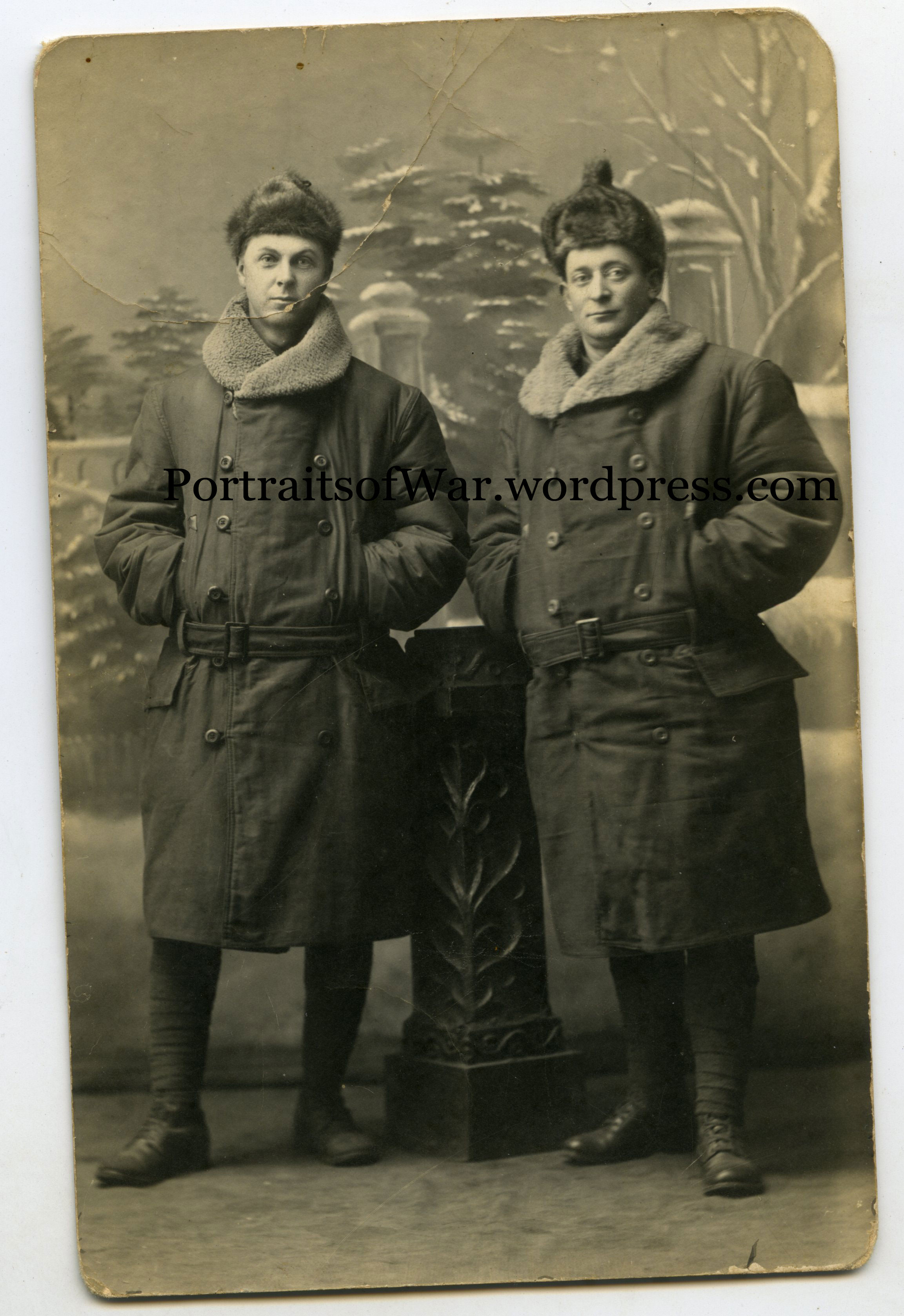
World War One First Division Portrait Photo – First US Soldier to Fire During WWI! Alex Arch


The world of WWI photo collecting is becoming increasingly expensive; good identified photos are beginning to bring big bucks in the eBay world.  I was lucky enough to “steal” this gem of a portrait from the realm of auction obscurity.  Identified to a Sgt. Alex Arch of C Co.  6th Field Artillery, 1st Division.  I was blown away when I learned that Mr. Arch was the first US soldier to fire against the Germans on October 23rd, 1917.  He technically pulled the firing cord of a French 75mm while in Xanrey in the Luneville Section.  A great addition to the collection!


WWI 26th Yankee Division, 103rd Machine Gun Battalion Vermont Dog Tag Grouping


103rd MG Dog Tag

VT NG Dog Tag

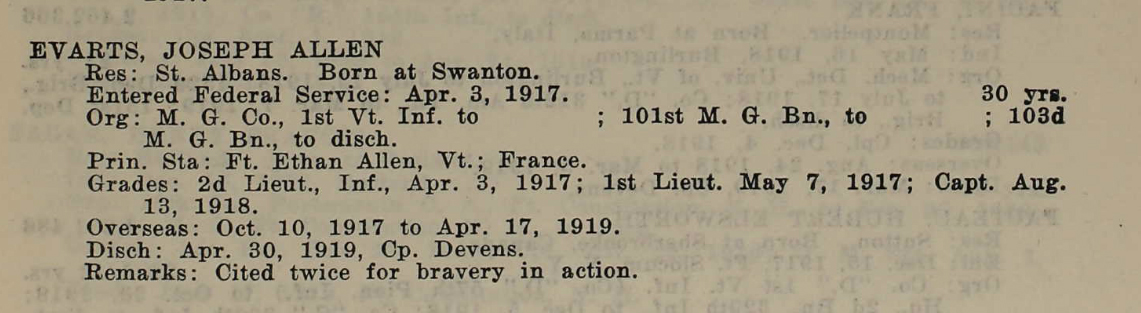
WWI Soldier Registry Entry

Daughters of the American Revolution Application

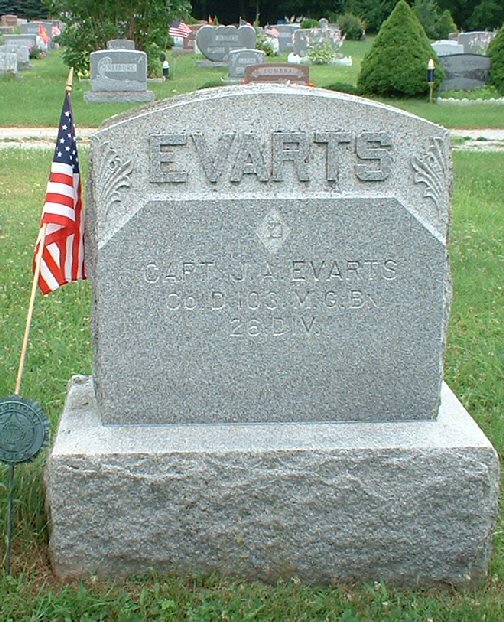
Grave Site in St. Albans

Evarts

Followers of PoW will know that I love WWI Vermont material.  I actively seek interesting groupings of World War 1 items  to add to my collection; today I was able to add a wonderful little piece of 26th Division and Vermont history.  This set of dog tags once belonged to a Joseph Allen Evarts from St. Albans, VT.  Originally born in Swanton, Evarts attended Norwich in 1904 and eventually joined up with the 1st VT National Guard.  He was a direct descendent of the famous Allen family and can claim Ethan Allen as a great-great-uncle.  He went overseas in October of 1917 with the 101st Machine Gun Battalion as a 1st LT and was promoted to Captain in August of 1918.   He was assigned as Company Commander of Company D of the 103rd Machine Gun Battalion of the 26th Division.  Evarts was well loved by the citizens of St. Albans and was sorely missed after he passed away in 1920 from gas-related lung complications.

He was cited at least two times for bravery while overseas and likely saw a lot of combat.  I was able to track down an interesting article with some original material from Evarts:

PICTURE PROVES HIM A PRISONER

Lieut. Evarts Writes of Seeing Tenney’s Photo in Group of Men Missing

Arthur G. Tenney, of Fairfield st., received a letter Saturday from Lieut. Joseph A. Evarts, of this city, who is with the American Expeditionary Forces in France, saying that he had seen a German propagandist paper in which was a picture of those missing in action at a certain place on the American line and among them was Lieut. Walter M. Tenney, of this city. Lieutenant Tenney was reported missing in action April 20. He went from this city over a year ago as second lieutenant in the machine gun company of which Evarts was first lieutenant. The company was later divided and Lieutenant Tenny went with a division composed of Connecticut and Massachusetts men while Lieutenant Evarts remained with St. Albans men. In his letter Lieutenant Evarts says that he and his command were stationed just to the left of where Lieutenant Tenney was.

The portion of the letter received here by Mr. Tenney, which tells of the picture is as follows:

“In Trenches, “June 12, 1918.

“Mr. Arthur Tenney, St. Albans, Vt.

“Dear sir:–

“I have just received a St. Albans Messenger that tells about Walter being missing in action.

“I have something that may be of interest to you.

“Today a few German planes came over spreading propaganda in newspaper form printed in French. The boys brought me some of them, and to my surprise I found it was an illustrated paper, and had a group picture of those missing in action at the place where Walter was. I recognized quite a few, and Walter was very plainly among them, and all of we boys recognized him. I have all the details and the picture with me.

“I felt that you would want to know this right away, and I must say it was a strange coincidence.

“If Walter ever writes you, will you write me and let me know about him?

“Our boys were in a big fight just to the left of where Walter was.***

“Sincerely, “J. A. Evarts.”

St. Albans Daily Messenger, St. Albans, VT 4 Jul 1918

Another article of interest:

ALBANS GIVES
ROYAL WELCOME
Greeting for City’s Home-Corn-ing
Boys Is Wildly
Enthusiastic
St. Albans, April 30. Capt. Joseph B.
Evarts, First Llouts. Walter Tenney,
James McConncll, Francis Shannon, Ar
nold Spauldlng, and 13 members of the
original Machine Gun company from
St. Albans returnod this evening nt
0:40. Thoy were mot at tho station by
Co. E, V. V. M St. Albans Brigade band
and tho Boy Scouts and thousands of
their friends. Tho boys wero escorted
to tho armory by the band, Company K.
and tho Boy Scouts. Tho armory wns
lined with a Bolld mans of people, can
non boomed, bolls rang, whistles blow
and tho people shouted a welcome home
to their boys.
At tho armory tho boys were served
with hot coffoo doughnuts, lco-cronm
and cake.
At 4:30 a. m. Tuesday the military
call was sounded which was a signal
to notify St. Albanians that tho boys
were coming on train No. 1 at C:30
oclock. During Monday evening Wel
come Homo signs had been hung up
on Lake street and flags hung from tho
business places. Tho exterior of tho
armory was gayly decorated with flags
and bunting. With tho sounding of mil
itary call whistles and bells did all that
was possible to awake tho inhabitants
of St. Albans. The members of Com
pany 11, V. V. M., assembled at the
armory and marched down to tho train.
Only a few St. Albans boys appeared,
but they wore given a royal welcome,
by tho largo crowd that had assembled
at tho railroad station. Company E.
had prepared hot coffee, sandwiches
and doughnuts, but only two return
ing soldiers appeared at the armory.
so tho members of tho company enjoyed
an unexpected repast. Among tho boys
who returned Tuesday morning were,
Harris W. Alexander, Dewey Daniels,
John Daley, Herbert Laduo and Earl
Swlggott.

Memorial Day 2012 Post – John McCrae: WWI University of Vermont Professor and Author of “In Flanders Fields”


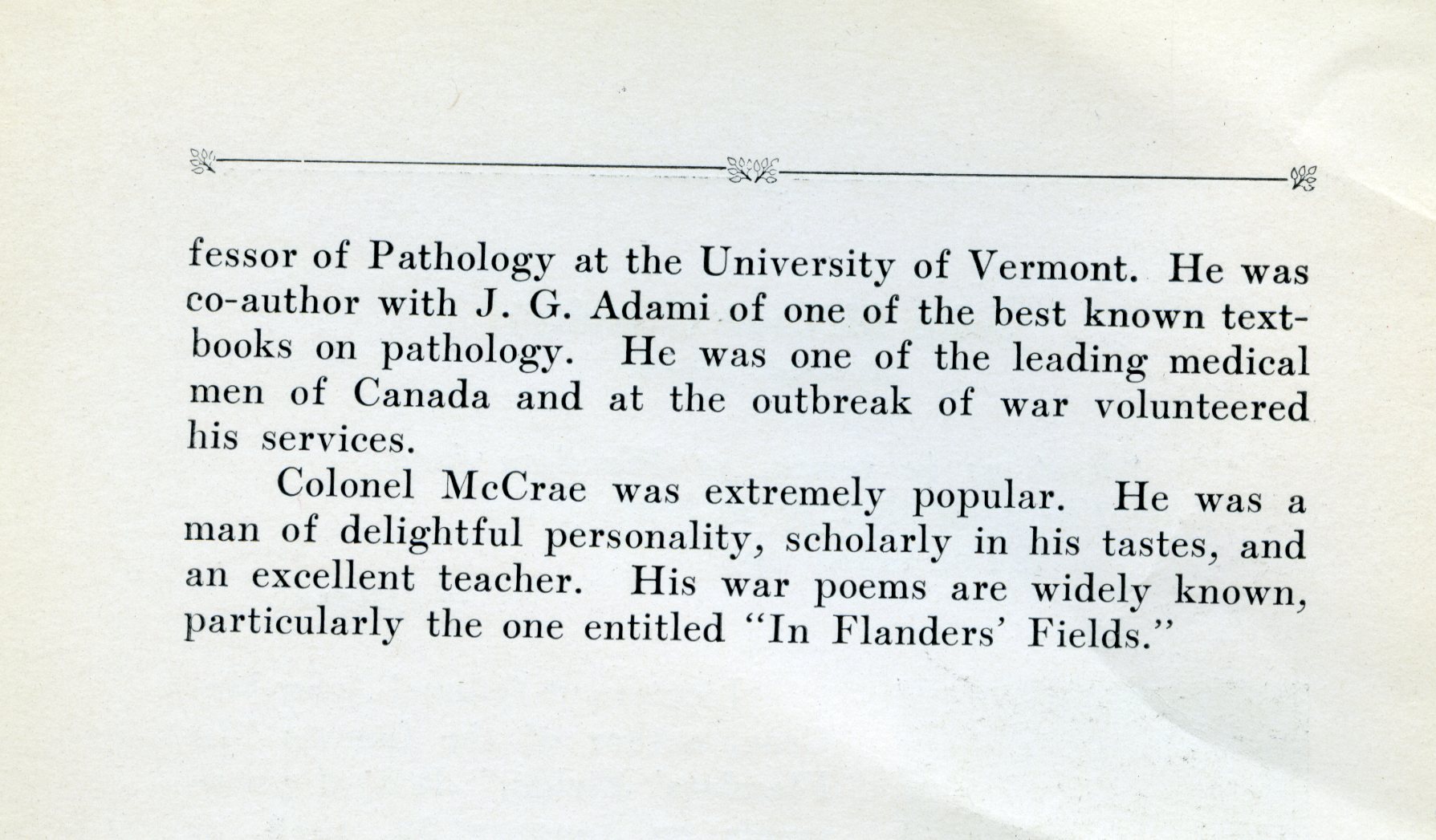
What better way to remember Memorial Day than to post the most famous war poem of all time?  This poem was written by Lt. John McCrae, a surgeon with a Canadian field artillery unit during the Second Battle of Ypres on May 3rd, 1915.  The poem became an almost instant hit with the troops and with the homefront community “across the pond”.

What makes McCrae so special to me?  He taught at my alma mater, the University of Vermont, between 1903 and 1911 where he taught Pathology in Williams Hall.  I spent four years studying anthropology and archaeology in the hallowed halls of Williams, making my connection to McCrae even stronger.

This post is dedicated to all those who never returned home from the killing fields of France, Belgium, and Germany during WWI.

 In Flanders Fields

In Flanders fields the poppies blow
Between the crosses, row on row,
That mark our place; and in the sky
The larks, still bravely singing, fly
Scarce heard amid the guns below.

We are the Dead. Short days ago
We lived,  felt dawn, saw sunset glow,
Loved and were loved, and now we lie,
In Flanders fields.

Take up our quarrel with the foe:
To you from failing hands we throw

The torch; be yours to hold it high.
If ye break faith with us who die
We shall not sleep, though poppies grow
In Flanders fields.

McCrae entry from The University of Vermont in the Great War

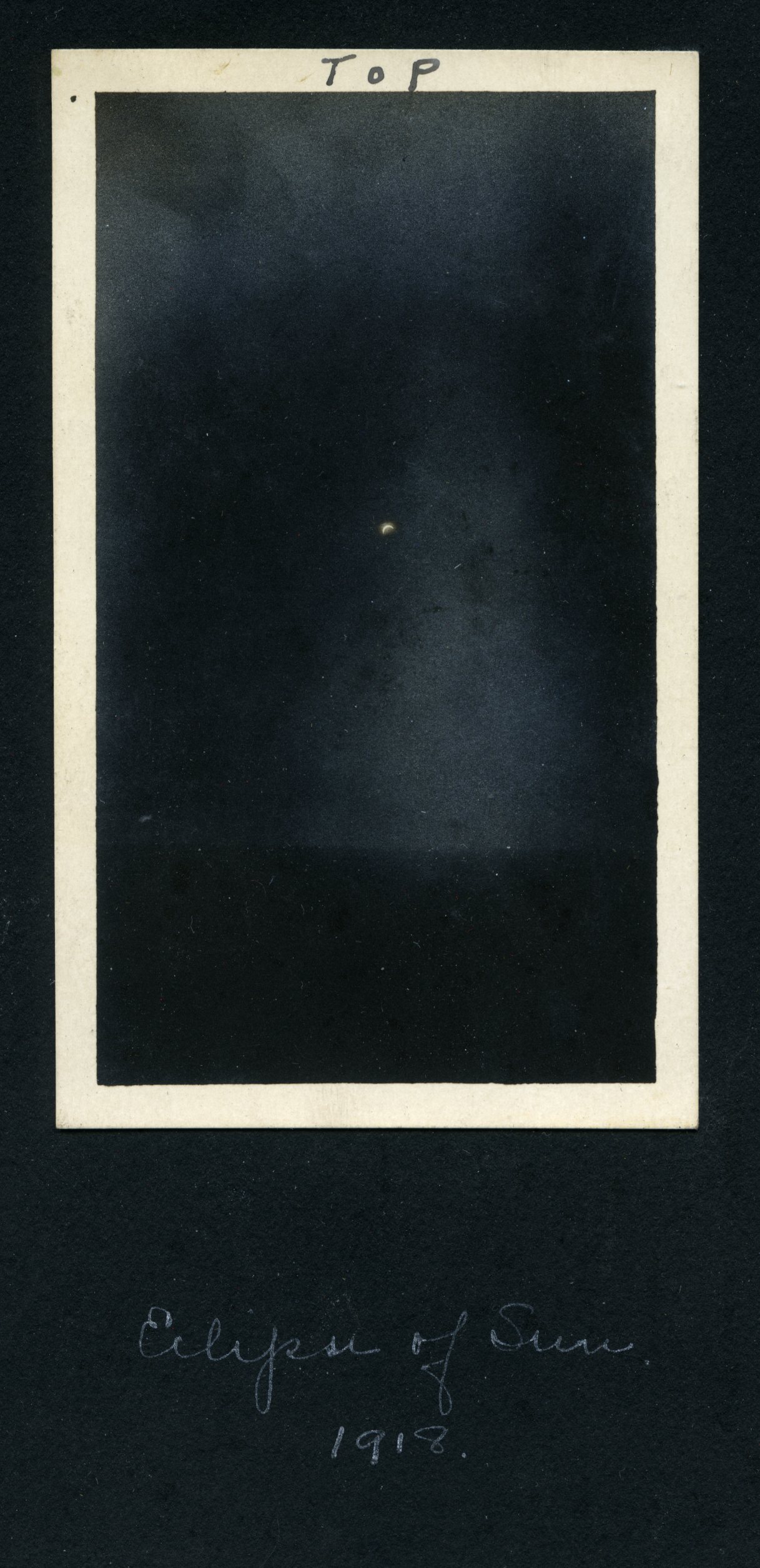
World War One Solar Eclipse Captured in France 1918 – American Red Cross Nurse Photo Album Image


Although my East Coast residence prevented my viewing of the solar eclipse today, I am able to post a wonderful shot of an eclipse captured nearly 100 years ago.  Snapped by a US nurse while stationed in Rimaucourt, France.  I have an album of nearly 200 images following a Springfield, MA native through her WWI service.  Some of the best shots come from her time with the 52nd Base Hospital.  Enjoy!