WWII German Snapshot Photo – RAF Gravestones in Germany 1939 – 1st Australian Soldier Killed in Action


Today’s post comes from a loyal PortraitsofWar follower from the Netherlands.  He recently stumbled across a single snapshot at a Dutch flea market and did some savvy investigative work to tease out the historical significance.  Thanks Werner!

Wartime German Snapshot of the Graves

Begraafplaats Engelse Vliegeniers

By: Werner Peters

Here we have a photo taken by a German soldier depicting the graves of three Allied airmen who lost their lives in the skies over Germany.  These soldiers were likely recovered from their crashed plane and buried with full military honors by their German adversaries.  A Nazi laurel wreath can be seen in the left corner of the photo.

At the time, two of the airmen could be positively identified by the Germans; one body was unidentifiable.  One the left side of the burial plot lies Mr.Hammond whose RAF identification number was 562535RAF.  On the right side of the grave lies J. MCI. Cameron, Offr res 24225RAF.  The middle marker merely says , Engl. Flieger(English Airman).  On all three grave posts is written “Hier ruht ein Engl. Flieger – im luftkampf gefallen 28.9.1939 Vorden” – which translates as “here rests an English airman who died in aerial combat on 28.9.1939 Vorden(?)”.

With a little research it turns out that this crew belonged to the 110th RAF squadron.  They were flying a Bristol Blenheim type IV, number N6212 which crashed on September 28th, 1939 during a recon mission over Munster in the neighborhood of Kiel, Germany.  They were shot down by a German pilot named Klaus Faber, a feldwebel of the Ersten Abiteilung.  Jagdgeschwader Eins (1st Section of the 1st Fighter Group).

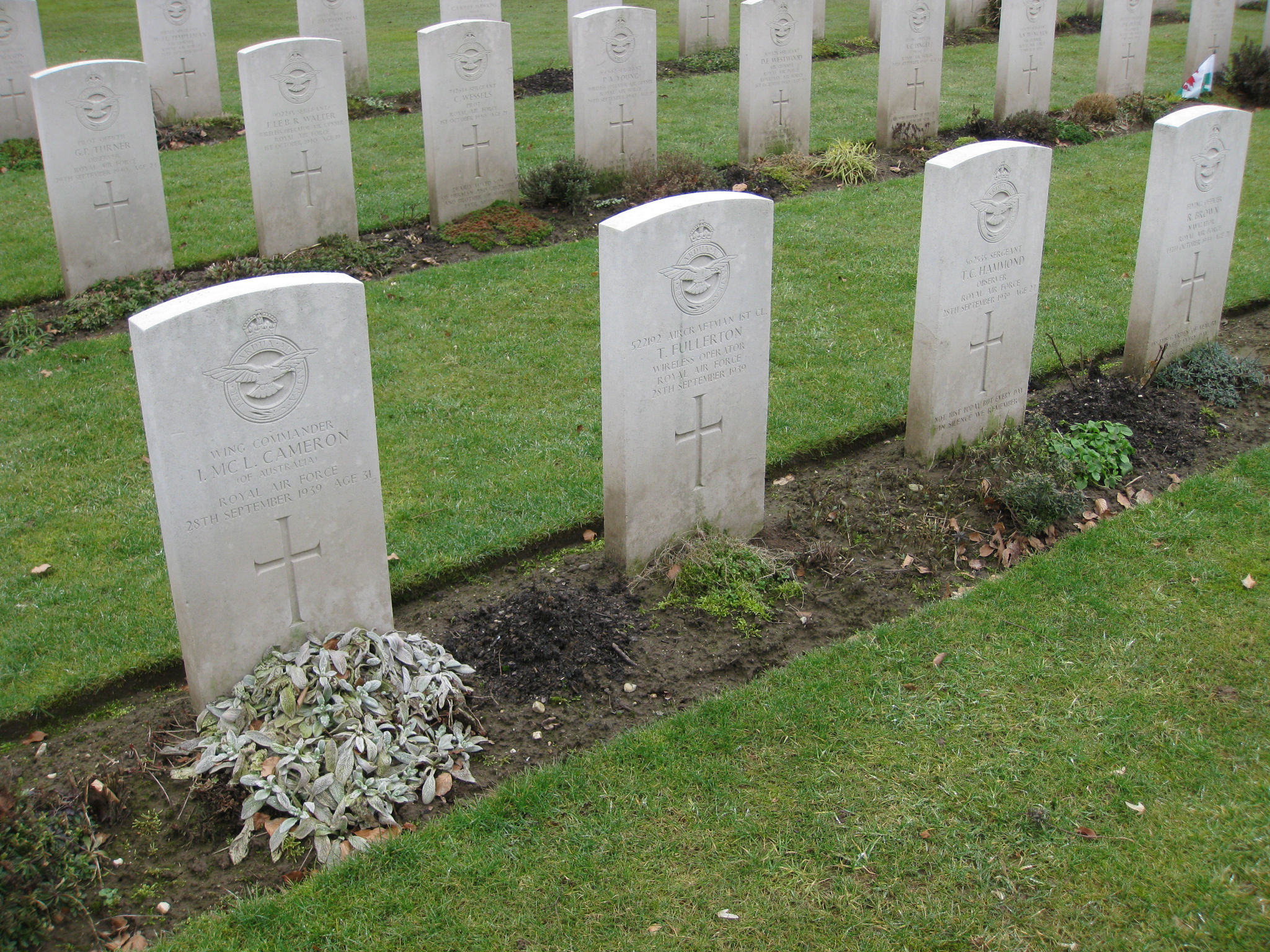
It turns out that the man buried on the right is wing commander Ivan McLoed Cameron, an Australian who, in fact, is the first Australian to die in action during WWII. The man to the left is Thomas Cecil Hammond, an Irishman.  The last grave belongs to Thomas Fullerton.

For more information regarding the crash, please check out the following website: http://ww2chat.com/biographies/5839-raf-australians-wing-commander-ivan-mcleod-cameron.html

After researching the photograph, Werner visited the current grave site in Kleve, Germany where the three men were reburied after the war.  He snapped some great photos and generously allowed for them to be posted here at PortraitsofWar.

Thanks Werner!

Reichswald Forest War Cemetery Gates

The Three Graves
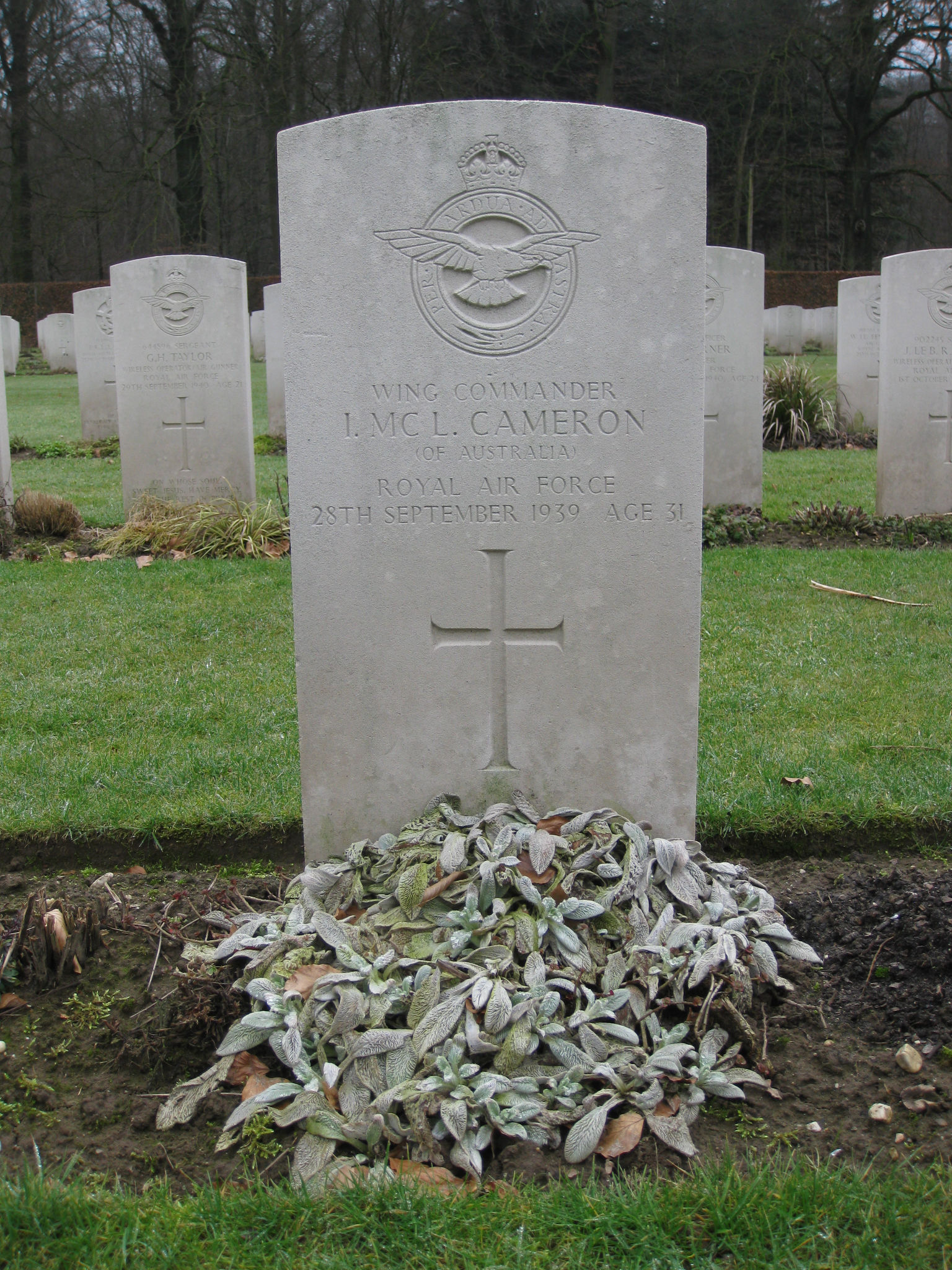
Cameron's Headstone
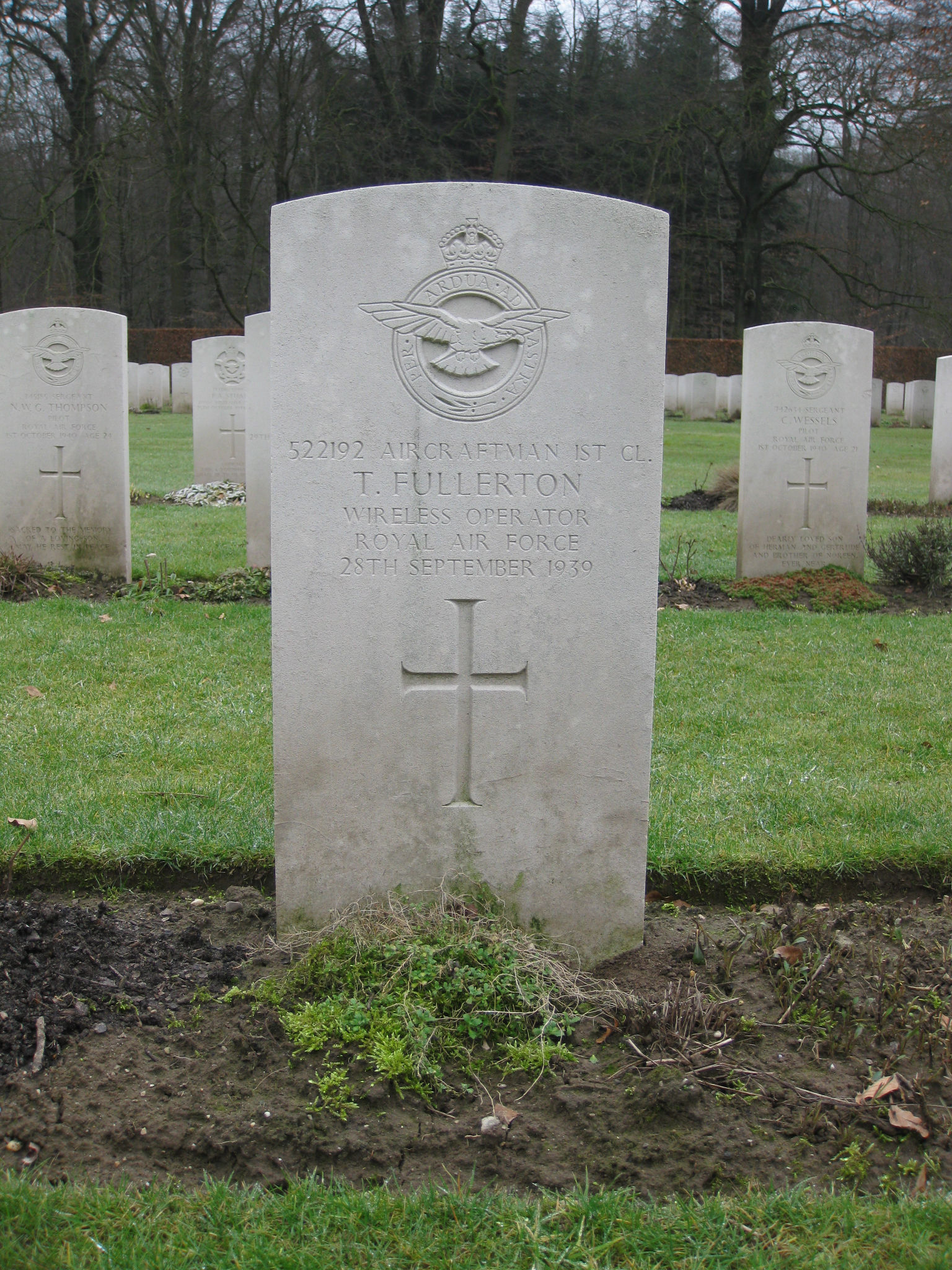
Fullerton

Hammond


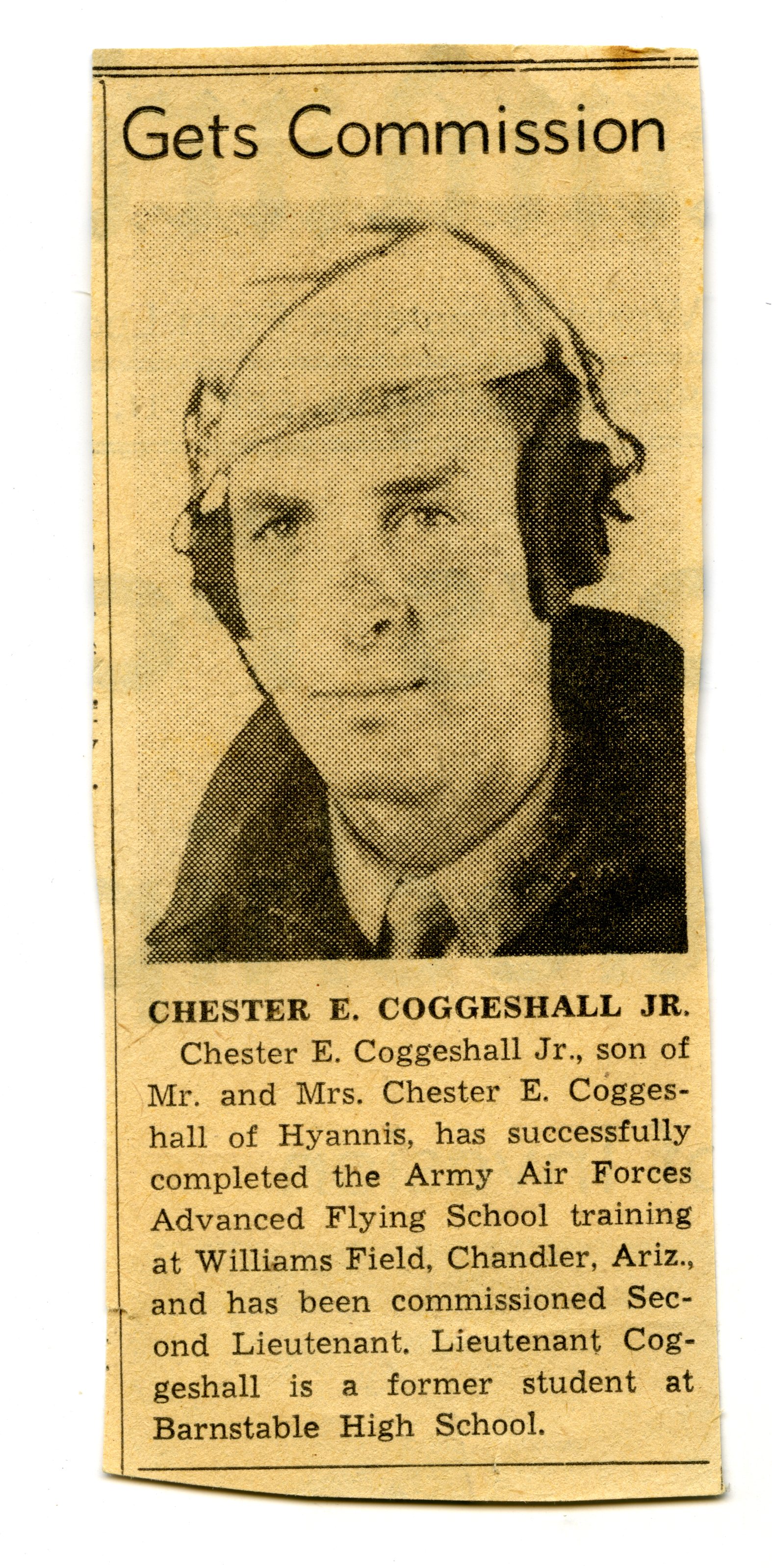
WWII Memorial Post – Cape Cod Native Captain Chester E. Coggeshall, P-51 Pilot Shot Down Over Austria


The discovery of a photo and clipping from a Massachusetts flea market yields a wealth of interesting material related to the last hours of Captain Chester Coggeshall’s life.  A sad story, but one that deserves to be told.  Captain Coggeshall was born and raised on Cape Cod (Hyannis) and entered the war after attending Barnstable High School.  He flew two tours in the ETO, the first with a P-38 (pictured below) and a P-51.  His final mission of the war ended in his tragic murder.  Please read below for more details.

From http://www.findagrave.com/cgi-bin/fg.cgi?page=gr&GSln=coggeshall&GSfn=chester+&GSbyrel=all&GSdyrel=all&GSob=n&GRid=2639236&df=all&


343rd Fighter Squadron, 55th Fighter Group.

From Find A Grave Contributer #47444799

Entered service from Hyannis, Massachusetts
ASN – 0-754471
11 January 1944 – Joined the 343rd Fighter Squadron
March 1944 – Promoted from 2nd Lieutenant to 1st Lieutenant
April 1944 – Awarded Oak Leaf Cluster to the Air Medal
May 1944 – Awarded the Distinguished Flying Cross
May 1944 – Awarded Oak Leaf Cluster to the Air Medal
30 August 1944 – Ended first tour of duty
MACR No. 13866
16 April was scheduled to be Capt. Coggeshall’s last mission on his second tour.
1/Lt. Walter Strauch reported: “I was flying Tudor Red three on April 16, 1945, on an escort and strafing mission. We dove down to strafe an airfield west of Salzburg (Austria) and when we pulled up to about 1,000 feet I noticed Red Leader, Capt. Coggeshall, making a very gentle turn to the left and losing altitude. I immediately started over toward him and noticed his airplane was covered in oil, and about this time he made a fast belly landing, dug a wing in, and cartwheeled. I went back to investigate and saw where the plane had hit a small brick building. There was no fire but the airplane was completely
demolished.”
Reproduced with kind permission of Mr. Robert M. Littlefield from the author’s
book; “Double Nickel – Double Trouble”

After action report from his wingman:
“Coggy was killed on the last scheduled mission of his second tour. He was leading Red Flight strafing an airfield near Salzburg and destroyed the 190 above. He was hit by flak and bellied in crashing through a building and the
airplane was demolished. It was reported that he survived the crash, but was hung by civilians who were in turn hung during the Nurnberg Trials. Believe it or not, he had flown two tours and had not seen an enemy plane in the air. A good high school quarterback and a good pilot. He was highly thought of by all.”
(Frank Birtciel)

A postwar inquiry found that Capt. Coggeshall had been executed by the mayor of the town of Freilassing, Germany. After being denied medical care, he was taken to a wooded area outside of the town and shot twice in the head by Burgermeister August Korbus. This was done by the civilian authorities of the town over the objections of German Army medical personnel. The two Nazi party officials responsible were tried and sentenced to death by a U.S. Military Court.

Burial:
Long Island National Cemetery
Farmingdale
Suffolk County
New York, USA
Plot: J, 15558

Chester and his P-38

An amazing oral history account of the story of Captain Coggeshall:

http://vimeo.com/5683417

WWII 1st Division “Big Red One” 16th Infantry Regiment Wartime Photo Grouping – German Escapee Shot in Leg


Snapped by a member of the 16th Infantry Regiment towards the tail end of the war near Falkenau, Czechoslovakia, the following pair of photos gives a brief glimpse of some of the encounters made by US infantry troops during the closing period of the war.  In this instance, a German soldier dressed in civilian garb was shot in the leg with an M1 while attempting to run away from the concentration camp near Falkenau.  Luckily for him, a medic is standing in the left center of the image.


WWII 9th Armored Division B/W Negative – Captured Hitler Youth Last-Ditch “Boy Soldiers” Smoking Cigarettes


These young German soldiers, likely taken directly from the rank of a local Hitler Youth group, were captured somewhere outside of Leipzig Germany in May of 1945.  The recent discovery of a 600+ negative grouping from a chaplain in the 9th armored division yielded this yielded this gem of an image.  The emotion and raw sadness of the war can be seen in the eyes of the boy smoking the cigarette in the left side of the photo.  They can’t be more than eight or nine years old.