The following article was graciously submitted by Sam Pestle. To see more stories of WWI soldiers with accompanying portrait photography, please check out Sam’s page – The United States in WW1 on Facebook.
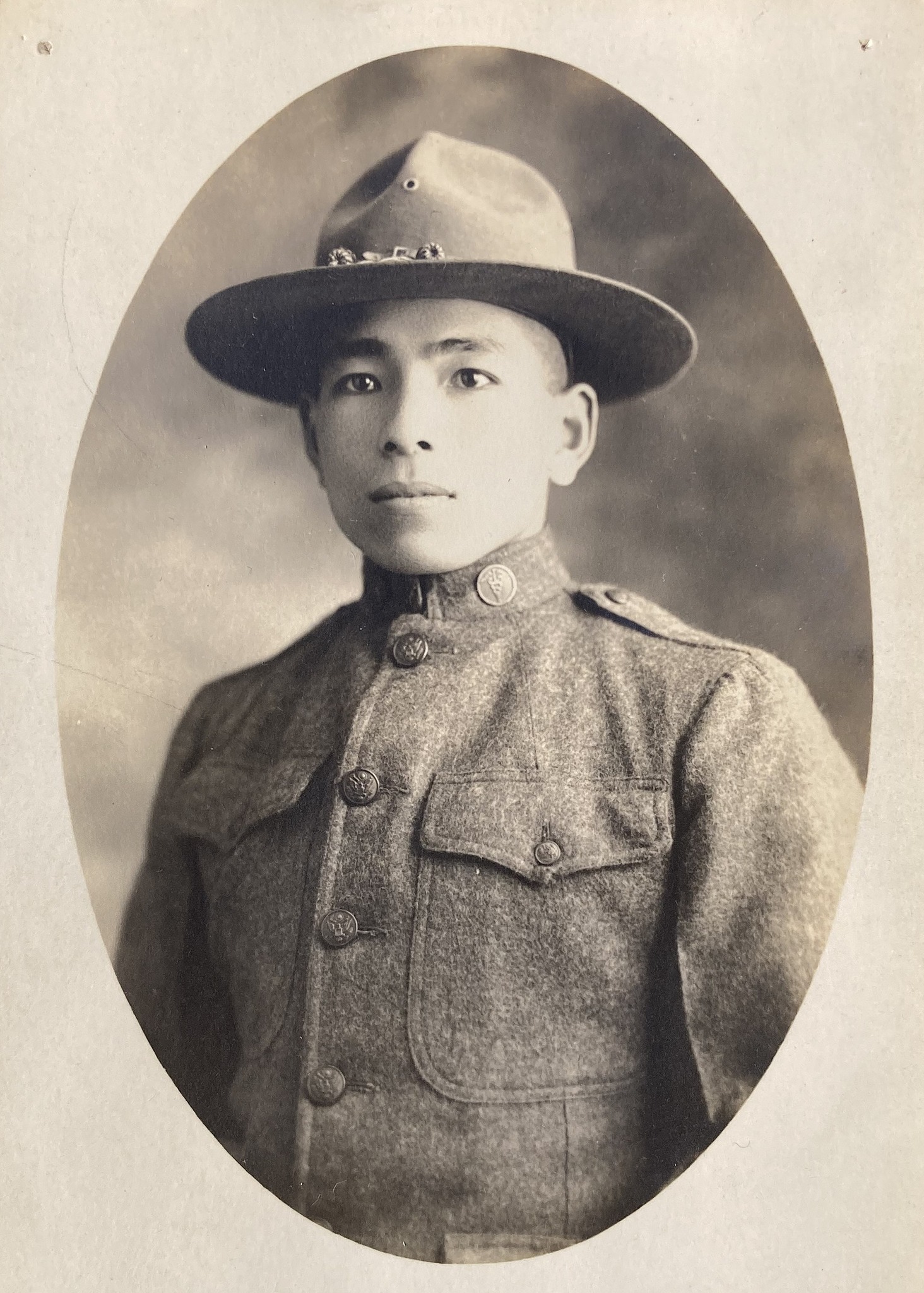
Albert Nobori Kawasaki WWI Studio Photograph
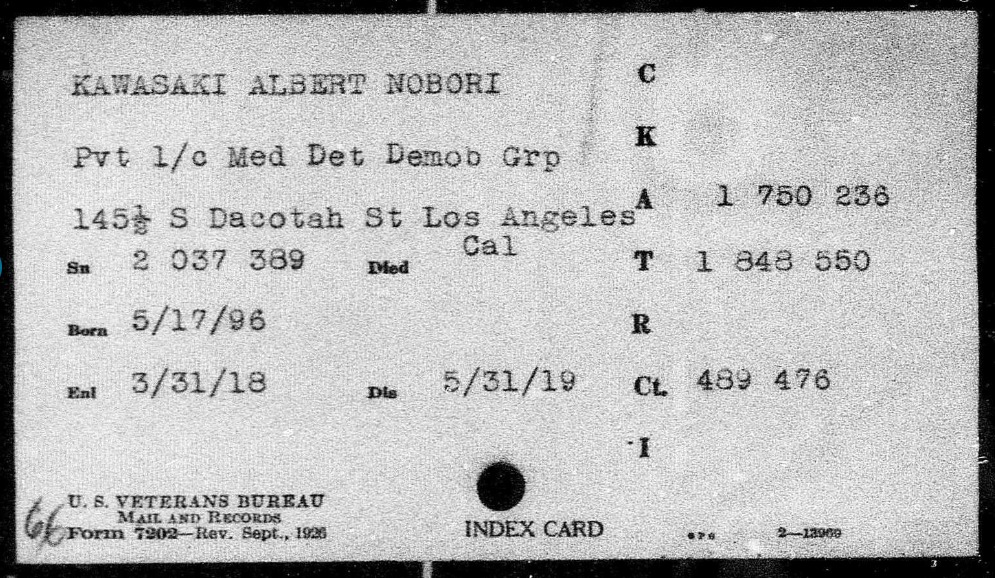
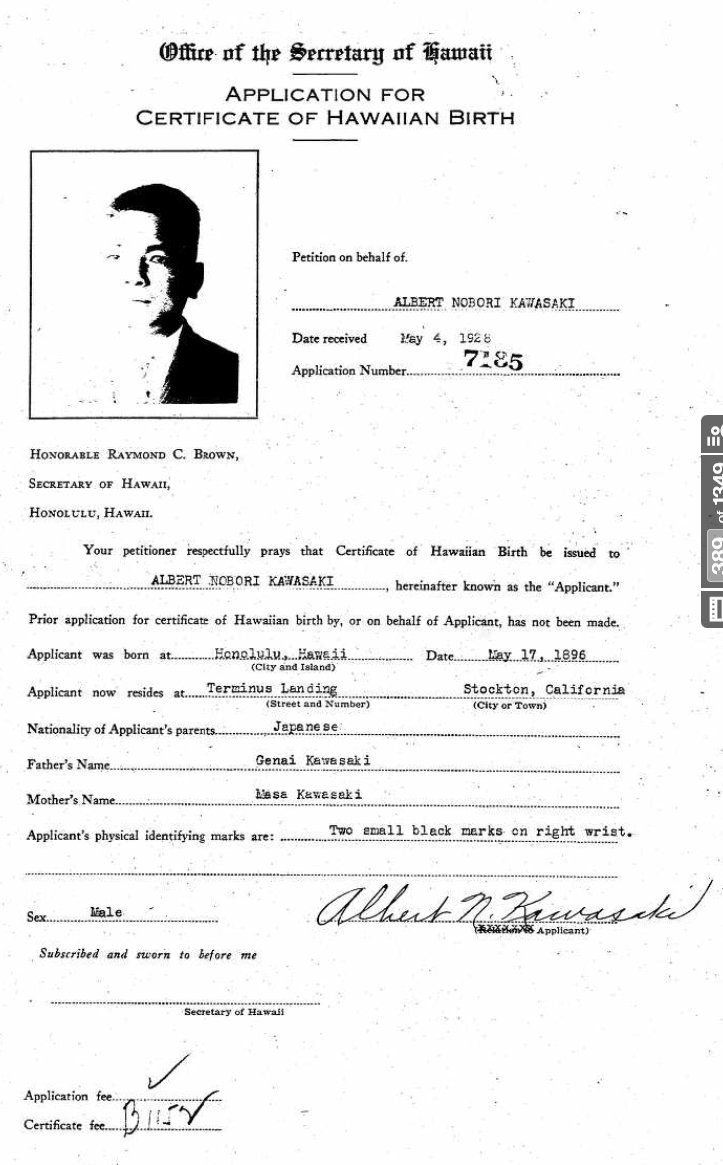
Albert Nobori Kawasaki was born in Honolulu, within the Republic of Hawaii, on May 17th, 1896. His parents were Japanese immigrants from the Hiroshima Prefecture, and government documents indicate that Albert spent six years in Japan attending school during his youth. He was bilingual in Japanese and English, and later moved to Sacramento, California (possibly in 1914). He was a student at the Sacramento High School during the 1917 draft registration and denied any deferments from military service. Albert was subsequently inducted into the US Army on March 31st, 1918, and was soon assigned as a Private First Class with the US Army Medical Corps.
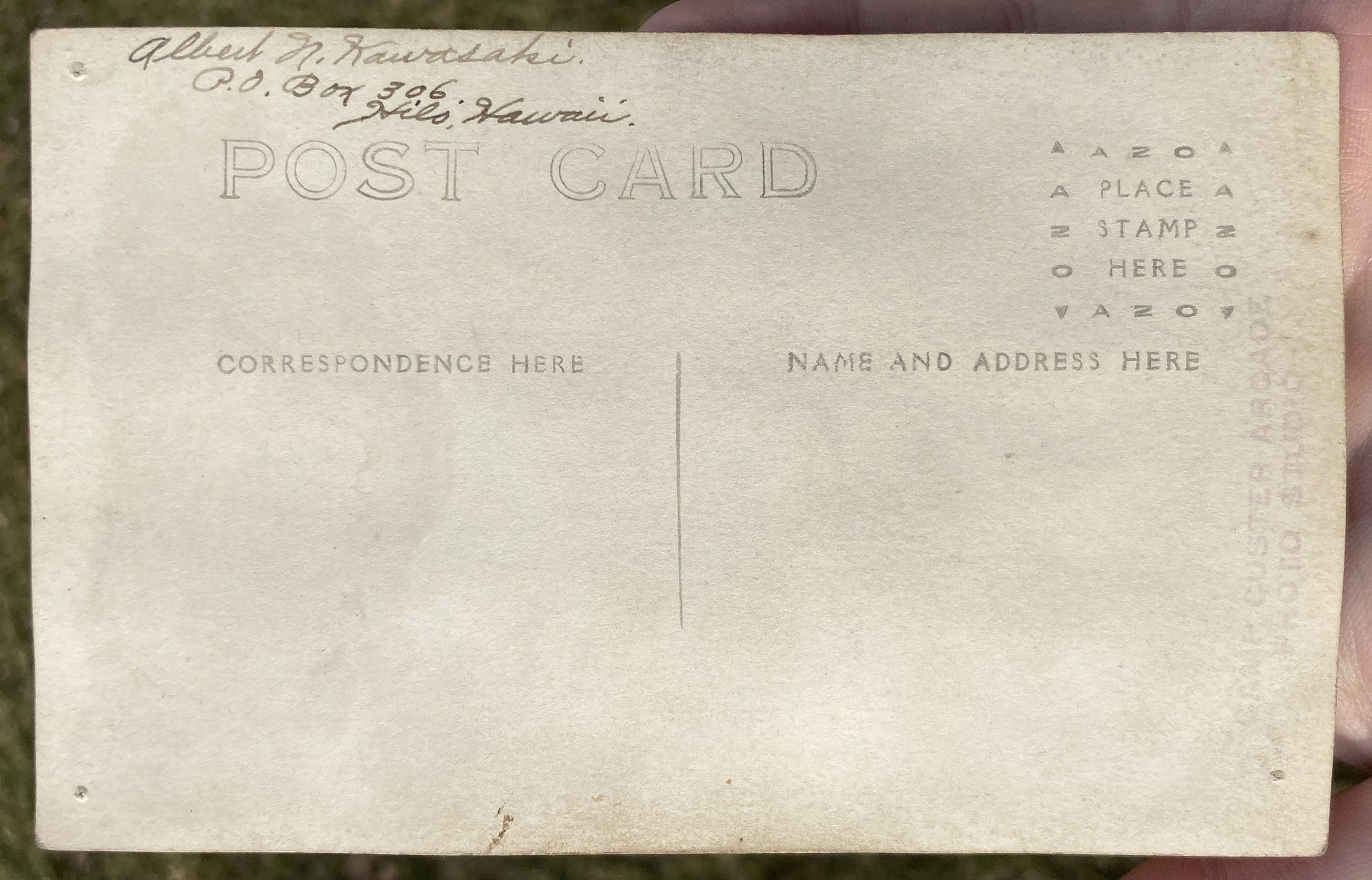
PFC Kawasaki was sent across the United States to Michigan and assigned to the Medical Detachment of the 160th Depot Brigade at Camp Custer. This photograph has a studio marking on the reverse that indicates that the image was taken at the Camp Custer photography studio. As a member of the medical corps, it seems likely that Albert was assigned to the base hospital throughout the final months of the First World War. An outbreak of Spanish Flu at the camp began in September of 1918 and left thousands of doughboys profoundly sick and requiring medical intervention. An estimated 674 soldiers died of influenza during this period, and it’s very likely that PFC Kawasaki regularly faced death throughout his military service (despite never traveling overseas for AEF service).
Reverse Side of Postcard Showing Kawasaki’s Name and Address
PFC Kawasaki received an honorable discharge from the army on May 31st, 1919, and his service number was 2037389. Albert subsequently sailed back to Hawaii aboard the SS Tenyo Maru in June of 1919, and I suspect he visited his aging parents in Hilo, HI. He returned to the United States four months afterward and continued his life in California. Albert was married in a Buddhist ceremony by Reverend Junjo Izumida on July 10th, 1922, and the couple soon had two sons born in 1925 and 1927.
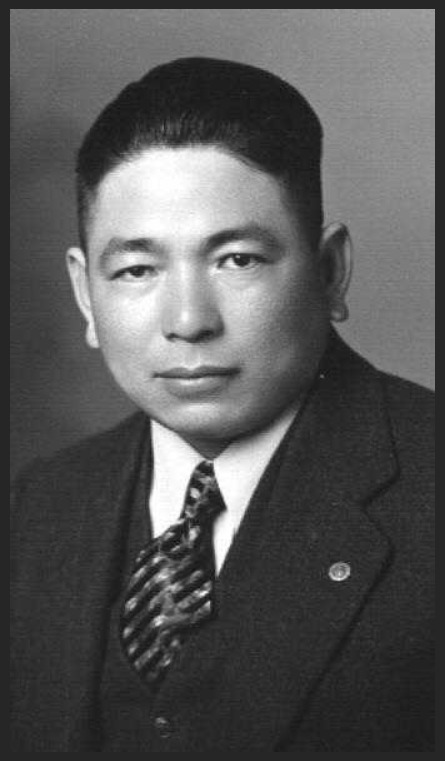
Beginning in 1923, Albert attended classes at the University of Southern California for three years but did not graduate with a degree. He later worked as a celery farmer, agricultural foreman, and farm manager. Albert was considered a local community leader and served as the President of the Japanese American Citizen League of Stockton, California. Unfortunately, Albert also faced multiple hardships throughout his lifetime, including filing for bankruptcy in 1928 and experiencing a divorce from his wife in April of 1942.
Kawasaki Later in Life
Just months following his divorce, Albert was notified that he would be among the 125,000 Japanese Americans interned by the Federal Government during the Second World War. Despite his American citizenship and honorable service within the US military, Albert was a victim of the national paranoia and racial prejudices following the Attack on Pearl Harbor. He was initially held at the Stockton Assembly Center but was later interned in Arkansas at the Rohwer Relocation Center between October 19th, 1942, to July 19th, 1943. He was among 8500 other internees at the Rohwer Camp during this period (including a young George Takei, later of Star Trek fame).
Following his release from the camp, Albert returned to California and died just four years later at the age of 51 years on June 13th, 1947. His remains were subsequently cremated and now rest in a niche at the Inglewood Park Cemetery of Inglewood, CA.
The 158th Aero Squadron and the Sinking of the SS Tuscania
On the night of February 5, 1918, the troopship SS Tuscania was steaming off the coast of Islay, Scotland, when it was struck by a torpedo fired from the German submarine UB-77. The liner was carrying over 2,000 American soldiers bound for the Western Front as part of the earliest waves of U.S. troops to join the fight in Europe.
Among those aboard were men of the 158th Aero Squadron, a newly formed Air Service unit. Organized in late 1917, the squadron was composed largely of young Americans who had trained in Texas before embarking overseas. Their mission would be to support the burgeoning U.S. Air Service in France, a much needed element of warfare in the late stages of WWI.
When the torpedo struck, chaos erupted. Lifeboats were launched into rough seas, and the darkness made rescue operations difficult. British destroyers and local fishermen rushed to aid survivors. Despite these efforts, more than 200 soldiers and crewmen were lost, making the Tuscania the first U.S. troopship sunk in World War I.
Footage of the Survivors of the Tuscania Sinking
The men of the 158th Aero Squadron were among the survivors. Shaken but determined, they eventually reached England and continued their training before heading off to France. Looking at this group portrait, it’s striking to think that every face here carries the memory of that night in the frigid waters of the North Channel. For the men of the 158th, their war began not in the skies over France, but in the dark Atlantic, clinging to lifeboats and praying for rescue.
Roy Oplinger and the 158th Aero Squadron
While the group photo provides us with an overall snapshot of the 158th Aero Squadron in the days after their harrowing ordeal, the photograph also highlights the wartime experience of an individual soldier who decided to send this image home to his family.
The reverse side of this English postcard has a few unique elements that help point towards the ID of the soldier who sent the postcard home in 1918. The first and obvious clue is that the photograph is likely related to someone who served with the 158th Aero Squadron. The following clues can be found on the reverse side of the postcard.
Reverse Side of Postcard
The additional clues are pretty obvious given the stamp at the top right-hand corner paired with the writing on the bottom. We know his name is Roy, and that his Army Service Number was 250033. Using the powers of ancestry.com and fold3.com I was able to identify the sender as Corporal Roy Holden Oplinger who served as a mechanic with the 158th Aero Squadron. Born on May 8th, 1896 in Danielsville, PA to Adam and Edna Oplinger, Roy went on to enlist for the draft on June 5th, 1917 with a listed address in Walnutport, PA. What doesn’t jive is that he was a private at the time of the sinking of the SS Tuscania, so it appears that he didn’t actually send this postcard to his family (if ever) until later that year when he was promoted to corporal in October.
Roy’s WWI Draft Registration Card
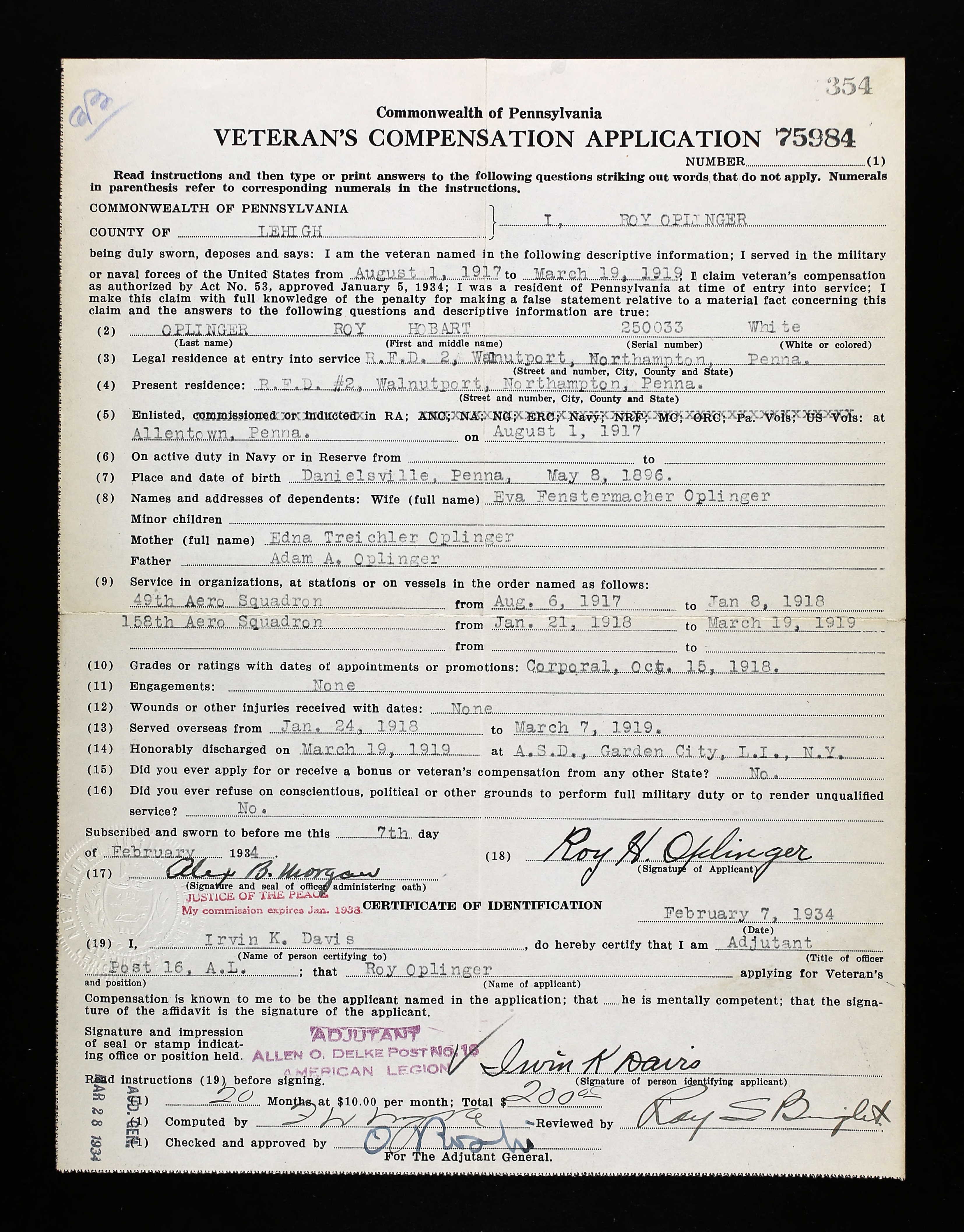
According to Roy’s WWI Pennsylvania Veteran’s Compensation Application, after enlistment he went on to serve with the 49th Aero Squadron (an obscure pursuit squadron) in August of the same year and then on January 8th of 1918 with the 158th Aero Squadron shortly before his departure aboard the SS Tuscania.
WWI Pennsylvania Veteran’s Compensation Application Form
A Letter Home to a Friend
In a rare stroke of luck, I struck photo researcher gold after searching for newspaper articles related to Roy’s WWI service. In this case, it looks like he sent a letter home to a close hometown friend, Samuel W. Danner on February 13th, 1918 only a few days before the group photo was taken. Anecdotes like this offer a rare glimpse into individual moments during the war, and I was lucky to stumble across it. Here’s a link to the The Morning Call, an Allentown, PA newspaper. Please disregard any typos in the OCR transcription of the article.
Roy H. Oplinger Private in 158th Aero Squadron now in France received the following letter: American Rest Camp, Winchester, England.
February 13, 1918. Dear Sir: best of health and hope you are well I will let you know that I am in the same in America. I will let you know that I have experienced the Torpedoing of the S. S. Tuscania.
The very first ship sunk with U. S. Soldiers on board. I had a narrow escape, I was on deck when we were submarined, but was soon floating on the Atlantic waters on a raft, shortly after we were struck about one hour and a half later we were picked up by a British patrol boat.
If the ship would have sunk as quick as the Lusitania, why I think we would have perished. The S. S. Tuscania went down some hours later, she was torpedoed about supper time somewhere on the Irish coast. How many lives were lost I am unable to tell.
Only a few of our squadron The clothing and my personal belongings I had with me are all the articles I have, all the rest of my stuff is at the bottom of the sea with the Tuscania. But my gold watch which mother presented to me as a present some years ago is out of commission as the salt water did not agree with her very well. I do not like the taste of it myself, it does not feel very comfortable to be in the water this time of the year. But I was kept warm as I was the only one on the raft that knew how to handle an oar. So you see what I had to do to get away from that sinking ship.
There is danger in being too near a sinking vessel as the suction will at times suck persons down that are near. I paddled along and when rescued we eight boys on the raft were a few miles from the ship. We were somewhat soaked. But I am dry by the time you received this letter. Ha Ha.
I will never forget that shock of that torpedo which hit us on that night February 5, 1918. The boys were brave and sang national hymns when we let her go down. Every soldier was coal as jar as I know not one was panic stricken, all left that ship in an excellent manner and can tell you from my experience what I have had in seeing a ship sunk. That you can thank God if you never have to witness that kind of a sight on a rough sea. I am sure glad that I am safe.
It was God’s will that only a few lives were lost in the ship wreck. I will sure do my best to do a little harm towards “Kaiser Bill” as he has to account for the lives that were lost on that cold night (you know). I am yours as before.
Address, Priv. Roy H. Oplinger, 158th Aero Squadron. A. E. (via) N. Y.
And Some Insight From a Friend
Fast forward to 2025, here’s some information about the photo from a WWI researcher friend of mine, Charles “Chuck” Thomas. Thanks Chuck!
Chuck’s Take
Here is a special image of the surviving members of the 158th Aero Squadron shortly after arriving at the American rest camp in Winchester, England. This squadron was aboard the Tuscania when it was sunk by a German submarine off the northern coast of Ireland 5 February 1918. When the 158th AS was reassembled at Winchester, it was determined that seventeen men had been lost during the sinking. After the picture was taken, the flying officers were sent to France for training and the enlisted members were broken up into four flights: one flight was sent to Beverly, Yorkshire and the other three went to Lincolnshire, England.
The squadron would later be reunited and sent to Issoudun on 27 September to finish out their service at that aerodrome.
The squadron officers were:
1st Lt. Phil E. Davant
1st Lt. Herbert B. Bartholf
1st Lt. J. W. Blackman (Gorrells has it spelled ‘Blakcman’ – typo?)
1st Lt. Merle H. Howe
1st Lt. Miner C. Markham
2nd Lt. Kenneth S. Hall
2nd Lt. Freeman A. Ballard
2nd Lt. LaRue Smith
2nd Lt. James McFaddan
Of note is the mixture of civilian attire with military uniforms being worn by some of the enlisted men.
I should also point out that the flag seen here was the only one saved during the sinking of the Tuscania by Corp. Guy W. Burnett.
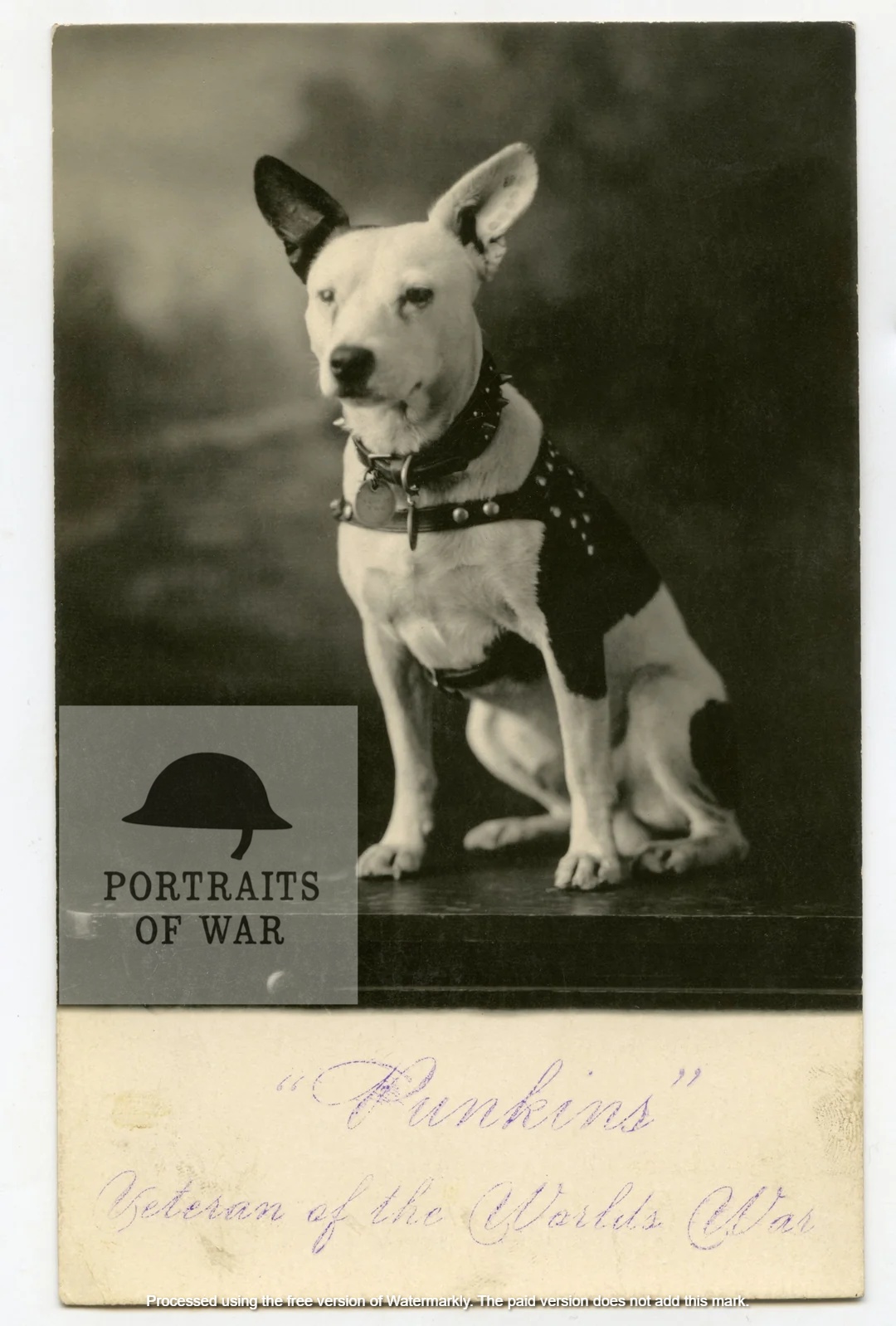
After taking a break from writing, I’m excited to finally share some of the fascinating WWI photos and research I’ve uncovered over the past few years, little hidden gems I’ve been eager to bring to light on this little corner of the internet. In this quick post you will meet Punkins, the official mascot of Company C of the 27th Engineer Regiment. Photographs of unit mascots during WWI are not exceedingly rare, but studio portraits of an identified mascot/dog are nearly impossible to find. Most, if they exist, were kept in personal albums or letter collections and discarded or forgotten about over the past 100+ years, but this shot of Punkins somehow emerged on eBay several years ago.
Punkins Posed for the Camera!
Sporting a studded leather collar and matching riveted harness, Punkins seems like a quite the bruiser, a fitting mascot for an engineering regiment during WWI. With just the image and brief stamped caption below (the stamping hints at a volumed production of photo postcards for veterans after the return home), it seemed a difficult task to identify the sitter based on contextual clues such as insignia or other identifying material. Although the postcard backstamp suggests a stateside printing of the postcard, I’m guessing the original photograph was taken in France or Germany and replicated stateside for dispersal to fellow soldiers who wanted photographs to remember their wartime experiences.
Luckily, I did some deep diving and discovered a digitized version of a unit history of the 27th Engineer Regiment that included a brief caption mentioning a ‘Punkins’ below a photograph of our mystery sitter with one of his wartime friends.
“Punkins” and PFC William H. Hall of Santa Clara, CA.
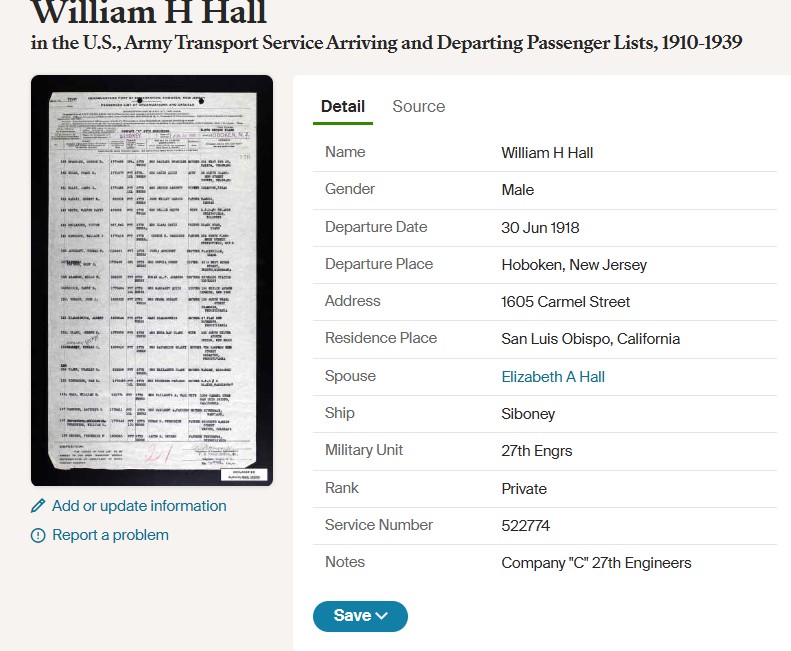
Punkins has now been identified as the regimental mascot of the 27th Engineer Regiment! Note that he is sporting a custom coat with markings and insignia showing he was a member of Company C. of the 27th Engineer Regiment with the First Army. His downward pointing chevron on the right means he served at least six months with the unit. Based on the background contextual clues in the unit history photo, this shot appears to have been taken aboard a return vessel from France to the USA in March of 1919. Private First Class William H. Hall of Santa Clara, CA was aboard the USS Dakotan, a US military transport ship that served in both WWI for the US and later in WWII for the Russians starting in 1942.
Pvt. William Hall heads to France in June of 1918
It’s unclear and likely impossible to know the circumstances of Punkins’ adoption by the 27th Engineer Regiment in WWI, but based on the visual info provided in the unit history, it’s likely that they were adopted at least three months before departure from France in March of 1919 which points towards an adoption date of August or September of 1918 while the unit was serving in Germany at the time. Punkins appears to be a Bull Terrier mix of some sort based on the pointed ears, coloring and general boxy frame. If anyone knows anything else about Punkins please reach out and share.
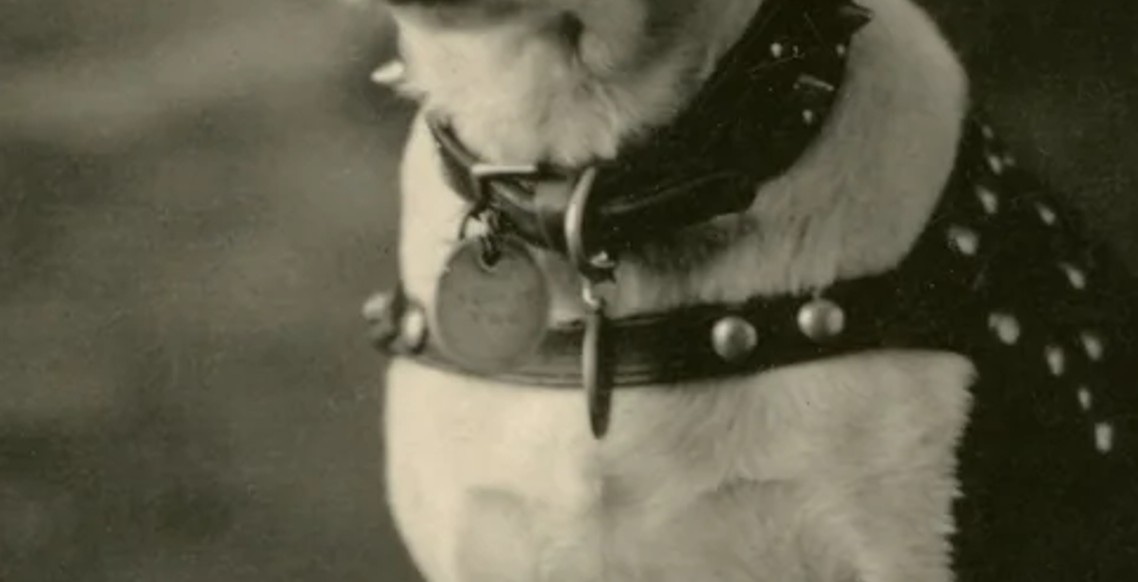
One last note – Punkins appears to be wearing an actual WWI US dog tag. Dog tags used by the US Army and Marines were primarily aluminum discs that could be hand punched with pertinent information bearing the owners name, unit, serial number and sometimes other personal touches. It looks like Punkins received a set of his own tags although the details are obscured. Note that the ridges on the left tag hole hints that they’ve been worn long enough to encounter some wear and tear. The circular tag to the right doesn’t seem to be a proverbial dog tag but some sort of other identifier or an actual DOG tag.
November, 2025 Update
It appears that Punkins sat for several photographs during his illustrious career as a mascot. Another eBay listing appeared a month or so ago (I didn’t win) that provided a bit more information about our sitter. Amazingly, we now know the birthdate, birthplace and wartime career of Punkins to a level of detail I never thought I would learn. See below for a transcription of the caption from the eBay postcard.
Nov. 2, 2025 Ended Listing for Another Punkins Postcard!
Punkins was born Dec. 30, 1917, in Baltimore, was mascot of Co. C., 27th Eng., was smuggled across on a transport in a suit case, thru the worst of the submarine zone, landed in France May 18, 1918. He spent nine months in the front line trenches, went over the top three times at the battles of Chateau Thierry, Argonne and St. Mihiel. He was gassed Sept. 28, 1918, in the Argonne. Punkins is the only dog that ever received an honorable discharge from the U.S. Army. He received a Medal of Honor from the French Government at Verdun, also wears the U.S. Victory button. Here’s to the Good Old U.S.A. – Punkins
Punkins’ “Other Portrait”
This secondary portrait of Punkins provides a very similar view but shows a few more details that “my” version does not include. Now, we can see a little more detail to the dog tag/medal attached to his collar.
The tag that I had originally assumed was some sort of identifier appears to have a castle at center which may be a 27th Engineers commemorative medal given out to members of that unit. See below (top left) for a possible match from the US Army Engineering collection website. (Image 16 in the first slideshow)
The nature of the prolonged war that was WWI and the stalemate and boredom of life in the trenches left a lot of soldiers with time on their hands. Additionally, some soldiers were raised hunting deer, boar and other game in the forests of Europe and North America in the early 1900s. A rifle in the hands of these men could become a weapon that could do immense damage from one concealed trench to another. Today’s post will highlight a United States Marine who was shot through both eyes by a German sniper in October of 1918. But first, please check out this video on snipers during WWI by The Great War, a youtube channel with daily videos about events during WWI.
PFC. Andrew H. Knebel, 18th Company/5th Marine Regiment
PFC Andrew H. Knebel, 18th Co./5th Marines – Lost both eyes during WWI
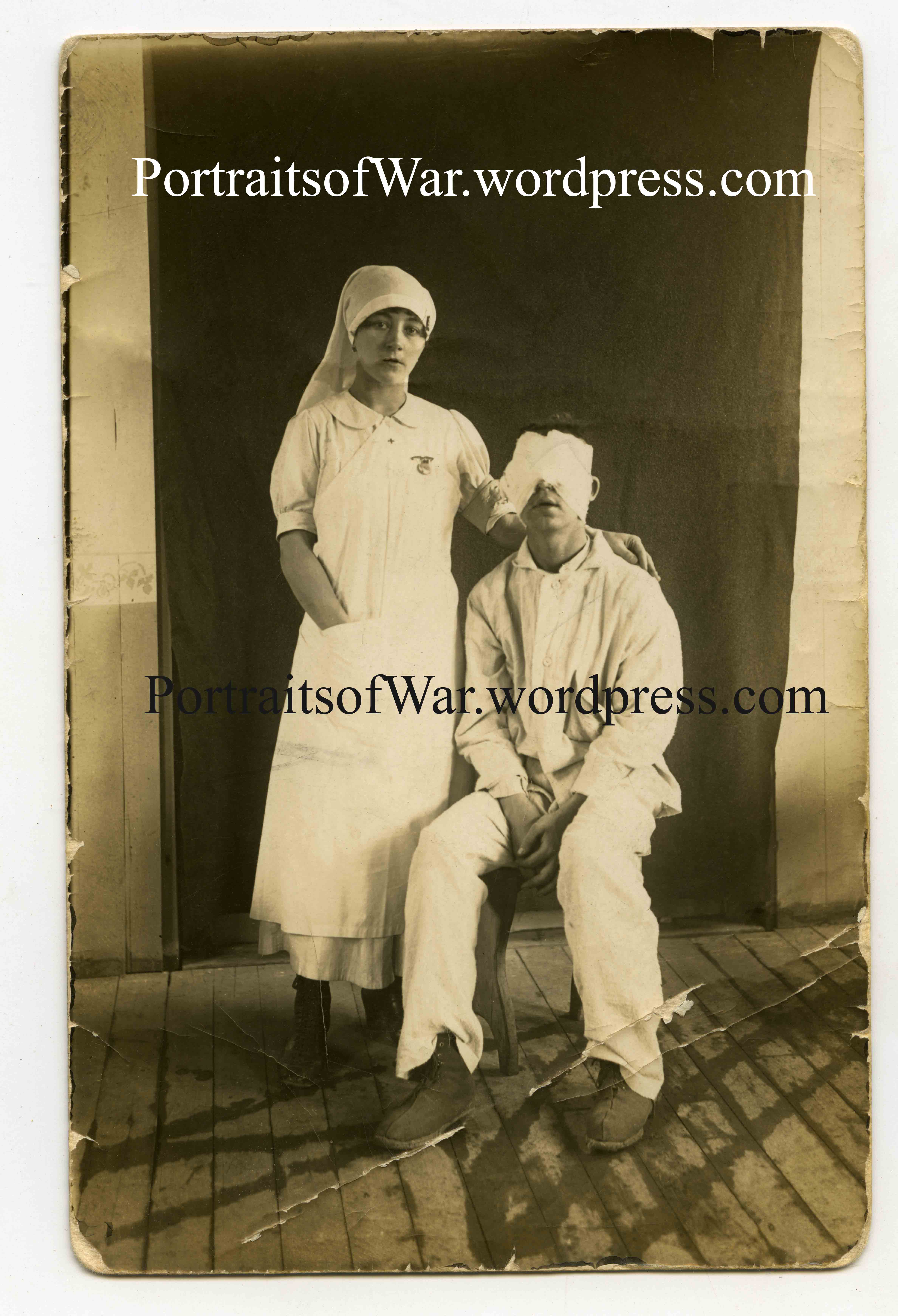
The story behind the above photograph of PFC Andrew H. Knebel of the United States Marine Corps is one that pulled at the heartstrings of the American populace during the war. I was lucky enough to acquire the photo from a fellow collector/friend of mine who I had helped aid in the identification several years previous. A faintly scribbled name on the reverse of the image took several weeks to properly identify, but we were eventually able to track down the story of the blinded Marine in the photo. Taken in a Paris studio in 1918, PFC Knebel is posed with a French nurse who has taken the time to wheel him (note the wet wheelchair marks) into the studio from a nearby hospital.
Details of Knebel’s wartime epic were tracked down in a Detroit Free Press article from 1919:
ANDREW KNEBEL (1897-1968), of the United States Marine Corps, had been fighting the Germans for ten months before a sniper’s bullet, on October 4, 1918, entered bis left eye, passed through the right. The last, thing he saw on earth was light. The last sight he saw on earth was a clump of wet trees glistening in the morning sunshine in the Champagne sector. But it took a better marksman than the German sniper in one or those trees to pond a shaft through Andrew’s heart. Dan Cupid did that job, which has counteracted the calamity to such an extent that the twenty-two-year-old marine is ready to tell anyone that the law of compensation Is the surest thing in the world. Andrew Knebel, on July 11, married his nurse. Miss Anna D. Kelley who took care of him at the Baltimore Institute for the Blind. “If I hadn’t been blinded I wouldn’t have met Anna” he philosophized. “And I wouldn’t give her up for the sight, of my eyes not on your life. She’s the dearest, gentlest girl in the world. I guess one reason why I always liked her was because the treated me as if I wasn’t blind at all. She never pitied me. She’s a wonderful gal.
“Are you there, mother, old dear?”
He called, peering with empty eye sockets towards the kitchen, from which came a delectable aroma of baking apple pie. “May I have a light, mother?” “Destiny is a funny old bird,” the bride remarked, while Andrew’s rosy-cheeked mother was lighting his cigarette. “I didn’t want to go to the Baltimore institute to nurse blind boys. I did everything I could to avoid going. I was nursing at the Army Hospital at Camp Wadsworth when the chief superintendent asked for volunteers to go to Baltimore. I shied away from that chief superintendent for a week. But it was no use. She sent four or us.
“The Institute for the Blind at Baltimore is a beautiful place on a 100-acre estate which was. loaned to the government by Mrs. T. Harrison Garrett. When I’d see those boys feeling their way along the paths in that wonderful Elizabethan garden it took all the grit I had to keep from crying all the time and me an army nurse! Everything there is so beautiful that it hurt me to think they couldn’t see their own place.”
Institute for the Blind in Baltimore
“Then I got acquainted with Andy. I had often heard him singing, but hadn’t paid much attention to him. We nurses were pretty busy and we hadn’t much time for anything but work. He has a splendid voice sang second tenor with the battalion quartet, and he just couldn’t quit singing. They call him ‘the songbird of the Marines.”
“We were supposed to be cheerful to the patients, but Andy turned the tables and jollied the nurses. I’m afraid he jollied me a good deal. I got into tho habit of forgetting his handicap. Somehow I never can think of him as being blind. He finds his own collar buttons and adjusts his own neckties, and it’s almost uncanny the way he knows whether his clothes are pressed and bis shoes shiny. When he puts on his dark glasses and goes walking with me I don’t think a stranger would know he is blind. And you just ought to see him dance!”
“I’m being introduced to all sorts of new interests. For example, I never used to read the sporting page In the newspaper. Now, of course, it’s the first page I open, because Andrew is always in a hurry to learn the baseball and boxing news. I’m getting to be quite a fan myself.”
We were sitting in the dining room of the Knebel homestead at Irvington, N. J., where the young couple spent their honeymoon with tho bridegroom’s parents. Whatever life has in store for this youth who lost his eyes in the country’s service, anyone could see that there was a good deal of compensation in his convalescence, while two were engaged in a sympathetic rivalry which could do the most for him.
“Anna understands him so much better than I do,” his mother admitted. “I am so glad to have my boy back that to be doing things for him all the time. I keep reminding him that he’s blind, but his wife seems never to think of that. It’s wonderful to think that she’s going to care for him his whole life.”
Post-Identification
After identifying the photo and posting it to PortraitsofWar, I decided to do a little more digging and was eventually able to link up, via eMail, a few of the family members. I offered the photo to them, but apparently they had an exact copy (in much better condition).
It’s been a long time since I’ve posted here to PortraitsofWar, so I’m taking a quick moment to add a recently acquired real photo postcard of a St. Bernard mascot from the 67th Coastal Artillery Company. He’s even sporting his own uniform! Check out the 1st Army variant patch with the 67 denoting the unit number and a double overseas chevron for a year of service. Good work Barney!
Mascot photos are one of my favorite avenues of WWI photo collecting. They are relatively hard to come by and are tough to research. All the better for a unique challenge when trolling through the pages of eBay.
It’s been a long month for us here at PortraitsofWar, and we apologize for a lack of posting since the last photo on April 3rd. In today’s post we will be looking at a different side of the war than normally highlighted on this blog. Normally focused on American portraits, photos, and slides, we will be dissecting the story behind a German prisoner of war being held in Marseilles, France in 1918.
Unteroffizier Grießbach as a POW in France
Before delving into the biographical information hand inscribed on the reverse side of the image, we will inspect and identify the visual imagery captured on the obverse. The first thing of note is the format of the image. The photo was printed as a real photo postcard (RPPC) and was likely obtained in a pack of 6 or 12. It’s not uncommon to see identical copies of WWI RPPC’s pop up on the market from time to time. The consistent size, quality and subject matter of these images make them a highly collectable form of WWI militaria.
The three major identifying features present on the front of the RPPC will need some research using easily-accessible internet resources.
Buttons
Collar Insignia
Cap/Headgear
Buttons
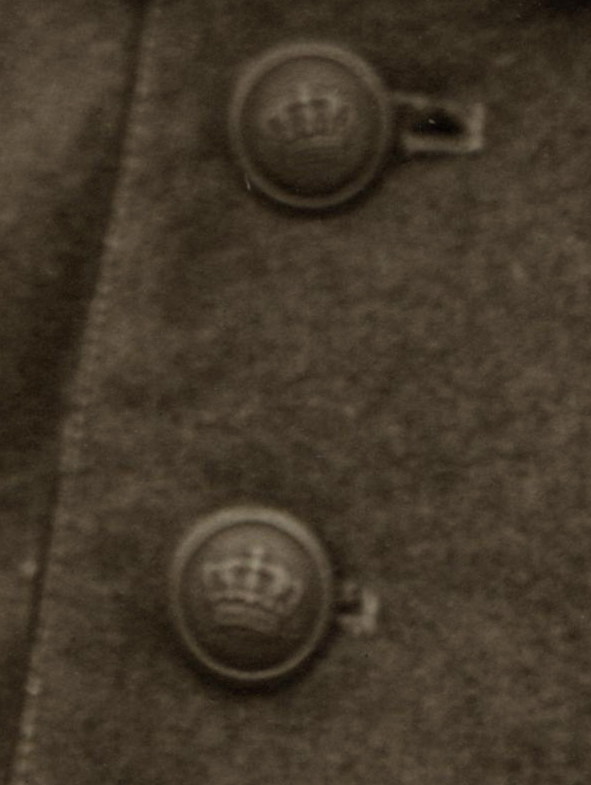
Upon quick glance it’s clear to see that the buttons running down the center are a rimmed (see the raised edge along the outside of the button) with a crown in the center. This type of button is widely known as the standard button of a WWI German soldier and were made to be removable to allow for the cleaning of the uniform. This was a common standard of many nations during WWI.
The next identifiable feature of the tunic is the visible decoration of the collar. Here at PortraitsofWar, we’re use to identifying WWI doughboy collar insignia, but had to rely upon outside sources to help with this particular post. The first thing to call attention to the neck region is the disc on the left side of the sitter’s uniform.
Collar Details
The disc on the left hand side of the photo is known as an Non Commissioned Officer collar disc (sometimes as disk) and can infrequently be seen in period studio photographs. A lengthy internet-based search only turned up a small handful of images, the best of which can be seen below.
The third and final identifying feature of the obverse side of the photo is the headgear worn by the sitter. It appear to be an easily bendable version of the Prussian feldmutz field cap. This style of cap was popular with NCO’s and were easily folded or packed for transport. WWII versions were popularly known as “crushers.”
Prussian Feldmutze
Cap Cockades (Kokarden)
The circular insignia seen on the cap above are known as cockades, or kokarden in German. Sadly, the photo we’re working with is in black and white, but typically each cockade color helps identify the unit type, region and era of creation.
So what do we know just by viewing the front of the image? We certainly know the soldier is an NCO in the German Army during WWI. He’s sporting all the fittings associated with a non commissioned officer of the period, but doesn’t have all the extra tidbits normally associated with a WWI period phograph. Where are his ribbons, medals and weaponry?
Hand Written Reverse Side
In the world of identifying WWI photos, the really important research material is always included on the backside (reverse) of the image. In this case, the German soldier oddly wrote in French to an unmarried friend or relative of his who was living in Dresden during the time. It’s very likely that he was writing to a girlfriend or close female friend, as the wording is very proper. Please see below for a low resolution scan of the backside.
Photo Backside
What does the backside tell us?
Firstly, it’s clearly a real photo postcard created to be sent to recipients. The CARTE POSTALE header is a clear indicator of it’s origin: France. The sender of the postcard notes Marseille as his current location, and Dresden, Germany is the destination. How do we interpret a real photo postcard without knowing anything else about the people included? Isn’t it strange that the postcard doesn’t include a message? This infers a close connection between the writer and recipient. Perhaps she already knows about his wartime status.
Writer Section
This section is typically reserved for messages but, in this case, relays the status of the photographed soldier’s military situation. His handwriting is careful and is strangely written in French without the normal stylistic handwriting nuances of Germanic writing of the period, it becomes easy to make out the passage.
“Uzfdir. Griessbach
pris. de guerre
6283, depit de Marseille,
detacbhment coulou
(Ceceille) france”
The surname of the sitter is uncertain at this point. Is is Greissbach, Greissback, Greissbarf or possibly Greiss back? The prefix Uxfdir. is short for Unteroffizier and can be easily related to a rank between corporal and sergeant most worldwide military rankings. It’s odd that an Unteroffizier would wear an NCO collar disc, but that is an issue best left to the armchair historians who browse this blog.
Who was it sent to?
“Frau Gerfrun Griecfsbahn
Dresden-U
Weinbergstraße 1/73 I”
Was this woman living in Dresden at the time? Does Weinbergstraße 1/73 I correspond with an apartment number in the city?
If so, this is the location of the house the postcard was meant to be delivered to:
Weinbergstraße 73, Dresden
And is this the house that the card was meant to be sent? I recognize the Audi in the carport! I used to have the same model.
Weinbergstraße 73
I need the help of German speaking friends to help decipher the last names of the sitter and the recipient. Hopefully we can narrow down the search using the power of the internet. If you have a clue that may help, please don’t hesitate to comment on this post!
Material related to wartime (and postwar) activities of the YMCA can be easily researched through the help of internet databases, digitized books, collectors forums and various other digital avenues. What is lacking, however, is information directly related to the individuals who volunteered their time and money to travel to a foreign county to serve donuts to war-weary doughboys waiting to return to their families in the US.
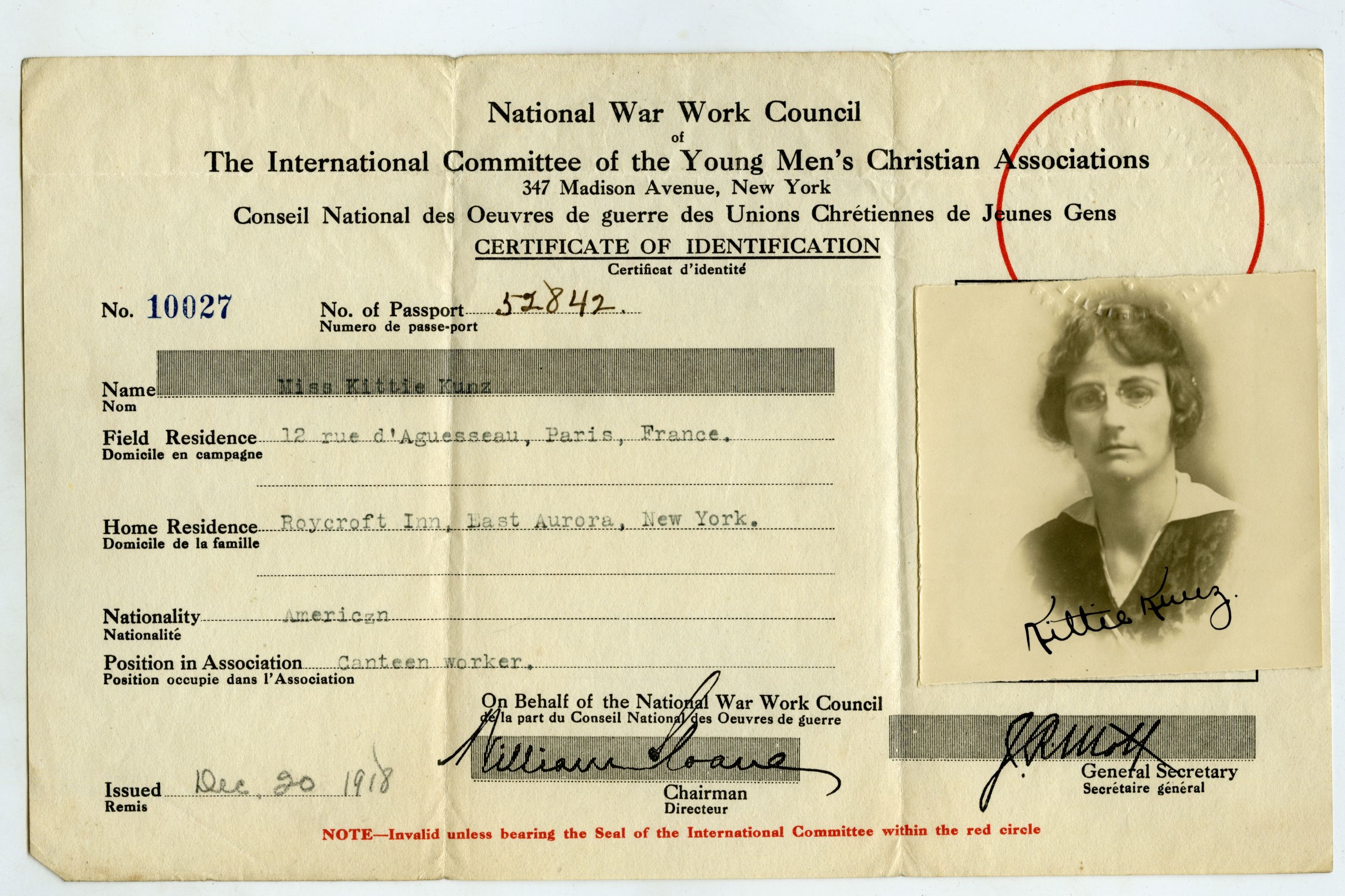
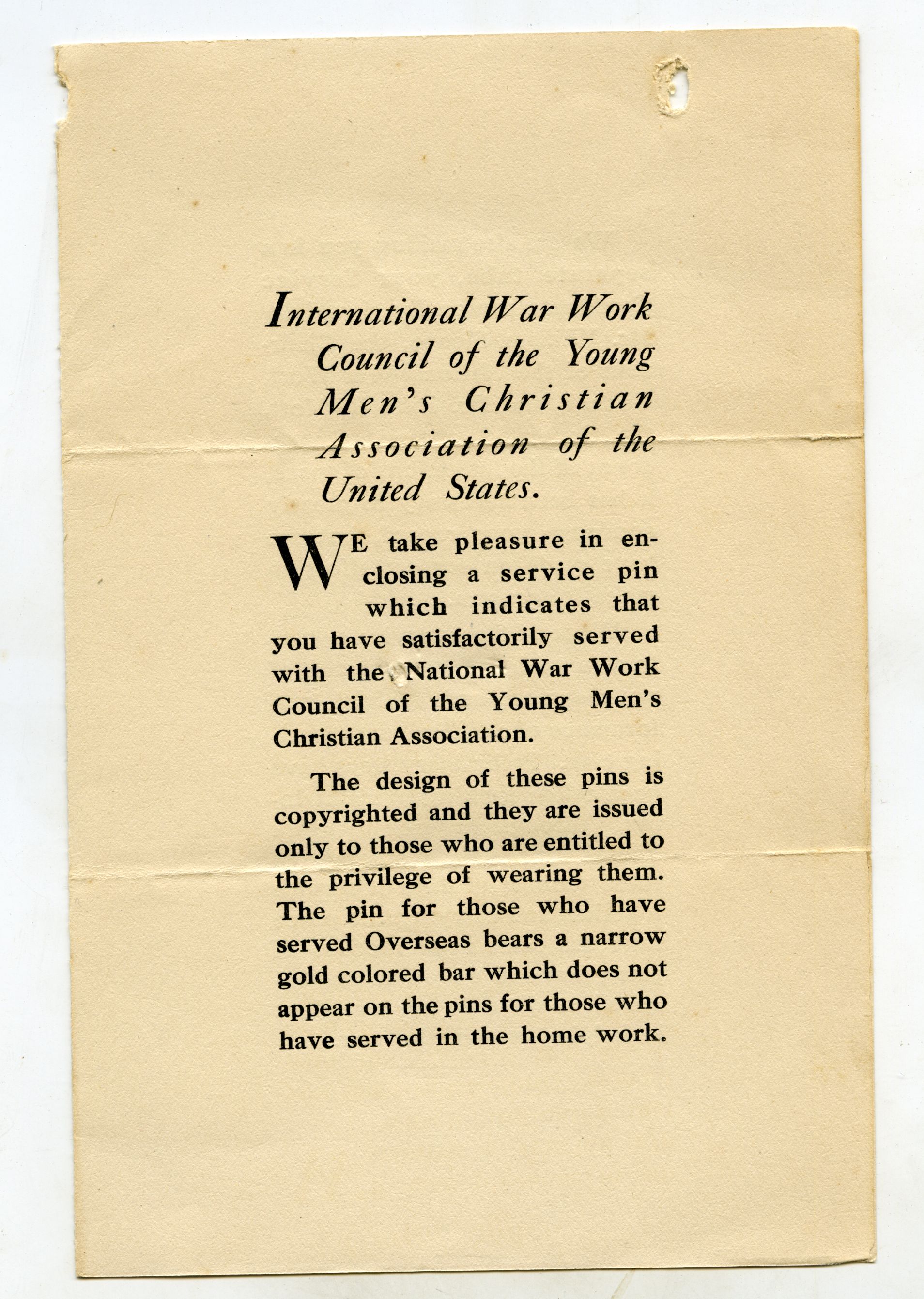
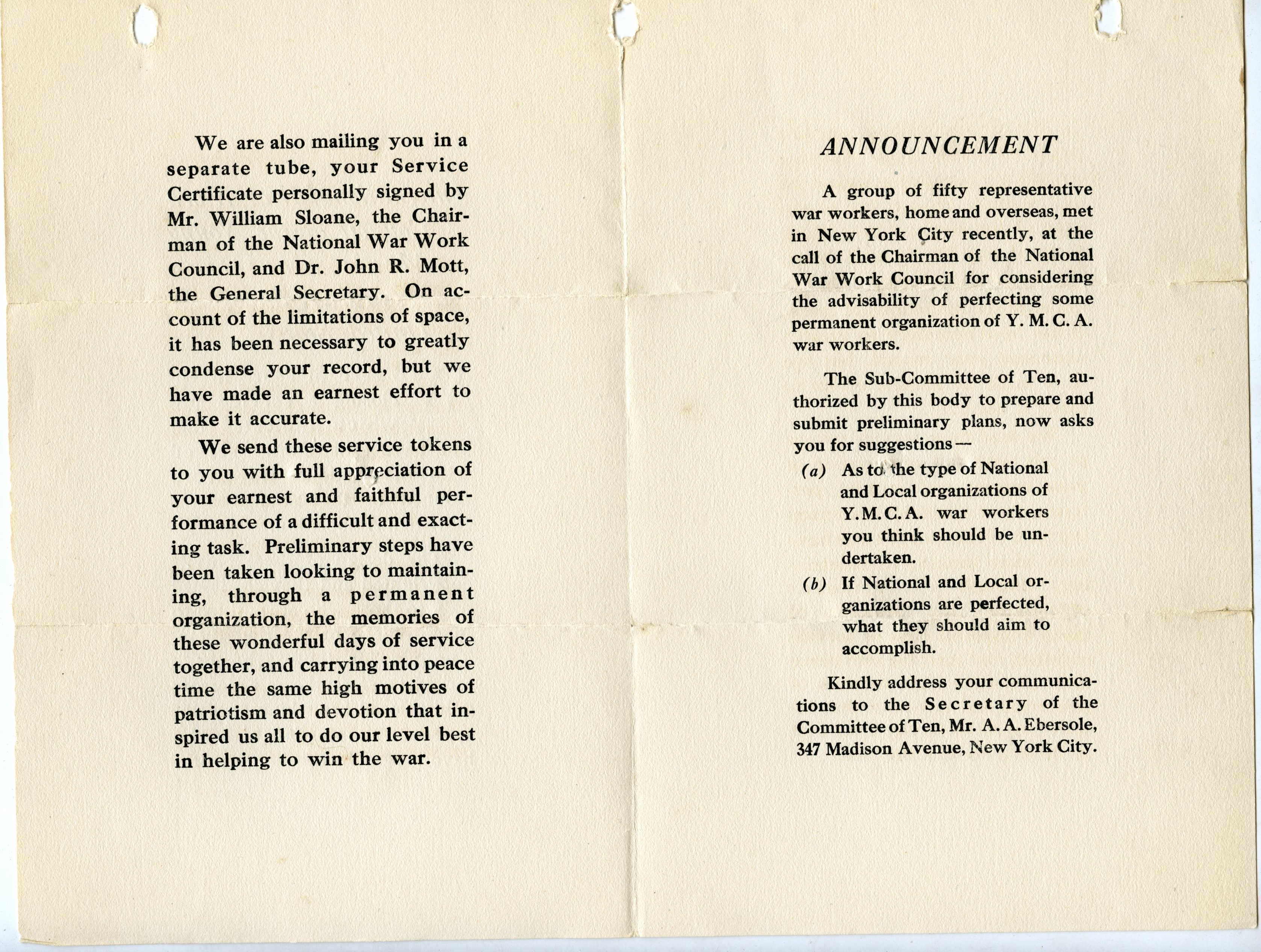
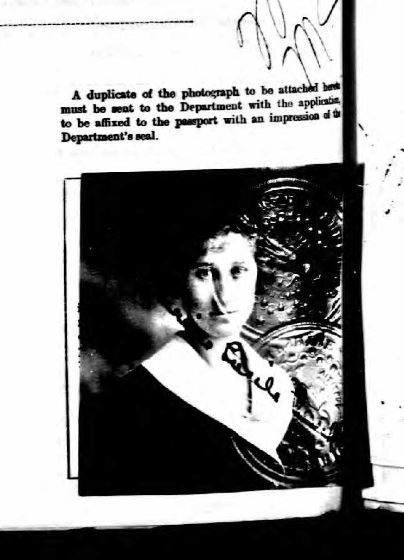
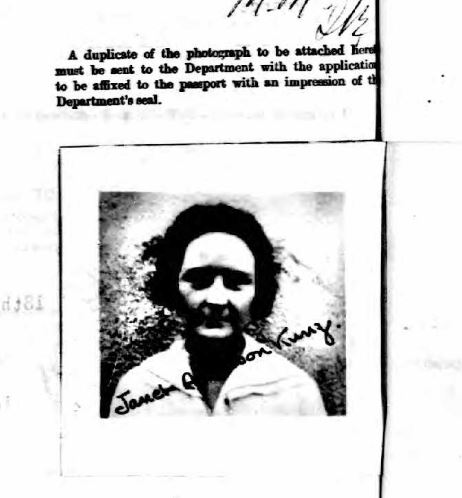
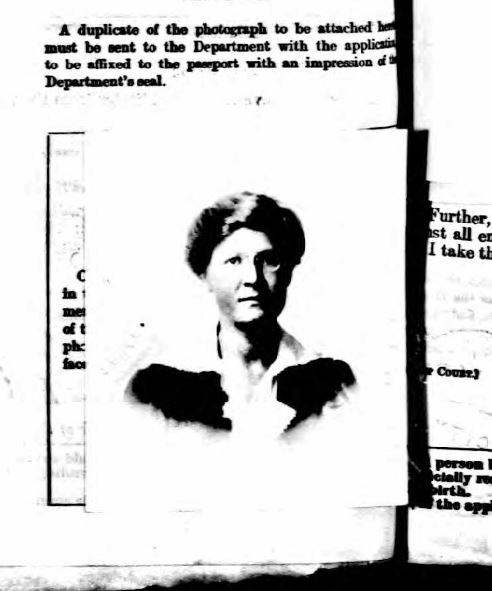
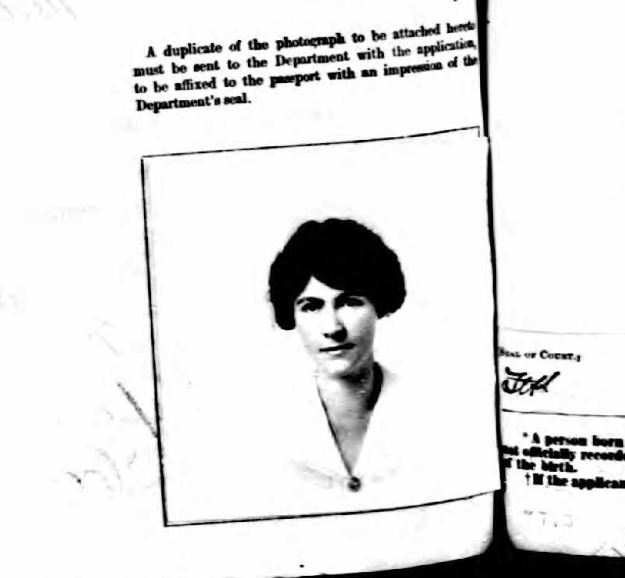
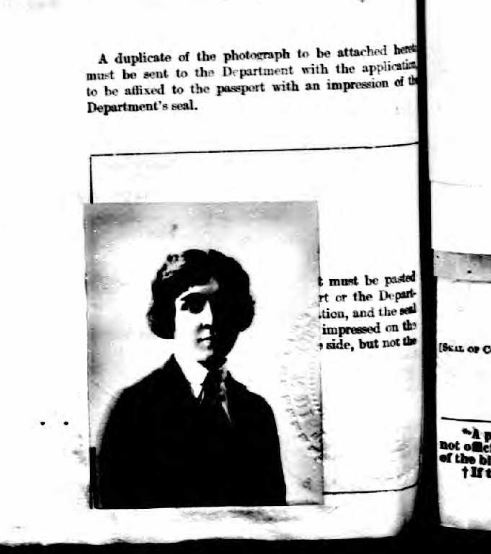
I was lucky enough to track down a large grouping of ephemera collected during the war by a YMCA canteen entertainer, a Miss Kittie Kunz. Included in the grouping is a selection of rare YMCA “unit history” paperwork which gives names and identities to many of the women and men who served alongside Kittie. I researched each of the names in hopes of tracking down passport application portraits. I was overwhelmingly successful and found nearly 75% of the names in the US Passport database that matched perfectly. Each was listed as being a member of the YMCA or Red Cross, and each matches the date range for the YMCA hut. A neat find! Please read on to see the faces of the women who served alongside Kittie. You will also find a smattering of hard-to-find ephemera related to the YMCA. It’s amazing that Kittie saved some of these items. Not all the paperwork is contained in this post, but the scanned material gives a quick glimpse into the typical material a YMCA canteen worker would deal with.
Kittie Kunz’s YMCA ID
Kittie’s YMCA Paris Travel Permit
Kittie’s YMCA Paris Travel Permit Reverse
Kittie’s Permit to Travel to Reims
YMCA War Service Pin Card
YMCA War Service Pin Card Interior
Tea Service Notice for the 28th Division
Here is where my favorite piece of researching WWI material came handy….. I was able to research the names of the women listed in the distribution section and track down their WWI era passport applications. Here are my results:
When searching for new portraiture to add to PortraitsofWar I generally tend to look for material with identifiable soldiers, uniforms, medals and other researchable information to help shed light on life during wartime. In this post, I will be researching a photograph of a US Navy sailor who caught my eye during a recent eBay search.
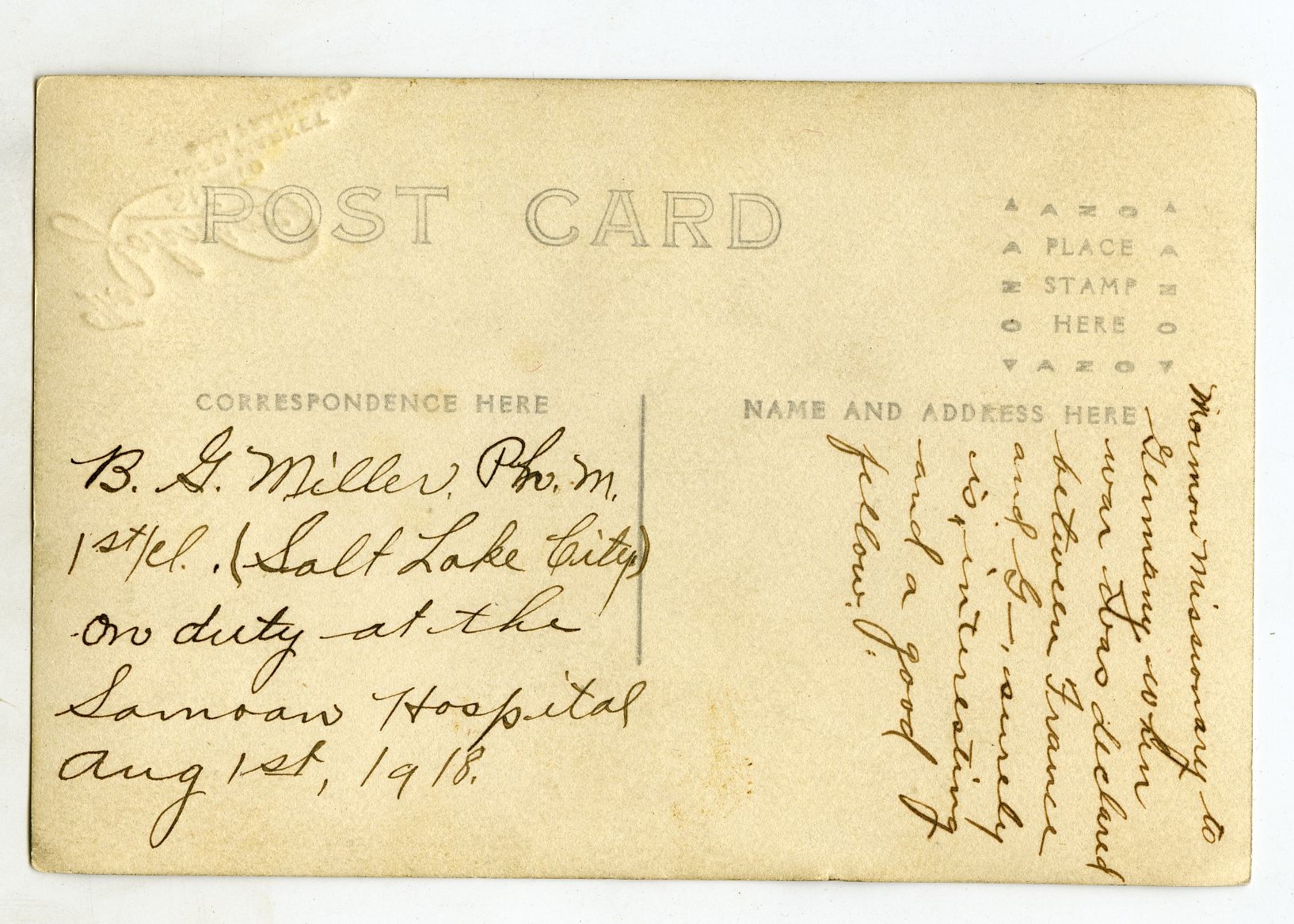
Reverse Side of Postcard
The information written on the back of the postcard shows an identification of the sitter as a B.G. Miller. He is identified as being a Pharmacist’s Mate 1st Class from Salt Lake City, Utah who was on duty at one point at a hospital in Samoa on August 1st, 1918. Additional info added to the photo includes an anecdote about his position as a Mormon missionary in Germany during the breakout of the war between Germany and France.
With a little luck and a lot of research I was able to track down our mysterious B.G. Miller. Byron Gardener Miller was found listed in the Utah World War 1 Military Service Questionnaire on ancestry.com. Please see his card below:
Byron G. Miller in WWI
It looks like Byron attended the University of Utah for a year before being shipped off for his overseas missionary work. This is likely the reason for his service as a Pharmacist’s Mate with the US NAVY as can be seen in the details of his uniform.
Navy Pharmacist’s Mate Rate Patch
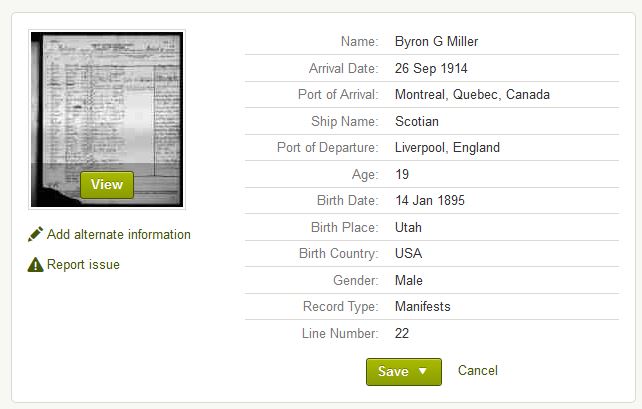
The reference to his missionary service in Germany during the outbreak of war in July of 1914 is partially confirmed through my discovery of his listing aboard a ship ledger arriving in Montreal, PQ in September of 1914.
His service in Samoa has also been confirmed through the same series of records.
Sadly, his arrival back in the US in 1919 wasn’t likely a time of joy for the Miller family; a Utah death certificate shows that he died of influenza only a few months later on February 7th, 1920. Interestingly enough, my research into the US Hospital in Samoa shows that a MASSIVE flu outbreak in the Samoan Islands lead to the deaths of nearly 25% of the population. The US Navy set up an epidemic commission to deal with the issue. The results of the intervention in American Samoa were incredible. Apparently the method of using maritime quarantine lowered mortality rates to nearly 1%. It’s strange that Byron would die of influenza only a few months later while in the United States……
One of the main goals of this website is to help share photos and pertinent military service information with the families of the men and women depicted in the images I collect. In this case, I’m hoping a Miller family representative will discover a rare image of their ancestor who witnessed a formative time in history.
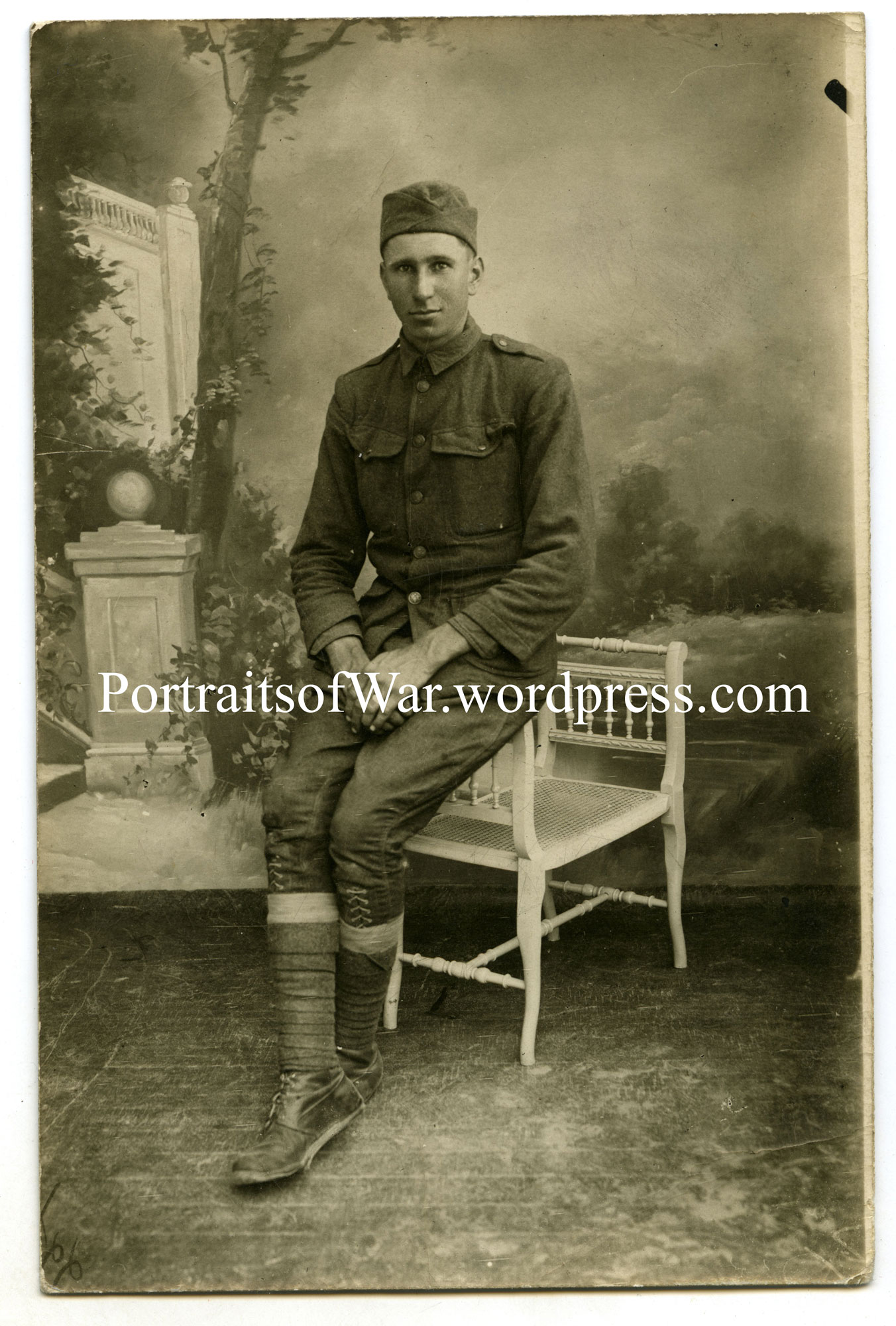
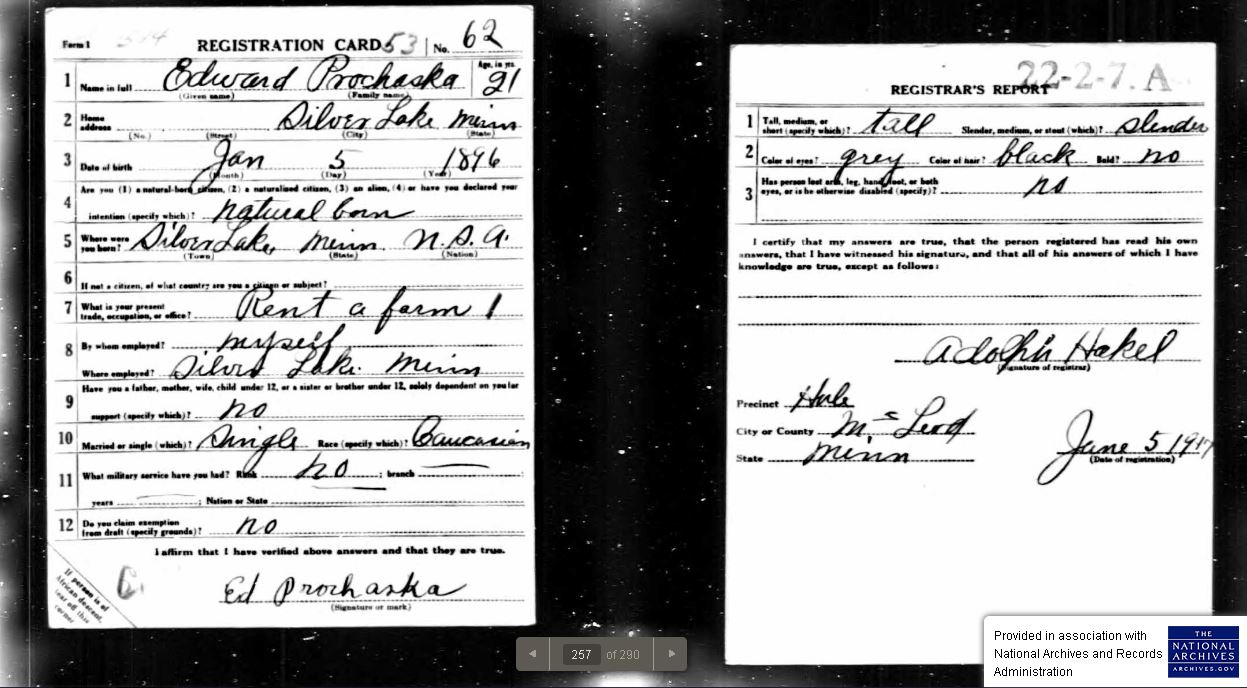
Each of the 116, 516 US soldiers, Marines and sailors killed during WWI deserve a narrative on the world wide web. In this case, a photo of Edward Prochaska of Silver Lake, MN recently arrived in the mail from an eBay seller in the Midwest. I purchased the photo after doing some brief research on the photo, finding that Prochaska was killed in action while serving with the 118th Infantry, 30th Division.
Ed Prochaska ca. 1918 France
Incredibly, Prochaska is referenced heavily in a postwar book following the exploits of Private Oscar Dahlgren during WWI. The full text version of the book can be found here: http://bit.ly/1bSx4h9
Some excerpts from the book are incredibly detailed and give us a unique view into the experiences of a doughboy on the frontlines.
Page 59
“In the evening of this day (August 4th, 1918), we started for the front line trenches carrying with us rations. Myself and Prochaska toted a bag of coffee together changing off with other when tired. Getting on the road just east of Valencies, we got caught in a shelling that Jerry put over on the roads every day at Valencies toward evening. The big shells dropped so close that we expected to be blown to pieces for every shell. We threw ourselves flat, favoring the fall. Luckily, my platoon got through the shelling without any casualties, except for a bag scare. I could tell how bad when I noted how extremely pale they all got. It struck me so funny that I wanted to laugh. Ed Prochaskanoticed it too, and felt kind of ashamed saying he could laugh at death grinning us in the face.”
Page 105
“Again between August 26th and 27th Prochaska was with me when another heavy shelling took place. The trench here was shot up bad so there was little protection. A heavy shell tore into the bank behind our backs. We both flopped down with pan. I said it felt like my fingers had been shot off, but I found all my fingers there.”
Page 117
“It was dark and rainy as we walked up the line we had to step over German dead who were lying thick around there (sic) holes they had made in the ground. When we halted we took into those holes which weren’t very deep. The hole I got wasn’t more than a foot deep. Schellenburger got to be my partner. 4 or 5 dead Germans lay dead by my hole. Prochaska was close by digging in together with R.L. Ross, we not set to work and dug our hole 4 feet deep and wide enough to stretch out.”
Page 65
“Someone caught sight of one coming towards us from Company Headquarters. He was already half ways and now there was some hollering for him to get down, especially by the sergeant. It turned out to be Prochaska. Poor boy – they had him pretty nervous before he came up. He did not know we weren’t allowed to cross now……… They asked him what he meant by coming over…… He told them he had been at the canteen having bought some cakes, cookies and a can of salmon saying I wanted to bring Dahlgren some! ……. It touched my heart that he had so much friendship and love for me – he thought so much of me.”
And the sad details leading up to Edwards death:
Page 135/6
“I stopped to talk to Prochaska who had dug in deep by himself and was carrying straw to bed down with. I and he had always dug in together before, but now as I was a runner, we were parted. Well, he did not get used to his foxhole as he was put on guard at Company Headquarters where I was. There in the hedges he slept when off guard, that being the last time I talked with him. That night, though I had a warm bed, I was not able to sleep as the cooties and German fleas started going over the top and giving me no peace……
After getting through the hedge and the wire fence which separated us from the field, we noticed an observation balloon. We had a funny feeling something terrible was in store for us. My heart made a few quick beats and I felt pale. All of us runners said to the Captain that it would be suicide to cross the field……. I noticed dozens of Americans lying on the railroad bank killed and the rails lay twisted up…….. We now got to talk to some men of the 128th Regiment who said the same thing happened to them at Brancourt…… The first I got across, one of the boys called me and said, “Prochaska, Dahlgren is killed.” He had out names mixed up. The boys were lying close to Prochaska told me his head and shoulder were knocked off by a shell. He had been my best friend for a long time……”
My favorite World War One photo in my collection has to be the following real photo postcard shot taken in Paris in December of 1918. The content and context of the photo – three wounded officers posing in a French studio before being sent home – is good enough to grace the “top shelf” of any WWI photo collection. The fact that they are named on the reverse makes it all the more interesting. For the purpose of this post, I will identify one of the officers and track down his service history.
For extraordinary heroism in action in the Bois de Belleau, France, June 25th, 1918. With the assisting three sergeants, he started out to destroy the final stand of enemy in the Bois de Belleau, an impregnable position, where enemy guns were concealed by rocks and heavy shrubbery. Armed with only a pistol, he rushed the nest, which was offering the most violent resistance, and captured one officer and ninety men. Each of his men destroyed a nest and captured two of the enemy at each position. After effecting the complete reduction of the last element, he marched his prisoners in under a severe and harassing fire of the retreating enemy.
Perhaps an even more astonishing example of heroism was provided by First Lieutenant Jacob Harrison Heckman, whose actions on June 25 were just one of many examples of courage up and down the line that day that secured victory. His citation reads as follows:
The Distinguished Service Cross is presented to Jacob Harrison Heckman, First Lieutenant, U.S. Marine Corps, for extraordinary heroism while serving with the 5th Regiment (Marines), 2d Division, A.E.F. in action in the Bois-de-Belleau, France, June 25, 1918 resistance, and captured one officer and ninety men. Each of his men destroyed a nest and captured two of the enemy at each po. With the assistance of three sergeants, Lieutenant Heckman started out to destroy the final stand of the enemy in the Bois-de-Belleau, an impregnable position, where enemy guns were concealed by rocks and heavy shrubbery. Armed with only a pistol, Lieutenant Heckman rushed the nest which was offering the most violent sition. After effecting the complete reduction of the last element, Lieutenant Heckman marched his prisoners in under a severe and harassing fire of the retreating enemy.


























 Portraits of War