Southbridge, MA Native Charles Edwin Hellner’s WWI Journey


Southbridge’s First Soldier
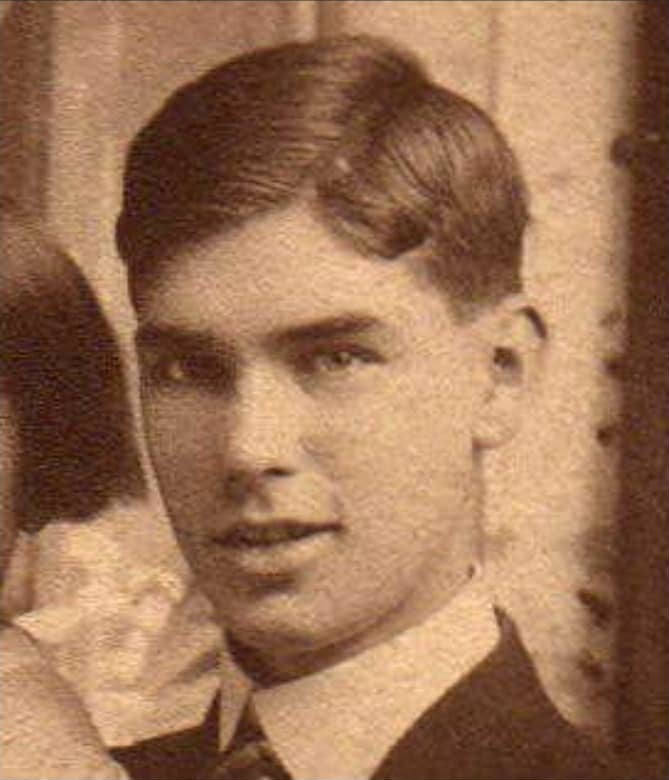
Writeup by: Andrew Locke

(All photographs and narrative were provided by Locke)

The first man from Southbridge, Massachusetts to enlist during World War 1 was Charles Edwin Hellner. He was born on April 11th, 1897 and was at the age of 20 when he enlisted for the US Army on May 7th, 1917. He was placed into B company of the 1st Engineer Regiment (part of the 1st Infantry Division) with about 30 other Southbridge men. After exactly three months of training he departed for France. 
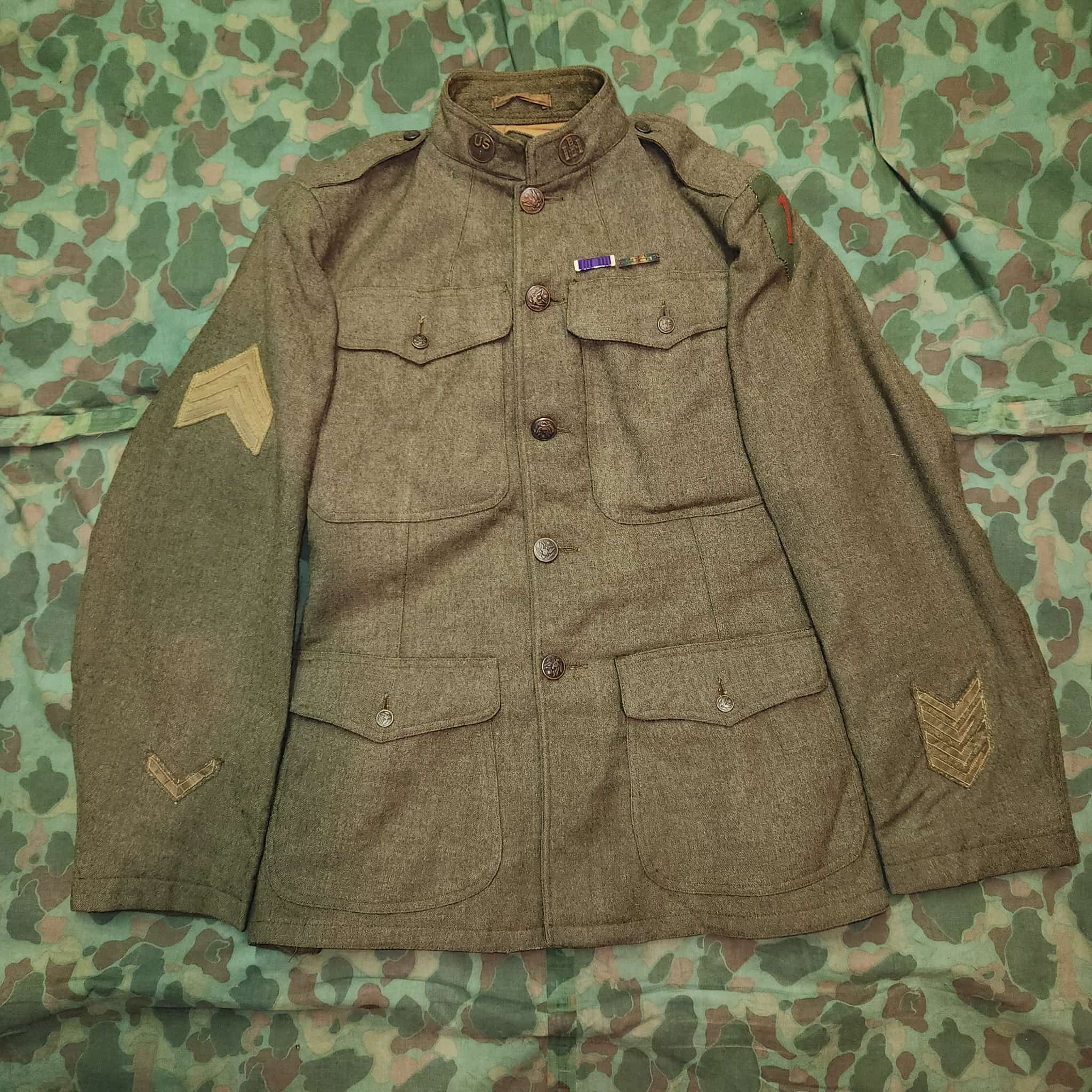
Sgt. Hellner’s WWI Uniform

     Following their arrival, the soldiers of B company then spent more time training. This time it was in the tactics of trench warfare with the French as their experienced instructors. In later parts of the training, American units would serve alongside French ones in relatively idle sections of the frontline so that the doughboys could get some experience. While serving with elements of the 16th infantry on the morning of November 3rd, 1917, Hellner would be present for the first raid on American troops by the German army. The first three American deaths of the war occurred there.

Hellner’s Diary, Cigarette Case, Pocket Watch and War Medals

     Training and engineer work continued for Hellner’s unit until the 1st Division was called into action again. On May 28th, 1918 the 28th infantry regiment had attacked and successfully captured the French town of Cantigny. The 1st Engineers moved into the sector and began work fortifying the area and digging trenches. Hellner memorialized his service there with a large pennant that bears “Cantigny 1918” and his portrait which speaks to the fame of the battle at the time. While in these trenches at and around Cantigny, B company experienced shelling and fought off diversionary attacks from the German’s Montdidier-Noyon offensive that was aimed at nearby French positions.
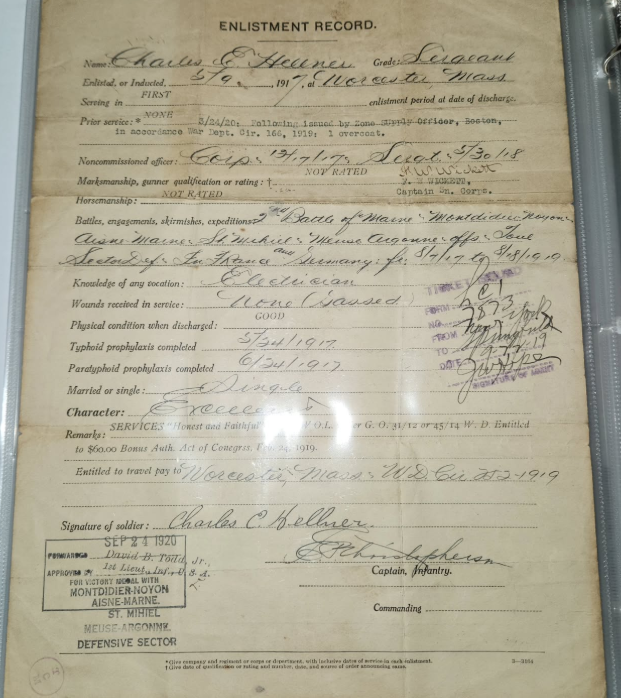
Hellner’s Discharge Paperwork

     On July 18th the 1st Engineers began its involvement in the Second Battle of the Marne. A German attack had recently pushed back allied lines before it faltered and it was realized that this was an opportunity for a counterattack. Hellner had recently been given command of his own squad and would now be leading them into battle. B company spent three days attacking the Germans near the town of Soissons. During the first day of attack on July 18th, a member of Hellner’s squad named William Broughton was hit in the stomach by a piece of shrapnel. Unfortunately, he eventually died from his wounds. Broughton had also come from Southbridge and Hellner wrote a letter home that informed his family that he had passed. July 19th saw B company’s advance slowed by machine gun fire that wounded several men and an officer. On July 20th, Hellner led his squad over the top at 4 AM with the rest of B company in the first wave. With heavy losses they were able to fight until they reached a railroad where they remained the rest of the day.  While taking cover behind an embankment near this railroad, Hellner experienced his first wound of the war. He later wrote a letter about the incident: “I was lying on a railroad embankment when a high explosive German shell burst near me, digging up the dirt and stones all around, and a heavy stone fell upon my foot, breaking one of the bones.” This artillery shell had actually caused much more damage than he’d thought. It dislocated his shoulder, broke a bone in his foot, and gave him a severe rupture. He never reported these wounds and continued to fight at Soissons for two more days. By the end of the battle he was the only man from his squad to report to an officer, the rest had either been killed or wounded. B company in total sustained 74 casualties at Soissons from July 18th to the 22nd.

     After the chaos of their first large scale offensive, they now had a few moments of relief. For the next few months they went back to being engineers and did manual labor including building roads during the St. Mihiel campaign in early September. It is during this time I believe Hellner attended gas school. One of his journals has a section with the same heading that includes details about each type of gas and various mortars including the Livens projector.

Silk Portrait Photo and Cantigny 1918 Pennant

     For the last and largest battle of the war the 1st Engineers was once again called up to act as infantry. The Meuse-Argonne offensive began on September 26th but B company didn’t attack until October 9th. Hill 269 in the Argonne Forest needed to be captured and B company was part of the force chosen for the job. The fight for the hill was intense with the attackers engaging in hand to hand combat. After capturing the hill the engineers immediately braced for a counterattack. One didn’t come until the following day when the Germans stormed the hill with the support of heavy artillery. The enemy never reached the top of the hill and were successfully repelled. At some point during this engagement Hellner was gassed and evacuated to a hospital. 

     Unfortunately I don’t know when he left the hospital but I do know that by November 11th he had returned to B company and was marching towards the frontline near the town of Sedan with the rest of the regiment. Suddenly, a courier on horseback rushed down the column of men telling them to stop marching because the war had ended. In Hellner’s own words: “When we realized it was all over, we whistled, screamed, cheered and raised the devil, and I was so hoarse I couldn’t speak next day above a whisper.” That night the frontline was almost as bright as day with bonfires, flares, and rockets from the celebrating soldiers. 
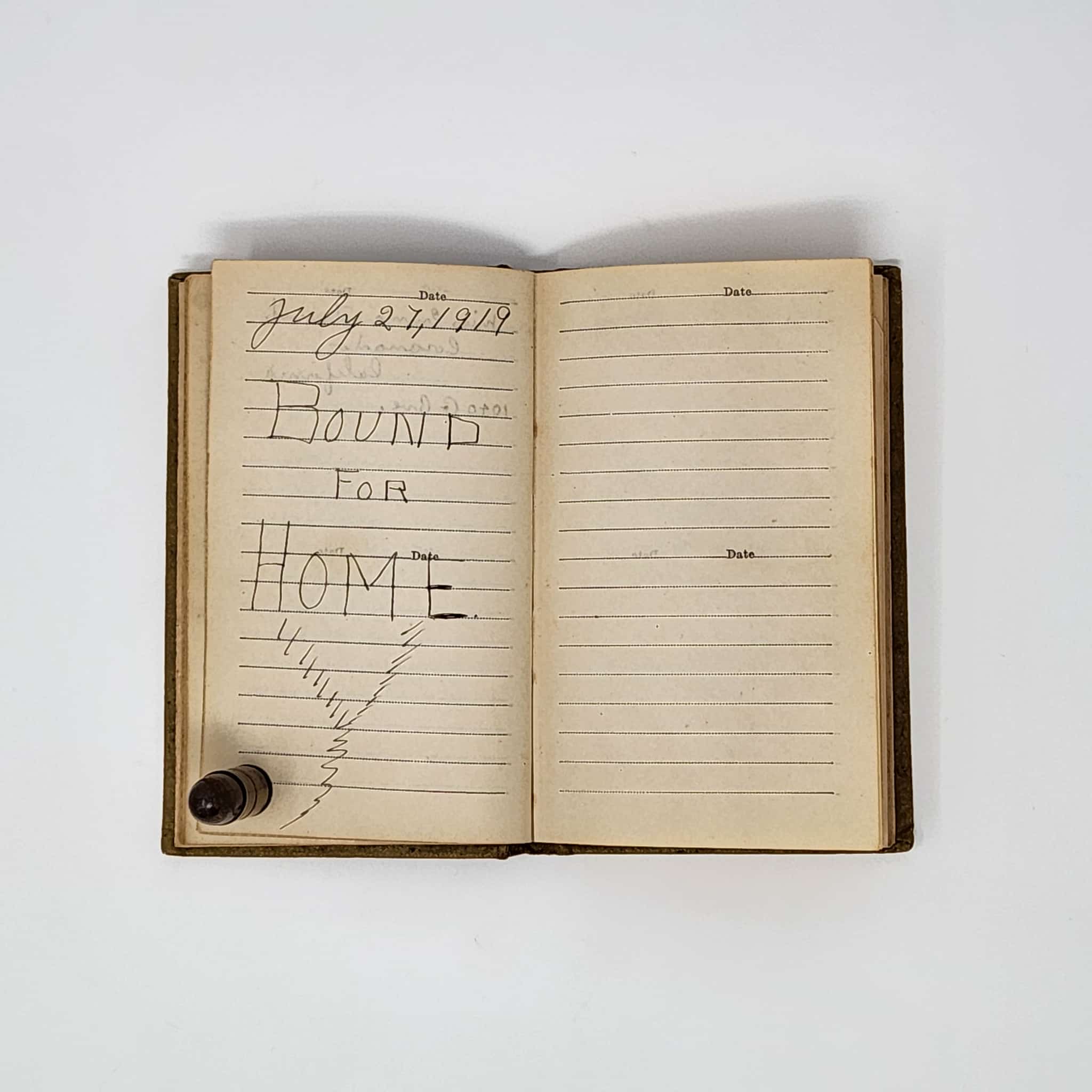
“Bound for Home” – Last Diary Entry

    In December the 1st division was sent into Germany to be a part of the army of occupation. The 1st Engineers remained on this post until July 21st, 1919 when they were detailed to finally return home. He returned to the United States in August and was supposed to receive a discharge but a medical officer advised him to re-enlist so that his wounds from Soissons could finally be tended to by army doctors. This was when the true extent of his injury was truly discovered. It was necessary to fracture his dislocated arm to get it back into its socket. After this though, he could finally return to Southbridge. Funnily enough, even after his wounds from Soissons were corrected, he wasn’t given credit for a wound in action. So his only wound according to his enlistment record was being gassed on Hill 269. Hellner got married in June of 1921 and went on to have two daughters. In later life he moved to Florida and passed away there on June 26th, 1975 at the age of 78.

WWII Snapshot – Female Photographer Pauses for the Camera


A female US service member rocks a summer dress and snaps a shot of the photographer; what more can you ask for from a blog dedicated to obscure vernacular snapshots taken during wartime?   Originally digitally cropped down from a slightly larger print, this shot exudes the youthful demeanor of downtime during WWII. The taut, braced legs also hint to a slightly posed sexualized snapshot….

photographerchick

WWII Pilot ID Portrait Photos – Boring? or Riveting?


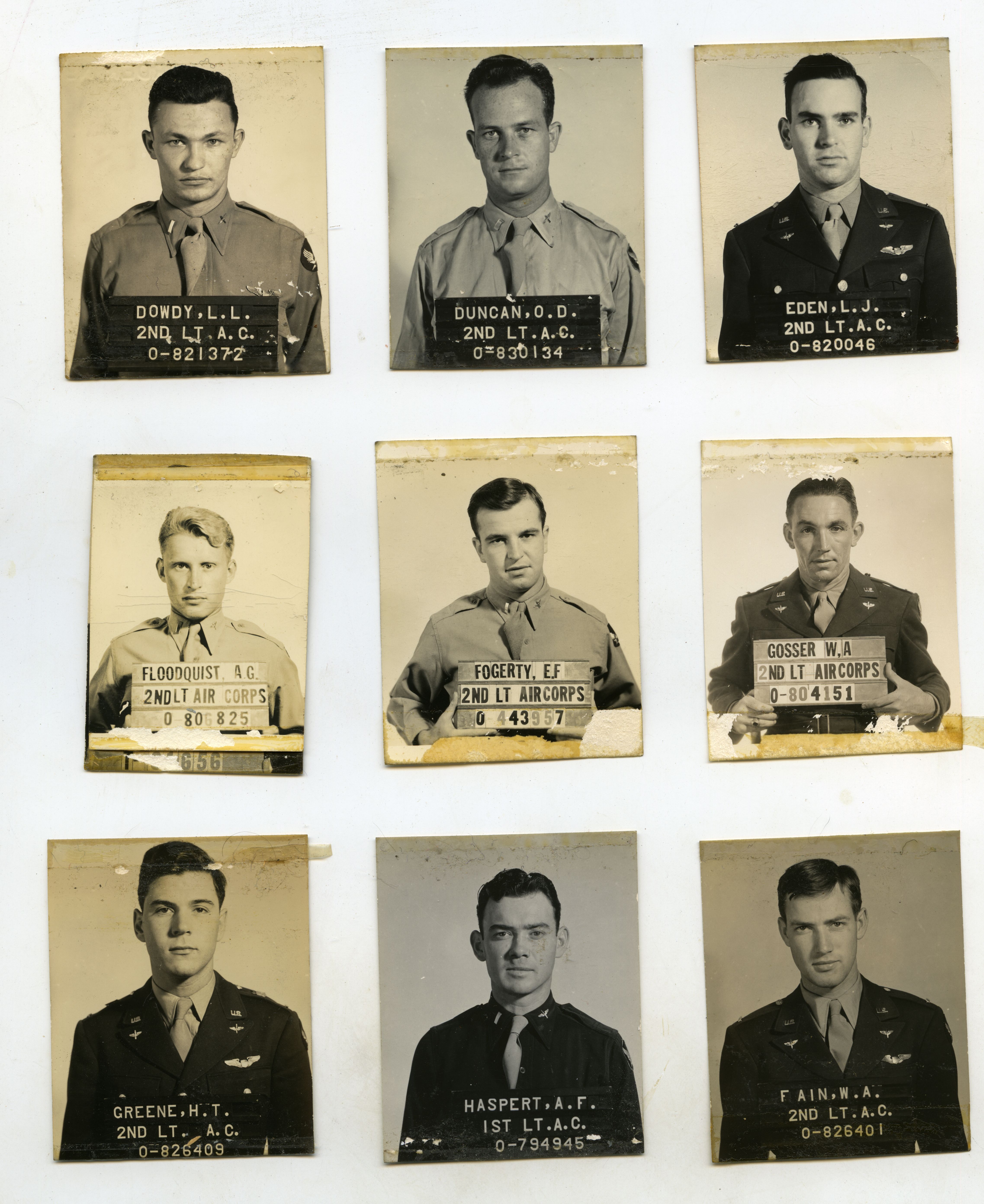
Remember having your second grade yearbook photo?  Yeah, I don’t either….. The same is true for WWII veterans who had their snapshots taken in front of numbered placards and blinding flashbulbs. Generally, these type of shots were taken of Army Air Corps and Marine Corps officers, but I’ve seen a few Navy portraits pop up on eBay on occasion.  In the case of tonight’s post, I’m specifically presenting US Air Corps officer ID photo which were compiled by an enterprising veteran(sadly unnamed) who collected shots of his friends and colleagues who trained with him as pilots in the early years of WWII.

Pilot103.jpg

General scan of type of photos in the collection: Scan 1

Each photo is unique and captures the airman with his guard down; a true snapshot portrait, these men and women had no idea that these photographs would be preserved for posterity.  Each one of these photographs has a story behind it…and each is worthy of an individual blog post.  Sadly, I don’t have the time or capacity to identify them all, and I look to the general public to track down shots of their ancestors. I will do my best to post the surnames of the officers in this post, but I need help…

Pilot083

Scan 2

Pilot113

Scan 3

Pilot093

Scan 4

Pilot123

Scan 5


output_RESBap

GIF of 40 US Army Air Corps Pilot Photos Identification Photos

Dogs of War: A Saint Bernard Mascot – 67th Coastal Artillery Company Veteran “Barney”


It’s been a long time since I’ve posted here to PortraitsofWar, so I’m taking a quick moment to add a recently acquired real photo postcard of a St. Bernard mascot from the 67th Coastal Artillery Company. He’s even sporting his own uniform!  Check out the 1st Army variant patch with the 67 denoting the unit number and a double overseas chevron for a year of service.  Good work Barney!

Mascot photos are one of my favorite avenues of WWI photo collecting. They are relatively hard to come by and are tough to research.  All the better for a unique challenge when trolling through the pages of eBay.


Barney the St. Bernard in WWI

Barney the St. Bernard in WWI

Women of the YMCA in WWI: Kittie Kunz’s Service in YMCA Hut 16


Material related to wartime (and postwar) activities of the YMCA can be easily researched through the help of internet databases, digitized books, collectors forums and various other digital avenues.  What is lacking, however, is information directly related to the individuals who volunteered their time and money to travel to a foreign county to serve donuts to war-weary doughboys waiting to return to their families in the US.

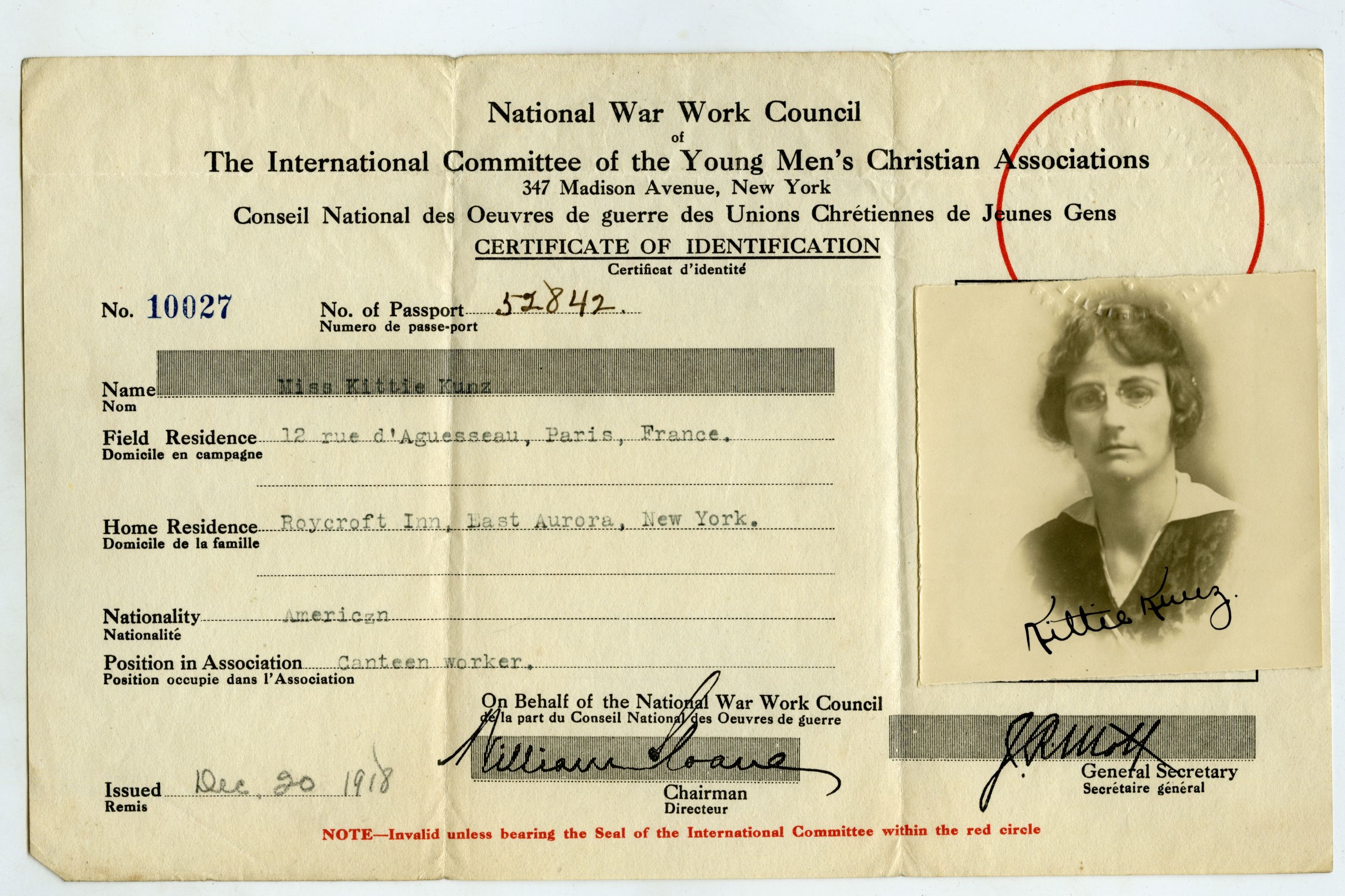
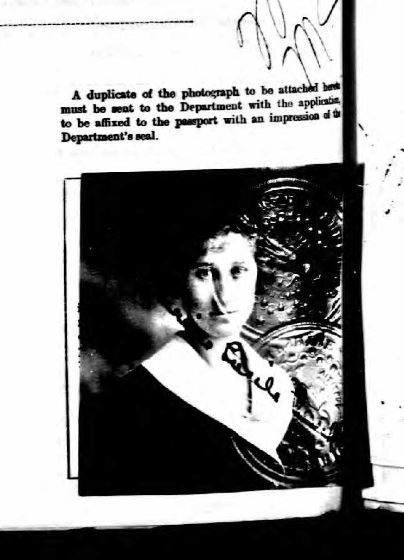
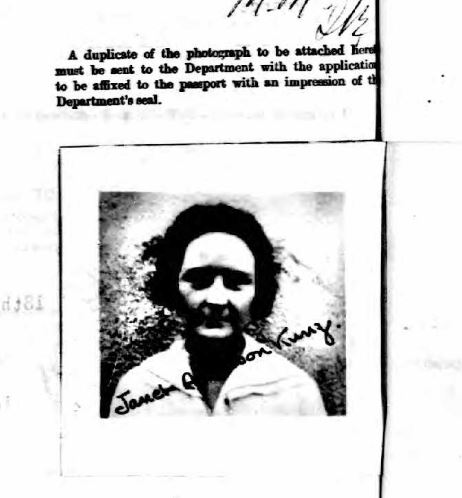
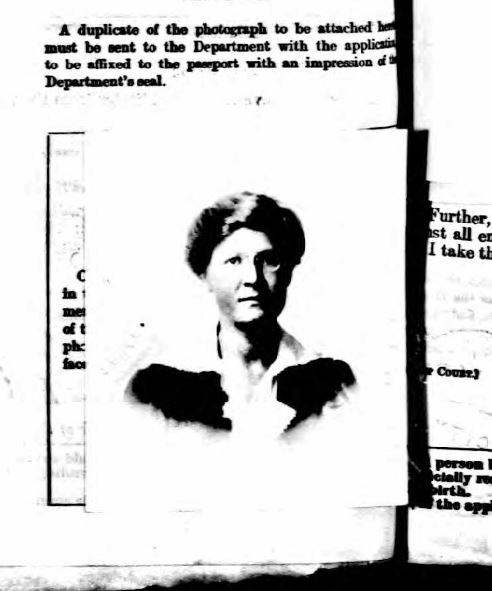
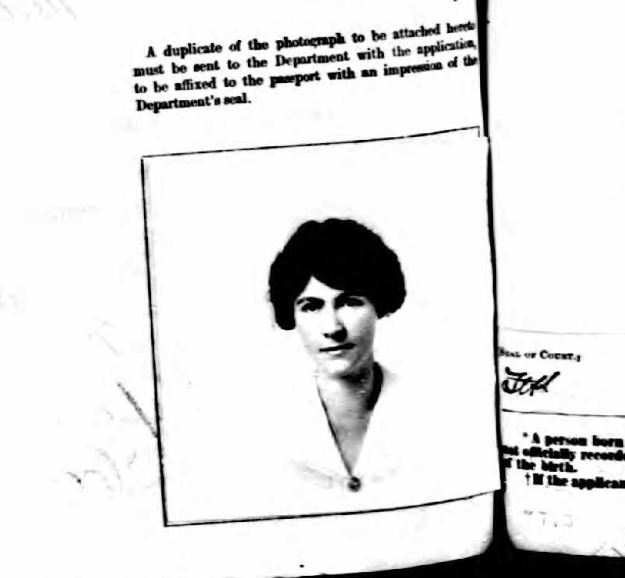
I was lucky enough to track down a large grouping of ephemera collected during the war by a YMCA canteen entertainer, a Miss Kittie Kunz.  Included in the grouping is a selection of rare YMCA “unit history” paperwork which gives names and identities to many of the women and men who served alongside Kittie.  I researched each of the names in hopes of tracking down passport application portraits.  I was overwhelmingly successful and found nearly 75% of the names in the US Passport database that matched perfectly.  Each was listed as being a member of the YMCA or Red Cross, and each matches the date range for the YMCA hut. A neat find!  Please read on to see the faces of the women who served alongside Kittie.  You will also find a smattering of hard-to-find ephemera related to the YMCA.  It’s amazing that Kittie saved some of these items.  Not all the paperwork is contained in this post, but the scanned material gives a quick glimpse into the typical material a YMCA canteen worker would deal with.

Kittie Kunz's YMCA ID

Kittie Kunz’s YMCA ID


Kittie's YMCA Paris Travel Permit

Kittie’s YMCA Paris Travel Permit

WWITruck077

Kittie’s YMCA Paris Travel Permit Reverse

Kittie's Permit to Travel to Reims

Kittie’s Permit to Travel to Reims

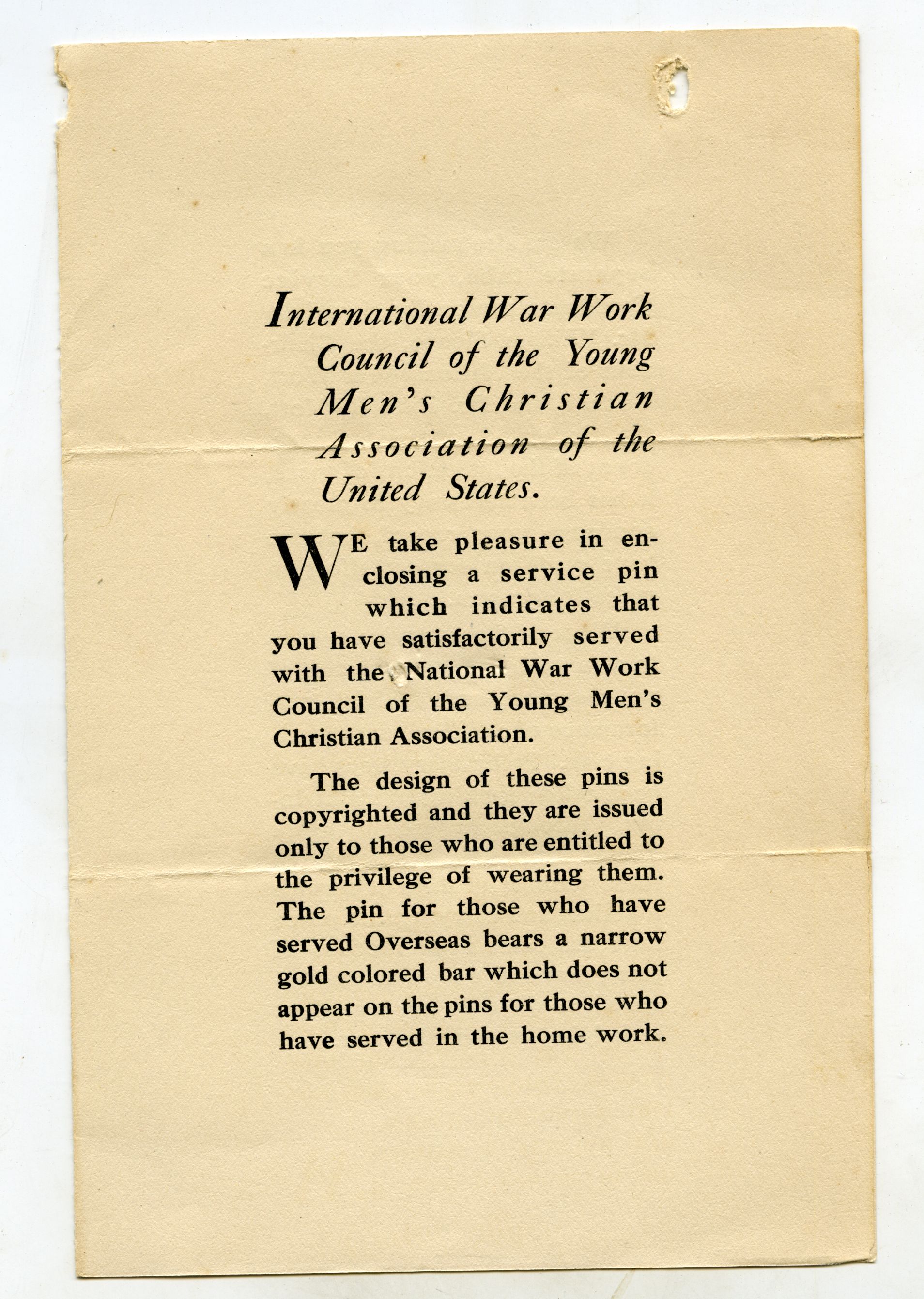
YMCA War Service Pin Card

YMCA War Service Pin Card

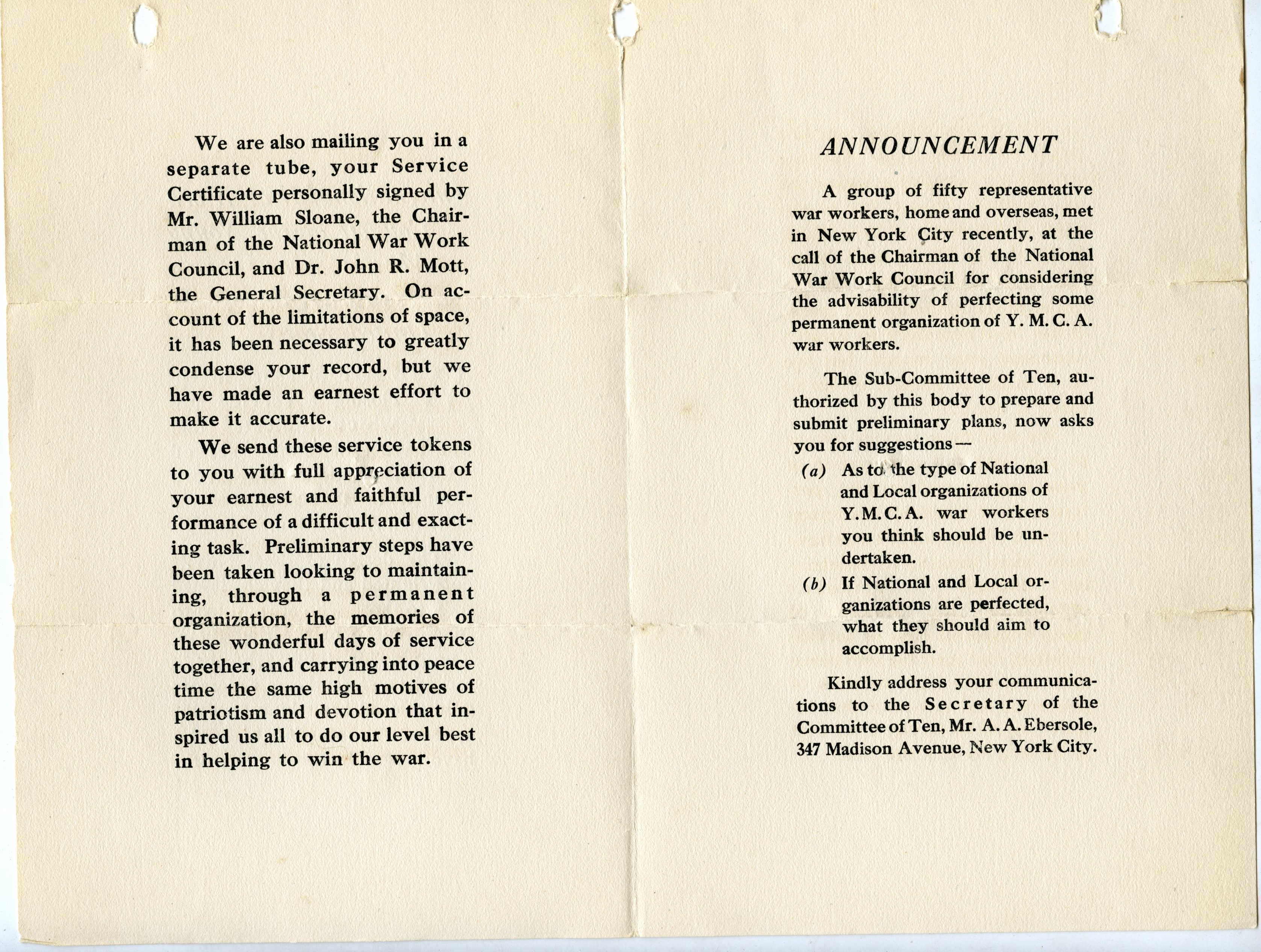
YMCA War Service Pin Card Interior

YMCA War Service Pin Card Interior

Tea Service Notice for the 28th Division

Tea Service Notice for the 28th Division


Here is where my favorite piece of researching WWI material came handy….. I was able to research the names of the women listed in the distribution section and track down their WWI era passport applications.  Here are my results:

YMCA Women

Miss Gertrude Garden - YMCA

Miss Gertrude Garden – YMCA


Miss Dorothy Berry - YMCA

Miss Dorothy Berry – YMCA

Harriet McKenzie - YMCA

Harriet McKenzie – YMCA

Margaret Robinson - YMCA

Margaret Robinson – YMCA

Katherine Parks - YMCA

Katherine Parks – YMCA


Janet Kunz - YMCA (sister to Kittie Kunz)

Janet Kunz – YMCA (sister to Kittie Kunz)

Kittie Kunz - YMCA

Kittie Kunz – YMCA

Pauline Brown - YMCA

Pauline Brown – YMCA


Mary Waden - YMCA

Mary Waden – YMCA

Dora Lewis - YMCA

Dora Lewis – YMCA

Katherine Beakes - YMCA

Katherine Beakes – YMCA

Cora A. Kennedy - YMCA

Cora A. Kennedy – YMCA


RED CROSS WOMEN

Lois Loyhed - Red Cross

Lois Loyhed – Red Cross

Harriet Maxon - Red Cross

Harriet Maxon – Red Cross

Dorothy Peters - Red Cross

Dorothy Peters – Red Cross

Alice McCoy - Red Cross

Alice McCoy – Red Cross

Esther Edmondson - Red Cross

Esther Edmondson – Red Cross

Mary Jones - Red Cross

Mary Jones – Red Cross

Eleanor Little - Red Cross

Eleanor Little – Red Cross

Mary Healy - Red Cross

Mary Healy – Red Cross

A Mormon Missionary in WWI: Battling Influenza in American Samoa


Byron Miller in World War One

Byron Miller in World War One

When searching for new portraiture to add to PortraitsofWar I generally tend to look for material with identifiable soldiers, uniforms, medals and other researchable information to help shed light on life during wartime.   In this post, I will be researching a photograph of a US Navy sailor who caught my eye during a recent eBay search.

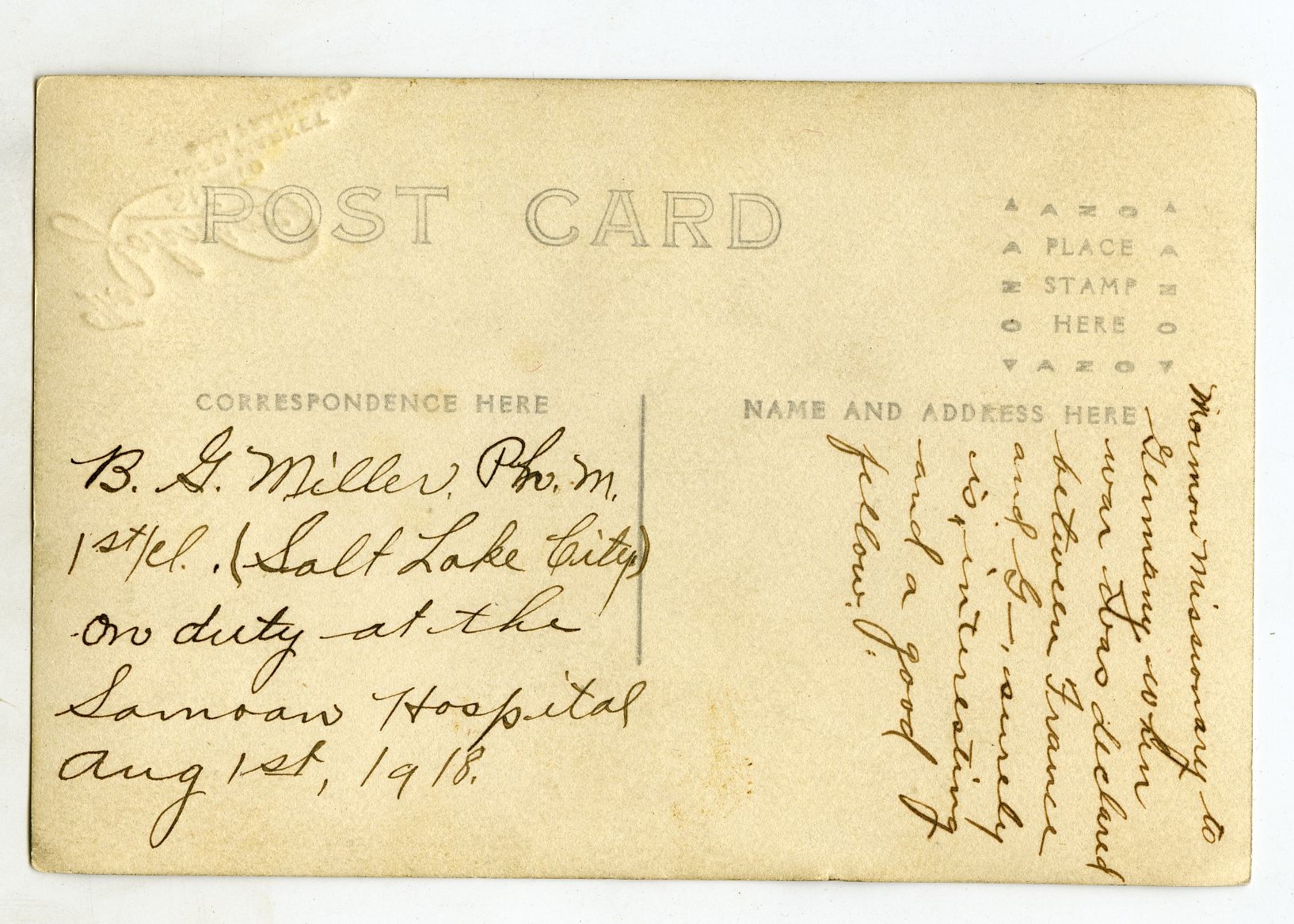
Reverse Side of Postcard

Reverse Side of Postcard

The information written on the back of the postcard shows an identification of the sitter as a B.G. Miller.  He is identified as being a Pharmacist’s Mate 1st Class from Salt Lake City, Utah who was on duty at one point at a hospital in Samoa on August 1st, 1918.  Additional info added to the photo includes an anecdote about his position as a Mormon missionary in Germany during the breakout of the war between Germany and France.
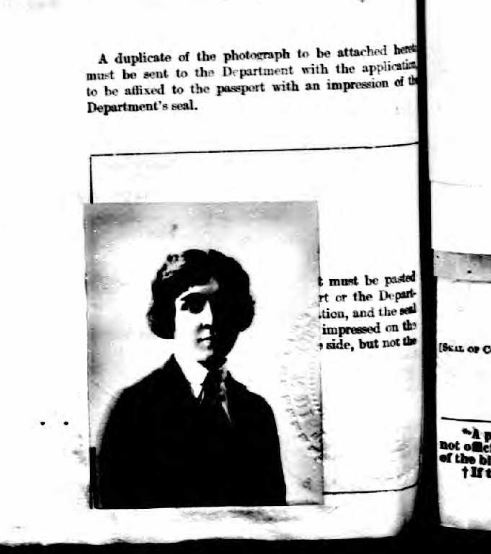
With a little luck and a lot of research I was able to track down our mysterious B.G. Miller.  Byron Gardener Miller was found listed in the Utah World War 1 Military Service Questionnaire on ancestry.com.  Please see his card below:

Byron G. Miller in WWI

Byron G. Miller in WWI

It looks like Byron attended the University of Utah for a year before being shipped off for his overseas missionary work. This is likely the reason for his service as a Pharmacist’s Mate with the US NAVY as can be seen in the details of his uniform.

Navy Pharmacist's Rate Patch

Navy Pharmacist’s Mate Rate Patch

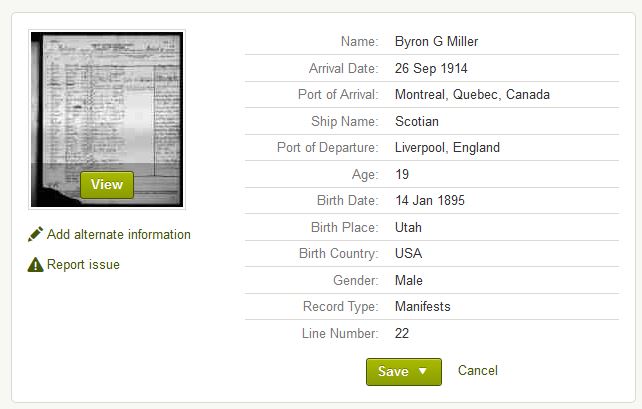
The reference to his missionary service in Germany during the outbreak of war in July of 1914 is partially confirmed through my discovery of his listing aboard a ship ledger arriving in Montreal, PQ in September of 1914.

1914

His service in Samoa has also been confirmed through the same series of records.

sssonomoa

Sadly, his arrival back in the US in 1919 wasn’t likely a time of joy for the Miller family; a Utah death certificate shows that he died of influenza only a few months later on February 7th, 1920.  Interestingly enough, my research into the US Hospital in Samoa shows that a MASSIVE flu outbreak in the Samoan Islands lead to the deaths of nearly 25% of the population.  The US Navy set up an epidemic commission to deal with the issue.  The results of the intervention in American Samoa were incredible.  Apparently the method of using maritime quarantine lowered mortality rates to nearly 1%.  It’s strange that Byron would die of influenza only a few months later while in the United States……

For the 1919 report please CLICK HERE

1920 Death Certificate

1920 Death Certificate

One of the main goals of this website is to help share photos and pertinent military service information with the families of the men and women depicted in the images I collect. In this case, I’m hoping a Miller family representative will discover a rare image of their ancestor who witnessed a formative time in history.

WWII Photo – Lancaster, PA WWII Veteran Portrait Photos on Display, 1944


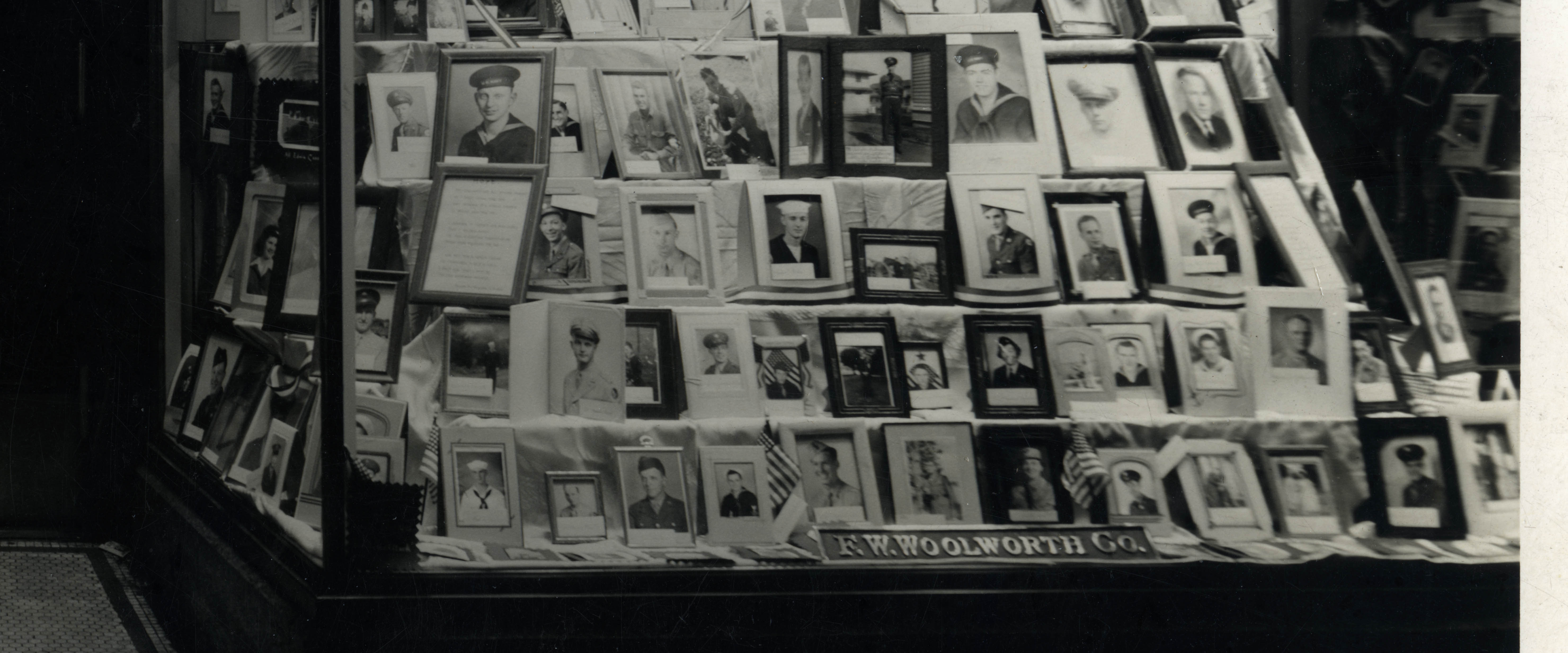
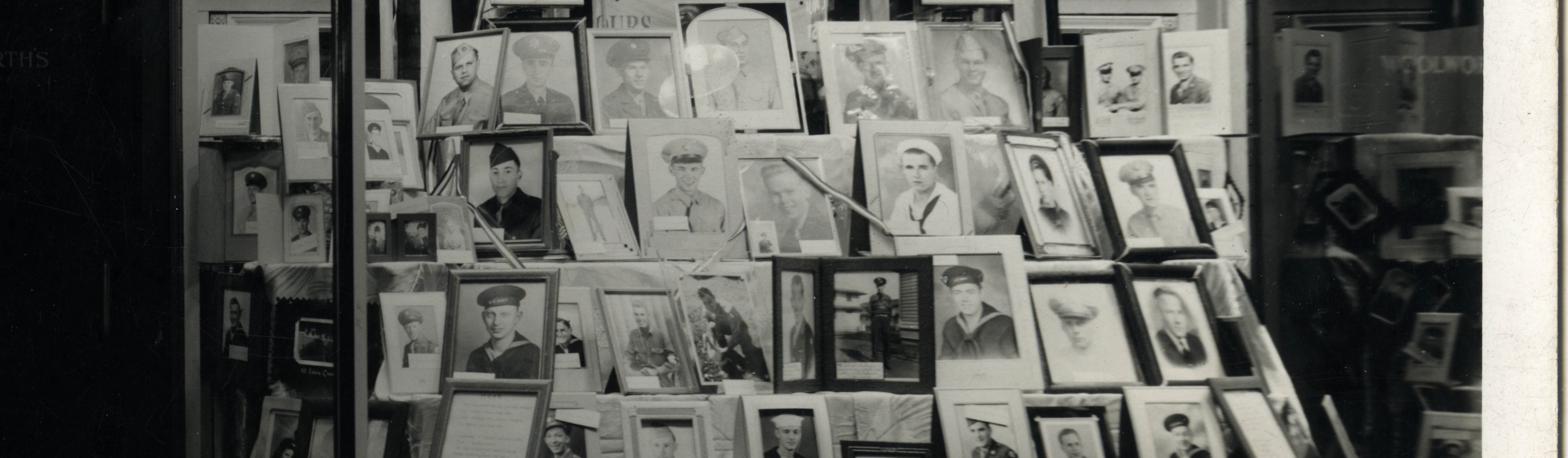
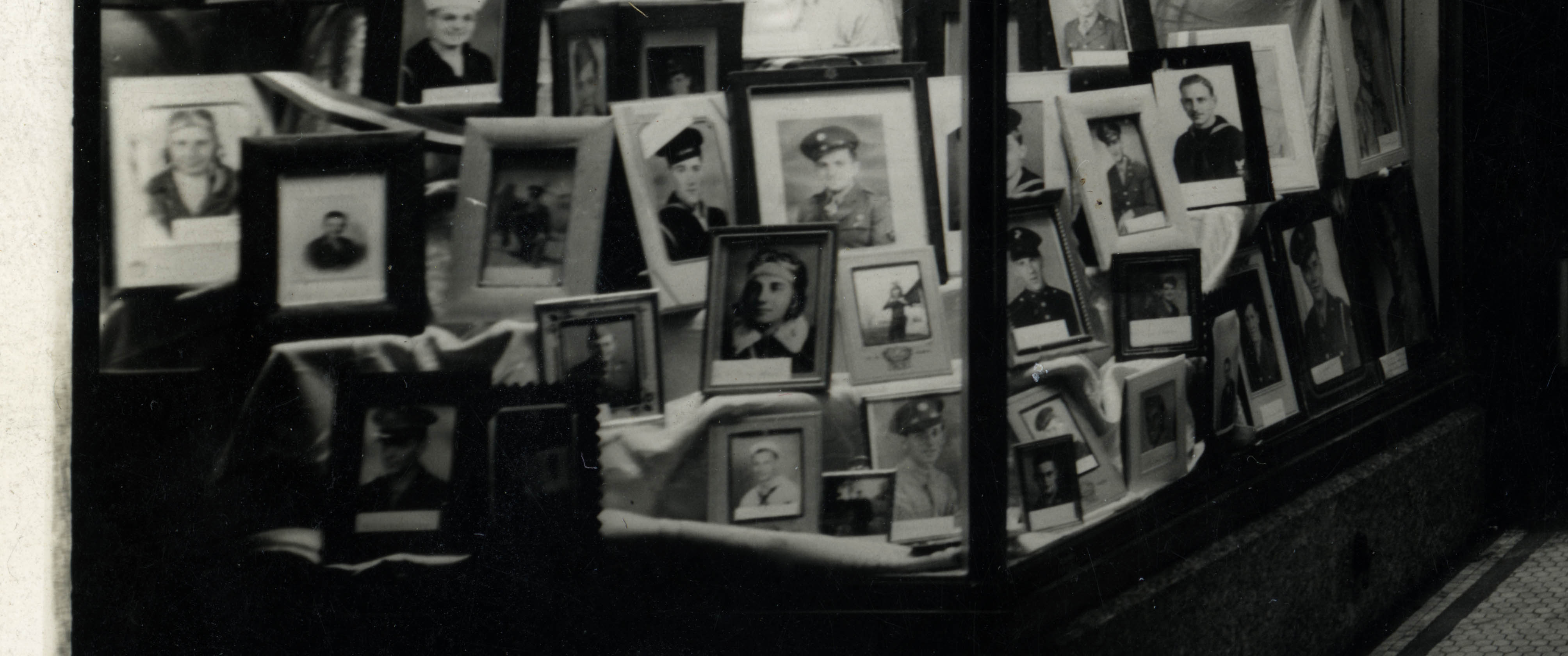
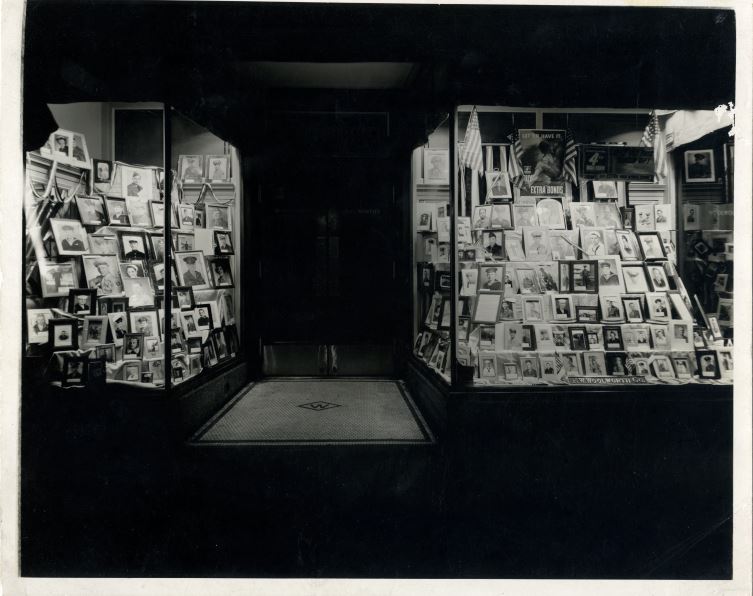
Straight from the dusty PortraitsofWar archives comes an incredibly unique 8×10 photo of a window display in Lancaster, Pennsylvania during World War Two.   I typically shy away from purchasing and posting “press photos” taken during the war, but this shot has so much potential research  that I felt it deserved to be digitized.

Lancaster, PA WWII Portrait Photo Display

Lancaster, PA WWII Portrait Photo Display


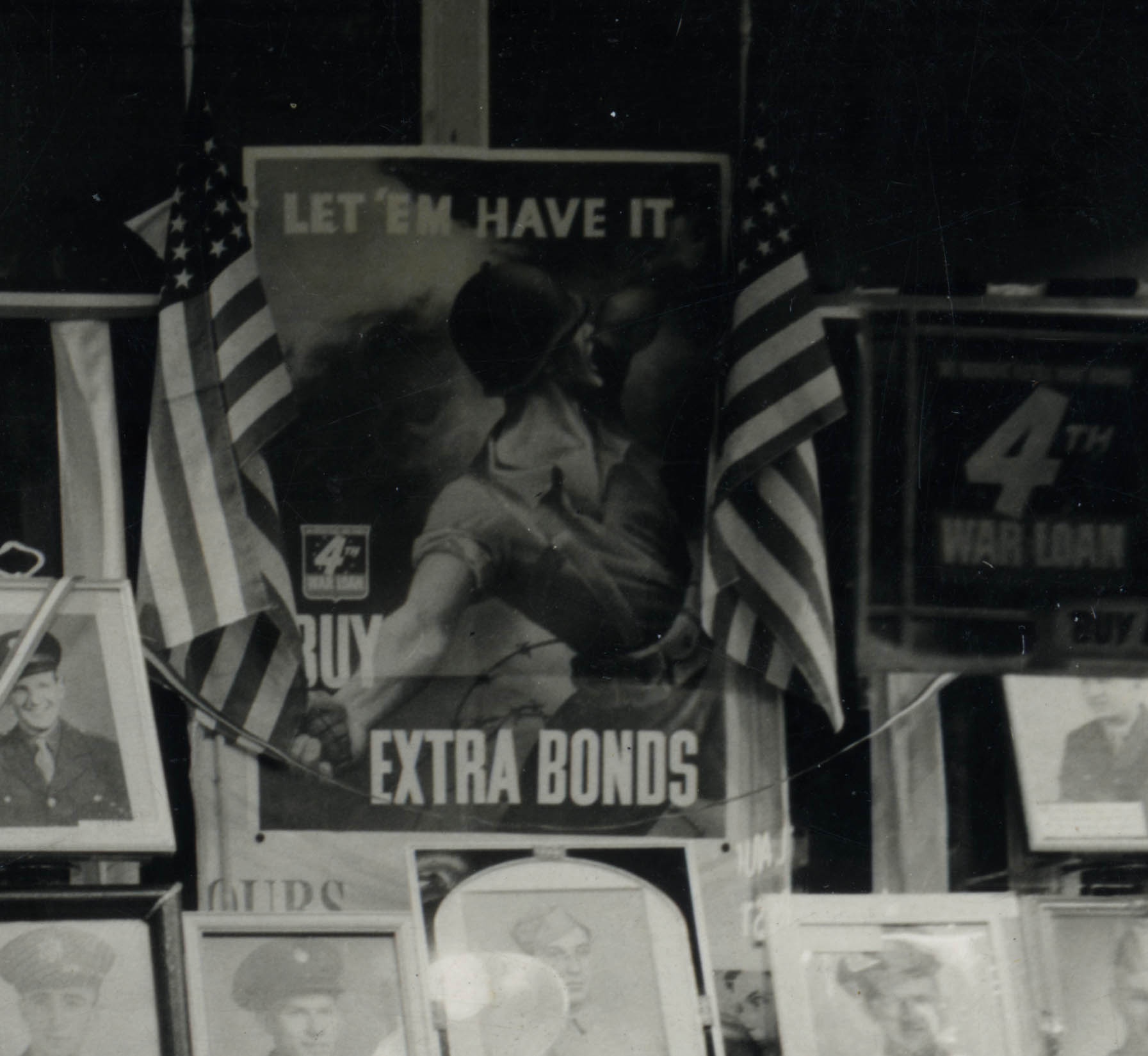
I purchased this photo while visiting a friend in the Philadelphia area.  The reverse side of the photo identifies the photo as the F.W. Woolworth building in Lancaster, PA.  The store identity is confirmed in the image; the tiled entrance and gilded placard identify the establishment as such.  The date of the photo wasn’t noted, but the presence of the 4th Liberty Loan Bond dates the image to 1944.

vehicle047abcdef

4th War Loan Drive Poster, ca. 1944

My guess is that the store asked for portrait photos of local veterans to post in the storefront.  A rough estimate puts the number at 100 portraits visible in the window.  The shots runt he gamut of WWII service branches, including the Marine leathernecks, Army Air Force pilots, female WAC and Waves, Navy Sailors as well as regular Army soldiers.


4th Loan Poster

4th Loan Poster

I plan on contacting a number of Lancaster, PA historical societies, veteran groups and newspapers in hopes of identifying a few of the veterans posed in the Woolworth’s window.

vehicle047abcdefghi

vehicle047abcdefgh

vehicle047abc

vehicle047ab

vehicle047a

Moving WWII Candid Snapshot – The FFI Free French and Captured Female German Collaborators


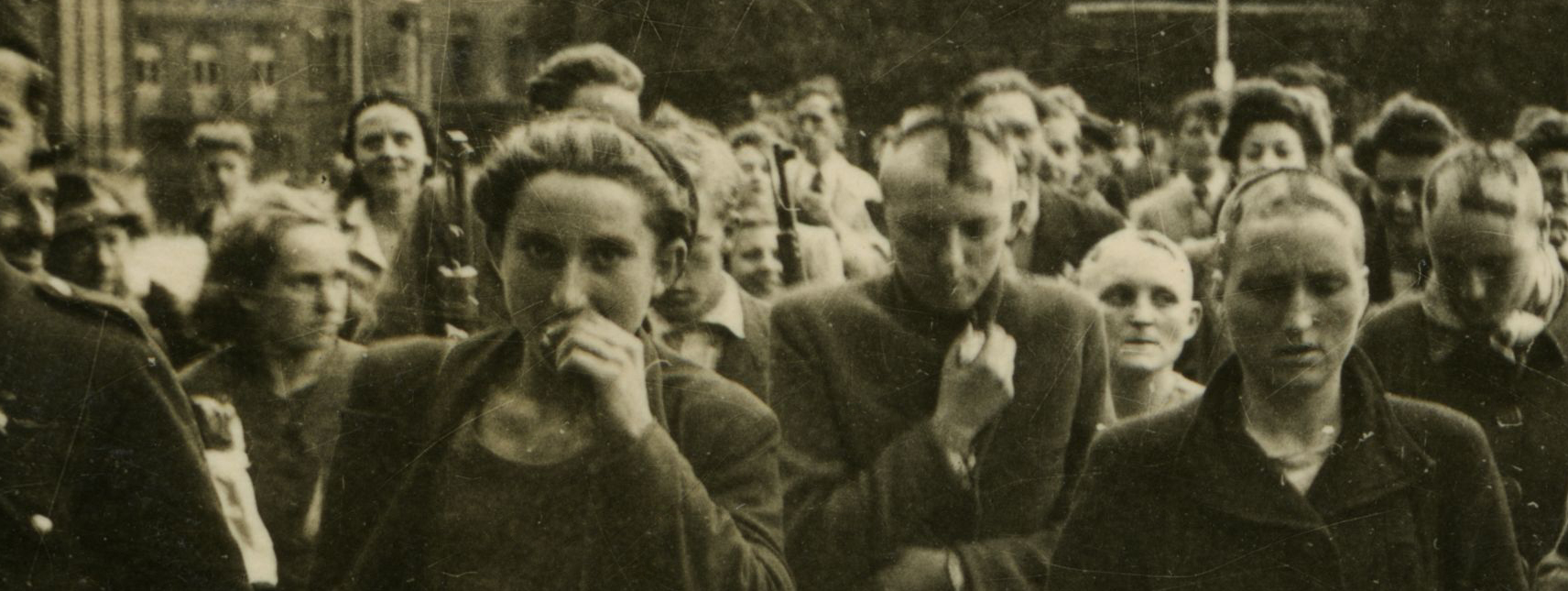
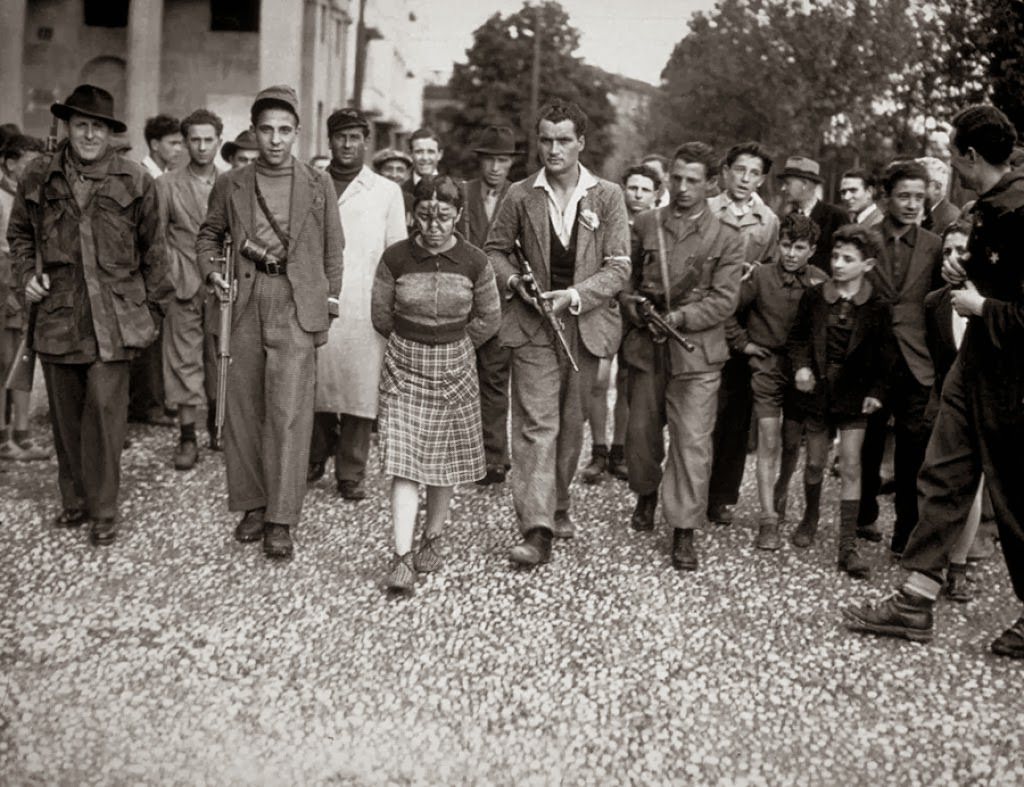
This incredibly moving snapshot from my WWII collection captures a wide range of emotions.  The only identification I have for the photo is that it was taken in a town/village/city named Poules during the tail end of the war. A US GI followed a joyous parade of French citizens and Free French (FFI) underground soldiers as they proudly walk down the streets of their newly liberated city. It’s a photo that speaks volumes.

German Collaborator Parade

German Collaborator Parade

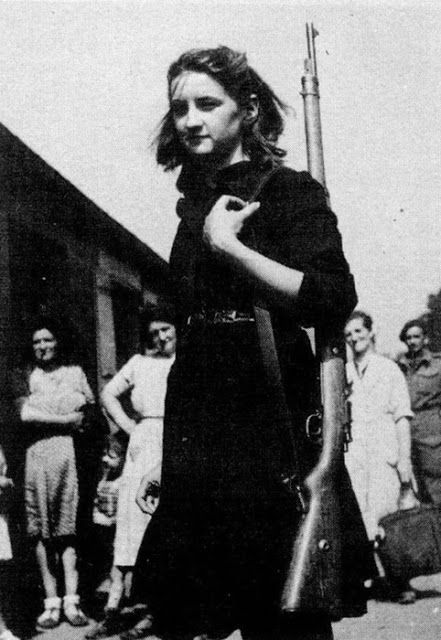
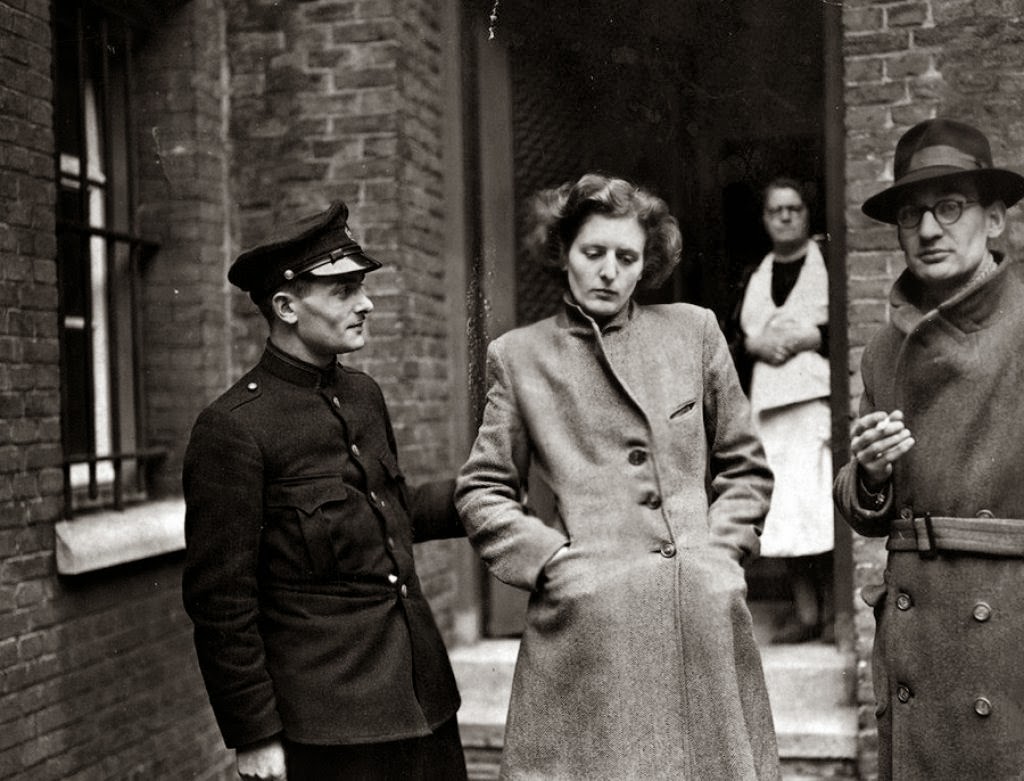
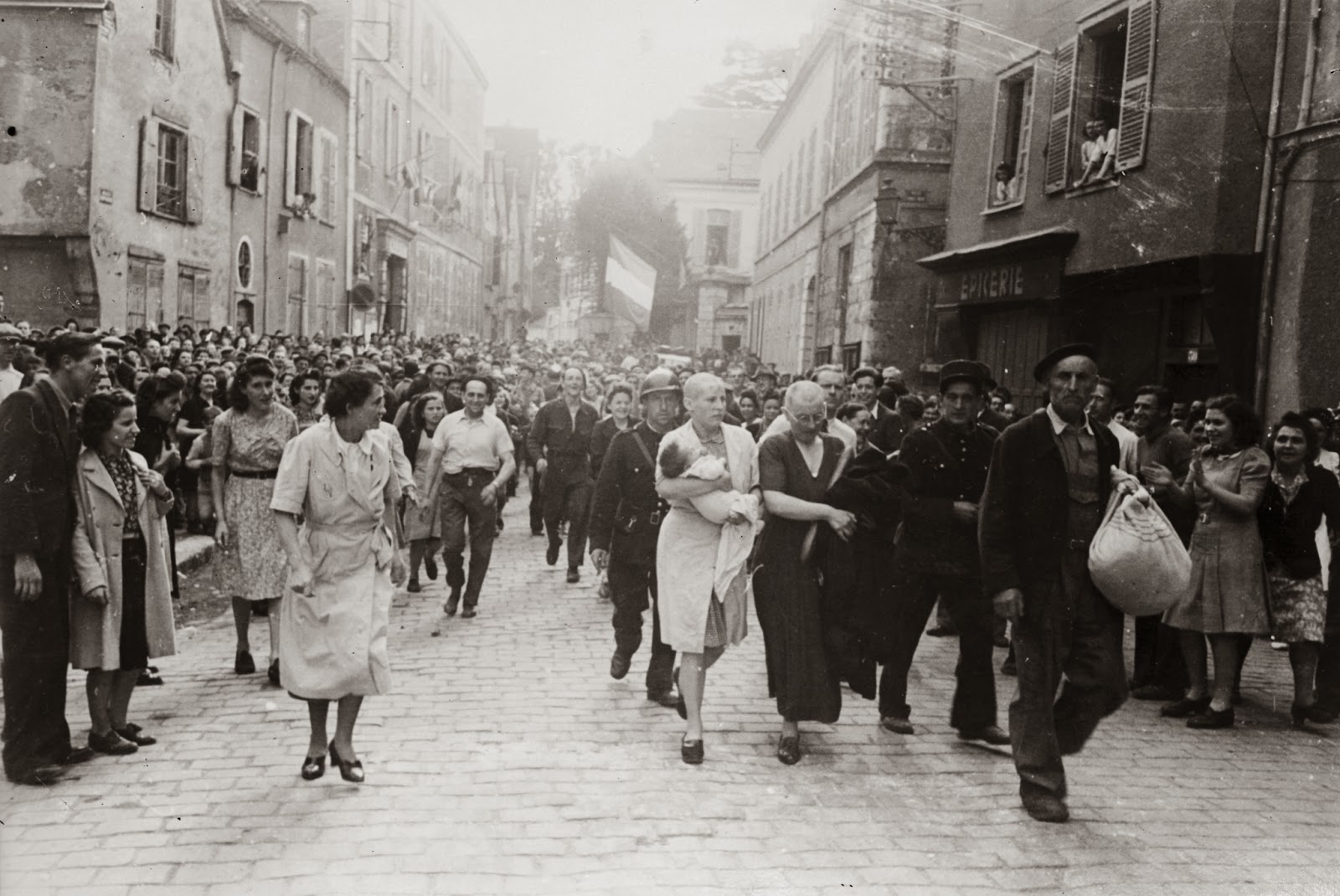
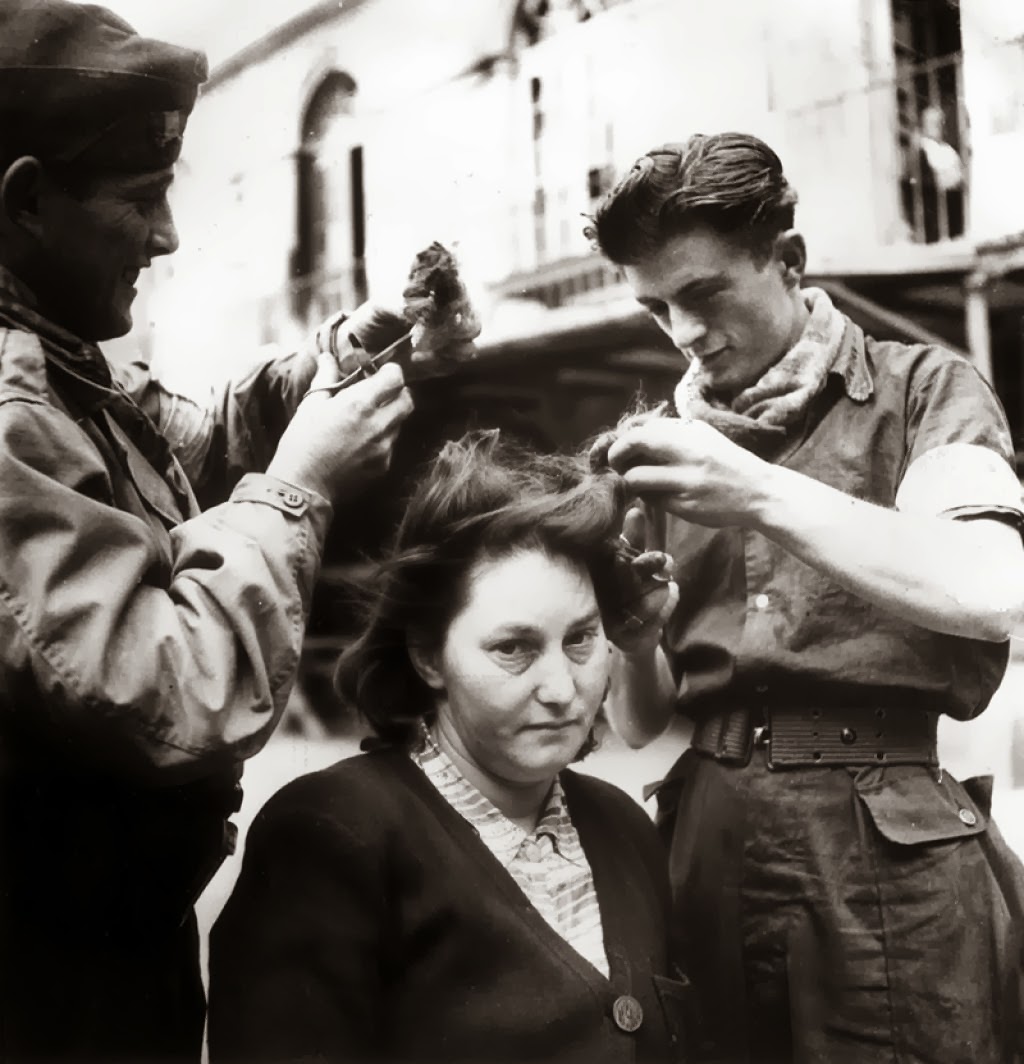
After nearly four years of German occupation, a contingent of the French population were eager to fight back against the oppressive rule of their German visitors. In this post’s main photo we see a young, attractive female underground soldier causally smoking a cigarette, toting German “potato masher” stick grenades while holding a captured German rifle and briefcase.  To her left we see a group of young French women who have been publicly shamed.  Their shaved heads were shaped to show a swastika.  A joyous moment for the FFI, yet a horrible moment for the women who were caught up in the frenzy of the German occupation.  This photo has never been digitized for display on the web. You’re the first to see it!

Collaborator Parade

Collaborator Parade

FFI Female Underground Soldier

FFI Female Underground Fighter

US Signal Corps Footage of Collaborator Hair Cuts

Similar Photos From the Web

Another hero of the French Resistance during World War II and decorated for saving the lives of U.S. soldiers shot down behind enemy lines was Micheline Blum-Picard. Only eighteen-years-old when she first became involved in the Resistance, Blum-Picard started by carrying messages taped to her back and then progressed to photographing inside factories damaged by bombing raids By D-Day, however, she was carrying a rifle, a pistol, and a hand grenade wherever she went.

Another hero of the French Resistance during World War II and decorated for saving the lives of U.S. soldiers shot down behind enemy lines was Micheline Blum-Picard. Only eighteen-years-old when she first became involved in the Resistance, Blum-Picard started by carrying messages taped to her back and then progressed to photographing inside factories damaged by bombing raids By D-Day, however, she was carrying a rifle, a pistol, and a hand grenade wherever she went. inyourfacewomen.blogspot.com

Female French Resistance

Female French Resistance

World War II resistant woman fighter - Paris,1940s photograph the New York Public Library Picture Collection

World War II resistant woman fighter – Paris,1940s photograph the New York Public Library Picture Collection

Member of the French resistance with German tunic and thompson machine gun by Jo Hedwig Teeuwisse, via Flickr

Member of the French resistance with German tunic and thompson machine gun by Jo Hedwig Teeuwisse, via Flickr

A French woman has her head shaved by civilians as a penalty for having consorted with German troops, 1944 2

A French woman has her head shaved by civilians as a penalty for having consorted with German troops, 1944 4

A French woman has her head shaved by civilians as a penalty for having consorted with German troops, 1944 5

A French woman has her head shaved by civilians as a penalty for having consorted with German troops, 1944 6

A French woman has her head shaved by civilians as a penalty for having consorted with German troops, 1944

My 200,000th Viewer Post! – Remembering My Grandfather, Ambrose R. Canty, 777th Tank Battalion, 69th Division


Today I quietly celebrated my 200,000th blog view from my desk at work.  I knew the number was coming, and with nearly 300 views a day I was able to predict that the 200k plateau would be reached this week.  What should I write about on this momentous day?  I thought back to all my favorite posts…….

Ambrose R. Canty ca. 1944

Ambrose R. Canty ca. 1944


With all those topics in mind I kept coming back to the one man who “brought me into the fold” of researching WWII history.  My grandfather.  Ambrose R. Canty taught me from a young age that you should respect your elders, listen to their stories, as well as how to play poker, pitch, bridge, rummy and pocketknife baseball.   He also told me stories of his experiences during the second world war.  Stories that would be gradually elaborated on as I grew older.  Having spent the majority of my youth with him, I was able to learn a lot about the 69th Infantry Regiment and specifically the 777th Tank Battalion.

Ambrose on Furlough, 1944

Ambrose on Furlough, 1944

My interest in WWII history started with my grandfather, and I feel that on my 200,000th view that I should post a rememberance post to him.  Although he passed away nearly five years ago, I still feel a connection with him.  My early interaction with him live on through this website, and I hope I’m able to help pass on the passion Amby imbued in me at a young age.

Amby (second from right) Holds a Captured German Flag in Leipzig

Amby (second from right) Holds a Captured German Flag in Leipzig

Grampy, thanks for everything.


Ambrose Washing in His Helmet, Germany 1945

Ambrose Washing his Mess Kit, Germany 1945

777th Reproduction WWII Patch

777th Reproduction WWII Patch


And his 2009 Obituary:

telegram.com

Ambrose “Amby” Richard Canty

Published Tuesday September 1, 2009 at 12:01 am

Ambrose �Amby� Richard Canty of 26 Roosevelt Dr. in Southbridge, died Sunday, August 30th, 2009, at home in the company of his family.

He leaves his wife of 55 years, Mary J. (Damian) Canty; 7 children: Ambrose �Amby� R. Canty Jr. and his wife Sandra of Davenport, IA, Anne P. Canty of Port Orange, FL, Jane E. Gauthier and her husband Richard of Southbridge, Joan R. Murphy and her husband Donald of Worcester, MaryLynne Deshaies and her husband Gerald of Sturbridge, John D. Canty and his wife Kimberly of Webster, and Kathryn M. Canty of Redondo Beach, CA; 12 grandchildren: Adam, Matthew, David, and Tom Canty of Davenport IA, Christhanha Canty of Port Orange FL, Brennan and Connor Gauthier of Southbridge, Maria and Anna Murphy of Worcester, Cailyn, Ryan and Kelsey Canty of Webster, MA; and many nieces, nephews and great grandchildren. He was predeceased by his 6 brothers and 7 sisters.

He was born in Webster, one of fourteen children of Patrick and Anne (McCauley) Canty. He lived in Webster and Southbridge all his life. He graduated from Saint Louis High School in Webster, was a graduate of Holy Cross College in Worcester, and received a Masters Degree in Social Work Administration from Boston College. He was an accomplished athlete lettering in 3 varsity sports at St. Louis High School: Basketball, Baseball and Track. He also played semi-pro football for the Webster Colonials, and refereed and coached basketball teams at various levels for many years, including a championship basketball team with 5 of his daughters and several nieces.

He proudly served in World War II as a member of the United States Army�s 69th Infantry Division from 1944 to 1946. The division rescued a sub-camp of the Buchenwald concentration camp in Leipzig, Germany and is recognized as a �Liberating Unit� by the US Holocaust Memorial Museum. He was a member of the Webster-Dudley American Legion Post # 184.

Ambrose served as the Webster Public Welfare Director for 16 years and the Massachusetts Director of Public Welfare in Worcester for 20 years before retiring. He was a member of St. Mary�s Parish in Southbridge and a member of the Webster-Dudley Knights of Columbus. He also served on the Massachusetts Mental Retardation Board, and as a member of the Tri-Area Fresh Air Program.

The funeral, with full military honors, will be held on Friday, September 4th with a Mass at 12:00 PM at St. Mary�s Church, 263 Hamilton St., Southbridge. The burial will be at Oak Ridge Cemetery in Southbridge. The Webster-Dudley Veterans Council will perform military honors. There will be no calling hours. Following the burial, the family will receive friends and relatives at the �12 Crane St.� banquet facility in Southbridge. Funeral arrangements are under the direction of Daniel T. Morrill Funeral Home in Southbridge.

In lieu of flowers, memorial donations may be made to the St. Mary�s Parish Ministry Center Completion Campaign, 263 Hamilton St. Southbridge, MA 01550.

morrillfuneralhome.com

http://www.telegram.com/article/20090901/OBIT/909010312

WWI Patched Studio Photo: Corporal Harold Dannhorn, Illinois WWI and WWII Veteran of the 86th Division


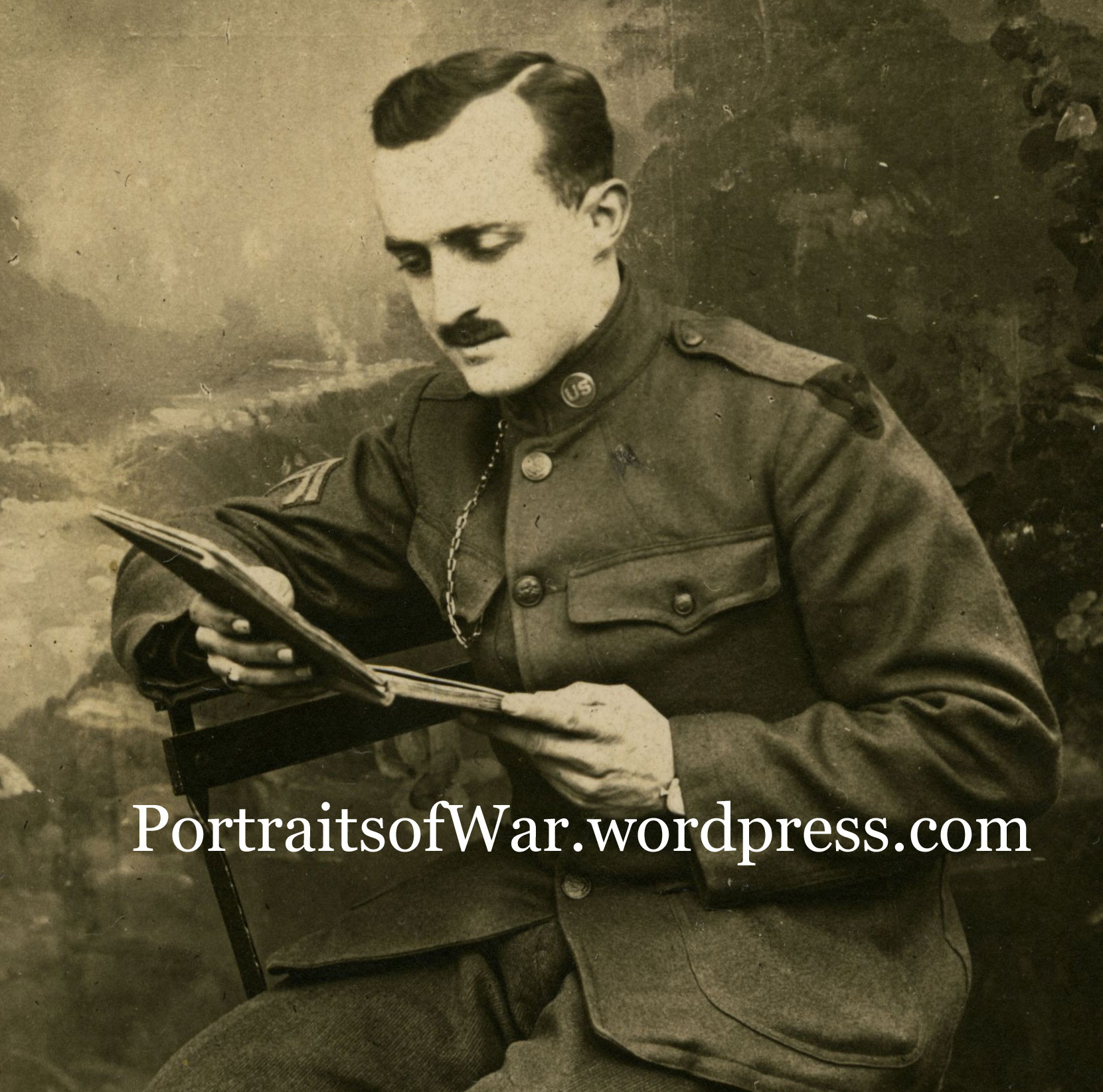
Harold Dannhorn Reads a Book in France

Harold Dannhorn Reads a Book in France

Corporal Dannhorn served in the HQ Company of the 343rd Infantry Regiment of the 86th Division while stationed in France before being switched over to the 256th Prisoner of War Escort Company #256 during the Occupation of Germany.  Here he poses in a studio in Menton, France on February 20th, 1919.


Veteran Gravestone Registration

Veteran Gravestone Registration


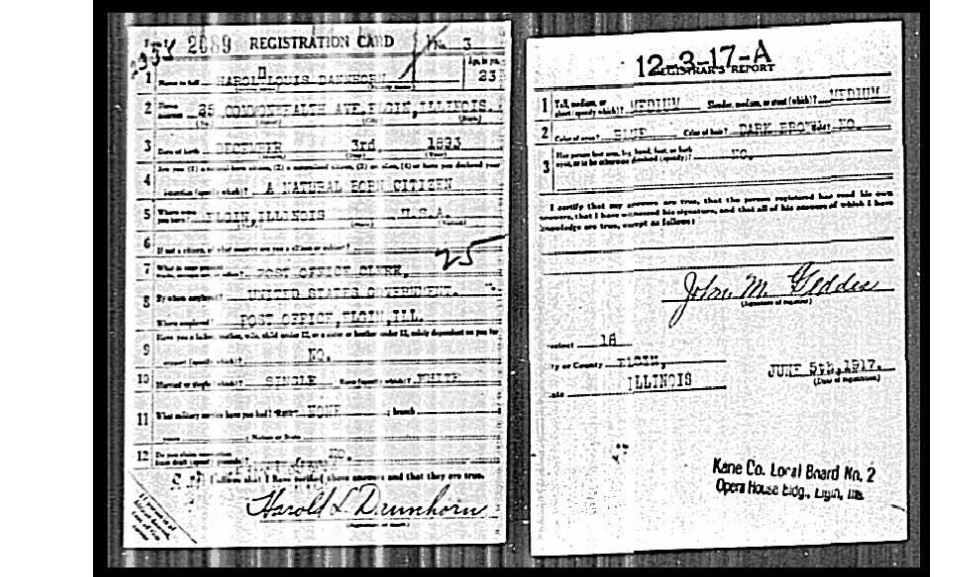
WWI Draft Card

WWI Draft Card


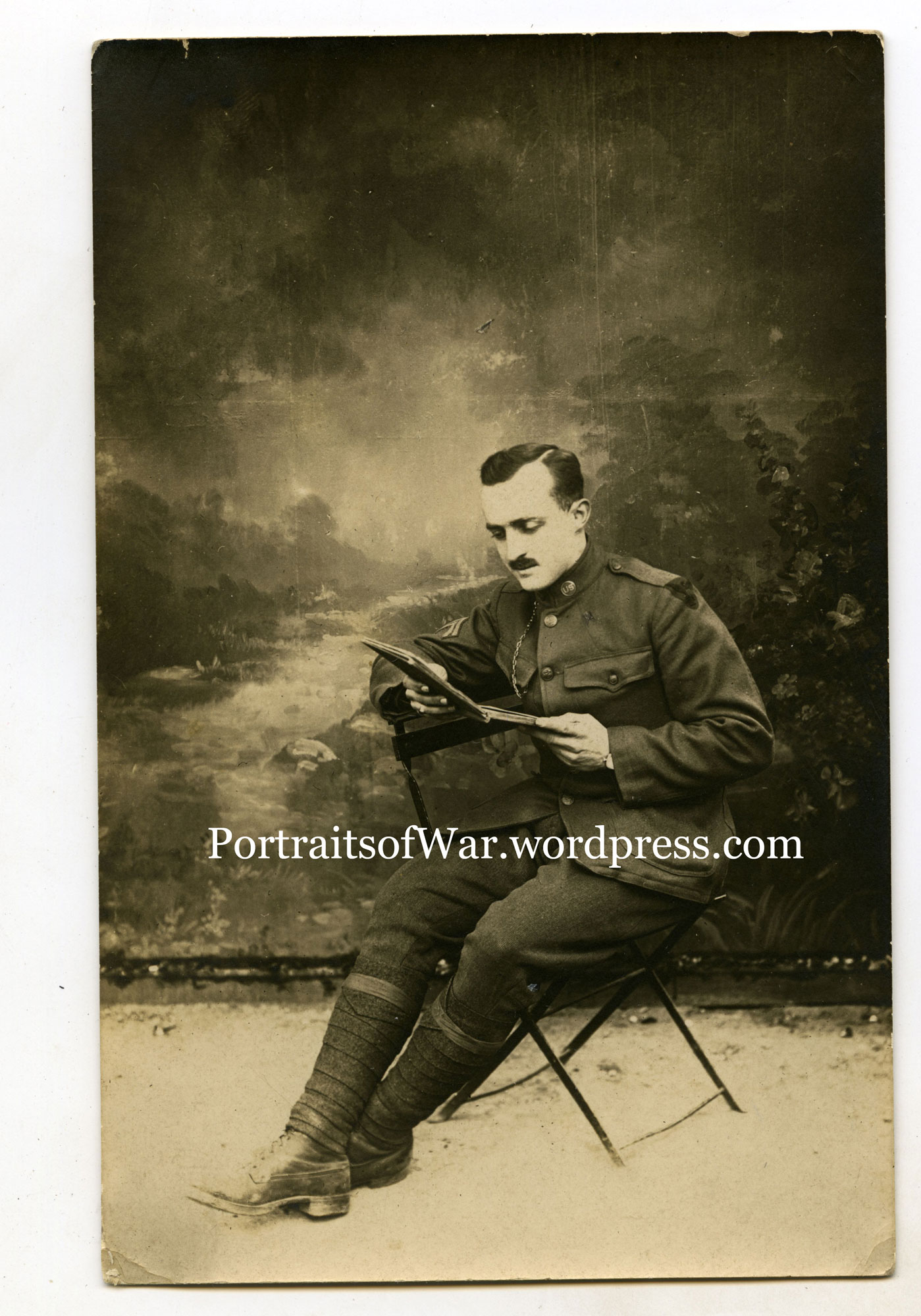
Uncropped RPPC

Uncropped RPPC

86thPOWEscort320