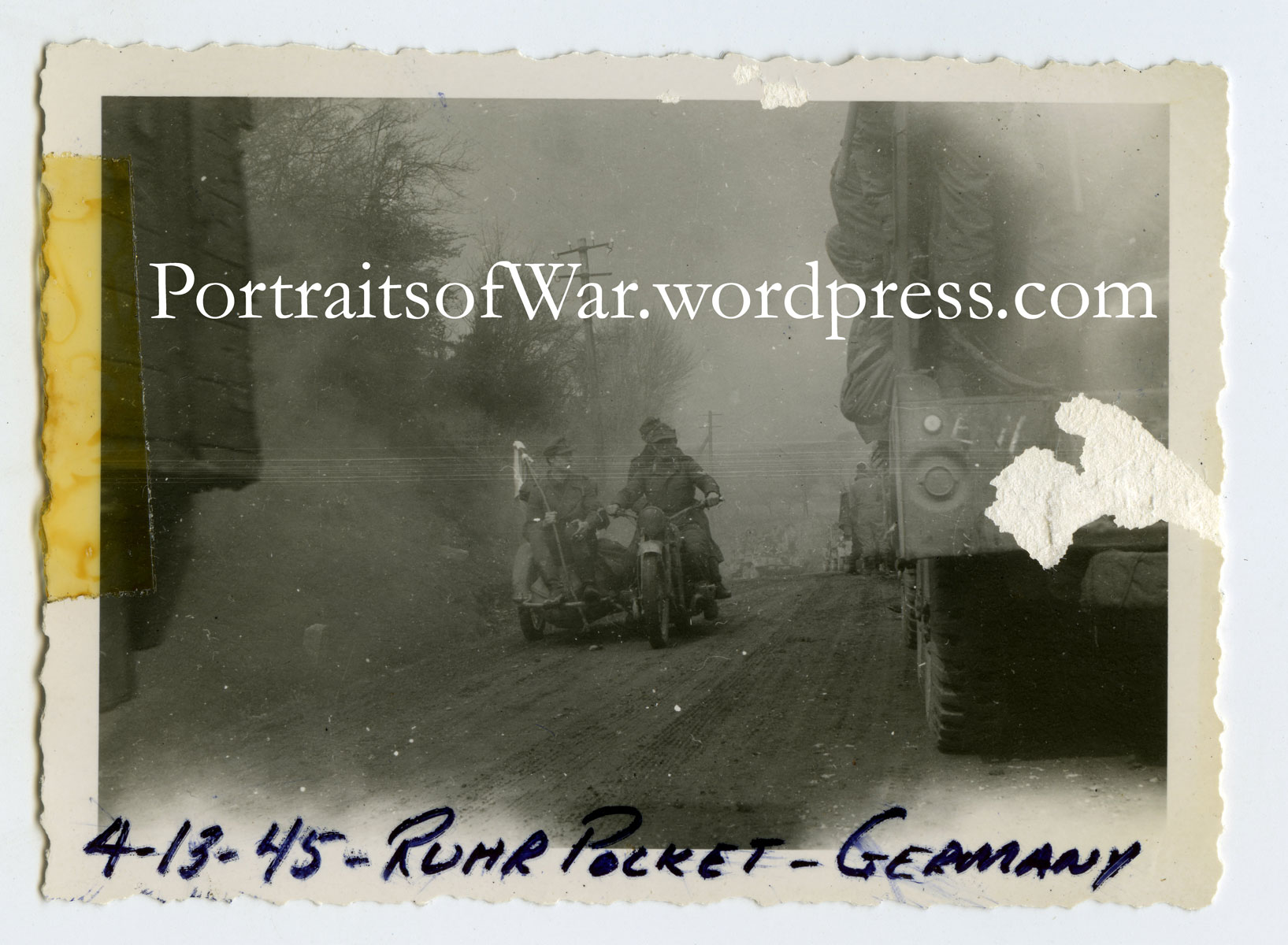
Snapped by a man named Earl Reese, a member of the 395th Infantry Regiment of the 99th Division.
Snapped by a man named Earl Reese, a member of the 395th Infantry Regiment of the 99th Division.

Have you ever wondered what the difference is between an old photo and an historic photo? Context.
Photograph collections are often unknowingly hidden away or discarded by people in the modern day due to the influx and influence of modern digital camera technology. Family photo albums are stored in attic crawlspaces by distant relatives with no sense of stewardship or preservation. The stories of thousands of American families are discarded at the local dump each year, losing context and supporting documentation that could help historians piece together stories of the distant (or not so distant) past.
A good example of the value of context when interpreting vintage photography comes from a collection of WWII photographs and negatives a colleague of mine and I purchased from an online auction house (ok, it was eBay) back in 2010. This case study lead me across the globe, a generation gap, and even landed me a few friends along the way.
For this story, we need to travel back to January of 2010. The dark winters of Vermont are a good time to surf the web and make online purchases. For someone who generally dislikes the cold, I tend to spend the majority of the winter season indoors. One night I found a spectacular grouping of WWII photography online, placed a bid, and soon awaited the arrival of a new group of 200+ B/W photos from a seller in Pennsylvania.
The photos contained some interesting content; typical European Theater post-combat photography complete with knocked out German armor, captured enemy weapons, snapshots of friends and family as well as the occasional scenery photo. Judging by the rainbow shaped shoulder insignia worn in many of the photos, I soon came to realize that the photos were from a member of the 42nd Rainbow Division. Shots of trucks and jeeps provided the regimental and company designation. The 222nd Anti-Tank Company of the 42nd Division.
It’s uncommon to narrow down a photo grouping to a specific regiment, let alone a company. I quickly emailed the online dealer who sold the photos and asked for more information regarding the collection. He provided me with the name of the veteran who took the photos as well as an offer to purchase all of the original negatives from the collection. One week and $125 later I had the negatives and a copy of the veteran’s obituary.
Edward “Eddie” Majchrowicz of West Hazleton, PA served with the 222nd Anti-Tank Company of the 42nd “Rainbow Division” during WWII. He was a professional football player, police chief, and private detective who was an active member of his local VFW. His collection of WWII memorabilia was broken up when he passed away and I was the lucky recipient of his photography collection.
Armed with his name and unit designation (222nd/42nd Division) I tracked down the membership coordinator of the 42nd Division Association who provided me with a list of living members of the 222nd Anti-Tank Company. On a whim, I wrote six letters to six members of the company in hopes of learning more about Eddie and his wartime exploits. After a few weeks of hopeful waiting, a letter arrived in my mailbox penned by one of the 222nd Anti-Tank veterans. Success!
That initial letter opened a floodgate of information and context to help me decipher the photograph collection. My new veteran friend provided me with personal identifications of the men pictured in the collection, as well as stories and anecdotes to go along with the photos. The personal stories he shared with me range from the comical to the tragic, but each was even more “real” with a photograph for reference.
This case study is a perfect example of how context and background can add important texture to a collection. Finding a living link to a historic photo is the goal of every historian. Dig out those old photos and start doing some research!
Photos in Context

Without any background knowledge, the above photo would appear to be a mundane image of a snow-covered field with a distant tree line. After tracking down a living veteran from the 222nd Anti-Tank Company, I was able to add some human interest to the image. On his first night of front-line combat duty, Bud Gahs tried chewing tobacco for the fist time. His foxhole comrade, Hickey, convinced Bud that the tobacco would take the edge off. With the German lines only a thousand yard away, Bud spent the entire night nauseated and vomiting in his foxhole. It was his first and only time trying tobacco. This photo was taken only yards from his post that fateful night.

Late April 1945, Near Munich
The low drone of an approaching German Me-109 fighter plane could just barely be heard above the snoring coming from the back of the Dodge WC-54 truck at the camp of the 222nd Anti-Tank Company. As the fighter plane swooped in on a strafing run, the men of the 222nd AT jumped out of their sleeping bags and dove for cover. Everybody except for Swanson, who arose only after the wing of the Me-109 swept the protective canvas off the back of his truck. He had been only ten feet from the plane as it swept over the camp. Coming in for another strafing run, the inexperienced pilot clipped his wing on a tree and crash landed only yards from the camp. The smell of vaporized airplane fuel hung over the camp for hours. The plane was smashed to bits, and the pilot was killed instantly. In this above photo, the lifeless body of the pilot can be seen resting on the ground, with plane wreckage strewn about.
The kicker? When visiting with my 222nd veteran friend, I was handed a piece of the wreckage. Bud has kept it with him for the past 65+ years as a reminder of that memorable morning.


Eddie can be seen proudly sitting in the back of one of the Dodge trucks used to tow the 57mm guns of the 222nd Anti-Tank Company. The best part is that the truck was driven by none other than Bud Gahs, my new found WWII buddy. The photo sat in my collection with no story behind it until Bud came along and enlightened me. The name of the truck was the Coughin’ Coffin – a name derived from the tendency of the truck to sputter and almost die out while towing a huge arsenal of shells. One hit from a German 88 would put Bud and his crew in the ground, hence the Coffin moniker. Here, Bud drives the truck across a nondescript German field. Note the small German eagle proudly displayed as a war trophy on the camo netting of the gun.

At a recent get together of the 42nd Division, I presented Bud with a poster sized mounted photo of his truck. He had a great time showing it off to his Rainbow buddies.

Without a knowledge of the background of the soldier who took the photo, the armchair historian only have a vague idea that the men in the above photograph were possibly concentration camp prisoners. Since I know that the 42nd Division liberated the Dachau concentration camp in 1945, I know that these three men were from Dachau. Also, I know that Eddie spoke Polish, and that he was able to converse with many of the liberated Poles on that fateful day in April of 1945.
Stay tuned for more photos and stories from this collection……………
We’ve all seen shots of aircraft carrier decks, festooned with waving lights, landing planes, crewmen and the excitement of an aircraft launch, but how often do we get to see below deck? In this rare color slide we get a colorful glimpse into the underbelly of the beast, complete with oil drums, fork lift, and extra propellers. This color slide is from a set of shots taken by a crew member on board the USS Philippine Sea during while the VF-114 “Executioners”, a Corsair unit, was flying missions over Korea in 1950/51. For other shots from this set, make sure to search for VF-114 in the search menu.

Isn’t it hard to imagine that these images were taken in 1944? They were, and casual followers of the blog will remember that this is only a sneak peek of a larger collection of prints and negatives that I acquired from a series of two eBay auction in 2010 and 2011. The photographer, Alva V. Alegre was a professionally trained artist who served with the 388th Bomb Group during WWII. His treasure trove of images haunt me; my quest to figure out his life story has brought me many new leads and a number of new friends and acquaintances.



<script type=”text/javascript”>
var _gaq = _gaq || [];
_gaq.push([‘_setAccount’, ‘UA-28546765-1’]);
_gaq.push([‘_trackPageview’]);
(function() {
var ga = document.createElement(‘script’); ga.type = ‘text/javascript’; ga.async = true;
ga.src = (‘https:’ == document.location.protocol ? ‘https://ssl’ : ‘http://www’) + ‘.google-analytics.com/ga.js’;
var s = document.getElementsByTagName(‘script’)[0]; s.parentNode.insertBefore(ga, s);
})();
</script>

Snapped by a member of the 16th Infantry Regiment towards the tail end of the war near Falkenau, Czechoslovakia, the following pair of photos gives a brief glimpse of some of the encounters made by US infantry troops during the closing period of the war. In this instance, a German soldier dressed in civilian garb was shot in the leg with an M1 while attempting to run away from the concentration camp near Falkenau. Luckily for him, a medic is standing in the left center of the image.


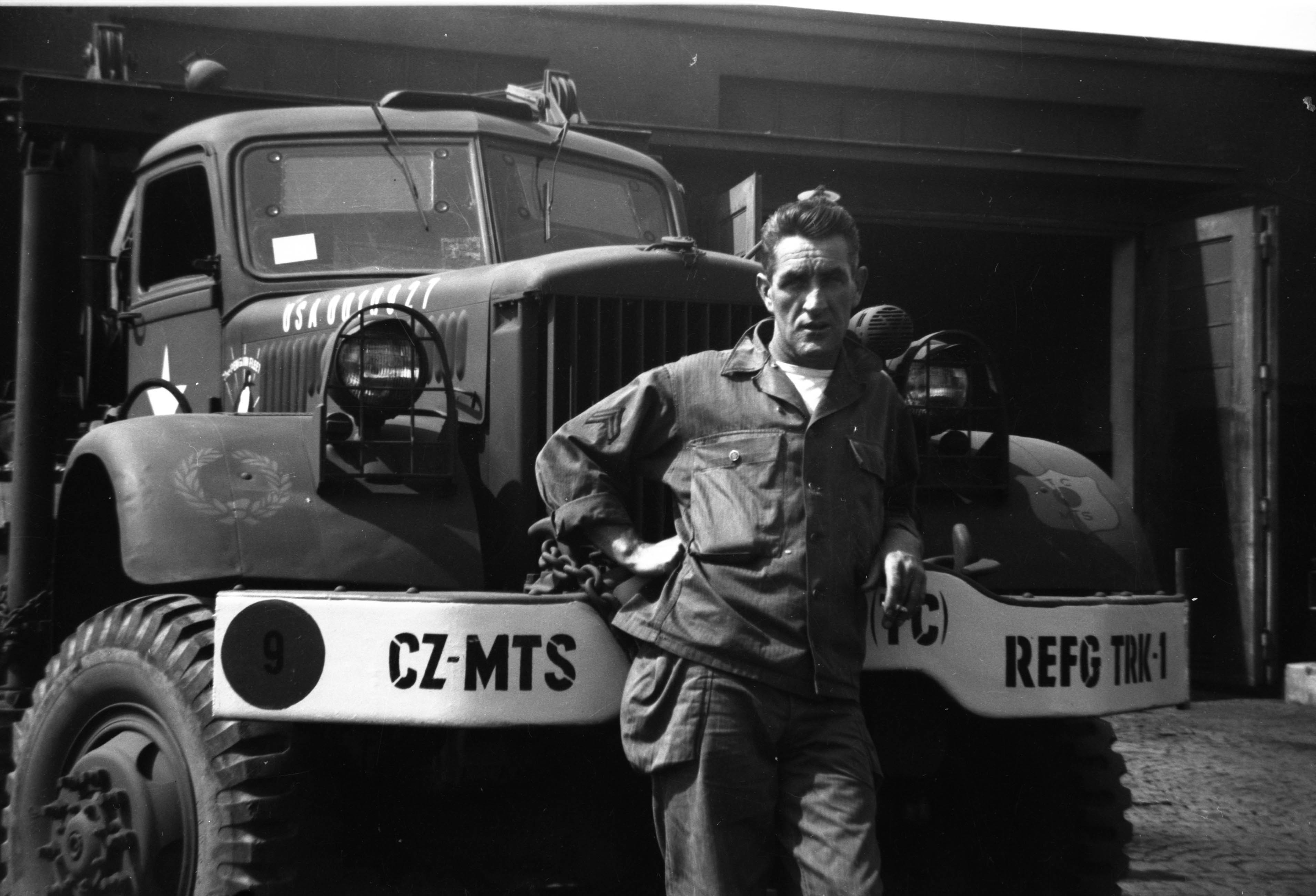
One aspect of war that is not normally discussed is the transportation of temperature sensitive material. Blood, meat, and some chemicals needed to be kept cool for use in the field and needed special trucks to deliver the goods. Here is a set of photos showing the trucks of the unit! Try finding these anywhere else! Scanned from original negatives.
UPDATE:
After cleaning out a forgotten box in my closet, I was able to find some additional negatives from this grouping. Enjoy!



The myriad of uniform variations and service branches in the following images is a reminder of the chaotic nature of the late war in Germany. A member of the 9th Armored Division snapped a series of two dozen images of captured German soldiers. I’ve chosen a small selection to share here. These medium format negatives scan with great quality.


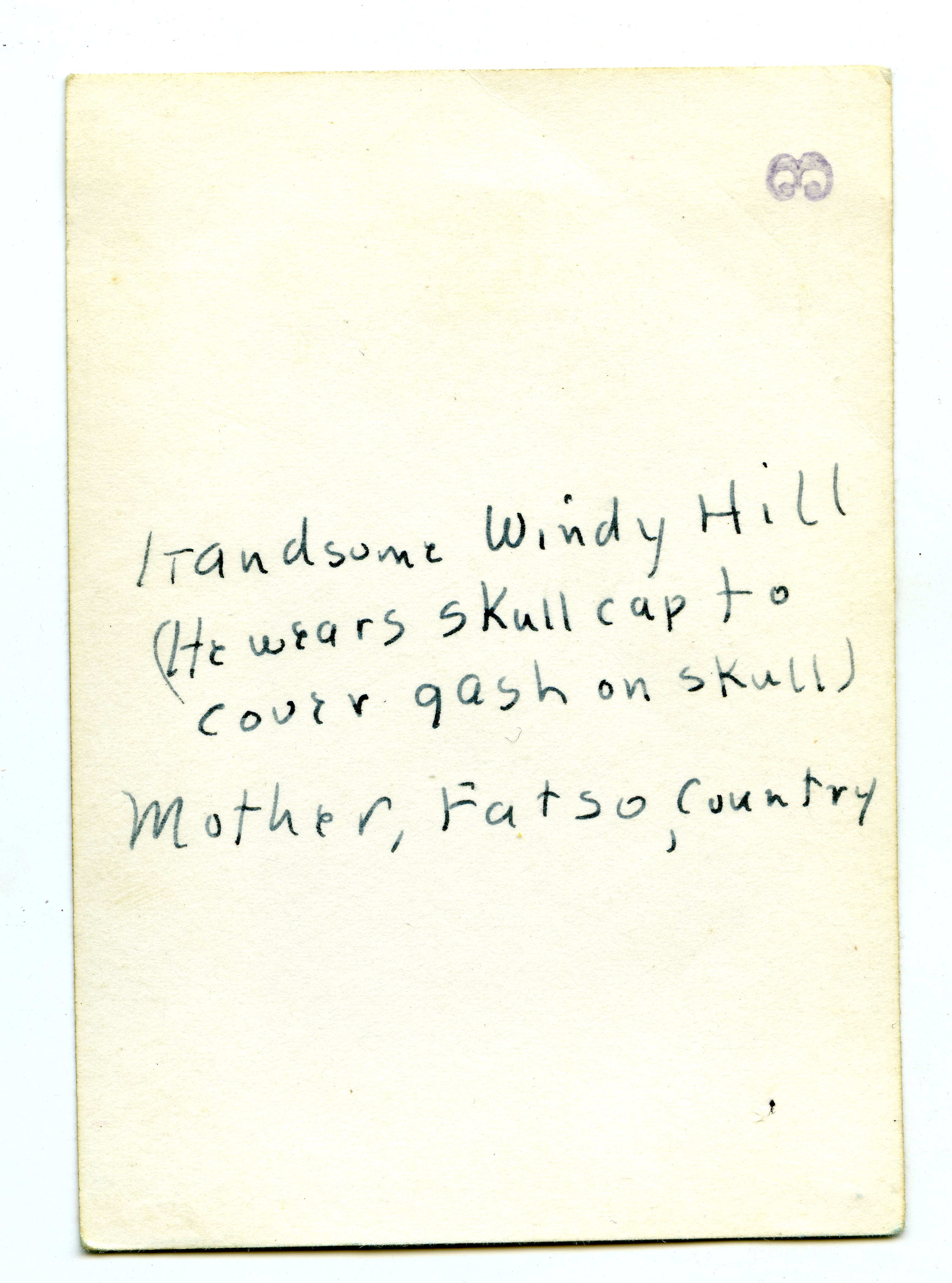
One of my favorite avenues of collecting has to be Marine or Navy photographs related to aviation. The Corsair pilots of the Pacific were certainly some of the toughest pilots of the war! I’ve read numerous articles, books, and publications related to the VF-17 and finally had the opportunity to purchase some original snapshots from the unit. Although they were a bit expensive, they now have a solid place in my collection. These were taken on Bougainville, likely at Torokina airfield. Identified pilots include Lemuel D. Cooke, Doug Gutenkunst, Windy Hill, John Orrin Ellsworth (Fatso) and Robert R. Hogan.

VF-17 Mechanics
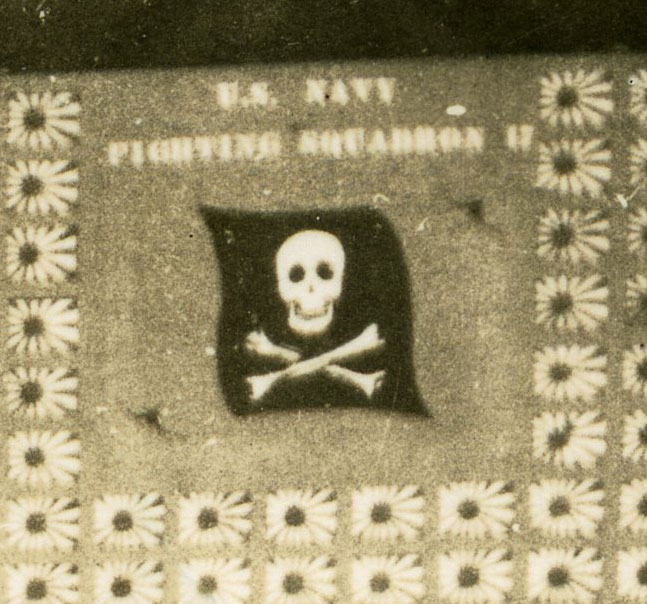
VF-17 Unit Insignia

Inscription on Reverse

Doug Gutenkunst, Bob Hogan, and Lem Cooke

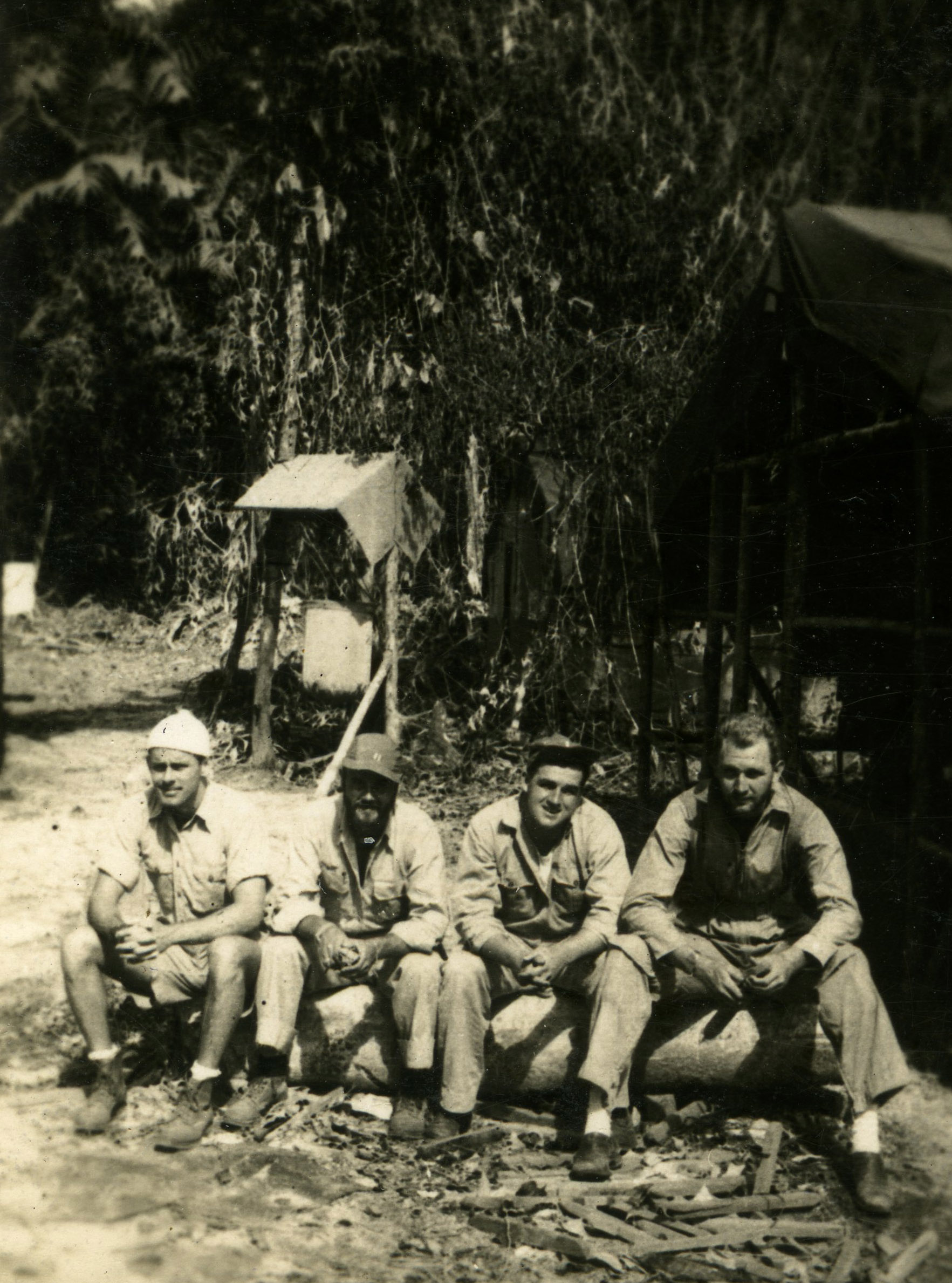
Windy Hill and Fatso

Windy Hill Bougainville (Source)
The above photo shows Corsair pilot Robert “Windy” Hill posing near the Bougainville scoreboard and was taken by U.S Navy photographer Charles Fenno Jacobs (1904-1975). Jacobs was known for capturing the melancholy side of the war in the Pacific. For more info on Jacobs and his wartime work, please check out the National Archives website. 
These young German soldiers, likely taken directly from the rank of a local Hitler Youth group, were captured somewhere outside of Leipzig Germany in May of 1945. The recent discovery of a 600+ negative grouping from a chaplain in the 9th armored division yielded this yielded this gem of an image. The emotion and raw sadness of the war can be seen in the eyes of the boy smoking the cigarette in the left side of the photo. They can’t be more than eight or nine years old.


Flotilla 13 Insignia Overpainted

Firefighter?


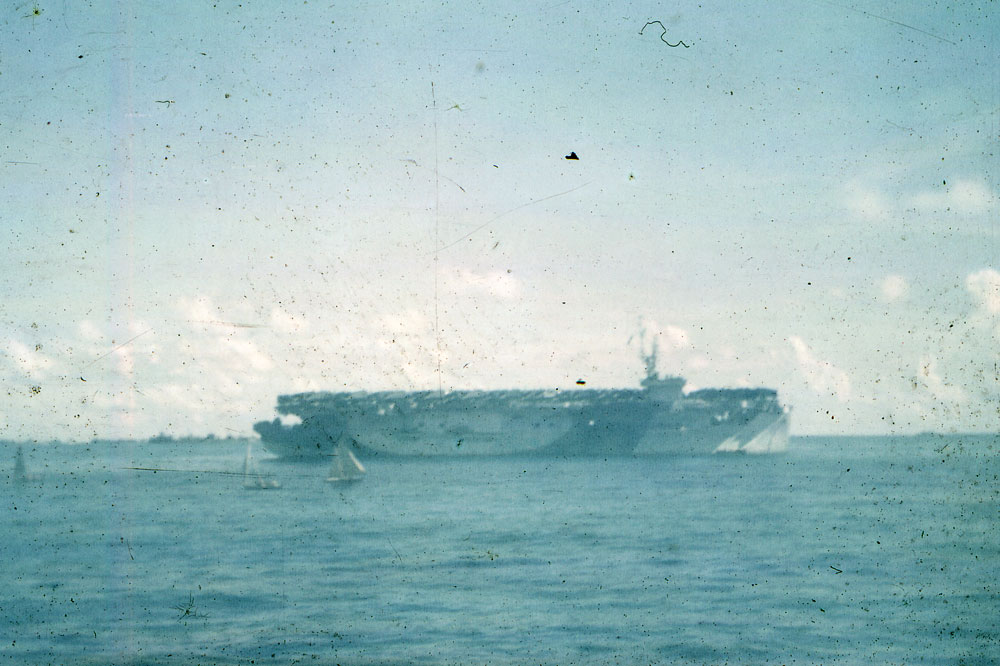
Escort Carrier


 Portraits of War