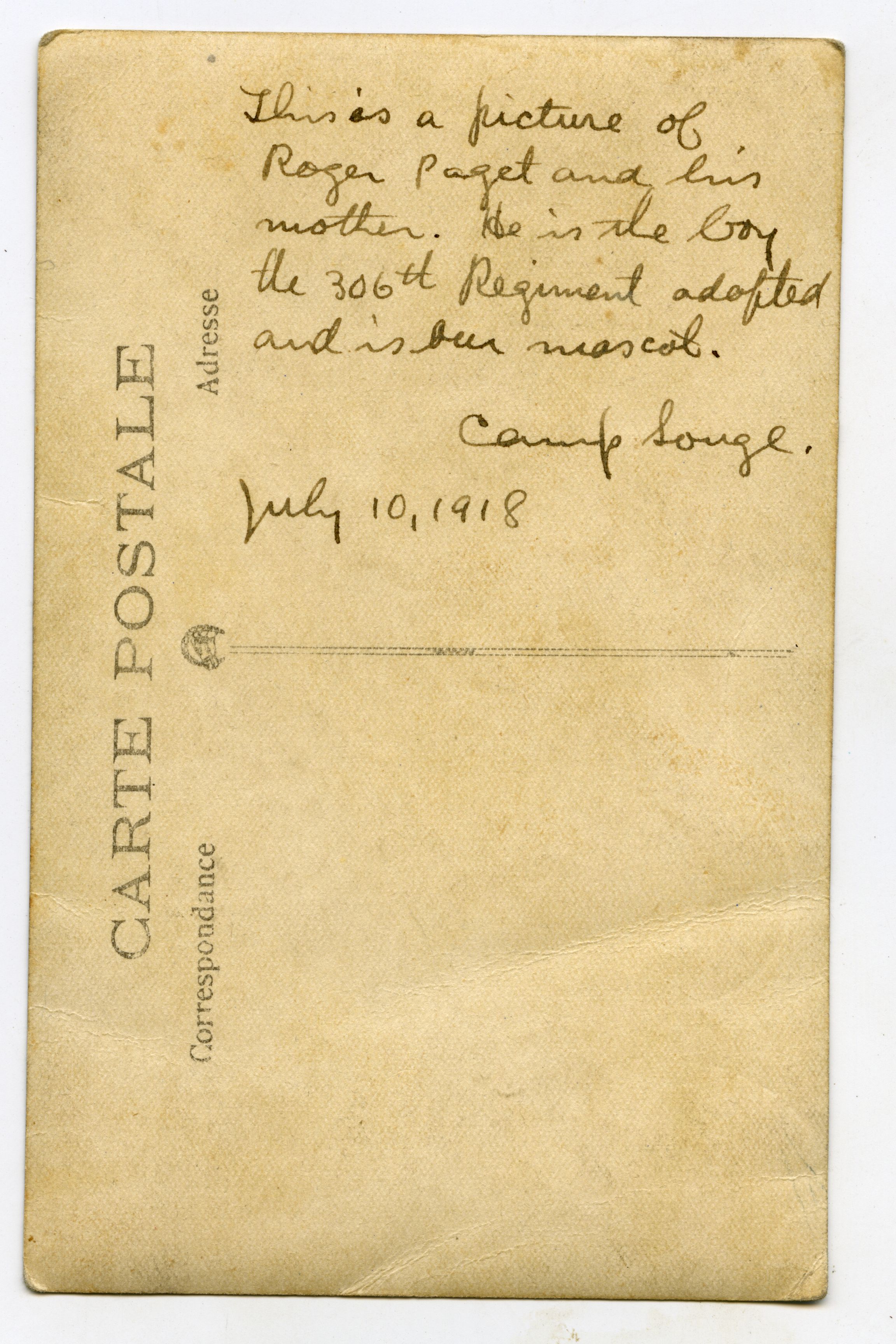
The cherubic face of the little French boy in a recent photo acquisition belies the true sadness he felt when his father (Henri Paget) was killed in action while serving with the French 8th Cuirassiers in April of 1918. The boy can clearly be seen wearing a US cap with Lt. insignia as well as a pair of decorated French Croix de Guerre medals. A quick bit of internet research turned up an interesting story related to Roger Paget and his role as unit mascot for the 306th Field Artillery.
Roger Paget and his Mother
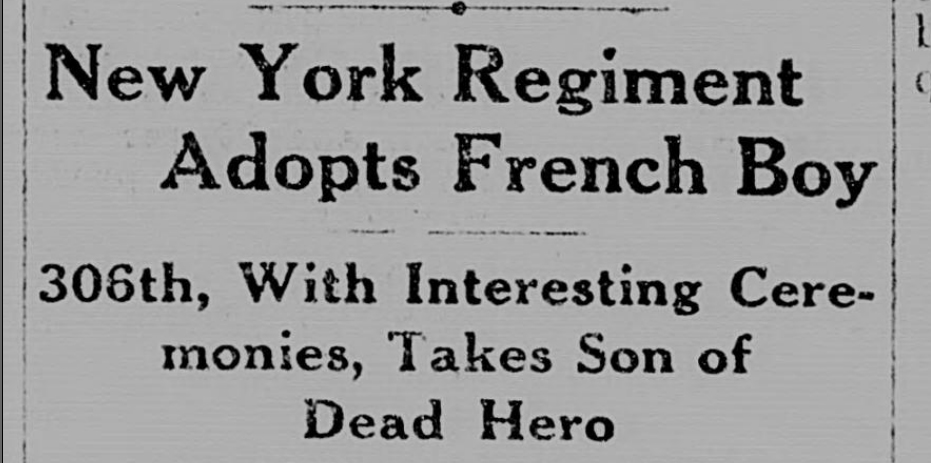
From the History of the 306th Field Artillery :
Roger Paget, the Son of the Regiment
On Sunday morning, June 9th, at a memorable
assembly at Camp de Souge, four-year-old
Roger Paget of Bordeaux was adopted as the
protege of the regiment. His father, Lieutenant Henri
Paget of the 8th Cuirassiers a poilu, was killed in action
on April 29, 1917, at a point north of the Marne near
where most of our own men were killed in action.
Lieutenant Paget twice received the Croix de
Guerre and was named for the Medal of the Legion of
Honor. We have been proud to have the son of
such a brave soldier and a representative of the
children of France, become a part of the regiment.
Madame Paget, Roger’s mother, and a detail from
the American Red Cross were present at the cere-
mony, which was opened by the regimental band
and the singing of America. The chaplain referred
to the story of Lieutenant Paget and introduced
Roger and his mother. Colonel Miller then accepted
Roger in behalf of the regiment while the handsome
boy himself stood on the table by his side.
Sergeant Levi then spoke briefly in French trans-
lating what had been said and expressing the senti-
ment of the occasion. The climax of the program
was reached when Rudolfi stood by the side of the
lad and sang Sweetest Little Feller, Mighty Lak’ a Rose
and the Marseillaise.
Captain Van Keuren of the Red Cross then con-
gratulated the regiment, after which the band played
Sousa’s 306th Field Artillery march. Most of the
men came to the platform to meet Roger and his
mother personally.
Bordeaux, Paris, Boston, New York, Philadelphia
papers have written up the event and referred in
glowing terms to Roger and his regiment. His pic-
ture was also published and sent to hundreds of
friends of the regiment who in turn have showered
letters and souvenirs on him. The 306th Field
Artillery Association at a mass meeting in Brooklyn,
unanimously adopted Roger and sent him a bountiful
box for Christmas, 1918.
Many of our men on leave visited the Pagets both
in Bordeaux and Lyon to which city they moved in
February, 1919. “9 Rue Valdeck-Bousseau, Brot-
teaux Lyon,” is the address. They will, in turn,
surely visit New York occasionally.
The Farmers Loan and Trust Company of Bor-
deaux is handling the fund we have established for
Roger’s education.
As we left France we of the 306th Field Artillery
had no more happy reminiscence than the thought of
the boy who has become a symbol to us of the mean-
ing of our fight for the children of France, our own
boys and girls, and the future generations of the whole
world. We are proud that we helped to finish the
work for which his father gave his life, and that some
of our comrades shared his noble sacrifice.
That thought will always bind Roger closely to the
306th Field Artillery.
The 20th Engineers are one of those obscure service units that served overseas in WWI that I love researching. They saw no combat and spent the entire war swinging axes and operating sawmills, but their labors provided the railties, barracks, firewood, and poles that kept the war running. This wartime newsletter header makes reference to Abe Lincoln’s early life as a rail splitter and juxtaposes it with the wartime president(Wilson).
Here’s the full scan of the handbill dated May 23rd, 1918:
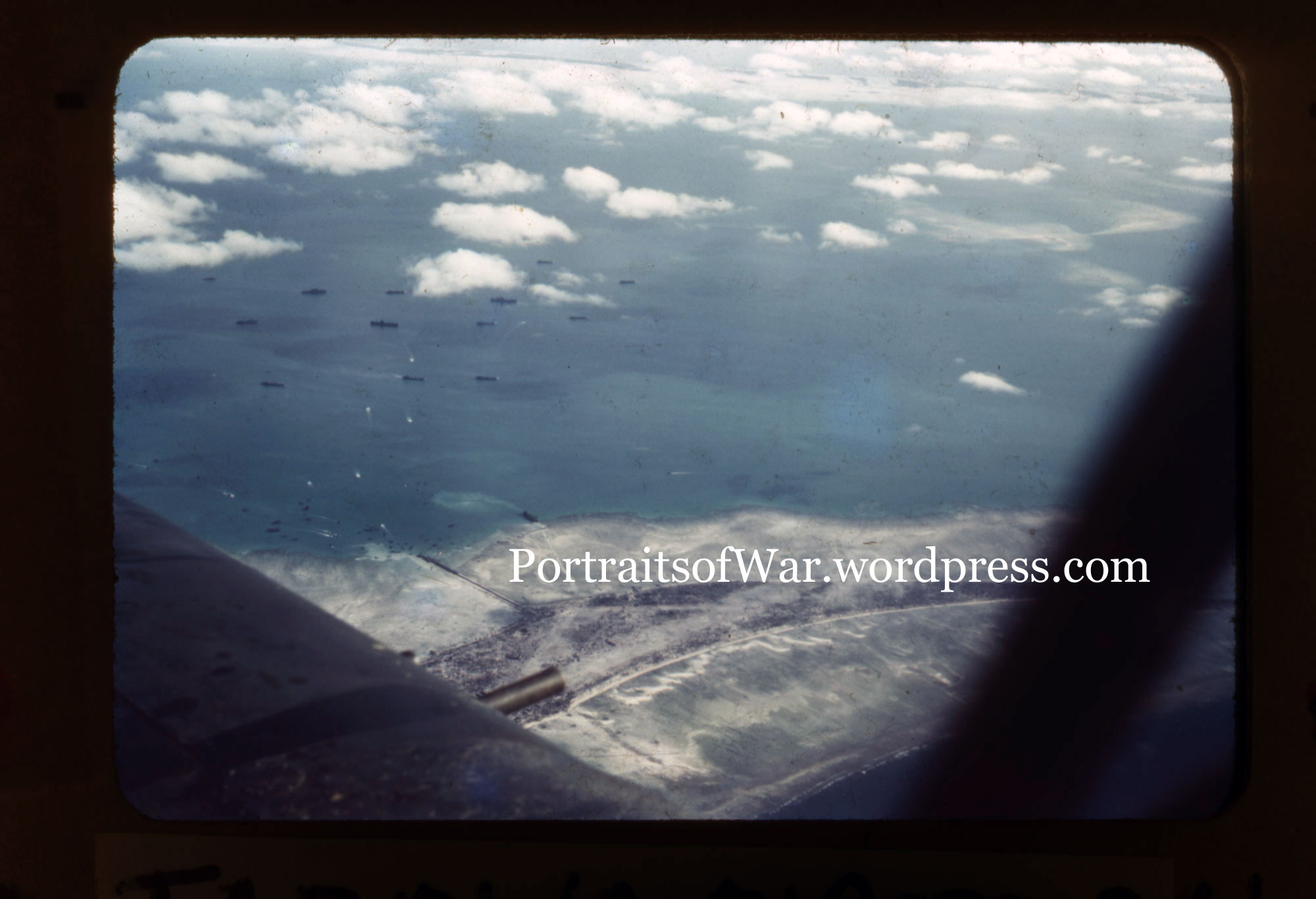
Talk about rare! A recent color slide collection has provided a rare glimpse into the opening hours of the infamous Battle of Tarawa. A Navy carrier-based fighter pilot snapped this 35mm color slide while flying cover over Betio on that fateful day on November 20th, 1943. I’ve never personally seen a color shot taken from the air during this battle. The series I recently acquired may be some of the only known color aerial shots taken during the opening hours of the battle. And the kicker is that I digitized the veteran’s audio cassette tape describing the image.
Collectors Note: The best thing about collecting 35mm color and B/W negatives/slides is that they were physically present during the event. Photographs were printed afterwards, but nitrate and celluloid negatives were physically processed through the camera during the event.
Please forward to 3:45 for a verbal description of the slide by the veteran who snapped the image
Aerial Shot of the Invasion of Tarawa
Veteran Description on 35mm Slide Mount
And some info on the opening day of the Battle of Tarawa (from Wikipedia):
The Battle of Tarawa (US code name Operation Galvanic) was a battle in the Pacific Theater of World War II, largely fought from November 20 to November 23, 1943. It was the first American offensive in the critical central Pacific region.
It was also the first time in the war that the United States faced serious Japanese opposition to an amphibious landing. Previous landings met little or no initial resistance. The 4,500 Japanese defenders were well-supplied and well-prepared, and they fought almost to the last man, exacting a heavy toll on the United States Marine Corps. The US had suffered similar casualties in other campaigns, for example over the six months in the campaign for Guadalcanal, but in this case the losses were suffered within the space of 76 hours. Nearly 6,000 Japanese and Americans died on the tiny island in the fighting.[2]
Background
In order to set up forward air bases capable of supporting operations across the mid-Pacific, to the Philippines, and into Japan, the U.S. needed to take the Marianas Islands. The Marianas were heavily defended. Naval doctrine of the time held that in order for attacks to succeed, land-based aircraft would be required to weaken defenses and provide some measure of protection for the invasion forces. The nearest islands capable of supporting such an effort were the Marshall Islands, northeast of Guadalcanal. Taking the Marshalls would provide the base needed to launch an offensive on the Marianas but the Marshalls were cut off from direct communications with Hawaii by a garrison and air base on the small island of Betio, on the western side of Tarawa Atoll in the Gilbert Islands. Thus, to eventually launch an invasion of the Marianas, the battles had to start far to the east, at Tarawa.
Following the completion of their campaign on Guadalcanal, the 2nd Marine Division had been withdrawn to New Zealand for rest and recuperation. Losses were replaced and the men given a chance to recover from the malaria and other illnesses that weakened them through the fighting in the Solomons. On July 20, 1943 the Joint Chiefs directed Admiral Chester Nimitz to prepare plans for an offensive operation in the Gilbert Islands. In August Admiral Raymond Spruance was flown down to New Zealand to meet with the new commander of the 2nd Marine Division, General Julian Smith, and initiate the planning of the invasion with the division’s commanders.
Located about 2,400 miles southwest of Pearl Harbor, Betio is the largest island in the Tarawa Atoll. The small, flat island lies at the southern most reach of the lagoon, and was home to the bulk of the Japanese defenders. Shaped roughly like a long, thin triangle, the tiny island is approximately two miles long. It is narrow, being only 800 yards wide at the widest point. A long pier was constructed from the north shore from which cargo ships could unload out past the shallows while at anchor in the protection of the lagoon. The northern coast of the island faces into the lagoon, while the southern and western sides face the deep waters of the open ocean.
Following Carlson’s diversionary Makin Island raid of August 1942, the Japanese command was made aware of the vulnerability and strategic significance of the Gilbert Islands. The 6th Yokosuka Special Naval Landing Force arrived to reinforce the island in February 1943. In command was Rear Admiral Tomanari Sichero, an experienced engineer who directed the construction of the sophisticated defensive structures on Betio. Upon their arrival the 6th Yokosuka became a garrison force, and the unit’s identification was changed to the 3rd Special Base Defense Force. Sichero’s primary goal in the Japanese defensive scheme was to stop the attackers in the water or pin them on the beaches. A tremendous number of pill boxes and firing pits were constructed with excellent fields of fire over the water and sandy shore. In the interior of the island was the command post and a number of large shelters designed to protect defenders from air attack and bombardment. The island’s defenses were not set up for a battle in depth across the island’s interior. The interior structures were large and vented, but did not have firing ports. Defenders in them were limited to firing from the doorways.[3]
The Japanese worked intensely for nearly a year to fortify the island.[4] To aid the garrison in the construction of the defenses, the 1,247 men of the 111th Pioneers, similar to the Seabees of the U.S. Navy, along with the 970 men of the Fourth Fleet’s construction battalion were brought in. Approximately 1,200 of the men in these two groups were Korean forced laborers. The garrison itself was made up of forces of the Imperial Japanese Navy. The Special Naval Landing Force was the marine component of the IJN, and were known by US intelligence to be more highly trained, better disciplined, more tenacious and to have better small unit leadership than comparable units of the Imperial Japanese Army. The 3rd Special Base Defense Force assigned to Tarawa had a strength of 1,112 men. They were reinforced by the 7th Sasebo Special Naval Landing Force, with a strength of 1,497 men. It was commanded by Commander Takeo Sugai. This unit was bolstered by 14 Type 95 light tanks under the command of Ensign Ohtani.
A series of fourteen coastal defense guns, including four large Vickers 8-inch guns purchased during the Russo-Japanese War from the British,[2] were secured in concrete bunkers and located around the island to guard the open water and the approaches into the lagoon. It was thought these big guns would make it very difficult for a landing force to enter the lagoon and attack the island from the north side. The island had a total of 500 pillboxes or “stockades” built from logs and sand, many of which were reinforced with cement. Forty artillery pieces were scattered around the island in various reinforced firing pits. An airfield was cut into the bush straight down the center of the island. Trenches connected all points of the island, allowing troops to move where needed under cover. As the command believed their coastal guns would protect the approaches into the lagoon, an attack on the island was anticipated to come from the open waters of the western or southern beaches. Kaigun ShōshōKeiji Shibazaki, an experienced combat officer from the campaigns in China relieved Sichero in July 20, 1943 in anticipation of the coming combat. Shibazaki continued the defensive preparations right up to the day of the invasion. He encouraged his troops, saying “it would take one million men one hundred years” to conquer Tarawa.
November 20
Marines alongside an LVT-1 “Alligator”.
Marines seek cover amongst the dead and wounded behind the sea wall on Red Beach 3, Tarawa.
As the invasion flotilla hove to in the predawn hours, the islands four 8 inch guns opened fire on the task force. A gunnery duel soon developed as the main batteries on the battleships Colorado and Maryland commenced a counter-battery fire. The counter-battery proved accurate, with several of the 16 inch shells finding their mark. One shell penetrated the ammunition storage for one of the guns, igniting a huge explosion as the ordnance went up in a massive fireball. Three of the four guns were knocked out in short order. Though all four guns fell silent, one continued intermittent, though inaccurate, fire through the second day. The damage to the big guns left the approach to the lagoon open. It was one of the few successes of the naval bombardment.
Following the gunnery duel and an air attack of the island at 0610, the naval bombardment of the island began in earnest and was sustained for the next three hours. Two mine sweepers with two destroyers to provide covering fire entered the lagoon in the pre-dawn hours and cleared the shallows of mines.[5] A guide light from one of the sweepers then guided the landing craft into the lagoon where they awaited the end of the bombardment. The plan was to land Marines on the north beaches, divided into three sections: Red Beach 1 to the far west of the island, Red Beach 2 in the center just west of the pier, and Red Beach 3 to the east of the pier. Green Beach was a contingency landing beach on the western shoreline and was used for the D+1 landings. Black Beaches 1 and 2 made up the southern shore of the island and were not used. The airstrip, running roughly east-west, divided the island into north and south.
U.S. Coast Guardsmen ferrying supplies pass an LCM-3 which has taken a direct hit at Tarawa.
The Marines started their attack from the lagoon at 09:00, thirty minutes later than expected, but found the tide had still not risen enough to allow their shallow draft Higgins boats to clear the reef. Marine battle planners had not allowed for Betio’s neaptide and expected the normal rising tide to provide a water depth of 5 feet (1.5 m) over the reef, allowing larger landing craft, with drafts of at least four feet (1.2 m), to pass with room to spare. But that day and the next, in the words of some observers, “the ocean just sat there,” leaving a mean depth of three feet (0.9 m) over the reef. (The neap tide phenomenon occurs twice a month when the moon is near its first or last quarter, because the countering tug of the sun causes water levels to deviate less. But for two days the moon was at its farthest point from earth and exerted even less pull, leaving the waters relatively undisturbed.)
At 0900 the supporting naval bombardment was lifted to allow the Marines to land. The reef proved a daunting obstacle. Only the tracked LVT “Alligators” were able to get across. The Higgins boats, at four feet draft, were unable to clear the reef.[6] With the pause in the naval bombardment those Japanese that survived the shelling dusted themselves off and manned their firing pits. Japanese troops from the southern beaches were shifted up to the northern beaches. As the LVTs made their way over the reef and in to the shallows the number of Japanese troops in the firing pits slowly began to increase, and the amount of combined arms fire the LVTs faced gradually intensified. The LVTs had a myriad of holes punched through their non-armored hulls, and many were knocked out of the battle. Those ‘Alligators’ that did make it in proved unable to clear the sea wall, leaving the men in the first assault waves pinned down against the log wall along the beach. A number of ‘Alligators’ went back out to the reef in an attempt to carry in the men who were stuck there, but most of these LVTs were too badly holed to remain sea worthy, leaving the marines stuck on the reef some 500 yards (460 m) off shore. Half of the LVTs were knocked out of action by the end of the first day.
Colonel David Shoup was the senior officer of the landed forces, and he assumed command of all landed Marine Corps troops upon his arrival on shore. Although wounded by an exploding shell soon after landing at the pier, Colonel Shoup took charge of the situation, cleared the pier of Japanese snipers and rallied the first wave of Marines who had become pinned down behind the limited protection of the sea wall. During the next two days, working without rest and under constant withering enemy fire, he directed attacks against strongly defended Japanese positions, pushing forward despite daunting defensive obstructions and heavy fire. Throughout Colonel Shoup was repeatedly exposed to Japanese small arms and artillery fire, inspiring the forces under his command. For his actions on Betio he was awarded the Medal of Honor.
Several early attempts to land tanks for close support and to get past the sea wall failed when the landing craft carrying them were hit on their run into the beach and either sank outright or had to withdraw while taking on water. Two Stuart tanks eventually landed on the east end of the beach but were knocked out of action fairly quickly. Three medium Sherman tanks were landed on the western end of the island and proved considerably more effective. They helped push the line in to about 300 yards (270 m) from shore. One became stuck in a tank trap and another was knocked out by a magnetic mine. The remaining tank took a shell hit to its barrel and had its 75 mm gun disabled. It was used as a portable machine gun pillbox for the rest of the day. A third platoon was able to land all four of its tanks on Red 3 around noon and operated them successfully for much of the day, but by day’s end only one tank was still in action.
By noon the Marines had successfully taken the beach as far as the first line of Japanese defenses. By 15:30 the line had moved inland in places but was still generally along the first line of defenses. The arrival of the tanks started the line moving on Red 3 and the end of Red 2 (the right flank, as viewed from the north), and by nightfall the line was about half-way across the island, only a short distance from the main runway.
Colonel David Shoup’s command post on Red Beach 2.
The communication lines which the Japanese installed on the island had been laid shallow and were destroyed in the naval bombardment, effectively preventing commander Keiji Shibazaki’s direct control of his troops. In mid-afternoon he and his staff abandoned the command post at the west end of the airfield, to allow it to be used to shelter and care for the wounded, and prepared to move to the south side of the island. He had ordered two of his Type 95 light tanks to act as a protective cover for the move, but a 5″ naval high explosive round exploded in the midst of his headquarters personnel as they were assembled outside the central concrete command post, resulting in the death of the commander and most of his staff. This loss further complicated Japanese command problems.[7][8]
As night fell on the first day the Japanese defenders kept up a sporadic harassing fire, but did not launch an attack on the Marines clinging to their beachhead and the territory won in the day’s hard fighting. With Rear Admiral Shibazaki killed and their communication lines torn up, each Japanese unit was essentially acting in isolation, and indeed had been since the commencement of the naval bombardment. The Marines brought a battery of 75 mm Pack Howitzers ashore, unpacked them and set them up for action for the next day’s fight, but the bulk of the second wave was unable to land. They spent the night floating out in the lagoon without food or water, trying to sleep in their Higgins boats. A number of Japanese marines slipped away in the night, swimming out to a number of the wrecked LVTs in the lagoon, and also to the Niminoa, a wrecked steamship lying west of the main pier. There they laid in wait for dawn, when they would fire upon the US forces from behind. The long night dragged on, but lacking central direction, the Japanese were unable to coordinate for a counterattack against the toe hold the Marines held on the island. The feared counterattack never came and the Marines held their ground. By the end of the first day, of the 5,000 Marines put ashore, 1,500 were casualties, either dead or wounded.
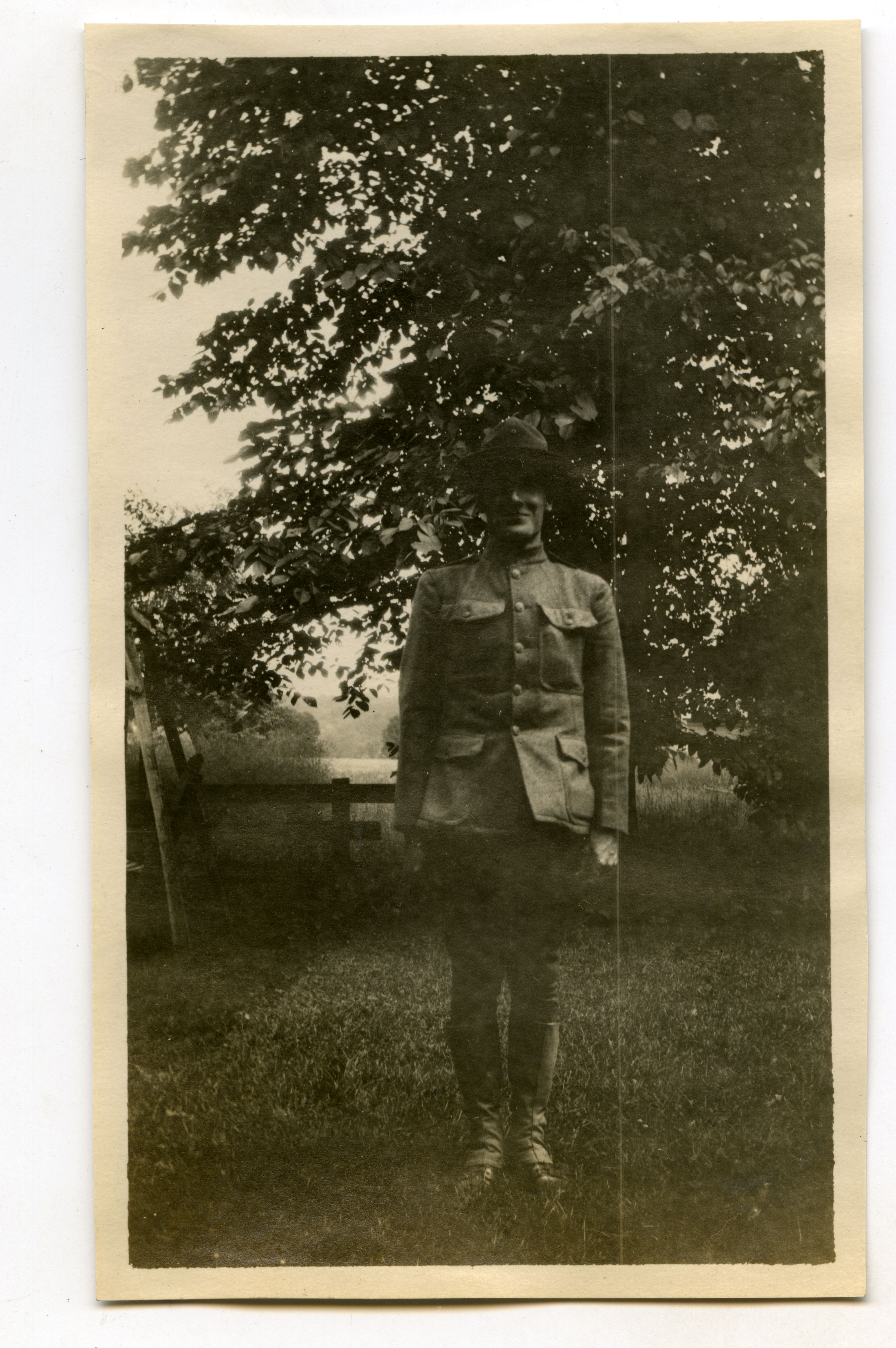
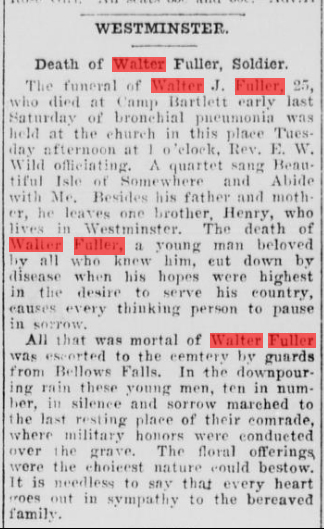
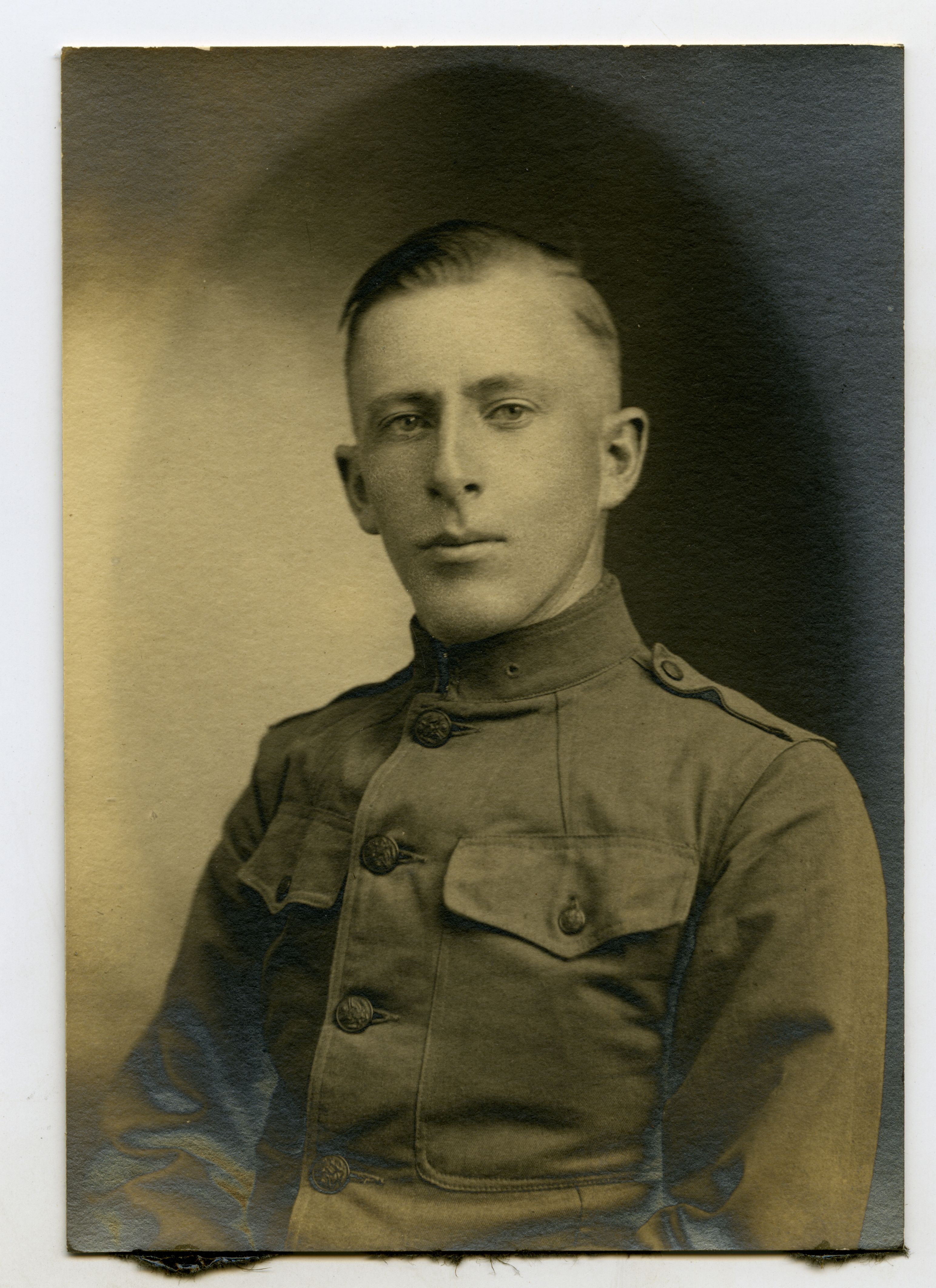
A recent Walter J. Fuller poses for the camera near his home in Westminster before shipping off for training in 1917. The photo was originally part of a much larger scrapbook which was broken up and sold on eBay in 2012. Luckily they included a bit of context to the sale listing, enabling me to track down the identity of this brave Vermonter. A member of the 103rd MG Bn., Walter shipped out from Fort Ethan Allen down to Camp Bartlett in Massachusetts. It was here that he contracted the bronchial pneumonia and passed away at 3:30 (yes, we know the exact time!) on October 27th, 1917. His family was contacted via telephone about his worsening condition and were able to be present when he passed away.
Johnson, Herbert T. Roster of Vermont Men and Women in the Military and Naval Service of the United States and Allies in the World War, 1917-1919. Montpelier, VT: Tuttle, 1927.
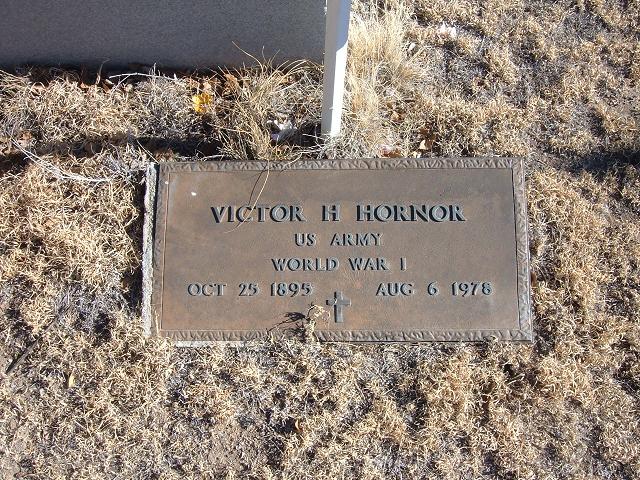
Nothing spectacular jumped out at me when I first purchased this image on eBay last week. I knew it was likely identified, but I wasn’t sure the name would be searchable. I was pleasantly surprised when the photo arrived and I was able to read the name and successfully search for his name on ancestry.com. He was born in 1895 and passed away in 1978 in Springfield, CO. This photo was likely taken in 1919 after the Armistice. Note the use of French numeric pins on his overseas cap.
The hidden treasures of the eBay world still turn up genealogical treasures with a bit of background research. A recent auction listing provided me with a solid base for some in-depth research. I actually timed myself on this one – it took me exactly 1 hour and 32 minutes to research this piece from beginning to end.
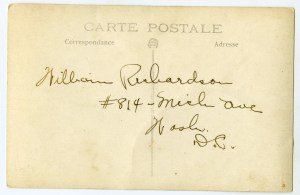
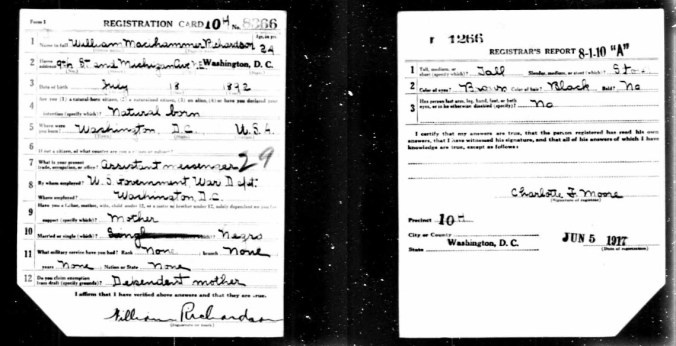
Mr. William Maccihammer Richardson of 814 Michigan Ave, Washington D.C. enlisted for the draft on June 5th, 1917 at the age of 24. He had a dependent mother and presumably a deceased /absent father. William, according to his draft registration card, was already in the service of the War Department and was likely added to the roster of the 93rd Division. The 93rd was comprised of National Guard units from New York, Chicago, Washington, D.C., Cleveland, and Massachusetts. I’m assuming he was in the 93rd Division given the presence of his infantry regiment crossed rifle cap insignia and his military service in D.C. He was a messenger before the war while working for the War Department in Washington, so it’s an easy jump assume he served in a similar role with an infantry regiment of the 93rd. William was one of over 1,000,000 African-American men to register for the draft and one of only 370,000 to be inducted into the army.
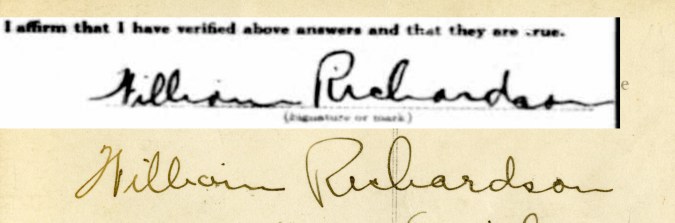
CSI Style Signature Comparison
Those familiar with WWI draft cards will notice the clipped corners. This was required of men of color in order to easily pick them out during draft board review. It was apparently a common practice that I was not aware of until researching this image.
1917 Draft Card
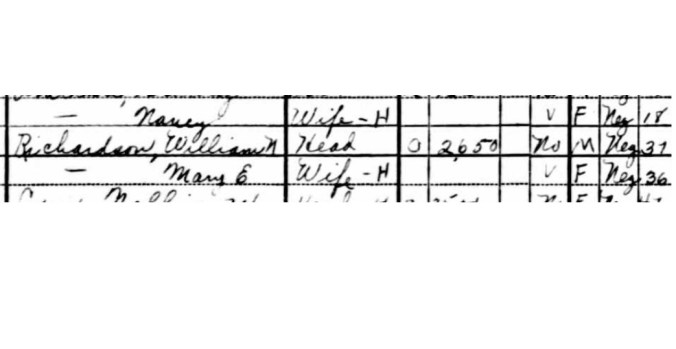
The next definite genealogical entry I found for William puts him in District 221 of Washington, D.C. in the census of 1930. His entry is easily misread as a William N. Richardson. He is shown as being married to a Mary E. Richardson. His profession is listed as being a Chauffeur with the U.S. Government – another link to his prewar position.
1930 Census Record
In the 1940 census record, William is listed as being a chauffeur for a private family. His yearly income is $1,700 – almost exactly the average annual income of $1,900 in 1940. He lived in an apartment building in Block No. 18 of Washington and had two “lodgers” living with him and his wife. June and Cleo Adams were sisters to Mary E. Richardson.
The last and final genealogical reference to Mr. Richardson comes in the form of a death registration. William died at the ripe age of 81 on June 3rd, 1973. The trail ends with his death, but the possibilities for future research lay wide open. Which unit did he serve with? Did he see direct combat? How did he meet Ms. Adams?
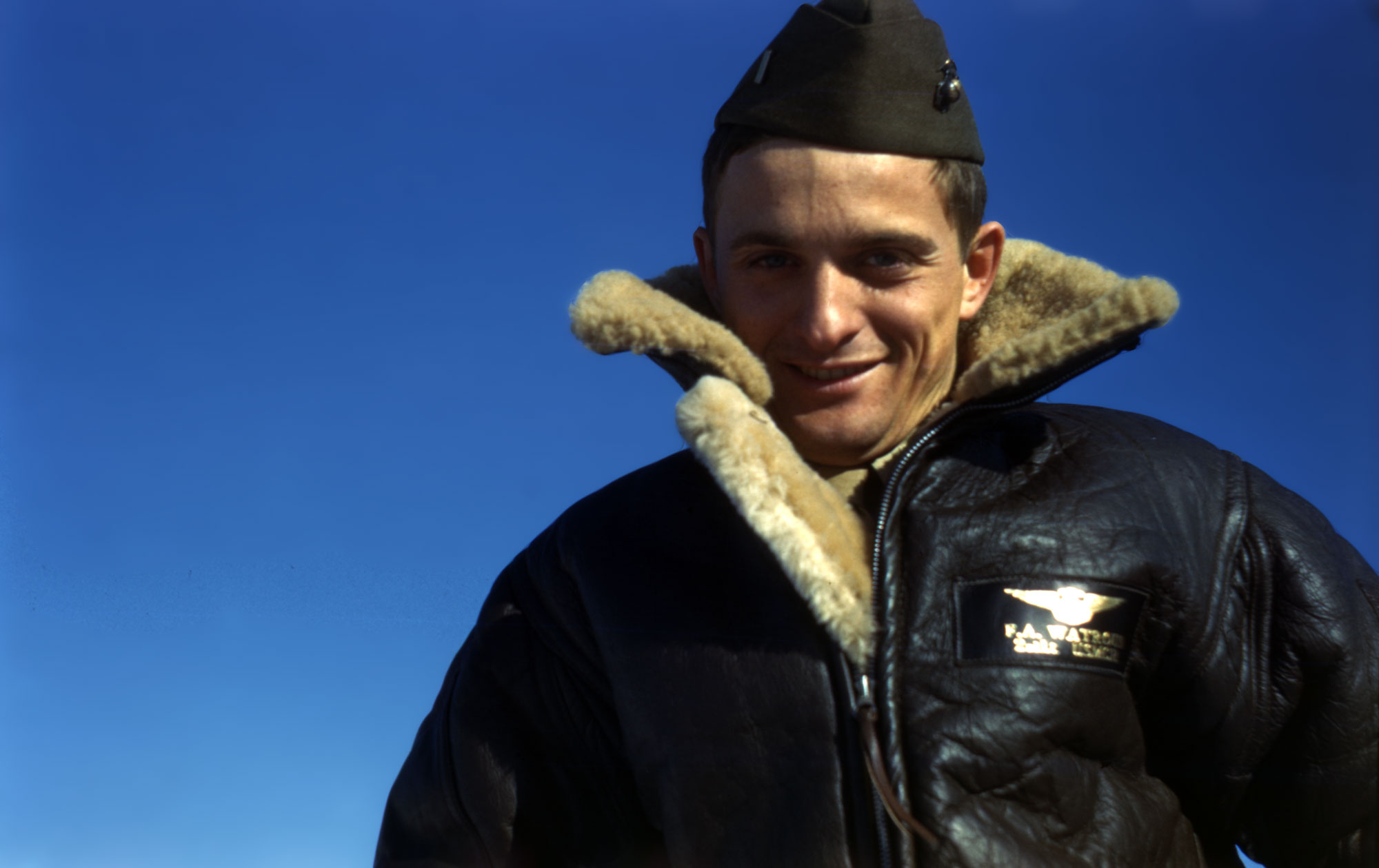
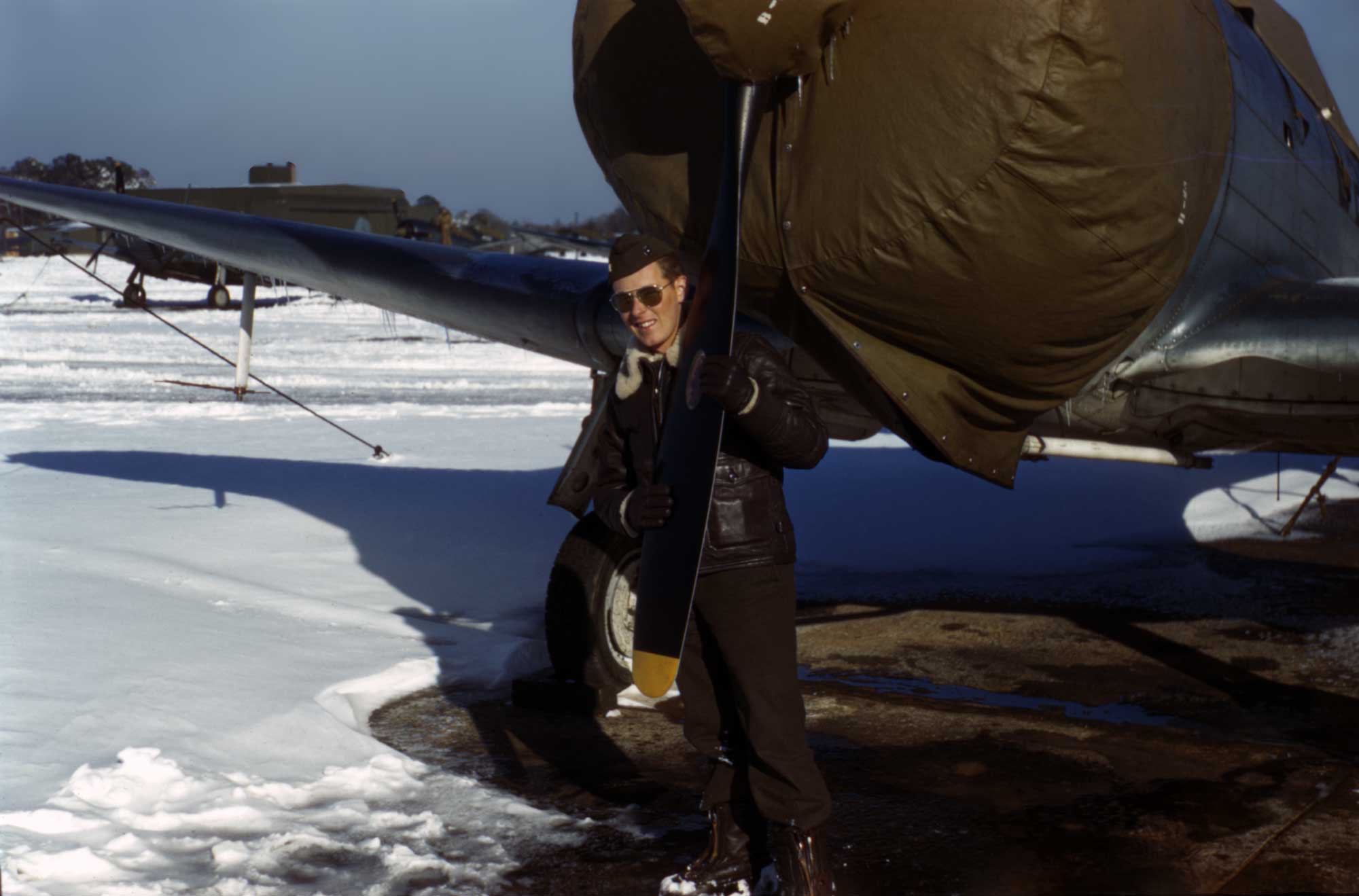
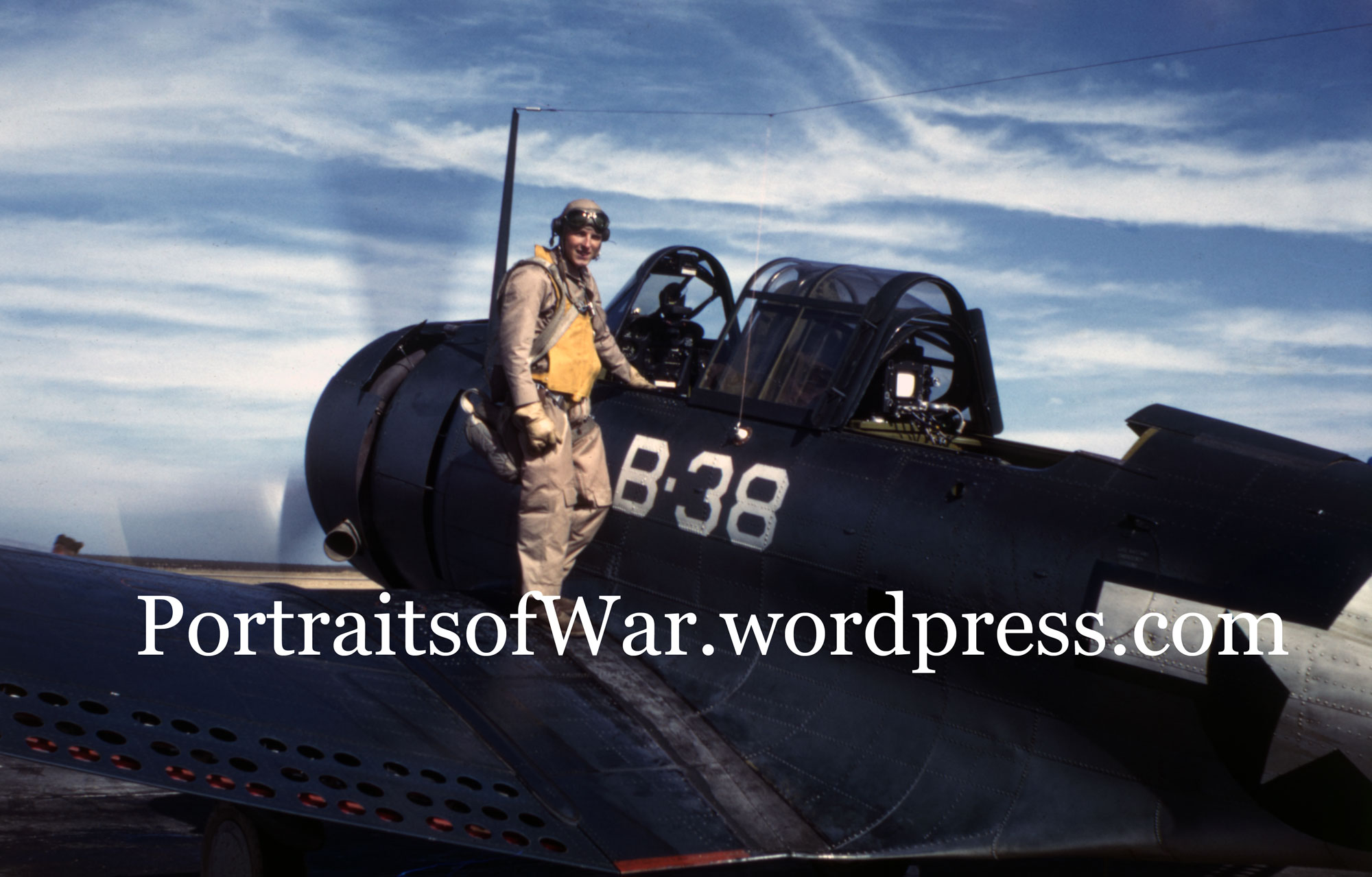
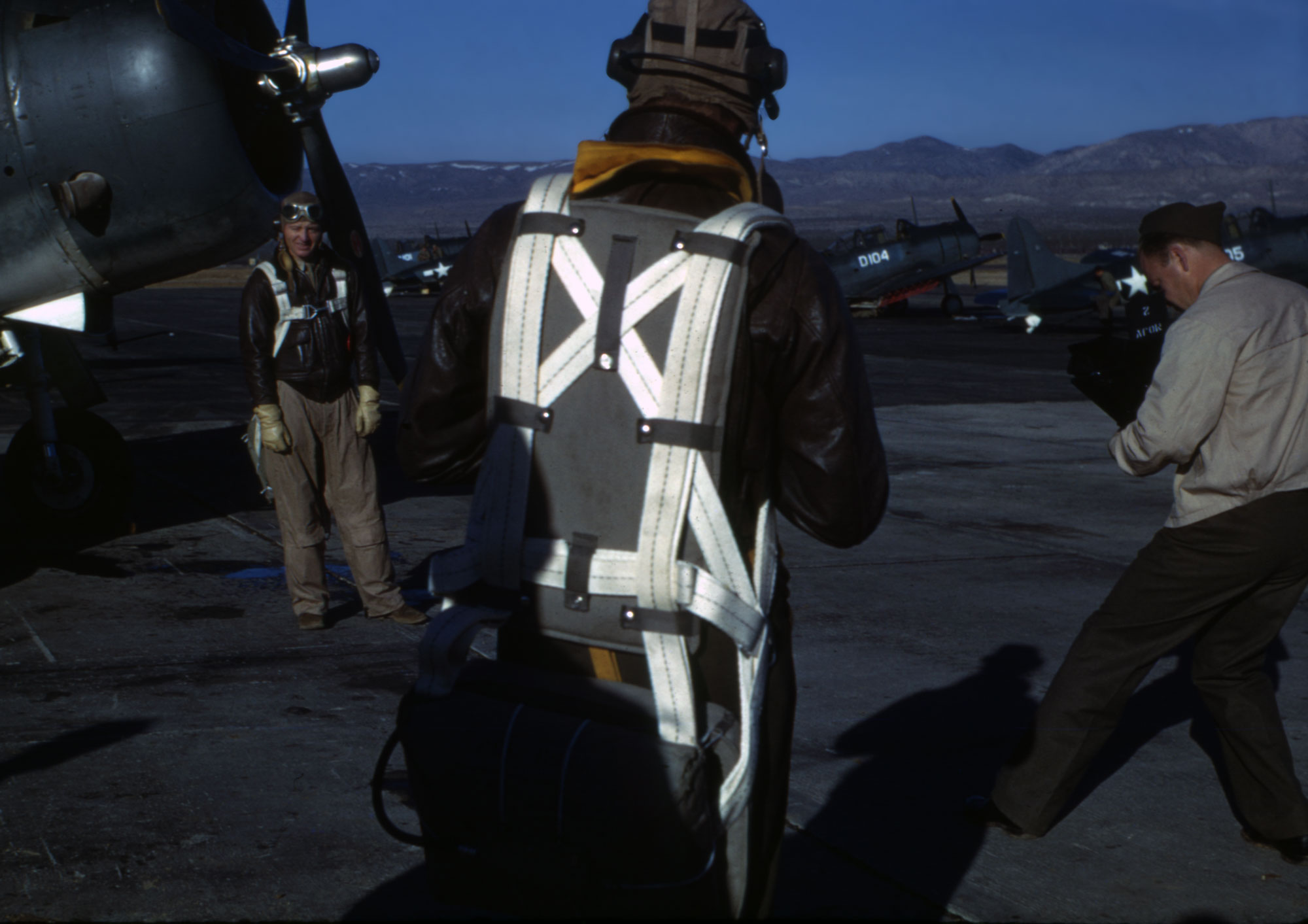
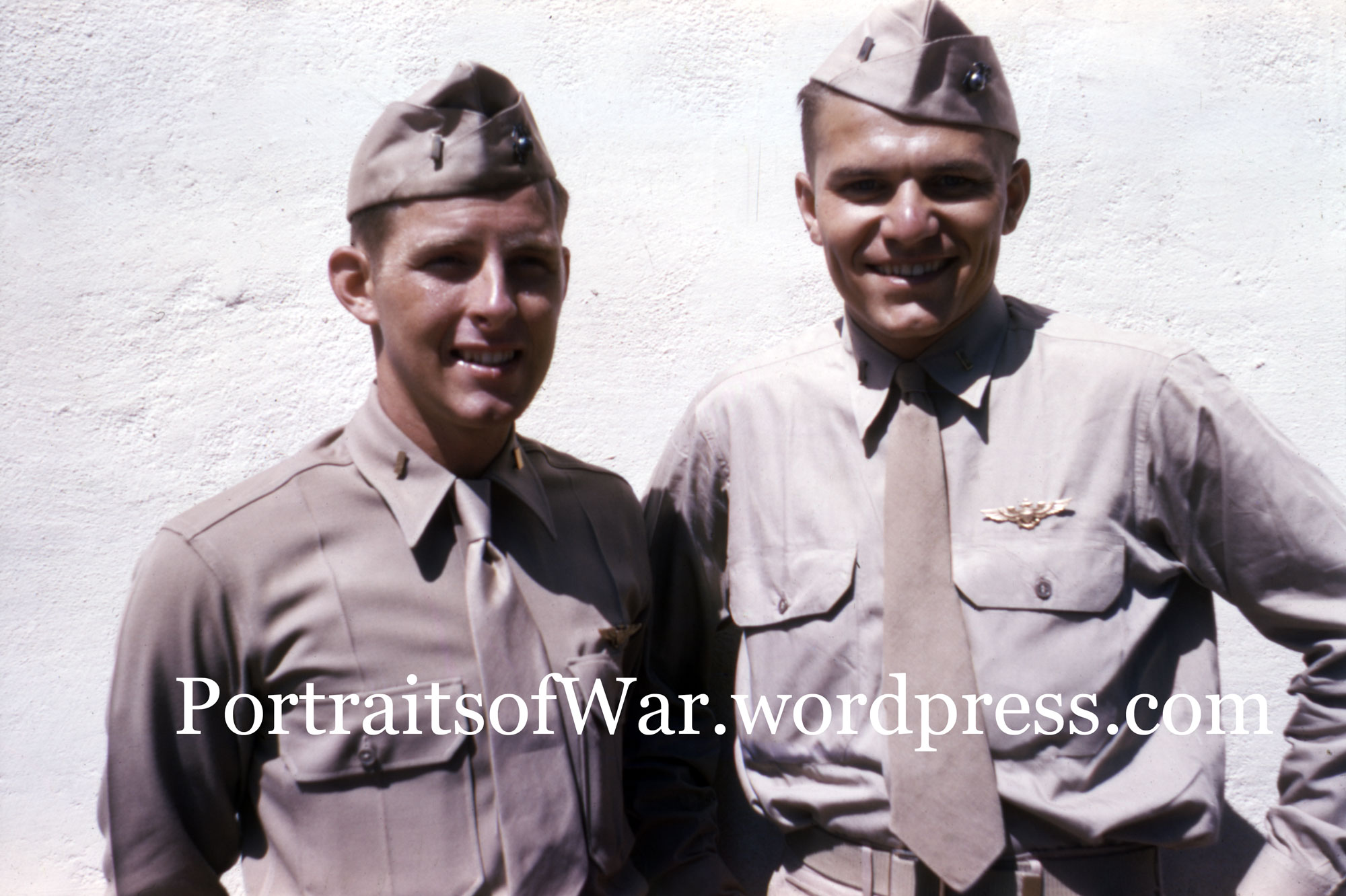
The color of WWII is something lost on our generation; WWII has been a war fought in black and white for everyone but actual WWII veterans who witnessed it firsthand. One of my goals here at PortraitsofWar is to collect color slides from WWII and make them accessible to those who don’t know it exists. Yes, color film was shot in 35mm(and sometimes larger format) and was used on a somewhat regular basis by shutterbug soldiers during WWII. My collection is roughly 500:1, black and white : color. To find a complete collection of color slides is like hitting the WWII photography jackpot. In this case, I was able to pick up a small selection of color slides from a Marine dive bomber. Although I was only able to snag 7 from a grouping of nearly 200, I am still happy to pass along the images to interested parties.
From the collection of Walter Huff.
Recent Update: Captions Added – WWII Marine Corps Veteran Pilot Adds Commentary – Thanks Paul!
Please enjoy the colors of WWII as they were meant to be seen!
047: Standard permanent issue leather jacket with fur collar. Name plate design same as mine: Wings, name, and service (in this case USMCR).
049: I’ll bet the farm this photo was taken at Bogue Field, N.C. Dec 10 +/-, 1943. Not much snow in Eastern N.C. I was on a trip to Buffalo, NY to ferry a R5C (C-46) from the factory to Cherry Point. Got back to find the engine block in the auto had frozen and cracked.
051: Nice shot. I do believe the engine is running. Hmmmm. I wonder why? Should have been a no-no with no one in cockpit!
053: I do not remember pilots wearing side arm stateside. With the pistol (issued to all Marine officers) I’m guessing 1943-44. Later pilots were issued revolvers but priority was to unit in combat area (Pac). I had a .45 pistol until 1948 (China and Eva, Hawaii). Got my first .38 revolver in Korea 1950.
054: This ain’t NC!!! Must be CA hills. Not combat area. Check out those pristine parachutes! The gauntlets (flight gloves) were of softest lamb skin and covered lower half (more or less) of forearm.
044: Not Marine Corps shirts, but Navy. Marine officer shirts were hard to come by. I know because I wore Navy shirts, too. Pocket flap designs are different. Marines never wear field scarfs (i.e. ties) tucked into shirt. After WWII a clasp was designed.
Here’s a good one! A collector friend of mine pointed out a freshly listed eBay auction for an identified Vermont soldier during WWI. Armed only with a name and general location, I was able to uncover a treasure trove of material on our seated friend.
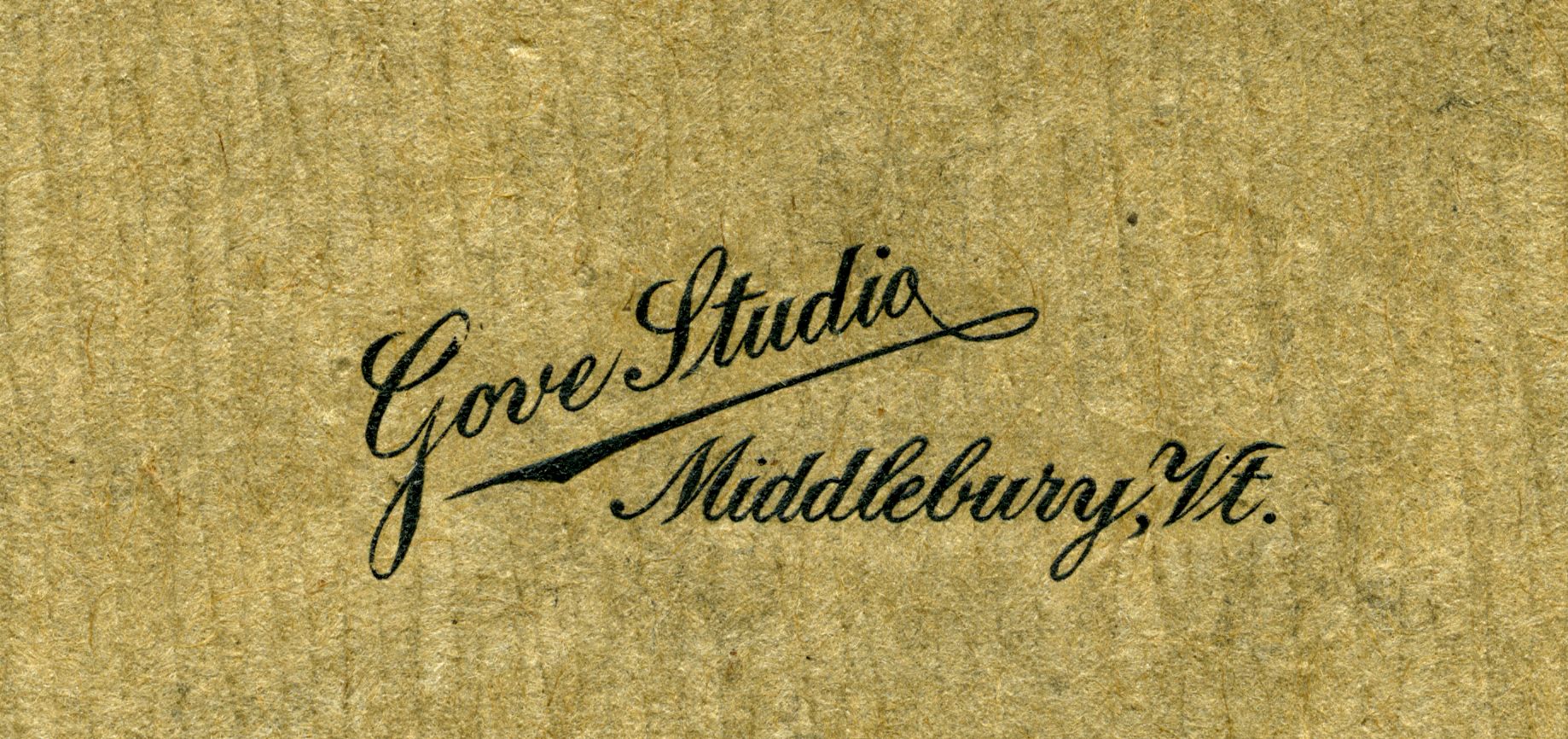
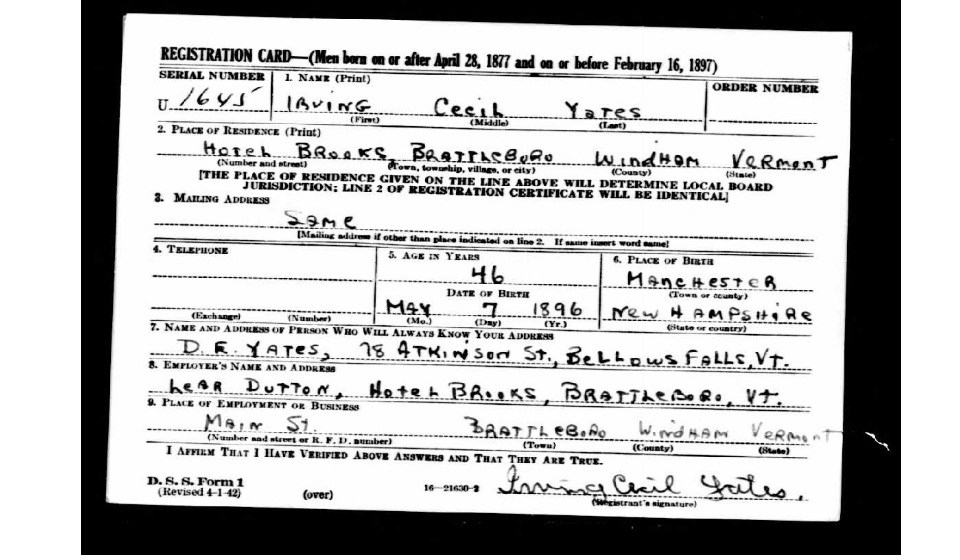
Irving C. Yates was born in Manchester, NH in 1896 and soon moved across the Connecticut River to the good ol’ land of Vermont. He lived in Bellows Falls for awhile before shipping off to Middlebury. He enlisted at the University of Vermont and trained on those hallowed grounds (my Alma Mater) until August of 1918 when he shipped out for France as part of the 6th Division, 80th Field Artillery Battalion. Presumably he worked in some capacity with 155mm guns.
After the war he moved to Brattleboro where he worked in the laundry industry. He passed away in 1975 and is buried in Oak Hill Cemetery in Bellows Falls, VT.
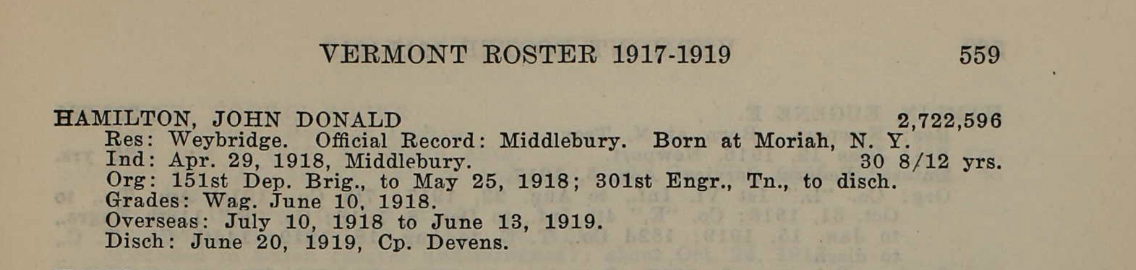
As my followers will know, I’m a huge WWI Vermont collector who loves to uncover identified photos of First World War Vermont veterans. In this case I was able to trade a series of photos to a fellow collector/friend who knew I search for identified Vermonters. The photo itself has good composition and details with a visible pistol and holster as well as OS chevron and signet rings. Mr. John D. Hamilton lived in Addison, VT and enlisted and inducted at Middlebury on April 29th, 1918. He was set up with the 301st Engineers and was listed as a wagoneer. He served overseas from July 10th, 1918 to June 13th, 1919. Given that he is wearing a six month chevron on his left arm, this photo had to have been taken sometime between December 10th, 1918 and June 10th, 1919. He has no visible insignia that give his rank, but he is wearing a brass whistle which indicates that he is likely an NCO. All in all a great shot!
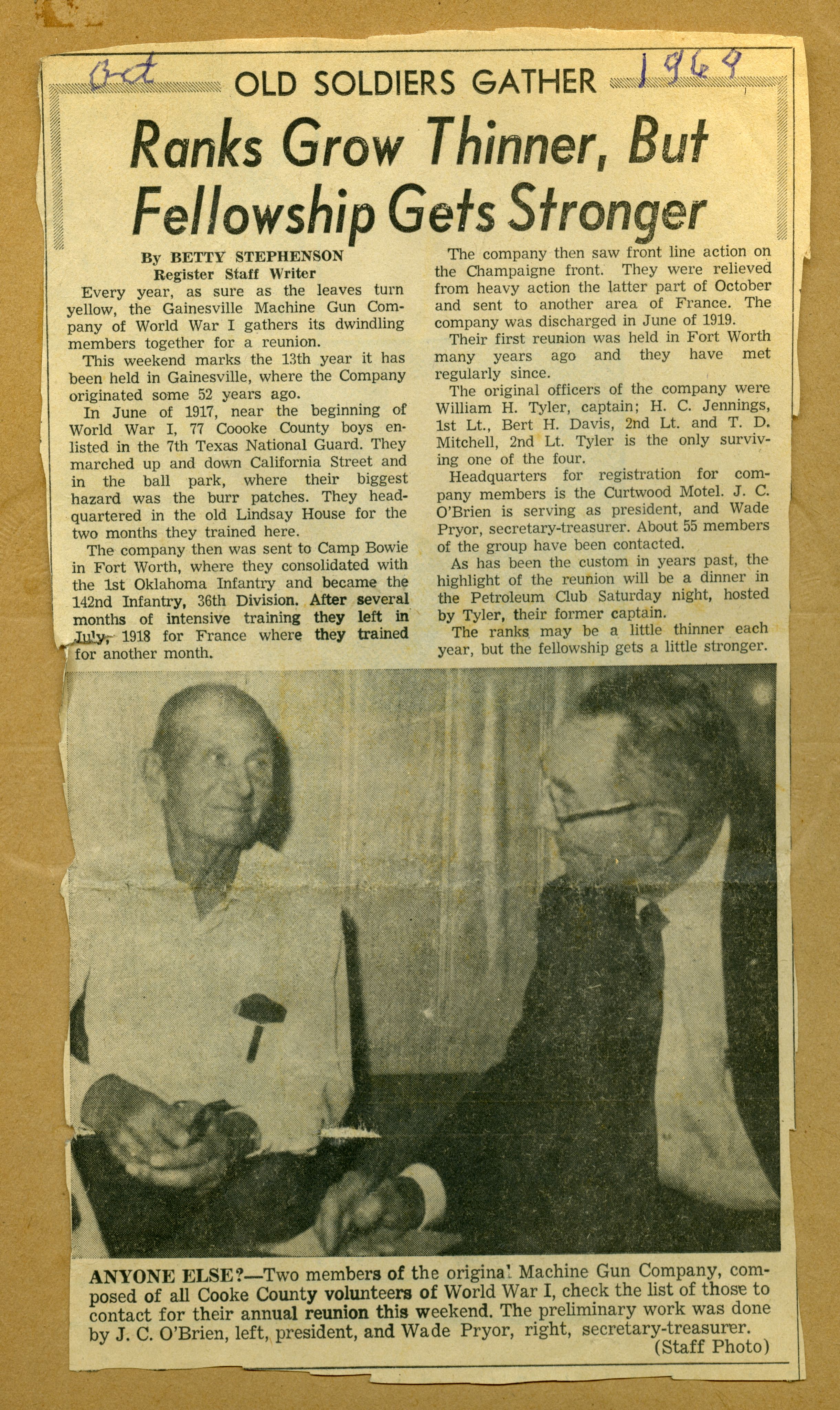
A group of WWI veterans gathered almost exactly 43 years ago to recall their days of battle and camaraderie in the trenches of France in 1918. Members of the 36th Division, 132nd Machine Gun Battalion met in Texas to tell stories, jokes, catch up with friends, and share their incredible journey with their family members. Veteran reunions for WWII soldiers still are held, but the annual flock of WWI veterans to conference centers and hotels has ceased to exist. Many of my favorite memories of the past decade have been from my attendance at WWII veteran reunions, and I suggest that anyone interested in a family members service try to attend a veteran get together.
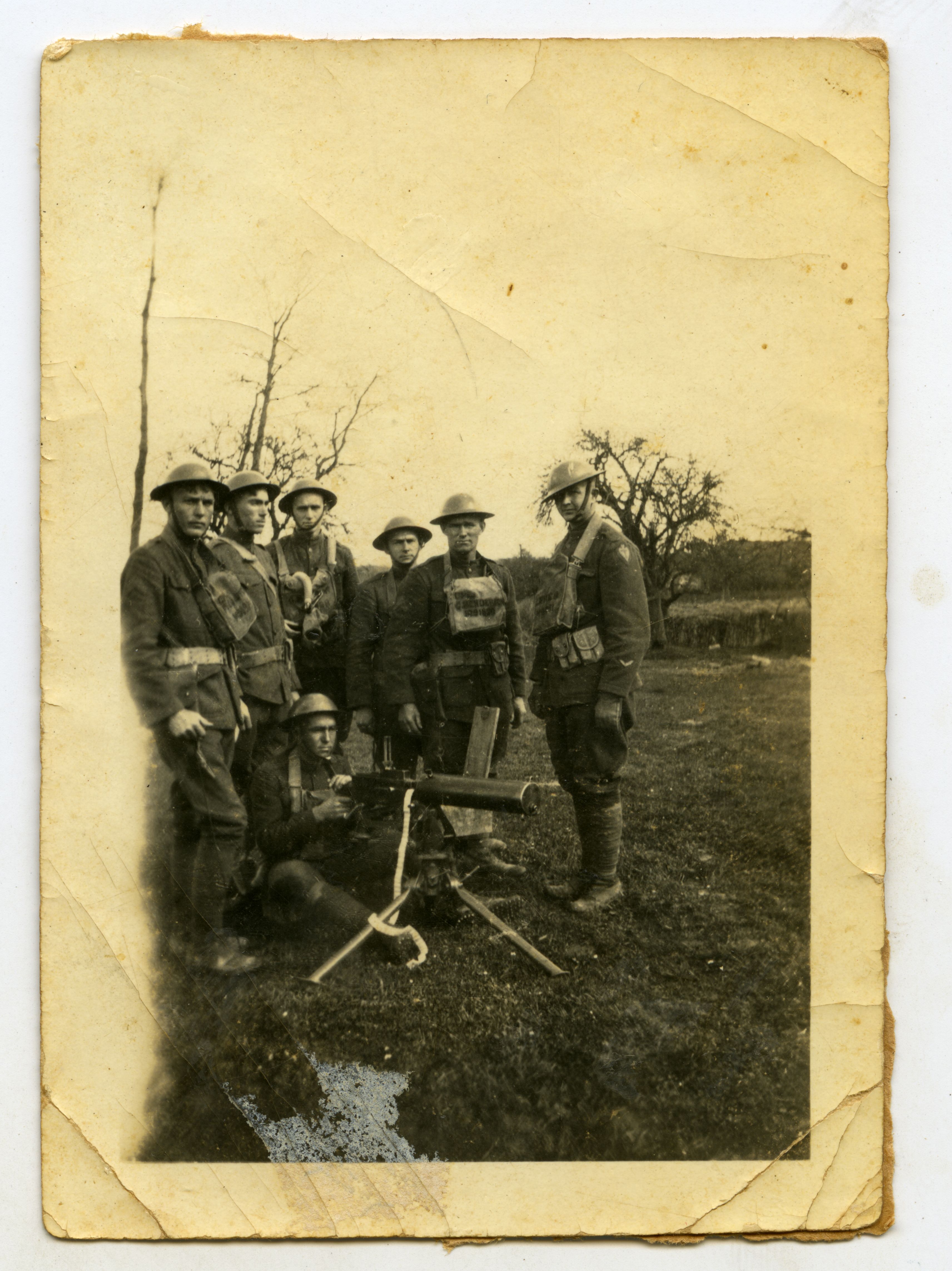
This grouping of photos and ephemera comes from a recent eBay auction I was fortunate enough to win. I was mainly bidding for the interior studio portrait photo but was pleased with the associated photos as well. These men were with the 132nd Machine Gun Battalion of the 36th Division and pose with their 30 caliber machine gun in a wonderful outdoor casual snapshot.
Following the history of the first photo is quite interesting. It was sent from the front lines of France to a girlfriend back home. I’m assuming it was pinned up by her given the rust stained pin holes at the top of the photo. It was later glued into a scrapbook which was sadly broken into pieces and eventually sold on eBay to me, who will hopefully do it due justice with a internet post. Maybe someone will recognize a relative in the photo? We know that an O.B. Horton is located somewhere in the photo, and that the group is from Texas.



















 Portraits of War