100 Years Later: Vermont’s Entry into the First World War


It has been called THE GREAT WAR and THE WAR TO END ALL WARS.

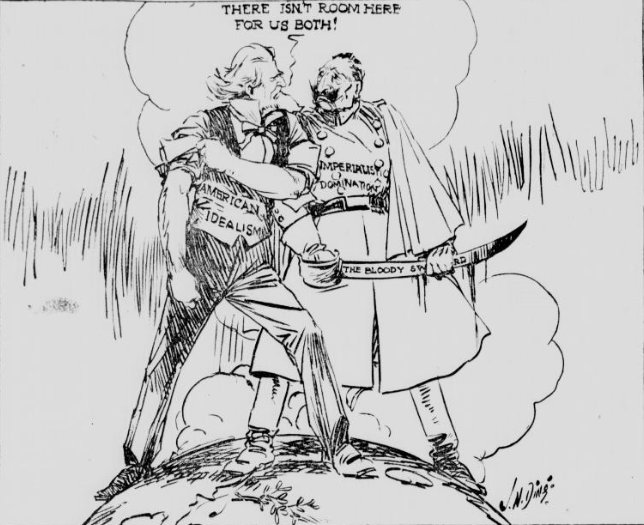
According to Tweets from WWI, the American intervention in the war can be summarized as:

There is only room for one: ‘s idealism vs. German ‘s imperialism (US caricature).

C8qcY9kWsAAUJvg.jpg large

Today, we know it as World War One (WWI). It began in 1914 and ended with an armistice at the eleventh hour of the eleventh day of the eleventh month in 1918. The global toll had already reached nearly 40 million casualties, including American losses of 117,465 dead and 204,002 wounded.

100 Years Ago Today

After War was officially declared (House and Senate) on April 6th, 1917 the U.S. began preparations to enter the quagmire of European trench warfare.

101stmg043a

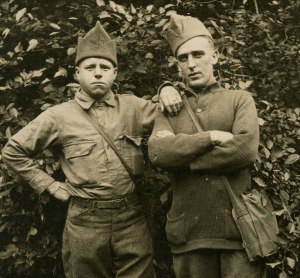
Vermonter John Corcoran (r) in WWI

In June of 1917, U.S. transport ships carrying nearly 15,000 U.S. troops (many from New England) in the American Expeditionary Force (AEF) approached the shores of France, these soldiers would join the Allied fight against the Central Powers.  They disembarked at the port of Saint Nazaire; the landing site had been kept secret because of the menace of German submarines, but by the time the Americans had lined up to take their first salute on French soil, an enthusiastic crowd had gathered to welcome them. However, the “Doughboys,” as the British referred to the green American troops, were said to be untrained and ill-equipped, untested for the rigors of fighting along the Western Front.

djpub

PortraitsofWar’s WWI Smithsonian Cover

As U.S. troops landed in France, Americans were mindful of a 125+ year old debt owed that nation. France had been the colonists’ most important ally during the Revolutionary War, having supplied money, material and military brains. The Marquis de Lafayette had fought beside Patriot soldiers, equipping some of them at his own expense. He won the affection of George Washington and became a hero to the young nation. Urged on by Lafayette, France had sent ships, troops, and arms that played a key role in the Patriots’ victory. In early July 1917, the newly arrived American Expeditionary Force troops marched under the Arc de Triomphe, cheered by the people of Paris. In a ceremony at Lafayette’s tomb, where the Frenchman lies buried under dirt from Bunker Hill, an American officer lay down a wreath of pink and white roses. Another officer stepped forward, snapped a salute, and declared: “Lafayette, we are here!”

lavallee093

Earl F. Lavallee of Winooski, VT in Germany, 1918.

As followers of PortraitsofWar will know, we take a great pride in providing interesting and never-before-seen imagery and narration of wartime photography ranging from the American Civil War to the Korean War. In most cases, I take an authentic photograph from my personal collection and work towards uncovering various details that hopefully elucidate some aspect of the photo.

101st Ammunition Train

In this case, I worked the other way around. My familiarity with the First World War history of the State of Vermont is well known to followers of this blog as well as within my home state. One of my favorite Vermont units to serve in the war was the 101st Ammunition Train of the 26th “Yankee Division”.

unnamed

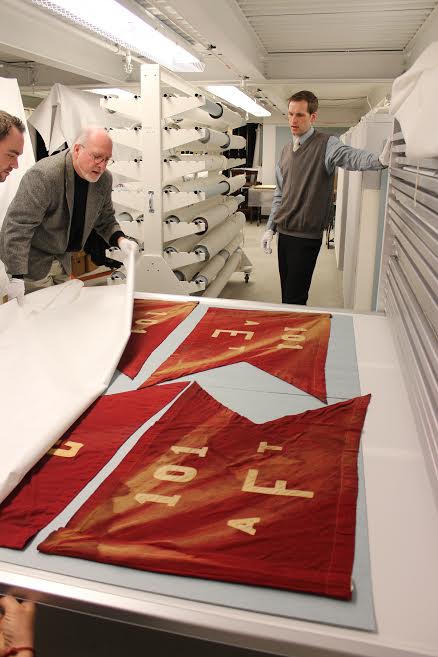
Jeannine Russell (Vermont Agency of Transportation Archaeology Officer), Myself (Vermont Agency of Transportation Archaeologist) and David Schütz (Vermont State Curator) inspecting WWI flags

Only a week ago I was lucky enough to be invited into the bowels of the Vermont Historical Society storage area to inspect a series of American Civil War flags with a few colleagues of mine from work. While in the holding area I mentioned that a series of WWI groups had donated regimental flags and/or guidons to the State of Vermont in the years following the war.

Although I can be a bit fuzzy in my recollections, I apparently had my facts straight and we moved a series of shelves to uncover the aforementioned flags. As I fingered through the labels I instantly recognized the attribution: 101st flags. Please see below for a bit of insight into my recollection…

vermont unit

101st Ammunition Train Guidon Donation Alert, Burlington Free Press, February, 1919

Ok – So my first attempt at searching on the Library of Congress Newspaper website turned up only one reference to the flags, I kept searching (tried COLORS) and came up with this…

flagspresented

Flags presented

The above snippit from a 1919 Burlington Free Press article reads:

Colors Presented

War Flags and Shields Presented to State

Montpelier, Oct. 23 – The presentation of the colors and shields of the organizations from Vermont participating in the the world war occurred this evening in the State House with some 200 veterans attending and over 400 spectators in the seats of the representative hall and balcony.

The services were fitting and were attended by many of the men who have been prominent in the connection with the war. Col. F.B. Thomas presided over the exercise and the program carried out consisted of the “History of the 57th Pioneer Infantry” Capt. Ernest W. Gibson – Brattleboro

Presentation of colors – First Vermont and 57th Pioneer Infantry, Col. F. B. Thomas… History and presentation of colors of 302nd Field Artillery , Color Sergeant Albert J. Seguin of Newport.

History and presentation of 101st Ammunition Train Col. William J. Keville of Boston Mass.

Presentation of guidon, Company E. 101st Ammunition Train, Capt. Harold M. Howe of Northfield, VT.

co#

Ca. 1919 Co. E101st Ammunition Train guidon photo (from Brennan C. Gauthier Collection)

Presentation of guidon, Company F 101st Ammunition Train, Captain McMath

Presentation of guidon, Company G, 101st Ammunition Train, Chester Mooney of Newport.

As I stated earlier, I remembered the fact that the 101st and the 302nd had presented the State of Vermont with standards and guidons from prominent units representing Vermont involvement in the war. The following photos show the results of my inquiries:

unnamed

Left to Right: Jeannine Russell (Vermont Agency of Transportation Archaeology Officer), Myself (Vermont Agency of Transportation Archaeologist) an David Schütz (Vermont State Curator)

In the above photo we have just unrolled the 101st Ammunition Train guidons from their muslin cocoons. Present are representative samples of Co. C, G, F and E of the 101st. Each of these matches with the above 1919 article. How amazing is it to read a 98 year old article about a presentation and see the EXACT pieces in living color?

I’m particular excited about the Co. E guidon. I own a ratty panoramic photo taken of the unit when they returned in 1919. Click here to see ever single facial feature of the men in that group.

Ok – so here’s a photo of the guidon taken right before donation in 1919:

co#

And here’s the guidon today (my big head is at the left edge of the frame):

F company 1

WWI guidons of the 101st Ammunition Train

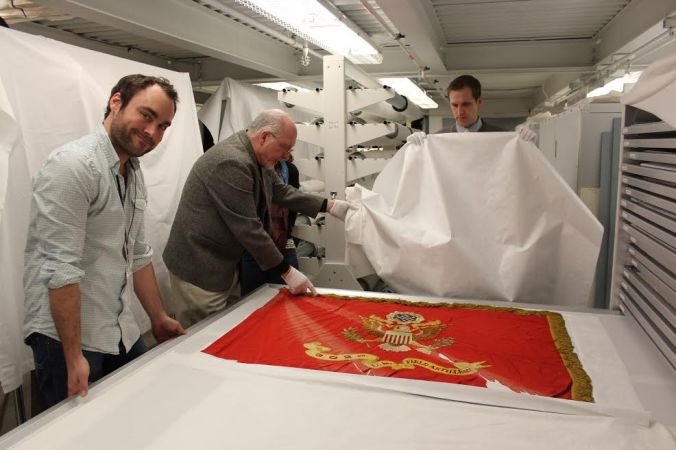
Also, I requested that the regimental flag of the 302nd Field Artillery be brought out for photographing. Special thanks to Jonathan Croft for being the photographer!

302nd

302nd Field Artillery

Has it really been 100 years?

Thanksgiving in the First World War: U.S.Base Hospital #6 Holiday Menu Card


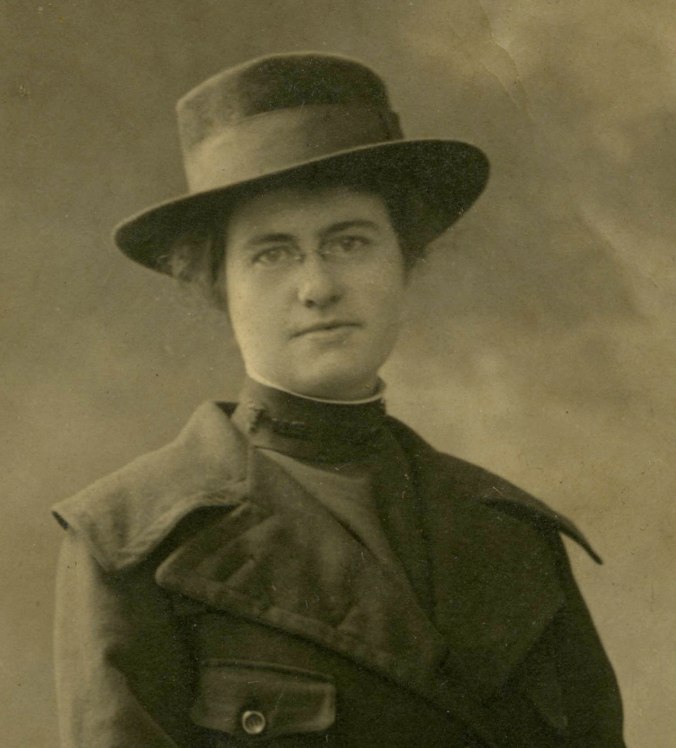
I’ve been lucky in the past few years to pick up some fun WWI shots of US female nurses and auxiliary service members photographed while serving overseas in 1918 and 1919.  US women in France were vastly outnumbered by their male counterparts, and to be able to positively identify a nurse is a fun way to learn about female service roles during the war.  In this case, I was able to purchase a small group of photos and a Thanksgiving menu from a woman in Base Hospital #6 stationed in Bordeaux, France during the war.  The standing studio portrait was identified on the reverse as H.K. Judd of Base Hospital 6.  On a whim I searched for Helen K. Judd (thinking that Helen was a likely candidate for H) and came up with a positive hit on a woman named Helen K. Judd from Southhampton, Mass.  I cross referenced with the digitized passport records from 1917 and 1918 and had a positive match.  Luckily the passport applications come with little snapshots of the applicants.   The amount of material available to identify WWI photos is incredible.

basehospital038

Base Hospital #6 Thanksgiving Menu

So what was served up on Thanksgiving, 1918? 

Given the recent cessation of hostilities on November 11th, the nurses and ailing soldiers of the AEF had a lot to be thankful for in 1918.  How did they celebrate?

US Dietitian Ellen W. Wells was someone who likely put together the well-rounded meal seen in the above menu.  With appetizers of celery and olives, the nurses, doctors and assorted hospital staff and wounded next moved to a main course of roast stuffed turkey, apple sauce, mashed potatoes, green peas and creamed onions.  For desert they gorged on mince pie and an oddity in Europe, pumpkin pie.  After dinner snacks included fruit, nuts, raisins, bon-bons and coffee.  And to top it all off, the men and women were provided with cigars.  What a meal!

basehospital037a

Helen K. Judd in France, 1918

WWI RPPC Photo – South Dakota Quartermaster Veteran Identified


Balancing work life, house chores, being social, and collecting WWI photos can be a daunting task; too much investment in one area can lead to neglect in another.  As is the case of my life as of June, 2016.  Luckily, I’m making a solstice dedication (is that a thing?) to posting more of my identified material in hopes of reuniting family members with deceased relatives.

In tonight’s post, I’ve purchased and researched a photo in the course of one calendar week with some positive results.  As you may know, veterans with interesting surnames are typically easier to identify, and this post is an example of one of these researching ventures.

Quartermasterwebsized

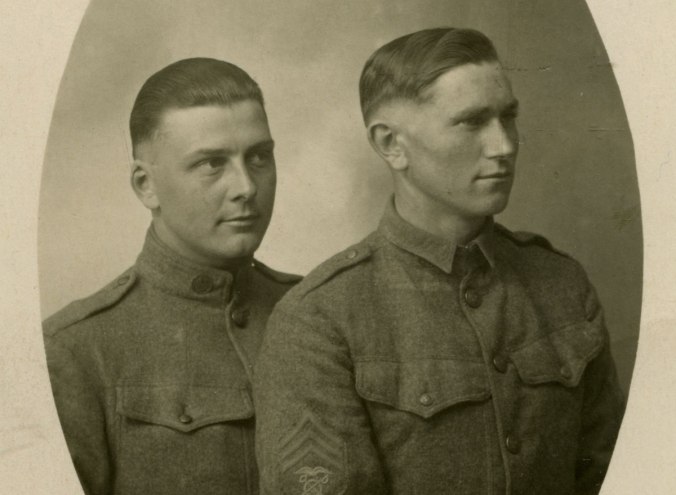
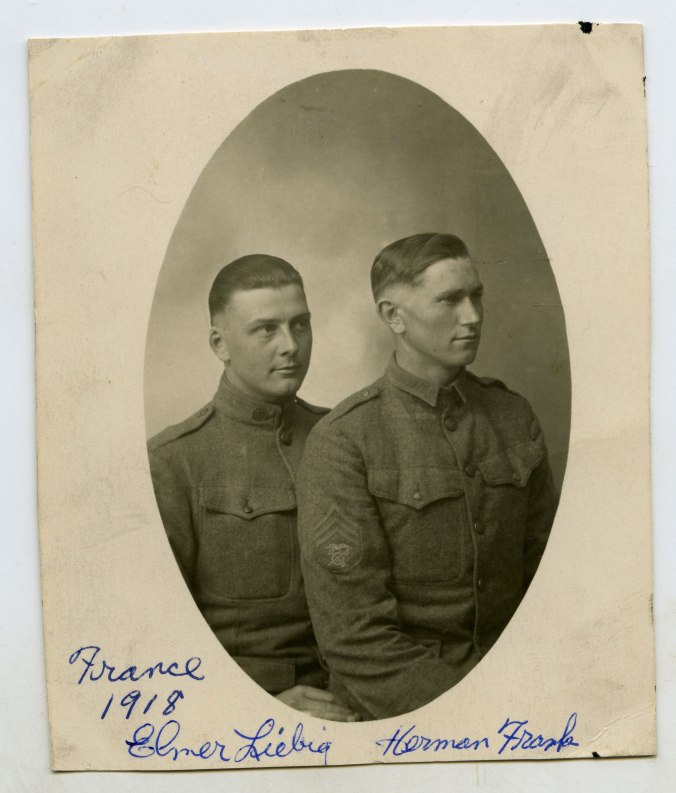
Elmer Liebig (at left)

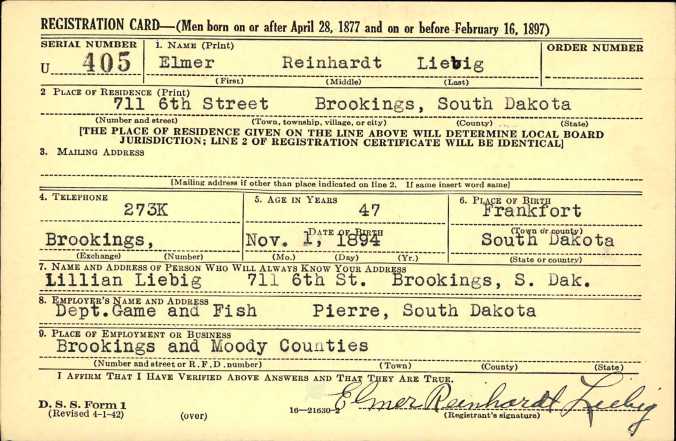
Elmer Reinhardt Liebig was born on November 1st, 1894 in Spink, South Dakota, the son of two German immigrants.  Having served in a Quartermaster unit during WWI, he went on to own and run a pool hall in his hometown for a number of years until operating as a salesman until the 1940s, where he eventually ended up with the South Dakota Department of Fish and Game, acting as a warden for Brookings an Moody Counties.

elmerliebig

WWII Draft Registration

Quartermaster

Full Photo Scan

WWI Balloon Company Winch Truck – A French Latil Mystery Story


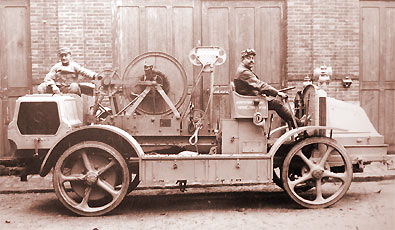
I paid a pretty penny for a dozen photos from the 20th Balloon Company (WWI, American) specifically for this photograph.  I’m attracted to obscure and strange photography, and this photo is an anomaly for WWI image collectors.  What the heck is going on?

20th Balloon Company Winch Truck

20th Balloon Company Winch Truck

The vehicle/tractor/truck in the image was something I’ve never encountered.  I knew it was related to a balloon company, and the large drum on the back alerted me to the fact that it likely was meant to hold and retract cable wire.  But how could I figure out the make and model of the vehicle?  Balloon Company information is difficult to identify through google searches, but I was able to make some leads by searching in French!

Latil Truck

Latil Truck


My first hit came with a French search for “winch truck” and provided the above image.  I now knew that the Latil Company made heavy 4×4 vehicles for the French army during WWI and provided the American Expeditionary Forces with balloon winches!

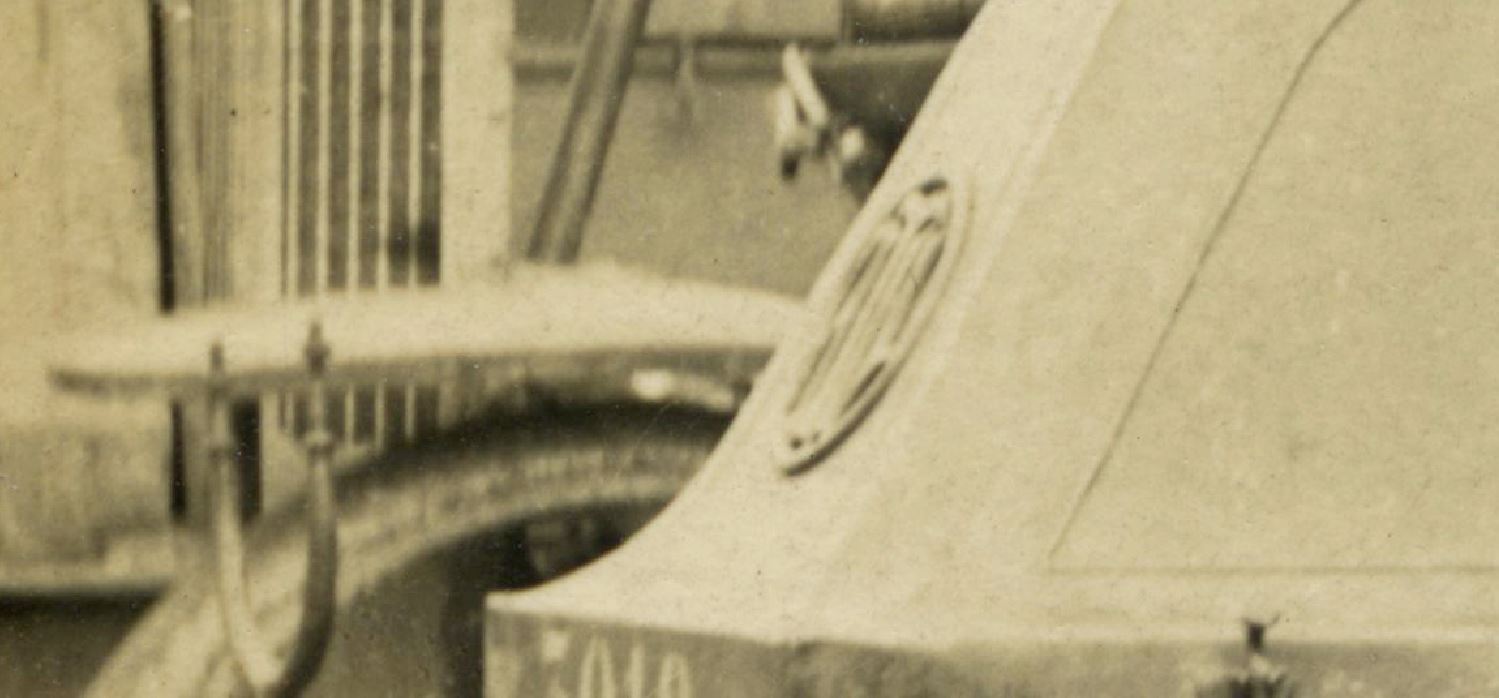
I couldn’t quite make out the grill badge in the image I purchased……

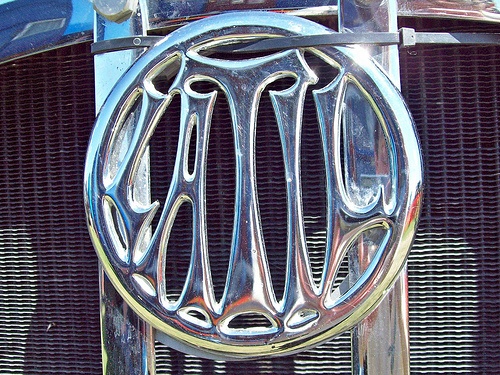
Mystery WWI Badge

Mystery WWI Badge

But I was able to figure it out after my French language search…

The Latil trucks/tractors were originally made to tow 155mm guns, but they were retrofitted to accept heavy-duty winches to support the observation balloons used by the 20th Balloon Company.  The Latil company would later be absorbed into Renault….

Lentil Artillery Tow

Latil Artillery Tow

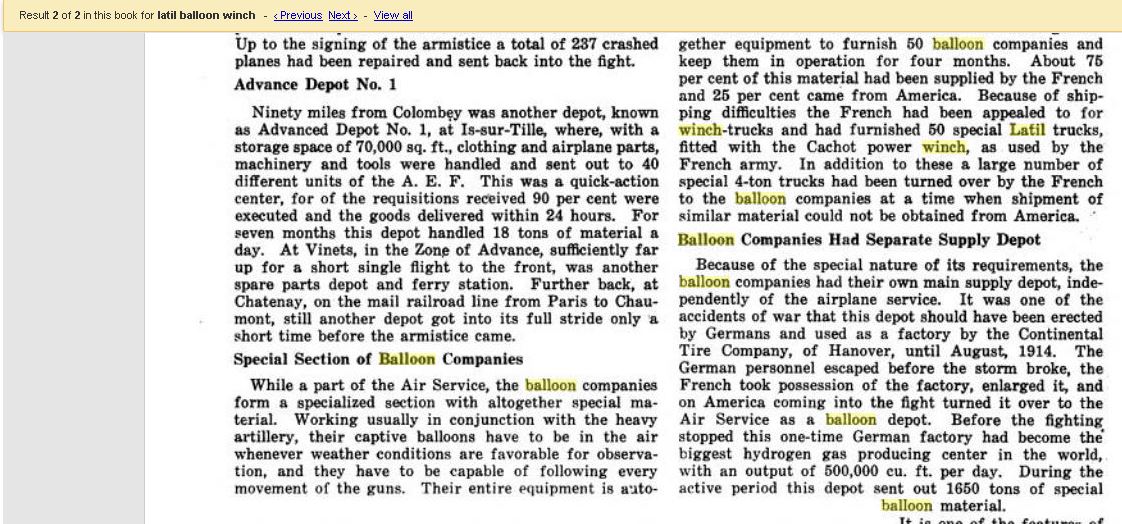
And according to a ca. 1919 publication, only 50 of these trucks were made specifically for the AEF during WWI.  They were outfitted with Cachot power winches (seen in the rear of the head image) to retract the balloons after observation was achieved.


tumblr_nevs0kD8eQ1s8u38co1_1280

Latil in Action  – Courtesy LOC

Special thanks to the Transport Journal  blog!

Check out this specific post to learn more about the Latil:

latil

And another blog picked up the Latil story: http://justacarguy.blogspot.com.br/2015/11/ww1-observation-blimp-and-tow-truck-i.html

WWI Ohio Soldier Research – Defiance, Ohio Soldiers Identified as Ward Family Veterans


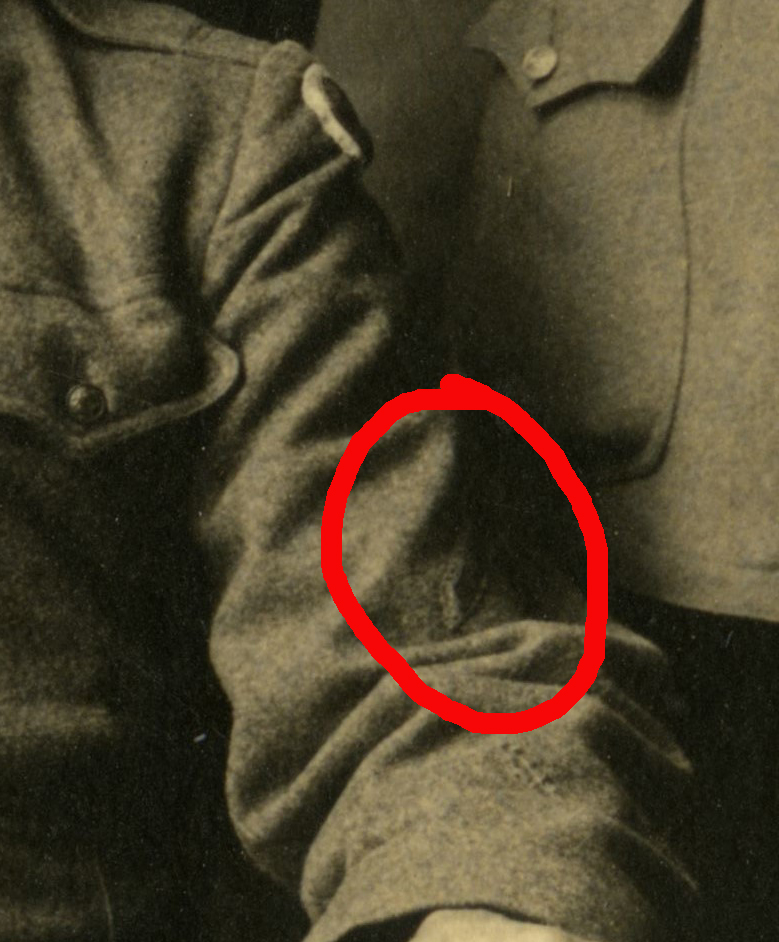
A recent eBay purchase has been incredibly fun to research and has yielded some solid and fulfilling results.  I purchased a group photo of four US soldiers posing in an American studio immediately following the war.  How do we know they are in an American studio?  The veteran at center is wearing a WWI Discharge Chevron, also known as a Discharge Stripe or Honorable Discharge Stripe, which indicates that the soldier has been discharged from his service and can wear his uniform in public with the proviso that he affixes the chevron.  Apparently, it was possible to be arrested for wearing a service uniform without the stripe after three months following discharge.
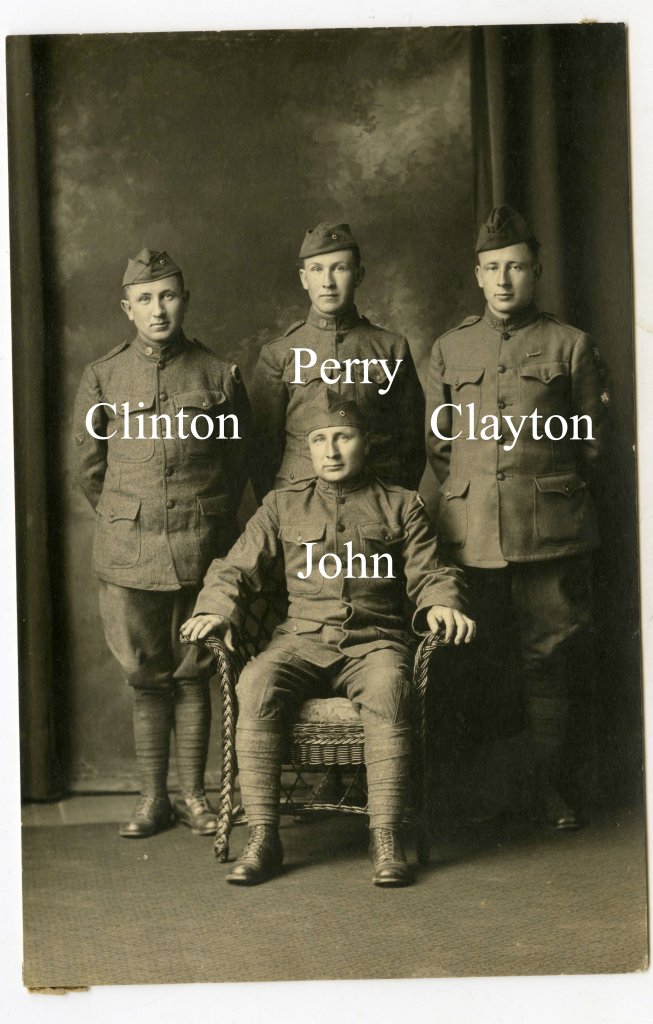
Ward Brothers

Ward Brothers

A fellow WWI researcher (Brian – AKA WWINERD) posted the following information on a popular militaria web forum:

“Thus far, I’ve been unable to locate any specific General Orders either from the War Department or from the U.S. Army concerning the red discharge chevron, which I believe was adopted early in 1919. However, I do know that:

  • Each discharged soldier was issued with three discharge chevrons. Officers had to purchase their own.
  • Upon being discharged from service, the uniform could be worn for a maximum of three months without the red discharge chevron.
  • If the uniform was worn after the three month period had expired, the person wearing it could be charged with the offense of impersonating a soldier.
  • If the uniform was never worn again the discharge chevron did not have to be sewn on.
  • As soon as a soldier received his discharge papers he became a civilian, and he was no longer obligated to salute a superior officer.

These and other facts pertaining to the uniform and discharge chevron were explained in a post war pamphlet handed out to Doughboys before they mustered out of the Army. It partially read as follows:
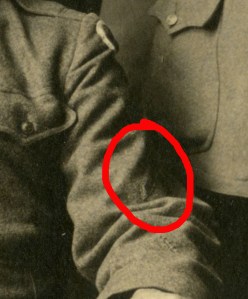
John Ward's Discharge Stripe

John Ward’s Discharge Stripe

The Uniform

If it is your desire to go home in uniform, it is your privilege to do so, under full grant of an act of Congress. You may wear your issue uniform as long as it hangs together if you wish. It is yours. But do not let a minute pass, after being discharged, until you have sewn on, or had sewn on a red chevron, point up, midway between the elbow and the shoulder on the left sleeve.

The wearing of any gold, silver, or metal device indicating service is forbidden. Only regulation service chevrons and collar insignia are authorized by law and regulations. Wound and service chevrons for service in any of the Allied Armies are included in that authorization. Can all camouflage.

Remember in wearing the uniform, that all of its privileges are yours, with none of the restraints. You are a civilian. There is no law or regulation or tradition requiring you to salute an officer. But so long as the O. D. or the Navy blue or the Marine green covers your body, it should be your pride as one with a military training, and as a soldier who participated in the Great War, to be courteous.”

Where Do We Go from Here: This is the Real Dope, 1919, William Brown Meloney, page 21, 22

Ok – so we know the photo was taken stateside at some point after the war, but recent enough to warrant a group shot of all four men in uniform.  The photo trifold mount had “Ward Boys” scribbed on it with no additional identifying information.  The seller was from Ohio, so I started with a basic search for Ohio veterans with the last name of Ward.  Big mistake……. There were nearly a hundred men with the last name of Ward who served in Ohio during the war.  Take a deep breath…..

I needed to narrow down the search and the image itself provides a very good way in which to identify one of the soldiers based on his patches.

Clayton Ward

Clayton Ward

See those patches on his left sleeve? They’re from a very famous unit that served in Italy during the war.  In fact, this is an incredibly rare shot that depicts a soldier wearing regimental, divisional and army level patches along with the discharge chevron previously mentioned.  Ok – so we know one of the Ward Boys was in the 332nd Infantry Regiment.  Since the typical US regiment during the war varied between 1000-2000 (roughly), it’s highly unlikely that two men with the last name of Ward were likely to both be from Ohio.  Luckily, my research gamble paid off……

Clayton Ward, H Co. 332nd Infantry Regiment

Clayton Ward, H Co. 332nd Infantry Regiment

Bingo!  After interpreting the abbreviated information in the Ohio WWI book, I was able to determine that Clayton was born in Defiance, Ohio, was 24 years of age, and served with Company H of the 332nd Infantry Regiment.  With the place of birth info, I was able to identify all the additional men in the photo using clues present on each of their uniforms.

A quick search for the 1910 US census record for the Clayton Ward provided me with the names of his brothers:

1910 US Census

1910 US Census

With the census in hand, I was able to make out a few names of brothers who were of-age to serve during WWI.  Clint (short for Clinton) and Perry were easy enough to research.  The same Ohio reference book provided the following:

Clinton Perry

Clinton Ward

Perry Ward

Perry Ward

Based on the information provided in the reference book, Clinton Ward, age 26 1/12 at the time, enlisted with Company G of the 6th Infantry of the Ohio National Guard.  This unit was federalized and became Company G of the 147th Infantry Regiment.  He rose to the rank of Private First Class on May 15th, 1918.  Since I’ve memorized the rank insignia of the AEF, I was able to quick pick him out.
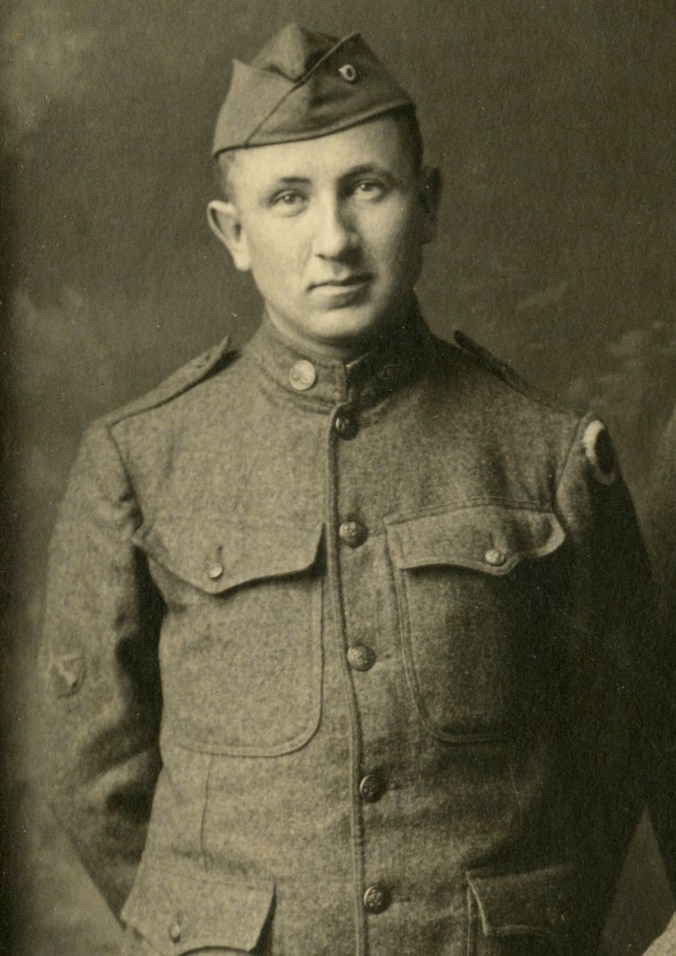
Clinton Ward

Clinton Ward

See the round patch on his right arm?  That’s the rank insignia worn by a Private 1st Class during WWI.  I’m including a generic view of the patch below:

Since he’s the only one wearing a Pvt. 1st Class patch in the photo, plus the addition of infantry regiment collar discs, he’s almost certainly Clinton.

Perry Ward

Perry Ward

Although it’s tough to make out in the scan, the soldier is clearly wearing a collar disc that depicts a set of crossed cannon.  This would indicate service in an artillery unit during the war.   Perry’s reference in the aforementioned Ohio WWI book shows that he served with the 52nd Coastal Artillery Company during WWI, which would be supplied with these exact collar discs.

WWI Artillery Collar Disc

WWI Artillery Collar Disc

At this point, I’ve been able to identify three of the four soldiers in the photo based on archival research, visual interpretation and identification of key pieces of military insignia, and a gut feeling.  The last soldier, shown sitting turned out to be a tough nut to crack.

John Ward

John Ward

Ok – so what do we see in the photo?

  • A seated male, appearing to be the oldest based on facial details
  • A 37th Division patch on the left sleeve
  • A discharge chevron and overseas service chevron
  • Corporal rank insignia on the right sleeve
  • Infantry collar disc

In essence, we have an older-looking corporal from the 37th division who served for at least six months (the service chevron) overseas in an infantry regiment.  A detailed search of the Ward’s who served from Ohio in WWI yielded the only possible candidate:

John Ward War Record

John Ward War Record

John Alvin Ward was a brother who separated from the family early in life (no idea why) and eventually rose to the rank of corporal in WWI as part of the 147th Infantry Regiment.  It was tough to parse out the details regarding his upbringing, but the following Social Security information confirms that he was indeed from the Ward family of Defiance, Ohio.

Social Security Records

Social Security Records

At first I was confused about the portion mentioning his father being identified as a William H. Ward, but upon further genealogical research it became clear that his father commonly switched his first and middle names; this is a common practice that becomes terribly difficult for researchers.

So, we have the older brother who left the family and posed with his brothers after returning home from war in 1919.  Sadly, the photograph was discarded at some point and made it’s way into the eBay chain; eventually ending up on the desk of an intrepid WWI researcher (Me!) who was able to bring some context to the photo using easily-accessible internet resources.  I hope I’ve inspired some readers to delve into their own collections of photos in hopes of giving a name to the faces sitting in photo binders and dusty drawers.

Interested in researching Ohio World War One veterans?  Check out the following book:

The Official Roster of Ohio Soldiers, Sailors, and Marines in the World War, 1917-18. Columbus, OH, USA: The F.J. Heer Printing Co., 1926.

Dogs of War: A Saint Bernard Mascot – 67th Coastal Artillery Company Veteran “Barney”


It’s been a long time since I’ve posted here to PortraitsofWar, so I’m taking a quick moment to add a recently acquired real photo postcard of a St. Bernard mascot from the 67th Coastal Artillery Company. He’s even sporting his own uniform!  Check out the 1st Army variant patch with the 67 denoting the unit number and a double overseas chevron for a year of service.  Good work Barney!

Mascot photos are one of my favorite avenues of WWI photo collecting. They are relatively hard to come by and are tough to research.  All the better for a unique challenge when trolling through the pages of eBay.


Barney the St. Bernard in WWI

Barney the St. Bernard in WWI

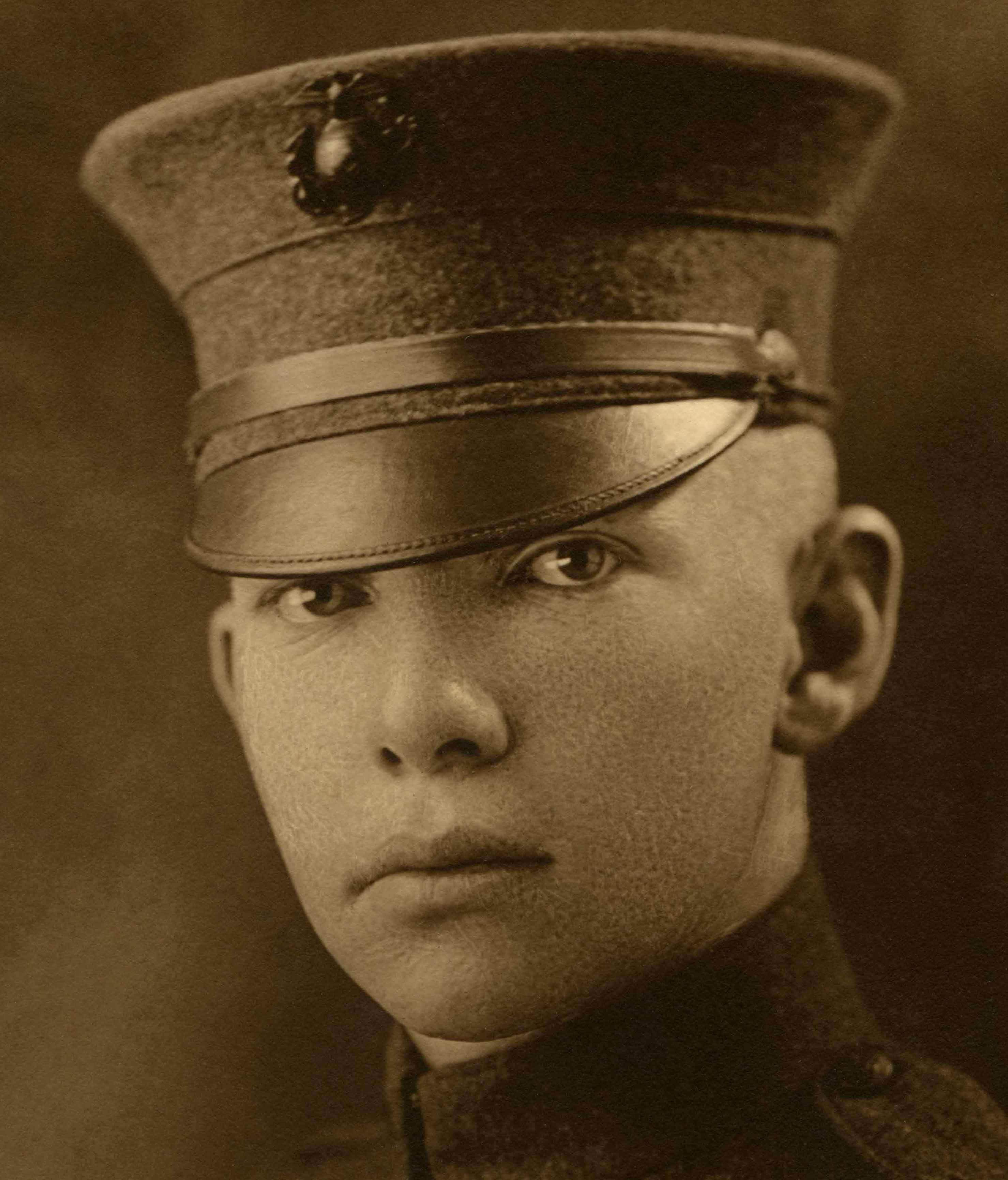
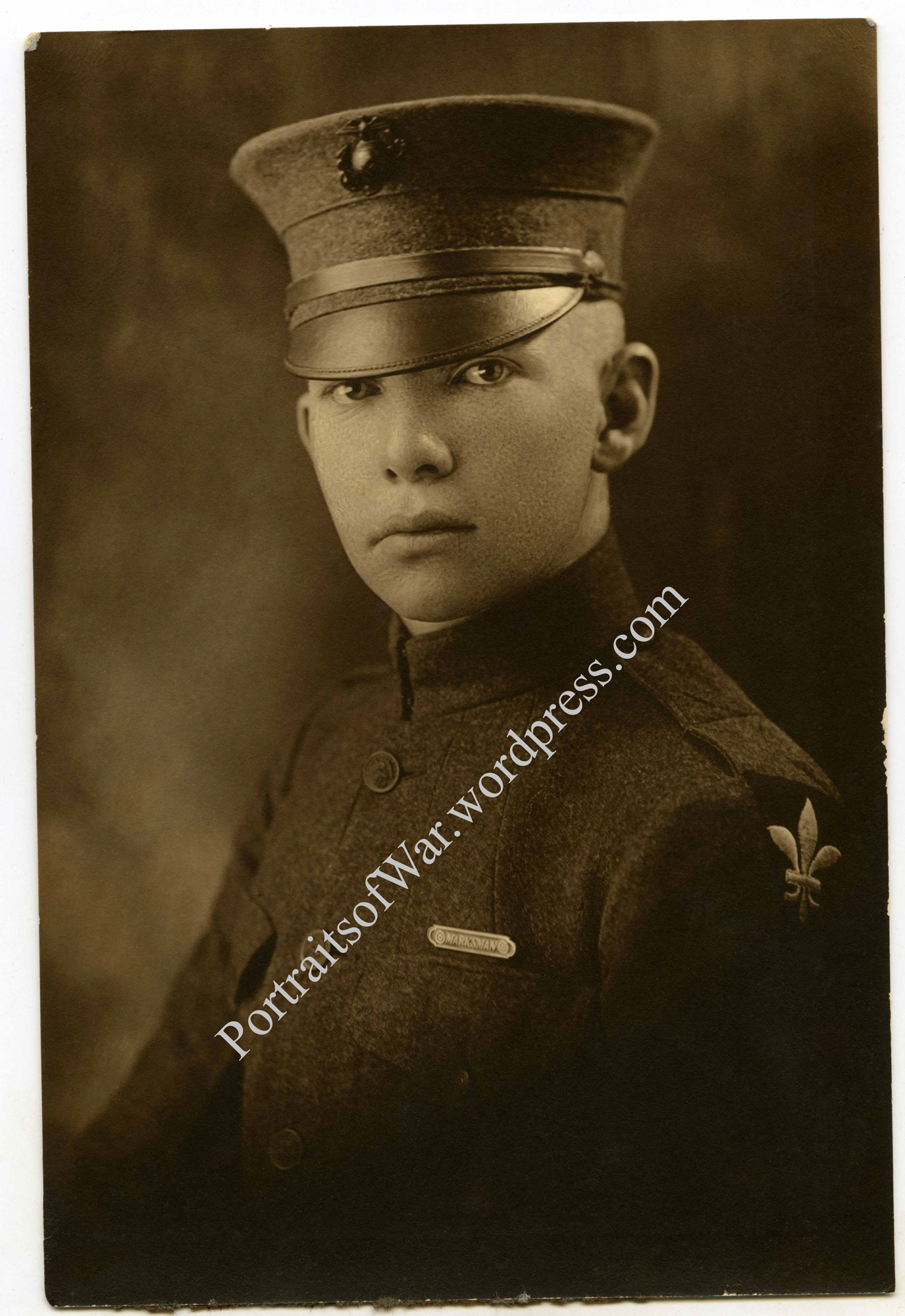
WWI USMC Marine Portrait Photo – Anonymous US Marine Serves in Paris w/ Patch


The identity of the sitter is lost to history, but I’m hoping someone on the WWW may help put a name to the sitter.  US Marines sporting District of Paris patches are hard to find photographically, and this unnamed leatherneck is begging to be identified.

Paris Marine Headshot

Paris Marine Headshot


District of Paris USMC Patch Photo

District of Paris USMC Patch Photo


Example of District of Paris Patch (Griffin Militaria)

Example of District of Paris Patch (Griffin Militaria)

Women of the YMCA in WWI: Kittie Kunz’s Service in YMCA Hut 16


Material related to wartime (and postwar) activities of the YMCA can be easily researched through the help of internet databases, digitized books, collectors forums and various other digital avenues.  What is lacking, however, is information directly related to the individuals who volunteered their time and money to travel to a foreign county to serve donuts to war-weary doughboys waiting to return to their families in the US.

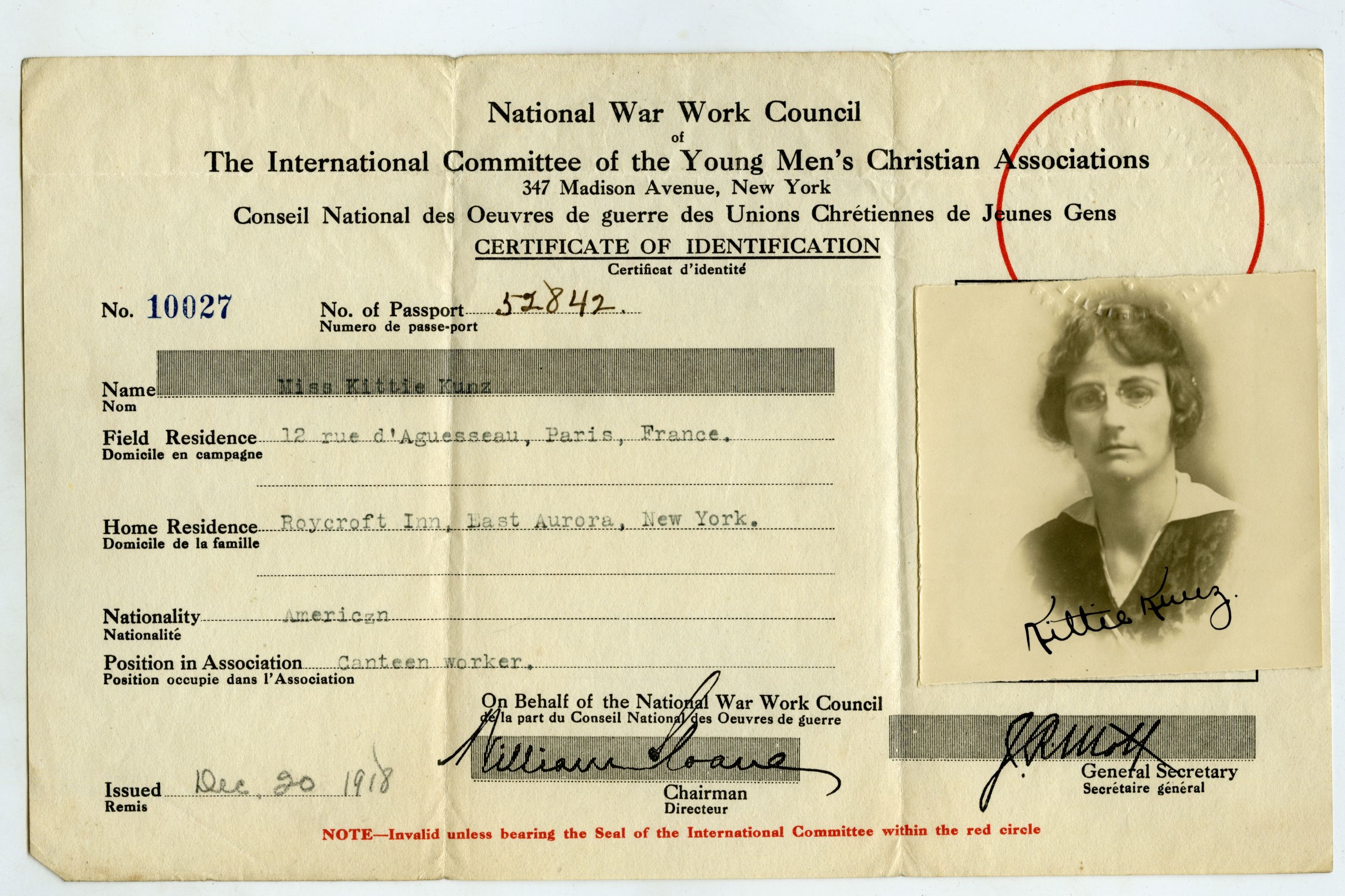
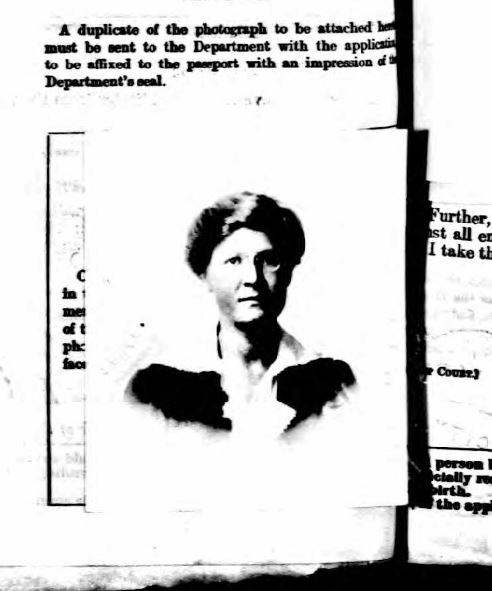
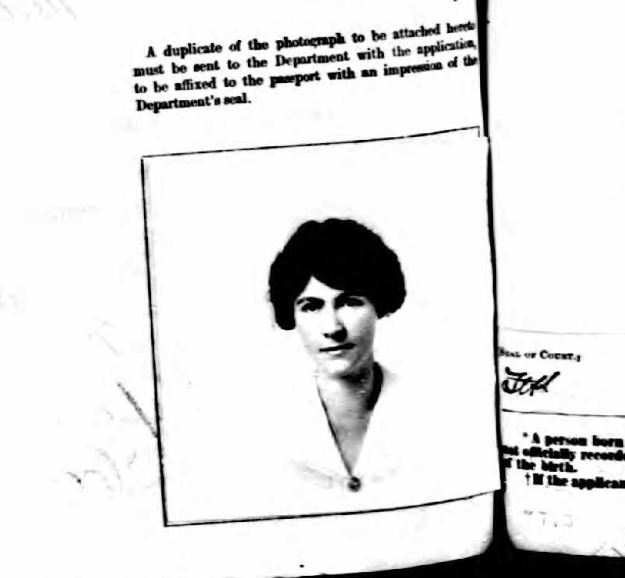
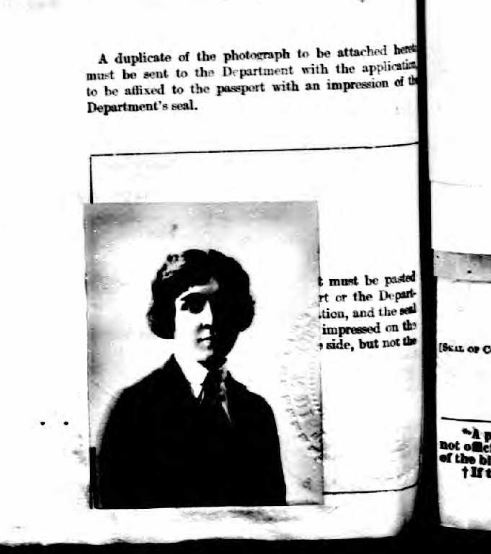
I was lucky enough to track down a large grouping of ephemera collected during the war by a YMCA canteen entertainer, a Miss Kittie Kunz.  Included in the grouping is a selection of rare YMCA “unit history” paperwork which gives names and identities to many of the women and men who served alongside Kittie.  I researched each of the names in hopes of tracking down passport application portraits.  I was overwhelmingly successful and found nearly 75% of the names in the US Passport database that matched perfectly.  Each was listed as being a member of the YMCA or Red Cross, and each matches the date range for the YMCA hut. A neat find!  Please read on to see the faces of the women who served alongside Kittie.  You will also find a smattering of hard-to-find ephemera related to the YMCA.  It’s amazing that Kittie saved some of these items.  Not all the paperwork is contained in this post, but the scanned material gives a quick glimpse into the typical material a YMCA canteen worker would deal with.

Kittie Kunz's YMCA ID

Kittie Kunz’s YMCA ID


Kittie's YMCA Paris Travel Permit

Kittie’s YMCA Paris Travel Permit

WWITruck077

Kittie’s YMCA Paris Travel Permit Reverse

Kittie's Permit to Travel to Reims

Kittie’s Permit to Travel to Reims

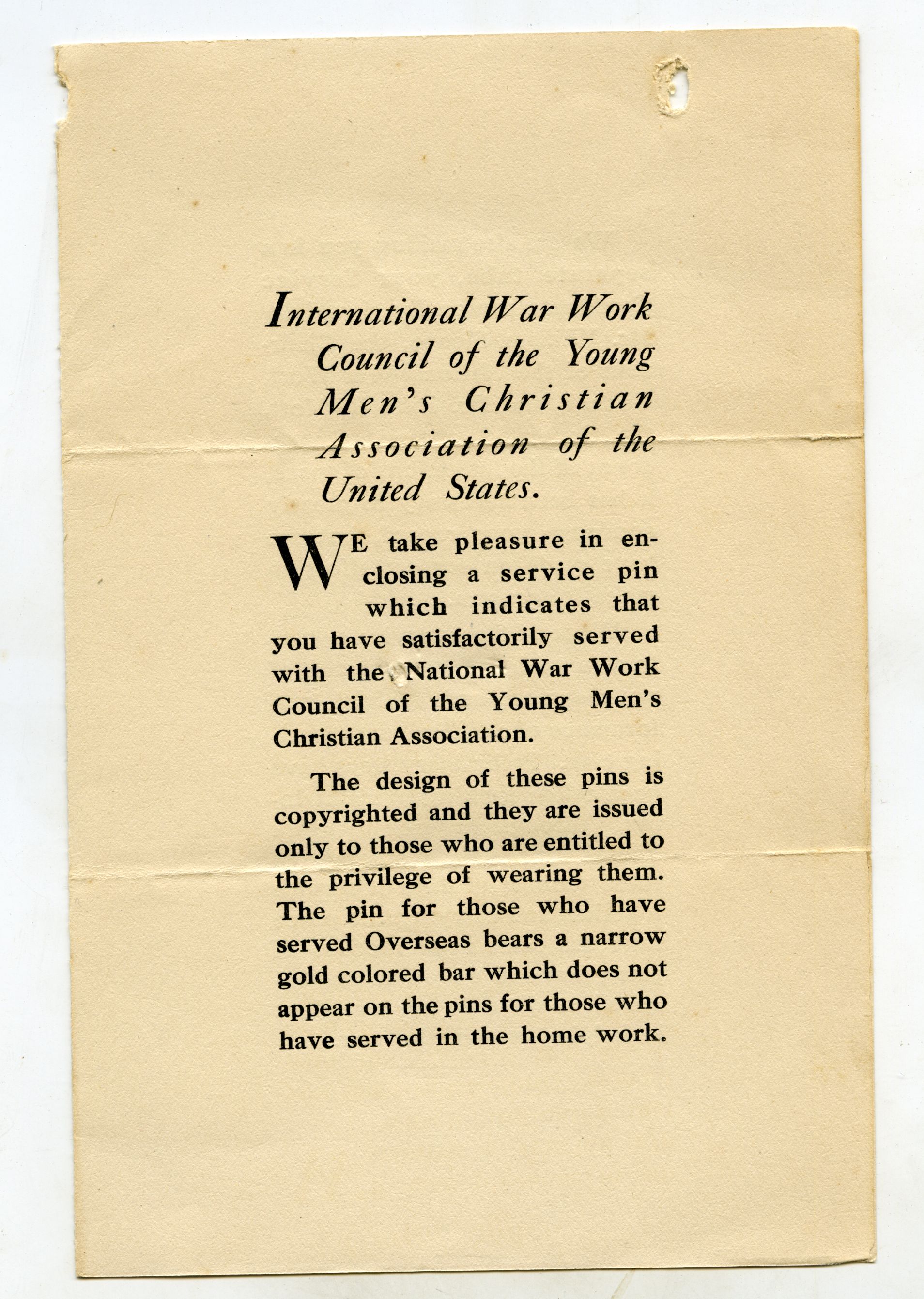
YMCA War Service Pin Card

YMCA War Service Pin Card

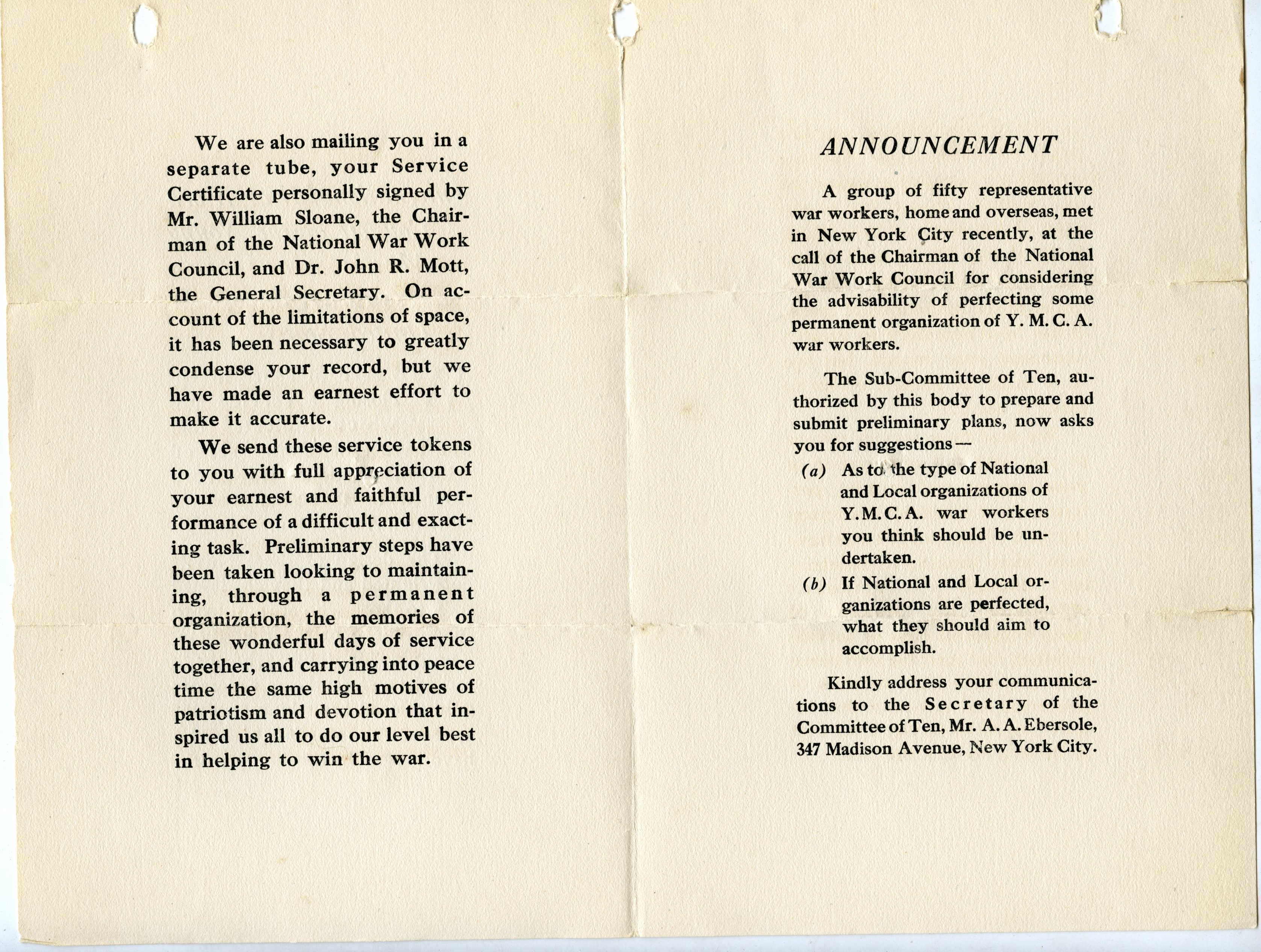
YMCA War Service Pin Card Interior

YMCA War Service Pin Card Interior

Tea Service Notice for the 28th Division

Tea Service Notice for the 28th Division


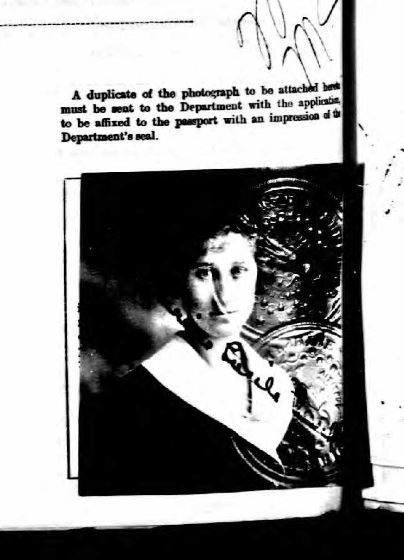
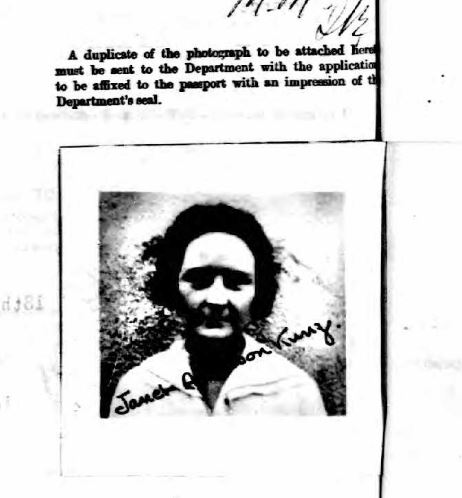
Here is where my favorite piece of researching WWI material came handy….. I was able to research the names of the women listed in the distribution section and track down their WWI era passport applications.  Here are my results:

YMCA Women

Miss Gertrude Garden - YMCA

Miss Gertrude Garden – YMCA


Miss Dorothy Berry - YMCA

Miss Dorothy Berry – YMCA

Harriet McKenzie - YMCA

Harriet McKenzie – YMCA

Margaret Robinson - YMCA

Margaret Robinson – YMCA

Katherine Parks - YMCA

Katherine Parks – YMCA


Janet Kunz - YMCA (sister to Kittie Kunz)

Janet Kunz – YMCA (sister to Kittie Kunz)

Kittie Kunz - YMCA

Kittie Kunz – YMCA

Pauline Brown - YMCA

Pauline Brown – YMCA


Mary Waden - YMCA

Mary Waden – YMCA

Dora Lewis - YMCA

Dora Lewis – YMCA

Katherine Beakes - YMCA

Katherine Beakes – YMCA

Cora A. Kennedy - YMCA

Cora A. Kennedy – YMCA


RED CROSS WOMEN

Lois Loyhed - Red Cross

Lois Loyhed – Red Cross

Harriet Maxon - Red Cross

Harriet Maxon – Red Cross

Dorothy Peters - Red Cross

Dorothy Peters – Red Cross

Alice McCoy - Red Cross

Alice McCoy – Red Cross

Esther Edmondson - Red Cross

Esther Edmondson – Red Cross

Mary Jones - Red Cross

Mary Jones – Red Cross

Eleanor Little - Red Cross

Eleanor Little – Red Cross

Mary Healy - Red Cross

Mary Healy – Red Cross

A Mormon Missionary in WWI: Battling Influenza in American Samoa


Byron Miller in World War One

Byron Miller in World War One

When searching for new portraiture to add to PortraitsofWar I generally tend to look for material with identifiable soldiers, uniforms, medals and other researchable information to help shed light on life during wartime.   In this post, I will be researching a photograph of a US Navy sailor who caught my eye during a recent eBay search.

Reverse Side of Postcard

Reverse Side of Postcard

The information written on the back of the postcard shows an identification of the sitter as a B.G. Miller.  He is identified as being a Pharmacist’s Mate 1st Class from Salt Lake City, Utah who was on duty at one point at a hospital in Samoa on August 1st, 1918.  Additional info added to the photo includes an anecdote about his position as a Mormon missionary in Germany during the breakout of the war between Germany and France.

With a little luck and a lot of research I was able to track down our mysterious B.G. Miller.  Byron Gardener Miller was found listed in the Utah World War 1 Military Service Questionnaire on ancestry.com.  Please see his card below:

Byron G. Miller in WWI

Byron G. Miller in WWI

It looks like Byron attended the University of Utah for a year before being shipped off for his overseas missionary work. This is likely the reason for his service as a Pharmacist’s Mate with the US NAVY as can be seen in the details of his uniform.

Navy Pharmacist's Rate Patch

Navy Pharmacist’s Mate Rate Patch

The reference to his missionary service in Germany during the outbreak of war in July of 1914 is partially confirmed through my discovery of his listing aboard a ship ledger arriving in Montreal, PQ in September of 1914.

1914

His service in Samoa has also been confirmed through the same series of records.

sssonomoa

Sadly, his arrival back in the US in 1919 wasn’t likely a time of joy for the Miller family; a Utah death certificate shows that he died of influenza only a few months later on February 7th, 1920.  Interestingly enough, my research into the US Hospital in Samoa shows that a MASSIVE flu outbreak in the Samoan Islands lead to the deaths of nearly 25% of the population.  The US Navy set up an epidemic commission to deal with the issue.  The results of the intervention in American Samoa were incredible.  Apparently the method of using maritime quarantine lowered mortality rates to nearly 1%.  It’s strange that Byron would die of influenza only a few months later while in the United States……

For the 1919 report please CLICK HERE

1920 Death Certificate

1920 Death Certificate

One of the main goals of this website is to help share photos and pertinent military service information with the families of the men and women depicted in the images I collect. In this case, I’m hoping a Miller family representative will discover a rare image of their ancestor who witnessed a formative time in history.