WWI Cover Art Post #1: 79th Division, 316th Infantry Regiment Doughboys in Trenches – By: Thomas M. Rivel (DSC Winner)


Following up on a series of posts on the World War One Historical Association blog (http://ww1ha.wordpress.com/) regarding dust jacket art from the WWI era, I’ve decided to begin posting some of my favorite examples of war-era cover art.  This example is from a copy of the unit history for Company F of the 316th Infantry Regiment.  The cover and internal art was designed by a regimental veteran named Thomas M. Rivel who received the Distinguished Service Cross for his action outside Montfaucon, France in 1918.  His cover piece combines a few elements that are commonly seen in wartime cover art, including posies, trench details, aircraft and a stone-faced doughboy.  A great piece!


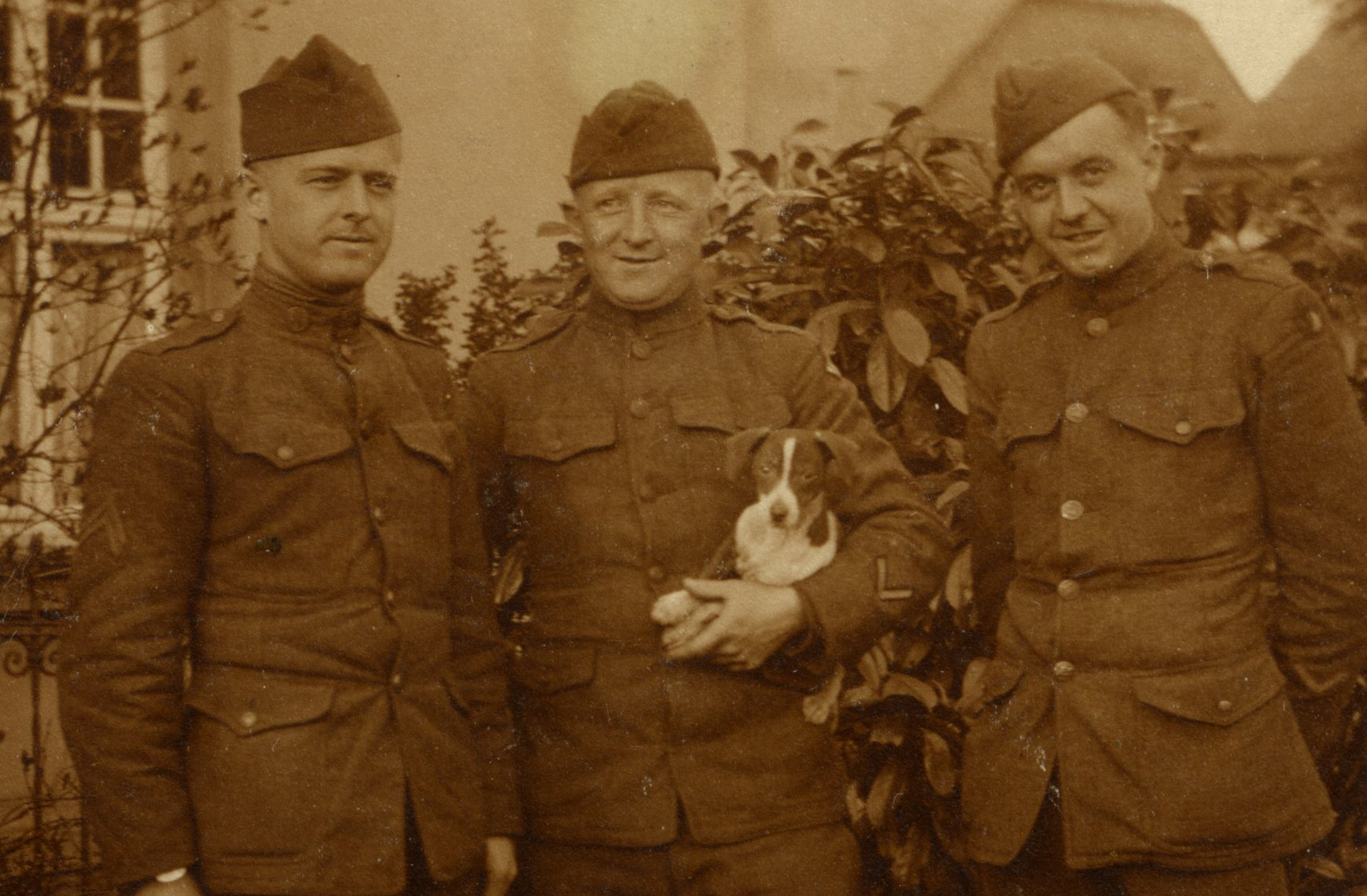
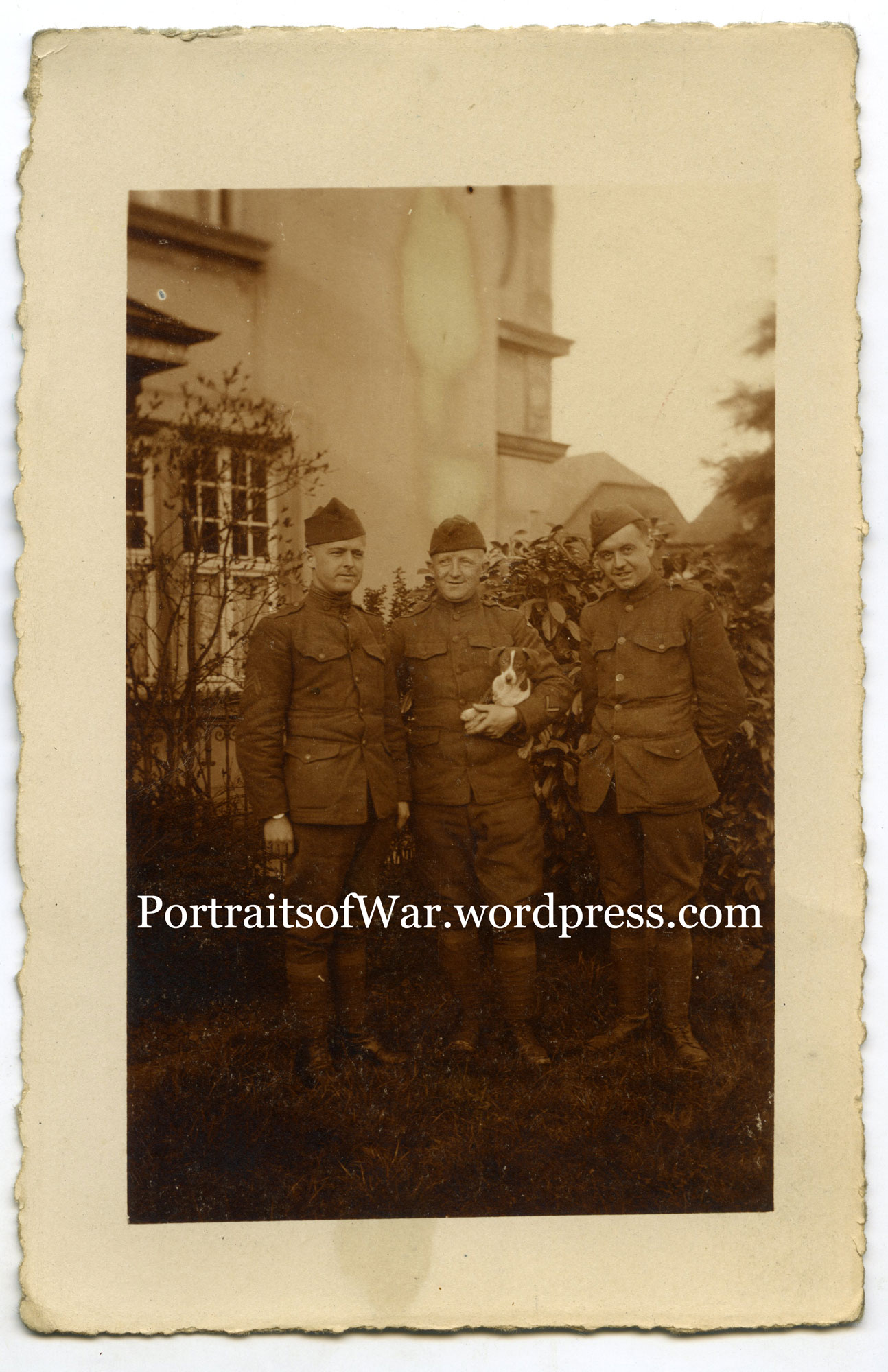
WWI Photo – 89th Division Soldiers Pose w/ Mascot Dog France


Following up on one of my favorite common threads seen throughout WWI photography – I present yet another example of the unit mascot.  Normally seen at the compnay level or below, the idea of having a small pet (normally a dog) as a mascot is very common throughout various nations during WWI.  I’ve literally seen examples from the US, England, Canada, France, Germany, Italy and even Australia. I probably have 15-20 examples in my own collection, ranging from small children as mascots, to dogs, pigeons and even goats.  My favorite are the small dogs. Here’s an example from the 89th Division. The collection of 8 photos came from a member of the 356th Infantry.  Unnamed, but we know he was wounded at least once during the war due to the wound chevron on his right cuff.

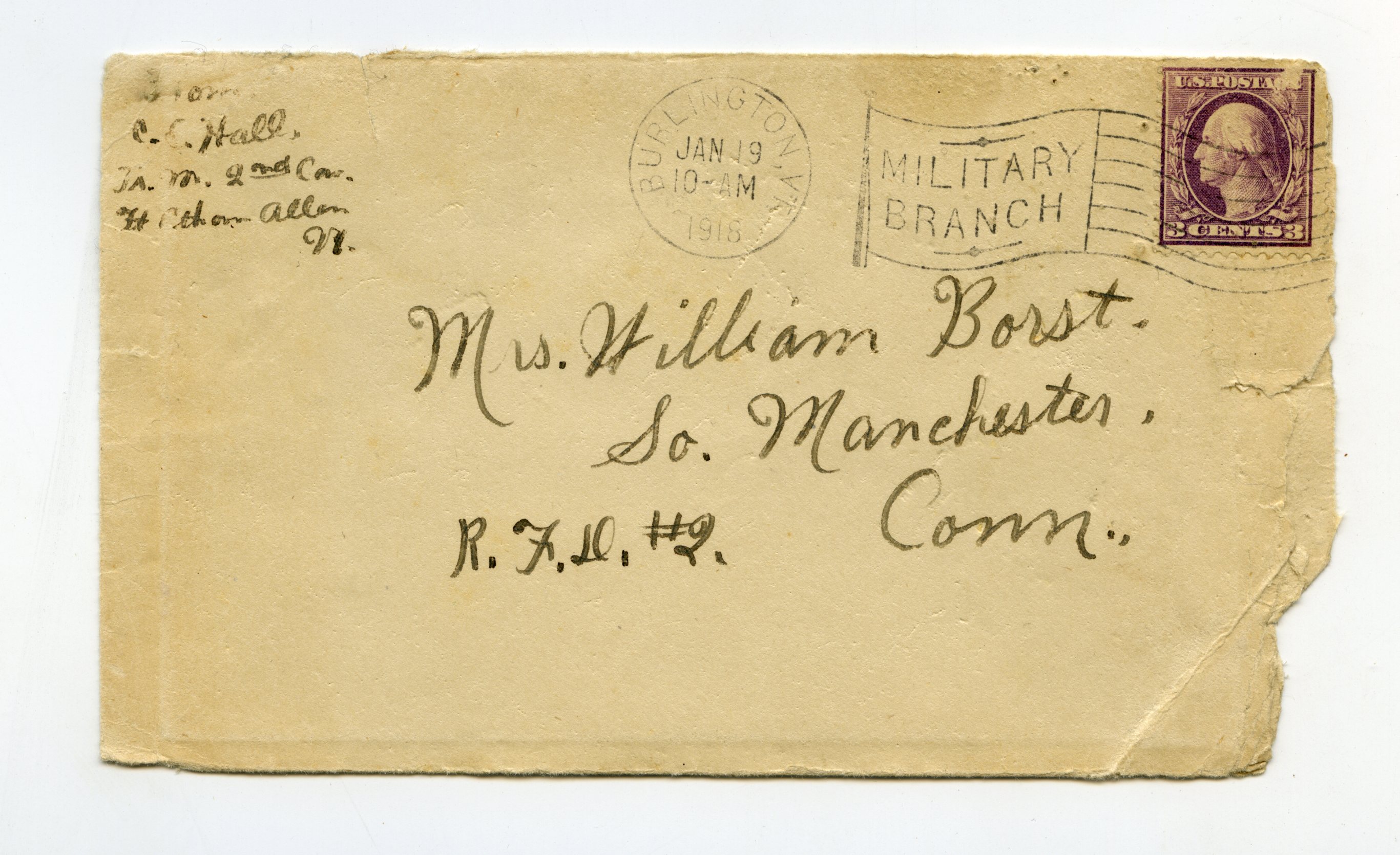
WWI 2nd Cavalry Postal Cover Letter – Fort Ethan Allen Vermont Letter January 1918 – Good Details!


Followers of PortraitsofWar will know that I was lucky enough to acquire a great letter written by a member of the 2nd Cav while the unit was stationed at Fort Ethan Allen in my current hometown of Colchester, Vermont.  Obviously anything related to Fort Ethan Allen will be of interest to me and, by association, PortraitsofWar.  The letter was written by a Mr. Everett Hall from Connecticut, and includes some good cavalry related details as well as some tongue-in-cheek Vermont humor.  Alright!

Fort Ethan Allen,

January 18th, 1919

Dear Marion,

Your welcome letter received.  Also the postal.

Tell Kermit I thank him very much for the wash cloth.  It is a dandy and will be fine when we get over accross(sic). And the way things look now we may be over anytime.

We are having fine weather now.  Lots of snow, nearly three feet, weather is war.  About zero. {YES!  Awesome line}

I am getting so I can stick pretty good bareback. We get fifty munutes every other day monkey drill now.

Just got my last two test papers back.  I got a 98 on first aid and a 91 on guard duty. We have school every day on military matters.  And a test about three times a week.

Just like going to school again only that its different studies.   Have to use algebra too.  We have to study everything first aid for both men and horses.  And the best way of defeating an enemy.  Learn someting new every day.

There’s lots of Manchester fellows in now.  That man you spoke about, Thrall, is here. I heard his name called the other day.  I haven’t seen him to know him yet. Funny how you meet people you used to know.

I see both of A.L. Brown’s boys are going and Allen Balch.  I went to school with Marion Brown.

Well there’s not much news so I guess I’ll have to stop and get fixed up for inspection tomorrow.

We have all kinds of inspections now that we are getting ready for leaving.

With lots of love,

Everett

WWI 42nd Division Doughboy Sends Home a Real Photo Postcard


Ever wonder how doughboys sent their photo postcards home?  I actually don’t own a single example of a postmarked photo postcard from the war, but recently came across a grouping that contained an envelope and postcard sent home by a 42nd Division soldier.  A member of the 151st Field Artillery, Frank Svec sent home a studio portrait shot of himself.  Not incredibly rare, but a good example of how WWI photos were sent during the war.  The 42nd Division is one of my favorite divisions, so this is an addition “kicker”.

WWI Wounded 78th Division Soldier – Exciting Research Update!


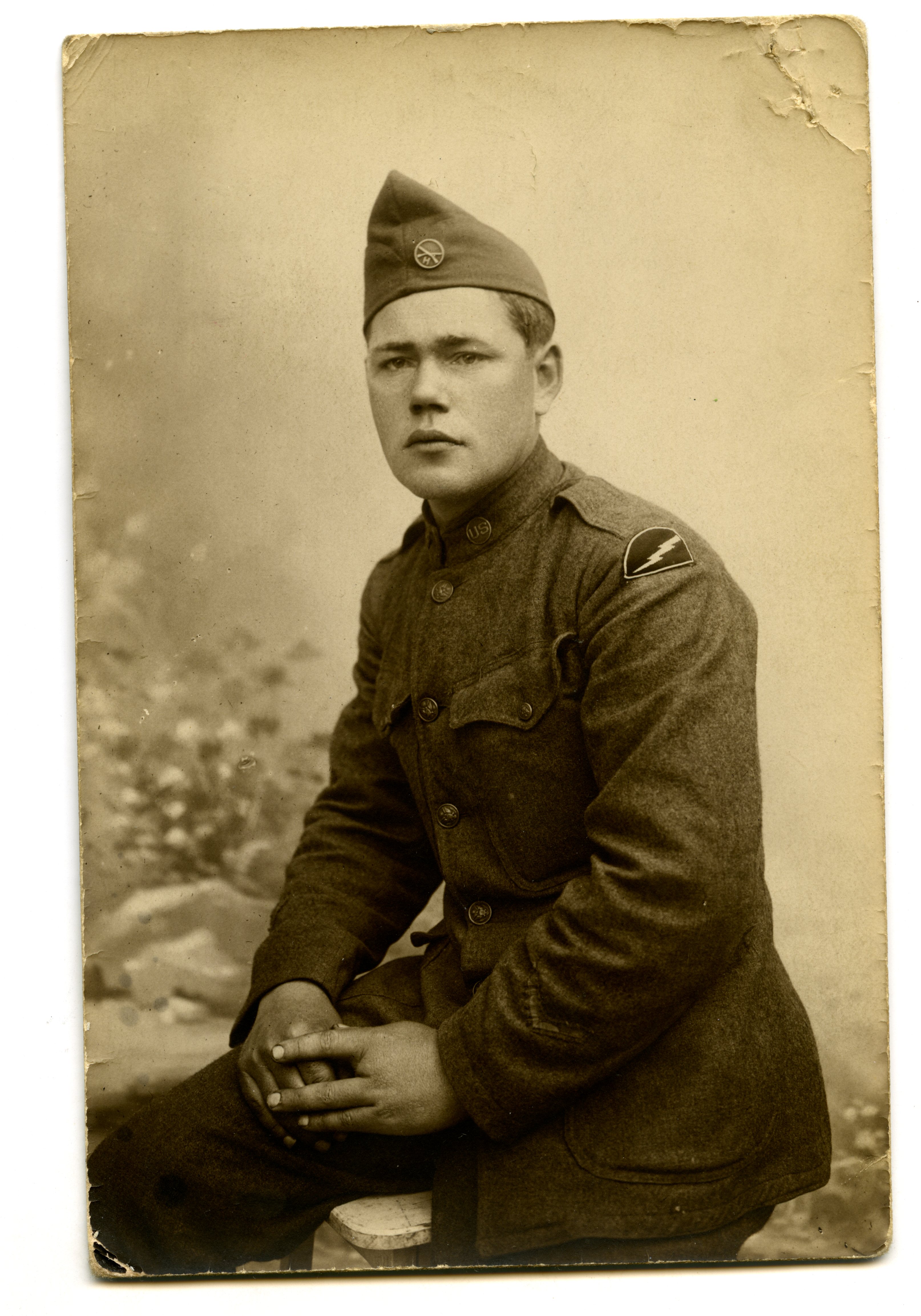
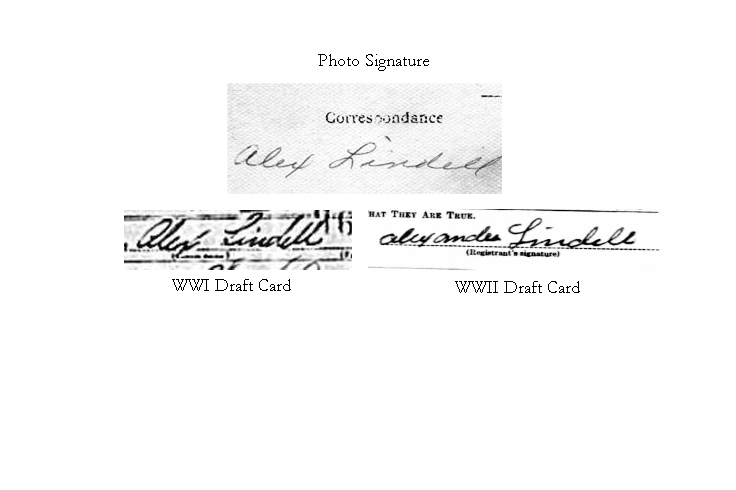
I’ve been recently turned on to the magic of ancestry.com, one of the best tools for researching WWI images I’ve yet to discover. I decided to start a search for one of the names written on the back of one of my better WWI images. Alex Lindell poses in his WWI French portrait photo showing off his missing finger – likely a battle wound received on October 18th, 1918 while he was with the 309th Infantry Regiment (78th Division) during the Meuse-Argonne Offensive. After a search of draft cards through the National Archives, I came across a pair of WWI and WWII draft cards with the presumed identity of Alex Lindell. After comparing the signatures on both my photo and the draft cards, I realized I had a match! Success! His ASN was 2451963.

Alex served in Company H, 309th Infantry Regiment, 78th Division and was originally born in Oeland, Finland but eventually ended up in Brooklyn, NY. He was born on May 5th, 1889 and passed away just shy of the age of 61 on April 11th. 1950 where he was buried in Long Island National Cemetery. He was listed as being severely wounded in action on October 18th, 1918 where he presumably lost his finger as seen in the below photo.

50832936_397060720865632_6570596971222925312_n

Photo Colorized by the Photo Alchemist

Signature on Obverse


WWI Draft Card


WWII Draft Card


Signatures Compared

20120205-224310.jpg

Alexander’s WWI Veterans Burial Card
Footage of the 78th Division during the Meuse-Argonne Offensive

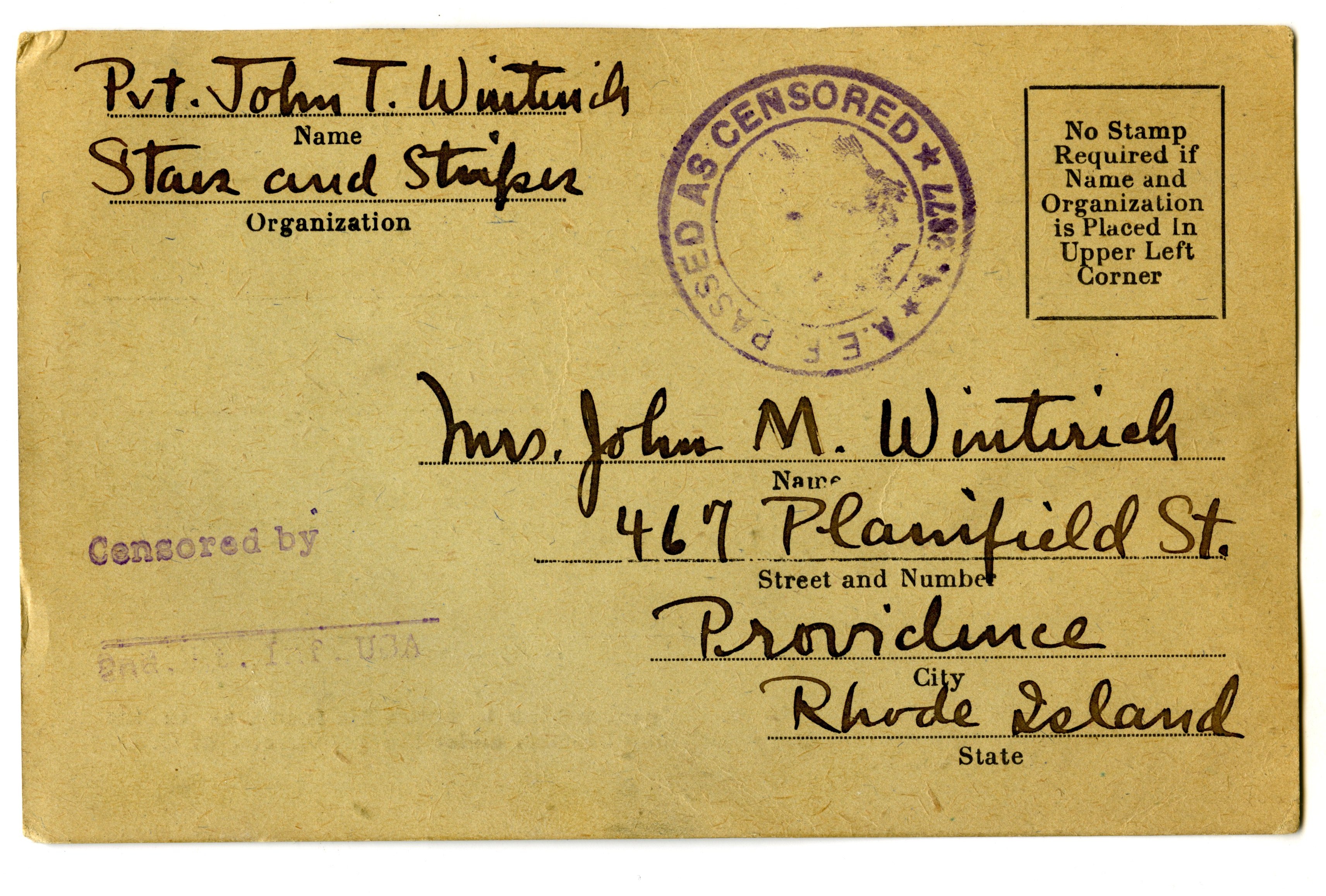
WWI Stars and Stripes Editor John T. Winterich Original Wartime Autographed Postcard


John Winterich was one of the first writers for the Stars and Stripes, managing editor, and eventually one of the most influential bibliophiles of the early twentieth century.  He is credited with having penned over 275 articles in over nearly 150 publications as well as having written the introduction to the American classic Of Mice and Men.  In a rare acquisition, I was able to pick up an original wartime signed postcard by Mr. Winterich in which he describes his present location and state of health to his mother back home in Rhode Island.  The best part?  I only paid $3.00!


"Censor & Press Co. No. 1. Staff of Stars & Stripes. Brest, France. July '19." Photograph. From Harry L. Katz, A Brief History of The Stars and Stripes, Official Newspaper of the American Expeditionary Forces in France (Washington, D.C.: Columbia Publishing Co., 1921), p. 41.

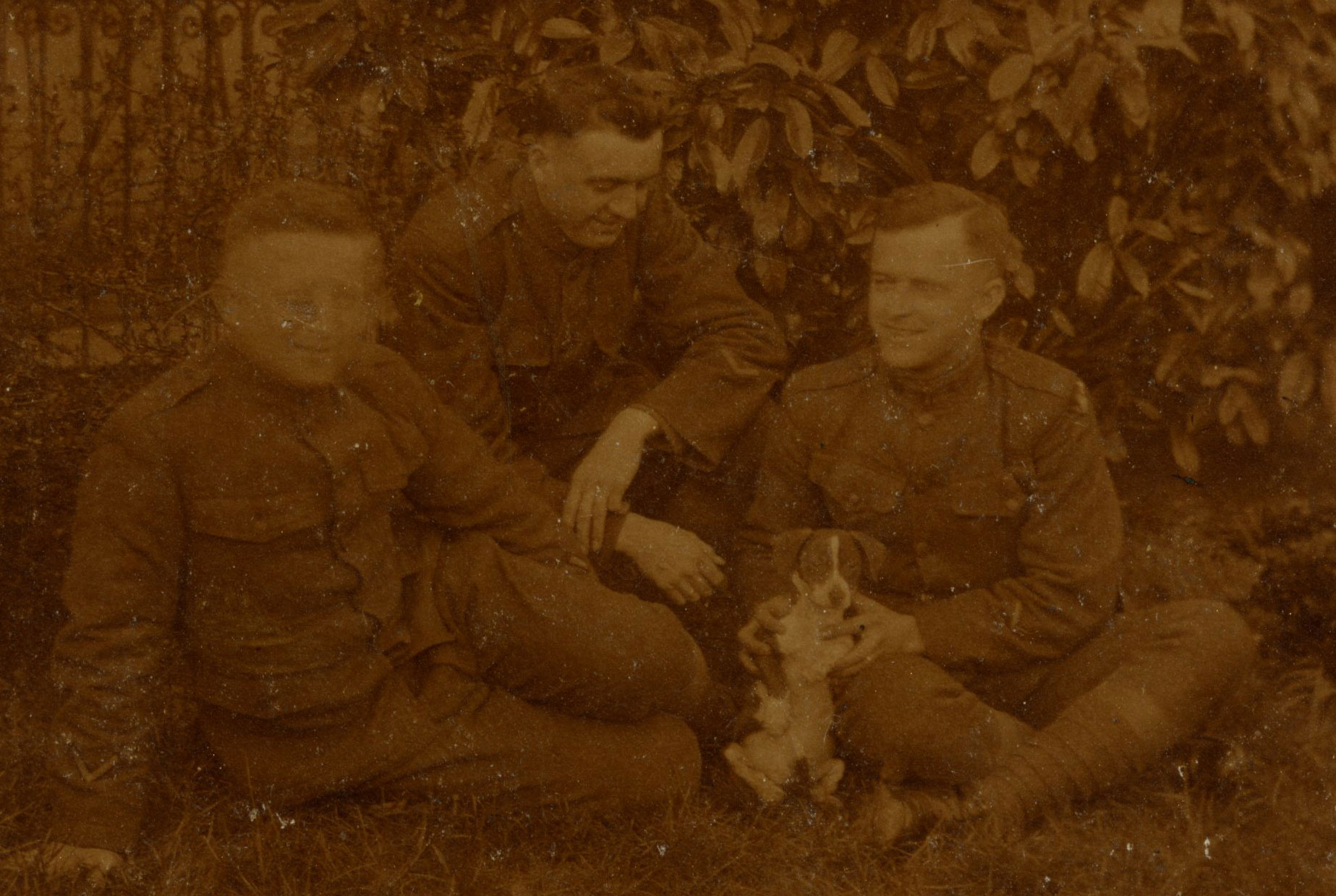
Rare WWI 2nd Cavalry Photo RPPC Taken in France – 2nd Dragoons Training Station


A particularly special photo acquisition comes in the form of a 2nd Cavalry RPPC (real photo postcard) taken somewhere near Tours, France during the war.  The 2nd Cav. trained only ten miles from my house in Vermont, at Fort Ethan Allen before their departure to Hoboken for transfer overseas to France.  Considered by many to be the only  true U.S. mounted cavalry units to serve during WWI, the 2nd Cav. was a unique unit that tends to be glossed over by WWI histories.  I’m proud to add this photo to my collection!

Interesting details of the photo include a mascot puppy, the use of spurs, and a raggedy pigeon perched on a shoulder.

For those interested in reading more on the history of the 2nd Cavalry, check out this website:  http://history.dragoons.org/category/world-war-i/

2nd Cav. Puppy Dog Mascot