The following article was graciously submitted by Sam Pestle. To see more stories of WWI soldiers with accompanying portrait photography, please check out Sam’s page – The United States in WW1 on Facebook.
The son of a presbyterian minister, Laurance Newton Wilson was born in Kansas City, Missouri, on January 19th, 1890. His family later relocated to Washington D.C. and Laurance graduated from high school in 1909. Laurance then chose to pursue higher education and was accepted into the Law School at George Washington University. Records indicate that he was an exceptional student at GWU and became a member of the Sigma Phi Epsilon fraternity. Of particular interest, future FBI Director J. Edgar Hoover was also in attendance at the law school during this period, although he graduated a year after Laurance.
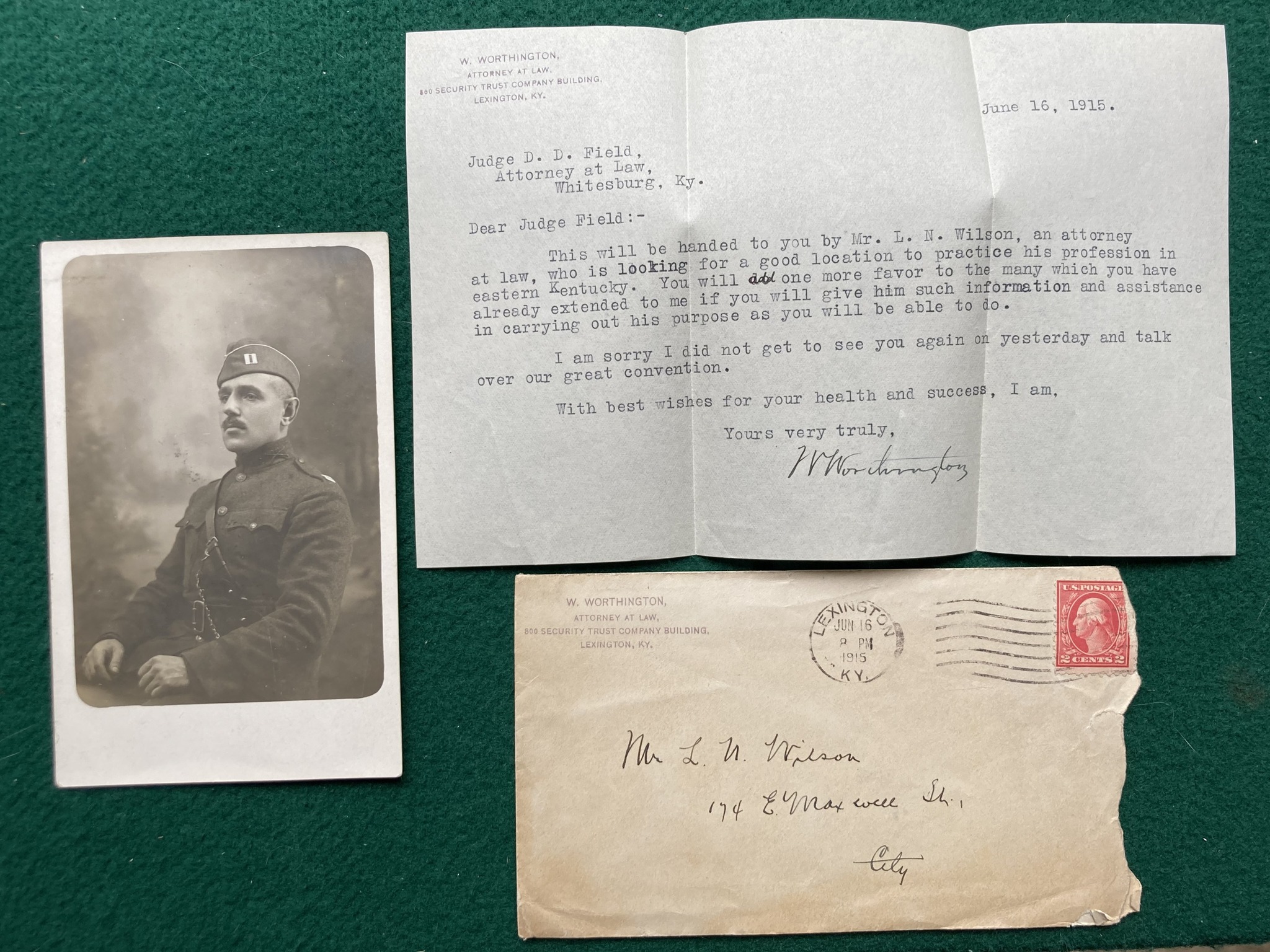
Following his graduation in 1915, Laurance passed the bar and began practicing law in Lexington, Kentucky. He had been working for less than two years when America became involved in the First World War, and Laurance applied as a candidate to the US Army Reserve Corps on May 15th, 1917. He was sent to Fort Benjamin Harrison for officer training and received a 2nd Lieutenant’s commission on August 17th.
Laurance was later promoted to 1st Lieutenant and assigned to command Company “C” of the 801st Pioneer Infantry Regiment. It is important to note that this was a segregated unit of the US Army that was composed of enlisted African American doughboys commanded by white officers. The 801st Pioneers sailed to France aboard the USS Manchuria on September 8th, 1918, and arrived along the Western Front in the final weeks of the conflict. The regiment served under the American 1st Army and was assigned to battlefield salvage operations and munition disposal efforts in the Chateau-Thierry Sector (this was a hazardous job which led to several men being killed or wounded in the regiment).
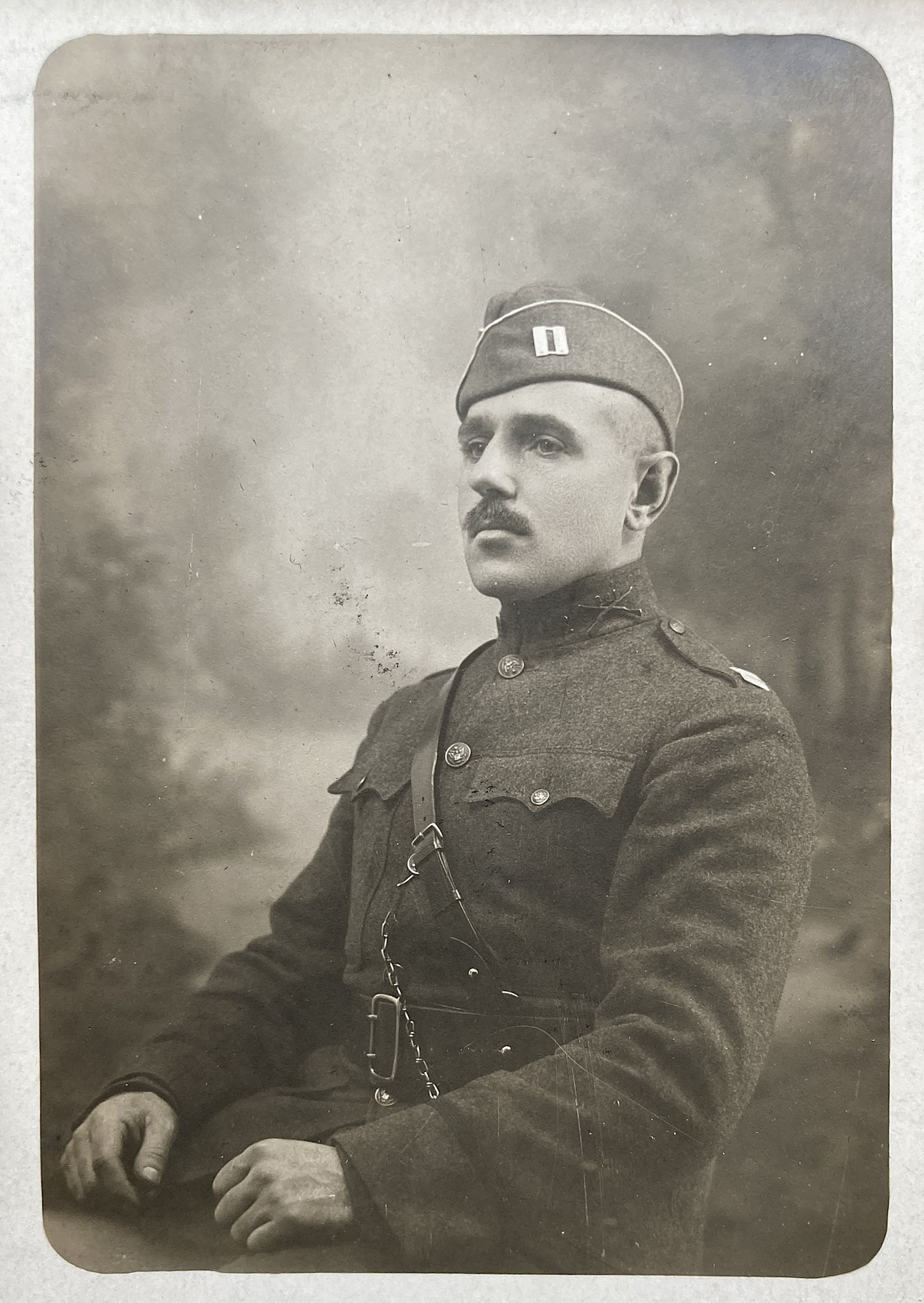
Following the November Armistice, Laurance was promoted to Captain and the French photograph seen below originates from that time period. Cpt. Wilson was then reassigned to command Company “F” of the 305th Infantry Regiment in December of 1918. He later completed his AEF experience while serving as a regimental adjutant and returned to the United States aboard the RMS Aquitania on April 24th, 1919. He received an honorable discharge on May 29th.
Laurance returned to his work as an attorney after the war and was employed by the Royal-Globe Insurance Company for several decades. He married in 1924 and lived much of his subsequent adult life in New Jersey. Laurance does not appear to have had any children and later retired to North Ferrisburgh, Vermont. He suffered a stroke in his final years and died of bronchopneumonia due to aspiration on April 26th, 1970, at the age of 80 years. He now rests beneath a civilian gravestone beside his wife in the North Ferrisburgh Cemetery of North Ferrisburgh, VT.
Captain Lawrence Newton Wilson of the 801st Pioneer Infantry
The Congressional Medal of Honor was awarded to 119 members of the U.S. Army, Navy, and Marine Corps during World War I, 33 of them posthumously. Portrait photographs of these heroes are remarkably scarce, but I was fortunate to recently acquire one. The subject of tonight’s post is Captain Samuel Woodfill of Indiana, one of America’s most celebrated soldiers of the Great War.
Captain Samuel Woodfill, U.S. Army Often described by General John J. Pershing as “the outstanding soldier of the American Expeditionary Forces,” Captain Samuel Woodfill earned the Medal of Honor for extraordinary heroism during the Meuse-Argonne Offensive on October 12, 1918. Leading his company through heavy fog and enemy fire near Cunel, France, Woodfill singlehandedly attacked multiple German machine gun nests, killing or capturing their crews despite being gassed and exhausted. A career soldier from Indiana, Woodfill had already served in the Philippines and on the Mexican border before World War I, and his calm, precise marksmanship in France became legendary among his peers. After the war, he was personally honored by Pershing and later chosen to represent the U.S. Army’s enlisted men at the dedication of the Tomb of the Unknown Soldier in 1921.
Arlington National Cemetery Video: Major Samuel Woodfill
Reverse Side of Woodfill’s Portrait
His Medal of Honor citation reads:
“While he was leading his company against the enemy, First Lieutenant Woodfill’s line came under heavy machine gun fire, which threatened to hold up the advance. Followed by two soldiers at 25 yards, this officer went out ahead of his first line toward a machine gun nest and worked his way around its flank, leaving the two soldiers in front. When he got within ten yards of the gun it ceased firing, and four of the enemy appeared, three of whom were shot by First Lieutenant Woodfill. The fourth, an officer, rushed at First Lieutenant Woodfill, who attempted to club the officer with his rifle. After a hand-to-hand struggle, First Lieutenant Woodfill killed the officer with his pistol. His company there upon continued to advance, until shortly afterwards another machine gun nest was encountered. Calling on his men to follow, First Lieutenant Woodfill rushed ahead of his line in the face of heavy fire from the nest, and when several of the enemy appeared above the nest he shot them, capturing three other members of the crew and silencing the gun. A few minutes later this officer for the third time demonstrated conspicuous daring by charging another machine gun position, killing five men in one machine gun pit with his rifle. He then drew his revolver and started to jump into the pit, when two other gunners only a few yards away turned their gun on him. Failing to kill them with his revolver, he grabbed a pick lying nearby and killed both of them. Inspired by the exceptional courage displayed by this officer, his men pressed on to their objective under severe shell and machine gun fire.”
(All photographs and narrative were provided by Locke)
The first man from Southbridge, Massachusetts to enlist during World War 1 was Charles Edwin Hellner. He was born on April 11th, 1897 and was at the age of 20 when he enlisted for the US Army on May 7th, 1917. He was placed into B company of the 1st Engineer Regiment (part of the 1st Infantry Division) with about 30 other Southbridge men. After exactly three months of training he departed for France.
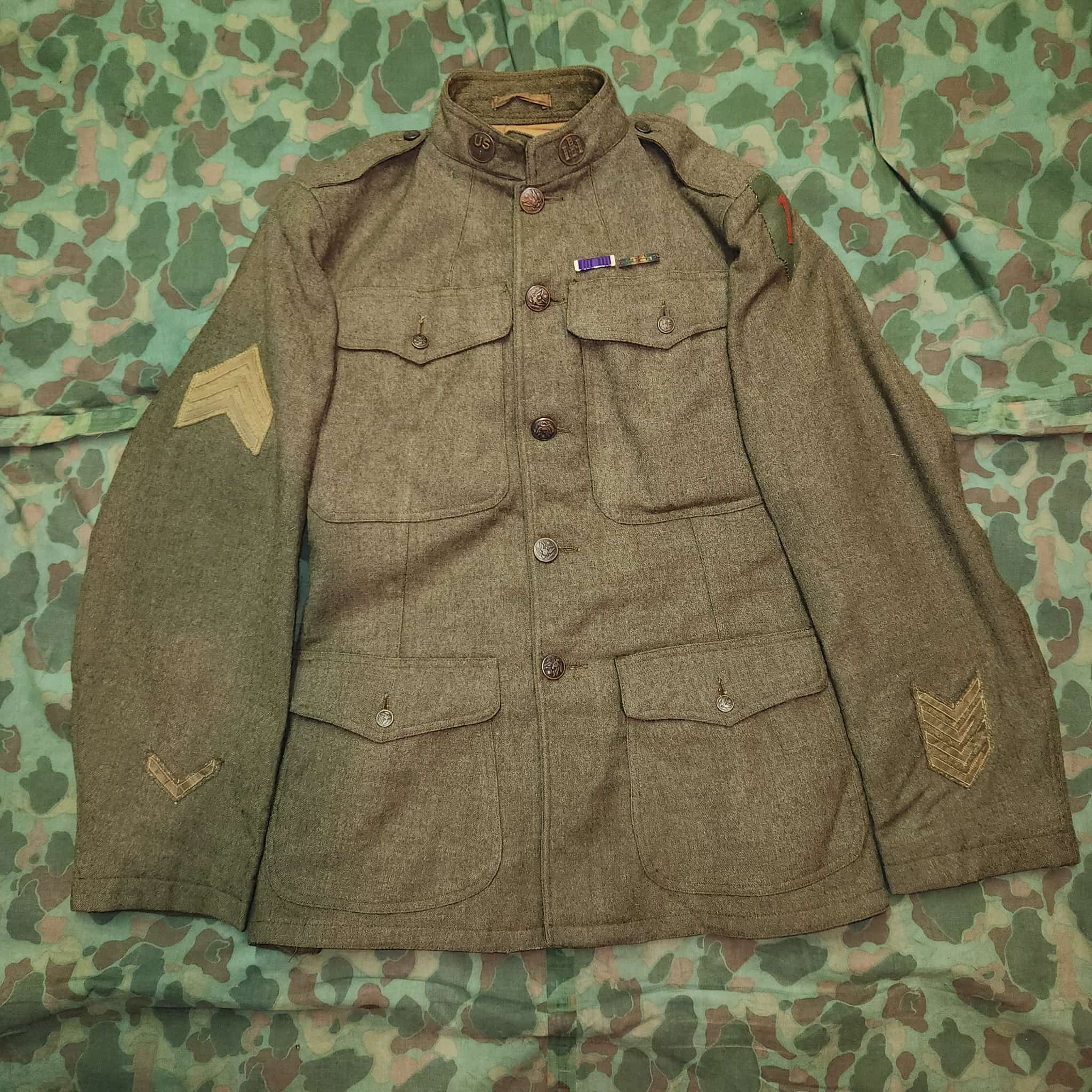
Sgt. Hellner’s WWI Uniform
Following their arrival, the soldiers of B company then spent more time training. This time it was in the tactics of trench warfare with the French as their experienced instructors. In later parts of the training, American units would serve alongside French ones in relatively idle sections of the frontline so that the doughboys could get some experience. While serving with elements of the 16th infantry on the morning of November 3rd, 1917, Hellner would be present for the first raid on American troops by the German army. The first three American deaths of the war occurred there.
Hellner’s Diary, Cigarette Case, Pocket Watch and War Medals
Training and engineer work continued for Hellner’s unit until the 1st Division was called into action again. On May 28th, 1918 the 28th infantry regiment had attacked and successfully captured the French town of Cantigny. The 1st Engineers moved into the sector and began work fortifying the area and digging trenches. Hellner memorialized his service there with a large pennant that bears “Cantigny 1918” and his portrait which speaks to the fame of the battle at the time. While in these trenches at and around Cantigny, B company experienced shelling and fought off diversionary attacks from the German’s Montdidier-Noyon offensive that was aimed at nearby French positions.
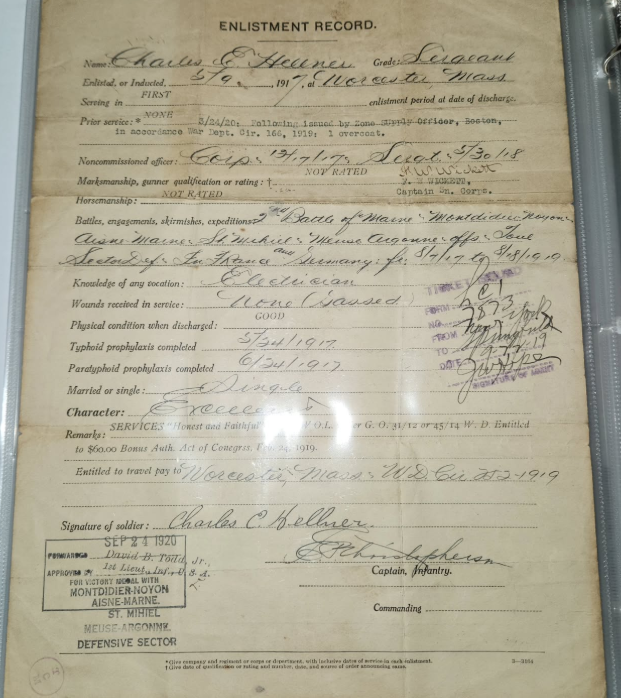
Hellner’s Discharge Paperwork
On July 18th the 1st Engineers began its involvement in the Second Battle of the Marne. A German attack had recently pushed back allied lines before it faltered and it was realized that this was an opportunity for a counterattack. Hellner had recently been given command of his own squad and would now be leading them into battle. B company spent three days attacking the Germans near the town of Soissons. During the first day of attack on July 18th, a member of Hellner’s squad named William Broughton was hit in the stomach by a piece of shrapnel. Unfortunately, he eventually died from his wounds. Broughton had also come from Southbridge and Hellner wrote a letter home that informed his family that he had passed. July 19th saw B company’s advance slowed by machine gun fire that wounded several men and an officer. On July 20th, Hellner led his squad over the top at 4 AM with the rest of B company in the first wave. With heavy losses they were able to fight until they reached a railroad where they remained the rest of the day. While taking cover behind an embankment near this railroad, Hellner experienced his first wound of the war. He later wrote a letter about the incident: “I was lying on a railroad embankment when a high explosive German shell burst near me, digging up the dirt and stones all around, and a heavy stone fell upon my foot, breaking one of the bones.” This artillery shell had actually caused much more damage than he’d thought. It dislocated his shoulder, broke a bone in his foot, and gave him a severe rupture. He never reported these wounds and continued to fight at Soissons for two more days. By the end of the battle he was the only man from his squad to report to an officer, the rest had either been killed or wounded. B company in total sustained 74 casualties at Soissons from July 18th to the 22nd.
After the chaos of their first large scale offensive, they now had a few moments of relief. For the next few months they went back to being engineers and did manual labor including building roads during the St. Mihiel campaign in early September. It is during this time I believe Hellner attended gas school. One of his journals has a section with the same heading that includes details about each type of gas and various mortars including the Livens projector.
Silk Portrait Photo and Cantigny 1918 Pennant
For the last and largest battle of the war the 1st Engineers was once again called up to act as infantry. The Meuse-Argonne offensive began on September 26th but B company didn’t attack until October 9th. Hill 269 in the Argonne Forest needed to be captured and B company was part of the force chosen for the job. The fight for the hill was intense with the attackers engaging in hand to hand combat. After capturing the hill the engineers immediately braced for a counterattack. One didn’t come until the following day when the Germans stormed the hill with the support of heavy artillery. The enemy never reached the top of the hill and were successfully repelled. At some point during this engagement Hellner was gassed and evacuated to a hospital.
Unfortunately I don’t know when he left the hospital but I do know that by November 11th he had returned to B company and was marching towards the frontline near the town of Sedan with the rest of the regiment. Suddenly, a courier on horseback rushed down the column of men telling them to stop marching because the war had ended. In Hellner’s own words: “When we realized it was all over, we whistled, screamed, cheered and raised the devil, and I was so hoarse I couldn’t speak next day above a whisper.” That night the frontline was almost as bright as day with bonfires, flares, and rockets from the celebrating soldiers.
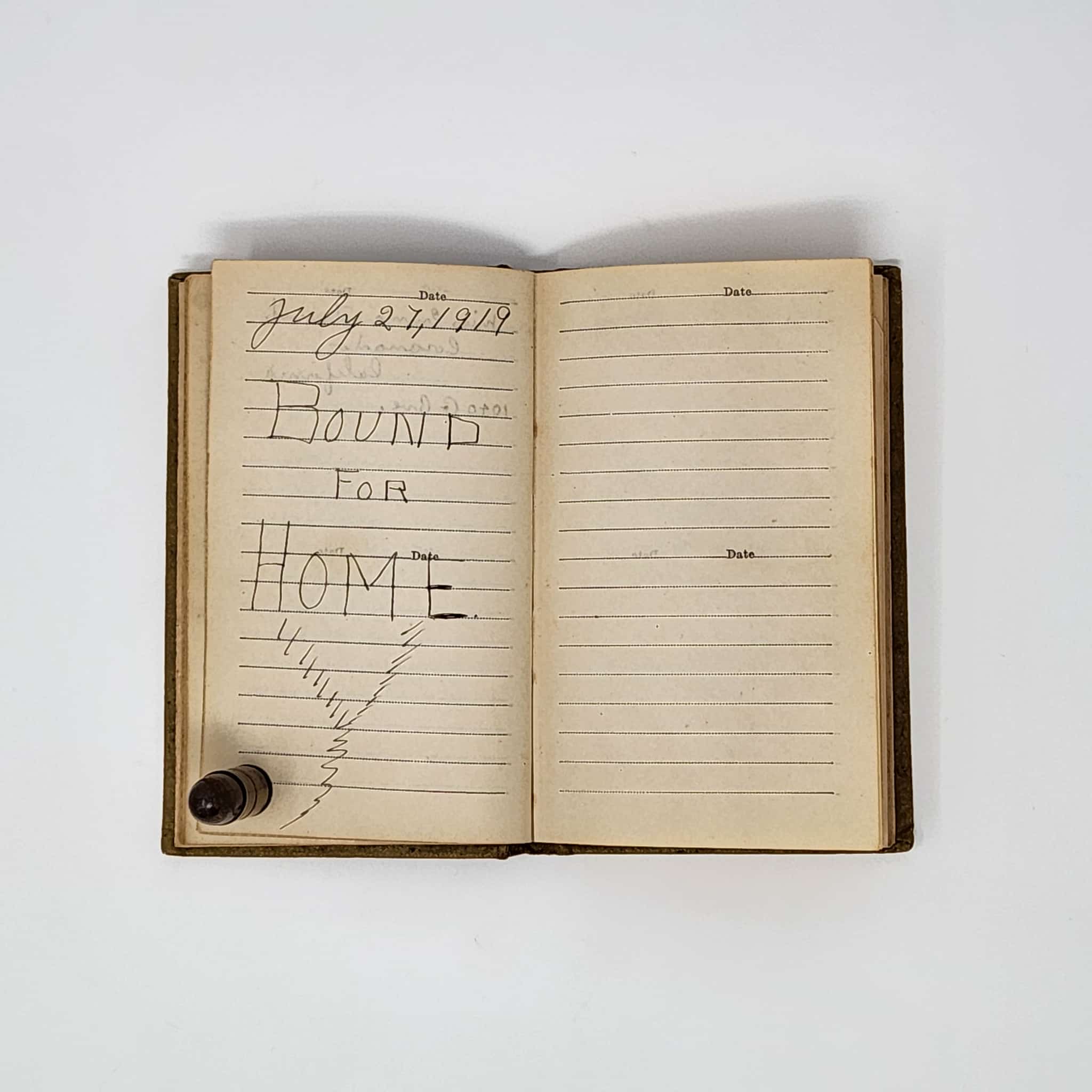
“Bound for Home” – Last Diary Entry
In December the 1st division was sent into Germany to be a part of the army of occupation. The 1st Engineers remained on this post until July 21st, 1919 when they were detailed to finally return home. He returned to the United States in August and was supposed to receive a discharge but a medical officer advised him to re-enlist so that his wounds from Soissons could finally be tended to by army doctors. This was when the true extent of his injury was truly discovered. It was necessary to fracture his dislocated arm to get it back into its socket. After this though, he could finally return to Southbridge. Funnily enough, even after his wounds from Soissons were corrected, he wasn’t given credit for a wound in action. So his only wound according to his enlistment record was being gassed on Hill 269. Hellner got married in June of 1921 and went on to have two daughters. In later life he moved to Florida and passed away there on June 26th, 1975 at the age of 78.
The 158th Aero Squadron and the Sinking of the SS Tuscania
On the night of February 5, 1918, the troopship SS Tuscania was steaming off the coast of Islay, Scotland, when it was struck by a torpedo fired from the German submarine UB-77. The liner was carrying over 2,000 American soldiers bound for the Western Front as part of the earliest waves of U.S. troops to join the fight in Europe.
Among those aboard were men of the 158th Aero Squadron, a newly formed Air Service unit. Organized in late 1917, the squadron was composed largely of young Americans who had trained in Texas before embarking overseas. Their mission would be to support the burgeoning U.S. Air Service in France, a much needed element of warfare in the late stages of WWI.
When the torpedo struck, chaos erupted. Lifeboats were launched into rough seas, and the darkness made rescue operations difficult. British destroyers and local fishermen rushed to aid survivors. Despite these efforts, more than 200 soldiers and crewmen were lost, making the Tuscania the first U.S. troopship sunk in World War I.
Footage of the Survivors of the Tuscania Sinking
The men of the 158th Aero Squadron were among the survivors. Shaken but determined, they eventually reached England and continued their training before heading off to France. Looking at this group portrait, it’s striking to think that every face here carries the memory of that night in the frigid waters of the North Channel. For the men of the 158th, their war began not in the skies over France, but in the dark Atlantic, clinging to lifeboats and praying for rescue.
Roy Oplinger and the 158th Aero Squadron
While the group photo provides us with an overall snapshot of the 158th Aero Squadron in the days after their harrowing ordeal, the photograph also highlights the wartime experience of an individual soldier who decided to send this image home to his family.
The reverse side of this English postcard has a few unique elements that help point towards the ID of the soldier who sent the postcard home in 1918. The first and obvious clue is that the photograph is likely related to someone who served with the 158th Aero Squadron. The following clues can be found on the reverse side of the postcard.
Reverse Side of Postcard
The additional clues are pretty obvious given the stamp at the top right-hand corner paired with the writing on the bottom. We know his name is Roy, and that his Army Service Number was 250033. Using the powers of ancestry.com and fold3.com I was able to identify the sender as Corporal Roy Holden Oplinger who served as a mechanic with the 158th Aero Squadron. Born on May 8th, 1896 in Danielsville, PA to Adam and Edna Oplinger, Roy went on to enlist for the draft on June 5th, 1917 with a listed address in Walnutport, PA. What doesn’t jive is that he was a private at the time of the sinking of the SS Tuscania, so it appears that he didn’t actually send this postcard to his family (if ever) until later that year when he was promoted to corporal in October.
Roy’s WWI Draft Registration Card
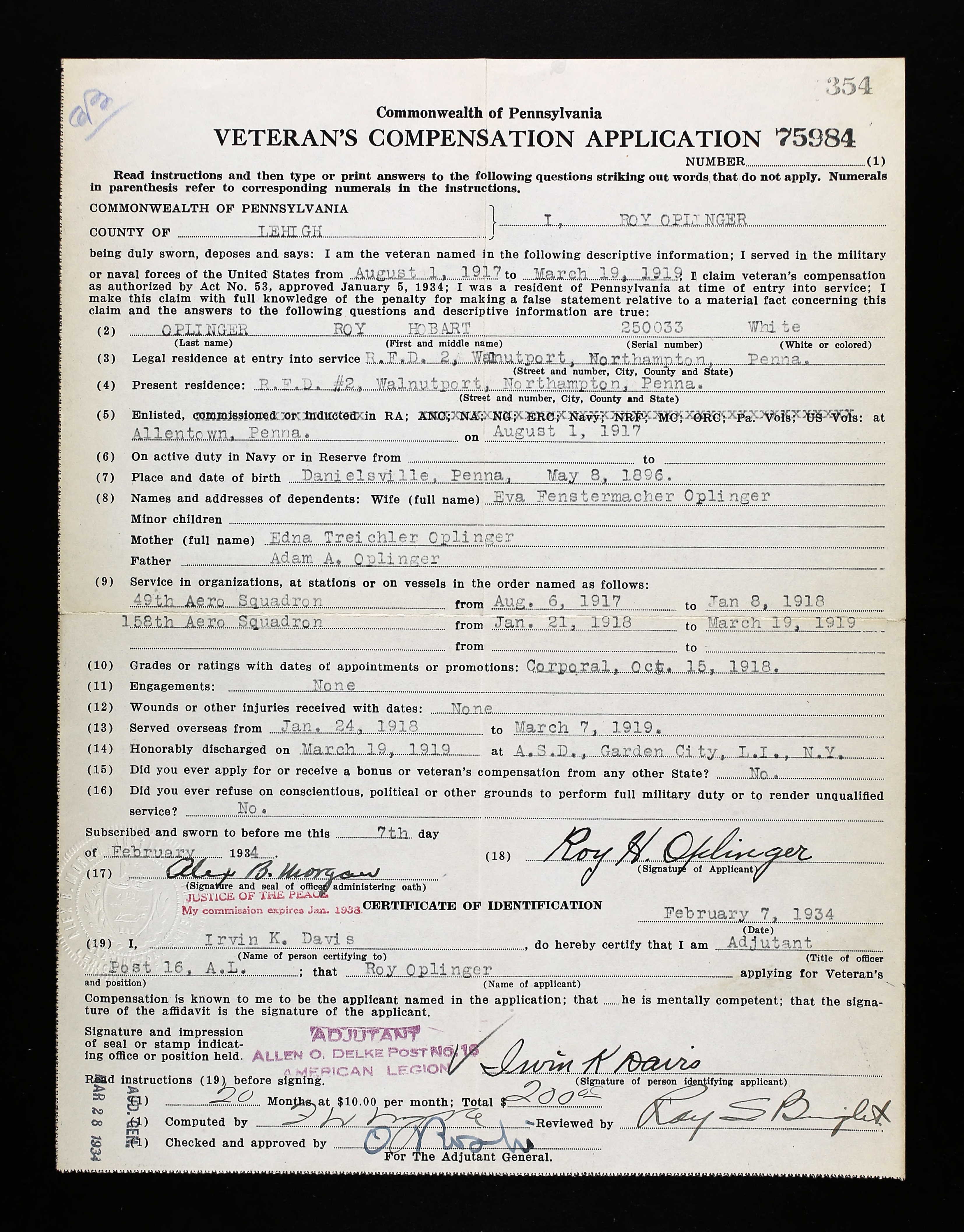
According to Roy’s WWI Pennsylvania Veteran’s Compensation Application, after enlistment he went on to serve with the 49th Aero Squadron (an obscure pursuit squadron) in August of the same year and then on January 8th of 1918 with the 158th Aero Squadron shortly before his departure aboard the SS Tuscania.
WWI Pennsylvania Veteran’s Compensation Application Form
A Letter Home to a Friend
In a rare stroke of luck, I struck photo researcher gold after searching for newspaper articles related to Roy’s WWI service. In this case, it looks like he sent a letter home to a close hometown friend, Samuel W. Danner on February 13th, 1918 only a few days before the group photo was taken. Anecdotes like this offer a rare glimpse into individual moments during the war, and I was lucky to stumble across it. Here’s a link to the The Morning Call, an Allentown, PA newspaper. Please disregard any typos in the OCR transcription of the article.
Roy H. Oplinger Private in 158th Aero Squadron now in France received the following letter: American Rest Camp, Winchester, England.
February 13, 1918. Dear Sir: best of health and hope you are well I will let you know that I am in the same in America. I will let you know that I have experienced the Torpedoing of the S. S. Tuscania.
The very first ship sunk with U. S. Soldiers on board. I had a narrow escape, I was on deck when we were submarined, but was soon floating on the Atlantic waters on a raft, shortly after we were struck about one hour and a half later we were picked up by a British patrol boat.
If the ship would have sunk as quick as the Lusitania, why I think we would have perished. The S. S. Tuscania went down some hours later, she was torpedoed about supper time somewhere on the Irish coast. How many lives were lost I am unable to tell.
Only a few of our squadron The clothing and my personal belongings I had with me are all the articles I have, all the rest of my stuff is at the bottom of the sea with the Tuscania. But my gold watch which mother presented to me as a present some years ago is out of commission as the salt water did not agree with her very well. I do not like the taste of it myself, it does not feel very comfortable to be in the water this time of the year. But I was kept warm as I was the only one on the raft that knew how to handle an oar. So you see what I had to do to get away from that sinking ship.
There is danger in being too near a sinking vessel as the suction will at times suck persons down that are near. I paddled along and when rescued we eight boys on the raft were a few miles from the ship. We were somewhat soaked. But I am dry by the time you received this letter. Ha Ha.
I will never forget that shock of that torpedo which hit us on that night February 5, 1918. The boys were brave and sang national hymns when we let her go down. Every soldier was coal as jar as I know not one was panic stricken, all left that ship in an excellent manner and can tell you from my experience what I have had in seeing a ship sunk. That you can thank God if you never have to witness that kind of a sight on a rough sea. I am sure glad that I am safe.
It was God’s will that only a few lives were lost in the ship wreck. I will sure do my best to do a little harm towards “Kaiser Bill” as he has to account for the lives that were lost on that cold night (you know). I am yours as before.
Address, Priv. Roy H. Oplinger, 158th Aero Squadron. A. E. (via) N. Y.
And Some Insight From a Friend
Fast forward to 2025, here’s some information about the photo from a WWI researcher friend of mine, Charles “Chuck” Thomas. Thanks Chuck!
Chuck’s Take
Here is a special image of the surviving members of the 158th Aero Squadron shortly after arriving at the American rest camp in Winchester, England. This squadron was aboard the Tuscania when it was sunk by a German submarine off the northern coast of Ireland 5 February 1918. When the 158th AS was reassembled at Winchester, it was determined that seventeen men had been lost during the sinking. After the picture was taken, the flying officers were sent to France for training and the enlisted members were broken up into four flights: one flight was sent to Beverly, Yorkshire and the other three went to Lincolnshire, England.
The squadron would later be reunited and sent to Issoudun on 27 September to finish out their service at that aerodrome.
The squadron officers were:
1st Lt. Phil E. Davant
1st Lt. Herbert B. Bartholf
1st Lt. J. W. Blackman (Gorrells has it spelled ‘Blakcman’ – typo?)
1st Lt. Merle H. Howe
1st Lt. Miner C. Markham
2nd Lt. Kenneth S. Hall
2nd Lt. Freeman A. Ballard
2nd Lt. LaRue Smith
2nd Lt. James McFaddan
Of note is the mixture of civilian attire with military uniforms being worn by some of the enlisted men.
I should also point out that the flag seen here was the only one saved during the sinking of the Tuscania by Corp. Guy W. Burnett.
After taking a break from writing, I’m excited to finally share some of the fascinating WWI photos and research I’ve uncovered over the past few years, little hidden gems I’ve been eager to bring to light on this little corner of the internet. In this quick post you will meet Punkins, the official mascot of Company C of the 27th Engineer Regiment. Photographs of unit mascots during WWI are not exceedingly rare, but studio portraits of an identified mascot/dog are nearly impossible to find. Most, if they exist, were kept in personal albums or letter collections and discarded or forgotten about over the past 100+ years, but this shot of Punkins somehow emerged on eBay several years ago.
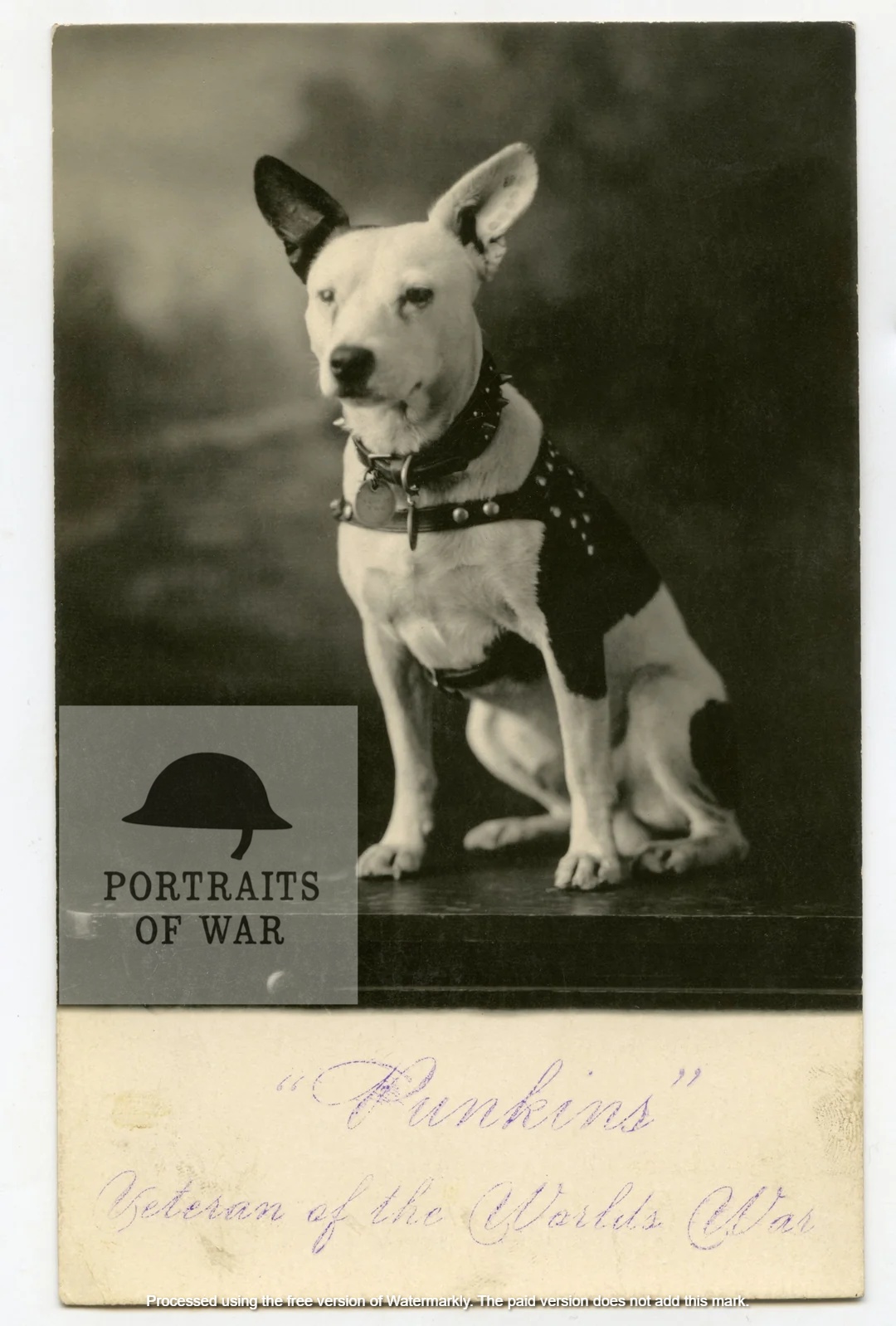
Punkins Posed for the Camera!
Sporting a studded leather collar and matching riveted harness, Punkins seems like a quite the bruiser, a fitting mascot for an engineering regiment during WWI. With just the image and brief stamped caption below (the stamping hints at a volumed production of photo postcards for veterans after the return home), it seemed a difficult task to identify the sitter based on contextual clues such as insignia or other identifying material. Although the postcard backstamp suggests a stateside printing of the postcard, I’m guessing the original photograph was taken in France or Germany and replicated stateside for dispersal to fellow soldiers who wanted photographs to remember their wartime experiences.
Luckily, I did some deep diving and discovered a digitized version of a unit history of the 27th Engineer Regiment that included a brief caption mentioning a ‘Punkins’ below a photograph of our mystery sitter with one of his wartime friends.
“Punkins” and PFC William H. Hall of Santa Clara, CA.
Punkins has now been identified as the regimental mascot of the 27th Engineer Regiment! Note that he is sporting a custom coat with markings and insignia showing he was a member of Company C. of the 27th Engineer Regiment with the First Army. His downward pointing chevron on the right means he served at least six months with the unit. Based on the background contextual clues in the unit history photo, this shot appears to have been taken aboard a return vessel from France to the USA in March of 1919. Private First Class William H. Hall of Santa Clara, CA was aboard the USS Dakotan, a US military transport ship that served in both WWI for the US and later in WWII for the Russians starting in 1942.
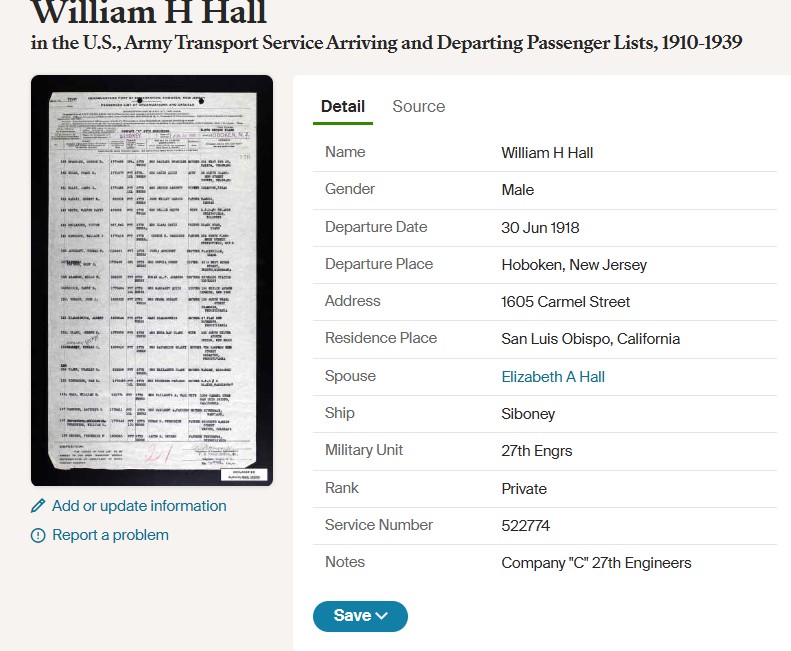
Pvt. William Hall heads to France in June of 1918
It’s unclear and likely impossible to know the circumstances of Punkins’ adoption by the 27th Engineer Regiment in WWI, but based on the visual info provided in the unit history, it’s likely that they were adopted at least three months before departure from France in March of 1919 which points towards an adoption date of August or September of 1918 while the unit was serving in Germany at the time. Punkins appears to be a Bull Terrier mix of some sort based on the pointed ears, coloring and general boxy frame. If anyone knows anything else about Punkins please reach out and share.
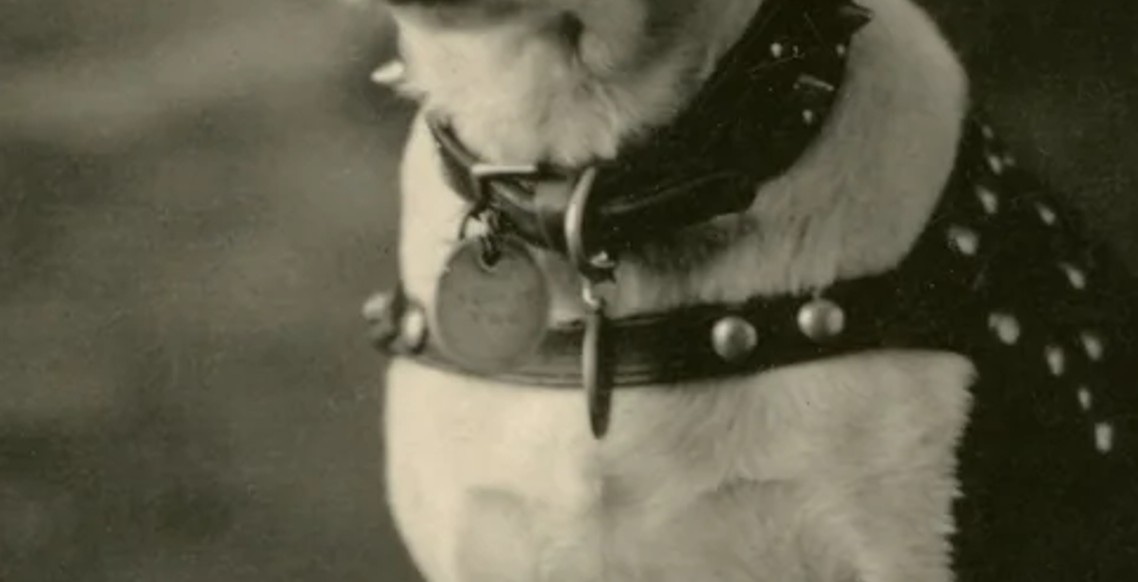
One last note – Punkins appears to be wearing an actual WWI US dog tag. Dog tags used by the US Army and Marines were primarily aluminum discs that could be hand punched with pertinent information bearing the owners name, unit, serial number and sometimes other personal touches. It looks like Punkins received a set of his own tags although the details are obscured. Note that the ridges on the left tag hole hints that they’ve been worn long enough to encounter some wear and tear. The circular tag to the right doesn’t seem to be a proverbial dog tag but some sort of other identifier or an actual DOG tag.
November, 2025 Update
It appears that Punkins sat for several photographs during his illustrious career as a mascot. Another eBay listing appeared a month or so ago (I didn’t win) that provided a bit more information about our sitter. Amazingly, we now know the birthdate, birthplace and wartime career of Punkins to a level of detail I never thought I would learn. See below for a transcription of the caption from the eBay postcard.
Nov. 2, 2025 Ended Listing for Another Punkins Postcard!
Punkins was born Dec. 30, 1917, in Baltimore, was mascot of Co. C., 27th Eng., was smuggled across on a transport in a suit case, thru the worst of the submarine zone, landed in France May 18, 1918. He spent nine months in the front line trenches, went over the top three times at the battles of Chateau Thierry, Argonne and St. Mihiel. He was gassed Sept. 28, 1918, in the Argonne. Punkins is the only dog that ever received an honorable discharge from the U.S. Army. He received a Medal of Honor from the French Government at Verdun, also wears the U.S. Victory button. Here’s to the Good Old U.S.A. – Punkins
Punkins’ “Other Portrait”
This secondary portrait of Punkins provides a very similar view but shows a few more details that “my” version does not include. Now, we can see a little more detail to the dog tag/medal attached to his collar.
The tag that I had originally assumed was some sort of identifier appears to have a castle at center which may be a 27th Engineers commemorative medal given out to members of that unit. See below (top left) for a possible match from the US Army Engineering collection website. (Image 16 in the first slideshow)
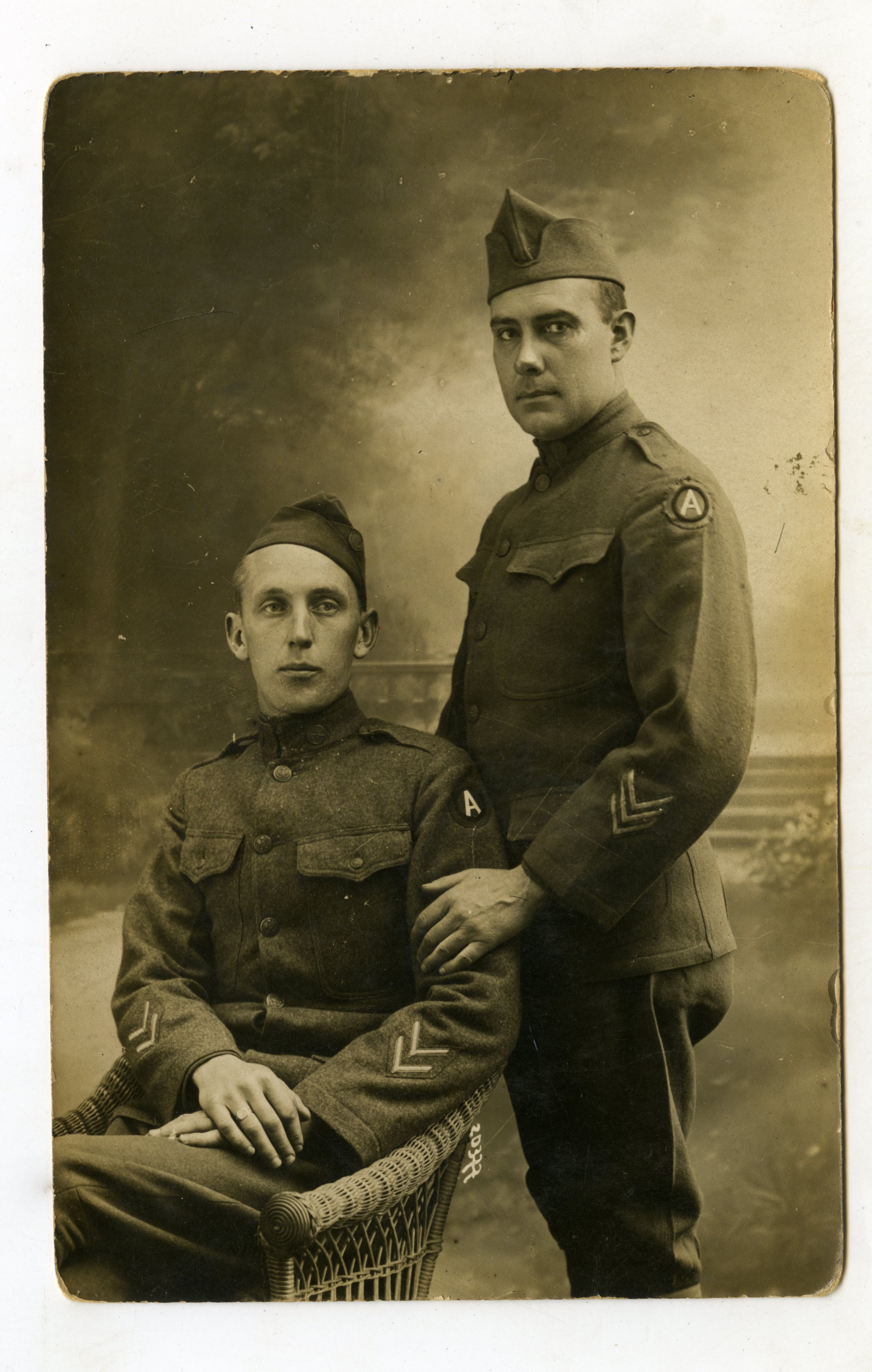
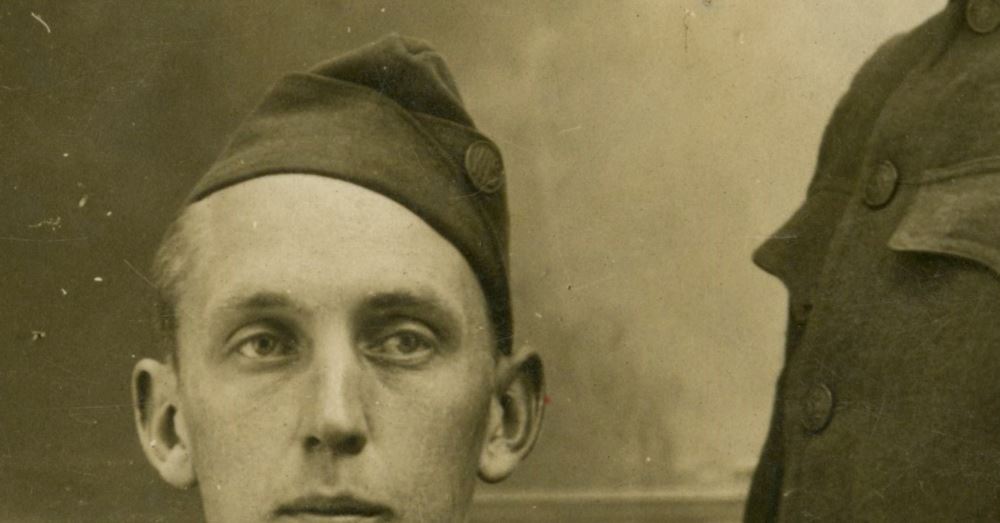
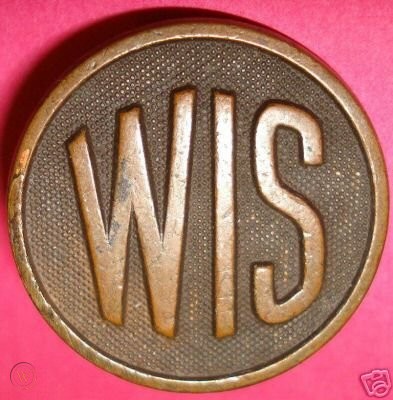
After a long hiatus I’ve decided to come out of obscurity and begin posting to the blog again! A recent Facebook purchase from a WWI collecting colleague has proved to be a classic PortraitsofWar photo for interpretation. The photo depicts two US soldiers posed in a German studio during the postwar occupation of Germany in 1919. The soldier at right is shown with three overseas (OS) stripes on his left cuff denoting 1 1/2 years of overseas service as well as a French-style cap. Both soldiers are wearing 3rd Army patches on their left shoulders, which would have been worn during the postwar occupation period. The seated doughboy is sporting two wound stripes as well as two OS stripes and a Wisconsin collar disc on his cap. The reverse of the photo lists one of the soldiers in the photo as Robert B. Alexander of 914 Adams Street, Portage, WI. Given that the seated soldier is wearing a Wisconsin disc on his cap, it is presumable that the identification on the reverse is leaning towards the sitter at left.
Pvt. Robert B. Alexander (seated), Co. F 16th Infantry Regiment, 1st Infantry Division
Reverse Identification of Pvt. Alexander
Some quick research revealed that that Pvt. Alexander was born on April 20th, 1892 in the town of Portage, Wisconsin to Robert M. and Mary Alexander. He lived much of his teen years at 913 and 914 Adams Street in Portage and was listed as working as a switchman with the Chicago, Milwaukee, St. Paul and Pacific Railroad as of 1917 before he enlisted in August of that year.
Railroad Switchman, Ca. 1940
914 Adams Street
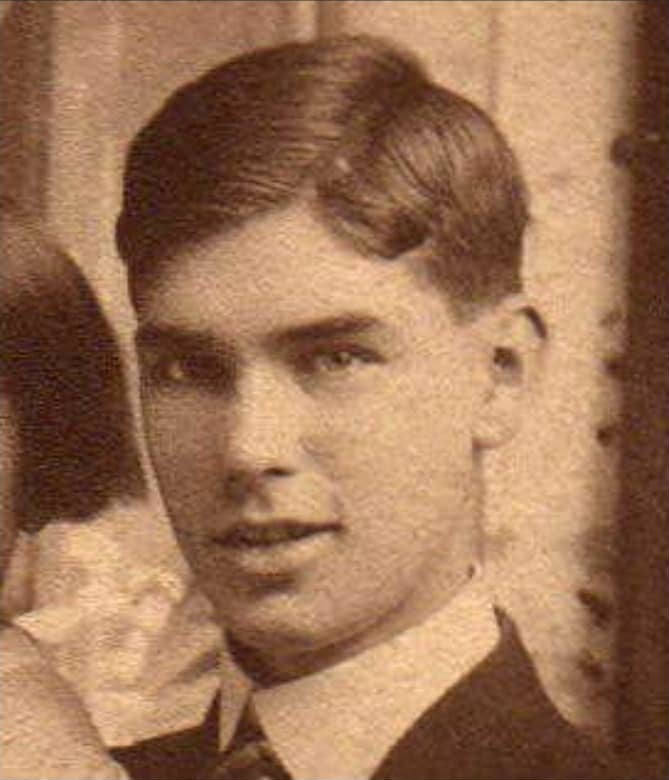
Attempts to find a photograph of Robert Alexander using traditional research methods failed, but I was able to track down a yearbook photo of Robert’s youngest son. Claire Alexander sat for a yearbook photo in 1944; a side-by-side comparison leaves no doubt in my mind that Claire is a progeny of the seated doughboy.
Pvt. Alexander
Claire L. Alexander in 1944
Wartime Service
Research into Alexander’s wartime service has revealed that Robert was involved in heavy combat in September of 1918 only months before the end of the war on November 11th, 1918. His accolades are laid out in an unlikely document:
Veteran Headstone Document
Reverse of Above Document
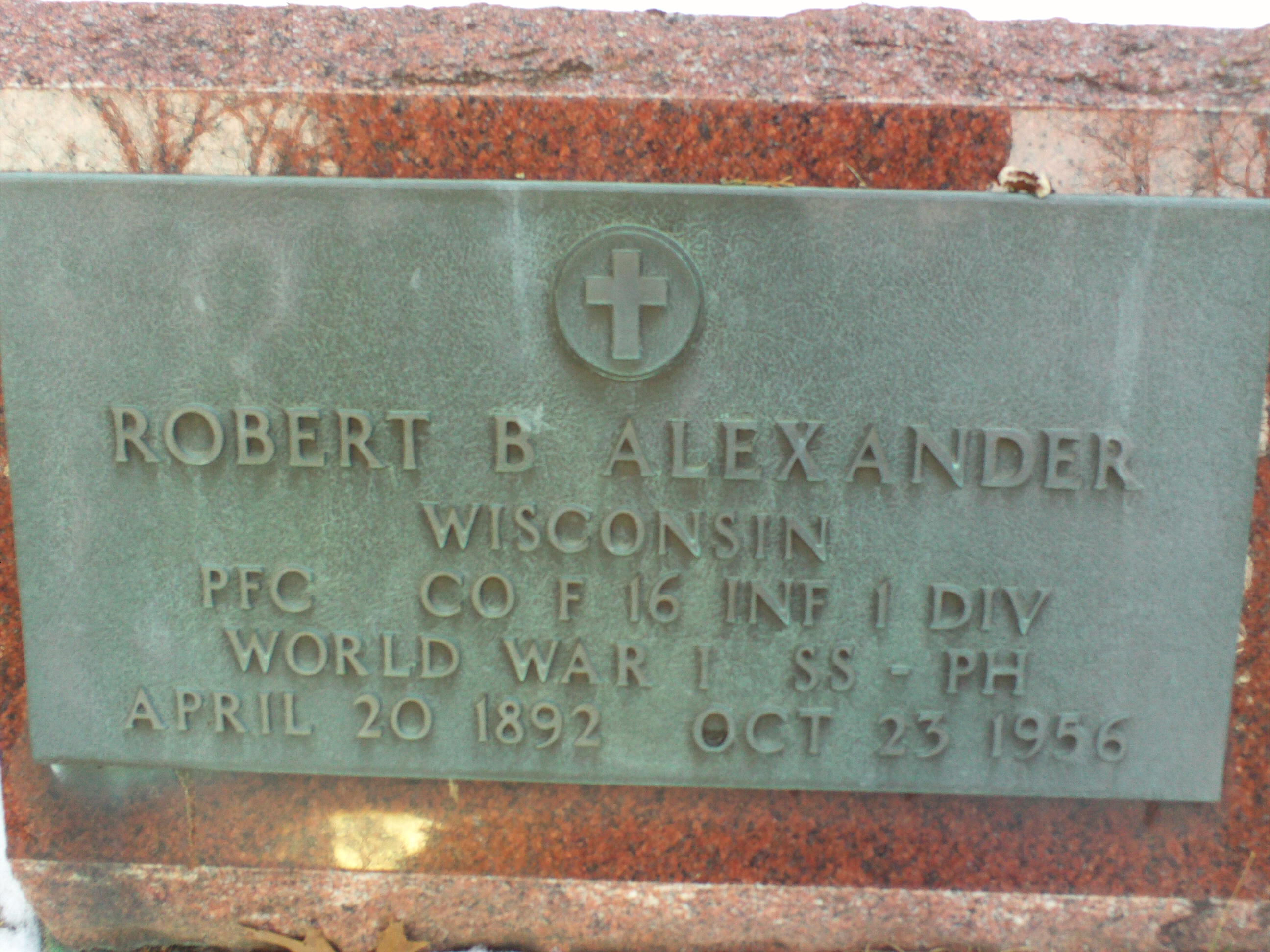
This document confirms that Robert served with Company F of the 16th Infantry Regiment, 1st Division. He was wounded at least once and received the Purple Heart (After 1932) and also the Silver Star. Details about his wounding and SS are still pending… stay tuned.
Private Alexander’s 1956 headstone was made by the Acme Bronze Company of Maple Park, IL and was delivered to the family on November 6th, 1956 following Robert’s death on October 23rd, 1956.
Mr. Alexander’s Headstone (Courtesy of Findagrave.com)
Research into living members of the Alexander family have proven fruitful…stay tuned for details related to the reunion of this photo with a great-granddaughter!
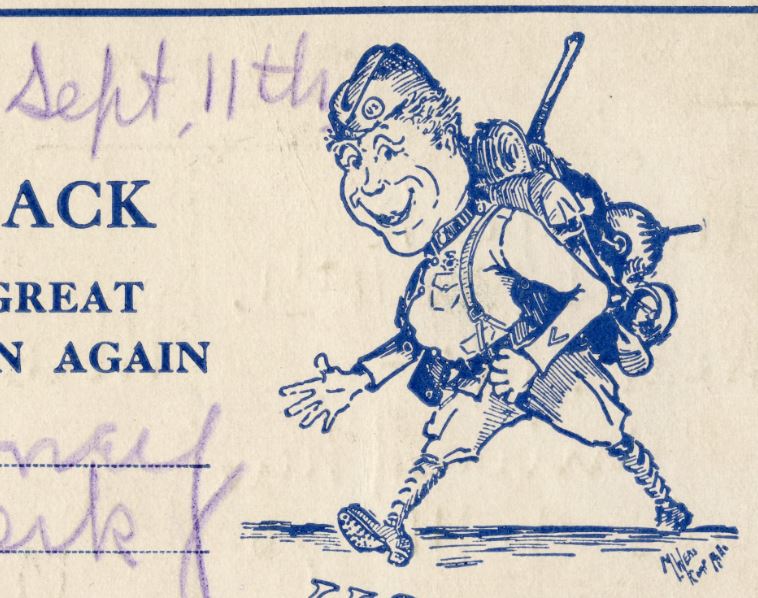
One of my favorite pieces of WWI ephemera to research is the pre-printed postcard that was handed out to soldiers intended to be sent to loved ones from the decks/bunks of the multitude of transport ships that brought doughboys back from Europe in the years following the war. In tonight’s case, I purchased this card on eBay without any prior research. The date of 9/11 caught me as particularly interesting given the 2001 connotation, so I made a quick bid and won the postcard. My research process can be followed below:
Step 1: Purchase the card
Only $9.89+0.99 shipping!
Step 2: Receive the card in the mail
Front side of the postcard
Back side of the postcard
Step 3: What the heck is going on?
The first actual step in the interpretation and research of a WWI postcard is to figure out when it was made, when it was sent and who sent it. This one should be pretty easy.
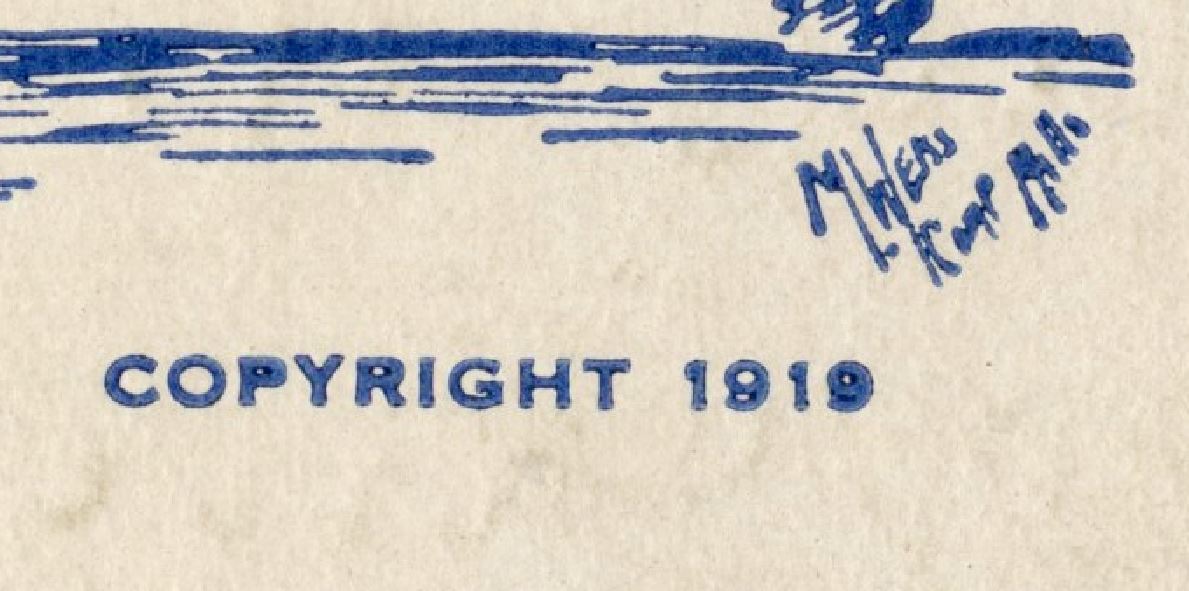
Copyright date of 1919
Most WWI postcards don’t usually come with a Copyright date and/or an artist’s signature. This one comes with both. I don’t have time to delve into the identity of the artist, but I can say that the card was copyrighted in 1919.
So, the written portion is from September 11th, 1919 at the very earliest.
September 11th
Step 4: Who the heck sent this thing?
Whenever I attempt to identify a soldier-sent postcard, I always try to research the recipient first. Normally, we have the name of well established member of a community as well as a normal mailing address and town name intended as the recipient. Assuming most postcards are sent to a mother or father, it doesn’t take much effort to track down the 1910 census record for that family using Ancestry.com. This is exactly what I did in this case. The first Maroney to appear in the Eyota, MN 1910 census was a Patrick C. Maroney… Bingo.
1910 Census record
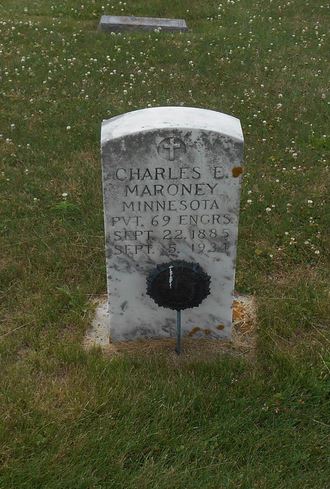
From here I researched the children of Patrick and Emma Maroney (the card says “Dear Ma”) and found that they had a son named Charles E. Maroney who was born on September 22nd, 1895 and passed away on September 5th, 1934.
Charles’ September 11th, 1919 return to the USA
Charles signed in aboard the U.S.S. Montpelier after his time in France on August 28th, 1919 and landed back in the US on September 11th. It was at this time that he was most likely given the above card to fill out and ship to his parents back in Minnesota. His wartime record puts him with an engineering unit that was focused on railway work during the war and this tombstone identifies him as a Private with the 69th Engineers . This doesn’t exactly jive with his US Headstone Application or the US Army Transport records seen above. According to records, his grave should’ve listed him as being with the 144th Transportation Corps. Please note that his mother was also the recipient of his body after he passed away in 1934. 😦
I apologize for not posting more frequently, but I’ve been focusing on preparing presentations and talks for local historical societies here in my home state of Vermont. Tonight’s post is the first that focuses around a recently-purchased portrait photo. A dealer from the Philadelphia area has been selling off what appears to be an entire collection of WWI portraits from a Charleroi, Pennsylvania photo studio. Of the several dozen portraits sold by this seller in the past two months, I’ve been lucky enough to pick up two photos. The best of the two is the image photograph presented below:
At first glance, this photograph clearly presents evidence of damage in the hands of an ink-wielding enemy. Who knows how this was damaged, but it didn’t seem to impact the final value of the photograph, which sold for a healthy $68.00. The particularly interesting elements of the photograph are presented here:
English Style Cap and Engineer Collar Disc
French Croix de Guerre medal w/ silver star and 1st Army patch variant
After a bit of research into the sitter above, it quickly became clear that he was an engineer with the 1st Gas and Flame Regiment, previously the 30th Engineer Regiment. As a Private with the regiment, he would’ve been involved in the maintenance and mobilization of Livens gas projectors during the last several months of the war.
Born on April 21st of 1897 in Naples Italy, Louis emigrated to the United States on May 26th, 1910 in hopes of linking up with family members in Pennsylvania. He gained his citizenship when he was naturalized in May of 1928 due to his service for the U.S. during the war.
The men of the 1st Gas and Flame would be charged with maintaining, resupplying and moving the Liven’s projectors during the tail end of the war. What did this involve?
Levin’s Projector schematic
Louis is sporting a wound chevron in the portrait photo above – he was gassed on November 1st, 1918 only ten days before the Armistice of November 11th.
Note wound chevron (stripe) on right hand sleeve
It’s unclear through the records on how he received his gas wounds, but it’s highly probable that his gassing took place during the Meuse-Argonne Offensive, when the 1st Gas Regiment was actively moving forward during the “third-phase” of the offensive. The attack in which Louis was wounded began at 5:30 on the morning of the 1st of November. Sadly, the gas mortars that were projected that morning were done so under less-than-ideal conditions and it appears that shifting wind blew toxic gas back towards the 1st Gas Regiment. All those who were gassed during this event were brought off the line to Sommerance, France where they were treated. All of this information can be found in the unit history of the 1st Gas Regiment, which is hyperlinked here.
Louis’ War Record (Note gassing date)
What Louis achieved after the war is unknown to me, but I hope that he lived a full and rewarding life. His war record and portrait will remain a part of my website, but I hope to pass the photo along to a relative one day.
A recent eBay purchase has lead me down a warren of research avenues that are helping shed light on the American involvement at the bloody fray at St. Etienne during the Battle of Blanc Mont Ridge in October of 1918. The photo depicts Lt. Carl Wehner with the following inscription on the verso:
“141st Inf., 36th Div. Lt. Carl Wehner killed Oct. 8, 1918 by a German sniper.”
It was this writing that pushed me to purchase the photo at a reasonable $25.00 in hopes of researching and fleshing out the life of the young Lieutenant and Wisconsin native who was killed in action only days after his 26th birthday.
Lt. Carl Wehner in France, 1918
This photo was most likely taken a month or so before his death in October, as he is sporting a 6 month overseas service chevron on his left cuff. August or September would roughly be six months after his arrival from stateside officers training. He was selected to be a Lieutenant with Company K of the 141st Infantry Regiment of the 36th Division – a unit comprised mostly of southern boys from Texas and surrounding states. Having been born in Lincoln, Kansas and spending most of his life in Madison, Wisconsin, he originally enlisted with the 32nd “Red Arrow” Division but elected to train to become an officer. At the time of his enlistment, he lived at 925 West Dayton Street in Madison.
Carl’s WWI Draft Registration Card
And I was able to find a fascinating account of his death while commanding Company K following the death of his Captain (Source – Entry by RavenHawk)
…It was near St. Etienne, as his captain layed dead, Wehner led his unit forward, until he himself was struck in the head, by enemy gunfire, and killed. One account of the battle (perhaps a little exagerated), said: “Lieutenat Wehner died with three machine gun bullets in his forehead and a smile on his lips as he led Company K of the 141st Infantry over the top after his captain was killed by the fire of the enemy.”….In a letter signed by the Marshall Of France, Commander in Chief of the French Armies of the East, Petain, it was written: “Lt. Wehner displayed audacity and disregard of danger during the operations near St. Etienne. At the head of his men, encouraging them with his skill, he largely contributed to the success of the operations which made it possible to capture all objectives. He was killed at his post of combat.” For his bravery, Wehner was awarded the Croix de Guerre with palm for bravery….As for Wehner’s family, they didn’t find out until after Christmas, that Wehner had been killed, in battle…Wehner’s body was returned to Madison in 1921, and reburied at Forest Hill on 10/21/1921.



















 Portraits of War