WWI Vermonter – 103rd MG, 26th Division – Walter J. Fuller Dies of Disease 1917 – Westminster, VT Native


WalterFuller365

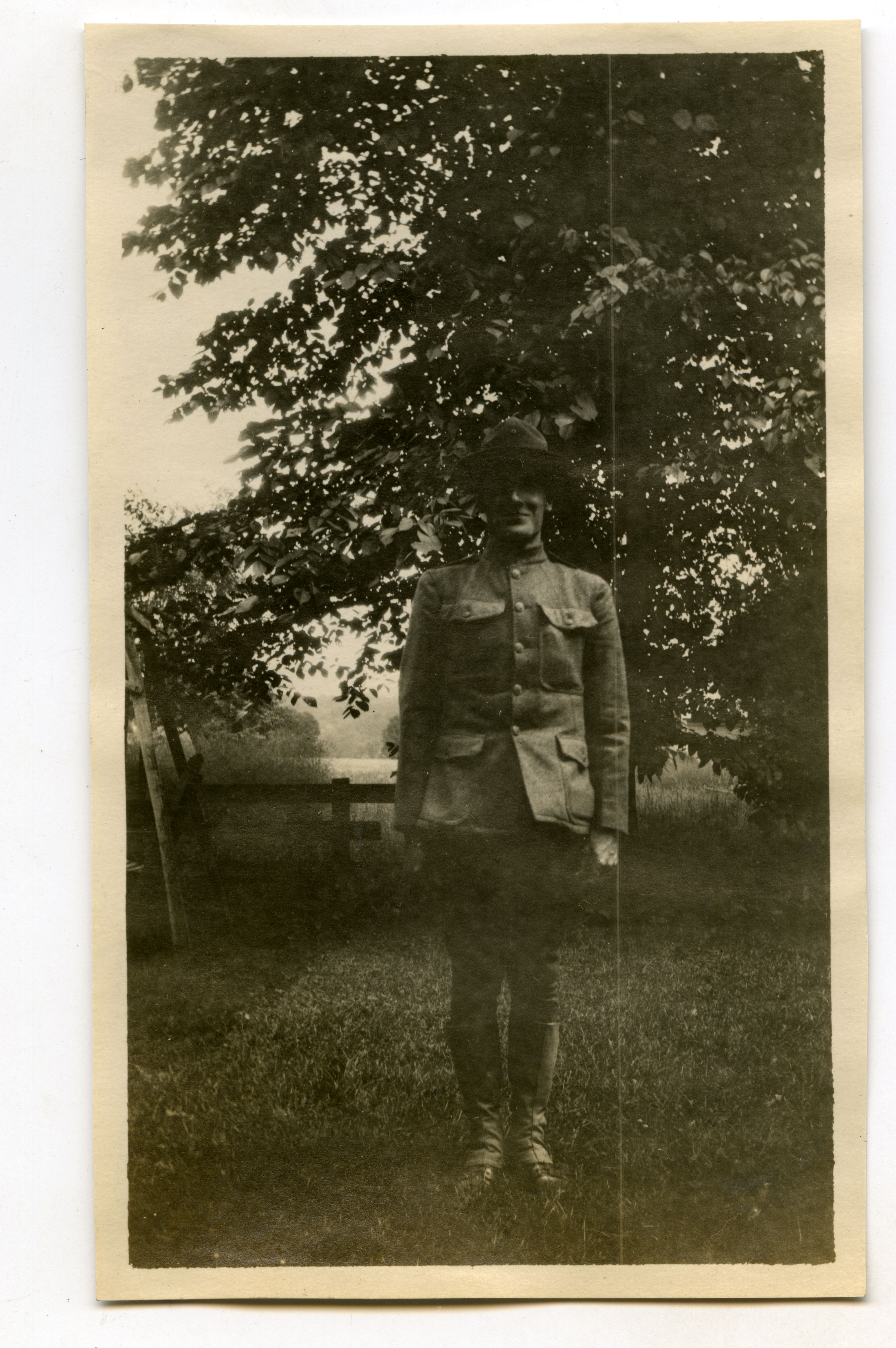
Walter J. Fuller Poses in Westminster

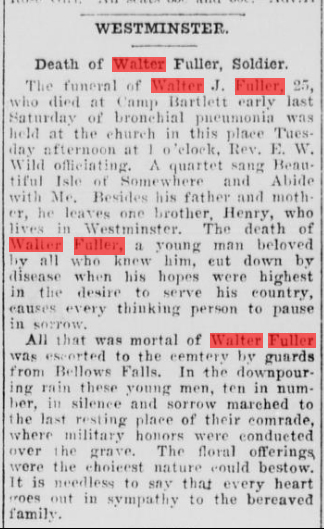
A recent Walter J. Fuller poses for the camera near his home in Westminster before shipping off for training in 1917.  The photo was originally part of a much larger scrapbook which was broken up and sold on eBay in 2012.  Luckily they included a bit of context to the sale listing, enabling me to track down the identity of this brave Vermonter.  A member of the 103rd MG Bn., Walter shipped out from Fort Ethan Allen down to Camp Bartlett in Massachusetts.  It was here that he contracted the bronchial pneumonia and passed away at 3:30 (yes, we know the exact time!) on October 27th, 1917.  His family was contacted via telephone about his worsening condition and were able to be present when he passed away.

Fuller

Johnson, Herbert T. Roster of Vermont Men and Women in the Military and Naval Service of the United States and Allies in the World War, 1917-1919. Montpelier, VT: Tuttle, 1927.

I was able to track down a few articles in the 1917 Vermont Phoenix

Fuller1

“Soldier Dies in Westfield.” Vermont Phoenix, November 2, 1917, 2. Accessed December 4, 2013. ChroniclingAmerica.loc.gov.

fuller2

WWI Identified RPPC – 90th Division Veteran Victor H. Horner Poses in Germany 1919


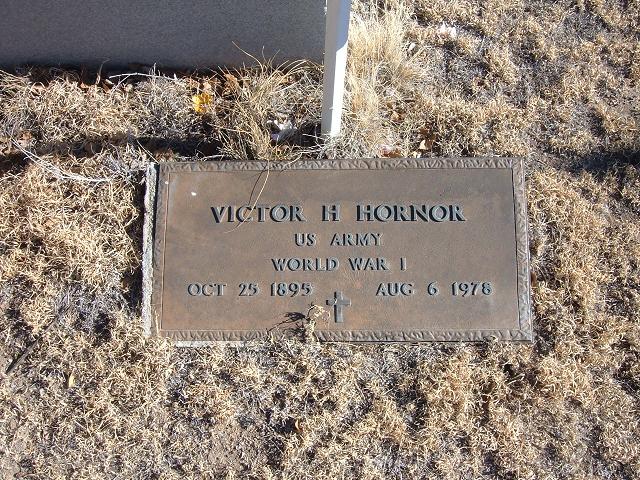
Nothing spectacular jumped out at me when I first purchased this image on eBay last week.  I knew it was likely identified, but I wasn’t sure the name would be searchable. I was pleasantly surprised when the photo arrived and I was able to read the name and successfully search for his name on ancestry.com.  He was born in 1895 and passed away in 1978 in Springfield, CO. This photo was likely taken in 1919 after the Armistice.  Note the use of French numeric pins on his overseas cap.

Victor H. Horner

Victor H. Horner

FindaGrave.com photo

FindaGrave.com photo


WWI RPPC Photo – African-American Infantry Doughboy William M. Richardson of Washington, D.C. Posed in France


williamrichardson420a

Reverse Side

Reverse Side

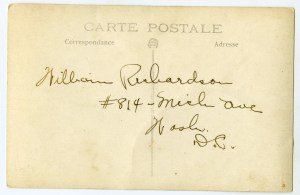
The hidden treasures of the eBay world still turn up genealogical treasures with a bit of background research.  A recent auction listing provided me with a solid base for some in-depth research.  I actually timed myself on this one – it took me exactly 1 hour and 32 minutes to research this piece from beginning to end.

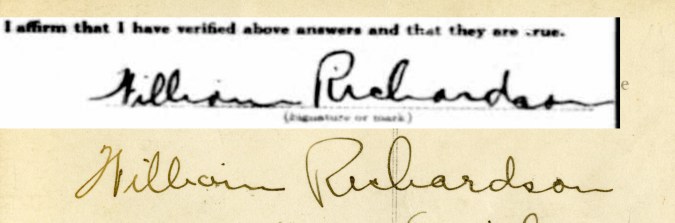
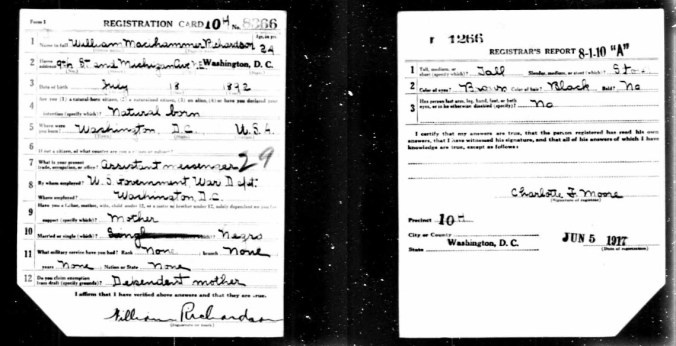
Mr. William Maccihammer Richardson of 814 Michigan Ave, Washington D.C. enlisted for the draft on June 5th, 1917 at the age of 24.  He had a dependent mother and presumably a deceased /absent father.  William, according to his draft registration card, was already in the service of the War Department and was likely added to the roster of the 93rd Division.  The 93rd was comprised of National Guard units from New York, Chicago, Washington, D.C., Cleveland, and Massachusetts.  I’m assuming he was in the 93rd Division given the presence of his infantry regiment crossed rifle cap insignia and his military service in D.C.  He was a messenger before the war while working for the War Department in Washington, so it’s an easy jump assume he served in a similar role with an infantry regiment of the 93rd.  William was one of over 1,000,000 African-American men to register for the draft and one of only 370,000 to be inducted into the army.

SigComparison

CSI Style Signature Comparison

Those familiar with WWI draft cards will notice the clipped corners.  This was required of men of color in order to easily pick them out during draft board review.  It was apparently  a common practice that I was not aware of until researching this image.

Richardson Draft Card

1917 Draft Card

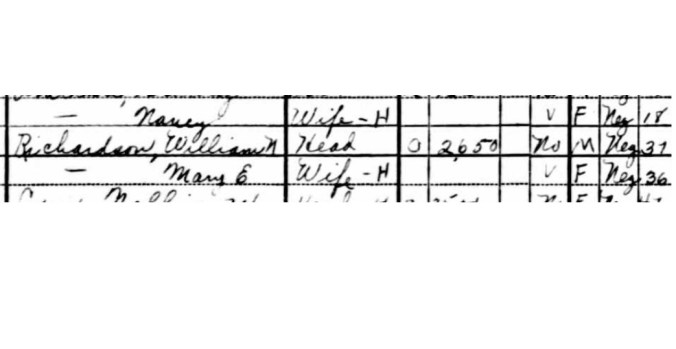
The next definite genealogical entry I found for William puts him in District 221 of Washington, D.C. in the census of 1930.  His entry is easily misread as a William N. Richardson.  He is shown as being married to a Mary E. Richardson.  His profession is listed as being a Chauffeur with the U.S. Government – another link to his prewar position.

1930 Census Record

1930 Census Record

In the 1940 census record, William is listed as being a chauffeur for a private family.  His yearly income is $1,700 – almost exactly the average annual income of $1,900 in 1940.  He lived in an apartment building in Block No. 18 of Washington and had two “lodgers” living with him and his wife.  June and Cleo Adams were sisters to Mary E. Richardson.

1940census

The last and final genealogical reference to Mr. Richardson comes in the form of a death registration.  William died at the ripe age of 81 on June 3rd, 1973.  The trail ends with his death, but the possibilities for future research lay wide open.  Which unit did he serve with?  Did he see direct combat?  How did he meet Ms. Adams?

death

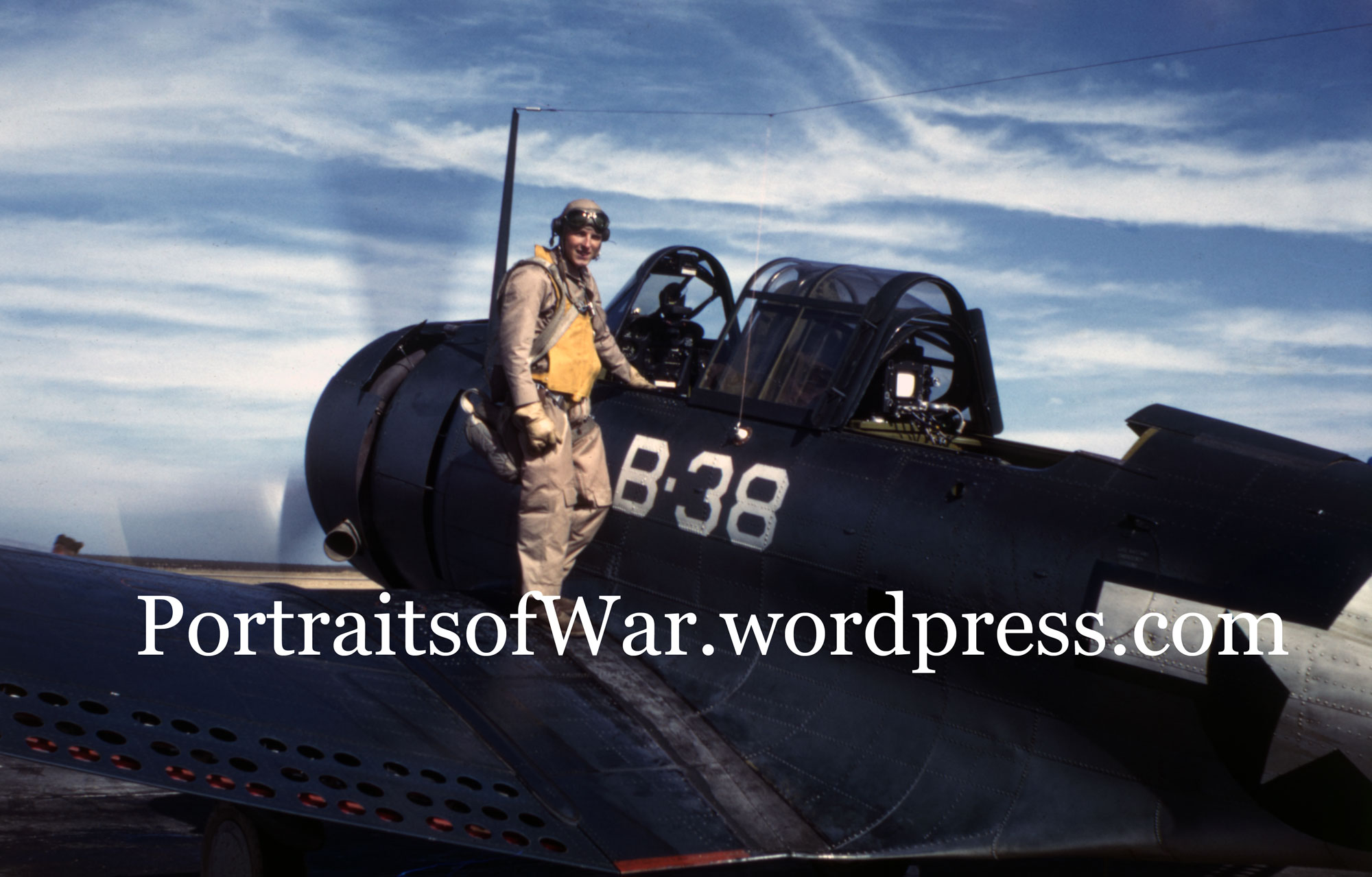
WWII in Color – 1944 SBD Dauntless Marine Dive Bombers VMSB-332 w/ WWII Marine Pilot Commentary


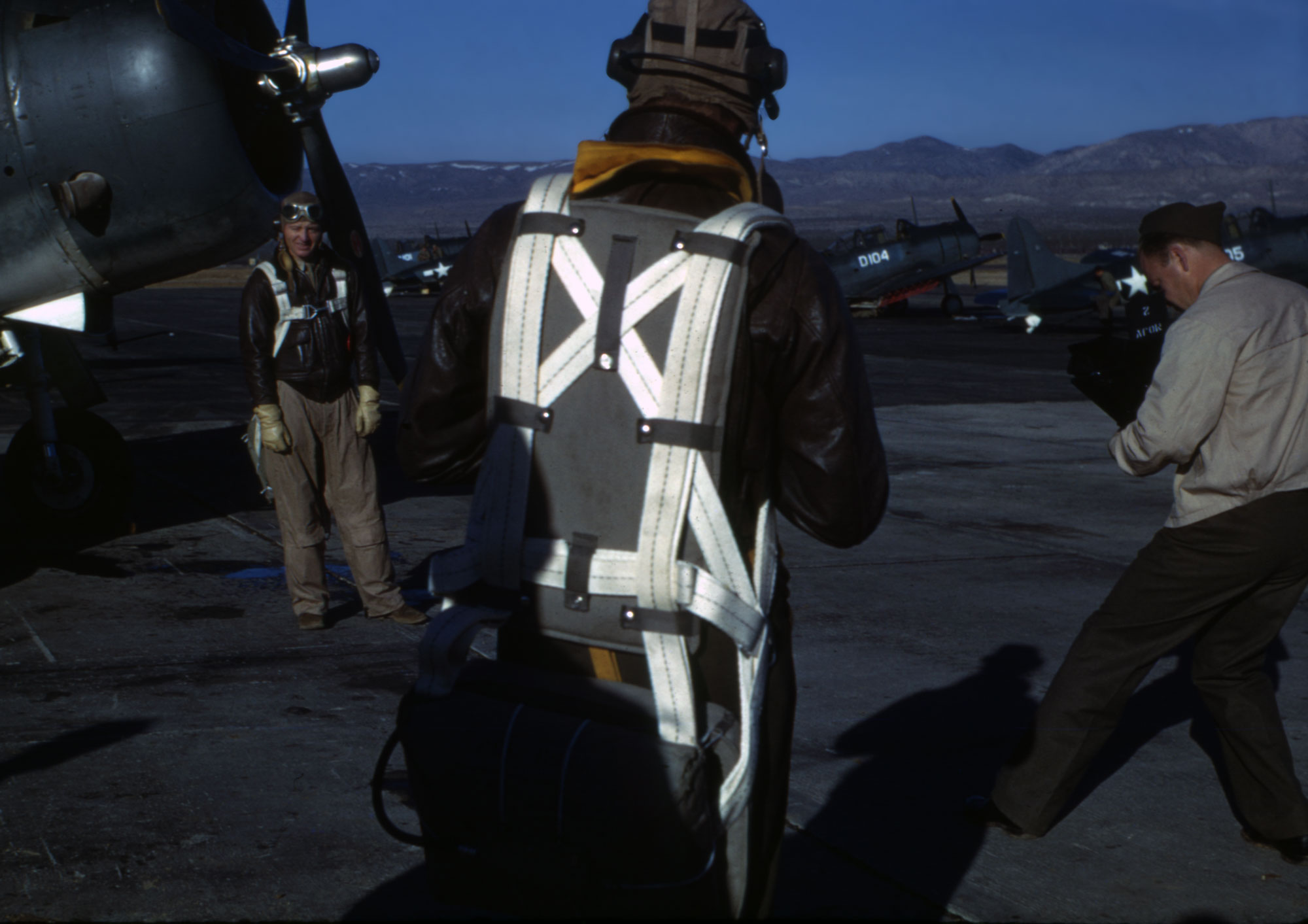
The color of WWII is something lost on our generation; WWII has been a war fought in black and white for everyone but actual WWII veterans who witnessed it firsthand.  One of my goals here at PortraitsofWar is to collect color slides from WWII and make them accessible to those who don’t know it exists.  Yes, color film was shot in 35mm(and sometimes larger format) and was used on a somewhat regular basis by shutterbug soldiers during WWII. My collection is roughly 500:1, black and white : color.    To find a complete collection of color slides is like hitting the WWII photography jackpot.  In this case, I was able to pick up a small selection of color slides from a Marine dive bomber.  Although I was only able to snag 7 from a grouping of nearly 200, I am still happy to pass along the images to interested parties.

From the collection of Walter Huff.

Recent Update: Captions Added – WWII Marine Corps Veteran Pilot Adds Commentary – Thanks Paul! 

Please enjoy the colors of WWII as they were meant to be seen! 

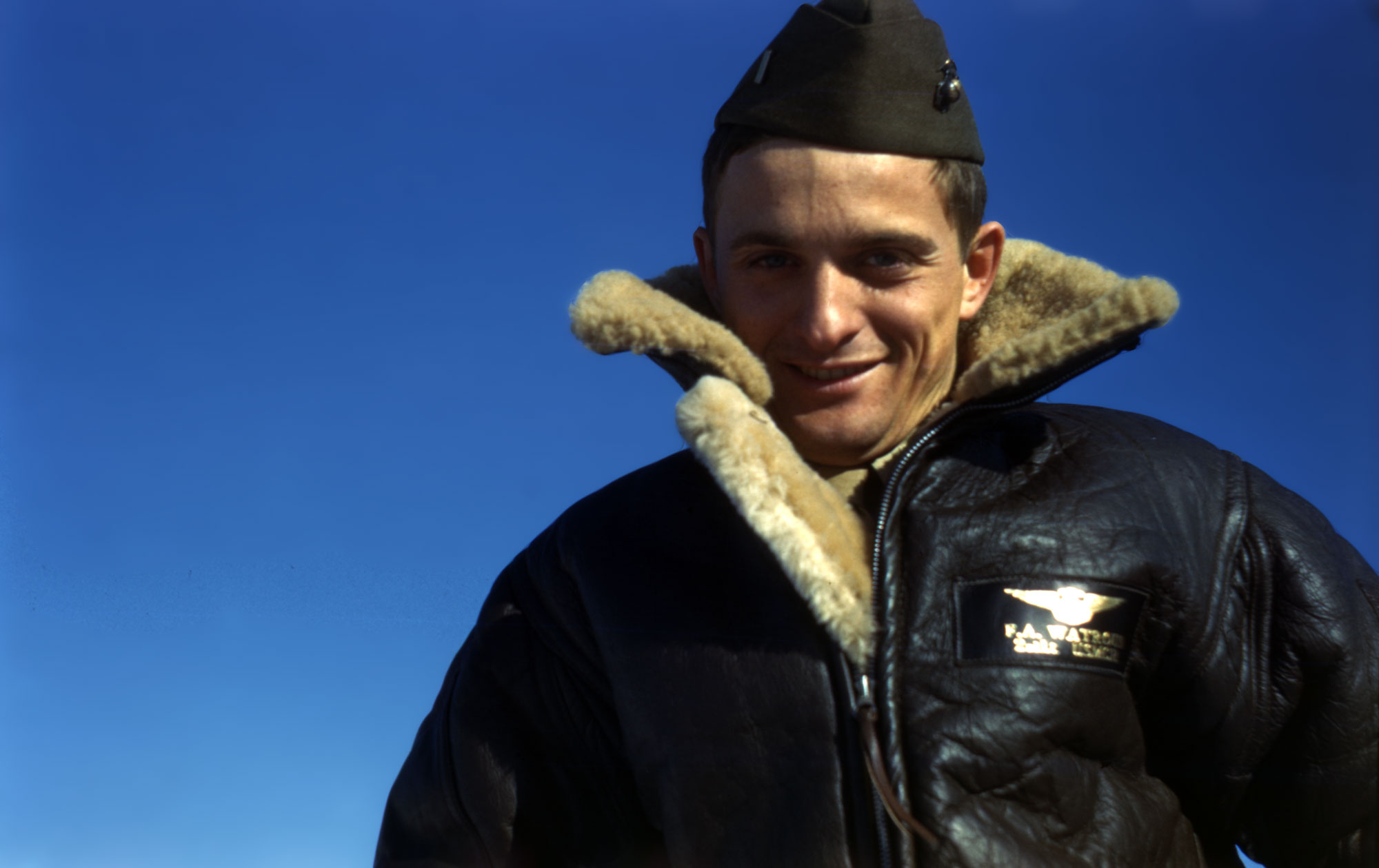
047: Standard permanent issue leather jacket with fur collar. Name plate design same as mine: Wings, name, and service (in this case USMCR).

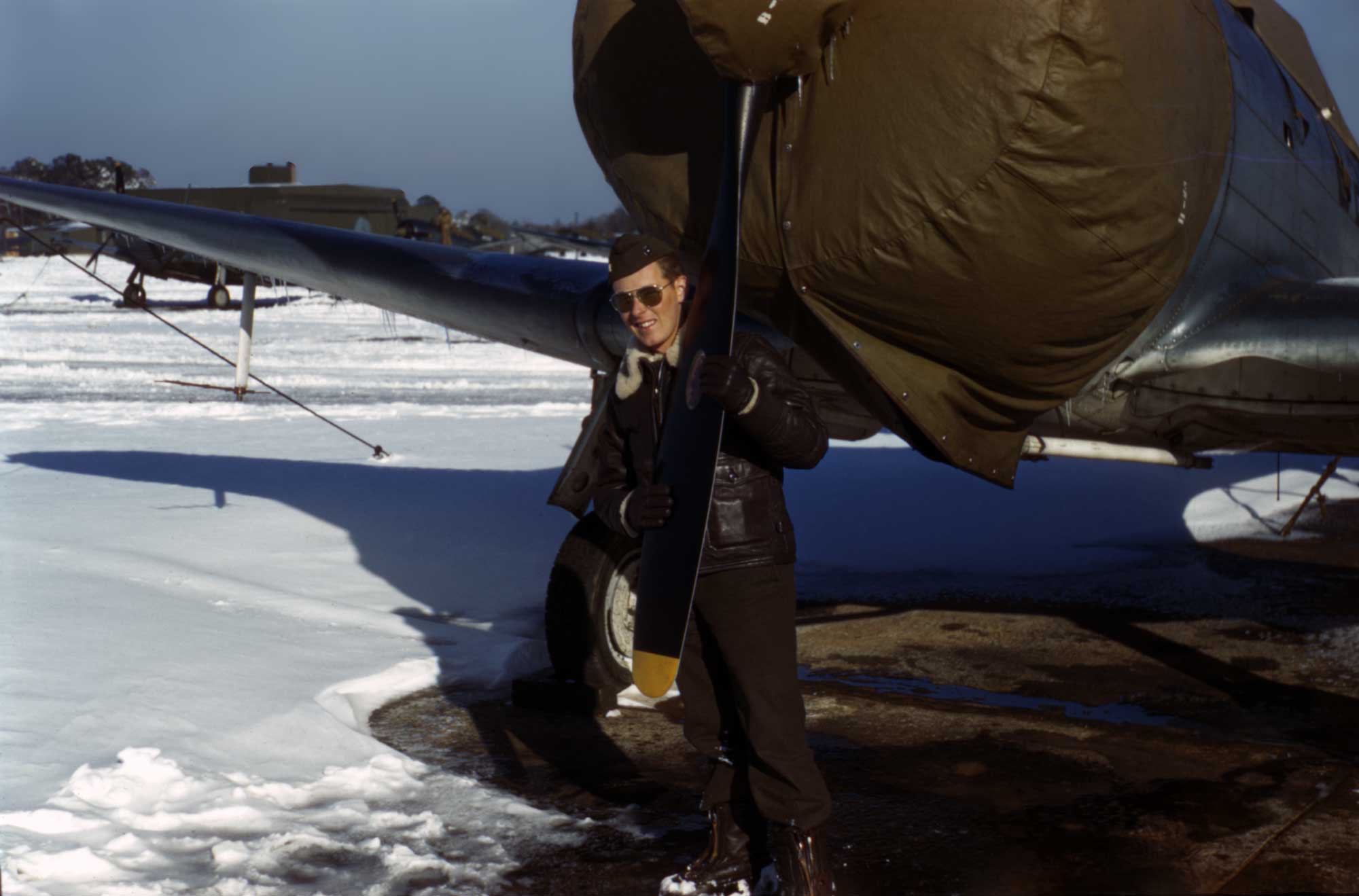
049: I’ll bet the farm this photo was taken at Bogue Field, N.C. Dec 10 +/-, 1943. Not much snow in Eastern N.C. I was on a trip to Buffalo, NY to ferry a R5C (C-46) from the factory to Cherry Point. Got back to find the engine block in the auto had frozen and cracked.

051: Nice shot. I do believe the engine is running. Hmmmm. I wonder why? Should have been a no-no with no one in cockpit!

053: I do not remember pilots wearing side arm stateside. With the pistol (issued to all Marine officers) I’m guessing 1943-44. Later pilots were issued revolvers but priority was to unit in combat area (Pac). I had a .45 pistol until 1948 (China and Eva, Hawaii). Got my first .38 revolver in Korea 1950.

054: This ain’t NC!!! Must be CA hills. Not combat area. Check out those pristine parachutes! The gauntlets (flight gloves) were of softest lamb skin and covered lower half (more or less) of forearm.

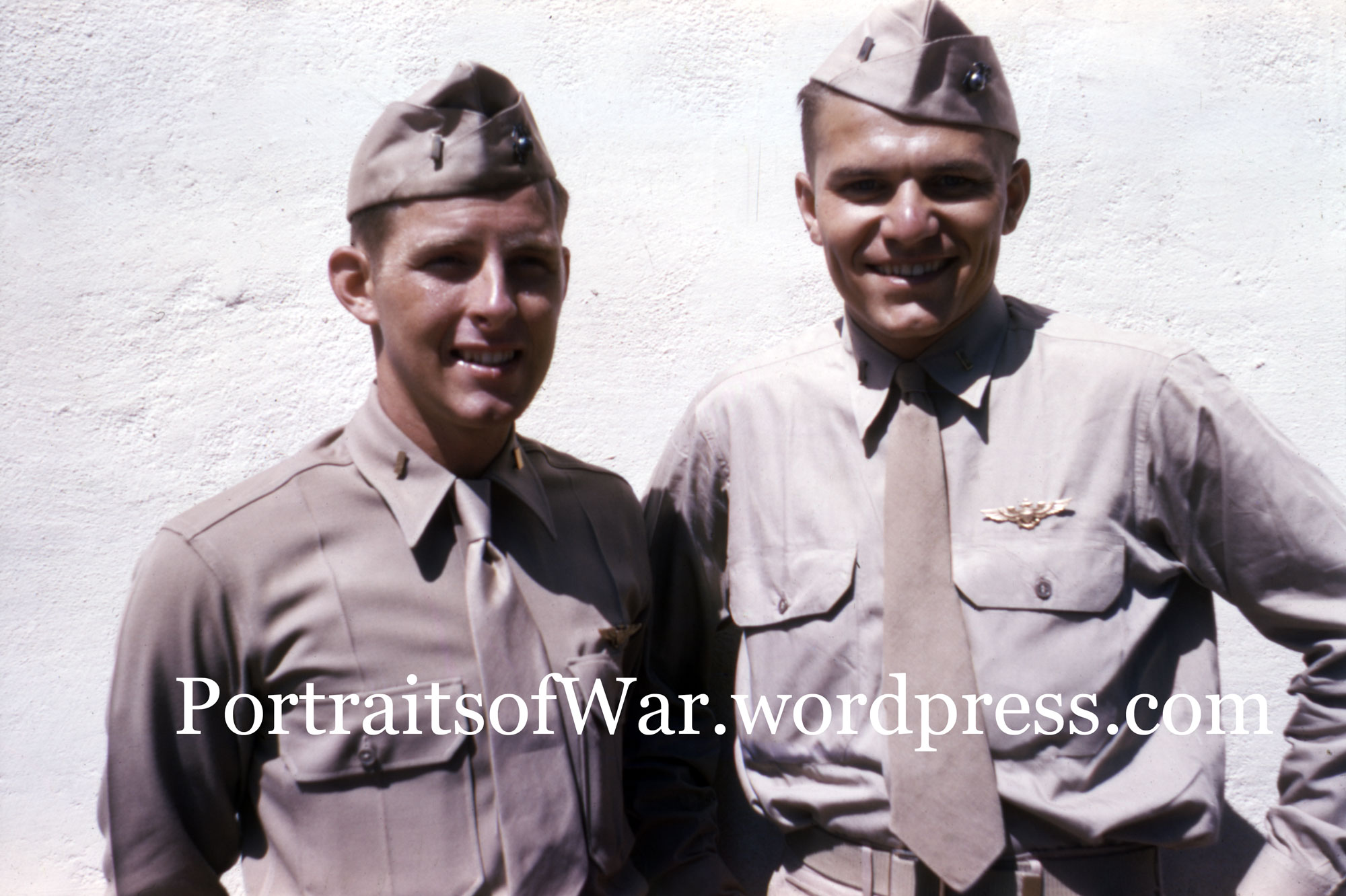
044: Not Marine Corps shirts, but Navy. Marine officer shirts were hard to come by. I know because I wore Navy shirts, too. Pocket flap designs are different. Marines never wear field scarfs (i.e. ties) tucked into shirt. After WWII a clasp was designed.

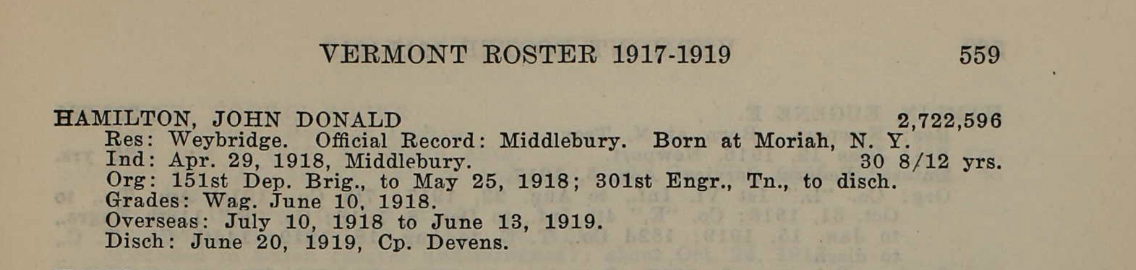
WWI Vermonter Identified Photo – John D. Hamilton of Middlebury, VT – 301st Engineer Supply Train


As my followers will know, I’m a huge WWI Vermont collector who loves to uncover identified photos of First World War Vermont veterans.  In this case I was able to trade a series of photos to a fellow collector/friend who knew I search for identified Vermonters.  The photo itself has good composition and details with a visible pistol and holster as well as OS chevron and signet rings.  Mr. John D. Hamilton lived in Addison, VT and enlisted and inducted at Middlebury on April 29th, 1918.  He was set up with the 301st Engineers and was listed as a wagoneer.  He served overseas from July 10th, 1918 to June 13th, 1919.  Given that he is wearing a six month chevron on his left arm, this photo had to have been taken sometime between December 10th, 1918 and June 10th, 1919.  He has no visible insignia that give his rank, but he is wearing a brass whistle which indicates that he is likely an NCO.  All in all a great shot!

WWI Photo Identification – Charles H. Maasberg of Milwaukee, WI Poses in France 1918


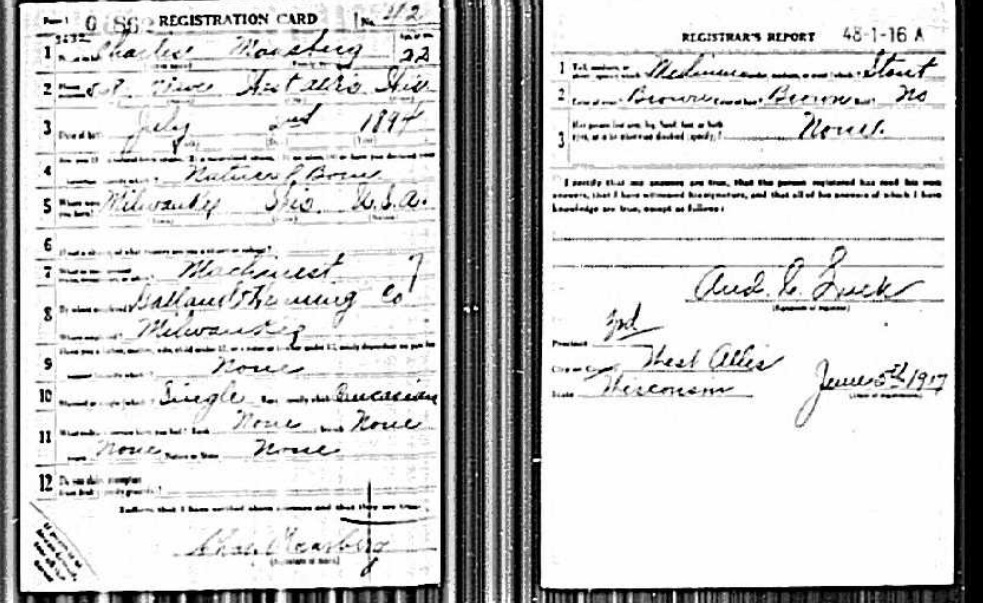
Charles H. Maasberg was born on July 2nd, 1894 in Wisconsin and enlisted for the draft on June 5th, 1917.  Although I can’t be sure when he was sent overseas, I can deduce that he was assigned to an ordnance handling unit.  He rose to the rank of Sergeant by 1919, and returned home to the US soon thereafter.  This wonderful outdoor posed shot was taken in France in 1918, and shows Charles posing in a hand-knit sweater complete with tie.  I can only imagine that it was taken in the backyard of a rural French home given the broken flower pots and creeping vines on the wall.  The lack of foliage may help us date the photo to the fall or winter months.  This would date the photo to the September-November of 1918 period.

1917 Draft Card

Spectacular WWII Aircraft Nose Art DVD Documentary – Interviews with Veterans of the 8th USAAF


I just came across a wonderful DVD from a British documentary film company that fits right in here at PortraitsofWar.  Filmed and edited by Whirl Wind Productions in the UK, this documentary follows the lives of WWII nose artists as well as the men who flew those famous warbirds.  Check it out and make sure to order a copy!

http://www.noseartfilms.co.uk/

Sidney Kotler: A WWII Artist in the China Burma India Theater – Ilustrator of the Stilwell Road Booklet


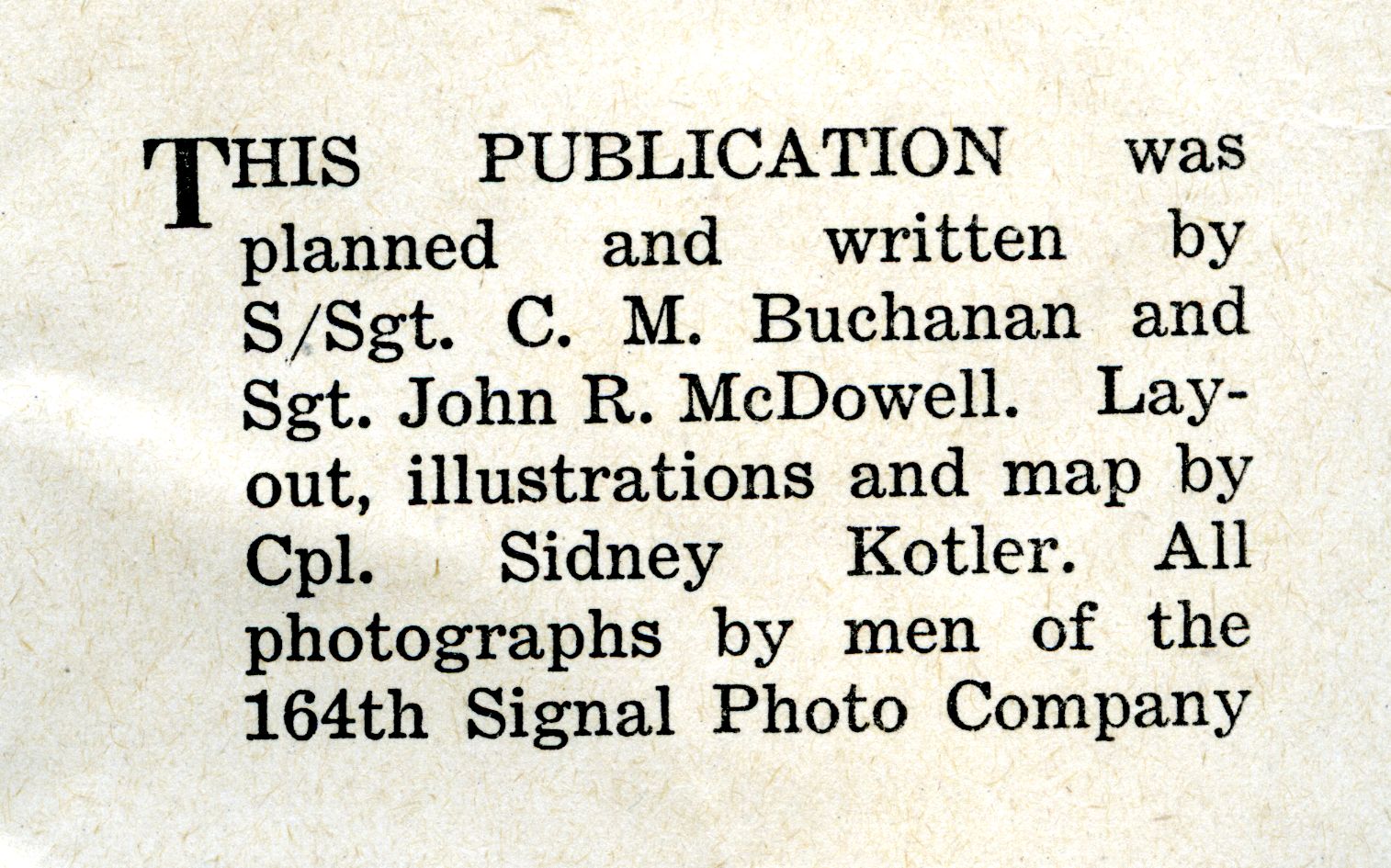
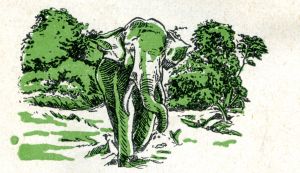
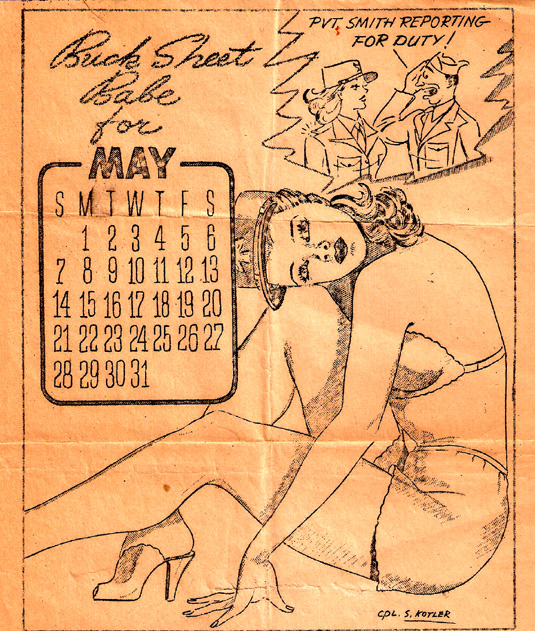
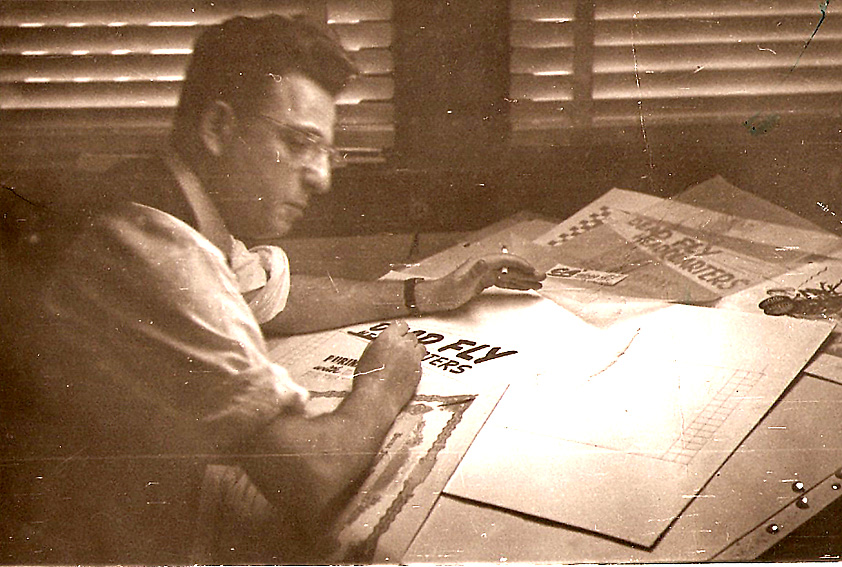
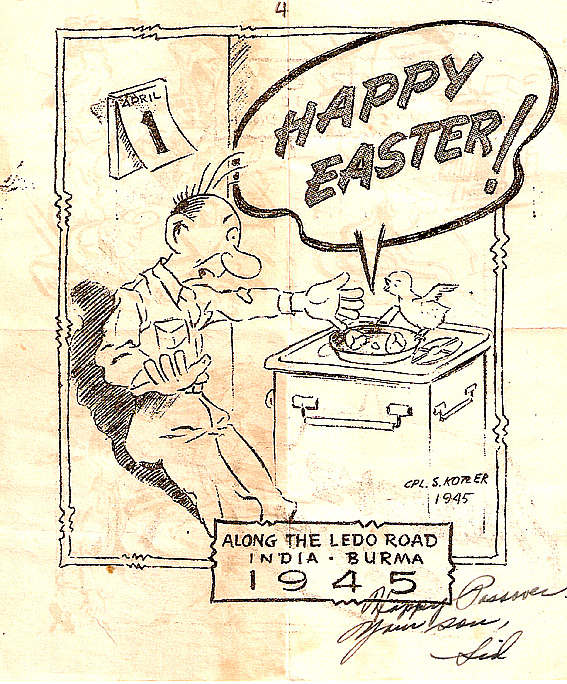
WWII Booklets are one of my favorite avenues of military ephemera collecting.  The small print runs, unique artwork, and theater-made feel make them a fun and easy collectible.  I picked up a copy of Stilwell Road: Story of the Ledo Lifeline this past week on eBay and was excited to leaf through the pages looking for possible research/blogpost material.  Immediately impressed by the artwork and layout, I decided to do a little sleuthing into the identity of the artist. Luckily, his name was printed in the back of the booklet.  Corporal Sidney Kotler obviously had an eye for illustration and technical art.  In my typical fashion, I plowed ahead with some research!

After searching around google and ancestry.com I was able to find that Mr. Kotler passed away in 1999.  This is sadly becoming the norm when researching viable identified WWII material.  Luckily, I was able to track down the daughter of Mr. Kotler and uncover a wealth of material about his life and war service.
The following is from Mr. Kotlers daughter:

Sidney Kotler was born in Berdichev, Ukraine in the winter of 1912 into dire poverty.  His brother Shlomo died of dysentery in bed next to him at the age of ten.  His uncle was abducted by the Czar’s army.  His family decided to take no chances in the politically embroiled Ukraine.  Every time a militia came into town, his mother  would hide the children under the floorboards of her house.  One of Sidney’s brothers, Dave, told the story about a Cossack who found the boys hiding.  He told them to keep quiet and put the floor boards back in place.  They were saved!
 
After several attempts, Sidney, his mother and 3 brother made it across the Polish border and managed to slip into England and eventually “over the pond” to the USA.  In 1927 the family came to St. Louis Missouri where his father Isaac had preceded them.  “Sid” attended art school at Washington University in the early 1930s and did some apprenticing on the side to help bolster his portfolio.  He found a job after his WU classes as a commercial artist working with the St. Louis Dispatch and Globe Democrat Newspapers, where he worked on advertising for newspapers, magazines, and other illustrative ventures.  After the war, he worked with the Ford Motor Company art department in the Dearborn, Michigan headquarters.
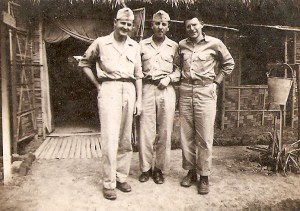
WWII, Sidney Kotler in the middle with a moustache

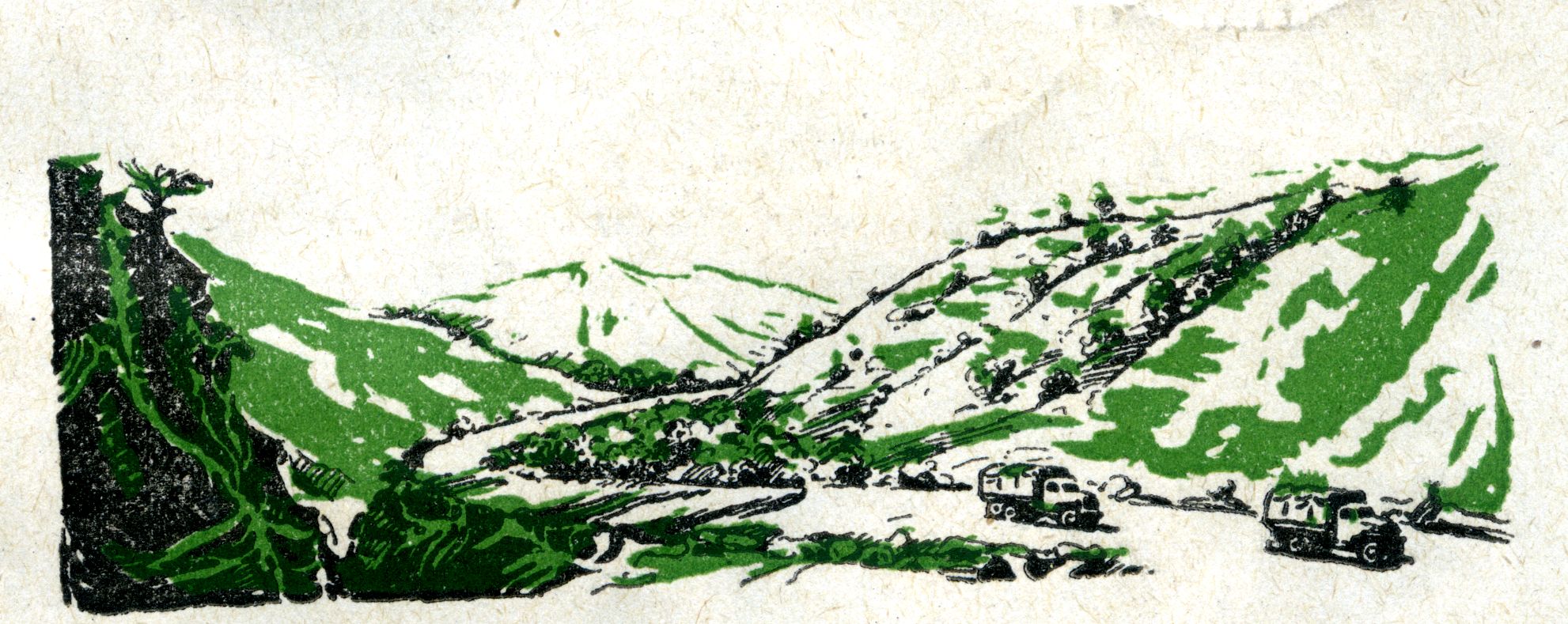
Sid was proud of his army service. It made him feel like the true American that he fought hard to become.  By pulling himself up from the bootstraps, he was able to attain the American Dream.   His service in the China/Burma/India theater was not easy; he was on the first convoy over the Burma Road with the 18th Battalion.  The construction of the road was an arduous job, and Sid played his part without an utterance of frustration.  Besides his field duty, he was the unit artist, sketching hundreds of illustrations for the unit publications as well as the Stars and Stripes CBI newsletter.  He kept in touch with his army buddies most of his life.   Sid’s children fondly remember visiting one family in particular:  the Buchanans.

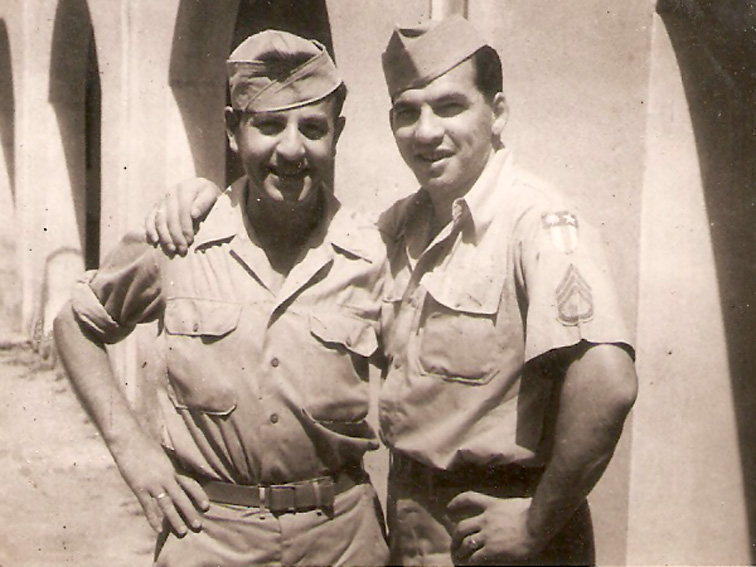
WWII, Sidney Kotler and buddy

In 1946 Sid married Elsie Fleishman.  The had four children two girls and two boys.  In 1952 the moved to Detroit where Sid began working as a graphic artist for Ford Motor Company.  He inspired me to study painting. After his retirement from Ford he continued painting.  His incredible artwork festoons his family’s homes;  magnificent landscapes and portraits dot the walls of his daughter Shira’s walls.   Sidney’s descendants include 9 bright and beautiful grandchildren.  Sid lived his life like a true patriot; he served his country, raised a stellar family, and left a legacy that will live for generations to come.
 
A special thanks goes out to Shira Chai and Mark Kotler for sharing the preceding passages as well as all the wonderful photos and illustrations.  Your father was a wonderful artist, and helped play an important part in American history!

WWII, Sidney Kotler and art work

WWII, Sidney Kotler, Easter Card

WWII, Sidney Kotler, Christmas card

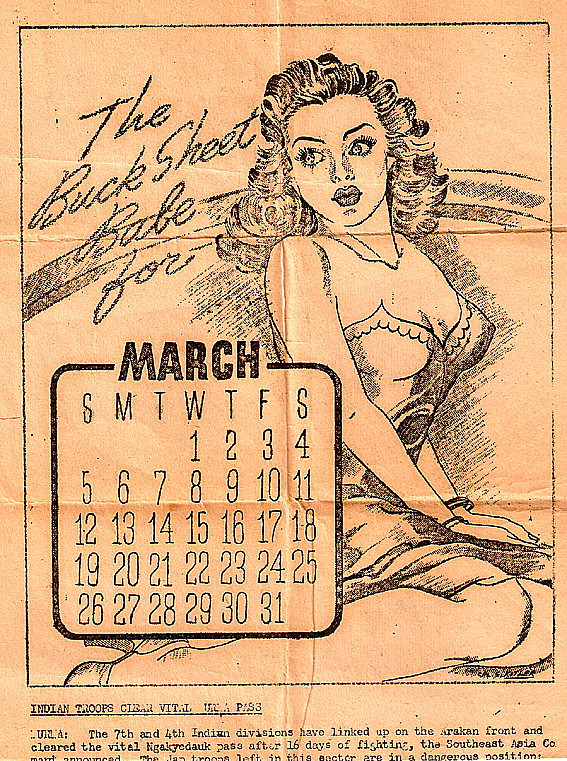
WWII, Sidney Kotler, pin up girl
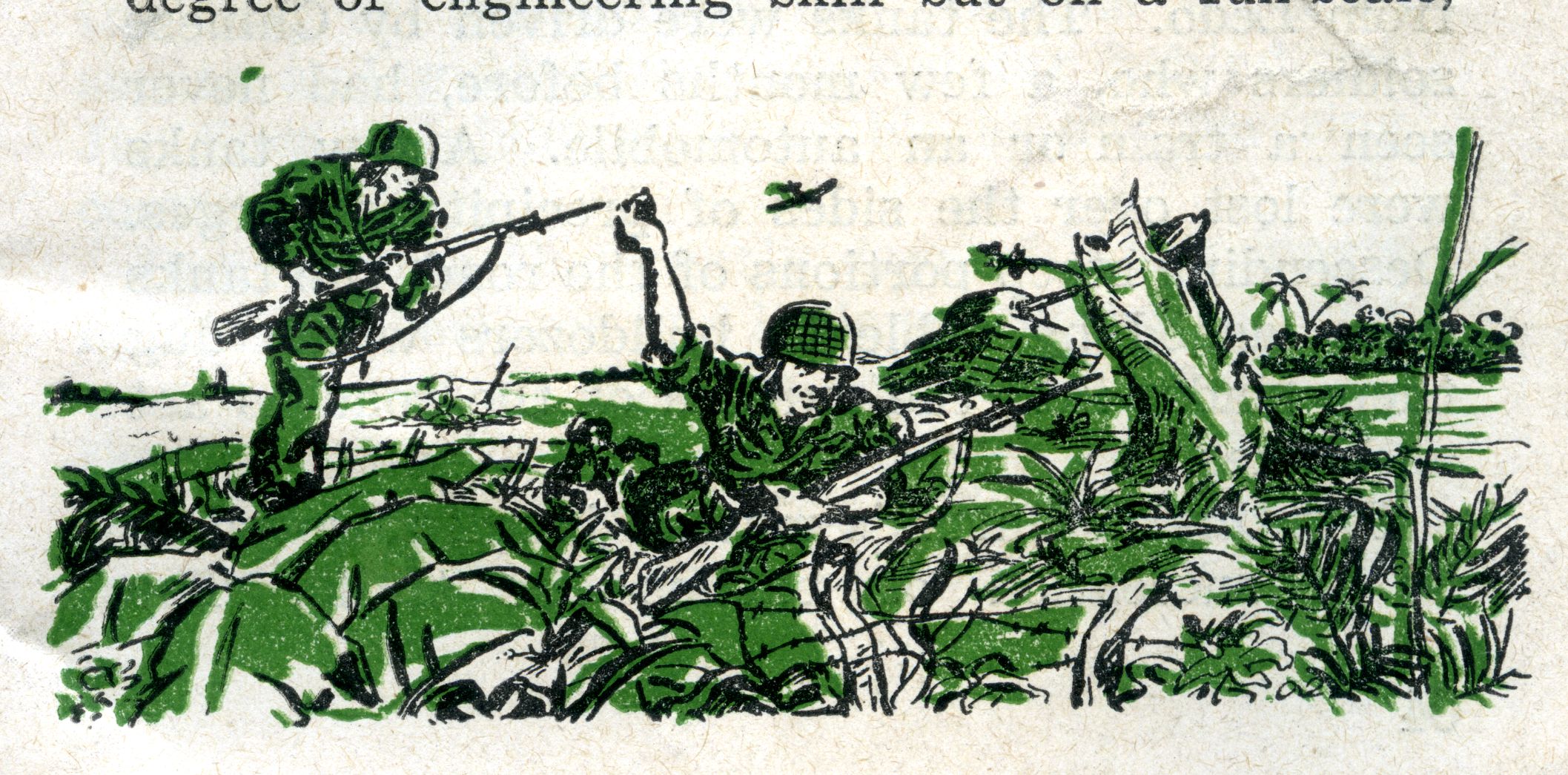
First Convoy on the Ledo Road

First Convoy Illustration
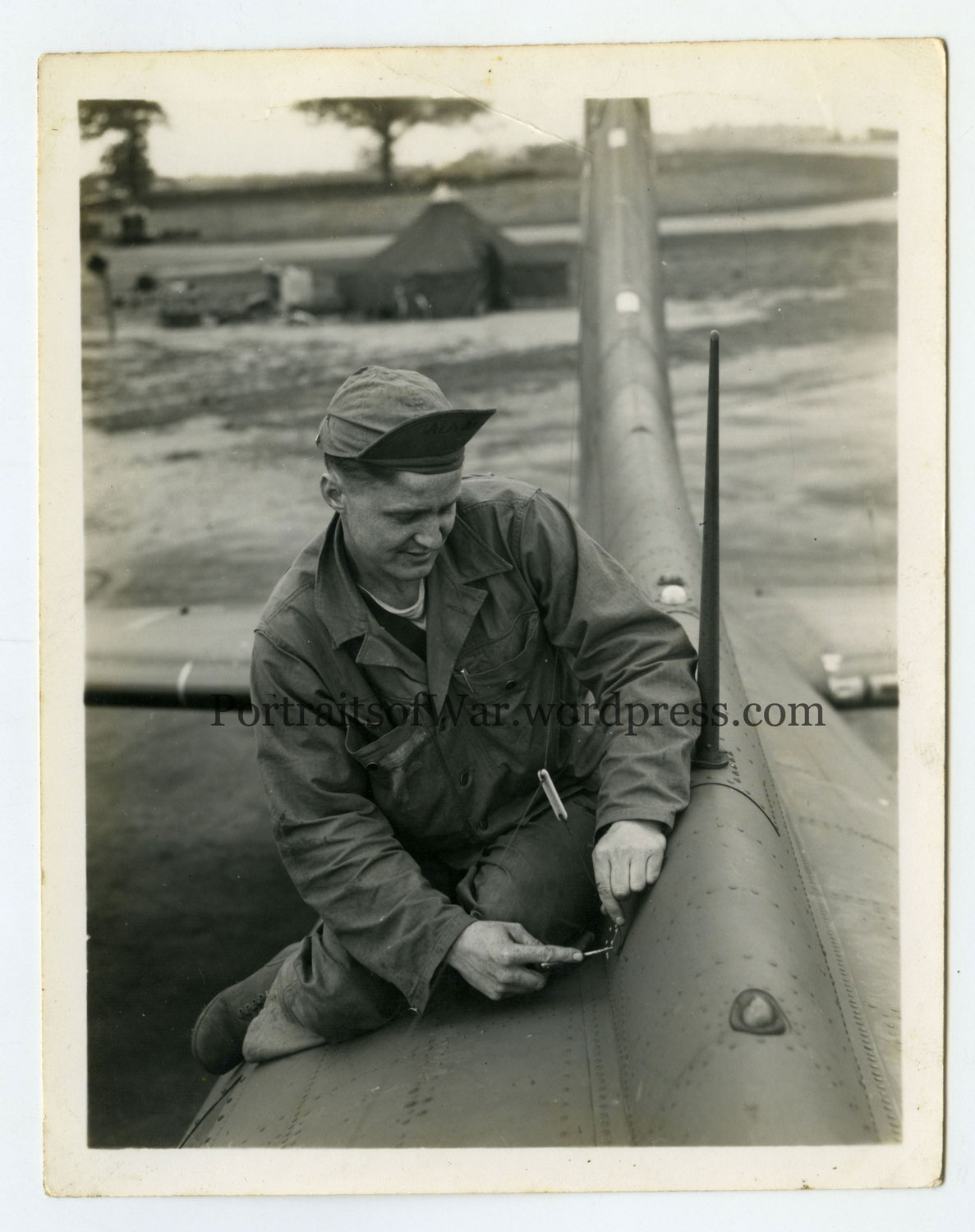
WWII 388th Bomb Group Post – Radio Mechanic Cpl. Roland Downs Fixing a B-17 in Knettishall, England


My obsession with the 388th Bomb Group stems from a chance encounter with a collection of negatives and photographs taken by an artist attached to the 388th in Knettishall, England.  Followers of PortraitsofWar already know the story, so I won’t go into great detail, but anyone interested should search for Alva Alegre in the search bar.
Anyway, I recently purchased a small group of photos that providentially yielded a handful of identified photos of members of the 388th BG.  In my typical fashion, I’ve fleshed out historical details and hopefully will give Mr. Downs a proper place on the internet.

I found the following info penciled on the back of the photo: “Roland Downs, Cpl. Alabama”

ALABAMA Inked on Cap

Judging by the inked info on his upturned mechanics hat, I felt that this was a likely identification of Mr.Downs.  With this info in hand I visited the 388th Bomb Group website: http://www.388bg.info/
 

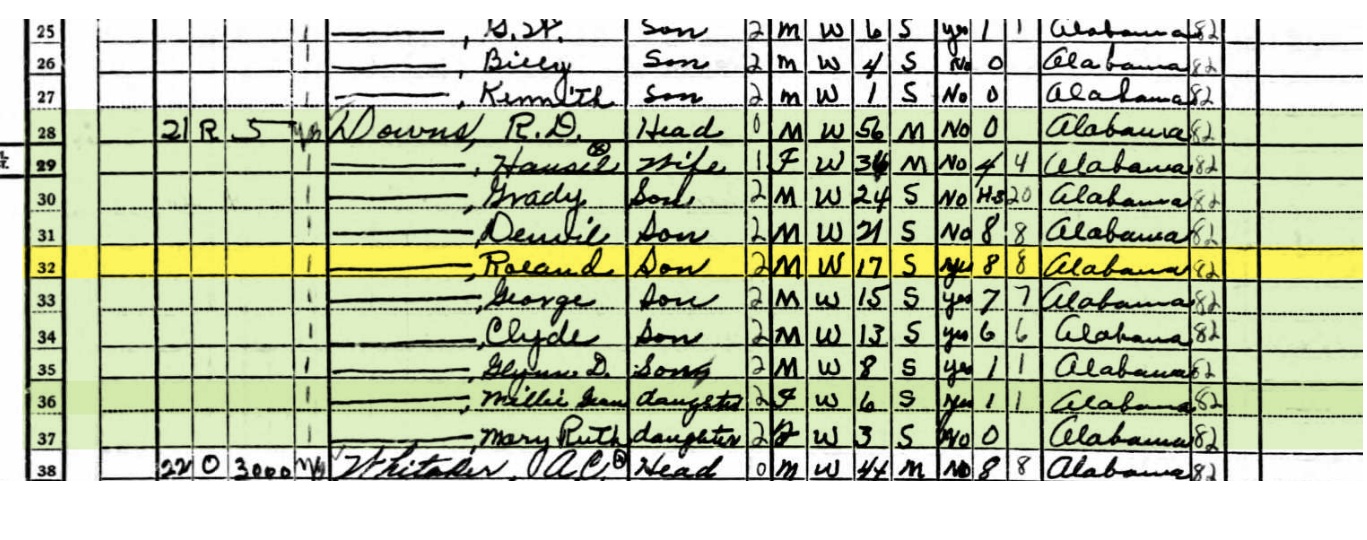
Darn!  They already had his photo, but at least I was able to learn that he was a radio mechanic, something obvious after inspecting what he’s doing in the photo.  My next stop brought me to ancestry.com, where I do most of my genealogical research on mystery photos.  From a little bit of searching I was able to discover that he was indeed born and raised in Alabama and born on July 8th, 1923 and passed away on April 19th, 1980.  He served in the Airforce (USAAF) from 1942 until 1971.


1940 Census Record

WWII Photo Post – First Integrated Combat Unit – Company K, 394th Infantry Regiment, 99th Division


The 5th Platoon of K Company was assigned to the 394th Infantry Regiment of the 99th Division, making the African-American men of the platoon the first integrated combat soldiers since the Revolutionary War.  Of the nearly 1,000,000 African-Americans to serve in WWII, only a small handful were put in front line combat duty, and even fewer fought shoulder to shoulder with White comrades.
A recent eBay find turned into an interesting research piece for me.  I had no idea black soldiers fought in the 99th Division, and the Purple Heart and Combat Infantry Badge present in the photo are indicators of a battle-hardened veteran of combat.  All we know about his identity is that the photo was taken in November of 1945 in Knoxville, Tennessee.  Maybe someone knows a way to narrow down the list of K Company men and discover his identity?


Want to read more about this topic?  Check out the following sites for a slew of interested articles and photos:

http://www.historynet.com/african-american-platoons-in-world-war-ii.htm

http://5thplatoon.org/infantry.html