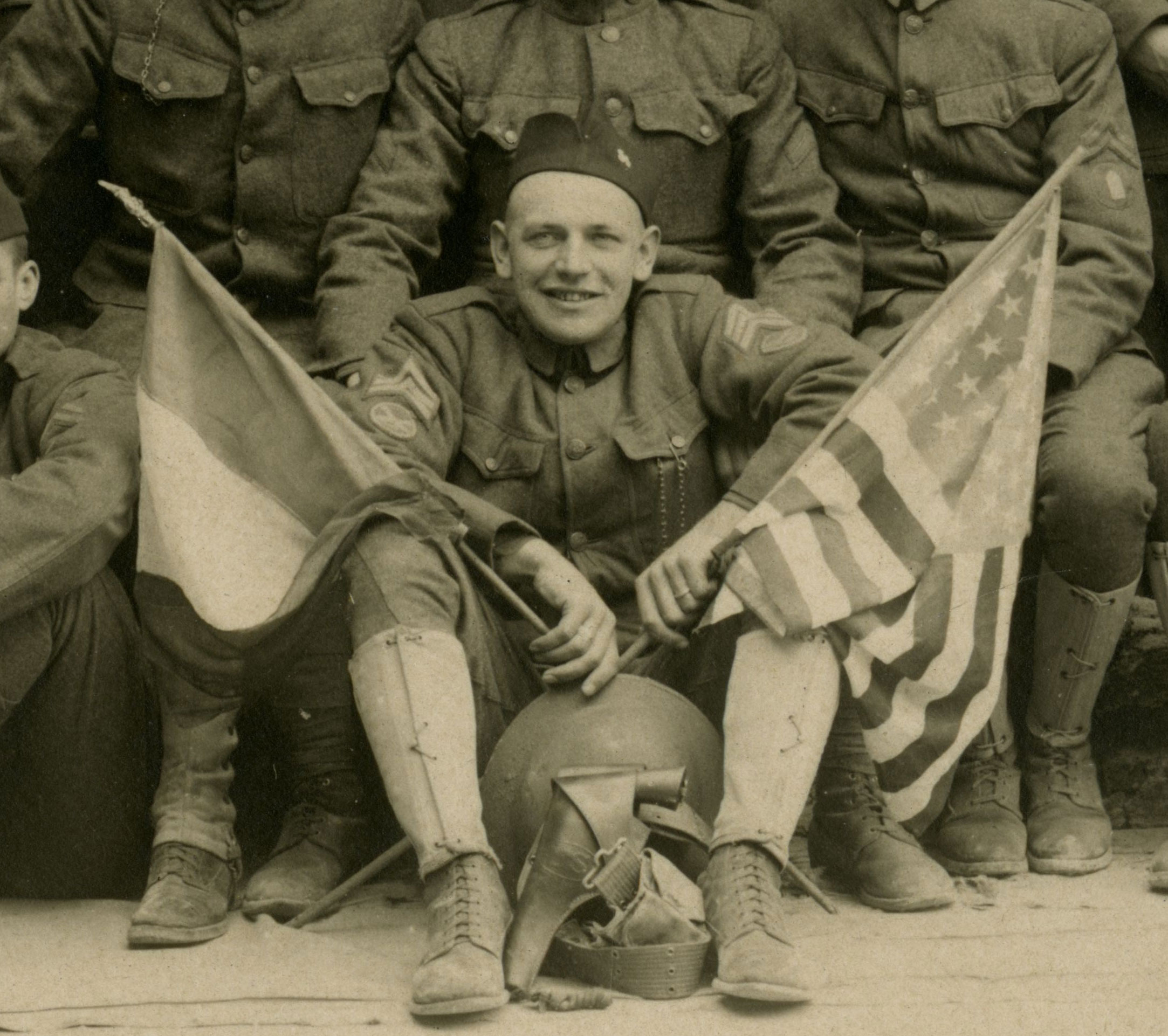
WWI Photo – 13th Marine Regiment MP Studio Photo Identified – Evald A. Johnson


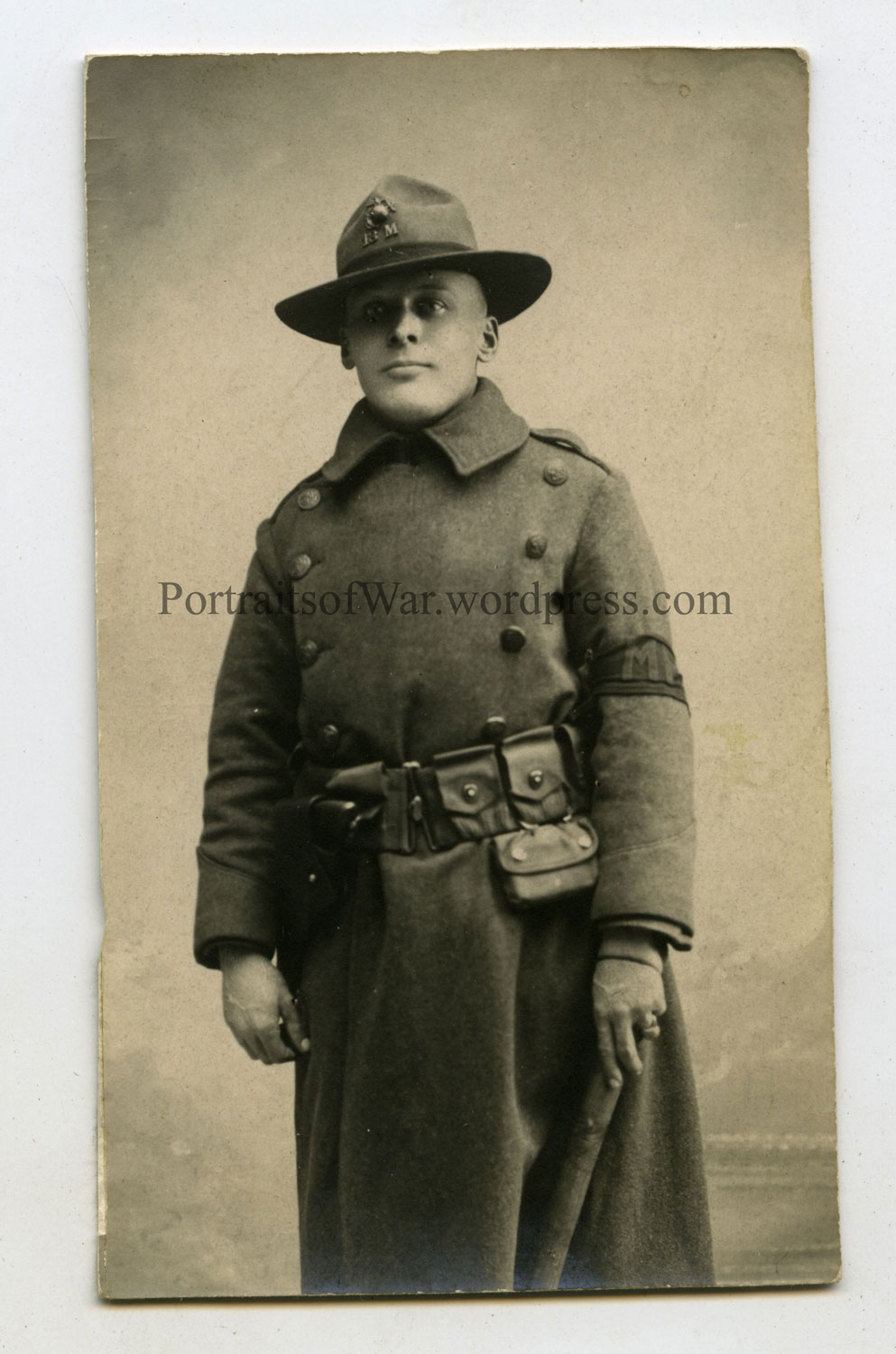
Evald A. Johnson in France 1918

Evald A. Johnson in France 1918

Followers of this blog know that I love to identify WWI photographs using obscure bits of information to track down census and military records.  In this case, I purchased a series of three postcards on eBay with no solid identification in hand.  When the postcards arrived, I realized that I had a slight chance to identifying the Marine.  His hat is sporting a Marine Corps EGA insignia as well as some unit designation.  13 M identifies him as being in Company M of the 13th Marine Regiment of the 2nd Division.  Included with the photo was a postcard note sent to a loved one when he returned from overseas service.

MarineMP232watermark

The unknown Marine scribbled his first name and middle and last initials.  Evald A J.  He also sent the postcard to a Mrs. C F Poulson of Idaho Falls, Idaho.  A quick census search for a C Poulson of Idaho Falls brought up a record for a Mr. Christian Poulson and a Esther A. Poulson.  My gut instinct told me that he was likely sending the card to his sister to announce his arrival back home in the states, so I did a series of census searches to find some clues………


Sister-in-Law

Sister-in-Law

The 1910 US Census record for Esther and Christian Poulson show a mystery resident.  Ms. Ebba Johnson is listed as being a sister-in-law who happened to be living with the couple in 1910.  Bingo!  Now I have a last name to research for Esther.  I quickly found the 1900 census record for Esther and Ebba………..

evaldebbaesther

Bingo!  Evald Johnson is listed as a brother to both Esther and Ebba.  The mystery is solved!  Now to confirm his service with the 13th Marine Regiment.

I easily tracked down his WWI draft card and matched up the signature with the postcard.  A perfect match.


WWI Draft Card  Evald A. Johnson

WWI Draft Card
Evald A. Johnson

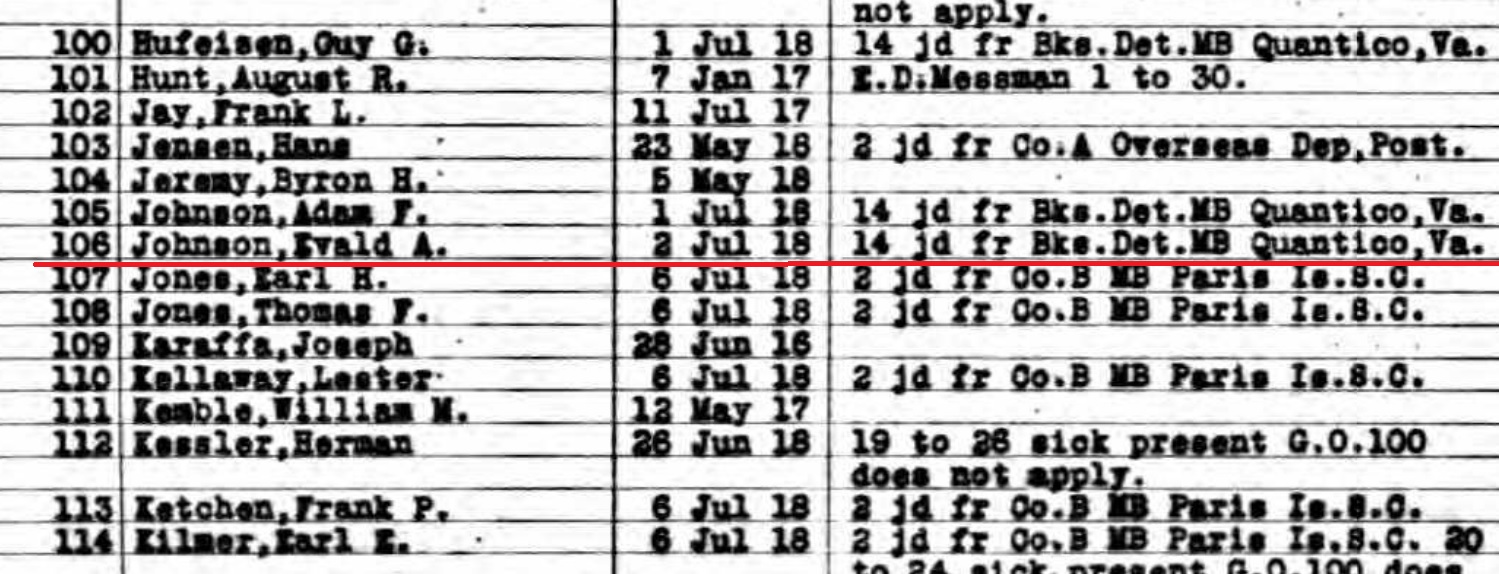
From here I had a hunch to track down the Marine Corps muster role for Company M of the 13th Marine Regiment.  Another solid hit.

Marine Register

Marine Register

And to top it all off, I did a newspaper search for the Idaho area in 1919.  With some luck I found a brief article mentioning his return and his service with the Marines.


“They have come back bigger and better men than when they went away and have taken up their work with the Register and filling their places with credit. The three men are Evald A. John­son, who has been with the Register for some fifteen years, and who re­signed the position of foreman to en­ter the service, enlisting in the ma­rines, going to France, where he put in abmout one years of service.”

Vol 40, No 29 Idaho Register 1919

Vol 40, No 29 Idaho Register 1919


WWI Photo: Research Uncovers 33rd Division Veteran’s Identification! 130th Infantry Regiment Wounded!


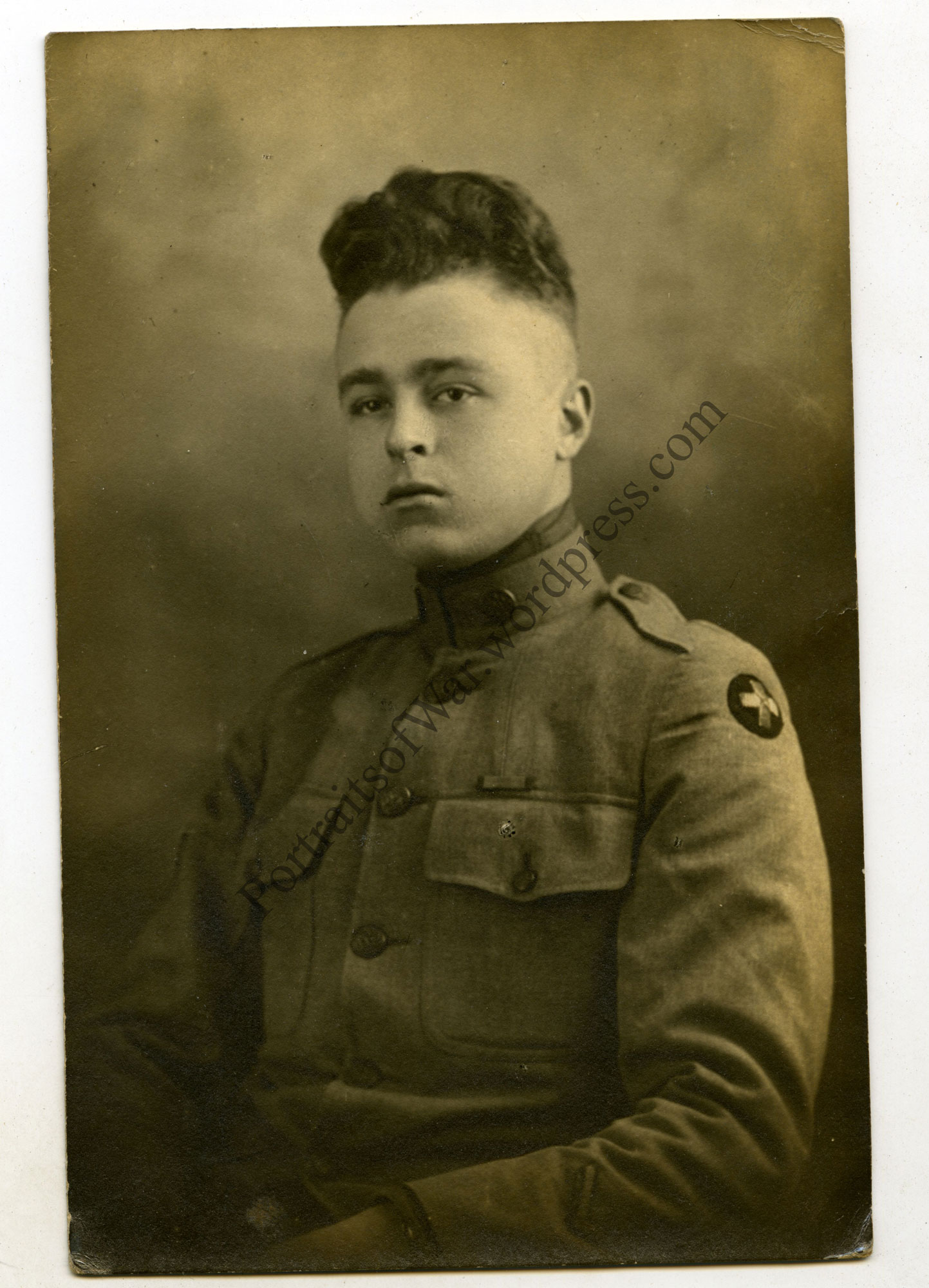
Sometimes it takes a good bit of time to lock down the identity of the sitter in a photograph. I wouldn’t be able to do it without the help of dozens of research friends and an equal number of archive websites.  With that said, I was able to purchase, research and identify and post a positive identification of a recent eBay purchase!  It’s not an easy endeavor, but it’s something that will be worthwhile at some point in the future.

Russell Studio Portrait

Russell Studio Portrait


Backside of the RPPC

Backside of the RPPC

What are we working with for an identification?  The soldier has a definite first name of Russell and is cousins with a male named Forrest Martin of Watson, Illionois in 1919.  Given the intro and body wording, he’s likely to be close to the recipient.


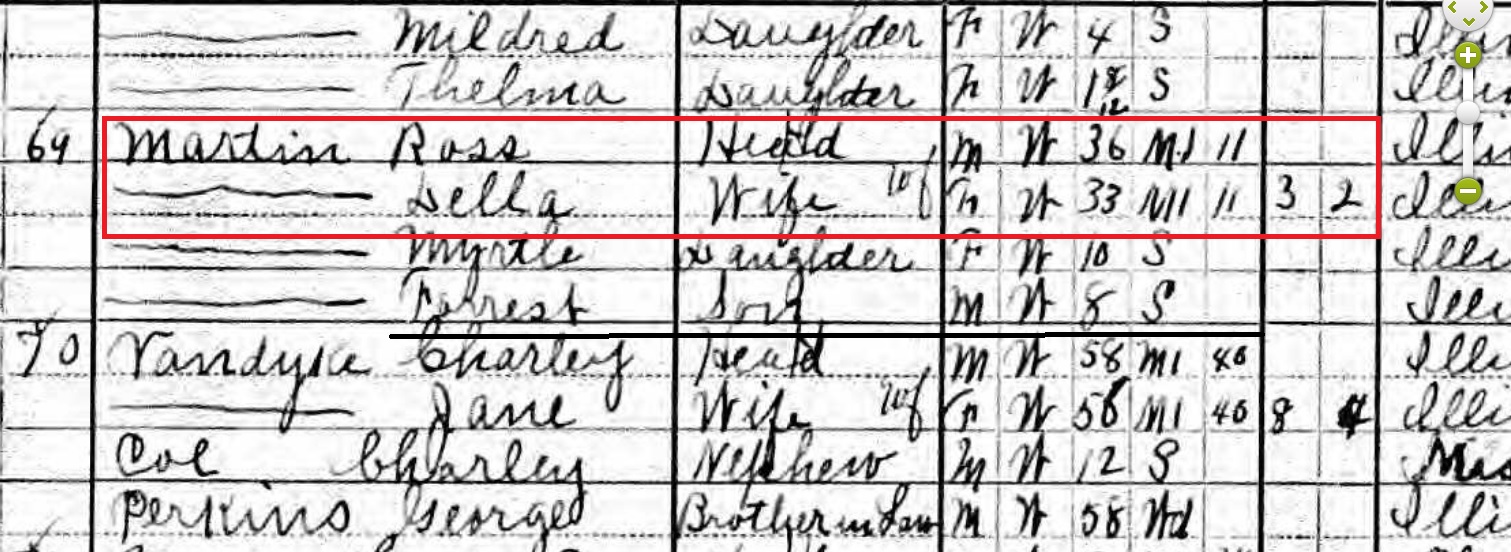
I started by researching the recipient, Forrest Martin, and found his 1900 census entry:

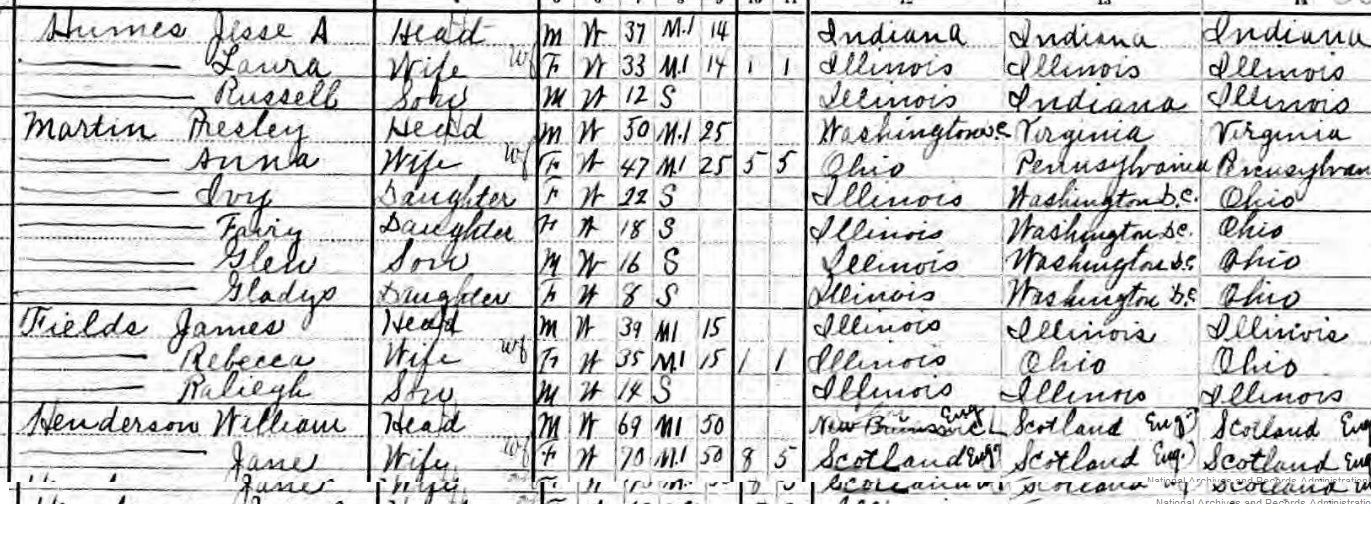
1910 Census Forrest Martin

1910 Census Forrest Martin

From here I decided to research his mother and father in search of a series of siblings to track down as aunts and uncles to Russell.  An aunt or uncle would produce a cousin which should provide me with the proper identification for the 33rd Division soldier!

After over an hour of searching (tiring for sure) I was able to identify his mother’s sister as a Laura A. Humes. Laura had a son named Russell in 1897!  When I clicked on his military burial record it all came together. Please keep in mind that this took hours of research!

Forrest's Aunt Laura

Forrest’s Aunt Laura


Russell Humes' Burial Card

Russell Humes’ Burial Card

Russell Humes, first cousin of Forrest Humes (recipient of the postcard), was in Company G of the 130th Infantry Regiment of the 33rd Division in WWI.  He achieved the rank of Corporal and was wounded in action at some point during his service.  His portrait photo was taken in 1919 long after his wounding. He passed away on 11-5-1957 at the age of 61.

WWI Vermont Veteran Photo – John J. Corcoran, 101st Machine Gun Battalion Wounded in Action


My continued obsession with WWI Vermont material has landed me a new WWI photo taken in France in June of 1918.  I literally stumbled across this listing; the seller didn’t mention the fact that the soldier was a Vermonter.  Luckily I checked out the back of the photo before moving on to the next auction listing.

The photo was addressed to a Mrs. George Bolduc of Fitzdale, Vermont dated June 25th, 1918.  The writer added the following info:

“June 25th, 1918

Dear Sister,

Am well and happy and hope you and children are well.  Will write you a letter later, am pretty busy just now so am sending this in place of a letter.  This is not very good but will have to pass some love to you all.  From bro-

John Corcoran

101st MG BN, AEF”

101stMG043a

John J. Corcoran(R)

John poses in the above photo with an unnamed friend of his from the 101st MG Bn. sporting a beautiful example of a woolen M1911 sweater.  I’ve attached below a period advertisement showing two versions of the service sweater.  These were either hand-knit from patterns or could be privately purchased through various supply and retail companies.

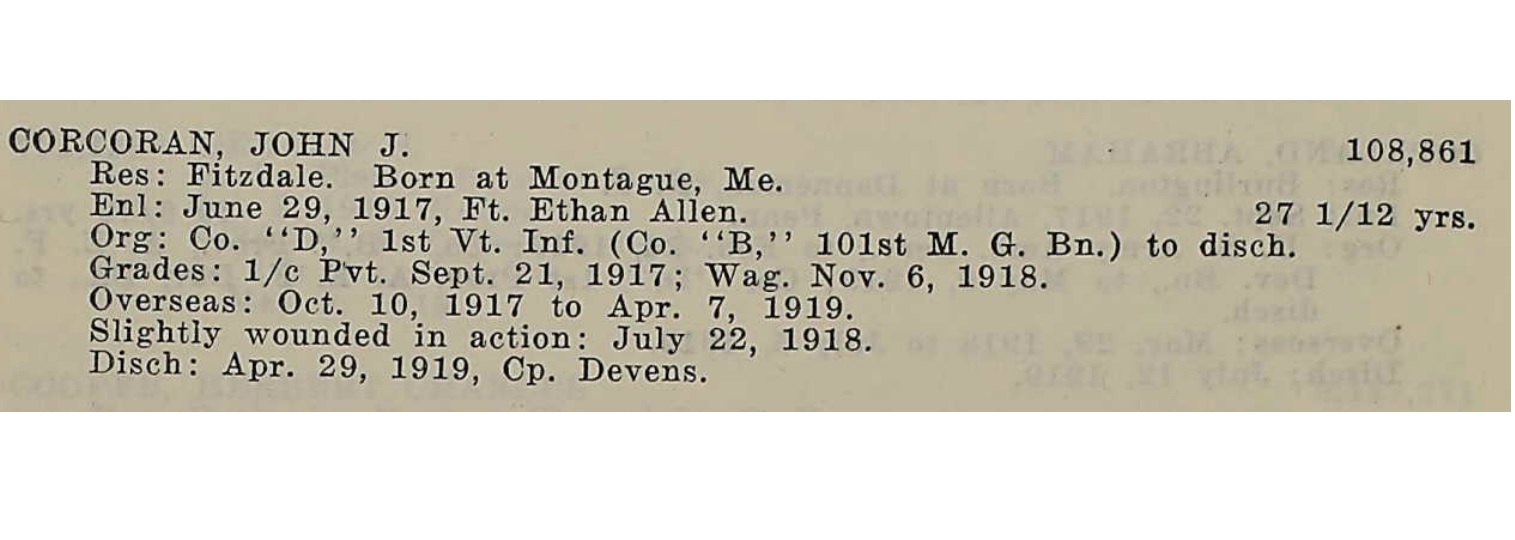
I am fortunate enough to own a copy of the hard-to-find 101st Machine Gun Battalion unit history.  Wagoner John J. Corcoran is listed with a frontal snapshot beside his biography.  He was born on May 29th, 1890 in Maine and eventually made his way over to Vermont where he lived in Lunenburg, VT working as a paper maker with the Gilman Paper Company.  He enlisted at Fort Ethan Allen on June 29th, 1917 with the 1st Vermont Infantry, where he was later transferred into the 103rd MG of the 26th Division.  His WWI and WWII draft cards were both listed on ancestry.com and I’ve included them below along with a copy of his death record.  He passed away in 1947 and is buried in Lunenburg.  I hope to travel there soon to take a photo of his grave!

101st MG Bn. Unit History Roster Entry

101st MG Bn. Unit History Roster Entry

CorcoranWWIRecordVT

WWI Draft Card

WWI Draft Card

WWII Draft Card

WWII Draft Card

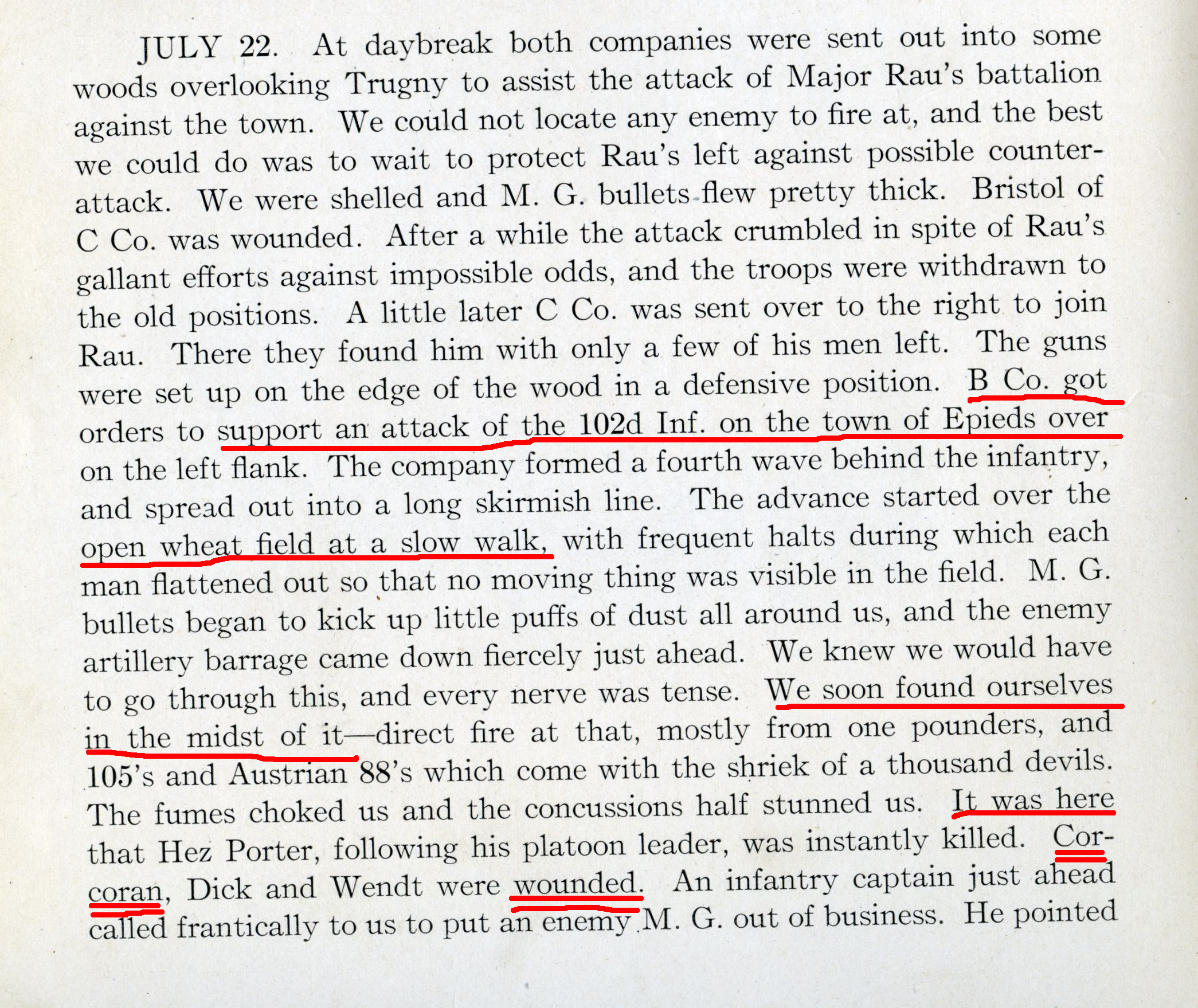
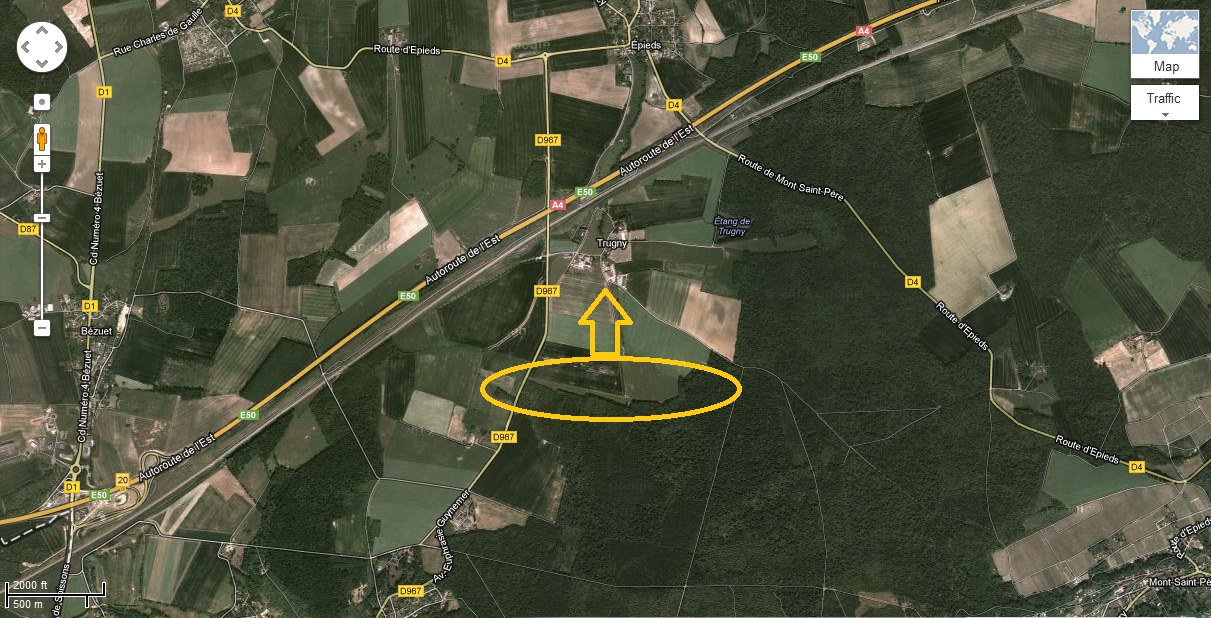
John was badly wounded on July 22nd, 1918 during an attack on the French town of Epieds.  I’ve included a period map of the battle as well as an image of the location today.  Not much has changed!  This attack was coordinated only a few days after the Battle of Chateau Thierry.  Luckily, John’s encounter with the Germans was noted in the 101st MG unit history diary section.  I’ve transcribed the section:

“At daybreak both companies were sent into some woods overlooking Trugny to assist the attack of Major Rau’s battalion against the town. We could not locate any enemy to fire at, and the best we could do was wait to protect Rau’s left against possible counterattack.  We were shelled and M.G. bullets flew pretty thick.  Bristol of C Co. was wounded.  After awhile(sic) the attack crumbled in spite of Rau’s gallant efforts against impossible odds, and the troops were withdrawn to the old positions.  A little later C Co. was sent over to the right to join Rau.  There they found him with only a few of his men left.  The guns were set up on the edge of the woods in a defensive position.  B Co. got orders to support an attack of the 102nd Infantry Regiment on the town of Epieds over on the left flank.  The company formed a fourth wave behind the infantry, and spread out into a long skirmish line.  The advance started over the open wheat field at a slow walk, with frequent halts during which each man flattened out so that no moving thing was visible in the field.  M.G. bullets began to kick up little puffs of dust all around us, and the enemy artillery barrage came down fiercely just ahead.  We knew we would have to go through this, and every nerve was tense.  We soon found ourselves in the midst of it – direct fire at that, mostly from one pounders, and 105’s and Austrian 88’s which come with the shriek of a thousand devils.  The fumes choked us and the concussion half stunned us.  it was here that Hez Porter, following his platoon leader, was instantly killed.  Corcoran, Dick and Wendt were wounded…………………………….”

Unit History  Casualty Report

Unit History
Casualty Report

Corcoran038

CorcoranWounded

Death Registration

Death Registration

The Sadness of WWII: Original Snapshot of Nordhausen Concentration Camp – Family Finds Lost Mother


Casual followers of this blog will know that I never post photos of death or destruction.  My main goal is to present historic photography in a way to help educate internet followers about the world of war.  In this case I will post a photo that may be hard for some viewers to see.  I have hundreds of photos of concentration camps in my collection, yet have never been moved to post any of the photos to the web.

This image called to me.  The composition, the subject, the setting.  It’s all there.  A soldier snaps a shot at Dachau of a man holding the feet of his dead wife while his injured son watches on.  A procession of armored division soldiers file by as this tragic event unfolds; the event captured through the lens of an unknown soldier of an unknown family.  This scene was likely replicated tens of thousands of times at the tail end of the war.

KZ154a

KZ154b

KZ154bcKZ154bcd

KZ154

WWI Patched Studio Photo: Corporal Harold Dannhorn, Illinois WWI and WWII Veteran of the 86th Division


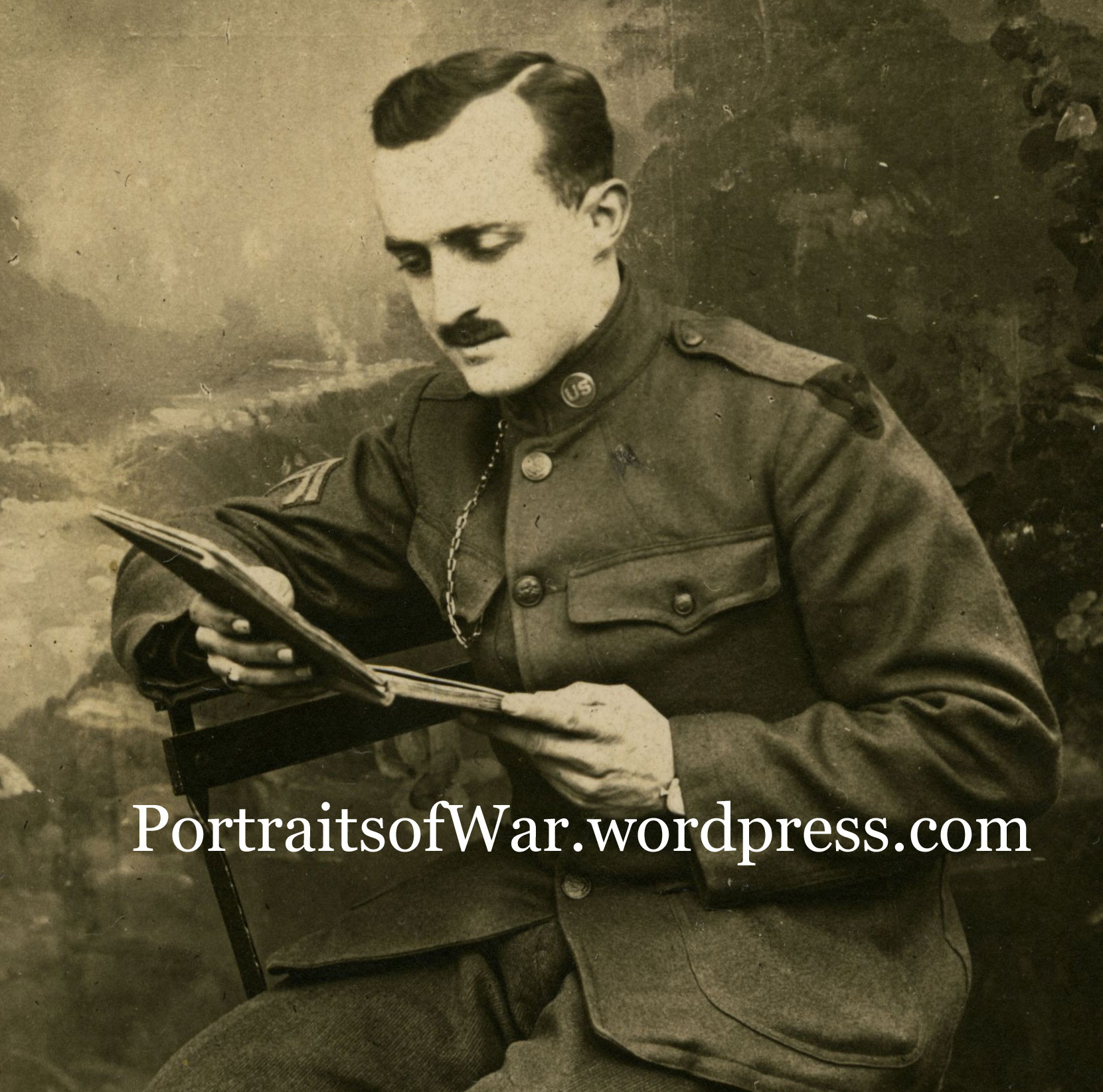
Harold Dannhorn Reads a Book in France

Harold Dannhorn Reads a Book in France

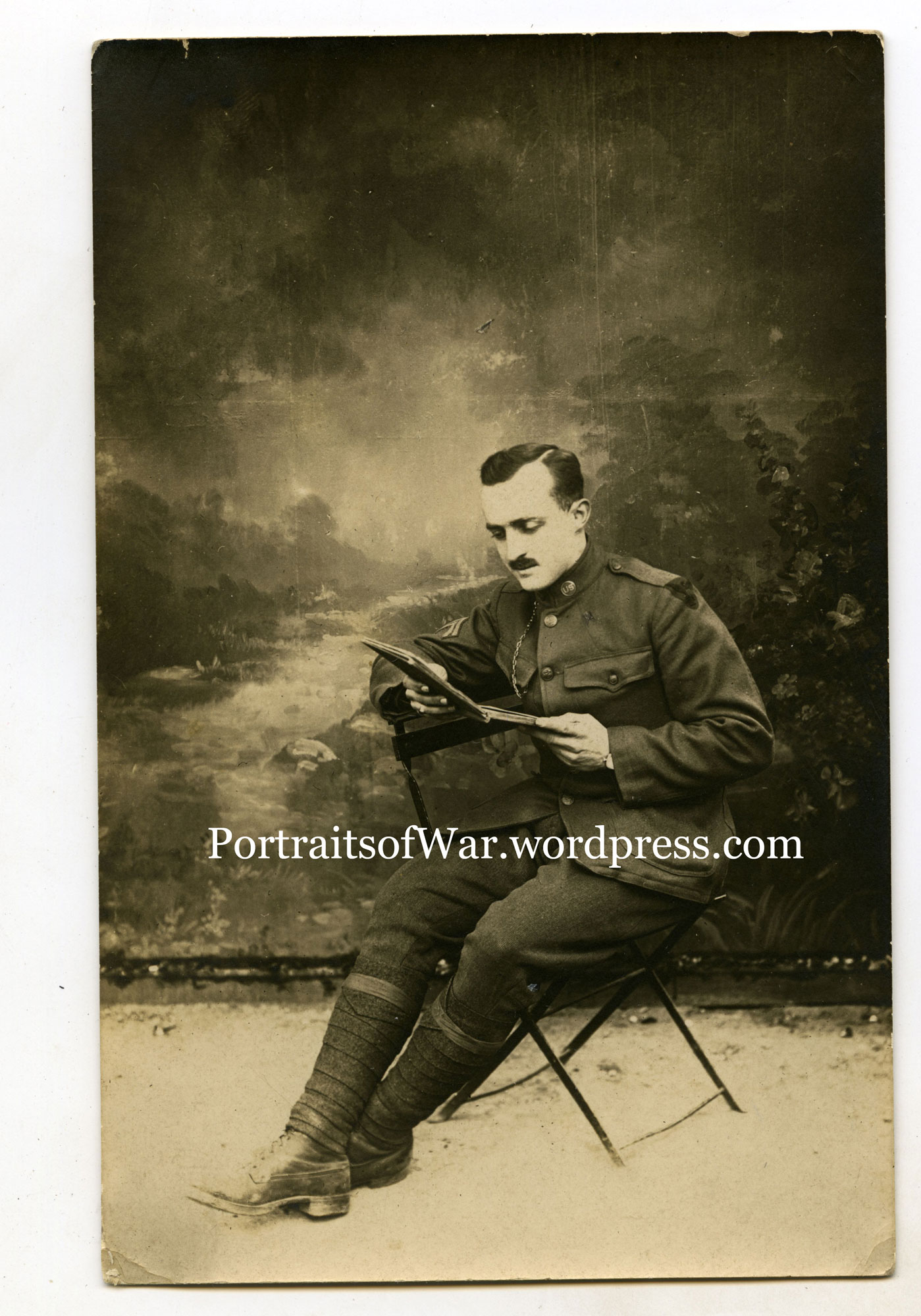
Corporal Dannhorn served in the HQ Company of the 343rd Infantry Regiment of the 86th Division while stationed in France before being switched over to the 256th Prisoner of War Escort Company #256 during the Occupation of Germany.  Here he poses in a studio in Menton, France on February 20th, 1919.


Veteran Gravestone Registration

Veteran Gravestone Registration


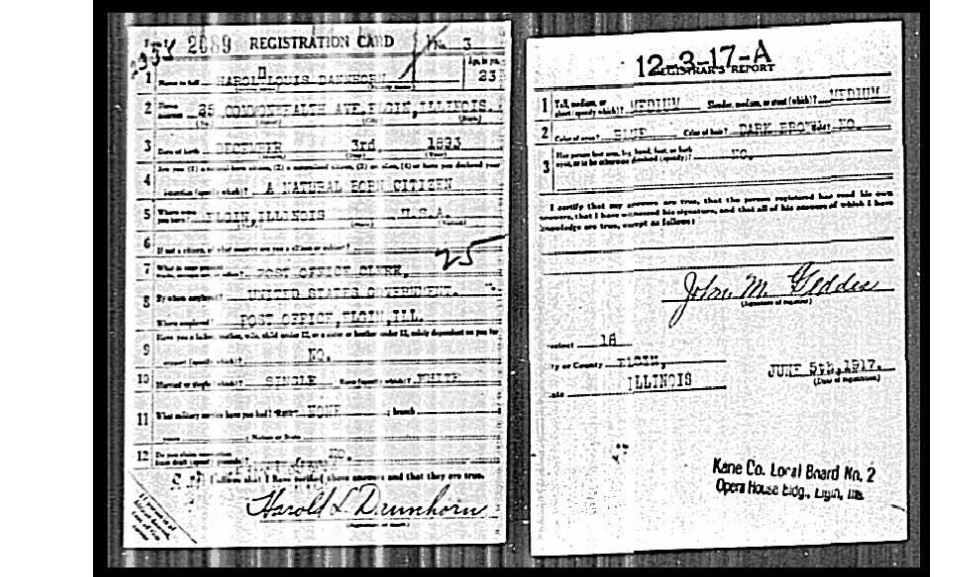
WWI Draft Card

WWI Draft Card


Uncropped RPPC

Uncropped RPPC

86thPOWEscort320


WWI Dog Tag Identified: Ancestry.com Research Discovery – WWI Ohio Veteran Identified


Charles L. Fox

Charles L. Fox

Dog tags and identified material are easily collected by militaria enthusiasts due to the personal connections with names, families and units/divisions. Collecting dog tags is an easy way to feel a connection with the past; many dog tags were actually worn during combat and followed a soldier across the European continent.  In this case I was able to pick up a cheap (less than $5) dog tag on eBay.  A quick search for Charles L. Fox Brought up a smattering of possible leads that crisscrossed the country. Census records and marriages were of no help. I spent over an hour searching through military records for a man named Charles Fox born between 1885 and 1899 (a generally good search range for WWI veterans) and landed a solid hit.  It’s not often that I identify a veteran through his/her serial number, but I was able to ID Charles L. Fox as having been born on December 14th, 1889 in Whitehouse, Ohio.  He served with an ordnance supply unit in France during the war and was honorably discharged on July 26th, 1919. I was lucky to find both the veteran headstone marker card as well as the state veteran roll.  A fun find, and another reason to invest in an ancestry.com account!

Serial Number 2895973

Serial Number 2895973

Charles Fox Headstone Card

Charles Fox Headstone Card

Ohio WWI Veterans Book Entry

Ohio WWI Veterans Book Entry

Forestry Engineers of WWI: The Unsung Heroes of the 20th Engineer Regiment


My interest in the forestry units of WWI started with an inexpensive eBay purchase back in 2012. I was lucky enough to pick up a copy of the 20th Engineer Regiment’s unit history from WWI.  This particular copy had been in a fire at one point in it’s long life and was luckily only singed on the corners.  The burned edges and soiled pages give the book a feeling of age and rugged dignity.  The inside cover in inscribed by an Ed. Peterman of Florence, OR who was assigned to the 6th Battalion of the 20th Engineers.

Ed's Burnt Book

Ed’s Burnt Book

Inscription

Inscription

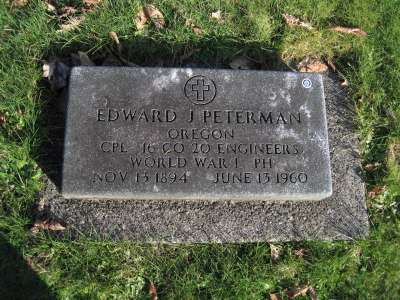
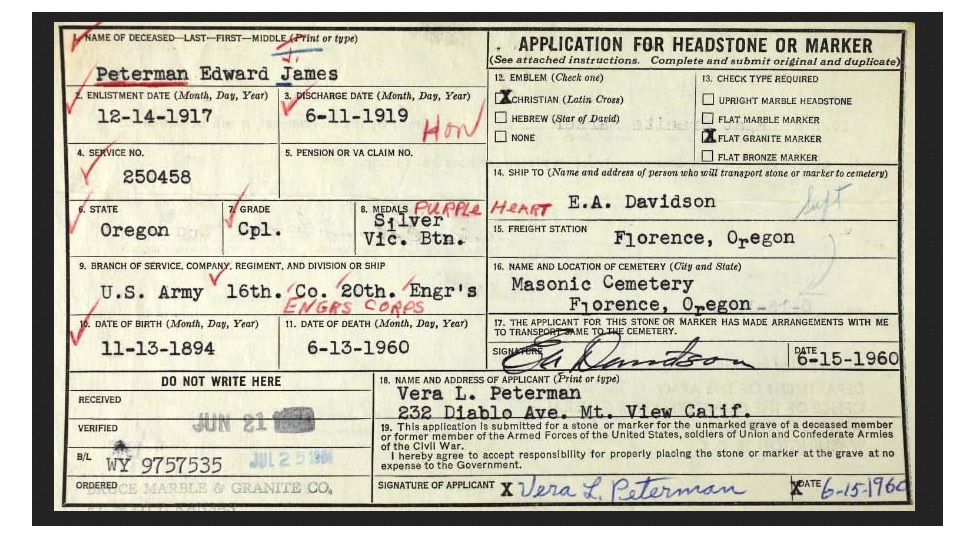
In an incredible stroke of luck I was able to find a 1920s photo of Mr.Peterman on ancestry.com.  Ed was born in Winona, MN on November 13th, 1894 and later moved to Oregon, where he signed up with the forestry engineers.  According to his gravestone, he served with both the 6th Battalion, 20th engineers until 10/1918 and then transferred to the 18th Company in October of 1918.  He is listed as being a corporal and was wounded by enemy action, which is very rare for a forestry engineer.  Ed was also a distinguished member of a very exclusive club. He was on board the S.S. Tuscania when it was torpedoed by a German U-Boat off the coast of Britain on February 5th, 1918. The boat sunk, taking 33 of Ed’s fellow Company F, 6th Battalion, 20th Engineer comrades with her.  The 6th Battalion lost 95 men that day.   Luckily, Ed was one of survivors.


This post is dedicated to the 20th Engineers and my continued interest in the unit. For more info on the 20th Engineers and the idea of forestry units in wartime, please check out The Forest History Society’s website here: http://www.foresthistory.org/research/WWI_ForestryEngineers.htm

Ed Peterman (right)

Ed Peterman (right)

Mr. Peterman's Grave

Mr. Peterman’s Grave

Gravestone Card

Gravestone Card

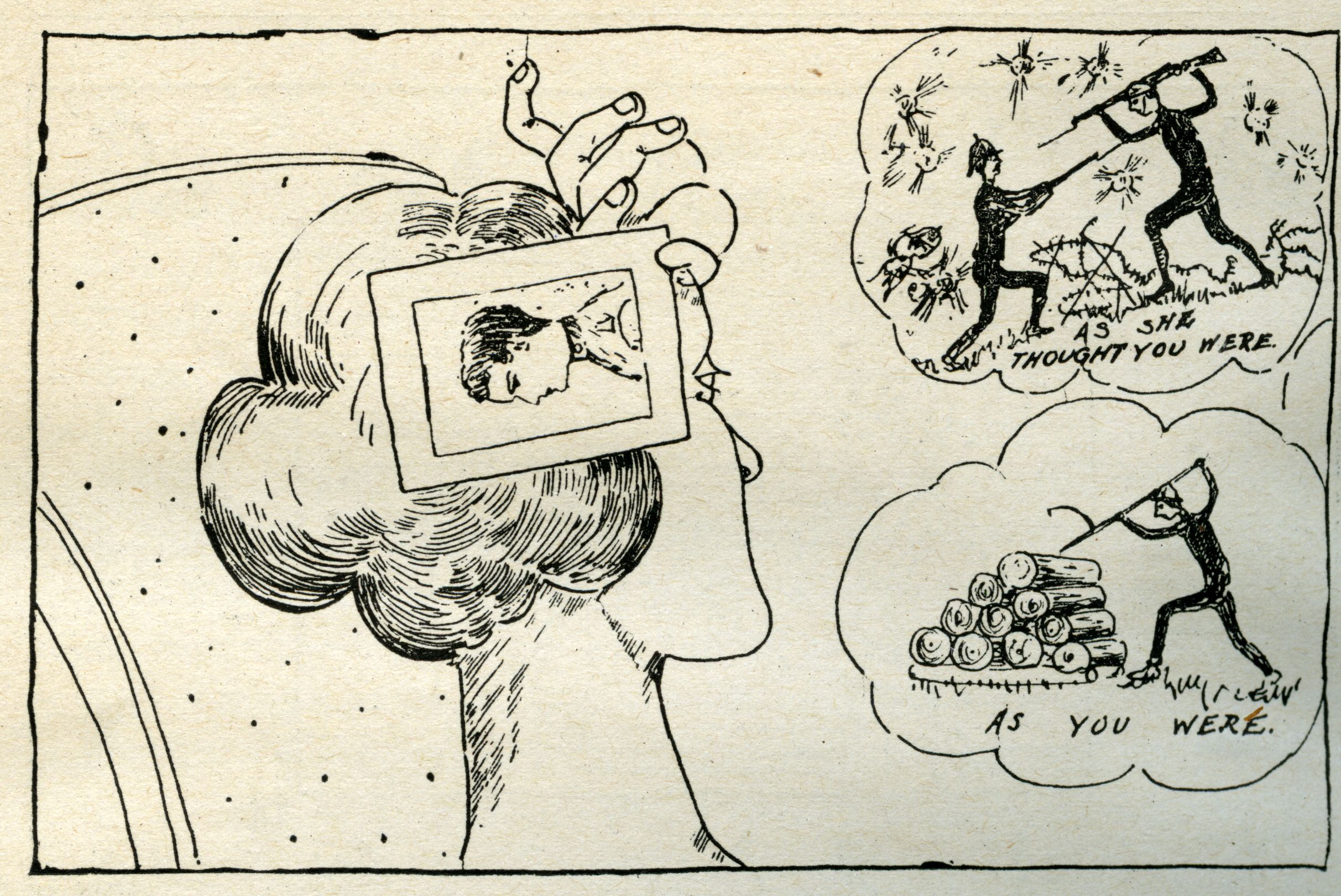
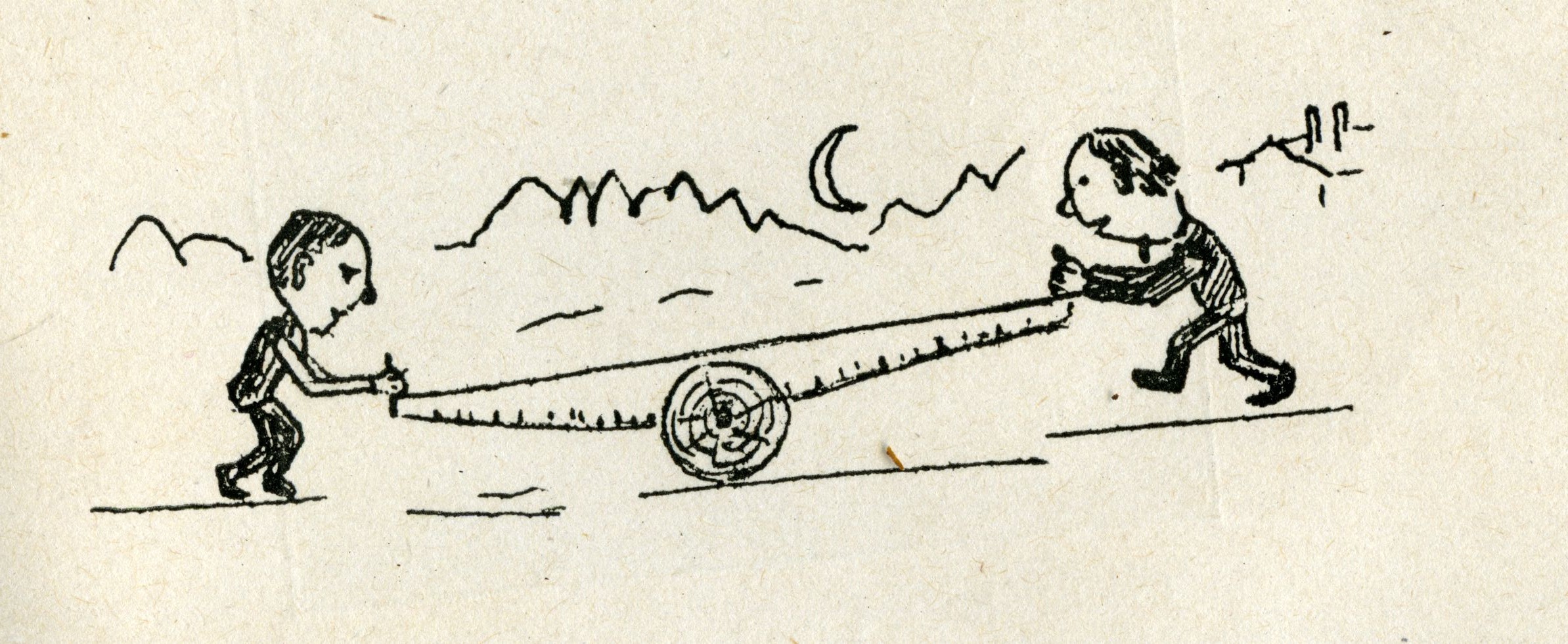
Ed’s book is filled with plenty of wonderful tidbits about the 20th Engineers during WWI as well as a series of funny cartoons and sketches done to help illustrate the book. Here are a few of my favorites:


20thEngineers29620thEngineers295

20thEngineers293


20thEngineers292

WWII Veteran Story: Bataan Death March Survivor of the 16th Infantry Division Rescued by 6th Army Rangers


A recent visitor to PortraitsofWar was kind enough to send along some info on a local Guilford, CT veteran who passed away a few years back.  He was a Bataan Death March survivor, photographer, and member of the 16th Infantry Division.  Special thanks to Chistina Schaefer for providing the info and scans.

Richard Sperry Chapman, 1915-1976. Guilford native, photographer and POW. After graduating from high school in Guilford in 1934, Dick made the Army his career. In 1941 he was a member of the 16th Infantry Division, the “Golden Water Buffalo” Division. In 1941 he was stationed on the island of Luzon, Philippine Islands.

He survived the Bataan Death March, one of only three of 500 men in his battalion to do so.

He was incarcerated in Bilibid POW camp where he was tortured and starved. He was later transferred to Cabana Tuan were he was tortured and starved.

Just before the end of the war he was rescued in a daring raid led by Col. Henry Mucci and his raiders of the Sixth Army Ranger Battalion.

The Friendly Photographer is Taken Prisoner

The Friendly Photographer is Taken Prisoner

10491_543213132360400_2103300435_n396213_543212982360415_1872123180_n

318870_543213052360408_2108273479_n

314179_543213029027077_146566793_n

WWII Christmas Card Identification Research: Henry Behrens of Grand Island, Nebraska


UPDATE: This Christmas card has been returned to the Son of Mr. Henry Behrens.  He found this post while searching for information about his father online.  I’m pleased to have returned yet-another WWII photo to it’s rightful place.

Followers of PortraitsofWar will know that I love to do in-depth research to ferret out the names and stories of WWI and WWII veterans through the photographs they left behind.  In this case, I purchased an inexpensive World War II postcard on eBay with the hopes of doing some sleuthing to find the identity of the sender.  I already have a huge backlog of material to post, but I figured I would add yet another to the collection.

A Pilot Christmas Card

A Pilot Christmas Card

christmas137

The card was interesting, and had nice composition.  These style cards were often sent home by veterans to family members back home.  With this in mind, I flipped over the card to check the reverse.  Bingo.  A name and address.  Figuring that he likely send the card home to a family member (and not to himself) I began a quick ancestry.com search for the name.  John Behrens of Grand Isalnd, Nebraska.  I pulled the 1930 census record for the Behrens family to see if there were any likely candidates for the sitter in the photo.  My initial guess was the he was likely 20-25 years old.

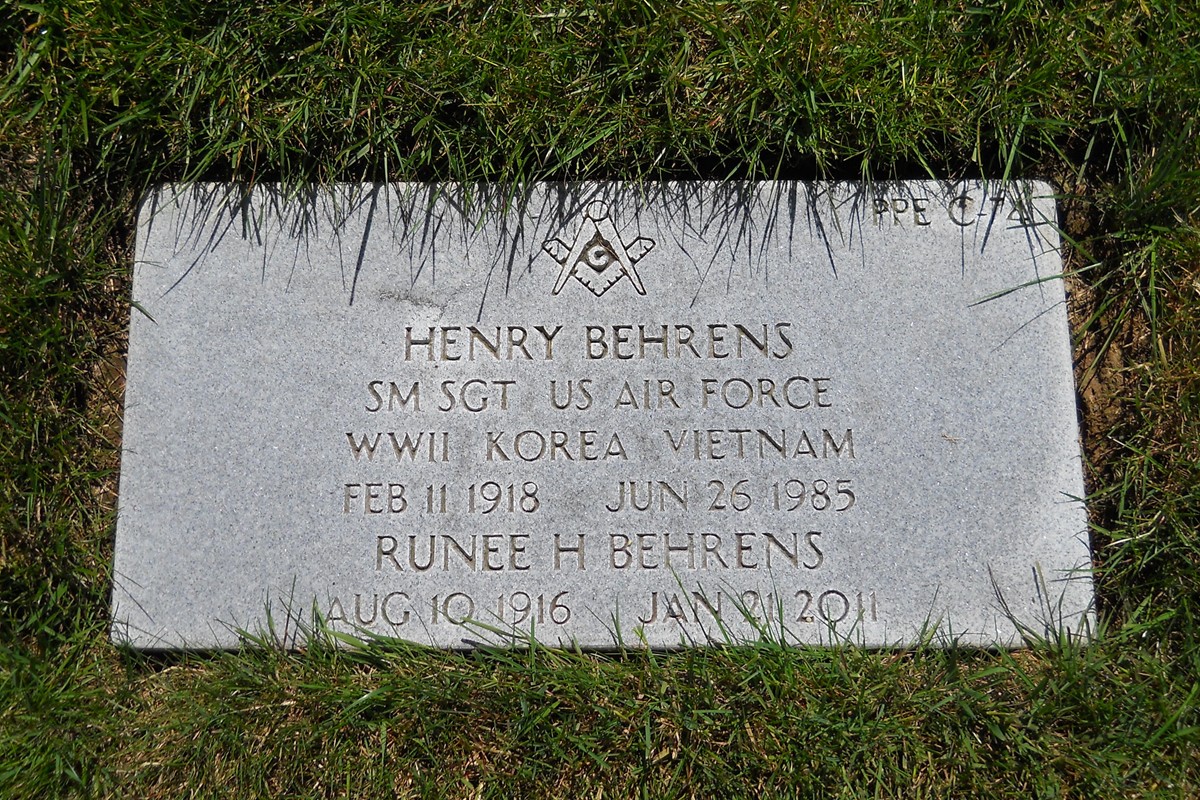
1930 censusThe address matched up on another record, so I’m 100% confident that this is the John Behrens named on the reverse of the postcard.  John had two sons named Willie and Henry.  Both were born in Germany and eventually emmigrated from Germany to the United States in the 1920s.  I thoroughly researched both brothers and eventually found a reference to Henry having been in the air corps during WWII.  His obituary also confirms that he was born in Eckenforde, Germany.  It also sounds like he was a lifetime Air Force veteran.

Here’s his obituary:

Marin Independent Journal
Saturday, June 29, 1985

HENRY BEHRENS

A memorial service for Henry Behrens of Novato will be held at 1 p.m. Tuesday at Redwood Chapel Funeral Home in Novato.

Mr. Behrens died unexpectedly Wednesday at his residence. He was 67.

He was a native of Eckenforde, Germany. He spent 31 years in the U.S. Army and the Air Force. He retired from Hamilton Air Force Base in 1966.

His most recent job was office service manager for Mission Equity Insurance Co. in San Francisco.

He is survived by his wife, Runee Behrens of Novato; two sons, William H. Behrens of San Jose and John W. Behrens of Fairfield; a daughter, Linda P. Garrecht of Irvine; his mother, Alwine Behrens of Grand Island, Neb.; and three grandsons.

Inurnment will take place at 3 p.m. Tuesday during a graveside service at the San Francisco National Cemetery at the Presidio.

The family prefers memorial gifts to the American Heart Fund.

3520535_133765988073

Maine in the First World War: The Maine National Guard and the 54th Artillery Regiment Coastal Artillery Corps in WWI


Everyone knows that I love Vermont WWI material, but I also enjoy collecting photos from other New England states as well.  I have a handful from every state but only one from Maine.  Now I have another!

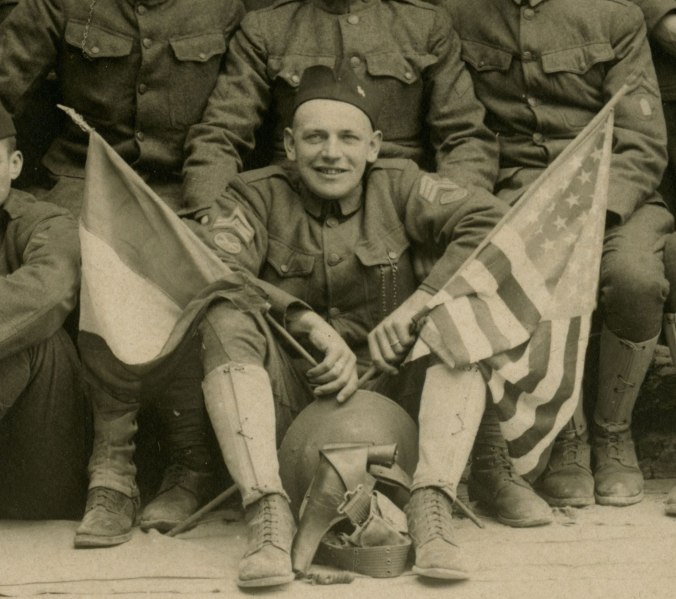
This fantastic interior studio RPPC has a ton of great qualities that drove me to make the purchase.  The crossed flags at center, the helmet and pistol props, the uniform details, and the identification on the reverse all make it a great shot to add to the collection.  This particular group is comprised of men from Portland and Bath.

Battery D of the 54th Artillery Regiment, C.A.C.

Battery D of the 54th Artillery Regiment, C.A.C.

Identified to a Corporal Carl L. Pearson who I believe is positioned directly right of the flag, this shot shows a group of 19 soldiers posed in a French studio.  This may be a record for my collection!   I have a few with 6-8, but none with more than 10.

Pearson was from West Falmouth, Maine and was born in January of 1893.  He enlisted with the National Guard in Portland in March of 1917 and reported for Federal service in June of that year.  He was overseas from March of 1918 to March of 1919.  This photo was taken in either late March, or April or May of 1918.  He was promoted in early June of 1918.  Since this photo shows him as a Corporal at the time of the photo, we know it was taken before his promotion.  Also, his lack of OS chevron and the abundance of spats likely points towards an early photo taken in France.
54th037a

A little info on the 54th CAC

Source: http://freepages.military.rootsweb.ancestry.com/~cacunithistories/54thcac.htm

WORLD WAR I — 1917 – 1919The Coast Artillery Corps a Maine National Guard were mobilized on 25 July, 1917, and all companies, band, field officers, and non-commissioner staff officers reported on 27 July. 14 staff officers reported at Portland Coast Defenses and were assigned to duty in the Coast Defenses. The several companies were re-designated at once. This designation was changed again on 23 August 1917, and on 25 December 1917, nine of the thirteen C.A.C. Maine National Guard companies were made a part of the 54th Artillery, C.A.C., the supply company and Batteries B, D, E, and F, of the new 54th Artillery, C.A.C. 6 inch guns (Motor drawn), were entirely constituted from the nine companies Maine National Guard.

The 54th Artillery, C.A.C., was organized with a Headquarters Company, a supply company, and three battalions of two batteries each. Of the 6 batteries, four were taken from the Maine National Guard and from 25 December 1917, the further World War history of the C.A.C. Maine National Guard is properly that of the 54th Artillery since over 62 percent of its units were entirely Maine National Guard. In addition, only 30 percent of the units of the Maine National Guard were not included in the organization of the 54th Artillery C.A.C.

The 54th Artillery, CAC, (6-Inch Guns, Motor)

This regiment was organized in Portland Harbor Forts on 25 December 1917, five of its units being formed from National Guard units and three from Regular Army units.

The batteries of the 54th Artillery were organized as follows:

Headquarters Company, and Batteries A and C from the Regular Army.

Supply Company, from 20th Company, Lewiston.

Battery B, from 4th Company, Portland, and 7th Company, Biddeford.

Battery D, from 2nd Company, Portland, and 4th Company, Bath.

Battery E, from 3rd Company, Auburn, and 3rd Company, Kennebunk.

Battery F, from 9th Company, Lewiston and 11th Company, Portland.

Headquarters Company, Batteries C, D, E, and F, sailed from Portland, Maine, on the CANADA, 22 March 1918 and arrived Glasgow, Scotland 2 April, Winchester, England 3 April, and LeHarve, France, 6 April 1918.

The Supply Company, Batteries A and B, left Portland 14 March, sailed from Hoboken 16 March, 1918 on BALTIC arrived LeHarve, France, 6 April 1918.

The 54th Artillery C.A.C. was sent to rest camp at Mailly-le-camp (Aube) and on 2 May 1918, transferred to Haussimont (Marne), as replacement regimen to Railway Artillery Reserve and Tractor Artillery Regiments. On 20 September 1918, the 54th Artillery was reorganized into three battalion stations as follows:

1st Battalion, Training Battalion (A and B Battery) Angers (Marne-et-Loire).

2nd Battalion, Tractor replacement(E and F Battery), Haussimont (Marne) Angers (Marne-et-Loire.)

3rd Battalion, Unknown.

After the Armistice the 54th Artillery was assigned to Brest, and part of the Regiment sailed 23 February 1919 on the Vedic arriving in Boston 7 March 1919. It was completely demobilized at Camp Devons by 13 March 1919.

The four companies (1st, 6th, 10th and 12th) that were not formed into the 54th Artillery, C.A.C. were demobilized in January 1919 at Harbor Defenses of Portland however, but few of the original members of the companies remained in them late in 1918. Two large transfers of enlisted men from these batteries were made. The first was made on 23 August 1917, to the 26th Division Artillery and Engineers. One hundred-sixty-nine men were taken from these four companies in the transfer. On May 31 1918, the other large transfer was made to the 72d Artillery, C.A.C. From the 1st Company, 147 men were taken, and from the other three companies large numbers. However, the transfers were made as individuals no units being reformed or discontinued.

In July 1922, the regiment was reorganized and designated as the First Coast Defense Command, C.A.C., Maine National Guard. The regiment was formed into Headquarters, Headquarters Detachment, Band, Medical Detachment and 1st Fort Command.

1st Fort Command

301st Company, Portland, org. 1803 – later Btry A

306th Company, Sanford, org. 1903 – later Btry B

307th Company, Brunswick, org. 1884 – later Btry C

311th Company, Portland, org. 1807 – later Btry D

2nd Fort Command

303d Company, Camden, org. 1920 – later Btry E

304th Company, Thomaston, org. 1921 – later Btry F

305th Company, Rockland, org. 1921 – later Btry G

302d Company, Vinalhaven, org. 1921 – later Btry H

On 17 September 1923, the 1st C.D.C. was re-designated as the 240th Artillery, C.A.C., and individual batteries as shown above. The designation was again changed to 240th Coast Artillery, Harbor Defense, on 16 April 1924.