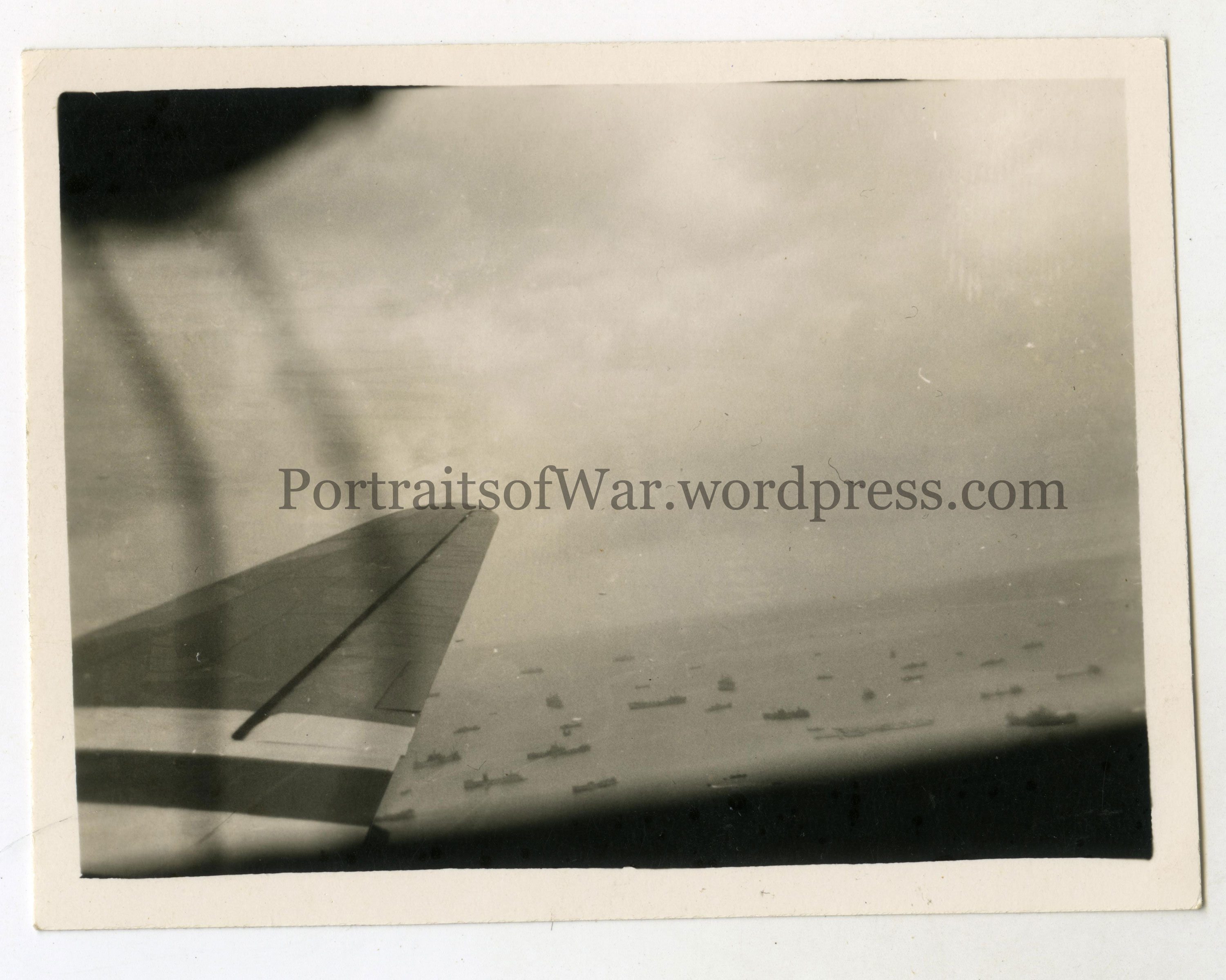
Talk about rare! A recent color slide collection has provided a rare glimpse into the opening hours of the infamous Battle of Tarawa. A Navy carrier-based fighter pilot snapped this 35mm color slide while flying cover over Betio on that fateful day on November 20th, 1943. I’ve never personally seen a color shot taken from the air during this battle. The series I recently acquired may be some of the only known color aerial shots taken during the opening hours of the battle. And the kicker is that I digitized the veteran’s audio cassette tape describing the image.
Collectors Note: The best thing about collecting 35mm color and B/W negatives/slides is that they were physically present during the event. Photographs were printed afterwards, but nitrate and celluloid negatives were physically processed through the camera during the event.
Please forward to 3:45 for a verbal description of the slide by the veteran who snapped the image
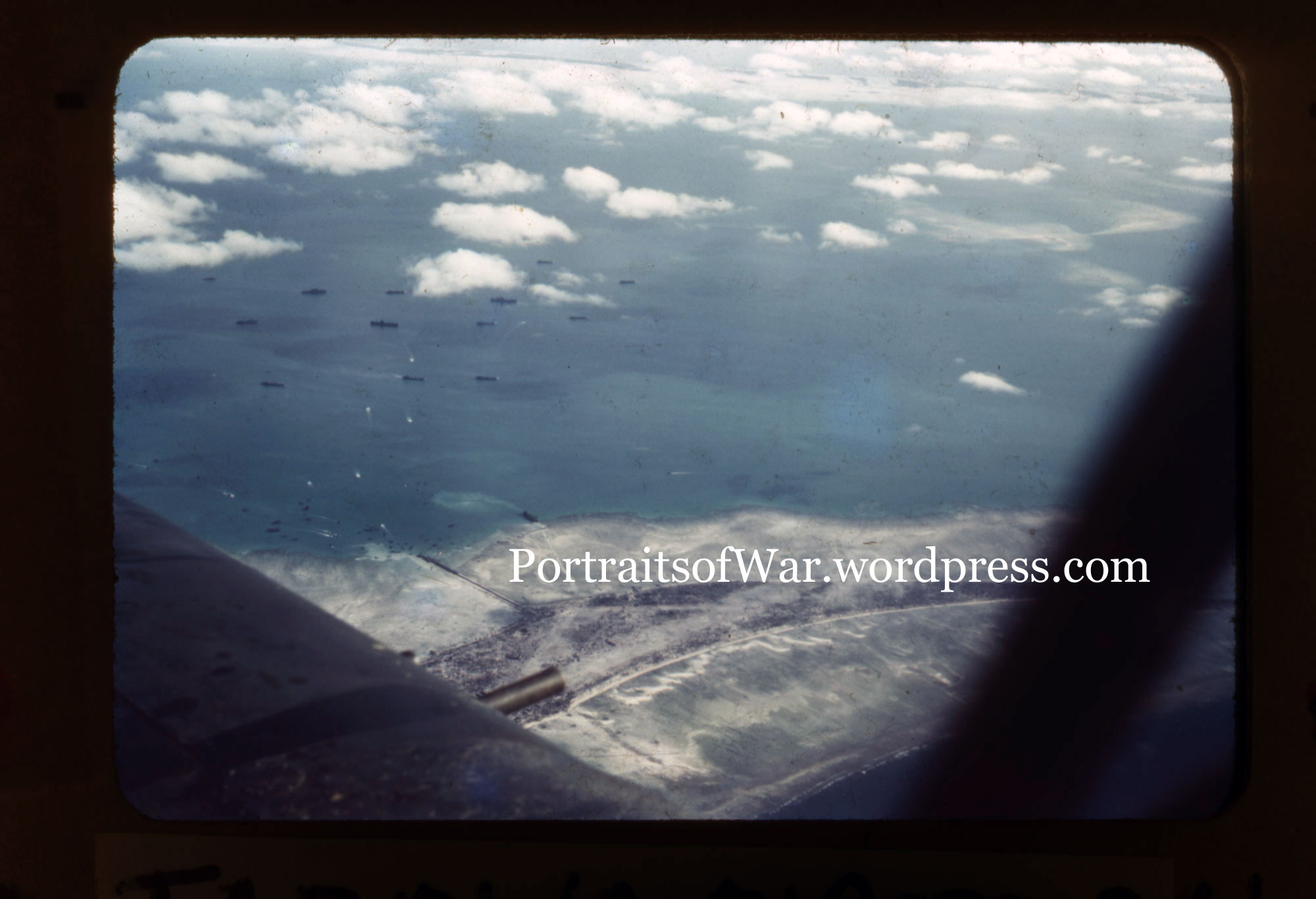
Aerial Shot of the Invasion of Tarawa

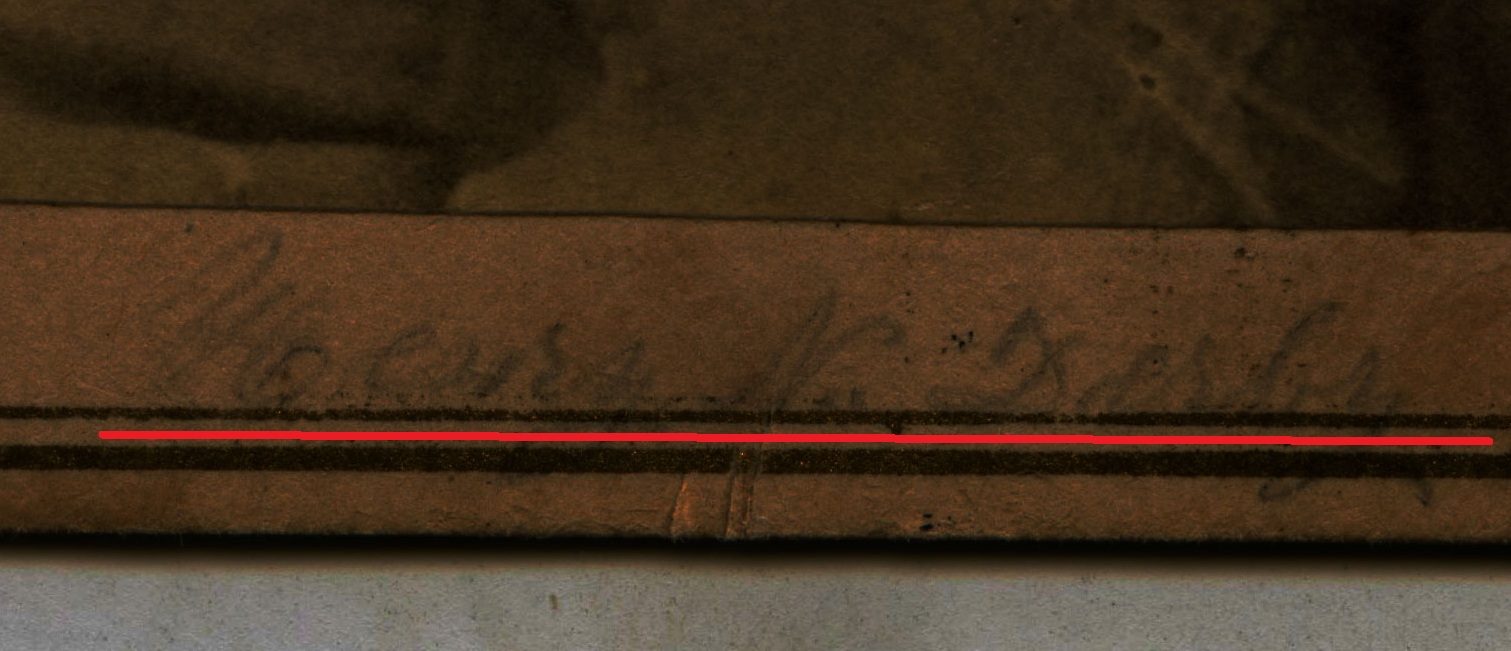
Veteran Description on 35mm Slide Mount
And some info on the opening day of the Battle of Tarawa (from Wikipedia):
The Battle of Tarawa (US code name Operation Galvanic) was a battle in the Pacific Theater of World War II, largely fought from November 20 to November 23, 1943. It was the first American offensive in the critical central Pacific region.
It was also the first time in the war that the United States faced serious Japanese opposition to an amphibious landing. Previous landings met little or no initial resistance. The 4,500 Japanese defenders were well-supplied and well-prepared, and they fought almost to the last man, exacting a heavy toll on the United States Marine Corps. The US had suffered similar casualties in other campaigns, for example over the six months in the campaign for Guadalcanal, but in this case the losses were suffered within the space of 76 hours. Nearly 6,000 Japanese and Americans died on the tiny island in the fighting.[2]
Background
In order to set up forward air bases capable of supporting operations across the mid-Pacific, to the Philippines, and into Japan, the U.S. needed to take the Marianas Islands. The Marianas were heavily defended. Naval doctrine of the time held that in order for attacks to succeed, land-based aircraft would be required to weaken defenses and provide some measure of protection for the invasion forces. The nearest islands capable of supporting such an effort were the Marshall Islands, northeast of Guadalcanal. Taking the Marshalls would provide the base needed to launch an offensive on the Marianas but the Marshalls were cut off from direct communications with Hawaii by a garrison and air base on the small island of Betio, on the western side of Tarawa Atoll in the Gilbert Islands. Thus, to eventually launch an invasion of the Marianas, the battles had to start far to the east, at Tarawa.
Following the completion of their campaign on Guadalcanal, the 2nd Marine Division had been withdrawn to New Zealand for rest and recuperation. Losses were replaced and the men given a chance to recover from the malaria and other illnesses that weakened them through the fighting in the Solomons. On July 20, 1943 the Joint Chiefs directed Admiral Chester Nimitz to prepare plans for an offensive operation in the Gilbert Islands. In August Admiral Raymond Spruance was flown down to New Zealand to meet with the new commander of the 2nd Marine Division, General Julian Smith, and initiate the planning of the invasion with the division’s commanders.
Located about 2,400 miles southwest of Pearl Harbor, Betio is the largest island in the Tarawa Atoll. The small, flat island lies at the southern most reach of the lagoon, and was home to the bulk of the Japanese defenders. Shaped roughly like a long, thin triangle, the tiny island is approximately two miles long. It is narrow, being only 800 yards wide at the widest point. A long pier was constructed from the north shore from which cargo ships could unload out past the shallows while at anchor in the protection of the lagoon. The northern coast of the island faces into the lagoon, while the southern and western sides face the deep waters of the open ocean.
Following Carlson’s diversionary Makin Island raid of August 1942, the Japanese command was made aware of the vulnerability and strategic significance of the Gilbert Islands. The 6th Yokosuka Special Naval Landing Force arrived to reinforce the island in February 1943. In command was Rear Admiral Tomanari Sichero, an experienced engineer who directed the construction of the sophisticated defensive structures on Betio. Upon their arrival the 6th Yokosuka became a garrison force, and the unit’s identification was changed to the 3rd Special Base Defense Force. Sichero’s primary goal in the Japanese defensive scheme was to stop the attackers in the water or pin them on the beaches. A tremendous number of pill boxes and firing pits were constructed with excellent fields of fire over the water and sandy shore. In the interior of the island was the command post and a number of large shelters designed to protect defenders from air attack and bombardment. The island’s defenses were not set up for a battle in depth across the island’s interior. The interior structures were large and vented, but did not have firing ports. Defenders in them were limited to firing from the doorways.[3]
The Japanese worked intensely for nearly a year to fortify the island.[4] To aid the garrison in the construction of the defenses, the 1,247 men of the 111th Pioneers, similar to the Seabees of the U.S. Navy, along with the 970 men of the Fourth Fleet’s construction battalion were brought in. Approximately 1,200 of the men in these two groups were Korean forced laborers. The garrison itself was made up of forces of the Imperial Japanese Navy. The Special Naval Landing Force was the marine component of the IJN, and were known by US intelligence to be more highly trained, better disciplined, more tenacious and to have better small unit leadership than comparable units of the Imperial Japanese Army. The 3rd Special Base Defense Force assigned to Tarawa had a strength of 1,112 men. They were reinforced by the 7th Sasebo Special Naval Landing Force, with a strength of 1,497 men. It was commanded by Commander Takeo Sugai. This unit was bolstered by 14 Type 95 light tanks under the command of Ensign Ohtani.
A series of fourteen coastal defense guns, including four large Vickers 8-inch guns purchased during the Russo-Japanese War from the British,[2] were secured in concrete bunkers and located around the island to guard the open water and the approaches into the lagoon. It was thought these big guns would make it very difficult for a landing force to enter the lagoon and attack the island from the north side. The island had a total of 500 pillboxes or “stockades” built from logs and sand, many of which were reinforced with cement. Forty artillery pieces were scattered around the island in various reinforced firing pits. An airfield was cut into the bush straight down the center of the island. Trenches connected all points of the island, allowing troops to move where needed under cover. As the command believed their coastal guns would protect the approaches into the lagoon, an attack on the island was anticipated to come from the open waters of the western or southern beaches. Kaigun Shōshō Keiji Shibazaki, an experienced combat officer from the campaigns in China relieved Sichero in July 20, 1943 in anticipation of the coming combat. Shibazaki continued the defensive preparations right up to the day of the invasion. He encouraged his troops, saying “it would take one million men one hundred years” to conquer Tarawa.
November 20

Marines alongside an LVT-1 “Alligator”.

Marines seek cover amongst the dead and wounded behind the sea wall on Red Beach 3, Tarawa.
The American invasion force to the Gilberts was the largest yet assembled for a single operation in the Pacific, consisting of 17 aircraft carriers (6 CVs, 5 CVLs, and 6 CVEs), 12 battleships, 8 heavy cruisers, 4 light cruisers, 66 destroyers, and 36 transport ships. On board the transports was the 2nd Marine Division and a part of the army’s 27th Infantry Division, for a total of about 35,000 troops.
As the invasion flotilla hove to in the predawn hours, the islands four 8 inch guns opened fire on the task force. A gunnery duel soon developed as the main batteries on the battleships Colorado and Maryland commenced a counter-battery fire. The counter-battery proved accurate, with several of the 16 inch shells finding their mark. One shell penetrated the ammunition storage for one of the guns, igniting a huge explosion as the ordnance went up in a massive fireball. Three of the four guns were knocked out in short order. Though all four guns fell silent, one continued intermittent, though inaccurate, fire through the second day. The damage to the big guns left the approach to the lagoon open. It was one of the few successes of the naval bombardment.
Following the gunnery duel and an air attack of the island at 0610, the naval bombardment of the island began in earnest and was sustained for the next three hours. Two mine sweepers with two destroyers to provide covering fire entered the lagoon in the pre-dawn hours and cleared the shallows of mines.[5] A guide light from one of the sweepers then guided the landing craft into the lagoon where they awaited the end of the bombardment. The plan was to land Marines on the north beaches, divided into three sections: Red Beach 1 to the far west of the island, Red Beach 2 in the center just west of the pier, and Red Beach 3 to the east of the pier. Green Beach was a contingency landing beach on the western shoreline and was used for the D+1 landings. Black Beaches 1 and 2 made up the southern shore of the island and were not used. The airstrip, running roughly east-west, divided the island into north and south.

U.S. Coast Guardsmen ferrying supplies pass an LCM-3 which has taken a direct hit at Tarawa.
The Marines started their attack from the lagoon at 09:00, thirty minutes later than expected, but found the tide had still not risen enough to allow their shallow draft Higgins boats to clear the reef. Marine battle planners had not allowed for Betio’s neap tide and expected the normal rising tide to provide a water depth of 5 feet (1.5 m) over the reef, allowing larger landing craft, with drafts of at least four feet (1.2 m), to pass with room to spare. But that day and the next, in the words of some observers, “the ocean just sat there,” leaving a mean depth of three feet (0.9 m) over the reef. (The neap tide phenomenon occurs twice a month when the moon is near its first or last quarter, because the countering tug of the sun causes water levels to deviate less. But for two days the moon was at its farthest point from earth and exerted even less pull, leaving the waters relatively undisturbed.)
At 0900 the supporting naval bombardment was lifted to allow the Marines to land. The reef proved a daunting obstacle. Only the tracked LVT “Alligators” were able to get across. The Higgins boats, at four feet draft, were unable to clear the reef.[6] With the pause in the naval bombardment those Japanese that survived the shelling dusted themselves off and manned their firing pits. Japanese troops from the southern beaches were shifted up to the northern beaches. As the LVTs made their way over the reef and in to the shallows the number of Japanese troops in the firing pits slowly began to increase, and the amount of combined arms fire the LVTs faced gradually intensified. The LVTs had a myriad of holes punched through their non-armored hulls, and many were knocked out of the battle. Those ‘Alligators’ that did make it in proved unable to clear the sea wall, leaving the men in the first assault waves pinned down against the log wall along the beach. A number of ‘Alligators’ went back out to the reef in an attempt to carry in the men who were stuck there, but most of these LVTs were too badly holed to remain sea worthy, leaving the marines stuck on the reef some 500 yards (460 m) off shore. Half of the LVTs were knocked out of action by the end of the first day.
Colonel David Shoup was the senior officer of the landed forces, and he assumed command of all landed Marine Corps troops upon his arrival on shore. Although wounded by an exploding shell soon after landing at the pier, Colonel Shoup took charge of the situation, cleared the pier of Japanese snipers and rallied the first wave of Marines who had become pinned down behind the limited protection of the sea wall. During the next two days, working without rest and under constant withering enemy fire, he directed attacks against strongly defended Japanese positions, pushing forward despite daunting defensive obstructions and heavy fire. Throughout Colonel Shoup was repeatedly exposed to Japanese small arms and artillery fire, inspiring the forces under his command. For his actions on Betio he was awarded the Medal of Honor.
Several early attempts to land tanks for close support and to get past the sea wall failed when the landing craft carrying them were hit on their run into the beach and either sank outright or had to withdraw while taking on water. Two Stuart tanks eventually landed on the east end of the beach but were knocked out of action fairly quickly. Three medium Sherman tanks were landed on the western end of the island and proved considerably more effective. They helped push the line in to about 300 yards (270 m) from shore. One became stuck in a tank trap and another was knocked out by a magnetic mine. The remaining tank took a shell hit to its barrel and had its 75 mm gun disabled. It was used as a portable machine gun pillbox for the rest of the day. A third platoon was able to land all four of its tanks on Red 3 around noon and operated them successfully for much of the day, but by day’s end only one tank was still in action.
By noon the Marines had successfully taken the beach as far as the first line of Japanese defenses. By 15:30 the line had moved inland in places but was still generally along the first line of defenses. The arrival of the tanks started the line moving on Red 3 and the end of Red 2 (the right flank, as viewed from the north), and by nightfall the line was about half-way across the island, only a short distance from the main runway.

Colonel David Shoup’s command post on Red Beach 2.
The communication lines which the Japanese installed on the island had been laid shallow and were destroyed in the naval bombardment, effectively preventing commander Keiji Shibazaki’s direct control of his troops. In mid-afternoon he and his staff abandoned the command post at the west end of the airfield, to allow it to be used to shelter and care for the wounded, and prepared to move to the south side of the island. He had ordered two of his Type 95 light tanks to act as a protective cover for the move, but a 5″ naval high explosive round exploded in the midst of his headquarters personnel as they were assembled outside the central concrete command post, resulting in the death of the commander and most of his staff. This loss further complicated Japanese command problems.[7][8]
As night fell on the first day the Japanese defenders kept up a sporadic harassing fire, but did not launch an attack on the Marines clinging to their beachhead and the territory won in the day’s hard fighting. With Rear Admiral Shibazaki killed and their communication lines torn up, each Japanese unit was essentially acting in isolation, and indeed had been since the commencement of the naval bombardment. The Marines brought a battery of 75 mm Pack Howitzers ashore, unpacked them and set them up for action for the next day’s fight, but the bulk of the second wave was unable to land. They spent the night floating out in the lagoon without food or water, trying to sleep in their Higgins boats. A number of Japanese marines slipped away in the night, swimming out to a number of the wrecked LVTs in the lagoon, and also to the Niminoa, a wrecked steamship lying west of the main pier. There they laid in wait for dawn, when they would fire upon the US forces from behind. The long night dragged on, but lacking central direction, the Japanese were unable to coordinate for a counterattack against the toe hold the Marines held on the island. The feared counterattack never came and the Marines held their ground. By the end of the first day, of the 5,000 Marines put ashore, 1,500 were casualties, either dead or wounded.



















 Portraits of War