Dog tags and identified material are easily collected by militaria enthusiasts due to the personal connections with names, families and units/divisions. Collecting dog tags is an easy way to feel a connection with the past; many dog tags were actually worn during combat and followed a soldier across the European continent. In this case I was able to pick up a cheap (less than $5) dog tag on eBay. A quick search for Charles L. Fox Brought up a smattering of possible leads that crisscrossed the country. Census records and marriages were of no help. I spent over an hour searching through military records for a man named Charles Fox born between 1885 and 1899 (a generally good search range for WWI veterans) and landed a solid hit. It’s not often that I identify a veteran through his/her serial number, but I was able to ID Charles L. Fox as having been born on December 14th, 1889 in Whitehouse, Ohio. He served with an ordnance supply unit in France during the war and was honorably discharged on July 26th, 1919. I was lucky to find both the veteran headstone marker card as well as the state veteran roll. A fun find, and another reason to invest in an ancestry.com account!
history
Forestry Engineers of WWI: The Unsung Heroes of the 20th Engineer Regiment
My interest in the forestry units of WWI started with an inexpensive eBay purchase back in 2012. I was lucky enough to pick up a copy of the 20th Engineer Regiment’s unit history from WWI. This particular copy had been in a fire at one point in it’s long life and was luckily only singed on the corners. The burned edges and soiled pages give the book a feeling of age and rugged dignity. The inside cover in inscribed by an Ed. Peterman of Florence, OR who was assigned to the 6th Battalion of the 20th Engineers.
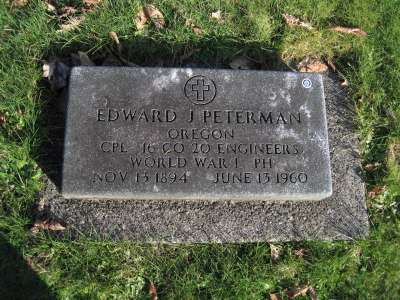
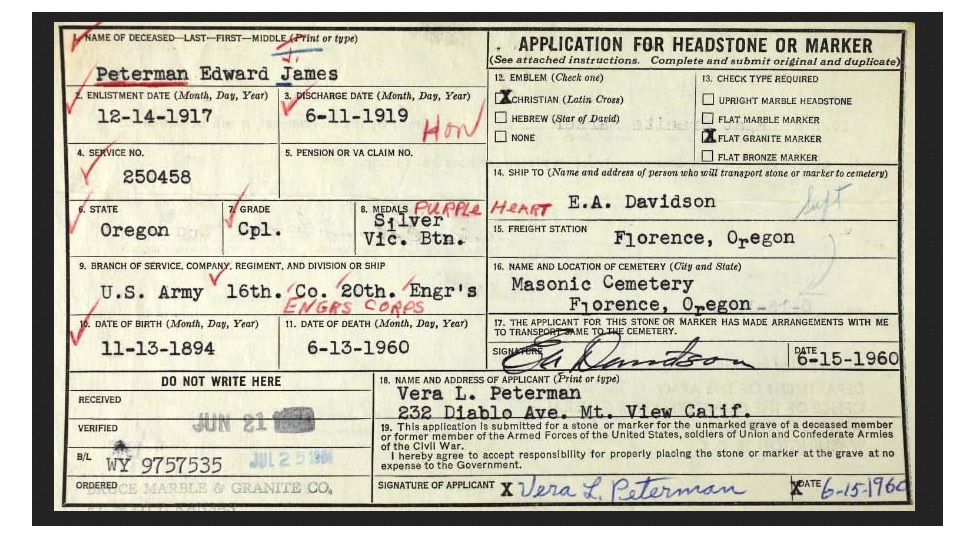
In an incredible stroke of luck I was able to find a 1920s photo of Mr.Peterman on ancestry.com. Ed was born in Winona, MN on November 13th, 1894 and later moved to Oregon, where he signed up with the forestry engineers. According to his gravestone, he served with both the 6th Battalion, 20th engineers until 10/1918 and then transferred to the 18th Company in October of 1918. He is listed as being a corporal and was wounded by enemy action, which is very rare for a forestry engineer. Ed was also a distinguished member of a very exclusive club. He was on board the S.S. Tuscania when it was torpedoed by a German U-Boat off the coast of Britain on February 5th, 1918. The boat sunk, taking 33 of Ed’s fellow Company F, 6th Battalion, 20th Engineer comrades with her. The 6th Battalion lost 95 men that day. Luckily, Ed was one of survivors.
This post is dedicated to the 20th Engineers and my continued interest in the unit. For more info on the 20th Engineers and the idea of forestry units in wartime, please check out The Forest History Society’s website here: http://www.foresthistory.org/research/WWI_ForestryEngineers.htm
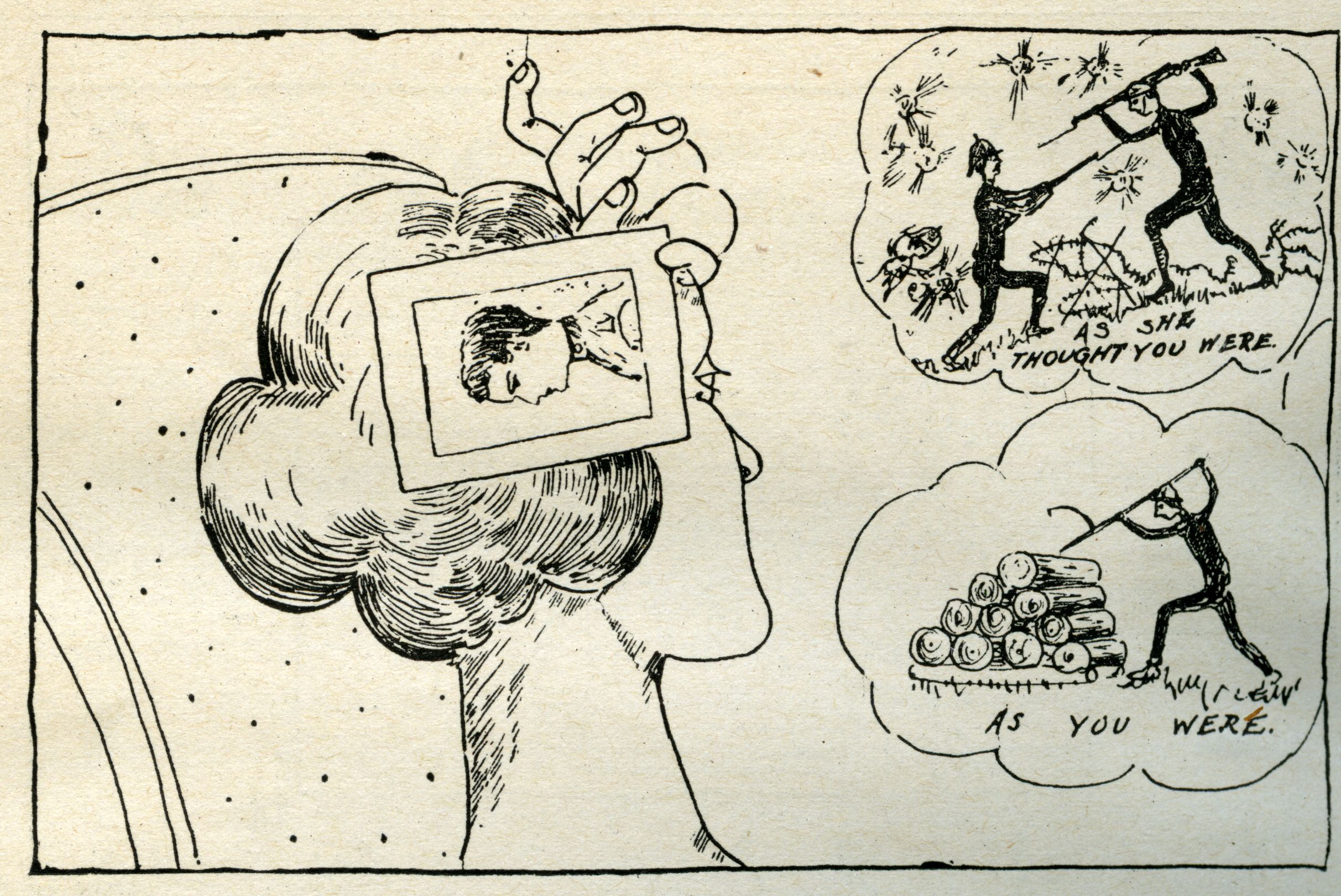
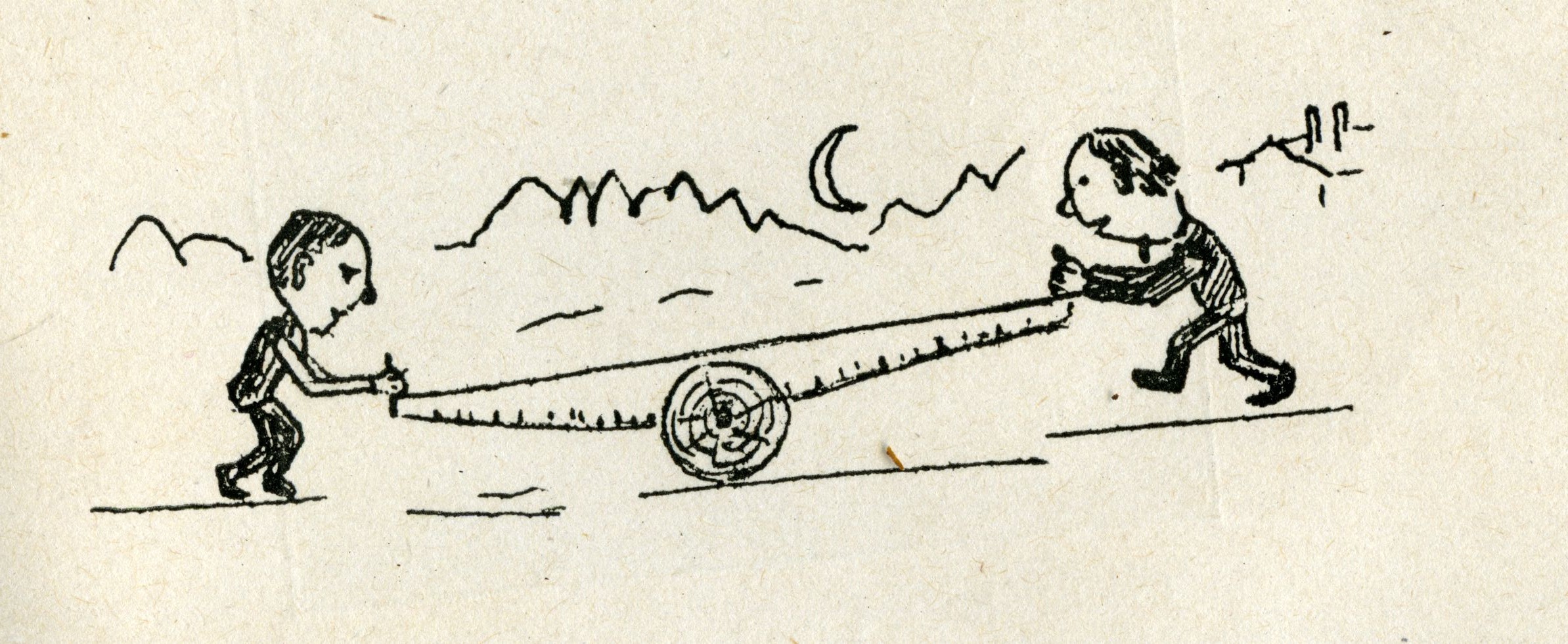
Ed’s book is filled with plenty of wonderful tidbits about the 20th Engineers during WWI as well as a series of funny cartoons and sketches done to help illustrate the book. Here are a few of my favorites:
WWII Veteran Story: Bataan Death March Survivor of the 16th Infantry Division Rescued by 6th Army Rangers
A recent visitor to PortraitsofWar was kind enough to send along some info on a local Guilford, CT veteran who passed away a few years back. He was a Bataan Death March survivor, photographer, and member of the 16th Infantry Division. Special thanks to Chistina Schaefer for providing the info and scans.
Richard Sperry Chapman, 1915-1976. Guilford native, photographer and POW. After graduating from high school in Guilford in 1934, Dick made the Army his career. In 1941 he was a member of the 16th Infantry Division, the “Golden Water Buffalo” Division. In 1941 he was stationed on the island of Luzon, Philippine Islands.
He survived the Bataan Death March, one of only three of 500 men in his battalion to do so.
He was incarcerated in Bilibid POW camp where he was tortured and starved. He was later transferred to Cabana Tuan were he was tortured and starved.
Just before the end of the war he was rescued in a daring raid led by Col. Henry Mucci and his raiders of the Sixth Army Ranger Battalion.
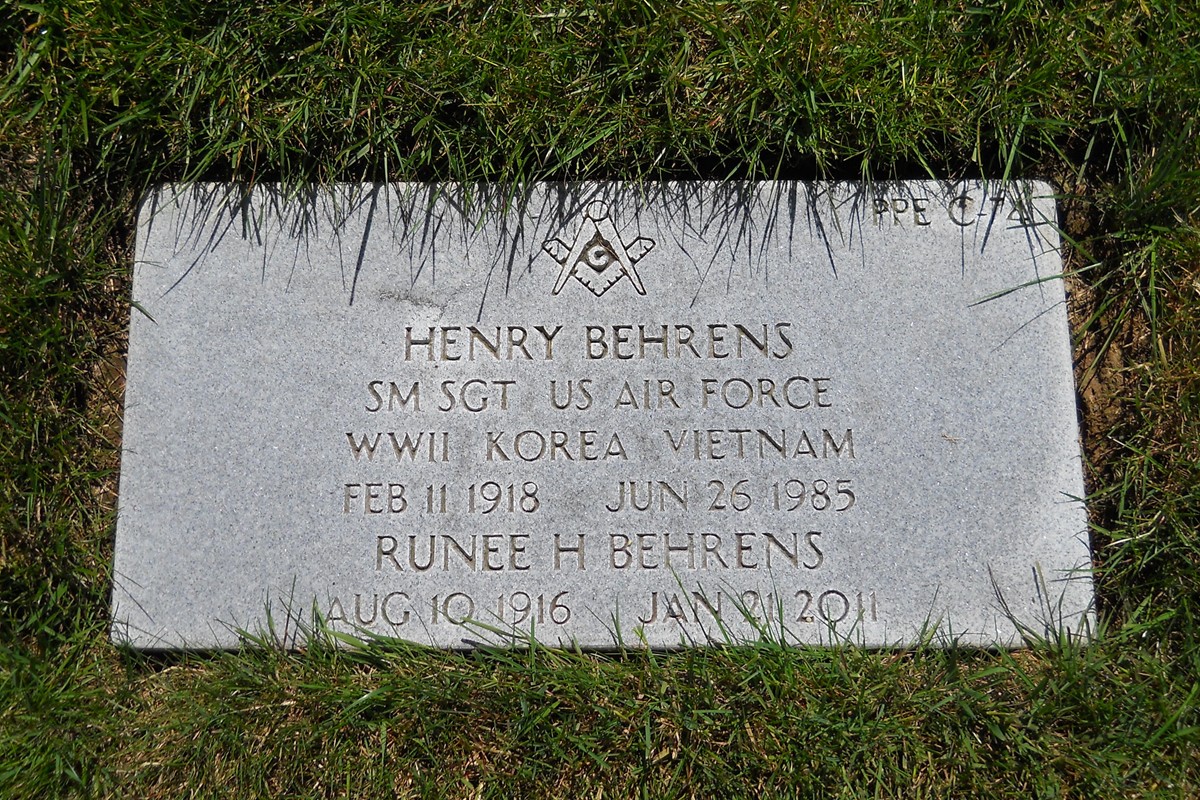
WWII Christmas Card Identification Research: Henry Behrens of Grand Island, Nebraska
UPDATE: This Christmas card has been returned to the Son of Mr. Henry Behrens. He found this post while searching for information about his father online. I’m pleased to have returned yet-another WWII photo to it’s rightful place.
Followers of PortraitsofWar will know that I love to do in-depth research to ferret out the names and stories of WWI and WWII veterans through the photographs they left behind. In this case, I purchased an inexpensive World War II postcard on eBay with the hopes of doing some sleuthing to find the identity of the sender. I already have a huge backlog of material to post, but I figured I would add yet another to the collection.
The card was interesting, and had nice composition. These style cards were often sent home by veterans to family members back home. With this in mind, I flipped over the card to check the reverse. Bingo. A name and address. Figuring that he likely send the card home to a family member (and not to himself) I began a quick ancestry.com search for the name. John Behrens of Grand Isalnd, Nebraska. I pulled the 1930 census record for the Behrens family to see if there were any likely candidates for the sitter in the photo. My initial guess was the he was likely 20-25 years old.
The address matched up on another record, so I’m 100% confident that this is the John Behrens named on the reverse of the postcard. John had two sons named Willie and Henry. Both were born in Germany and eventually emmigrated from Germany to the United States in the 1920s. I thoroughly researched both brothers and eventually found a reference to Henry having been in the air corps during WWII. His obituary also confirms that he was born in Eckenforde, Germany. It also sounds like he was a lifetime Air Force veteran.
Here’s his obituary:
Marin Independent Journal
Saturday, June 29, 1985
HENRY BEHRENS
A memorial service for Henry Behrens of Novato will be held at 1 p.m. Tuesday at Redwood Chapel Funeral Home in Novato.
Mr. Behrens died unexpectedly Wednesday at his residence. He was 67.
He was a native of Eckenforde, Germany. He spent 31 years in the U.S. Army and the Air Force. He retired from Hamilton Air Force Base in 1966.
His most recent job was office service manager for Mission Equity Insurance Co. in San Francisco.
He is survived by his wife, Runee Behrens of Novato; two sons, William H. Behrens of San Jose and John W. Behrens of Fairfield; a daughter, Linda P. Garrecht of Irvine; his mother, Alwine Behrens of Grand Island, Neb.; and three grandsons.
Inurnment will take place at 3 p.m. Tuesday during a graveside service at the San Francisco National Cemetery at the Presidio.
The family prefers memorial gifts to the American Heart Fund.
WWI 1st Division Chaplain 26th Infantry Regiment – Chaplain Roberts Williams, Silver Star Recipient
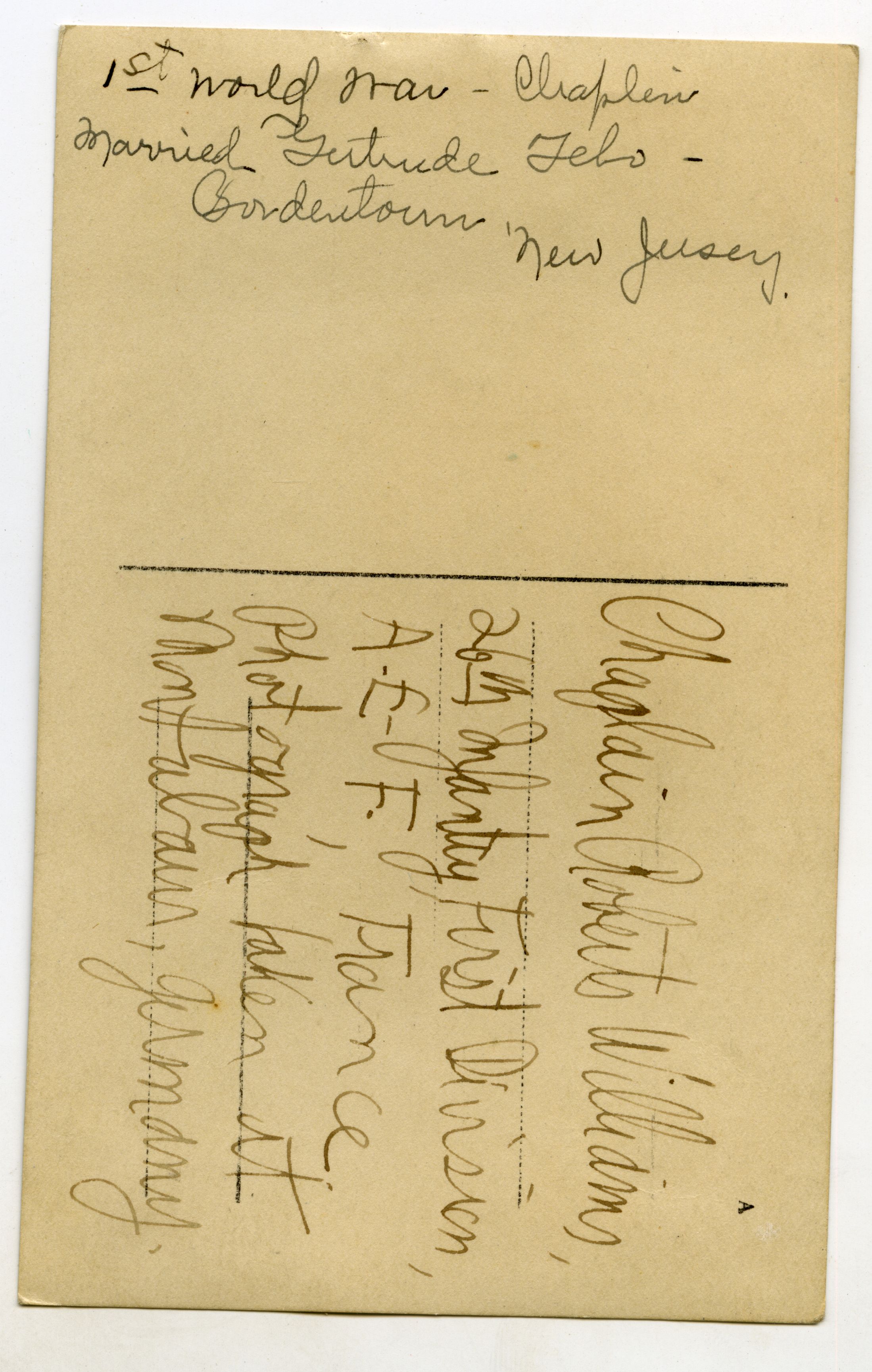
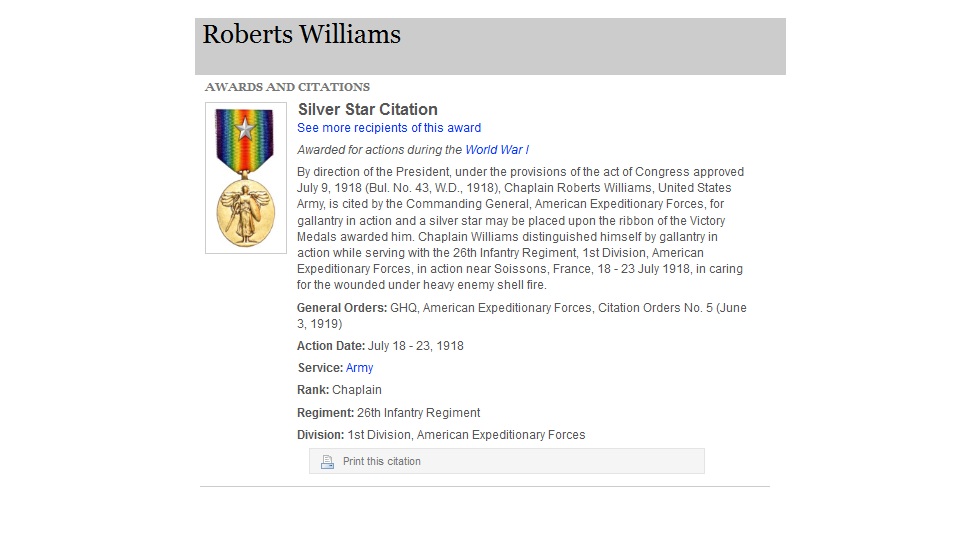
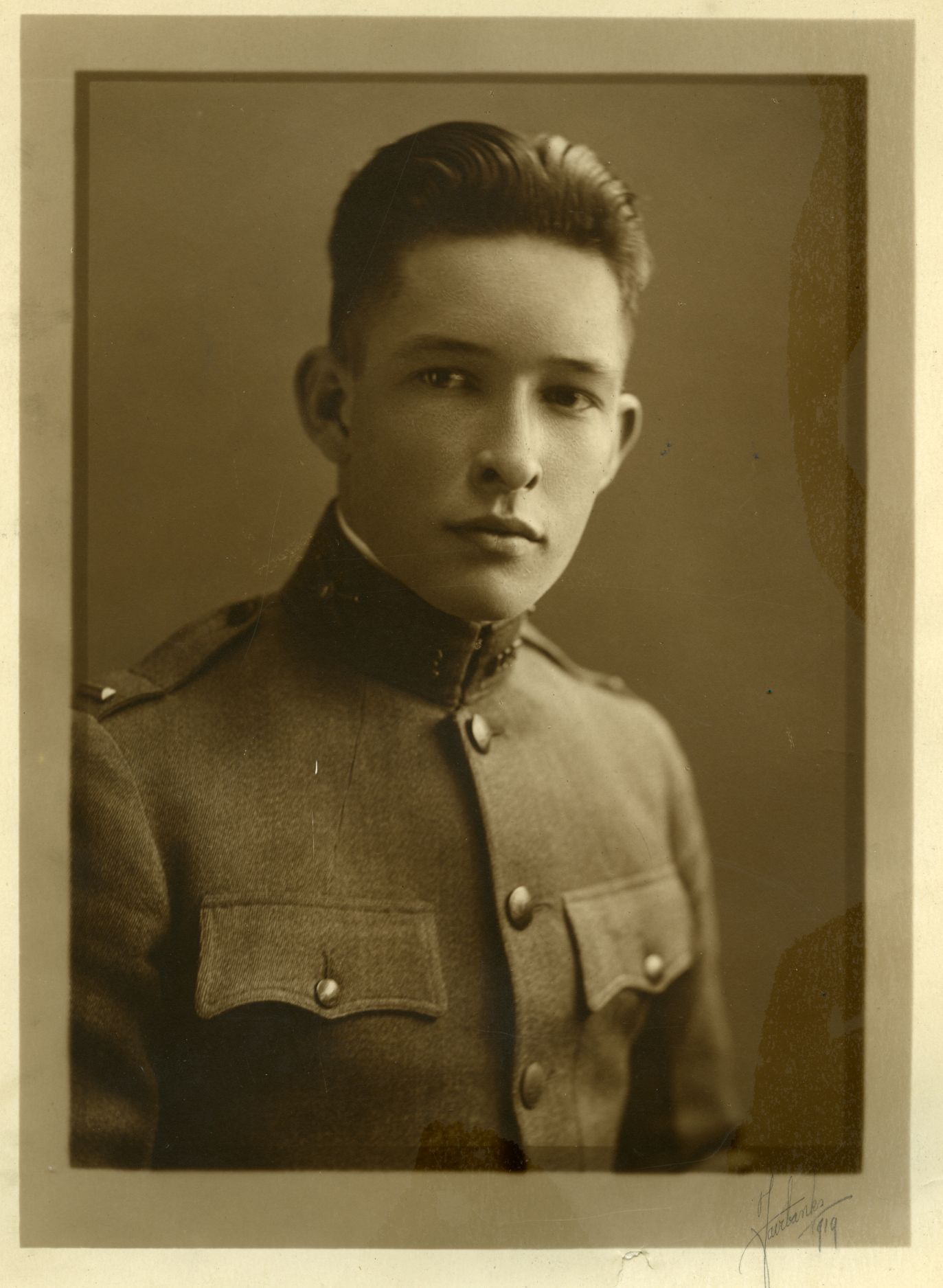
Another incredible WWI portrait photo has come across my desk via my dedicated searching regime on eBay. I bought this shot with the knowledge that the sitter was a chaplain. Chaplain shots are far and few between, and to have an ink identified example is very uncommon. In this case I was able to ply the internet and dig up some wonderful information on our sitter. Chaplain(Protestant) Roberts Williams originally enlisted as a private in the 17th Engineers but was eventually hooked up with the 26th Infantry Regiment of the 1st Division. He was awarded the Silver Star and was recommended for the Distinguished Service Crossed by his commander, Lt. Col. Theodore Roosevelt, Jr. He was gassed and the wound chevron can be seen on his right sleeve in the above image.
Here’s a quick transcription of his war service courtesy of a post-war Princeton Alumni newsletter. Interestingly, he graduated the same year as his commander, Teddy Roosevelt Jr.
“Chaplain Robert Williams, chaplain of the 26th Infantry of the First Division, has returned home, 55 Park Ave., Wilkes-Barre, Pa., to enjoy a brief leave of absence after twenty-one months’ service in France. Mr. Williams enlisted as a private in the 17th Engineers and served ten months at St. Nazaire. This regiment was among those composed of railroad men, to be reviewed by King George in London. During May, 1918, Private Williams was commissioned a chaplain. Immediately thereafter he was sent to the trenches where with the First Division he spent fifty-four days in the fighting of the Picardy front, culminating in the capture of Cantigny, the first planned American offensive. Withdrawn for a rest, his unit was unexpectedly sent into the fray again at the pivot of Marchal Foch’s counter attack northeast towards Soissons to cut the Soissons Chateau-Thierry railroad, which supplied the Germans in the Marne Salient. During this battle Chaplain Williams was gassed and here it was that his commander cited him for bravery and recommended that the DSC be conferred upon him. Chaplain Williams also spent three months in Germany, his unit being engaged in outpost duty twenty miles from the Rhine within Hunland. He says the Germans are very hard up for raw materials and that soap is worth more than money.”
I was also able to find a transcription of a letter Chaplain Williams penned to the family of a soldier killed in action:
“His battalion had gone over the top that morning, across a great
National Highway, the Paris-Soissons Road. The German machine-gun fire
was extremely severe, and we suffered heavily.
“A detail of four soldiers was given me by Major Legge to bury Captain
Richards and Lieutenant Boone. We buried your husband where he fell
and marked the grave with a cross upon which his identification tag was
placed. His personal effects, as I found them, were removed, and later
placed in his bedding-roll. We endeavored to remove his ring, but found it
impossible to do so, so we buried it with him. Records of the location of
the grave were sent to the Adjunct General, American Expeditionary Forces,
and to the Graves Registration Service; so his grave can be readily found after the war is over.
“It was remarkable what a peaceful and spiritual expression was upon
the face of Captain Richards. It did not seem as if he had suffered greatly,
and we could fancy that he seemed well pleased to pay the supreme sacrifice
upon the field of battle.
“I have heard among the enlisted men and officers who knew your
husband many, many remarks as to Captain Richard’s ouiet thoughtfulness.
his constant care for those under his command, his unfailing cheer, and his
courage, and efficiency as a soldier and leader of men. His memory lives
with us, and inspires us to emulate his devoted service to his Country.
“We ask that you will accept our sincere sympathy for the burden of
grief you bear; but we trust that your pride and joy in your husband’s
noble life and glorious death will enable you to bear his loss with courage.
“May God strengthen and help you, and may the promise of our
Savior comfort you with the thought of meeting your husband in a better
world.
Sincerely yours,
Robert Williams,
Chaplain (Protestant), 26th Infantry.”
WWI Photo: Flea Market Find Yields Research Gold – Lt. Robert Slocum of Burlington, VT
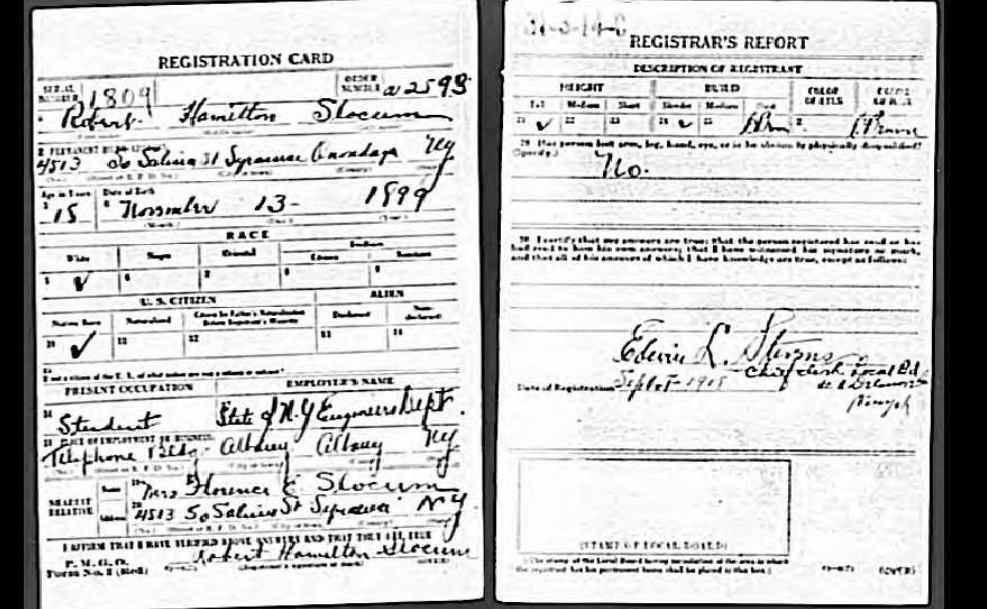
Although Lt. Robert H. Slocum was born and raised in Syracuse, NY, he resided in Burlington(VT) for the majority of his life. A recent photo discovery by a friend of mine at a local flea market has provided a wealth of research potential. The photo clearly depicts a young Lieutenant sporting a Coastal Artillery Corps insignia on his collar. The name Robert H. Slocum was inked on the reverse of the image. I wasn’t able to find a wartime record of Lt. Slocum in the Vermont files, but was able to find his draft card from Syracuse. He was a student at the time at Syracuse University and was originally from the area.
Slocum was likely a Lieutenant with the 59th Coastal Artillery, a Syracuse/Upstate New York based unit. This is only speculation, but the likelyhood is strong.
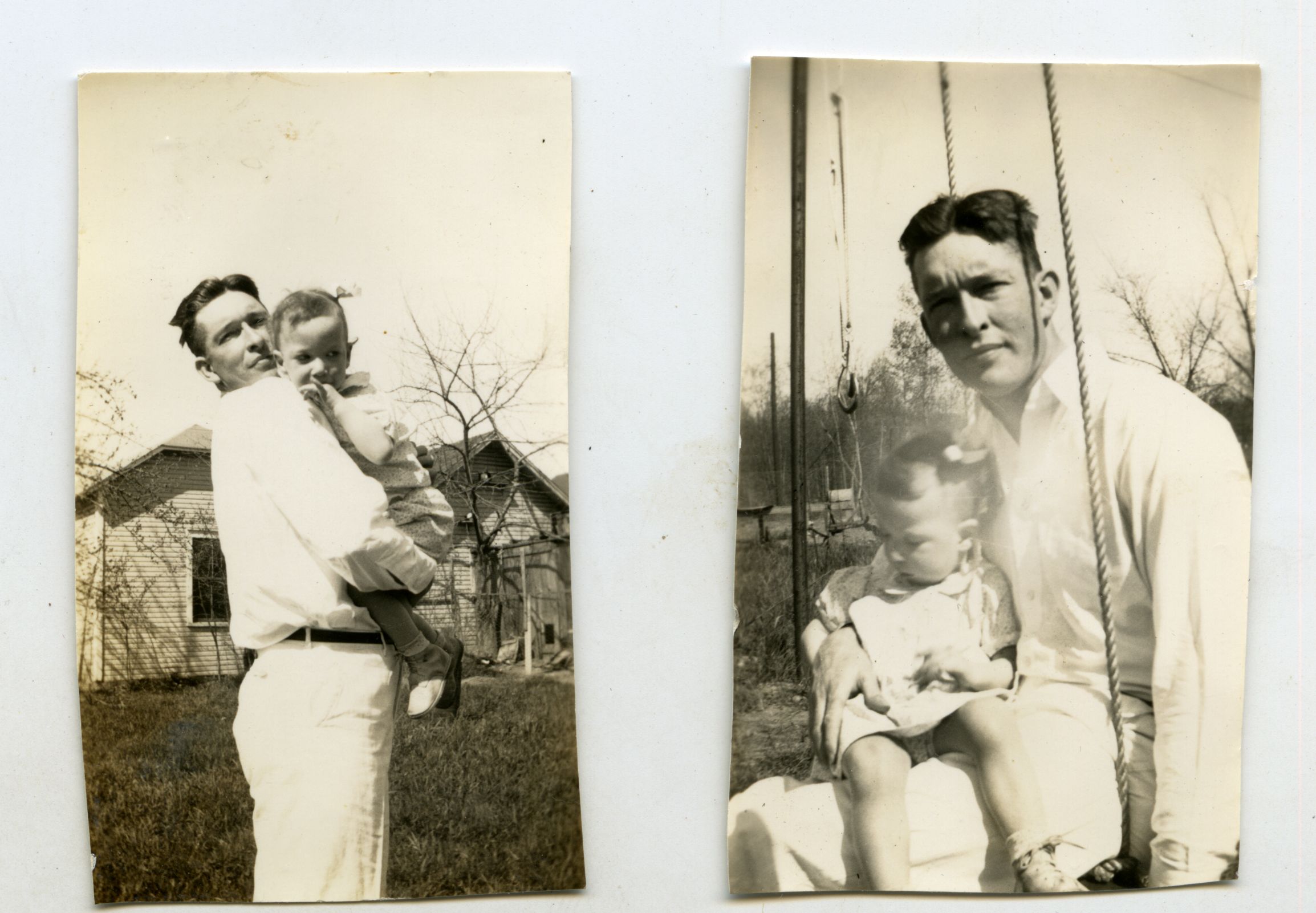
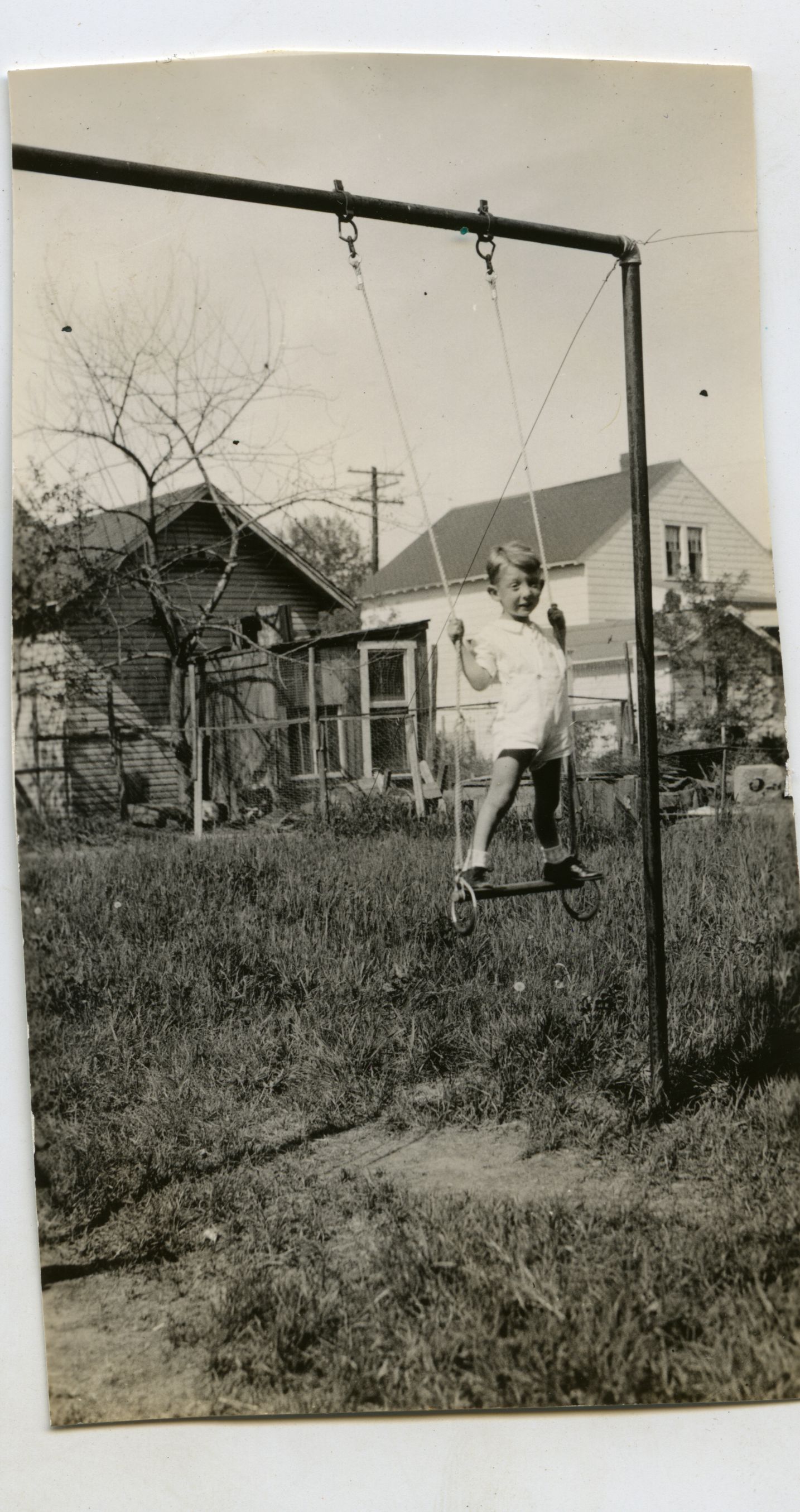
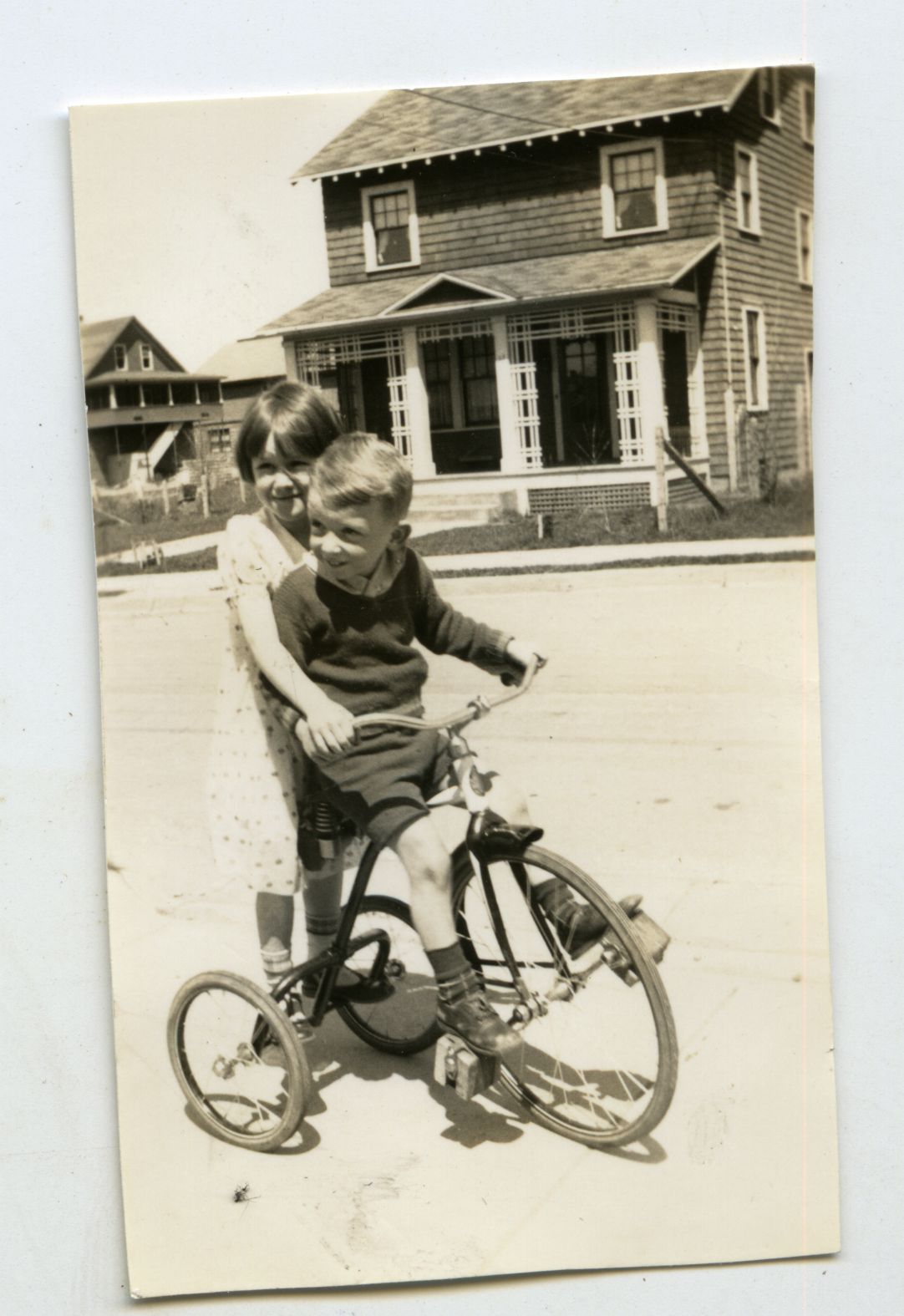
Mr. Slocum lived for nearly six decades at his home on 21 Alfred Street in the South End of Burlington. I was able to purchase his photo albums from the 1930s which include many interesting images of the Burlington lakefront and Southend area. His son recently passed and his estate was broken up, ending up at a local flea market. Luckily I was able to keep most of the early albums together.
Post-WWI Residence of Lt. Slocum – 21 Alfred Street, Burlington, VT
It would seem that Lt. Slocum lived a long and happy life. I found a 2012 obituary for his son which makes reference to Robert Slocum Jr, who passed away in 1993.
A 2012 obituary for Robert Slocum III
ROBERT H. SLOCUM III – BURLINGTON – On Nov. 15, 2012, Robert H. Slocum III died peacefully in his cherished home, following a brief illness. Born on May 31, 1931, he was the son of Robert H. Slocum II and Frances Slocum. Bob graduated from Burlington High School in the Class of 1949 and the Middlebury College, Class of 1954. For many years he was an elementary school teacher in Deep River, Conn. Music was an important part of his life and he hoped to instill a love of music in his students. For many years he would write and produce a musical for his students to perform. Upon his retirement, he returned to Burlington to live with his father. Both men enjoyed the company of their cat named Scooter who seemed to know his job was to make them happy. When Scooter died, Bob adopted a stray cat and most recently one from the humane society. Bob looked forward to his high school class reunions each summer and, of course, the Red Sox games. He is survived by his sister, Cynthia Slocum of Pittsford; and his cousins, Joan and Phil Hoff and their children, Susan Haynes, Dagny Hoff, Andrea MacNaughton and Gretchen Hoff. The family is most grateful to Philomena Gicheru for her friendship and caring assistance provided to Bob these past thirteen years. There will be a gathering of remembrance on Nov. 26, 2012, at 10:30 am at 35 Hillcrest Rd., Burlington.
WWII Pacific Theater of War in Color: Curtiss SC Seahawk Scout seaplane in Vibrant Color! 1944
The Curtis SC Seahawk was a scout aircraft designed by the Curtiss Aeroplane Company for use in the Pacific Theater of Operations in 1944. Only 577 were built and these planes are rarely seen in color, especially while stationed overseas. Some experts argue that this was the best US float plane used during WWII.
This photo was snapped by a Navy fighter pilot in 1945 on Guam. The original color slide is now in my collection. A rare addition!
Here are some internet facts I found about the SC-1:http://www.usslittlerock.org/Armament/SC-1_Aircraft.html
The Aircraft
The Curtiss SC-1 Seahawk was designed to meet the need for a reconnaissance seaplane that could be launched from US Navy battleships and cruisers. Designed as a single-seat aircraft the SC-1 could theoretically hold its’ own against enemy fighters.
The SC-1 was the last of the scout observation types and was the most highly developed with vastly improved performance over earlier types. Power, range and armament had doubled its usefulness. It was highly maneuverable, had two forward firing .50 cal. guns, large flaps and automatic leading edge slats for improved slow speed characteristics, and radar carried on the underside of the starboard wing proved highly successful during search missions. Space needed aboard ship was minimized by folding the wings back manually, making the overall width equal to the span of the horizontal tail surfaces.
Built in Columbus, Ohio, the SC-1 was initially fitted out with a fixed wheel undercarriage, then was ferried to Naval bases, where floats were attached.
The SC-1 was liked by some pilots and disliked by others, but generally well accepted. It could out climb an F6F “Hellcat” to 6,000 ft. and out-turn the F8F “Bearcat”.
Losses with the “Seahawk” were high, caused mostly by the extremely hazardous conditions in which they operated. With too hard a water landing the engine would drop, the propeller cutting through the float. Several mishaps occurred due to a faulty auto-pilot system. Aircraft and pilots were lost due to unknown landing accidents. It wasn’t until one pilot “walked away”, that it was discovered that the auto-pilot was taking over on landings. As a result, all automatic pilot systems were made inoperative on all SC’s. (For more information see U.S.S. Little Rock “Collision at Sea and other Underway Hazards” page.)
During the height of their career, crews aboard ship looked with pleasure at the “Seahawks” aft on the catapults as their “Quarterdeck Messerschmitts”.
The SC-1 first flew in February 1944 and 950 were ordered, later decreased to 566 because of the Victory in the Pacific. It continued in service for a number of years after the war as trainers, eventually being replaced by helicopters.
(Click drawing for a larger view)
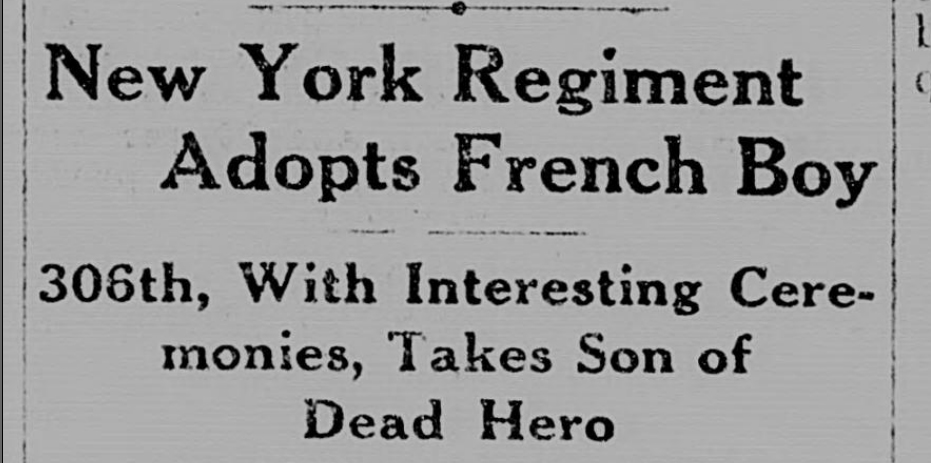
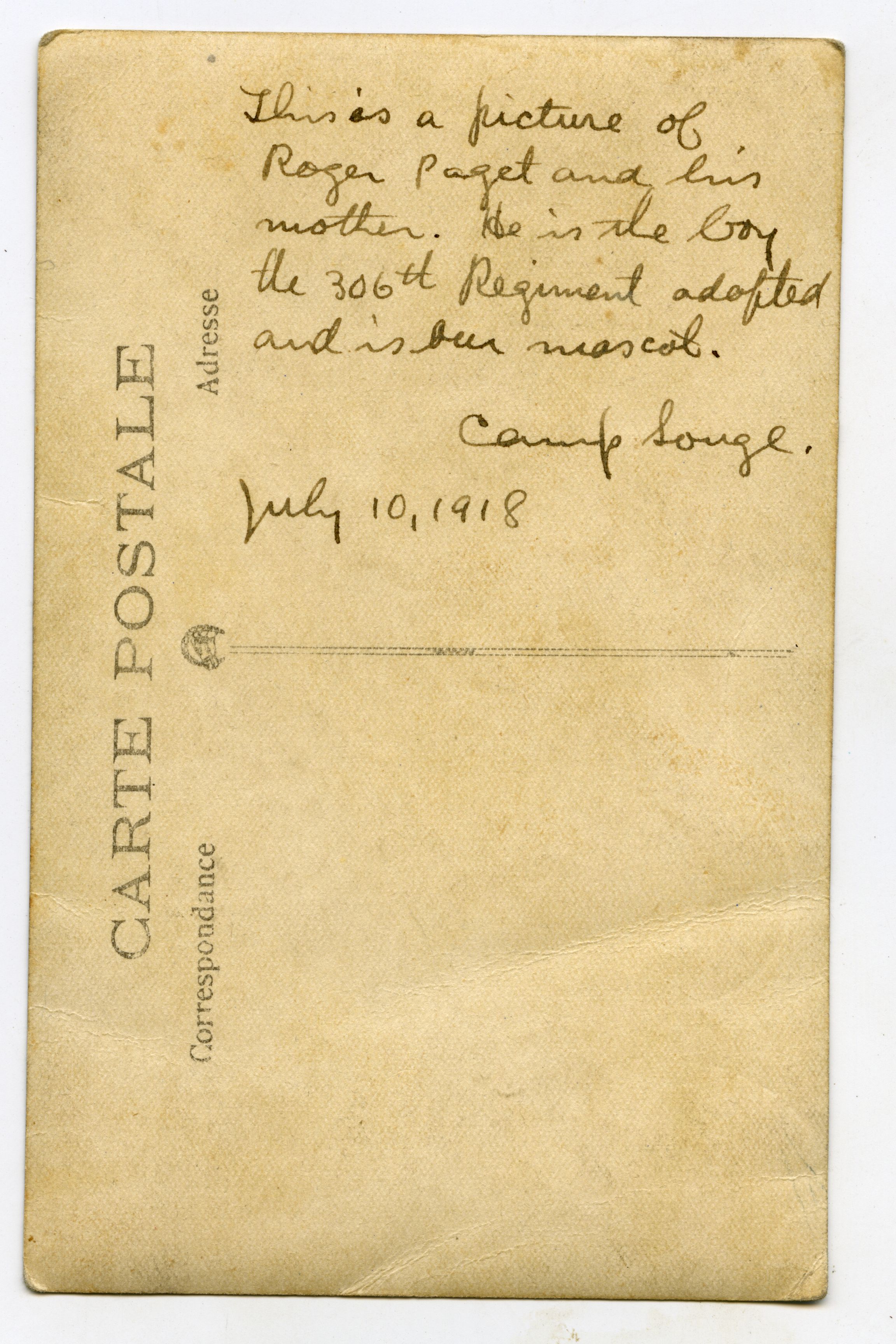
WWI Photo – The Incredible Story of Roger Paget, Mascot of the 306th Field Artillery, 77th Division
The cherubic face of the little French boy in a recent photo acquisition belies the true sadness he felt when his father (Henri Paget) was killed in action while serving with the French 8th Cuirassiers in April of 1918. The boy can clearly be seen wearing a US cap with Lt. insignia as well as a pair of decorated French Croix de Guerre medals. A quick bit of internet research turned up an interesting story related to Roger Paget and his role as unit mascot for the 306th Field Artillery.
From the History of the 306th Field Artillery :
Roger Paget, the Son of the Regiment
On Sunday morning, June 9th, at a memorable
assembly at Camp de Souge, four-year-old
Roger Paget of Bordeaux was adopted as the
protege of the regiment. His father, Lieutenant Henri
Paget of the 8th Cuirassiers a poilu, was killed in action
on April 29, 1917, at a point north of the Marne near
where most of our own men were killed in action.
Lieutenant Paget twice received the Croix de
Guerre and was named for the Medal of the Legion of
Honor. We have been proud to have the son of
such a brave soldier and a representative of the
children of France, become a part of the regiment.
Madame Paget, Roger’s mother, and a detail from
the American Red Cross were present at the cere-
mony, which was opened by the regimental band
and the singing of America. The chaplain referred
to the story of Lieutenant Paget and introduced
Roger and his mother. Colonel Miller then accepted
Roger in behalf of the regiment while the handsome
boy himself stood on the table by his side.
Sergeant Levi then spoke briefly in French trans-
lating what had been said and expressing the senti-
ment of the occasion. The climax of the program
was reached when Rudolfi stood by the side of the
lad and sang Sweetest Little Feller, Mighty Lak’ a Rose
and the Marseillaise.
Captain Van Keuren of the Red Cross then con-
gratulated the regiment, after which the band played
Sousa’s 306th Field Artillery march. Most of the
men came to the platform to meet Roger and his
mother personally.
Bordeaux, Paris, Boston, New York, Philadelphia
papers have written up the event and referred in
glowing terms to Roger and his regiment. His pic-
ture was also published and sent to hundreds of
friends of the regiment who in turn have showered
letters and souvenirs on him. The 306th Field
Artillery Association at a mass meeting in Brooklyn,
unanimously adopted Roger and sent him a bountiful
box for Christmas, 1918.
Many of our men on leave visited the Pagets both
in Bordeaux and Lyon to which city they moved in
February, 1919. “9 Rue Valdeck-Bousseau, Brot-
teaux Lyon,” is the address. They will, in turn,
surely visit New York occasionally.
The Farmers Loan and Trust Company of Bor-
deaux is handling the fund we have established for
Roger’s education.
As we left France we of the 306th Field Artillery
had no more happy reminiscence than the thought of
the boy who has become a symbol to us of the mean-
ing of our fight for the children of France, our own
boys and girls, and the future generations of the whole
world. We are proud that we helped to finish the
work for which his father gave his life, and that some
of our comrades shared his noble sacrifice.
That thought will always bind Roger closely to the
306th Field Artillery.
WWI Art – 20th Forestry Engineers Wartime Newsletter “The Railsplitter”
The 20th Engineers are one of those obscure service units that served overseas in WWI that I love researching. They saw no combat and spent the entire war swinging axes and operating sawmills, but their labors provided the railties, barracks, firewood, and poles that kept the war running. This wartime newsletter header makes reference to Abe Lincoln’s early life as a rail splitter and juxtaposes it with the wartime president(Wilson).
Here’s the full scan of the handbill dated May 23rd, 1918:
WWII in Color: Invasion of Guam, July 1944 Caught on Film in Color from the Skies Over Guam
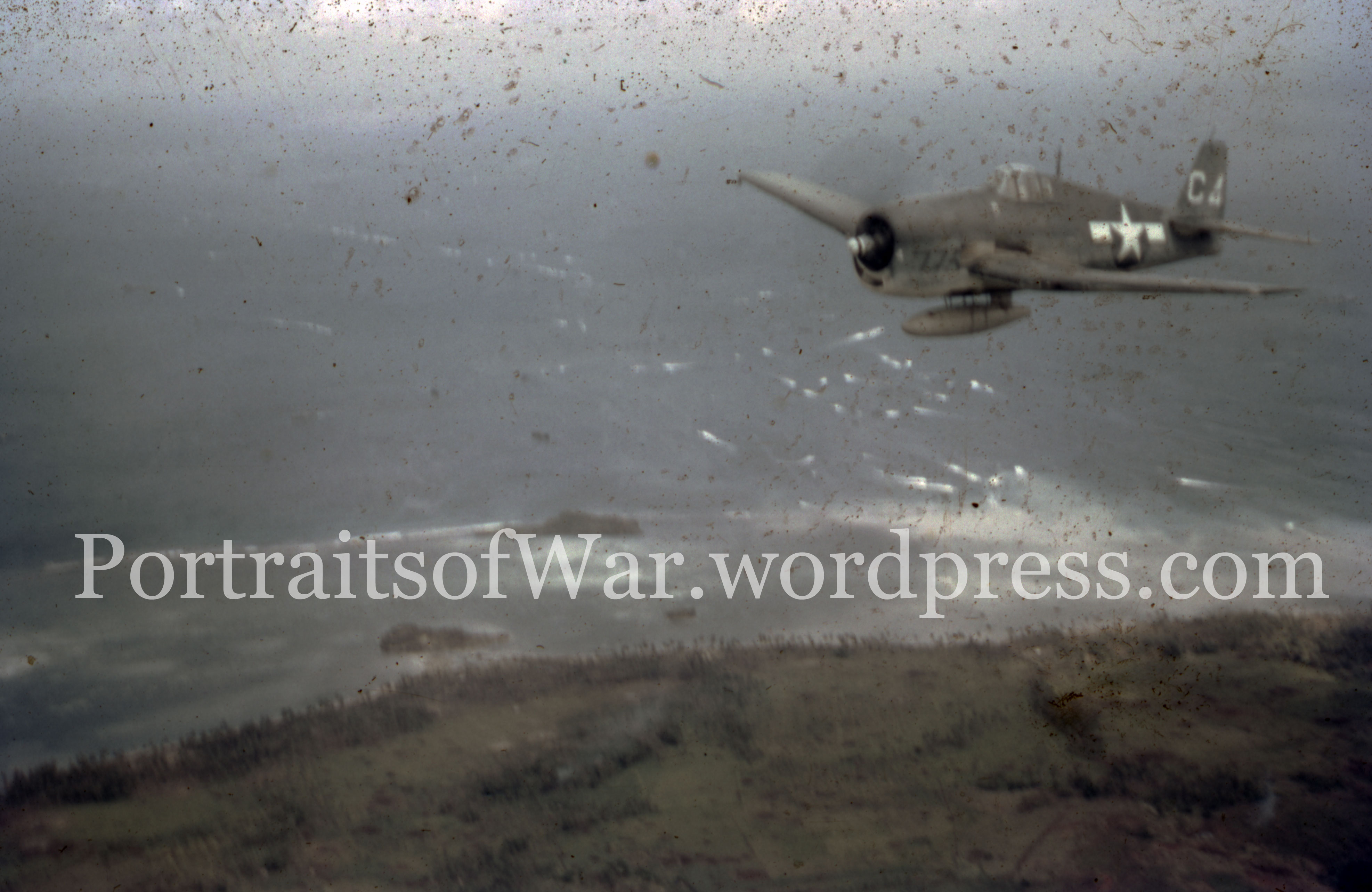
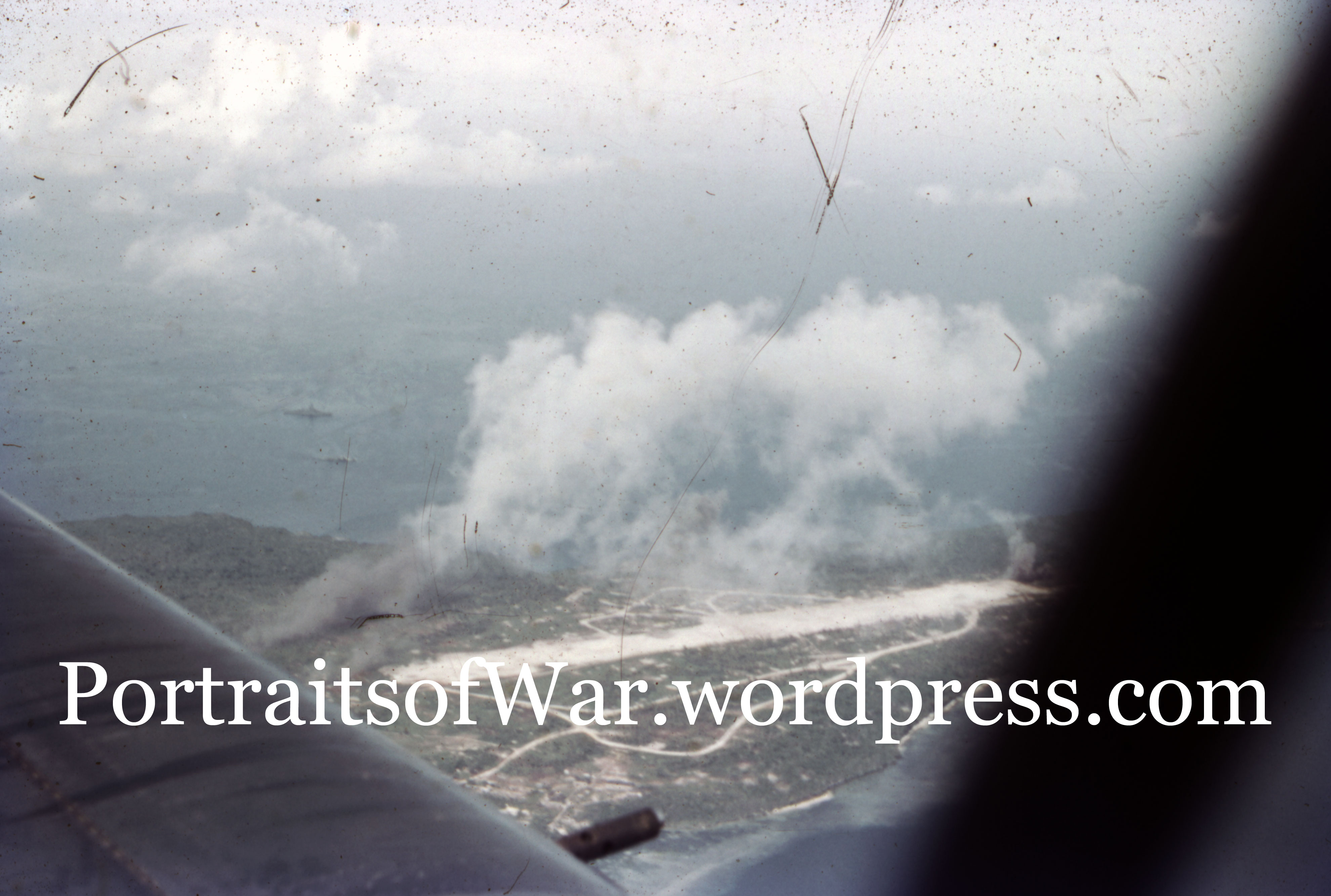
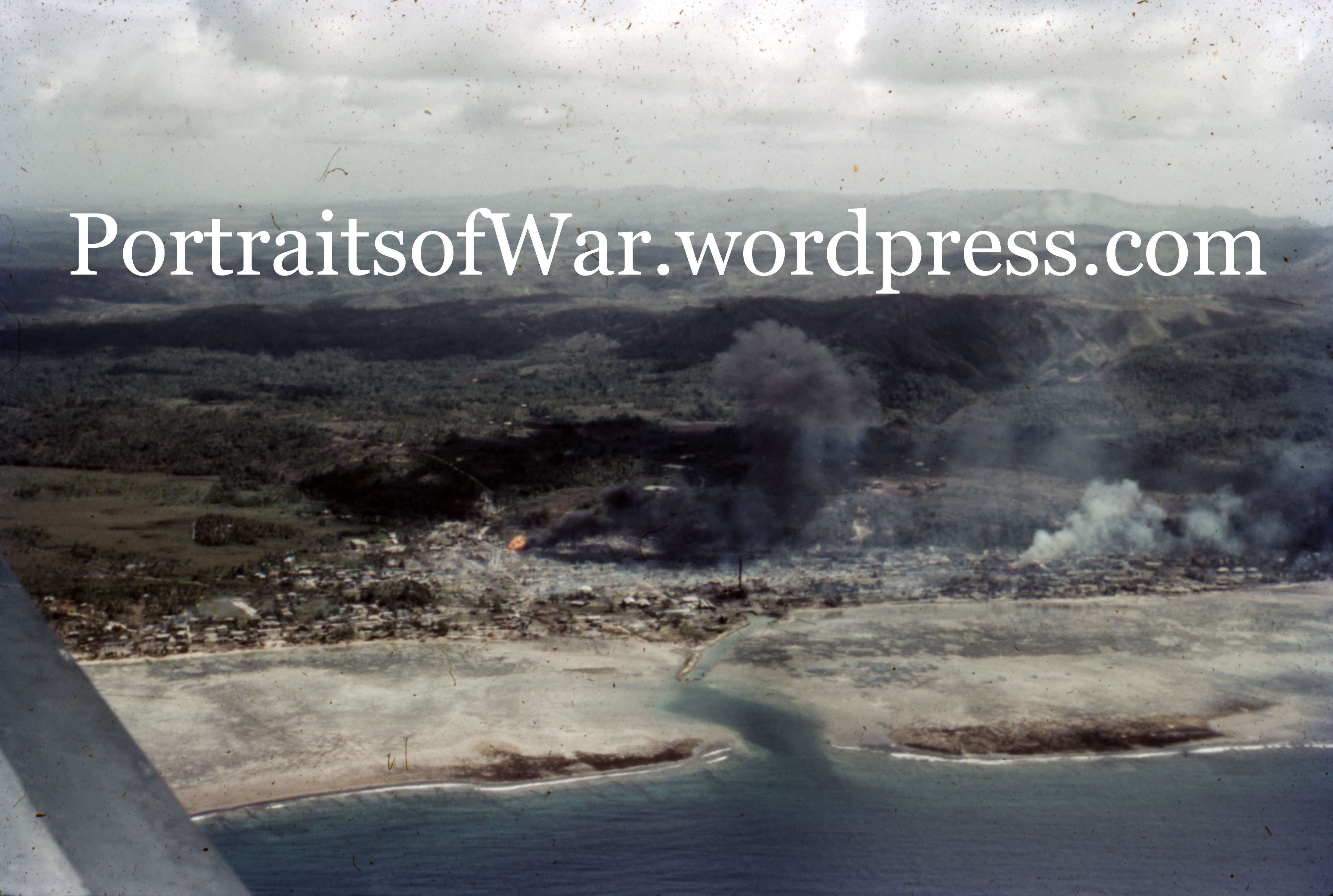
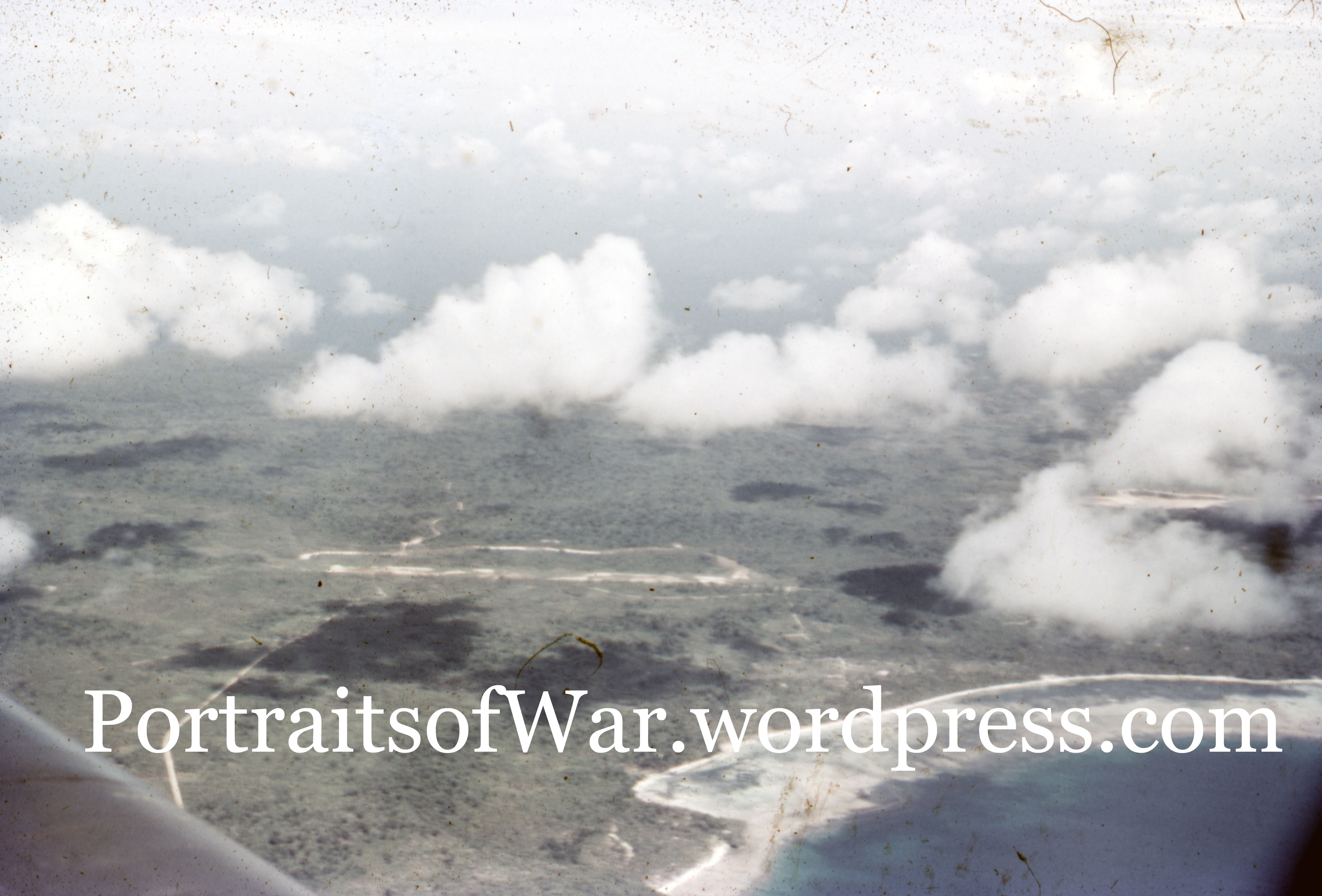
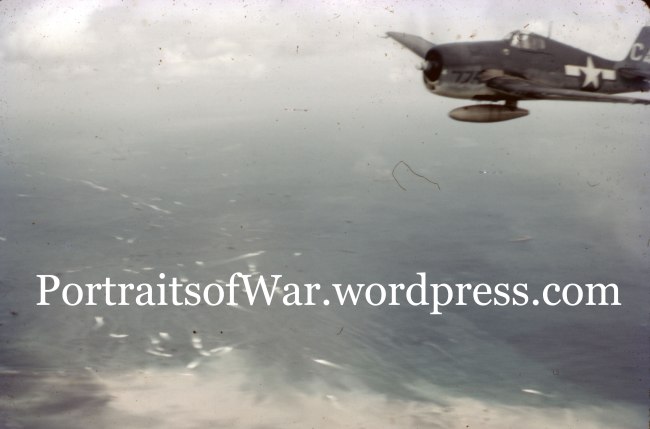
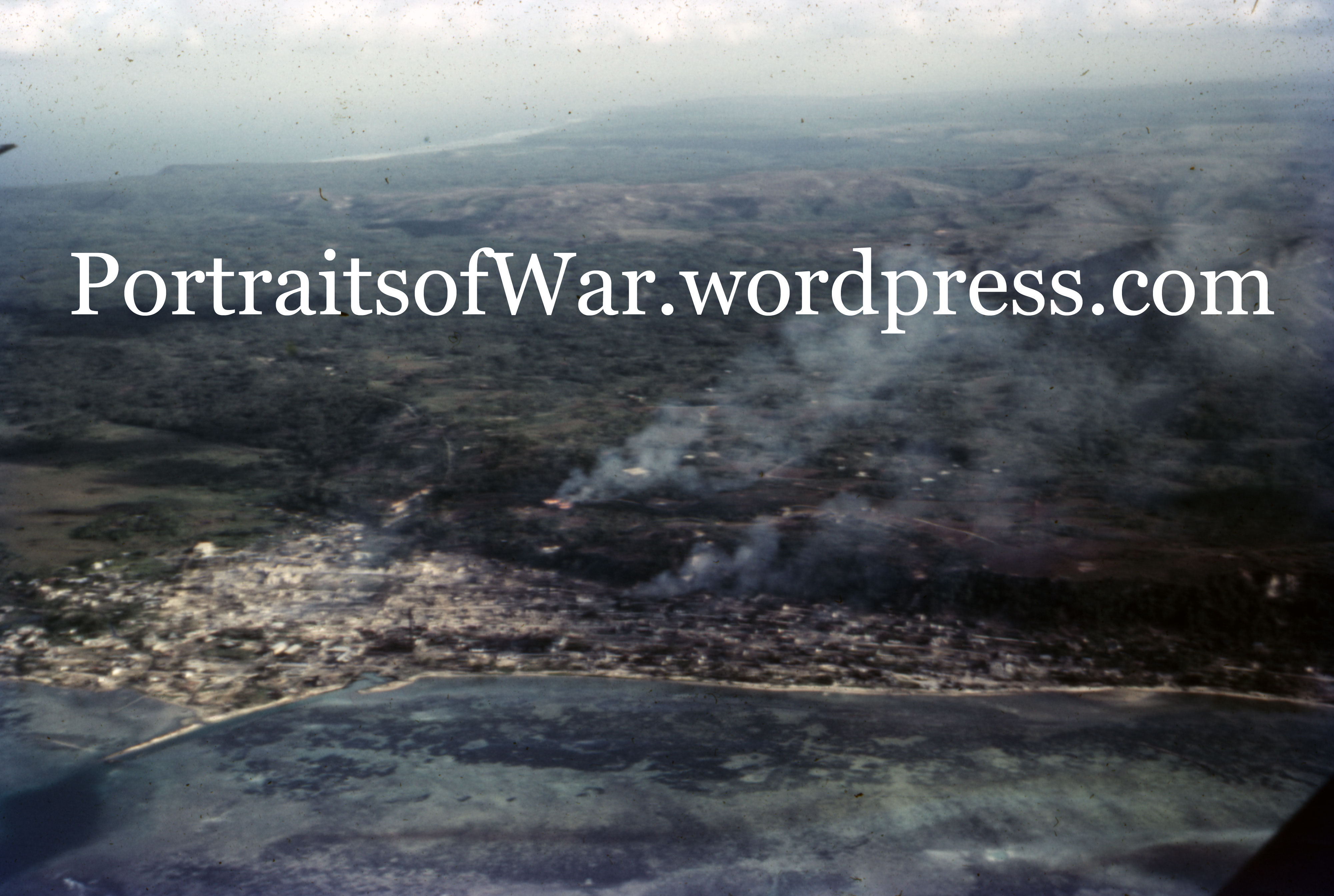
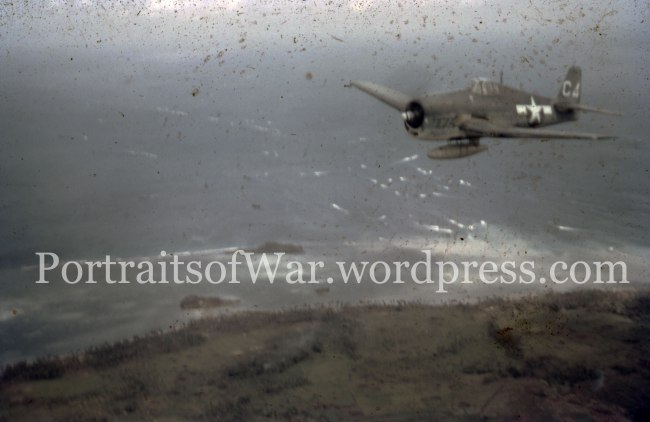
Shot from the cockpit of a F6F-3 Hellcat flown by Edward W. Simpson Jr. of the VF-35, this incredible set of images depicts the opening few hours of the infamous Invasion of Guam. Simpson carried his Kodak 35mm camera loaded with color film during many of the key battles of the Pacific, and PortraitsofWar has been lucky enough to acquire the entire collection. In this installment, I’ve scanned a series of shots taken during the Guam invasion. Many are identified as to location and were verbally described on a cassette tape that accompanied the collection.
Orote Peninsula
Source: http://www.pacificwrecks.com/airfields/marianas/orote/index.html
Location
Located the western shore of Guam on the Orote Peninsula, bordering Apra Harbor to the north and Sumay to the west, and Agat Bay to the south. Orote was known as Guamu Dai Ichi (Guam No. 1) by the Japanese.
Construction
Built prior to the war, by the US Marine Corps detachment of 10 officers and 90 enlisted men when they arrived in Guam on March 17, 1921. The Marine unit constructed an air station near the water at Sumay village, including a hangar for their amphibious aircraft. In 1926, a new administration office was constructed which housed the squadron offices, sick bay, dental office, aerological office and guardhouse. In early 1927, the squadron departed for Olongapo. Only a handful of men remained here until September 23, 1928, when Patrol Squadron 3-M, consisting of 85 enlisted men and 4 to 6 officers, was assigned to Guam. Shortly thereafter, the naval air station was closed on February 24, 1931, as a cost-saving measure.
Japanese Occupation
When the Japanese attacked Guam, they did not bomb the abandoned naval air station. When they occupied the area, they constructed Orote Field, using Korean and Guamian labor, and used the base until the liberation of Guam.
Used by the Japanese navy from April 1944 to June 1944. As of June 1, 1944, Japanese air strength on Guam consisted of 100 Zeros and 10 J1N1 Irvings at Airfield #1 and 60 Ginga at Airfield #2.
American Neutralization
On February 23, 1944, American carrier based airplanes attacked the field, and other American raids soon followed. During the Battle of the Philippine Sea the field was used by the Japanese carrier-based airplanes to refuel and rearm. The Japanese airplanes based at Orote Field were also used to attack the American fleet. American raids on June 19, 1944 destroyed the landing fields, the aircraft on the ground and such aircraft that managed to take off. American pilots reported extremely intense antiaircraft fire around Orote Field. Fifteen Japanese airplanes crashed at Orote Field on June 19, 1944.
On June 20, 1944, numerous actions occurred in the immediate vicinity of Orote Field between American carrier airplanes and Japanese aircraft seeking refuge at Orote Field after flying from their carriers, or Japanese refueling and rearming to attack American carriers. Numerous dogfights took place in the air above Orote Field and numerous strikes by American airplanes destroyed Japanese facilities and airplanes on the ground. This denied the Japanese extensive use of this crucial airfield during the battle.
Land Battle at Orote
The Japanese assigned the defense of Orote Peninsula to the 54th Independent Guard Unit under command of Air Group Commander Asaichi Tamai. After American invasion on July 21, 1944, the 1st Provincial Marine Brigade under command of Lt. General Lemuel C. Shepherd fought its way through the Agat village to the base of Orote Peninsula. Here the Japanese had constructed an elaborate interlocking system of pillboxes, strong points and trenches.
Regiments of the 1st Provisional Marine Brigade, the 4th and 22nd, fought their way through the area. Shortly before midnight on July 26, 1944, the Japanese trapped on the peninsula staged a suicide attack and were completely wiped out. The advancing Marines still met heavy Japanese resistance in the vicinity of the airfield, where the Japanese fought from caves and coconut bunkers. The peninsula was declared secure on July 29, 1944. It is estimated that the Japanese lost more than 3,000 men defending Orote Peninsula.
Several Japanese aircraft wrecks were captured at the airfield, including G4M2 Betty 2095 , G4M2 Betty 12013 and J1N1 Irving.
American Use
Immediately put into use by Marine air power for close support missions during the liberation of Guam. This was accomplished by Marine Air Group (MAG) 21. By mid-November 1944, MAG-21, now commanded by Colonel Edward B. Carney, was an oversized group, having 12 squadrons based at Orote Field, 529 officers, 3,778 enlisted men and 204 aircraft. MAG-21 was shifted to Agana Airfield in 1945, as Orote Field had always been hampered by adverse crosswinds. The field was then used by the US Navy for repairing damaged aircraft.
American Units Base at Orote
VF-76 (F6F) September 1944
MAG 21 (F4U) July, 1944 – to Agana in 1945
USS Santee (F6F) landed at Orote August 1944
Today
Orote Field was finally closed to all but emergency landings in 1946. Today, the cross-runway is used for C-130 touch-and-go flight training, and for helio-ops by Navy Seals. Much of the time the airfield is off-limits. The major runway runs from NW to SE and the secondary runway crosses the first and runs in a NE to SW direction. Limited tours of the airfield are available.
References
Thanks to Jennings Bunn and Jim Long for additional information.