Frederick Woelkers returns to the battlfield where he was wounded in this quick youtube video put out by the US DOD. Woelkers was with the 102nd Infantry Division when he was wounded by sniper fire in Germany.
Frederick Woelkers returns to the battlfield where he was wounded in this quick youtube video put out by the US DOD. Woelkers was with the 102nd Infantry Division when he was wounded by sniper fire in Germany.
My continued obsession with WWI Vermont material has landed me a new WWI photo taken in France in June of 1918. I literally stumbled across this listing; the seller didn’t mention the fact that the soldier was a Vermonter. Luckily I checked out the back of the photo before moving on to the next auction listing.
The photo was addressed to a Mrs. George Bolduc of Fitzdale, Vermont dated June 25th, 1918. The writer added the following info:
“June 25th, 1918
Dear Sister,
Am well and happy and hope you and children are well. Will write you a letter later, am pretty busy just now so am sending this in place of a letter. This is not very good but will have to pass some love to you all. From bro-
John Corcoran
101st MG BN, AEF”

John J. Corcoran(R)
John poses in the above photo with an unnamed friend of his from the 101st MG Bn. sporting a beautiful example of a woolen M1911 sweater. I’ve attached below a period advertisement showing two versions of the service sweater. These were either hand-knit from patterns or could be privately purchased through various supply and retail companies.

Knit Service Sweater (Source: http://www.usmilitariaforum.com/forums/index.php?showtopic=39625)
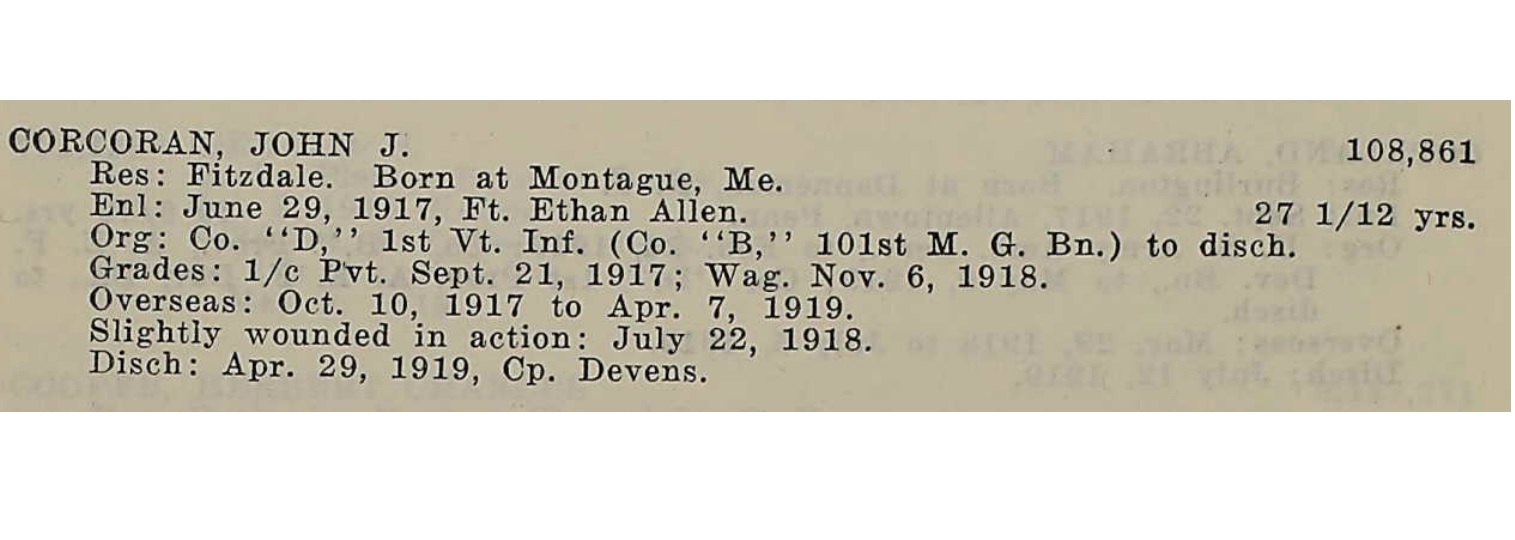
I am fortunate enough to own a copy of the hard-to-find 101st Machine Gun Battalion unit history. Wagoner John J. Corcoran is listed with a frontal snapshot beside his biography. He was born on May 29th, 1890 in Maine and eventually made his way over to Vermont where he lived in Lunenburg, VT working as a paper maker with the Gilman Paper Company. He enlisted at Fort Ethan Allen on June 29th, 1917 with the 1st Vermont Infantry, where he was later transferred into the 103rd MG of the 26th Division. His WWI and WWII draft cards were both listed on ancestry.com and I’ve included them below along with a copy of his death record. He passed away in 1947 and is buried in Lunenburg. I hope to travel there soon to take a photo of his grave!

101st MG Bn. Unit History Roster Entry

WWI Draft Card

WWII Draft Card
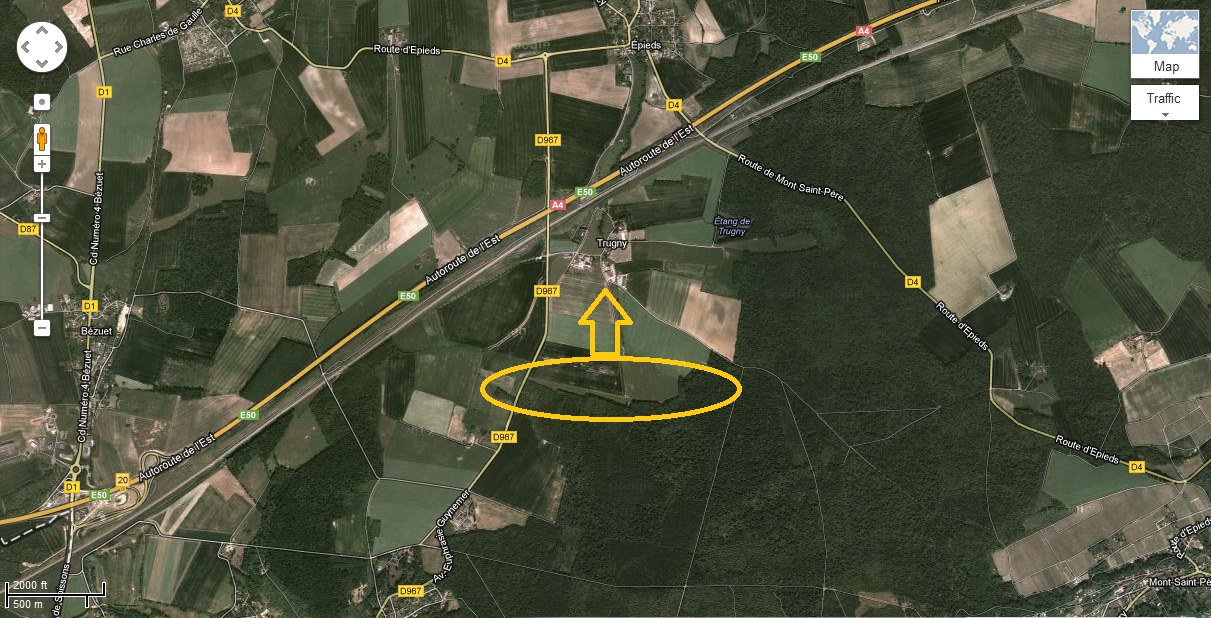
John was badly wounded on July 22nd, 1918 during an attack on the French town of Epieds. I’ve included a period map of the battle as well as an image of the location today. Not much has changed! This attack was coordinated only a few days after the Battle of Chateau Thierry. Luckily, John’s encounter with the Germans was noted in the 101st MG unit history diary section. I’ve transcribed the section:
“At daybreak both companies were sent into some woods overlooking Trugny to assist the attack of Major Rau’s battalion against the town. We could not locate any enemy to fire at, and the best we could do was wait to protect Rau’s left against possible counterattack. We were shelled and M.G. bullets flew pretty thick. Bristol of C Co. was wounded. After awhile(sic) the attack crumbled in spite of Rau’s gallant efforts against impossible odds, and the troops were withdrawn to the old positions. A little later C Co. was sent over to the right to join Rau. There they found him with only a few of his men left. The guns were set up on the edge of the woods in a defensive position. B Co. got orders to support an attack of the 102nd Infantry Regiment on the town of Epieds over on the left flank. The company formed a fourth wave behind the infantry, and spread out into a long skirmish line. The advance started over the open wheat field at a slow walk, with frequent halts during which each man flattened out so that no moving thing was visible in the field. M.G. bullets began to kick up little puffs of dust all around us, and the enemy artillery barrage came down fiercely just ahead. We knew we would have to go through this, and every nerve was tense. We soon found ourselves in the midst of it – direct fire at that, mostly from one pounders, and 105’s and Austrian 88’s which come with the shriek of a thousand devils. The fumes choked us and the concussion half stunned us. it was here that Hez Porter, following his platoon leader, was instantly killed. Corcoran, Dick and Wendt were wounded…………………………….”
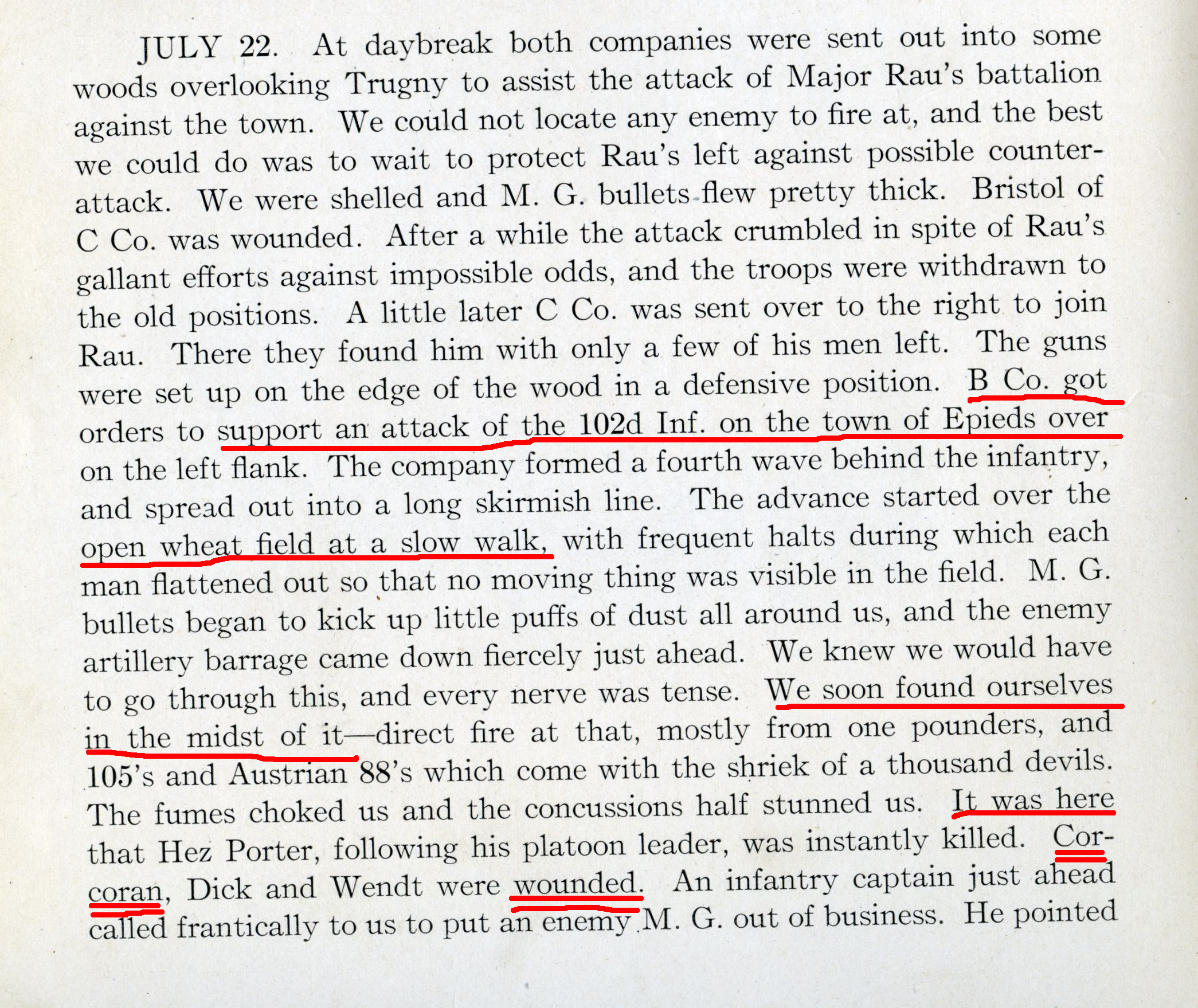
Unit History
Casualty Report


Death Registration
Casual followers of this blog will know that I never post photos of death or destruction. My main goal is to present historic photography in a way to help educate internet followers about the world of war. In this case I will post a photo that may be hard for some viewers to see. I have hundreds of photos of concentration camps in my collection, yet have never been moved to post any of the photos to the web.
This image called to me. The composition, the subject, the setting. It’s all there. A soldier snaps a shot at Dachau of a man holding the feet of his dead wife while his injured son watches on. A procession of armored division soldiers file by as this tragic event unfolds; the event captured through the lens of an unknown soldier of an unknown family. This scene was likely replicated tens of thousands of times at the tail end of the war.


I don’t often post material relating to the German viewpoint of the First World War, but after watching a number of WWI German veteran interviews on youtube, I’ve decided to post a few of the best. It’s rare to view digital interviews with veterans who fought nearly 100 years ago. These vets were nearly 100 when interviewed in the 1980s and early 1990s. Take a moment to put historical viewpoints aside and listen to the accounts of historical events that are all but forgotten by todays generation. Luckily, the digital age has preserved some of these memories.
Details about the battle are ones that can’t be gleaned from history books, they are anecdotes that can only come from the veterans who fought the battles trench-trench. Make sure to listen for the story about drinking machine gun coolant to quench the thirst of battle as well as the horrific details of artillery barrages. Details about the repair of uniforms after battle in order to march in front of Kaiser Wilhelm as well as the fact that the veteran took his helmet spike off during combat to avoid damage only help add to the personal value of listening to a veteran interview.
For more WWI German material please check out the following blog: www.gottmituns.net/
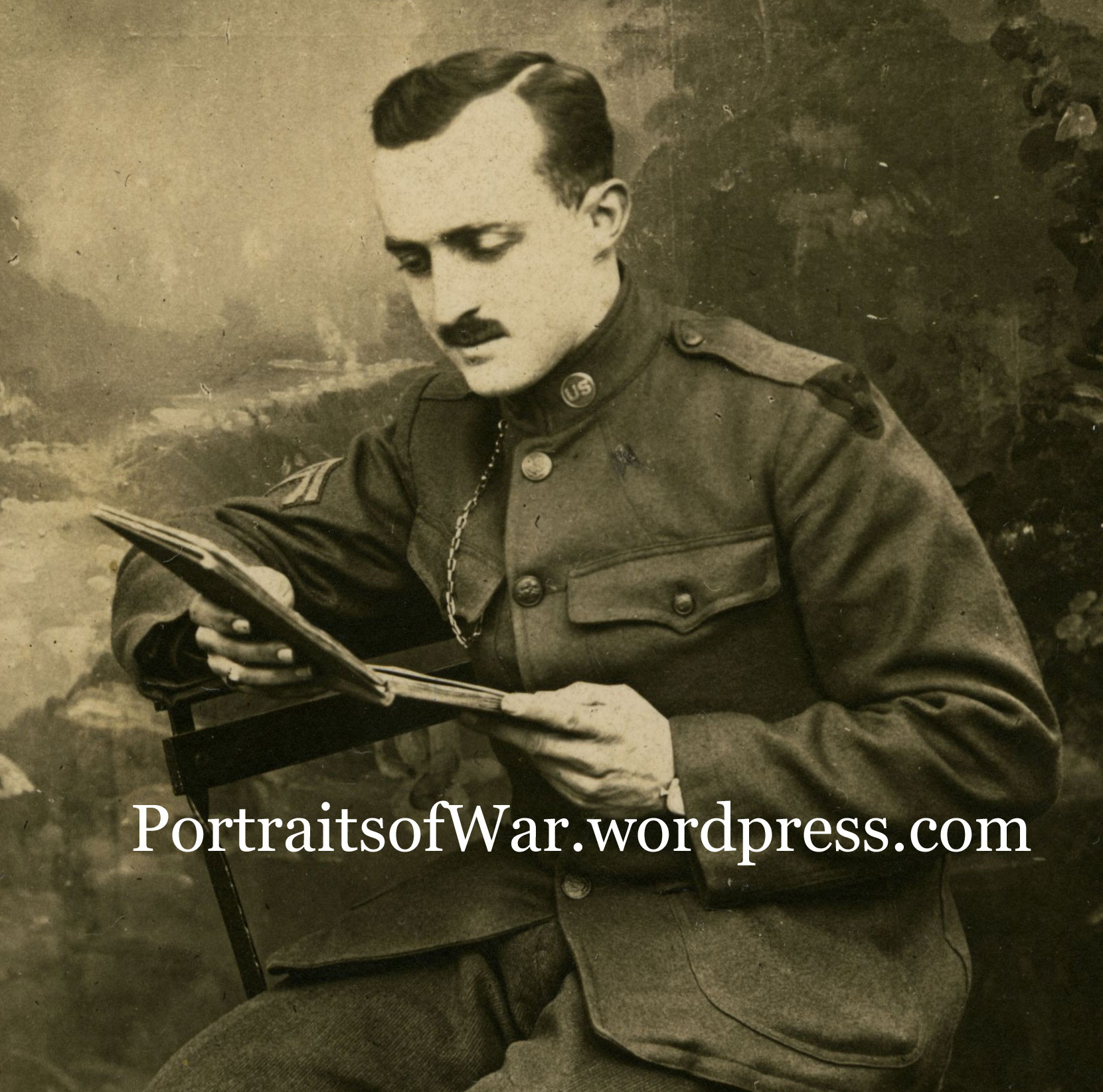
Harold Dannhorn Reads a Book in France
Corporal Dannhorn served in the HQ Company of the 343rd Infantry Regiment of the 86th Division while stationed in France before being switched over to the 256th Prisoner of War Escort Company #256 during the Occupation of Germany. Here he poses in a studio in Menton, France on February 20th, 1919.

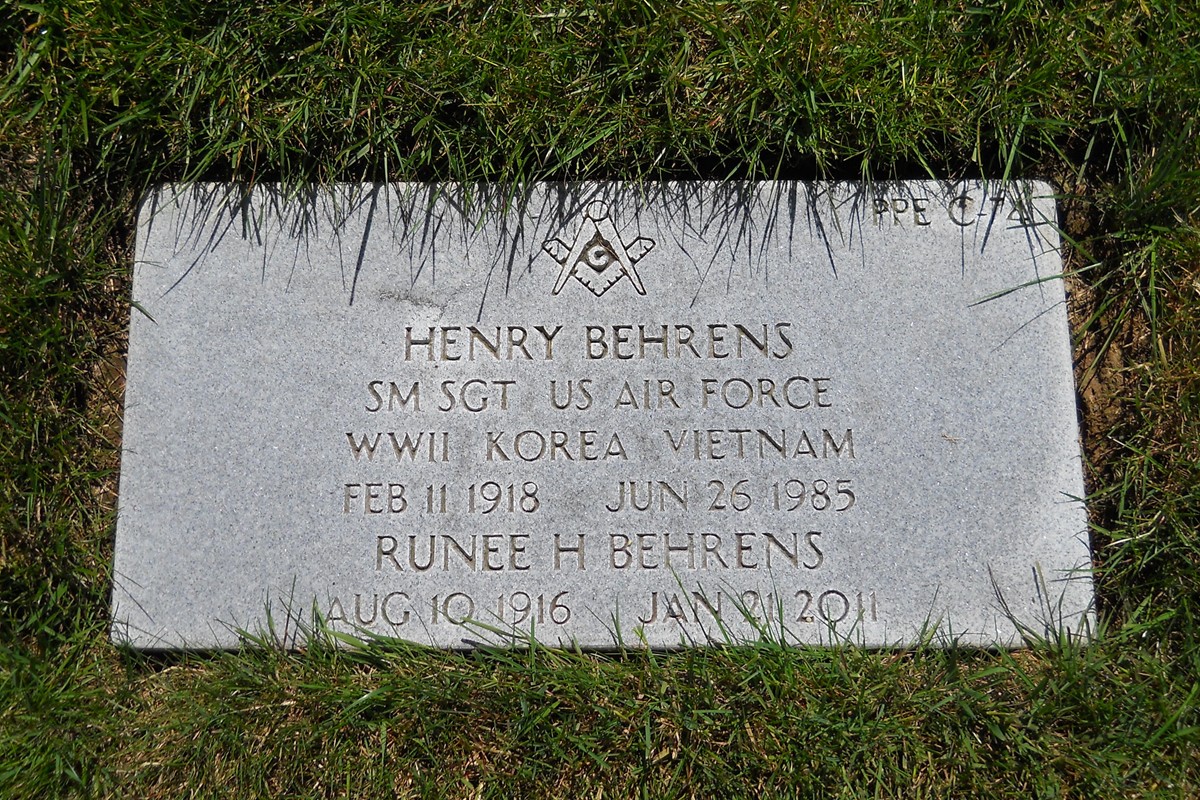
Veteran Gravestone Registration
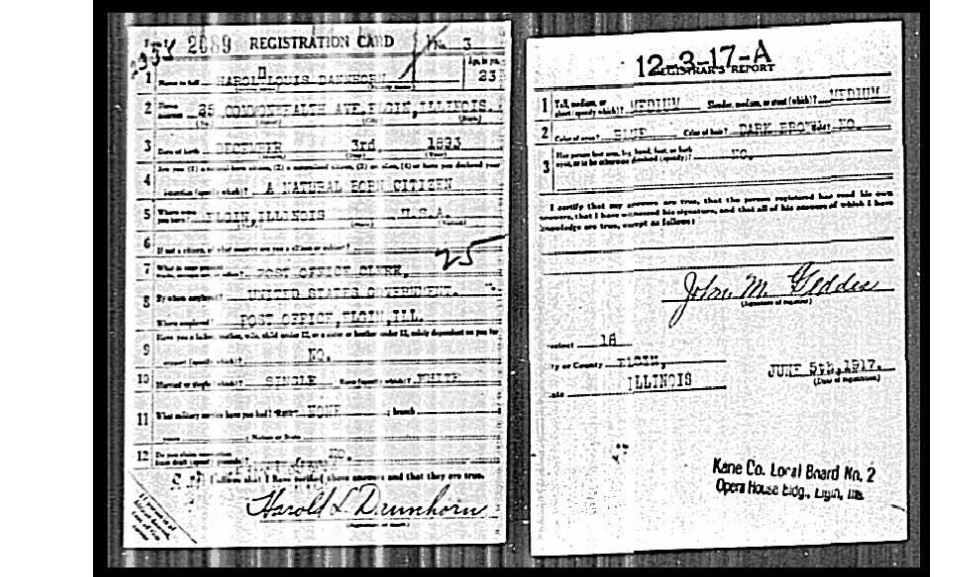
WWI Draft Card
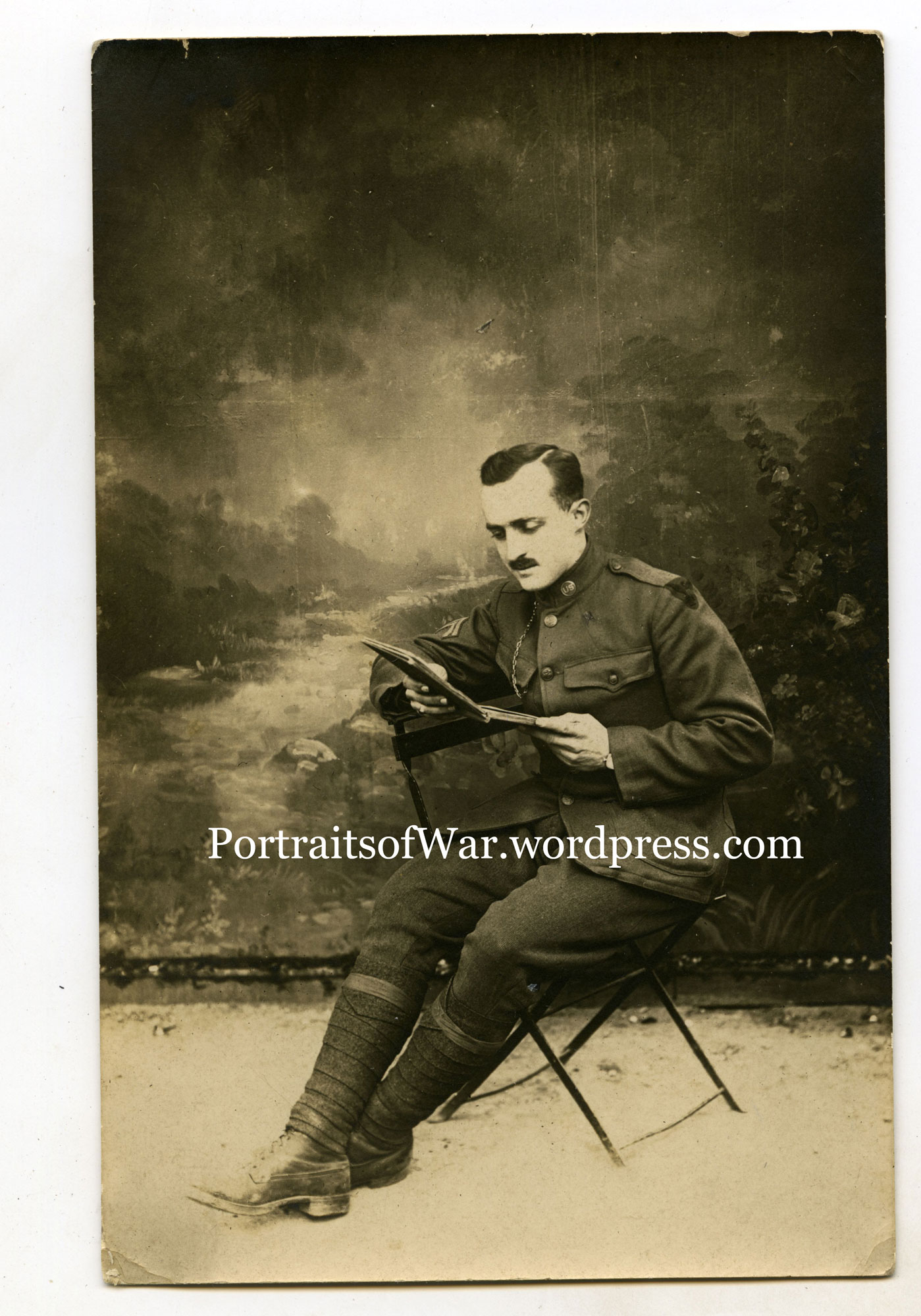
Uncropped RPPC


Charles L. Fox
Dog tags and identified material are easily collected by militaria enthusiasts due to the personal connections with names, families and units/divisions. Collecting dog tags is an easy way to feel a connection with the past; many dog tags were actually worn during combat and followed a soldier across the European continent. In this case I was able to pick up a cheap (less than $5) dog tag on eBay. A quick search for Charles L. Fox Brought up a smattering of possible leads that crisscrossed the country. Census records and marriages were of no help. I spent over an hour searching through military records for a man named Charles Fox born between 1885 and 1899 (a generally good search range for WWI veterans) and landed a solid hit. It’s not often that I identify a veteran through his/her serial number, but I was able to ID Charles L. Fox as having been born on December 14th, 1889 in Whitehouse, Ohio. He served with an ordnance supply unit in France during the war and was honorably discharged on July 26th, 1919. I was lucky to find both the veteran headstone marker card as well as the state veteran roll. A fun find, and another reason to invest in an ancestry.com account!

Serial Number 2895973

Charles Fox Headstone Card

Ohio WWI Veterans Book Entry
UPDATE: This Christmas card has been returned to the Son of Mr. Henry Behrens. He found this post while searching for information about his father online. I’m pleased to have returned yet-another WWII photo to it’s rightful place.
Followers of PortraitsofWar will know that I love to do in-depth research to ferret out the names and stories of WWI and WWII veterans through the photographs they left behind. In this case, I purchased an inexpensive World War II postcard on eBay with the hopes of doing some sleuthing to find the identity of the sender. I already have a huge backlog of material to post, but I figured I would add yet another to the collection.

A Pilot Christmas Card

The card was interesting, and had nice composition. These style cards were often sent home by veterans to family members back home. With this in mind, I flipped over the card to check the reverse. Bingo. A name and address. Figuring that he likely send the card home to a family member (and not to himself) I began a quick ancestry.com search for the name. John Behrens of Grand Isalnd, Nebraska. I pulled the 1930 census record for the Behrens family to see if there were any likely candidates for the sitter in the photo. My initial guess was the he was likely 20-25 years old.
 The address matched up on another record, so I’m 100% confident that this is the John Behrens named on the reverse of the postcard. John had two sons named Willie and Henry. Both were born in Germany and eventually emmigrated from Germany to the United States in the 1920s. I thoroughly researched both brothers and eventually found a reference to Henry having been in the air corps during WWII. His obituary also confirms that he was born in Eckenforde, Germany. It also sounds like he was a lifetime Air Force veteran.
Here’s his obituary:
Marin Independent Journal
Saturday, June 29, 1985
HENRY BEHRENS
A memorial service for Henry Behrens of Novato will be held at 1 p.m. Tuesday at Redwood Chapel Funeral Home in Novato.
Mr. Behrens died unexpectedly Wednesday at his residence. He was 67.
He was a native of Eckenforde, Germany. He spent 31 years in the U.S. Army and the Air Force. He retired from Hamilton Air Force Base in 1966.
His most recent job was office service manager for Mission Equity Insurance Co. in San Francisco.
He is survived by his wife, Runee Behrens of Novato; two sons, William H. Behrens of San Jose and John W. Behrens of Fairfield; a daughter, Linda P. Garrecht of Irvine; his mother, Alwine Behrens of Grand Island, Neb.; and three grandsons.
Inurnment will take place at 3 p.m. Tuesday during a graveside service at the San Francisco National Cemetery at the Presidio.
The family prefers memorial gifts to the American Heart Fund.
Wounded soldier photos are some of the hardest photos to find in the collecting field. Often times a collector will come across a photo of a veteran wearing a wound chevron, or occasionally a shot of a soldier with a cane. In this case, I was able to pick up a grouping of photos taken at a Paris photo studio showing an assortment of wounded vets who recently were treated at a local Paris hospital. They hobbled over to a studio on Christmas day of 1918 to have their photos taken. These shots were some of the most expensive I’ve ever purchased, but they were well worth the investment. This is the more subdued of the four photos, but took me a long time to research and I wanted to post it for the internet community.
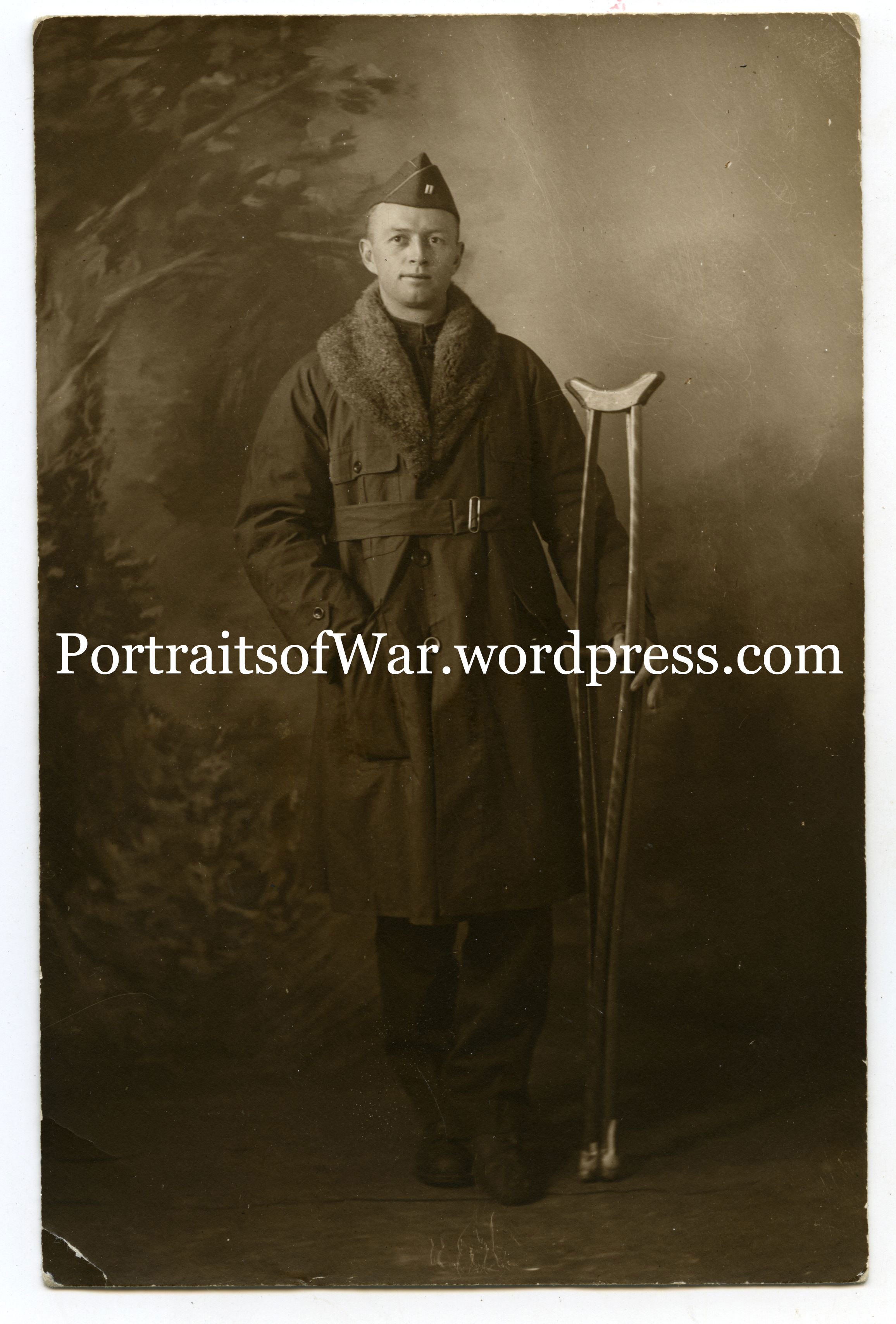
Albert E. Haan poses on Christmas Day 1918
I was tipped off by a Dutch friend of mine (thanks Rogier!) that his photo may be of a Dutch-American given his last name of Haan. Starting with the basic ancestry.com search of a name and hometown I was able to find a few bits of info. His name was Albert Haan and was born in 1893. I had to search a bit to find the census records for him, as they were listed under a misinterpreted/transcribed name of Hoan. Anyway it appears that Albert became an Army informant for the Veterans Association after the war. He is listed in a 1922 court case where he (and another veteran from my photo grouping) is listed as an informant. Anway, he is listed as being employed by the US Army in the 1920 Census and is shown as having a wife named Frances L and a daughter named Frances L. His daughter was only 2 months old at the time of the census. His wife appear to have been born around the turn of the century. He is listed as having been born in Holland in his earlier census entry, but mysteriously switched his place of birth to Michigan in the 1910 and 1920 census. He must’ve been able to hide his accent! (7/9/2023 Edit – after further research it appears that he was born in Grand Rapids, MI)
His Veterans Affairs death file lists the following:
| Name: | Albert Haan |
|---|---|
| Gender: | Male |
| Birth Date: | 12 Mar 1893 |
| Death Date: | 30 Nov 1986 |
| SSN: | 234014340 |
| Enlistment Date 1: | 13 May 1910 |
| Release Date 1: | 12 Mar 1914 |
| Enlistment Date 2: | 15 Jul 1917 |
| Release Date 2: | 24 May 1920 |
Sounds like he served early in 1910 and was released in 1914. He likely served with the Michigan National Guard at this point. He re-enlisted in 1917 and served until may of 1920 with the Army.
He had one daughter named Frances who was born in Washington D.C. in 1920. Albert was shipped back to the States in 1919 and was busy rehabilitating at Walter Reed Hospital between 1919 and 1920. Sounds like he had at least one “special visit”. He also had a son named Carl in 1922 while living in Washington D.C.
At some point the family moved from Washington D.C. to West Virgina where they apparently spent the rest of their lives. The daughter, Frances Louise Haan appears in the 1939 and 1940 University of West Virginia yearbooks and can be seen below. Quite the stunner for 1940!

1940 UWV Morgantown
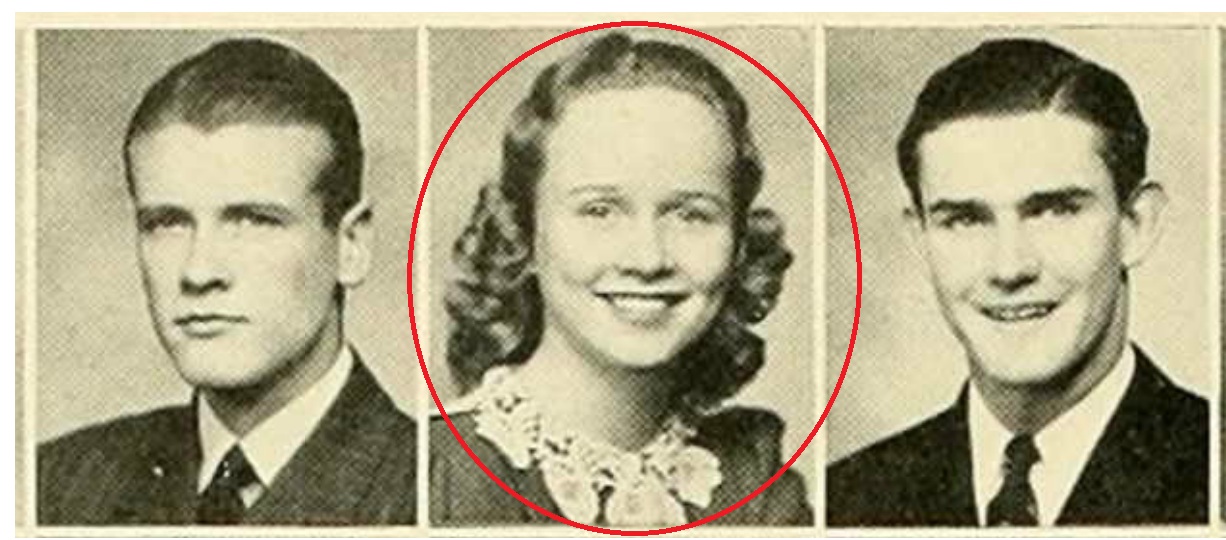
Frances Haan 1939

Frances Haan 1940
I wonder if Frances is still alive? I can’t find any info on her past 1941. Ancestry.com has no information regarding her marriage or future life. She may still be alive and may be able to shed some light onto her father’s war service. I hope a family member finds this post!
Carl J Haan is harder to track down. I do know he enlisted for the US Army in July of 1942. He was surprisingly listed as an actor as a profession! This is the first time I’ve seen this!
| Name: | Carl J Haan |
|---|---|
| Birth Year: | 1922 |
| Race: | White, citizen (White) |
| Nativity State or Country: | Dist of Columbia |
| State of Residence: | West Virginia |
| County or City: | Kanawha |
| Enlistment Date: | 1 Jul 1942 |
| Enlistment State: | Kentucky |
| Enlistment City: | Fort Thomas Newport |
| Branch: | Branch Immaterial – Warrant Officers, USA |
| Branch Code: | Branch Immaterial – Warrant Officers, USA |
| Grade: | Private |
| Grade Code: | Private |
| Term of Enlistment: | Enlistment for the duration of the War or other emergency, plus six months, subject to the discretion of the President or otherwise according to law |
| Component: | Army of the United States – includes the following: Voluntary enlistments effective December 8, 1941 and thereafter; One year enlistments of National Guardsman whose State enlistment expires while in the Federal Service; Officers appointed in the Army of |
| Source: | Civil Life |
| Education: | 2 years of college |
| Civil Occupation: | Actors and actresses |
| Marital Status: | Single, without dependents |
| Height: | 70 |
| Weight: | 168 |
Amazingly he served in the US Army Air Force in WWII, Korea, and Vietnam! Quite the lineage! This family continues to surprise me. Sadly he passed away on March 22nd, 2000 and is buried in Cameron Memory Gardens in Cameron, MO. His wife Eleanor passed away in 2002.
| Name: | Carl J. Haan | |
|---|---|---|
| SSN: | 232-24-6283 | |
| Last Residence: | 64469 Maysville, Dekalb, Missouri, United States of America | |
| Born: | 4 Apr 1922 | |
| Died: | 22 Mar 2000 | |
| State (Year) SSN issued: | North Carolina or West Virginia (Before 1951) | |

Chaplain Roberts Williams in Germany
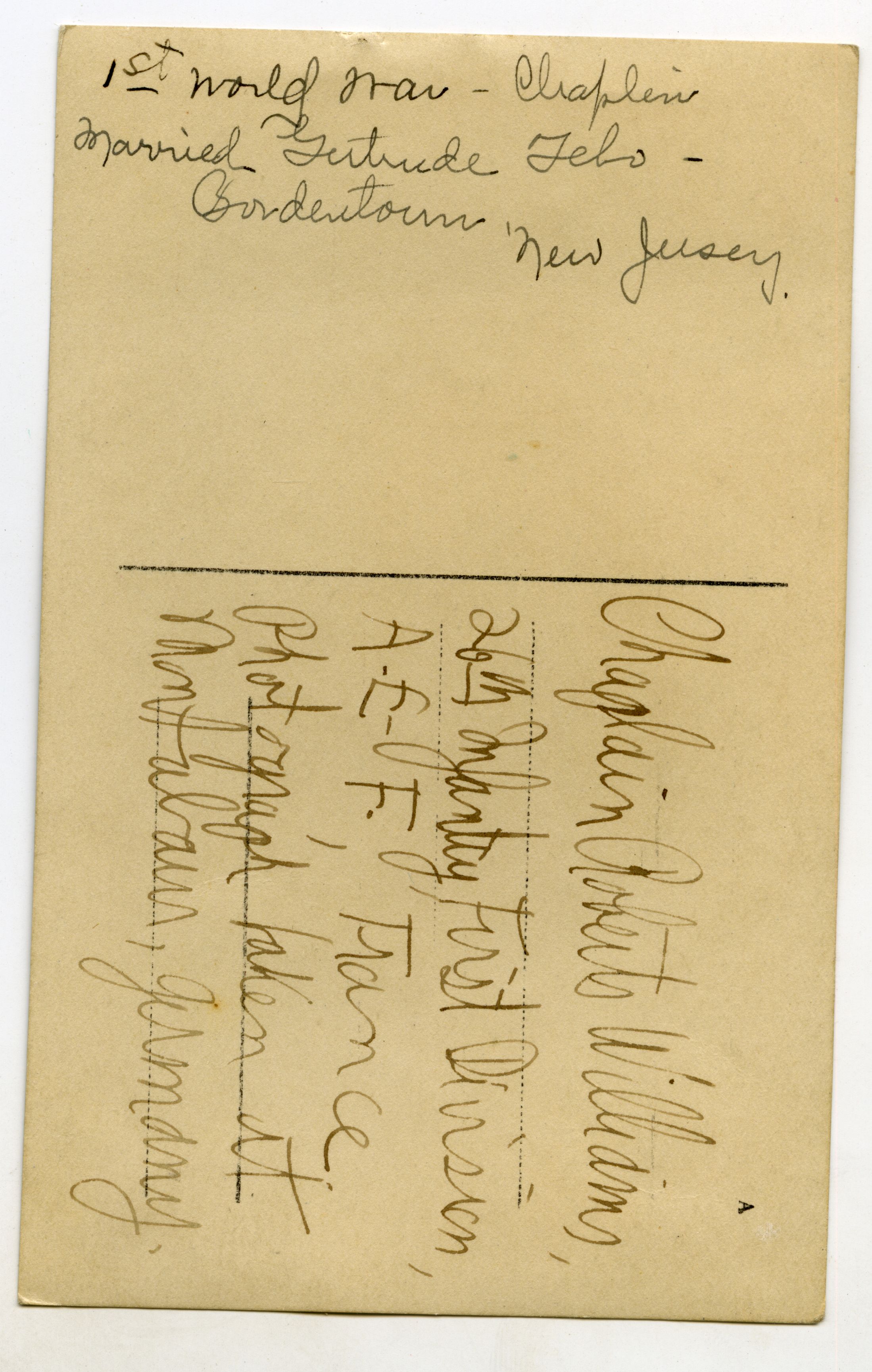
Obverse Side
Another incredible WWI portrait photo has come across my desk via my dedicated searching regime on eBay. I bought this shot with the knowledge that the sitter was a chaplain. Chaplain shots are far and few between, and to have an ink identified example is very uncommon. In this case I was able to ply the internet and dig up some wonderful information on our sitter. Chaplain(Protestant) Roberts Williams originally enlisted as a private in the 17th Engineers but was eventually hooked up with the 26th Infantry Regiment of the 1st Division. He was awarded the Silver Star and was recommended for the Distinguished Service Crossed by his commander, Lt. Col. Theodore Roosevelt, Jr. He was gassed and the wound chevron can be seen on his right sleeve in the above image.
Here’s a quick transcription of his war service courtesy of a post-war Princeton Alumni newsletter. Interestingly, he graduated the same year as his commander, Teddy Roosevelt Jr.
“Chaplain Robert Williams, chaplain of the 26th Infantry of the First Division, has returned home, 55 Park Ave., Wilkes-Barre, Pa., to enjoy a brief leave of absence after twenty-one months’ service in France. Mr. Williams enlisted as a private in the 17th Engineers and served ten months at St. Nazaire. This regiment was among those composed of railroad men, to be reviewed by King George in London. During May, 1918, Private Williams was commissioned a chaplain. Immediately thereafter he was sent to the trenches where with the First Division he spent fifty-four days in the fighting of the Picardy front, culminating in the capture of Cantigny, the first planned American offensive. Withdrawn for a rest, his unit was unexpectedly sent into the fray again at the pivot of Marchal Foch’s counter attack northeast towards Soissons to cut the Soissons Chateau-Thierry railroad, which supplied the Germans in the Marne Salient. During this battle Chaplain Williams was gassed and here it was that his commander cited him for bravery and recommended that the DSC be conferred upon him. Chaplain Williams also spent three months in Germany, his unit being engaged in outpost duty twenty miles from the Rhine within Hunland. He says the Germans are very hard up for raw materials and that soap is worth more than money.”


I was also able to find a transcription of a letter Chaplain Williams penned to the family of a soldier killed in action:
“His battalion had gone over the top that morning, across a great
National Highway, the Paris-Soissons Road. The German machine-gun fire
was extremely severe, and we suffered heavily.
“A detail of four soldiers was given me by Major Legge to bury Captain
Richards and Lieutenant Boone. We buried your husband where he fell
and marked the grave with a cross upon which his identification tag was
placed. His personal effects, as I found them, were removed, and later
placed in his bedding-roll. We endeavored to remove his ring, but found it
impossible to do so, so we buried it with him. Records of the location of
the grave were sent to the Adjunct General, American Expeditionary Forces,
and to the Graves Registration Service; so his grave can be readily found after the war is over.
“It was remarkable what a peaceful and spiritual expression was upon
the face of Captain Richards. It did not seem as if he had suffered greatly,
and we could fancy that he seemed well pleased to pay the supreme sacrifice
upon the field of battle.
“I have heard among the enlisted men and officers who knew your
husband many, many remarks as to Captain Richard’s ouiet thoughtfulness.
his constant care for those under his command, his unfailing cheer, and his
courage, and efficiency as a soldier and leader of men. His memory lives
with us, and inspires us to emulate his devoted service to his Country.
“We ask that you will accept our sincere sympathy for the burden of
grief you bear; but we trust that your pride and joy in your husband’s
noble life and glorious death will enable you to bear his loss with courage.
“May God strengthen and help you, and may the promise of our
Savior comfort you with the thought of meeting your husband in a better
world.
Sincerely yours,
Robert Williams,
Chaplain (Protestant), 26th Infantry.”
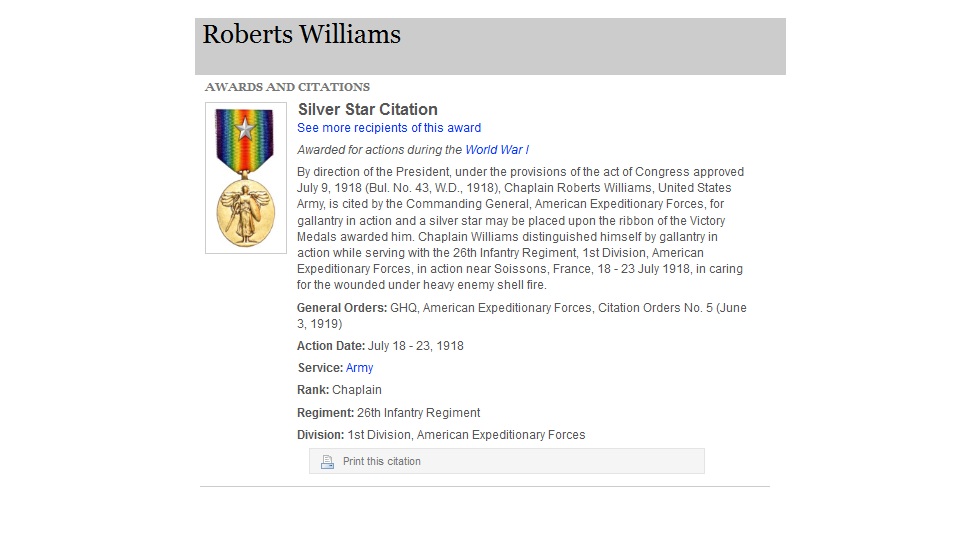
Williams’ Silver Star Citation
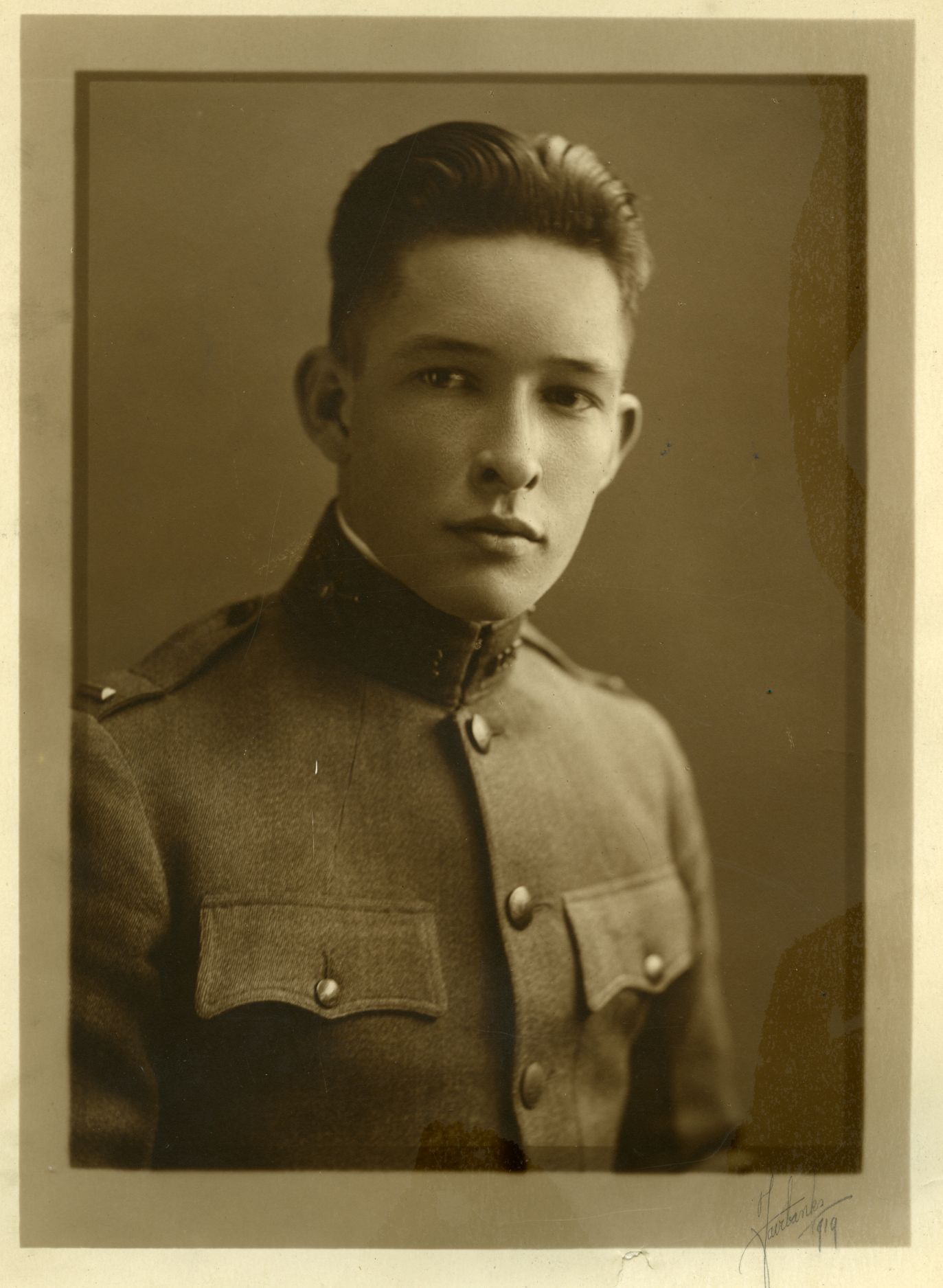
Robert H. Slocum in 1919
Although Lt. Robert H. Slocum was born and raised in Syracuse, NY, he resided in Burlington(VT) for the majority of his life. A recent photo discovery by a friend of mine at a local flea market has provided a wealth of research potential. The photo clearly depicts a young Lieutenant sporting a Coastal Artillery Corps insignia on his collar. The name Robert H. Slocum was inked on the reverse of the image. I wasn’t able to find a wartime record of Lt. Slocum in the Vermont files, but was able to find his draft card from Syracuse. He was a student at the time at Syracuse University and was originally from the area.
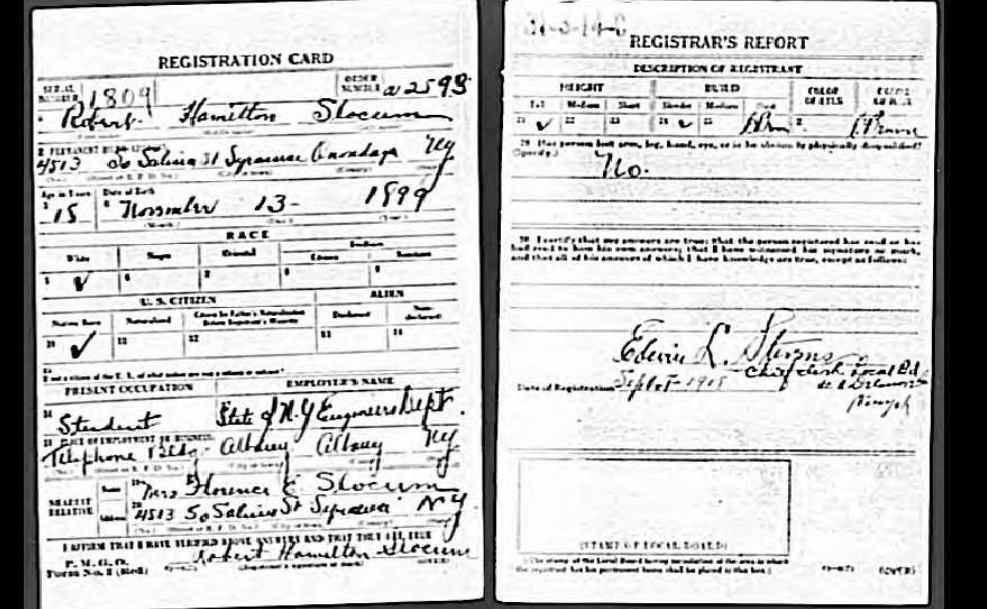
Draft Card
Slocum was likely a Lieutenant with the 59th Coastal Artillery, a Syracuse/Upstate New York based unit. This is only speculation, but the likelyhood is strong.


Lt. Slocum’s grave in Syracuse
Mr. Slocum lived for nearly six decades at his home on 21 Alfred Street in the South End of Burlington. I was able to purchase his photo albums from the 1930s which include many interesting images of the Burlington lakefront and Southend area. His son recently passed and his estate was broken up, ending up at a local flea market. Luckily I was able to keep most of the early albums together.
Post-WWI Residence of Lt. Slocum – 21 Alfred Street, Burlington, VT
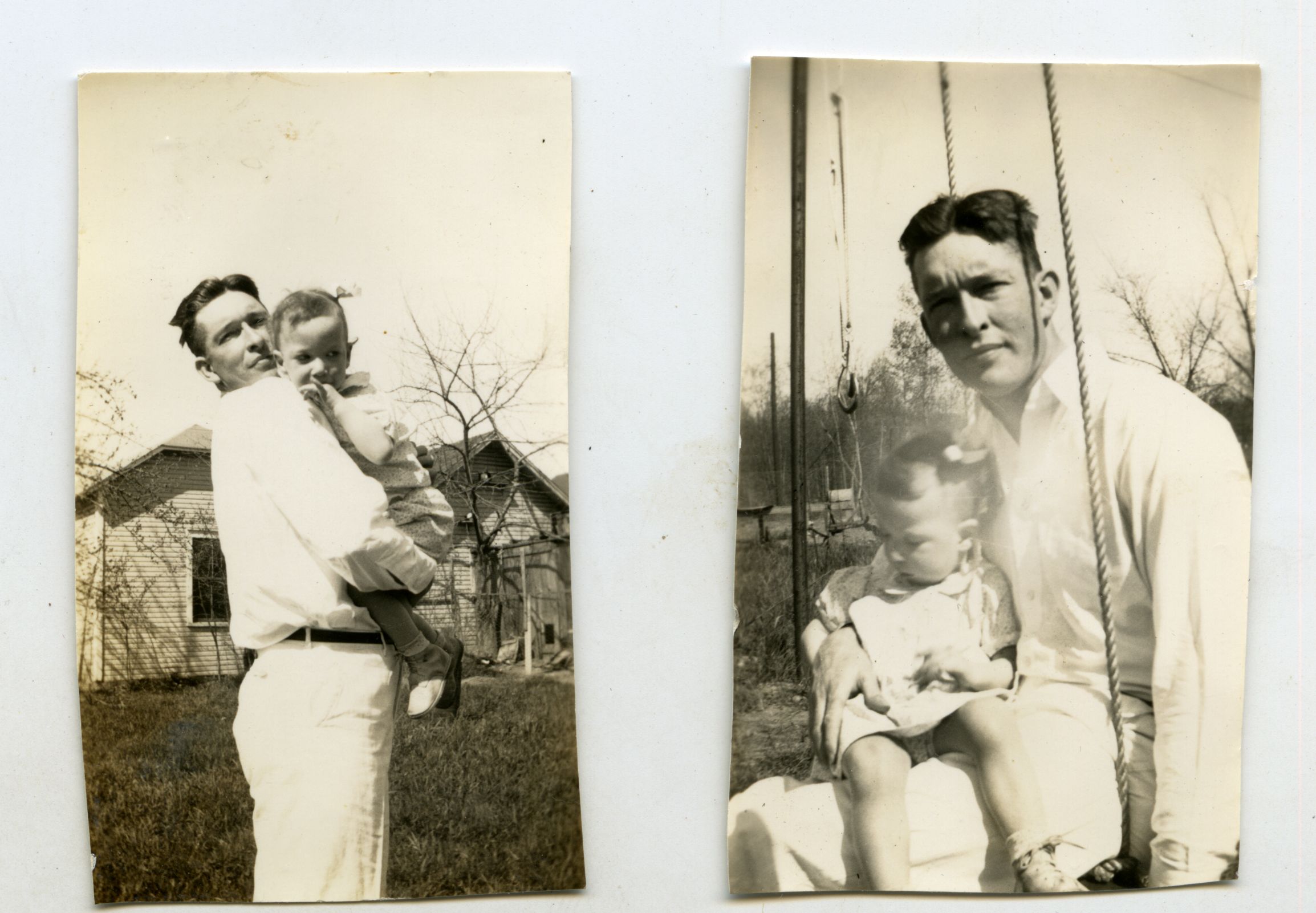
Lt. Slocum posed with daughter in May of 1935
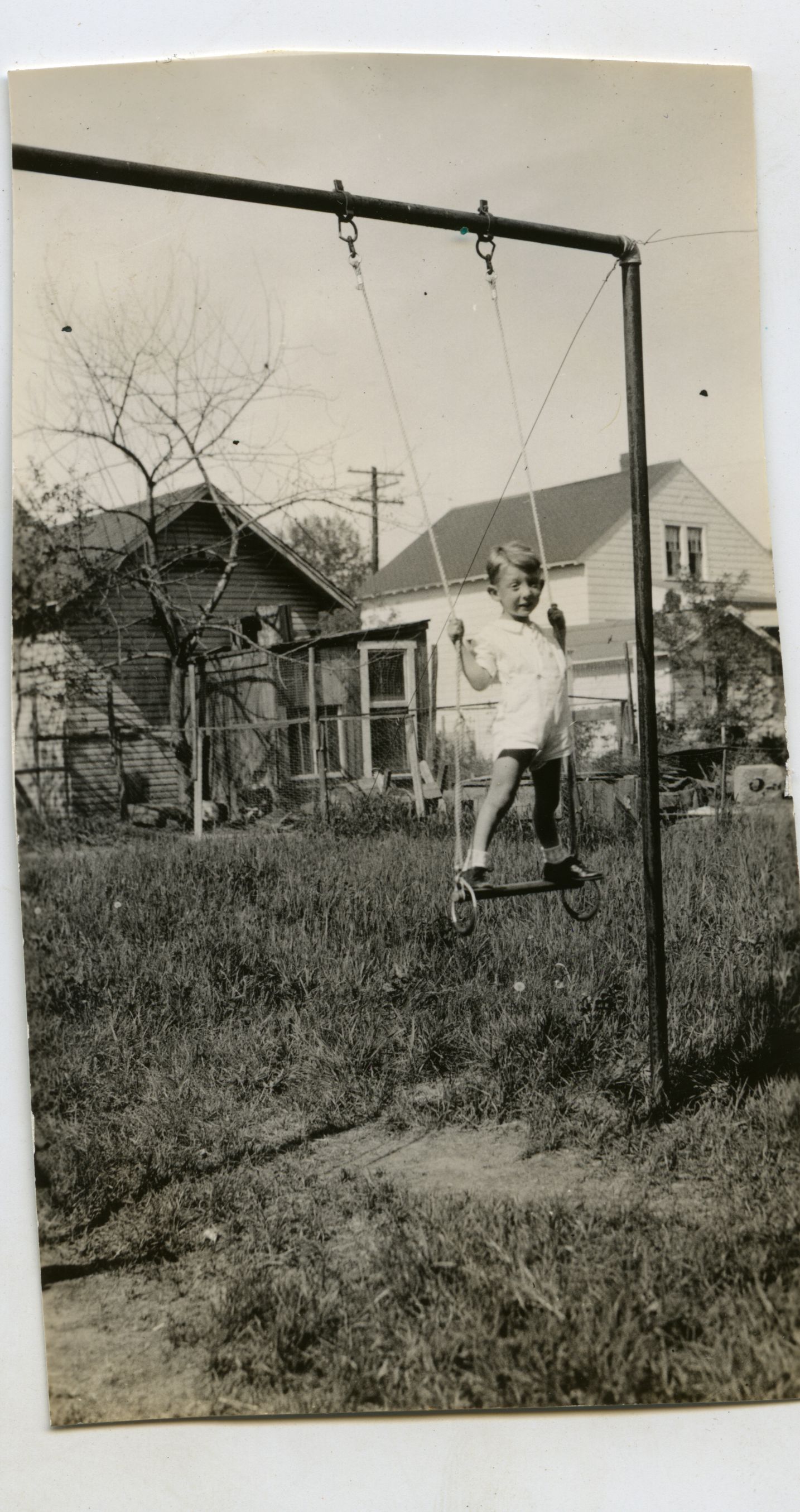
Little Bobby playing in a local Burlington playground (note the chicken coop)

Cruising the mean streets of Burlington in 1936
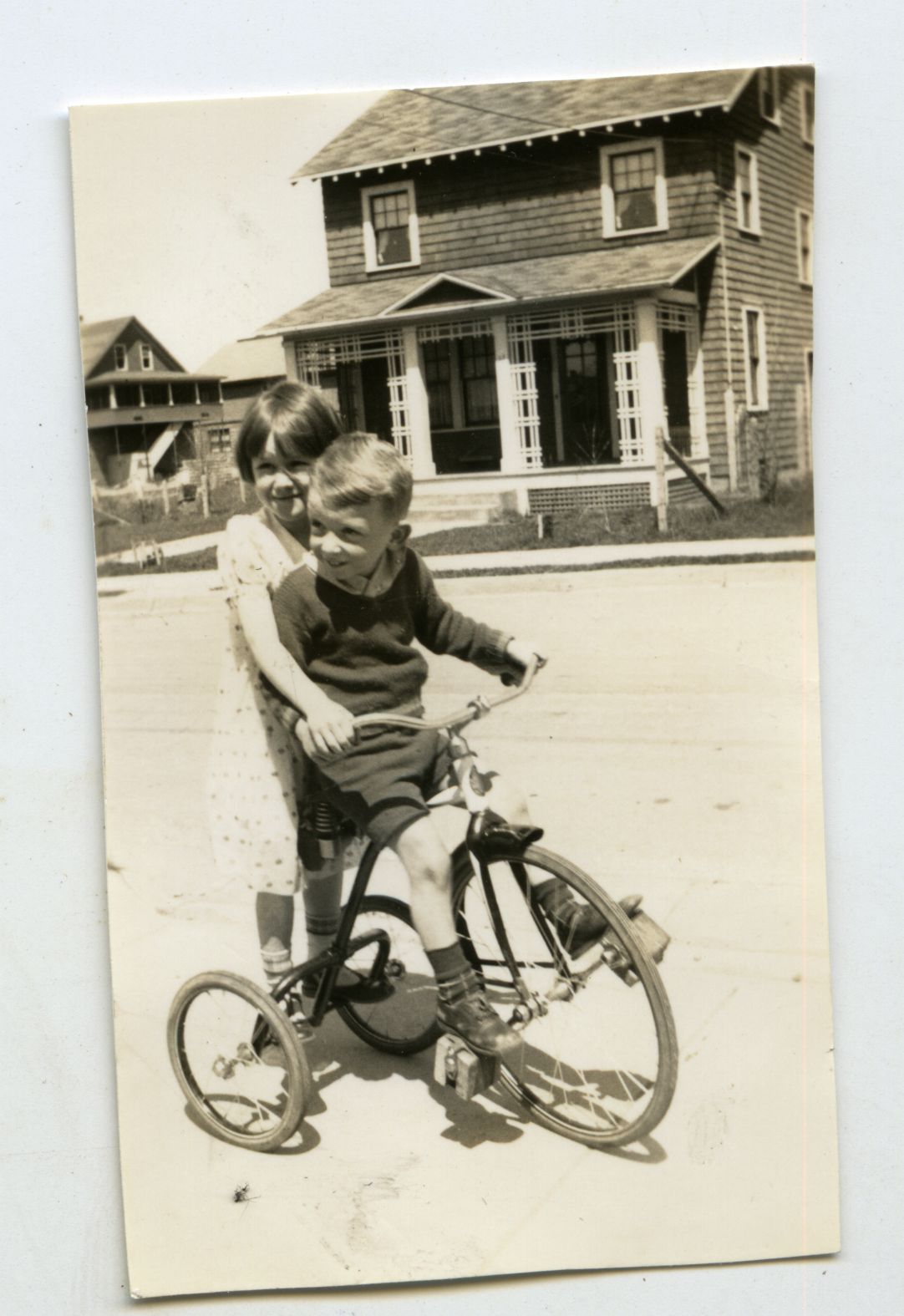
Little Bobby on a tricycle (note the decorative porch treatment in the background)

Background house in 2012

Lt. Slocum and family at the beach. Possibly North Beach
It would seem that Lt. Slocum lived a long and happy life. I found a 2012 obituary for his son which makes reference to Robert Slocum Jr, who passed away in 1993.
A 2012 obituary for Robert Slocum III
ROBERT H. SLOCUM III – BURLINGTON – On Nov. 15, 2012, Robert H. Slocum III died peacefully in his cherished home, following a brief illness. Born on May 31, 1931, he was the son of Robert H. Slocum II and Frances Slocum. Bob graduated from Burlington High School in the Class of 1949 and the Middlebury College, Class of 1954. For many years he was an elementary school teacher in Deep River, Conn. Music was an important part of his life and he hoped to instill a love of music in his students. For many years he would write and produce a musical for his students to perform. Upon his retirement, he returned to Burlington to live with his father. Both men enjoyed the company of their cat named Scooter who seemed to know his job was to make them happy. When Scooter died, Bob adopted a stray cat and most recently one from the humane society. Bob looked forward to his high school class reunions each summer and, of course, the Red Sox games. He is survived by his sister, Cynthia Slocum of Pittsford; and his cousins, Joan and Phil Hoff and their children, Susan Haynes, Dagny Hoff, Andrea MacNaughton and Gretchen Hoff. The family is most grateful to Philomena Gicheru for her friendship and caring assistance provided to Bob these past thirteen years. There will be a gathering of remembrance on Nov. 26, 2012, at 10:30 am at 35 Hillcrest Rd., Burlington.
 ‘
‘
 Portraits of War