
POW Delivery
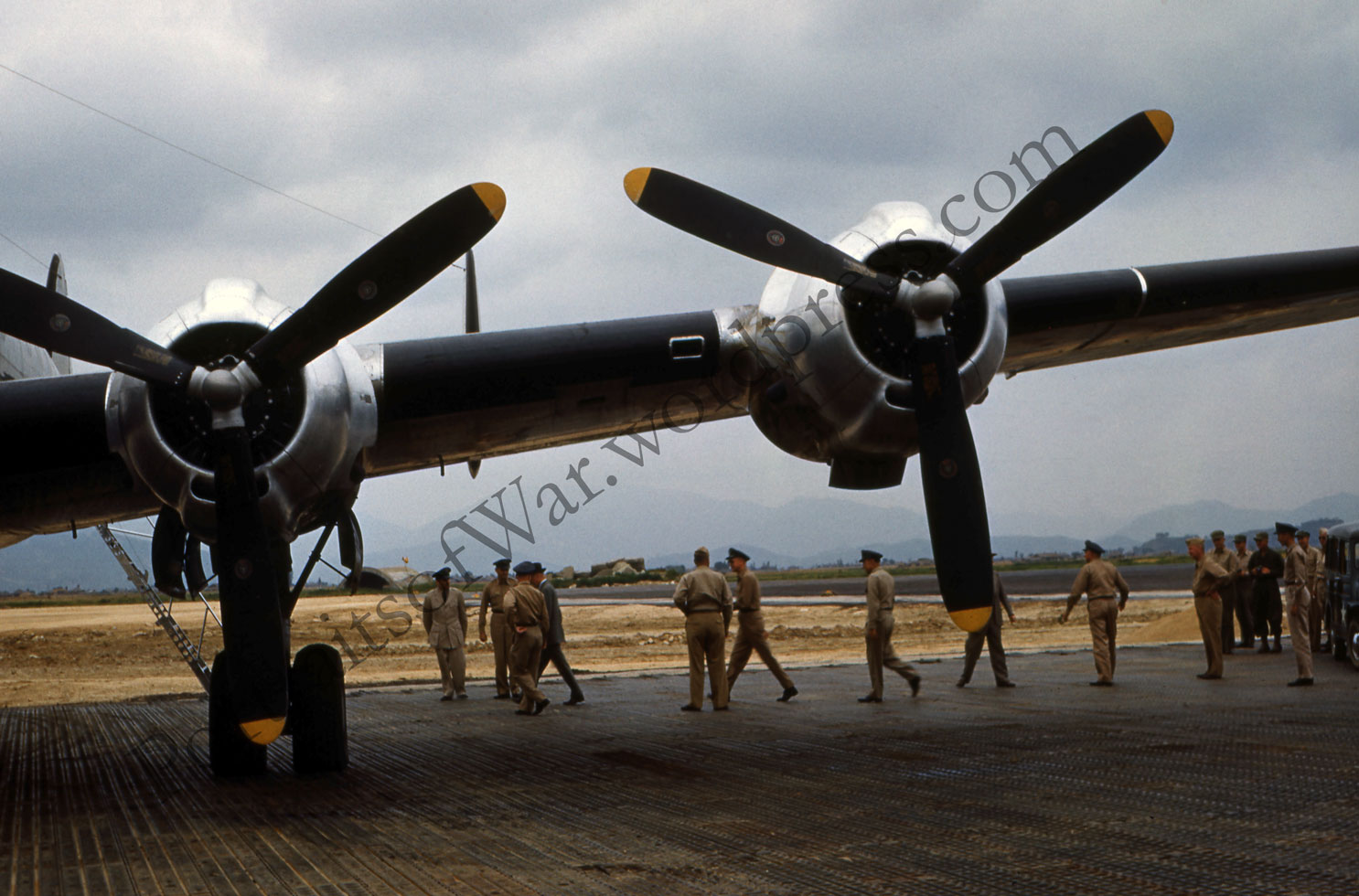
Wonsan, Korea – October 1950
POWs are delivered to the safety of their USMC Marine captors.
Original Amateur Color Slide – Dated October 1950
POW Delivery
Wonsan, Korea – October 1950
POWs are delivered to the safety of their USMC Marine captors.
Original Amateur Color Slide – Dated October 1950
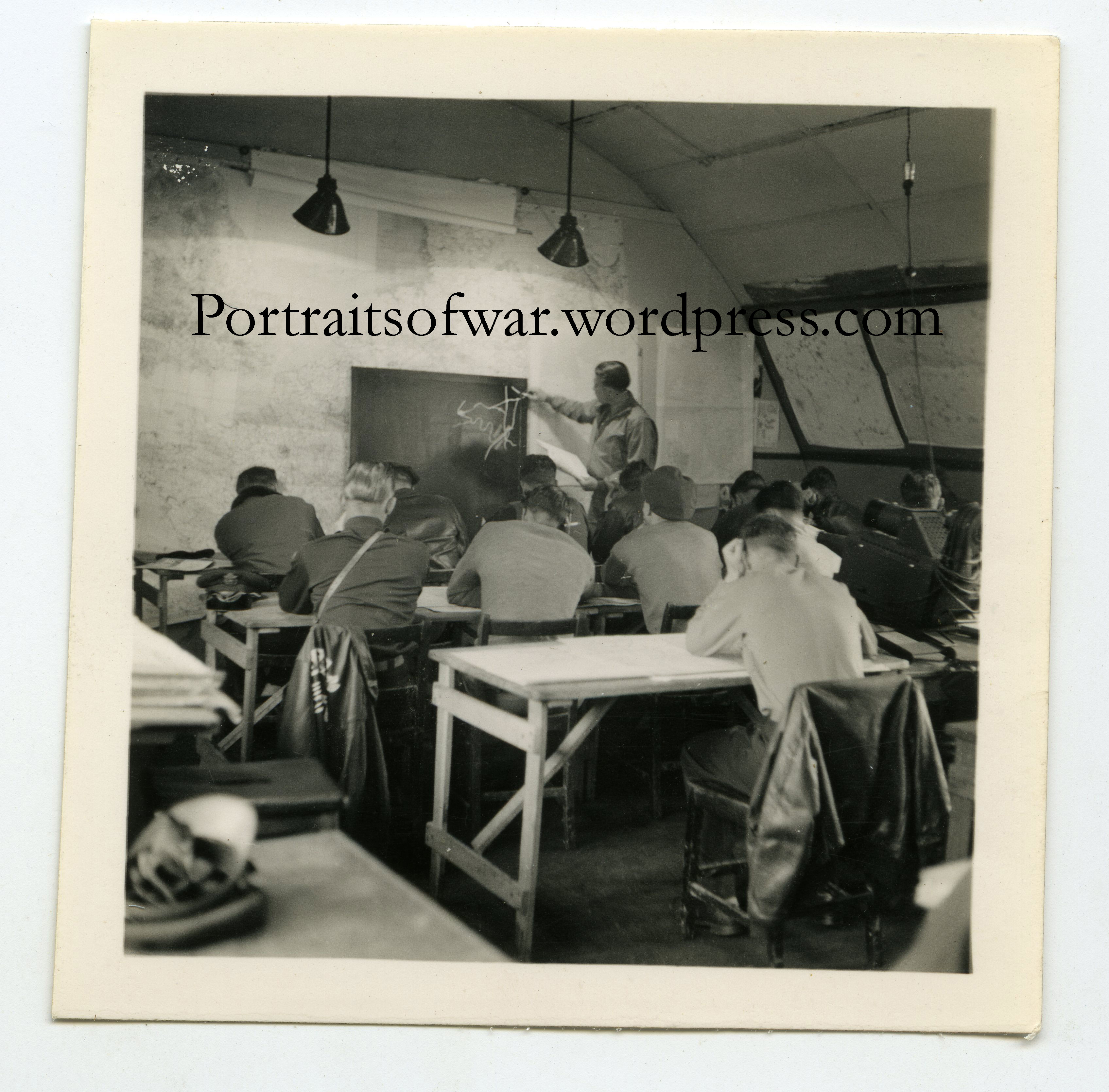
The tension in the air is almost palpable. Painted bomber jackets, crusher hats, and wafting palls of smoke all set the scene. A basic map is being chalked on the board, while pilots and navigators take note.
Today’s photo post is a real head-scratcher! I purchased the image thinking it was a nice studio portrait of a 32nd Division officer, which is evident from the SSI patch of the red arrow with a line through it. When the photo arrived I noticed instantly that the officer was wearing the collar insignia of the 103rd Infantry Regiment of the 26th Division. Causal readers of this blog will know that I actively seek out 26th Division photos due to my New Englander roots.

32nd Division or 26th?
Back Reads:
Selters Germany
12 January 1919
From Captain
Guy Swett (Hard to read writing)
Co. H 127th U.S Inf
32nd Div
“Army of Occupation”
Sent to a Miss Flora Murch
South Paris, ME USA
I am assuming the fellow was originally from the South Paris area in Maine, which would point towards a Yankee Division identification. The 32nd Division was made up of guys from the Michigan area. Looking at his other insignia also may point to his unit identity. Is that a DSC ribbon on his chest? It’s hard to tell, but it possibly may help in identifying the last name and original unit.
Any help from readers would be greatly appreciated!


Special thanks to our friends over at Soldier’s Mail for this wonderful interpretation! Don’t forget to check out their website for a super collection of WWII related information.
“After the end of hostilities with the signing of the Armistice, inducements were offered to encourage veteran combat troops to extend their enlistments and remain with the Army of Occupation in Europe rather than returning directly home on the Bridge of Ships. (Sam Avery speaks of these inducements in this letter: http://worldwar1letters.wordpress.com/2010/01/13/sarrey-france-1131919/)
After the Armistice, the 26th Division was in such bad shape from combat losses that it was assigned to the rear rather than the Army of Occupation. However, a number of its members chose to extend their deployments and were reassigned to different units in other Divisions stationed in Germany.
The officer in this photo clearly originated with the 103rd Infantry as indicated by the Regimental device on his collar. However, he is also apparently a newly-minted Captain in the 32nd Division as indicated by his sporting of the double 1st Lt bars on his shoulder along with the 32nd Division shoulder patch. I believe he was originally a 1st Lt in the 103rd Infantry, and then accepted a promotion in rank to extend his service in Army of Occupation with the 32nd Division.
Based on the writing on the reverse of this photo card, the 127th was one of the four infantry regiments in the 32nd. This man’s rank as Captain also indicates he would have been appointed the Company commander.”
Thanks again to Soldier’s Mail!
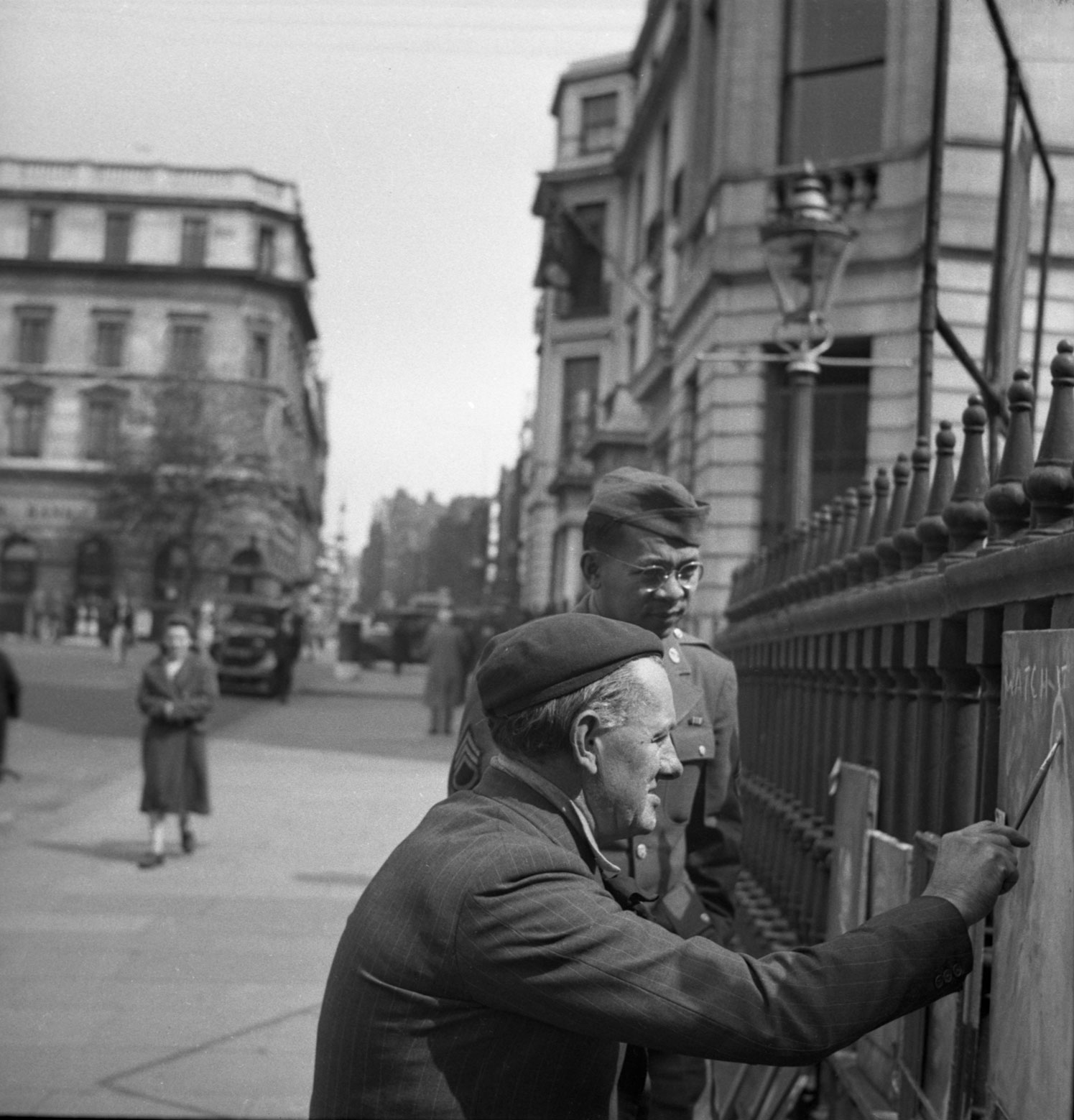
Alva Alegre took every opportunity to shoot in and around London while on pass. His images capture wartime London as seen in 1944, at a time when the Luftwaffe was still a real threat to the civilian population. Please enjoy the view through Alva’s lens as he travels throughout the city of London!
Alva and Muse


The Royal Arcade


Close Up View of Sign


Members of the 12th Veterinarian Hospital
 Straight from the bowels of a poorly listed eBay auction comes this tantalizing pair of WWI photographs. At first glance the images seem to contain little information to help aide in their historical dissection, but upon further sleuthing I found some clues to their identification. After scanning the first image on my super-duper Epson V700 scanner (awesome BTW), I zoomed in on the wagon using Photoshop. The name VET HOSP 12 can be faintly seen between the wagon wheels. A quick google search yielded a website dedicated to the 12th Veterinarian Hospital, which dealt with the care of horses during the Occupation period. I looks like the hospital was started in late December of 1918, and continued to service 3rd Army horses for the bulk of the Occupation.
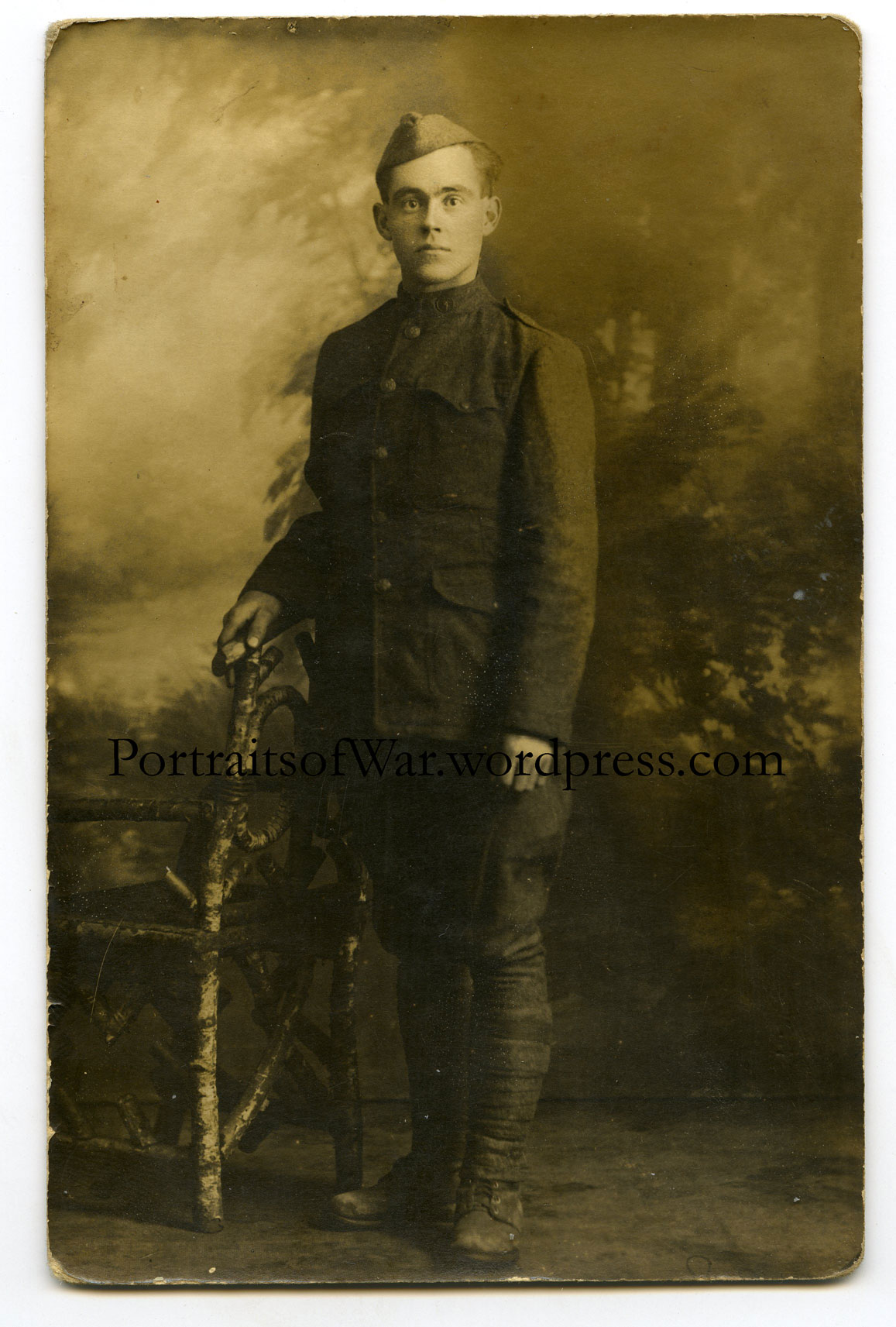
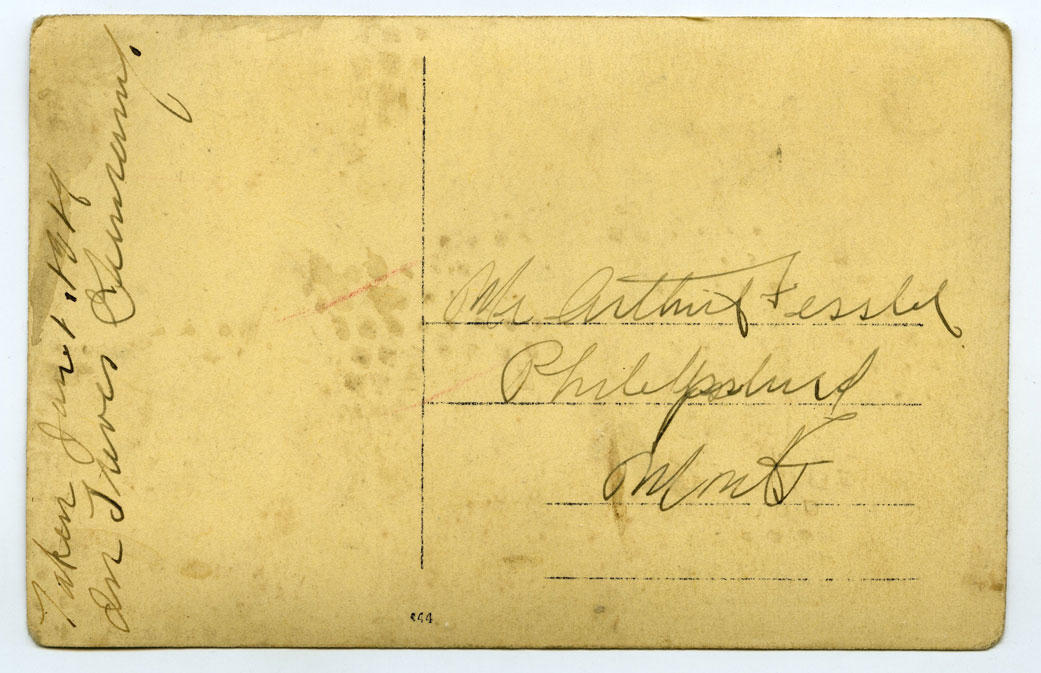
The obverse of the second RPPC shows a date and location of January 1st 1919 in Treves Germany made out to a Mr.Arthur Fessler (hard to make out the last letter) in Philadelphia, PA. The card is a German postcard paper, and the style of chair is one I see almost exclusively used in German portrait studios of the period. The young doughboy is not wearing a shoulder sleeve insignia (aka Patch) but I assume he soon received one, as the first photo shows the patch in wear.
Interested in learning more about the 12th Veterinarian Hospital? Check out this site:
Or check out the U.S. Army Veterinarian Corps Historical Preservation Group Facebook page:
Posing in a German Studio

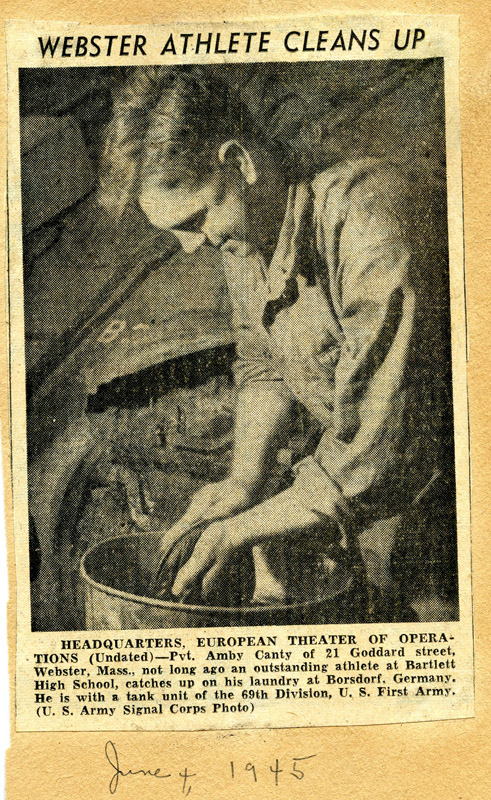
Ambrose Canty in 1945
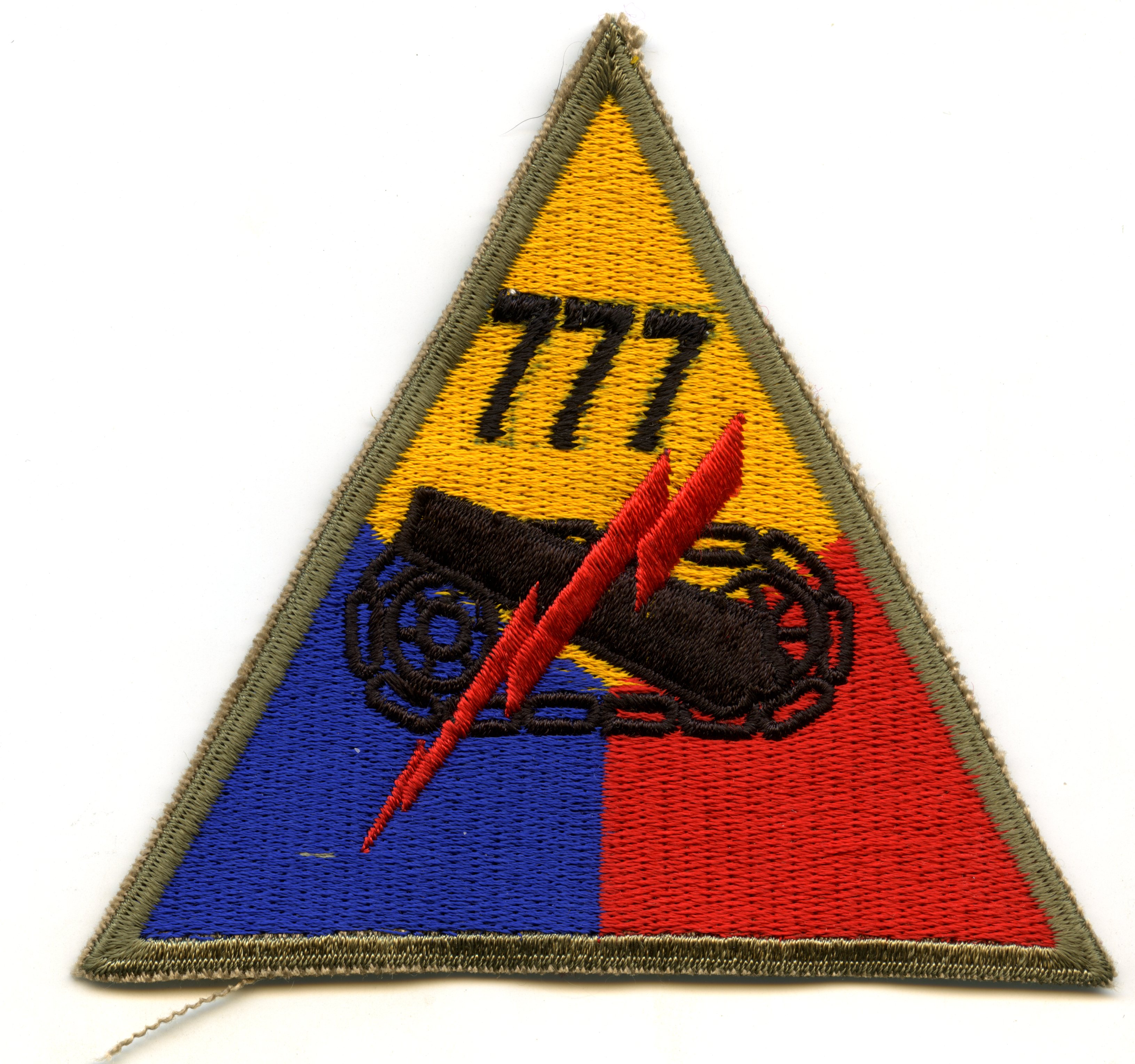
Reproduction 777th TB Patch
More to come………….
As I’ve mentioned before, one of my favorite areas of collecting is the mascot photo. Almost every unit had a mascot; commonly a dog or puppy, or sometimes a woebegone French or Belgian child. In this case, a young boy poses in a well-tailored uniform as the mascot for the 31st Engineer Regiment. What a stellar find!


August 25th, 1944,
Glenn Miller poses with some members of the 388th Bomb Group. Only a few months later Miller went missing during a flight over the English Channel,. spurring 70 years of mystery and intrigue. His death is still an unknown, although many suggest that he was in fact a German spy. The second image shows the crowd during the concert – snapped by Alegre from the front of the stage.

Some of Glenn’s best known hits are Moonlight Serenade, Chattanooga Choo Choo, A String of Pearls, Little Brown Jug and Tuxedo Junction. Many of these songs are likely lost on my generation, but will be familiar to many of the readers of this blog. Please check out the links listed below for some vintage Glenn Miller footage!

Click for larger View

Click for larger view

Click for larger view

Alva Alegre had an uncanny ability to capture the subtle beauty of his female subjects. Here are some superlative examples which capture the personalities of the women portrayed.

Platinum Blonde Beauty
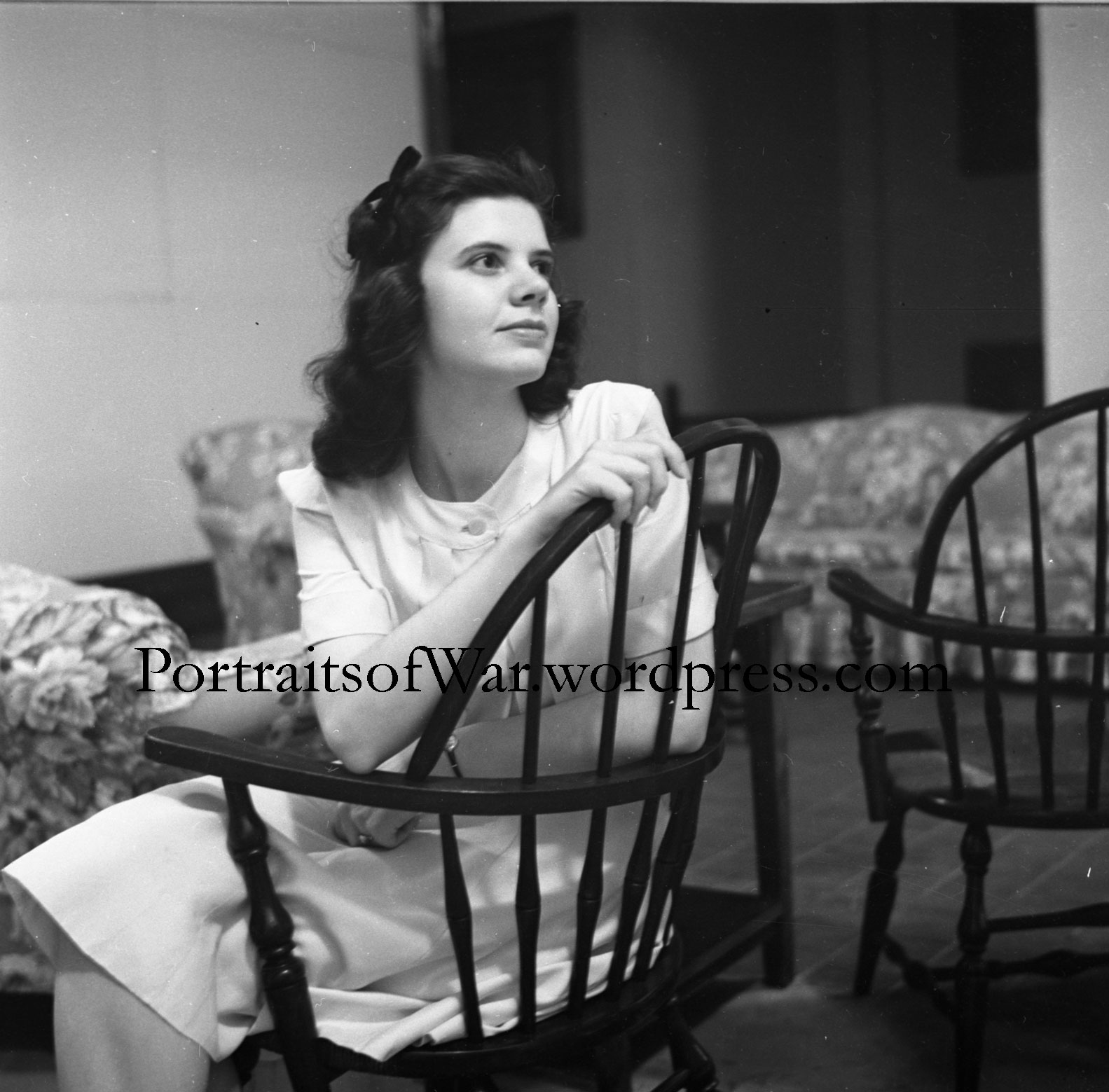


Fire Hazard

Color at Knettishall

Work Horses Plow a Field

Windswept Nurse

Alva spins a spit!
Seated Pose

A Barracks Fistfight

 Portraits of War