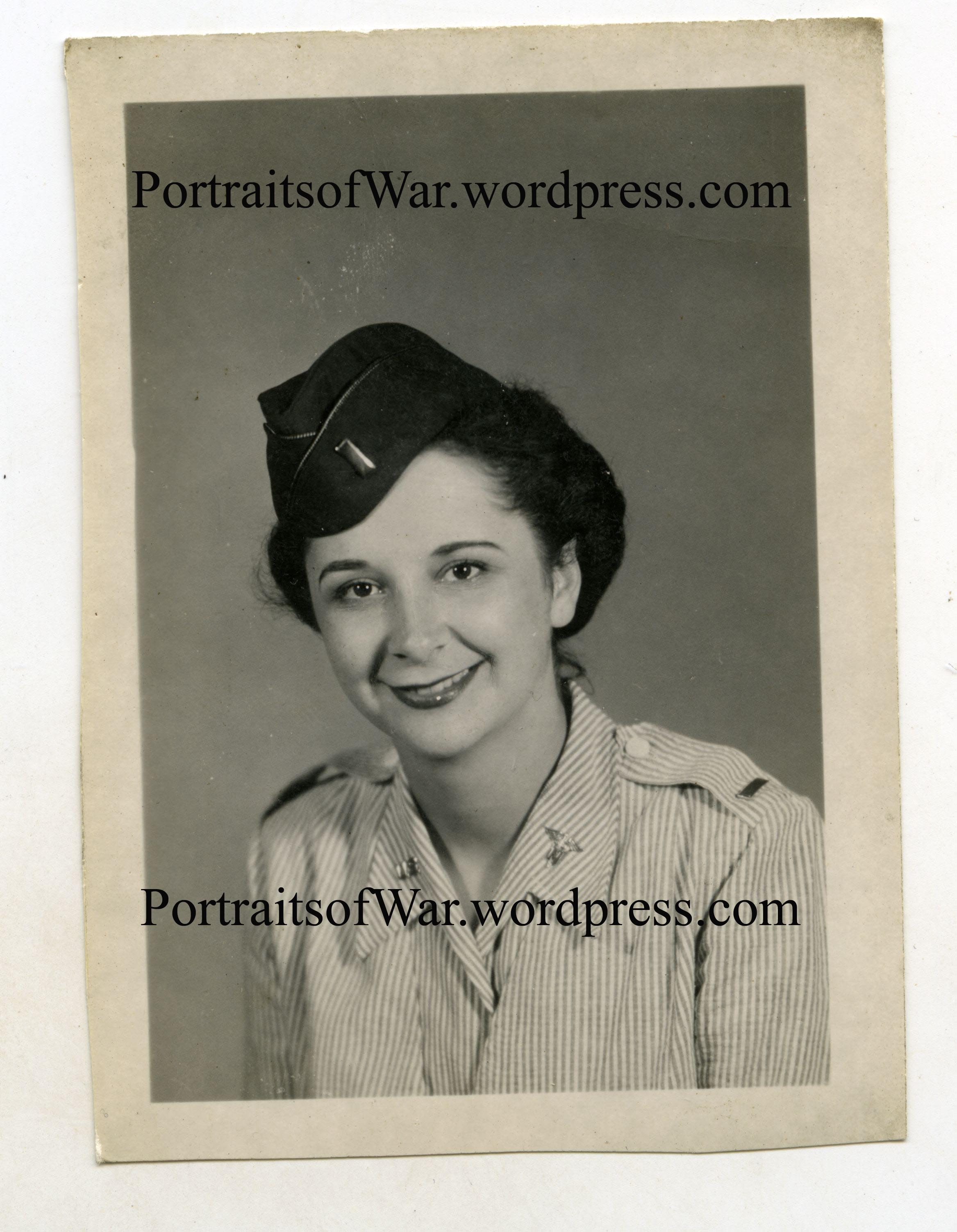
This will be a constantly updated theme here at Portraits of War so please check back often.
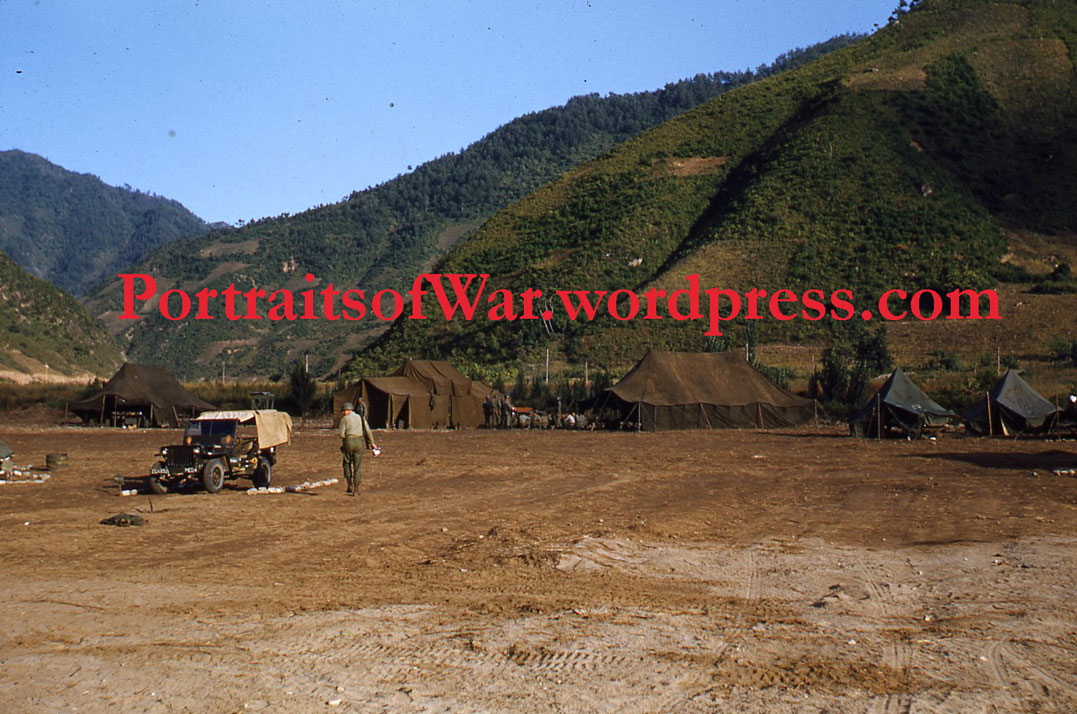
Today’s posts are from the 89th Medium Tank Battalion taken in 1952 during the middle of the Korean War.
The 89th TB ……………………….
The vast majority of material posted here on PortraitsofWar has been painstakingly identified through dedicated research and a little bit of luck. In this case, I’ve been stumped! I need YOUR help to figure this one out. Here’s what we know:
1. The photo was taken by a Des Moines, Iowa photographer. I purchased a series of original 4×5 negatives from an eBay dealer. All showed Des Moines area veterans taken between 1944 and 1946.
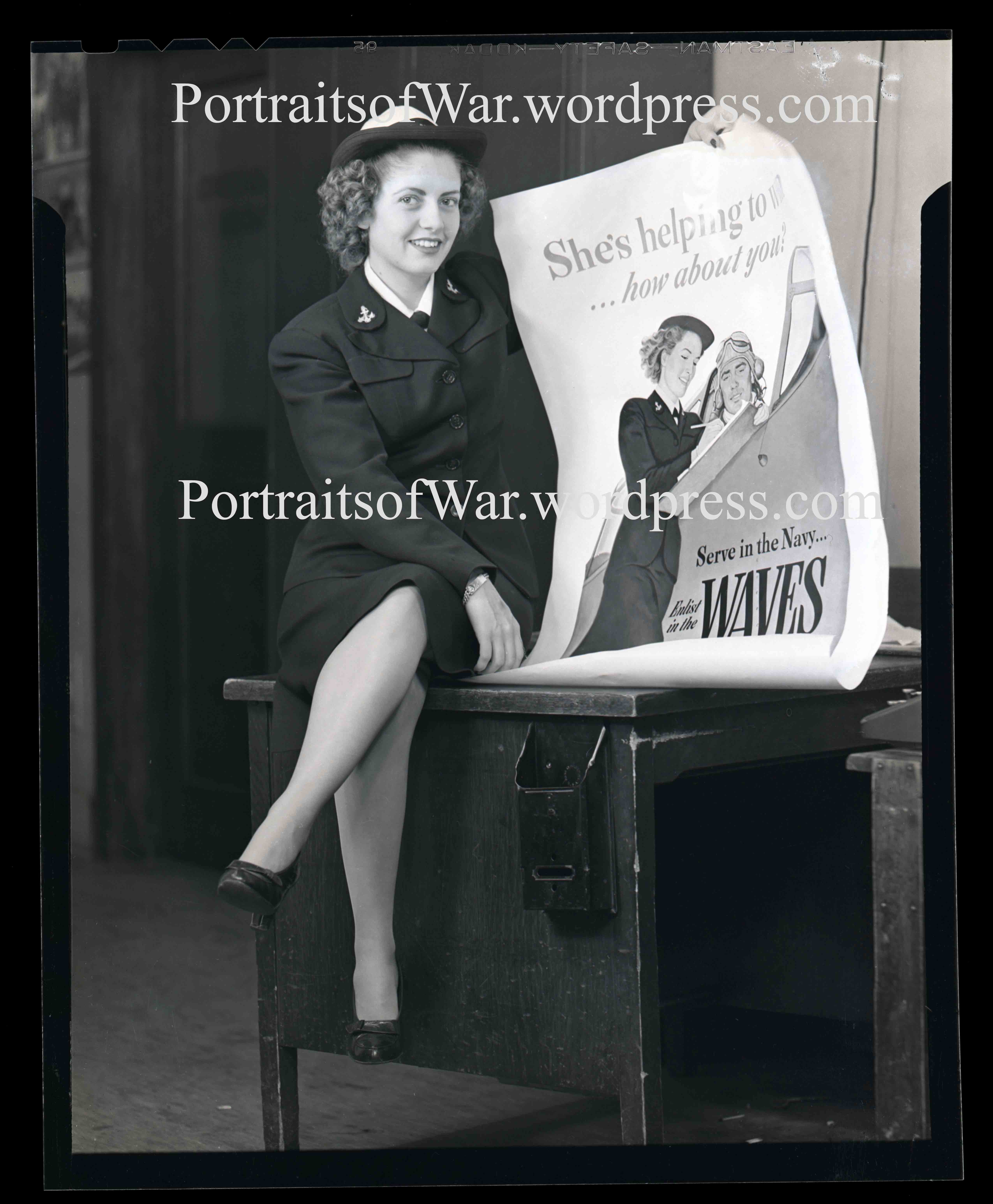
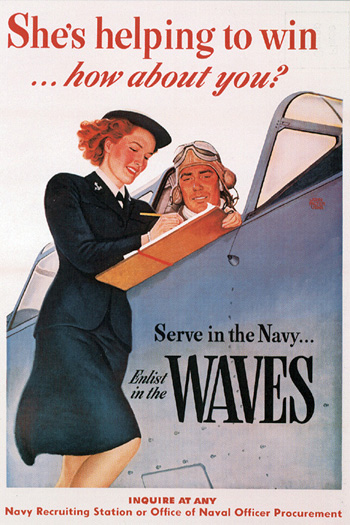
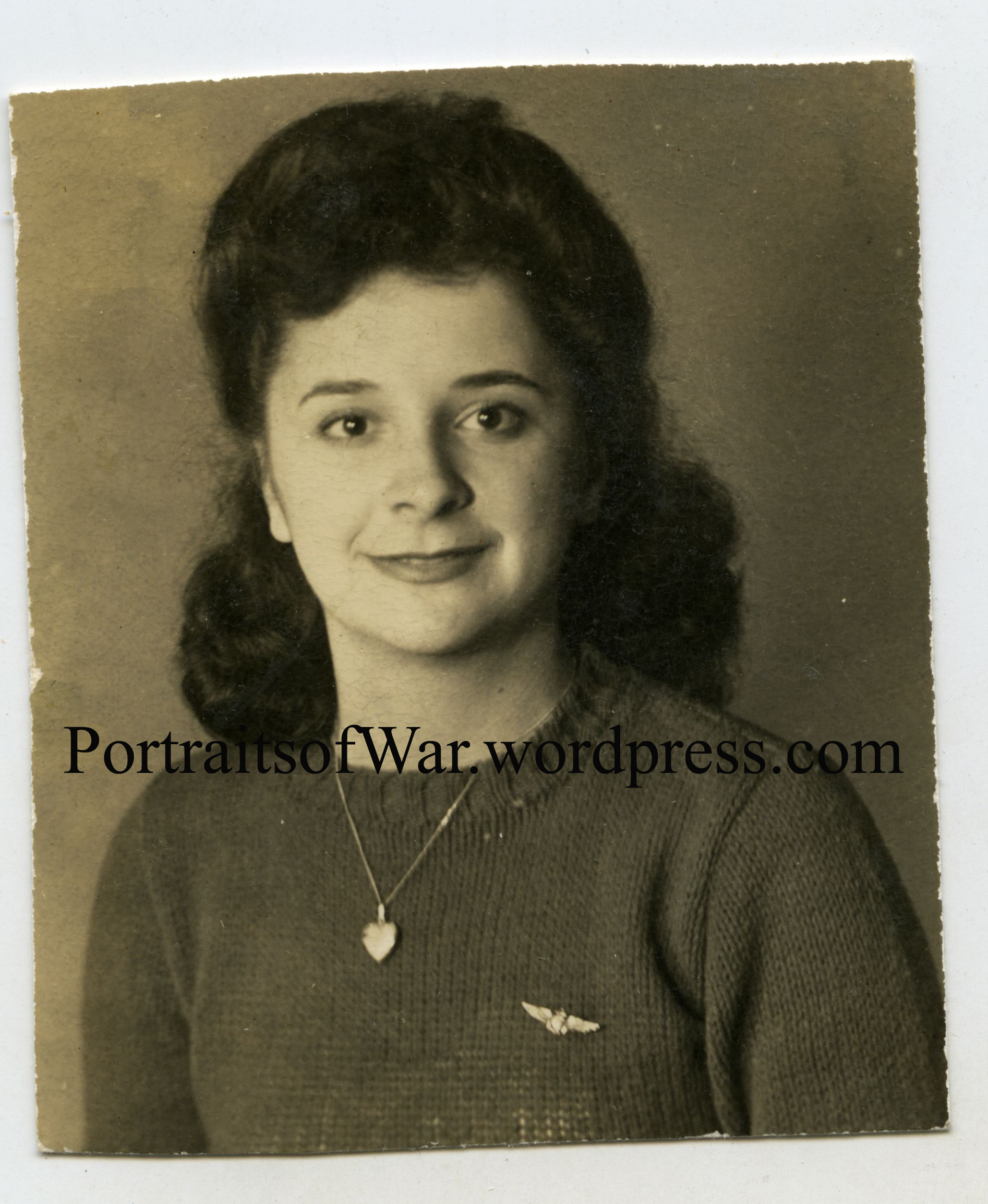
2. The photo depicts an attractive redhead (see poster below) WAVE volunteer. WAVE stands for Women Accepted for Volunteer Emergency Service.
3. The poster in the image was designed by John Falter in 1943. “She’s helping to win….. how about you?”
Was she a Des Moines native? Or was she merely in Des Moines during the war? It would be great to track her down and I need your help. Any ideas?

Color Image of Poster(source)
A recent eBay purchase has landed me with a fantastic group of WWII portrait photos all identified to members of Company A of the 295th Engineer Battalion, a unit that landed on the Normandy beaches only two weeks after the infamous June 6th, 1944 D-Day landings. Here’s an excerpt from the unit history that described that fateful day:
“The Big Moment did come at last; actually there were lots of big moments. The battalion was divided up into three serials, and each serial was on two or more boats. The first wave started from Hindon a little after midnight on 13 June. There was battalion headquarters, parts of each line company, and the medical detachment. They all reached the marshaling area in Winchester at 0830 that morning. Before dawn two days later, half of them were awakened a few hours later and they too reached another set of docks at that port. They all sweated out a day and a night, sleeping on the quayside, before they got on the boats. The first half, after
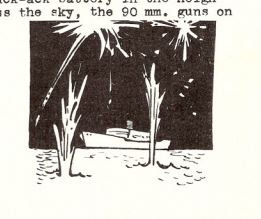
moving into the Channel, had to return to port because their ship’s anti-mine apparatus was not working. The second half joined their convoy, stayed the night off the Isle of Wight, and then started off for France. They saw the coast at about noon on 18 June. They surveyed the coast defenses, and the wreckage, and the boats sunk near the shore. It all looked very grim. That night the skyline glowed with glare of fires and bursting shells, and they were still on the boats in the Channel………”
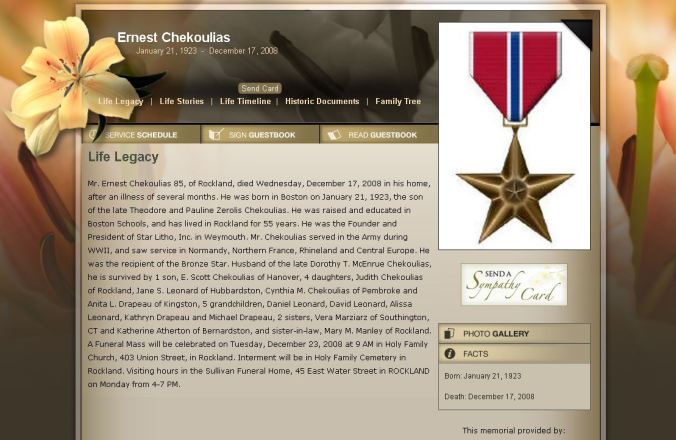
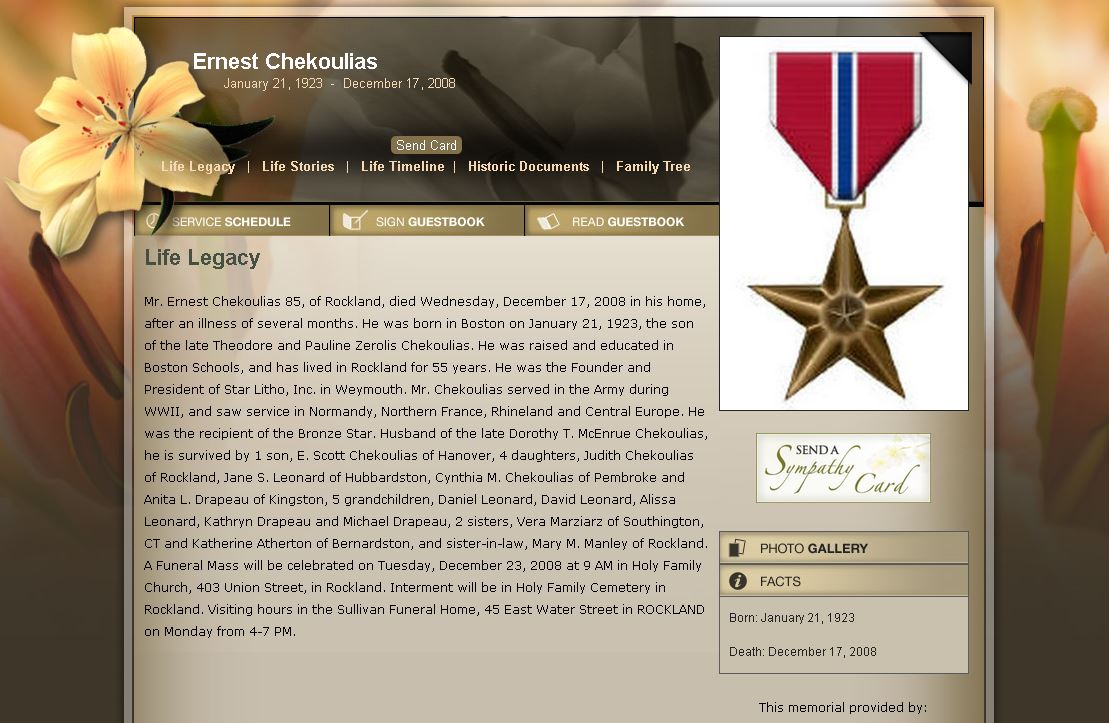
The photo I’ve selected for this post was initially partially identified as an Ernest Chek…… of 9 Mt. Pleasant Ave, Roxbury, Massachusetts. I eventually tracked down a unit roster for the 295th Engineers that lists a Sgt. Ernest Chekoulias, serial number 31301800 from Roxbury, MA. It’s clearly a hit and a cross reference with his obituary confirms that this is indeed the same soldier. Sgt. Chekoulias is listed in the unit history as having been awarded the Bronze Star for Heroic Achievement. His obituary page confirms this.
Ernest Chekoulias was born in Boston, MA on January 21st, 1923 and passed away in Rockland, TX on December 17th, 2008 at the age of 85. His obituary reads:
Mr. Ernest Chekoulias 85, of Rockland, died Wednesday, December 17, 2008 in his home, after an illness of several months. He was born in Boston on January 21, 1923, the son of the late Theodore and Pauline Zerolis Chekoulias. He was raised and educated in Boston Schools, and has lived in Rockland for 55 years. He was the Founder and President of Star Litho, Inc. in Weymouth. Mr. Chekoulias served in the Army during WWII, and saw service in Normandy, Northern France, Rhineland and Central Europe. He was the recipient of the Bronze Star. Husband of the late Dorothy T. McEnrue Chekoulias, he is survived by 1 son, E. Scott Chekoulias of Hanover, 4 daughters, Judith Chekoulias of Rockland, Jane S. Leonard of Hubbardston, Cynthia M. Chekoulias of Pembroke and Anita L. Drapeau of Kingston, 5 grandchildren, Daniel Leonard, David Leonard, Alissa Leonard, Kathryn Drapeau and Michael Drapeau, 2 sisters, Vera Marziarz of Southington, CT and Katherine Atherton of Bernardston, and sister-in-law, Mary M. Manley of Rockland. A Funeral Mass will be celebrated on Tuesday, December 23, 2008 at 9 AM in Holy Family Church, 403 Union Street, in Rockland. Interment will be in Holy Family Cemetery in Rockland. Visiting hours in the Sullivan Funeral Home, 45 East Water Street in ROCKLAND on Monday from 4-7 PM.
I would like to take the opportunity to thank the late Ernest “Chick” Chekoulis for his service with the 295th Engineers during WWII. This post is for you!
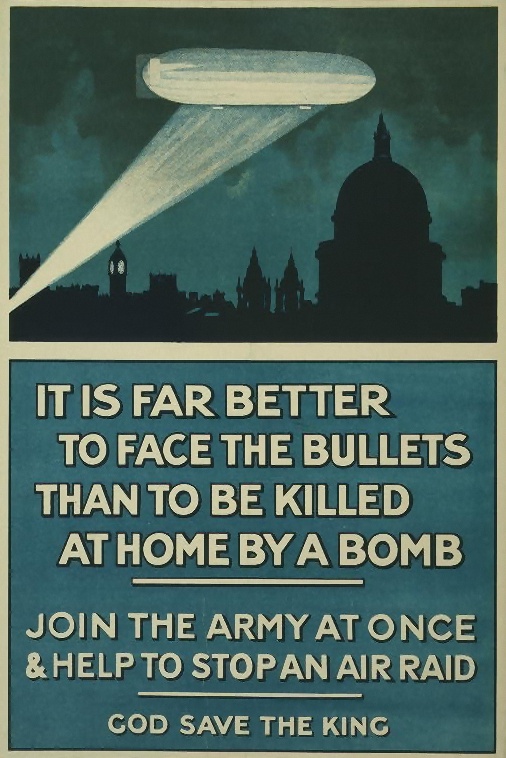
Cows and WWI?
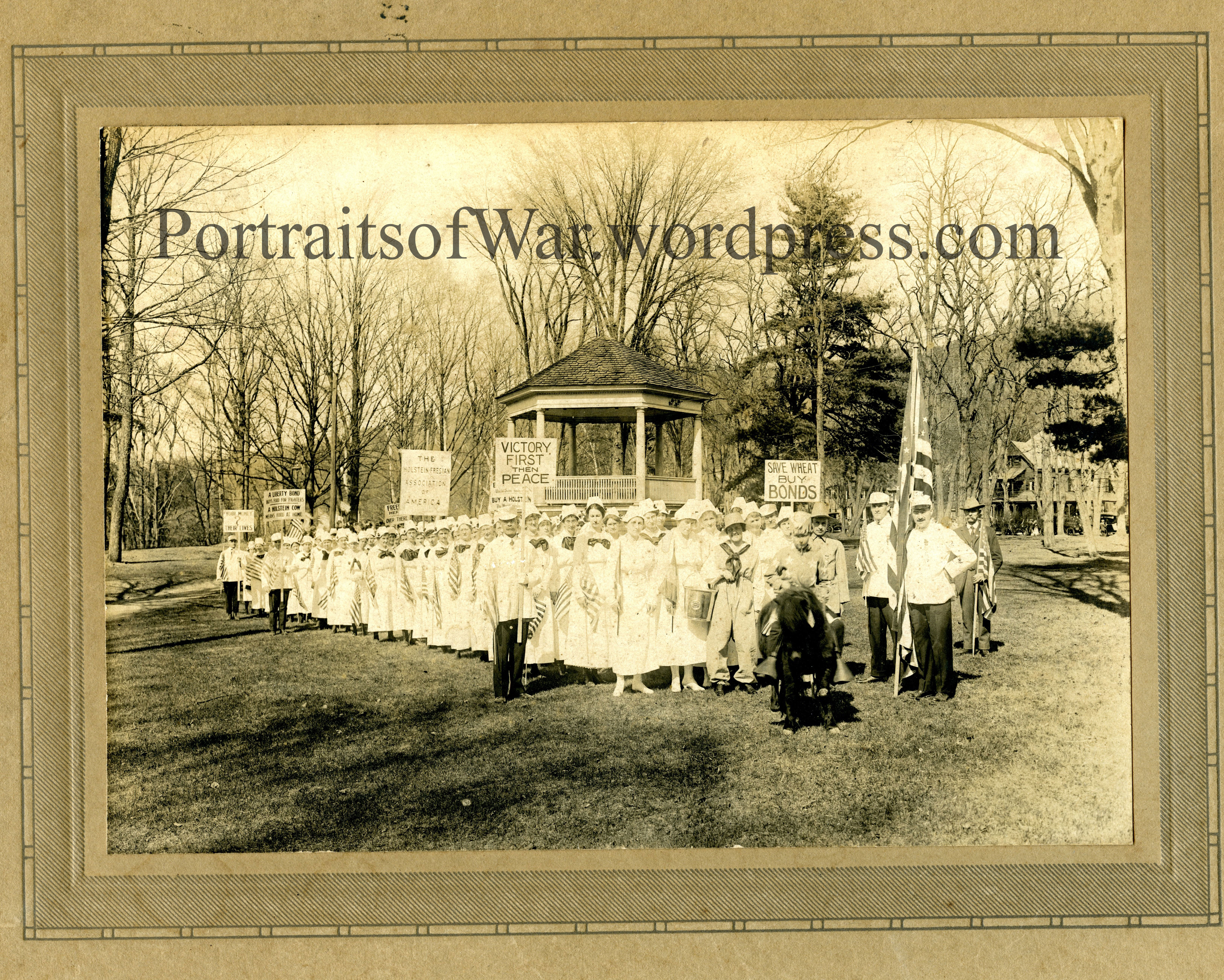
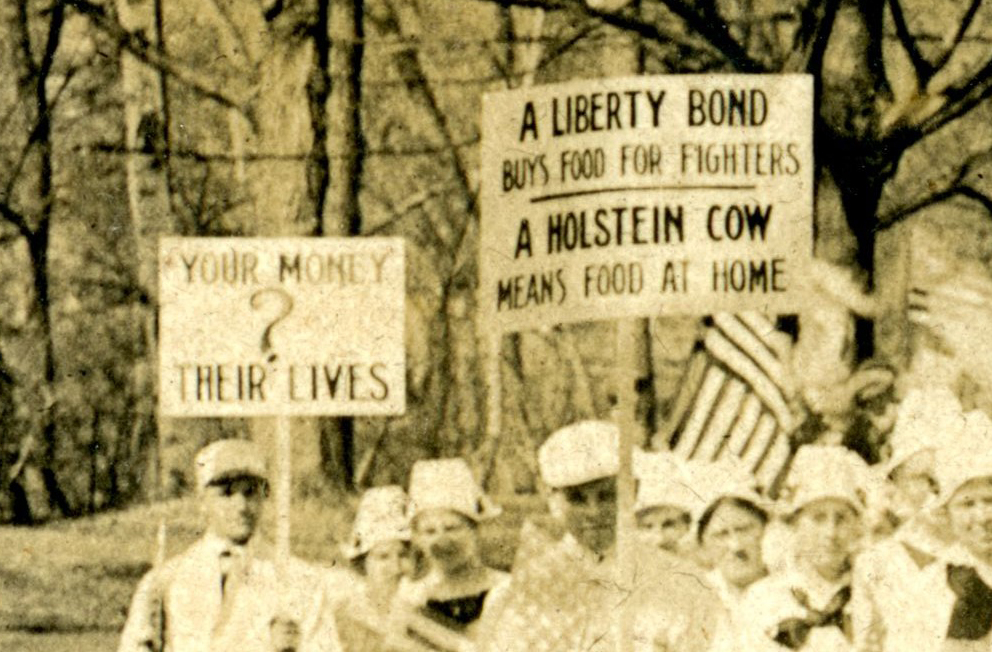
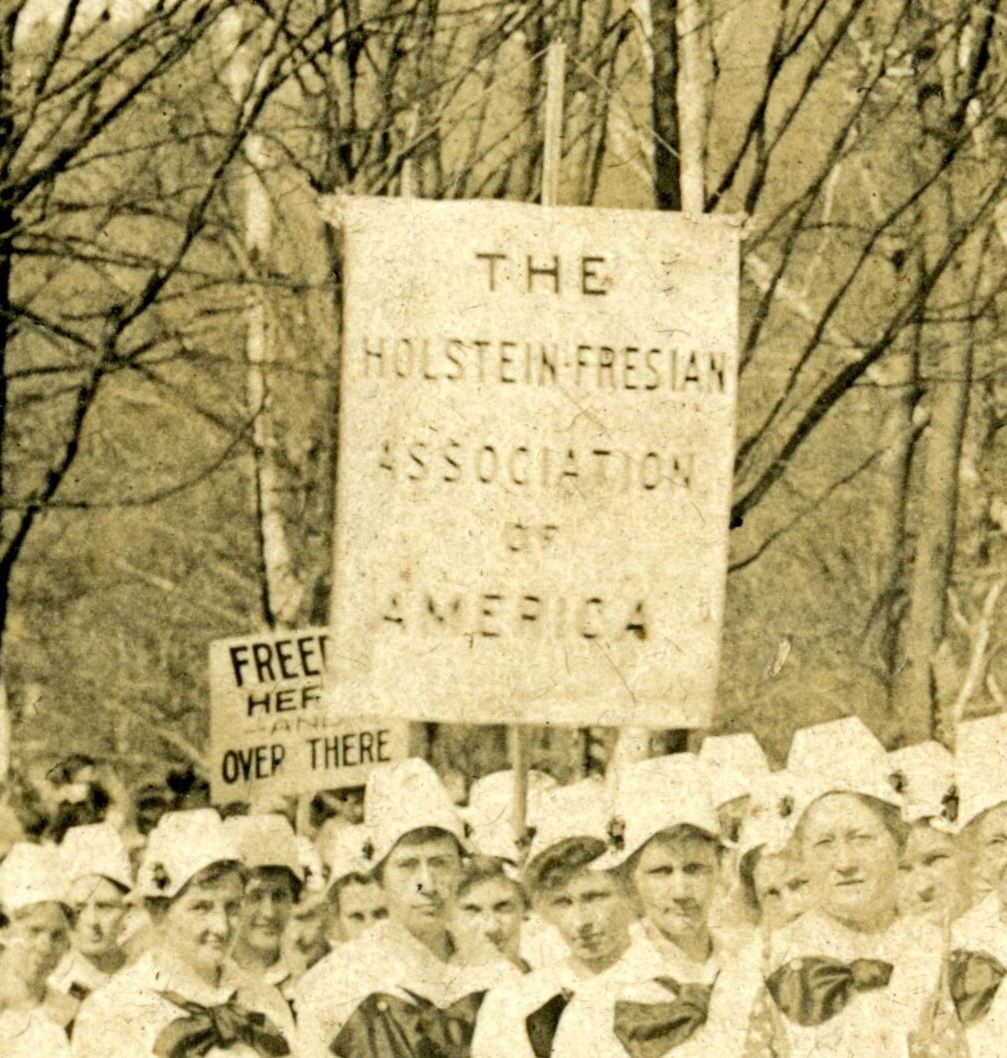
War Loan bond rallies came in all forms in WWI and this is a very, very Vermont specific version. The Holstein-Friesian (note spelling difference) is an active group from Brattleboro, VT interested in the breeding, milking and raising of Holstein cattle in the United States. Originally imported from the Netherlands in the second half of the 19th century, the Holstein breed is one of the most popular milking breeds today. Especially in Vermont, the breed is popularly depicted as the the “classic cow” being prominently white with black spots. One of the most famous expressions of Vermont’s love of the Holstein can be seen on the ice cream container of the famous Ben and Jerry’s Ice Cream, a classic Vermont-based company that started in Burlington, VT. Vermont artist Woody Jackson designed the internationally recognizable logo that can be scooped in over 30 countries worldwide.
Anyway, back to the photo! The shot captures the Holstein-Fresian (spelled differently in 1918?) rallying for war bond support on the Brattleboro, VT common green in 1917 or 1918. I’ve tracked down a web photo of the gazebo today but plan to snap a shot later this summer. Please see below and refer to this site for the source.
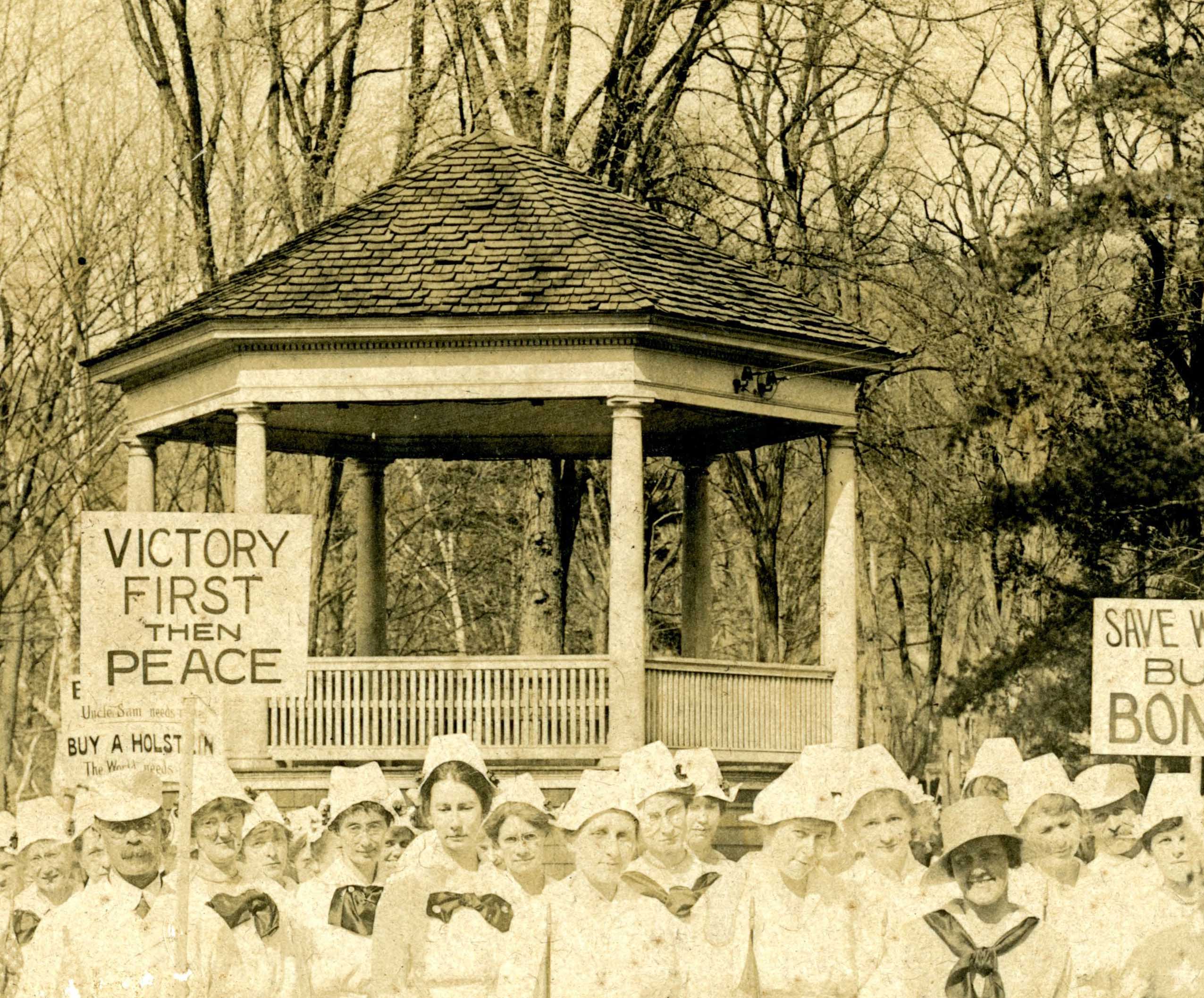
Details regarding this event are hard to track down, but I’m hot on the trail. Please check back for further details. I’m including some close up crops of the initial image to show some of the details. Note the posters, Uncle Sam riding a donkey, US Navy donation bucket, Civil War veteran, plus much more great period detail.
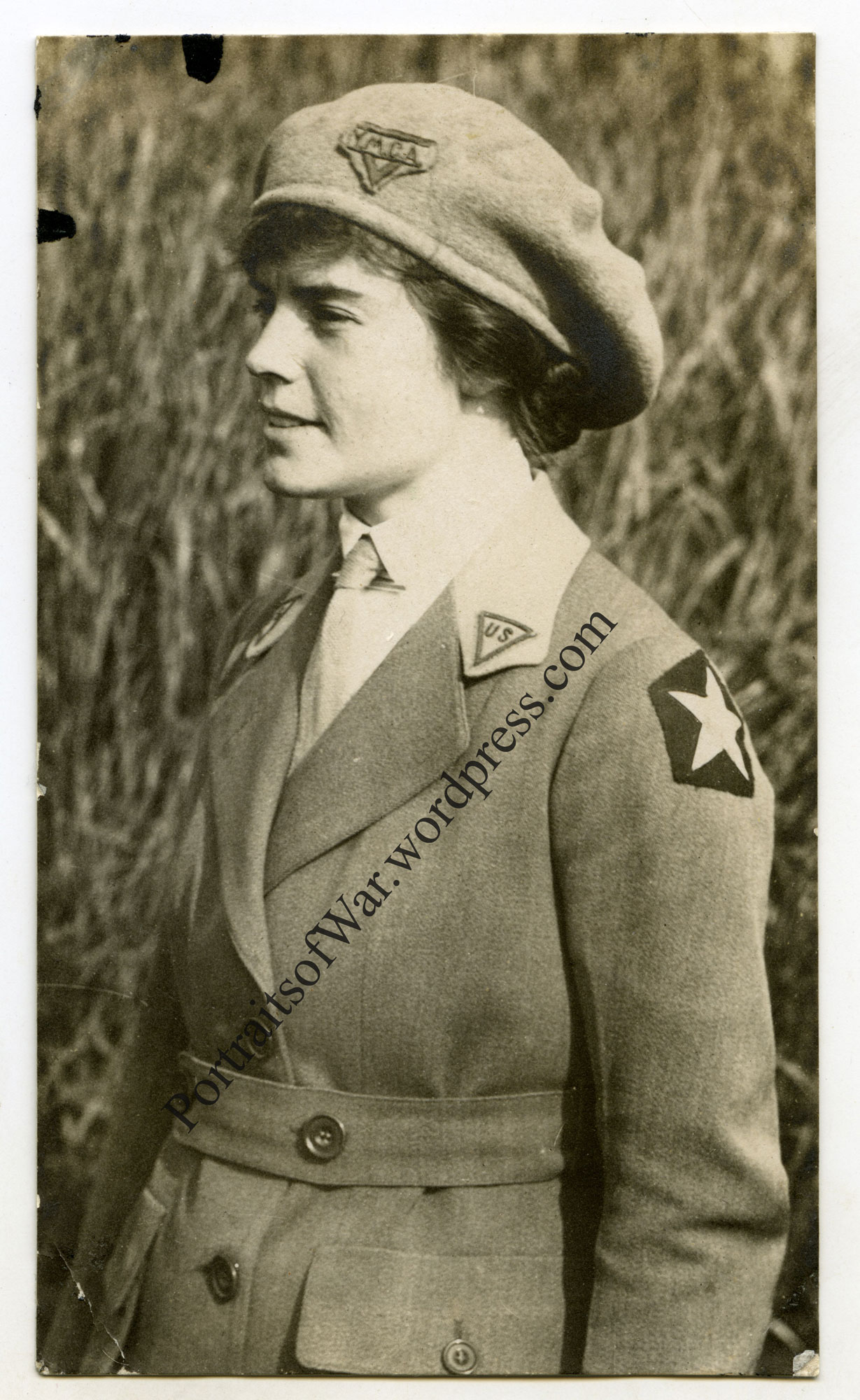
YMCA Ladies were sent overseas to help bring a glimmer of American home life into the trenches in France and Germany. YMCA workers were attached to specific divisions and were tasked with putting on events, providing comforts of home, and entertaining the US soldiers with music and reading material. Interestingly enough, female YMCA workers were only selected from a pool of women ranging in age from 25-45 with a few older exceptions. No women whose parents were born in an enemy country could serve and women who were British or Canadian could not be sent to France. The YMCA was often criticized for price gouging US soldiers when charging fees for cigarettes, shaving material and everyday odds and ends.
Through a collecting friend and author I was able to obtain a nice side profile shot of a YMCA woman associated with the 9th Infantry Regiment of the 2nd Division. The uniforms for the female YMCA workers was designed by Mrs. Theodore Roosevelt and was a gray-green in color with a French horizon-blue collar. The pair of US triangles on the upper collar lapel were embroidered in silk and sported red-edged details. This particular woman is wearing an incredibly rare beret stye hat with a felt YMCA patch attached.
Digging through backlogged collections is fun. I always seen to unearth a photo, negative or slide that eluded my initial passover. In this case, I found a poignant negative from 1945-1947 showing two barefoot children who survived the war somewhere near Munich. The photographer (unknown) had quite the eye for detail as evidenced in his 400+ negatives in my collection.
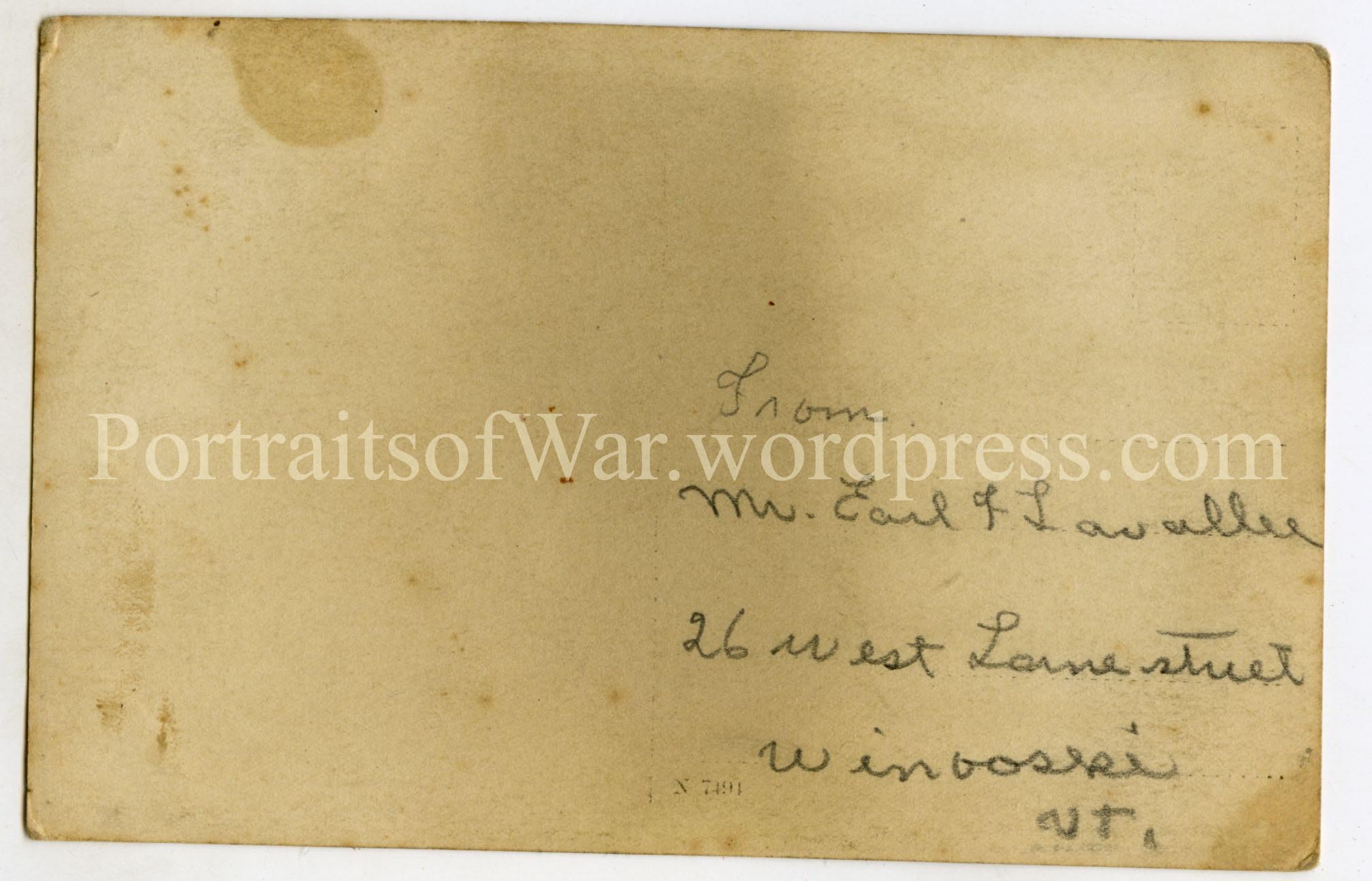
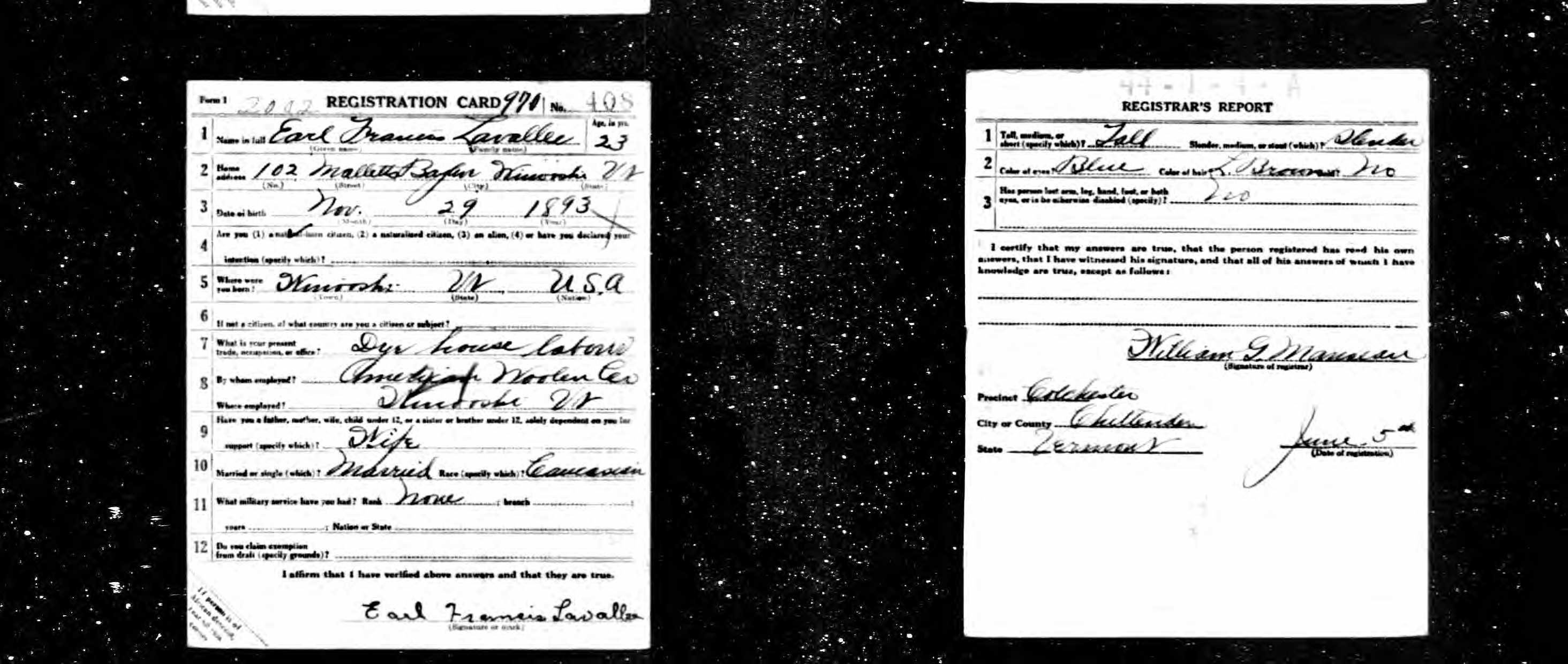
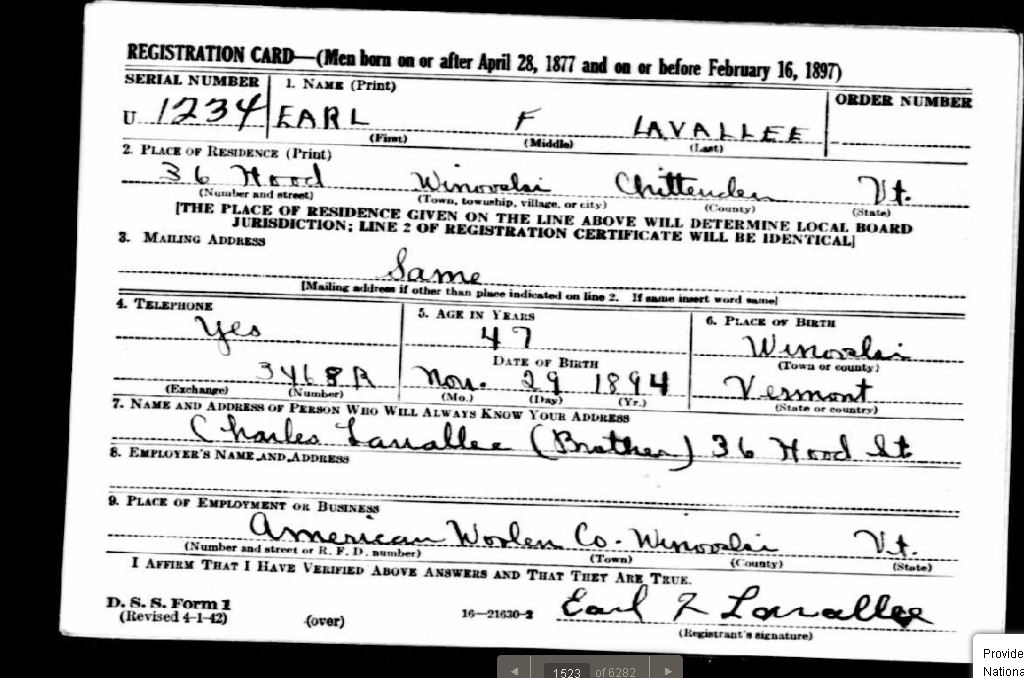
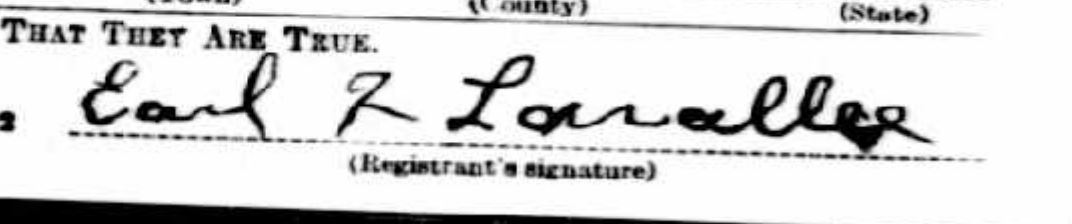
This story starts with a 23 year old Earl F. Lavalle scribbling his name on the back of a photo to pass along to a friend during WWI and ends with a full identification of Mr. Lavallee’s life experience. The main goal of PortraitsofWar is to research and seek out every possible lead to identify an early 20th century photograph; recent digitization efforts have enhanced our ability to complete genealogical research from the confines of a remote desktop.
Our first accounts of Earl show him being born on November 29th 1894 to Fred Lavallee of Canada and Emma Pollinger of (my current hometown!) Colchester. Earl worked his entire life as a laborer in the American Woolen Co. in Winooski, VT, located along the Winooski/Onion River near Burlington,VT. He lived at various locations during his tenure at the woolen mill including 36 Hood Street, Winooski, 102 Mallets Bay Ave, 22 Park Street and many more.
Earl enlisted on February 11th, 1918 at Camp Green, North Carolina. He served with Company G, 58th Infantry Regiment, 4th Division until August 21st, 1918 when he was transferred to Supply Co, same regiment. He was overseas from May 7th, 1918 to August 1st, 1919.
Earl was wounded in action on September 30th, 1918. This photograph depicts Earl after his wounding evidenced by his right-hand wound stripe. Earl was discharged on August 7th, 1919.
Lavallee Family Story
The 1900 US Census from Colchester, VT shows the Lavallee family as a solid unit with five family members comprised of Earl’s dad Fred Lavallee, his mother Emma, brother Charles, sister Florence and himself (Earl).
Family heirlooms come in many forms, shapes and sizes. It always amazes me what types of material appears on eBay as part of estate liquidation sales. Family scrapbooks, bibles, photo albums and personal diaries. In this case, I was able to purchase a small group of photos and a War Department Identification card from a nurse who served in WWII. Included were a few photos of her in wartime garb, shots of her husband (pre-marriage) and her wartime ID card. As I always say, it’s about the research….
It’s sad to thing that a family would sell off relics of their family’s past, but it’s not for me to judge. I’m here to interpret the material at hand and figure out as much as possible with scant information.
I always start off with a quick ancestry.com search to help figure out the background story. We have a name – Helen Boretski and a birthdate of March 31st, 1924. Helen was 5’6″ when the photo was taken and a healthy 142 pounds. Her hair and eyes are listed as brown. Her thumb and right index finger are both present on the back of the ID.
A quick ancestry and google search helped me discover that Helen was dating and eventually married to a Navy man named Paul Bronesky in 1946. A few photos included in the purchase we indeed identified to a Paul, so this helps confirm the identification. In fact, further research into Paul’s WWII service shows that he was a radio man on a Navy aircraft. This is further confirmed through the photo included in the group. He is wearing a rare set of Navy air crew wings with a radioman rate patch on his sleeve.
What makes this grouping of photos interesting is the fact that both the husband and wife (dating in wartime) were both service members. Helen was a nurse and Paul was a Navy radioman. Helen strikes a chord with me. There’s just something about her gaze and smile that make me want to reach out and talk to her. Sadly she passed away in 2008. Please see below for an obituary record from Plymouth, PA:
“Helen (Boretski) Bronesky, 83, formerly of Plymouth, died March 24, 2008, in Mequon, Wis., of a cerebral aneurysm. Mrs. Bronesky was born March 31, 1924, in Plymouth and raised in Lyndwood. She graduated from area schools and RN school and was a veteran of the U.S. Army Nurse Corps in World War II. She was preceded in death by her husband, Paul; parents, Michael and Susan Boretski; her brother, Michael Boretski. She is survived by son, Paul; daughter, Susan; granddaughters, Michelle, Erica and Leslie; sisters, Mary Koliga, Anne Kochevar, Margaret Cowan and Dorothy Bedosky; numerous nieces, nephews and friends.
Interment will be Saturday, July 26, 2008, at 11 a.m. in S.S. Peter and Paul Cemetery, Plymouth Township. Arrangements are by the S.J. Grontkowski Funeral Home, 530 W. Main St., Plymouth.
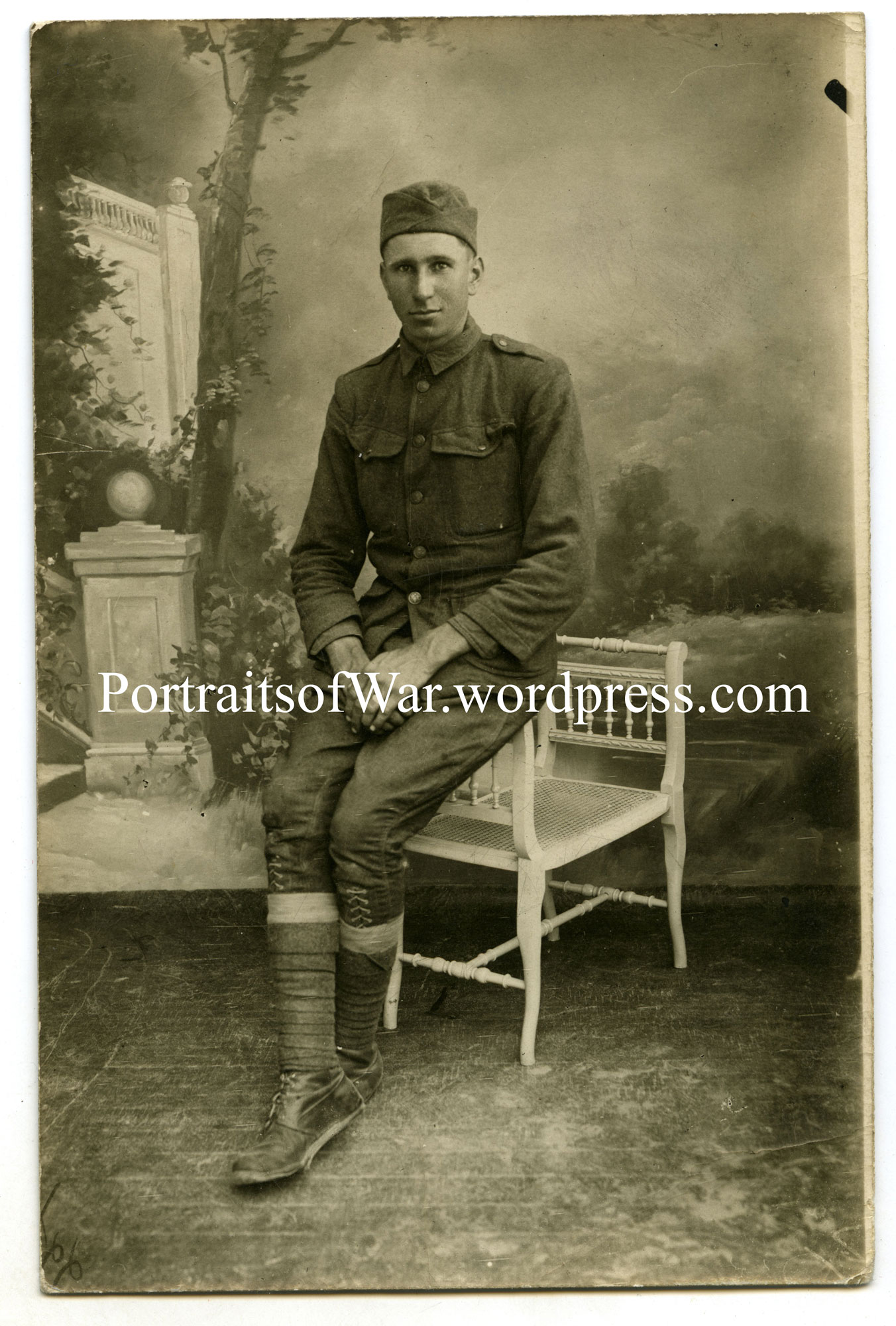
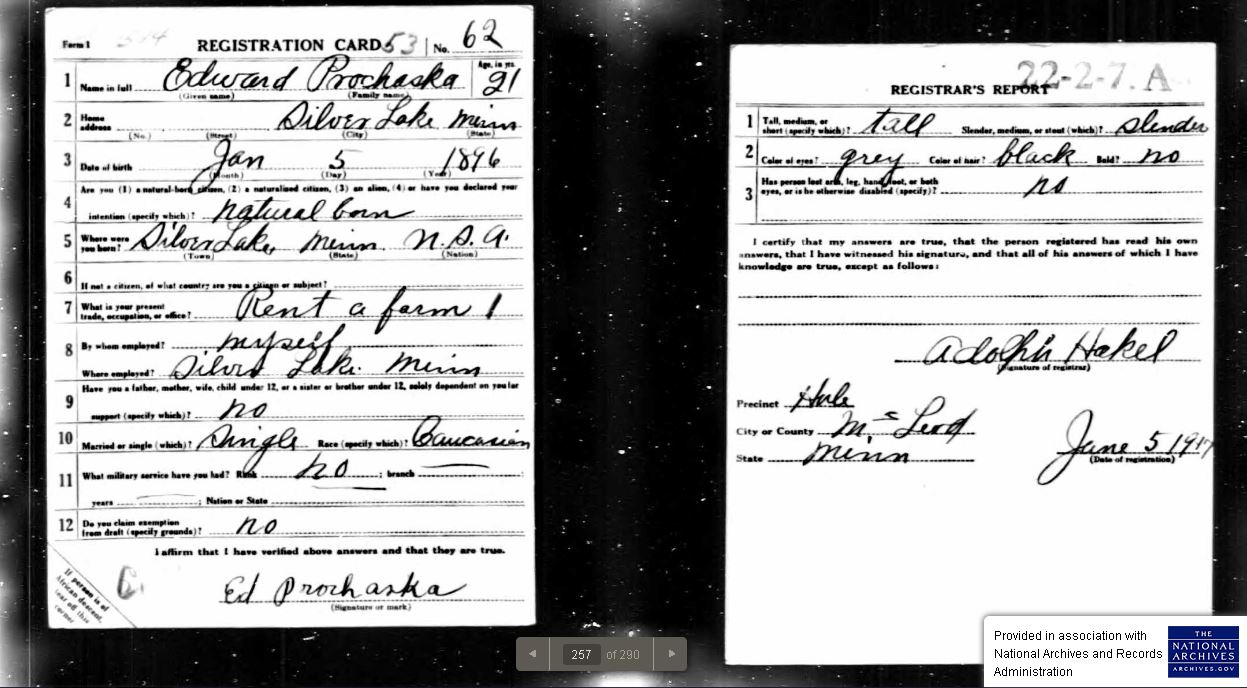
Each of the 116, 516 US soldiers, Marines and sailors killed during WWI deserve a narrative on the world wide web. In this case, a photo of Edward Prochaska of Silver Lake, MN recently arrived in the mail from an eBay seller in the Midwest. I purchased the photo after doing some brief research on the photo, finding that Prochaska was killed in action while serving with the 118th Infantry, 30th Division.
Incredibly, Prochaska is referenced heavily in a postwar book following the exploits of Private Oscar Dahlgren during WWI. The full text version of the book can be found here: http://bit.ly/1bSx4h9
Some excerpts from the book are incredibly detailed and give us a unique view into the experiences of a doughboy on the frontlines.
Page 59
“In the evening of this day (August 4th, 1918), we started for the front line trenches carrying with us rations. Myself and Prochaska toted a bag of coffee together changing off with other when tired. Getting on the road just east of Valencies, we got caught in a shelling that Jerry put over on the roads every day at Valencies toward evening. The big shells dropped so close that we expected to be blown to pieces for every shell. We threw ourselves flat, favoring the fall. Luckily, my platoon got through the shelling without any casualties, except for a bag scare. I could tell how bad when I noted how extremely pale they all got. It struck me so funny that I wanted to laugh. Ed Prochaska noticed it too, and felt kind of ashamed saying he could laugh at death grinning us in the face.”
Page 105
“Again between August 26th and 27th Prochaska was with me when another heavy shelling took place. The trench here was shot up bad so there was little protection. A heavy shell tore into the bank behind our backs. We both flopped down with pan. I said it felt like my fingers had been shot off, but I found all my fingers there.”
Page 117
“It was dark and rainy as we walked up the line we had to step over German dead who were lying thick around there (sic) holes they had made in the ground. When we halted we took into those holes which weren’t very deep. The hole I got wasn’t more than a foot deep. Schellenburger got to be my partner. 4 or 5 dead Germans lay dead by my hole. Prochaska was close by digging in together with R.L. Ross, we not set to work and dug our hole 4 feet deep and wide enough to stretch out.”
Page 65
“Someone caught sight of one coming towards us from Company Headquarters. He was already half ways and now there was some hollering for him to get down, especially by the sergeant. It turned out to be Prochaska. Poor boy – they had him pretty nervous before he came up. He did not know we weren’t allowed to cross now……… They asked him what he meant by coming over…… He told them he had been at the canteen having bought some cakes, cookies and a can of salmon saying I wanted to bring Dahlgren some! ……. It touched my heart that he had so much friendship and love for me – he thought so much of me.”
And the sad details leading up to Edwards death:
Page 135/6
“I stopped to talk to Prochaska who had dug in deep by himself and was carrying straw to bed down with. I and he had always dug in together before, but now as I was a runner, we were parted. Well, he did not get used to his foxhole as he was put on guard at Company Headquarters where I was. There in the hedges he slept when off guard, that being the last time I talked with him. That night, though I had a warm bed, I was not able to sleep as the cooties and German fleas started going over the top and giving me no peace……
After getting through the hedge and the wire fence which separated us from the field, we noticed an observation balloon. We had a funny feeling something terrible was in store for us. My heart made a few quick beats and I felt pale. All of us runners said to the Captain that it would be suicide to cross the field……. I noticed dozens of Americans lying on the railroad bank killed and the rails lay twisted up…….. We now got to talk to some men of the 128th Regiment who said the same thing happened to them at Brancourt…… The first I got across, one of the boys called me and said, “Prochaska, Dahlgren is killed.” He had out names mixed up. The boys were lying close to Prochaska told me his head and shoulder were knocked off by a shell. He had been my best friend for a long time……”
Generally my WWI photo identifications come with a name, unit, and typically a home state or region. In this case, the only direct ID information to come with the photo was a first name – Harry- and the name of his brother. The rest of the information was hidden in the nuanced details of the photo postcard. See below for the main photo included in the eBay listing.
The eBay listing also made reference to the fact that the studio stamp was an Italian photographer. With this in mind, I bid to win.
After successfully winning the photo I began the laborious process of identifying the photo. Here’s the info I was basing my research on:
1. The photo depicted a US pilot who had served at least 6 months overseas at the time the photo was taken.
2. The pilot was named Harry and had a brother named Robert.
3. The pilot had a distinctive signature and handwriting style with large crossed H’s and a penchant for flourishes.
4. The pilot was in Italy at some point during the war.
I first started my research with a general reference search to find out how many US pilots were in Italy during the war. Lots of websites popped up and generally pointed towards the Fiorello’s Fogiannia, a group of US pilots who trained in Italy on Italian bombers. We’ve all been stuck in LaGuardia airport at some point in our lives, so I instantly recognized the reference to Fiorello LaGuardia. I had no idea he was in WWI! Further research made it clear that only 500 or so US pilots were in Italy during the war.
I started by tracking down a copy of the roster of the pilots who trained with the “Fogianni” during the war. A good friend, Chuck, was extremely gracious enough to take photos of all the pages and send them to me. I finally had the whole roster to reference. With this in hand, I identified all the Harold’s and Harry’s in the roster. This helped narrow it down to less than 30 candidates! From there I looked at the 1900 and 1910 roster for each of the men in hopes of finding a brother named Robert. A small handful of candidates trickled through.
My first cross reference for the Harry’s with brothers named Robert brought me to Harry S. Manchester from Canfield, Ohio. The signature on his WWI draft card almost knocked me over! A perfect match. Note the intense cross on the H and the overly dramatic crosses on his T’s. With further research I was able to find a TON of information on Harry. He was indeed a pilot in Italy during the war and also served in France as a test pilot, testing new US planes as they were unloaded in France. His brother was Robert Manchester Jr. I was able to find Robert’s son (Robert Manchester III) and grandson (Robert Manchester IV) online, both prominent lawyers in the midwest.
Also, the National WWI Museum apparently received a donation of a series of photos from the Manchester Estate. Check out these additional portrait shots of Harry from the collection! (Used without permission but with watermark)