Maine in the First World War: The Maine National Guard and the 54th Artillery Regiment Coastal Artillery Corps in WWI


Everyone knows that I love Vermont WWI material, but I also enjoy collecting photos from other New England states as well.  I have a handful from every state but only one from Maine.  Now I have another!

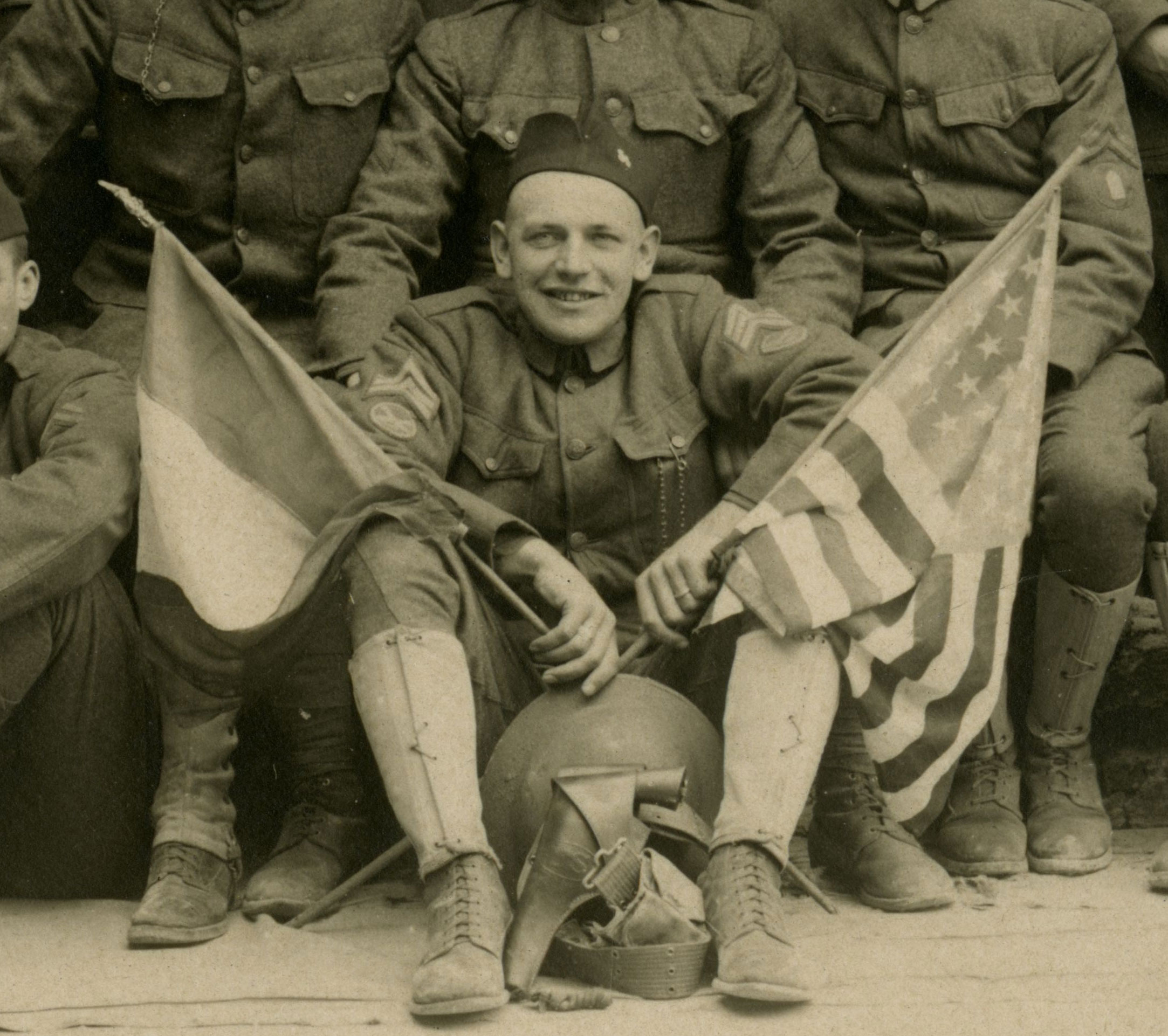
This fantastic interior studio RPPC has a ton of great qualities that drove me to make the purchase.  The crossed flags at center, the helmet and pistol props, the uniform details, and the identification on the reverse all make it a great shot to add to the collection.  This particular group is comprised of men from Portland and Bath.

Battery D of the 54th Artillery Regiment, C.A.C.

Battery D of the 54th Artillery Regiment, C.A.C.

Identified to a Corporal Carl L. Pearson who I believe is positioned directly right of the flag, this shot shows a group of 19 soldiers posed in a French studio.  This may be a record for my collection!   I have a few with 6-8, but none with more than 10.

Pearson was from West Falmouth, Maine and was born in January of 1893.  He enlisted with the National Guard in Portland in March of 1917 and reported for Federal service in June of that year.  He was overseas from March of 1918 to March of 1919.  This photo was taken in either late March, or April or May of 1918.  He was promoted in early June of 1918.  Since this photo shows him as a Corporal at the time of the photo, we know it was taken before his promotion.  Also, his lack of OS chevron and the abundance of spats likely points towards an early photo taken in France.
54th037a

A little info on the 54th CAC

Source: http://freepages.military.rootsweb.ancestry.com/~cacunithistories/54thcac.htm

WORLD WAR I — 1917 – 1919The Coast Artillery Corps a Maine National Guard were mobilized on 25 July, 1917, and all companies, band, field officers, and non-commissioner staff officers reported on 27 July. 14 staff officers reported at Portland Coast Defenses and were assigned to duty in the Coast Defenses. The several companies were re-designated at once. This designation was changed again on 23 August 1917, and on 25 December 1917, nine of the thirteen C.A.C. Maine National Guard companies were made a part of the 54th Artillery, C.A.C., the supply company and Batteries B, D, E, and F, of the new 54th Artillery, C.A.C. 6 inch guns (Motor drawn), were entirely constituted from the nine companies Maine National Guard.

The 54th Artillery, C.A.C., was organized with a Headquarters Company, a supply company, and three battalions of two batteries each. Of the 6 batteries, four were taken from the Maine National Guard and from 25 December 1917, the further World War history of the C.A.C. Maine National Guard is properly that of the 54th Artillery since over 62 percent of its units were entirely Maine National Guard. In addition, only 30 percent of the units of the Maine National Guard were not included in the organization of the 54th Artillery C.A.C.

The 54th Artillery, CAC, (6-Inch Guns, Motor)

This regiment was organized in Portland Harbor Forts on 25 December 1917, five of its units being formed from National Guard units and three from Regular Army units.

The batteries of the 54th Artillery were organized as follows:

Headquarters Company, and Batteries A and C from the Regular Army.

Supply Company, from 20th Company, Lewiston.

Battery B, from 4th Company, Portland, and 7th Company, Biddeford.

Battery D, from 2nd Company, Portland, and 4th Company, Bath.

Battery E, from 3rd Company, Auburn, and 3rd Company, Kennebunk.

Battery F, from 9th Company, Lewiston and 11th Company, Portland.

Headquarters Company, Batteries C, D, E, and F, sailed from Portland, Maine, on the CANADA, 22 March 1918 and arrived Glasgow, Scotland 2 April, Winchester, England 3 April, and LeHarve, France, 6 April 1918.

The Supply Company, Batteries A and B, left Portland 14 March, sailed from Hoboken 16 March, 1918 on BALTIC arrived LeHarve, France, 6 April 1918.

The 54th Artillery C.A.C. was sent to rest camp at Mailly-le-camp (Aube) and on 2 May 1918, transferred to Haussimont (Marne), as replacement regimen to Railway Artillery Reserve and Tractor Artillery Regiments. On 20 September 1918, the 54th Artillery was reorganized into three battalion stations as follows:

1st Battalion, Training Battalion (A and B Battery) Angers (Marne-et-Loire).

2nd Battalion, Tractor replacement(E and F Battery), Haussimont (Marne) Angers (Marne-et-Loire.)

3rd Battalion, Unknown.

After the Armistice the 54th Artillery was assigned to Brest, and part of the Regiment sailed 23 February 1919 on the Vedic arriving in Boston 7 March 1919. It was completely demobilized at Camp Devons by 13 March 1919.

The four companies (1st, 6th, 10th and 12th) that were not formed into the 54th Artillery, C.A.C. were demobilized in January 1919 at Harbor Defenses of Portland however, but few of the original members of the companies remained in them late in 1918. Two large transfers of enlisted men from these batteries were made. The first was made on 23 August 1917, to the 26th Division Artillery and Engineers. One hundred-sixty-nine men were taken from these four companies in the transfer. On May 31 1918, the other large transfer was made to the 72d Artillery, C.A.C. From the 1st Company, 147 men were taken, and from the other three companies large numbers. However, the transfers were made as individuals no units being reformed or discontinued.

In July 1922, the regiment was reorganized and designated as the First Coast Defense Command, C.A.C., Maine National Guard. The regiment was formed into Headquarters, Headquarters Detachment, Band, Medical Detachment and 1st Fort Command.

1st Fort Command

301st Company, Portland, org. 1803 – later Btry A

306th Company, Sanford, org. 1903 – later Btry B

307th Company, Brunswick, org. 1884 – later Btry C

311th Company, Portland, org. 1807 – later Btry D

2nd Fort Command

303d Company, Camden, org. 1920 – later Btry E

304th Company, Thomaston, org. 1921 – later Btry F

305th Company, Rockland, org. 1921 – later Btry G

302d Company, Vinalhaven, org. 1921 – later Btry H

On 17 September 1923, the 1st C.D.C. was re-designated as the 240th Artillery, C.A.C., and individual batteries as shown above. The designation was again changed to 240th Coast Artillery, Harbor Defense, on 16 April 1924.

WWI Photo Research – Dedication Provides 26th Division, 103rd Regiment DSC Recipient’s Identity – Maine Veteran


Sometimes a little research and hard work pay off.  In this case, I received a WWI 26th Division portrait in the mail from a friend in Pennsylvania.  I knew it was a good image given the subject matter and the fact that the soldier was likely from the Lewiston area given the photographers embossed stamp.  Not an easy task.  I counted a dozen or so guys in a thirty mile radius of Lewiston that were possible contenders.  Lots of Maine men were members of the 26th during the war, and it’s not always easy to associate a location given a photographers stamp.

Mellen F. Tuttle

Mellen F. Tuttle

With a little forensic work I was able to figure out the identity of our mysterious hero.  Since I’ve handled thousands of vintage photos and negatives, I know that photographers often penciled info on the back of the print, or etched names/numbers on the bottom of the original negative.  The numbers would cross reference to a name and address to ship the photo.  In this case I was lucky to find a name etched on the original negative.  Obviously it was in reverse on the positive image, so I flipped it 180 degrees with photoshop and tweaked the contrast and brightness.  Bingo, a name appeared.  Tuttle.  A quick search found a Mellen F. Tuttle from New Gloucester, ME who served as a private in Company B of the 103rd Infantry Regiment.

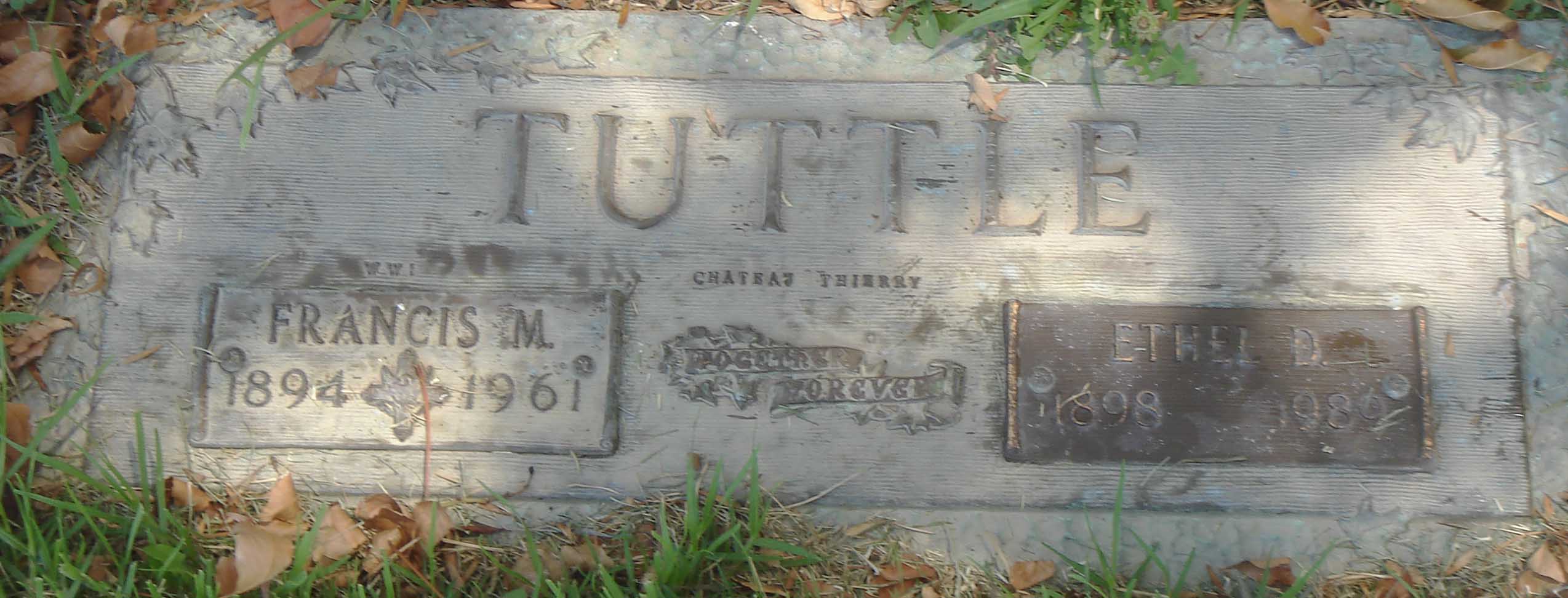
Further research shows that his actual name was Francis Mellen Tuttle, but he went by Mellen F. Tuttle during the war.  After an hour of searching in vain for the death records of Mellen F. Tuttle, I decided to search for birth records for the Tuttle family in Maine.  I came across a Francis M. Tuttle Jr. and clicked on the birth record.  His father was Francis Mellen Tuttle!  Everything fell into place after that. Please see the end of the article for a photo of his grave showing his name as Francis M. Tuttle.  Somehow he made it all the way to Los Angeles and passed away in 1961!

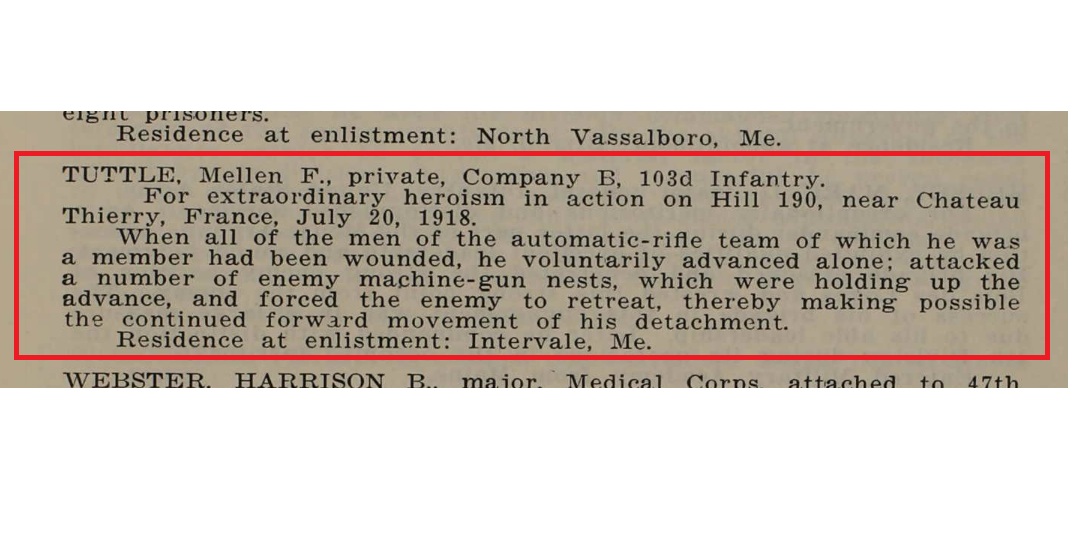
His feat of bravery occured on July 20th, 1918 on Hill 190 near Rochet Woods, Chateau Thierry.  Mellen was with an automatic rifle team of Co. B of the 103rd when all of his fellow soldiers wounded.  He single-handedly advanced on an enemy MG nest and forced them to retreat.  His detachment was able to advance due to his bravery.

Reversed photographer etching

Reversed photographer etching

Lewiston, ME Photographers Stamp

Hammond Brothers
Lewiston, ME Photographers Stamp


DSC102small

Maine soldier registry entry

Maine soldier registry entry

Name: Mellen F. Tuttle
Serial Number: 67163
Birth Place: Freeport, Maine
Age: 22 6/12 yrs.
Residence: New Gloucester
Comment: Enl: NG Augusta, May 30/17. Pvt 1st cl Jan. 2/18; Cpl July 18/19. Org: Co B 2 Inf Me NG (Co B 103 Inf) to Mar. 6/19; 291 Co MPC to disch. Eng: St Mihiel; Defensive Sector. Awarded French Croix de Guerre; awarded DSC. Overseas: Sept. 26/17 to Aug. 3/19. Hon disch on demob: Aug. 8, 1919.

72151927_131116584196

Note the Chateau Thierry reference on the grave marker!

WWI RPPC Photo – African-American Infantry Doughboy William M. Richardson of Washington, D.C. Posed in France


williamrichardson420a

Reverse Side

Reverse Side

The hidden treasures of the eBay world still turn up genealogical treasures with a bit of background research.  A recent auction listing provided me with a solid base for some in-depth research.  I actually timed myself on this one – it took me exactly 1 hour and 32 minutes to research this piece from beginning to end.

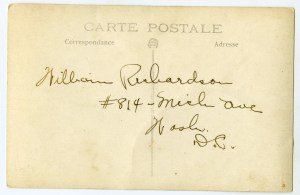
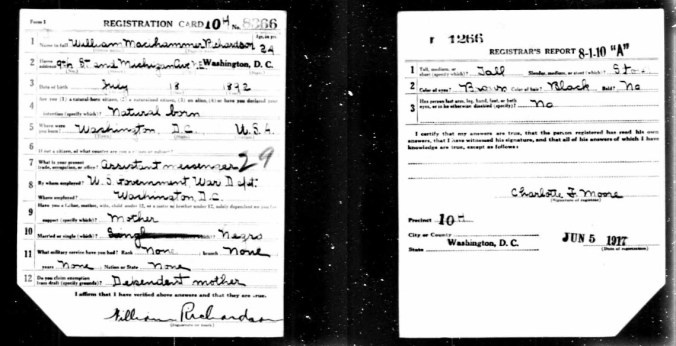
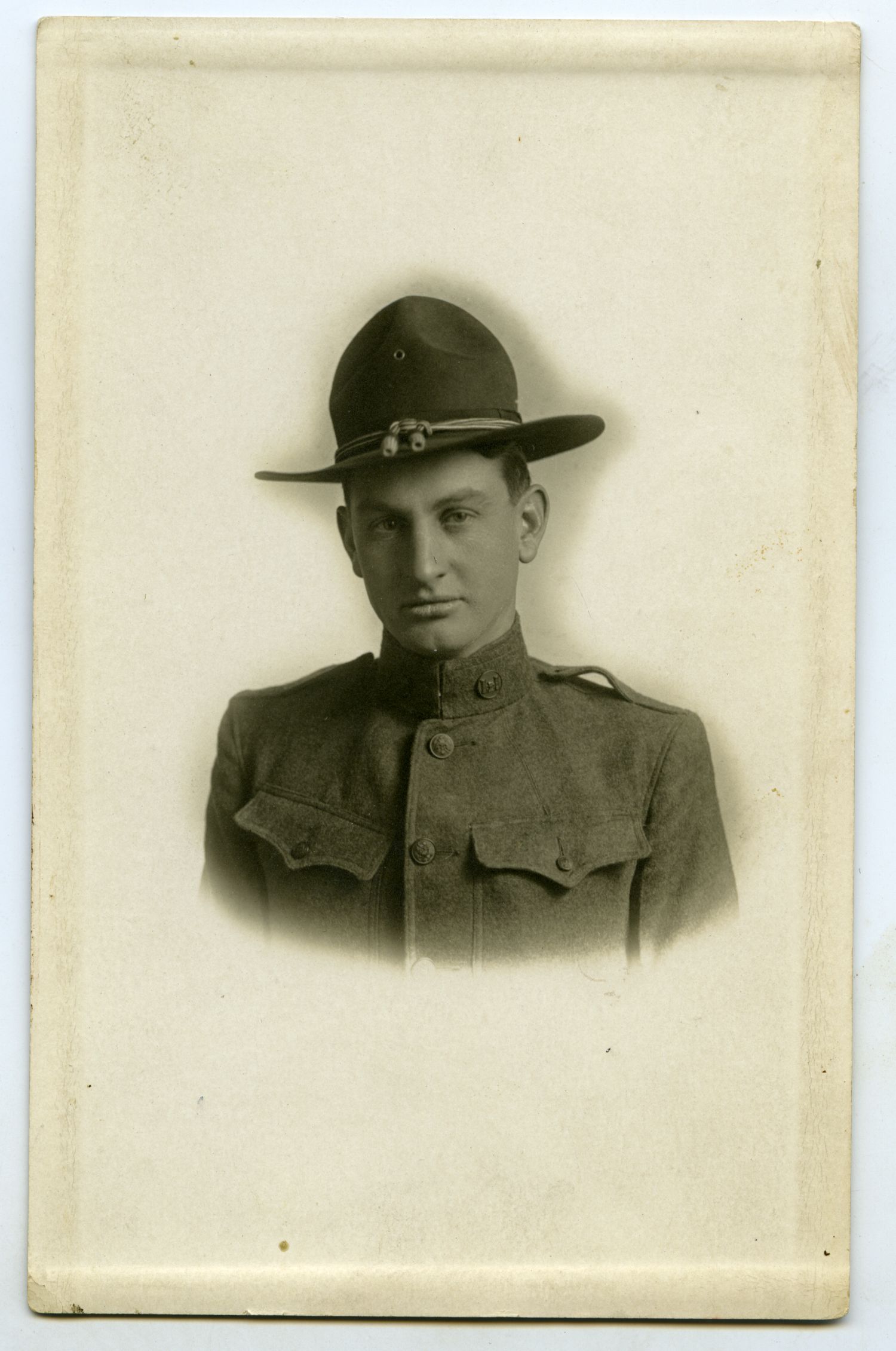
Mr. William Maccihammer Richardson of 814 Michigan Ave, Washington D.C. enlisted for the draft on June 5th, 1917 at the age of 24.  He had a dependent mother and presumably a deceased /absent father.  William, according to his draft registration card, was already in the service of the War Department and was likely added to the roster of the 93rd Division.  The 93rd was comprised of National Guard units from New York, Chicago, Washington, D.C., Cleveland, and Massachusetts.  I’m assuming he was in the 93rd Division given the presence of his infantry regiment crossed rifle cap insignia and his military service in D.C.  He was a messenger before the war while working for the War Department in Washington, so it’s an easy jump assume he served in a similar role with an infantry regiment of the 93rd.  William was one of over 1,000,000 African-American men to register for the draft and one of only 370,000 to be inducted into the army.

SigComparison

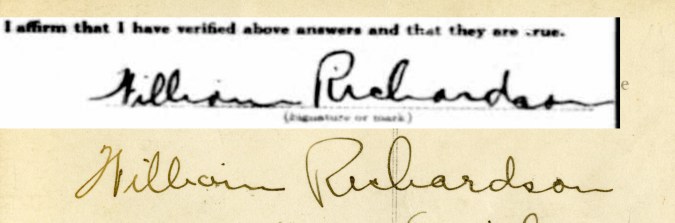
CSI Style Signature Comparison

Those familiar with WWI draft cards will notice the clipped corners.  This was required of men of color in order to easily pick them out during draft board review.  It was apparently  a common practice that I was not aware of until researching this image.

Richardson Draft Card

1917 Draft Card

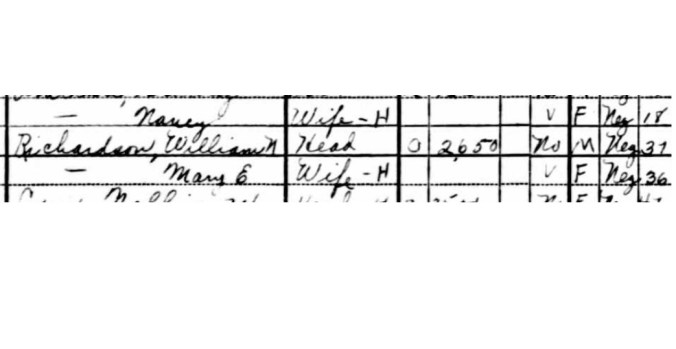
The next definite genealogical entry I found for William puts him in District 221 of Washington, D.C. in the census of 1930.  His entry is easily misread as a William N. Richardson.  He is shown as being married to a Mary E. Richardson.  His profession is listed as being a Chauffeur with the U.S. Government – another link to his prewar position.

1930 Census Record

1930 Census Record

In the 1940 census record, William is listed as being a chauffeur for a private family.  His yearly income is $1,700 – almost exactly the average annual income of $1,900 in 1940.  He lived in an apartment building in Block No. 18 of Washington and had two “lodgers” living with him and his wife.  June and Cleo Adams were sisters to Mary E. Richardson.

1940census

The last and final genealogical reference to Mr. Richardson comes in the form of a death registration.  William died at the ripe age of 81 on June 3rd, 1973.  The trail ends with his death, but the possibilities for future research lay wide open.  Which unit did he serve with?  Did he see direct combat?  How did he meet Ms. Adams?

death

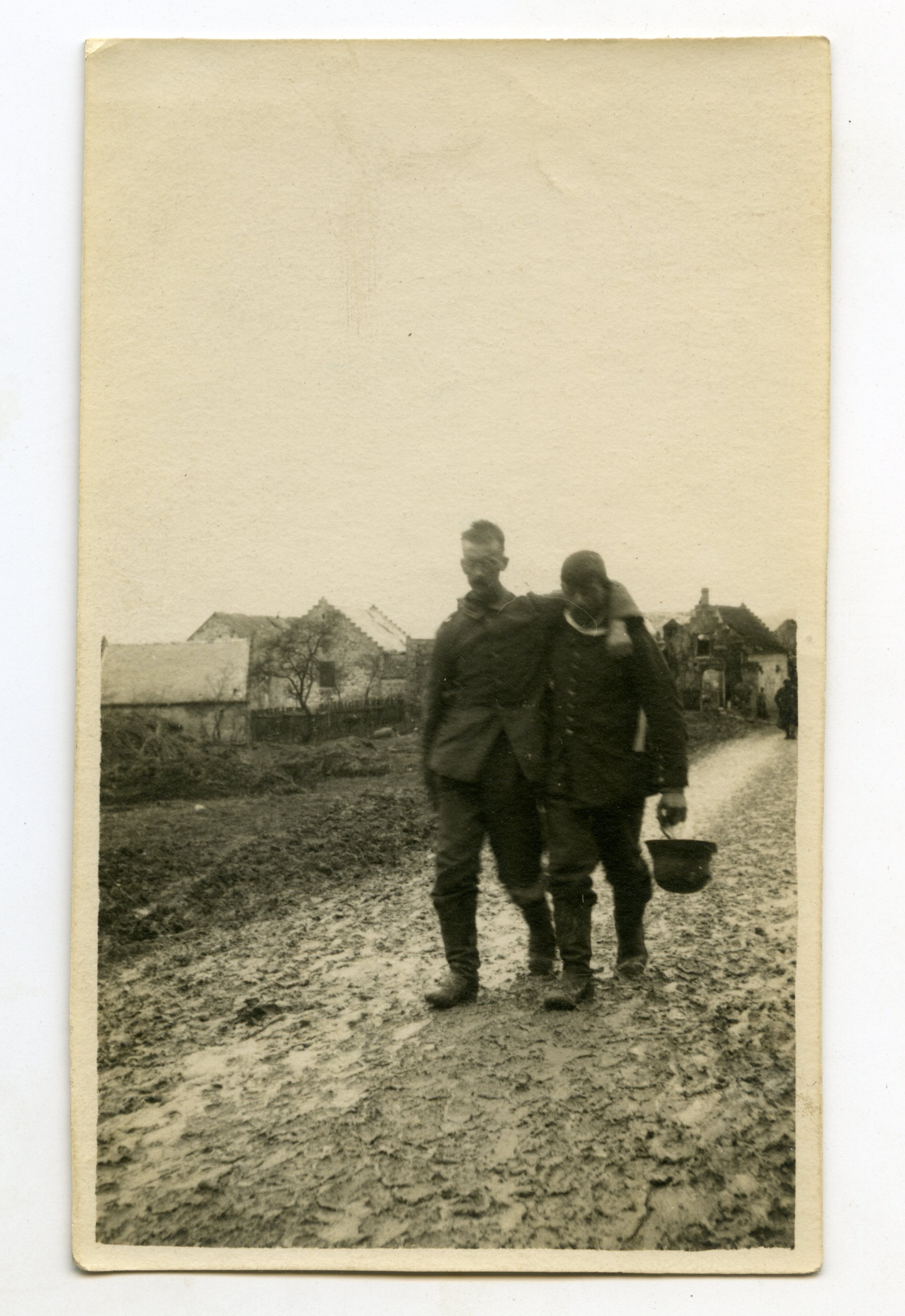
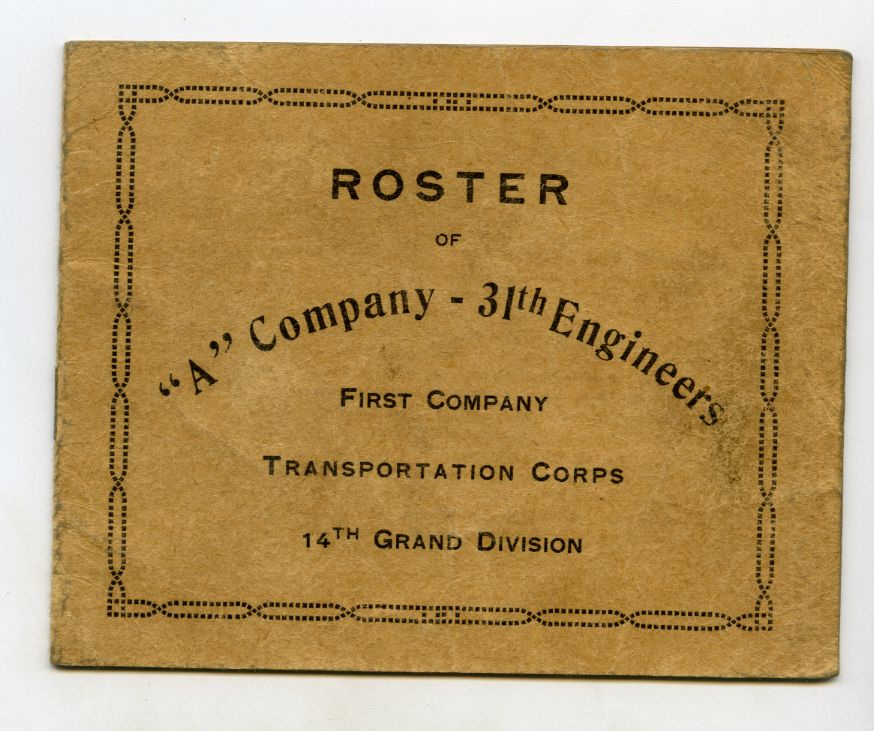
WWI Photo Collection – 31st Railway Engineers in France


I love collecting WWI albums and named photo groupings.  They are much harder to come by compared with the relatively plentiful single photo purchases.  In this case, I was able to come across a wonderful grouping of photos from the grandson of a WWI 31st Engineer veteran.  I promised to post the photos on the site to help raise interest in this obscure unit and help bring this man’s photos to the digital world.  Digital preservation allows thousands of viewers to enjoy images that would otherwise be relegated to the corner of a dusty upstairs closet.  I will do my best to describe what I can about the unit and share a few biographical vignettes.

Pvt. Herbert Conner posed in France

Pvt. Conner


“My grandfather was born in 1892 in Fordsville, Kentucky later the family moved to Amity Oregon and later to St Helens, Oregon. As a young man he was a prizefighter(that what they called them in those days). He was a logger for awhile later he went to work in Portland, Oregon for the railroad before the war  and after the war he continued with the railroad for over forty years as a fireman and an engineer. He never owned a car and the station was about two blocks from his house and Kelly’s Bar and the grocery store were across the street from work  so I guess he felt he didn’t need one. He passed away in 1968.

Grandpa was very proud to have served in World War 1. I do not believe he was in combat. The 31st engineers provided supplies and transported troops. The only story I can remember when he was on guard duty in France and a soldier had gone awol for the night, apparently celebrating and didn’t know the password or had forgotten it and Grandpa felt sorry for him and let him back in the camp. It has been such a long time ago there were probably other things that happened that I can’t remember right now. He must have spent some time at the French Riviera and Monte Carlo because there was a lot of postcards from that area and one postcard to his brother had him on the Italian Riviera for awhile.”

Some Guys from A Company

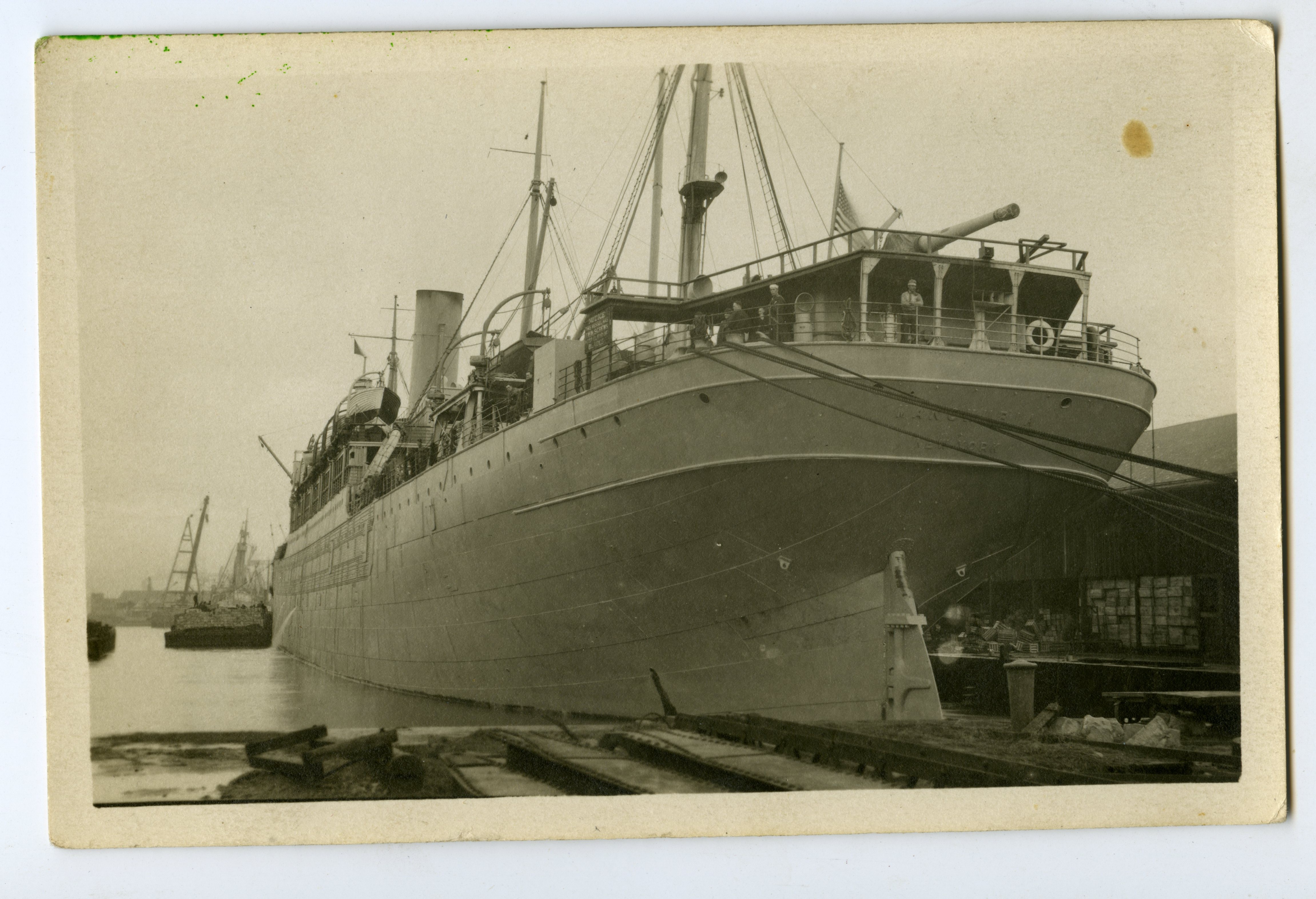
SS Manchuria in Port (Not the return ship for the 31st)

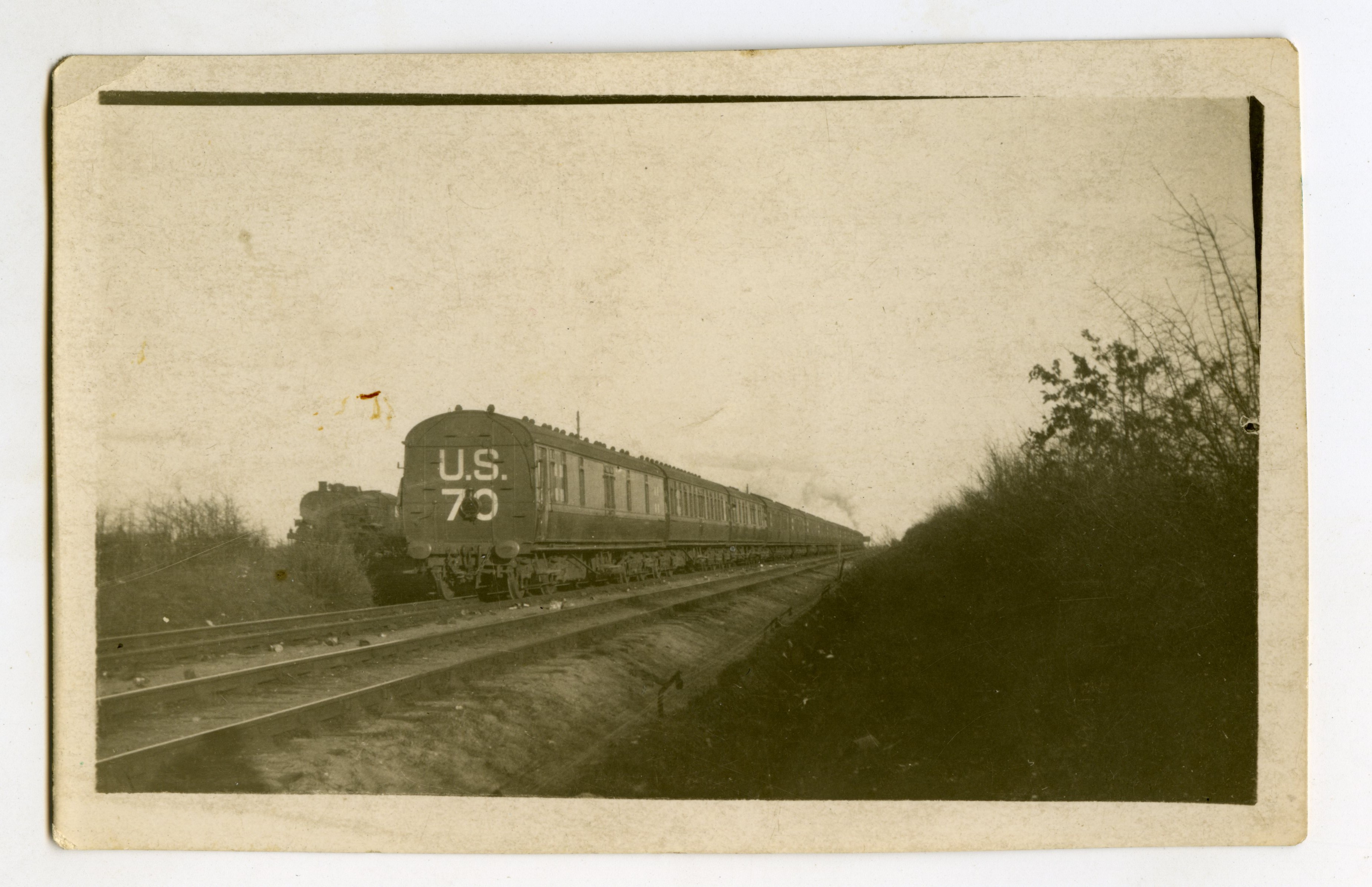
Hospital Train

German Prisoners

Check back for updates…………….

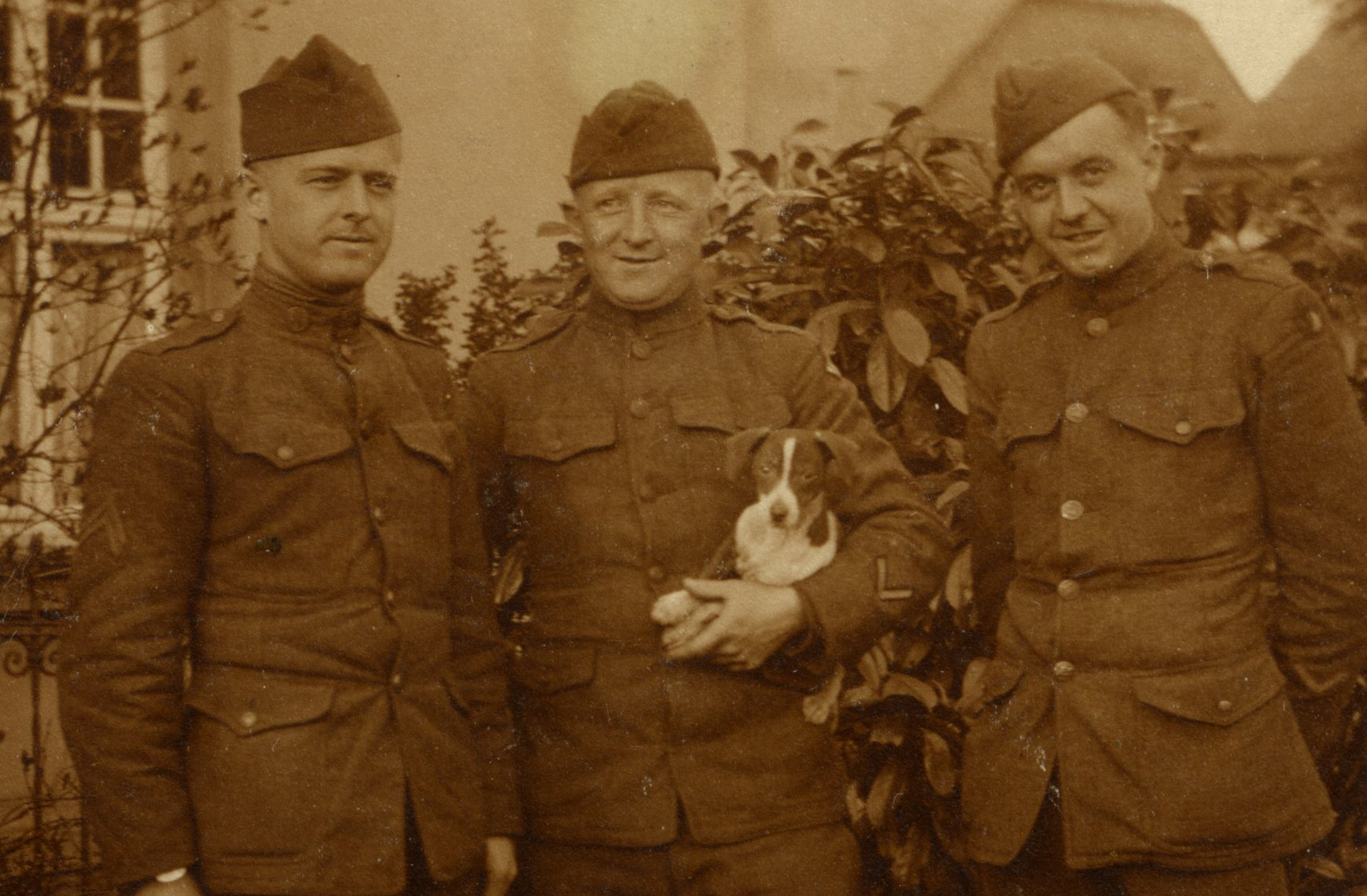
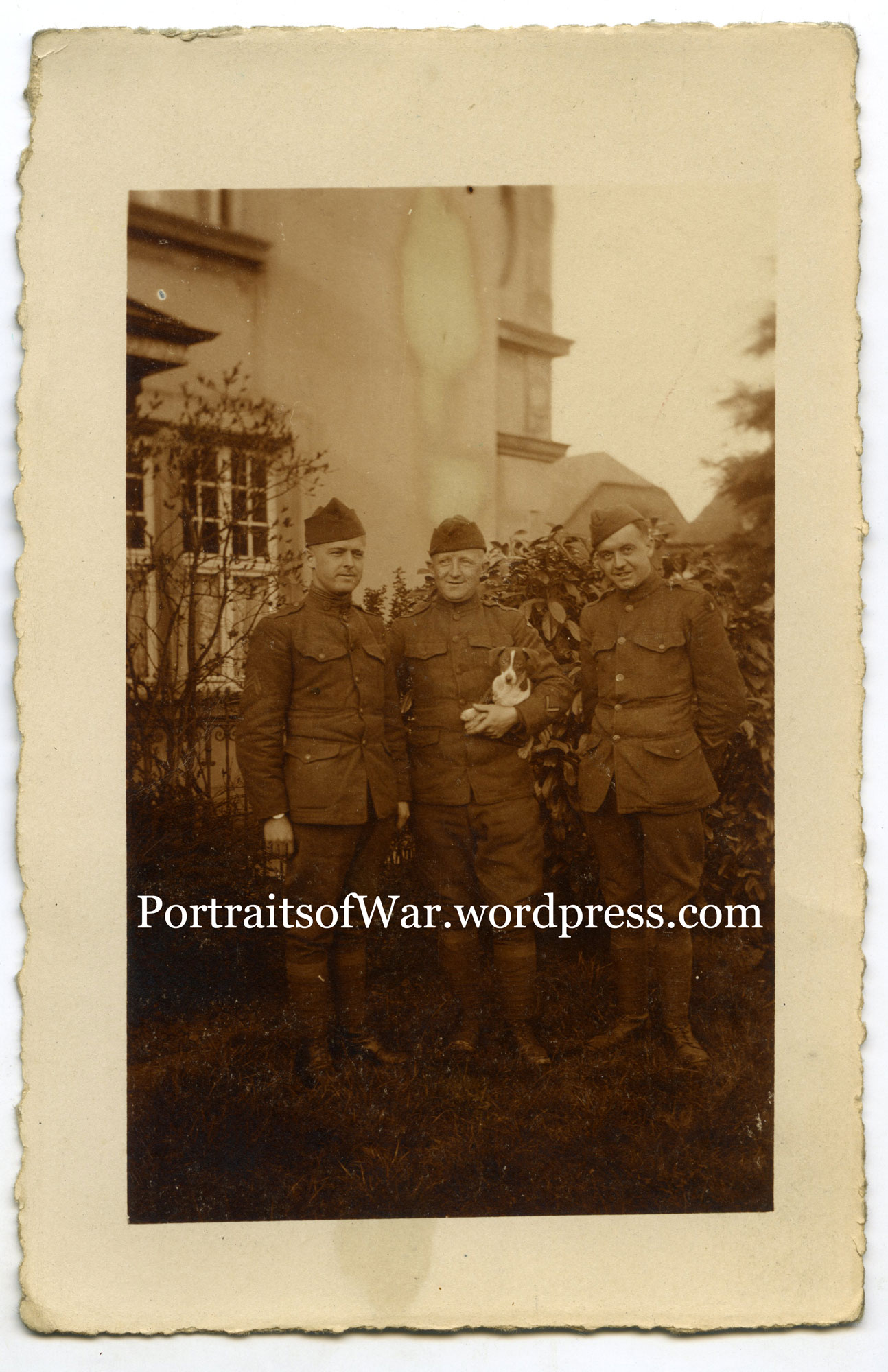
WWI Photo – 89th Division Soldiers Pose w/ Mascot Dog France


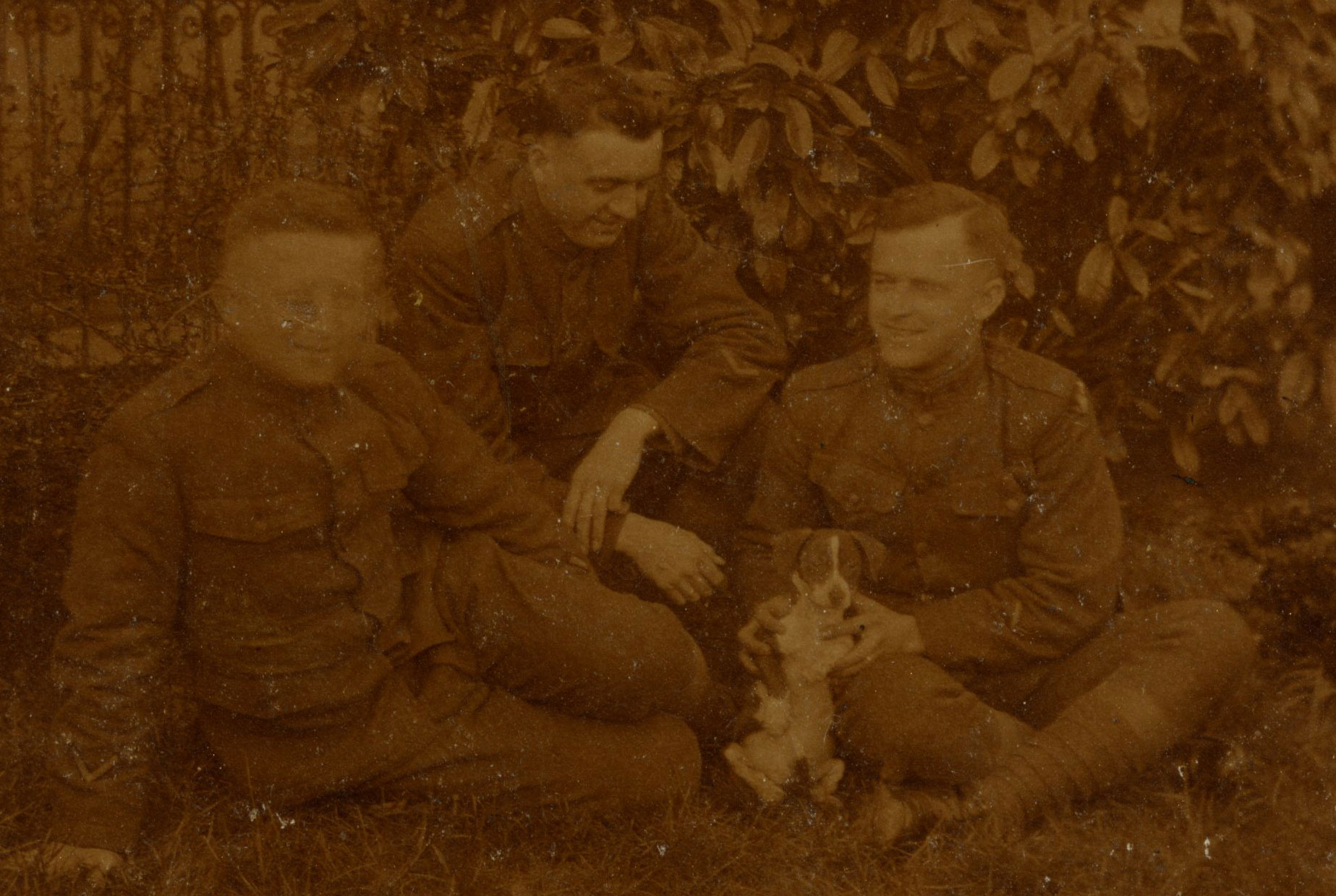
Following up on one of my favorite common threads seen throughout WWI photography – I present yet another example of the unit mascot.  Normally seen at the compnay level or below, the idea of having a small pet (normally a dog) as a mascot is very common throughout various nations during WWI.  I’ve literally seen examples from the US, England, Canada, France, Germany, Italy and even Australia. I probably have 15-20 examples in my own collection, ranging from small children as mascots, to dogs, pigeons and even goats.  My favorite are the small dogs. Here’s an example from the 89th Division. The collection of 8 photos came from a member of the 356th Infantry.  Unnamed, but we know he was wounded at least once during the war due to the wound chevron on his right cuff.

WWI Real Photo Postcard – Portrait Photo and Autograph of J. Warner Reed – 59th Pioneer Infantry Commander


A new addition to my collection comes in the form of an autographed French RPPC of the 59th Pioneer Infantry Regiment commander.  J. Warner Reed was a colonel with the Delaware National Guard during the Mexican Border War and later went on to form the 59th Pioneer Infantry of the 2nd Army.  Units from this regiment were engaged in road building, bridge building, and front line construction and improvement projects.


For more info on the 59th Pioneers – check out this website from the Delaware National Guard: http://delawarenationalguard.com/aboutus/history/firstworldwar/


WWI 42nd Division Doughboy Sends Home a Real Photo Postcard


Ever wonder how doughboys sent their photo postcards home?  I actually don’t own a single example of a postmarked photo postcard from the war, but recently came across a grouping that contained an envelope and postcard sent home by a 42nd Division soldier.  A member of the 151st Field Artillery, Frank Svec sent home a studio portrait shot of himself.  Not incredibly rare, but a good example of how WWI photos were sent during the war.  The 42nd Division is one of my favorite divisions, so this is an addition “kicker”.

Rare WWI 2nd Cavalry Photo RPPC Taken in France – 2nd Dragoons Training Station


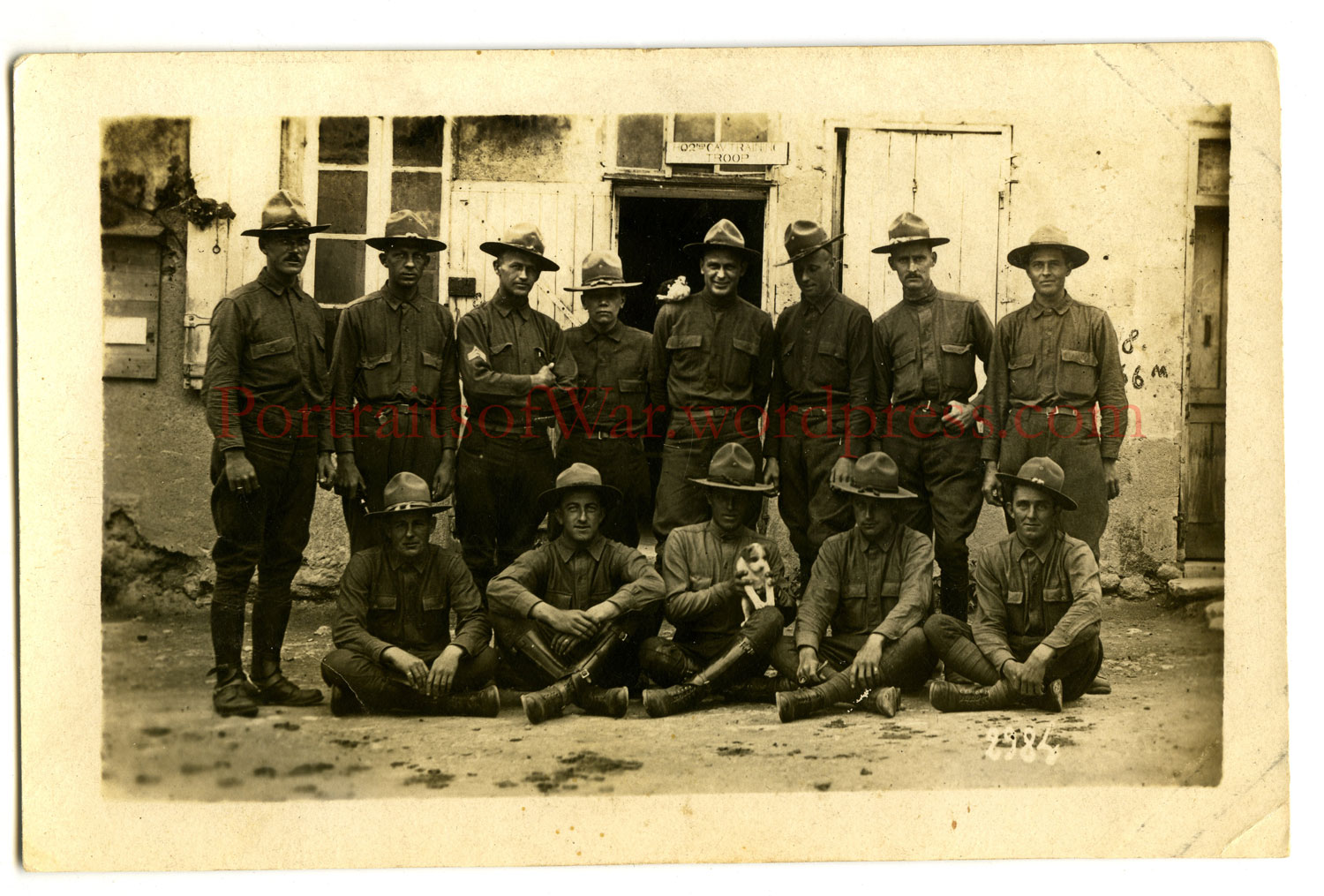
A particularly special photo acquisition comes in the form of a 2nd Cavalry RPPC (real photo postcard) taken somewhere near Tours, France during the war.  The 2nd Cav. trained only ten miles from my house in Vermont, at Fort Ethan Allen before their departure to Hoboken for transfer overseas to France.  Considered by many to be the only  true U.S. mounted cavalry units to serve during WWI, the 2nd Cav. was a unique unit that tends to be glossed over by WWI histories.  I’m proud to add this photo to my collection!

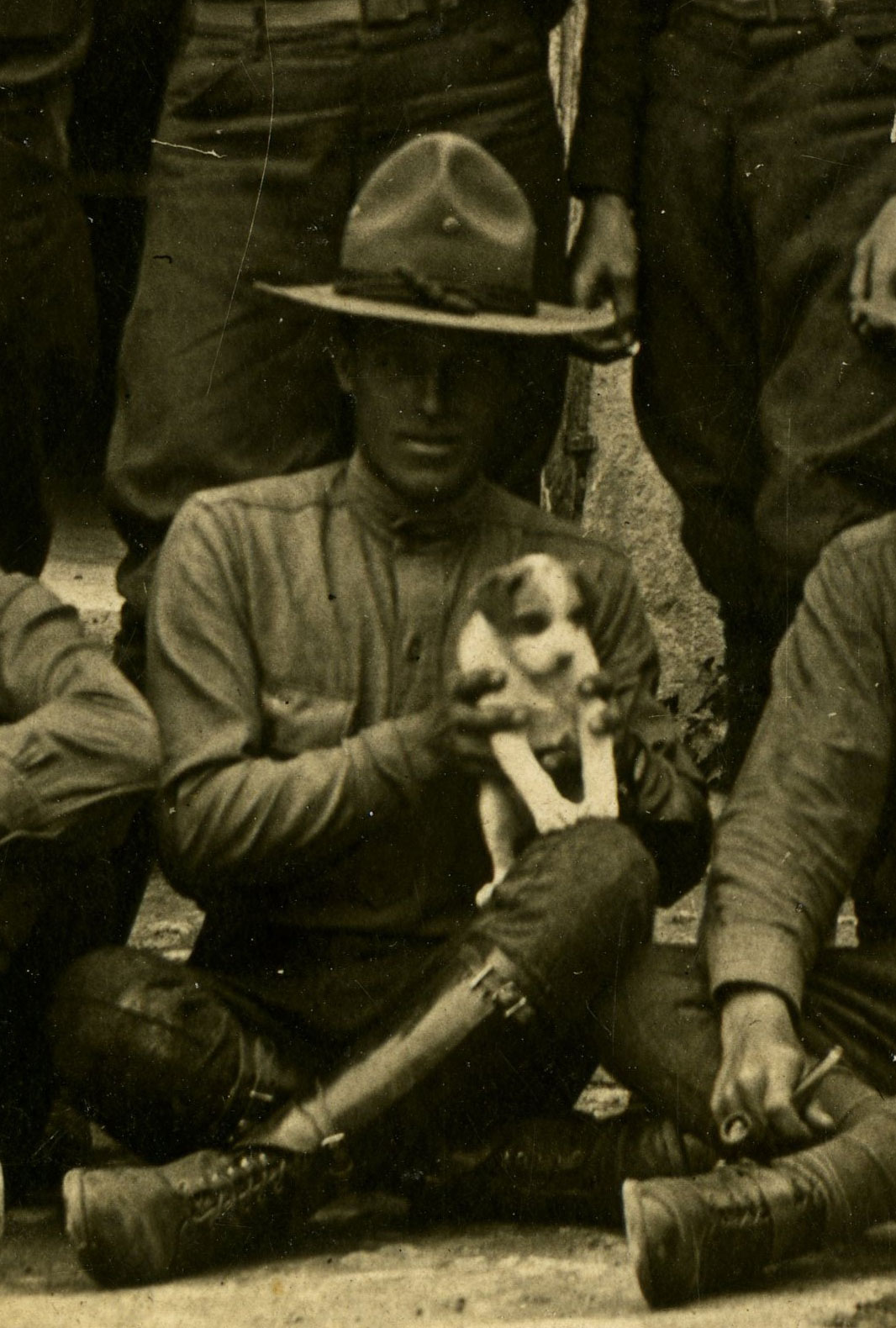
Interesting details of the photo include a mascot puppy, the use of spurs, and a raggedy pigeon perched on a shoulder.

For those interested in reading more on the history of the 2nd Cavalry, check out this website:  http://history.dragoons.org/category/world-war-i/

2nd Cav. Puppy Dog Mascot

WWI RPPC Studio Photo – Armed w/ Colt Model 1911 and w/ M1917 Helmet in Germany


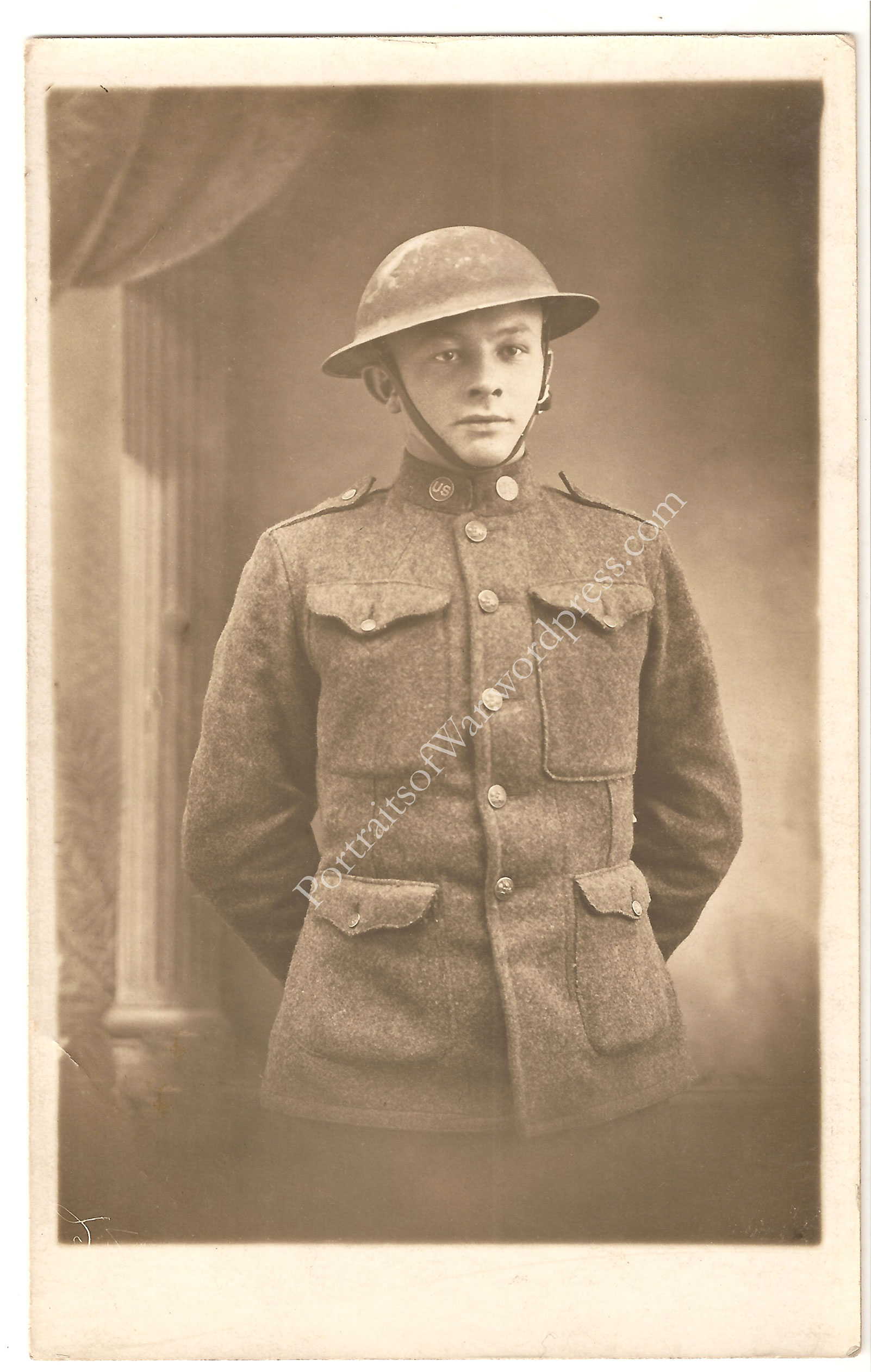
They don’t get much better than this!  Check out the detail on the equipment – this is the first photo in my collection that shows the M1911 pistol lanyard hanging from the right breast pocket.  I’ve owned a few in my day, but have always sold them to buy photos!  The soldier is proudly posing with his slightly dented helmet and his M1911 and leather holster proudly presented.  A top ten shot for me!