Rare WWI 2nd Cavalry Photo RPPC Taken in France – 2nd Dragoons Training Station


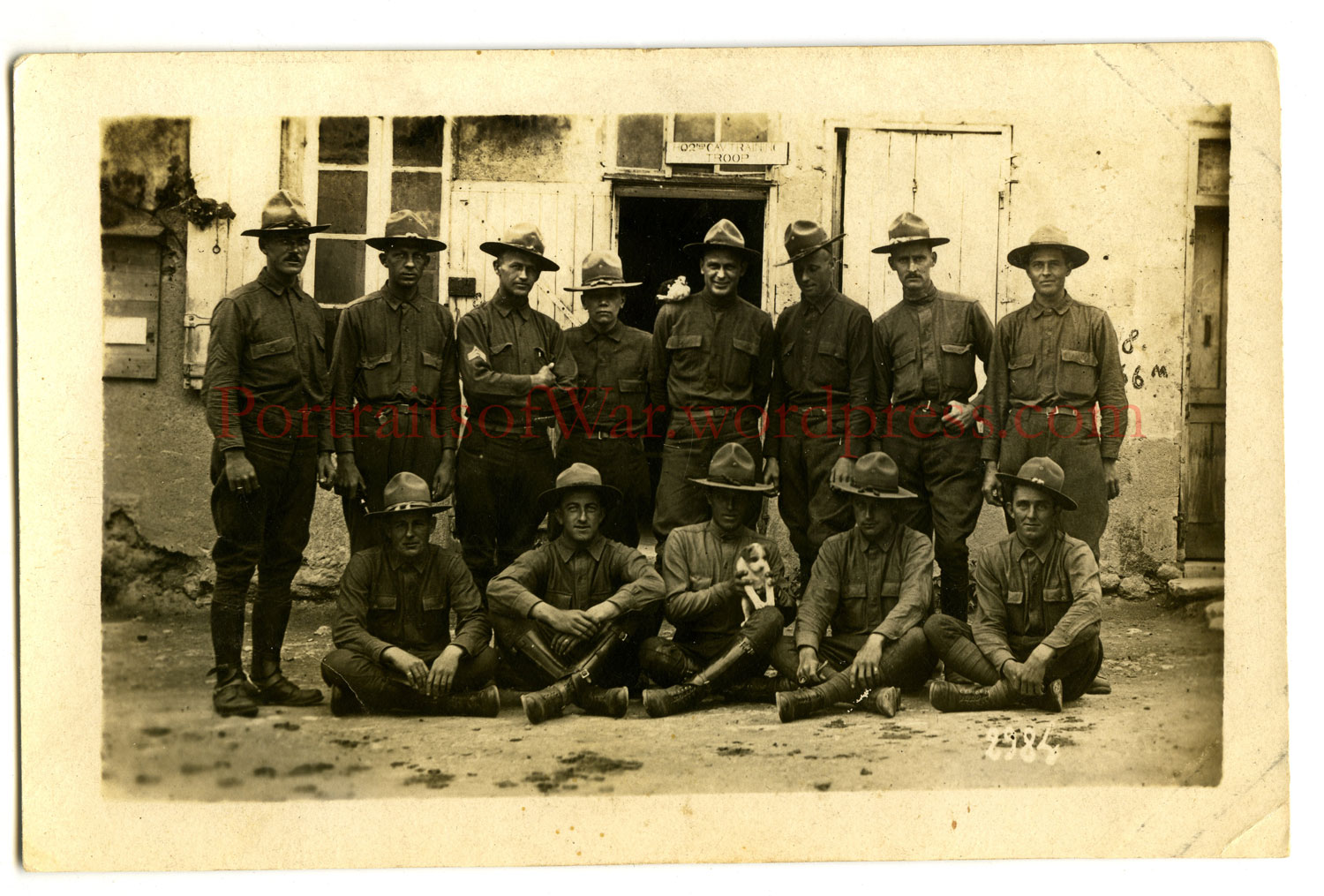
A particularly special photo acquisition comes in the form of a 2nd Cavalry RPPC (real photo postcard) taken somewhere near Tours, France during the war.  The 2nd Cav. trained only ten miles from my house in Vermont, at Fort Ethan Allen before their departure to Hoboken for transfer overseas to France.  Considered by many to be the only  true U.S. mounted cavalry units to serve during WWI, the 2nd Cav. was a unique unit that tends to be glossed over by WWI histories.  I’m proud to add this photo to my collection!

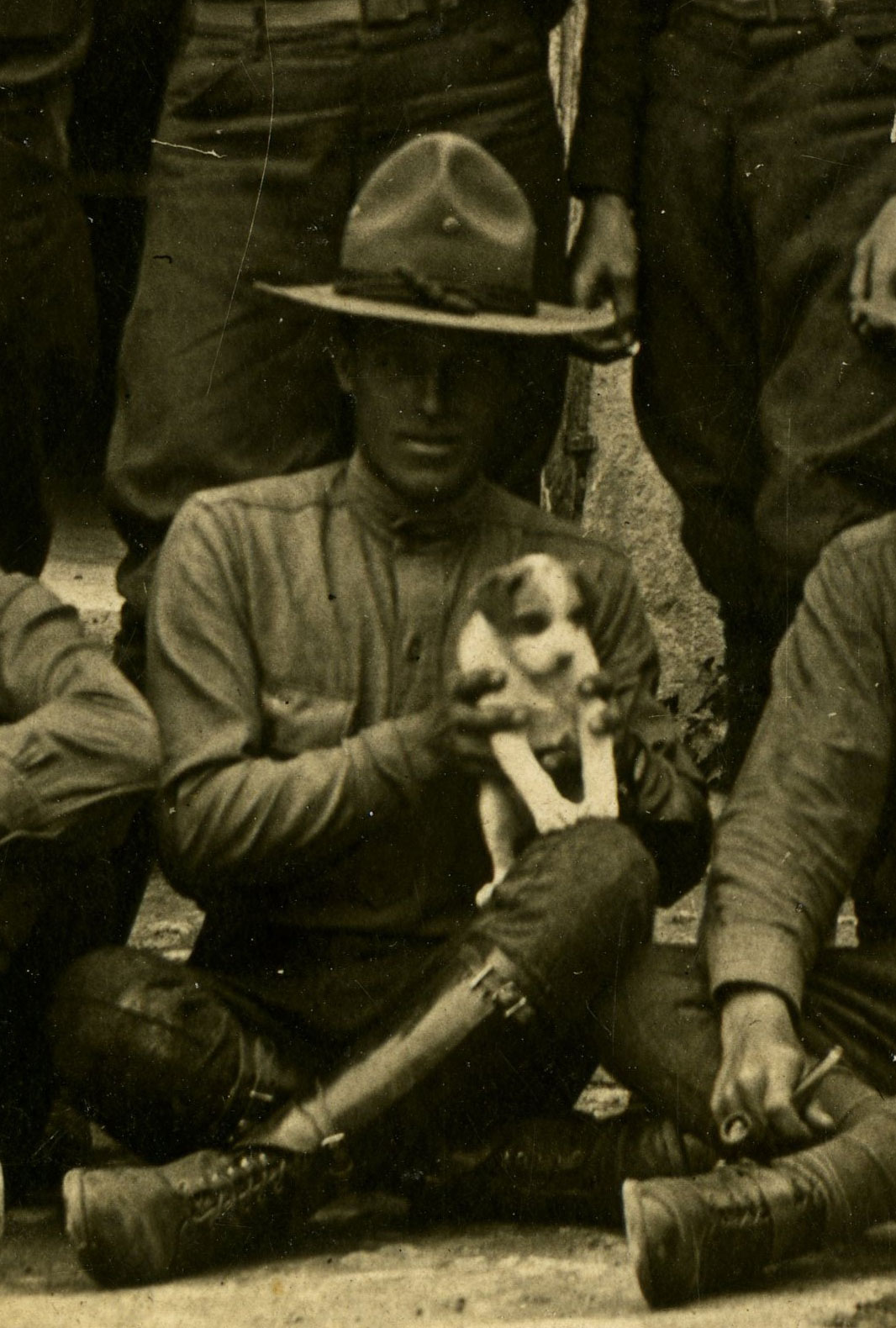
Interesting details of the photo include a mascot puppy, the use of spurs, and a raggedy pigeon perched on a shoulder.

For those interested in reading more on the history of the 2nd Cavalry, check out this website:  http://history.dragoons.org/category/world-war-i/

2nd Cav. Puppy Dog Mascot

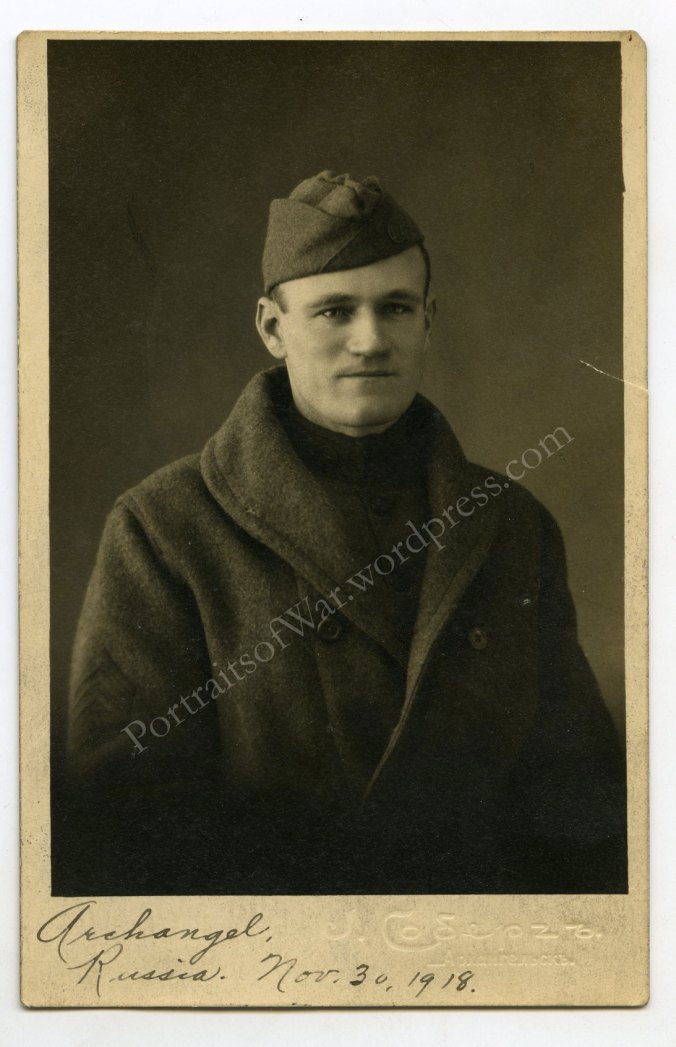
WWI 310th Engineer “Polar Bear” in Archangel Russia, 1918 – US Northern Russia Expedition


310th Engineer in Archangel, Russia

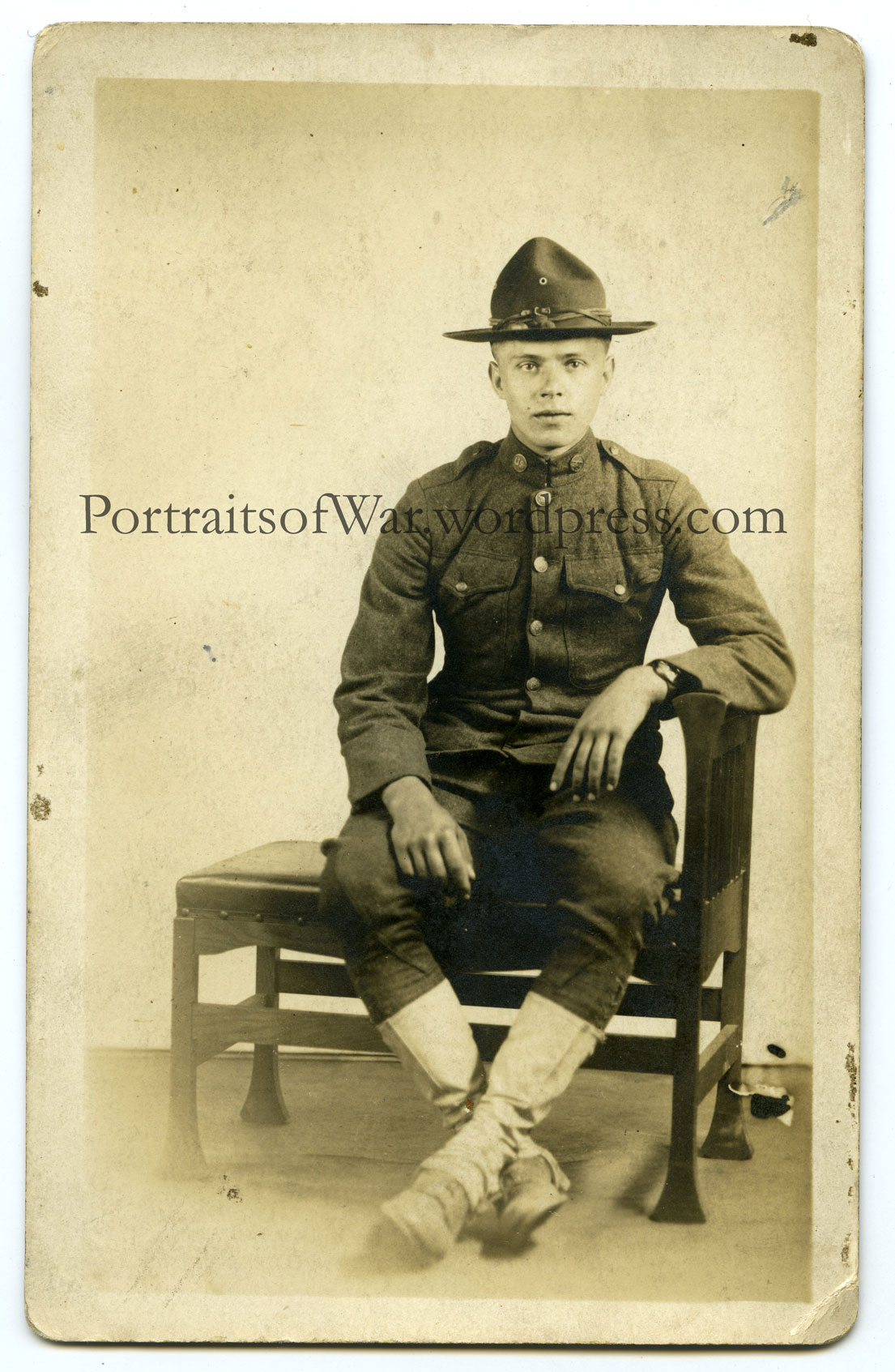
Don’t know too much about the US involvement in Russia during WWI?  Don’t worry, neither did I until a few years ago.  The above photo was acquired from a poorly listed eBay auction, and depicts a 310th Engineer posing for the camera in a Russian studio in the city of Archangel.  Photos of “Polar Bear” soldiers are incredibly rare, especially front-taken studio portraits.  I’ve seen a FEW example of Polar Bears posing back home, but only a couple taken overseas.  This one is particularly rare, as it shows a member of the 310th Engineers, who only sent ONE battalion of soldiers up to Russia.

Want to read more about the Polar Bears?  Visit the site below!

An excerpt taken from the Bentley Historical Library at the University of Michigan’s website:

(http://polarbears.si.umich.edu/index.pl?node=polar%20bear%20history)

“The American military intervention at Archangel, Russia, at the end of World War I, nicknamed the “Polar Bear Expedition,” is a strange episode in American history. Ostensibly sent to Russia to prevent a German advance and to help reopen the Eastern Front, American soldiers found themselves fighting Bolshevik revolutionaries for months after the Armistice ended fighting in France.

Because many of the American troops involved in the intervention were from Michigan, the Michigan Historical Collections has long been interested in documenting this episode. This guide describes the Collections’ holdings of manuscripts and photographs as well as maps and primary printed source materials relating to the Polar Bear Expedition.

During the summer of 1918, the U. S. Army’s 85th Division, made up primarily of men from Michigan and Wisconsin, completed its training at Fort Custer, outside of Battle Creek, Michigan, and proceeded to England. While the rest of the division was preparing to enter the fighting in France, some 5,000 troops of the 339th Infantry and support units (one battalion of the 310th Engineers, the 337th Field Hospital, and the 337th Ambulance Company) were issued Russian weapons and equipment and sailed for Archangel, a Russian port on the White Sea, 600 miles north of Moscow.

When American troops reached their destination in early September, they joined an international force commanded by the British that had been sent to northern Russia for purposes never made clear. Whatever the reasons for the intervention, however, the force was fighting the Bolsheviks who had taken power in Petrograd and Moscow the previous winter.”

WWI 26th Yankee Division, 102nd Field Artillery Doughboy – Walter Laskowski


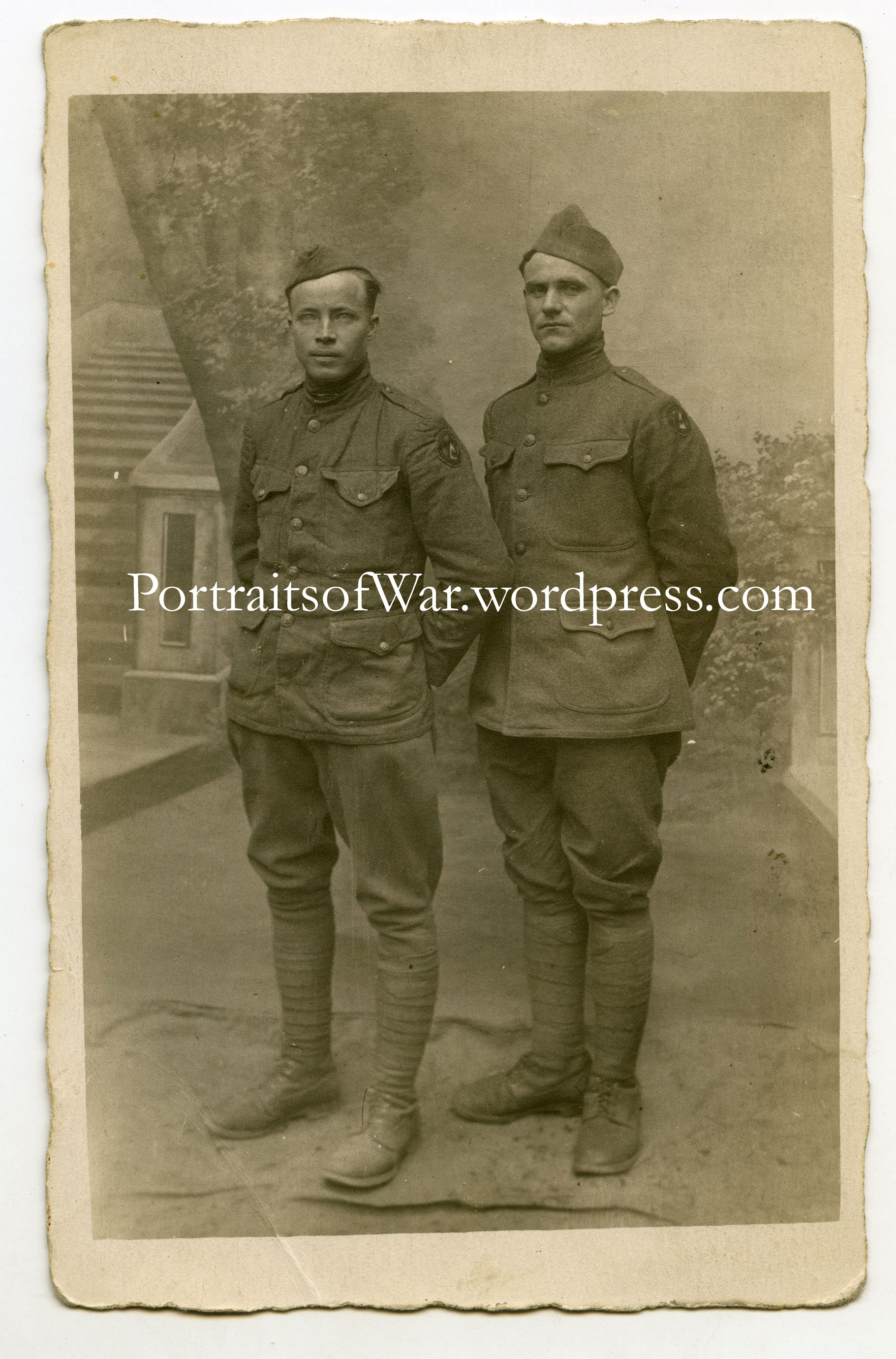
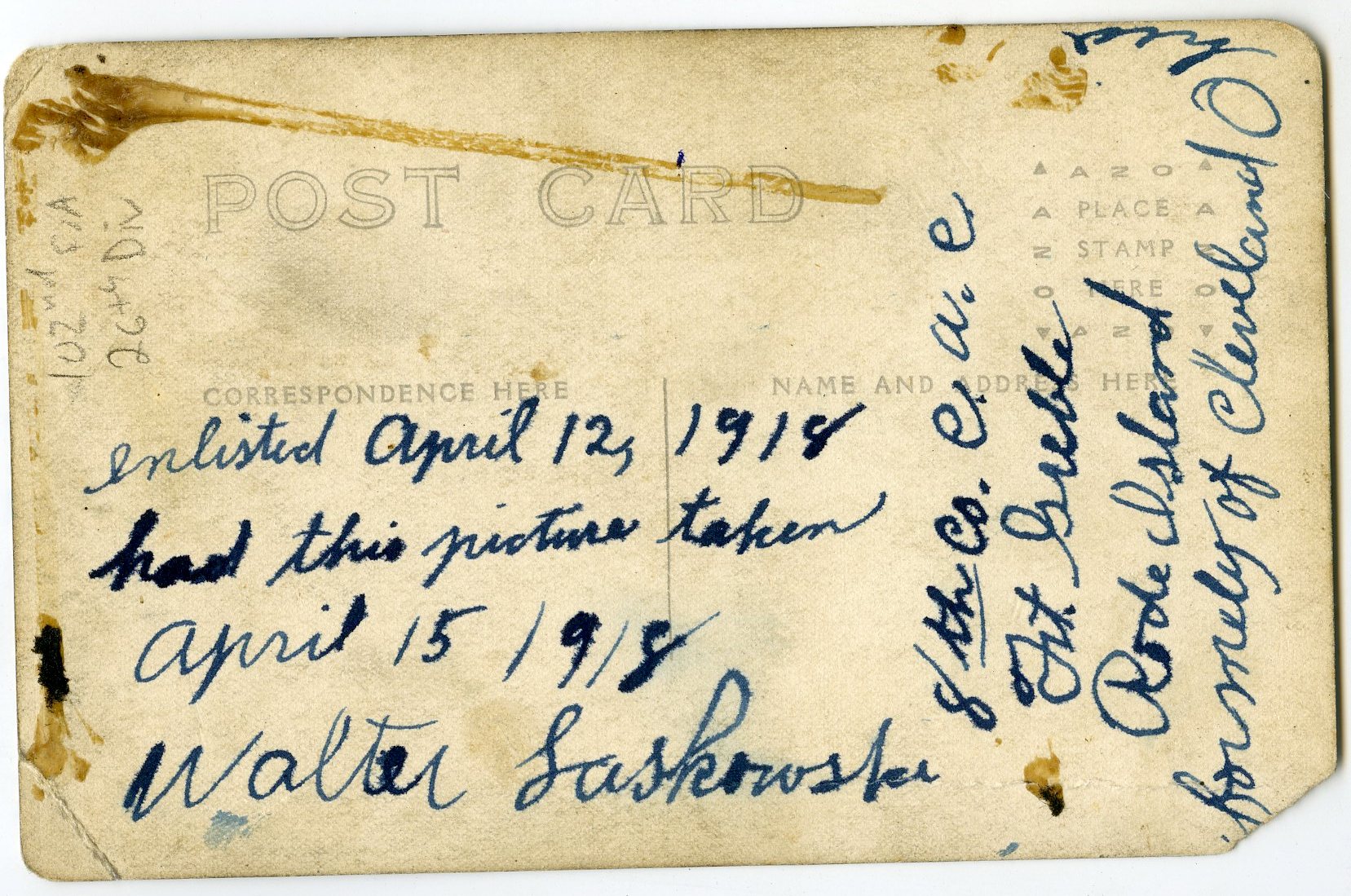
Originally a member of the 8th Co. Coastal Artillery based out of Narragansett Bay (RI) until April 1918, Walter eventually joined the 102nd Field Artillery of the 26th Yankee Division.  I was lucky enough to acquire two inscribed photographs depicting Walter in both roles.  His seated portrait was taken before his June 1918 departure for overseas service.

An interestingly decorated backmark shows that the seated portrait was taken in at 162 Thames Street in Newport, RI.  The Electric Studio’s logo includes a fanned array of lightning bolts emanating from the written portion of the backmark.

For further information on the Rhode Island National Guard unit Walter belonged to, click the link below:

http://www.or.ng.mil/sites/RI/army/56tc/a219sf/default.aspx

WWI 78th Division Portrait Photo – Wounded


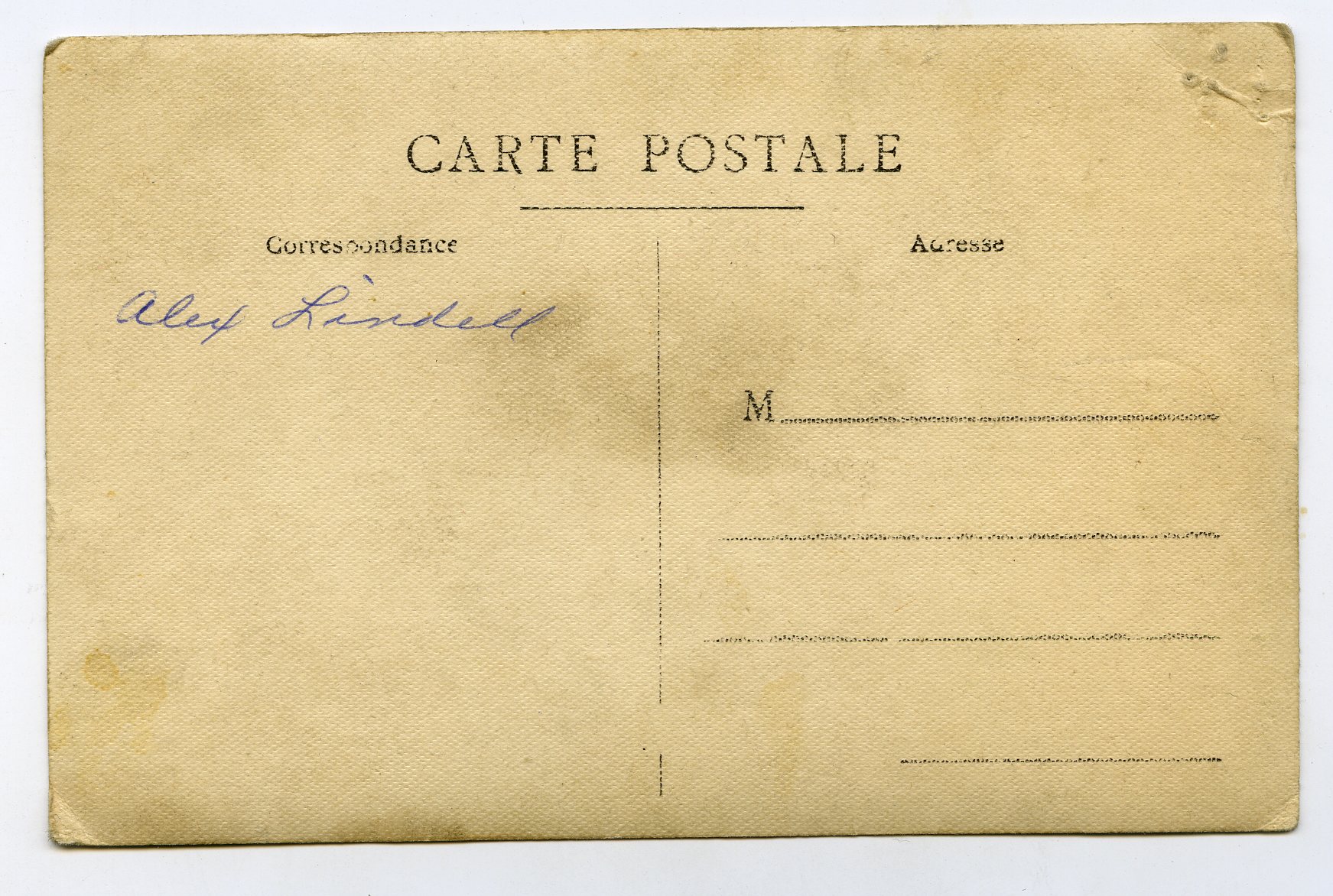
Today’s post comes from my growing collection of 78th Division portrait photos.  Although we don’t know his specific unit designation, we do have his name and company.  Taken in a French studio, Alex Lindell was posed in a manner which allows the viewer to see his maimed hand.  The fact that he was wounded is evidenced by a visible wound chevron on his right hand sleeve.  The stitching is barely visible. 

Alex Lindell of the 78th Division

WWI 26th Division / 32nd Division Mystery Photo -103rd Infantry Regiment Officer


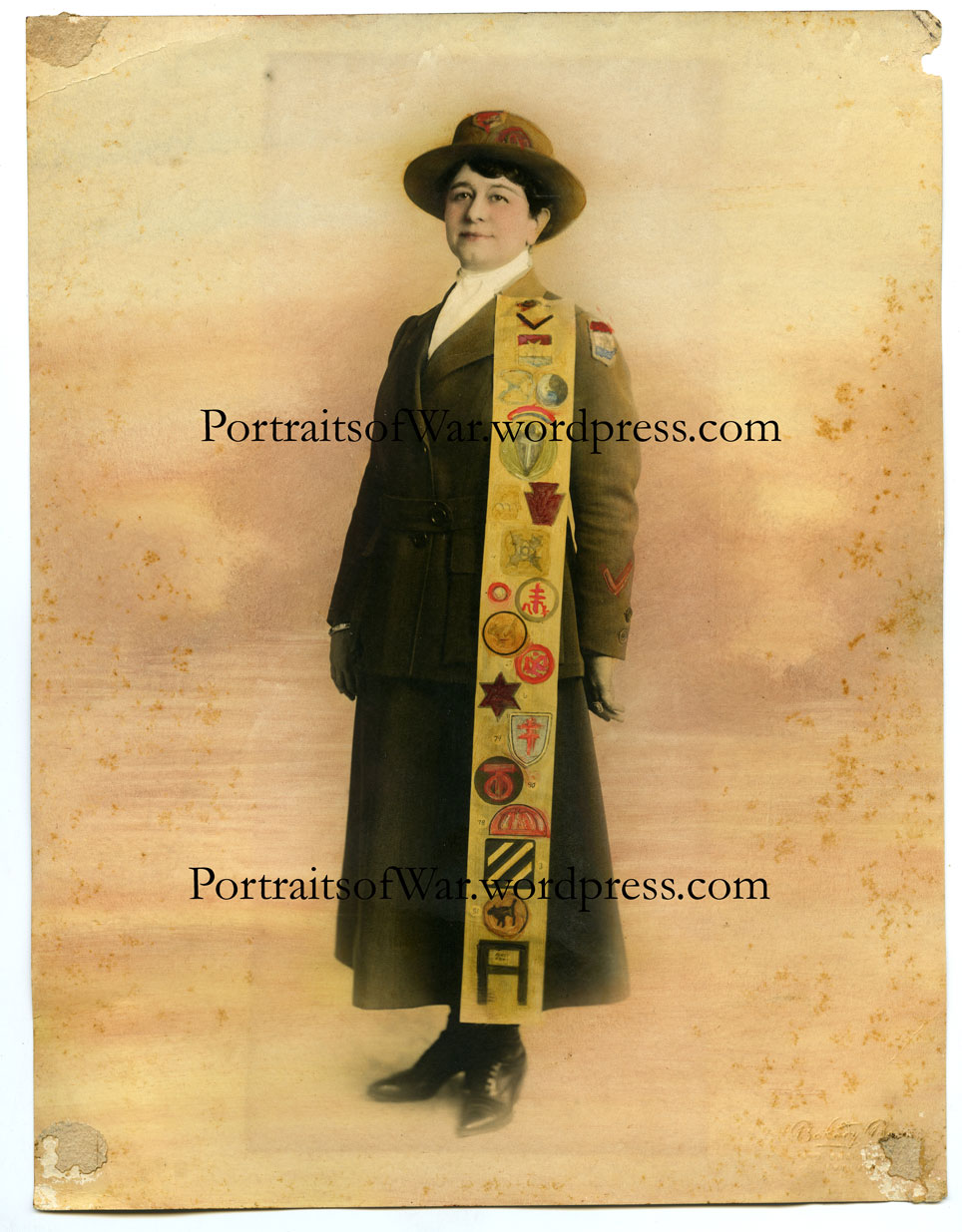
Today’s photo post is a real head-scratcher!  I purchased the image thinking it was a nice studio portrait of a 32nd Division officer, which is evident from the SSI patch of the red arrow with a line through it.  When the photo arrived I noticed instantly that the officer was wearing the collar insignia of the 103rd Infantry Regiment of the 26th Division.  Causal readers of this blog will know that I actively seek out 26th Division photos due to my New Englander roots.

32nd Division or 26th?

Back Reads:

Selters Germany

12 January 1919

From Captain

Guy Swett (Hard to read writing)

Co. H 127th U.S Inf

32nd Div

“Army of Occupation”

Sent to a Miss Flora Murch

South Paris, ME USA

I am assuming the fellow was originally from the South Paris area in Maine, which would point towards a Yankee Division identification.  The 32nd Division was made up of guys from the Michigan area.  Looking at his other insignia also may point to his unit identity.  Is that a DSC ribbon on his chest?  It’s hard to tell, but it possibly may help in identifying the last name and original unit.

Any help from readers would be greatly appreciated!

Special thanks to our friends over at Soldier’s Mail for this wonderful interpretation!  Don’t forget to check out their website for a super collection of WWII related information. 

“After the end of hostilities with the signing of the Armistice, inducements were offered to encourage veteran combat troops to extend their enlistments and remain with the Army of Occupation in Europe rather than returning directly home on the Bridge of Ships. (Sam Avery speaks of these inducements in this letter: http://worldwar1letters.wordpress.com/2010/01/13/sarrey-france-1131919/)

After the Armistice, the 26th Division was in such bad shape from combat losses that it was assigned to the rear rather than the Army of Occupation. However, a number of its members chose to extend their deployments and were reassigned to different units in other Divisions stationed in Germany.

The officer in this photo clearly originated with the 103rd Infantry as indicated by the Regimental device on his collar. However, he is also apparently a newly-minted Captain in the 32nd Division as indicated by his sporting of the double 1st Lt bars on his shoulder along with the 32nd Division shoulder patch. I believe he was originally a 1st Lt in the 103rd Infantry, and then accepted a promotion in rank to extend his service in Army of Occupation with the 32nd Division.

Based on the writing on the reverse of this photo card, the 127th was one of the four infantry regiments in the 32nd. This man’s rank as Captain also indicates he would have been appointed the Company commander.”

Thanks again to Soldier’s Mail!