
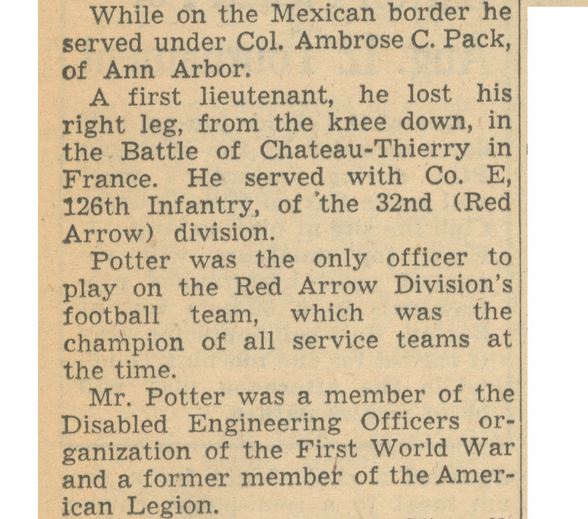
Clark B. Potter (at left) was born on October 3rd, 1891 in Kimball, Brule County, South Dakota; eventually landing in Ann Arbor, Michigan, Clark went on to serve as an officer with Company E, 126th Infantry Regiment of the 32nd Division during WWI. He was wounded by friendly fire in August of 1918 during the Battle of Fismes (Second Battle of the Marne) where he was sent to a hospital for the remainder of the war. This incredible photo of Clark posing in a Paris photo studio on Christmas Day, 1918 includes two other wounded soldiers of different regiments. Clark lost his leg in the battle and can be seen posing with his amputation in full display.

Clark and Friends in December of 1918

Clark Potter’s WWII Draft Registration
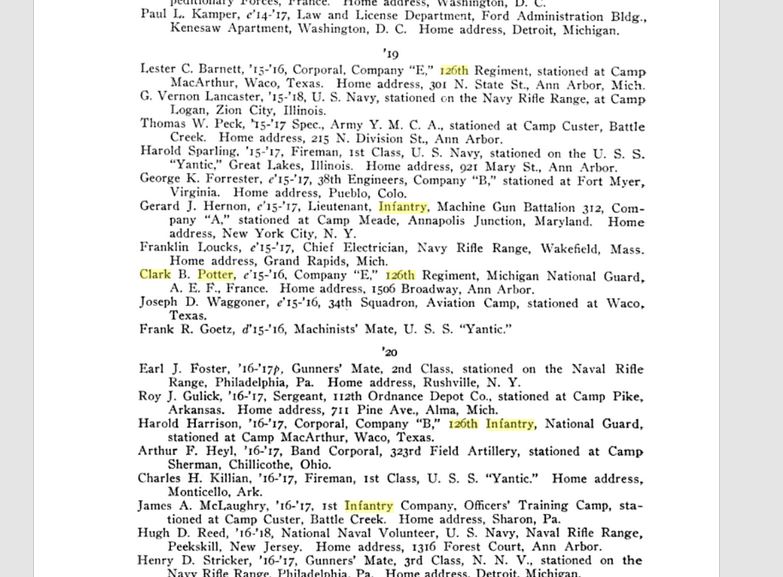
University of Michigan Class of 1919 Entry

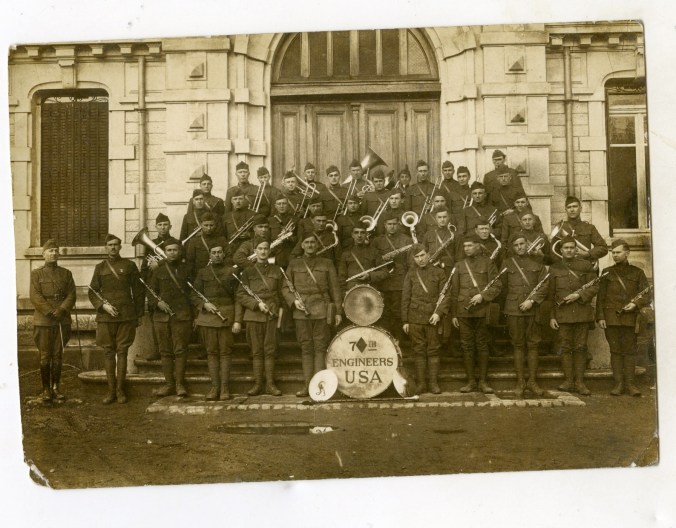
Clark’s WWI Company posed after the war (he was still in the hospital)
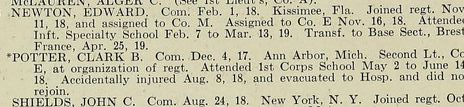
Clark’s 126th Infantry Regiment Roster Entry

Clark as a Child (from ancestry.com)
It’s been a long time since I’ve posted here to PortraitsofWar, so I’m taking a quick moment to add a recently acquired real photo postcard of a St. Bernard mascot from the 67th Coastal Artillery Company. He’s even sporting his own uniform! Check out the 1st Army variant patch with the 67 denoting the unit number and a double overseas chevron for a year of service. Good work Barney!
Mascot photos are one of my favorite avenues of WWI photo collecting. They are relatively hard to come by and are tough to research. All the better for a unique challenge when trolling through the pages of eBay.

Barney the St. Bernard in WWI
The identity of the sitter is lost to history, but I’m hoping someone on the WWW may help put a name to the sitter. US Marines sporting District of Paris patches are hard to find photographically, and this unnamed leatherneck is begging to be identified.
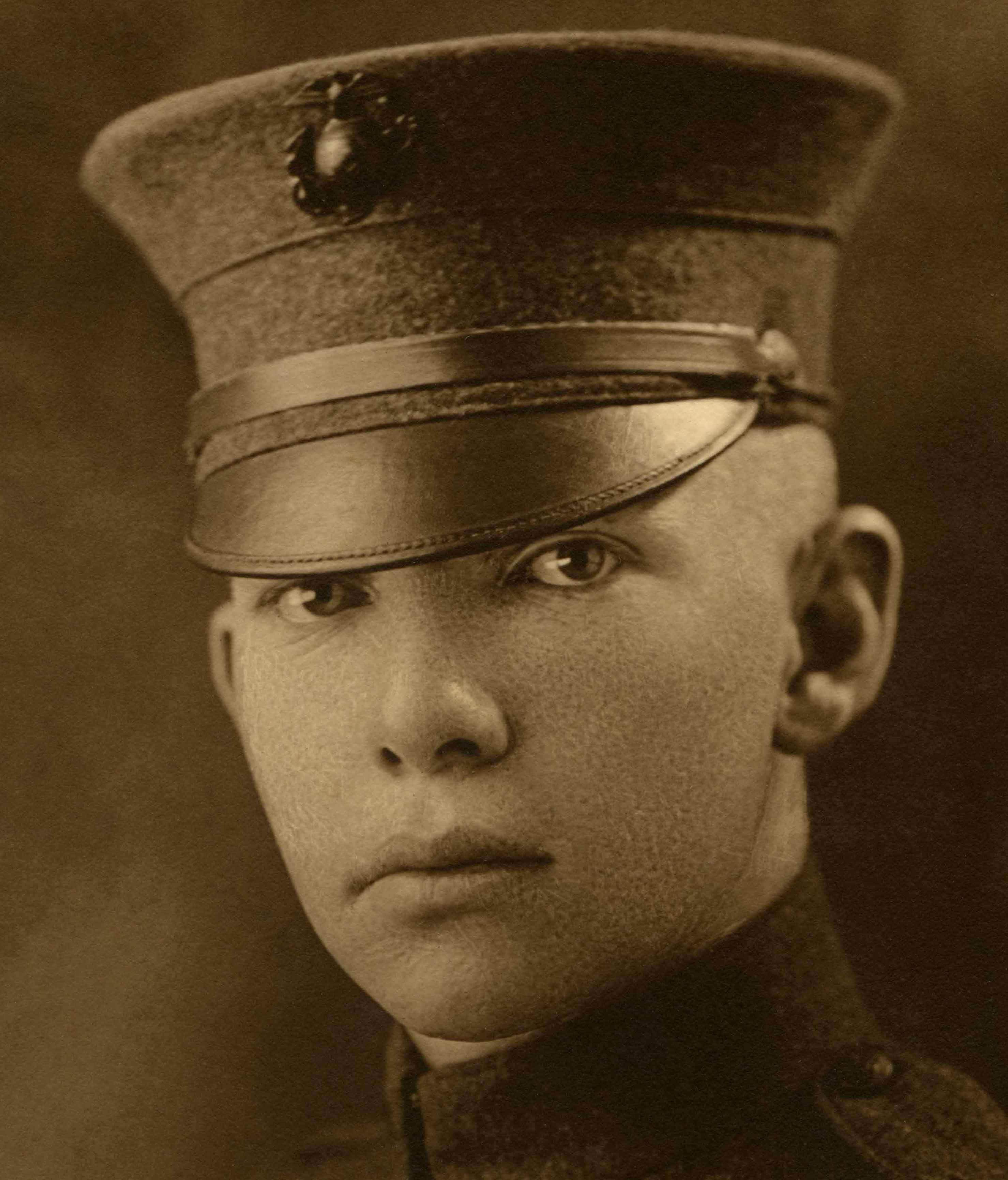
Paris Marine Headshot
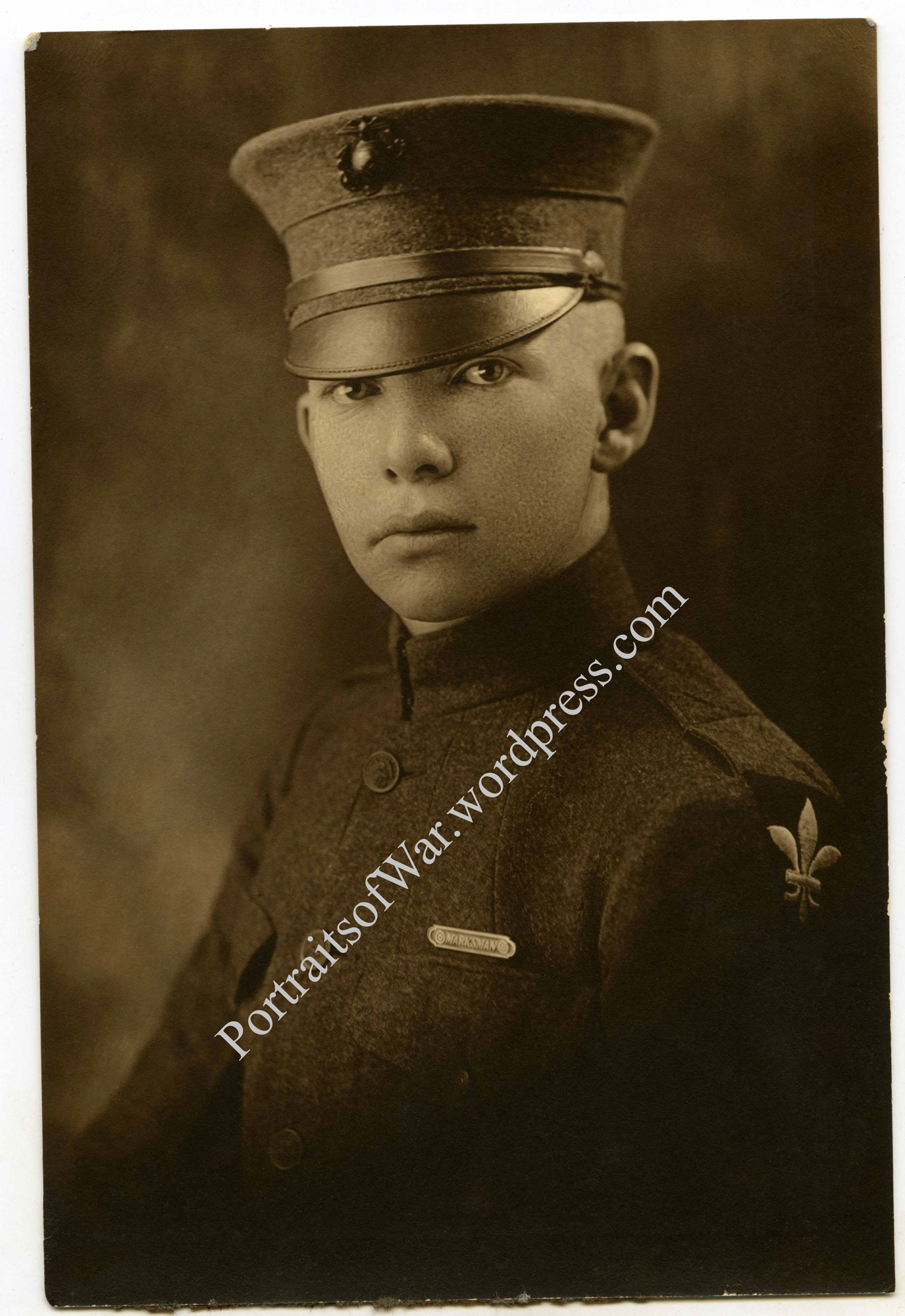
District of Paris USMC Patch Photo

Example of District of Paris Patch (Griffin Militaria)
Material related to wartime (and postwar) activities of the YMCA can be easily researched through the help of internet databases, digitized books, collectors forums and various other digital avenues. What is lacking, however, is information directly related to the individuals who volunteered their time and money to travel to a foreign county to serve donuts to war-weary doughboys waiting to return to their families in the US.
I was lucky enough to track down a large grouping of ephemera collected during the war by a YMCA canteen entertainer, a Miss Kittie Kunz. Included in the grouping is a selection of rare YMCA “unit history” paperwork which gives names and identities to many of the women and men who served alongside Kittie. I researched each of the names in hopes of tracking down passport application portraits. I was overwhelmingly successful and found nearly 75% of the names in the US Passport database that matched perfectly. Each was listed as being a member of the YMCA or Red Cross, and each matches the date range for the YMCA hut. A neat find! Please read on to see the faces of the women who served alongside Kittie. You will also find a smattering of hard-to-find ephemera related to the YMCA. It’s amazing that Kittie saved some of these items. Not all the paperwork is contained in this post, but the scanned material gives a quick glimpse into the typical material a YMCA canteen worker would deal with.
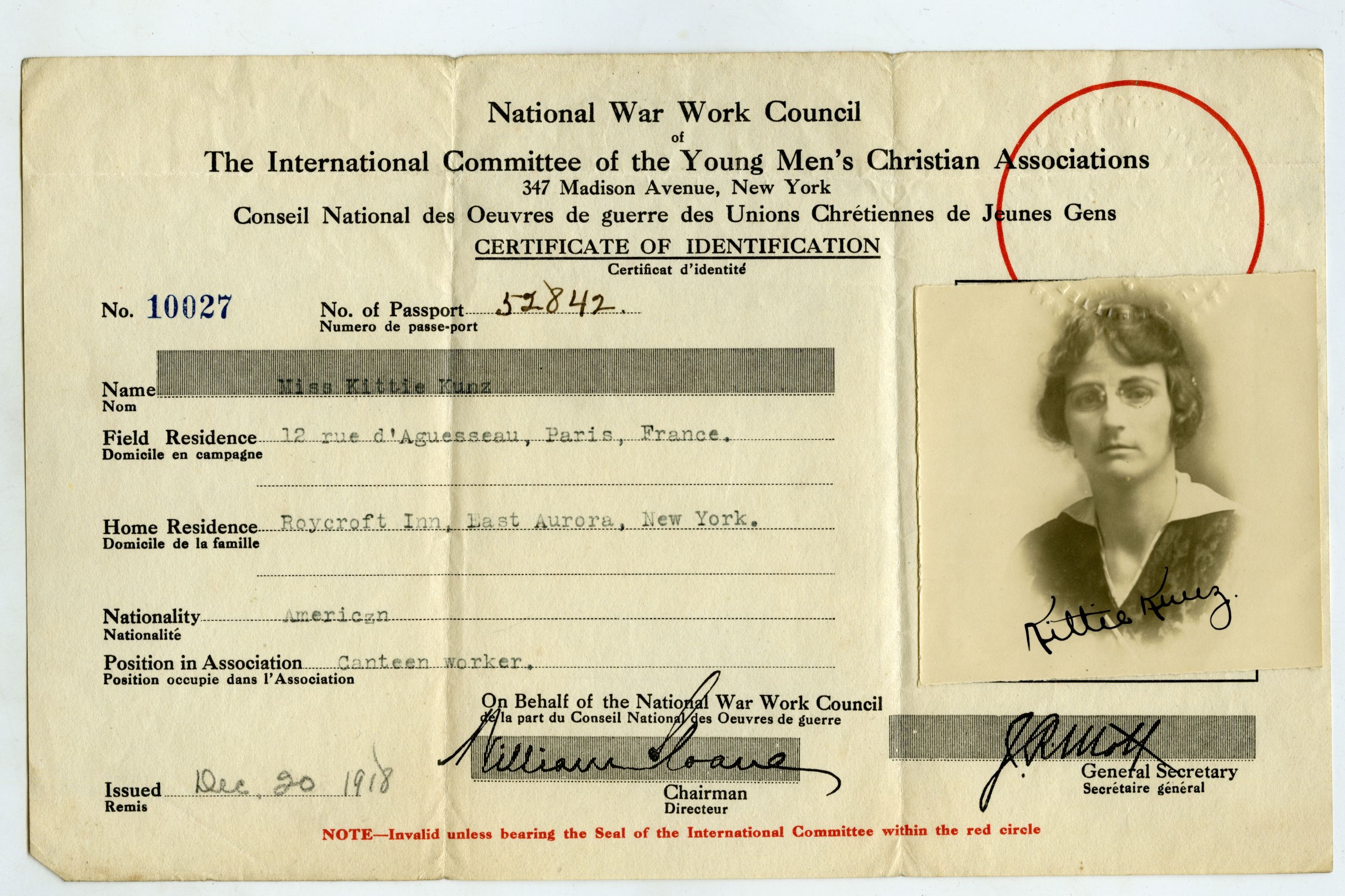
Kittie Kunz’s YMCA ID

Kittie’s YMCA Paris Travel Permit

Kittie’s YMCA Paris Travel Permit Reverse

Kittie’s Permit to Travel to Reims
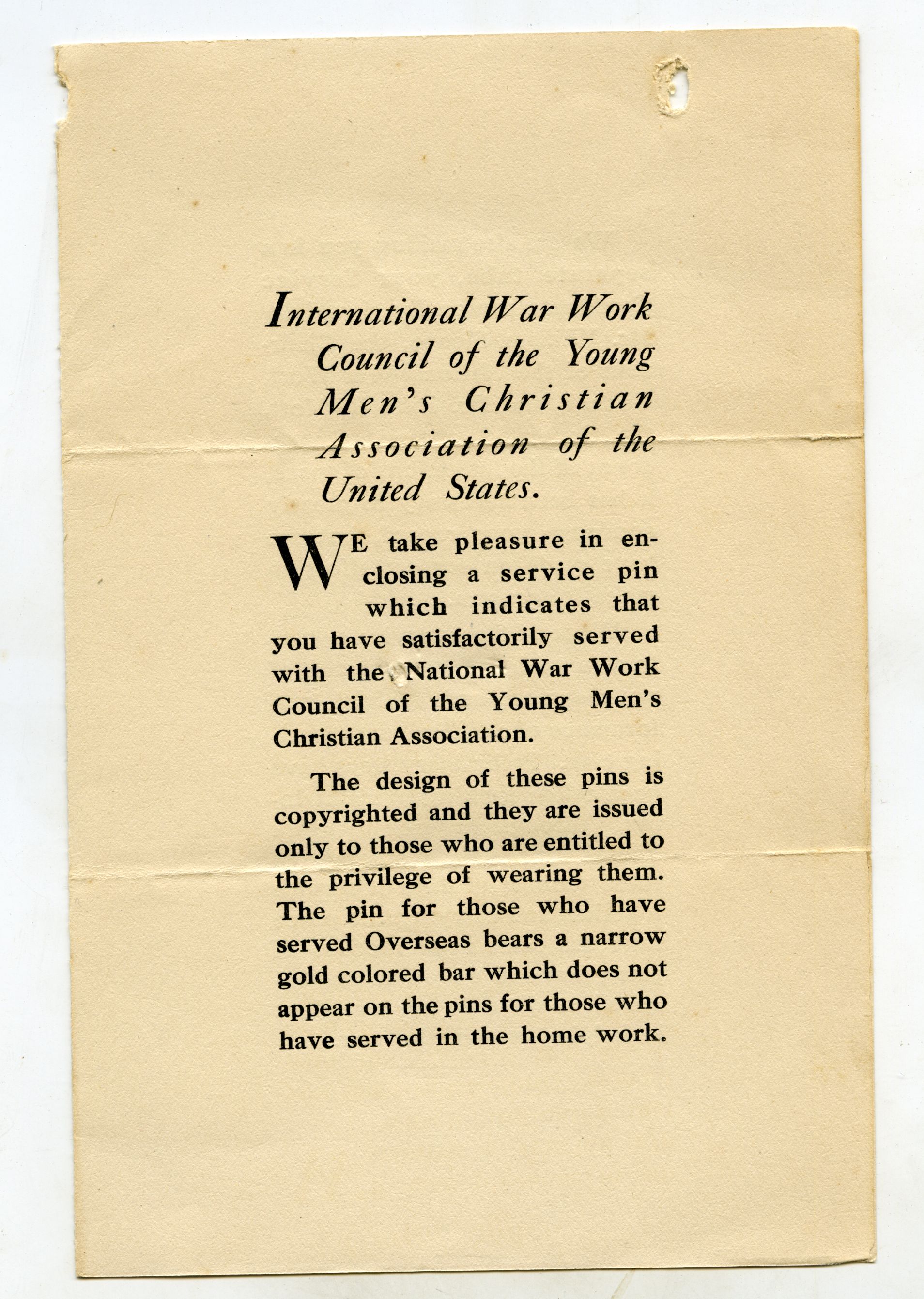
YMCA War Service Pin Card
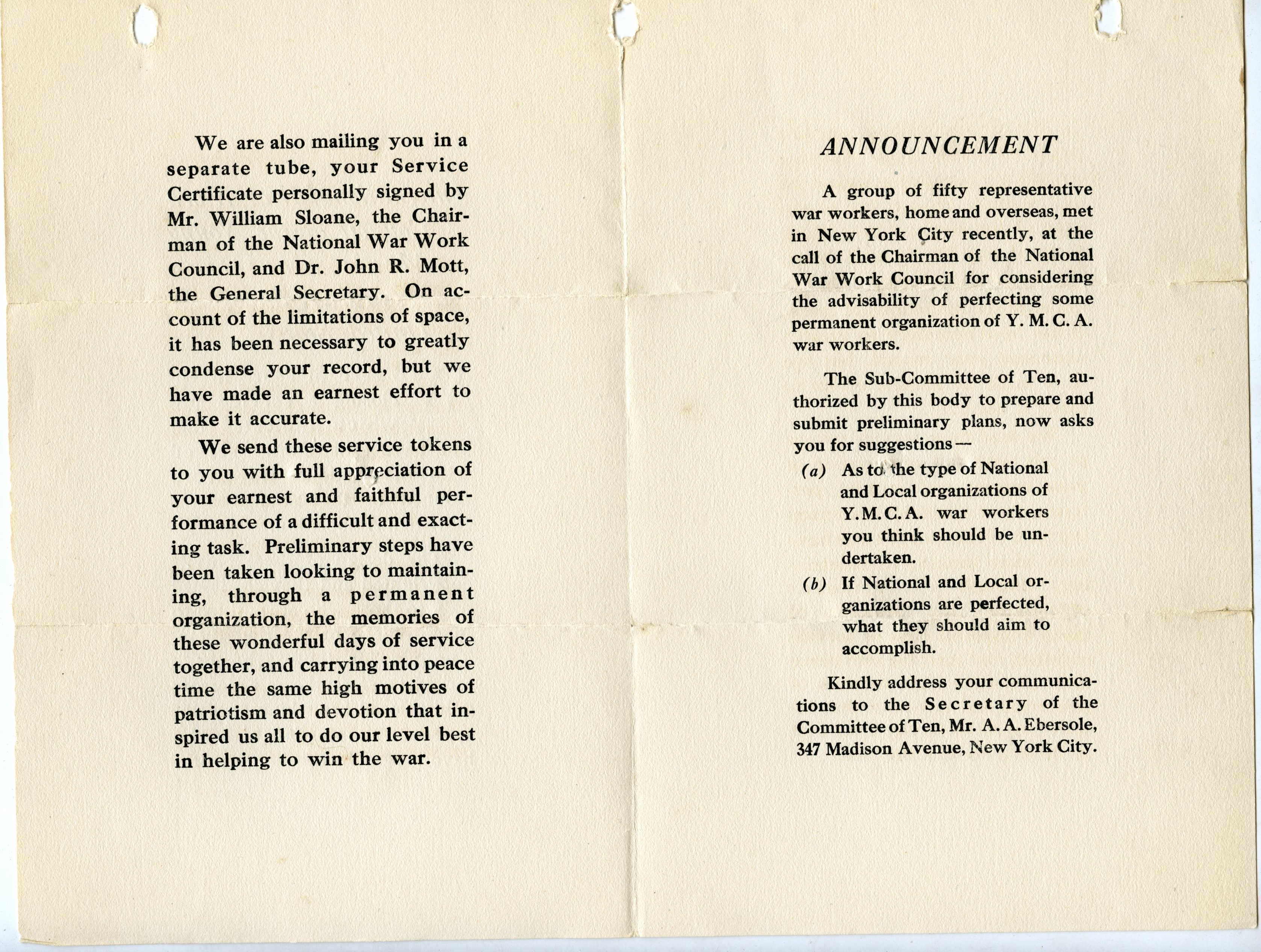
YMCA War Service Pin Card Interior

Tea Service Notice for the 28th Division
Here is where my favorite piece of researching WWI material came handy….. I was able to research the names of the women listed in the distribution section and track down their WWI era passport applications. Here are my results:
YMCA Women

Miss Gertrude Garden – YMCA

Miss Dorothy Berry – YMCA

Harriet McKenzie – YMCA

Margaret Robinson – YMCA
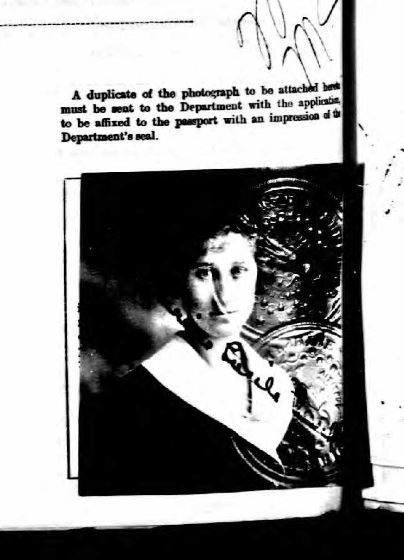
Katherine Parks – YMCA
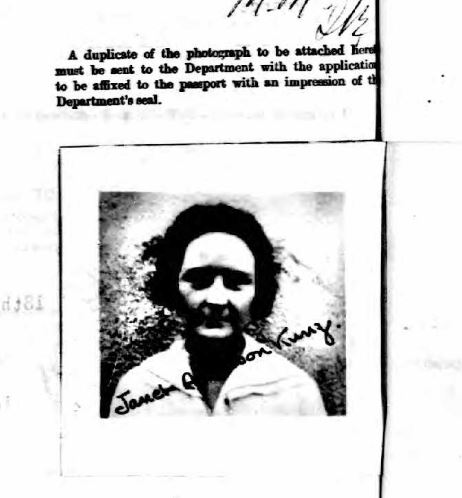
Janet Kunz – YMCA (sister to Kittie Kunz)

Kittie Kunz – YMCA
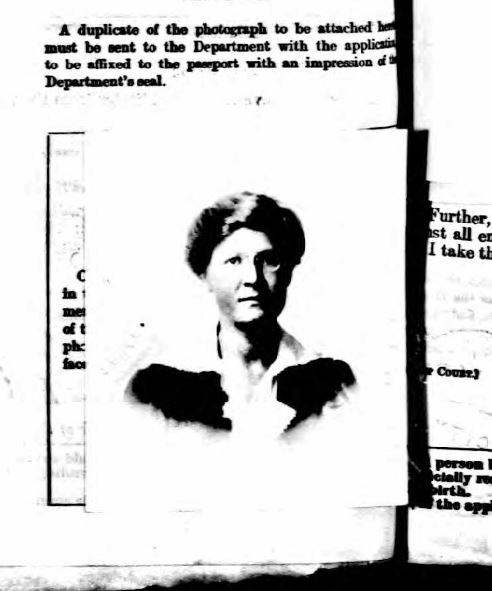
Pauline Brown – YMCA
Mary Waden – YMCA
Dora Lewis – YMCA
Katherine Beakes – YMCA
Cora A. Kennedy – YMCA
RED CROSS WOMEN

Lois Loyhed – Red Cross
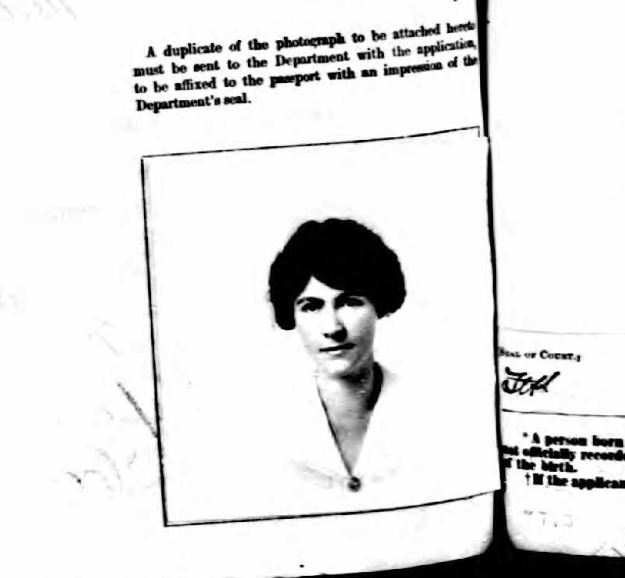
Harriet Maxon – Red Cross
Dorothy Peters – Red Cross

Alice McCoy – Red Cross

Esther Edmondson – Red Cross

Mary Jones – Red Cross

Eleanor Little – Red Cross
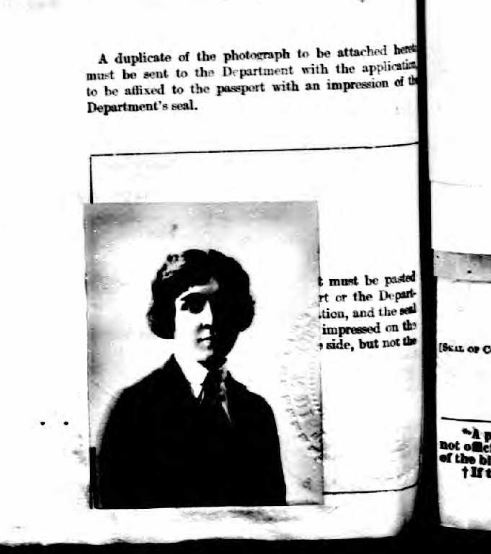
Mary Healy – Red Cross
Generally my WWI photo identifications come with a name, unit, and typically a home state or region. In this case, the only direct ID information to come with the photo was a first name – Harry- and the name of his brother. The rest of the information was hidden in the nuanced details of the photo postcard. See below for the main photo included in the eBay listing.
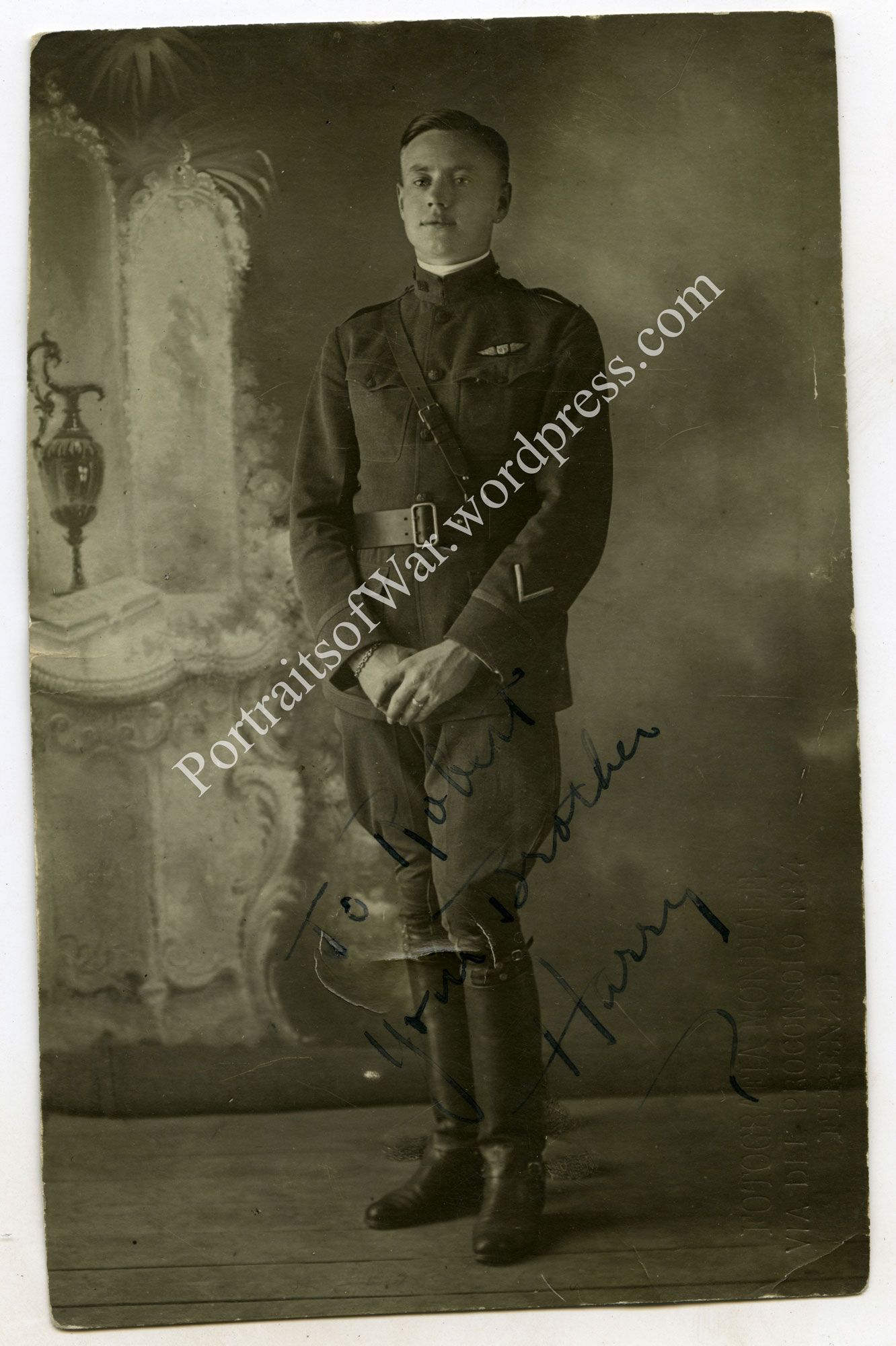
“Harry” in Italy
The eBay listing also made reference to the fact that the studio stamp was an Italian photographer. With this in mind, I bid to win.
After successfully winning the photo I began the laborious process of identifying the photo. Here’s the info I was basing my research on:
1. The photo depicted a US pilot who had served at least 6 months overseas at the time the photo was taken.
2. The pilot was named Harry and had a brother named Robert.
3. The pilot had a distinctive signature and handwriting style with large crossed H’s and a penchant for flourishes.
4. The pilot was in Italy at some point during the war.
I first started my research with a general reference search to find out how many US pilots were in Italy during the war. Lots of websites popped up and generally pointed towards the Fiorello’s Fogiannia, a group of US pilots who trained in Italy on Italian bombers. We’ve all been stuck in LaGuardia airport at some point in our lives, so I instantly recognized the reference to Fiorello LaGuardia. I had no idea he was in WWI! Further research made it clear that only 500 or so US pilots were in Italy during the war.
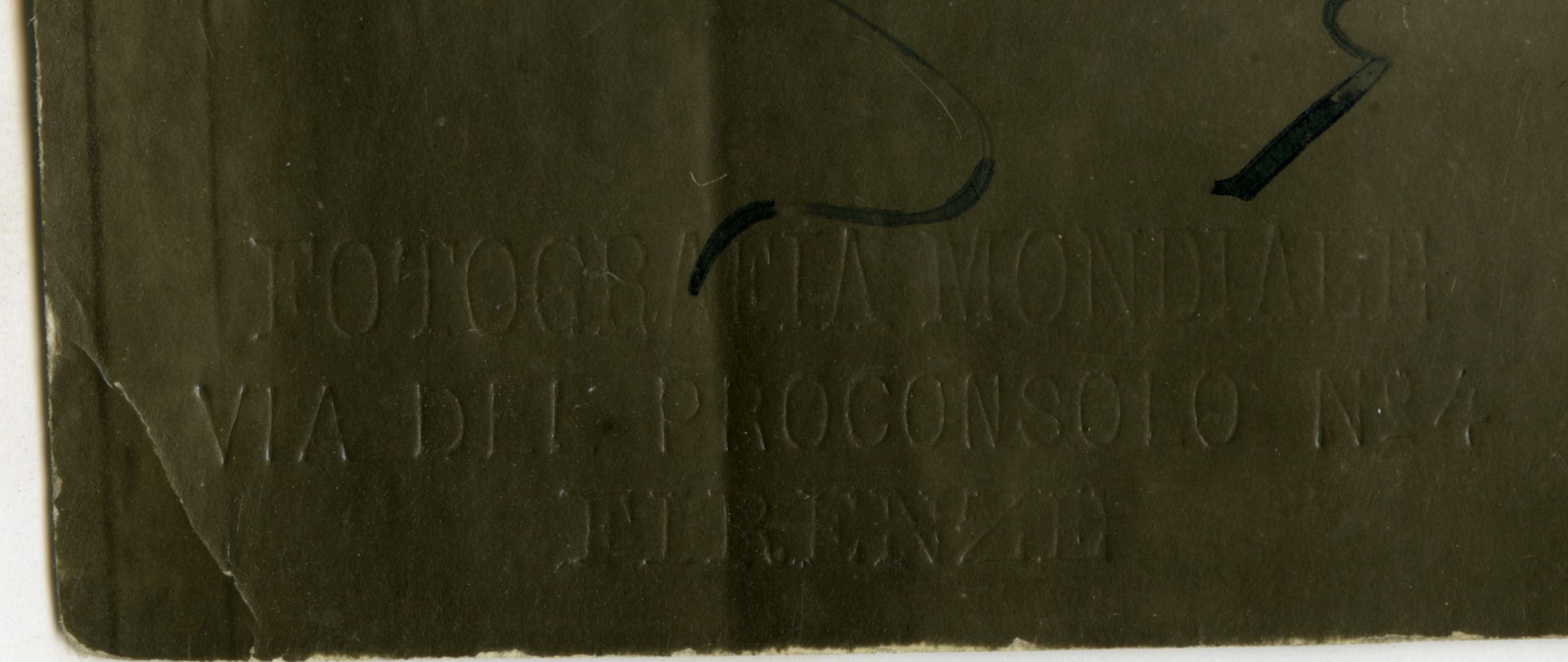
Italian Photo Studio Stamp
I started by tracking down a copy of the roster of the pilots who trained with the “Fogianni” during the war. A good friend, Chuck, was extremely gracious enough to take photos of all the pages and send them to me. I finally had the whole roster to reference. With this in hand, I identified all the Harold’s and Harry’s in the roster. This helped narrow it down to less than 30 candidates! From there I looked at the 1900 and 1910 roster for each of the men in hopes of finding a brother named Robert. A small handful of candidates trickled through.
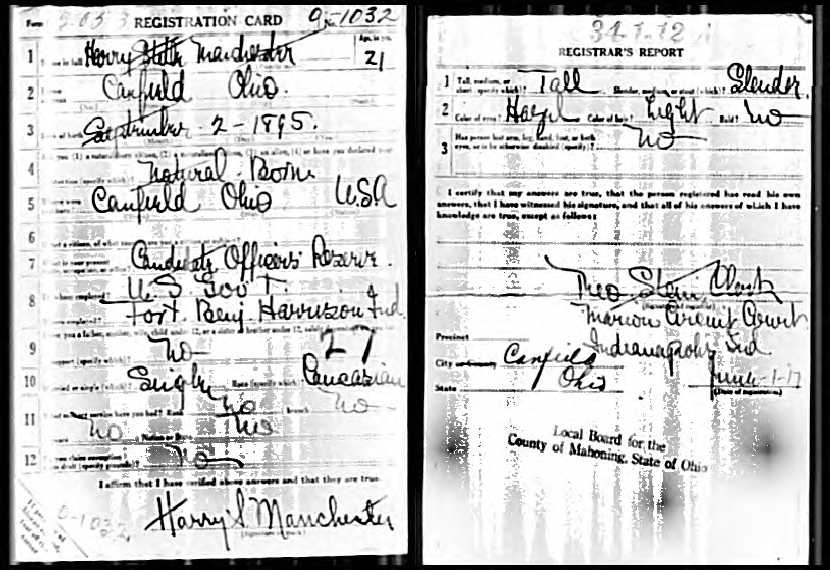
Perfect Match!
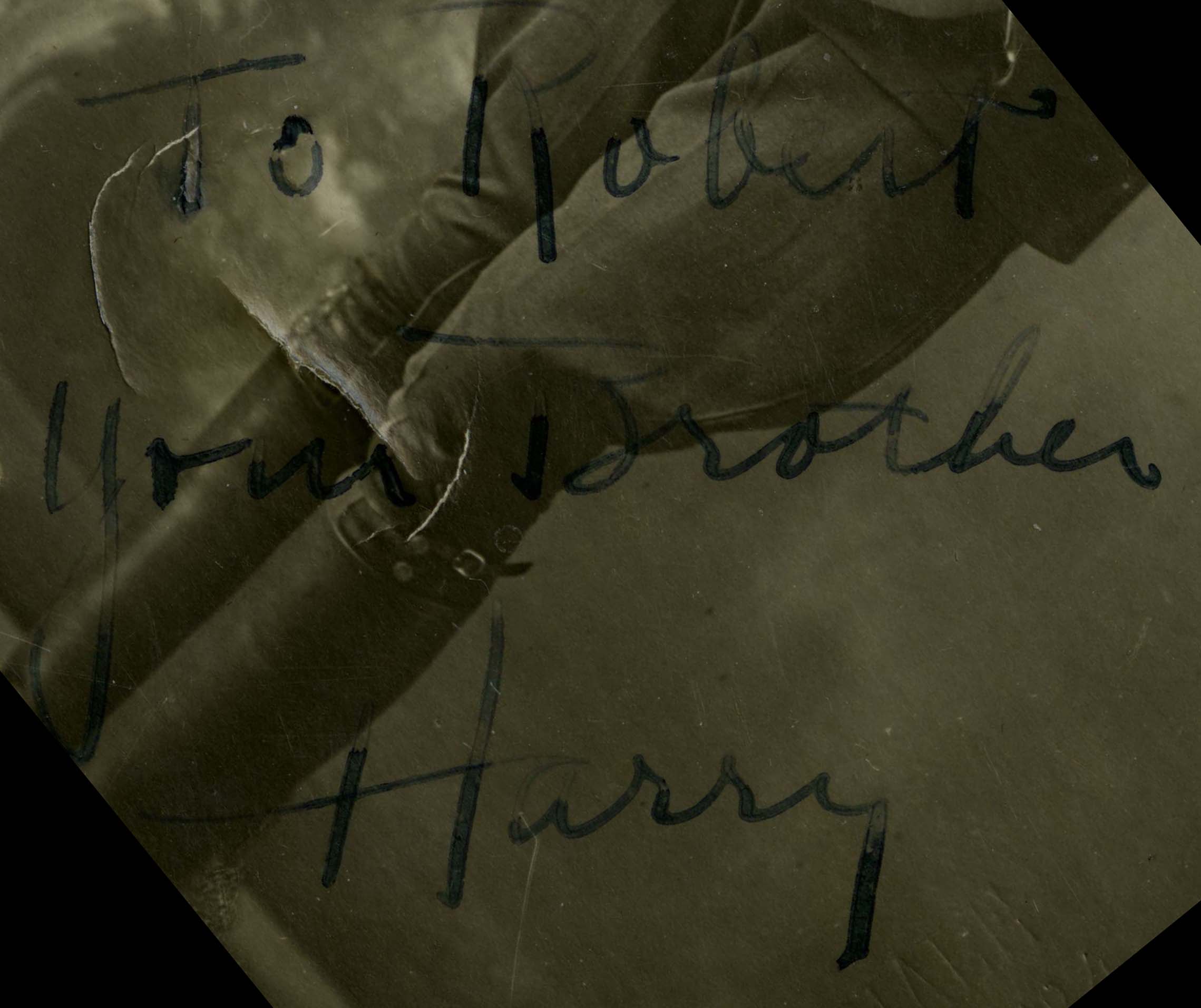
Harry’s Signature
My first cross reference for the Harry’s with brothers named Robert brought me to Harry S. Manchester from Canfield, Ohio. The signature on his WWI draft card almost knocked me over! A perfect match. Note the intense cross on the H and the overly dramatic crosses on his T’s. With further research I was able to find a TON of information on Harry. He was indeed a pilot in Italy during the war and also served in France as a test pilot, testing new US planes as they were unloaded in France. His brother was Robert Manchester Jr. I was able to find Robert’s son (Robert Manchester III) and grandson (Robert Manchester IV) online, both prominent lawyers in the midwest.

Harry’s War Record

Ohio Newspaper Reference
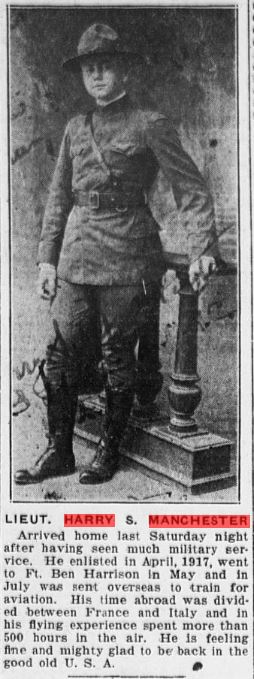
Harry Wearing Italian Wings

Harry Home from Wooster College 1916

Harry in Italy

Harry as Test Pilot
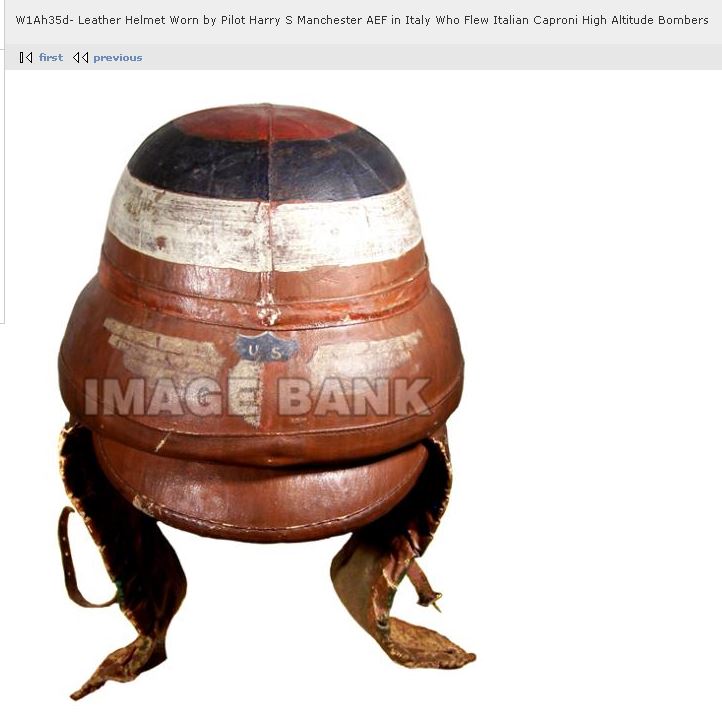
Harry’s WWI Flight Helmet
Also, the National WWI Museum apparently received a donation of a series of photos from the Manchester Estate. Check out these additional portrait shots of Harry from the collection! (Used without permission but with watermark)


World War One studio photography is dominated by shots of male soldiers posing in European studios in hopes of documenting their wartime experiences for hometown family and friends to enjoy. Little did they know that historians in 2014 would be researching their names, hometowns, photos and military rosters to help paint a picture of the American experience during WWI. One of my favorite research topics is the wartime culture of US nurses while stationed overseas in 1918 and 1919. In this case, I’ve done an extensive series of searches in hopes of tracking down the WWI nurse posed in the photo. I hope you enjoy the research!

Ella (Kettels) Voged in 1918

Ella Kettels of Clinton, Iowa
Miss Ella Kettels (mispelled on the photo) eventually went on to marry at the age of 35 to a man named Theodore Voged. He is listed as a janitor in the 1929 city directory for Clinton, Iowa. The couple lived at 576 1st Ave. in Clinton, IA. I’ve identified the house they lived in and have posted it below:

576 1st Ave. in Clinton, IA.
Her wartime experience is included in her1965 obituary:
“Mrs, Ella Voged, 80, of Clinton, saw the grim side of World War I. She went to France as a Red Cross nurse but soon found herself enrolled as an Army nurse. She had been graduated from nursing school at a Clinton hospital in 1910. Mrs. Voged served as a nurse in a hospital near Paris to which American wounded came in a steady stream from the big front-line battles of that war. . “Sometimes we thought this boy would be all right and they would be gone in the morning,” she recalled. “This was long before the day of antibiotics. They would develop infections in their wounds.”
Although we may never know the full extent of Ella’s wartime hardships, we do know that she will be immortalized on the world wide web as a subject of potential research in the future.
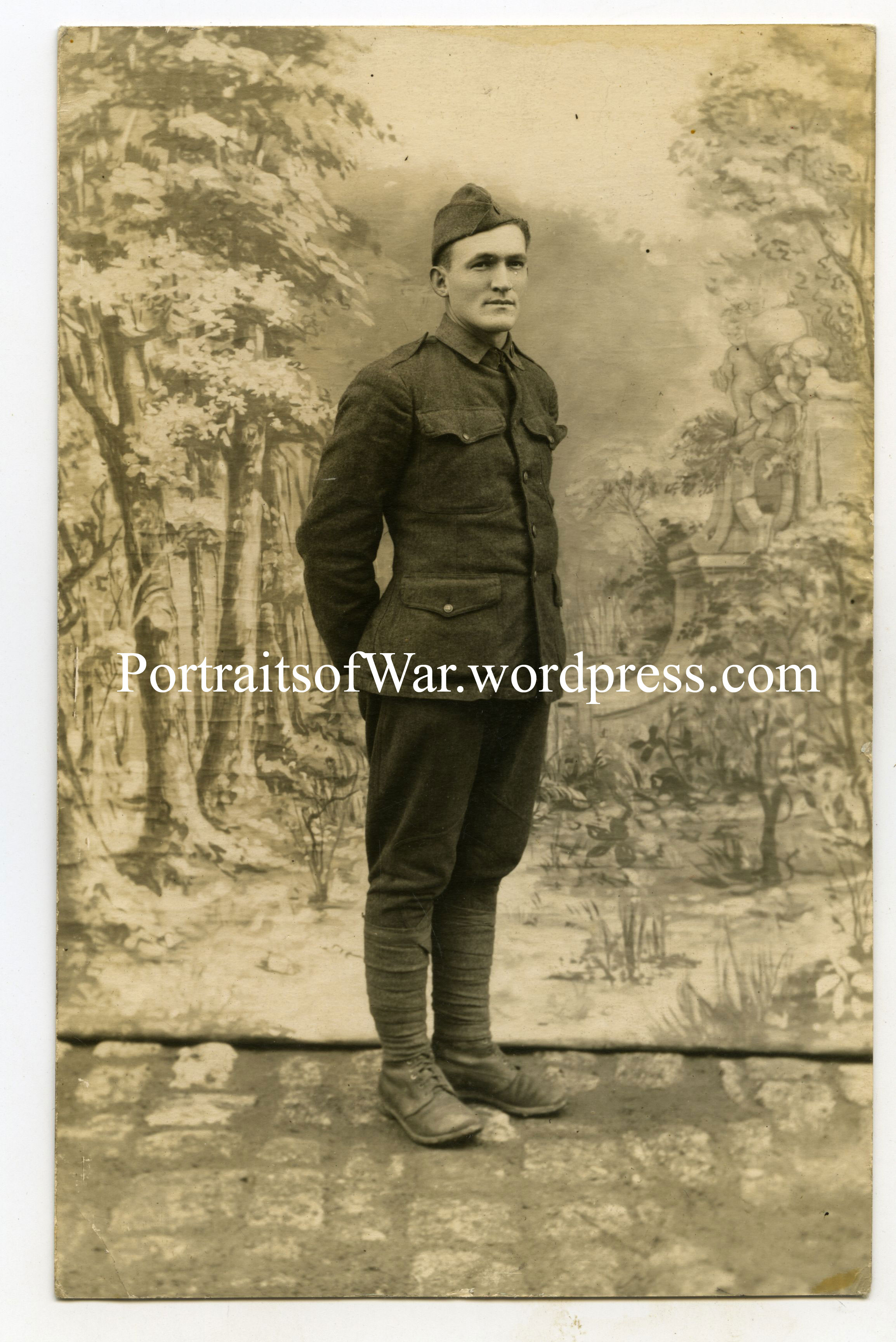
WWI Photos of Vermonters are hard to find and I continually search for superlative examples at flea markets and yard sales. This past May I was lucky enough to encounter a Vermonter dealer at a Massachusetts flea market. Low and behold, the seller had a fantastic image of a WWI Vermonter for sale! Herbert L. French is identified as being from Stratton, VT and as being a member of the 307th Field Artillery of the 78th Division.

Herbert L. French

WWI Vermont Roster Entry

Misidentified WWI Veteran Grave Card
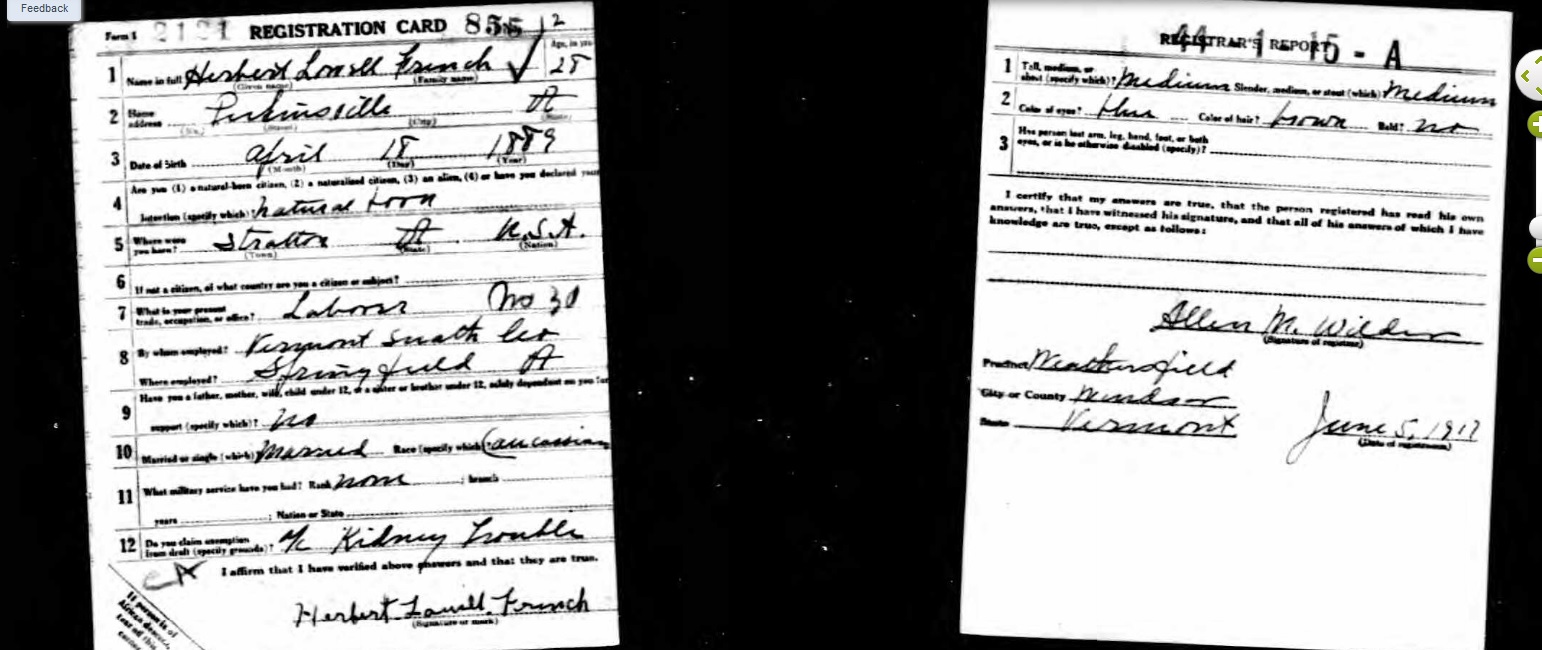
WWI Draft Card

WWII Draft Card
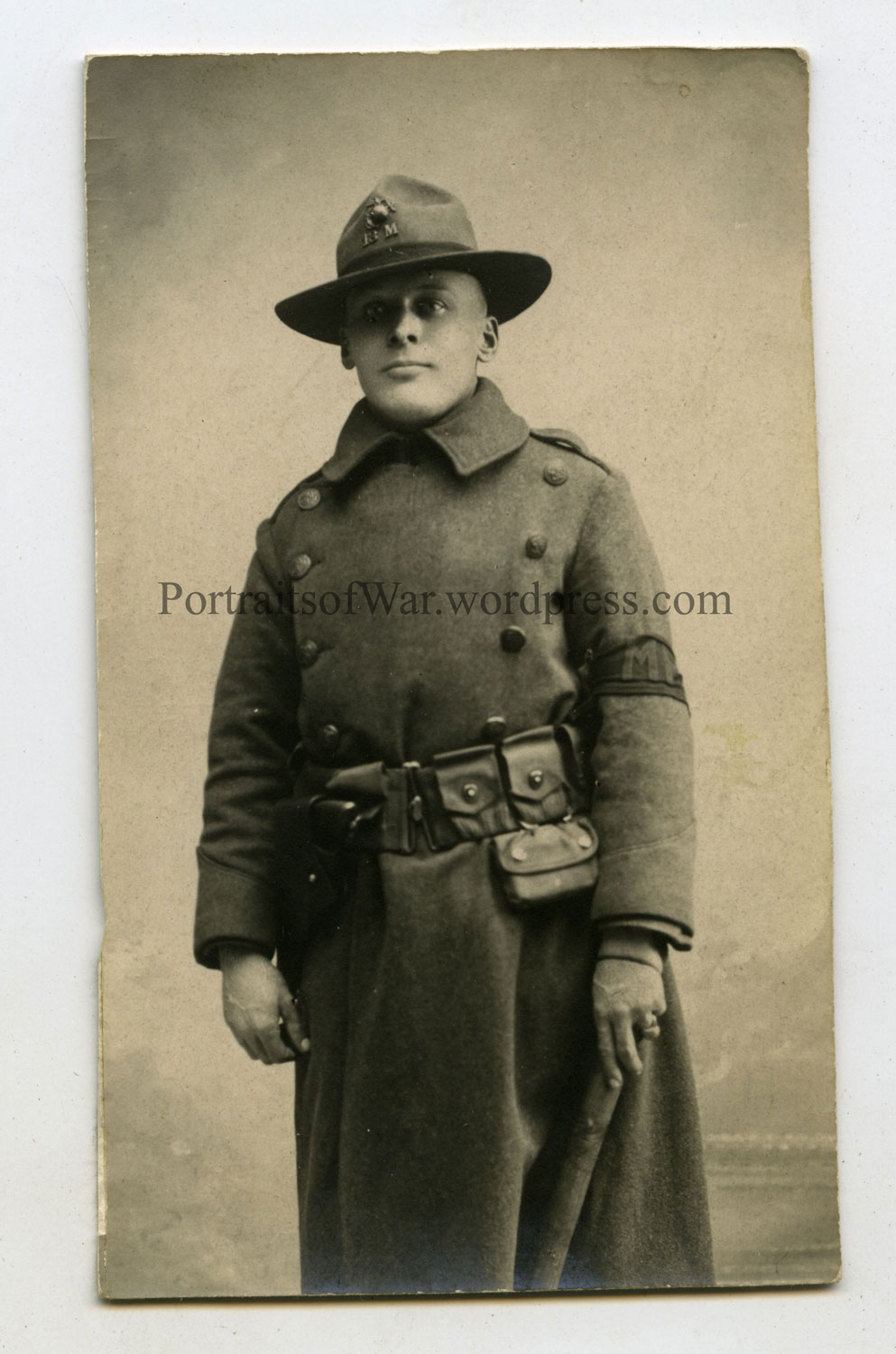
Evald A. Johnson in France 1918
Followers of this blog know that I love to identify WWI photographs using obscure bits of information to track down census and military records. In this case, I purchased a series of three postcards on eBay with no solid identification in hand. When the postcards arrived, I realized that I had a slight chance to identifying the Marine. His hat is sporting a Marine Corps EGA insignia as well as some unit designation. 13 M identifies him as being in Company M of the 13th Marine Regiment of the 2nd Division. Included with the photo was a postcard note sent to a loved one when he returned from overseas service.

The unknown Marine scribbled his first name and middle and last initials. Evald A J. He also sent the postcard to a Mrs. C F Poulson of Idaho Falls, Idaho. A quick census search for a C Poulson of Idaho Falls brought up a record for a Mr. Christian Poulson and a Esther A. Poulson. My gut instinct told me that he was likely sending the card to his sister to announce his arrival back home in the states, so I did a series of census searches to find some clues………

Sister-in-Law
The 1910 US Census record for Esther and Christian Poulson show a mystery resident. Ms. Ebba Johnson is listed as being a sister-in-law who happened to be living with the couple in 1910. Bingo! Now I have a last name to research for Esther. I quickly found the 1900 census record for Esther and Ebba………..

Bingo! Evald Johnson is listed as a brother to both Esther and Ebba. The mystery is solved! Now to confirm his service with the 13th Marine Regiment.
I easily tracked down his WWI draft card and matched up the signature with the postcard. A perfect match.

WWI Draft Card
Evald A. Johnson
From here I had a hunch to track down the Marine Corps muster role for Company M of the 13th Marine Regiment. Another solid hit.
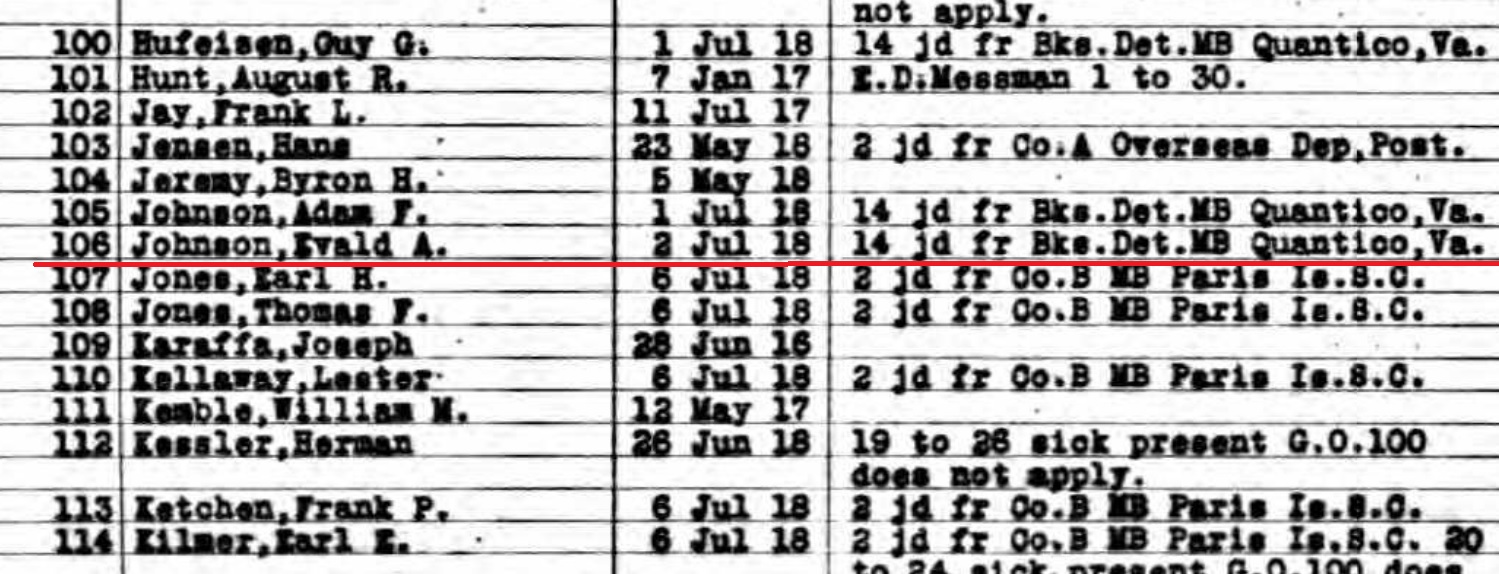
Marine Register
And to top it all off, I did a newspaper search for the Idaho area in 1919. With some luck I found a brief article mentioning his return and his service with the Marines.
“They have come back bigger and better men than when they went away and have taken up their work with the Register and filling their places with credit. The three men are Evald A. Johnson, who has been with the Register for some fifteen years, and who resigned the position of foreman to enter the service, enlisting in the marines, going to France, where he put in abmout one years of service.”

Vol 40, No 29 Idaho Register 1919
My continued obsession with WWI Vermont material has landed me a new WWI photo taken in France in June of 1918. I literally stumbled across this listing; the seller didn’t mention the fact that the soldier was a Vermonter. Luckily I checked out the back of the photo before moving on to the next auction listing.
The photo was addressed to a Mrs. George Bolduc of Fitzdale, Vermont dated June 25th, 1918. The writer added the following info:
“June 25th, 1918
Dear Sister,
Am well and happy and hope you and children are well. Will write you a letter later, am pretty busy just now so am sending this in place of a letter. This is not very good but will have to pass some love to you all. From bro-
John Corcoran
101st MG BN, AEF”

John J. Corcoran(R)
John poses in the above photo with an unnamed friend of his from the 101st MG Bn. sporting a beautiful example of a woolen M1911 sweater. I’ve attached below a period advertisement showing two versions of the service sweater. These were either hand-knit from patterns or could be privately purchased through various supply and retail companies.

Knit Service Sweater (Source: http://www.usmilitariaforum.com/forums/index.php?showtopic=39625)
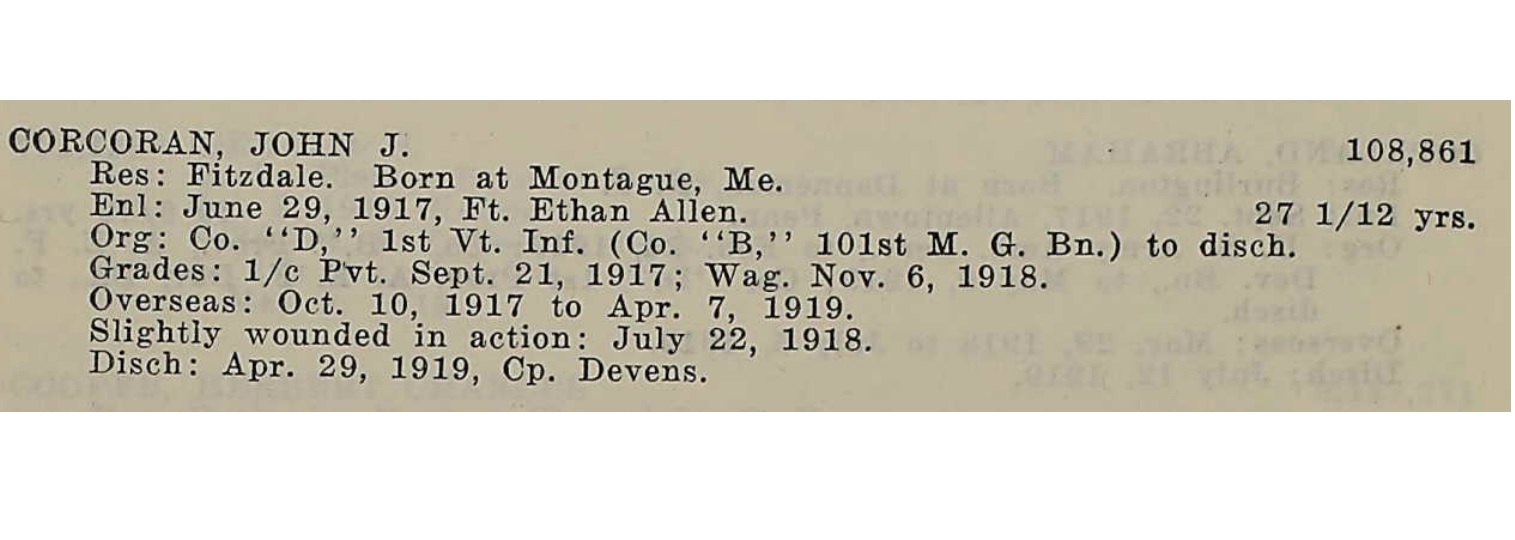
I am fortunate enough to own a copy of the hard-to-find 101st Machine Gun Battalion unit history. Wagoner John J. Corcoran is listed with a frontal snapshot beside his biography. He was born on May 29th, 1890 in Maine and eventually made his way over to Vermont where he lived in Lunenburg, VT working as a paper maker with the Gilman Paper Company. He enlisted at Fort Ethan Allen on June 29th, 1917 with the 1st Vermont Infantry, where he was later transferred into the 103rd MG of the 26th Division. His WWI and WWII draft cards were both listed on ancestry.com and I’ve included them below along with a copy of his death record. He passed away in 1947 and is buried in Lunenburg. I hope to travel there soon to take a photo of his grave!

101st MG Bn. Unit History Roster Entry

WWI Draft Card

WWII Draft Card
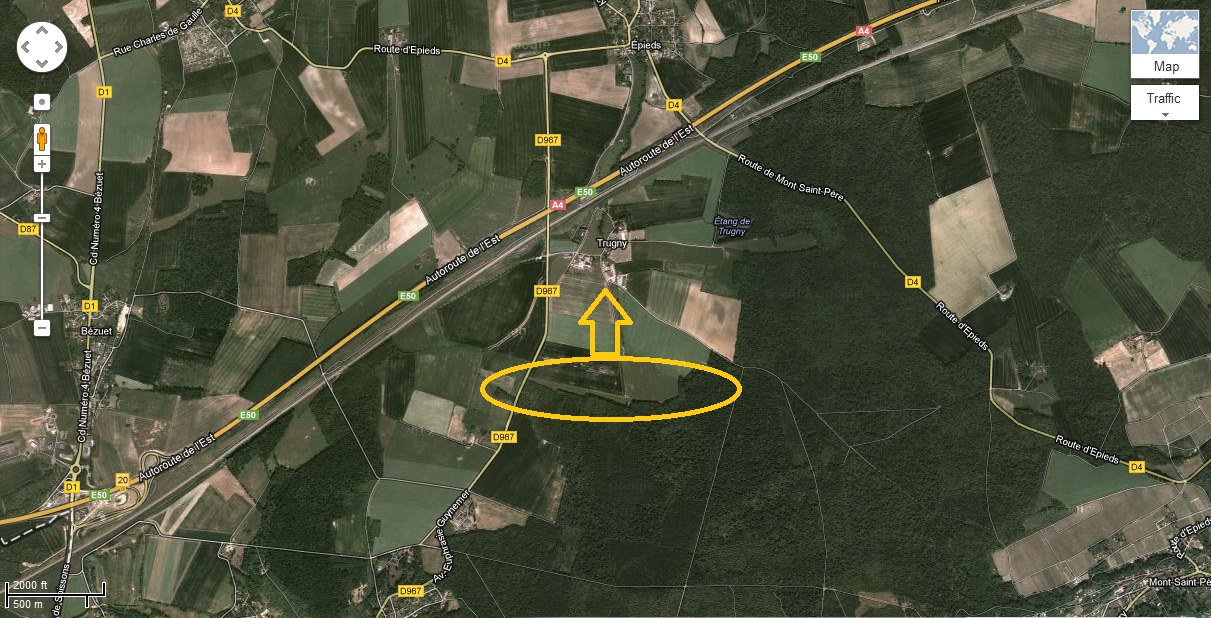
John was badly wounded on July 22nd, 1918 during an attack on the French town of Epieds. I’ve included a period map of the battle as well as an image of the location today. Not much has changed! This attack was coordinated only a few days after the Battle of Chateau Thierry. Luckily, John’s encounter with the Germans was noted in the 101st MG unit history diary section. I’ve transcribed the section:
“At daybreak both companies were sent into some woods overlooking Trugny to assist the attack of Major Rau’s battalion against the town. We could not locate any enemy to fire at, and the best we could do was wait to protect Rau’s left against possible counterattack. We were shelled and M.G. bullets flew pretty thick. Bristol of C Co. was wounded. After awhile(sic) the attack crumbled in spite of Rau’s gallant efforts against impossible odds, and the troops were withdrawn to the old positions. A little later C Co. was sent over to the right to join Rau. There they found him with only a few of his men left. The guns were set up on the edge of the woods in a defensive position. B Co. got orders to support an attack of the 102nd Infantry Regiment on the town of Epieds over on the left flank. The company formed a fourth wave behind the infantry, and spread out into a long skirmish line. The advance started over the open wheat field at a slow walk, with frequent halts during which each man flattened out so that no moving thing was visible in the field. M.G. bullets began to kick up little puffs of dust all around us, and the enemy artillery barrage came down fiercely just ahead. We knew we would have to go through this, and every nerve was tense. We soon found ourselves in the midst of it – direct fire at that, mostly from one pounders, and 105’s and Austrian 88’s which come with the shriek of a thousand devils. The fumes choked us and the concussion half stunned us. it was here that Hez Porter, following his platoon leader, was instantly killed. Corcoran, Dick and Wendt were wounded…………………………….”
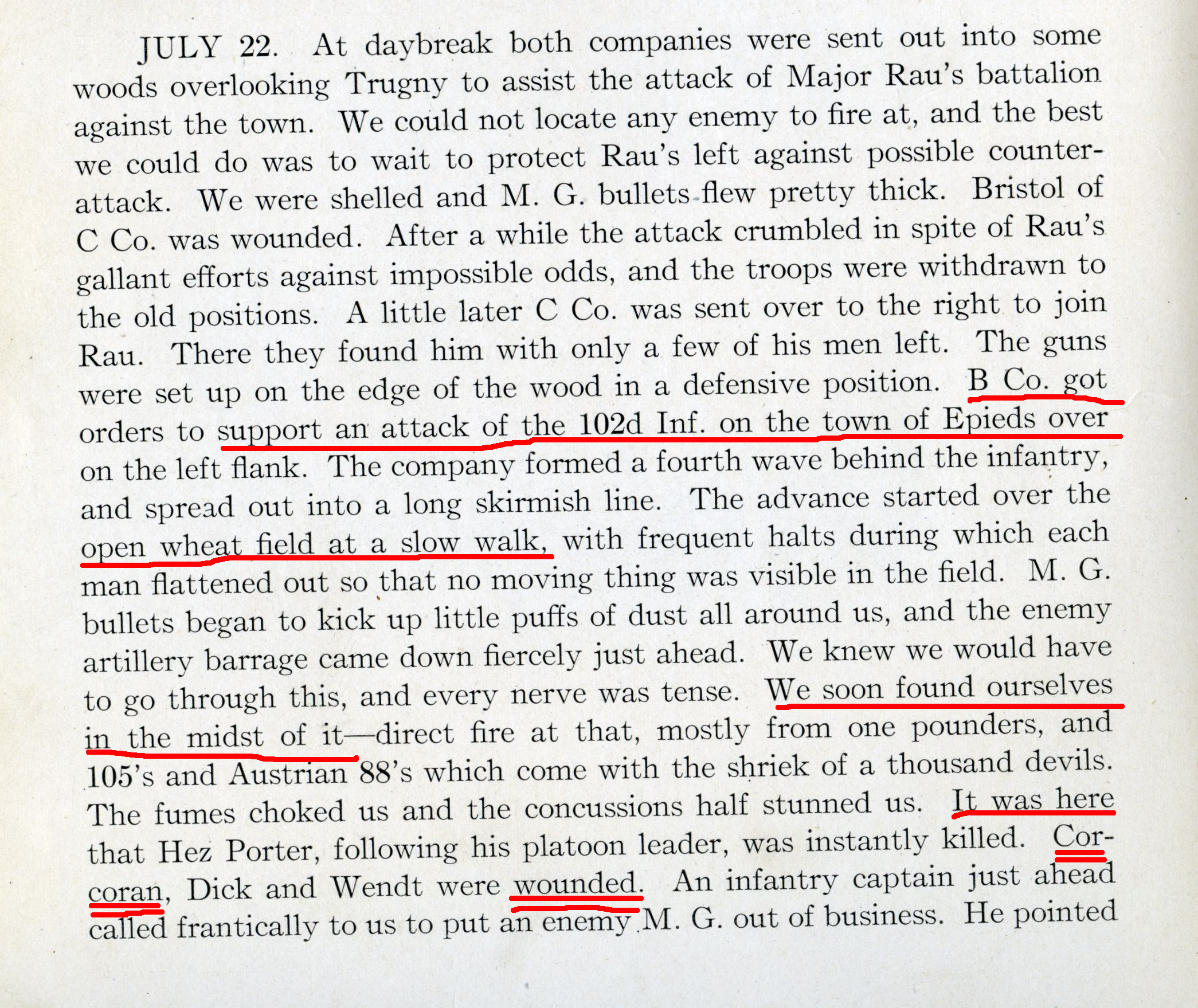
Unit History
Casualty Report


Death Registration
 Portraits of War