Southbridge’s First Soldier
Writeup by: Andrew Locke
(All photographs and narrative were provided by Locke)
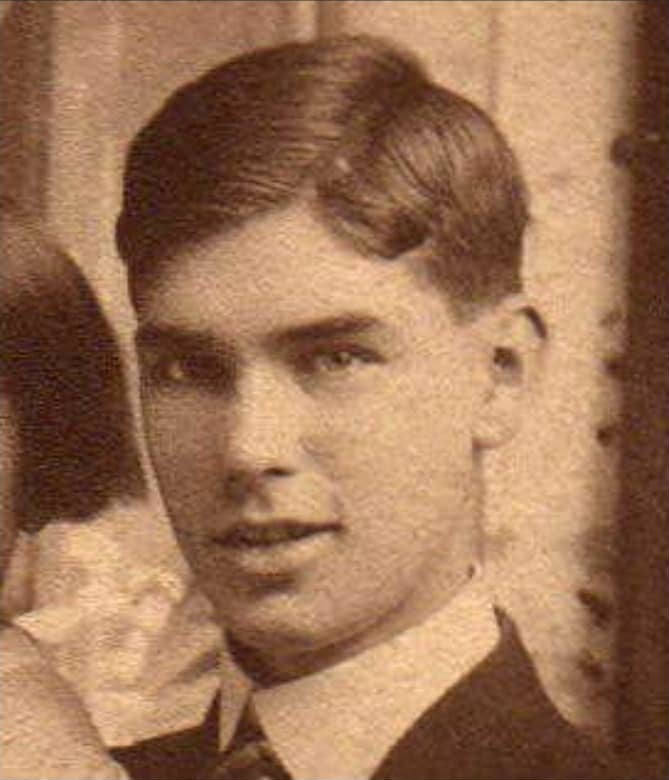
The first man from Southbridge, Massachusetts to enlist during World War 1 was Charles Edwin Hellner. He was born on April 11th, 1897 and was at the age of 20 when he enlisted for the US Army on May 7th, 1917. He was placed into B company of the 1st Engineer Regiment (part of the 1st Infantry Division) with about 30 other Southbridge men. After exactly three months of training he departed for France.
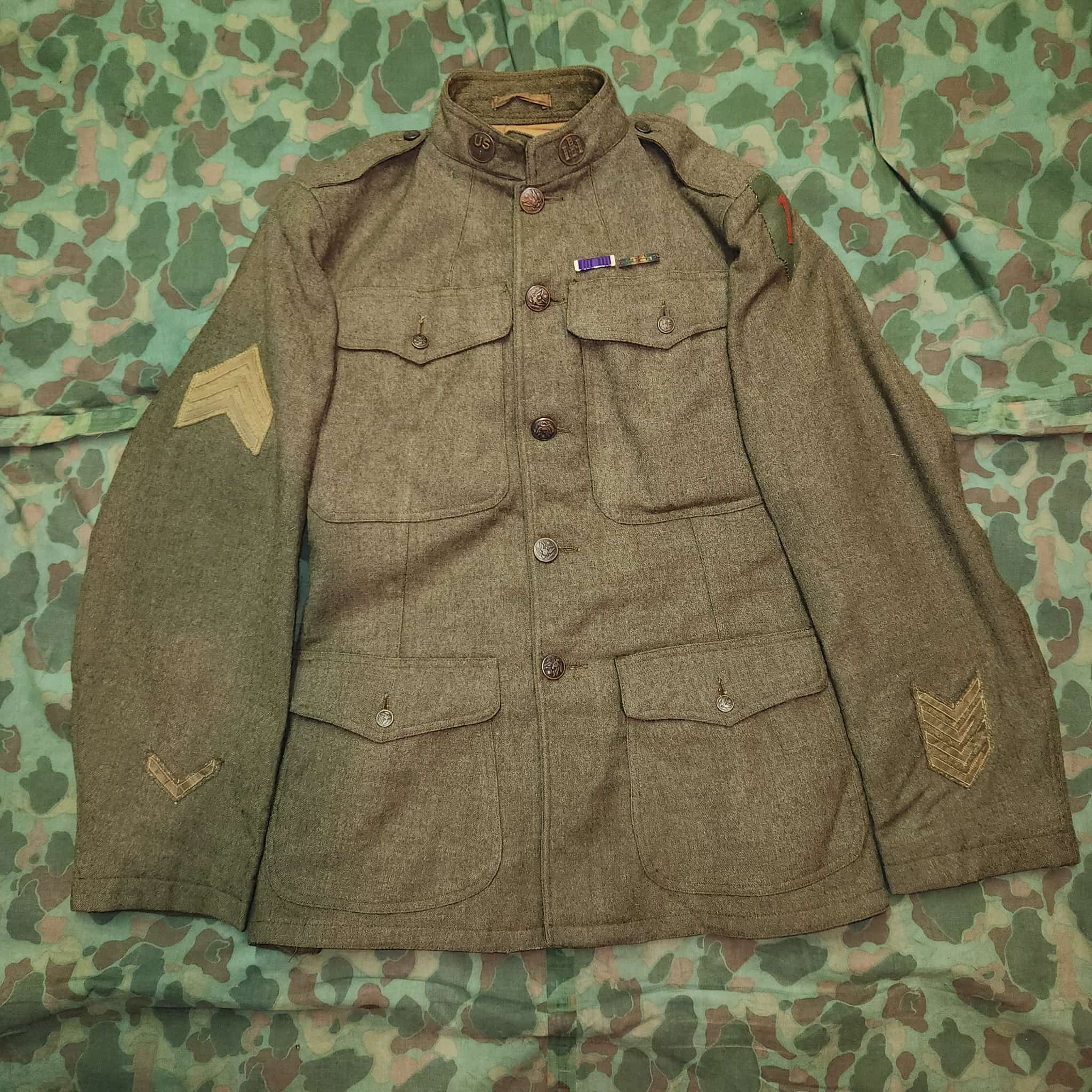
Following their arrival, the soldiers of B company then spent more time training. This time it was in the tactics of trench warfare with the French as their experienced instructors. In later parts of the training, American units would serve alongside French ones in relatively idle sections of the frontline so that the doughboys could get some experience. While serving with elements of the 16th infantry on the morning of November 3rd, 1917, Hellner would be present for the first raid on American troops by the German army. The first three American deaths of the war occurred there.

Training and engineer work continued for Hellner’s unit until the 1st Division was called into action again. On May 28th, 1918 the 28th infantry regiment had attacked and successfully captured the French town of Cantigny. The 1st Engineers moved into the sector and began work fortifying the area and digging trenches. Hellner memorialized his service there with a large pennant that bears “Cantigny 1918” and his portrait which speaks to the fame of the battle at the time. While in these trenches at and around Cantigny, B company experienced shelling and fought off diversionary attacks from the German’s Montdidier-Noyon offensive that was aimed at nearby French positions.
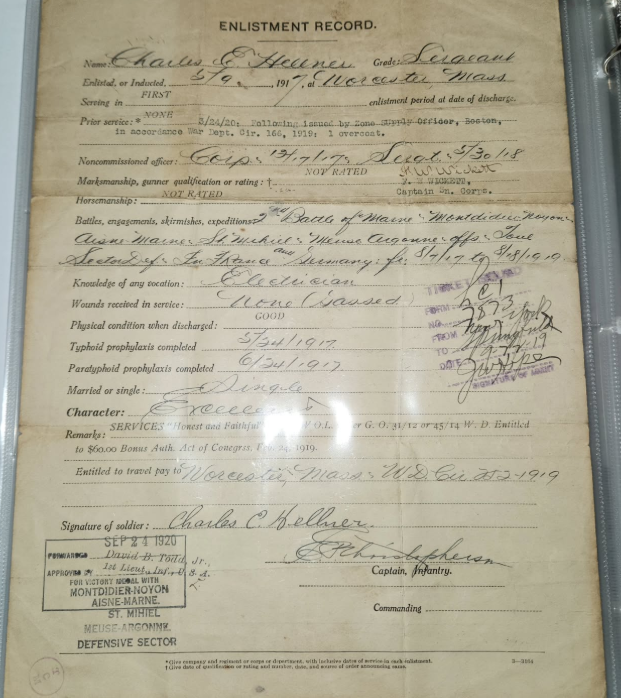
On July 18th the 1st Engineers began its involvement in the Second Battle of the Marne. A German attack had recently pushed back allied lines before it faltered and it was realized that this was an opportunity for a counterattack. Hellner had recently been given command of his own squad and would now be leading them into battle. B company spent three days attacking the Germans near the town of Soissons. During the first day of attack on July 18th, a member of Hellner’s squad named William Broughton was hit in the stomach by a piece of shrapnel. Unfortunately, he eventually died from his wounds. Broughton had also come from Southbridge and Hellner wrote a letter home that informed his family that he had passed. July 19th saw B company’s advance slowed by machine gun fire that wounded several men and an officer. On July 20th, Hellner led his squad over the top at 4 AM with the rest of B company in the first wave. With heavy losses they were able to fight until they reached a railroad where they remained the rest of the day. While taking cover behind an embankment near this railroad, Hellner experienced his first wound of the war. He later wrote a letter about the incident: “I was lying on a railroad embankment when a high explosive German shell burst near me, digging up the dirt and stones all around, and a heavy stone fell upon my foot, breaking one of the bones.” This artillery shell had actually caused much more damage than he’d thought. It dislocated his shoulder, broke a bone in his foot, and gave him a severe rupture. He never reported these wounds and continued to fight at Soissons for two more days. By the end of the battle he was the only man from his squad to report to an officer, the rest had either been killed or wounded. B company in total sustained 74 casualties at Soissons from July 18th to the 22nd.
After the chaos of their first large scale offensive, they now had a few moments of relief. For the next few months they went back to being engineers and did manual labor including building roads during the St. Mihiel campaign in early September. It is during this time I believe Hellner attended gas school. One of his journals has a section with the same heading that includes details about each type of gas and various mortars including the Livens projector.

For the last and largest battle of the war the 1st Engineers was once again called up to act as infantry. The Meuse-Argonne offensive began on September 26th but B company didn’t attack until October 9th. Hill 269 in the Argonne Forest needed to be captured and B company was part of the force chosen for the job. The fight for the hill was intense with the attackers engaging in hand to hand combat. After capturing the hill the engineers immediately braced for a counterattack. One didn’t come until the following day when the Germans stormed the hill with the support of heavy artillery. The enemy never reached the top of the hill and were successfully repelled. At some point during this engagement Hellner was gassed and evacuated to a hospital.
Unfortunately I don’t know when he left the hospital but I do know that by November 11th he had returned to B company and was marching towards the frontline near the town of Sedan with the rest of the regiment. Suddenly, a courier on horseback rushed down the column of men telling them to stop marching because the war had ended. In Hellner’s own words: “When we realized it was all over, we whistled, screamed, cheered and raised the devil, and I was so hoarse I couldn’t speak next day above a whisper.” That night the frontline was almost as bright as day with bonfires, flares, and rockets from the celebrating soldiers.
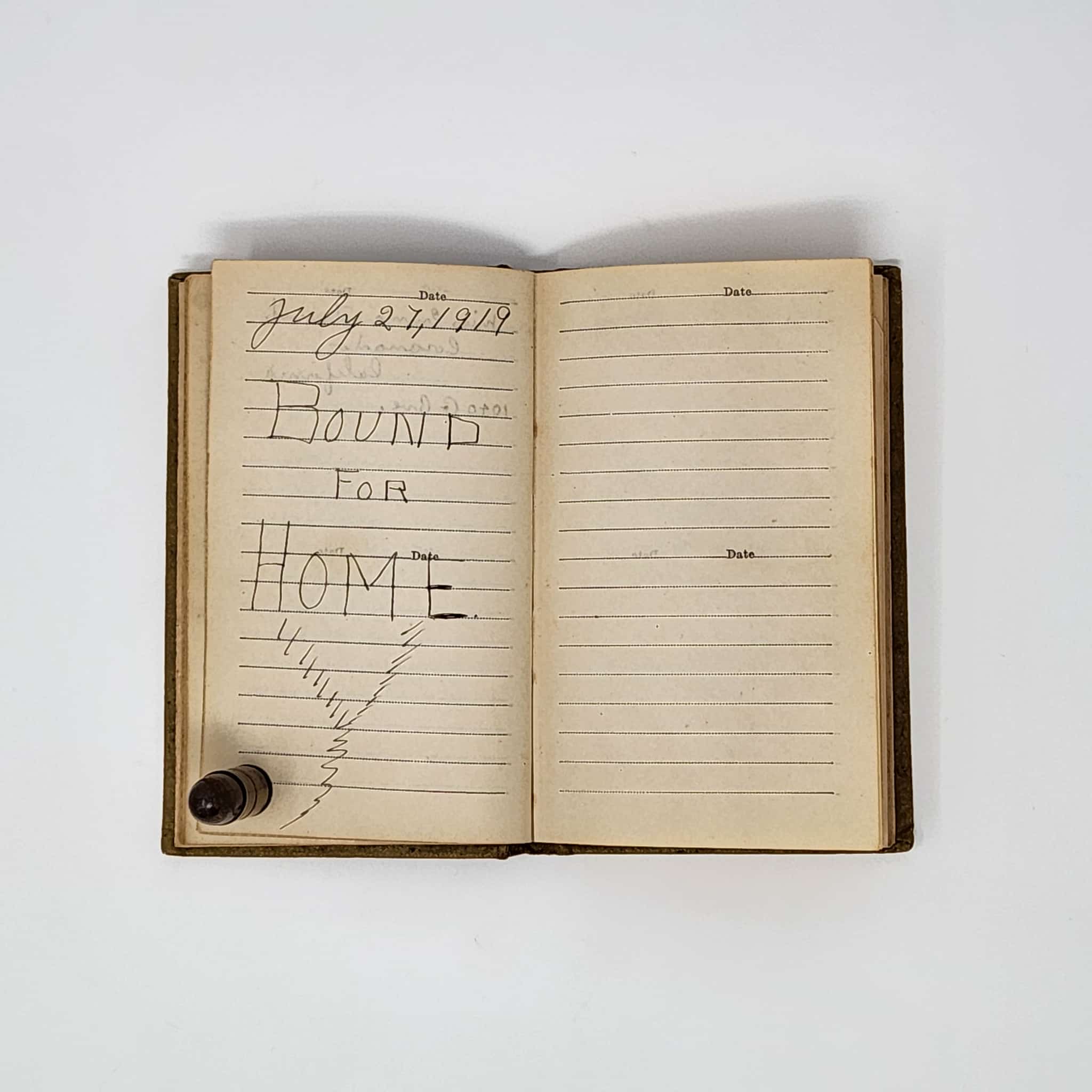
In December the 1st division was sent into Germany to be a part of the army of occupation. The 1st Engineers remained on this post until July 21st, 1919 when they were detailed to finally return home. He returned to the United States in August and was supposed to receive a discharge but a medical officer advised him to re-enlist so that his wounds from Soissons could finally be tended to by army doctors. This was when the true extent of his injury was truly discovered. It was necessary to fracture his dislocated arm to get it back into its socket. After this though, he could finally return to Southbridge. Funnily enough, even after his wounds from Soissons were corrected, he wasn’t given credit for a wound in action. So his only wound according to his enlistment record was being gassed on Hill 269. Hellner got married in June of 1921 and went on to have two daughters. In later life he moved to Florida and passed away there on June 26th, 1975 at the age of 78.




 Portraits of War