WWII 388th Bomb Group – Alva Alegre Snaps Glenn Miller in Knettishall, England 1944


August 25th, 1944,

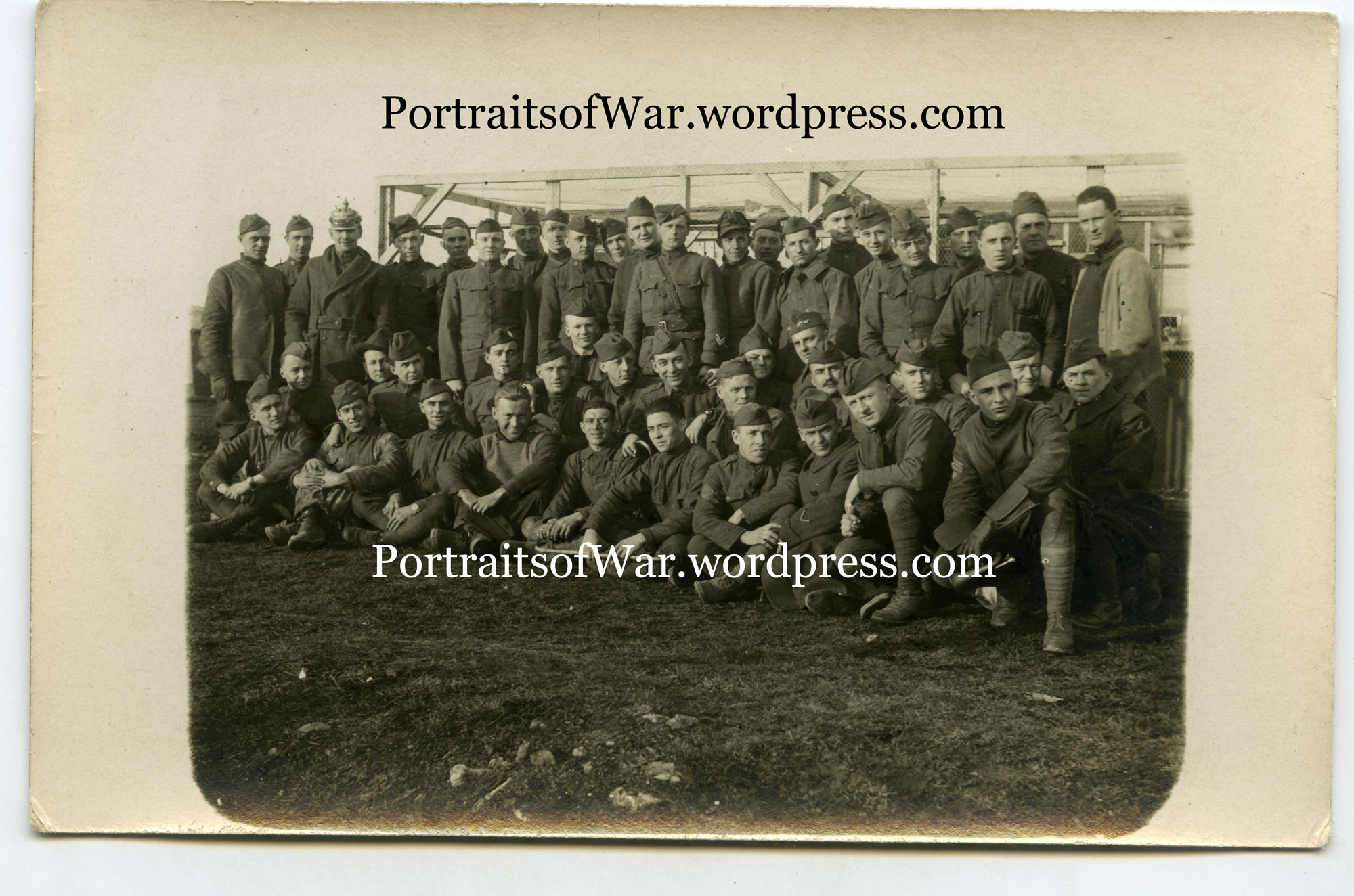
Glenn Miller poses with some members of the 388th Bomb Group.  Only a few months later Miller went missing during a flight over the English Channel, launching a 70 year search for his wreckage.  His death is still an unknown, although many suggest that he was in fact a German spy or was possibly shot down by friendly fire. Check here for some possible leads:

http://www.usatoday.com/story/travel/flights/2014/07/07/glenn-miller-plane-mystery-history-detectives-norseman/12268729/

http://news.bbc.co.uk/dna/place-lancashire/plain/A2654822

http://skeptoid.com/episodes/4406


Glenn Miller Poses with 388th Bomb Group Officials in Knettishall, Sussex, England

Some of Glenn’s best known hits are Moonlight Serenade, Chattanooga Choo Choo, A String of Pearls, Little Brown Jug and Tuxedo Junction.   Many of these songs are likely lost on my generation, but will be familiar to many of the readers of this blog.  Please check out the links listed below for some vintage Glenn Miller footage!


Glenn Miller

Another 388th Big Wig (unnamed)


Alva Snaps a Photo of the Glenn Miller Band Crowd

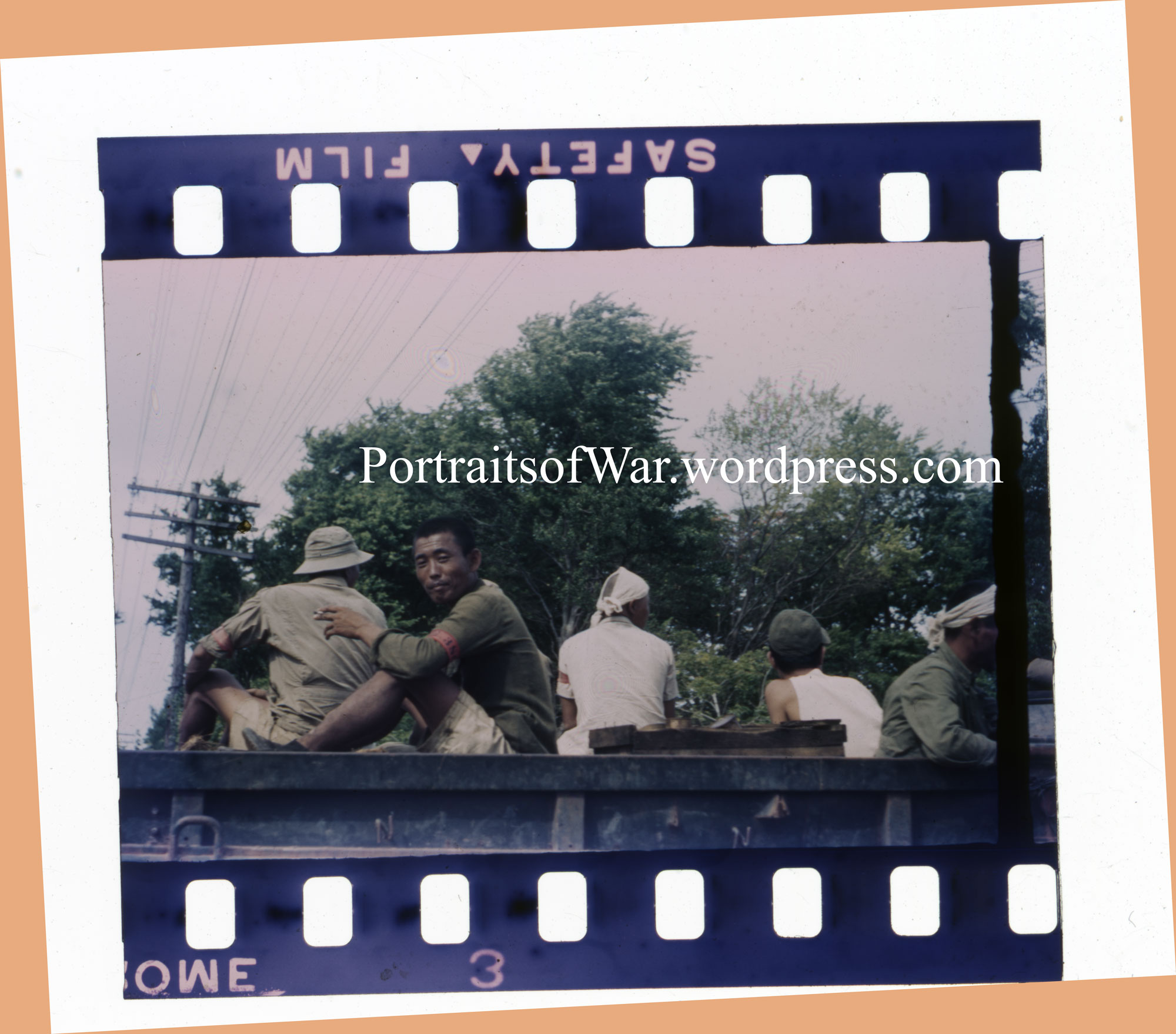
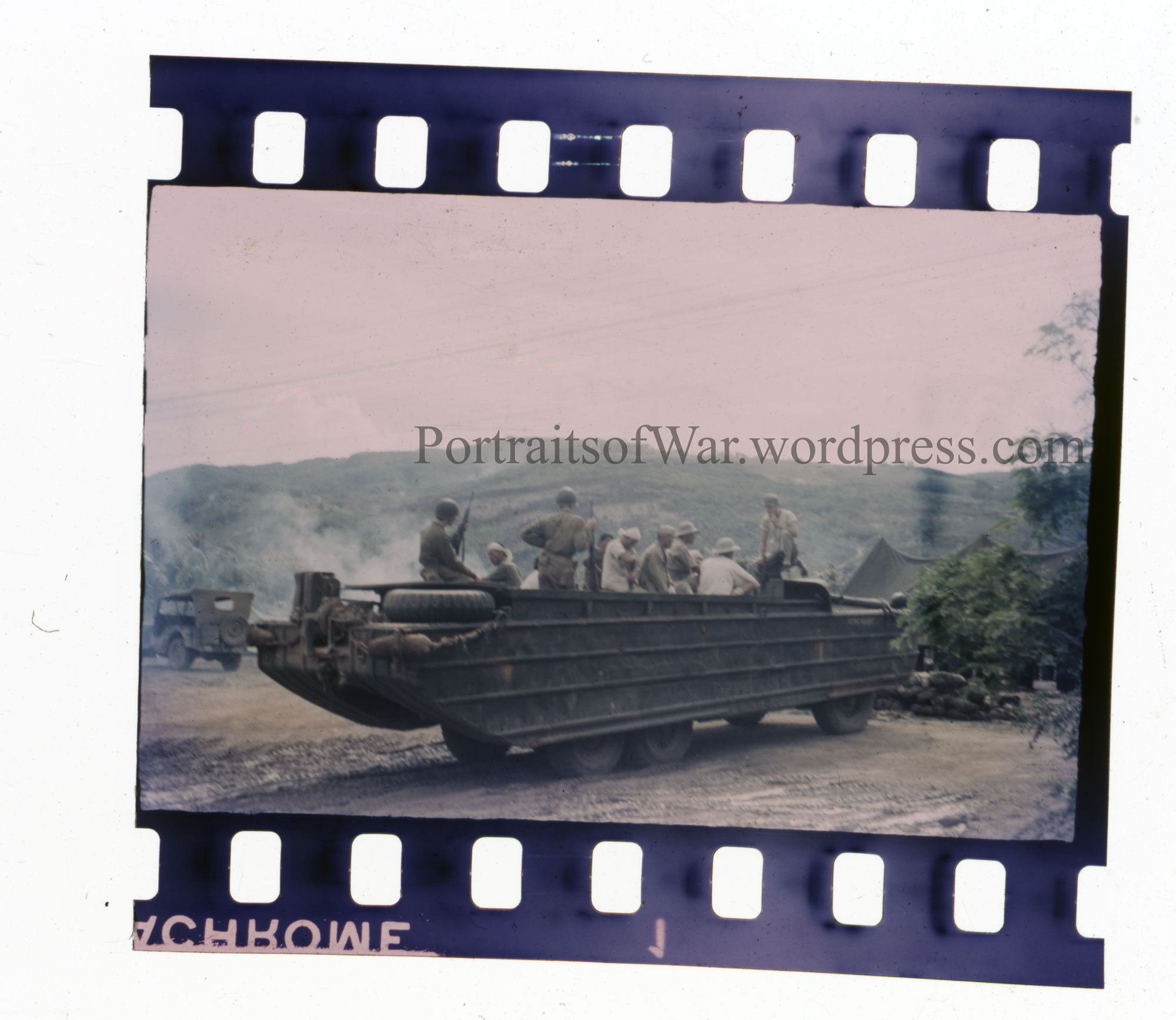
WWII in Color – Rare Marine USMC DUKW Boat in Color! Saipan Quack Corps 35mm Color Slides


I always try to pick up groupings of WWII color slides whenever possible, but they are incredibly expensive.  I don’t want to say what I paid for these slides, but they weren’t cheap!  This small selection of slides comes from the WWII 35mm slide collection of a fighter pilot who spent some time on Saipan and shot some incredible images of the things he witnessed while on the island.  In this set we wee a DUKW of the 2nd Marine Division complete with painted duck logo, serial codes, and prisoners/laborers in the back. A rare color glimpse into the paint schemes and battle-wear of a wartime DUKW.  I would love to find more info on the unit, but don’t know where to start!

Saipan498 Saipan499 Saipan501

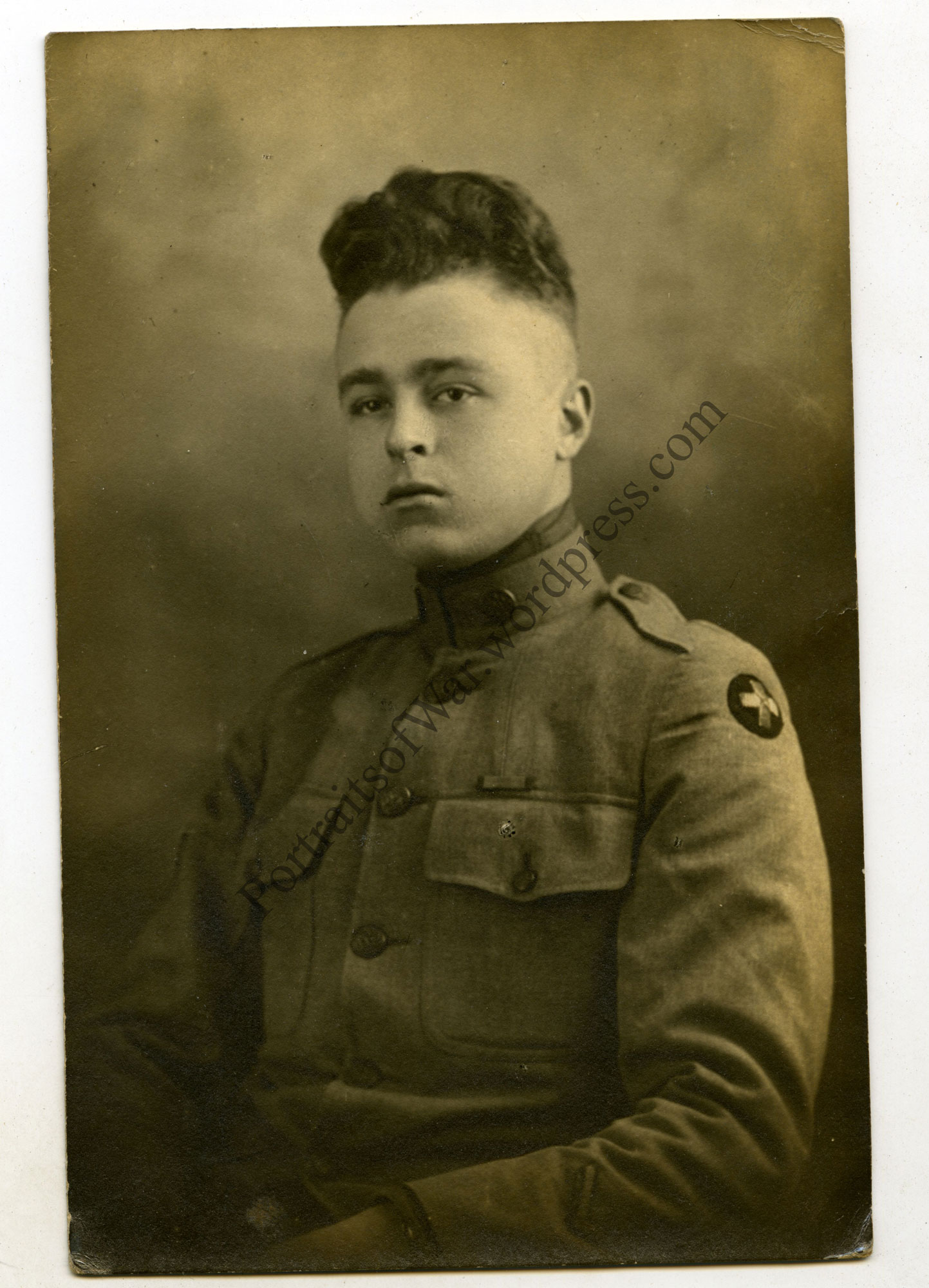
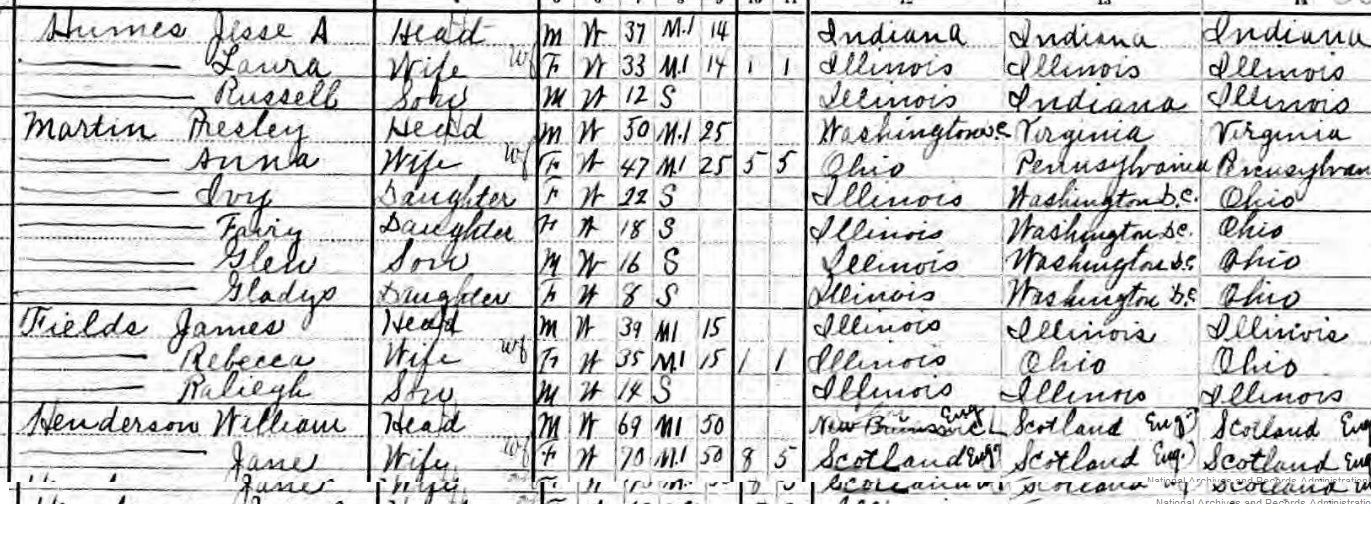
WWI Photo: Research Uncovers 33rd Division Veteran’s Identification! 130th Infantry Regiment Wounded!


Sometimes it takes a good bit of time to lock down the identity of the sitter in a photograph. I wouldn’t be able to do it without the help of dozens of research friends and an equal number of archive websites.  With that said, I was able to purchase, research and identify and post a positive identification of a recent eBay purchase!  It’s not an easy endeavor, but it’s something that will be worthwhile at some point in the future.

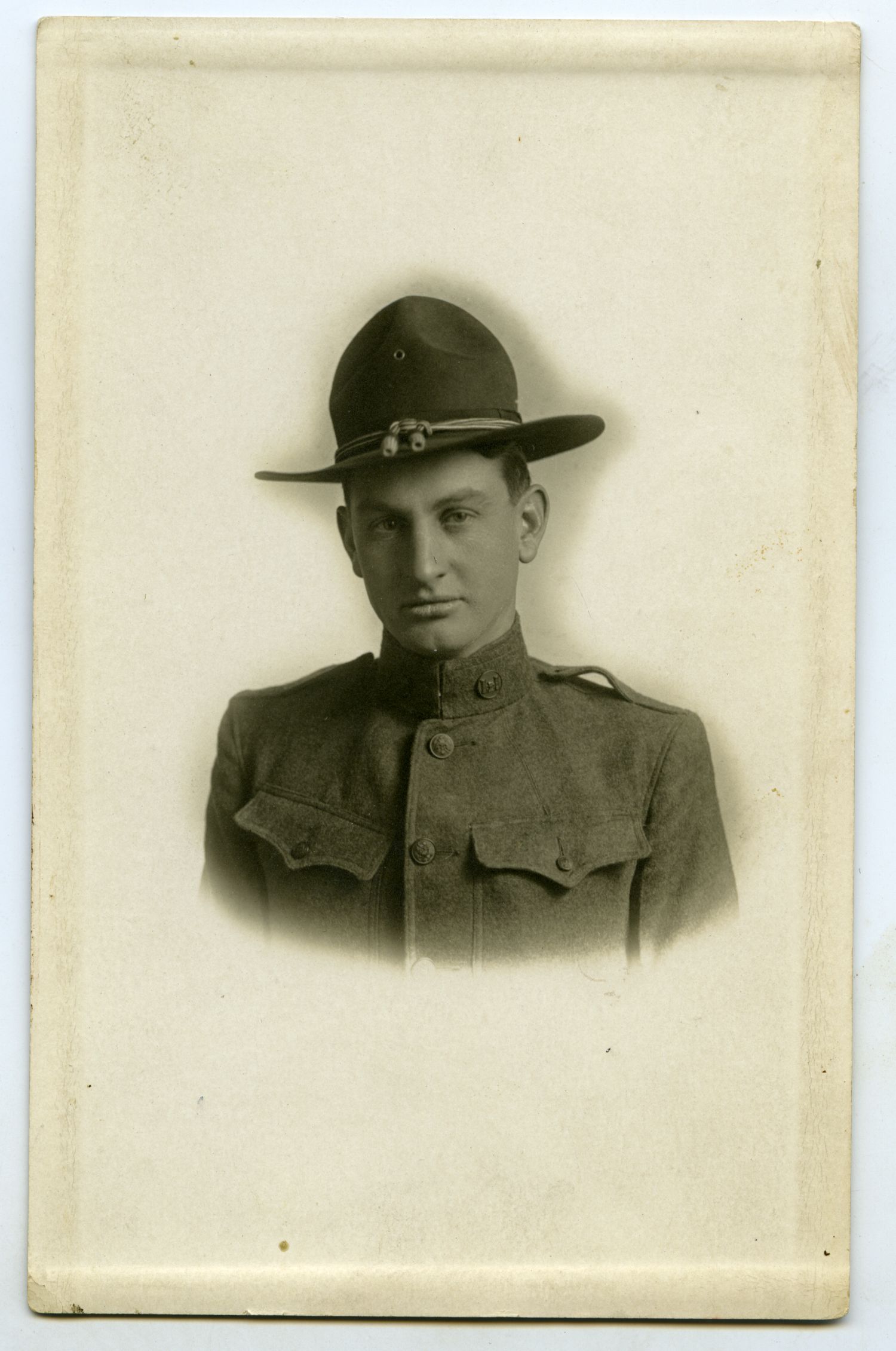
Russell Studio Portrait

Russell Studio Portrait


Backside of the RPPC

Backside of the RPPC

What are we working with for an identification?  The soldier has a definite first name of Russell and is cousins with a male named Forrest Martin of Watson, Illionois in 1919.  Given the intro and body wording, he’s likely to be close to the recipient.


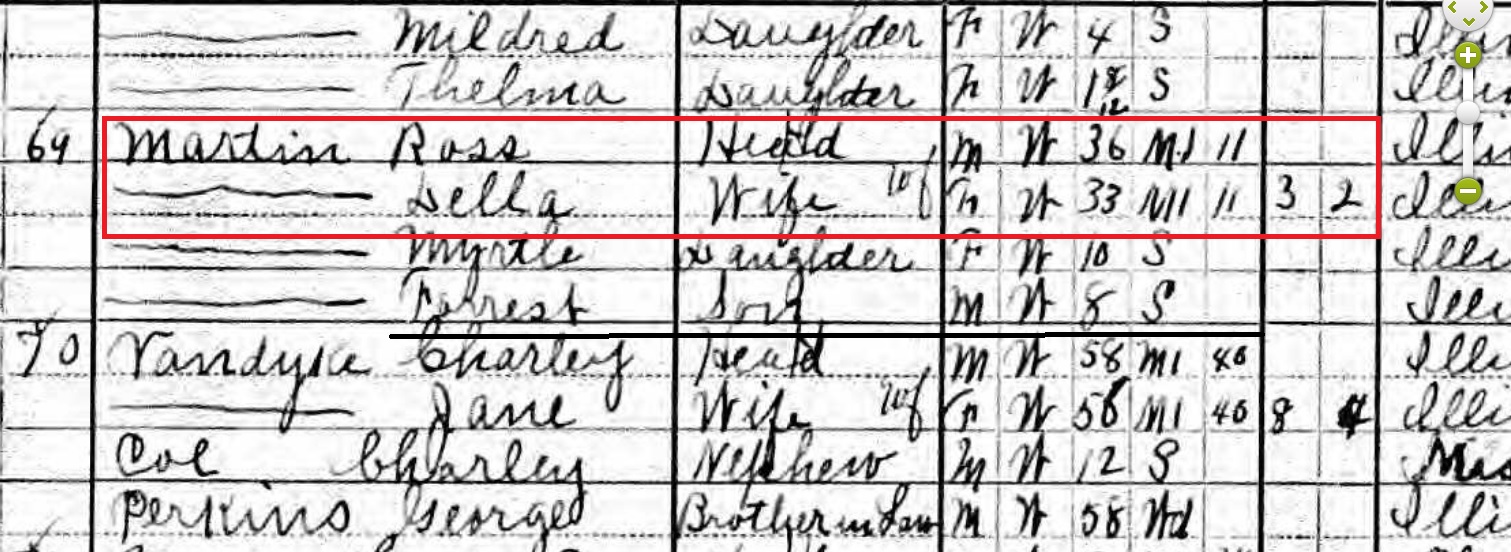
I started by researching the recipient, Forrest Martin, and found his 1900 census entry:

1910 Census Forrest Martin

1910 Census Forrest Martin

From here I decided to research his mother and father in search of a series of siblings to track down as aunts and uncles to Russell.  An aunt or uncle would produce a cousin which should provide me with the proper identification for the 33rd Division soldier!

After over an hour of searching (tiring for sure) I was able to identify his mother’s sister as a Laura A. Humes. Laura had a son named Russell in 1897!  When I clicked on his military burial record it all came together. Please keep in mind that this took hours of research!

Forrest's Aunt Laura

Forrest’s Aunt Laura


Russell Humes' Burial Card

Russell Humes’ Burial Card

Russell Humes, first cousin of Forrest Humes (recipient of the postcard), was in Company G of the 130th Infantry Regiment of the 33rd Division in WWI.  He achieved the rank of Corporal and was wounded in action at some point during his service.  His portrait photo was taken in 1919 long after his wounding. He passed away on 11-5-1957 at the age of 61.

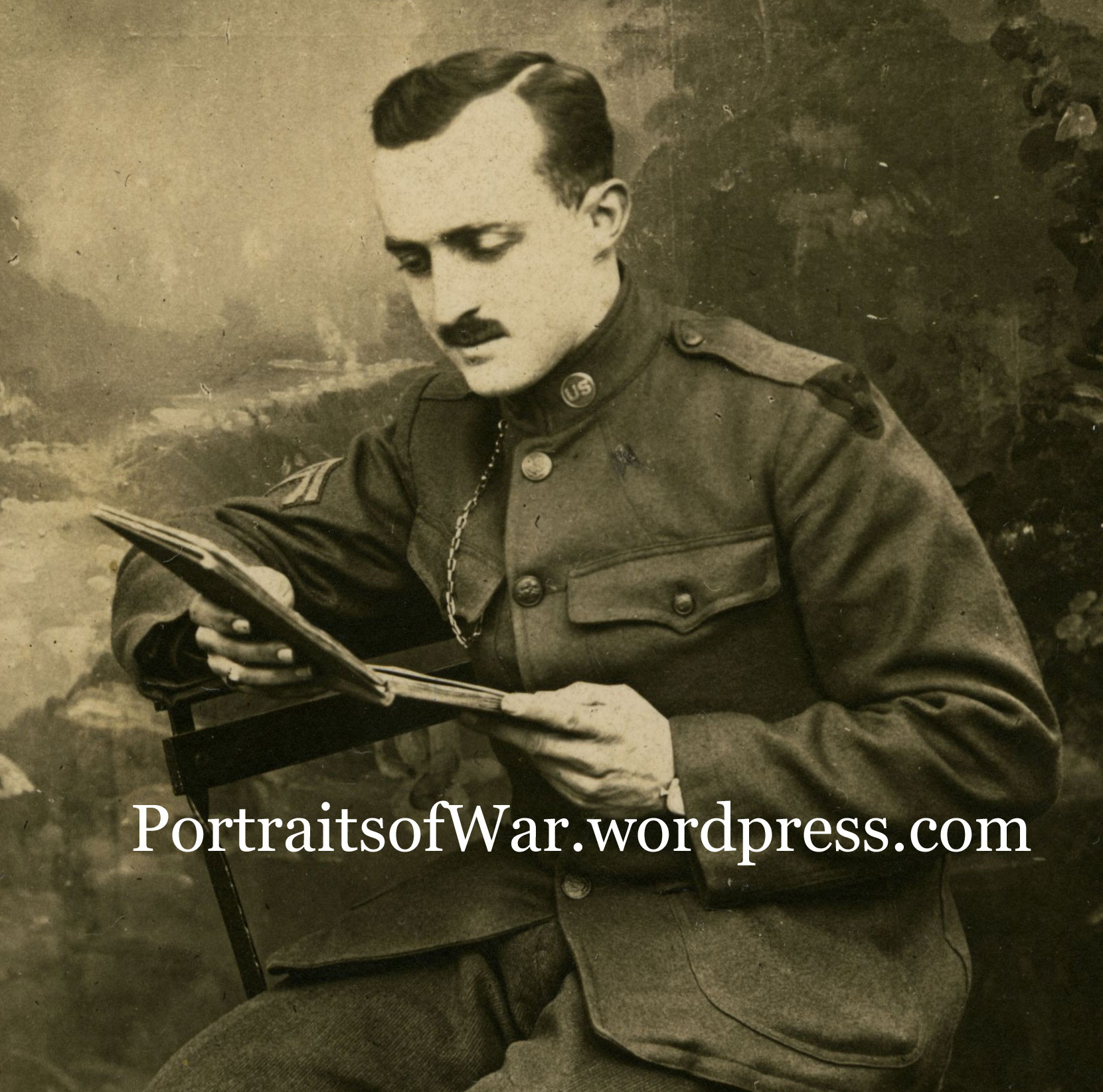
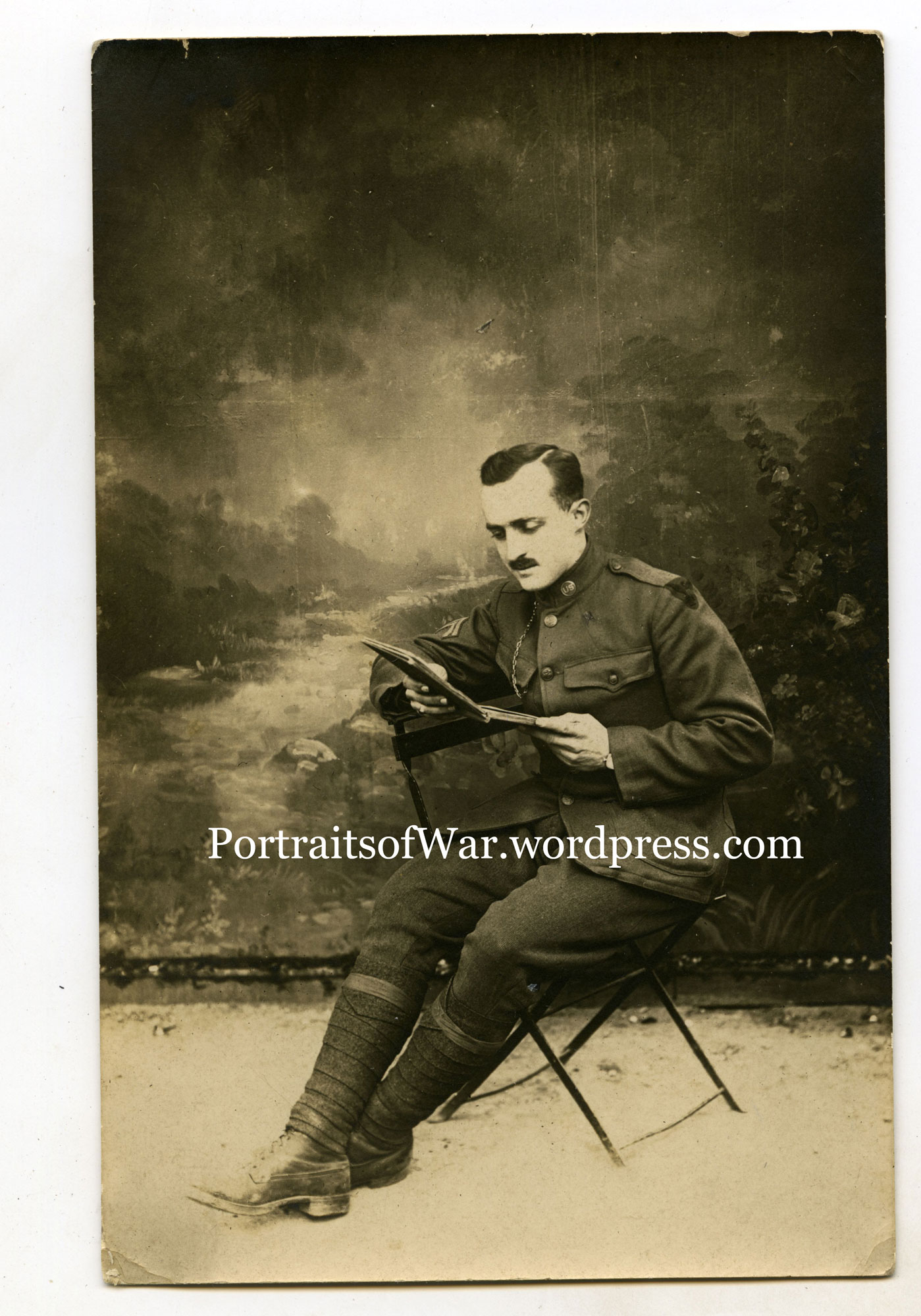
WWI Patched Studio Photo: Corporal Harold Dannhorn, Illinois WWI and WWII Veteran of the 86th Division


Harold Dannhorn Reads a Book in France

Harold Dannhorn Reads a Book in France

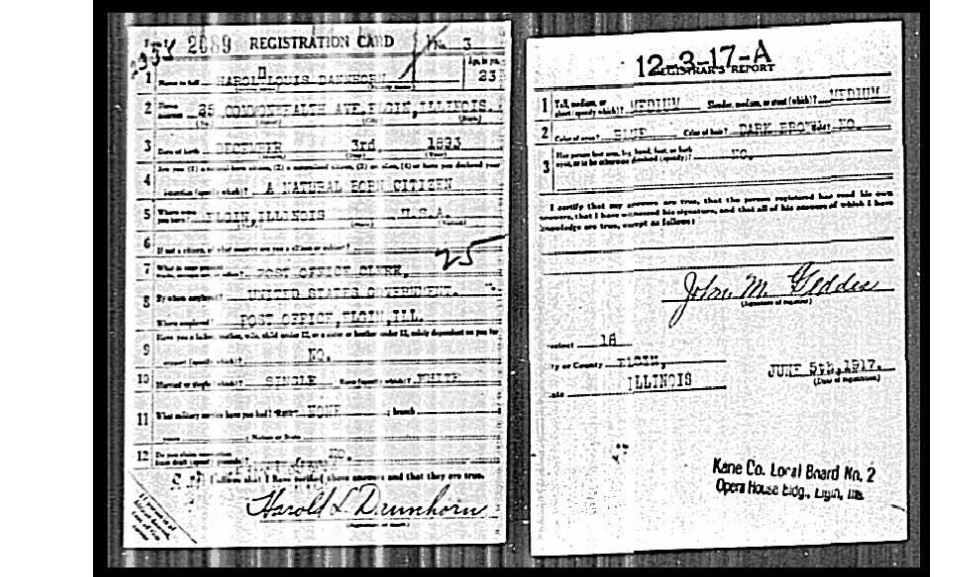
Corporal Dannhorn served in the HQ Company of the 343rd Infantry Regiment of the 86th Division while stationed in France before being switched over to the 256th Prisoner of War Escort Company #256 during the Occupation of Germany.  Here he poses in a studio in Menton, France on February 20th, 1919.


Veteran Gravestone Registration

Veteran Gravestone Registration


WWI Draft Card

WWI Draft Card


Uncropped RPPC

Uncropped RPPC

86thPOWEscort320


Forestry Engineers of WWI: The Unsung Heroes of the 20th Engineer Regiment


My interest in the forestry units of WWI started with an inexpensive eBay purchase back in 2012. I was lucky enough to pick up a copy of the 20th Engineer Regiment’s unit history from WWI.  This particular copy had been in a fire at one point in it’s long life and was luckily only singed on the corners.  The burned edges and soiled pages give the book a feeling of age and rugged dignity.  The inside cover in inscribed by an Ed. Peterman of Florence, OR who was assigned to the 6th Battalion of the 20th Engineers.

Ed's Burnt Book

Ed’s Burnt Book

Inscription

Inscription

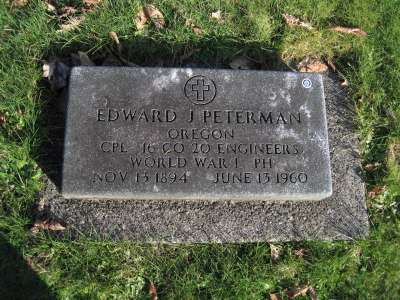
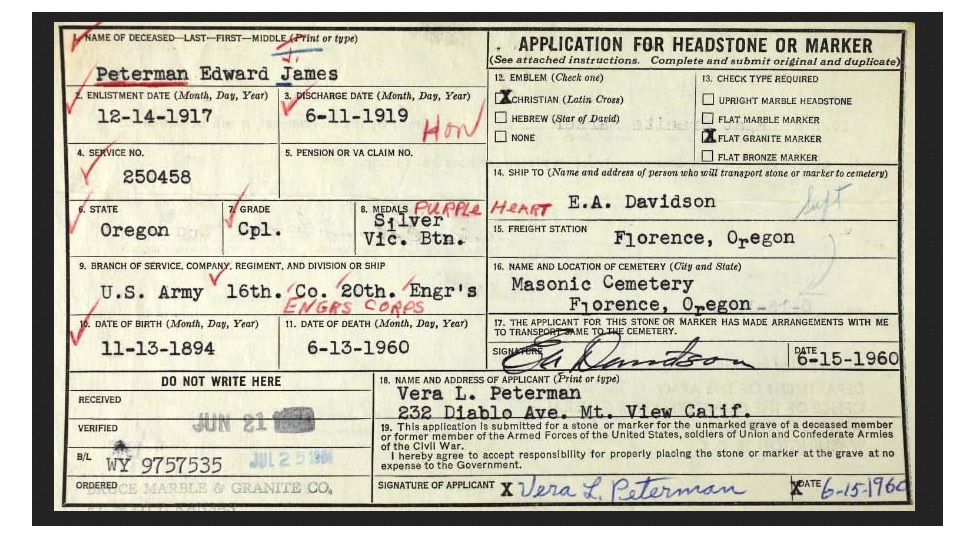
In an incredible stroke of luck I was able to find a 1920s photo of Mr.Peterman on ancestry.com.  Ed was born in Winona, MN on November 13th, 1894 and later moved to Oregon, where he signed up with the forestry engineers.  According to his gravestone, he served with both the 6th Battalion, 20th engineers until 10/1918 and then transferred to the 18th Company in October of 1918.  He is listed as being a corporal and was wounded by enemy action, which is very rare for a forestry engineer.  Ed was also a distinguished member of a very exclusive club. He was on board the S.S. Tuscania when it was torpedoed by a German U-Boat off the coast of Britain on February 5th, 1918. The boat sunk, taking 33 of Ed’s fellow Company F, 6th Battalion, 20th Engineer comrades with her.  The 6th Battalion lost 95 men that day.   Luckily, Ed was one of survivors.


This post is dedicated to the 20th Engineers and my continued interest in the unit. For more info on the 20th Engineers and the idea of forestry units in wartime, please check out The Forest History Society’s website here: http://www.foresthistory.org/research/WWI_ForestryEngineers.htm

Ed Peterman (right)

Ed Peterman (right)

Mr. Peterman's Grave

Mr. Peterman’s Grave

Gravestone Card

Gravestone Card

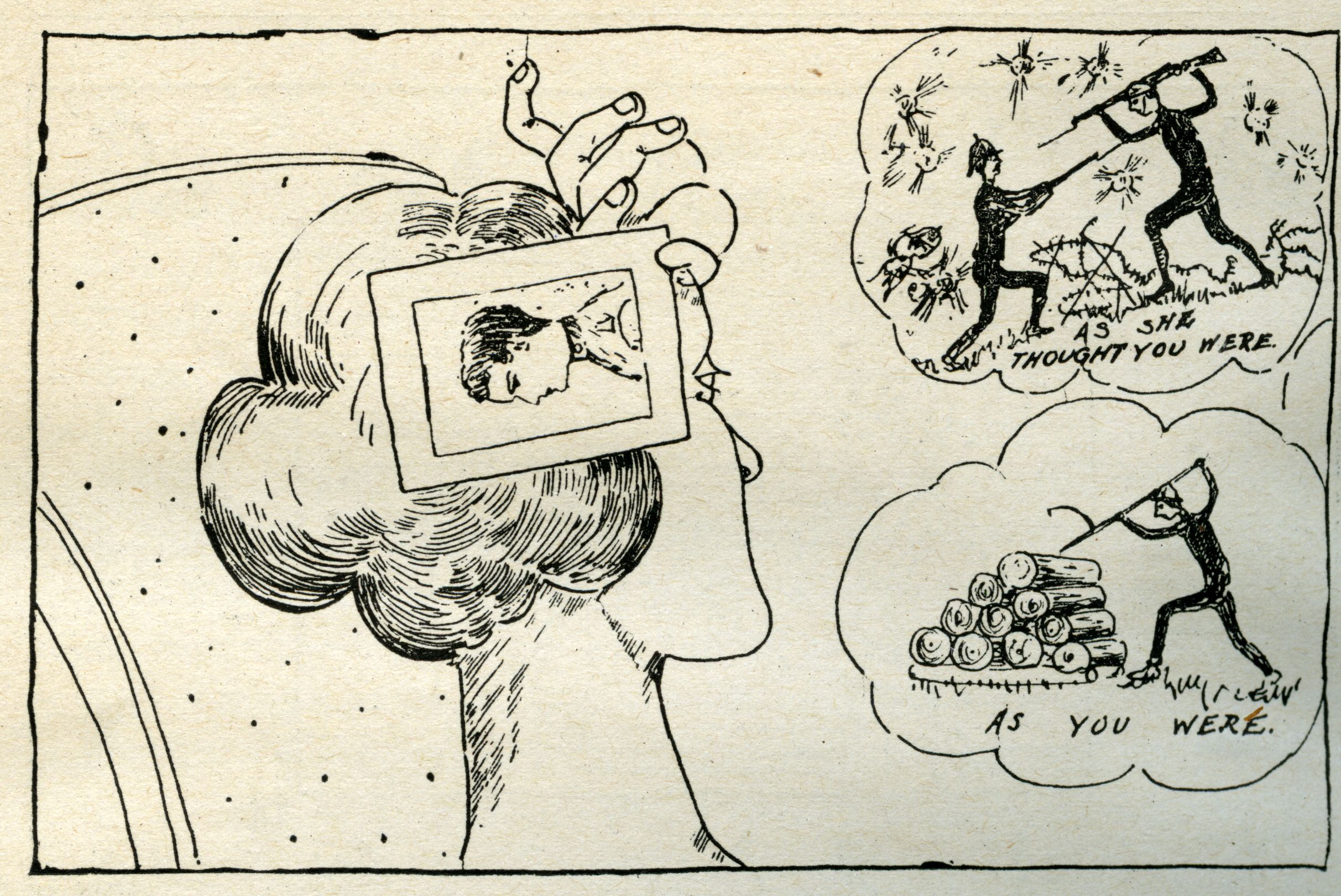
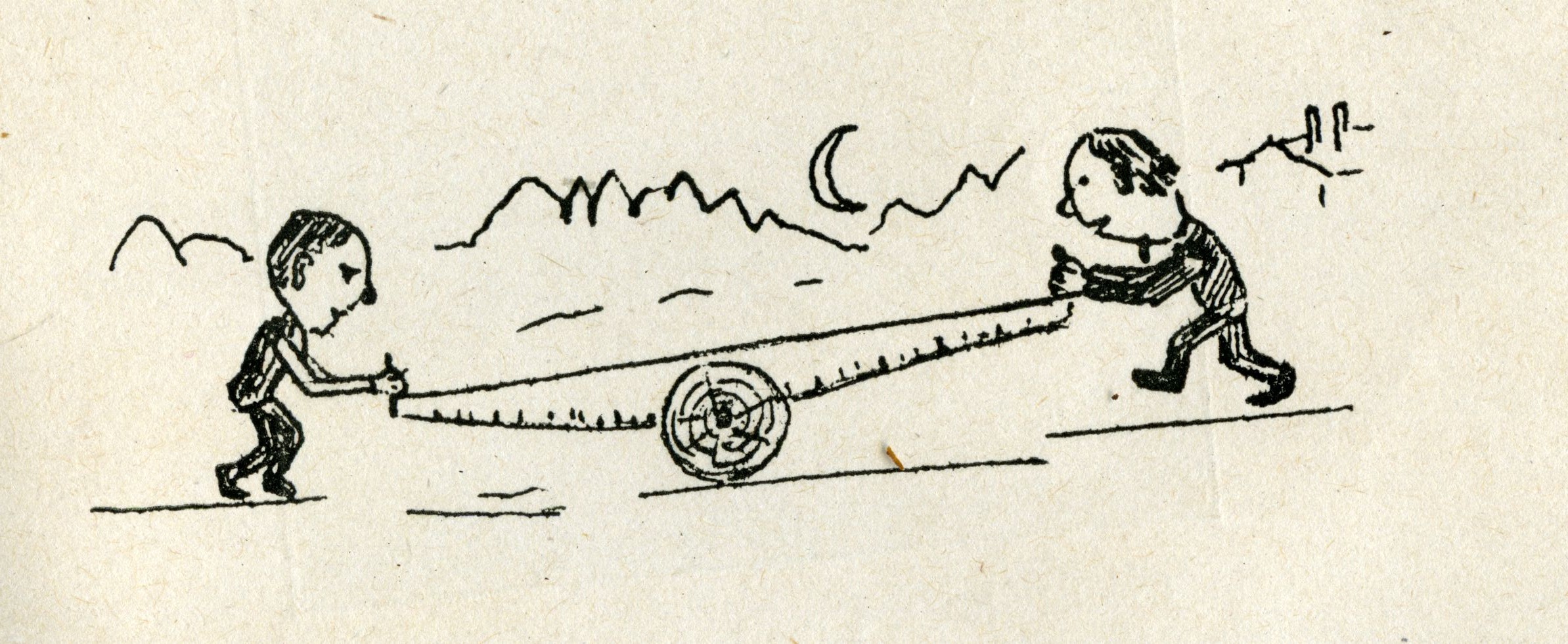
Ed’s book is filled with plenty of wonderful tidbits about the 20th Engineers during WWI as well as a series of funny cartoons and sketches done to help illustrate the book. Here are a few of my favorites:


20thEngineers29620thEngineers295

20thEngineers293


20thEngineers292

Maine in the First World War: The Maine National Guard and the 54th Artillery Regiment Coastal Artillery Corps in WWI


Everyone knows that I love Vermont WWI material, but I also enjoy collecting photos from other New England states as well.  I have a handful from every state but only one from Maine.  Now I have another!

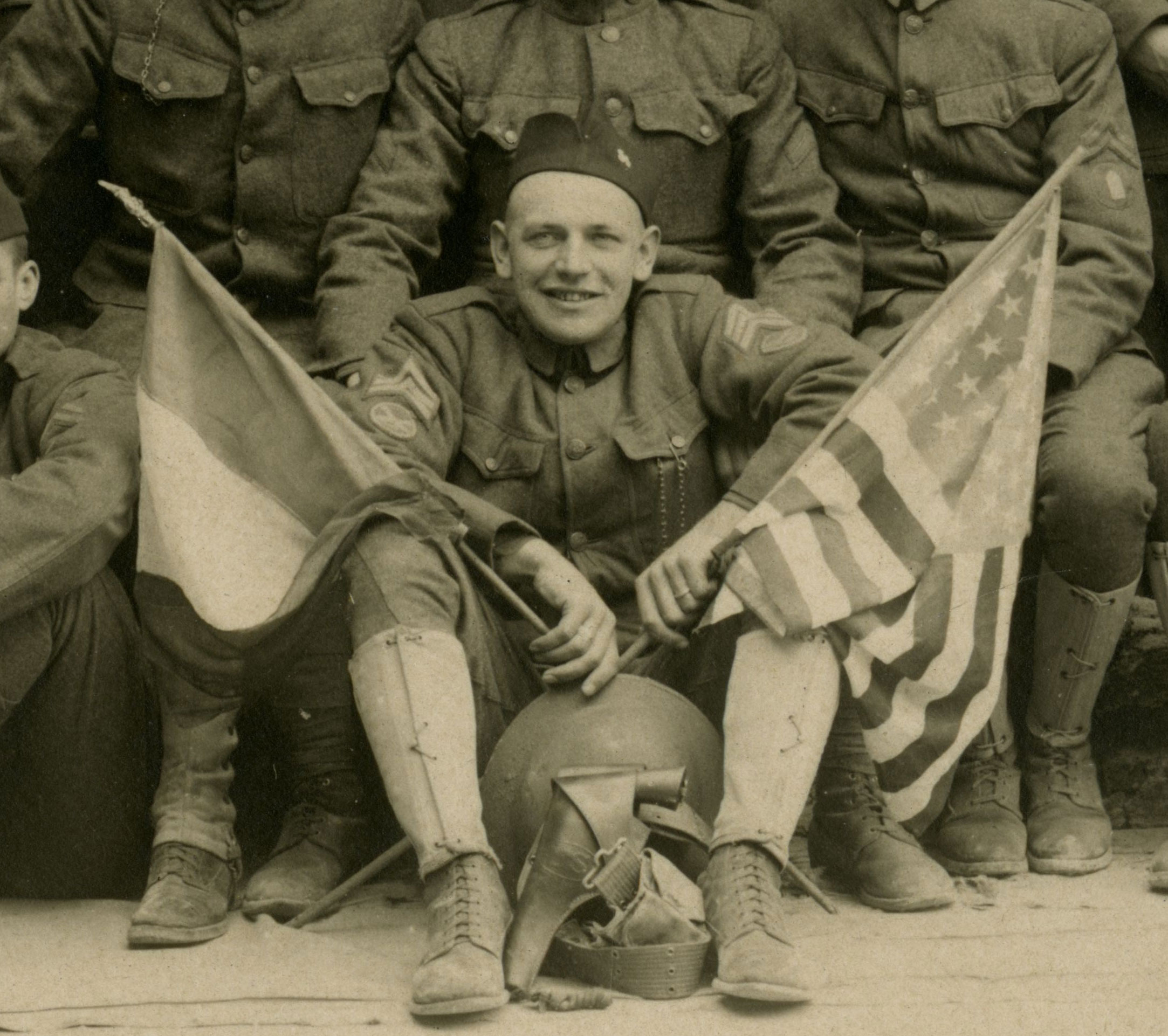
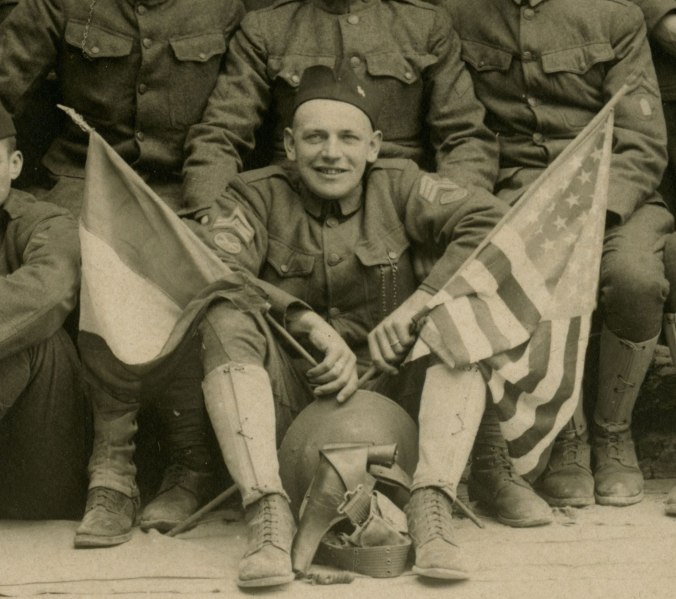
This fantastic interior studio RPPC has a ton of great qualities that drove me to make the purchase.  The crossed flags at center, the helmet and pistol props, the uniform details, and the identification on the reverse all make it a great shot to add to the collection.  This particular group is comprised of men from Portland and Bath.

Battery D of the 54th Artillery Regiment, C.A.C.

Battery D of the 54th Artillery Regiment, C.A.C.

Identified to a Corporal Carl L. Pearson who I believe is positioned directly right of the flag, this shot shows a group of 19 soldiers posed in a French studio.  This may be a record for my collection!   I have a few with 6-8, but none with more than 10.

Pearson was from West Falmouth, Maine and was born in January of 1893.  He enlisted with the National Guard in Portland in March of 1917 and reported for Federal service in June of that year.  He was overseas from March of 1918 to March of 1919.  This photo was taken in either late March, or April or May of 1918.  He was promoted in early June of 1918.  Since this photo shows him as a Corporal at the time of the photo, we know it was taken before his promotion.  Also, his lack of OS chevron and the abundance of spats likely points towards an early photo taken in France.
54th037a

A little info on the 54th CAC

Source: http://freepages.military.rootsweb.ancestry.com/~cacunithistories/54thcac.htm

WORLD WAR I — 1917 – 1919The Coast Artillery Corps a Maine National Guard were mobilized on 25 July, 1917, and all companies, band, field officers, and non-commissioner staff officers reported on 27 July. 14 staff officers reported at Portland Coast Defenses and were assigned to duty in the Coast Defenses. The several companies were re-designated at once. This designation was changed again on 23 August 1917, and on 25 December 1917, nine of the thirteen C.A.C. Maine National Guard companies were made a part of the 54th Artillery, C.A.C., the supply company and Batteries B, D, E, and F, of the new 54th Artillery, C.A.C. 6 inch guns (Motor drawn), were entirely constituted from the nine companies Maine National Guard.

The 54th Artillery, C.A.C., was organized with a Headquarters Company, a supply company, and three battalions of two batteries each. Of the 6 batteries, four were taken from the Maine National Guard and from 25 December 1917, the further World War history of the C.A.C. Maine National Guard is properly that of the 54th Artillery since over 62 percent of its units were entirely Maine National Guard. In addition, only 30 percent of the units of the Maine National Guard were not included in the organization of the 54th Artillery C.A.C.

The 54th Artillery, CAC, (6-Inch Guns, Motor)

This regiment was organized in Portland Harbor Forts on 25 December 1917, five of its units being formed from National Guard units and three from Regular Army units.

The batteries of the 54th Artillery were organized as follows:

Headquarters Company, and Batteries A and C from the Regular Army.

Supply Company, from 20th Company, Lewiston.

Battery B, from 4th Company, Portland, and 7th Company, Biddeford.

Battery D, from 2nd Company, Portland, and 4th Company, Bath.

Battery E, from 3rd Company, Auburn, and 3rd Company, Kennebunk.

Battery F, from 9th Company, Lewiston and 11th Company, Portland.

Headquarters Company, Batteries C, D, E, and F, sailed from Portland, Maine, on the CANADA, 22 March 1918 and arrived Glasgow, Scotland 2 April, Winchester, England 3 April, and LeHarve, France, 6 April 1918.

The Supply Company, Batteries A and B, left Portland 14 March, sailed from Hoboken 16 March, 1918 on BALTIC arrived LeHarve, France, 6 April 1918.

The 54th Artillery C.A.C. was sent to rest camp at Mailly-le-camp (Aube) and on 2 May 1918, transferred to Haussimont (Marne), as replacement regimen to Railway Artillery Reserve and Tractor Artillery Regiments. On 20 September 1918, the 54th Artillery was reorganized into three battalion stations as follows:

1st Battalion, Training Battalion (A and B Battery) Angers (Marne-et-Loire).

2nd Battalion, Tractor replacement(E and F Battery), Haussimont (Marne) Angers (Marne-et-Loire.)

3rd Battalion, Unknown.

After the Armistice the 54th Artillery was assigned to Brest, and part of the Regiment sailed 23 February 1919 on the Vedic arriving in Boston 7 March 1919. It was completely demobilized at Camp Devons by 13 March 1919.

The four companies (1st, 6th, 10th and 12th) that were not formed into the 54th Artillery, C.A.C. were demobilized in January 1919 at Harbor Defenses of Portland however, but few of the original members of the companies remained in them late in 1918. Two large transfers of enlisted men from these batteries were made. The first was made on 23 August 1917, to the 26th Division Artillery and Engineers. One hundred-sixty-nine men were taken from these four companies in the transfer. On May 31 1918, the other large transfer was made to the 72d Artillery, C.A.C. From the 1st Company, 147 men were taken, and from the other three companies large numbers. However, the transfers were made as individuals no units being reformed or discontinued.

In July 1922, the regiment was reorganized and designated as the First Coast Defense Command, C.A.C., Maine National Guard. The regiment was formed into Headquarters, Headquarters Detachment, Band, Medical Detachment and 1st Fort Command.

1st Fort Command

301st Company, Portland, org. 1803 – later Btry A

306th Company, Sanford, org. 1903 – later Btry B

307th Company, Brunswick, org. 1884 – later Btry C

311th Company, Portland, org. 1807 – later Btry D

2nd Fort Command

303d Company, Camden, org. 1920 – later Btry E

304th Company, Thomaston, org. 1921 – later Btry F

305th Company, Rockland, org. 1921 – later Btry G

302d Company, Vinalhaven, org. 1921 – later Btry H

On 17 September 1923, the 1st C.D.C. was re-designated as the 240th Artillery, C.A.C., and individual batteries as shown above. The designation was again changed to 240th Coast Artillery, Harbor Defense, on 16 April 1924.

WWI Messenger Homing Pigeon Unit Poses in Germany – Captured German Helmet + Uniform Detail


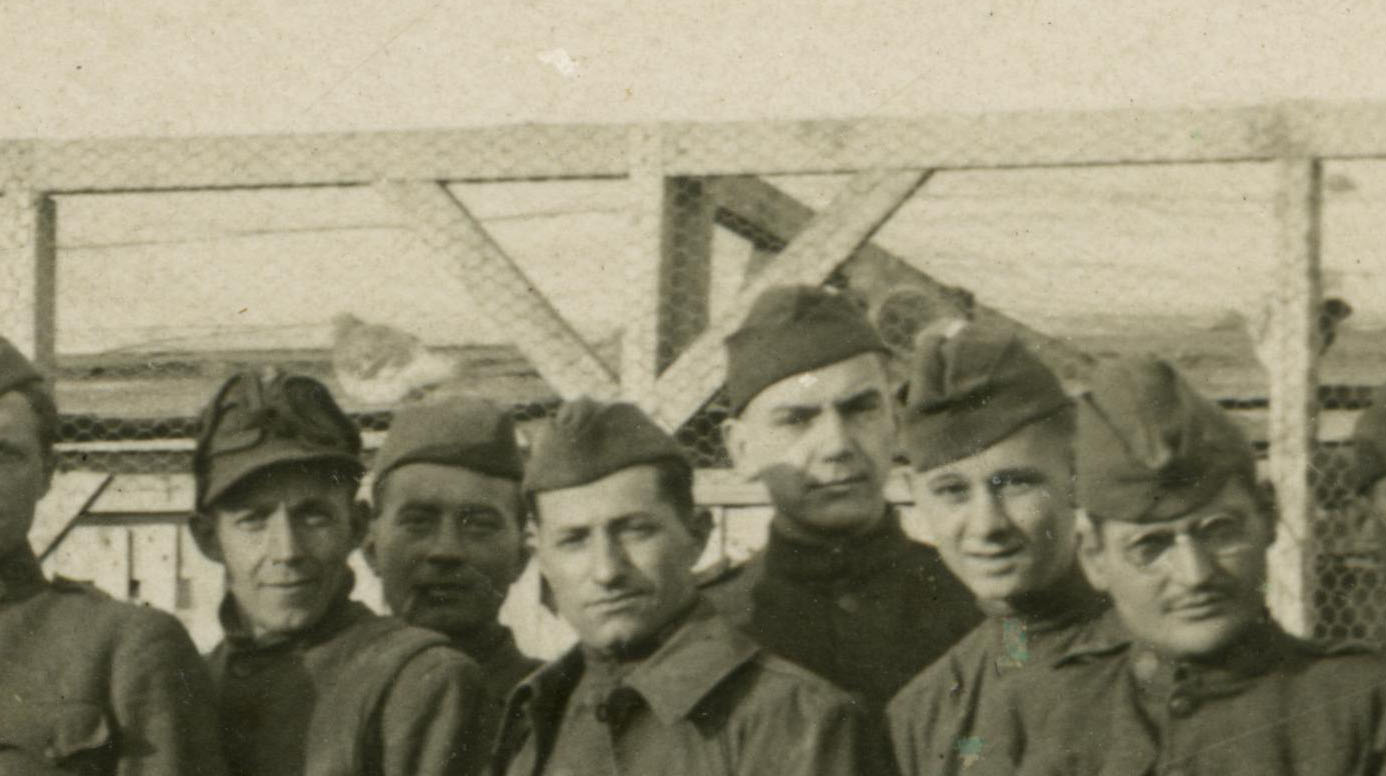
One of the most interesting forms of communication used during WWI has to be the homing pigeon.  Front line troops couldn’t rely on wire messages getting through to rear echelon support units.  Often times homing pigeons were used to relay messages back to HQ.  Here’s a nice shot of a pigeon unit posing for the camera sometime after the armistice.
And some nice details!  Including a captured German helmet for good measure.


WWI Photo Collection – 31st Railway Engineers in France


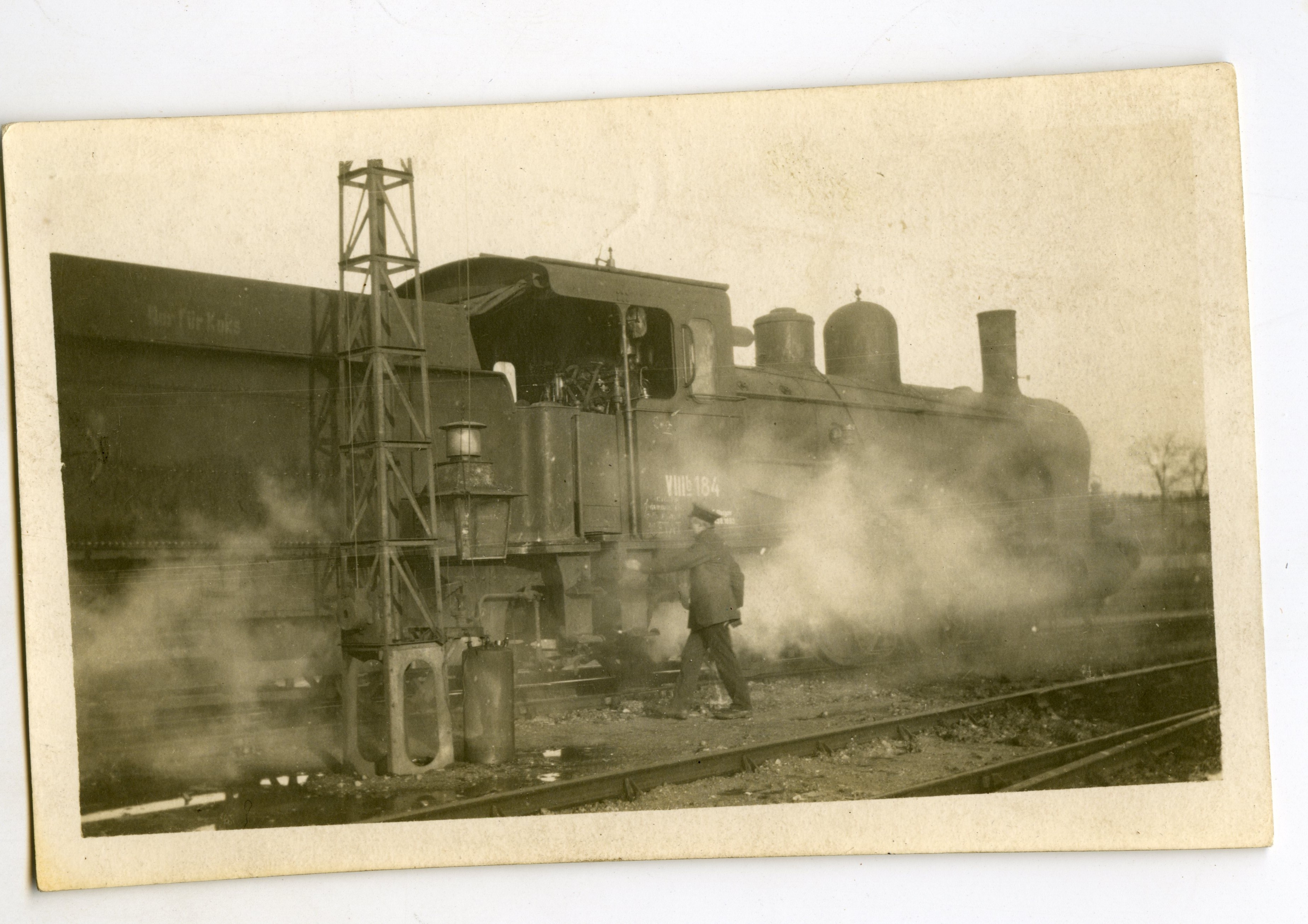
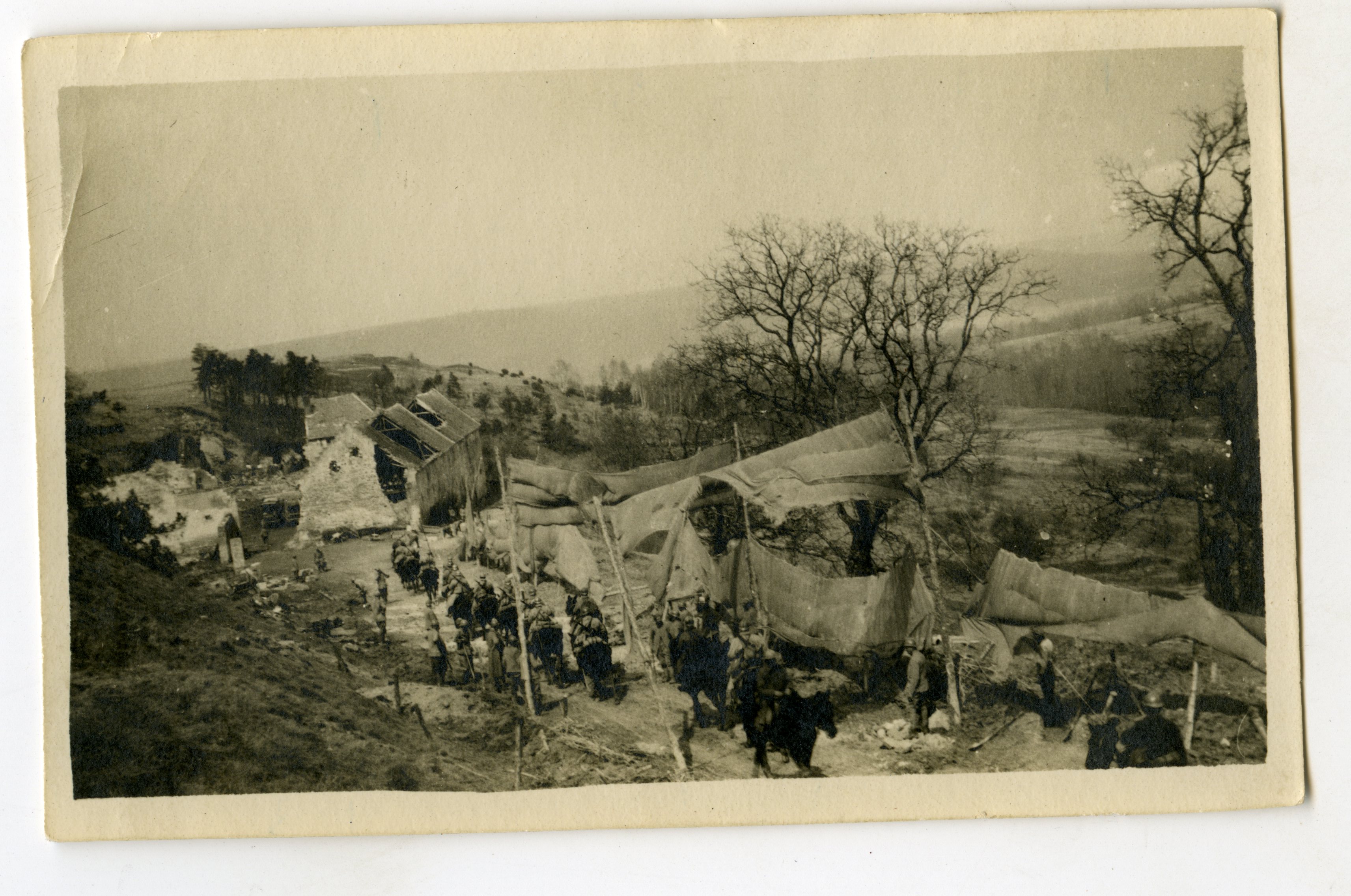
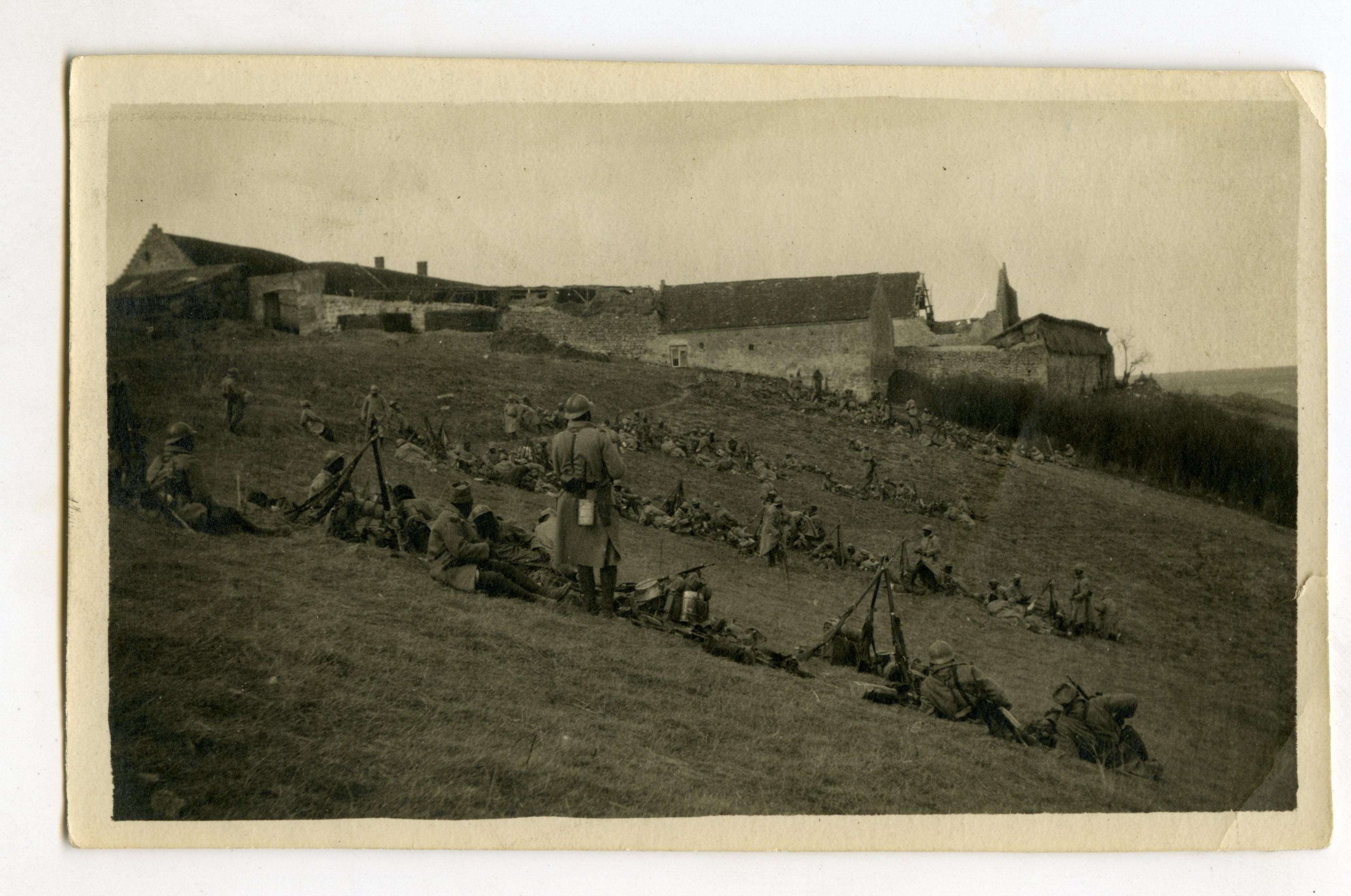
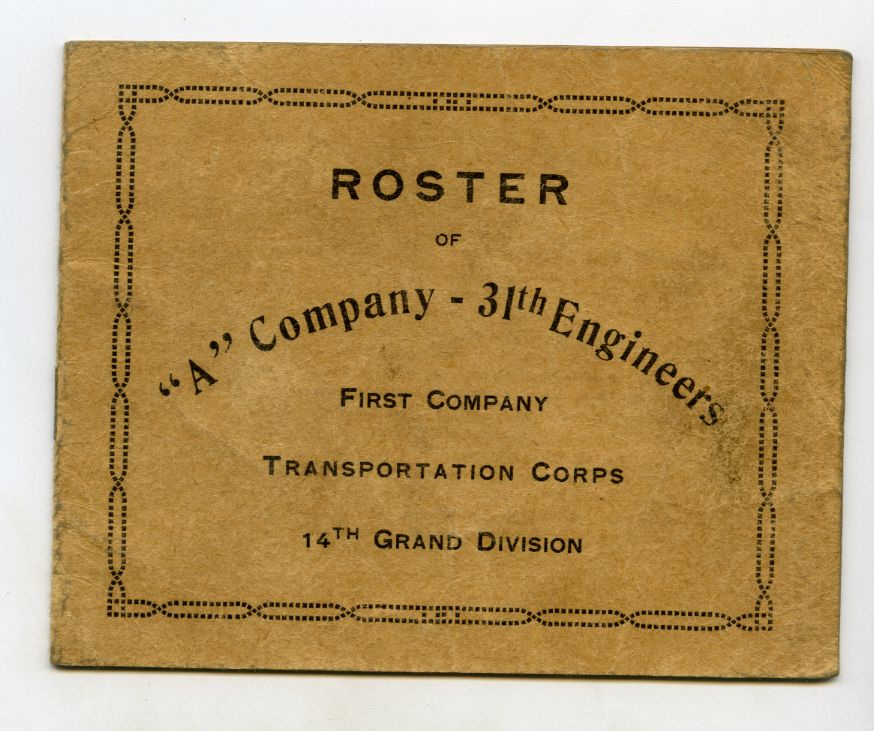
I love collecting WWI albums and named photo groupings.  They are much harder to come by compared with the relatively plentiful single photo purchases.  In this case, I was able to come across a wonderful grouping of photos from the grandson of a WWI 31st Engineer veteran.  I promised to post the photos on the site to help raise interest in this obscure unit and help bring this man’s photos to the digital world.  Digital preservation allows thousands of viewers to enjoy images that would otherwise be relegated to the corner of a dusty upstairs closet.  I will do my best to describe what I can about the unit and share a few biographical vignettes.

Pvt. Herbert Conner posed in France

Pvt. Conner


“My grandfather was born in 1892 in Fordsville, Kentucky later the family moved to Amity Oregon and later to St Helens, Oregon. As a young man he was a prizefighter(that what they called them in those days). He was a logger for awhile later he went to work in Portland, Oregon for the railroad before the war  and after the war he continued with the railroad for over forty years as a fireman and an engineer. He never owned a car and the station was about two blocks from his house and Kelly’s Bar and the grocery store were across the street from work  so I guess he felt he didn’t need one. He passed away in 1968.

Grandpa was very proud to have served in World War 1. I do not believe he was in combat. The 31st engineers provided supplies and transported troops. The only story I can remember when he was on guard duty in France and a soldier had gone awol for the night, apparently celebrating and didn’t know the password or had forgotten it and Grandpa felt sorry for him and let him back in the camp. It has been such a long time ago there were probably other things that happened that I can’t remember right now. He must have spent some time at the French Riviera and Monte Carlo because there was a lot of postcards from that area and one postcard to his brother had him on the Italian Riviera for awhile.”

Some Guys from A Company

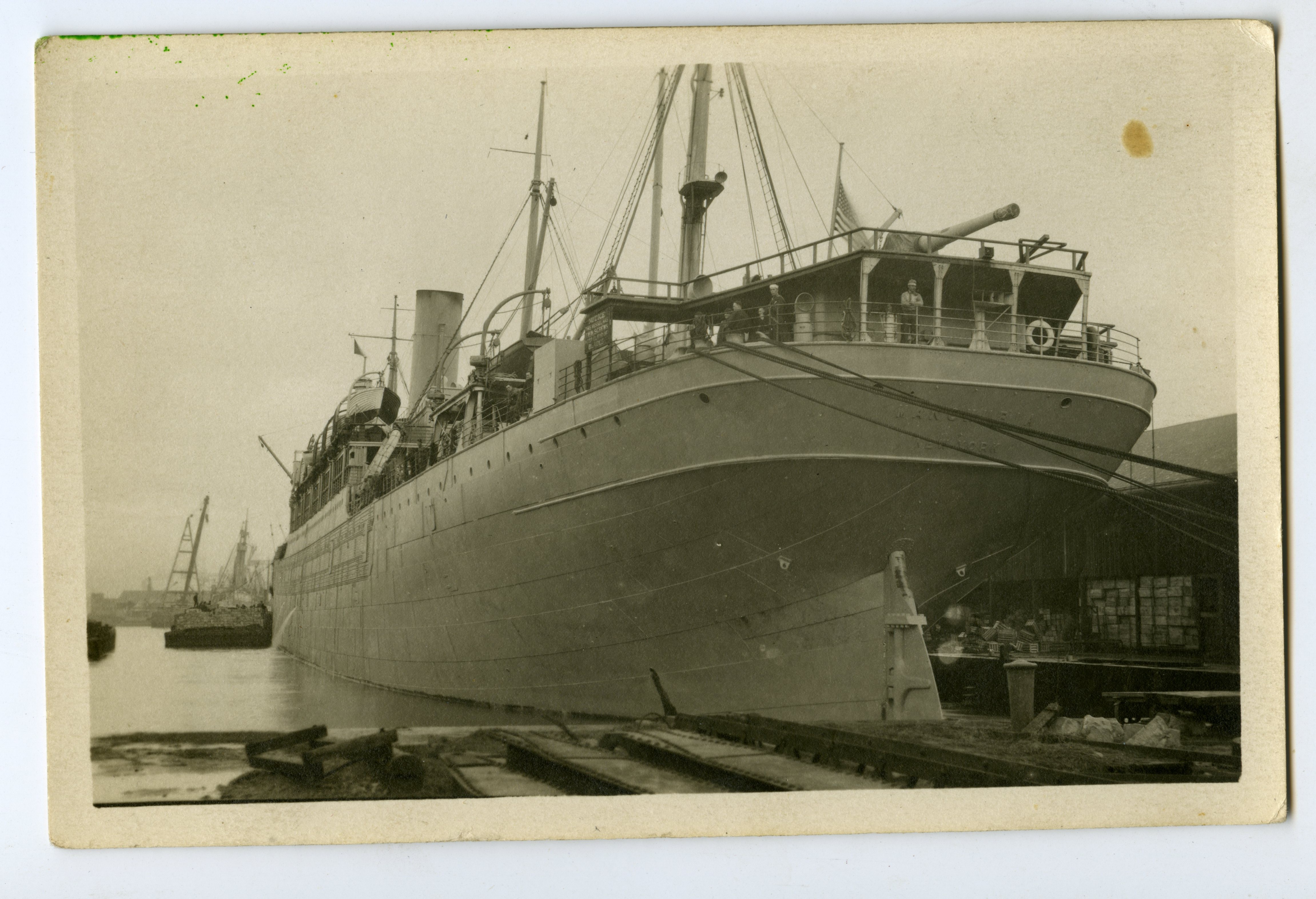
SS Manchuria in Port (Not the return ship for the 31st)

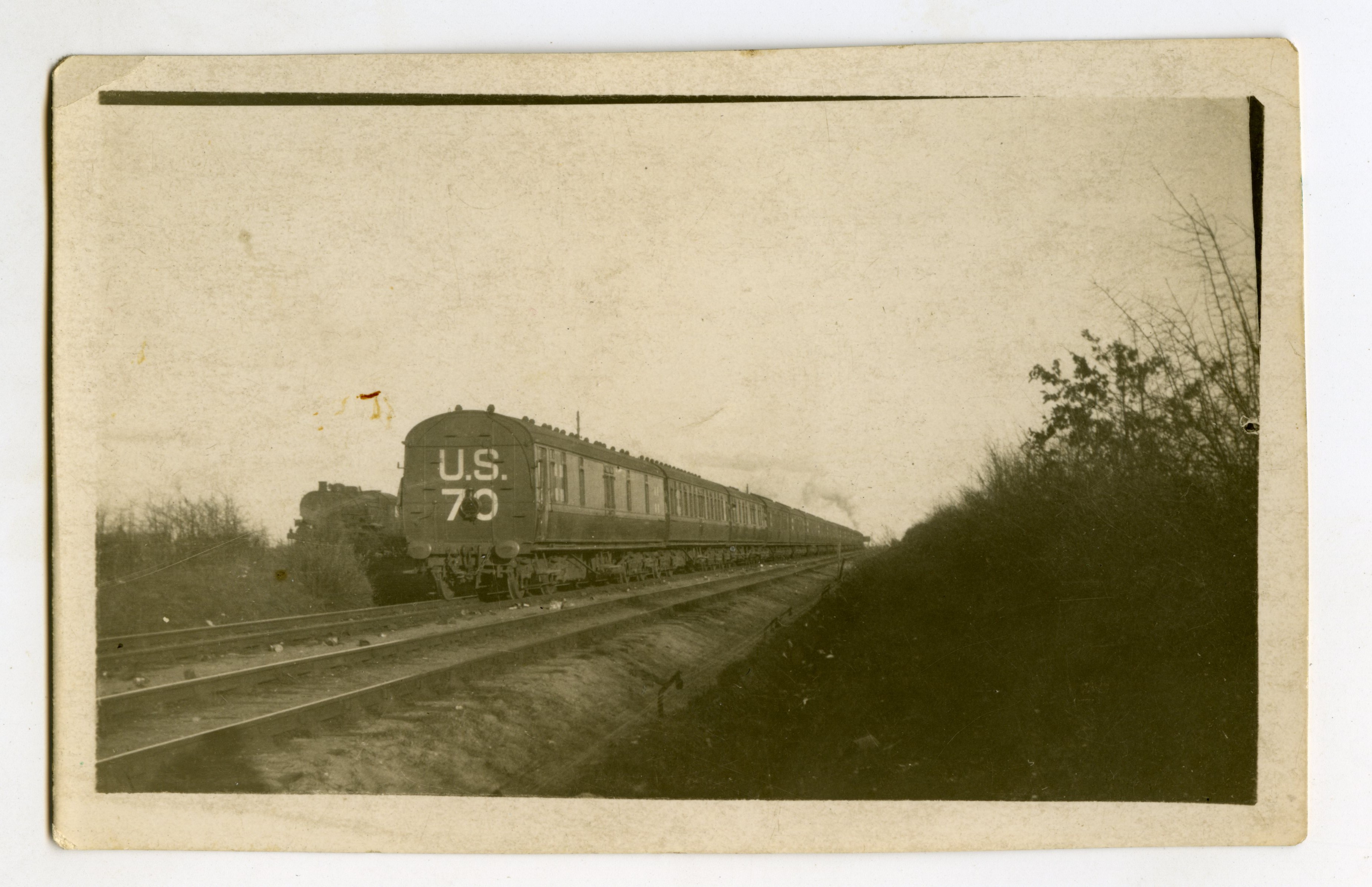
Hospital Train

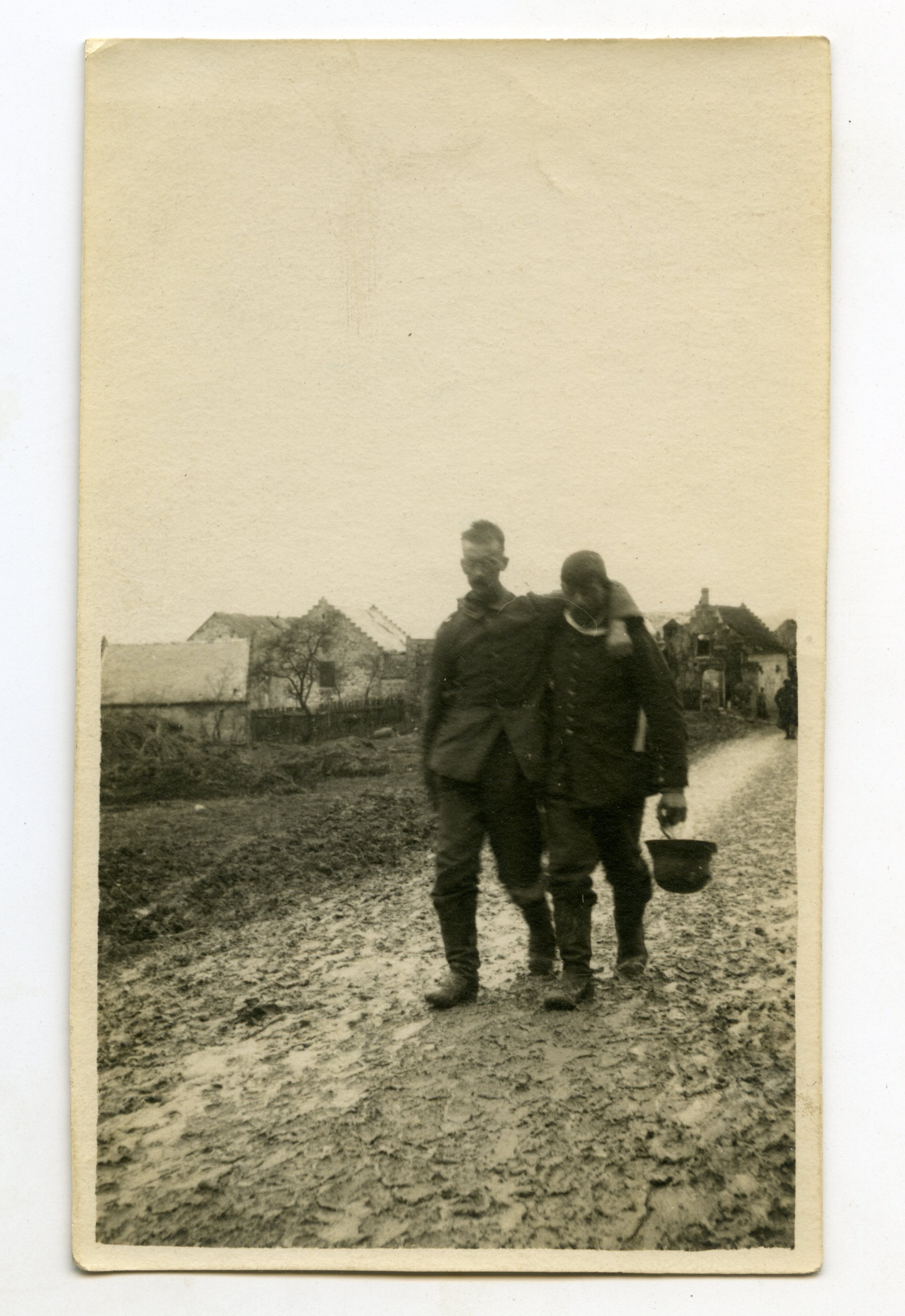
German Prisoners

Check back for updates…………….