WWI Fort Ethan Allen 2nd Vermont Cav. Detailed Letter – Officer Shot in the Head! – Vermont WWI Content


The 2nd Vermont Cavalry trained at Fort Ethan Allen in Colchester Vermont prior to WWI and, after training, shipped off to France to fight with the only US cavalry unit during the war.  I currently live only ten minutes from the fort, and have previously posted a panoramic photo from an infantry regiment that trained there as well.  Collecting WWI Vermont items can be hard; the material seems to never come up to auction.  In this case, I was able to find a little nugget of Vermont history hidden amongst the seemingly endless WWI eBay listing section.

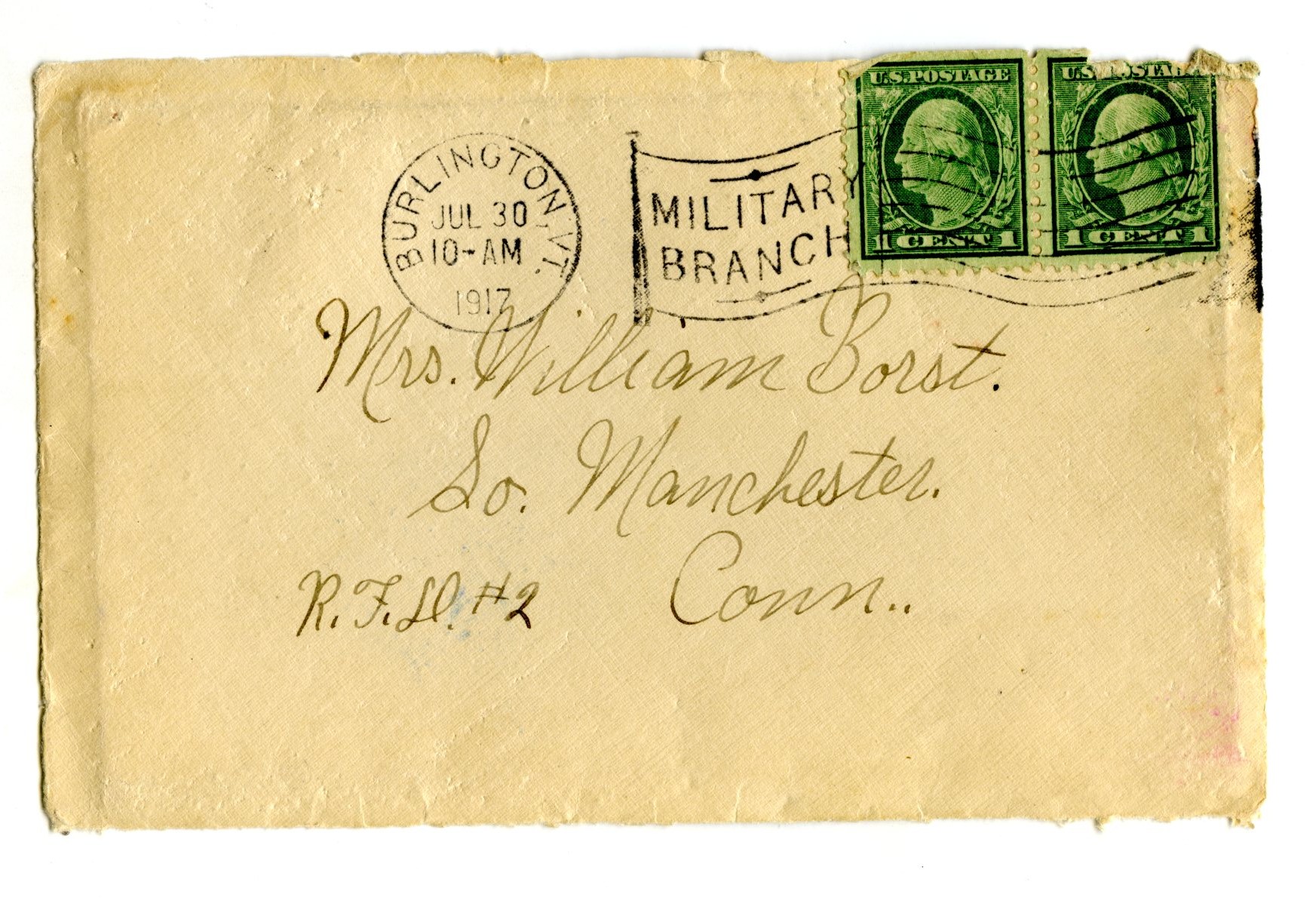
Looks like Clarence “Everett” Hall was originally from Manchester, Connecticut.  In his letter he mentions a number of interesting topics, including the everyday life of a cavalry troop as well as an interesting encounter where he inadvertantly shoots an officer in the head!  A great read, and a must for any fan of WWI cav.


Postmarked Burlington on July 30th, 1917.

Clarence Everett Hall

Fort Ethan Allen

Troop M. 2nd Vermont Cav.

July 28th, 1917

Dear Marion,

Your welcome letter received.  Will write while I have time.

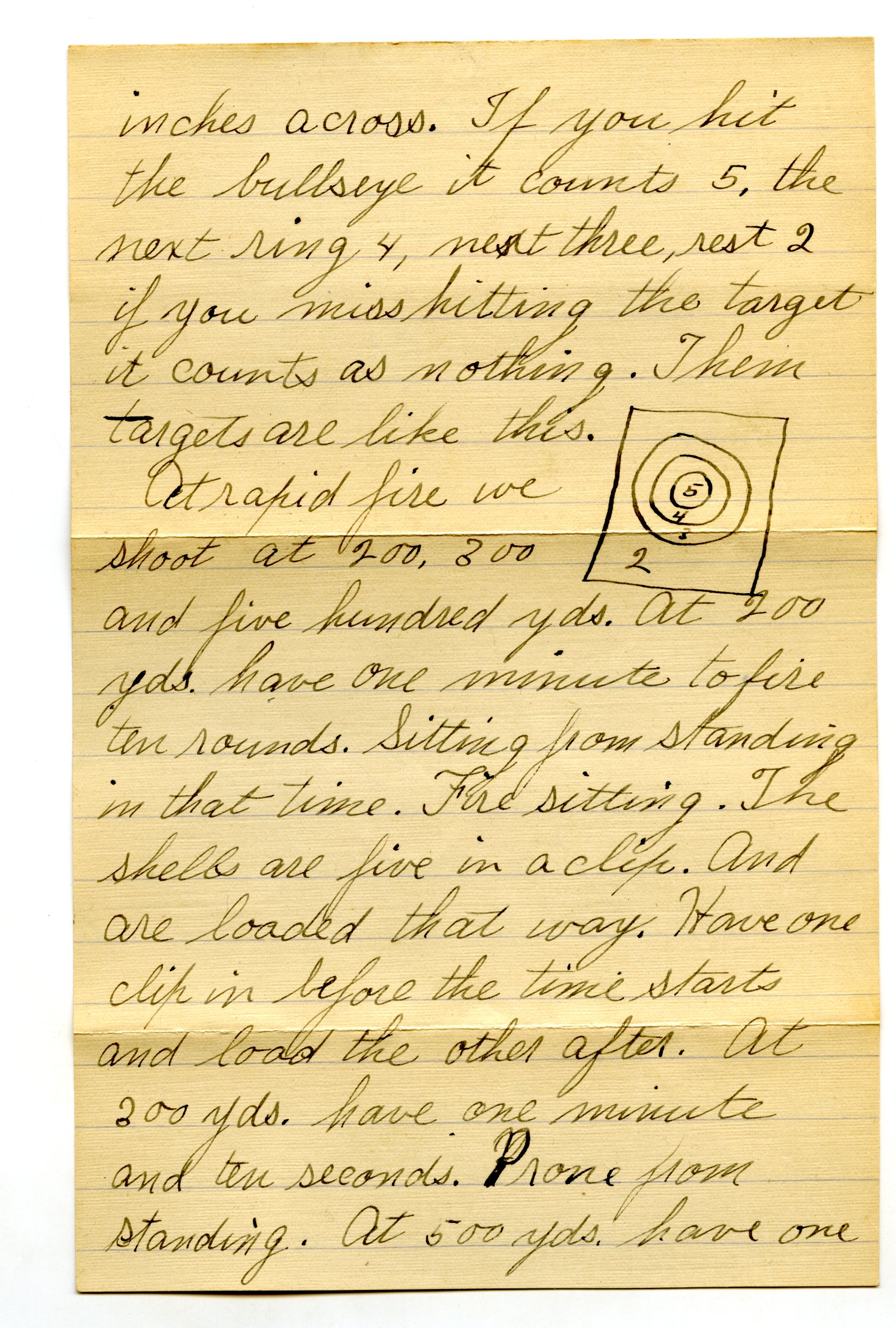
Haveing(sic) a little better weather now.  It was 102 Wednesday on the range.  We was shooting for record shoot slow and rapid fire.  At slow you can take all the time to shoot you want.  Fire at 300, 500 and 600 yards slow fire.  Ten shots or rounds at each.  At 300 yards the bullseye is twelve inches across.  At 500 and 600 yards its twenty inches across.  If you hit the bullseye it counts as 5, the next ring 4, next 3 , rest 2 if you miss hitting the target it counts as nothing.  Then targets are like this.

On rapid fire we shoot 200, 300 and 500 yards.  At 200 yards have one minute to fire ten rounds.  Sitting from standing that time.  Fire sitting.  The shells are five in a clip.  And are loaded that way.  Have one clip in before the time starts and load the others after.  At 300 yards have one minute and ten seconds.  Prone from standing.  At 500 yards have one minute and twenty seconds to fire 10 rounds in.  And fire prone, laying down before the time starts.  The rapid fire target represents a mans head and shoulders.  And count the same.  The bullseye is forty inches across.

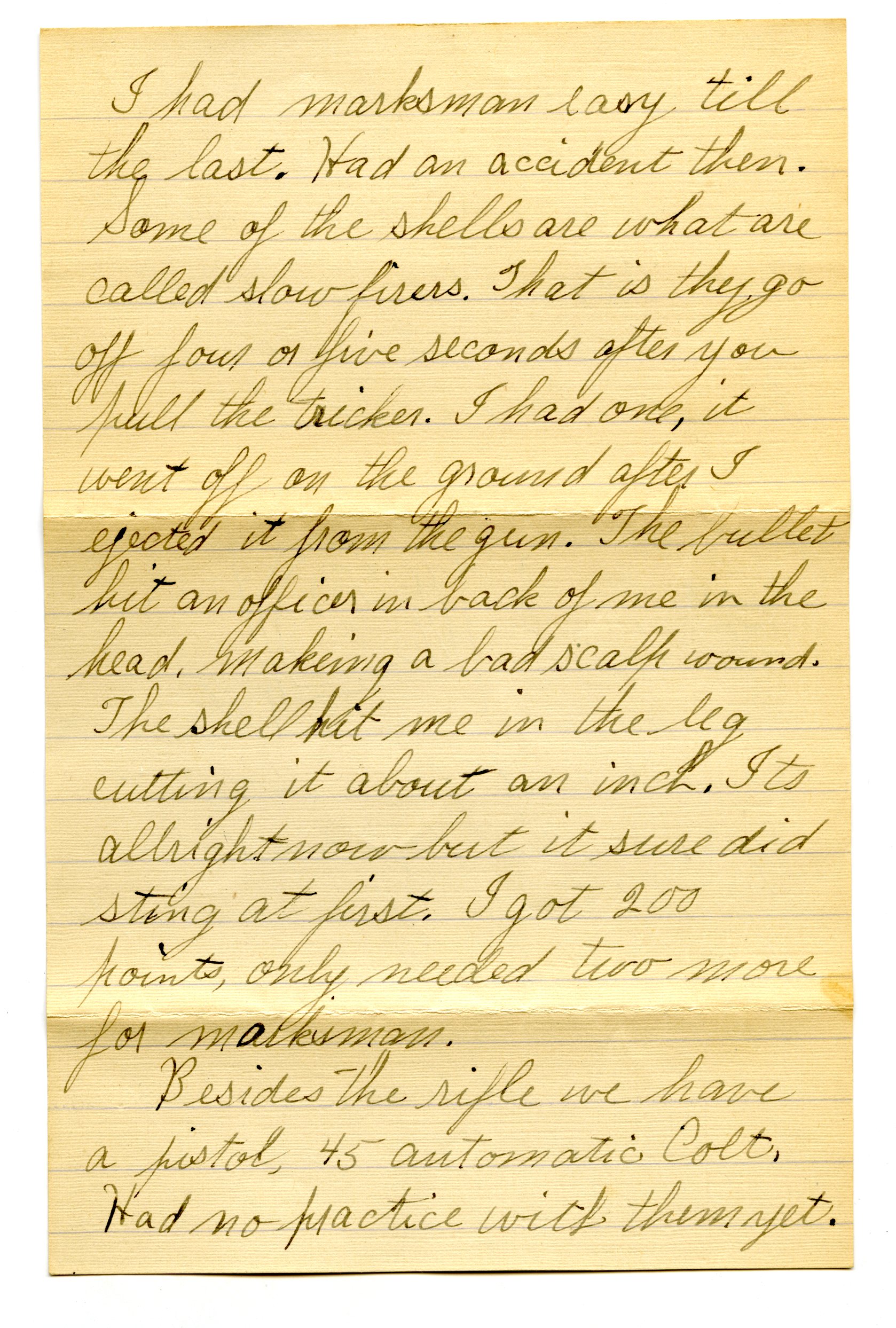
The higher score you get the better it is.  252 points gives you expert rifleman, that pays fire dollars a month extra.  238 gives you sharpshooter, that pays you three dollar a month.  202 pays two dollars a month and is marksman.  Nobody in the troop got expert several got sharpshooter, and several marksman.  I had marksman easy till the last.  Had an accident then.  Some of the shells are what are called slow fires.  That is they go off four or five seconds after you pull the trigger.  I had one, it went off on the ground after I ejected it from the gun.  The bullet hit an officer in back of me in the head, making a bad scalp wound.  The shell hit me in the leg cutting it about an inch.  It’s allright(sic) now but it sure did sting at first.  I got 200 points, only needed two more for marksman.

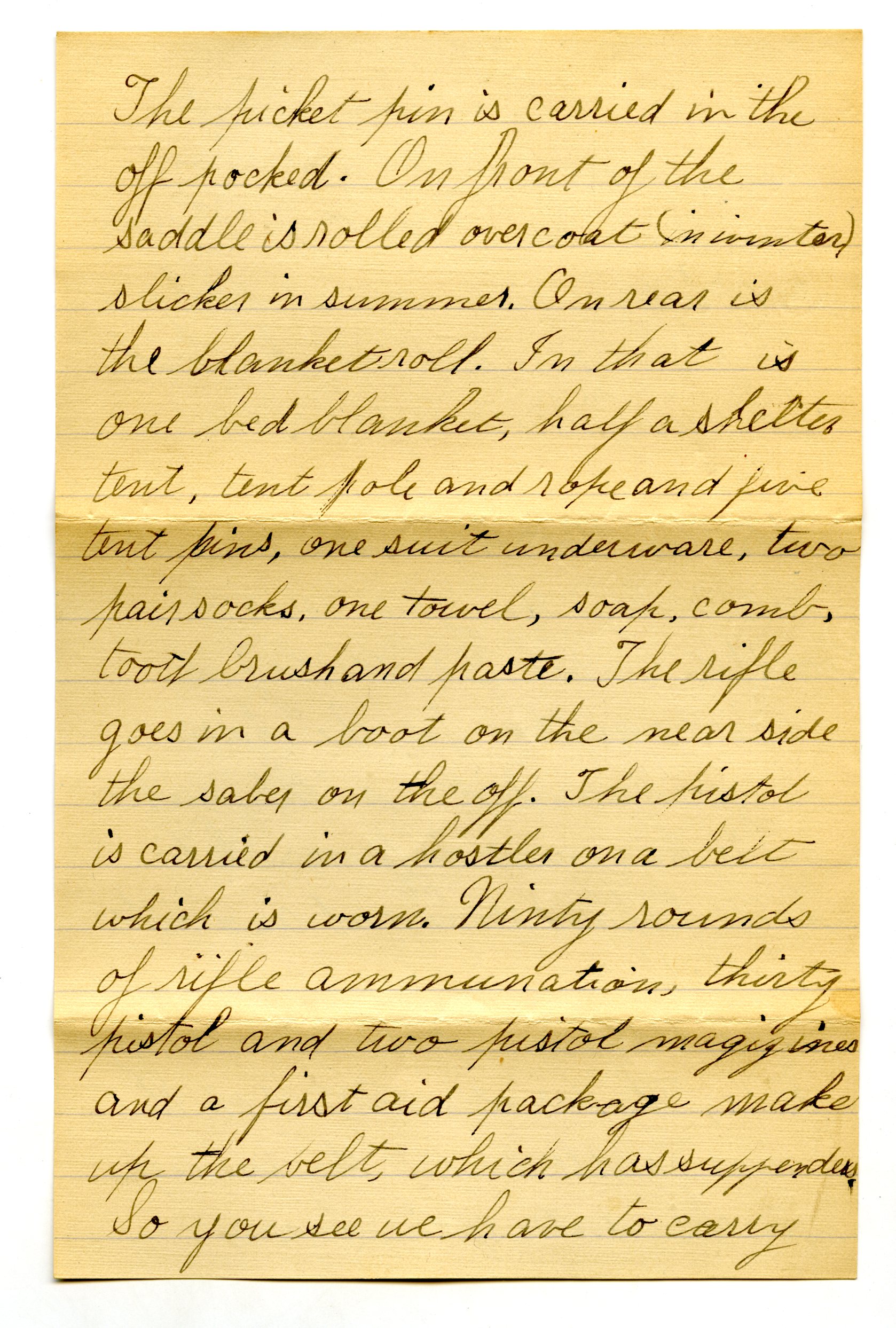
Besides the rifle we have a pistol, 45 automatic Colt.  Had no practice with them yet.  Besides that we have a saber.  Like a sword.  Straight and about three and a half feet long.  At full pack, “thats when we are ready for a long march we have the following.” One saddle, one saddle blanket, that foes on the horse, one surscingle, one pair saddle bags, they go on the read of the saddle.  In the saddle bag is carried everything for the horse.  Curry comb, brush, etc.  In the rear one is the man stuff messkit.  Knife, fork and spoon and any other little thing you want to carry.  The canteen in carried on the rear saddle packet the tin cup in the center of the loops.  The picket pin carried in the off pocket.  On front of the saddle is rolled overcoat (in winter), slicker in summer.  On rear is the blanketroll.  In that is one bed blanket, half a shelter tent, tent pole and rope and five tent pins, one suit underwear, two pair socks, one towel, soap, comb, toothbrush and paste.  The rifle goes in a boot on the near side, the saber on the off.  The pistol is carried in a holster on the belt which is worn.  Ninety rounds of rifle ammunition, thirty pistol and two pistol magazines and a first aid package make up the belt, which has suspenders so you can carry quite a little. The rest of out clothing etc. is put in a bag and carried in the wagons.  We just use the saddle for regular drill.

We have revellie, first call 5:15 roll call 5:30, breakfast at 6, drill at 7 until 10:30 mounted stables, that’s grooming the horses until 10:50.  11 till 11:30 dismounted drill with rifles.  12 dismiss.  In the afternoon if its not to(sic) hot have rifle, pistol, sabre drill.  Semaphore and wigwag practice, that’s sending messages with one and two flags.  Saturdays we have inspections of everything.  No drilling, afternoon off.  Sundays off except stables and water call.  Water call is 4:30.  Water and tie up the horses then.  5:30 retreat and supper.  Tatoo at nine, taps at eleven.  We have to put all lights out in the squad room at nine.

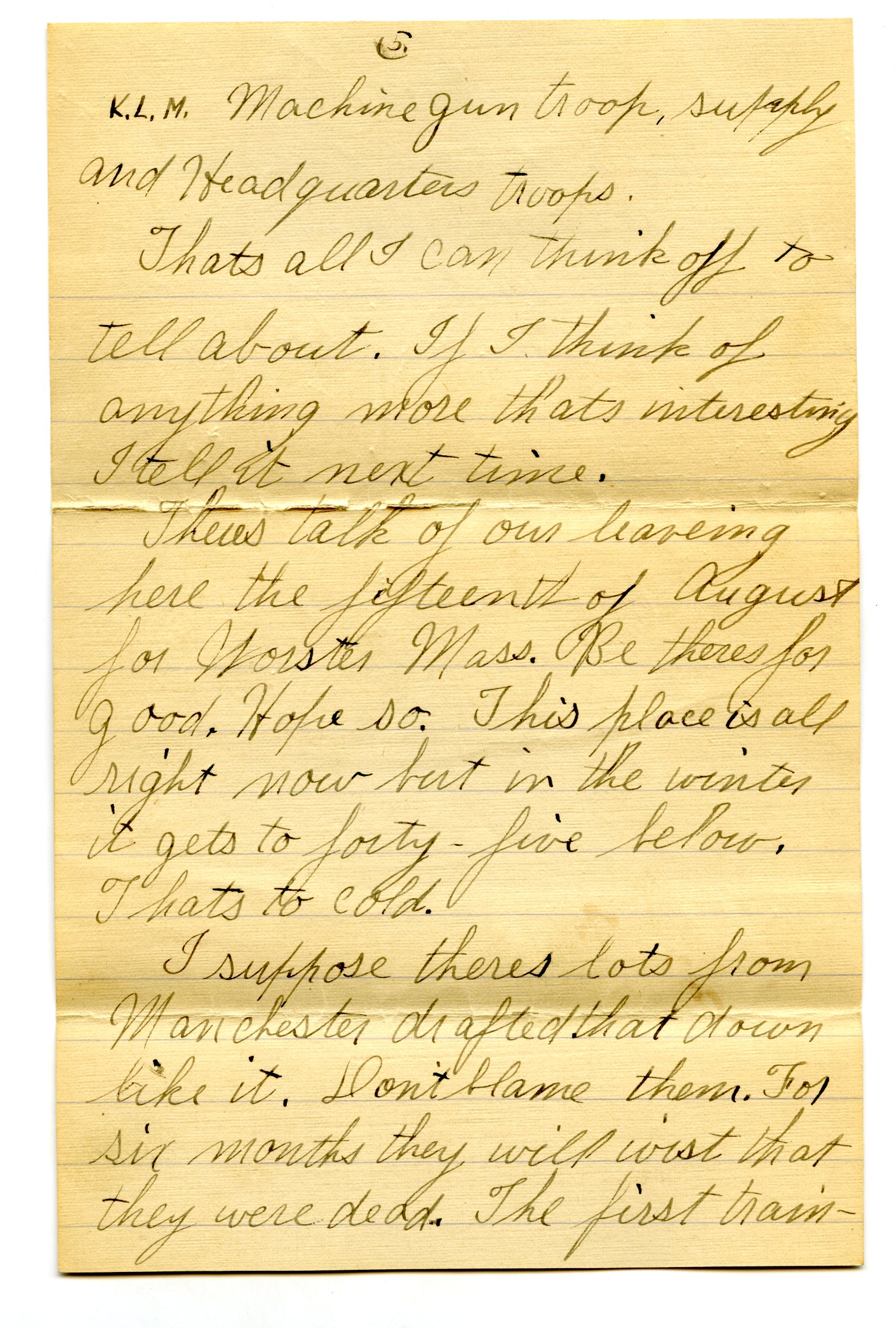
We have a nice building to sleep in .  Have a large day room downstairs, music library etc. there.  Shower, baths, etc. in the basement.  Have regular bunks to sleep in with springs, sheets, pillows etc.  There’s 105 in the troop.  Theres 15 troops in a regiment, four squadrons, three troops to a squadron and three troops over A.B.C, D.E.F, G.H.I, K.L.M, machine gun troop, supply and headquarters troops.

That’s all I can think off(sic) to tell about.  If I think of anything more that’s interesting I will tell it next time.  There’s talk of our leaving here the fifteenth of August for Worcester, Mass.  Be there for good.  Hope so.  This place is all right now but in the winter it gets to 45 below.  That’s too cold. 

I suppose there’s lots from Manchester drafted that don’t like it.  Don’t blame them.  For six months they will wish they were dead.  The first training is very hard.

Guess I will close now its time for retreat and if I write much more I’ll have to send this parcel post.

With Love,

Everett

Clarence E. Hall
WWII Original VF-17 “Jolly Rogers” F4U Corsair Pilot Photo Grouping


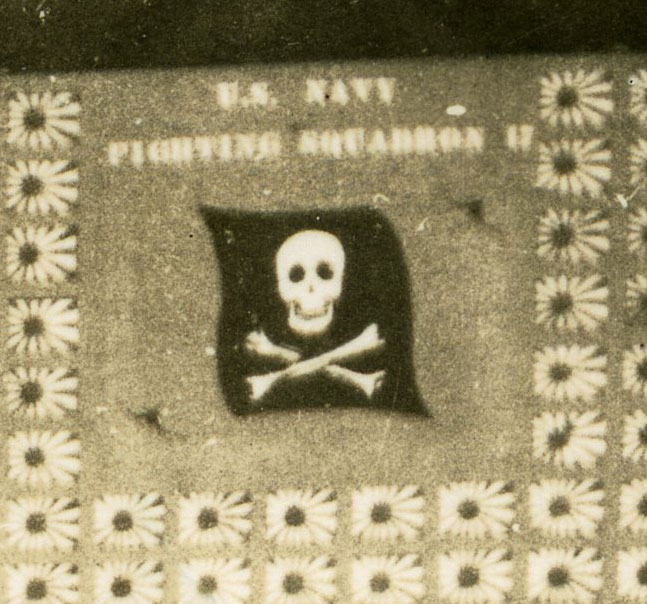
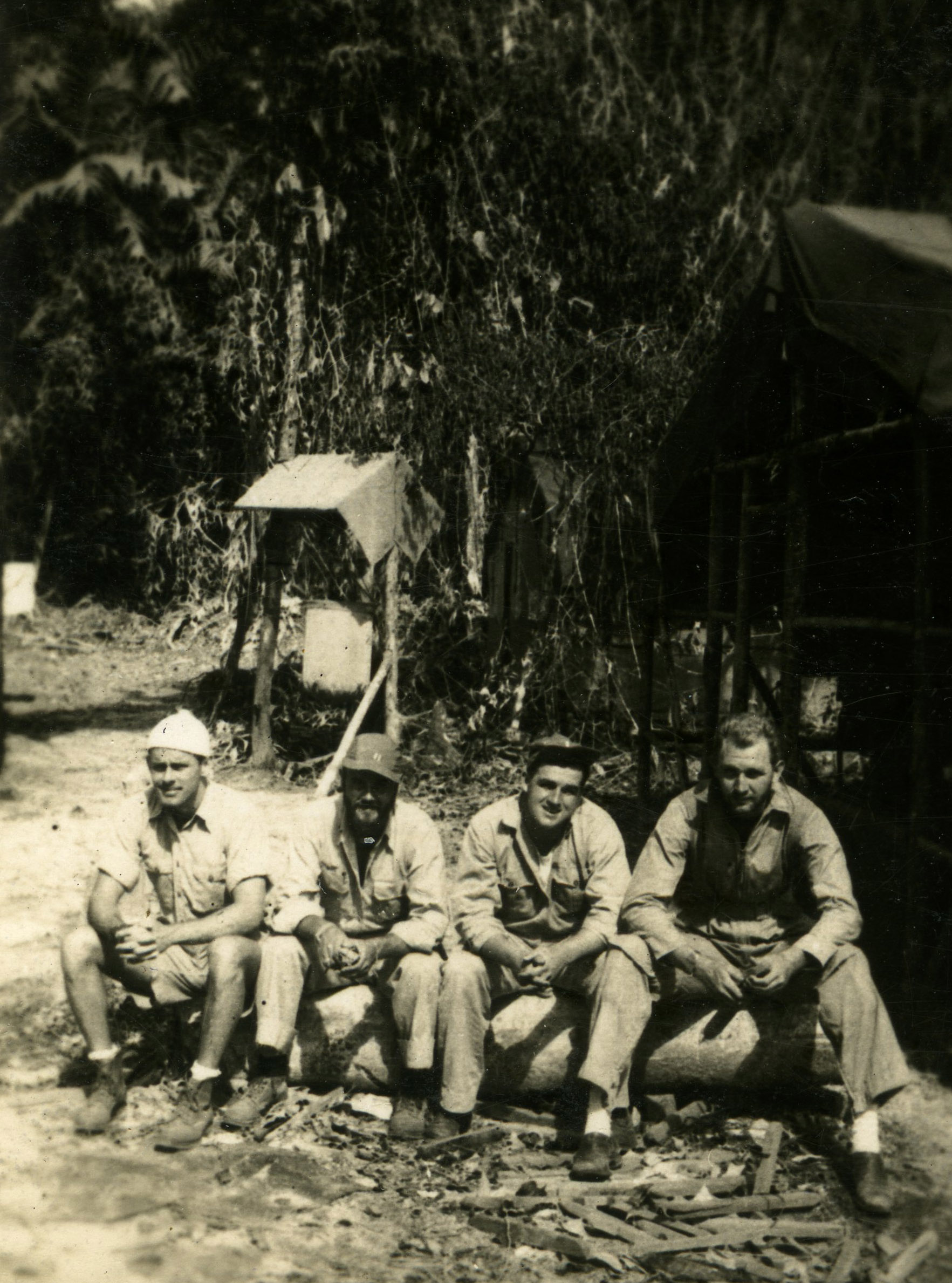
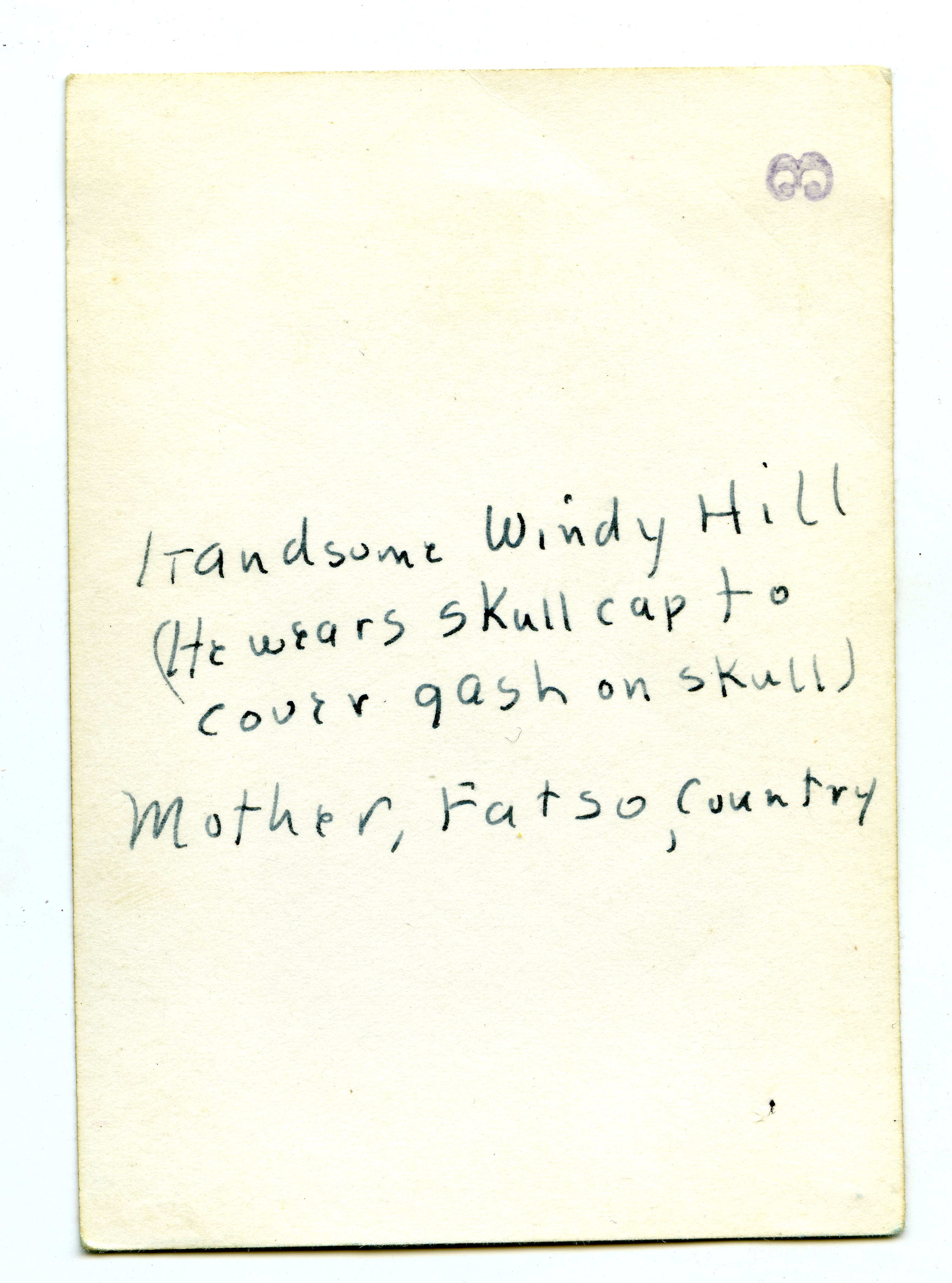
One of my favorite avenues of collecting has to be Marine or Navy photographs related to aviation.  The Corsair pilots of the Pacific were certainly some of the toughest pilots of the war!  I’ve read numerous articles, books, and publications related to the VF-17 and finally had the opportunity to purchase some original snapshots from the unit.  Although they were a bit expensive, they now have a solid place in my collection.  These were taken on Bougainville, likely at Torokina airfield.  Identified pilots include Lemuel D. Cooke, Doug Gutenkunst, Windy Hill, John Orrin Ellsworth (Fatso) and Robert R.  Hogan.


VF-17 Mechanics


VF-17 Unit Insignia


Inscription on Reverse


Doug Gutenkunst, Bob Hogan, and Lem Cooke


Windy Hill and Fatso


Windy Hill Bougainville

Windy Hill Bougainville (Source)

The above photo shows Corsair pilot Robert “Windy” Hill posing near the Bougainville scoreboard and was taken by U.S Navy photographer Charles Fenno Jacobs (1904-1975).  Jacobs was known for capturing the melancholy side of the war in the Pacific.  For more info on Jacobs and his wartime work, please check out the National Archives website. 


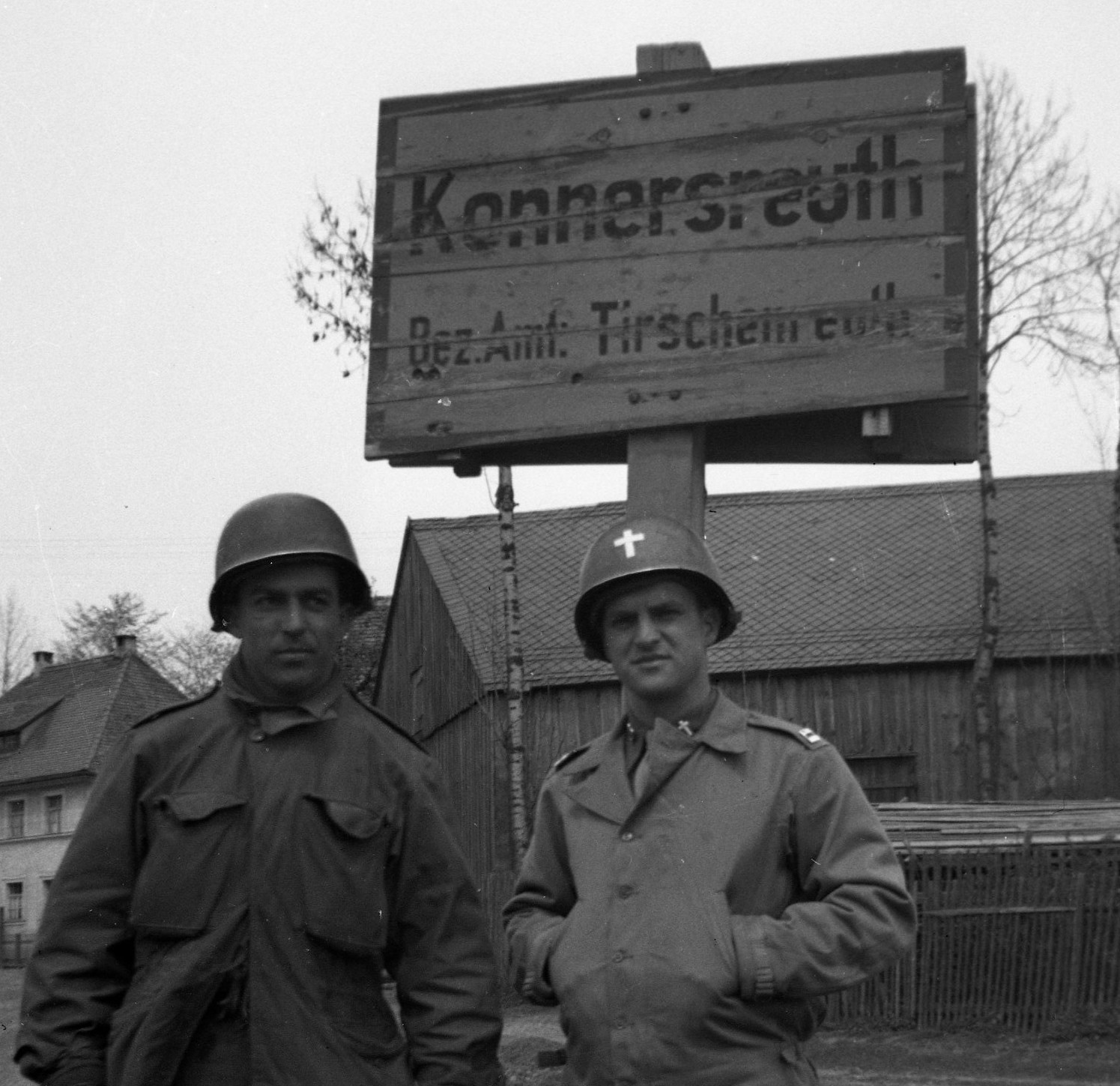
WWII 9th Armored Division B/W Negative – Captured Hitler Youth Last-Ditch “Boy Soldiers” Smoking Cigarettes


These young German soldiers, likely taken directly from the rank of a local Hitler Youth group, were captured somewhere outside of Leipzig Germany in May of 1945.  The recent discovery of a 600+ negative grouping from a chaplain in the 9th armored division yielded this yielded this gem of an image.  The emotion and raw sadness of the war can be seen in the eyes of the boy smoking the cigarette in the left side of the photo.  They can’t be more than eight or nine years old.

WWI RPPC Studio Photo – Armed w/ Colt Model 1911 and w/ M1917 Helmet in Germany


They don’t get much better than this!  Check out the detail on the equipment – this is the first photo in my collection that shows the M1911 pistol lanyard hanging from the right breast pocket.  I’ve owned a few in my day, but have always sold them to buy photos!  The soldier is proudly posing with his slightly dented helmet and his M1911 and leather holster proudly presented.  A top ten shot for me!


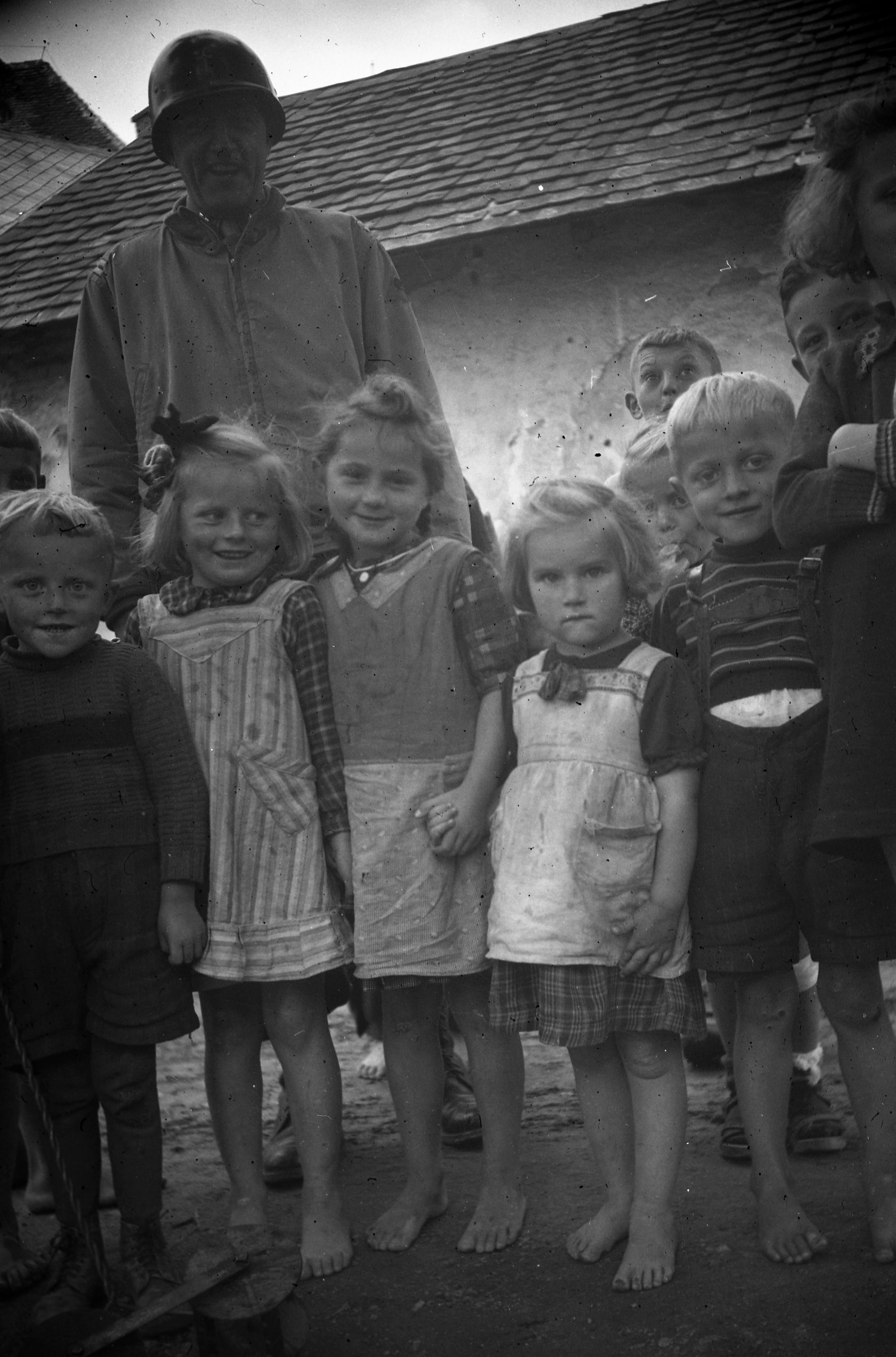
“The Children of War” – German War Orphans in Regensburg Germany


As I sift through a recent WWII negative acquisition of 600+ images taken by a Catholic chaplain of the 9th Armored Division, I couldn’t help but post the following series of shots taken somewhere near Regensburg Germany.  They show a group of German orphans standing in the rubble of a demolished building.  The happy smiles belie the true sadness these children must have felt as they lost their families.


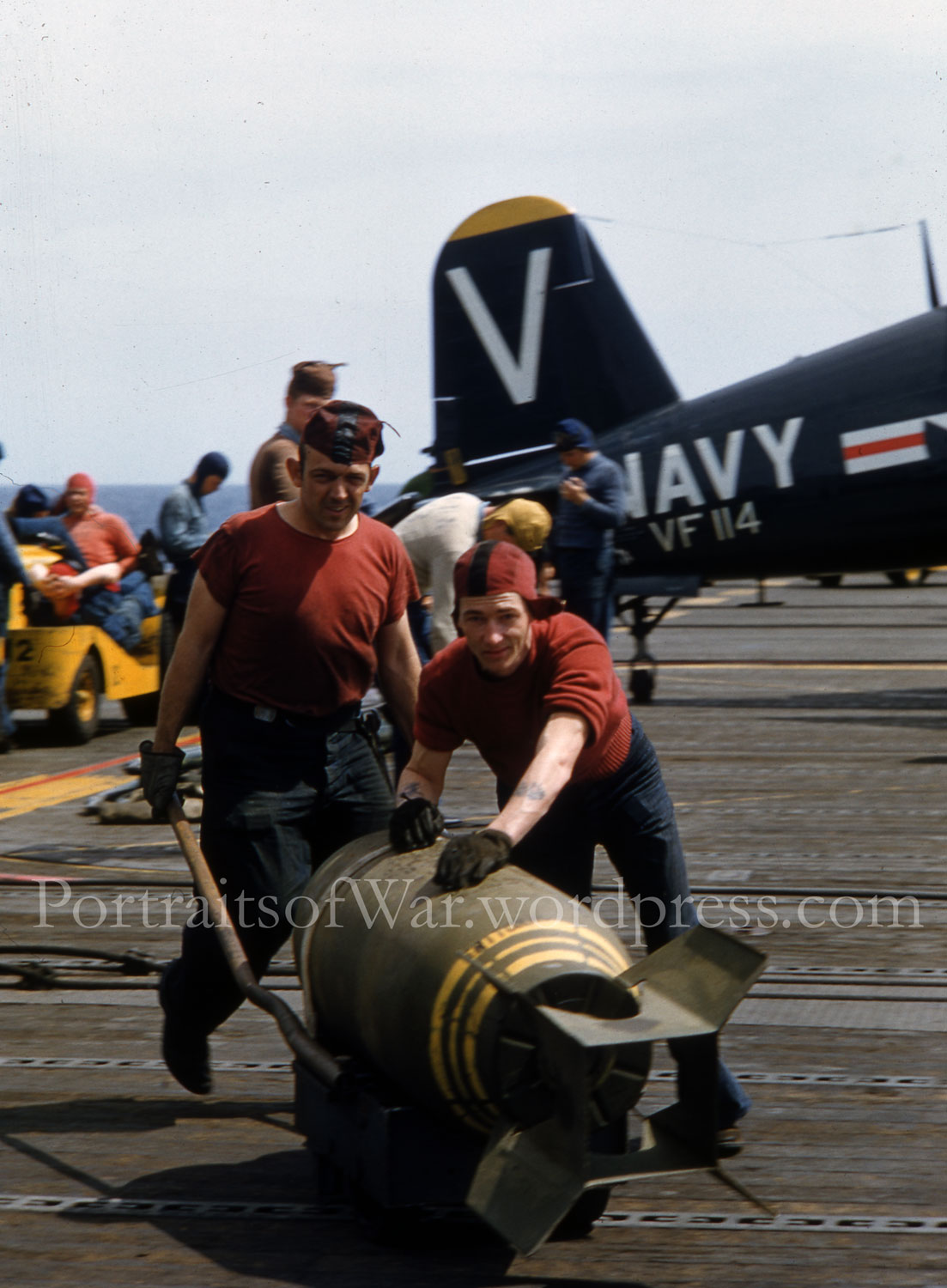
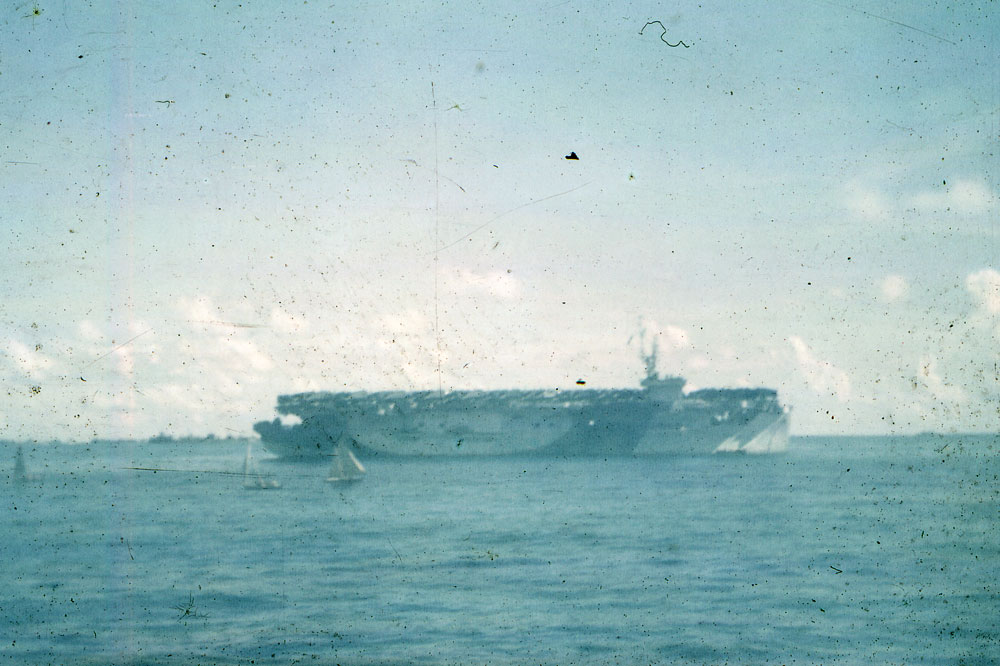
Korean War Corsair Fighter Pilot of the Navy VF-114 “Executioners” on Deck – Color Kodachrome 1950 USS Philippine Sea


Here’s a set of shots I recently picked off eBay.  They were taken on the deck of the USS Philippine Sea, and show Corsairs of the VF-114.  I particularly like the vibrant reds and yellows of the Kodachrome film.  What a treat!

A quick snippit from the wikipedia page for the unit:

“VF-114 was established as VBF-19 (Bombing/Fighter squadron) on January 20, 1945 at NAS Alameda, California. Soon thereafter, VBF-19 moved to NAS North Island, California, where it first flew the Grumman F6F Hellcat and then the Vought F4U-4 Corsair. As with many squadrons after World War II, VBF-19 made several designation changes. The first change was two years later, on 24 August 1948 when it became VF-192, and its final change was on 15 February 1950 when it became VF-114. At this time, VF-114 was known as the “Executioners”.

VF-114 participated in the Korean War deployed on the USS Philippine Sea (CV-47) on July 5, 1950. It flew its Corsairs for several months and conducted over 1,100 strikes against North Korean and Chinese forces. After its return from Korea, VF-114 moved from propeller aircraft to jets, first flying the Grumman F9F Panther. This was soon followed by the McDonnell F2H Banshee and in 1957 VF-114 transitioned to the McDonnell F3H Demon, the first jet operated by the squadron able to carry air-to-air missiles. Now based at NAS Miramar, California, VF-114 made two cruises with the Demon from USS Shangri-La (CVA-38) and one cruise with the Demon from USS Hancock (CVA-19). In 1961, VF-114 transitioned to the McDonnell Douglas F-4 Phantom II, becoming the first deployable Pacific Fleet fighter squadron to do so. At this point, VF-114 also changed its name and insignia to an Aardvark, apparently inspired by the resemblance between the F-4 and the cartoon character Aardvark in the “B.C.” comic strip. This change became official in 1963.”

Veterans Days 1921 – Tomb of the Unknown Soldier Ceremony Service Attendant


As of the fall of 1920, the US Quartermaster Graves Registration Service had successfully identified over 90% of the bodies of US servicemen who died overseas during WWI.  The nation was still in mourning from the losses of the war, and the government looked to other countries for a suitable ceremony to honor those whose bodies were never identified.  In the fall of 1920, the caskets of four unidentified U.S. soldiers were chosen for reburial in Washington D.C.  One pallbearer, SGT Edward Younger, chose one body to be the Unknown Soldier of WWI.
The remains were transported aboard the USS Olympia, the flagship of Vermont’s Own Admiral Dewey, and arrived home on November 9th, 1921.  The body lay in state in the Capitol Rotunda for two days, where over 90,000 people quietly filtered through.  This Unknown Soldier was buried with full services on November 11th, 1921.

As I pawed through my large collection of WWI and WWII photography looking for a suitable candidate for a Veteran’s Day post, I came across one photo that stood out as a perfect blogpost.

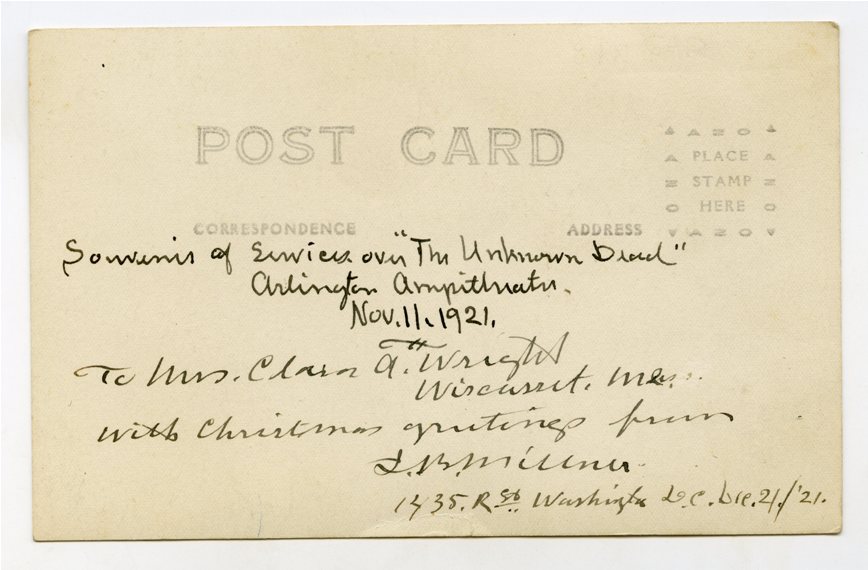
This veteran is wearing an Indian Wars medal on his chest, and looks distinguished in his black cap and jacket.  This photo was taken only moments after he was a member of the first Tomb of the Unknown Soldier ceremony on November 11th, 1921.  He inscribed a quick note to a loved one on the reverse.  I can’t find a list of the members of that first delegation anywhere, but I’m sure he is one of the visible veterans standing around the casket in this photo:

Courtesy of Wikipedia Commons

Although his identity is a mystery to me, maybe his name will come to the surface after this post hits the web.  What a fitting photo post for Veterans Day!

Special thanks to David R. Berry for the following message:

May I submit to you that the identity of the distinguished gentleman is Mr. Isaac B. Millner. US Navy, Civil War veteran –a seaman aboard the USS HARTFORD, flagship of Adm Farragut at the Battle of Mobile Bay 5 Aug 1864. Millner had a life-long interest in Adm Farragut, attending several commemorations of Farraguts life and career.

He was affiliated with the Dept. of Anthropology at the National Museum; holder of several patents; a specialist in Native American and Micronisian Indian cultures; a modeler for the Smithsonian working in the medium of paper’ machete and a member of the US Geological Survey. Author of the book: The Last Cruise (1917)

You will find many notations for him in Google under his full name as well as his initials I B Millner. He is mistakenly noted in the 1920 Census as Isaac B Mi-(one L) ner. What his relationship with Mrs. Clara A Wright Of Wincasset, Maine, might be is unclear, but one might note that the description and the address texts on the back of the portrait were written in two distinctly different hands. It could be that Mrs. Wright was a friend of his wife Mrs. Mary Millner.

A 1929 photo of IB Millner appears here:

http://www.loc.gov/pictures/resource/cph.3c31287/