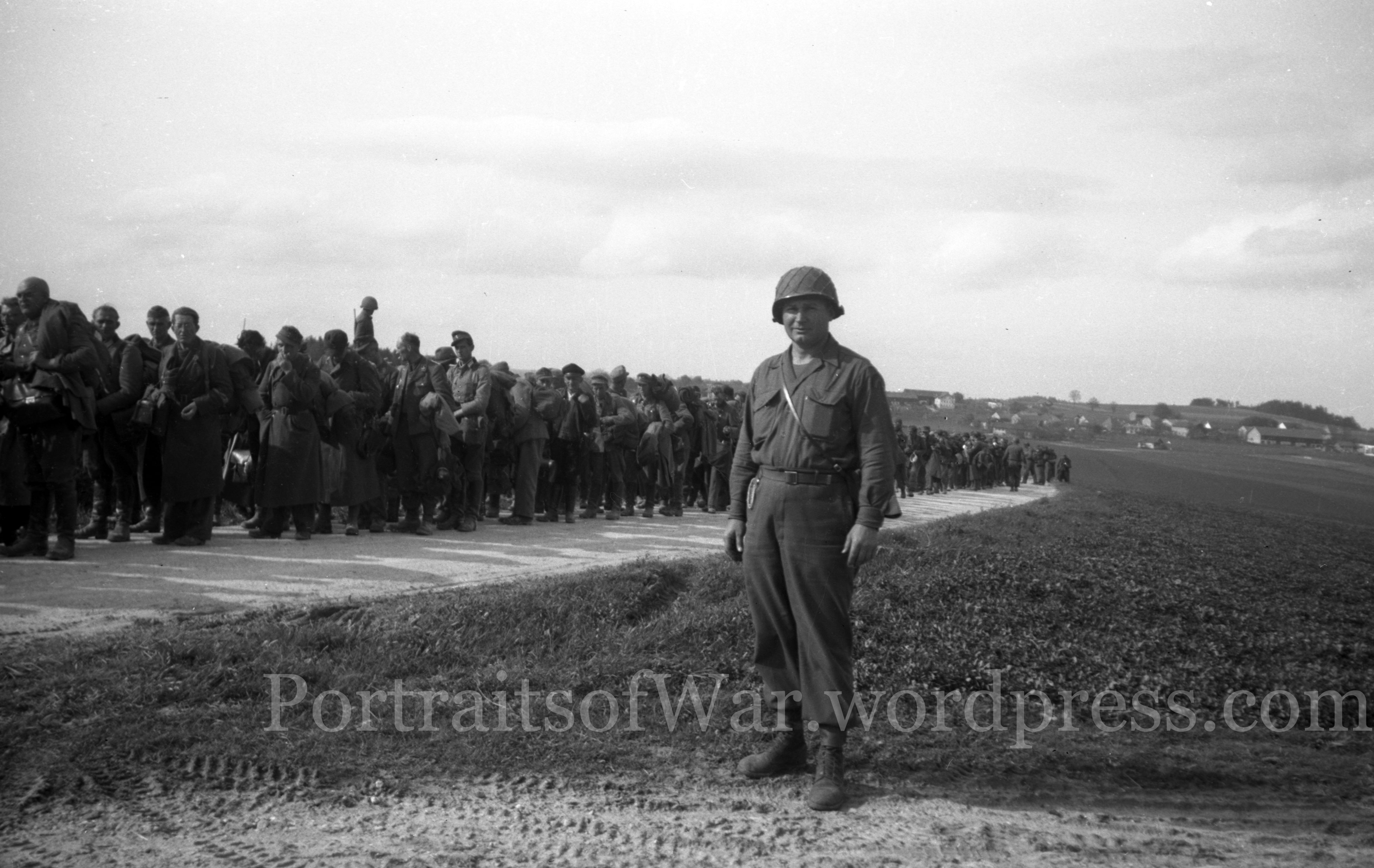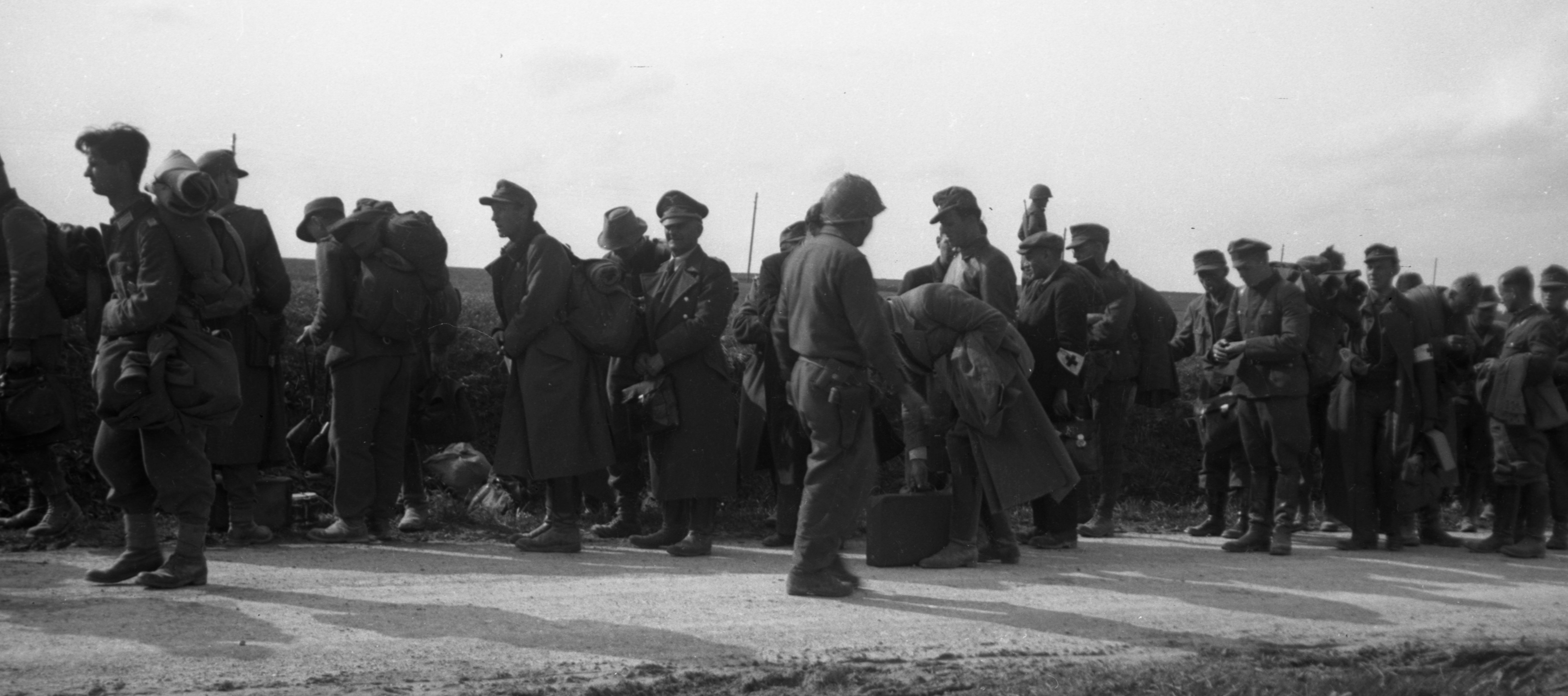
WWII 42nd Division, 222nd Anti-Tank Company and German Prisoners of War – April 11th, 1945 Schweinfurt, Germany


From the negative grouping of Edward Majchrowicz

From time to time I will cull through my backlogged collections and pull out interesting images for posting here to PortraitsofWar.  My collection of 42nd Division negatives from a member of the 222nd Anti-Tank Company is comprised of nearly 600 B/W negatives and an additional 200 prints.  The collection is one of the best I own, and is ripe with juicy frontline photos.  I’m even friends with a veteran from the company, who can tell me the stories behind the images.  Here’s a nice shot of a group of dejected German POW’s.  Apparently, the line consisted of nearly 1,200 soldiers who surrendered somewhere outside Schweinfurt, Germany.

WWI Cover Art Post #1: 79th Division, 316th Infantry Regiment Doughboys in Trenches – By: Thomas M. Rivel (DSC Winner)


Following up on a series of posts on the World War One Historical Association blog (http://ww1ha.wordpress.com/) regarding dust jacket art from the WWI era, I’ve decided to begin posting some of my favorite examples of war-era cover art.  This example is from a copy of the unit history for Company F of the 316th Infantry Regiment.  The cover and internal art was designed by a regimental veteran named Thomas M. Rivel who received the Distinguished Service Cross for his action outside Montfaucon, France in 1918.  His cover piece combines a few elements that are commonly seen in wartime cover art, including posies, trench details, aircraft and a stone-faced doughboy.  A great piece!


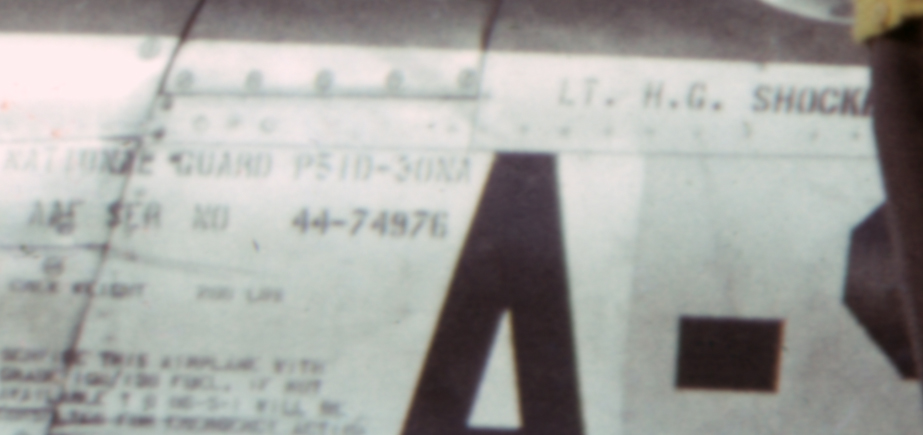
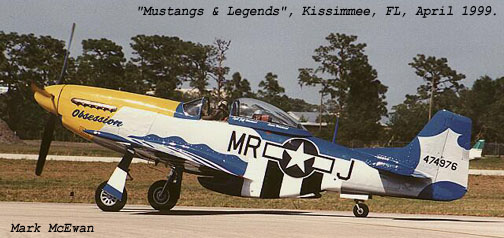
WWII P-51 Mustang 35mm Color Slide Photo – 44-74976 – Currently Still in Operation as Jeffrey Michael’s “Obsession”


Picked this little gem off eBay for a great price and couldn’t help but do some research on the plane.  It appears to have been taken while it was with the New Mexico Air National Guard.  Likely in 1945 or 1946.  I missed out on another listing from the same seller showing the plane with it’s full insignia painted on the side, which was the New Mexico state symbol.  I believe this photo may be considered rare, as I can’t find another shot of the 44-74976 on the web, and certainly not in color.  I hope the current owner finds my site!

From what I can gather, as pictured, this aircraft was used by the New Mexico Air National Guard in WWII and in the 1940s and then was sold to Indonesia in 1958 or 1959.  It was then recovered in 1978 from Indonesia and purchased by a Ralph W. Johnson of Oakland, CA and registered as N98582.  It’s first flight after being recovered from Indonesia was in 1983.  It was then purchased by it’s current owner, Jeff R. Michael and restored to airworthy and redesignated as “Obsession” with it’s original tail code of 44-74976.  Phew!


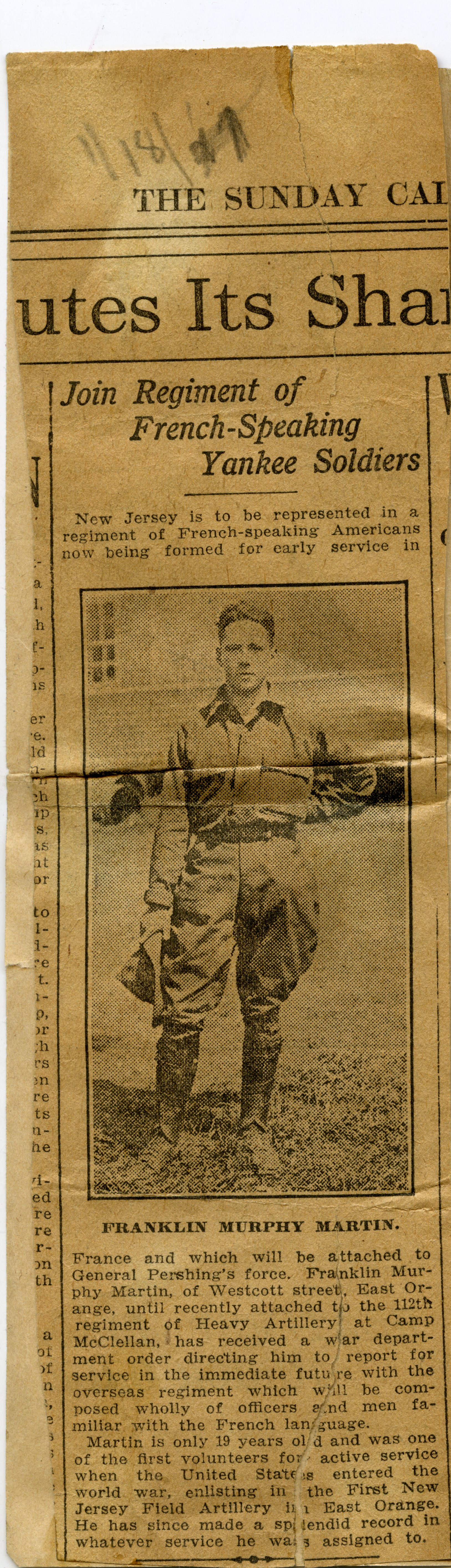
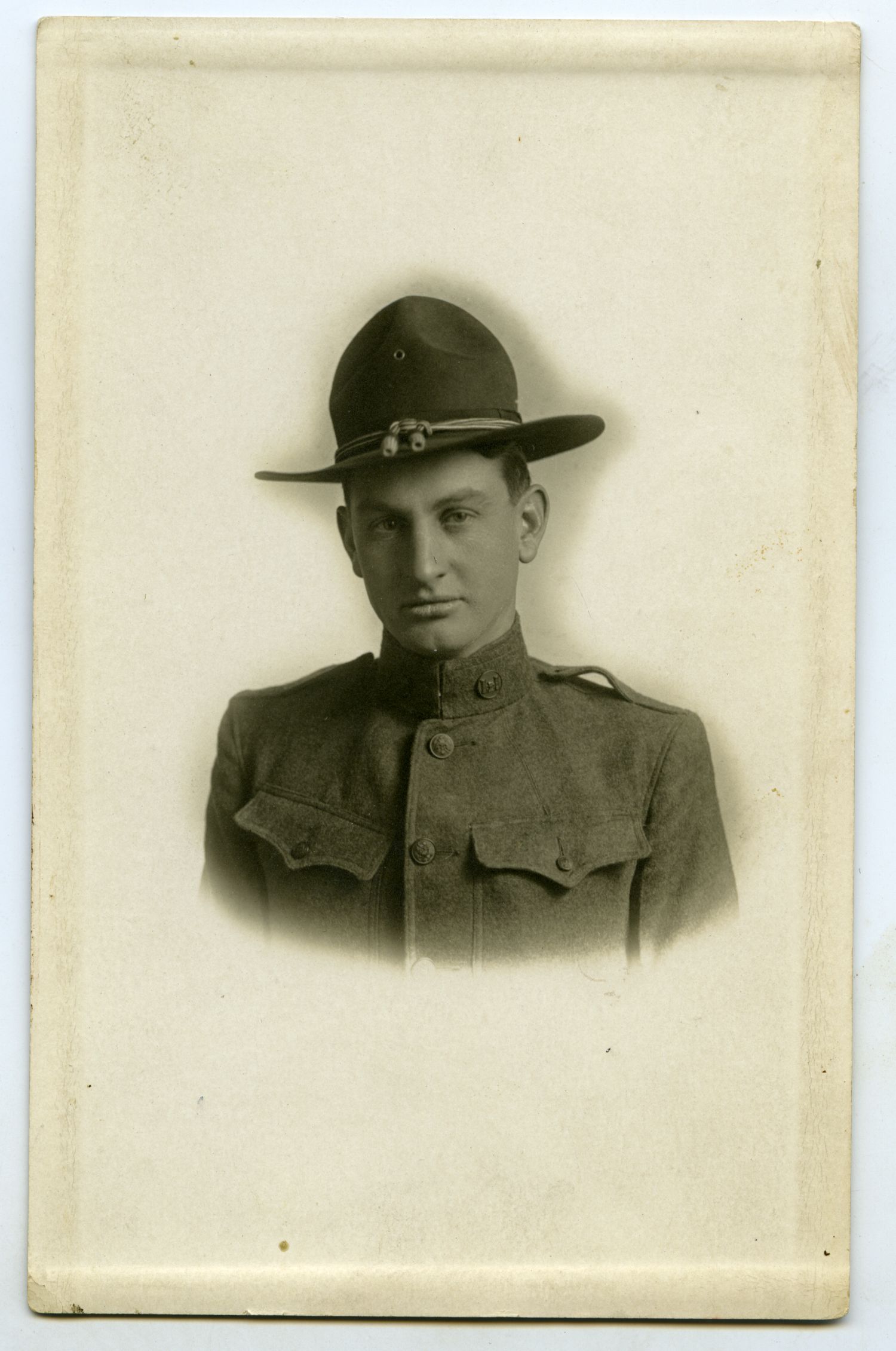
WWI Photo – New Jersey Hero Receives Croix de Guerre – Crashes Plane in the Marne River


I purchased a large WWI photo album last month that was compiled by a young girl following her brother’s exploits in France.  Apparently Franklin M. Martin (Jack) of East Orange, NJ was fluent in French and was assigned as an interpreter on Pershing’s staff.  He became interested in flying and joined the 803rd Aero Squadron where he was in charge of map making from the air.  He was awarded the Croix de Guerre after he was shot down and landed in the Marne River.  After swimming across he was able to deliver his maps!  A great series of interior studio shots capture Franklin wearing his newly awarded CDG.  His friend is wearing a Distinguished Service Cross and is sporting a wound chevron.  Note the leather arm brace and private purchase lace up boots.


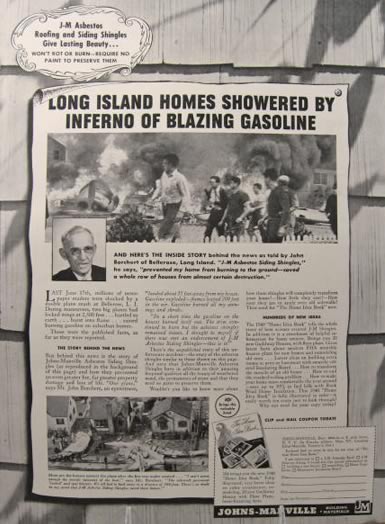
WWII Bellerose, Long Island B-18 Bomber Crash in Neighborhood Backyard


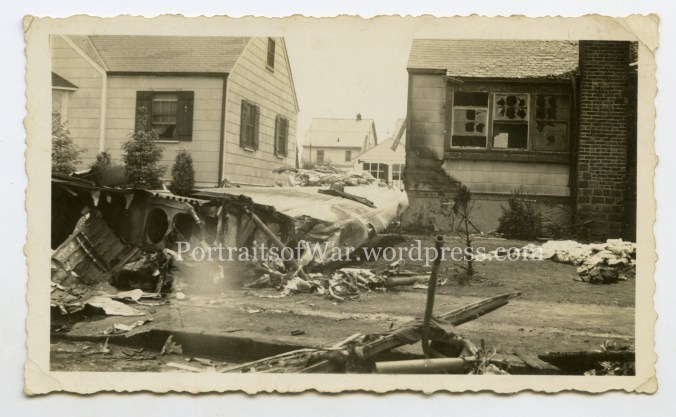
Occasionally I revisit my WWII photo collection to cull through material I’ve overlooked.  In this instance, I found a real gem that I somehow never took the time to research.  I remember buying this photo at a local flea market with the intention of doing some research on the crash incident, but never got around to it.  I assumed that the wreckage in the image was from a B-17 or C-47, but it turns out to be from two B-18 bombers that collided mid-air over Bellerose, Long Island on June 17th, 1940.  Eleven men died in the crash, and one Bellerose citizen died of burns following the event.  Scanning the internet, I was able to find an advertisement for asbestos siding from 1940 that makes reference to the event.  This photo is an incredibly close up shot of the event.  A fireman’s hat and jacket can be seen on the wing of the B-18 in the backyard of the burned home.  Incredible.

I was able to find an article written by one of the local survivors of the crash:

http://www.christianitytoday.com/le/2009/june-online-only/survivingaplanecrash.html

Also, a minor league baseball played died in the fiery inferno.  Here’s an excerpt from the Baseball in Wartime website:

“On Sunday, June 16, 1940, Bedient sent his parents a telegram stating that he was spending the day with his wife at Great Neck. At around 9:00 A.M. on Monday, June 17, two twin-engined Douglas B-18 Bolo bombers, escorted by two fighter planes, left Mitchel Field on a routine training flight. The two bombers carried a crew of 11, including Second Lieutenant Bedient. Just 15 miles from Mitchel Field, above the densely populated area of Bellerose Manor on the eastern edge of Queens, New York, the two bombers were executing a maneuver at 2,500 feet. One plane had to pass under the other and there was not enough clearance. The two planes collided and crashed in flames. One landed within a block of a school and the second smashed into a one-story residence that instantly went up in flames. All 11 crewmen — two of whom unsuccessfully attempted to escape by parachute — perished in the wreckage.”

http://www.baseballinwartime.com/in_memoriam/bedient_hugh.htm

UPDATE 

An author who is writing a book on the B-18 emailed me with the following technical info on the two planes that crashed.

Douglas B-18A – AAC 37-576 Accepted 17 May 1939 and immediately assigned to Langley Field, VA. To Mitchel Field, NY 10 November 1939. Accident 17 June 1940 at Bellerose, Long Island, NY 1LT P. Burlingame, collided with B-18A 37-583 (q.v.), w/o. Coded 9B45 and 9B43 at the time, order uncertain.

Douglas B-18A – AAC 37-583 Accepted 9 June 1939. Assigned to Langley Field, VA 10 June 1939. To Mitchel Field, NY 12 November 1939. Accident 17 June 1940 at Bellerose, LI, NY, 2LT R. M. Bylander, collided with B-18A 37-576 (q.v.), w/o.

Thanks!

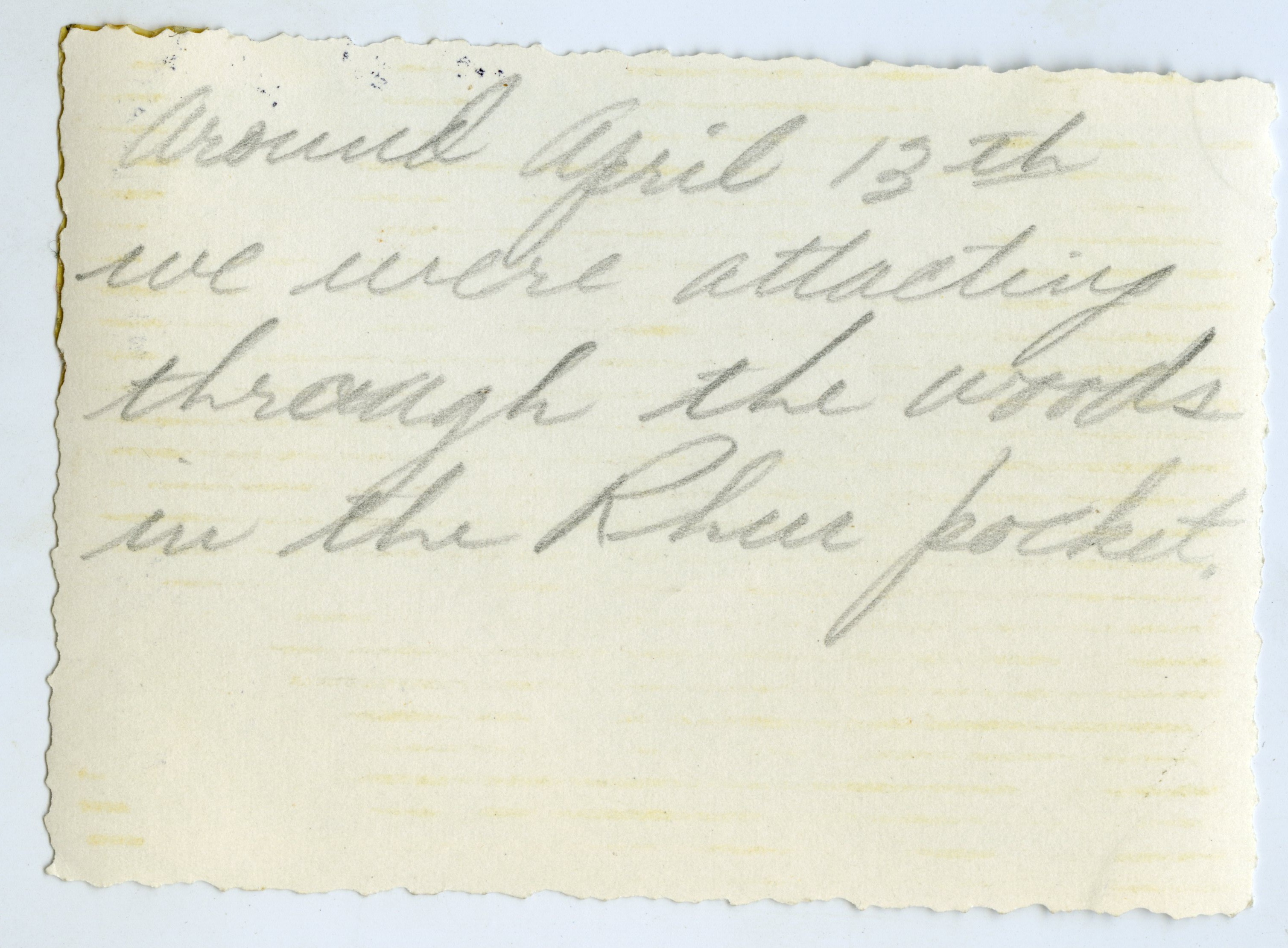
Actual WWII Combat Snapshot – 99th Division, 395th Infantry Regiment in the Ruhr Pocket April 1945


Amateur combat snapshots are nearly impossible to find.  I only have a handful in my personal collection, and have only seen them for sale on rare occasions. In this photo, a veteran named Earl Reese snaps a photo while his squad is attacking through a forest on April 13th, 1945 while in the “Ruhr Pocket”.  I have a collection of Reese’s photos and personal memoirs that were saved from the trash bin at an estate sale in California.  Imagine images like these rotting away in a landfill?


Is that a ricochet dent on the M1 helmet?


WWI Photo Collection – 31st Railway Engineers in France


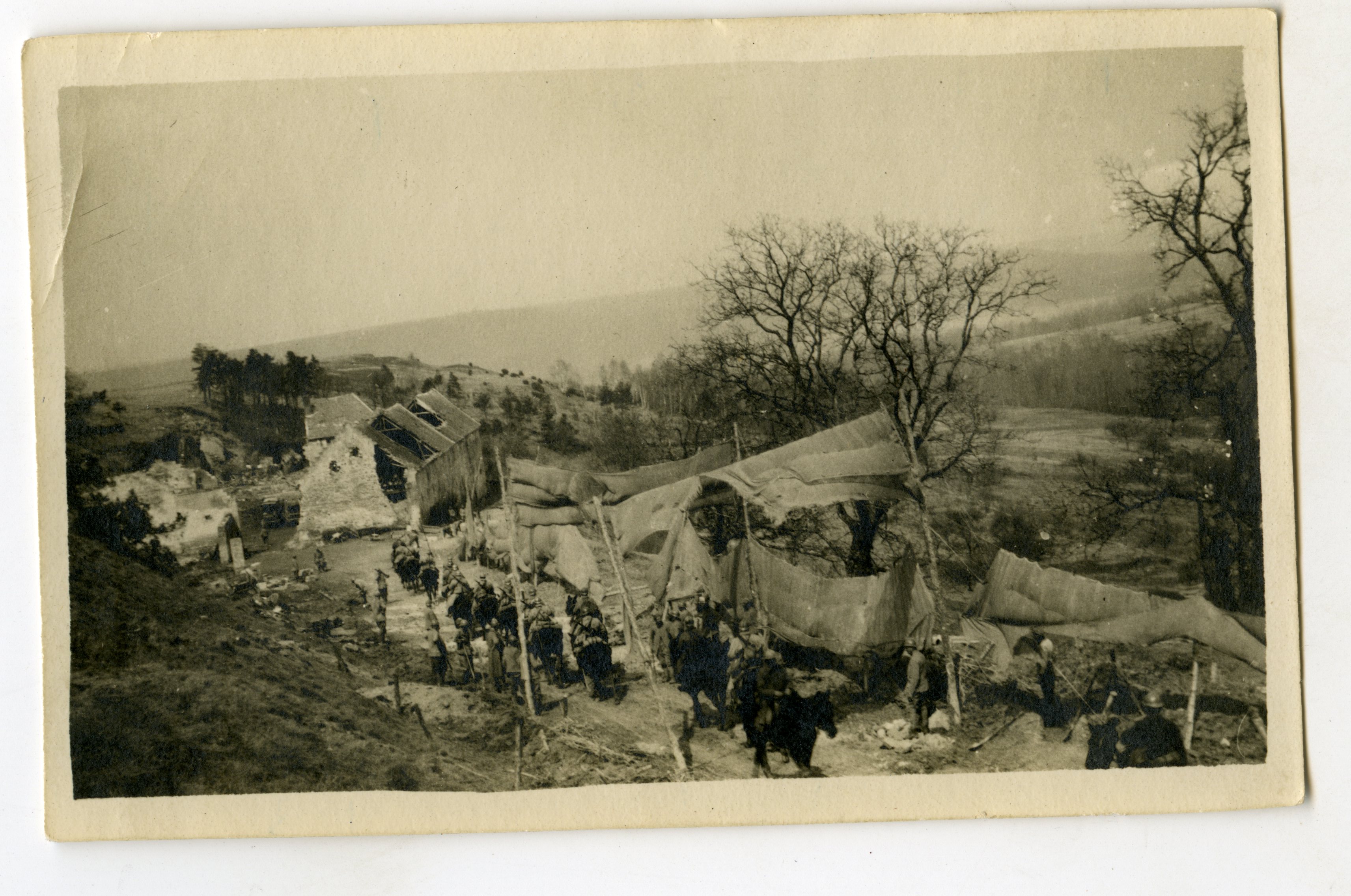
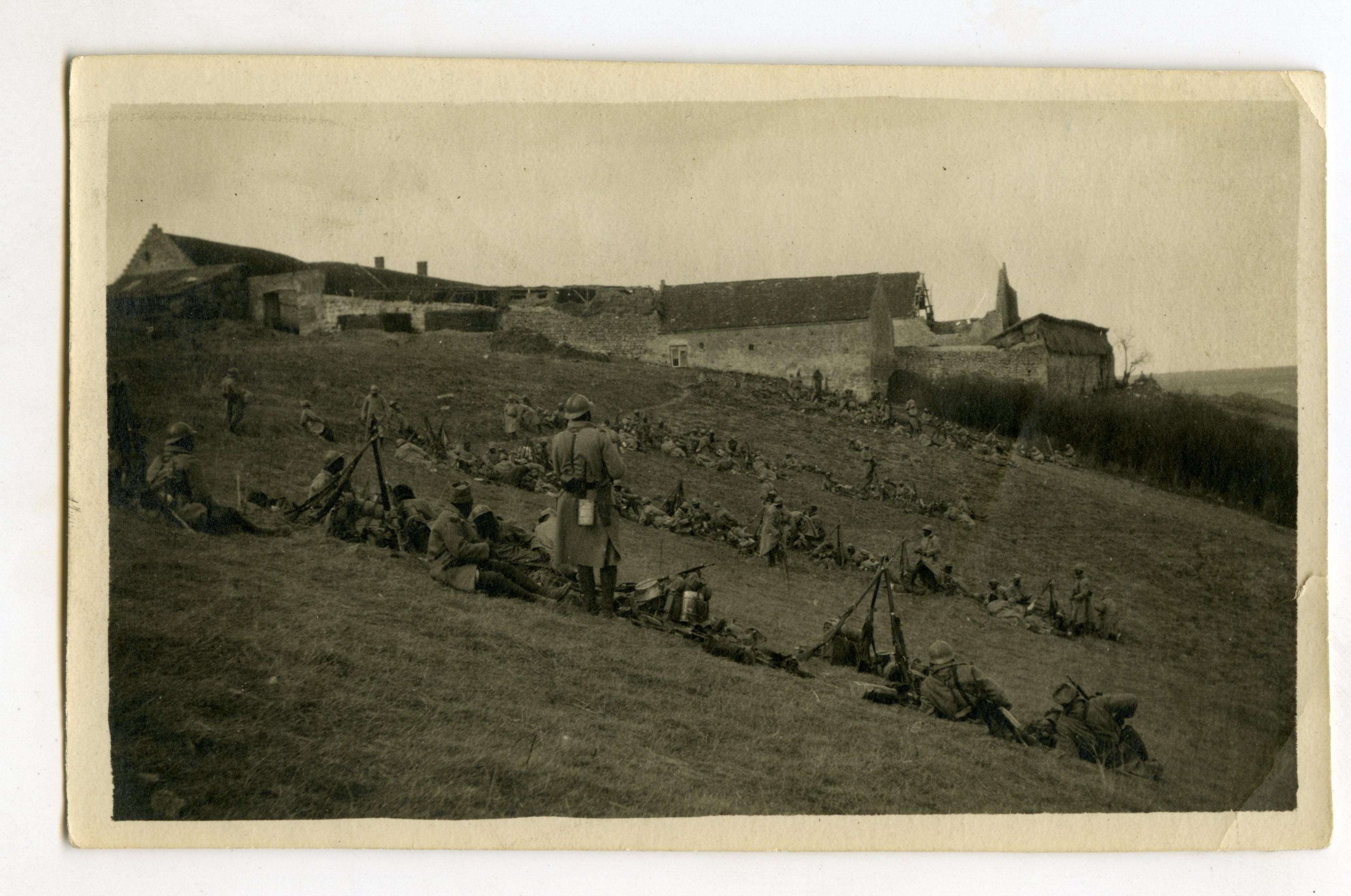
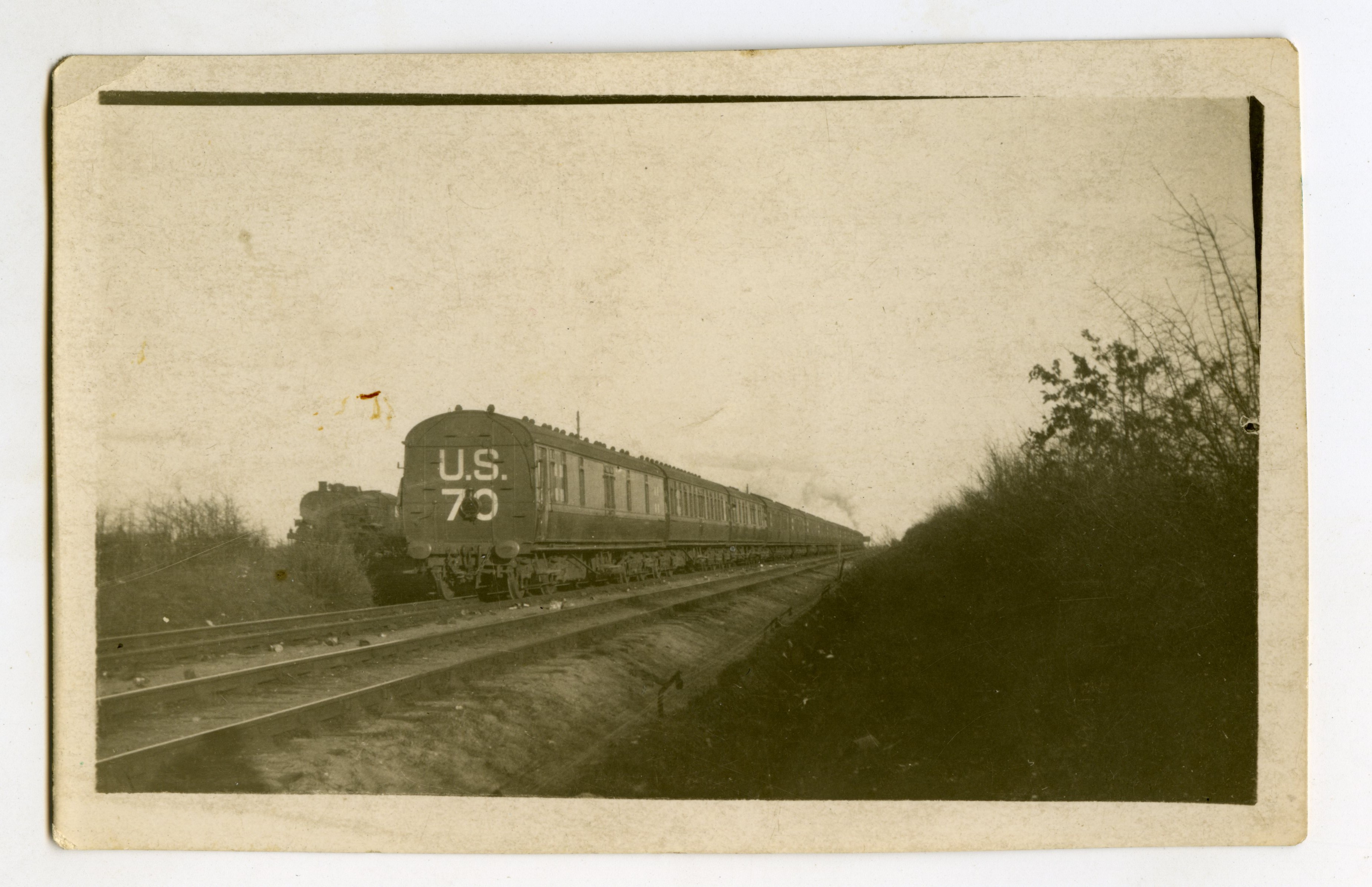
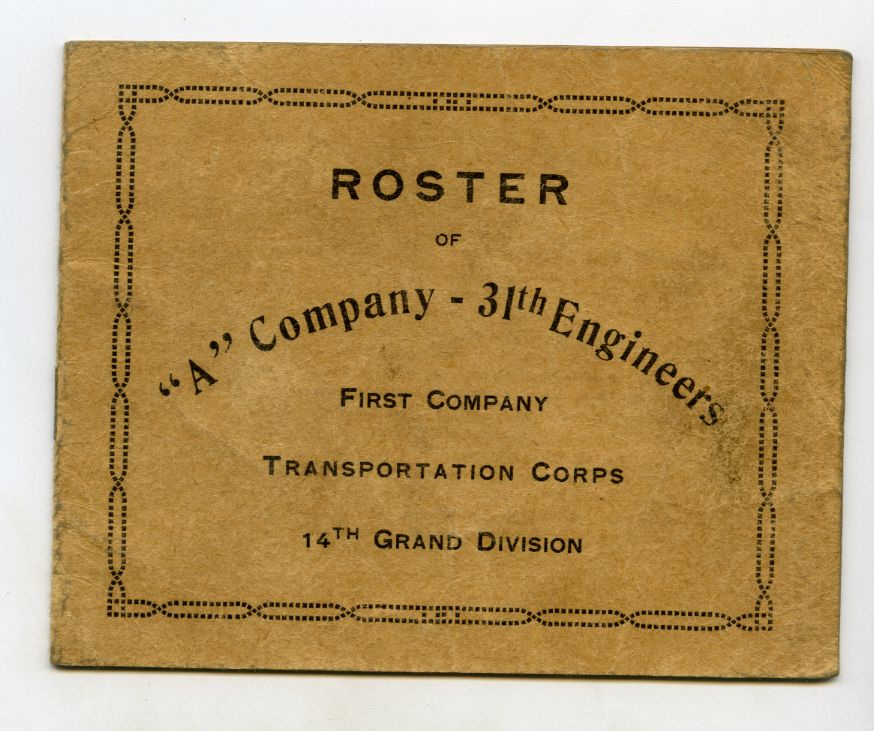
I love collecting WWI albums and named photo groupings.  They are much harder to come by compared with the relatively plentiful single photo purchases.  In this case, I was able to come across a wonderful grouping of photos from the grandson of a WWI 31st Engineer veteran.  I promised to post the photos on the site to help raise interest in this obscure unit and help bring this man’s photos to the digital world.  Digital preservation allows thousands of viewers to enjoy images that would otherwise be relegated to the corner of a dusty upstairs closet.  I will do my best to describe what I can about the unit and share a few biographical vignettes.

Pvt. Herbert Conner posed in France

Pvt. Conner


“My grandfather was born in 1892 in Fordsville, Kentucky later the family moved to Amity Oregon and later to St Helens, Oregon. As a young man he was a prizefighter(that what they called them in those days). He was a logger for awhile later he went to work in Portland, Oregon for the railroad before the war  and after the war he continued with the railroad for over forty years as a fireman and an engineer. He never owned a car and the station was about two blocks from his house and Kelly’s Bar and the grocery store were across the street from work  so I guess he felt he didn’t need one. He passed away in 1968.

Grandpa was very proud to have served in World War 1. I do not believe he was in combat. The 31st engineers provided supplies and transported troops. The only story I can remember when he was on guard duty in France and a soldier had gone awol for the night, apparently celebrating and didn’t know the password or had forgotten it and Grandpa felt sorry for him and let him back in the camp. It has been such a long time ago there were probably other things that happened that I can’t remember right now. He must have spent some time at the French Riviera and Monte Carlo because there was a lot of postcards from that area and one postcard to his brother had him on the Italian Riviera for awhile.”

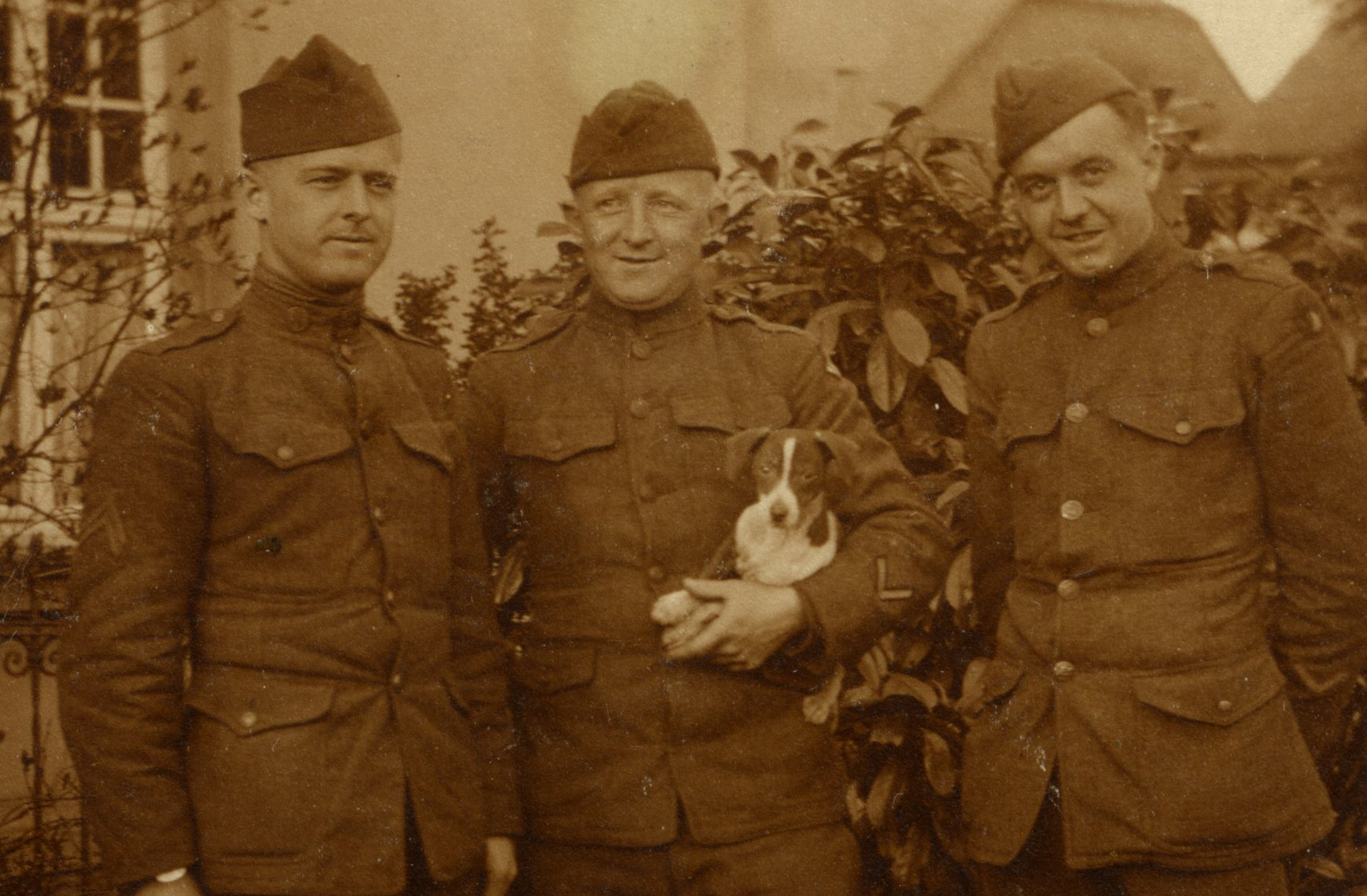
Some Guys from A Company

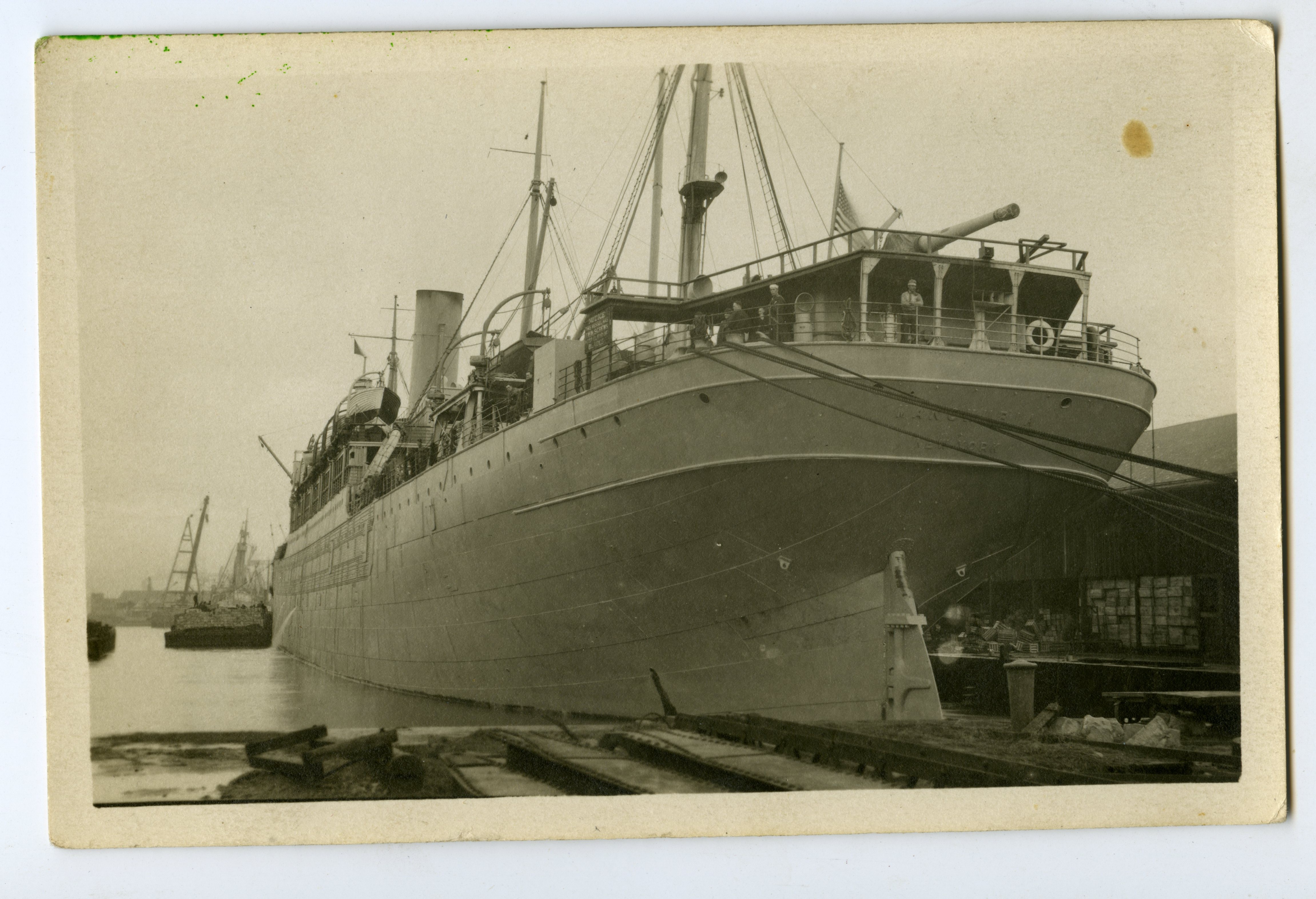
SS Manchuria in Port (Not the return ship for the 31st)

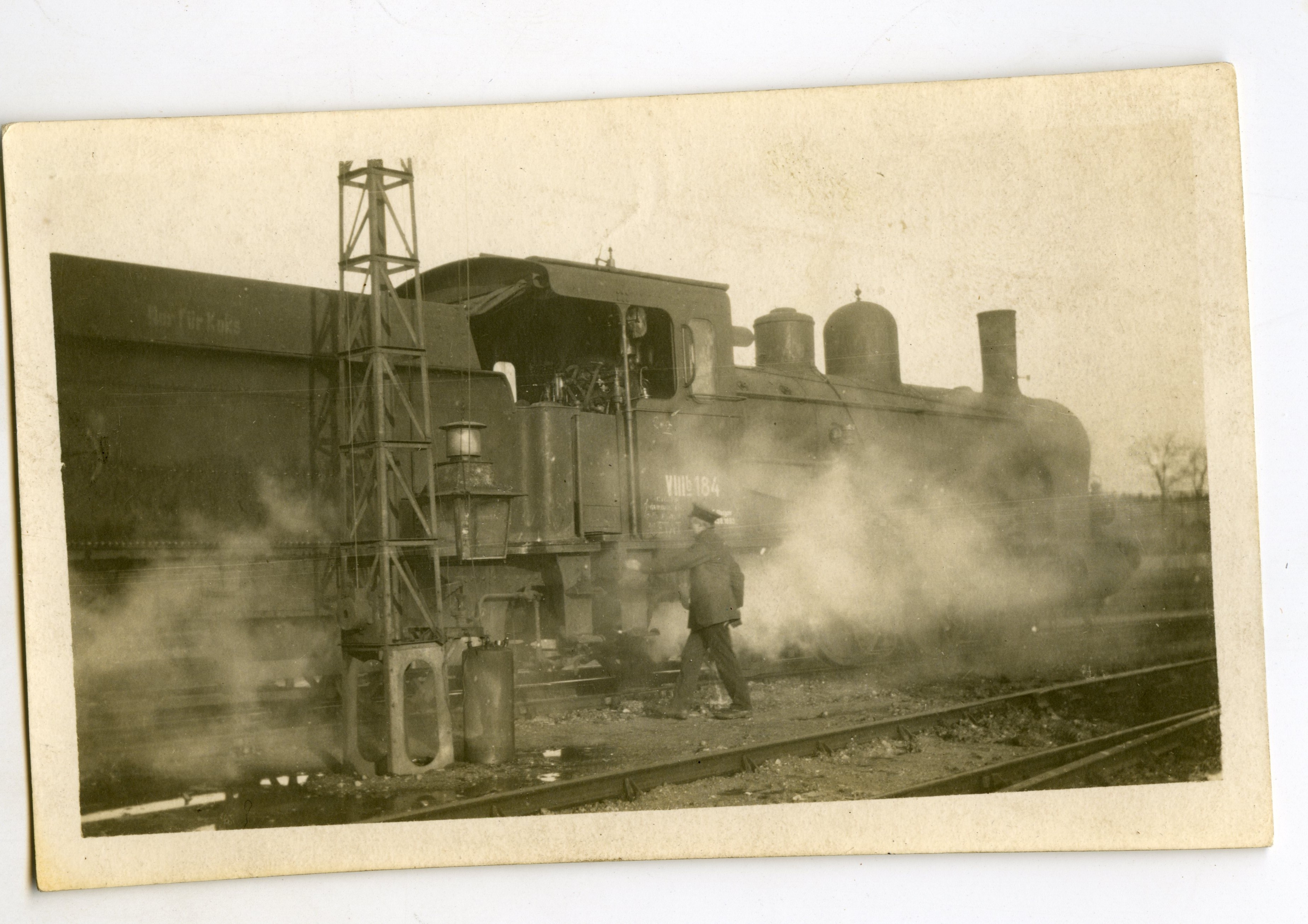
Hospital Train

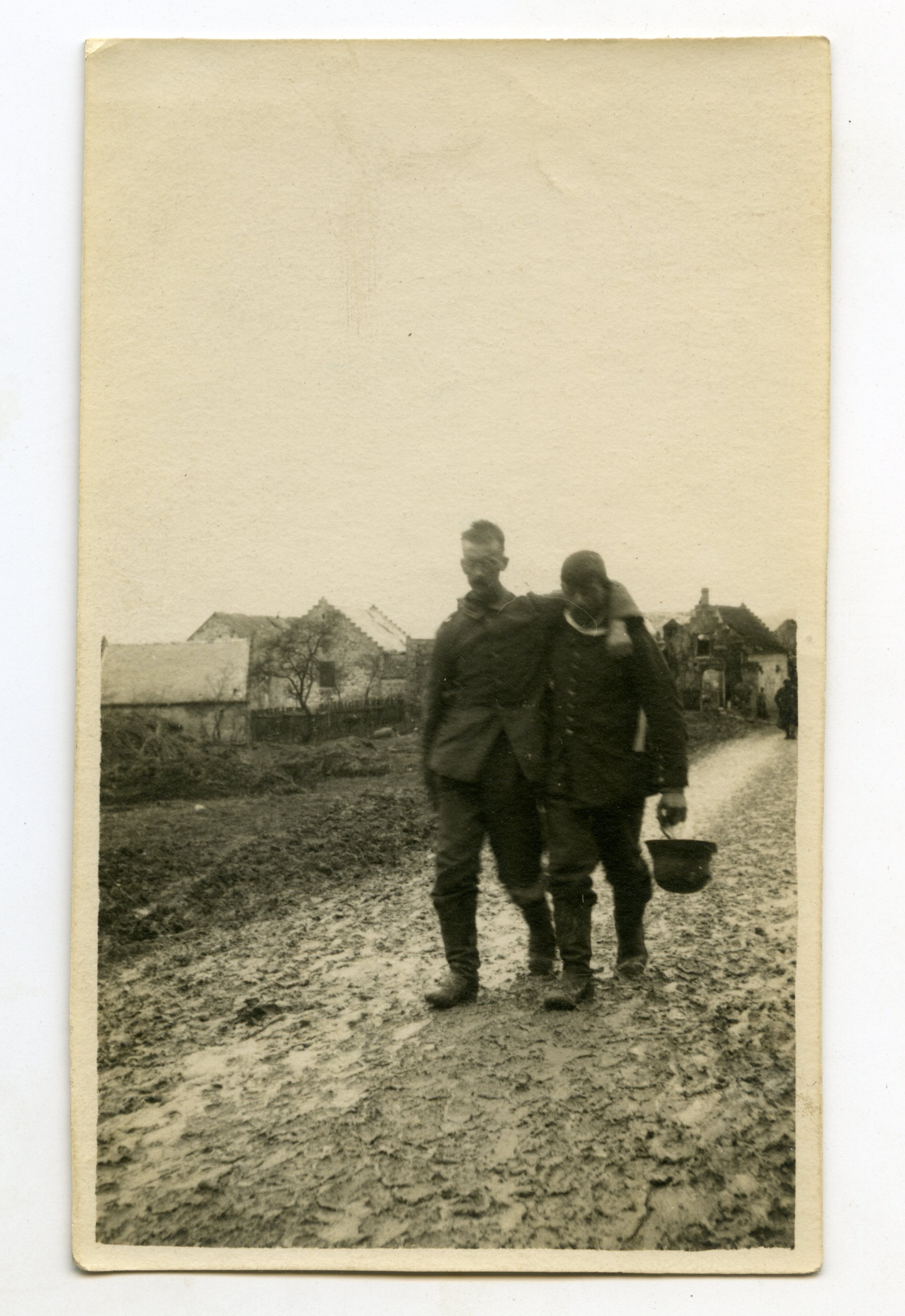
German Prisoners

Check back for updates…………….

WWI Photo – 89th Division Soldiers Pose w/ Mascot Dog France


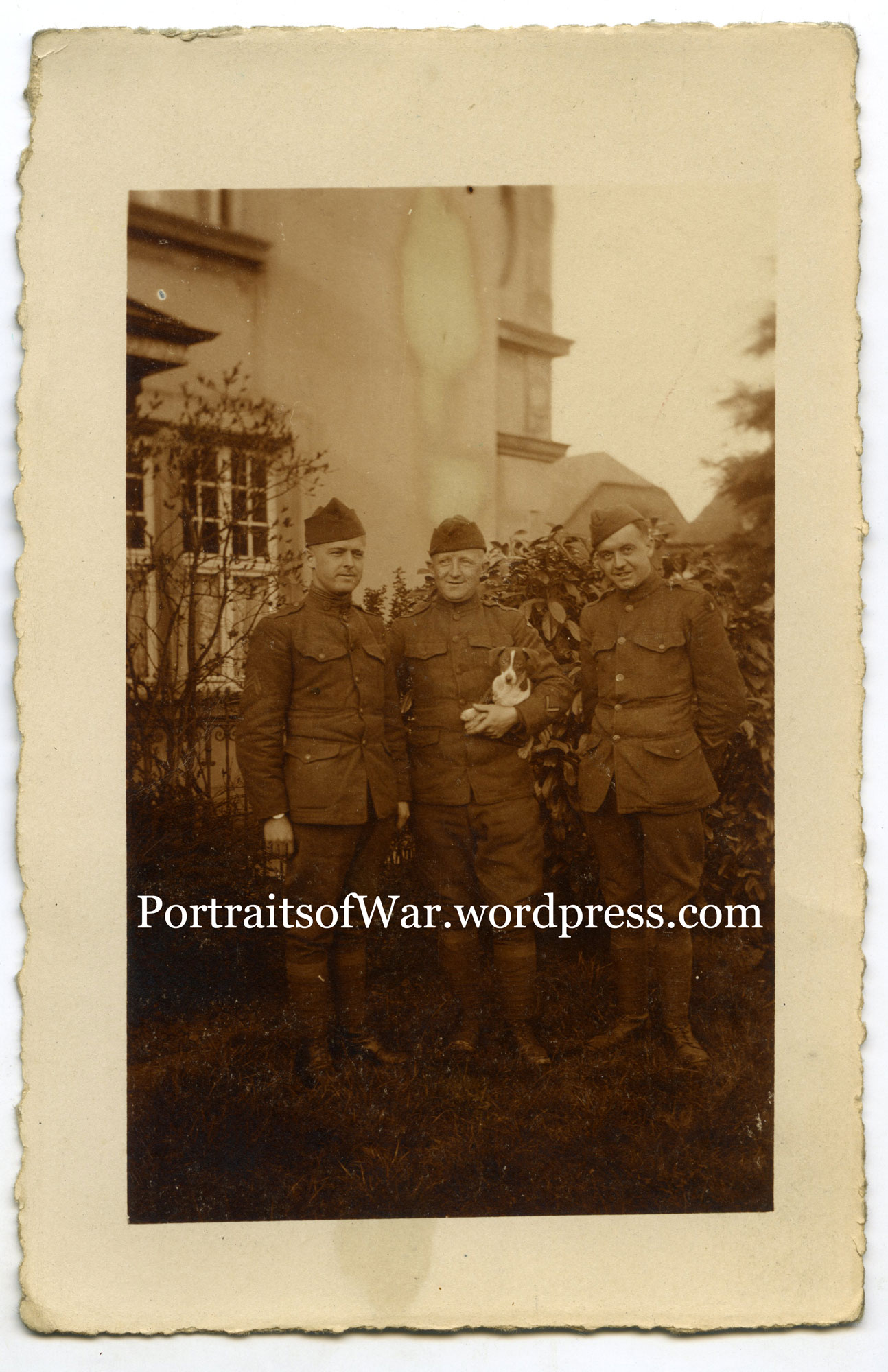
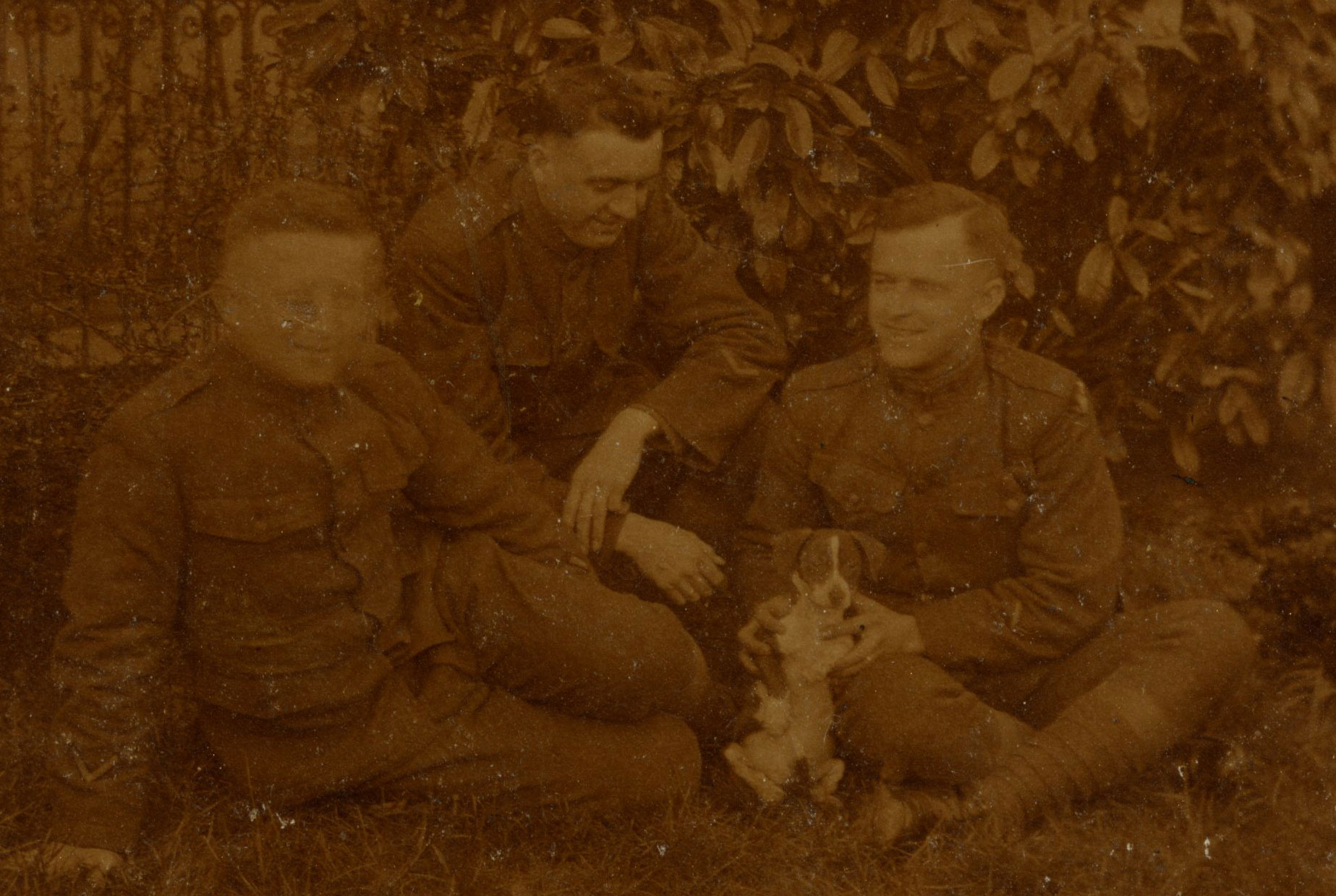
Following up on one of my favorite common threads seen throughout WWI photography – I present yet another example of the unit mascot.  Normally seen at the compnay level or below, the idea of having a small pet (normally a dog) as a mascot is very common throughout various nations during WWI.  I’ve literally seen examples from the US, England, Canada, France, Germany, Italy and even Australia. I probably have 15-20 examples in my own collection, ranging from small children as mascots, to dogs, pigeons and even goats.  My favorite are the small dogs. Here’s an example from the 89th Division. The collection of 8 photos came from a member of the 356th Infantry.  Unnamed, but we know he was wounded at least once during the war due to the wound chevron on his right cuff.